The Byzantine Empire 300 AD - 1500 AD
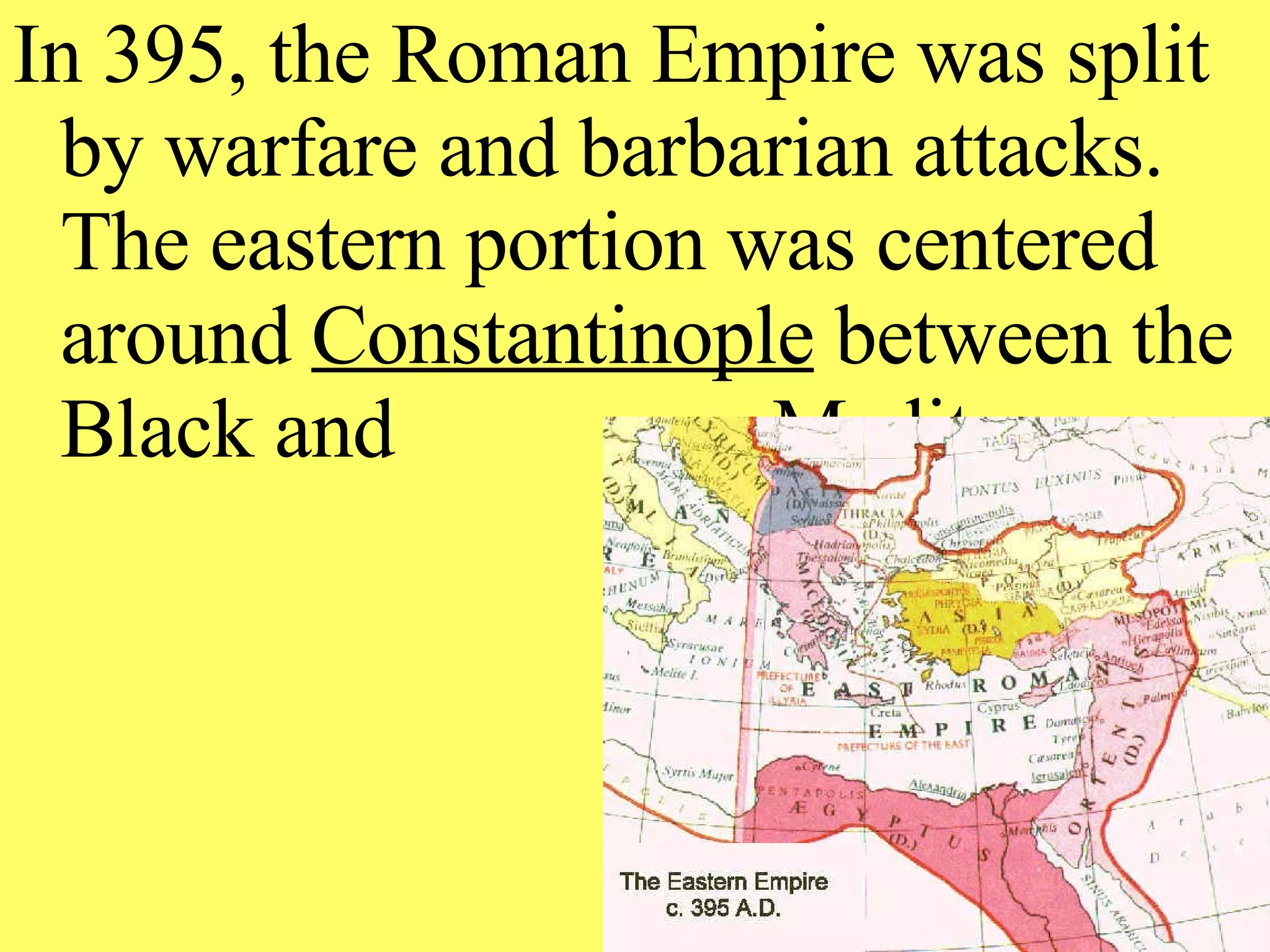
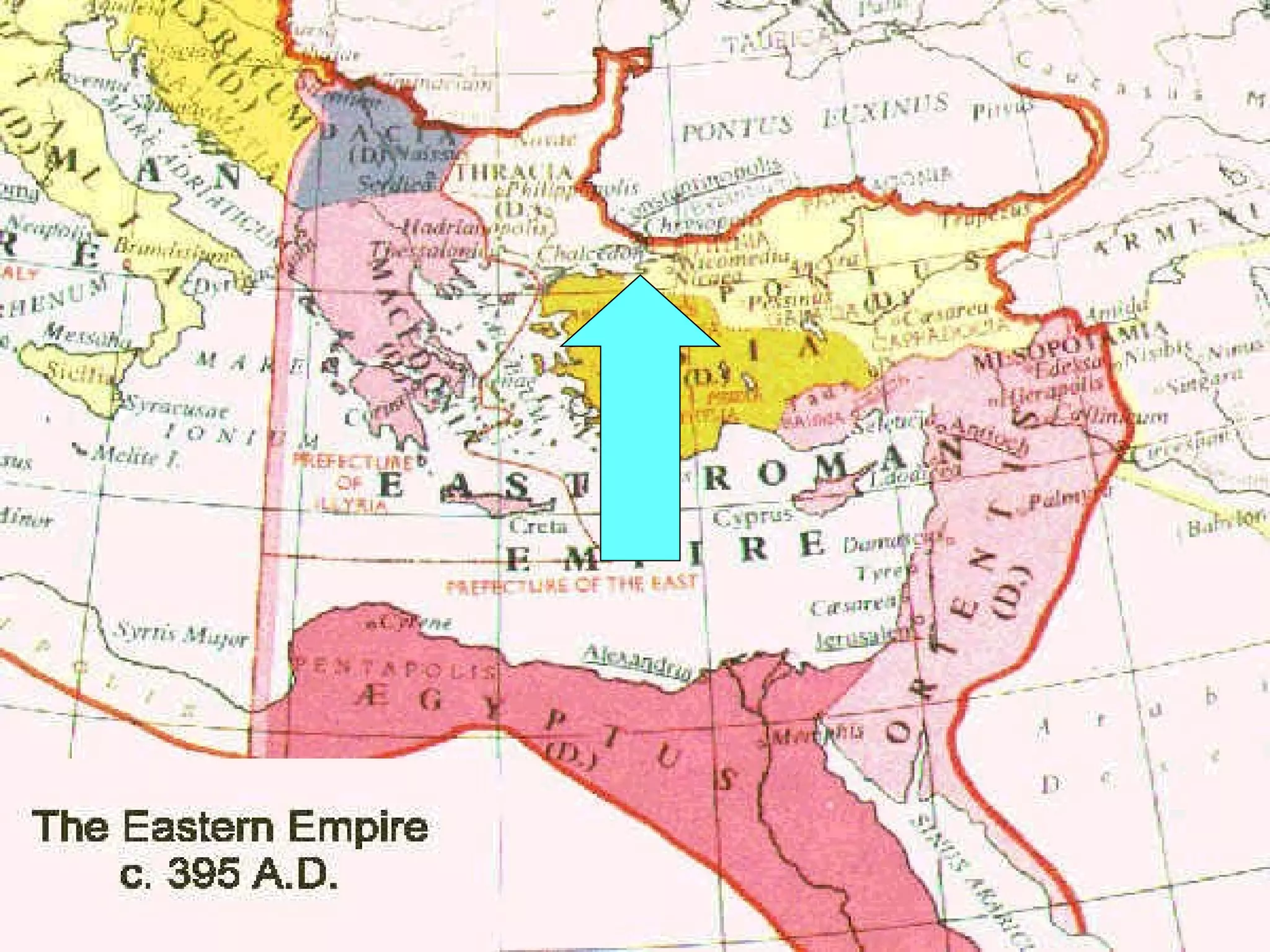
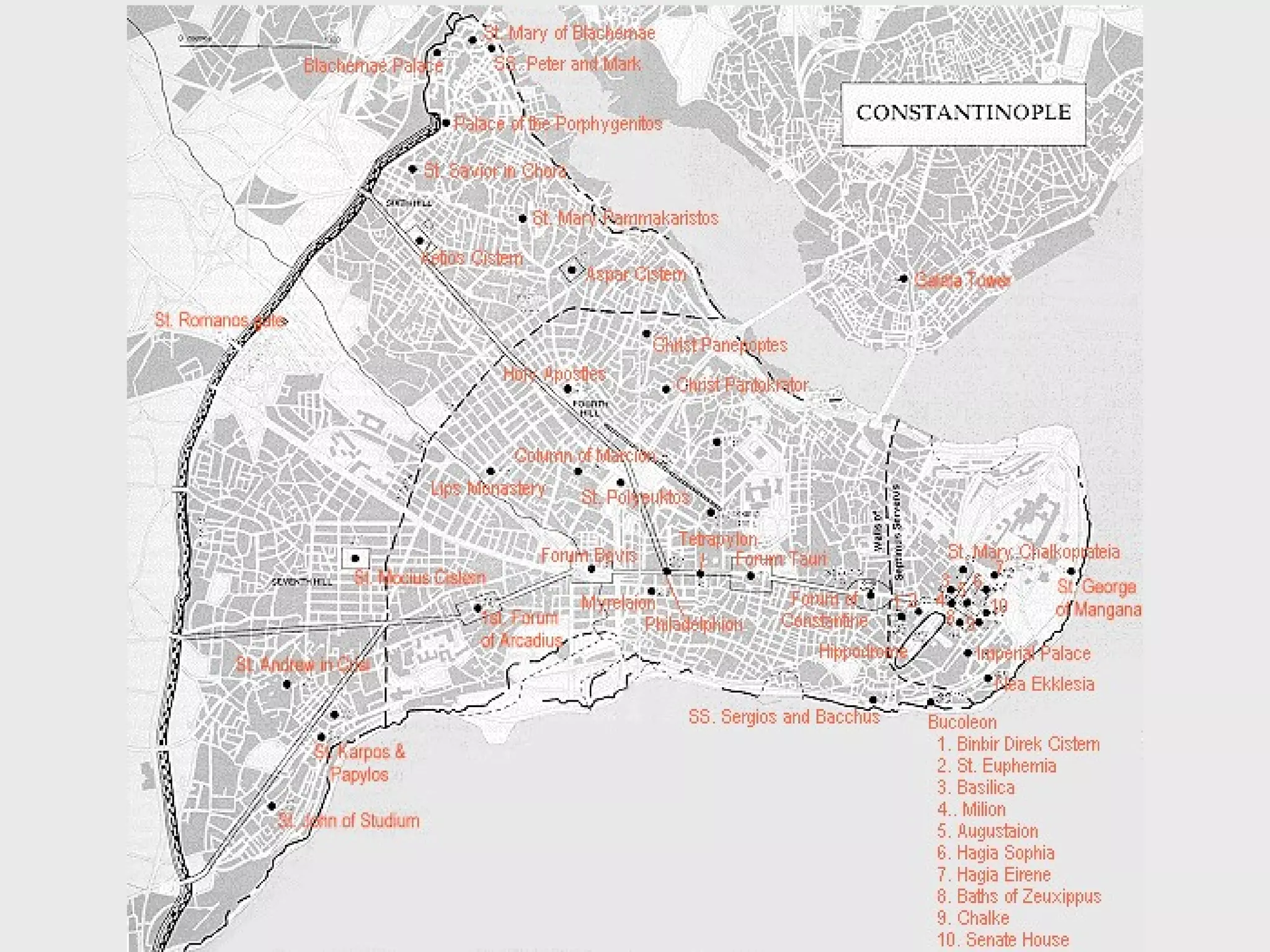
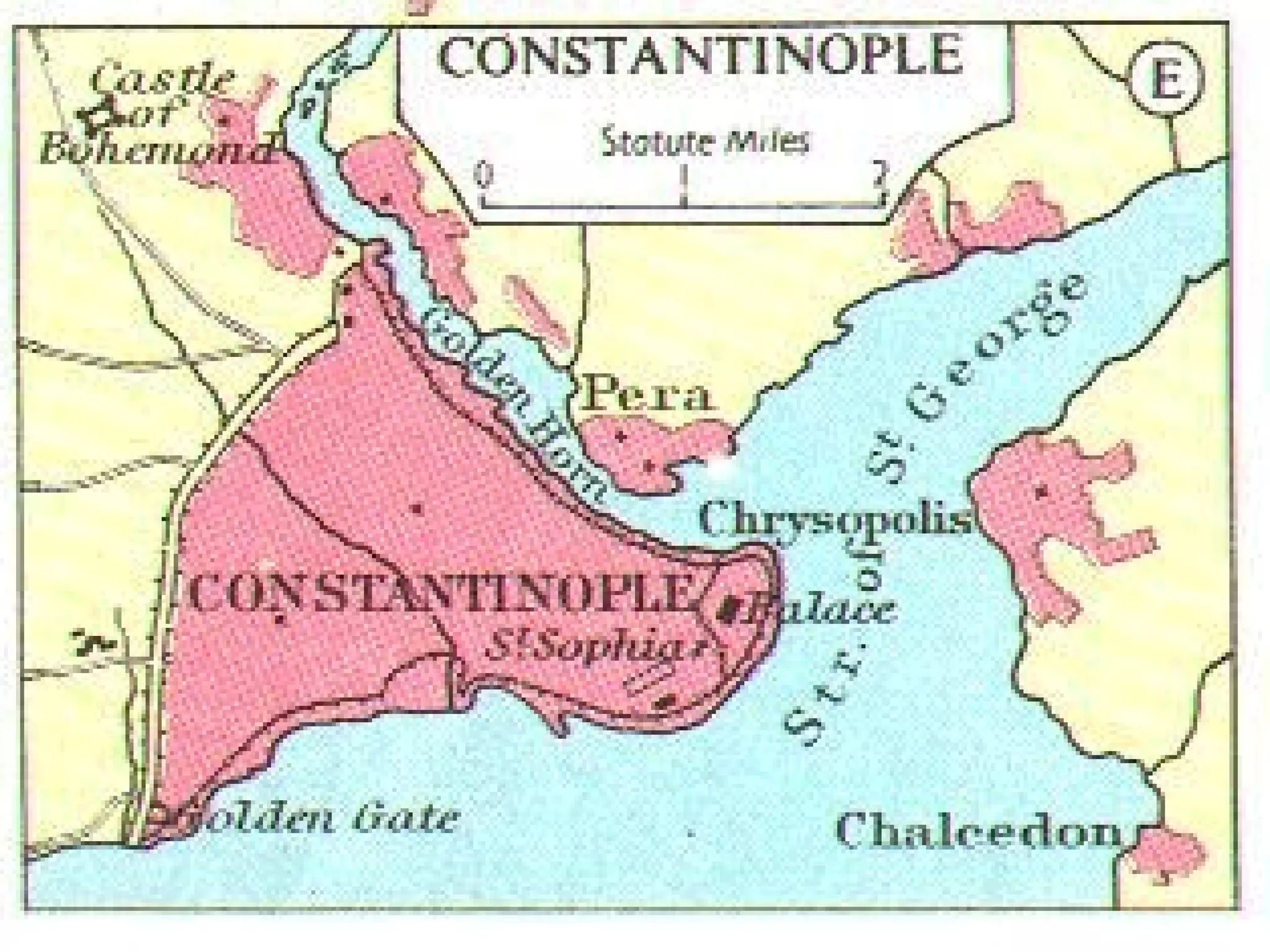
In 395, the Roman Empire was split by warfare and barbarian attacks.  The eastern portion was centered around  Constantinople  between the Black and    Mediterranean  Seas.
 
 
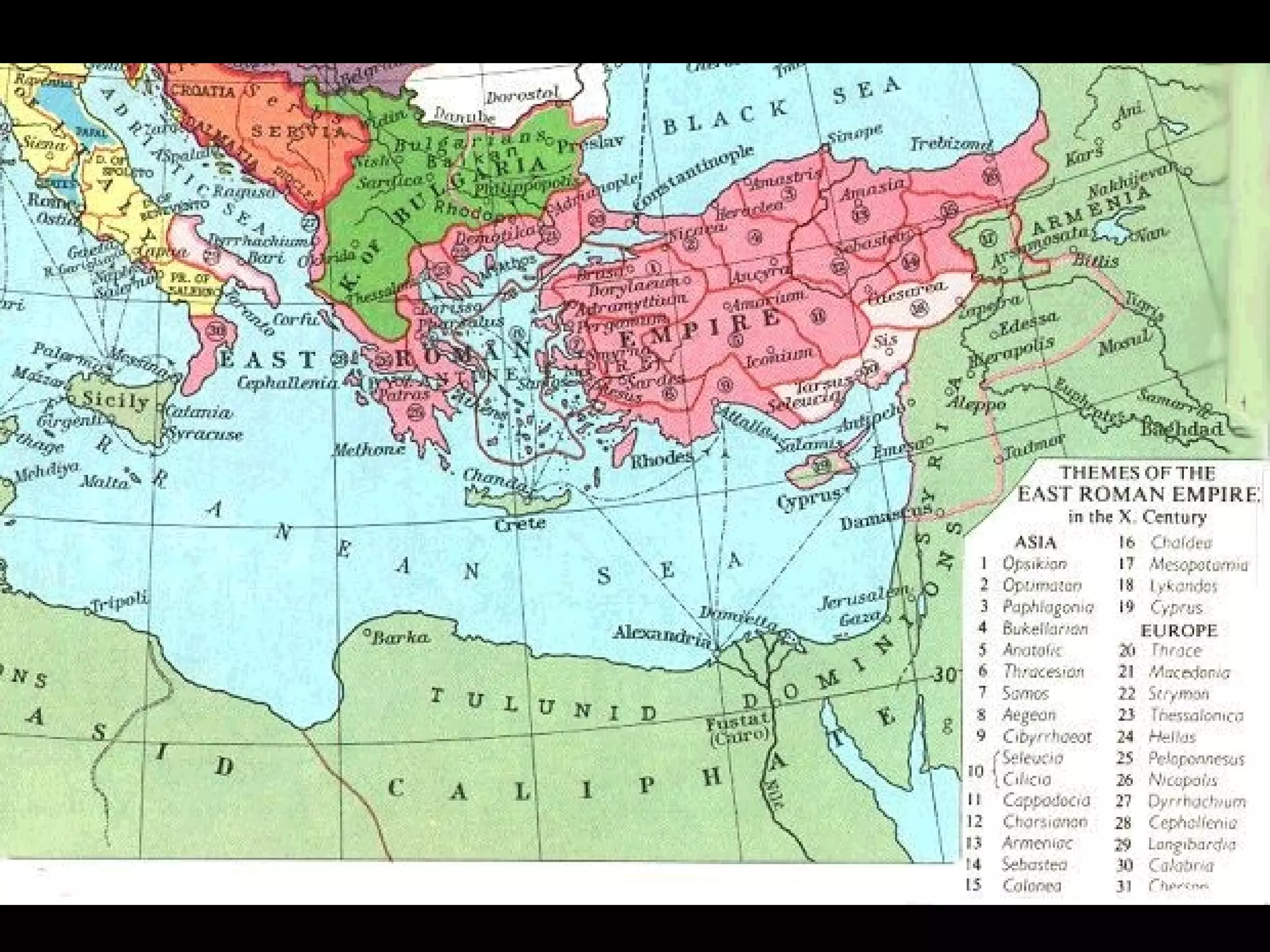
The Byzantine Empire was a  true international empire , joining the Balkans, Asia Minor, North Africa, Syria and had Arabs, Jews, Christians, Slavs,    and Turks.  It was a “multi-ethnic Christian state.”
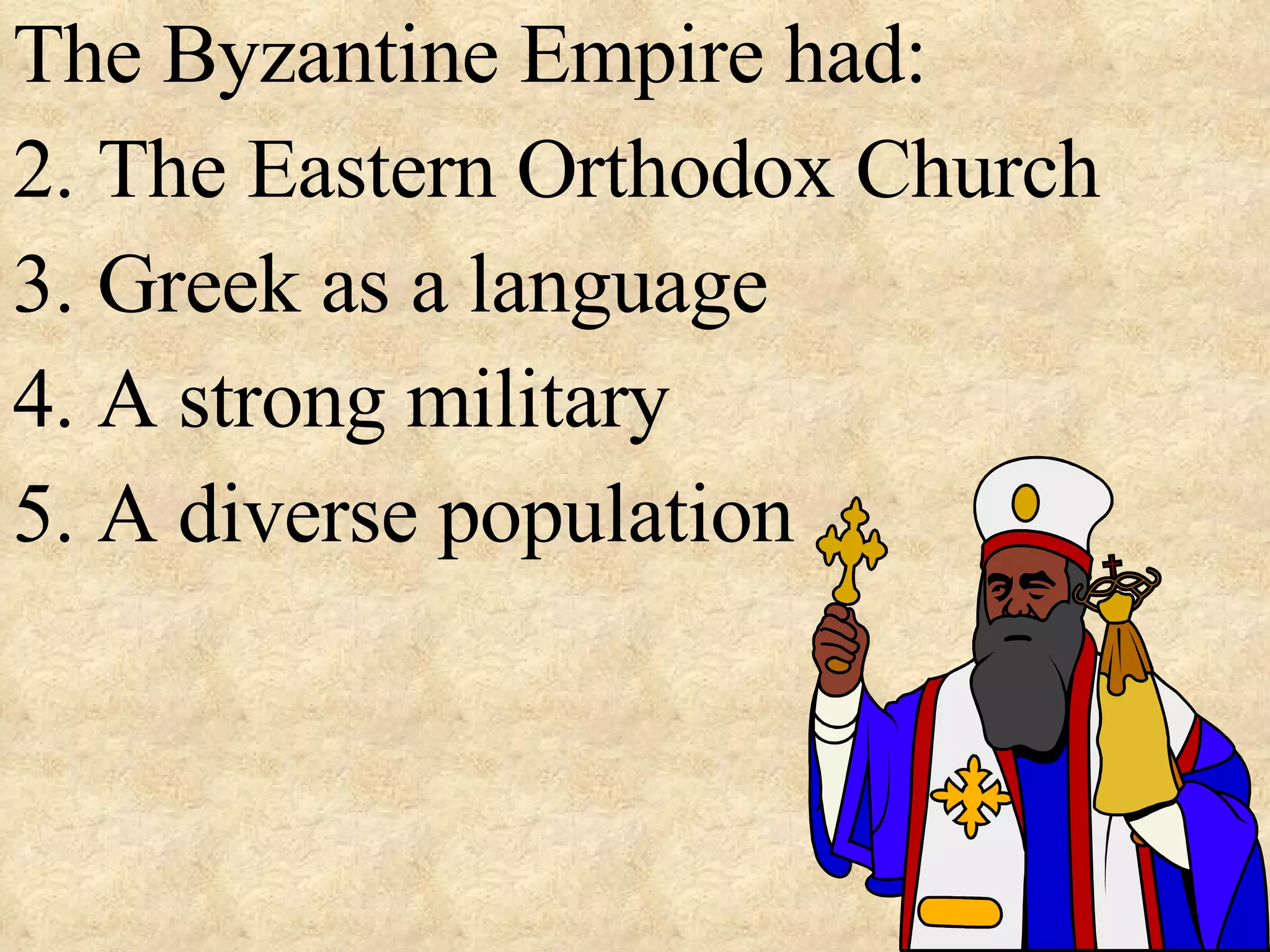
The Byzantine Empire had: The Eastern Orthodox Church Greek as a language A strong military A diverse population
Constantinople  itself was highly defensible. 1.  Sat on a peninsula with water on 3 sides. 2.  Only one land access.  Build several large walls. 3.  Good access to resources in a siege.
 
 
Byzantine religion     was complex and a    part of everyone’s    daily life.  Several  religious  controversies were    a source of great  debate in the  empire.
In the 700’s,  John of Damascus  led a movement called  Iconoclasm . This was a belief that  Icons  (pictures and images of Jesus and Saints) could be  worshiped, venerated,  and held as a source    of holy power.
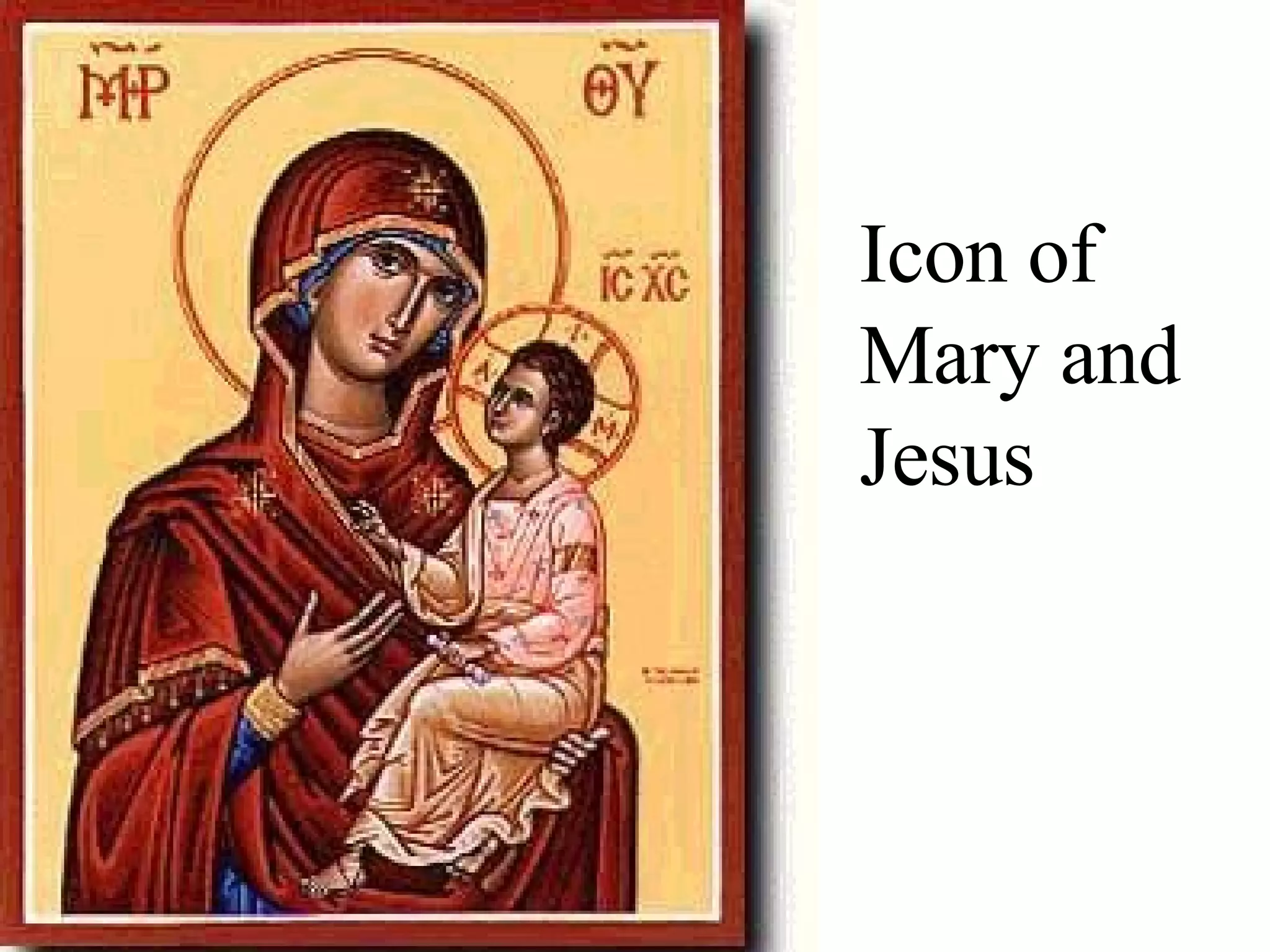
Icon of Mary and Jesus
Many theologians disagreed.  Emperor  Leo III  declared that Iconoclasm was  not legal in 726.
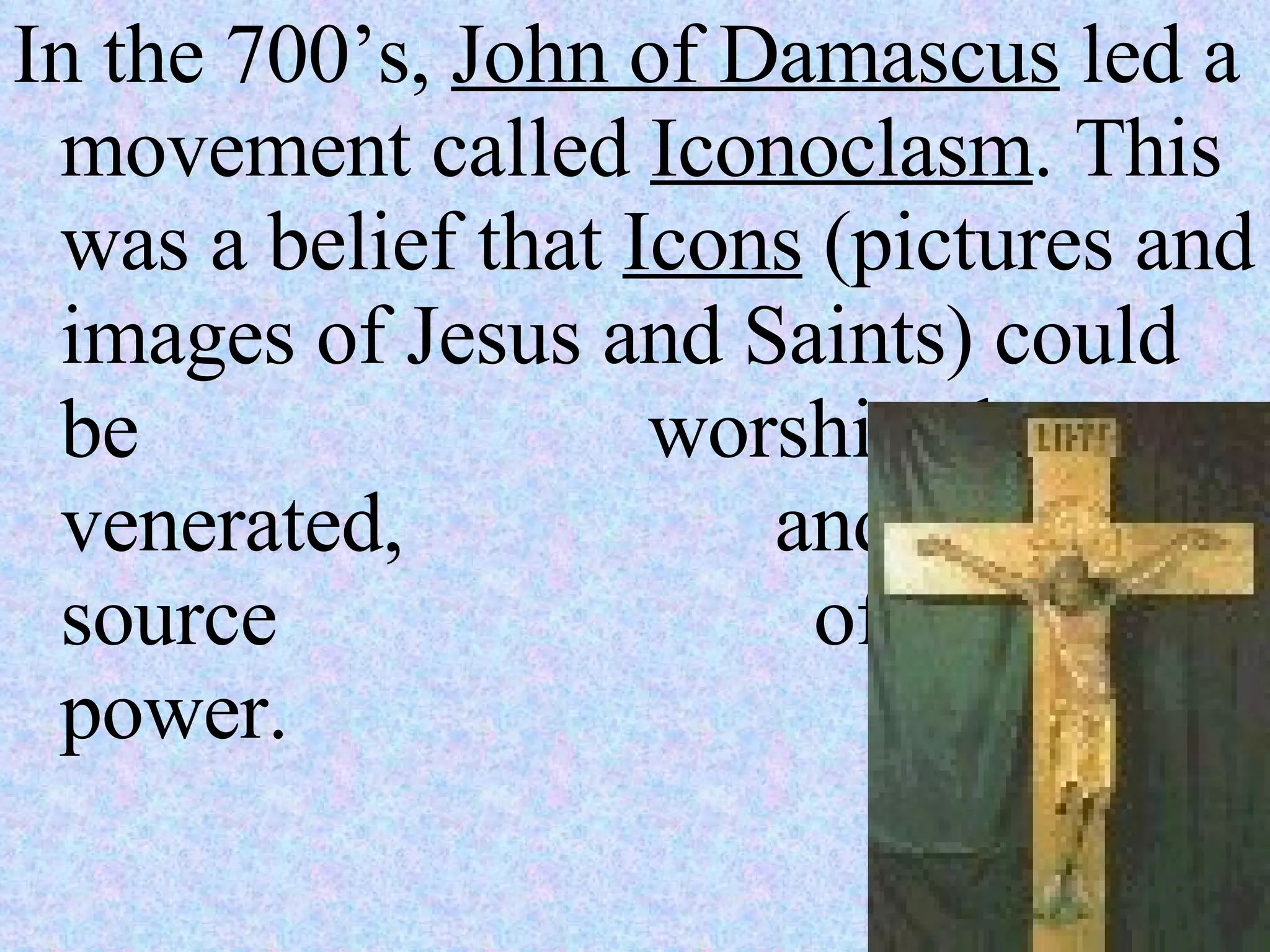
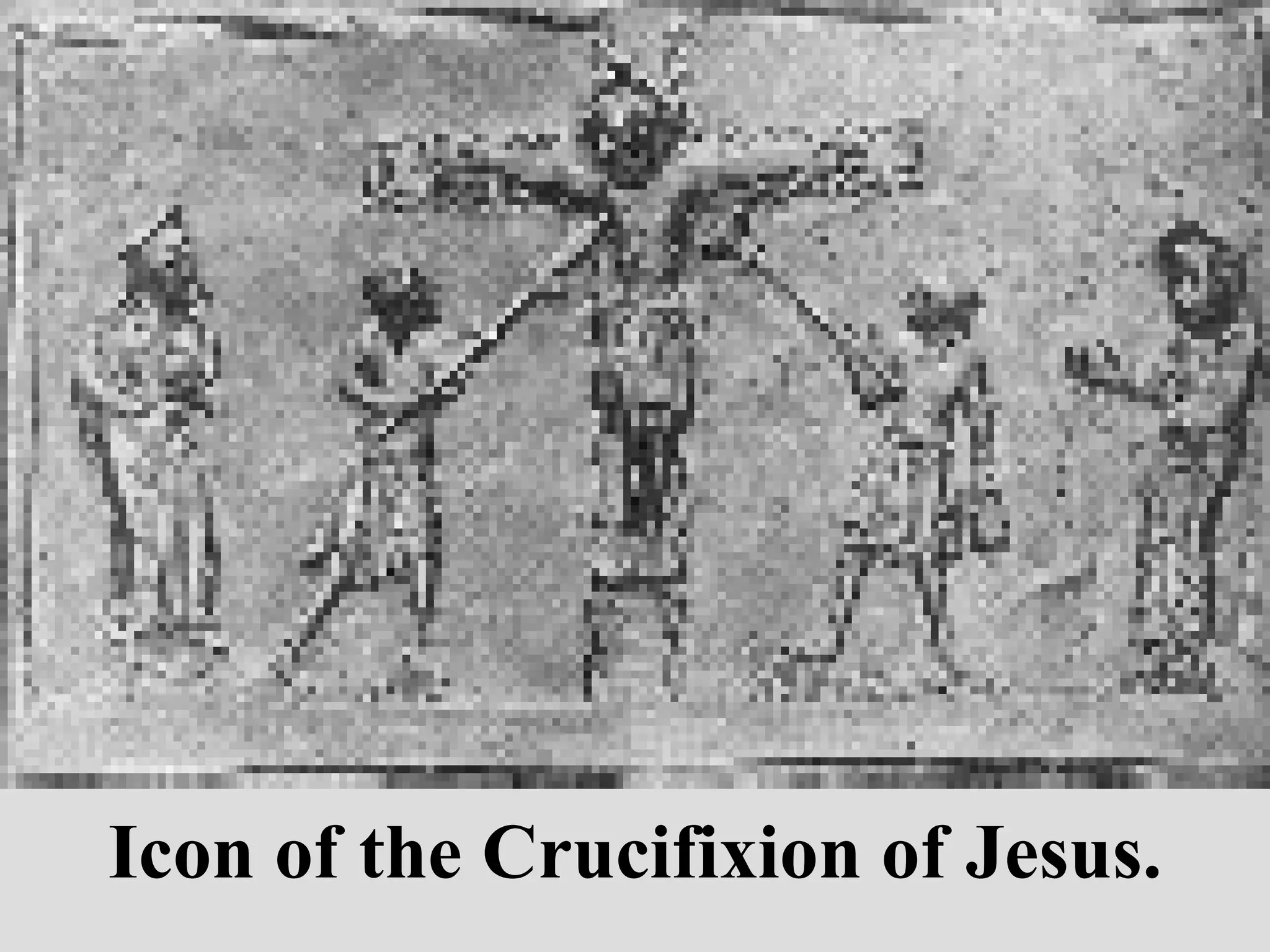
Icon of the Crucifixion of Jesus.
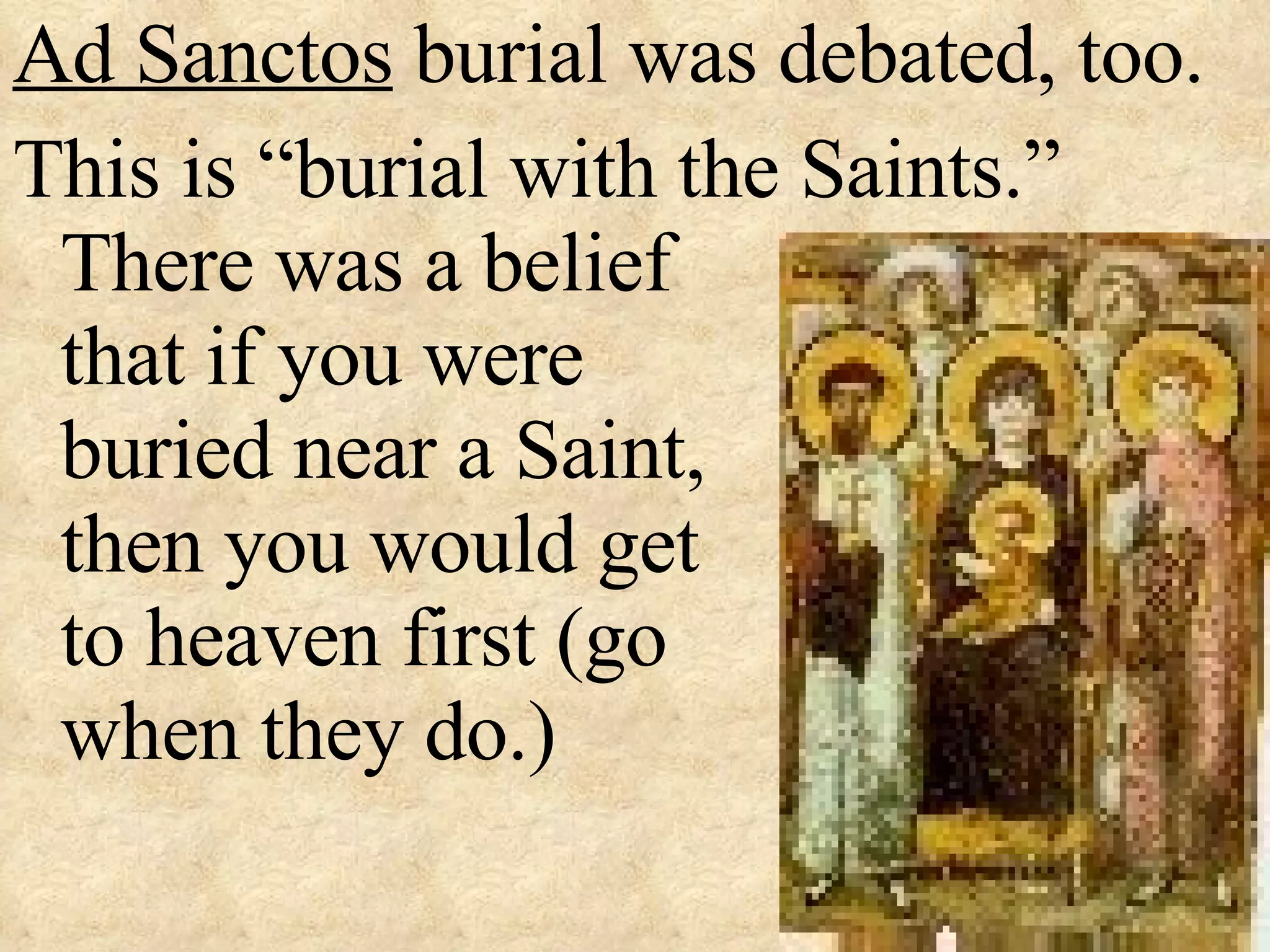
Ad Sanctos  burial was debated, too. This is “burial with the Saints.”  There was a belief  that if you were   buried near a Saint,    then you would get    to heaven first (go  when they do.)
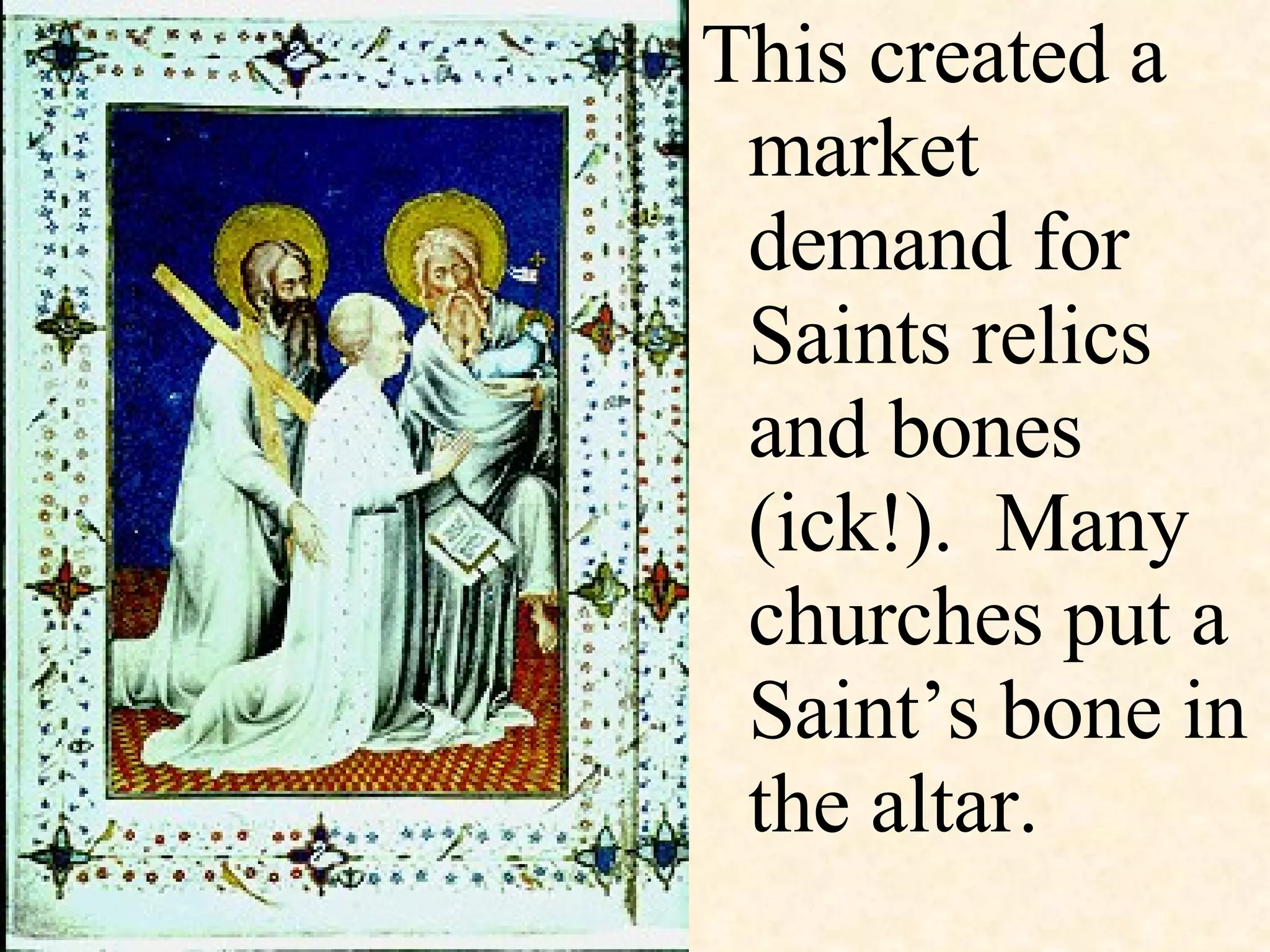
This created a market demand for Saints relics and bones (ick!).  Many churches put a Saint’s bone in the altar.
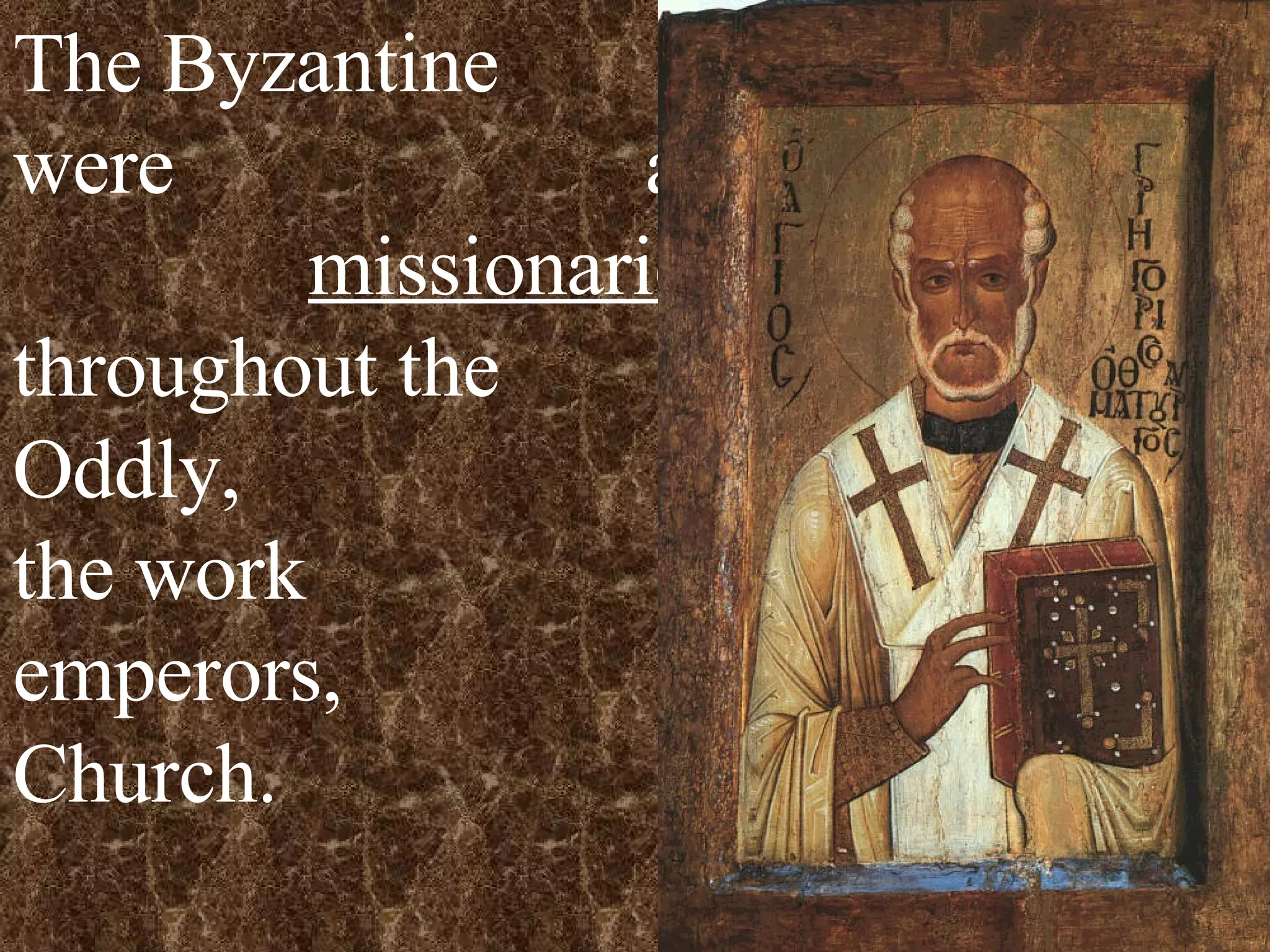
The Byzantine   emperors were    active in sending    missionaries     throughout the    world.  Oddly,  this was the work  of the emperors,  not the Church.
Sometimes, a foreign ruler would ask the Byzantines for a missionary!  Ratislav of Moravia  asked  Michael III  of Constantinople to send one, but the Moravians had no alphabet, so how could they use the Bible?
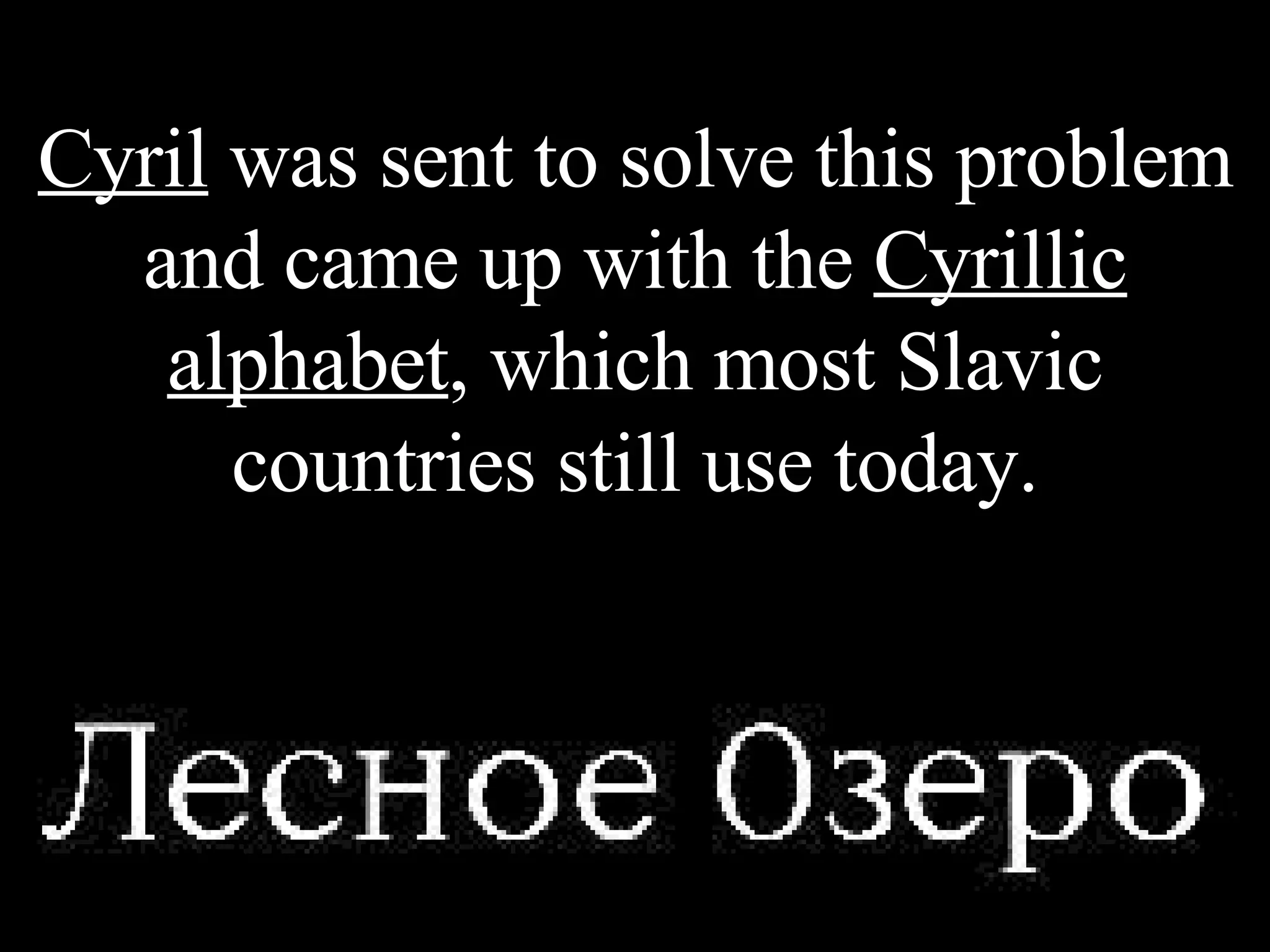
Cyril  was sent to solve this problem and came up with the  Cyrillic alphabet , which most Slavic countries still use today.
Why the Emperor, not the Church? 1.  Control contact with foreigners. 2.  Control the content of the message. 3.  Pick the missionaries. 4.  Expression of power over the Church.
As time has passed, we see that the Byzantine  Empire was: 1.  A major world culture. 2.  The medieval continuation of the Greek and Roman states. 3.  Culturally diverse. 4.  Religiously active. 5.  Strategically important.

10i Byzantines

  • 1.
    The Byzantine Empire300 AD - 1500 AD
  • 2.
    In 395, theRoman Empire was split by warfare and barbarian attacks. The eastern portion was centered around Constantinople between the Black and Mediterranean Seas.
  • 3.
  • 4.
  • 5.
    The Byzantine Empirewas a true international empire , joining the Balkans, Asia Minor, North Africa, Syria and had Arabs, Jews, Christians, Slavs, and Turks. It was a “multi-ethnic Christian state.”
  • 6.
    The Byzantine Empirehad: The Eastern Orthodox Church Greek as a language A strong military A diverse population
  • 7.
    Constantinople itselfwas highly defensible. 1. Sat on a peninsula with water on 3 sides. 2. Only one land access. Build several large walls. 3. Good access to resources in a siege.
  • 8.
  • 9.
  • 10.
    Byzantine religion was complex and a part of everyone’s daily life. Several religious controversies were a source of great debate in the empire.
  • 11.
    In the 700’s, John of Damascus led a movement called Iconoclasm . This was a belief that Icons (pictures and images of Jesus and Saints) could be worshiped, venerated, and held as a source of holy power.
  • 12.
    Icon of Maryand Jesus
  • 13.
    Many theologians disagreed. Emperor Leo III declared that Iconoclasm was not legal in 726.
  • 14.
    Icon of theCrucifixion of Jesus.
  • 15.
    Ad Sanctos burial was debated, too. This is “burial with the Saints.” There was a belief that if you were buried near a Saint, then you would get to heaven first (go when they do.)
  • 16.
    This created amarket demand for Saints relics and bones (ick!). Many churches put a Saint’s bone in the altar.
  • 17.
    The Byzantine emperors were active in sending missionaries throughout the world. Oddly, this was the work of the emperors, not the Church.
  • 18.
    Sometimes, a foreignruler would ask the Byzantines for a missionary! Ratislav of Moravia asked Michael III of Constantinople to send one, but the Moravians had no alphabet, so how could they use the Bible?
  • 19.
    Cyril wassent to solve this problem and came up with the Cyrillic alphabet , which most Slavic countries still use today.
  • 20.
    Why the Emperor,not the Church? 1. Control contact with foreigners. 2. Control the content of the message. 3. Pick the missionaries. 4. Expression of power over the Church.
  • 21.
    As time haspassed, we see that the Byzantine Empire was: 1. A major world culture. 2. The medieval continuation of the Greek and Roman states. 3. Culturally diverse. 4. Religiously active. 5. Strategically important.