By Laura Tafoya
   Objective: Deliver        1.) information goes to
    results that are better   management
    today than they were      2.) information is
    yesterday                 reviewed, root causes and
   CQI is the key to         best approach determined
    managing and              3.) plan of action developed
    improving quality for     4.) progress is measured
    external and internal     periodically
    customers
Step 1
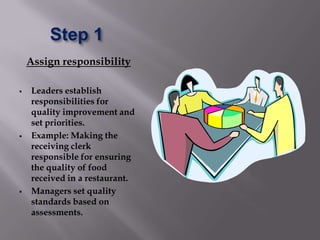
    Assign responsibility

   Leaders establish
    responsibilities for
    quality improvement and
    set priorities.
   Example: Making the
    receiving clerk
    responsible for ensuring
    the quality of food
    received in a restaurant.
   Managers set quality
    standards based on
    assessments.
Delineate Scope of Service
Step 2
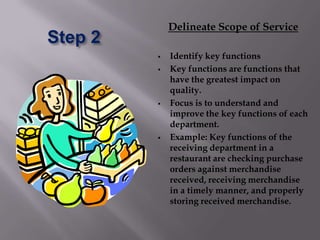
            Identify key functions
            Key functions are functions that
             have the greatest impact on
             quality.
            Focus is to understand and
             improve the key functions of each
             department.
            Example: Key functions of the
             receiving department in a
             restaurant are checking purchase
             orders against merchandise
             received, receiving merchandise
             in a timely manner, and properly
             storing received merchandise.
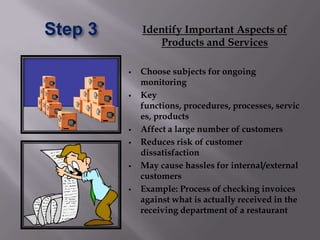
Step 3       Identify Important Aspects of
                Products and Services

            Choose subjects for ongoing
             monitoring
            Key
             functions, procedures, processes, servic
             es, products
            Affect a large number of customers
            Reduces risk of customer
             dissatisfaction
            May cause hassles for internal/external
             customers
            Example: Process of checking invoices
             against what is actually received in the
             receiving department of a restaurant
Step 4
          Identify Indicators

   Indicators measure the quality of
    products and services
   Relate to products, services, and
    experiences
   Compare quality of products and
    services against an established
    standard
   Example: Requiring the receiving
    clerk to achieve 95% accuracy on
    ensuring the correct merchandise was
    delivered
Step 5          Establish Thresholds for
                       Evaluation

            Thresholds help determine if an
             intensive evaluation of a key function
             or process is needed
            Each threshold is related to an
             indicator
            Acceptable level of performance
            Example: Checking in a delivery in 30
             minutes is an acceptable level of
             performance
Step 6
Collect and Organize Data

   Data collected from
    monitoring efforts
   Data used to identify
    problems in each
    department
   Action items developed
    when current state doesn’t
    meet ideal
   Action items implemented
    to close gap between ideal
    and existing state
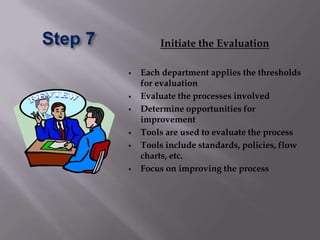
Step 7           Initiate the Evaluation

            Each department applies the thresholds
             for evaluation
            Evaluate the processes involved
            Determine opportunities for
             improvement
            Tools are used to evaluate the process
            Tools include standards, policies, flow
             charts, etc.
            Focus on improving the process
Step 8
      Take Action to Improve
        Products/Services
   Direct actions towards identifying
    the root cause of a problem
   Possible Actions:
         Systems Problems– changes in
          communication channels, adjust
          staffing, equipment changes
         Knowledge Problems– associate
          training, make data/reports
          accessible, circulate and review
          info
         Behavior Problems– coaching,
          counseling, change assignment
          or duties
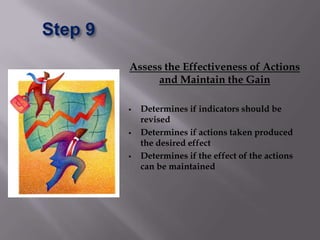
Step 9
         Assess the Effectiveness of Actions
              and Maintain the Gain

            Determines if indicators should be
             revised
            Determines if actions taken produced
             the desired effect
            Determines if the effect of the actions
             can be maintained
Step 10
      Communicate Results to
       Relevant Individuals

   Reports include results of
    monitoring process
   Reports consist of
    conclusions, recommendations, actio
    ns, and follow-up
   Make reports available to all
    associates involved
   Example: Invoices and inventory
    reports should be given to receiving
    personnel
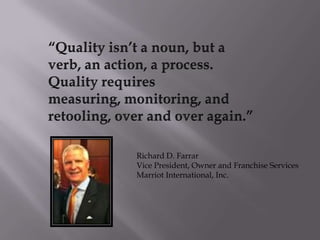
Richard D. Farrar
Vice President, Owner and Franchise Services
Marriot International, Inc.

10 steps to cqi

  • 1.
  • 2.
    Objective: Deliver 1.) information goes to results that are better management today than they were 2.) information is yesterday reviewed, root causes and  CQI is the key to best approach determined managing and 3.) plan of action developed improving quality for 4.) progress is measured external and internal periodically customers
  • 3.
    Step 1 Assign responsibility  Leaders establish responsibilities for quality improvement and set priorities.  Example: Making the receiving clerk responsible for ensuring the quality of food received in a restaurant.  Managers set quality standards based on assessments.
  • 4.
    Delineate Scope ofService Step 2  Identify key functions  Key functions are functions that have the greatest impact on quality.  Focus is to understand and improve the key functions of each department.  Example: Key functions of the receiving department in a restaurant are checking purchase orders against merchandise received, receiving merchandise in a timely manner, and properly storing received merchandise.
  • 5.
    Step 3 Identify Important Aspects of Products and Services  Choose subjects for ongoing monitoring  Key functions, procedures, processes, servic es, products  Affect a large number of customers  Reduces risk of customer dissatisfaction  May cause hassles for internal/external customers  Example: Process of checking invoices against what is actually received in the receiving department of a restaurant
  • 6.
    Step 4 Identify Indicators  Indicators measure the quality of products and services  Relate to products, services, and experiences  Compare quality of products and services against an established standard  Example: Requiring the receiving clerk to achieve 95% accuracy on ensuring the correct merchandise was delivered
  • 7.
    Step 5 Establish Thresholds for Evaluation  Thresholds help determine if an intensive evaluation of a key function or process is needed  Each threshold is related to an indicator  Acceptable level of performance  Example: Checking in a delivery in 30 minutes is an acceptable level of performance
  • 8.
    Step 6 Collect andOrganize Data  Data collected from monitoring efforts  Data used to identify problems in each department  Action items developed when current state doesn’t meet ideal  Action items implemented to close gap between ideal and existing state
  • 9.
    Step 7 Initiate the Evaluation  Each department applies the thresholds for evaluation  Evaluate the processes involved  Determine opportunities for improvement  Tools are used to evaluate the process  Tools include standards, policies, flow charts, etc.  Focus on improving the process
  • 10.
    Step 8 Take Action to Improve Products/Services  Direct actions towards identifying the root cause of a problem  Possible Actions:  Systems Problems– changes in communication channels, adjust staffing, equipment changes  Knowledge Problems– associate training, make data/reports accessible, circulate and review info  Behavior Problems– coaching, counseling, change assignment or duties
  • 11.
    Step 9 Assess the Effectiveness of Actions and Maintain the Gain  Determines if indicators should be revised  Determines if actions taken produced the desired effect  Determines if the effect of the actions can be maintained
  • 12.
    Step 10 Communicate Results to Relevant Individuals  Reports include results of monitoring process  Reports consist of conclusions, recommendations, actio ns, and follow-up  Make reports available to all associates involved  Example: Invoices and inventory reports should be given to receiving personnel
  • 13.
    Richard D. Farrar VicePresident, Owner and Franchise Services Marriot International, Inc.

Editor's Notes

  • #4 Assigning responsibility to employees empowers them and makes them an integral part of the CQI process. It also gives managers a specific person to see if quality standards are not being met. Assessments let managers know who their customers are and what they expect or need. This allows managers to set quality standards and priorities.
  • #11 Associates are critical in development of improvement ideas. Implementation is more likely to succeed when we use associate’s ideas. Training should include knowledge of the property/business, departments, products, services, and processes.