
Le Corbusier
Le Corbusier
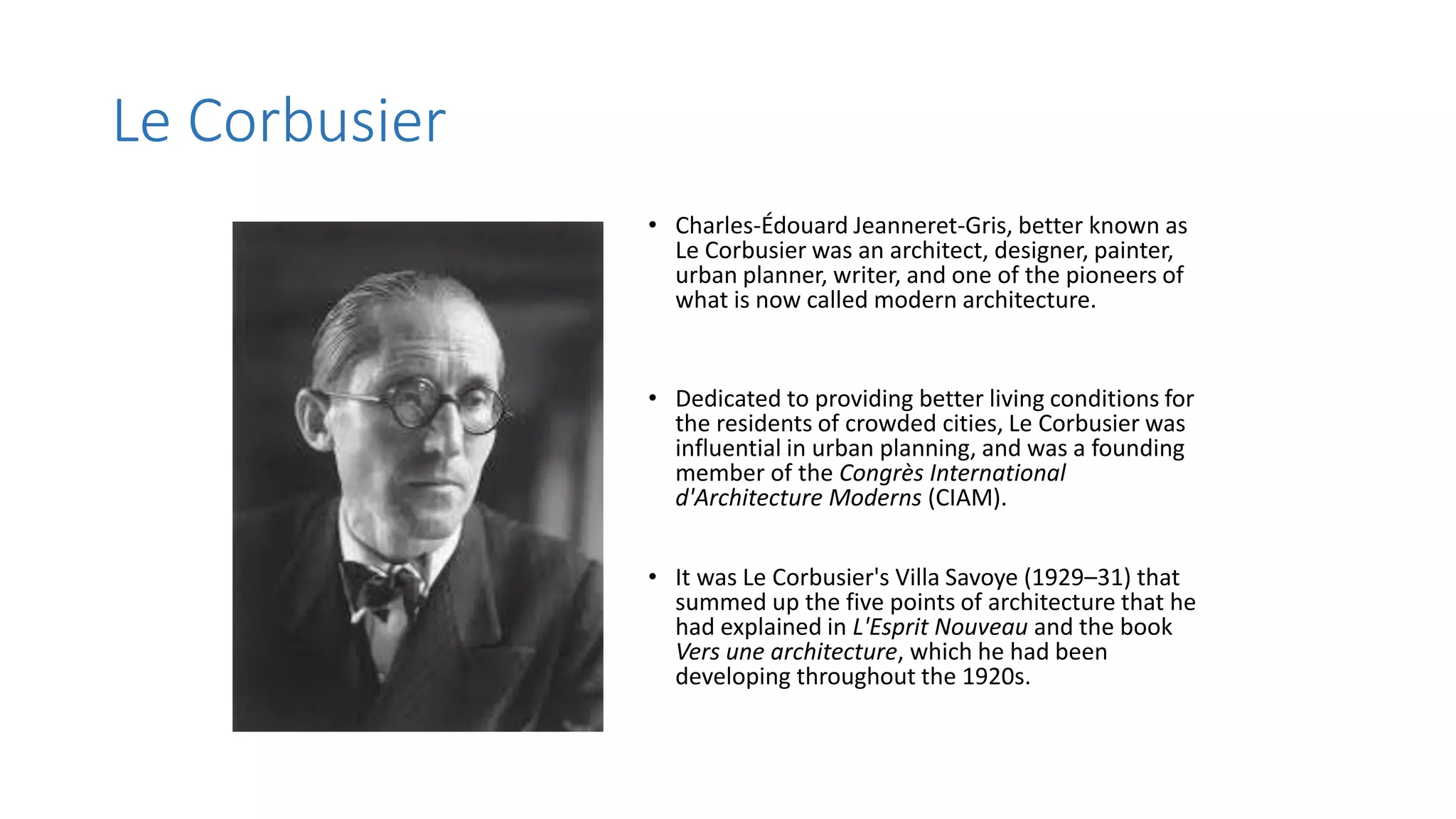
• Charles-Édouard Jeanneret-Gris, better known as
Le Corbusier was an architect, designer, painter,
urban planner, writer, and one of the pioneers of
what is now called modern architecture.
• Dedicated to providing better living conditions for
the residents of crowded cities, Le Corbusier was
influential in urban planning, and was a founding
member of the Congrès International
d'Architecture Moderns (CIAM).
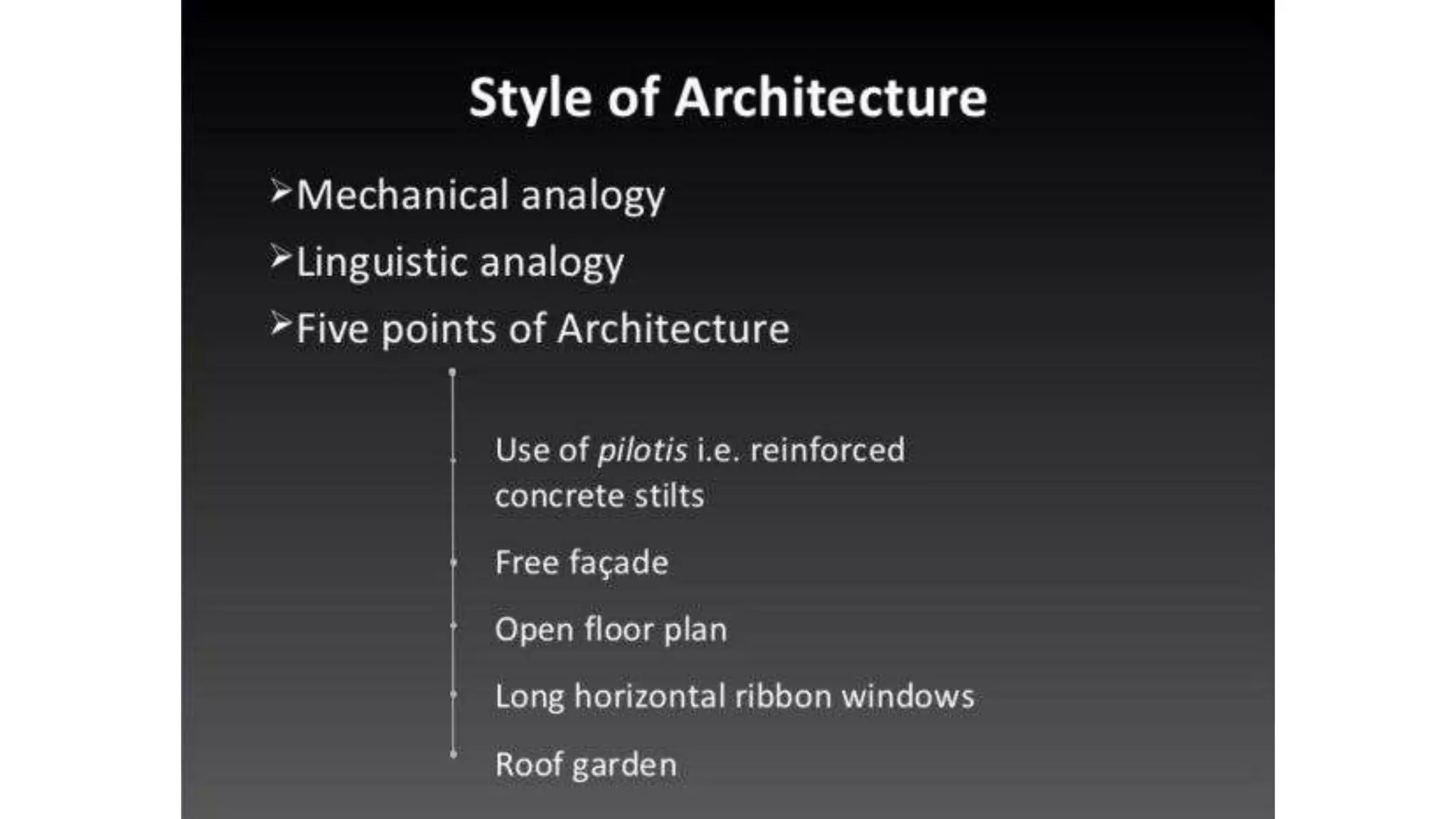
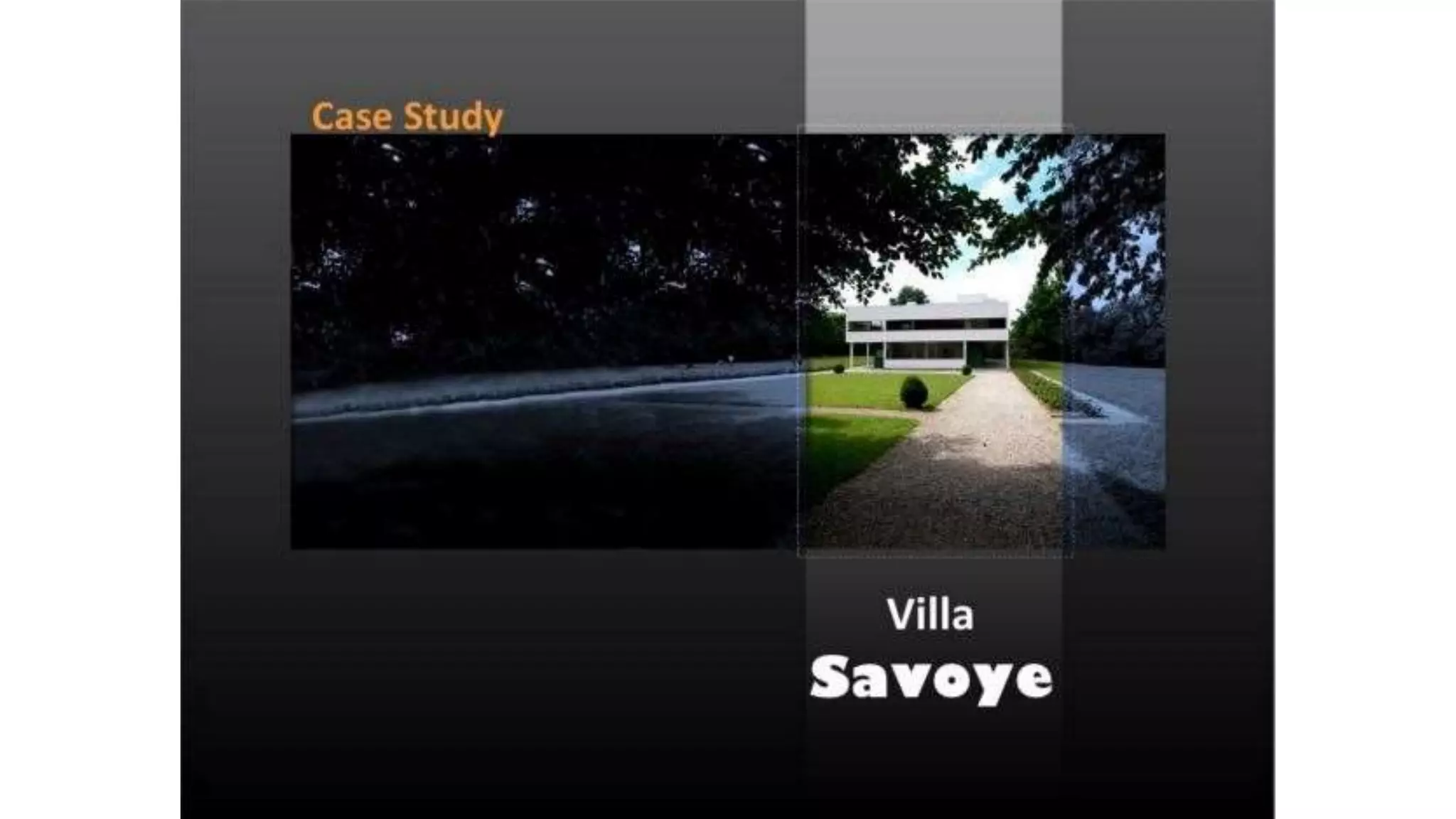
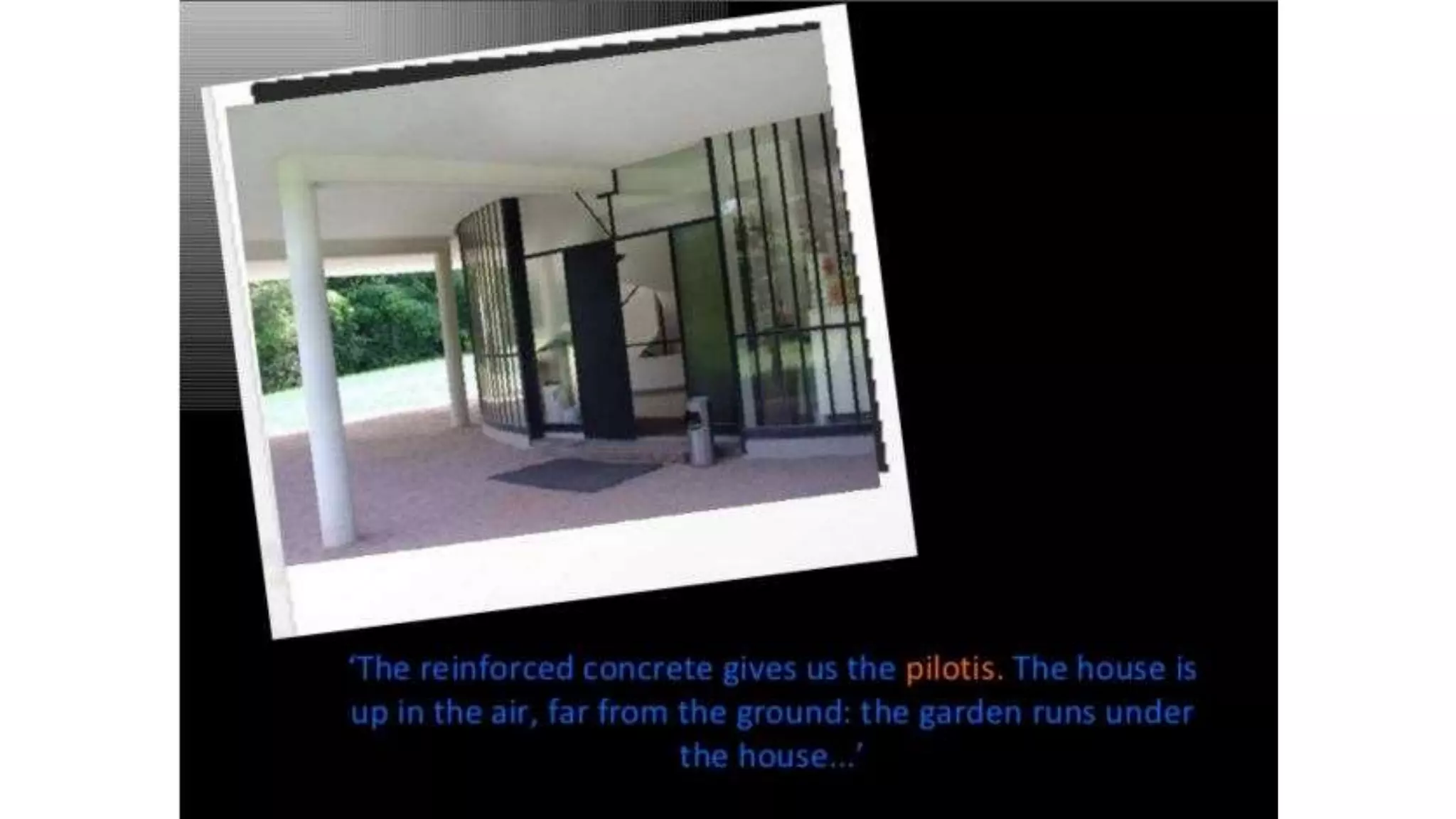
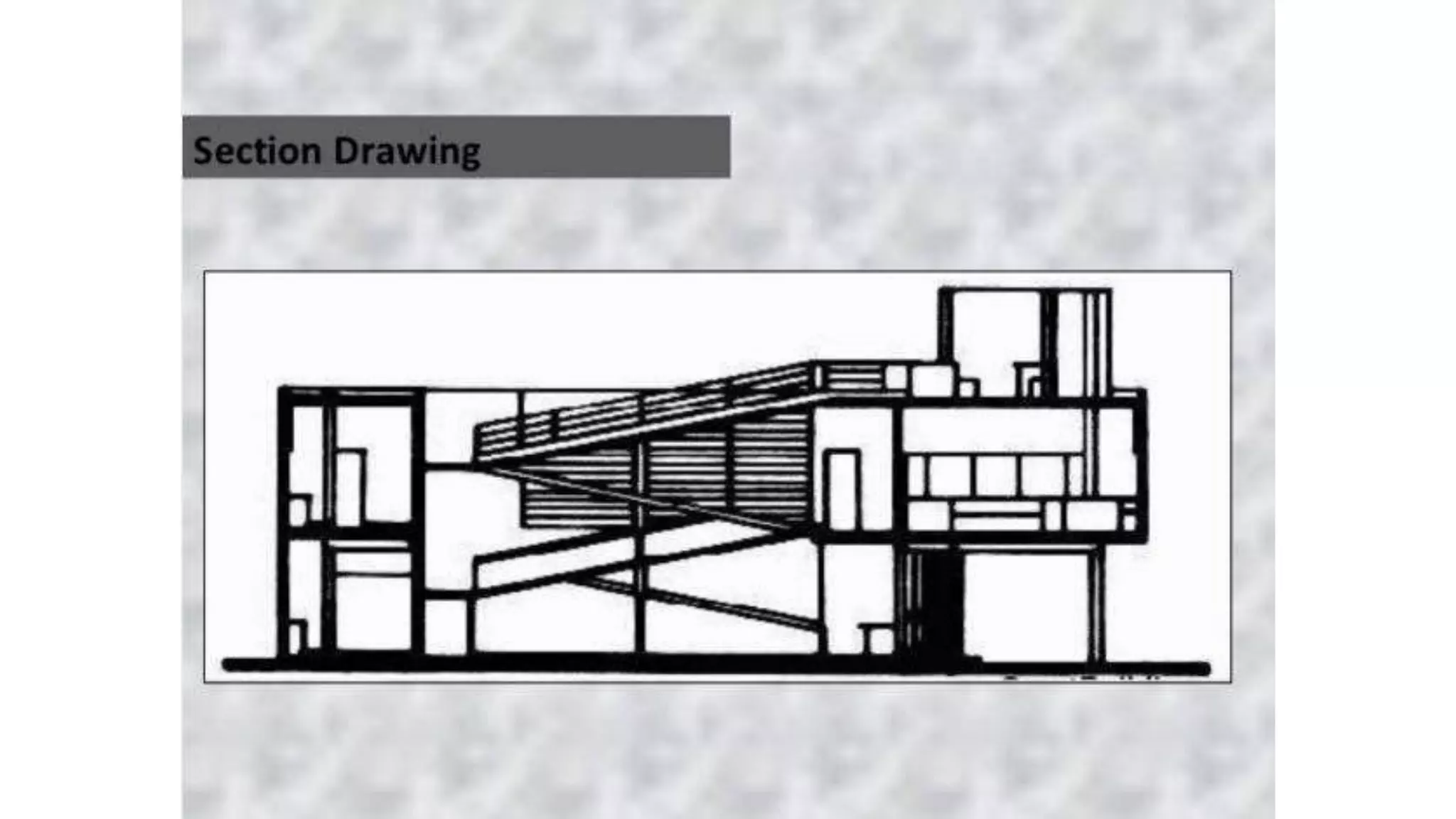
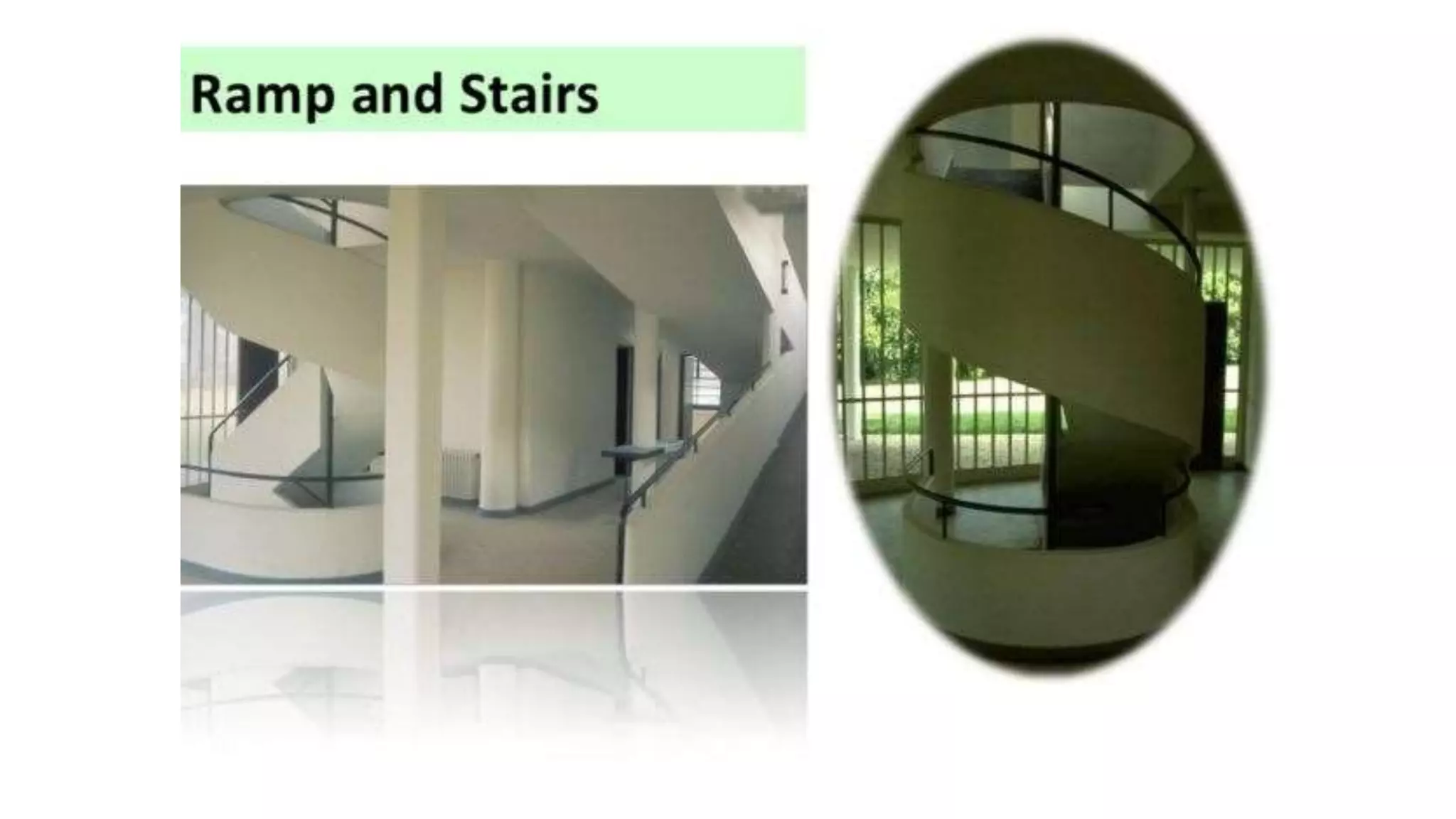
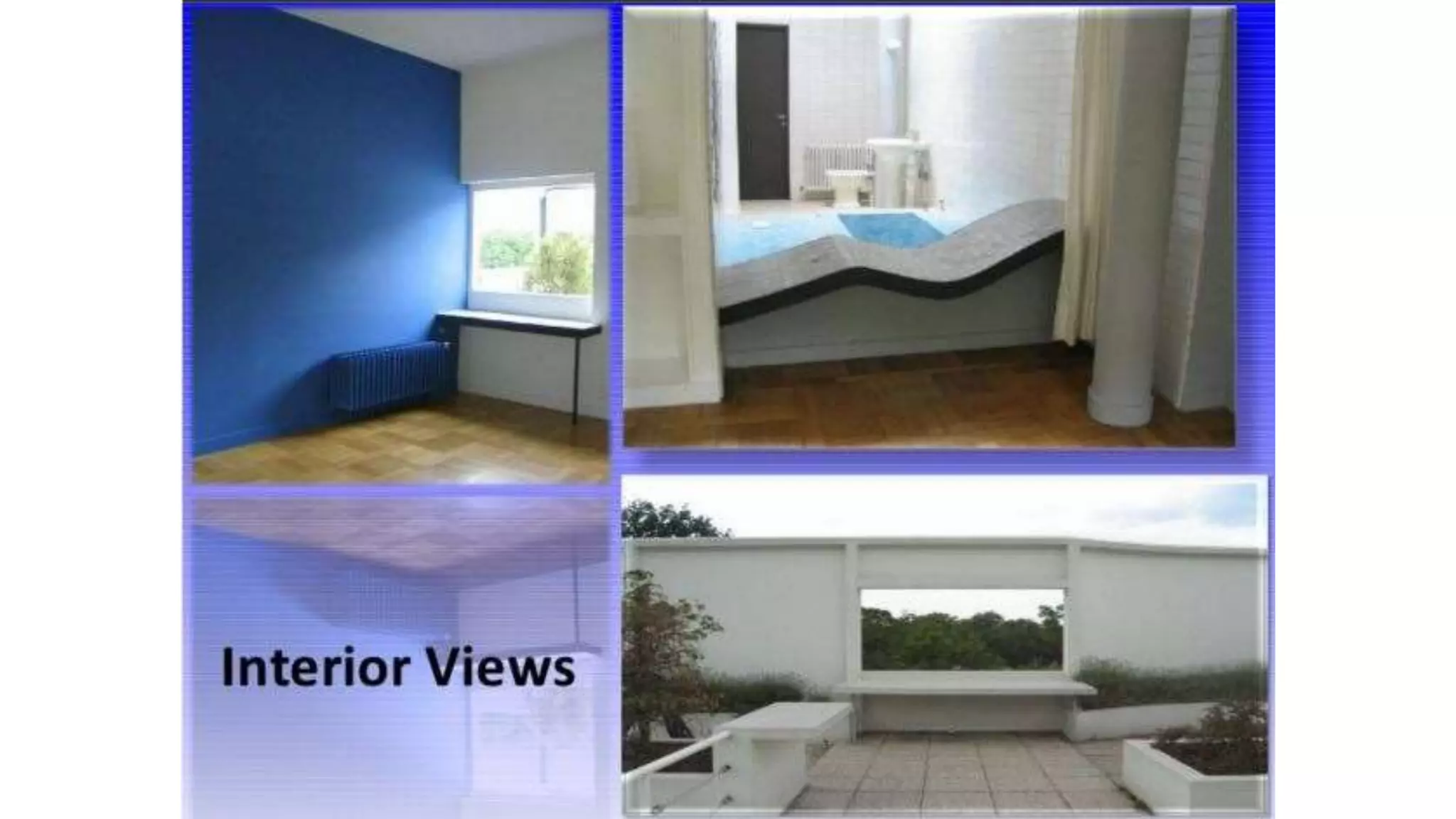
• It was Le Corbusier's Villa Savoye (1929–31) that
summed up the five points of architecture that he
had explained in L'Esprit Nouveau and the book
Vers une architecture, which he had been
developing throughout the 1920s.
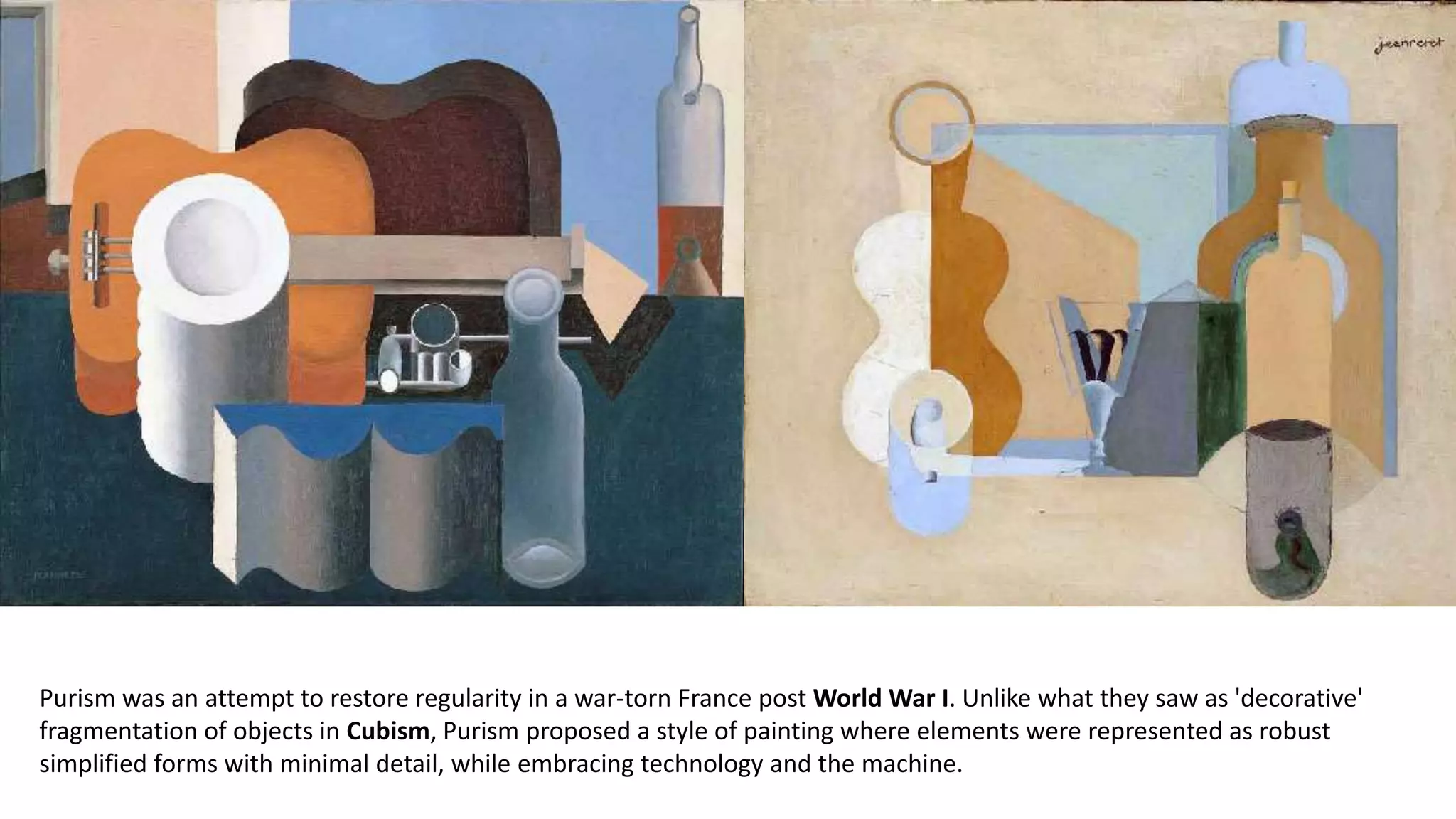
Purism was an attempt to restore regularity in a war-torn France post World War I. Unlike what they saw as 'decorative'
fragmentation of objects in Cubism, Purism proposed a style of painting where elements were represented as robust
simplified forms with minimal detail, while embracing technology and the machine.
Purism was an attempt to restore regularity in a war-torn France post World War I. Unlike what they saw as 'decorative'
fragmentation of objects in Cubism, Purism proposed a style of painting where elements were represented as robust
simplified forms with minimal detail, while embracing technology and the machine.
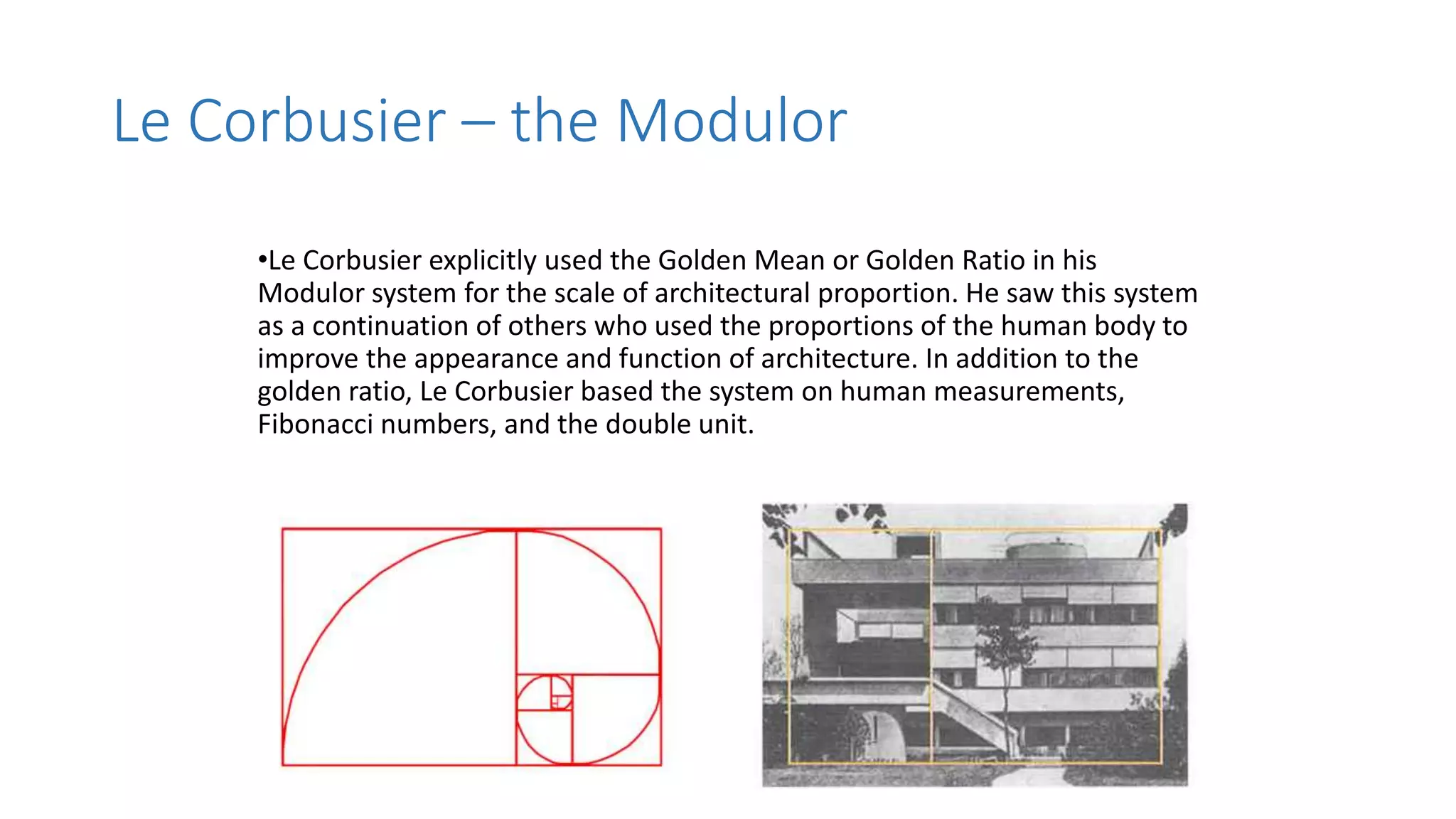
Le Corbusier – the Modulor
•Le Corbusier explicitly used the Golden Mean or Golden Ratio in his
Modulor system for the scale of architectural proportion. He saw this system
as a continuation of others who used the proportions of the human body to
improve the appearance and function of architecture. In addition to the
golden ratio, Le Corbusier based the system on human measurements,
Fibonacci numbers, and the double unit.
Major LeCorbusier Projects
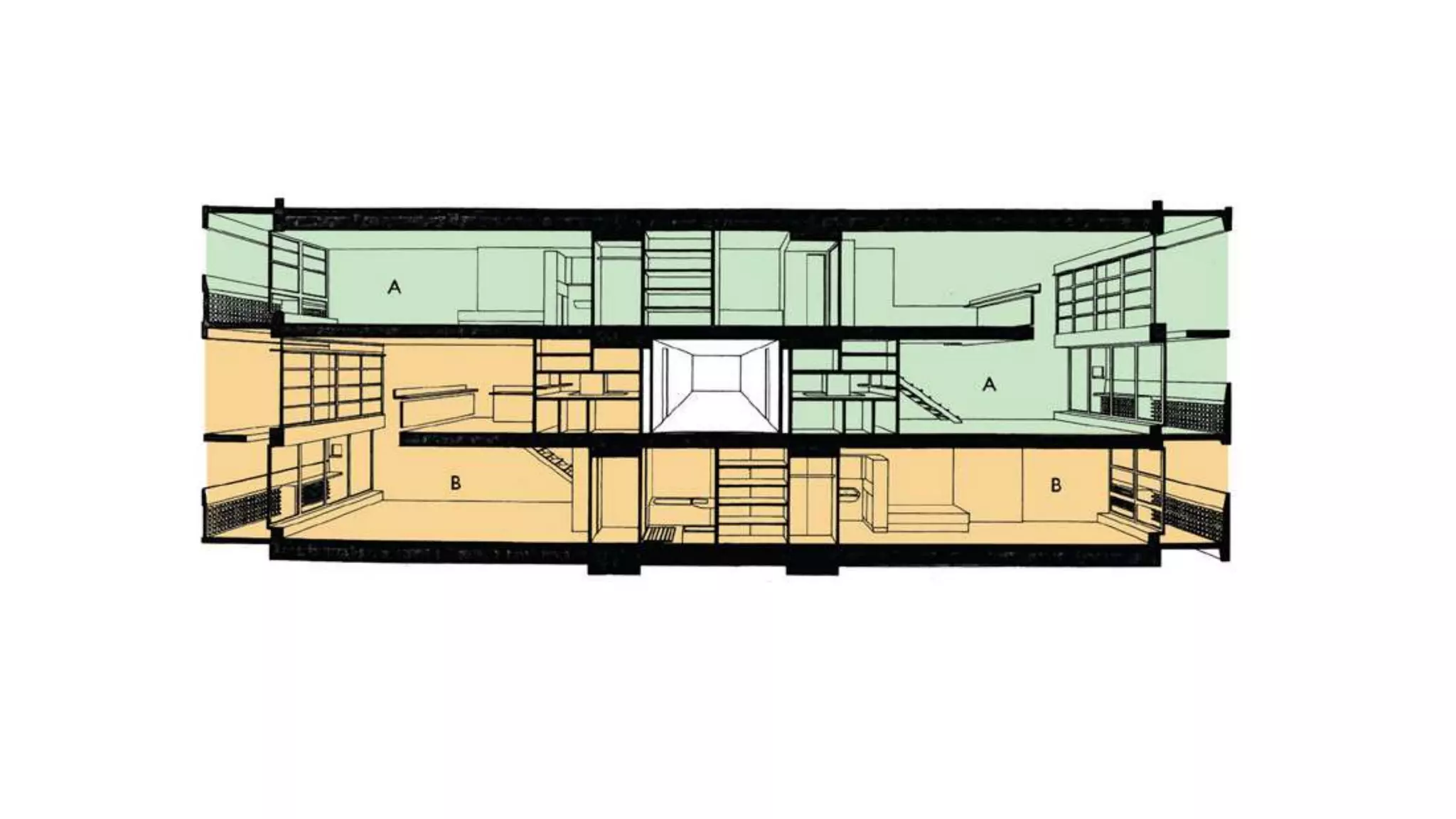
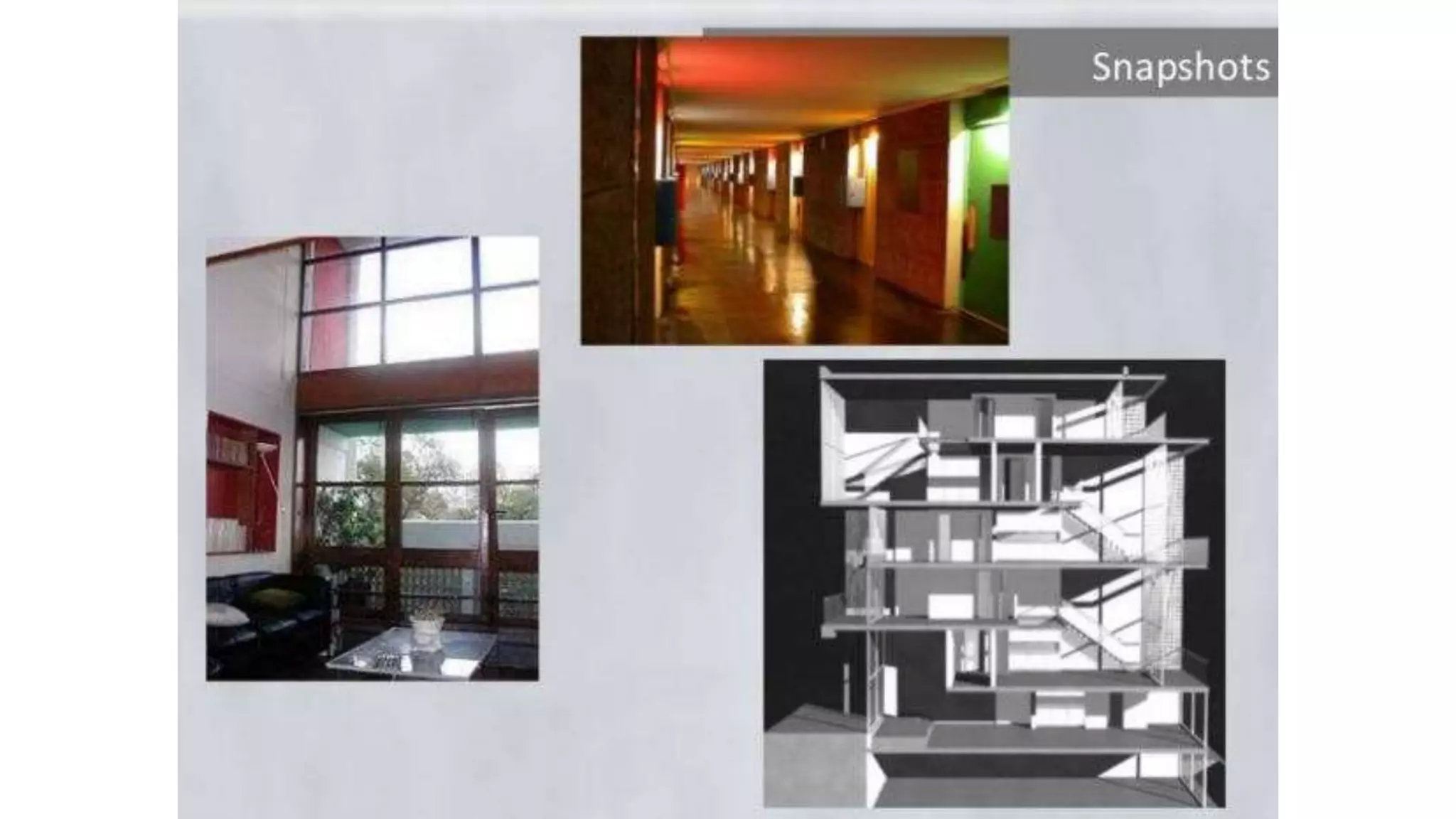
L’Unite d’Habitation
• First manifestation of an environment suited for modern life
• Influenced by his long term interest in urban planning
• Merseille, France
Completed in 1954
Formal Name:
The
Chapel of Notre
Dame du Haut
The original
Notre Dame
du Haut,
destroyed in
World War II
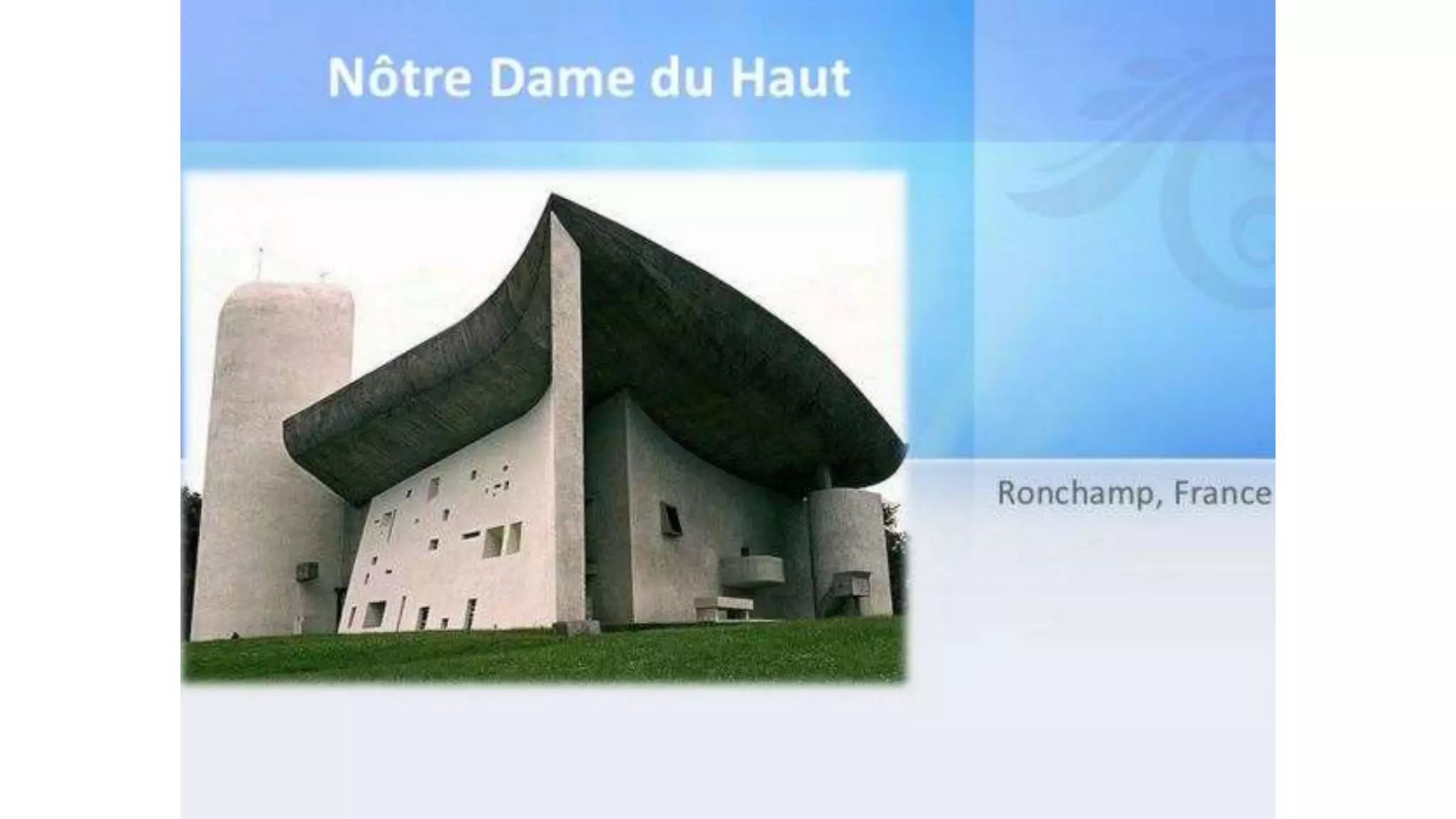
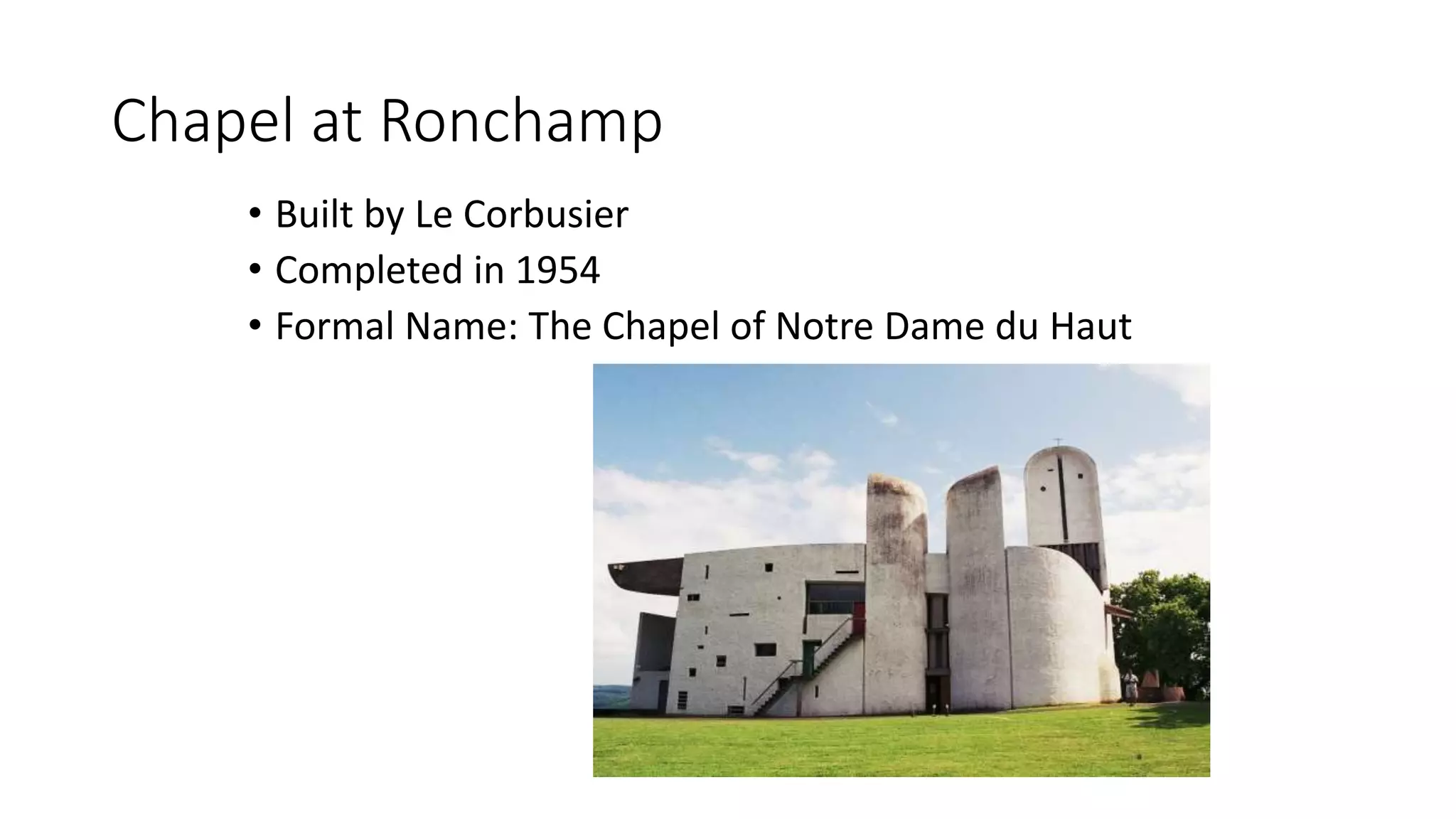
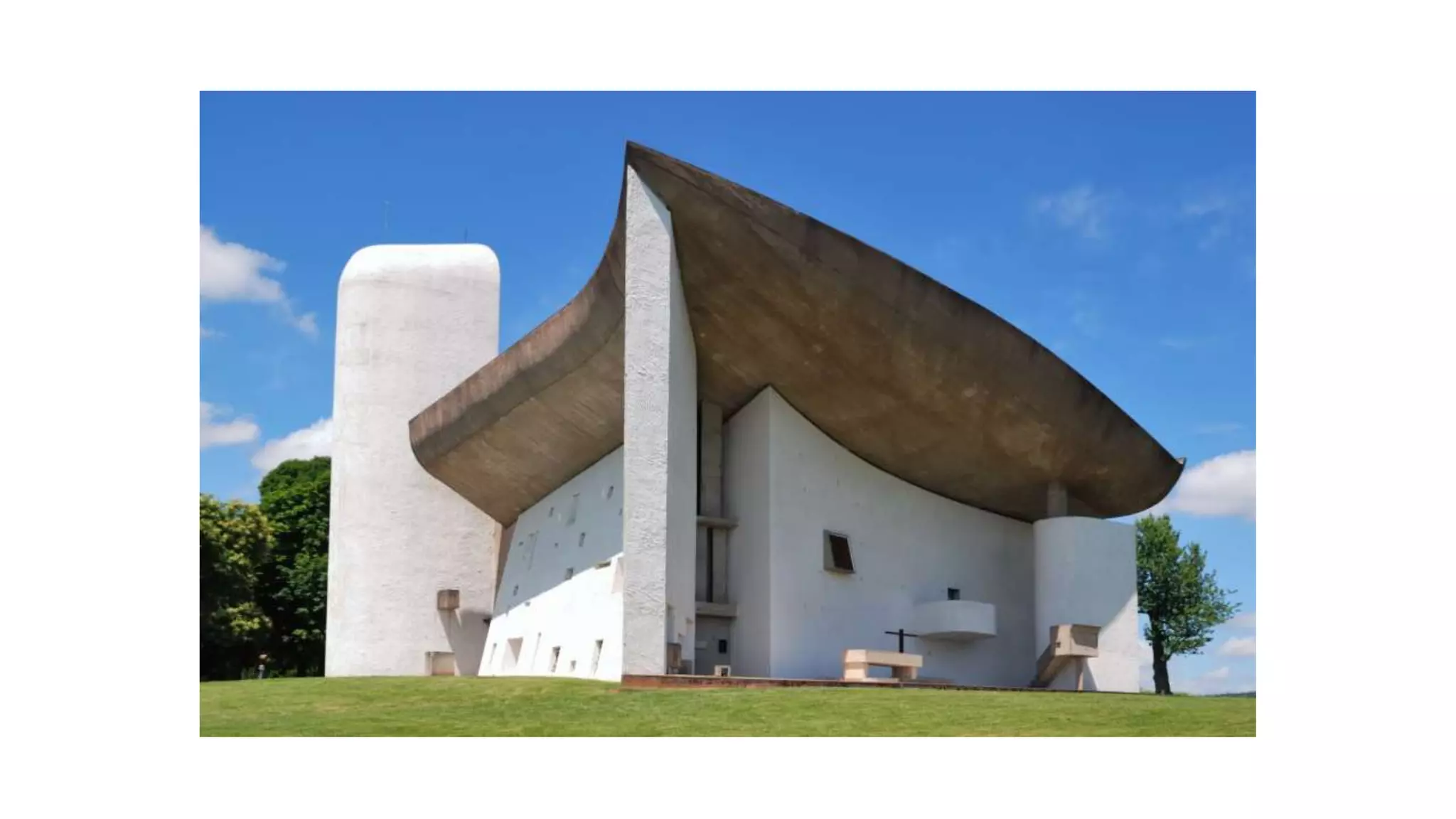
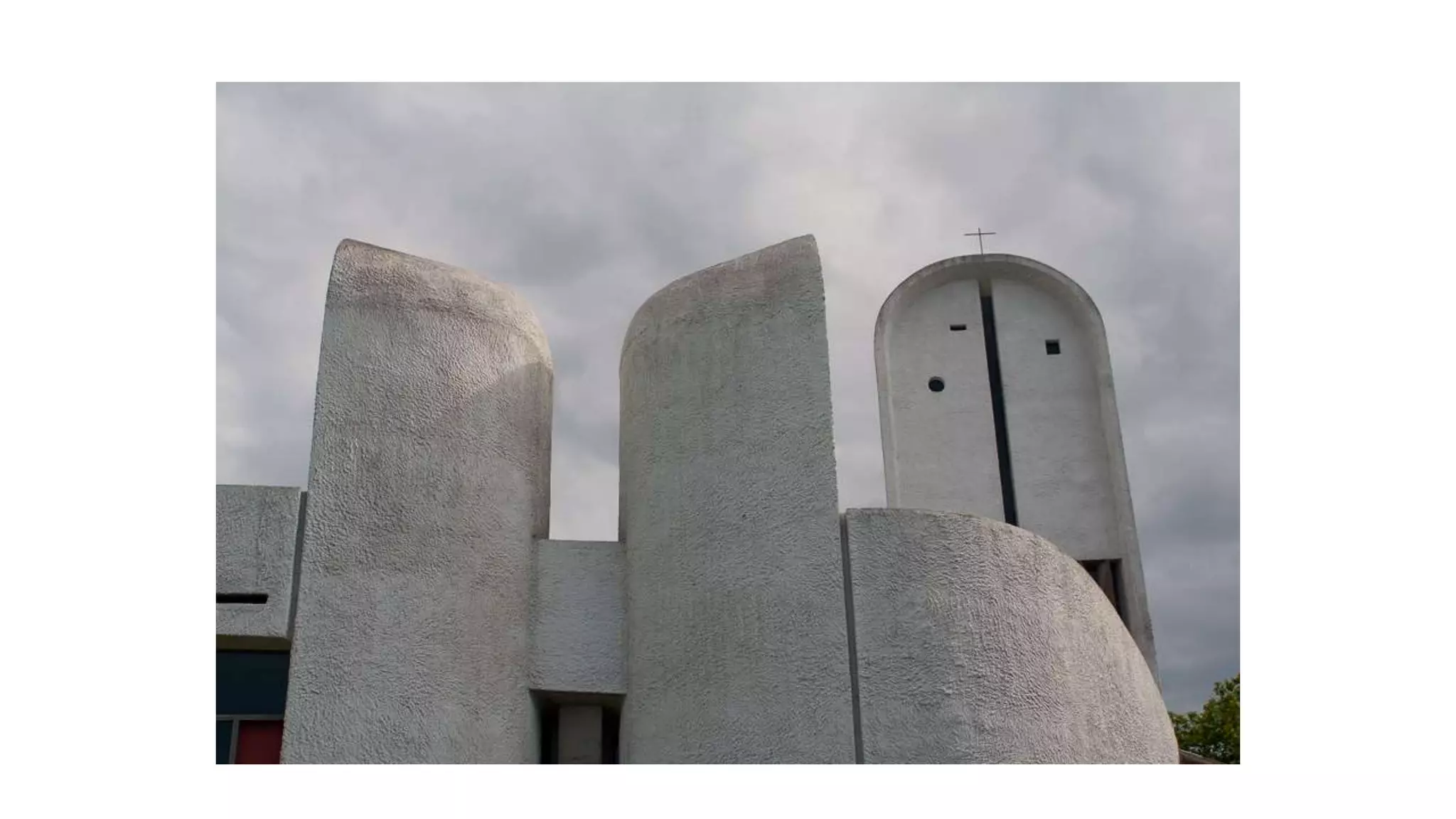
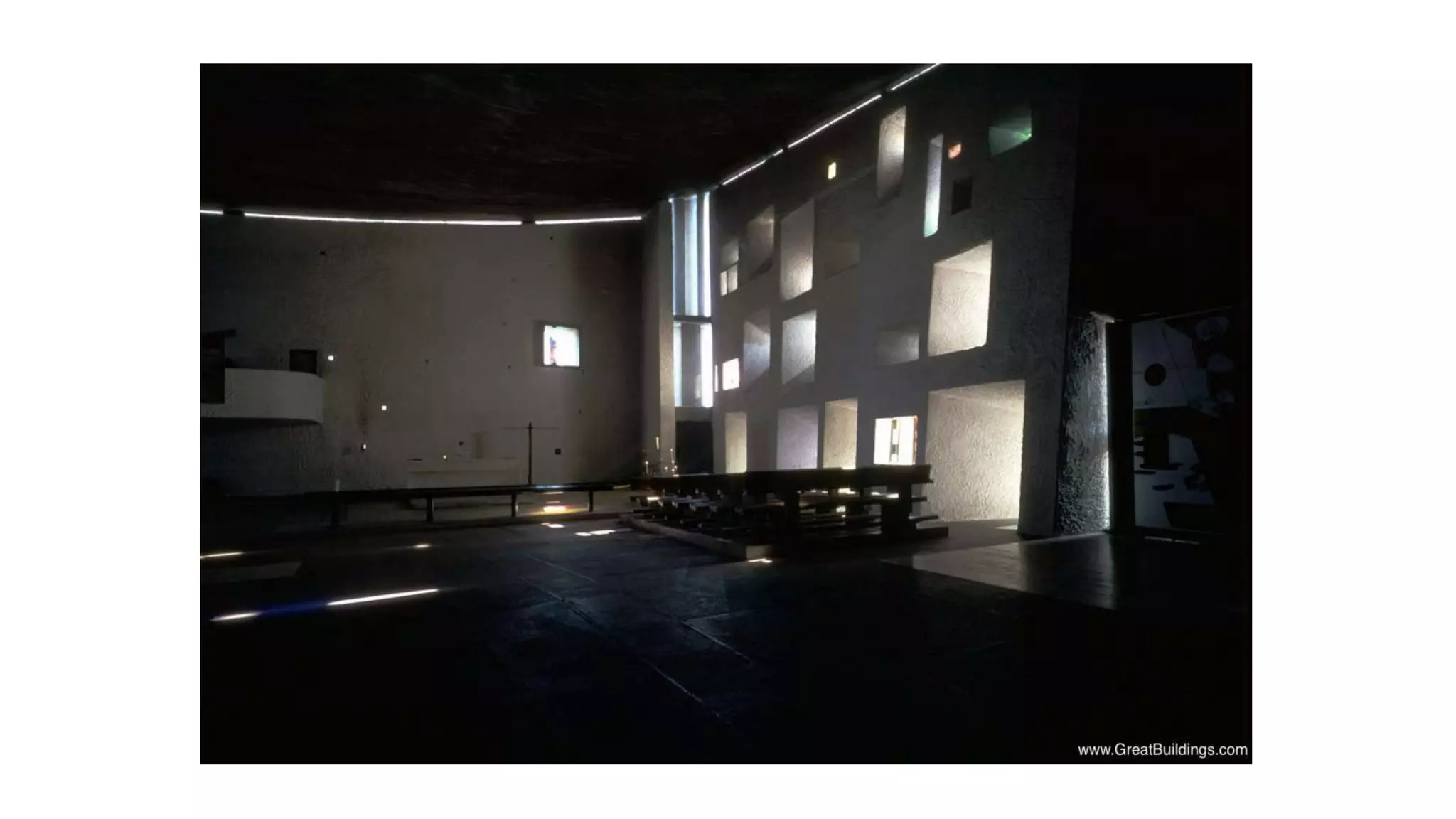
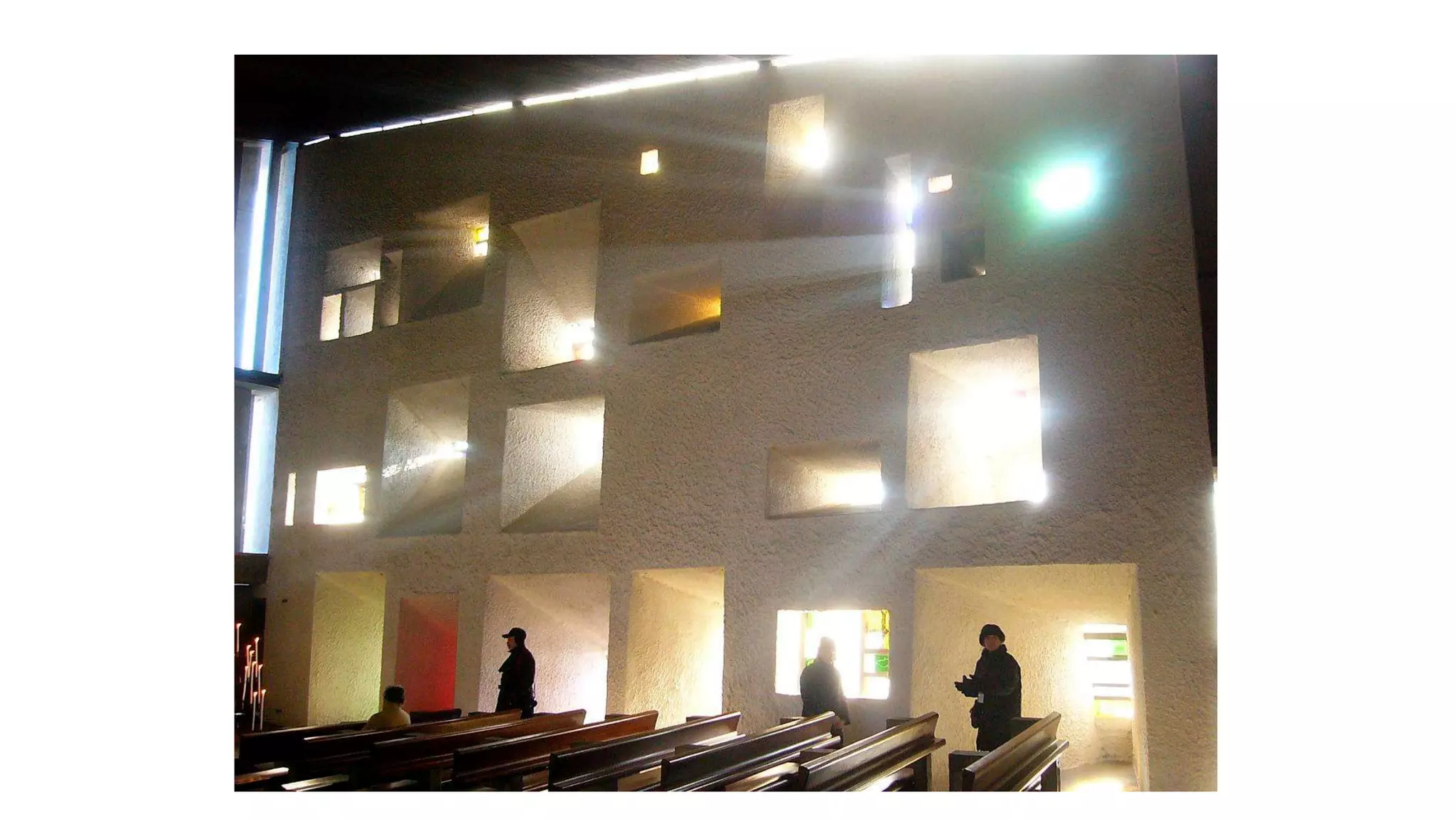
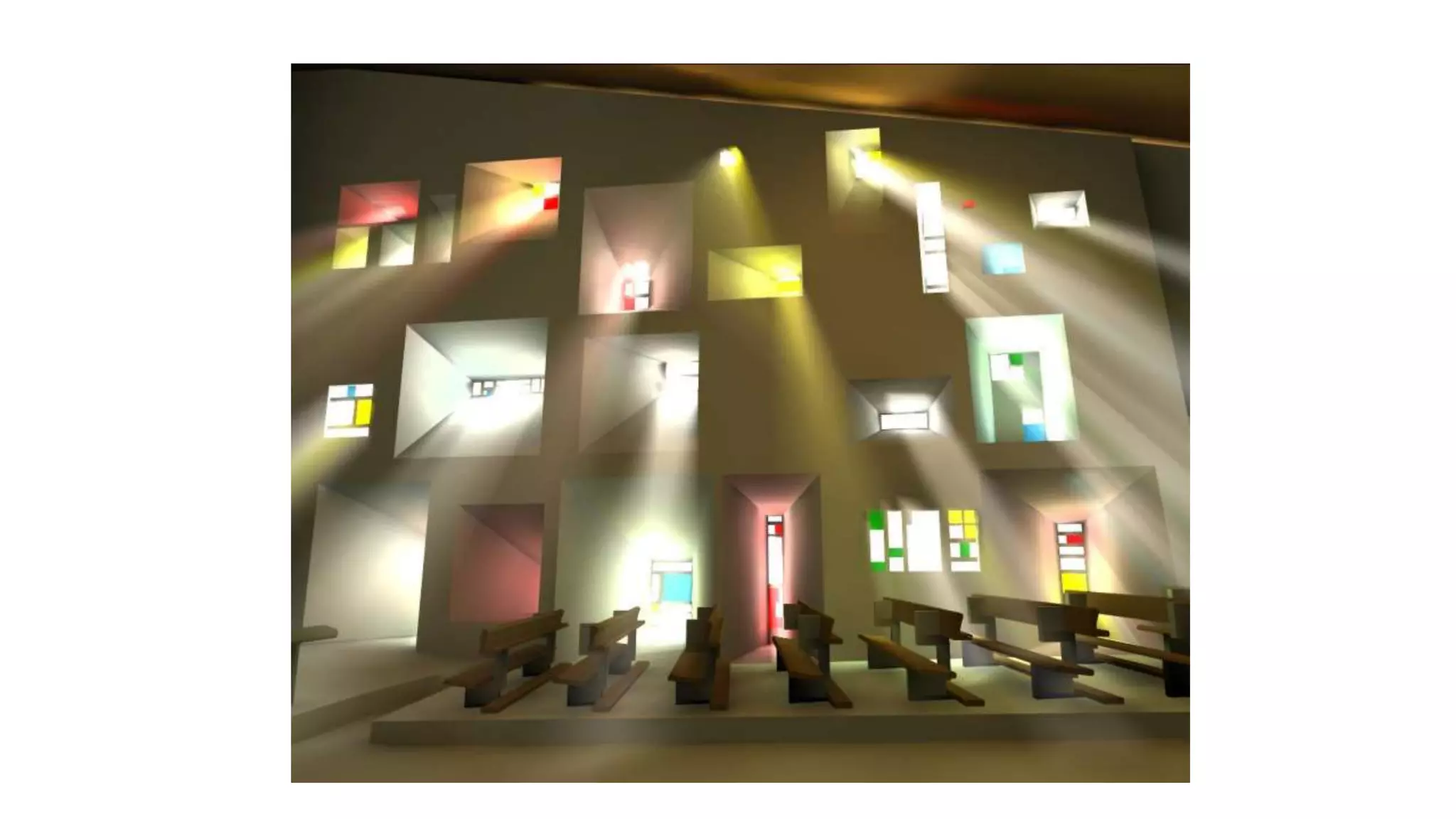
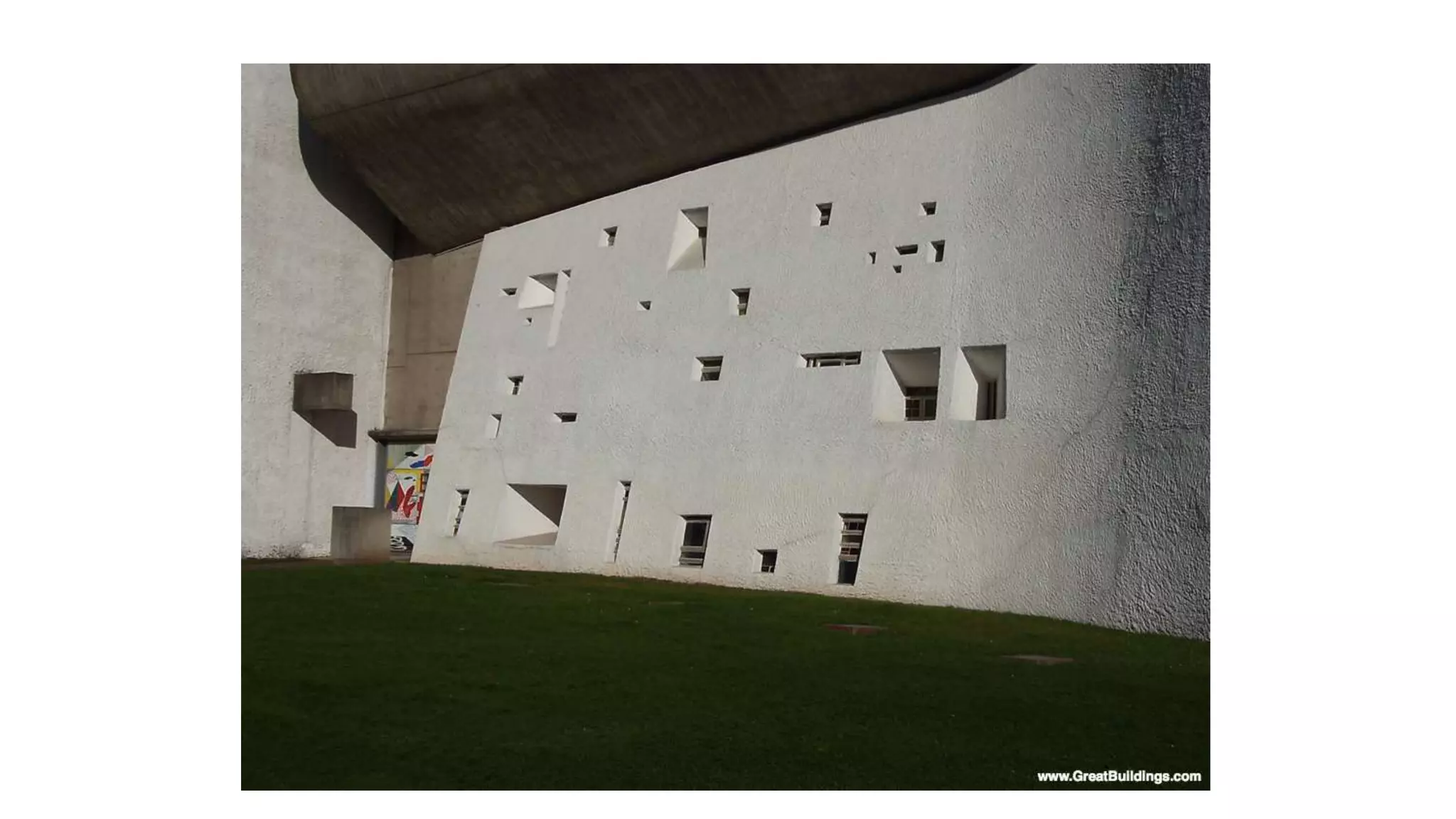
Chapel at Ronchamp
• Built by Le Corbusier
• Completed in 1954
• Formal Name: The Chapel of Notre Dame du Haut
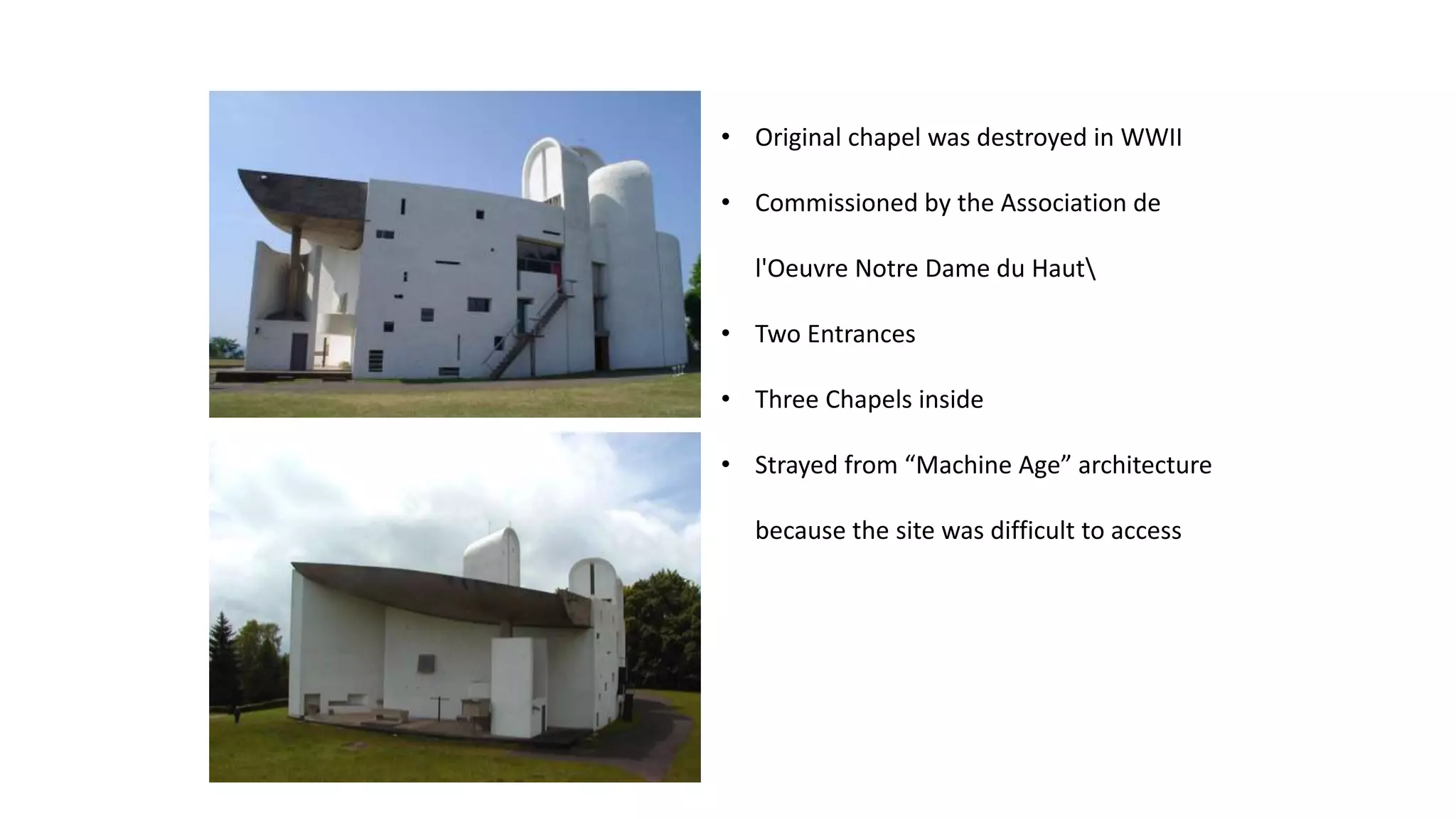
• Original chapel was destroyed in WWII
• Commissioned by the Association de
l'Oeuvre Notre Dame du Haut
• Two Entrances
• Three Chapels inside
• Strayed from “Machine Age” architecture
because the site was difficult to access
• Made mostly of concrete and stone
• Reminiscent of original chapel
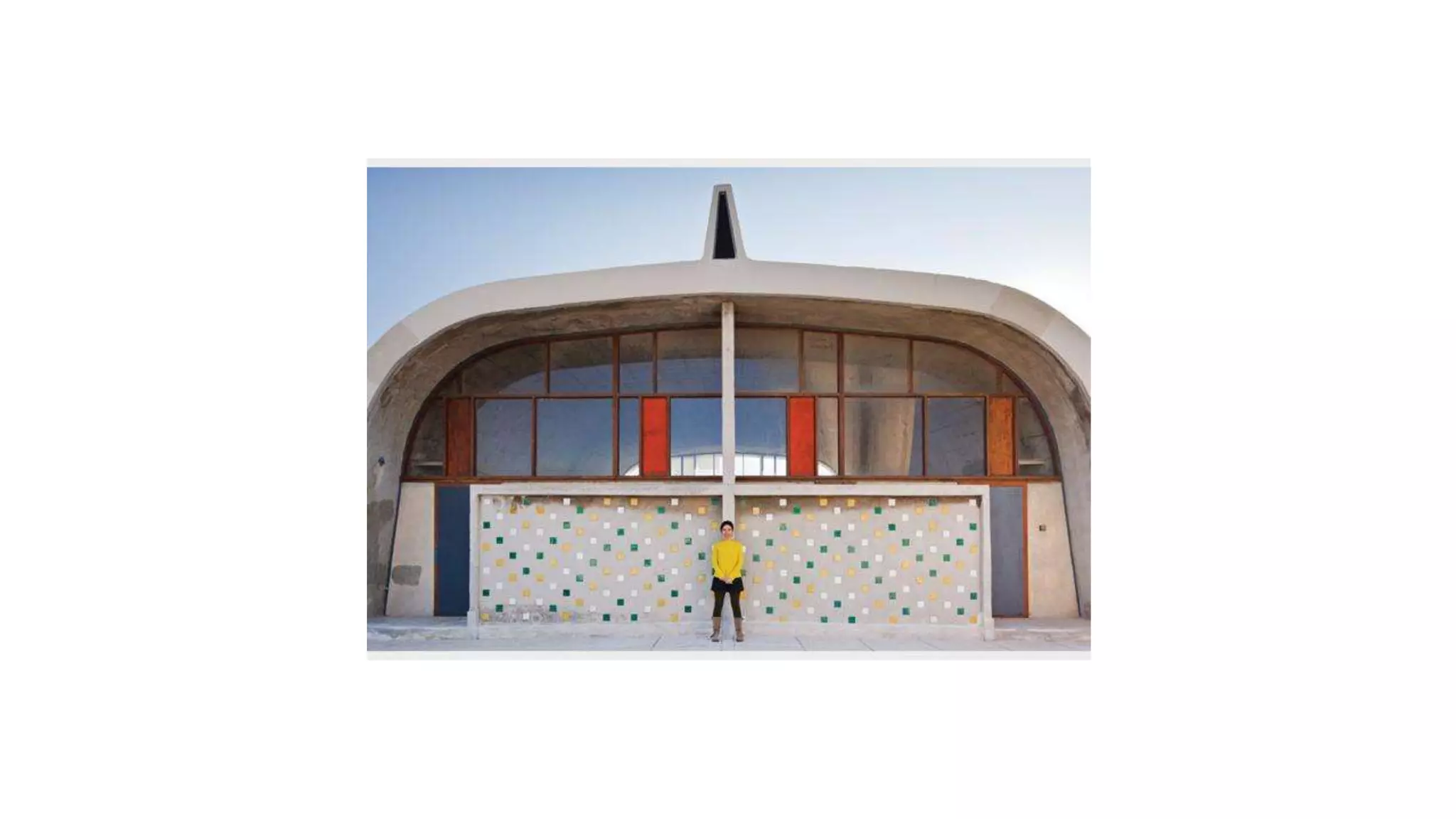
Chandigarh
Chandigarh is a city in Northern India that serves as
the capital of the states of Punjab and Haryana. It was
the first planned city in India, post-independence, in
1947 and was known internationally for its
architecture and urban design. The city was primarily
designed by Le Corbusier, but it also has projects de-
signed by architects such as Pierre Jeanneret, Jane
Drew, and Maxwell Fry.
The Open Hand (La
Main Ouverte) is a
recurring motif in Le
Corbusier's
architecture, a sign for
him of "peace and
reconciliation. It is
open to give and open
to receive." It
represents the give and
take of ideas.
The Shanti Kunj Gardens
The Palace of Assembly Building
The Capitol High Court Building
Gandhi Bhawan at Punjab University
This auditorium hall sits in the middle of a pond of water, and was
designed by Paul Jeanneret. Today it also houses a substantial collection
of books on Gandhi.
Interior, Punjab Airport
Palace of Justice
Secretariat Building
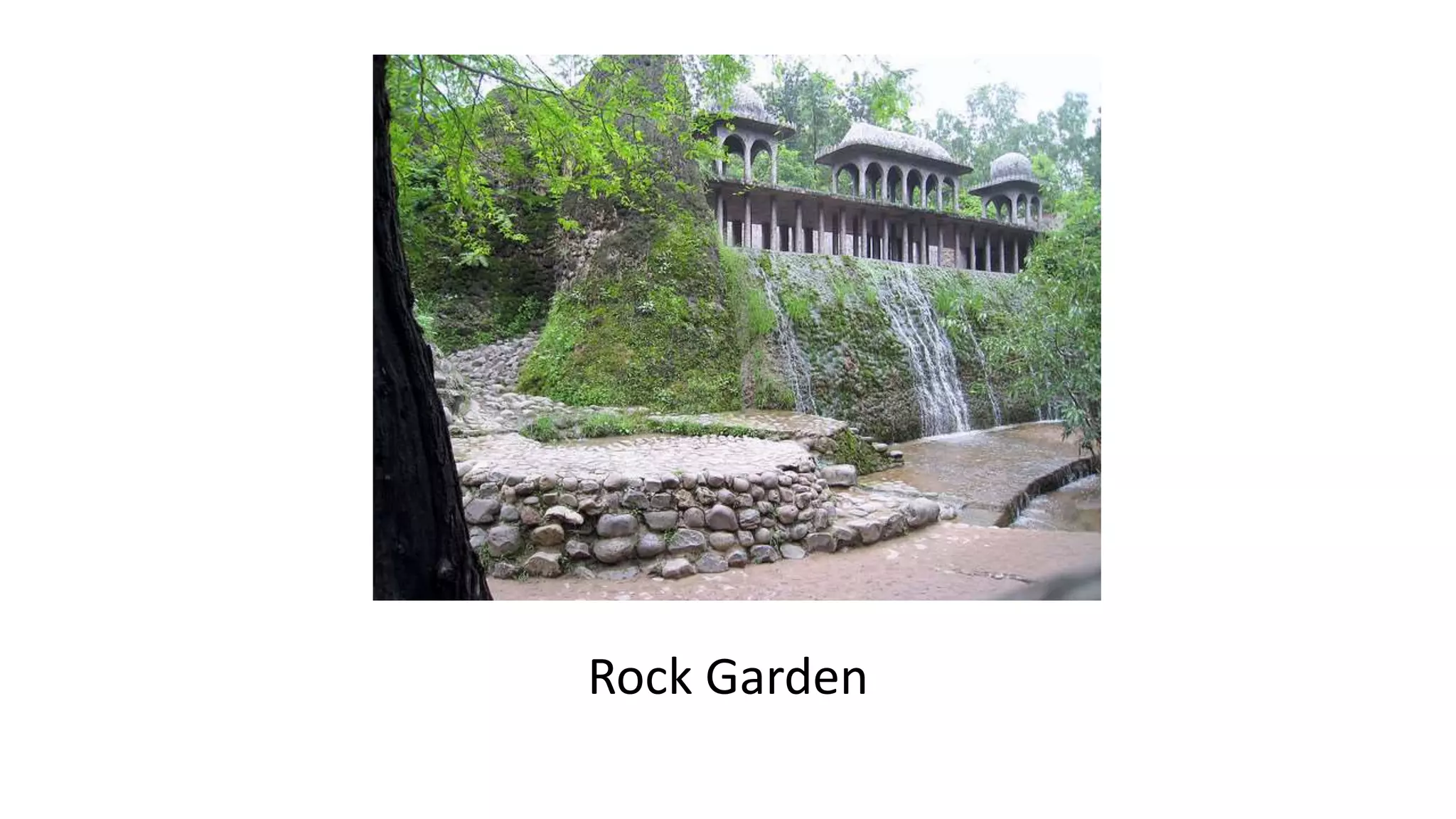
Rock Garden
Rock Garden
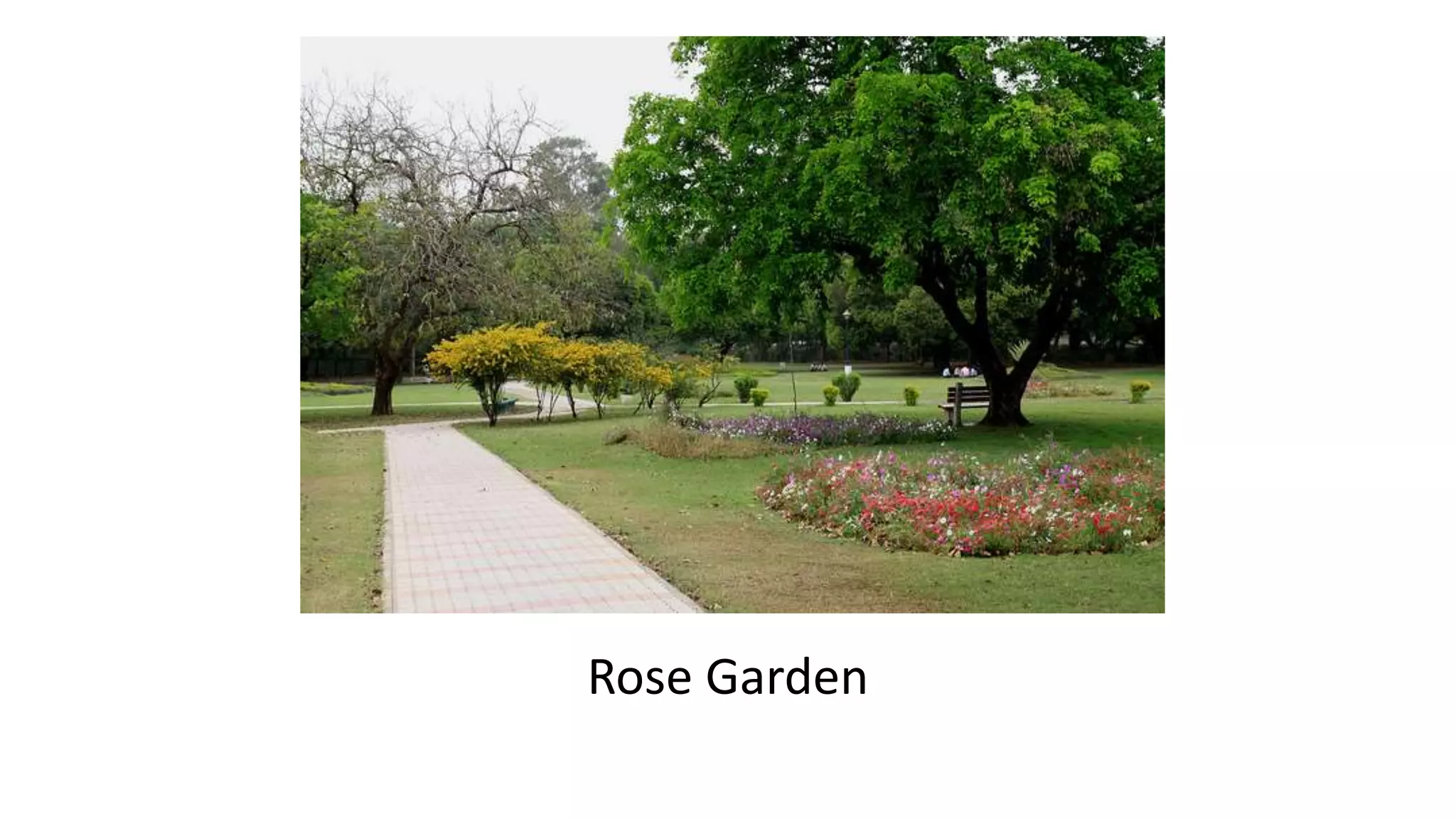
Rose Garden
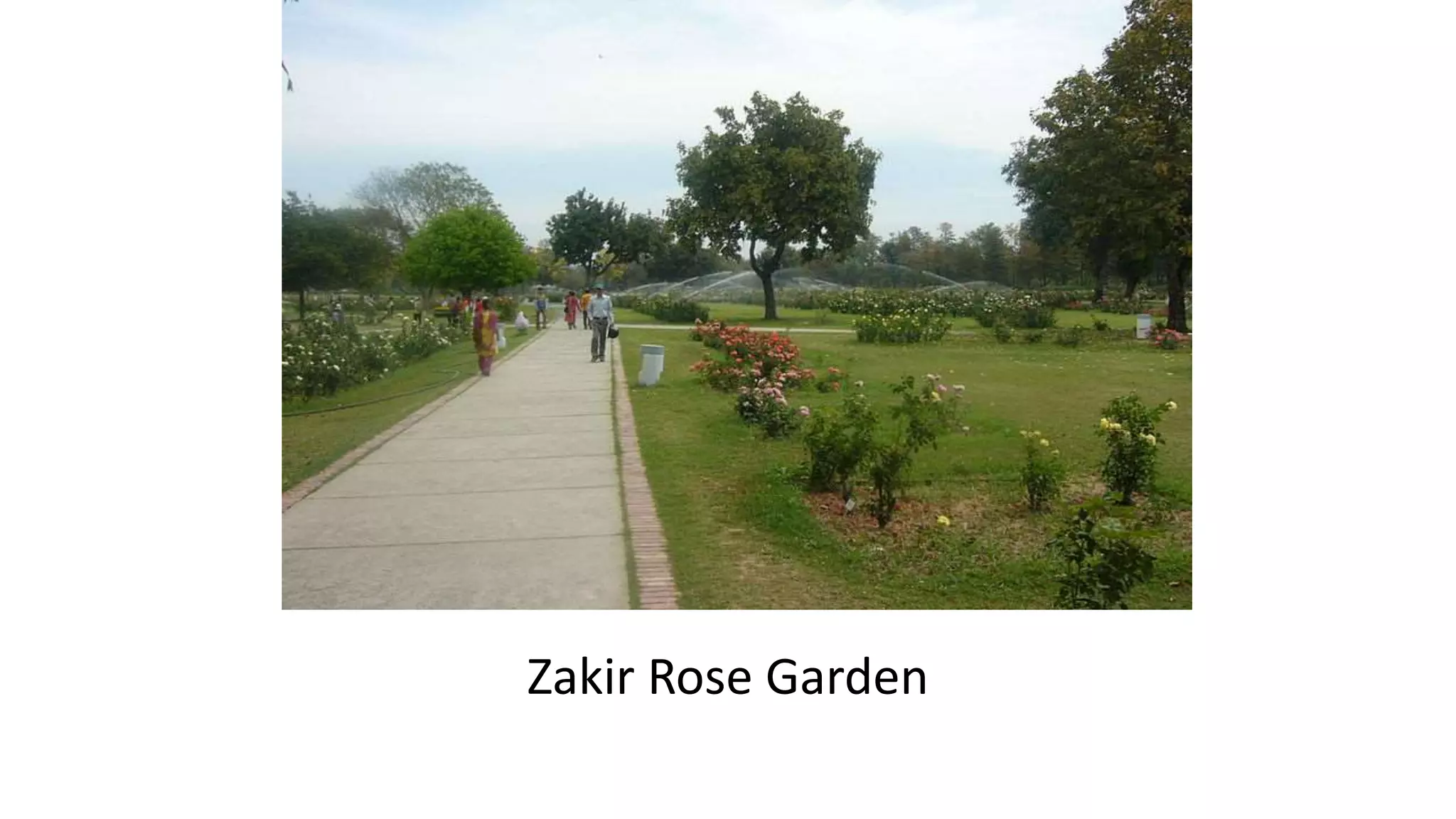
Zakir Rose Garden

10 Le Corbusier

  • 1.
  • 2.
    Le Corbusier • Charles-ÉdouardJeanneret-Gris, better known as Le Corbusier was an architect, designer, painter, urban planner, writer, and one of the pioneers of what is now called modern architecture. • Dedicated to providing better living conditions for the residents of crowded cities, Le Corbusier was influential in urban planning, and was a founding member of the Congrès International d'Architecture Moderns (CIAM). • It was Le Corbusier's Villa Savoye (1929–31) that summed up the five points of architecture that he had explained in L'Esprit Nouveau and the book Vers une architecture, which he had been developing throughout the 1920s.
  • 6.
    Purism was anattempt to restore regularity in a war-torn France post World War I. Unlike what they saw as 'decorative' fragmentation of objects in Cubism, Purism proposed a style of painting where elements were represented as robust simplified forms with minimal detail, while embracing technology and the machine.
  • 7.
    Purism was anattempt to restore regularity in a war-torn France post World War I. Unlike what they saw as 'decorative' fragmentation of objects in Cubism, Purism proposed a style of painting where elements were represented as robust simplified forms with minimal detail, while embracing technology and the machine.
  • 9.
    Le Corbusier –the Modulor •Le Corbusier explicitly used the Golden Mean or Golden Ratio in his Modulor system for the scale of architectural proportion. He saw this system as a continuation of others who used the proportions of the human body to improve the appearance and function of architecture. In addition to the golden ratio, Le Corbusier based the system on human measurements, Fibonacci numbers, and the double unit.
  • 10.
  • 23.
  • 25.
    • First manifestationof an environment suited for modern life • Influenced by his long term interest in urban planning • Merseille, France
  • 36.
    Completed in 1954 FormalName: The Chapel of Notre Dame du Haut
  • 37.
    The original Notre Dame duHaut, destroyed in World War II
  • 38.
    Chapel at Ronchamp •Built by Le Corbusier • Completed in 1954 • Formal Name: The Chapel of Notre Dame du Haut
  • 41.
    • Original chapelwas destroyed in WWII • Commissioned by the Association de l'Oeuvre Notre Dame du Haut • Two Entrances • Three Chapels inside • Strayed from “Machine Age” architecture because the site was difficult to access
  • 44.
    • Made mostlyof concrete and stone • Reminiscent of original chapel
  • 53.
  • 54.
    Chandigarh is acity in Northern India that serves as the capital of the states of Punjab and Haryana. It was the first planned city in India, post-independence, in 1947 and was known internationally for its architecture and urban design. The city was primarily designed by Le Corbusier, but it also has projects de- signed by architects such as Pierre Jeanneret, Jane Drew, and Maxwell Fry.
  • 55.
    The Open Hand(La Main Ouverte) is a recurring motif in Le Corbusier's architecture, a sign for him of "peace and reconciliation. It is open to give and open to receive." It represents the give and take of ideas.
  • 57.
  • 58.
    The Palace ofAssembly Building
  • 61.
    The Capitol HighCourt Building
  • 62.
    Gandhi Bhawan atPunjab University This auditorium hall sits in the middle of a pond of water, and was designed by Paul Jeanneret. Today it also houses a substantial collection of books on Gandhi.
  • 63.
  • 64.
  • 65.
  • 66.
  • 67.
  • 68.
  • 69.