1.1
1.2
Theme: Inclusion matter: access and
empowerment of people of all abilities
Topic: Overview of disability and
its associates
By
Qasir Abbas
PhD Fellow (Clinical Psych),
MS (Clinical Psych) & M. Sc (Psych),
Consultant Clinical Psychologist
Dr. A. Q. Khan Centre,
Institute of Behavioral Sciences
1.3
What is disability and
invisible disability?
Disability:
 all kinds of disabilities
Invisible disabilities
 mental health,
 psychosocial disabilities,
 intellectual disabilities,
 And hearing impairments.
1.4
Disability Prevalence
 lack of data and information –no official statistics is
available.
 Approximately, one billion people are living with disabilities
through worldwide and facing barriers and problems
 Millions of people worldwide have mental health conditions
and according to an estimate, one in four people globally
experience a mental health problems in their lifetime or
sometimes.
1.5
Problems associated with disabled
people
Stigmatization
Discrimination
Physical and sexual abuse
Societal rejection
Deprivation
Lack of mainstream activities
Lack of facilities
1.6
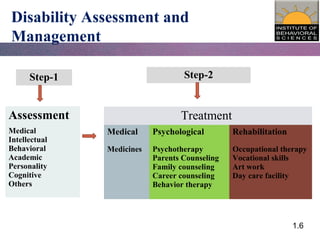
Assessment
Medical
Intellectual
Behavioral
Academic
Personality
Cognitive
Others
Disability Assessment and
Management
Treatment
Medical Psychological Rehabilitation
Medicines Psychotherapy
Parents Counseling
Family counseling
Career counseling
Behavior therapy
Occupational therapy
Vocational skills
Art work
Day care facility
Step-1 Step-2
1.7
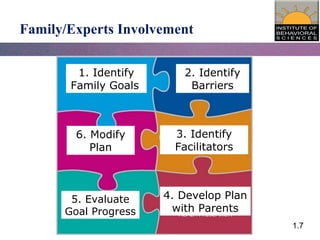
1. Identify
Family Goals
2. Identify
Barriers
3. Identify
Facilitators
4. Develop Plan
with Parents
5. Evaluate
Goal Progress
6. Modify
Plan
Family/Experts Involvement
1.8
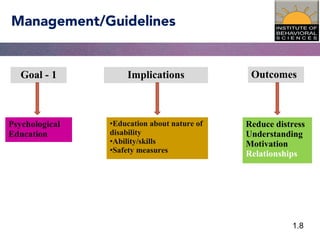
Management/Guidelines
•Education about nature of
disability
•Ability/skills
•Safety measures
Psychological
Education
Goal - 1
Reduce distress
Understanding
Motivation
Relationships
Implications Outcomes
1.9
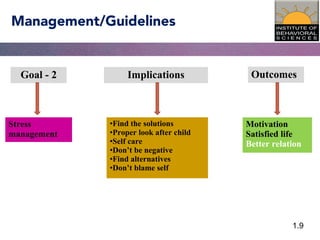
Management/Guidelines
•Find the solutions
•Proper look after child
•Self care
•Don’t be negative
•Find alternatives
•Don’t blame self
Stress
management
Goal - 2
Motivation
Satisfied life
Better relation
Implications Outcomes
1.10
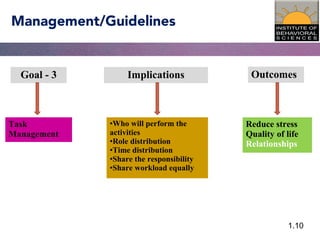
Management/Guidelines
•Who will perform the
activities
•Role distribution
•Time distribution
•Share the responsibility
•Share workload equally
Task
Management
Goal - 3
Reduce stress
Quality of life
Relationships
Implications Outcomes
1.11
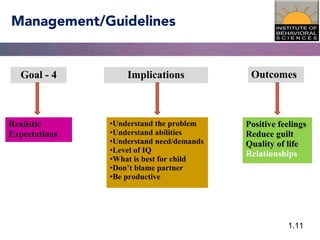
Management/Guidelines
•Understand the problem
•Understand abilities
•Understand need/demands
•Level of IQ
•What is best for child
•Don’t blame partner
•Be productive
Realistic
Expectations
Goal - 4
Positive feelings
Reduce guilt
Quality of life
Relationships
Implications Outcomes
1.12
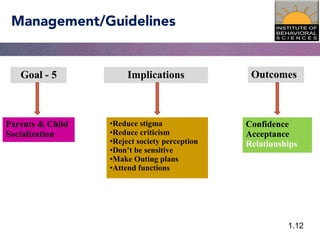
Management/Guidelines
•Reduce stigma
•Reduce criticism
•Reject society perception
•Don’t be sensitive
•Make Outing plans
•Attend functions
Parents & Child
Socialization
Goal - 5
Confidence
Acceptance
Relationships
Implications Outcomes
1.13
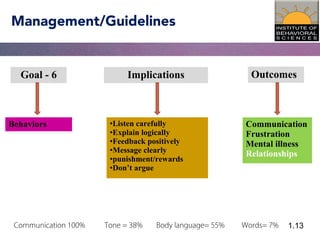
Management/Guidelines
•Listen carefully
•Explain logically
•Feedback positively
•Message clearly
•punishment/rewards
•Don’t argue
Behaviors
Goal - 6
Communication
Frustration
Mental illness
Relationships
Implications Outcomes
Communication 100% Tone = 38% Body language= 55% Words= 7%
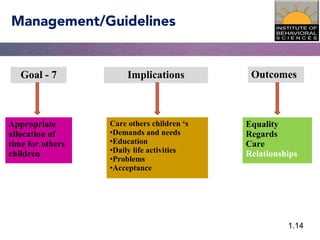
1.14
Management/Guidelines
Care others children ‘s
•Demands and needs
•Education
•Daily life activities
•Problems
•Acceptance
Appropriate
allocation of
time for others
children
Goal - 7
Equality
Regards
Care
Relationships
Implications Outcomes
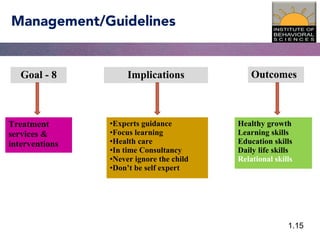
1.15
Management/Guidelines
•Experts guidance
•Focus learning
•Health care
•In time Consultancy
•Never ignore the child
•Don’t be self expert
Treatment
services &
interventions
Goal - 8
Healthy growth
Learning skills
Education skills
Daily life skills
Relational skills
Implications Outcomes
1.16
Muniba Mazari, (Speaker, Artist & Writer)
1.17
Watch this video
1.18
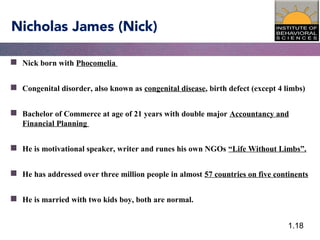
Nicholas James (Nick)
 Nick born with Phocomelia
 Congenital disorder, also known as congenital disease, birth defect (except 4 limbs)
 Bachelor of Commerce at age of 21 years with double major Accountancy and
Financial Planning
 He is motivational speaker, writer and runes his own NGOs “Life Without Limbs”.
 He has addressed over three million people in almost 57 countries on five continents
 He is married with two kids boy, both are normal.
1.19
Thank You

1 ppt overview disability

  • 1.
  • 2.
    1.2 Theme: Inclusion matter:access and empowerment of people of all abilities Topic: Overview of disability and its associates By Qasir Abbas PhD Fellow (Clinical Psych), MS (Clinical Psych) & M. Sc (Psych), Consultant Clinical Psychologist Dr. A. Q. Khan Centre, Institute of Behavioral Sciences
  • 3.
    1.3 What is disabilityand invisible disability? Disability:  all kinds of disabilities Invisible disabilities  mental health,  psychosocial disabilities,  intellectual disabilities,  And hearing impairments.
  • 4.
    1.4 Disability Prevalence  lackof data and information –no official statistics is available.  Approximately, one billion people are living with disabilities through worldwide and facing barriers and problems  Millions of people worldwide have mental health conditions and according to an estimate, one in four people globally experience a mental health problems in their lifetime or sometimes.
  • 5.
    1.5 Problems associated withdisabled people Stigmatization Discrimination Physical and sexual abuse Societal rejection Deprivation Lack of mainstream activities Lack of facilities
  • 6.
    1.6 Assessment Medical Intellectual Behavioral Academic Personality Cognitive Others Disability Assessment and Management Treatment MedicalPsychological Rehabilitation Medicines Psychotherapy Parents Counseling Family counseling Career counseling Behavior therapy Occupational therapy Vocational skills Art work Day care facility Step-1 Step-2
  • 7.
    1.7 1. Identify Family Goals 2.Identify Barriers 3. Identify Facilitators 4. Develop Plan with Parents 5. Evaluate Goal Progress 6. Modify Plan Family/Experts Involvement
  • 8.
    1.8 Management/Guidelines •Education about natureof disability •Ability/skills •Safety measures Psychological Education Goal - 1 Reduce distress Understanding Motivation Relationships Implications Outcomes
  • 9.
    1.9 Management/Guidelines •Find the solutions •Properlook after child •Self care •Don’t be negative •Find alternatives •Don’t blame self Stress management Goal - 2 Motivation Satisfied life Better relation Implications Outcomes
  • 10.
    1.10 Management/Guidelines •Who will performthe activities •Role distribution •Time distribution •Share the responsibility •Share workload equally Task Management Goal - 3 Reduce stress Quality of life Relationships Implications Outcomes
  • 11.
    1.11 Management/Guidelines •Understand the problem •Understandabilities •Understand need/demands •Level of IQ •What is best for child •Don’t blame partner •Be productive Realistic Expectations Goal - 4 Positive feelings Reduce guilt Quality of life Relationships Implications Outcomes
  • 12.
    1.12 Management/Guidelines •Reduce stigma •Reduce criticism •Rejectsociety perception •Don’t be sensitive •Make Outing plans •Attend functions Parents & Child Socialization Goal - 5 Confidence Acceptance Relationships Implications Outcomes
  • 13.
    1.13 Management/Guidelines •Listen carefully •Explain logically •Feedbackpositively •Message clearly •punishment/rewards •Don’t argue Behaviors Goal - 6 Communication Frustration Mental illness Relationships Implications Outcomes Communication 100% Tone = 38% Body language= 55% Words= 7%
  • 14.
    1.14 Management/Guidelines Care others children‘s •Demands and needs •Education •Daily life activities •Problems •Acceptance Appropriate allocation of time for others children Goal - 7 Equality Regards Care Relationships Implications Outcomes
  • 15.
    1.15 Management/Guidelines •Experts guidance •Focus learning •Healthcare •In time Consultancy •Never ignore the child •Don’t be self expert Treatment services & interventions Goal - 8 Healthy growth Learning skills Education skills Daily life skills Relational skills Implications Outcomes
  • 16.
  • 17.
  • 18.
    1.18 Nicholas James (Nick) Nick born with Phocomelia  Congenital disorder, also known as congenital disease, birth defect (except 4 limbs)  Bachelor of Commerce at age of 21 years with double major Accountancy and Financial Planning  He is motivational speaker, writer and runes his own NGOs “Life Without Limbs”.  He has addressed over three million people in almost 57 countries on five continents  He is married with two kids boy, both are normal.
  • 19.

Editor's Notes

  • #8 Looking at few conditions to thread thru pres, For family goal setting with parents and child a new tool that could be used in goal setting is the Children’s Assessment of Participation and Enjoyment (CAPE) and the Preferences for Activities of Children (PAC) - (Pass it around).