BEHAVIORAL PRINCIPLE IN
HEALTH AND DISEASE
BY DR ASMA NOREEN
• factors that make behavioral principles suited to
address the problems associated with health &
disease includes:
1. Chronic medical problems/mentally/ physically
handicapped are often associated with the types of
psychological problems for which cognitive therapy
and behavioral therapy has proven efficacy, such
as mood disorder, autism, depression and fatigue.
2. Self-management approach and the need for
patients to establish collaborative relationships with
health care staff, both are important behavioral
principles suited to address the problems
associated with health & disease
3. Behavioral principles also emphasize on building
skills for the management of
• Mental health is not just the absence of mental
illness, but is defined as a state of well-being
(The positive capacities and qualities that
enable young people to deal with the ups and
downs of life) in which every individual realizes
his or her own potential can cope with the
normal stresses of life and then able to make a
contribution to his or her community.
Mentally/Emotionally Handicapped
• Emotion is something that makes you have a
strong feeling. An example of emotion is a type of
movie that makes you cry
• An affective state of consciousness
• Handicapped is a condition that markedly restricts
once ability to function
Emotionally Handicapped
• The emotionally handicapped often must rely
on others to get through daily tasks and negative
emotional responses, because they have not
developed a normal level of independence, may
find unable to handle stress, experiencing
extreme anxiety or panic when confronted with
daily problems
• Mental Handicapped: a general or specific
intellectual disability, resulting directly or
indirectly from injury to the brain or from
abnormal neurological development
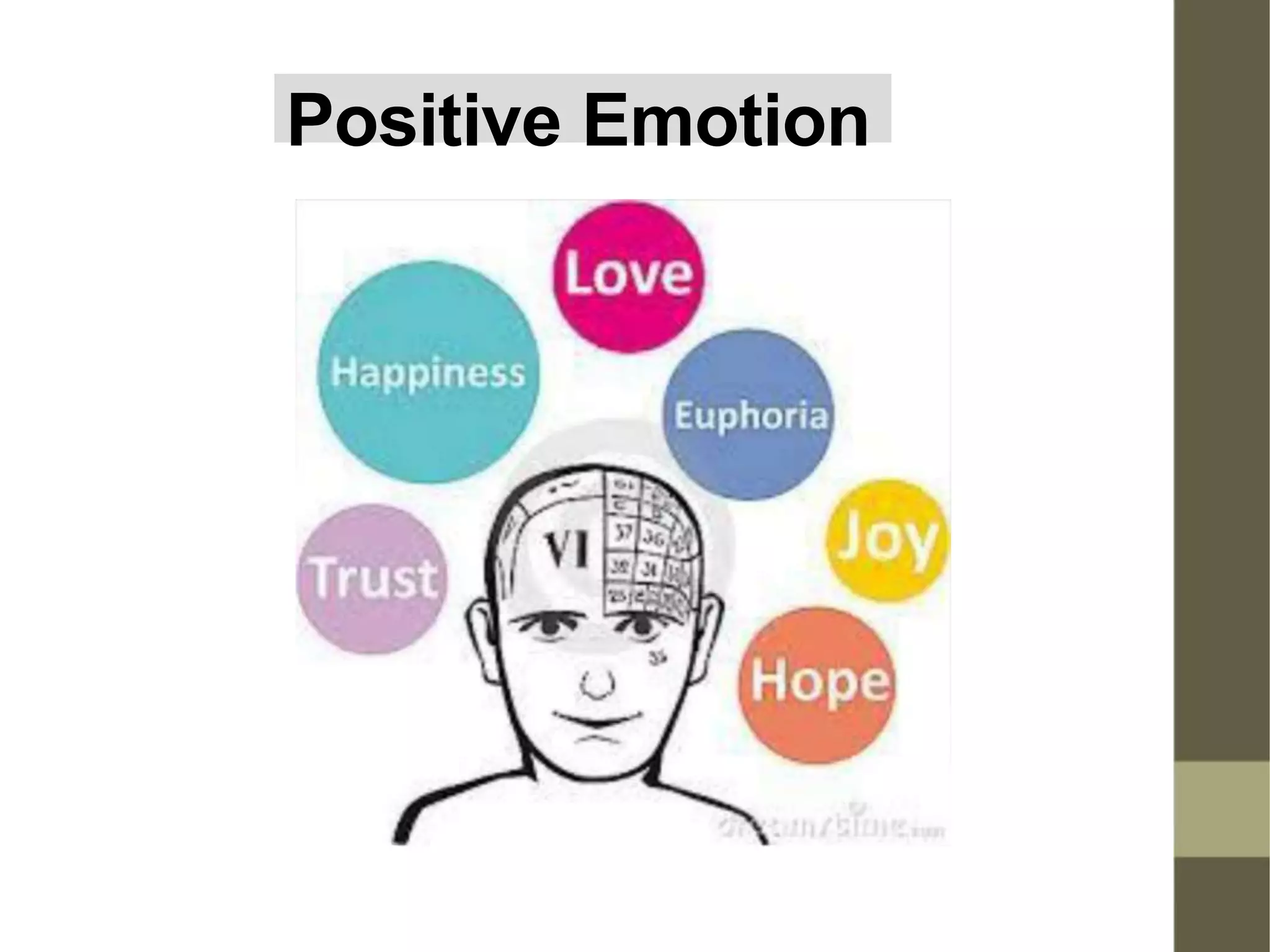
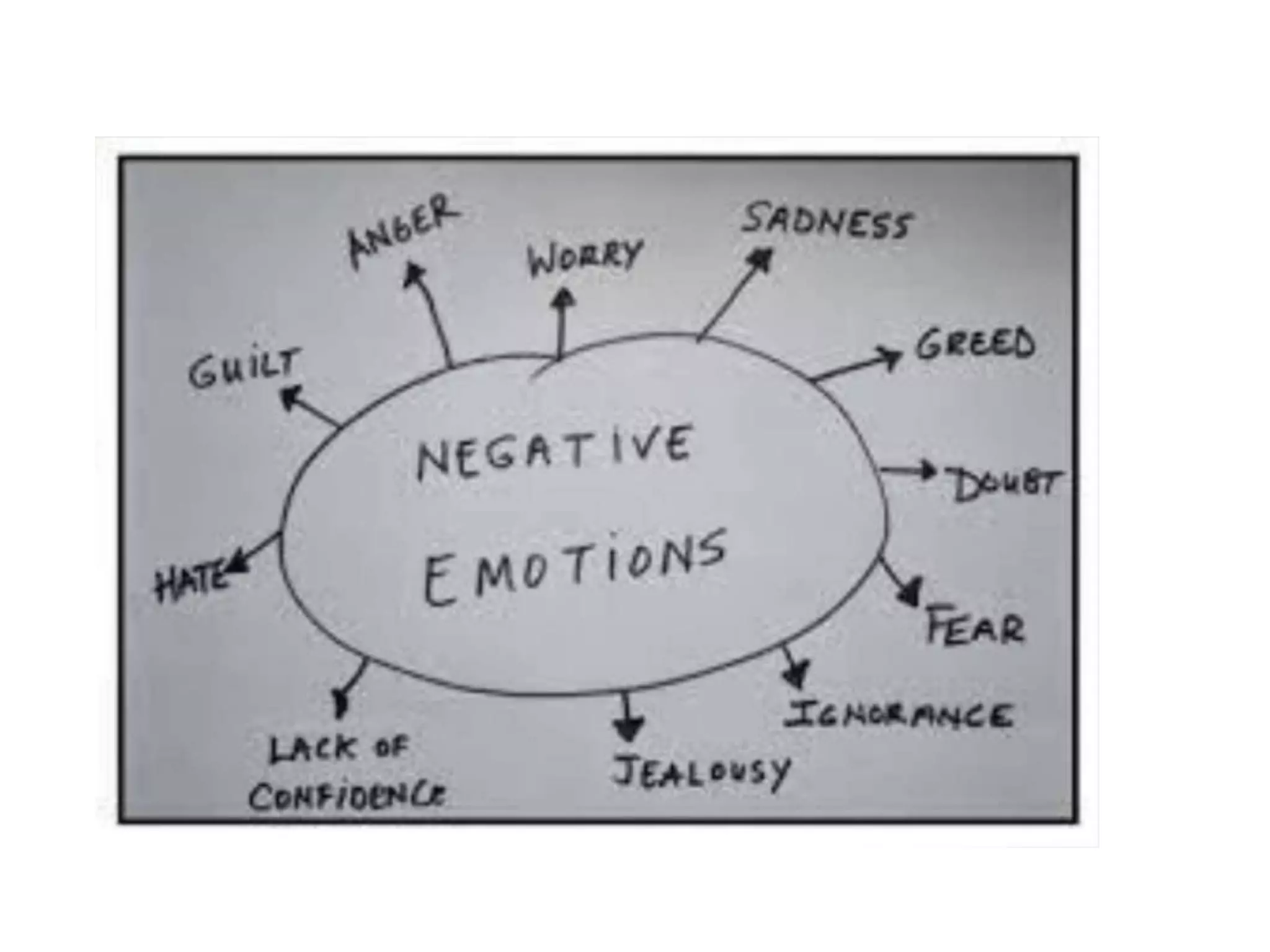
TypesofEmotions
• There are two types of emotions:
1. Positive Emotion
2. Negative Emotion
Positive Emotion
PhysiciPhysically
Handicapped
• The term physically handicapped is broad and
covers a range of disabilities and health issues,
including both congenital and acquired
disabilities.
• Within that range are physical disabilities or
impairments that interfere with a child’s ability to
attain the same developmental milestones as his
or her age-mates.
1. Cerebral Palsy is condition caused by injury to the
brain before, during or after birth, and is chiefly
characterized by motor disorder. It is not
progressive, nor is it contagious. But it is incurable,
although therapy can be helpful in improving
comfort and mobility
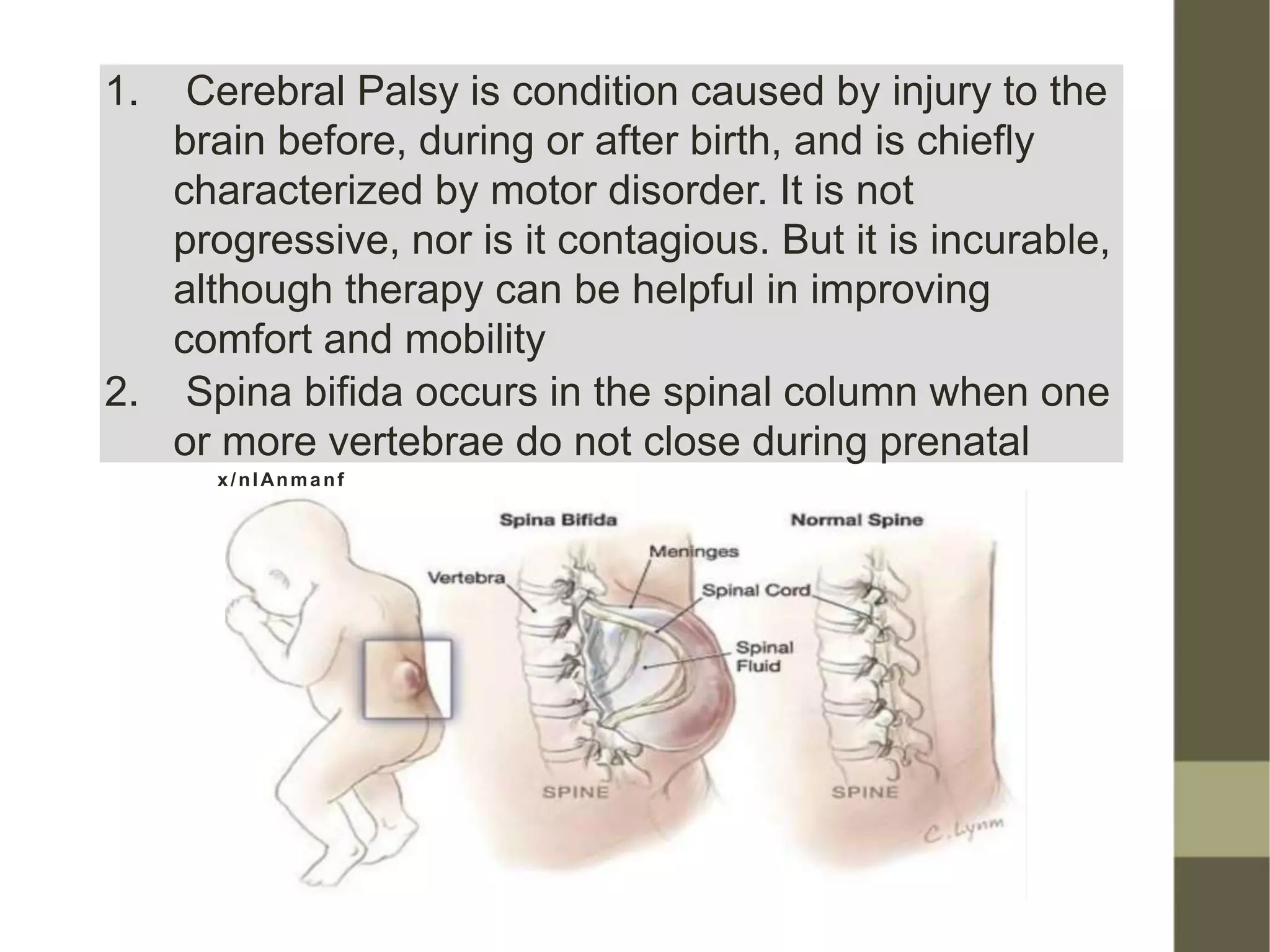
2. Spina bifida occurs in the spinal column when one
or more vertebrae do not close during prenatal
x/nlAnmanf
3. Acquired brain injury (ABI) is any type of
sudden injury causes temporary or
permanent damage to the brain after birth
• Motor vehicle accidents, near drowning, violence
related incidents, and sports- related injuries are
among the leading causes.
Chronically III
• The term chronic is usually applied when
the course of the disease lasts for more
than three months. Common chronic
diseases include asthma, cancer, HIV etc
Homebound
• Definition: Homebound means that you have
an inability to leave your home, or that it takes a
considerable and challenging effort to leave
home.
• Absences from the home must be infrequent
or for a very short period of time, for instance
leaving your home for medical appointment.
• A person is considered to be homebound if
you have an illness or injury, which restricts your
ability to leave home unless you have help.
• Examples would be if you need a wheelchair,
special transportation or help from another
person to leave your home.
• In most cases, if you are able to drive you are
not considered homebound.
• If you leave your home for purposes other than
to receive medical treatment and if the absences
are long and frequent, such as frequent shopping
trips or visits to friends, you are not deemed
homebound. When you are able to leave your
home, Medicare expects that any medical care
you require will be provided in an outpatient
setting
SkillSkilled Home Care
Services
1. Observation and assessment
2. Teaching and training
3. Performance of skilled treatment or
procedure/therapy
4. Management and evaluation of the plan of
care
- Nursing only
- Patient is considered clinically complex
Why Provide Home Care?
• Because patients have difficulties in moving
towards hospitals
• Give confidence to patients
• Provide medication reminder
• Support for patients with degenerative
condition
• Provide comfort and companion ship
• Help with walk and exercise programe
• Help with personal care
• Polio
• Comma patients
• Unconscious state patients
• Cardiac patients
• Mentally ill patients
• Cerebellar lesion
• Muscle weakness
• Paralysis
• etc
Management
• Behavioral therapy usually involves a series of
tasks (“homework”) that are completed outside
sessions and at various phases of therapy.
• self-monitoring is in the form of diary keeping.
For example:
There are 168 hours in the week, and I am in
contact with you for only part of 1 of them. It will be
useful for you to keep a record of some aspects of
your illness. I think it might help you if you could
start maintaining a diary that how much these
symptoms effect your daily routine.
• There are no limits to the range of monitoring
assignments that might result from a session.
• For example, you might ask your patients to
write about their thoughts and feelings about
their illness, its effects, and its treatment, to
write down thoughts related to worries for the
future; to rate the extent to which pain
interferes with certain activities
Managing Day-to-Day
• Constant Attention: children with special needs, are
in need of constant and consistent attention.
• Details/preplanning: parents or care givers should
plan their daily activities, about their psychotherapy
sessions, daily routines, about their socialization and
so on.
• Reactions of other children: other normal children
never voluntarily choose a child with special need to
play with, so we should guide children and even adult
about their special need (without offending them)
• Social Relationships: the activities of such children
should be scheduled like this that include discussion
with other children, attending gatherings, playing etc.
• These activities will contribute a lot in enhancing
their social relations
• Effects on Siblings: normal children don’t like to
introduce their siblings as a special children. So
siblings should also be guided about their special
needs, and make them learn different techniques
through which they can help their siblings without
being offending them.
• Marital Relationships: this is a common myth that
people with special need cant withhold good
relations, but with good guidance and good
tolerance level they can manage healthy relations
• Establishing a Support System: support system is
very much important aspect in management of such
people. It is a network of personal or professional
contacts available to a person for practical or emotio
nal support.
Thank You

behavioural-sciences.ppt

  • 1.
    BEHAVIORAL PRINCIPLE IN HEALTHAND DISEASE BY DR ASMA NOREEN
  • 2.
    • factors thatmake behavioral principles suited to address the problems associated with health & disease includes: 1. Chronic medical problems/mentally/ physically handicapped are often associated with the types of psychological problems for which cognitive therapy and behavioral therapy has proven efficacy, such as mood disorder, autism, depression and fatigue. 2. Self-management approach and the need for patients to establish collaborative relationships with health care staff, both are important behavioral principles suited to address the problems associated with health & disease 3. Behavioral principles also emphasize on building skills for the management of
  • 3.
    • Mental healthis not just the absence of mental illness, but is defined as a state of well-being (The positive capacities and qualities that enable young people to deal with the ups and downs of life) in which every individual realizes his or her own potential can cope with the normal stresses of life and then able to make a contribution to his or her community.
  • 4.
    Mentally/Emotionally Handicapped • Emotionis something that makes you have a strong feeling. An example of emotion is a type of movie that makes you cry • An affective state of consciousness • Handicapped is a condition that markedly restricts once ability to function
  • 5.
    Emotionally Handicapped • Theemotionally handicapped often must rely on others to get through daily tasks and negative emotional responses, because they have not developed a normal level of independence, may find unable to handle stress, experiencing extreme anxiety or panic when confronted with daily problems • Mental Handicapped: a general or specific intellectual disability, resulting directly or indirectly from injury to the brain or from abnormal neurological development
  • 6.
    TypesofEmotions • There aretwo types of emotions: 1. Positive Emotion 2. Negative Emotion
  • 7.
  • 9.
    PhysiciPhysically Handicapped • The termphysically handicapped is broad and covers a range of disabilities and health issues, including both congenital and acquired disabilities. • Within that range are physical disabilities or impairments that interfere with a child’s ability to attain the same developmental milestones as his or her age-mates.
  • 10.
    1. Cerebral Palsyis condition caused by injury to the brain before, during or after birth, and is chiefly characterized by motor disorder. It is not progressive, nor is it contagious. But it is incurable, although therapy can be helpful in improving comfort and mobility 2. Spina bifida occurs in the spinal column when one or more vertebrae do not close during prenatal x/nlAnmanf
  • 11.
    3. Acquired braininjury (ABI) is any type of sudden injury causes temporary or permanent damage to the brain after birth • Motor vehicle accidents, near drowning, violence related incidents, and sports- related injuries are among the leading causes.
  • 12.
    Chronically III • Theterm chronic is usually applied when the course of the disease lasts for more than three months. Common chronic diseases include asthma, cancer, HIV etc
  • 13.
    Homebound • Definition: Homeboundmeans that you have an inability to leave your home, or that it takes a considerable and challenging effort to leave home. • Absences from the home must be infrequent or for a very short period of time, for instance leaving your home for medical appointment. • A person is considered to be homebound if you have an illness or injury, which restricts your ability to leave home unless you have help.
  • 14.
    • Examples wouldbe if you need a wheelchair, special transportation or help from another person to leave your home. • In most cases, if you are able to drive you are not considered homebound. • If you leave your home for purposes other than to receive medical treatment and if the absences are long and frequent, such as frequent shopping trips or visits to friends, you are not deemed homebound. When you are able to leave your home, Medicare expects that any medical care you require will be provided in an outpatient setting
  • 15.
    SkillSkilled Home Care Services 1.Observation and assessment 2. Teaching and training 3. Performance of skilled treatment or procedure/therapy 4. Management and evaluation of the plan of care - Nursing only - Patient is considered clinically complex
  • 16.
    Why Provide HomeCare? • Because patients have difficulties in moving towards hospitals • Give confidence to patients • Provide medication reminder • Support for patients with degenerative condition • Provide comfort and companion ship • Help with walk and exercise programe • Help with personal care
  • 17.
    • Polio • Commapatients • Unconscious state patients • Cardiac patients • Mentally ill patients • Cerebellar lesion • Muscle weakness • Paralysis • etc
  • 18.
    Management • Behavioral therapyusually involves a series of tasks (“homework”) that are completed outside sessions and at various phases of therapy. • self-monitoring is in the form of diary keeping. For example: There are 168 hours in the week, and I am in contact with you for only part of 1 of them. It will be useful for you to keep a record of some aspects of your illness. I think it might help you if you could start maintaining a diary that how much these symptoms effect your daily routine. • There are no limits to the range of monitoring assignments that might result from a session.
  • 19.
    • For example,you might ask your patients to write about their thoughts and feelings about their illness, its effects, and its treatment, to write down thoughts related to worries for the future; to rate the extent to which pain interferes with certain activities
  • 20.
    Managing Day-to-Day • ConstantAttention: children with special needs, are in need of constant and consistent attention. • Details/preplanning: parents or care givers should plan their daily activities, about their psychotherapy sessions, daily routines, about their socialization and so on. • Reactions of other children: other normal children never voluntarily choose a child with special need to play with, so we should guide children and even adult about their special need (without offending them) • Social Relationships: the activities of such children should be scheduled like this that include discussion with other children, attending gatherings, playing etc. • These activities will contribute a lot in enhancing their social relations
  • 21.
    • Effects onSiblings: normal children don’t like to introduce their siblings as a special children. So siblings should also be guided about their special needs, and make them learn different techniques through which they can help their siblings without being offending them. • Marital Relationships: this is a common myth that people with special need cant withhold good relations, but with good guidance and good tolerance level they can manage healthy relations • Establishing a Support System: support system is very much important aspect in management of such people. It is a network of personal or professional contacts available to a person for practical or emotio nal support.
  • 22.