- Sharing Peace -
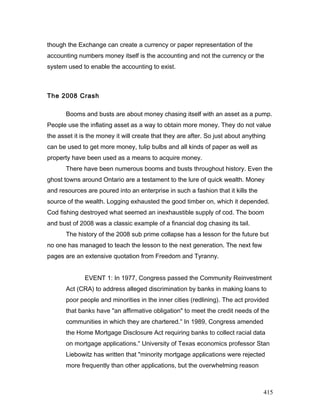
THE NEW PACIFISM
This world is divided by a conflict deep and sustained, a dilemma
never resolved yet fundamental to the way we think about business
and government, morality and rationality and the nature of right and
wrong, it rewards competition, creates social costs and prevents
economic rational exchanges from taking place, it’s a conflict that
limits our right and ability to say no to costs we did not create and
defines the nature of power as the ability to impose costs onto society
and future generations; social costs include things like debt,
unemployment, poverty and pollution, ending social costs and bringing
peace to the world requires a New Pacifism.
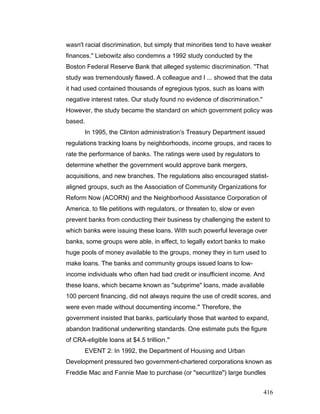
The New Pacifists make every peacekeeper a shareholder
Join The New Pacifists and get …
1 COMMON SHARE AND 500 PREFERRED SHARES FREE!
Common Shares allow shareholders to vote at General Meetings and
to an equal share of earnings
Preferred Shares give all shareholders a claim on the equity of the
Exchange and the privilege to buy and sell in a way that promotes
peace
Share Peace, join the Peacekeepers Mission
By Robert Burk
2
Preface
Freedom has been the desire of all persons since the first Stone Age
man began chipping out arrowheads to make a living and wondered
how to protect the fruits of his labour from the claims of community –
at the juncture where freedom split a man from his social
responsibility a conflict was created that has never been resolved.
In a small town in Muskoka in 2012, The Bracebridge Brand Leadership
Team began the work of developing a new brand for the town. In 2013
they published their conclusions in The Art of Muskoka Living.
The Art Of Muskoka Living promoted a new trend in recreation called
‘experiential tourism’. The study concluded the town ought to teach
tourists the Muskoka Lifestyle. Bracebridge was to be ‘the heart and soul
of Canada’s Cottage Country – steward of the famous Muskoka lifestyle’.
The Bracebridge Brand Leadership Team (BBLT) believed in the free
market but the community believed in social responsibility. Residents
rallied against the proposals to defeat them.
The BBLT were bemused at the people’s reaction but not surprised – the
uproar was dismissed as a sign of provincialism, a refusal of locals to face
up to the reality that business development comes with social costs. The
town had to make sacrifices to attract investments.
Social costs include waste, pollution, unemployment, poverty and debt
these are not a recipe for peace. Putting costs onto community to gain a
market edge does not produce a positive economic impact. Social costs
are not consistent with a culture that respects human rights. Social costs
are not consistent with a humanely run workplace. Social costs do not
3
promote harmony and are not consistent with any reasonable business
ethics. Social costs are only consistent with a culture that values property
more than peace.
Peace ought not to be sacrificed to gain market share. Yet this has been
the path history has put us on. The desire for the good life has sacrificed
what is local in favour of the global. Local business interests are pushed
towards and into the global free market supposedly to lower costs and
give us more purchasing power. The policy creates unsustainable costs
for local businesses and communities. Grow or die means Globalize or be
taken over. Social costs may benefit either the rich or the poor but they
always harm community. Community is the place where peace starts.
Social costs are levied at the expense of local business interest and the
community. Democracy does not function on a Global level; ideally
Democracy is grassroots and local. Democracy is associated with the
local community. If Globalization continues unchecked democracy will end
in tyranny. Fascism is the power of a state to impose social costs. Social
costs are levies against peace. Fascism means the destruction of
community specifically the right of entrepreneurs to create a local
economy. The State levies costs on a community’s entrepreneurs to
benefit the global free market. This is not peace.
The free market and the rights of private property are considered the
engines of commerce. However it is local entrepreneurs who build
community. Freedom exists only within community specifically freedom is
manifested most clearly in the freedom to create a local community. This
is the work done by local entrepreneurs.
Freedom cannot be bought but it is not free. Freedom is not a product we
get as consumers Demand bread. Freedom as offered by the free market
4
is an illusion. Freedom is not derived from the possession of property.
Freedom comes with the possession of community.
Free markets tend to squeeze out local sources of goods and services in
favour of suppliers with the ability to shift costs onto communities. This
can mean unemployment in the consuming market and pollution and
social disruption in the producing community. This is a cost of the
supposedly free market. The free market is not free because it is not free
of social costs and in fact is the source of them.
The Right as the mouthpiece of market freedom have sacrificed
community in favour of monolithic organizations. Social costs make local
businesses less competitive and therefore susceptible to take-over by
International Corporations. These have lower per unit costs according to
the free market. The real cost is higher but absorbed by local markets and
local entrepreneurs who are then accused of being inefficient. Some of the
costs of the free market are visible in the form of unemployment and other
social costs but the greater mass of the socialist iceberg is submerged in
the hidden costs of the Globalism (the erosion of local culture in favour of
mass merchandising). When freedom is compromised to gain market
share there is a steady erosion of local business interests and lowered
community sustainability. Entrepreneurs produce local culture and this is
made redundant by the mass merchandizing of international
conglomerates. Globalization and the downloading of costs onto local
markets ultimately harm local culture. A cost of the free market is Cultural
Relativism the idea that all culture is relative and susceptible to cultural
homogenization. Empires fail because empires create social costs that eat
away at the initiative of local entrepreneurs; no society is able to sustain
the costs of empire indefinitely because entrepreneurs cannot pay the
exactions of empire indefinitely. Local business is the engine of culture
and community.
5
The more a culture is homogenized the more the local is being destroyed
in favour of the global. This may continue until the civilization is an empty
shell and implodes to be replaced by a more dynamic and heterogeneous
society. An empire is a typological cousin to the free market. Empires qua
empire creates a free market for those within the empire.
Globalization, which is another word for cultural homogenization, erodes
business solvency at the local level. When local businesses are required
to pay costs they did not create the tendency to avoid paying costs
whether legitimate or not increases. Socialism transfers costs onto
community. Bureaucracies are created with a mandate to care for the
victims of ideological enslavement even as those who create these costs
continue to pursue their economic best interests. This divorcement of the
individual from the society in which he or she resides has social costs.
Regardless which sector or social class is favoured and which burdened
the economic consequences of socialism are never positive. Socialism
eventually brings down any civilization too weak to resist the costs
imposed on its communities. Out of control social costs birthed by
rampant Globalization (cultural homogenization) has caused the fall of
every empire. At some point Empires fail to find sufficient resources to
exploit. The cost of empire collapses the economics of local communities.
Costs are shifted to a richer and usually younger economy with stronger
local and social networks. Socialism is costs downloaded onto local
communities. These costs ultimately create cultural homogenization as
local culture is destroyed. The Haves and Have-Nots generated by
markets is the division between those who are able to shift costs onto
others whether rich or poor and adopt the global culture and local
entrepreneurs who cannot resist the imposition of costs onto themselves
nor successfully undergo the cultural shift.
6
Governments attempt to combat the social ills created by the free market
and its compromised freedom but all they can do is create bureaucracy
and more social costs. All Social Costs are paid for by society and future
generations and in one guise or another harms community. The need for
bureaucracy is a cost of the free market and our willingness to
compromise freedom.
Social Costs are inherently corrosive of culture and breed tyranny simply
because social costs are not consistent with the formation and promotion
of community. Creating debt is never rational, never moral and never
democratic and never pays though many think it does or can.
The Globalization of the economy by the Right requires governments to
adopt the Socialist policies of the Left because Globalization increases
bureaucracy and bureaucracies cannot generate income increasing the
need for taxes Globalization and Socialism (Right and Left) are therefore
by necessity inseparable and feed off one another. Keeping unrest down
to a level where a full-scale revolution does not erupt requires the
provision of social goods; another Social Cost and another levy on local
markets.
At some point the local economy is rendered so destitute that the
provision of social goods becomes impossible on the scale required to
keep the peace and open rebellion happens as is happening in Greece.
The cost of Globalism not only reduces total disposable income and
depresses economic activity it hinders the specialization that is the heart
of all prosperity and productivity. Socialist transfers create unfair
advantages for those communities globally positioned and penalize others
more restricted by local factors. Bureaucracy favours big business
because big business works on a scale that reflects the scale on which
governments work, thus government in league with big business create a
7
synergy that is inimical to the existence of local community. Social Costs
always create debt in one form or another and social schisms between
sectors globally positioned and those more sensitive to local needs. Debt
is a measure of Globalization and Cultural Homogenization. Where
Globalization has not made inroads debt is less in evidence. Only a strong
local community can prevent Globalization and keep social costs down.
Only a strong local community can protect itself from the costs created by
Globalism. However everything in this world conspires to weaken the
bonds of community. This is the assault on freedom.
Liberalizing the financial sector (a euphuism for freeing the financial
markets from social responsibility – a Right sided paradigm) allowed a
speculative boom we are still paying for. The costs created by financial
speculation are Social Costs. All evil, crime and injustice are or create
Social Costs (costs downloaded onto society and future generations) and
erode the structure and sustainability of community.
Bureaucracies produce no goods or services. Governments pay for their
social programs by transferring wealth from one sector to another.
Government is inherently Socialist. Public financed programs push nations
towards a society that is dependent on government intervention. This is
not structurally sound; it is not economically rational. The dynamics of
government inexorably push communities lemming-like along the same
Socialist funded path toward cultural homogeneity. This is not freedom it is
freedom compromised a bigger share of the global pie.
Robbing Peter to pay Paul is neither democratic, just or an effective way
of creating economic development especially when Peter is a local
merchant and Paul a bureaucrat or global conglomerate. Creating debt
regardless of how or why it is done or the form it takes eliminates choice
as surely as the most tyrannical dictator’s political dictates. Both actions
take wealth from local markets to favour the Global free market; this does
8
not create wealth it generates bureaucracy and destroys the roots of
democracy. Tyrannies and social agencies pushing a global agenda
create Social Costs and debt. Both harm the economy and weaken the
local market for goods and services. Fascism is not compatible with
cultural autonomy or entrepreneurism. Fascism is Globalist, expansive
and centralizing and parasitic. Fascism ultimately means the collapse of
freedom for it spells the death of cooperation and with this a loss of
community.
The free market favours Globalization and the mass-merchandizing of
culture because a homogenized consumer can better be served. Because
the free market is directed towards the elimination of all restrictions on
trade and commerce and by default all restrictions against the creation of
a single, global market the process demands Big Government.
Globalization does not favour democracy or community because
democracy requires locality.
The free market penalizes small local commerce and favours
Multinationals. The worst and most destructive tendencies of the most
ruthless men and woman cannot and will not lead to a Free Community
nor lower costs. Globalization of the economy creates a bureaucracy that
is more sensitive to global issues than local needs – arms before schools.
The Invisible Hand allocates goods and services according to who has the
most disposable income but it does not listen to what ought to be – it has
no vision, no morality no sense of locality. Local businesses create local
communities but the free market favours Globalization. Governments
represent the greatest Demand and constitute the largest pool of
disposable income. This at least partly explains the Arms Race and the
market for arms generally (at the expense of schools and hospitals). Nor
can the free market be tweaked so as to not produce debt and waste.
These are the consequence of the free market that trades freedom for
9
property. Free markets promote economic freedom but economic freedom
favours Globalization and Globalization does not generate freedom.
The last thing we need is an abstraction deciding who shall eat and who
will starve. The free market cannot serve as the source of human values
and the arbitrator of public policy. The free market cannot replace human
minds and rational choice. Free Markets are not capable of appreciating
what ought to be. Free markets are not sensitive to the needs of local
entrepreneurs. Free markets are not free not for those subject to its social
costs.
Moral choice is possible only in a community. Moral choice is meaningful
only in community. The fundamentals of moral choice are not compatible
with Globalization or the free market. Free markets are not compatible
with the needs of moral human beings for moral human beings make their
own choices not choices dictated to them by the mass culture of
multinationals. Organizations are not built by random events nor do
invisible engineers build bridges and stable civilizations cannot be formed
by chance. A free market governed by an invisible hand does not
recognize human values or moral virtues. Social issues are best dealt with
on the level of a local community. We cannot rationally expect a market
that is geared to ensuring the security of property to respect or promote
human values. The free market cannot provide the world with democracy
or human rights only products and services. Community cannot be
produced as a market item. The free market trumpets freedom but it is a
freedom without responsibility or accountability a freedom with social
costs – it is the freedom of rogues, pirates and sociopaths.
According to the precepts of the free market no social obligation or human
consideration ought to stand between businesses and its ability to turn a
profit using the resources/capital of the business. The free market says
freedom is a reward of economic success – the acquisition of assets. This
10
is a corruption of entrepreneurism. Can a business geared to making a
profit be compatible with the diverse needs of human beings? Does
profitability create the most freedom? If a human being were to tell you
that he or she has no other interests and no other purpose than to earn
money would you think this person free? The free market is not human
scaled and businesses that compromise freedom for the security they
think that comes from operating within it are not orientated toward
providing what a community needs. Human values cannot be weighted
against the cost of a battleship. Hunger cannot be given a price tag and
marketed. To make profits more significant than human dignity cannot be
rationally or economically justified yet millions of business people daily
forget their humanity and act as if the only concern they have is to
generate profits. That is a high price for a solid Bottom Line.
Community is about the inherent worth of human beings. Who we are is
not encompassed by our identity as a consumer. An economic system
focused on the cost of goods and services cannot be made consistent
with democracy or human rights and values. The free market will never be
made compatible with the needs of a community – the needs of mankind
and community are not reconcilable with what is considered important by
the free market model. Community needs an economic system that
understands values as well as costs. Globalism has made workers appear
to be a liability and social concerns at best a luxury. Yet, the worker is the
consumer this fact seems to have been lost on our economic and
business models.
Business values ought to reflect the importance of human and social
values. This is not possible on a global level the scale is wrong. Globalism
requires businesses focus on costs for it is in the control of costs that
profits come about, but costs are not relevant when human values are
considered as for example in a search for a lost child. Human concerns
11
may wake people up and at some point make them realize free market
ideology has to be put aside if they are to retain their humanity. At some
point the profit motive needs be rejected in favour of human values.
During times of trial and hardship a human face emerges from behind the
mask of even the most dedicated market apologist. The Fear Of Freedom
is pushed aside for a moment and the loss of profits forgotten in the desire
to express our humanity in a demand for unconditional freedom.
Debt is the measure of how much business has compromised freedom in
seeking security. Today Greece the birthplace of our Democratic
Freedoms may go bankrupt. The financial sector may well cut off its
access to capital. If the nation escapes bankruptcy by giving into the
demands of the Financial Free Market it will mean the end of democracy
in that country. Greece has been given the choice of accepting
international servitude to a Global Bureaucracy (represented by the IMF
and EU) and security or exercising economic freedom but at a cost of
being a pariah in the eyes of the international community. Freedom is
made an unaffordable luxury.
Why is feeding hungry people believed to create debt, why does creating
jobs for the unemployed create costs that the free market cannot justify;
why is the promotion of human rights dependent on charity and
volunteers? Why is society embedded in a system that treats human
needs as luxury items? Why is health care unaffordable for so many?
What are we living and working for if we cannot afford to live a healthy
life? Nations that cannot provide adequate health care to its citizens
routinely send money to assist in medical emergencies elsewhere. What
agenda is being pursued here? Can we not in an economic sense, walk to
the store to buy groceries; must we be Olympian athletes able to outrun
the rest of the world to put food on the table? Ought not the creation of
jobs be a natural part of any local economy? Can only volunteers and
12
charity be used to feed those who cannot keep up the pace set by the
Global Rat Race? What is the Global Market that it has no contingency for
feeding the starving? The struggle for profits in the melee of free
enterprise precludes human sentiment. There is no place for compassion
in the operation of business. This is supposed to be a good thing.
Competition it is said makes business efficient, efficient at what?
Rationalism is the belief mankind has inherent wisdom. Rationalists
believe we all have knowledge of value and the intrinsic ability to choose
what we value most - peace. Rationalists believe humans know right from
wrong and can discern the difference. Rationalism is a philosophy that
explains the world from a human perspective. Rationalists assume there is
logic to the world and a right and wrong way to live if there was not all
choices would be relative and rational choice would not be possible. In
such a world the free market would make sense. The world would just be
a market where all choices were just market choices.
Rationalists believe if the right choices are made peace is the result;
Rationalists believe there is a way of life that makes sense in an objective,
measurable and universal way. There is a right way to live that can be
measured and defined and an unlimited number of wrong ways. We have
to choose what is consistent with freedom otherwise we compromise our
ability to choose and this cannot make sense. Irrational acts cannot
produce good results. Irrationality creates social costs and this means a
loss of freedom. The state of the community is an objective measure of
rationality and freedom for the state of the community is a direct reflection
of the rationality of our choices.
Rationalists believe sacrificing peace to gain market share generates social
costs and these costs are not consistent with any possible peacekeeping
initiative. The desire for wealth creates conflicts that cannot be resolved. Social
13
agendas create their own costs for communities. Governments are a social costs
created by the Left as a reaction against social costs created by the Right.
The only way for governments to reduce social costs is by creating other Social
Costs. For example increasing unemployment lowers inflation; debt is countered
with business retrenchment and economic downturns with lowered interest rates.
Governments can only change the mix of Social Costs they cannot eliminate
them. This process of implementing social programs and changing the mix of
social costs increases the need for bureaucracy and this increases the social
costs we must pay.
Rationalists believe Capitalism and Socialism are different kinds of social costs.
Both produce social costs and both make peace difficult though in different ways.
Socialist tyranny and free markets are two ends or extremes of the same political
spectrum. There is no separation between Left and Right the division is an
illusion.
Every political party and ideology has social costs. The sort of government one
gets depends on the mix of Social Costs the nation pays. The kind of Social
Costs we pay depends on the kind of socialism offered. Peace is not possible so
long as the world is burdened with Social Costs. A Globalist Democracy is not
possible there is only global tyranny. Democracy is always local and based on
community. Peace is not possible in an environment of economic dependency or
moral degeneracy. The moral ought cannot be fully realized in a society that
compromises peace to gain property.
This book is not just about finding peace it is about ending a way of thinking that
consistently values profits over people and property rights over human rights and
things over souls. Rationalists reaffirm the value of place and people and the
moral ought in a new way to share peace and a new way to do peacekeeping.
14
15
5th edition July 2015
ISBN 978-0-9812129-1-3
Published by Rational Exchange Publishing
© All rights reserved March 2014
16
© All Rights Reserved November 2015
17
Contents:
Preface......................................................................................................................3
Preamble: ..............................................................................................................20
Introduction:...........................................................................................................23
A Short History..................................................................................................27
Need For Change...............................................................................................39
Rebranding exercise is misguided and undemocratic Huntsville Forester; April
04, 2012 Bruce C. Kruger is the franchisee of Swiss Chalet/Harvey’s and the owner of
Kruger’s Muskoka River B&B. He can be reached at kruger@muskoka.com or 705-706-
2834....................................................................................................................................44
Price...................................................................................................................55
Debt....................................................................................................................60
Environmentalism..................................................................................................71
Environmentalism And The Market..................................................................73
Democracy.............................................................................................................75
Libertarians..........................................................................................................104
Social Goods....................................................................................................106
Private Enterprise.............................................................................................130
The Market.......................................................................................................139
Social Capital.......................................................................................................144
Rationality And Morality.................................................................................161
Ends And Means..............................................................................................163
Risk......................................................................................................................167
Control of the money supply:..........................................................................171
Bonds...............................................................................................................178
Vanguards:.......................................................................................................179
Economy..............................................................................................................182
Efficiency.........................................................................................................189
Alternative Currencies.....................................................................................190
Communism ........................................................................................................192
Money..................................................................................................................212
Management.........................................................................................................217
Choices.............................................................................................................220
Local Economics .................................................................................................227
Moral Living........................................................................................................233
Democratization...................................................................................................239
Government Services.......................................................................................253
Dominion.............................................................................................................263
Tragedy Of The Commons..............................................................................268
Legitimacy ..........................................................................................................277
Motivation............................................................................................................287
Friedman on Freedom..........................................................................................295
Adam Smith.........................................................................................................299
Freedom and Order..............................................................................................303
Cultural Relativity............................................................................................314
Rational Choices..................................................................................................319
18
Money And Gold.............................................................................................322
Real And Nominal Costs.................................................................................330
Is King Canute misunderstood? By Kathryn Westcott BBC News Magazine26
May 2011 ........................................................................................................................331
The Bible..........................................................................................................336
Debt..................................................................................................................338
Fascism................................................................................................................345
Positive And Negative Morality......................................................................347
Capitalism............................................................................................................353
Freedom Of Choice..........................................................................................360
Ethical Centralism................................................................................................361
Barter Updated.................................................................................................363
Social Costs......................................................................................................366
Justice ..................................................................................................................369
Entrepreneurism...............................................................................................374
Appendix..............................................................................................................379
Commercial Accounts......................................................................................379
Scenario One....................................................................................................384
Starting An Exchange......................................................................................386
Investing.......................................................................................................392
Participation.................................................................................................397
Scenario Two...............................................................................................398
Efficiency.....................................................................................................404
Debt As Equity.............................................................................................409
Prares............................................................................................................412
The 2008 Crash............................................................................................415
The Liberal Schematic.....................................................................................421
The Bracebridge Exchange..............................................................................422
Conclusion...................................................................................................426
19
Preamble:
Economic development comes hard to many places. Bracebridge, a small town in
Muskoka has been hard hit by outsourcing, offshore manufactures and consolidation. In
an effort to revive local business a study ‘The Art Of Muskoka Living’ was
commissioned. It sought to provide Bracebridge a New Brand – a new image.
From the perspective of private capital Bracebridge is a town with few economic
prospects. In the eyes of those who did the study the town had no other option but to
sell its freedom for increased investment. The Triumvirate of taxation, profiteering and
debt was thought to have left the town with no other option. The town would have to turn
Right it was thought the only solution.
Yet, Bracebridge was once a major manufacturing centre and it remains the District
Capital. Big Box Stores carrying a cornucopia of cheap goods and discardable
merchandise shipped in from distant sources now offer part time low paying service
sector, seasonal jobs, which grow and shrink along with the wax and wane of the tourist
trade.
The ecology of the natural world knows nothing about leveraging capital or compound
interest or debt and risk. Liabilities are the invention and convention of a competition-
obsessed market. A fox does not incur a debt when it hunts a rabbit. A deer does not
create liabilities when it forages. Investment is not a zero sum game. Goods produced in
Bracebridge do not need to compete with those produced elsewhere nor must our
artisans compete with unskilled cheaper labour based overseas. The industrial might of
China and the attractiveness of low wage havens does not mean Bracebridge must
abandon the ability to feed and clothe itself. Our economic development need not reflect
the costs and needs of the Canadian banking establishment or the regulatory controls
that encourage global investment.
20
The experts and the pundits and those with the wherewithal to leverage economic
means into political policy want to see Bracebridge become a “premiere tourist
destination”. Local response has been less than enthusiastic. Most residents do not
want their income tied to the whims of a visiting clientele.
If economic development is about the costs and needs of the global financial system,
the reason for development seems to have been lost. Some may look with chagrin at
the rise in NIMBYism; at the repetitious chants of naïve protesters but there is a
message in the waving placards; communities want peace.
Where we live means something more to us than a place to invest surplus capital.
Economic development means more than responding to global trends, life is about
building a place to live and a home in which our children will raise their families free of
the constraints of the market and of globally sensitive politicians. Economic
Development is about human values not what suits an abstraction called the free
market.
Economic development is about the kind of life our economic activity produces and the
quality of life our money buys. Economic development is not about how efficient our
industries are compared to international conglomerates. What matters is what is being
produced and why. Money itself has no value if the cost of borrowing dictates the
choices we have. The demands of investors ought not to have veto power over the
needs and priorities of the town.
Life is not about competing for investment dollars it is about what has value for us. No
matter how much money an investment generates if it destroys what is important to us
the investment made no sense. Production can move elsewhere lives are less easily
uprooted.
If the Rebranding Initiative is about rebuilding the town then the Initiative ought to have
looked at what is important to those who make up the town, the residents. Bracebridge
is its people and their values, not a pool of assets to be exploited then abandoned.
If the Rebranding Initiative requires us to embroil our children and ourselves in a global
free-for-all where cost governs the direction of development and profitability determines
if we shall eat or starve we are better off if Chartered Bank debt goes elsewhere. If
21
tourism makes us dependent on a market that is unstable, unmanageable and prone to
periodic collapse then better global investors pass us by.
It is not the financial sector or the free market and not an invisible hand that ought to
dictate what has value to us. Mankind ought not be enslaved to a monetary system run
by bankers or a business system designed solely to justify unfettered greed. Human
beings have always striven towards economic and political freedom and have found its
greatest expression in entrepreneurial activity and democracy. Rationalists believe
human beings have an innate capacity and desire for peace and seek out that which
gives us peace but the desire for peace is usurped by greed and those who are willing
to exploit every advantage to gain more property and what they think are the good
things of live. No one is wired to develop international organizations. Avarice is behind
the Globalization of local markets. Working together in small groups for the benefit of the
group can happen without supervision with lower costs and risks. We can afford to build
the City of Peace.
“The political problem of mankind is to combine three things: economic efficiency, social
justice and individual liberty.”
― John Maynard Keynes
22
Introduction:
Bracebridge is not a natural structure birthed along with the granite
outcrops that made it famous. It is a human fabrication, a product of human
hands and minds focused on accumulating material wealth. The men who built
factories and paid starvation wages then shut up the doors and moved away
when times were no longer good were not evil. They were merely acting in their
own selfish best interests according to the best thinking of the time. They were
practical men not moral philosophers. They were guided by the rules of business.
If anything they were accidents of history men of their time not visionaries and
they knew little about community and less about the inherent problems of the free
market.
Capitalism has been the philosophy of business throughout the eons and
that capital markets are inherently flawed. This work will also demonstrate that
Globalism is a continuation and outgrowth of free market economics but
combines both Left and Right components.
The experts and professionals who generated the Rebranding Initiative
were economists and business leaders trained to think in terms of the free
market and property rights and were in this sense but one step away from their
Right thinking Stone Age ancestor. The result of their work was a monstrosity of
groupthink.
1
This work will look at the Rebranding Initiative and at the larger issue of
economic development as a problem of the Right attempting to download costs
onto society and future generations through the workings of the free market and
the legitimization process as tied up in the doctrine of the Negative Rights of
property. The solution is not to shift Left.
This work argues the free market always produces Social Costs because
this is what free markets are all about – lowering costs by shifting them onto local
markets meaning entrepreneurs. Entrepreneurism is local and small scale and
focused on building community. Entrepreneurs create fewer social costs simply
1
“Bracebridge: The Learning Capital of Muskoka for the Arts, Cottage Country Cuisine and
Muskoka Lifestyle”
23
because of the scale and location of their operations but this puts them at a
disadvantage with those focused on the global free market.
This work demonstrates that the free market imposes social costs on the
entrepreneurs of local communities because ultimately the free market requires
bureaucracy and bureaucracies generate no income. By definition bureaucracy is
a source of social costs. We shall also demonstrate how rising social costs are
responsible for the impoverished state of our communities. The social costs of
the great Left/Right divide do not just include debt, unemployment and poverty
but the cost of war, empires and the decline of civilization.
The free market is an irresolvable paradox that is patched up by the
inefficient workings of the state. Together they create a system that cannot be
fixed. The free market is the economic equivalent of a Perpetual Motion Machine.
It has to get its energy elsewhere or stop working. The one thing the free market
is not is free. Bureaucracy is similarly parasitic. Both feed off the economic
energy of local entrepreneurs.
Adam Smith more than most realized the free market he helped conceive
was an illusion and the invisible hand simply an abstraction. Yet, the concept of
the free market remains central to the philosophy of economists. Free market
ideology makes the most abhorrent events seem almost natural because they
are the result of an invisible hand. Unemployment is packaged as a natural
phenomenon. However it is a wilful choice made by wilful persons. Pointing to
the Invisible Hand makes poverty seem less like a deliberate choice of deliberate
men. There is less cause to rebel if social costs are considered to be the
implacable workings of natural economic law rather than the deliberate act of
hard-nosed business people implementing a specific agenda for Right-Wing
ends. The ideology of the market makes protests against job losses appear as
futile as Don Quixote battling the wind.
Yet the etherealness of the free market creates as many problems as it
solves. It diverts attention from the real issue and sanctifies anything done in its
name but those who would will it into existence look increasingly like the Emperor
24
With No Clothes. Without government regulation (the antithesis of the free
market) the Hand would blow away as the conceptual vapour it is.
Libertarians dislike regulation because they do not want restriction put on
business activity but they cannot figure out how to eliminate government
interference without also removing the regulatory apparatus that allows free
enterprise to function. Without government support the free market is not even a
myth. The free market needs the force of arms on its side if capitalists are to be
free to amass capital.
To encourage delayed gratification and the accumulation of capital
governments need to reduce the risk that accumulated capital will be lost. For
Far Right capital this means governments ought to remove as much regulatory
controls on how capital is deployed and accumulated as is feasible. But at the
same time governments must protect private property from depredation by the
masses and unruly elements.
The Right sees governments as a tool of the Left but their fear of the Left
compels them to demand the protection of government.
The demand for governments to reduce their oversight on the market is
self-defeating. Without government regulatory powers there is no market and
there are no investments. It is government that make markets exist.
Governments define the market and give it shape and substance. Eliminate all
legislation and the free market wafts away into oblivion.
But this creates a dilemma for the market. Governments can at best only
reduce risk within their boarders; reducing global risk requires a global regulatory
body. This resurrects the original dilemma of Right and Left who hate each other
but cannot live without one another. The free market cannot exist without the
regulatory framework created by national governments, but there is no free
market at the international level except insofar as national governments create
an international framework for it to exist within.
Ownership is simply a legal fiction invented by governments. International
ownership requires a global agent to maintain the global fiction of global
25
ownership. Capitalism is a house of cards maintained by the very agent free
market proponents despise the most, bureaucrats.
Free enterprise cannot go to nature and find a precedent. The free market
is an invention of powerful men and given existence by their collective will in a
structure called government. The free market is an abstraction and legal
fabrication. It people with money and property using every device and tactic they
can to gain market share. If the Right were to wake up and realize the free
market is an abstraction and free enterprise a legal fabrication they would need
to explain why poverty exists and so many people have no jobs as it is they can
shrug off these things as due to the workings of the market.
The world has come to believe that the only way a region can develop is
to further embed itself into the Global Economy. Deregulation creates an
economic cocoon in which investors are not held accountable for the collateral
damage their investments produce locally. Deregulation is tantamount to
government agreement that the local community (the local economy) will cover
the costs created by Globalization. This is the reality of the free market; it is a
conscious decision by governments to allow costs to be downloaded onto local
markets. Deregulation is akin to the State putting its citizens in bondage to free
enterprise. Deregulation is a key element in the Globalist Agenda. Why are
business values more important than human values? Oughtn’t we all to pay costs
we create? It seems the morally right thing to do and the very least that ought to
be done. At the same time we ought to be protected from costs created by
someone else. But to prevent costs from being imposed onto society by the
market conscious and rational and indeed moral oversight needs to be present. If
businesses are not accountable for they costs they create they will prosper at the
global level but local communities will not do well.
What is society but a system of accountability that makes or ought to
make people accountable to each other? Without this accountability society
descends into economic and political chaos the anarchy that is unfettered
competition and the anarchy that makes capital accumulation impossible without
armed intervention and the rise of fascism.
26
The free market cannot exist in a free market environment, because the
ensuing chaos would make business and private ownership impossible.
The Rebranding Initiative was Globalism applied to one local town. The
town’s assets were looked at from the perspective of what we had that was
valuable within the context of the Global Economy. The Rebranding Initiative
assumed the town had to compete globally if it was to be economically
successful. The study considered hard assets, the town’s tangible assets.
Intangibles such as good will are difficult to analyze. The value of the place and
the density of the town’s social networks important in a local context are
unimportant Globally. Good will cannot be exported.
The Initiative was then a well-intentioned effort by well-intentioned men
and woman to fit the town into the Global Economy. It was an attempt to
rationalize our tangible assets and make the town globally competitive.
Bracebridge to compete needs an exportable product that can be marketed to a
global consumer. Citizens were expected to be or become part of the town’s
tangible assets and the delivery vehicle by which a product called Muskoka could
be packaged and distributed on the global level. If anything the initiative became
not a blueprint for the future but a demonstration of the bankruptcy of free market
economics.
A Short History
The beauty of Muskoka is famous the world over but scenery does not
grow an economy. Despite its popularity as a tourist destination – or perhaps
because of it – Muskoka is in 2012 an economically depressed area.
The cod fishery brought the first Europeans offshore. The need to dry their
catch required the salt-poor north Europeans to land and set up camp. The south
Europeans had access to cheap salt and remained to their detriment, offshore.
The on-shore camps with their steel pots, knives and cotton goods attracted
natives who began to trade furs with the new arrivals. The dangers and
competitiveness of fishing the Grand Banks was soon phased out, as trade for
native furs became an increasingly lucrative option. But the north European
27
traders, the French and British, were soon forced to leave the comfort of their
shore-based camps and push further inland. The local supplies of furs had been
consumed by the growing demand for the trinkets bought by the white traders.
Eventually the search for more and better grades of fur brought them into the
region now called Muskoka.
By 1830 the demand had peaked and the volume of furs traded had
begun to decline. By 1870 furs were no longer of economic significance. The
once ubiquitous beaver, over-harvested and nearly driven to extinction by the
introduction of modern firearms, was being replaced. European men had come to
prefer the lighter and cooler silk hat. The loss of the market for felted beaver pelts
is the earliest recorded case of a ‘Made in Canada’ product being replaced by a
cheaper version made in China.
Napoleon’s Blockade in 1806 hindered Britain’s access to European
sources of timber. Subsequently, Britain’s demand for Canadian timber
increased. Logging was the regions major industry by 1830. Lumber licences
began to be issued in 1866 partly to increase settlement in Muskoka. Logging
brought people to the area and the cleared land could be settled and used for
agriculture.
The Muskoka Colonization Road was begun in 1858. Surfaced by logs, it
linked Washago, which at that time was the northern most settlement, to the
interior of Muskoka. Settlement in Muskoka began soon after.
The earliest resident at North Falls was John Beal in 1859 and the first
tourists visited a year later, in 1860. Bracebridge was reached by this corduroy
road in 1861. By1862 a stagecoach was running along the route. The building of
Rosseau House in 1870 was the first major attempt to encourage tourism.
Windemere House was built in 1869 to house visiting sportsmen. By 1890 it
could accommodate 200 guests at $1.50 a day. By the 1880s these and other
developments had made tourism into a major source of income.
The Free Grants and Homesteading Act of 1868 promoted both
homesteading and logging. Free land was provided to those committed to
clearing 8-15 acres of land and build a cabin.
28
By 1882, the best of the hardwood had been logged. The area was still
harvested for white oak, black and white ash, red pine, spruce, tamarack and
hemlock. By 1900 logging reached its peak in Muskoka and by 1920 Muskoka
had been stripped of the best trees. At its peak the mill at Rousseau point turned
out 1.5 million board feet of lumber per annum but was closed by 1930.
Settlers soon discovered Muskoka’s heavy clay and Precambrian rock
was not suitable for farming. The difficult conditions at first discouraged
settlement but the beauty of the area continued to encourage visitors. Farmers
began to convert their struggling farms into boarding houses.
Muskoka grew from 190 in 1860 to 743 in 1862, and then rapidly to over
5,000 in 1871 and over 20,000 by 1901. The increase at least partially due to
fanciful descriptions of its investment potential: “The proportion of good land is
said to be sixty per cent of the whole; the soil for the most part being a sandy
loam with clay subsoil; and in extensive tracts lying back of the lakes, generally
free from stone. The root crops are unusually large; … Potatoes yield some three
hundred bushels to the acre, and turnips from six to nine hundred bushels. Oats,
rye, barley, and Indian corn are the chief cereals.”
2
Leather tanning developed from but did not outlast, the logging boom.
Tannin obtained from the bark of hemlock trees, was purchased from the settlers
and barged to riverside tanneries. Tanning was established in Bracebridge in
1877. By the 1930’s the last tannery had closed.
The railroad arrived in Muskoka in 1875 mostly to serve the needs of the
logging companies. The Canadian National Line started in Gravenhurst, reached
Bracebridge in 1885 and Huntsville in 1886. Where the tracks stopped at the
water’s edge steamships took over to connect the businesses and hamlets to the
west and north.
The Canadian Pacific Railroad constructed a line through west Muskoka in
1906.
2
Grant, G.M. ed.1882. Picturesque Canada – The Country As It Is And Was.
Belden Bros, Toronto
29
The first steamship to sail the lakes of Muskoka was the Wenonah. Built in
1886 by Alexander Cockburn. He convinced the provincial government to build a
lock at Port Carling and a canal at Port Sanfield. The Muskoka Navigation
Company became the largest fleet of its kind in Canada. ‘By 1900, 10 passenger
and freight steamships plied the Huntsville chain of lakes. On the Muskoka
Lakes, a steamship fleet operated with about 15 ships in service at the peak of
business. A unique narrow gauge railroad traversed the steep divide between
Peninsula Lake and Lake of Bays, connecting the steamship service of both lake
communities.’
3
The Muskoka Navigation Company morphed into the Muskoka Lakes
Navigation and Hotel Company Limited when in 1903 the Royal Muskoka Hotel
was built. By the 40-50’s business was in decline. When the hotel burned down
in 1958 the company dissolved and steamship travel came to an end. The
Muskoka Heritage Society revived the name in 1891 when it began to operate
the Segwin.
North Falls prevented steamships from going further up the Muskoka
River and served as a natural source of power for mill owners. In 1872 Henry
Bird harnessed the power of the falls and opened the first woollen mill. In 1894
Bracebridge became the first municipality to operate its own hydroelectric
generating station. In 2004, Bracebridge Generation upgraded the High Falls
plant to increase generation capacity and in 2010 $21 million in upgrades were
made at Wilson's Falls and Bracebridge Falls.
An independent bank was set up in the 1880s. Robbed in 1897 after 6
years in operation the financial burdens following the act forced its closure the
following year (1898). Its proprietor, Alfred Hunt had come to Bracebridge in
1871 and built up a retail business the operation of which had taken him into
banking.
The coming of the car and paved roads brought an end to steamship
travel. But the arrival of reliable personal transport was a boon to the tourism for
which Muskoka remains famous.
3
http://www.muskokaheritage.org/mwc/files/2012/09/MuskokaBiodiversity-September2012.pdf
30
Between 1958 and 1970 several manufacturers selected Bracebridge as a
place to produce goods. These companies included Corning Glass, Alcan Wire
and Cable, Alcan Foil and Canadian Motorlamps. It is reported that these
companies were offered tax-free incentives through the Federal Government.
In the mid-80's Alcan Foil closed their plant on Keith Road. The building is
now the home of the Bracebridge division of Fanotech. Alcan Wire and Cable
closed the plant in 2002 and the building now houses a number of businesses
including Gravenhurst Plastics, Muskoka Brewery and the Habitat for Humanity
Re-store. The Dura Automotive business that operated in the original Canadian
Motorlamps building ceased operations in 2007. The building is now the home of
Premiere Office and Storage Solutions with car rental firms and a number of
small professional offices occupying space.
The Bird Mill Mews, which was one of the storage buildings used by Birds
Mill was renovated in the mid-1990s and now houses Riverwalk Restaurant, the
town's Visitor Information Centre and the Chamber of Commerce office.
In a free market businesses start up and close down all the time. This is
natural to the economics of the Right but for the community in which the closure
takes place, for the worker’s who lose their jobs and for the owner forced into
bankruptcy, the event can be devastating.
Tourism has created an economy in Muskoka that is seasonal and
dependent on the prosperity of Ontario, the U.S. and to some extent the world.
Economic downturns cascade into Muskoka more than other municipalities with
broader based economies. As disposable income decreases tourists increasingly
choose to stay home. Without the income generated by tourism stores in
Muskoka close and do not always open again. The Federal government provides
assistance to corporations to set up shop in Muskoka but a region dependent on
subsidies and the good graces of international corporations remains as exposed
to economic shock as when dependent on tourists. Economic conditions
elsewhere prompt corporations to close their doors here. Reduced demand for
auto parts in the States resulted in the bankruptcy of Dura Automotive. Built in
31
1957 by Canadian Motolamps the plant was expanded to 100,000 sq feet in
1996, was purchased by Dura in 1999 and closed in 2007.
A people cannot depend on foreign or distant regions and develop a
resilient economy. Sustainability is built by and for communities. Britain, by virtue
of its navy and Canadian colony was able to weather Napoleon’s barricade.
Canada is relatively self-sufficient in oil but tied itself to the world price of oil. By
so doing it exposed itself to the oil shocks of 1973 and the 1980’s
4
. Muskoka tied
to the vagaries of tourism is even more impacted by the price of oil than other
regions, a fact neither the advocates for the Knowledge Network or the
supporters of Santa’s Village seem to appreciate.
Rebranding Bracebridge has been an issue and topic of discussion for
some years now. However, arguments about the kind of town Bracebridge
should be have always existed. In 1895 Bracebridge issued a bylaw prohibiting
the riding of bicycles on sidewalks and in the same year determined it was no
longer in the public interest to have cows running free. These laws did not
dramatically impact most residents but they changed the character of
Bracebridge. Priority was given to shoppers and pedestrians. Cows and people
who choose to ride bicycles were made less welcome. Many believe we need to
make the town more attractive to visitors. But change always favours some
established elements of a community over others.
The advent of steamships, rail travel and later the car must have been a
welcome innovation for many but these inventions dislocated the lives of many
others. They made travel to Muskoka less onerous but at the expense of those
who had invested in earlier systems. Even at this late date (2012) the widening of
Highway 11 has benefited travellers along the North/South corridor but the
reduction in access points has made reaching some businesses difficult. The
road widening was a decision made provincially. It represents the government’s
commitment to make the North more accessible. Not everyone shares this goal
but many do.
4
In 2008 the cost of a barrel of Brent crude soared to $147, enfeebling global growth even before
the financial crisis killed it. A year ago (2011) supply disruptions from Libya sent the price to $127, …
http://www.economist.com/node/21549941
32
Increasing the number of lanes on Highway 11 also betrays a deep and
unresolved conflict in our long-term planning. Even as the price of oil climbs, real
wages decrease and the cost of living makes it harder to afford a vehicle to get
one to work, never mind afford weekend trips to the cottage; even as the cries to
conserve energy, reduce pollution and save oil grow louder we continue to widen
roads and make travel by car easier.
At the same time bus and rail travel to and through Bracebridge is reduced
or eliminated altogether.
In 1971, a chapter of Bracebridge's history ended when the train station was torn down.
For more than 20 years - between the early '80s and 2004 - trains continued to travel
between Toronto and Cochrane, but they no longer stopped in Bracebridge.
On the eve of Ontario Northland's 100th anniversary of passenger rail service in 2005,
the company decided the train should stop again in this historic area. On Aug. 9, 2004,
the Northlander stopped at a temporary train station in Bracebridge. The station, built by
town council volunteers, sits close to the site of the original stop.
5
On average each ticket requires a $400 subsidy from the Federal
government. Funding for the Northlander train was $28 million in 2003-4 but
increased to $103 million 2012. 320,000 rides are taken yearly.
6
In 2012 passenger rail service to Bracebridge ended once again.
It is possible that the next change to the future of Bracebridge is being
conceived of ten thousand miles away. Events in which we have no interest and
as yet no awareness may yet impact us, governments make and change
programs; corporations make and change investment decisions; people change
their travel destinations; communities rise and fall as a consequence of choices
made elsewhere.
The ghost towns of Ontario were created by a seemingly insatiable
demand for newsprint. The demand for soft wood came primarily from American
5
Cathy Thom http://www.tourismbracebridge.com/seasons/heritage.php
6
What’s Up Muskoka March 28, 2012 Chris Occhiuzzi & Sandy Lockhart
33
paper mills. Before that logging had focused on providing masts and squared
timber for Her Majesty’s ships. The growing demand for pulpwood increased the
number and size of mills in the region. Demand for lumber and pulp and the glut
of mills built as a result caused the exhaustion of what was theoretically a
renewable resource. As cheap sources of lumber declined prices rose
encouraging a more determined reaping until there was no more trees within
reach of the mills. If prices had remained low perhaps fewer trees would have
been cut and the mills could have remained in operation and more towns would
have survived. As it was without sufficient trees to feed their insatiable appetite
the mills closed. When the business on which their existence depended expired
the towns had no reason to exist.
The investment was lost and the social equity built up was left to rot where
it stood a testament to greed and short sightedness. It also bespeaks of
communities that had no sense of themselves or their future except as agents of
a distant demand for timber. Lumbering has returned once more to the north
woods but the economics of the business makes it feasible to truck logs to giant
mills often many miles from where the logging takes place.
Will Muskoka die if the price of oil increases to the level where tourists can
no longer afford to travel the rebuilt North/South corridor? What will sustain our
communities if logs can no longer be moved economically to the mills and from
the mills to the users of dimensional lumber and pulp wood? Will we who live in
Muskoka be forced to move en masse to Toronto and other major metropolitan
areas? Already our young people move away because the choices available to
them in their hometowns are not attractive.
Tourism is not able to absorb economic shocks and is more likely to
exacerbate them. Any town dependent on a single industry is victimized by
anything that sends shocks through the industry. When the rifled barrel was
invented in early 1800’s it spelled disaster for beaver colonies and non-
industrialized peoples alike, but European and North American nations rapidly
adopted the new technology. The invention of steam power ‘Far from “striking a
fatal blow at the naval supremacy of the Empire” as some feared … allowed
34
Britain to exercise power effectively at unprecedented distances.’
7
A well-
developed economy can absorb shocks that overwhelm communities based on a
single industry. The collapse of steel in the U.S. turned the Midwest States into
what is known as the Rust Belt.
The Americans, as well suited for arms production as they are, have also
become a victim of their own success. World peace could spell disaster for the
U.S. economy. The elimination of the arms trade would usher in years of forced
restructuring. But what does the continued reliance of the U.S. on arms sales
mean to the world?
The Allies used ‘Shock and Awe’ in Desert Storm to overwhelm the
enemy. France, Poland and other European nations prepared to fight a
conventional war – the war they had previously fought on horseback. The
technical advances of the German Wehrmacht overwhelmed them. The Germans
had a different vision of war. Hydrogen explosions energize stellar bodies and
generate unimaginable amounts of power but the mass that forms the basis of
the atomic reaction also contains the force of the reaction. The earth absorbs the
energy that reaches it as sunlight and uses it to power all life on earth. When St
Helens exploded in 1980 large canyons were carved in the sides of the mountain
and large areas of forest were destroyed. Ultimately this devastation is what
served to absorb, localize and contain the blast.
Economic shocks can stem from simple and from the perspective of when
and where they originate rational self-interest. It seemed to make sense to exploit
the cod fisheries, the Canadian Rodent, the abundant stores of pulp wood timber
and our abundant supplies of oil but perhaps a more restrained and less
exploitive use would have made even more sense. Years of logging the best
timber allowed sub-standard species and varieties to proliferate. Over-fishing the
Grand Banks has rendered what was once unequalled abundance into an
ecology so shocked it may never recover. How much tourism can Bracebridge
specifically and Muskoka generally absorb before it ruins the very things that
attract people to the area?
7
The Cash Nexus, Niall Ferguson Basic Books 2001 p39
35
The Tragedy of the Commons is a story concerning a common piece of
land, a commons, on which the villagers graze their cattle. Its carrying capacity
permitted each villager to graze one animal. However, one villager adds another
animal to the herd so he has two cows. The land becomes stressed by the
addition of the one animal. None of the animals fare as well as before but the
villager with two cows still gets double the output of the villagers with just one
cow. Market theory says that if the land had been privately owned the carrying
capacity of the land would not have been stressed.
The history of the fur trade and logging in Muskoka and the existence of
deserts and dust bowls the world over demonstrates that market mechanisms do
not prevent the exploitation of resources. The market allows short-term gain even
at the expense of long-term loss. It benefited logging companies to exploit the
old-growth forest and move on. It was cheaper to exploit other areas than pay the
costs of replanting trees. It was more profitable for Alcan to close its plants in
Bracebridge than to keep them open. In economic terms the company
experienced a loss but for Bracebridge the loss is harder to absorb or recover
from.
Alcan had a legal right to negatively impact Muskoka by closing down its
business here. The large number of people to whom it paid wages represented a
liability it no longer wish to carry. However, the liability did not disappear when
Alcan divested itself of this responsibility. The cost was transferred to
Bracebridge and to society.
This same scenario is played out the world over. In the Rust Belt (the mid-
western states) cheaper Japanese imports and a recalcitrant labour force
destroyed the steel industry. It is often cheaper for a company to cut its losses
and close down than to restructure, retool and reinvent itself.
Big is not always better. Two teenagers working out of their respective
parents home eclipsed IBM. Bill Gates operating system fed off but eventually
outgrew IBM. Dell in 1984, the brainchild of a 19 year old with $1,000 of capital
working in his parent’s garage, became in 13 years the worlds leading provider of
PCs. IBM eventually sold its operations to a Chinese company.
36
Of the 100 largest companies in the U.S. in 1917, 61 had ceased to exist;
only 18 were still in the top 100 and of these only 2 outperformed the market as
of 1987.
8
If Dura Automotive Systems could not justify keeping its doors open does
this mean the only or best option was to close the plant and fire 400 workers (258
in 2006, 175 Oct 2007)? Muskoka estimated that the company was the source of
some $60 millions of dollars of economic activity per year.
9
Figures released by
the Town of Bracebridge indicate that in 2007, 245 people were laid off and 30
found work. In Ontario 160,000 high paying manufacturing jobs have been lost
since 2002 – 8. High-energy costs and the climbing value of the dollar are listed
as causes. These are only valid reasons when we consider the problem from the
perspective of private enterprise. It makes sense for a corporation to shut up
doors and move elsewhere when a commons is no longer needed to feed its cow
or when the grass becomes less plentiful in one location compared to another.
This is less true of individuals and not true at all of communities. The commons is
where we live.
People must still eat and be housed when inflation is high and regardless
of the cost of energy. If energy costs have doubled and the dollar has lost half its
value from a year ago do we give up trying to create jobs? People must still live
no matter what macroeconomic indicators say or is life a privilege to be
possessed only by those who have the means to meet the current price? Does
the history of Bracebridge not suggest that self-interest does not always serve
the public interest? That the perspective of business does not always encompass
the perspective of the rest of us or in other words what is good for GM is not
always the same as what is good for the nation.
If Bracebridge had owned Dura Automotive perhaps the plant would not
have closed down. Council might have decided to have shoes made at the plant.
These shoes of course might have been of poor quality or too expensive to sell –
council not knowing anything about the shoe business. Shoes might have been
8
The Origin Of Wealth, Eric D. Beinhocker. Harvard Business School Press, 2006 p 330
9
Figures from Cottage Country Now.
http://media.cottagecountrynow.ca/special/huntsville/data/supplements/7/page03.pdf
37
produced that no one wanted and this might have happened at the expense of
the taxpayer. The changeover from making automotive seats to shoes may have
and probably would have resulted in higher property taxes and losses all around.
Nationalization centralizes power in the hands of a few people but in the end this
serves only to take power from a few private hands to put it into a few
bureaucratic hands and the bureaucracy cannot be relied on to make better
choices than those made by private individuals.
If bureaucrats cannot be relied on to make the best use of our resources,
private owners make mistakes similar to those made by Communists. The effects
however are usually on a more limited scale. Losing the number of jobs
Bracebridge has lost recently reduces the amount spent on products and
services. This may cause other businesses to close. Fields, in business since
1948, closed its Bracebridge store in 2012. This may not have been a direct
result of the Dura closure but it suggests Bracebridge is not the only town that
does not or cannot support its local businesses.
Upon hearing that the last independent bookseller in Bracebridge was
closing its doors a bookstore owner writes: ‘What I think is interesting is that both
Huntsville and Bracebridge are much bigger towns than Parry Sound and yet
they could not support their independent bookstores. Those towns must have the
same sort of summer business from tourists and summer residents that we have
here. What they must not have is the customers I have – Parry Sounders!’
10
Many towns including Bracebridge have a buy local program. How well
these programs work is hard to tell. People on a limited income buy the cheaper
product regardless of country of origin. Only when the prices are comparable do
other factors come into play.
The buy local program also requires local business to participate. If local
businesses do not invest in the local economy the buy local program serves no
purpose. A dynamic economy is a closed economy in the sense that the planet is
a closed biosphere, inputs equal outputs. The output of one sector or organism
10
http://www.cottagecountrynow.ca/opinion/article/1531505--a-sign-of-the-times-not-in-parry-
sound Charlotte Stein
38
creates inputs for some other sector or creature. In reality accounts always tend
towards zero.
Merchants may source foreign suppliers for goods to sell. Many stores
import goods that could be made in Bracebridge. Foreign made goods are
usually cheaper than those made in Canada, let alone Muskoka. The consumer
is trying to save money and the merchant is trying to please the consumer. But if
importing goods means a loss of local jobs and higher taxes how much money is
saved?
If a store opens in Bracebridge that sells imported goods cheaper than
can be made in Canada the residents of Bracebridge may benefit especially if
none of these products can be produced in Bracebridge. But if this scenario is
played out all over Ontario and employment declines Ontarians may not be able
to take holidays in Muskoka, then Bracebridge will be adversely affected.
Need For Change
Change can be gradual or cataclysmic. Most of us prefer change to be
gradual and positive restricted to a few select niches. Most of us want to get
richer, healthier and happier. We want the environment to become more pleasant
and clean; we would like shops to carry more of the stuff we like at prices we can
pay. We do not like change when it upsets our routine. We object to potholes and
the hindrance caused by their repair.
Most of us are against large housing developments and mega projects
because they have potentially large impacts. The world needs change but more
importantly it needs a way to manage the change.
Increased tourism is change that is unlikely to be managed. Roads will be
clogged and the pace frantic, some low-paying and seasonal jobs will be created
but the economy of Bracebridge will not change in its fundamentals. Indeed the
accent on seasonal employment only makes it harder for businesses that offer
full time jobs to find and retain workers. The fluctuations in demand created by
the extensive seasonal employment will create fluctuations in their ability to
employ people full time.
39
Cataclysms create sudden change. A flood is a cataclysm that leaves
behind a lot of destruction. A tide is a flood of a more ordered kind. Because
tides are predictable they create less damage. Electricity has been harvested
from the ebb and flow of tides because they are a predictable event and source
of power.
Explosions also create disorder but the explosions that happen within an
internal combustion engine are contained and able to produce work. Technology
has created engines that make these explosions produce a predictable event.
Explosions that demolish buildings make way for new structures to emerge. They
are destructive but still predictable in their destructiveness and can be harnessed
to creative ends. Cataclysms always release large amounts of energy. Untapped
this energy creates disorder but cataclysms may also usher in a new and higher
order.
Innovations are economic cataclysms. Entrepreneurs are people who
harness the energy contained within an idea. Like all cataclysms economic
revolutions are ignited with a spark – an idea. But ideas never come from out of
nowhere. Innovations are innovative ways to reorganize ideas that already exist.
Reality cannot be invented only reorganized. The greatest of earthquakes are
produced by gradual pressure within the earth’s crust. One plate pushes against
another until the pressure is released with a sudden upheaval. The question is
whether Bracebridge can contain and absorb the change it is subject to or if it will
collapse?
The Industrial Revolution was predated by many small and scattered
events. But the event itself was ignited by Sir Richard Arkwright’s water frame
invented 1769. The sudden explosive growth of the cotton industry was based on
the cheap calicos birthed in Arkwright’s mills. The Protestant Reformation had
many preludes also but it was Martin Luther’s 95 Theses nailed to the Cathedral
door of Wittenberg, 1517 that brought all the pressure for change together and
ignited the Reformation. Despite all the signs that predated these events no one
could predict them. They were perturbations in the unfolding of world history
immanent but not imminent until the great wave actually hit and rolled over
40
established practices. Even then few understood what was happening. It was not
until people looked back they began to understand what had taken place. It is
when we look back at what happened; at the changed landscape that we
understand the significance of the history we were perhaps unwilling witnesses
to.
It was Adam Smith’s 1775 work, The Wealth Of Nations that prompted the
worldwide adoption of Capitalism. The Wealth Of Nation did not originate the
ideas it so neatly described. Nor was Smiths ideas adopted slavishly. Many of
Smiths concerns and qualifications have largely been ignored by his peers in the
West while Marxism, Communism and the communist revolutions of Russia,
China and elsewhere served as an outright rejection of Smiths arguments or at
least in the way the West adopted them.
Adam Smith was primarily a moral philosopher who thought the inherent
goodness of man would modify the greed required by his market model. But it
proved easier to open the Pandora’s Box of unfettered greed than close it again
with the doctrine of social obligation. This misjudgement on his part has for the
most part been studiously overlooked. Indeed Libertarians have consistently
rejected Smiths belief in the need for Capitalists to have a social conscience.
The Hegelian dialectic assumes a progression of antithetical ideas. Thesis
is made compatible with its antithesis by a higher synthesis. Unfettered greed is
not compatible with democracy but there is no higher synthesis. The conflict
between greed and the centralization of wealth that the free market produces and
Democracy and the devolution of power that is integral to Democracy cannot be
resolved. The greed of some requires the exploitation of others and this produces
a power relationship incompatible with the ideals of freedom and equality and as
such the formation of teams.
The ownership of the means of production cannot be reconciled with
freedom from regulation any more than can the power of the State be reconciled
with the idea of an unfettered Free Market. This is the dilemma of the R/L
dichotomy.
41
Capitalism is composed of a free market, free enterprise and money and
by implication the state. Capitalism is often juxtaposed to tyranny as if Capitalists
were all grandmotherly types and the Left composed of antisocial misfits. In fact
the Right and Left both exist on the same political continuum as fascism and
neither are far from adopting this political form. We will look at why this is so
further on.
The collapse of tyranny is usually due to the failure of the ruler to learn the
basic rules of economics. A government that no longer has the support of the
people soon finds it is unable pay its bills. Tyrannies collapse because they failed
to satisfy their creditors.
More absolutist governments have fallen because of bankruptcy than any
other cause. Wars are won by the nation that can find the money to wage it. The
survival of a government requires the cost of government not exceed the cost of
revolution. Funding war with debt may ease cash flow problems but the benefits
are short lived and illusory.
Yet, money is not the ultimate source of power. All the money in the world
cannot overcome a good idea and an unworkable idea cannot be made to work
regardless of the amount of money spent on it. The amount of money spent on
developing Artificial Intelligence is enormous but not even ten times or a hundred
times the amount would make the idea work. Innovation forms the ultimate basis
of all empires – not access to credit. Ideas are the foundation of all wealth.
Without the idea to harness fire, cooking, heating and the internal combustion
engine would not have also been discovered.
Conquerors understand the value of a new idea. When Genghis Khan,
Napoleon, Alexander the Great and Hitler dreamed their conquests their dreams
were not based solely on the application of brute force or even on military skill.
They realized the value of new weapons and tactics. Empires are founded on
better ways of killing competitors. The Zulu empire rose on Shaka’s development
of the short spear used for infighting whereas others retained the traditional
throwing spear. It was the technology that produced the dream. It was the
42
invention that made the dream believable otherwise the dream would have died
with the dreamer.
But even the most farsighted men, the most audacious dreamer, cannot
predict the unpredictable or foresee the unforeseeable.
Genghis Khan did not foresee his herds of horses on which his advance
depended becoming depleted and exhausted. Napoleon did not plan for the
Duke of Wellington or for the way his tactics and lines of communication would
fail him at the Battle of Waterloo. Alexander the Great did not plan a fatal illness
at the age of 32. Hitler did not fully appreciate how vulnerable a mobile army
short of fuel was. The blitzkrieg worked against armies waging conventional war
but war machines are just masses of scrap metal without fuel. Wars are won
because one army is able to sustain their losses and lost because the other
cannot sustain the attrition. War is about the management of resources.
When Bill Gates began Microsoft he had no idea IBM would settle on DOS
as an operating system. The use of Windows exploded because IBM produced
the standard business machine for many years and populated it with Windows.
Without IBM would Microsoft exist today? The success of Microsoft, deserved or
not, has swept away the competition and made moot any speculation as to what
the industry would look like had Gary Kildall not decided to go hot-air ballooning
rather than meet with IBM executives.
When Santa Claus Village was established in 1954 there was no
guarantee it would last or grow into an international attraction. It has created
many spin-offs and hundreds of jobs. But has it created the future of
Bracebridge? Is it in the best interests of the town to promote a private business
that exists for private ends? Is it enough to promote its central location as: The
Heart Of Muskoka.
The Santa Claus village is a successful business venture. As Bruce C.
Kruger remarked ‘For 56 years, Bracebridge has been “Santa’s Summer Home”
43
on the 45th parallel, …’.
11
Santa Claus Village was started as a private enterprise
and remains in private hands but many residents and visitors have come to view
the village as the iconic symbol of Bracebridge. Despite claims that the adoption
of the Santa Claus brand will stimulate economic activity it is unlikely sizable
investments will be made based on images of a jolly elf. Tourists come with many
undesirable elements such as increased traffic, policing costs, environmental
damage and unreliability. Tourism does not produce sustainable and resilient
economies.
The Heart of Muskoka theme was a broader based initiative. But the
natural beauty of Muskoka as iconic and unrivalled as it is does not seem a
strong basis on which to build a community. Its success also relies the ability of
Muskoka generally and Bracebridge specifically to attract tourists.
“Bracebridge: The Learning Capital of Muskoka for the Arts, Cottage
Country Cuisine and Muskoka Lifestyle” is the latest offering. The slogan is
cumbersome, unimaginative and probably targets a type of tourist who does not
even exist. Indeed the slogan may present a negative image to a tourist not
looking to consume anything more than sights, leisure and some beer - goals not
necessarily consistent with a learning experience. The Learning Capital is not a
phrase that would excite someone seeking a vacation away from the stresses of
life.
It is not a phrase that is likely to become a catch phrase in the way
“Where’s The Beef” captured people’s imaginations.
Why did Barrie grow though Orillia, once a major transhipment point,
lapsed moribund into a community for retirees? Why has the image of
Bracebridge as the summer home of Santa Claus excited the popular
imagination but Bracebridge as the learning capital of Muskoka thought
uninspired even insipid?
11
Rebranding exercise is misguided and undemocratic Huntsville Forester; April 04, 2012 Bruce C.
Kruger is the franchisee of Swiss Chalet/Harvey’s and the owner of Kruger’s Muskoka River B&B.
He can be reached at kruger@muskoka.com or 705-706-2834.
44
Would an image that evolves out of individual initiatives such as those that
produced Tembec and Muskoka Breweries produce better results? Does
Bracebridge need more government initiatives such as Northern Lights? The
latest rebranding effort relied on an expert hired from our southern neighbour in
consultation with a handful of picked local opinion makers. But would have a
more open forum produced better results? What is the best way to change
community and indeed to create community?
According to one observer: “This rebranding process has been appalling.
The marketing guru Roger Brooks, a consultant from Seattle, Washington, led a
committee that consisted of four town representatives, four downtown BIA
members, one chamber member, (whom we, as members, never heard from),
two additional businesses and one representative from the Ministry of Tourism.
The three mall regions were not represented, nor was any tourism or
hospitality businesses. Did the organizers not realize that 57 per cent of the GDP
dollars coming into Muskoka is from tourism? We were allegedly represented by
a Ministry of Tourism representative from Toronto. Disgraceful!
Insultingly, the guru advised that “naysayers” should be disregarded
regardless of their opposition; the rebranding committee is to forge ahead at all
costs. Nonsense!”
12
The citizens of Muskoka have demanded to be heard. The issue has not
died out as yet. A general meeting could still be called in which everyone would
be given the chance to provide input into how Bracebridge should be marketed.
But would this produce a consensus?
The news media attempts to create a dialogue in published letters and
Opinion pieces. They keep the issue alive. They help give voice to a community
who otherwise has felt excluded from the process.
The Rebranding was faulted for being a top-down process. But would a
bottom-up consensus making process have achieved better results? Does the
town even need a consensus to achieve the goals of the Rebranding Initiative?
12
ibid
45
The town simply needs an economic development program that works this may
not be dependent on everyone supporting the idea.
By starting from a base of like minds the process was better assured of
achieving an agreement but it also tended to limit the solutions that might be
tabled. This was perhaps the objective behind the creation of a crafted panel of
experts but then was it reasonable to expect everyone else to applaud the result?
Council has considered giving grants or tax incentives to those willing to
invest in the town. The hope is that private investment will produce economic
growth. This belief also energized the panel of experts behind the Rebranding
strategy. John Maynard Keynes has said, “Capitalism is the astounding belief
that the most wickedest of men will do the most wickedest of things for the
greatest good of everyone”. We need not agree with this assessment to realize
investors are not likely to want the same things a resident wants. Raising families
requires earning a decent income this is not compatible with increasing ROI.
Few people seem to fully appreciate that the Rebranding Initiative was
principally about making the economy of Bracebridge fit in with the Global free
market. Bracebridge is from the perspective of the free market a business asset
that must be marketed to the world.
This world believes in the power of money. Most communities are of the
opinion that if sufficient money is invested in the local economy it will grow. The
reality is that money has little or nothing to do with either poverty or prosperity
and almost nothing to do with job creation. Anyone who has been through the
United States, one of the richest nations in the world knows that gross earnings
do not translate into high levels of personal income. Ultimately what matters is
the way the resources of a location are used.
The problem is the fixation and mental dependence on money prevents
people from seeing solutions that are not linked with financial investments.
Perhaps this tendency to equate prosperity with money is a holdover from the
mercantile era. However the evidence is not encouraging. A flood of species
pilfered from the New World did not drive economic development in 17
th
Century
46
Spain (quite the opposite)
13
and a large influx of investment dollars is not likely to
generate the economic activity Bracebridge needs. Las Vegas attracts a great
deal of money but produces little that has lasting value. There is in fact enough
money and assets in every nation and town in the world to create prosperity
however the market has or is an agenda governed by those who create and
control the nations money supply.
The financial markets exist to make money for those with money. If a
proposal does not appear to make money for those with money the proposal will
not be backed.
Bracebridge, like so many other places, is a small community with limited
resources. The Rebranding Initiative thought it was necessary to do whatever
would attract investment but simply removing barriers to investment may not
produce the results desired. Opening the town up to investment may result in a
casino instead of a camping ground for families or more prostitution or more
scam artists. Attracting investment may mean making concessions and these
may not be in our long-term best interests. Why go to the expense of attracting
investment if the investment destroys what we value?
Tourists based investments would increase if the town eliminated all
restrictions on tourists and tourist based businesses. For example development
fees could be eliminated for all tourism-based businesses. Tourists could be
made exempt from the town’s by-laws. This would give Bracebridge a tourist
friendly image. Cuba used be a place friendly to gamblers and those in the sex
trade. It was open to many kinds of investment Bracebridge is closed to, some
would say for good reason.
The town could allow tourists to herd cows along Main Street if they so
desired. Bracebridge could remove restrictions on skateboarders and ATVs so
tourists might skate board on Manitoba Street and drive their ATV’s up to High
Falls. These and similar steps would bring tourists to the area. But would we still
13
Shipments from Potosi (the Mountain of Silver) created inflation and dependency on British
goods whilst Britain created wealth the hard way and prospered partly by shipping goods to Spain.
47
wish to live here? If the tourists drive out the residents how is the investment
justified?
This raises the question as to what Bracebridge is to us – its residents? Is
the town a resource or asset that can be sold to the highest bidder, townsfolk
included, as was the case with the towns in ancient Britain? Many villages though
not the villagers are still the property of large landowners in Britain to this day.
Bracebridge is not its residents. These change from year to year. We are
all passing through. No one has a permanent claim on the future of Bracebridge
just as no one has any claim on its past.
Ownership is always ephemeral. It comes and goes with the wind.
Bracebridge is not its hard assets.
Bracebridge is not the businesses that have set up shop within the town’s
limits, nor is Bracebridge the public bodies that run the infrastructure and public
facilities. Bracebridge possesses a pool of assets but the assets, the houses and
businesses and infrastructure are not Bracebridge anymore than people are the
physical body. Bracebridge is its capital, or equity or the value that we residents
place on it.
A house can be sold and owner’s change but the equity remains.
Marketing Bracebridge is a question as to what we value or in fact what
our values are. Our values determine our priorities and how we manage what we
have and determine how they should be used but our values cannot be
determined by looking at our assets. A house for example is worth what
someone is willing to pay for it. A house does not have intrinsic value neither
does Bracebridge. Values are something people assign to assets and it is this
volitional act that gives things value.
The assets of Bracebridge minus its liabilities form the capital of
Bracebridge. This gives us values we can work with. Bracebridge is an economy
within the world economy. It has a value in the purpose of those who own the
wealth of Bracebridge. It is up to the residents of Bracebridge to discern how best
to utilize the capital at our disposal.
48
A tool is an asset because it has value and can be sold. But it also has
equity in that it represents value to those who use it or would like to use it. An
asset is a thing with value and this value may or may not be realized. Assets
have market value and are things with market value equity can be thought of as
value given to an asset by the owner but this can be given a monetary value but
this is not necessarily the same as its market value. There are things we value
more than their market value.
A tool has value but this value is only realized in its use or in it’s selling. It
has equity when this value is given a monetary value. This valuation shaves off
any liabilities owing. The equity in a house is the balance remaining after the
mortgage is liquidated. The asset may be worth $230,000 but the equity only
$80,000 the rest being a liability.
Bracebridge is assets managed by residents to produce equity. Equity
management or the management of values is the basis of economic activity.
Increasing tourism may increase the town’s assets (its tourist businesses) but
create so many liabilities that the town ceases to have any value as a place to
live.
In this sense the town’s existence may owe more to a devoted visitor who
comes and supports the town on a regular basis than a hermit who lives within
the limits of Bracebridge but contributes nothing to its support. The town owes
something to those who have created the assets from which it is composed and
which forms the basis of its equity.
A property may be valued at $5 million but if the owner will not pay his
taxes, does not work or shop in the town the owner and his property produce no
equity i.e. no value the town can use. The town has the asset, it has market
value but the equity the usable capital is close to zero it is to all intents and
purposes a liability on the town.
If a community can be viewed as a local economy based on the resources
that tie residents together as a team then poverty and a lack of team building
activity goes hand in hand in the sense where there is no equity there is no
economic activity no matter how many assets are owned by individuals in the
49
area. There may be billions of dollars tied up in cottage properties lakeside but
this capital is only worth to Bracebridge what it contributes to Bracebridge’s
economic viability. There may be a billions of dollars worth of gold or uranium
locked away in the rock of the Precambrian Shield but if no one is extracting it
the wealth is more conjectural than real. Assets have to be transformed into
equity. This needs to be managed and management must reflect the values and
priorities that determine equity formation. Equity does not grow if assets are so
poorly managed that the liability portion grows faster than the equity.
Even if half the property owners in Bracebridge are millionaires the
contribution they make to Bracebridge is low if their assets do not contribute to
the economy of Bracebridge. Indeed, if they vacated their property and sold out
to someone who participated in the town’s economic life they would do the town
a favour. Even if the asset price declined the economic value or equity would
increase so far as the towns economic life is concerned.
It is economic activity or rational exchanges that define a community. This
requires transforming assets into working capital or equity. Branding is an effort
to define what our economy is built on or is able to produce but it approaches the
problem of economic development from the wrong perspective and comes to the
wrong conclusions. The town needs to be able to distinguish liabilities from
equity.
Bracebridge does not exist to pander to visitors. They may be or become
more of a liability than a generator of equity. Our priority is not to make
Bracebridge a nice place to visit. Visitors do not constitute equity. Expecting
residents to live in a specific Muskoka way expects too much. If visitors do not
want to know us as we are then what are we selling? Tourists do not build
community. To make Bracebridge a destination for tourists does not address the
reason for why tourists come to Bracebridge it also fails to address the reason
residents stay.
The rebranding effort looked for Bracebridge’s most significant value in
terms of the market. The market was the court of final appeal. The expert and a
few consultants did not as if residents considered tourism a source of equity or a
50
potential liability. Instead residents were told to go with whatever the market
thought best.
The conclusions reached may have validity from a market perspective but
be incorrect in its conclusions if a community is not simply its marketable assets.
History is not a reliable guide to what the future holds. It may be true that
those who do not know history are condemned to repeat it but to assume the
past will continue unchanged betrays a poor understanding of history. Those who
wrote the study surmised that since tourism was important to the economy of
Bracebridge it would continue to be important. But other sectors have been
significant also and even if manufacturing is on the decline do we really wish to
continue being primarily a tourist destination?
Even if the conclusions of the Rebranding Initiative were correct even if
promoting tourism is the most cost effective way to create economic
development is it true as more dollars are invested in tourism more tourists will
come? Is there a fixed ratio of investing dollars to earned tourist dollars? If the
scenario holds good and more tourists come will the increased traffic encourage
more attractions to open to create an upward self-reinforcing spiral of growth?
Nothing grows exponentially indefinitely; there is a saturation point where further
investment will fail to earn sufficient returns. Did the authors consider the
possibility that more investment will reduce the dollars earned?
The argument for increased investment in tourism sounds convincing if
only because the other options seem less promising but the future is never
certain. The Rebranding Initiative assumed more tourist business will lead to
other related businesses being started. This tends to put all the towns eggs into
the one tourist basket.
Creating new experiences for tourists is of course important if Bracebridge
is about tourism. But will all these new businesses and tourists create a town that
is stronger? Will it create the team spirit that is the heart of community? A
business that is not engaged in the economic life of the community is not part of
the community and does not contribute to the economic life of the community.
The fur trade, logging and many of the other industries that set up shop here
51
were not about Bracebridge. They were about exploiting resources and when the
resource was exhausted they left. This kind of exploitative relationship still
happens. Companies come to a region solely to exploit a specific economic
condition perhaps a grant or tax rebate scheme and when the benefit runs out
the company packs up and moves on.
Exploiting the tranquil beauty of Muskoka will ultimately ruin it. The fur
trade has gone, the logging has all but disappeared, are we then to consume and
ruin the environment on which our tourism depends? Hitching our future to
Santa’s Village makes no more sense than relying on any single resource
whether it be logging, uranium or water power. If people tire of Santa will
Bracebridge fold as the tourist attractions lose clientele?
The foundation on which Bracebridge and all other communities exist is
the team this is a reality that cannot be brokered, bargained with or bribed.
Reality cannot be customized to suit our needs it is a fixed quantity. We can
waste and destroy what we have or we can build on it. That is we can take the
assets of Bracebridge and create equity in varying degrees or consume what the
past bequeathed to us. How well or poorly we do this is ultimately up to us. Most
successful economies were not built on an endless supply of natural resources.
Britain, Japan and Singapore became economic powerhouses because of
ingenuity not an overstocked warehouse of assets provided by nature.
The world is not a never-ending, ever-restocked buffet. Focusing on
tourism and tourists encourages Bracebridge to become a service centre,
producing nothing with real value forcing us to remain reliant on the productivity
of others. The Rebranding Initiative appears unconcerned that tourism puts the
economic success and viability of Bracebridge at the mercy and disposable
income of a fickle consumer. The concept of sustainability is not consistent with a
service economy. No matter how much tourism is expanded it will leave us with a
mess of liabilities if the price of gas doubles. Economic viability is not compatible
with tourism. Bracebridge ought not exist to serve Muskoka up to visitors – we
exist neither to be gawked at nor learned from. If people come for a visit it is a
52
bonus and as much as we value visitors to our area tourists are not the reason
Bracebridge exists.
The cod fisheries, the beaver and the forests were all treated as
inexhaustible goods to be consumed without restraint or thought for tomorrow.
Bracebridge asks how it can sell its natural beauty to the world but it cannot do
so without to some extent consuming and ultimately destroying it. Muskoka is not
a resource to be consumed. It is not visitors coming to Bracebridge that makes
Bracebridge what it is. Bracebridge is residents spending money earned in
Bracebridge, in the stores of Bracebridge on things made in Bracebridge. If we
do not have this we do not have a town worthy of the name – we are not
engaged in each other’s lives. We are not individually and collectively engaged in
team building activities. It is this that serves as the foundation of community.
Our community should be shared with visitors. But at the core Bracebridge
is a team building activity in which residents support residents as team members.
Anything less and Bracebridge is being under valued. Until Bracebridge exists as
a place that values teams and rewards team building activities it does not really
exist at all. Until Bracebridge develops a true team mentality it will remain as
ephemeral and prone to extinction as the tourism so many have pinned their
future on.
16,000 people sitting in kiosks adorned with blinking brightly coloured
lights, powered by our 22 waterfalls is not a community though it be the ‘waterfall
capital of Canada’. Until we build a Bracebridge that is a community of people
working together for their mutual benefit Bracebridge though ‘once discovered
not forgotten’ will not be the type of tourist attraction tourists will come back to.
Bracebridge has stumbled along for decades tied to tourism. Santa Claus
village, the Knowledge Network concept and the earlier effort to exploit
Bracebridge’s scenic beauty and centrality in Muskoka, ‘Bracebridge, the heart of
Muskoka’ reflect in different ways an effort to capitalize on and potentially expand
the 57% of Muskoka’s GDP that is from tourism. But does this mean tourism is a
success story? Is the tourist business a dynamic investment opportunity? If so
why is it difficult to attract investment? If tourism is a success story why is
53
Bracebridge considered economically depressed? Should not investors be
fighting to claim a piece of the tourist action? How much more income can be
generated from Santa Claus spin offs? Hasn’t this idea been exploited as fully as
it can be – has it not been exploited to the point where further investment cannot
be justified by the potential payoff, the ROI (Return On Investment)? With an
aging population more attracted to golf the Santa concept appears unlikely to
attract more visitors. Promoting the waterfalls and scenic beauty of Bracebridge
is also a good idea but scenic tours do not easily translate into a prosperous
economy.
The needs of tourists are not the needs of residents. The needs and
desires of consumers are not the products that necessarily sustain residents. The
stores and attractions that cater to tourists are not the stores and attractions that
create community. Glitzy arcades and casinos may bring people in but they are
not likely to encourage them to stay. The opposite is a real possibility. A
downtown dedicated to the tourist trade is not a downtown that will reflect the
needs of fulltime residents. Nor are tourists always decent, middle class folks
looking for a little diversion. Las Vegas is a tourist destination and so are the
brothels of Thailand.
Those who are passionate about turning Bracebridge into a tourist
destination need to visit Niagara Falls or Las Vegas and consider if this is what
they wish to see in place of what we have now. To some extent these are towns
that have sold out their residents and perhaps their future.
The Knowledge Networks commitment to expanding the Creative
Economy is the most solid of the ideas offered. It has the advantage of being
focused on information and art – low users of energy. While the idea still tends to
rely on tourism it also encourages the production of real products with real value
based on the Creative Economy idea. There is a greater potential for residents to
work together. A slogan that would reflect this idea is “Bracebridge: The Heart Of
The Muskoka Community”.
54
Price
But can a local economy compete on price against the economics of mass
production? All else being equal, a buyer faced with competing choices will pick
the lower cost option. Services cost less to provide than manufactured goods but
services pay lower wages. So, service based economies have lower amounts of
money circulating which means there is less money to pay for higher value goods
and services that is those things produced by the producers of hard goods.
Businesses strive to satisfy consumer demand. A common theme or a
feature common to all consumers is the desire to save money. So, virtually all
businesses constantly look for ways to produce a lower cost product or service.
One of the advantages of a tourist-based economy is that tourist’s attractions
often have lower set-up costs. The downside is that as a service they also pay
lower wages and contribute less to the local economy.
One of the major costs businesses have is wages. Companies
consistently seek to lower the cost of labour as a unit cost of what they produce.
But consumers are also workers and as people earn less there is less they can
afford. This drives them to look for the best bargains and to buy on price. This
puts pressure on companies to reduce their costs further, if possible by hiring
cheaper labour or contracting out production to overseas suppliers. As income
drops the trend is to favour the lower cost product and service; hence the trend to
lower quality goods.
Consumers want to save money in the same way businesses want to
lower the cost of their products and services. Bracebridge being an economically
depressed area is particularly susceptible to bargain shopping. Bracebridge
competes with China and the rest of the world for consumer and investor dollars.
Manufacturers in Bracebridge compete with manufacturers the world over. A
consumer in Bracebridge who needs a new table picks one with the lowest price
with the lowest acceptable quality. Country of origin is just one factor considered
as regards minimal quality. Quality of manufacture, colour and style all matter
when making a purchase but concerns about price puts a limit on how much
quality the consumer expects.
55
If a consumer will purchase a table made in China rather than one made
in Bracebridge because the one made in China saved her a hundred dollars then
an investor with ten million dollars to invest will likely decide that building a
factory to make tables in Bracebridge is not as good an idea as investing in
China. Tables made in Bracebridge cannot compete on price with tables made in
Asia and investors know this.
The more businesses we lose and the fewer people working the higher the
risk is of investing in Bracebridge. If people are not working people are not
buying and if they are buying they are buying lower end goods more readily
available from offshore manufacturers. This creates a downward spiral in prices
and this creates downward pressure on wages. Lower priced goods create a
dynamic that favours businesses producing services and lower wages. Lower
wages puts a downward pressure on prices favouring locations where costs are
at their lowest. The history of Bracebridge as a tourist destination has lowered
wages to the point that putting in businesses selling high-end goods makes no
economic sense unless the business caters to a more affluent tourist. This
means that the study discussed above witnessed the impact relying on tourism
has had on the local economy and decided the best option was to increase the
impact by increasing the town’s reliance on tourism. What the town needs are
higher end jobs paying better wages so that businesses producing high-end
goods can survive when they set up shop in Bracebridge.
Cities are generally seen as better places to invest than small
communities. Economic downturns in large population centres still leave large
numbers of people working. A small town hit by a large number of layoffs has a
ripple effect that is noticeable throughout the community. A few years after Dura
closed its doors ex-employees started to lose their homes. No doubt stores
selling luxury items found it much harder to stay in business.
A community that cannot maintain existing businesses is less likely to
provide a low risk environment for future businesses. Unless a high level of
economic activity exists it is not likely new businesses will be started. Even if the
business is not looking for local customers high levels of unemployment
56
increases the taxes a company may be expected to pay and it may be harder to
attract highly skilled people to a company located in a depressed area.
As money leaves an area and people look to save money it becomes
increasingly more desirable to invest in the service sector rather than in the
manufacture of high-end goods. If Bracebridge were doing well economically its
residents would be more prone to purchase local goods built by local artisans. If
residents purchased local goods though they were higher priced it would be
doing better economically. As it is stores here have become a type of service
business that sources and sells goods made elsewhere.
Individually we are better off when we buy the lower priced import
collectively we are worse off. Doing what is in our personal best interest is what
has harmed the economy of Bracebridge.
The rebranding initiative attempts to convince investors that tourism is a
good investment. If the residents of Bracebridge were sold on the idea it would
make it more likely investments would succeed. The town’s participation would
absorb some of the costs that would otherwise have to be paid for by private
enterprise. If residents oppose the investment in increases the possibility the
investment will fail.
Risk is always associated with the possibility of a loss. Without something
of value to lose there is no risk.
If an investor uses accumulated savings risk is contained in the length of
time taken to accumulate the savings. To lose the investment is to lose the time it
took to accumulate it.
If the money is borrowed risk is created by the liability – the payments due
the lender. Money can be lost, stolen, or burnt. It is never totally secure. With
money there is always the risk of loss.
The experience of those who have already invested in Bracebridge
speaks to those considering investing here. By focusing on tourism Bracebridge
puts the attention of investors on a historically strong sector. But past
performance is not a guarantee of future results and investors know this. If
investors are not convinced that tourism is a growth sector putting all our
57
economic development eggs in the tourist basket may have negative
consequences. Potential investors may even view Bracebridge as high-risk
because it has linked its economic viability to a sector (tourism) in decline.
Investors may prefer to take their money to a place focused on manufacturing
and technology such as the not distant town of Barrie.
Investors cannot make money off of Bracebridge’s history. Investors look
at the future of Bracebridge not its past. This future includes gas price hikes,
taxes, zoning regulations, pollution and financial collapses. It is not enough for
Bracebridge to put out a “Welcome Investors” sign to lower risk. If a decline in
disposable income occurs Bracebridge’s encouragement of tourism may be
moot.
To lower risk for investors the town could eliminate building charges or
forgive property taxes for a number of years. But the more risk the town absorbs
the fewer benefits it gains. Should Bracebridge pay to outfit a private bus
company to drive tourists around Muskoka? The town needs to consider that if
private capital is not willing to absorb the risk there may be little value in the
venture.
Investments are of course inherently risky. It is why business owners
expect to make a profit. It counterbalances the risk. But if the risk is too high to
attract private capital is it ethical to risk taxpayer’s money? How much risk should
government absorb to provide low-risk investing to private enterprise?
The future always contains risk. Demand can alter at any time. New
inventions and technologies can emerge and alter Demand and consumer
expectations new processes can lower costs and radically alter the market.
Debt tends to be justified on the ability of an investment to offset or carry
the debt. Debt used to be restricted to business ventures and governments
waging war. However debt is now acquired because delayed gratification is
considered a cost i.e. the cost of waiting.
14
14
A growing body of research suggests that self-control is akin to a muscle that can be
strengthened through practice. In urges and in turn other words, self-control abilities are malleable, a fact
that can be a source of hope for those who struggle with this skill. In psychotherapy, treatment for impulse-
control issues often involves teaching individuals to realize the downsides of acting on immediate to
58
Increased consumption increases Demand, which increases employment
and wages. However with increased Globalization increased Demand may be
countered with outsourcing to low cost suppliers overseas, increased focus on
services and a greater reliance on technology and automating processes.
It was assumed that rising house prices would secure the sub-prime
mortgages that featured in the S&L debacle and rolled over into the 2008
financial collapse. The Savings and Loans unloaded many of their toxic assets
onto banks who then bundled, tranched
15
and resold them to investors the world
over. The process of bundling worthless securities with gilt-edged ones and
insuring the result allowed worthless collateralized debt obligations (CDO) to be
marketed as investor grade certificates. If the mortgage holders had all been able
to find jobs and if the housing market had continued its upward trend and if no
one had defaulted on their mortgage and if the homes that went into default could
have been sold to cover the default and if the insurance that was to cover any
potential losses was not dependent on the asset covered for funds then
institutional investors the world over might never have realized the extent of the
fraud. However, the unemployed mortgage holders did not find jobs and interest
rates did rise and the banks started to foreclose on properties that rapidly lost
value and as a consequence the assets of the insurer became as worthless as
the assets insured. When this happened property being an illiquid asset and
prices sticky on the downside the housing market was soon burdened with
houses which could not be sold (to cover the default) and whose values no
longer covered the outstanding mortgage. What had been a guaranteed win
(either the owner would have continued to pay the mortgage or the house would
have been sold for more than the debt outstanding) became a nightmare of
defaults that led to ever declining prices that made it less and less possible for
practice delaying gratification. In anxiety disorders, this process occurs through exposure to a feared
situation—which is very uncomfortable at first, but eventually becomes tolerable and even trains a person’s
mind and body that these situations are less threatening than originally feared. Wikipedia
15
Tranched is a term used to describe a bundling of various assets in practice it meant burying a
lot of sub-prime stock under a thin topcoat of gilt edged ones. Tranching is similar to making a lead bar,
covering it with gold leaf then selling it as a bar of gold.
59
even solvent borrowers to refinance. Even if the borrower had a reliable source
of income and had kept up his or her mortgage payments the mortgage was
higher than the value of the property, which made it impossible to refinance any
property, on which the mortgage became due.
One mortgage in default is not the same thing as 1000 mortgages in
default. One default does not impact the market but when defaults become the
norm that dynamic changes dramatically.
When buyers see house prices falling the tendency is to wait for prices to
fall even more. This creates a self-reinforcing downward spiral of price drops and
people walking away from now worthless property. Delaying the purchase of a
home in the expectation that prices will fall makes declining house prices a self-
fulfilling prophecy.
This is the other side of a bubble. When people buy on impulse they
create bubbles. When the buying stops the bubble bursts. There are no bubbles
in the food sector because food on the whole is not an investment it is purchased
to eat and even the most serious of gluttons can eat only so much.
There is a link between the unwillingness to delay gratification (preference
for a small immediate reward over a larger reward in the future) and other social
maladies. Persons who can delay gratification had higher SAT scores, were
more likely to plan and were seen as being more competent, mature and more
self-assured. Children able to delay gratification were observed to be less
impulsive, less aggressive and less prone to hyperactivity. There was also a
small correlation between being over-weight and inability to delay gratification.
Studies also suggest that self-control can be taught and becomes normalized
over time. Which makes one wonder the kind of personality disorders the market
encourages by its policies on debt.
Debt
Risk can be lessened when costs are divided (pooled) between several
investors. Purchasing insurance reduces risk because insurance allows risk to be
shared amongst many participants even though the policyholders are strangers
60
and do not trust one another. When the insurance company is part of the risk (as
it was in the sub-prime mortgage meltdown) protection evaporates. AIG was
selling CDO
16
as investor grade certificates because they were insured. The
insurance premiums that covered mortgage defaults were invested in mortgages.
The investment in sub-prime mortgages was supposedly protected because of
insurance coverage underwritten by investments in the sub-prime housing
market. Ultimately the value of housing underwrote the value of the insurance;
insurance that was meant to protect investors against declines in the housing
market. Just as tranching was supposed to protect against weakness in a single
component bundling supposedly spread the risk over many properties. The
analysis was flawed because property values are volatile. The property market is
by its nature always small and local. It does not matter what happens outside of a
specific area. If a few houses come on the market at one time on one street or
neighbourhood and remain unsold people stop buying as they wait for prices to
fall or fall further.
A business owned by several investors’ shares risk between the partners
but partnerships also make it more difficult for decisions to be made in a timely
manner – increasing risk.
Insurance policies designed to protect against risk require the payment of
premiums. These reduce the policyholder’s cash flow and increase its risks.
97% of all money in Canada is owed to banks. This means interest is paid
on 97% of the currency in use. The interest paid on debt reduces disposable
income. If total debt is reduced the money supply decreases. The fact that so
much money must be paid out to cover the interest on debt increases risks for all
of us. The fact that this repaid debt must be re-lent to provide funds to keep the
economy going and to provide money to pay the remaining interest creates
additional risk. It also produces an economy that is inherently unstable.
16
Collateralized Debt Obligations
EDOs were mortgages that were issued by banks to insolvent borrowers that were then pooled and
packaged in different proportions of good and bad and very bad creditors, insured with AIG to make them
‘safe’ then sold to governments and private investors and the Mutual Fund Industry. Since the soundness of
the investment was based on insurance that was backed by the same investment when the investments
folded the liquidity of AIG vanished also.
61
Paying down debt removes money from circulation. As the money supply
shrinks relative to the available goods and services prices go down (deflate).
There is less money in circulation and so money becomes worth more relative to
the available goods and services. Deflation is the mirror image of inflation and
while it may appear to be a good thing to most people it makes doing business
difficult because businesses buy high and sell at a deflated price.
When money is in short supply the price of goods have to go down to
attract some of the scarce funds. When there is a surplus of money prices rise.
Inflation encourages people to spend more freely because currency is
declining in value relative to goods and services. A person trying to save finds
that prices may be increasing faster than his ability to save. It then seems
smarter to borrow and buy immediately than waiting and paying cash.
Deflation is a serious problem in a developed economy. Inflation can hurt
economic activity but deflation creates worse problems. When supplies are
purchased and processed but the goods produced must be sold at a discount
bankruptcy is a given. Deflating U.S. house values in 2008 precipitated a
worldwide economic collapse. Defaulting on a mortgage is one way to reduce
debt and divest ones portfolio of an asset with depreciating values.
When the steel industry collapsed in the Midwest States assets that had
fuelled an entire economic sector were rendered worthless. Indeed they became
a liability for the communities in which they were located. Deflating steel prices
coupled with sticky union wage rates collapsed what had been a billion dollar
market.
When the mills in Muskoka exhausted local supplies of timber the
immovable assets lost value. The blades were shipped to mills opening in other
areas.
Immigration from Briton to the New World collapsed house prices in
England for a century.
The sizeable but still climbing debt in Canada keeps the spectre of
deflation at bay. But how much debt can the country accumulate even when
shared between governments, industry and consumers? How much debt can the
62
world sustain? At what point will defaults become inevitable? At what point will
the assets that cover this debt be transferred to creditors? Will nations consist of
a few thousand landowners collecting rent from a vast army of tenants? The
asset remains but the equity (the value) is transferred from the individual
homeowner to a few corporations. Will we see the day when China becomes the
head of a new Empire built on the indebtedness of the rest of the world to its
inexhaustible army of wage slaves?
Bracebridge’s rebranding efforts to succeed require consumers with
disposable income. Without these everything else is moot. Bracebridge could
borrow and spend twenty million dollars to promote tourism but a hike in the price
of gas could make the effort come to naught – leaving just the debt + interest.
Does it make economic sense to put a Santa on every corner in
Bracebridge or spend millions to attract a mega-corporation to Bracebridge? Are
we willing to restructure our lives and the town to suit the desires and demands
of tens of thousands of tourists who may disappear as quickly as they came? Do
we want to change our regulations and tax structure to attract a corporation
whose business needs may take precedence over the needs of the town?
Risk is tied up in costs. Bracebridge is put at risk due to the cost of
attracting tourist and the collateral costs tourism creates. Liabilities exist as debts
we owe others and these create costs. Debts can be monetary or non-monetary
obligations owed other agents. Risk always comes down to assets being in
danger of being transferred to a creditor. Debt owed creditors represents assets
that are transferred to a creditor either as money (lost opportunities) or as seized
possessions.
Lending money creates a risk of default. In a loan the borrower gains the
assets the loan enables him or her to purchase but the lender may not get the
principle or interest back. A borrower realizes the value of a loan when she or he
spends the loan into the economy by buying goods and services. Spending
money borrowed from a bank creates money. Before the money borrowed is
spent the money is a ledger entry in a banks books or digital entry in an account.
63
Bank debt increases risk because debt increases costs. As more debt is
created the more risk is created. This debt threatens the assets of everyone
since defaults can trigger an economic collapse and a decline in the value of
assets.
(Economic collapse takes money out of the economy so prices decline as
a response. Deflating house prices caused a general or worldwide deflation of
prices in the 2008 depression. Banks by the 1000s went under and with them
went the money they had created which became so much worthless paper or
ledger entries.)
A supplier may extend credit to its customers. The buyer can now
purchase supplies from the supplier without needing cash or a loan from a bank.
Credit given by a supplier impacts the cash flow of buyers less than having to
use cash or bank loans – transferring risk from the buyer to the seller who has
lost goods and may not get paid.
Businesses may in turn extend credit to their customers for the same
reason – to encourage more sales. Sharing risk reduces risk in the network as it
reduces costs however extending credit puts greater risk on the supplier, the
suppliers risk increases as a buyer may default. The value of the goods given on
credit is lost in a default rather than money as in the case of a bank loan.
Businesses that provide credit to their customers increase sales but also
increase their exposure to defaults. Third Party lenders such as MasterCard
underwrite many privately issued cards.
The bankruptcy of one member in a business-2-business network of
buyers and suppliers can have serious repercussions for the rest of the network.
Defaults of business customers are a serious problem for small businesses.
Small businesses are often deeply embedded in a network of risk in the form of
business-financed credit. The failure of one member can create financial
problems throughout the network.
When a major business customer defaults it makes it more difficult for its
creditors to meet their obligations in a timely manner. A major default can set off
a chain reaction of defaults. The Great Depression was not just a collapse of the
64
banking system it was a collapse of the ability of debtors to maintain payments
on their debts including the obligations businesses had to other businesses.
Money represents a claim on wealth. Owing or even owning money is
inherently risky. The potential for money to be stolen or counterfeited increases
the risk of loss. The ability of money to be amassed in unlimited amounts creates
another source of risk. People with large amounts of money have large claims on
the nation’s resources. This claim can be used to leverage compliance from
others. The ability of those who control large fortunes to impact the lives of many
others is a risk shared by all of us who use money.
This can be extrapolated to the macro economic level. One nation may
have such large claims on the resources of another they may acquire enough
influence to alter policies in the debtor nation. The IMF dictates terms to those
governments that require its assistance.
Theoretically a billionaire could decide to invest in Gravenhurst in direct
competition with what is being done in Bracebridge. If Gravenhurst opened a
larger and better equipped Santa’s Village the one in Bracebridge could be
forced into bankruptcy and make irrelevant any investing done.
Our costs increase our risks but our risk reflects our uncertainty about the
future. We are as uncertain about the future to the degree we distrust others. If
we had total trust in others risk would vanish. Our house might still catch fire
tomorrow but if we could trust others to provide us with a new home, insurance
would no longer be required. Insurance is a way to share risk and ensure that
others will pay for a new house if ours burns down when we do not trust the fire
retardant properties of our home or the generosity of our neighbours to provide
us with a replacement house. If we knew with absolute certainty, no other town
would compete against us and that 30% more Torontonians would come to an
upscale Santa’s Village, the town could afford to invest heavily in this attraction.
Loans to the Dutch state during the Revolt (1568–1648) against Spain
were so secure that interest rates fell even as the amounts borrowed
skyrocketed. The Dutch trusted the fund because they trusted everyone else in
65
the fund not to sell their share of the debt and comprise victory. The survival of
the state depended on its citizen’s willingness to continue to loan it money.
Banks however automatically mistrust those to whom they lend. This is
reflected in the interest they charge. Banks also mistrust governments but the
state represents a lower risk because the likelihood of default is small. Loans to
the state then are cheaper than loans to private parties. Interest is required
because it is never certain that the bank will be repaid and because banks want
to make money on their loans. As risk increases the rate of interest rises. This
increase in the premium charged for the loan contributes to the possibility of
default. When interest rates are high the probability that bankruptcies will
cascade through the economy increases at least partially because the rate of
interest makes it difficult to repay the debt.
Trust increases with commitment. A Bank prefers a client who has roots in
the community because this represents commitment and those who demonstrate
commitment are trusted more. People commit to those who they trust and a
commitment usually goes both ways. Stable relationships reduce risk. Much of a
loan application is a study in how stable the applicant is.
It may serve one partner in a relationship to exploit the other’s trust. A
relationship in which trust is lacking weakens the relationship and the
commitment that each has to the other. The problem is that the more trust one
extends to another person the greater the probability the trust will be betrayed.
When people have absolutely no fear of being caught they are likely to do things
they would not do had they feared being found out.
People who commit fraud set out to betray the trust of others. They
understand what a trustworthy person looks like and so consciously set out to
look like someone who can be trusted.
Criminals trust each other because they share a common risk of getting
caught and jailed. Mutual assured destruction (MAD) operates to keep criminals
honest when they deal with other criminals. However, for this to function as a
deterrent risk must be balanced. The judicial system tries to destabilize this
66
shared risk by lowering the consequence of talking and adding to the risk of not
incriminating their partners.
Knowing that the first one who confesses reaps the reward of a lighter
sentence creates a dilemma for criminals or at least is meant to. To counter the
risk of betrayal criminals punish those who break the code of silence harshly. The
code of silence is so important to criminals all hardship must be endured before
one criminal rats out another. So important is trust to the underworld that the
penalty imposed on snitches is often death.
Greed increases the likelihood that people will take risks. It is said that the
greater the risk the larger the reward. Greed then encourages people to take
risks and the larger the prize the more likely common caution will be thrown to
the wind. The readiness of people to suspend disbelief in the expectation of a
large payout is exploited by those perpetuating fraud.
A customer patronizes a company only so long as its products price and
quality are better than the alternatives. Companies do not trust their customers to
keep coming back regardless of what the competition does. This creates the
need for constant self-promotion.
Employees are not trusted beyond what is necessary to get the job done.
Work is organized to eliminate the need for trust and indeed to protect the
company against fraud. Workers are prevented from making themselves so
important to the companies operation that the company has no option but to give
in to the employee’s demands or to unilaterally trust them. Hierarchies and
production lines help remove the need for trust. Hierarchies ensure someone is
always watching what an employee does. Production lines ensure every person
on the line has an assigned task and that it must be done at a pace to keep the
line moving.
Workers who do not trust their employer to provide them with a stable job
feel little commitment to the workplace. Employees who have no vested interest
in their job try and earn as much money as they are able for doing as little work
as they must. Companies focused on profit levels view employees as a cost that
must be minimized and customers as marketing categories. Companies careless
67
of their employee’s commitment to the job feel justified in exploiting them for as
long as they work at the company.
Risk avoidance requires controlled outcomes. The need or desire to
control the future is tied up in our distrust of others. Uncertainty about the future
is ultimately a testament to our mistrust of others. When we do not trust other
people there is a need to either control them or distance oneself from them. But
after one has separated oneself emotionally from others and assumed control
over them, the likelihood is they will be exploited, manipulated and victimized.
Reducing risk for oneself may seem to require others be exploited or
controlled. Criminals reduce risk by exploiting the weakness of others e.g. their
fear of death or injury. This gives them some control over the outcome of an
engagement but in they end violence against others only increases risk and
creates an outcome over which they have little control.
To reduce risk without sharing risk requires risk be transferred onto others
by force or subterfuge. Risk can only be reduced overall by sharing or locally by
transferring it to those outside of an inner circle.
Hierarchies are a way of cementing trust within a small favoured group
then using this as a foundation on which to exert control upon an ever-widening
pyramid.
Control creates opposition to ones control and the threat of rebellion
necessitates force or deceit be used to prevent those who are being controlled
from throwing off the costs of their subservience. What this means is if one sector
of society bears an inordinate share of the costs of maintaining order this
increases the probability that this sector will actually be the source of disorder.
The state needs sufficient resources to ensure this sub sector will not or cannot
block the means the state uses to extract wealth. This increases the costs of the
State. Of course the higher the costs of control the greater the likelihood that
rebellion will occur.
Fraud is a type of control. Criminals (and the state) make the cost of non-
compliance appear greater than the cost of agreeing to their demands. Victims of
blackmail face a risk in paying the blackmail but the consequences of not paying
68
seems so great that from the victim’s perspective paying the extortion is the
cheaper option. Governments are able to rule with virtually no opposition
because those governed at least in a democracy see compliance as the choice
with the lowest cost.
Voters are constantly reminded of their need and even their obligation to
vote because so long as they see voting as a low cost alternative to rebellion the
more risky options (such as rebellion) is not likely to be considered.
AIG transferred risk onto others by underwriting the risk with the same
assets that were being covered. But those purchasing the investments thought
that if they did not get in on the action they were at risk of losing money in the
form of a lower realized income. They would have had better returns, as it turned
out had they put their money under their mattress.
Money
17
confounds the most fundamental law of nature, that of increasing
entropy. The 2nd Law states that energy always tends towards a less organized
state and that order always decreases. Money however has been given the
magical power to make more of itself. This neat little contravention of the basic
fact of the universe, that entropy increases, is encapsulated in the saying that it
takes money to make money. However reality gets its revenge because no
matter how much money is made unless more goods and services are created
the total value or real value of money remains the same.
So, it would seem that bankers and businesses in their wisdom have
managed to overcome the laws of nature but of course money as debt creates
chaos in the form of debt and inflation as the Supply increases.
Money may appear to disobey the rule of entropy but in accordance to the
laws of nature the social costs of money simply transfers costs (entropy)
elsewhere. It is the same process that allows life to exist by transferring the cost
of its organization onto its food sources.
Money is the perfect tool with which to exploit mankind’s greed because if
offers infinite gain at relatively little cost. Spending money if done in the right way
17
Money is in this section used interchangeably with currency as with common liberal practices.
69
can make more money in a never-ending upward spiral of greater wealth. It is the
promise of ever-greater freedom.
Money as paper or electronic digits can be printed, stolen or accumulated
exponentially without physical limits. But this is not without costs or
consequences for money represents value and value is enshrined in our assets.
In reality currency is an asset with no value except its ability to be traded for
assets with real value.
Exploitation always consists of costs being pushed onto others without a
corresponding benefit; exploitation is failing to meet the standards of a rational
exchange. Printing money allows the state to acquire wealth surreptitiously from
its citizens. Currency is transfers risk as it transfers assets. The possession of
money gives the bearer an unchallenged right to claim goods and services up to
the value of the money offered. But with money there is always risk of loss.
Rebellion, revolution and social upheaval occur when people realize the
costs of not rebelling are greater than the cost of obedience. At some point the
victim of blackmail realizes further compliance will not only bankrupt them it will
not save them from the truth they fear.
Exploitation is by definition a betrayal of trust and transference of assets.
The products of betrayal are economic injustice, inequality and ultimately
revolution. Yet, the tendency of man is to exploit every opportunity and ever
weakness in others.
Exploitation shifts the fruits of labour to those who did not contribute to its
production, so exploitation does not create wealth it is merely redistribution and
an unfair one at that.
Exploitation cannot take place if trust does not exist to some degree
between the victim and the person who does the exploiting. A ruler may exploit
the trust of his subjects and often does. But there is an expectation that a line will
not be crossed. Subjects will make excuses for a leader’s actions and accept
abuse of what we call human rights if this seems to be the lower risk option and
within predictable limits. There is trust in the tyrant to not increase the risk and
cost of compliance. Rebellion is often attributed to some act that is said to have
70
been the straw that broke the camels back but rebellion is our reaction to a
betrayal of trust.
We see this dynamic play out in war. Armies will endure what in any
reasonable persons eyes are intolerable conditions. The risk of rebellion during
war is to lose the war. Each soldier must consider the prospect that if he
complains or incites rebellion the success of his action may contribute to the
victory of the enemy. He trust all his or her countrymen and woman to be working
for the same cause, defeat of the enemy.
There are rare instances when the risk associated with losing a war does
not increase risk to the degree that continuing the fight does. Refusal to fight has
halted conflicts. The armies of Spain refused to fight when their wages were not
paid. Sometimes the army ransomed conquered territory back to Holland in order
to collect their back pay. One assumes they saw little risk in what they did that is
losing the war posed no greater risk than the rewards of winning the war.
Environmentalism
The earth is the responsibility of all persons past, present and future.
There is no other organism humans can pass the buck to. This is the doctrine of
Dominion. We hold final responsibility for what happens to this world.
Responsibility is predicated on equity meaning if we act responsibly we act
rationally and we create equity. If so the world increases in value. If we act
irresponsibly we destroy more than we create and the value of the planet,
decreases. This goes for all geographical sectors and locations.
Muskoka is its equity. Bracebridge is the wealth of everyone who lives,
has lived and will live in Muskoka. We can share what we have with all persons
and reduce the risk that is the lot of all or concentrate the wealth of Muskoka into
the hands of a few persons. Assets tied up or wasted do not count as equity.
Gold buried under a thousand feet of rock has no value. A factory and its
equipment (its assets) may as well not exist if idle.
We can treat Bracebridge as a resource to be exploited or an asset to be
improved. The first course increases risk because it treats reality as an
71
independent entity and allows us to abdicate responsibility for the state of the
planet. The second path requires creation of equity. This is not consistent with
the former attitude. If we continue to use free market thinking significant change
is not likely to happen.
Environmentalism is not strictly, as some suppose, a movement to make
nature more important than people. Environmentalism tells us we have
responsibilities and there are larger concerns than profitability. Environmentalists
see wasted resources as a cost we all pay. Environmentalists are peoples who
do not see the benefit of compromising true freedom to achieve wealth they do
not agree that freedom is synonymous with market share. Freedom is not defined
by assets.
Turning Muskoka into a playground for tourists would reduce the quality of
life for most residents even if it did increase the profits of a few businesses.
Potentially a large influx of tourists would harm the natural beauty of Muskoka
perhaps beyond repair. Many people would get an economic benefit from tourism
but a few would benefit more than the rest. In the end those whose assets were
tied to the region would find a bill come due that would more than offset any of
the early gains. The tourist businesses would die off and some would simply
move away and the residents and those in the immediate area would be left with
the greater portion of the unpaid costs.
A solution that has no costs is not possible. There are always
compromises and trade-offs to any plan of action. There will always be those
who do not approve of whatever plan is suggested. However, the residents of
Muskoka are the ones who will pay the final costs. These costs could include a
decline in tourism and the cost of repairing the damage done to the environment
by a failed tourist industry. Muskoka is already burdened by the climbing costs
created by the Talisman resort.
Causing damage to the environmental is as unethical as it is economically
disadvantageous because the cost of the damage is never shared equally nor
fully contained in the price of what is produced otherwise the damage would not
exist.
72
Increasing tourism is good up to a point but at the point when the
resources of Muskoka are harmed to benefit some at the expense of the rest of
us increasing tourism turns into increased liabilities.
We all live on the world we are all dependent upon its resources and each
other. We who live in Muskoka are dependent on what we have in Muskoka. We
cannot afford to exploit or allow the region to be exploited for short-term gain. In
the end we need to create a sustainable community – not just because we have
a duty to others to preserve the world’s resources but also because reducing the
amount of stress to Muskoka’s ecology makes Muskoka a more sustainable and
even a more marketable region. But is restraint on how much we stress the
environment compatible with the market’s need to create jobs?
Environmentalism And The Market
There are those who would argue environmental concerns disrupt the
proper workings of the market. Environmental concerns distort market
mechanisms goes one argument because these usually require government
funding. However, it is not easy to turn a desire for clean air into a product
marketed by private enterprise for profit. The same complaints levelled at the
environmental movement might also be applied to worker safety. Safety
concerns also increase costs for businesses and government promotion of safer
work practices distort market mechanisms.
Even if the demand for better food, cleaner air and unpolluted water is not
reflected in the willingness of the consumer to pay more for healthy products
from environmentally conscious businesses may be due to the same reason why
most consumers do not prefer high end homes and luxury cars and locally
produced artisans goods … they simply cannot afford them.
Capitalists see environmentalists as being on the left. They argue
environmentalism increases market costs. Markets favour the lower cost option
where quality is comparable. But is a cheaper car that was made without concern
for the impact the process had on the environment really the best buy when
73
compared to a car of similar quality with a higher price tag and minimal
environmental impact?
If we are economic animals concerned only with the best value from a
personal perspective then the destruction of the environment becomes a non-
issue. If we are looking for the best value from a more rational perspective then
paying more for a product that saves the environment makes more sense.
Free market ideology tells us we ought not pay more than the lowest price
the market provides. Environmentalists appear to be following a different
drummer, a different set of protocols.
But is the environmental movement capable of overthrowing market
ideology. The short answer is no! Most people will not sacrifice personal ends for
the collective good. Environmentalism asks business and society to pay more for
the good of society and future generations. The mechanisms of the market
generate the lowest possible cost for the individual. The market dumps a lot of
social costs onto society and future generations in the form of environmental
harm but can the market be corrected by government interference? Government
is another social cost so ultimately going green not only interferes with the
markets ability to lower costs it does so by creating additional social costs in the
form of bureaucratic intervention.
Environmentalists ultimately want legislation to make sure any profits
made reflect the real costs of the product. The price of a commodity ought to
reflect real costs. The market requires businesses to compete on the Global level
whilst legislation impacts primarily the national arena. Businesses fear concerns
for the environment will increase their local costs and make them less globally
competitive. Environmentalism is part of the discussion we have had about how
to protect local businesses from the pressures of a global market. The free
market allows only one option, Nations and local communities must de-regulate
so local businesses can compete on the global level or be rendered
uncompetitive. Legislation that interferes with the ability of markets to grind
processes down to the most profitable level will be met with bankruptcy for those
sectors made less competitive.
74
Businesses do not succeed simply by lowering prices they win by
increasing profit margins within a given price spread.
As Riane Eisler says in her article, Beyond Capitalism And Socialism: “It
(liberalism) can best be understood as a means of maintaining top-down control.
Although neoliberal rhetoric is about freedom, what this really means is freedom
for those in control to do what they wish, free from government regulation.
Neoliberal policies were designed to reconsolidate wealth and power in the
hands of those on top, and its mantra of ‘trickle down economics” conditioned
people to accept the “traditional” order under which those on the bottom have to
content themselves with the crumbs dropping from their masters’ opulent tables.”
18
Democracy
Democracy is historically presented as the political rights of the people
being wrested from the tyranny of the Divine Right of Kings. The doctrine of
Divine Rights was an improvement over the time when rulers thought they were
gods. At least kings even those appointed by God could be dethroned when they
no longer represented what the people thought God wanted.
Democracy is defined as the rule of the people and this has been equated
with having the popular vote but true Democracy is more closely aligned to what
is known as Grassroots or Direct Democracy. What most people think is
Democracy is the right of voters to appoint a group of men and woman to be the
national (or regional) lawmakers. In Canada we call it Representative Democracy
because those who are voted in represent the people. However the power of
Democracy is not in the people’s power to change government it is the people’s
right and power to ensure government works within the rule of law. Kings were
not reticent about writing laws so long as no one expected them to work within
their proclamations when it no longer suited them to do so.
18
Riane Eisler. Roadmap to a New Economics: Beyond Capitalism and Socialism. Tikkun Nov.
2009
75
Governments in democracies are not rulers in the sense that kings are
rulers; it is not the government that has the power it is the laws they pass and to
which they are as subject to as any other citizen or organization is. Democracy is
about the rule of law more than it is about the rule of the people.
The power to make laws however is meaningless unless there is the
means to enforce them. Nothing is so disheartening to people or corrosive of the
rule of law, than laws that can be broken with impunity. The first task of a
lawmaker is not to write or conceive of a law but devise the means of its
enforcement.
The task of law making and law enforcement necessitates governments
have the right and power to finance these activities which means governments
must have the right and power to tax wealth away from its citizens in amounts
they believe necessary to do what they are mandated to do. Enforcing the law
also requires governments allocate revenues in a way that reflects the
community’s best interest. This power to redistribute wealth through taxation and
social services helps to maintain stability in the face of an economic system that
produces wide disparities in wealth. But governments are always limited in how
much wealth they can legally and morally and practically extract even when this
is done with the best of intentions. No matter how high the ideals that underwrite
the tax there is always a sense that taxation is akin to thievery. One wit observed
that the State imprisons thieves because it will not tolerate competition.
Representative government, while preferred to autocracy, still leaves many
feeling they are not so much represented as abandoned.
The right to vote supposedly gives power to the electorate but the
numbers voting dilute individual influence. Once elected the power tends to shift
to those who were elected. The cost of getting elected however puts real power
into the hands of those who have or can pay to run for office, one cannot vote in
someone who cannot afford to run a campaign. Someone may wish to run for
office on a platform of aggressive taxation but they are unlikely to be backed for
office. Indeed the presence of someone running on a high tax platform in a
76
political race is likely to result in larger than usual contributions being made to
opposition candidates.
Politicians need wealthy benefactors if they wish to run for office but this
leaves them beholden to their biggest contributors, especially if they intend to run
for office in the future. Ensuring ones platform whether stated or implicit reflects
the principles of the candidates major benefactors help ensure future support will
be forthcoming.
If the political process can be usurped by the most wealthy then there is a
risk that too much wealth in too few hands will translate into governments who
will be more willing to take wealth from less wealthy sectors than from the more
prosperous. Governments dependent upon donations by wealthy persons to run
a campaign may assume the form of an oligarch. Politicians dependent on rich
benefactors to contest an election may gradually cease to design platforms that
reflect the will of the people.
Exploitation of populations by their government has destroyed whole
civilizations. Indeed State mandated exploitation (Socialism) is usually the reason
why empires fall. If Rome had not exploited its citizens to benefit its ruling class it
would not have fallen to the barbarian. But then again it would not have been
Rome because the base of an empire is always exploitation. Empire is always
built on or paid for by Socialism because Empires are a form or result of
Globalism and this necessitates costs be paid for by a subject people.
But exploitation carries with it the seeds of its destruction in that if fresh
new fields of exploitation are not discovered sufficient to offset the cost of
exploitation the Empire becomes too great an expense for the people to sustain.
Exploitation exists when one’s labour benefits others without a
corresponding benefit to oneself. If an exchange is not rational that is if the
exchange does not fit the criteria or profile of a rational exchange it contains an
element of exploitation. A slave is exploited insofar as his owner consumes the
slave’s labour. Rome was built on the success of its Legions. But this wealth
accrued to fewer and fewer elites while the masses were left landless and
77
penniless to become wards of the state. California seems to be adopting this
same profile.
To keep what we earn is fair but it is difficult to apply this doctrine to the
free market because the market fails to account for hidden costs. The market is
inherently exploitative and does not keep track of hidden costs nor accurately
assign costs. The market promotes freedom not truth. Ownership is simply a
legal fiction perpetuated by the State. Kings used to bestow estates on their
favourites and as quickly seize them if they fell out of favour.
Governments allow exploitation but try to reduce the worst effects to
maintain peace. Government sees a need for hierarchies in power and wealth to
maintain order. However, it is the steeply built pyramid that destabilizes society.
Wealth when concentrated can exploit investment opportunities and power needs
to be concentrated at the centre so order can be maintained but when taken too
far leads to revolution.
When power was focused on the person of the king investments focused
on providing for his personal and State needs. Armouries were created and
shipbuilding promoted by kings seeking to retain and expand their power but little
capital went into developing consumer products and markets. State power was
reduced as private wealth increased. The State over time discovered it could
extract more wealth from a prosperous and industrialized citizenry than it could
from an agrarian one. This meant it had to defray some level of exaction as it
waited for private capital to accumulate.
Modern democratic ideals require the State correct if not prevent social
injustices otherwise public outrage will result in losses at future elections but at
what point does the process become self-defeating? Taxation is inherently
exploitative. But it is difficult to determine in the over-all impact is good or bad so
while we look with disfavour on taxation the public accepts the burden. The
problem for the State is to decide at what point not dealing with a social issue is
wrong and at what point will increasing taxes to deal with a social issue lead to
defeat at the polls.
78
The dynamics of tax collection and pressures regarding social issues puts
the focus of the State primarily on the middle class.
Despite the tenor of Adam Smith’s statement given below the reality is that
the greatest pool of accessible wealth is in the middle class not the upper
echelons and the greatest potential disruption of the state likewise comes from
the middle class not the unpropertied poor.
“The subjects of every state ought to contribute towards the support of the
government, as nearly as possible, in proportion to their respective
abilities; that is, in proportion to the revenue which they respectively enjoy
under the protection of the state. The expense of government to the
individuals of a great nation is like the expense of management to the joint
tenants of a great estate, who are all obliged to contribute in proportion to
their respective interests in the estate. In the observation or neglect of this
maxim consists what is called the equality or inequality of taxation.”
19
This position is oddly reminiscent of the Communist doctrine of: ‘From
each according to ability to each according to need.’
Requiring those with greater wealth to give more proportionately than
those less successful suggests that most people believe those who have great
wealth do not totally deserve it and that the State is justified in removing a
greater proportion of it to help the less fortunate and society generally.
If the State takes wealth unequally from the rich it suggests to some that
the very wealthy do not deserve their fortune and that some of it exists as an
unpaid debt the State has a right to seize on behalf of those to whom it is owed,
the less fortunate citizens of the state.
In conjunction with the Right to extract wealth from citizens for the good of
the nation private property must also be protected from unlawful seizure. The
tyranny of the majority is as unjust as the tyranny of the few and must be equally
prevented.
19
Wealth Of Nations, Adam Smith p 518
79
Society has divided into two camps, the Right promotes Socialism of the
rich the Left support Socialism of the poor, the former dispute the right of
governments to use tax money for social objectives. Negative Rights support the
rights of private property and see no special rights adhering to persons who have
no property. But even the most pro-business government will find it necessary
from time to time to increase the tax burden on the rich to quell a potential
uprising from the base. The State no matter what its responsibilities or level of
power cannot reject all social responsibility without risk of a mass uprising.
However, even China was forced to open the doors of market freedom to prevent
economic stagnation. This is the quandary of the Right/Left debate. Life being
what it is if the basic needs of life are not met and even exceeded society will not
function well enough to survive no matter what the size of army it can field. It is
thus necessary for the State to address the basic necessities of survival even at
the cost of its ideals not simply attempt to squash every demand for reform.
Tyranny no matter how absolute cannot survive on the basis of power
alone. The State cannot use its power to benefit no other sector but itself nor
unilaterally promote the needs of business. A stable society requires cooperation
and consideration for others. The State needs the cooperation of cleaners,
delivery persons, garbage men and store clerks and all the other elements that
make up society. Armed might can defeat uprisings but it cannot defeat apathy
and apathy can bring a government down as effectively as violent opposition.
If people cannot or will not work the nation collapses.
A nations stability and economic strength depends on the level of
participation. The failure of Medieval Economics was its shallowness; dependent
as it was on luxury items even the army was made up of a few expensively
equipped knights and a mass of poorly equipped peasantry.
But economic engagement tends to necessitate economic equality. The
more everyone works and buys the more complex and stable the economy but
the free market, capitalism and competition do not lend themselves to equality of
outcome. Capitalism may dislike state regulations but remain dependent on State
authority to maintain the markets existence.
80
But what is the purpose of government and who defines it? In most States
one Party will tend to favour business and another labour; one will push an
agenda based on the basics needs of society and another an aggressive pro-
business agenda. Yet in a democracy no party regardless of its stated
allegiances or supporters can afford neither to disregard certain sectors nor focus
exclusively on the interests of its members.
At the same time, every activity and program the State implements
benefits one part of society more than others. Building roads favour those who
have need to transport themselves and goods more than those who travel less.
The provision of schools benefits those with children at the expense of those
without. Some governments dedicate large amounts to health care though there
are constituents who spend large sums ensuring they will not need these
facilities. There appears to be some correlation between a person’s lack of
personal or corporate responsibility and their need and use of government
programs. To put it another way those who show the least responsibility for their
own health and welfare are the ones who benefit the most from State spending.
So then the argument comes up as to what kind of citizen is the State promoting?
Adam Smith argued that slavery ended because slavery was inefficient
and benefited a few persons but at a substantial premium for the many. Of
course ending slavery created substantial expenses for those who had invested
in the trade. Slave owners were not specifically against manumission but were
against the financial impact that manumission represented arguing the State
ought to compensate them for what they believed was a loss of property. Those
who rejected the idea considered the viewpoint of slave owners as repugnant
arguing that to give slave owner’s compensation was tantamount to treating the
ending of slavery as a transfer or seizure of assets rather than the State righting
an injustice. Abolitionists argued slavery should not be seen as anything but a
crime against humanity and ending it a non-negotiable necessity for all
governments. Humans are not assets nor ought they to be capital in a business.
Paying compensation to slave owners would have meant that freed slaves
would be paying for their freedom through tax revenues. However human
81
freedom is a Right and not something to be purchased. Freedom in a free society
is not a commodity to be bought and sold.
It might be noted here that the free market did not make freedom a
marketable commodity as slaves rarely had the means to purchase freedom.
Freedom was not (in market terminology) in high Demand. States allowed those
with the capital to enslave persons and to sell them to the highest bidder. By the
workings of the market there was a high Demand for slaves. Slavery existed as a
phenomenon of the Right because there was no market impediment to slavery
and a lot of pressure to maintain it just as there is a lot of market pressure behind
the drug and human trafficking businesses.
The State penalizes employers for allowing workers to be injured on the
job. The expectation of security from personal injury is a reasonable expectation
and has been made a Right in most countries. This helps ensure injured workers
will continue to receive wages and not become a burden to the taxpayer should
the company not have ensured the worker will not get injured on the job. The
surcharges make it more economically to provide light duty to the injured
employee than transferring the cost of his or her care onto the taxpayer.
If employers were not charged for allowing workers to be injured the
taxpayer would be required to subsidize employers that wilfully allowed their
employees to be injured. Most governments ensure their citizens have a Right to
personal security even in a private enterprise if only because to believe otherwise
would create a back-lash from the electorate.
Employers who say these measures reduce profits may feel they are
being unfairly treated but no State can afford to unilaterally defend private
enterprise without qualification. Protecting the Rights of Private Property Owners
is important but no State will persist that does not consider the welfare of the
worker. Those who promote the business perspective argue that an employee
need not accept a job if the conditions do not seem to offer what the employee
considers minimal safety standards but the company operates under licence from
the State and enjoys the benefits secured by the General Tax Revenues so
those who contribute to the general welfare have a Right to impose certain basic
82
conditions on all those who partake of these provisions and this includes work
places. Businesses exist by the grace of the State and this fact alone gives the
State a Right to impose certain conditions of the workplace one might say it
obligates the State to represent the interest of all stakeholders in the nation when
it regulates business activity.
If the private property owner can expect his rights as an owner of private
property to be protected why should employees not expect their life and limbs to
be safeguarded? It is not reasonable to expect employees to be versed in the
maintenance and operational standards of all the machines and equipment he or
she may come in contact with as an employee especially when the employer is
the keeper of this knowledge.
Why ought a business to expect all the benefits the State can provide but
expect their employees to not expect a similar degree of protection because they
stepped over an invisible line created by the State called a property line?
The nation and its government existed before a company was formed and
registered. Indeed the land originally belonged to the State that at some point
sold it to a private citizen with the proviso it would be used within certain
parameters defined by building codes, zoning regulations and other enactments.
The state of freedom that would justify the existence of a free market has never
existed and never will exist because property rights are always and always will
be a legally defined and limited condition. Ownership (a necessary precondition
to have a free market) is not only a legal fiction it is a figment of the Capitalists
imagination.
Without the State businesses could not exist. The business exists
because the nation and the State exist. The business owner then ought to be
cognizant of the expectations that come with operating a business within the
jurisdiction of the State and accept that the rights of the many must come before
those of the individual. The State does not exist for the individual or his or her
property. The individual and his or her property exist for the good of the
collective. The property owner and all citizens have to subject themselves to the
authority and rules imposed by the State for the Common Good. Giving special
83
consideration to the owners of private enterprise is not reasonable or possible
from a political perspective when or if those rights cause the good of all to
decline. The rights of one ought not to serve as a cost borne by the rest.
Governments protect employers from labour using the force of numbers to
impose their will on their employer and the workplace. Workers are not allowed to
forcibly possess their places of employment nor evict or replace their employer.
Mass action that overwhelms the freedom and rights of others is not allowed.
Neither the power of ownership nor the power of numbers or the power of
position must take precedence over the need to have a peaceful society directed
towards the betterment and welfare of all. This is what is known as the rule of
law. We have freedom but it is a freedom governed by rules of conduct enshrined
in the enactments of legislative assemblies. In 1641 a letter was sent to the king
complaining about ‘endeavours to subvert the fundamental laws of England’.
May 3, 1641 We the knights, citizens and burgesses of the Commons
House in Parliament, finding to the grief of our hearts that the designs of
the Priests and Jesuits, and ether adherents to the 'See of Rome, have of
late been more boldly and frequently put in practice than formerly, to the
undermining danger of the true reformed Protestant religion in His
Majesty’s dominions established; and finding also that there hath been,
and having just cause to suspect there still are, even during the sittings in
Parliament, endeavours to subvert the fundamental laws of England and
Ireland, and to introduce the exercise of an arbitrary and tyrannical
government by most pernicious and wicked counsels, practices, plots and
conspiracies; and that the long intermission and unhappier breach of
Parliaments hath occasioned many illegal taxations, whereby the subjects
have been prosecuted and grieved; …
20
20
The Constitutional Documents of the Puritan Revolution 1625-1660 Samuel Rawson Gardiner
Ed., Oxford 1906 p155
84
But government is a rather blunt instrument for the delicate task of
remodelling society – it has enough trouble adjudicating between differing
interests. Governments tend to be pragmatic not idealistic. Laws proscribe rather
than prescribe; prevent rather than encourage or propose. They direct us in how
to live and create boundaries over which we ought not to step but do not actively
promote a particular way of life except in the negative. Laws do not tell us how
we ought to live if we wish to live the good life but rather how not to live if we do
not wish to be harmed. Laws are better at saying how not to live if one does not
wish to run afoul of the law than how to live to be all that we ought to be.
The cost and difficulty of correcting every case of exploitation or injustice
makes it economically impossible for governments to effect social change on the
micro level even if the State could decide what an ideal society looked like.
Indeed because an obsessive concern for justice can impose unsustainable
costs onto society the State has to make a concerted effort to restrain over-
zealous bureaucrats. If the police, for example, attempted to eliminate crime the
State would be an over-taxed oppressive police state. The attempt to enforce
justice creates an oppressive injustice. In short justice as an end in itself creates
even worse injustice.
This is an issue governments have never solved. There is an
irreconcilable tension between freedom and order. A State that attempts to tell
citizens what to strive for is a Fascist State whether done for the good of Right or
Left. Freedom requires order but order demands the State limit the amount of
freedom its citizens have. The State may wish to liberalize the operations of
government (shift Right) but in doing so it must voluntarily limit the control it
exercises over the activities of its citizens. The State may have or could obtain
the power to impose order but in the interests of freedom (and the costs of
Absolutism) governments limit the exercise of power.
Liberalization when applied to government (a Leftist paradigm) implies its
policies are being shifted to the right.
But as levels of control are lowered increased freedom is misused this
lowers the level of freedom that was enjoyed and requires the State to up its
85
monitoring and enforcement activities. The World Wide Web is a case in point,
what started out, as a free domain became a place of intrigue, corruption and
fraud, necessitating a deeper penetration of law enforcement much to the chagrin
of those who lauded it as the new Wild West. Perhaps they forgot why the
original Wild West had to be tamed.
Freedom requires trust and trust requires responsibility. Giving a person
their freedom means that they can use their freedom to betray you.
Responsibility is a form of internal control that supplements and may even
supplant external controls.
When we do not trust anyone we refuse to grant freedom to them and so
prevent the possibility of our trust being exploited but the failure to trust
eliminates the possibility of a truly human relationship. Without self-control order
cannot be maintained and freedom cannot be enjoyed. No system or State can
function if no one trusts anyone else. A responsible society requires self-control
be exercised by the citizenry. The State cannot control the people unless they
impose some degree of order on themselves. A well-functioning State requires a
citizenry that works together from a moral sense of right and wrong.
All relationships are based on trust. The people must trust their
government and the government must to some degree trust the people and the
people must trust one another.
Communities are based on trust. The fact that we live in community and
the nation and indeed the world exposes us to a certain level of risk. To function
within a collective requires we exhibit trustworthiness and extend trust to others.
Trust requires we be predictable and present an ordered appearance to others.
However this predictability and openness creates risk we will be harmed
The first and second world wars were created by agreements meant to
prevent war. Britain and France gave guarantees of support that were not
hedged; neither could extricate themselves from an unforeseen event, the
assassination of Archduke Franz Ferdinand of Austria. Open-ended trust led to
millions of injuries and death.
86
The Rights of private property owners restrict the power of the State but
still wars happen. Usually the demands of war justify the abridgement of many of
the rights enjoyed during peacetime. In an effort to control invasive species (a
type of war) the government has given itself the right to cut down all infected
trees and those within a specified distance from it. This policy rescinds private
property rights so far as woodlands are concerned but is justified and tolerated
so as to protect our forests (win the war against the invasive species). In the
context of the juxtaposition of freedom and control, freedom was misused to
allow invasive species to infect our elm trees and so greater control had to be
implemented in the form of imposing a policy of tree cutting on private owners.
Rationing consumer goods in wartime does not just prevent consumers
from buying too many consumer goods it prevents companies from using private
resources to produce goods not required for the war effort.
The State is often seen as a service or a service provider. Yet, is the State
a service we want? Does it even provide service we want and if so do we really
want the government to be the way these services are provided? Do we need the
services of the State? Can we opt out of their service plan? If war is a service the
State provides is this service demanded as people Demand conventional
products and services? If war is not a product or service in the normal sense of
the term how and why does war happen; what are the means of its production?
No one admits to wanting war least of all those who must fight it, yet war is
almost a constant of human history. If the free market cannot prevent war nor is
specifically the avenue through which war enters history how effective is the
technology of the market in providing what is wanted and by extension, how
capable is it in not producing things not wanted?
There is nothing in the mechanisms of the market that specifically creates
the conditions for war yet war happens. There is nothing the market can seem to
do to prevent war yet the mechanisms of the market seem easily adaptable to
war. Those states with free markets seem easily modified to the needs of war.
The State has the power to prevent war yet it is this power to prevent war
that enables it to marshal the nations resources for war. Neither the Left or Right
87
has addressed this problem. The greater the power to allocate resources to war
prevention the more power the State has to invest resources into the
preparedness and prosecution of war. The administrative processes used to
prevent war are the same administrative procedures that make war possible.
Governments and international organizations claim national governments and
inter-government agencies need freedom of action to prevent war but this
administrative power seems to give a few individuals the power to enmesh
nations in conflicts that might otherwise have been avoided. Even the United
Nations that august body created to preserve world peace is preoccupied with
the waging of various conflicts. The Security Council is made up of the most
armed and powerful nations in the world yet they are overwhelmed by the
peacekeeping duties they assigned themselves.
War is not the only problem governments and the business establishment
has. Poverty, debt, unemployment and pollution all persist despite a multitude of
social programs operated by uncountable numbers of institutions and billions of
dollars funding. If the administrative apparatus of governments are not able to
eliminate social costs up to and including war we ought to wonder why.
The State even with the most efficient of bureaucracies cannot ensure
everyone does the right thing. Even to try and create this degree of order would
require an oppressive bureaucracy – something the Right is constitutionally
opposed to as the champions of freedom. Yet, freedom as an end has justified
Socialism and even Communism and Fascism political movements often
associated with the left but originating sometimes in the Right. The War on Drugs
has seen policies implemented that in other contexts would be thought fascist.
The siren call of freedom has justified the State exercise extreme control
over those elements perceived to be at odds with the States conception of
freedom. The worst excesses seem done for the highest of ends. Fascism is a
prime example of the quandary we all face: how do the people hold governments
accountable for costs the State creates yet give it the power to prevent elements
in society from upsetting domestic tranquility? The same power that enabled the
88
Nazi State to protect its Aryan citizens was the same power that enabled it to
enslave them to the Nazi vision of Aryanism.
Autocracy by its nature cannot do what is right. Autocracy may justify itself
but only to itself. Making choices for others creates costs for others and it is
never cheaper to have someone else make ones economic choices than it is to
make those choices oneself. Autocrats are a burden to the degree they are
Autocrats because when one is required to obey decisions made by others costs
are created. This is a dilemma governments cannot face; they are burdened by a
quandary of their own making. The ideology of government contains an
inconsistency that cannot be resolved. Freedom can only be had at the cost of
control and the greater the level of control and the more it is centralized the
higher the costs to freedom. The freedom governments grant to their citizens
easily transforms into a fascism in which governments assume control for the
peoples own good.
Freedom is an ideology that justifies fascism when freedom is made an
desirable end. Fascist governments are justified by the fact that the Right has no
way of adjudicating disputes and enforce order than by veering to the Left placing
more power in the hands of a central government. No two people can agree on
how to allocate a common fund or what course of action to take without
mediation and mediation without authority to enforce a ruling is not likely to be
successful.
Freedom cannot be rescinded nor control implemented without costs
being encountered. States that attempt to impose a single view of the moral good
on its citizen’s will encounter resistance. The State cannot choose for its citizens
without producing resistance or immoral laxity and mindless conformity; that is
control results in anger or apathy.
These comments apply also to business administration. Issues that
pertain to governments apply equally to business. Ownership of a business does
not give the owner sufficient resources to rule as an autocrat. The State always
retains some measure of control over all property. The State does not unilaterally
give anyone the right to use assets without conditions being attached. Forests
89
cannot be burned down nor are external or structural changes allowed to a
dwelling without proper authorization. Even burning garbage or having a cookout
is banned when the risk of causing forest fires (or annoying neighbours) is high.
Owners of capital say restrictions on the use of capital are unjustified.
Business owners are defenders of freedom when it pertains to their self-interests.
According to the ideology of the free market unfettered use produces the most
efficient disposition of assets. Unfettered use means one gets to do what one
wants without interference from others however it does not take a lot of thinking
to see that usage of property is never in a vacuum but of necessity various uses
must always conflict and some uses prevent others. Allowing unfettered use
requires faith in the rationality if not prescience of private property owners and no
one, governments included believe allowing people to act as they thought best
would create the best possible world. In practice eliminating all oversight over the
disposition of capital is as impractical as allowing people to drive their car as they
see fit. Even speed limits have proved to be a two-edged sword. There is a wide
range in the road conditions drivers face as well as a wide range of driving
abilities between people. 80 kilometres on a dry road is a far different thing from
driving at the same speed on a snow-encrusted road especially when the driver
is inexperienced. If no one advocates the unfettered use of automobiles why
does it make sense to these same people to allow unrestricted use of other forms
of property?
Not many think the ownership of land or other property comes with
unlimited authority. The ownership or possession of capital especially land is
seen as a sacred trust by many people. Natives say they see ownership this way
though they articulate it in a way unintelligible to many Westerners. Christians
and many environmentalists also see ownership as a responsibility that requires
we use our resources wisely according to a minimum level of efficiency always
with an eye to conservation.
The Right to Private Property is for those brought up in Western culture as
inalienable as the Right to life yet in practice it is a Right hemmed in by many
restrictions.
90
Bracebridge was built on the wealth its lakes and waterfalls and natural
beauty provide. The people that had authority over this wealth did not create
these resources they simply privatized them with the blessings and help of
government. What gives the State the right to determine who owns what? What
is the State? Is it the best means to allocate assets?
Henry Bird built a woollen mill (1872) for private gain on what was and
inherently is a natural asset. This was his personal interpretation of freedom as
provided by the free market. He hired workers, built a home and generated tax
revenues that helped build the town. He was also instrumental in making the
area a popular sheep-raising district making Muskoka Lamb a popular item in
restaurants and hotels.
A natural asset was exploited on the basis of a 99-year lease to help build
up a private fortune as well as the social capital of Bracebridge. The experiences
of Bird was an example of capitalism in action. The mill is gone (1953) but some
of the buildings remain and the town he helped build still exists as does the
waterpower that served as the source of this capital. Did the Falls really belong to
Henry Bird via the power of the State; did the power of the water and the wealth
inherent in the land truly become the exclusive property of Bird because the
government said they did? Henry Bird was not specifically trying to create a town
but it benefited him to do that which ultimately brought people to the area. Did he
give back more than he got? Was the freedom he enjoyed justified by the
results?
No one argues investments do not product social benefits but they do
preclude other choices being made. Perhaps more importantly if the free market
is about freedom what right has a government to assign control of a natural
resource to Bird and other private individuals in the name of the free market? Is
there any greater restriction on freedom than giving an important resource to be
controlled by a single individual for his or her own benefit?
When Bird saw North Falls he saw it as a resource that could be
commercialized for personal gain. He did not see his ownership as an
infringement on the rights of others. Bird could have viewed the falls as a
91
common resource owned as much by those in the future as himself and done
things differently but even had he thought this he did not have the administrative
acumen to turn the idea into a viable business. The advantage capitalism has is
that it simplifies the administrative problem of freedom. A person pays money for
what he or she wants and takes possession of it and then within certain
parameters can do as she or he sees fit.
An interesting fact is that during the depression the mills closed, workers
were given work, digging sewers for the town, work was paid for in vouchers.
Free market protocols work well in conjunction with the avarice advocated
by capitalism because satisfying ones own desires is simple and a clear
expression of what freedom means to Capitalists. Capitalism could not be
simpler. All one has to do is to do to enjoy freedom is look out for number one.
Knowing what ones estate is worth and seeking to increase its value gives
capitalists a quantifiable measure of freedom.
21
This extends into the realm of health. Selling cigarettes create great
fortunes. Even the diseases associated with smoking contribute wealth to the
economy, or so the market tells us.
“These measures of economic health actually place activities that harm life
(like selling cigarettes) and the profits derived from those activities (like
medical and funeral costs that result from smoking-related illness and
deaths) on the plus side. Yet they give absolutely no value to the life-
sustaining activities of both the household economy and the natural
21
Take first the more obvious case of materialism. As an explanation of the world, materialism has
a sort of insane simplicity. It has just the quality of the madman's argument; we have at once the sense of it
covering everything and the sense of it leaving everything out. Contemplate some able and sincere
materialist, as, for instance, Mr. McCabe, and you will have exactly this unique sensation. He understands
everything, and everything does not seem worth understanding. His cosmos may be complete in every rivet
and cog-wheel, but still his cosmos is smaller than our world. Somehow his scheme, like the lucid scheme
of the madman, seems unconscious of the alien energies and the large indifference of the earth; it is not
thinking of the real things of the earth, of fighting peoples or proud mothers, or first love or fear upon the
sea. The earth is so very large, and the cosmos is so very small. The cosmos is about the smallest hole that a
man can hide his head in. Orthodoxy but G. K. Chesterton
http://www.gutenberg.org/cache/epub/130/pg130.html
92
economy. So an old stand of trees is included in GNP only when it is cut
down – whereas the fact that we need trees to breathe is ignored.”
22
The article goes on to say that caregivers are considered non-existent by
the free market though they may be working from dawn to dusk caring for their
families.
Had Henry Bird by law or principle been required to administrate the falls
in a way that reflected the Rights of all persons alive and to be born he probably
would have been less willing to risk his own wealth. The Right argues that if the
Left objects to people using what they own for their own ends the Left also ought
to understand no one will invest their wealth to benefit others. Resources would
be consumed not invested. Bird invested his private capital because High Falls
was a resource that could be harnessed and make him a wealthy man. In his
view if it was wrong to use a natural resource for private gain it was equally
wrong for the Left to expect him to use private resources for the public good.
What trickled down from his personal estate to form the foundation of
Bracebridge was not important to him and incidental to his activities – except
insofar as the town’s growth created a larger Demand for the products of his Mill.
Necessity they say is the mother of invention but freedom to use what one
has for ones own benefit is the mother of investments if one accepts the Rights
view of the world. Only by being free to use his capital for his own ends would
Bird invest it and possibly benefit the community.
The availability of free waterpower reduced the financial risks of starting a
Mill for Henry Bird and for others who came to Bracebridge. Possibly Bird would
not have invested his capital here had not the falls provided a resource that could
be cheaply exploited. Exploiting a natural resource is dependent upon
perspective. Had Bird needed twice the capital he may have gone elsewhere or
into another line of business.
Knowing the amount of capital he had and the risk he was taking allowed
Bird to determine the potential for failure. The town might have set itself up as a
22
Eisler ibid
93
commercial enterprise or corporation and officially took ownership of all the
natural resources within its boarders. It could have charged Bird for his use of the
falls. This might have changed the direction Bird took and the outcome of the
venture. It might also have changed the character of the town.
It was in those days difficult to acquire sufficient capital for major projects.
If Bird funded the building out of his personal wealth it might be argued that the
risk and the profits were his own. Money was often hard to come by in early
Canada.
By 1872 Canada had a functioning monetary system. The Provincial
Notes Act had become law in 1866 (the same year during which the Free Grants
and Homesteading Act opened up land in Muskoka). The Bank of Montreal was
established in 1817 and other banks soon followed creating what became the
Canadian system of branch banking. However, even with the opening up of
national banks money was, in those days as it continues to be, difficult to come
by. In the early days of banking shortages of currency were due to the centrality
species had in administrating the liquidity of the system.
If Bird had required financial backing he would have had to compete with
other entrepreneurs who were also seeking financing and possibly for more
promising ventures. Because the U.S. and England competed for the gold, which
backed our money supply, it was difficult for an entrepreneur in the smaller and
riskier climate of Canada to obtain a loan. (There were generally more promising
alternatives). When money is backed by gold reserves a business idea competes
directly with all other business ideas through the medium of gold and its
international price. If foreign interests are willing to pay more for gold than
Canadian buyers then gold flows out of the country. With less gold to back the
Canadian dollar fewer loans can be made because there is less money in the
country. To increase the amount of money available for loans higher interest
rates have to be charged, this should encourage gold to flow back into the
country and make more money available for loans. The only problem was that
these loans had to attract higher interest rates and the small Canadian economy
could not match the economies of scale and the technological advances that
94
made its main competitors such economic powerhouses. Thus it was very
difficult to attract gold because it was difficult to find investments that would
justify the interest rates required to bring gold into the economy.
The Gold Standard favoured the rich nations and severely penalized
smaller economies that presented higher risks such as Canada. In turn it also
penalized the small, under-capitalized ventures of the small entrepreneur relative
to the well-connected firms of the very rich.
Canada has never looked as inviting to investors as the far larger
economies of England and the United States of only because these countries
were home to those who had the most funds to risk. Bracebridge being a very
minor community set among similarly small villages would have had (as it
continues to have) a hard time attracting sizable investments. With the formation
of a Central Bank and the rejection of the Gold Standard Canada assumed
control of its own destiny (to some degree) no longer relying on the judgement of
American and British gold speculators as to its economic worthiness. However,
literally and figuratively, Bracebridge was not out of the woods just yet.
The development of a Canadian Central Bank and a national currency
may have eliminated somewhat the international competition for money but it
hardly changed the influence speculators had over Muskoka’s economy.
Muskoka still had to compete for investment dollars against the rest of Canada
and insofar as macroeconomic policy allows, the rest of the world. Money is after
all a scarce commodity.
Money is scarce due to the fact that if money is not kept in short supply it
will no longer serve as an asset. Unless currency has value based on is
portability, convertibility and scarcity no one wants it, not to say that practical
necessity and legal obligations would not force businesses to use it over the
short term but a currency that is provided to everyone who wants it in the
amounts wanted is a currency no one wants. Money is valuable because it is in
short supply. Free market currencies give people access to goods and services
but only when it is kept scarce enough to give it an exchange value. Even within
95
their monetary systems the tension between freedom and control haunts the Left
and Right and befuddles both their ideologies.
Money according to the Right is a service provided by banks for a fee. It
used to be a service provided by governments at the cost of what governments
purchased with the new bills. The State spent money into the economy but did
not earn it in the way the rest of society earns money. It was a form of taxation
but a form of taxation that was not readily visible. What the Right learned from
this early experiment was that the power that allowed the State to print money
was the same power that enabled them to do this in an uncontrolled way. Thus
Rights created the idea of a Central Bank that earned money by using money as
an asset. It was an early attempt to transport the ideas associated with the
Tragedy of the Commons to the monetary system.
If banks have the power and freedom to create chequing accounts it is an
asset that can lose value. If banks lend money in an irresponsible way their
accounts would lose value. Banks of necessity must keep money scarce or it
would lose commercial value and they would not be able to charge people for the
use of their accounting system. People rent an account from the banks because
bank accounts are the least expensive form of money the economy has.
Banks rent money out though it is more correct to say they have created
an asset (bank accounts), which serves as the basis of an accounting service
that they provide for a fee. Banks provide an accounting service. It does not
benefit banks to make the service too easily available because that would
depress the value of the service and their profits. Governments on the other hand
benefit from printing and spending money because this bypasses the process of
levying and collecting taxes. However this is such an easy way to generate
revenues that governments tend to abuse the power. As was mentioned the
more money that exists the less valuable it is. This over printing of money
creates hyperinflation. Inflation is when the asset currency loses value.
Banks do not wish to see money in the form of their account system lose
value. Bank greed actually serves to prevent inflation but this tension between
bank greed and the necessity to keep the money supply limited creates a
96
dilemma. To keep the economy growing more money has to be put into the
economy and this means debt has to be generated. The protocols of the
monetary system make debt necessary. Too much debt produces inflation but
too little results in deflation and economic collapse. Maintaining the value of bank
money has resulted in the exponential growth of debt. More and more money is
needed to pay for the climbing mountain of debt payments. It is the morphing of
consumer Demand into interest payments that allows the money supply to
increase even while inflation is kept at bay.
If we understand the issuance of money is a business that exists only so
long as money is a scarce resource monopolized by banks that earns them
profits then it is not difficult to realize that banks service their best customers first
that is the ones that provide the largest return for the least cost and risk.
In the past money was produced through a set of protocols referred to as
reserve banking. Banks were expected to keep a certain amount of cash on hand
for immediate needs set to a percentage of its funds lent out. However as cash
has given way to electronic blips reserve banking has become archaic. Currency
is generated as numbers in chequing accounts accessed almost solely through
electronic means. Reserve banking was meant to prevent runs on banks but
since virtually all of a banks customers are in debt to the bank and the bank owes
almost none of its account holders bank runs are less likely.
Did Canadian investors view Muskoka as a better place to invest than say
Toronto or British Columbia or Alberta? If not then coming off the gold standard
would not benefit Muskoka as much as it benefits the major metropolises.
The better the investment climate is in Toronto the higher the interest paid
by those who would invest in Muskoka. The greater the cost of borrowing the
greater the probability a given project will fail – if the loan is not rejected because
the interest payments constitute an unacceptable risk. If a loan requires charging
such a high rate of interest that it makes the project financially unviable it means
bank policy determines the direction of development. A third party can serve as
co-signer or guarantor to a loan to reduce risk. Governments insure high-risk
mortgages and business ventures as a way to help stimulate economic growth.
97
This of course is a form of social cost leaning to the Left created to compensate
for the failures of the economics of the Right.
Provincial and federal governments must often guarantee loans made in
less favourable areas so people who are willing to invest in less desirable
locations are able to get financing. A homebuyer with only a small down payment
may reduce the risk of default by buying mortgage insurance from the
government. This benefits the mortgage issuer as well as the borrower.
The premium for the policy is contained within the mortgage and is
therefore spread over many more years than would be possible with a regular
loan or for a regular insurance policy. The premium is equal to what would be
needed for a regular down payment so the insurance tends to double the amount
the borrower would have needed had he not required insurance. Because it is
added to the debt rather upfront cost it makes property more affordable.
Wal-Mart came to Bracebridge in 2007. ‘It was a year of high anticipation
for many shoppers and high anxiety for many local businesses as retail
juggernaut Wal-Mart opened its doors in September.’
23
Financing a large store’s
set up costs in a small town would normally represent too large a risk for the
banking sector. For Wal-Mart the risk was smaller than some of its competitors
because its size and administrative protocols enabled it to spread the risk over a
chain of stores Wal-Mart has developed a supply system that downloads much of
the risk onto its Distributors and their suppliers. Something smaller retailers
cannot do. The lower risk Wal-Mart faces the more it can invest in places like
Bracebridge. But does a Wal-Mart make Bracebridge a better place? To the
degree that you like Wal-Mart’s merchandise and prices Bracebridge has been
improved. But is Wal-Mart the best possible option or is it just the best option
under present conditions? Is Wal-Mart the option Bracebridge would have
chosen had it the means to make its collective voice heard? Who ultimately is
responsible for the opening of the Bracebridge Wal-Mart, Sam Walton, the town
or the economic socialism of the Right that makes it likely the Big Box Store
23
http://www.cottagecountrynow.ca/cottagecountrynow/article/271014
98
format will survive while other options never get off the drawing board? This is at
least partially assured by the Right leaning banks.
If economic development is a service governments provide where does
Wal-Mart, banks and mom and pop stores fit in? Who or what controls what gets
done in Bracebridge? Who or what decides Huntsville will prosper and grow and
Bracebridge and other towns will have trouble attracting and holding
entrepreneurs?
Has Wal-Mart increased the risks or lowered the cost of starting a
business in Bracebridge? Is their greater opportunity now than before? If Wal-
Mart opens and Zeller closes is there a net gain? Who decides where the
investment goes that determines which town lives and which one dies?
People flock to Wal-Mart because of low prices and good quality
merchandise. Many of those who shop at Wal-Mart and other big box stores are
unemployed or employed part time or work at low-end jobs and need to save
every cent they can. Even if they wished to patronize local stores they cannot
afford the higher costs usually found in speciality stores. Zellars promised the
lowest price … it is the law but it does not take many instances of the law being
broken to lose people’s trust. In an economy spiralling downward as incomes
contract and the number of high paying, full time jobs fade it was an attractive
slogan but only to the extent it could be substantiated. Wal-Mart only promised to
push prices down as far as possible and it created the administrative structure to
make it happen. Behind all of this marketing is a history of low wages and part
time service sector jobs. Depressing people’s incomes helps general
merchandisers keep prices down and increase their presence in the economy.
The large retailer pushes down wages and creates a clientele for their low-cost
merchandise – the need for lower end products and services justifies the low
wages and poor working conditions endured by most service sector workers.
Is not Wal-Mart a social cost and a form of Socialism, a way for the
marginalized to still get the material goods they need? Does not this paternalism
come at the cost of even lower wages and worse conditions even as the process
justifies and legitimizes the process?
99
If I have a job at a small store where socks cost $20.00 but socks can be
purchased for $3.00 at a new giant retailer am I better off if I purchase socks at
this outlet only to lose my job and my option of buying the $20.00 kind after I
learn better quality justifies the higher price? Even as I shop Wal-Mart am I
hoping other residents will continue to patronize my employer’s store?
It is important to understand what cost is compared to value and why the
two are not always equal and why the cheaper option is not always the one that
saves money (the cost is low but the value lower still). Value recognizes social
costs and social benefits; the price on a product may not. Do we think of the
quality of the product and cost to society that low quality products impose on
others because of their short life span and cost of disposal? What is the value of
a choice compared to the cost and how do we distinguish the two, define the
amounts and compare the results?
Democracies have two ways the will of the people is made known. The
people have the right to vote in elections but they also have the economic vote
as given them by the free market. The former is used in political elections and the
latter allows us to vote using our income (money) to say which products and
services we want produced. This makes the democratic system relatively free at
least when compared to what the Left has so far devised but the Left leans
towards control not freedom. But to some extent democracy is as rigged as the
elections are said to be on the Left – geared to eliminating all but a few choices
consistent with the agenda of the Right. The people in a democracy has the
freedom of a shopper in a supermarket. Shoppers have the freedom to choose
from the alternatives offered i.e. what is stocked usually by a Third Party
Distributor who leases the shelf space.
We vote from the options offered whether by a political party or by a
multinational corporation.
Freedom means more than being able to choose any colour we want so
long as it is black a reference to Fords policy regarding the Model T. Democracy
cannot offer us a real option such as Grassroots Democracy and so ultimately
Democracy becomes nor much more than another social cost.
100
Freedom from a rational perspective is the freedom to choose rationally
and not be constrained by irrational conditions and unpredictable impositions,
however freedom at this level collides with both Left and Right. Freedom in a
rational environment means freedom ought not to be constrained by anything but
the willingness of a free individual to limit his or her choices to what is rational.
Rational freedom is the freedom from social costs created by Left and Right.
Rationalism is the heart and meaning of democracy.
To state this in another way, freedom is the freedom to choose correctly
by some standard than that offered by a group’s political or economic agenda.
What is rational cannot be limited to what others have determined will give them
the best results.
Democracy is about choice and the right to choose. In its fullest
expression Democracy appears Utopian and difficult to administrate. Democracy
is not a gift given by governments. It is not something to be managed into
existence. Democracy to be real must be seized by the people from both the Left
and the Right.
Direct Democracy is limited or made difficult by the logistics of tabulating
results. Even when the vote is a show of hands it takes time to count the yeas
and nays and ensure the count is accurate. The more complex the issue the less
reflective a simple yes or no vote is and so the very process of voting can
ultimately be undemocratic and unrepresentative of the full range of opinions
expressed, this creates problems when consensus is aimed for.
Not many people are ready to distil everything they want in a simple
statement that a majority can and will agree with. Indeed the very exercise of
trying to arrive at a democratically formed consensus seems to create the
opposite result. Differences of opinion become polarized and the finer points are
lost in the task of discrediting the position of those whom one opposes.
In recognition of the complexities of administrating Direct Democracy the
Canadian system is referred to as Representative Democracy. The people vote
in a Party to govern for a set period. The vote for candidates is based on his or
her Party affiliations. Party based politics helps remove personal issues from the
101
ballot but it also limits what issues are tabled and can be voted on. It also risks a
party getting in that has purposefully distanced itself from the agenda laid down
by the previous government. This is a serious problem when the previous
government came to power through a revolution and those who ushered in a
revolution did so because of a determination to radically alter the way the nation
had been governed. This is why the Left is not keen on Democracy. The treat of
their gains being reversed by a counter reformation is too great.
Even a large vote for a dissenting party puts the revolution on the
defensive.
The Left leans towards control though revolution is said to be about
freedom the Left is forced to protect the revolution, freedom is given but in a way
that can be controlled.
There are opportunities for the electorate even in Left leaning nations to
influence the ruling Party but the more complex the problem the more time
needed to develop a consensus or even to bring the discussion to a point where
a clear statement of the issue can be set down. So while democracy has been
useful in electing leaders who represent the will of the majority it has not served
well as a tool for expressing the popular will during any but election time. This is
why grassroots change tends to boil over or into a populist uprising.
The free market is a more fine-tuned way of making our choices known
but the market only works when a choice exists in terms of a produced good or
service and the electorate (the consumer) has the means (money) to make their
preferences known. A market vote in the Free Market is registered as Demand.
Poor people can with difficulty get issues put on the legislative calendar –
governments try and be responsive to our collective voice, but if a person has no
money he or she is as mute to the market as the under-aged are invisible to the
political process.
The Muskoka Leather Company was started by the Beardmore family in
1877 and ceased operations in the 1930's. It was at one time the largest such
business in Canada. The Beardmore family choose to start a leather operation
because they knew people needed leather products and that there was a large
102
supply of tannin available in the area, an important component in the hide
tanning process at the time. The Beardmore’s thought they would earn a good
living from tanning leather, which they did for some time but consumers voted to
close it by the purchasing choices they made – selecting goods made from
leather produced more cheaply at other locations. It became cheaper to ship the
chemicals needed to tan hides to where the markets were than it was to ship
hides to where the trees that supplied the tannin were.
The market provides products and services with prices. The consumer
looks at the range of products and considers the pricing of each and makes his
or her choice. But when we choose Wal-Mart over local suppliers and synthetic
cloth over natural materials we may not always be aware of the full cost of our
choices.
Most consumers trust Wal-Mart because they have quality products and
low prices. Wal-Mart caters to the widespread desire to save money and does
this efficiently some argue they are too efficient. The success of Wal-Mart has
forced the closure of many local stores and forced suppliers to pare costs to the
bone. This cost cutting impacts the wages and benefits they and their suppliers
can pay. Perhaps some of these stores were taking advantage of the lack of
competition and were overcharging their clients. Even so they may have provided
an outlet for local manufactures and jobs for those who worked at their supplier’s
businesses.
The market is blind to the impact it has on a community. Lowering prices
by reducing the workforce encourages more people to shop the low cost option,
which encourages more retailers to pare down their workforce and reduce costs
thus creating even greater Demand for lower priced goods. Few people think this
is a good thing for their community but individually we all want to save money.
Wal-Mart’s lower prices are not a guarantee that every cost created by the
manufacture of the product has been accounted for; more likely the opposite is
true. Costs buried somewhere in the production process and shunted onto some
other party benefits the customer and Wal-Mart if not the nation or world. In
balance perhaps neither the customer or Wal-Mart actually benefits from a
103
process both are to some extent unwillingly engaged in for both are impacted
negatively by the higher levels of unemployment and destitution but neither can
extricate themselves from the process without personal loss.
Financiers think as Wal-Mart does. They do not respond positively to a
business proposal that wishes to pay all of its costs. Indeed they are more
interested in supporting ideas that pare costs down even in semi-legal ways.
Business generally do not work according to the spirit of the law but the
letter of the law at least when this reduces pressure on the bottom line.
The Rebranding Initiative is based on the belief that investors will view
investments in tourism as posing fewer risks than investing in industrial
operations. They may think a video arcade is a less risky investment than
opening a business that fixes broken starters and alternators. They probably see
a chain store as a safer bet than a stand-a-lone operation especially when the
latter is to be operated by someone without previous business experience. But if
all of this is true and if those who handle the financial spigot have brought us to
the point where the experts at least see only one option left to pursue have we
put too much faith in experts and they too much faith in a system that has put us
on a one way track to oblivion? Are we eliminating all our options but one when
we hire advocates for the free market to decide what our next course of action
should be? Should investment decisions be left to professional investors or even
professional agitators with a social agenda? Our community is too important to
be put under the control of portfolio managers or those with an axe to grind.
Libertarians
Libertarians have had to struggle particularly hard with the paradox of
freedom. Libertarians are believers in freedom most particularly economic
freedom. But they cannot escape the fact that the policies of the Right tend to
presuppose a reaction from the Left. They are named for their dedication to
economic liberty but they cannot put their economic ideals into practice.
Libertarians advocate liberty but cannot ensure it without recourse to the Left
leaning regulatory power of governments. This suggests their philosophy is
104
based on shaky logic. Libertarians argue that their struggle is with the State’s
power but in fact their struggle is with the dilemma created by their position on
the Right.
We have struggled with the same issue of control versus freedom
throughout the ages. However, Libertarians philosophically committed to the
principle of economic freedom are particularly vocal in their advocacy of the Free
Market. They are by implication opposed to any version of the Lefts position.
Libertarians at least at the far Right of the political spectrum believe if someone is
willing to pay for it and someone finds a way to price it then it ought to be put on
the market. But does any sale not affect society in some way? If someone sells
someone a gun and that person shoots someone else why shouldn’t society
impose regulations on the sell and use of firearms?
Libertarian advocacy of freedom centres on the Free Market. Freedom is
for Libertarians associated with assets and the right of owners to use assets as
they see fit. In many ways it is the Divine Right of Kings translated onto property
owners. Property owners are in the Libertarian world kings of their respective
castles.
Libertarians believe the only way wealth can be created is by each of us
using what we have as we decide. Libertarians believe more strongly than most
that a Free Market is vital to a prosperous society because to a Libertarian the
free market is people freely using what they have to increase their wealth. On the
other hand experience has not buttressed the faith they have in market
mechanisms to maintain economic and even political stability as everyone does
what they think is in their own best interests. The drug dealer does not always
worry about losing customers as he plies his trade and endeavours to expand his
business and income. There are many who would say that the evidence has
made mockery of Libertarian theory. But then it is the rare Libertarian who does
not him or her self admit the Free Market is not able to provide every good and
service society needs. Libertarians are human and family members after-all. This
is a tacit acceptance that moderation of the free market to allow for the
production of Social goods by governments is required.
105
Social Goods
Social goods belong to society as a whole. Distribution cannot be scaled
down to the level of the individual consumer. Social goods are assets society
needs but are not products or services individuals can reasonably be expected to
purchase. Social goods cannot be marketed on the level of the individual yet they
are vital to a well-functioning society. The ability to defend the nation against
attack is a social good that cannot be packaged for private consumption though
most people are more than willing to pay their share of the total cost when and if
a war cannot be avoided. If payment for social goods is left to the market the free
rider clause kicks in. Many individuals will hope their friends and neighbours will
choose to pay the cost and subsidize them while they enjoy the benefits free of
charge.
Libertarians may not like government and they may desire to minimize the
impact government has on business but with varying degrees of reluctance they
all accept some need for government. Libertarians may want government to be
minimized but at minimum they realize there is a need for governments strong
enough to protect private investment from lawless mobs. Libertarians want
freedom but they know it comes at a cost of a minimal set of controls. Freedom
has to be administrated or it resolves into chaos. That is freedom even in the
eyes of Libertarians is not free. However we ought to accept that this position is
tantamount to saying that the Free Market does not work. However, lets not just
yet assume saying the free market does not work means that the other recourse
is to hand over all power and authority to a central government. What we will
discover that what we are putting in opposition are not really opposites at all just
two sides of the same coin. This extends to politics and the structure of parties,
despite the Conservatives posturing as an opposition much of their platform is
liberal sourced. Democracy prevents capitalists from veering too far to the Right.
What the world needs is a Revolution similar to the Protestant Reformation of
1517 but where do we draw the line when the problem is the dichotomy of Left
and Right?
106
Left and Right presuppose each other. Business and government cannot
exist separately. All legislation and regulation create costs whether Left or Right,
pro-liberty or fascist. Governments do not produce wealth sufficient to pay the
costs they create. What governments do does not bring in resources sufficient to
pay the costs of what is done this simple fact is the root cause of taxation and
explains the existence of Socialism. Transfers of wealth must fund everything
governments do primarily because what they do is done because it cannot be
done on a market basis. The recipients of government largesse cannot pay the
costs of the service whether from personal or technical limitations and so must
rely on government to supply the need. Attempts to scale back costs can
however create even greater costs. Deregulating the financial sector led to the
S&L collapse and its rollover into the 2008 world wide economic implosion
brokered by the collapse of Freddie Mac and Fannie Mae – the cost of which was
passed onto taxpayers the world over with the final instalment yet to come due
even into 2015.
Despite the failure of government most of us are of the opinion that we
need governments to provide security and the other social services. These are
social goods few trust the private sector to provide. Does anyone want judges to
be paid by their customers? If a prisoner cannot pay the cost of his incarceration
will he be evicted?
The far Right demand freedom but not so loudly they are likely to get it,
they are aware that without governments freedom would vanish in the hubris of
competition. Some degree of government oversight is required to maintain peace
and order on the Right but few on the Left are willing to dispute the Libertarian
claim that an unregulated free market appears best able to produce goods and
services efficiently. Governments in their misguided attempt to regulate markets
only increase consumer costs. Yet, Libertarians are rarely anarchists.
Regulation creates costs but so does deregulation. At heart both paths
regulation and deregulation leads to Socialism either for the rich or for the poor.
Libertarianism is a theory promoting Socialism for the rich as opposed to
Communism, which is Socialism for the poor. The free market is simply a system
107
of Socialism for transferring wealth from the poor to the wealthy. This explains
both the antipathy for governments Libertarians have and their fear to be without
the power of government. The power of wealth only exists within the arms of a
protective government; remove government protection and Socialism of the Rich
would vanish under an uprising of the poor.
Libertarians do not know how much government is best nor how free the
free market should be because they do not know how little they dare pay for
protection before it is insufficient to stem rebellion.
All human beings share the same beliefs and values but our values differ
markedly from one person to the next. The Right serves as an avocation of
governments promoting Socialism for the wealthy. To eliminate government is to
eliminate the free market that is the package provided by governments to allow
wealth to flow uphill.
The free market regardless of how regulated or unregulated it has been
has produced many social costs including poverty, pollution and war and crime.
These can rightfully be seen as market costs or Socialism of the wealthy. No
government regulation can be unbiased it has to support one sector more than
others. Regulations will be pro-rich or pro-worker, pro-Right or Left, promote
control and permit greater freedom. Legislation is never neutral.
Social costs are not desired by anybody yet the market and government
both generate social costs. Their actions either impoverish the already poor or
siphon off wealth from the productive sector to care for the indigent. Regulation
more often than not follows a speculative disaster brought on by free market
mayhem such as the financial catastrophe wrought single handed by John Law in
France
24
.
The more power the State exercises the greater the impact it has on the
Free Market. The State by definition is Left leaning. The more power the State
leaves to the Market the less power the State has. All this really says is that the
State and the Free Market exists in an inverse relationship to one another and
24
His story is worth reading, a man driven by an idea and perhaps ideals he single handedly took
over the finances of France making himself immensely rich only to lose it all as what would be now called
a Ponzei Scheme collapsed.
108
yet there is overlap, neither can equal 1. S = FM/S (FM-S = n n<1) 1. It does not
matter which is under the power of the other neither can eliminate the other.
Communism was not defeated by Capitalism it was defeated by trying too hard to
be communist. The people took to underground trading.
Both the market and governments are dependent on the other.
Does the Right honestly by giving more autonomy to companies such as
Enron or Nortel the need for government can be reduced?
Letting poorly run companies go bankrupt is one cost society might pay
but bailing them out is a different cost we may pay. Which cost we pay depends if
the Left or Right solution is in vogue?
According to the theory of the free market the market is supposed to
ensure that the choices businesses make fit in with mankind’s social concerns
though the objectives of the company are personal and centred on accumulating
wealth. The market is considered to act as an invisible hand that forces business
owners to do what is best for the community. However the price of failure is high
to the point of being punitive. The Free Market can be compared to a Highway
Code that specifies execution as the penalty for every infraction. A business that
fails to meet customer expectations fails, there is no economic misdemeanours;
only capital punishment. It’s a punishment meted out not just to the business
owner but his customers, employees and the community at large. The phrase
‘too big to fail’ has entered our vocabulary as businesses have grown and
become vital to the economy. The phrase is simply code for Socialism for the
wealthy. There are other options between allowing a company to go bankrupt
and throwing thousands out of work and destroying an entire economic sector
and bailing out individuals to the tune of billions of dollars.
The free world faced the spectre of allowing the financial sector to be
gutted by a wave of massive bankruptcies that would have plunged the world’s
markets into chaos or bailing out the owners of these corporations with billions of
taxpayer dollars. The latter course was taken putting a burden on the economy
and the common man with repercussions no one can measure.
109
When the economics of Bracebridge required the closure of Rogers Plus
on Highway 118 West on Jan. 15, 2012 a store in operation since 1995 it put
nine residents out of work. Rogers cited a lack of demand for movie and game
rentals and an increased demand for digital services such as video-on-demand.
“The demand for anytime, anywhere content is growing. That means consumers
are less likely to go out and look for that same service in a store.” So went the
press release issued by Blockbuster. Blockbuster Canada has already closed
253 stores.
25
The press release sounds like Rogers is promoting a new service and an
easier way for shareholders to make money than stating a valid reason for firing
nine people. Regardless of why Rogers decided to close the store, was the
market right in telling Rogers that Bracebridge no longer wanted those nine
people to work? But what was the alternative? Were there other options available
in this system of things? The firings were an economic necessity demanded by
the protocols under which Rogers and the rest of the Right function though
Rogers, a multibillion company would not have registered the benefit of firing
nine people and closing one small location.
When the economics of copper forced the closure of Alcan after 32 years
residents were impacted more than those who owned the business. The market
may have been telling Alcan to shut down operations but Bracebridge wanted a
different outcome. How many people is Right Wing when their jobs are at stake.
But as said, if we do not pay the cost of swinging Right then we shall be hit with
the costs of veering Left.
It is one or the other.
In a Communist nation the company might have been kept operating. The
Right see a concern for the destitute as sacrilegious. However it is not only the
radical left which express concern for the unemployed the Scandinavian nations
and some other nationalist countries also pursue a less Right policy and fare well
under it.
25
http://www.cottagecountrynow.ca/news/business/article/1240158--rogers-plus-to-close-in-new-
year
110
Businesses may employ people whose jobs may not be justified directly
by the value of the goods and services they create but are needed because of
legislation or marketing programs Communism functions on a national scale not
on the level that individual companies work. Capitalist nation’s armies could be
considered unprofitable businesses subsidized to give people work. What is
important, that a few persons make billions or that everyone in a nation is
working and getting goods and services in return?
Is allowing people to work in an inefficient way a worse decision than
depriving them of work altogether? When a ghost town is created did the market
give the mill owner who closes the towns only business or the townspeople who
are left with no means of surviving instructions on what to do next? The market
speaks loud in the negative but mumbles regarding the positive. Business get
unequivocal commands about what people are not willing to buy at a given price
but it is very hard to determine, by the market, what people do want.
A business losing money is given a clear signal it is time to shut the
business down (very few businesses last the lifetime of a man) but what does the
market say about all those who have lost their jobs and now have no income?
Knowing the market will penalize bad business practices the sensible
thing for a business owner to do is to disable the markets line of communication –
blind it to what is going on. If the market reduces sales because of a decline in
quality an effective strategy is to hide any quality glitches or present them as a
positive feature. The most direct way of circumventing the markets ability to
respond negatively to ones business choices is to create a monopoly. The
market can only tell a business owner the consumer does not like a product if the
consumer has an alternative to purchasing the product. Air Canada nearly went
bankrupt buying out the competition but with the competition eradicated (and it in
that most favoured position of being too big to fail) the market at least for
Domestic flights has effectively been silenced. What this means is that the
consumers ability to fly within Canada on an alternative airline has been
eliminated or at least considerably reduced. Regardless of Air Canada’s ability to
111
provide its product the consumer is still solidly Demanding Air Canada flights
having been made honorary citizens of a business dictatorship.
Free Market competition is ultimately a competition for money. Money
gives us access to assets and assets properly managed gives us access to
money. Free Market advocates want to be allowed to administrate their property
without government interference. But the freedom to manage resources without
hindrance is also the freedom to manage things so poorly that one loses
everything. The mess may be difficult to fix and costly to repair. A business loss
can mean losses for many others.
Businesses brand products and images to outflank the market. Copyright
and patents serve as a form of monopoly. Patent and copyright holders have a
monopoly on whatever is protected. A Brand allows a company to market a
vision or an idea creating a monopoly based on a particular vision or concept.
The hardest method of attracting and keeping new business and the one least
pursued is to provide consistently good service and value. To do this is difficult
and can be costly. Management requires control over what other people this runs
headlong into the paradox of freedom. Freedom creates social costs and the
more actively freedom is sought the more Socialism that is produced.
The economies of scale that make it cheaper to produce some goods also
make it physically impossible to control others efficiently. The more centralized
power becomes the more freedom has to be curtailed. No one can supervise
more than a dozen people and even then the objectives of the group have to be
carefully controlled and defined, rational choices require truthful feedback and
when the objectives are defined by a central authority the only feedback desired
is the degree of compliance achieved regarding the directions given. Allowing
people the freedom to make their own choices eliminates management
altogether.
As businesses obtain more market share choices are reduced though
product variety may remain the same or even increase. Indeed one tactic
employed by monopolies is to saturate the market with variety. It makes it difficult
for a single product to be introduced by a small supplier. Market saturation keeps
112
potential competitors from entering the market and exploits economies of scale.
Smaller companies limited to the number of products they can produce or
introduce often need to make more money per unit sold. This makes their
products more expensive than a brand embedded in a range of related varieties.
A corn flakes based product line may contain a dozen different cereals all using
the corn flake as the basic ingredient. Various embellishments are added to the
core component and with a lot of marketing become a unique product e.g.
Frosted Flakes or a 3-grain cereal.
By such tactics companies can while make money on product variation
and economies of scale depending less on income generated by a single brand.
Individual lines may produce low levels of profit but cumulatively the total brand
line creates economies of scale that allow low individual returns to merge into a
high margin for the corporation.
It is virtually impossible for a small company to introduce a single
breakfast cereal made from cornflakes and do this profitably even if it could find
shelf space in the modern supermarket. If a new product is created and is
successful it is not long before the market becomes saturated with numerous
variations produced by the Multinationals. This divides the consumer dollar until
the small producer is forced under or sells out.
Because a business controls a sizeable amount of capital it gains a
measure of control over those people who are dependent on assets owned by
the business to earn a living. The Industrial Revolution freed business owners
from the constraints of feudalism, the guilds and mercantilist thinking. These
institutions severely hampered what someone could do with what they owned. Of
course part of the purpose of guilds was to prevent competition between owners
of Capital. Guilds viewed business as a zero sum game – which it probably was
in the limited markets of the Feudal Era.
Business prefers a relatively free market because the Free Market allows
business to focus on administrating the assets of the business without concern
for extraneous elements. Having to pay severance pay creates administrative
headaches that can be avoided by allowing owners to hire and fire at will.
113
The freedom to administrate what one has without reference to external
factors makes the owner a dictator regarding the disposition of her or his private
property. The unregulated free market creates something akin to a nation of city-
states. However, the greater the centralization of power the greater the need to
control the peripheral elements and the more difficult it becomes to do this
efficiently.
It is not really a free market business owner’s want; they want a market
freed of all administrative costs but their own. The free market is a freedom under
the control of those with property. The Right does not want labour to have the
right to associate as they see fit or a market where competitors can freely copy
inventions or use the same name as one uses for his or her business. The Free
Market is a market business controls. But the needs and wants of business
owners do conflict and competition does encourage owners to reduce
competition when they can. The Socialist Right wants freedom from the
Socialism of the poor but tolerate to varying degrees subsidies for the wealthy.
The paradox of freedom
26
can be restated as the problem of which kind of
Socialism is supported and which is fought against.
The Industrial Revolution gave the West power to conquer those who
were less industrialized. Industrial might gave the Right the means to exact
wealth from not just the poor of their own nations but also the poor of the world.
The more power one side has the more it can enforce its Socialism on the other
side.
Right Sided Socialism gives business owners power over the livelihoods
of their employees. But if we remove the right of private investors to profit from
their investments they are less likely to invest in the market and so will not create
the jobs the rest of us need. Greed and lower wages elsewhere have conspired
to move investor’s attention towards the low-wage havens of Communist China
and other Eastern lands.
26
The Paradox of Freedom. Freedom is abused and requires systems of control be introduced. The
Paradox of Greed: Greed creates costs and risks because it is the abuse of freedom. Greed creates conflict
or resistance to the creation of social costs, so this impacts ones freedom. This brings forth demands for
freedom.
114
The Robber Barons as well as more recent events provide insight as to
what happens when the State backs away from its legislative and regulatory
duties. However, the need to control the abuse of power by private enterprise is
no greater than the need to control the administrative functions of the State. Who
polices the police and what options do people have when the law enforcement
powers of the State turns into a source of tyranny?
What we are trying to impress upon the reader is that the dichotomy
between freedom and power is not the conflict of opposites but two sides of the
same coin. The conflict is over perspectives not fundamental issues. The State
may campaign for more freedom of action but what the government wants is
more control. Governments have recently invoked terrorism to justify acquiring
more power to control over their citizens. When we fight to reduce the power of
others we are trying to gain freedom for ourselves. Our freedom lessens the
power of government and the freedom of government is their power to control us.
The State needs power to impose its particular brand of Socialism upon
society. History records the struggle of the common man trying to wrest freedom
from governments and governments trying to justify imposing more regulatory
controls onto its citizens.
The West may have gone past the point where we need be concerned
about tyranny but Libertarians still worry about governments with the power to
help the poor. A State that forces citizens to have compassion for the less
fortunate is in the eyes of a Libertarian a tyrannical state.
The State in exercising its legislative function must necessarily favour one
social class or business sector over another. The need for the State to increase
tax revenues not only means that one sector will bear the brunt of the exaction
but will do so to enable some other sector to benefit from increased
disbursements. No State to date has targeted single mothers with infants as a
source of increased revenue. Governments universally identify single mothers as
a group worthy of help. The income gained by a special tax on baby formulae
when considered against the backlash such a proposal would generate, does not
115
make it an attractive option. At the same time helping single mothers is easier
and less problematical than refusing to help.
When the State provides tax breaks so an entrepreneur may start a
business the State takes wealth from other individuals and business to give it the
financial means to assist people wanting to start businesses. The entrepreneur
so assisted is able to acquire assets that perhaps someone else would like to
purchase. The actions of the State create additional competition for scarce
resources. Some business owners may even need to reconsider a purchasing
option because of the higher taxes they now pay to offset the States
beneficence. The very existence of the State means one sector will be targeted
for help and another sector targeted for the means to help the first. The State is
ultimately powerless and functionless without the power to take from one person
or sector in order to benefit another. This was done according to the perceived
right of the ruler, by absolutist rulers but continues to be done according to
democratic principles by democratic governments. The benevolence of the
government has an ethical component in that some are judged worthy of help
from other segments of the population, which are seen to have more than they
legitimately ought to have.
State legislation then represents a kind of moral action and represents a
type of social justice. As we have said some people feel the morally right thing to
do is to protect the rich whilst others feel it is more just to assist the poor.
The Rights afforded him by the legislative and judicial power of the State
gives business owners authority over their employees. It is part of every Right
thinking government to help businesses get started though this requires the State
to tax the public to help private interests set up positions of authority over their
fellow citizens. Helping those with capital invest and minimizing risks associated
with starting a business suggests investors are seen to have greater value or
importance than those who are less inclined or able to start a business. Thus
every Economic Development program has moral overtones based on the values
held by the government in power.
116
If the State permitted businesses to enslave citizens there would be a
revolution. But allowing private enterprise dictate terms of employment and
transform a village into a ghost town usually remains a local concern. The ethical
values may not be as clearly delineated in the latter case as the first but the two
examples are typologically the same. Costs created by private interests are
transferred over to a subject population wholesale.
Demanding governments cease giving financial aid to unemployed
workers reflects private enterprises efforts to remove all power from labour. It
also reflects the attitude that government ought to focus on protecting and
furthering the Rights of business at the expense of labour. Libertarians view
poverty as moral failure on the part of the unemployed; they do not want work
desperately enough. Libertarians think that when government provides benefits
to unemployed workers immorality is being rewarded and the moral good as
exemplified by the industrious entrepreneur and worker who take whatever work
is offered is penalized.
In the early days of Muskoka the national government provided land to
loggers and settlers. The loggers deforested their concessions and the settlers
turned their farms into resorts. Neither of these options was planned for and
neither contributed much to the social capital of the region. Now the Knowledge
Network applies for tax dollars to teach citizens to start information rich
businesses. These events took place because of choices governments made. It
is not impossible for Manitoba Street to eventually be turned into an arcade filled
tourist Mecca; glitzy but not necessarily successful from a social standpoint and
definitely not something that would contribute to the quality of life of residents.
A ruler used to be considered a god or at least the moral equivalent of the
gods. Over time rulers became more human if not more humane. The fate of the
nation was often tied to the fate of the ruler.
Usually absolute rulers have little reason to invest in anything other than
their own interests. Power has shifted somewhat from the ruler to the people.
Dictators tax citizens to pay for the pleasures of court and to engage in conquest.
Liberal democracies tax businesses and individuals for the good of the nation but
117
there is not as much difference between the two systems as some might
imagine, no expenditure by the state helps every citizen in the same way. Every
program has an inbuilt tendency to favour one constituency over another. In the
end the State spends indirectly to benefit those in power that is in ways that
reflect the status quo. The ability of the people to vote out those whom they feel
have misused supposedly prevents the worst abuses of power. Democracy helps
keep politicians impartial in their policymaking. Impartiality is not really attainable.
Government policy must to some degree reflect an agenda. Without this
programs would be developed randomly. When the State advances a program
favourable to business governments attempt to convince voters that the program
is still meant to benefit the nation as a whole. Governments cannot serve the
interests of those who support them in a blatant demonstration of power and last
long in power.
Politicians need the support of powerful organizations and individuals to
get elected and they are often beholden to them for their office but they cannot
overtly cater to them without the risk of losing the next election and all of their
work being overturned. The prospect of a well-paying job when they are
inevitably voted out of office helps politicians be sensitive to the needs of their
major benefactors but if they are to be effective as a politician they need to
moderate the demands made on them by their major benefactors so the Party
can remain in office long enough to consolidate their programs. A politician who
spent his time in office lobbying for his fathers law firm would be politically
ostracized even to being kicked out of his party.
Just recently there have been scandals in which the Ontario Provincial
Liberals cancelled contracts at a cost to the taxpayers of a billion dollars and the
Federal Tories are being attacked regarding Conservative Senators expense
claims. Such events always suggest that back room deals have been made.
Even if collusion is not proved the events themselves suggest governments do
not treat the peoples purse with sufficient caution.
The expropriation of wealth through taxation is a form of Socialism. Of
necessity taxation must take from some and give to others. Some nations may
118
practice socialism for the rich and others a socialism that benefits the poor but all
taxation is redistributive according to a social agenda.
The Middle Class historically pays the most taxes. Individually they have
less money than the very wealthy but their numbers create a greater pool of
wealth. They are also less able to protect their earnings from taxation.
Taxation that targets the Middle Class takes pressure off the wealthy few
and provides social relief for very poor. Levelling out disparities in wealth helps
stabilize society and helps prevent social uprisings. We endure the exactions of
government as a necessary evil. Though due to the economies of scale the
largest contributor to social stability is the Middle Class the very rich are
individually assessed at a higher rate. The rich have more ways to avoid paying
taxes than the Middle Class however so potential rates do not always translate
into actual taxes paid.
The more people are taken care of and helped the more intrusive the
State becomes. The State must not only have the power to tax it must access
information that enables it to tax according to its predetermined schedules. The
State also has to have information about those whom it is to help. This means
testing can also seem intrusive. The need for the State to acquire and store
people’s personal information when identity theft is a problem is not only intrusive
it is potentially dangerous.
The power and largesse of the State comes at the expense of the people’s
freedom and privacy and may be to the detriment of the economy if not to the
degree supposed by Libertarians.
The need to keep social unrest under the boiling point requires extensive
government interference in the market and leads to governments being accused
of Paternalism. The question is if citizens are responsible for their own welfare or
is the State responsible? This seems a complex and difficult question to answer
until one realizes it is based on the Libertarian assumption that governments
primary concern is to pay the social costs of private enterprise and not engage in
Socialism of the Poor.
119
No government is ever simply a government of business. Not even Fascist
States can totally deny responsibility for some class of citizens. To deny
responsibility for the welfare of others is beyond most people even beyond most
Libertarians. However by defining self-reliance and care for others in a way that
puts these concepts in opposition to one another leads to a conundrum. To
choose one path over the other is to create a dilemma for it is not that one course
of action is right and the other is wrong for these paths are not mutually exclusive
nor do they lead is totally different directions. No one can be perfectly self-reliant.
No one even wishes to be. We are always dependant to some extent on others
and to some degree look for ways to be reliant on others in exchange for their
reliance on us. Shouldn’t our desire to be self-reliant manifest itself in a desire to
work together with others for mutual benefit? It is in our economic activity and
organization that we as a community becomes self-reliant not as individuals.
There are then self-reliant communities but not self-reliant individuals.
Rulers used to believe they had a right to take what they needed or
wanted from their subjects. What was good for the State or the king was equated
with what was good for the subject in so far as the subject was considered at all.
This was true in the sense that it was the power of the potentate that protected
his subjects. Protection from invaders was the main and often the only service a
ruler provided. However the power that enabled the ruler to protect his subjects
was the same power used to subdue and rule his subjects. Indeed citizens were
generally individuals whose land had been taken by conquest. Citizens were
often captured property protected in the same way the land they were on was
protected and for the same reason, because they were the kings property and
the source of the rulers wealth and power. Yet, there was mutual need and a
reliance on each other, the king protected his captured vassals and his subjects
provided the physical wealth and power the State wielded in its protection.
Government’s tax their citizens where the most income can be gained at
the least risk or expense. It is not just the cost of collection that is important and
the potential for social unrest the State also looks at the economic impact of the
levy. This is why the State often prefers to tax potential consumption rather than
120
potential investment, in other words the State prefers to tax personal income than
businesses.
The poor have some protection from the tax man in that small amounts
from a large number of people cannot be collected economically but the rich also
share some protection because even large amounts from a small number of
people do not provide the amounts of money the State needs and has the
additional disadvantage that it can create serious opposition and economic
consequences. Economies of scale usually mean it is the Middle Class upon
whom the Exchequers attention rests.
The State by exaction and allocation imposes its political and social values
upon society. A liberal democratic State imposes the values of a liberal
democracy on its citizens in the way it taxes its citizens and how it disburses
revenues. A liberal state imposes its liberalism upon all those under its
jurisdiction regardless of their personal preferences in much the same way as a
tyranny would.
If the State does not limit its exercise of power or is not limited in the
exercise of its power the State is a tyranny. Yet, how much spending in a
democracy would pass the peoples scrutiny if they had the power to veto
government disbursements? If the people have no control over what is taken and
what is done with the tax revenues is this not a tyranny in some respect?
But what is the other option? When the authority of the State is limited it is
unable to exercise its authority when and how it ought to be exercised. A lot of
crime goes unpunished because lowering the rate of crime requires the State
adopt the conventions of a police State.
Theoretically a State could decide that the best government was the least
government and cease operations. This would result in a state of anarchy. But
assuming no one wants to see this happen how many laws are required to
provide a minimal amount of order? How much government is just enough? At
what point does the provisioning the State take Rights from the people and at
what point does reducing the bureaucracy become an abdication of the States
responsibilities to the people?
121
The Laws of the State can surround the people with so many obtrusive
laws that it destroys personal initiative. If commercial interests are not
constrained by law they become a law unto themselves in the same way the
Nobles often ruled as independent Lords. But when crime lords become the
government as seems to have happened in Russia are they not by virtue of the
trappings of legislative authority made legitimate much as conquerors become
the government of the people whom they capture?
It is said that the Mafia and other crime organizations often serve as de
facto local government in the political vacuum created by insular State
governments.
Legislation is at best a cumbersome controlling medium. Local
governments can be monitored or restrained by putting control of finances under
the jurisdiction of a separate authority. The U.S. Constitution separates Congress
from the Administration with most of the power in the hands of the Administration
and control of the purse strings under the jurisdiction of Congress. Toronto City
Council cut the discretionary spending powers of discredited Mayor Rob Ford;
the mayor became an acute embarrassment to the city and would not resign. He
was, it is said, made a figurehead able to officiate at ribbon cutting ceremonies
but with virtually no official power because control of the purse strings was in the
hands of Council.
What is government in the most fundamental sense? Is government a
necessary evil and if an evil what makes it necessary? What must governments
do at minimum to remain legitimate and what do they do that takes away their
legitimacy? What functions can be removed from government without it losing its
essential function? Does it make economic sense to elect and financially support
a government that is prevented from carrying out its basic activities? At what
point does it make sense for California to abolish a State legislature that due to
Proposition 13 is powerless to raise sufficient funds to do its work? Why bother to
pay to have a puppet government sit in office?
To curtail the power of the State may result in power being seized by
groups who have less compunction about doing whatever is required to stay in
122
power. Revolutions favour political vacuums. The State that cuts itself off from its
constituents becomes powerless to resist the relatively disorganized rabble of a
popular uprising. However the new populist leader often became tomorrow’s
dictator.
If power is equally shared between everyone then no one is in charge. If
everyone has the same amount of power then administration becomes
deadlocked either in a political stalemate or the frustration of endless dialogue.
Small groups with specific objectives can afford to seek a consensus but larger
groups with a less well-defined purpose will find it impossible to function without
some form of structure. Administration requires establishing a stratified hierarchy
of every increasing authority.
If the State or other authority is stripped of all power to prevent it from
abusing its powers its ability to impose order on disruptive elements will be
similarly reduced. Those who abide by the rules must to some extent accept as
much monitoring and regimentation as is required to ensure those who need
oversight can be controlled. To oppose terrorism millions of innocent citizens are
subject to excessive scrutiny.
Some laws seem to make sense; others appear to impose rules few think
necessary. Prohibition was a legal remedy few supported or considered
necessary. The law will not work unless most people voluntarily support it. Laws
need to reflect the will of the people otherwise it is not possible to enforce them.
The government of the time was aware of all the social problems liquor
consumption created. Those who supported Prohibition assumed banning liquor
would result in a more stable society. They did not factor in the social role of
liquor consumption. Prohibitionists did not consider the consequences if the
people were not prepared to sacrifice the social and economic benefits
associated with the Speakeasy’s to gain the social and economic benefits of
prohibition. A vocal minority may gain the ear of Congress but it is the actions of
a far larger silent majority that ultimately guides society. People are more willing
to agitate against something they oppose than to defend what they have. Most of
123
Prohibition opponents simply ignored the law in the way those who do drugs or
use prostitutes do.
The State needs the people’s support in order to successfully enforce the
law otherwise the State becomes overwhelmed by the sheer numbers of
lawbreakers. Prohibition did not just impact a few alcoholics it impacted a major
economic sector.
States have imposed sanctions against prostitution and drugs throughout
much of history but these laws prove no easier to enforce than the laws against
liquor and for much the same reasons.
Prostitution may be illegal on most places but it satisfies a Demand that
will never go away. Some people support the laws against prostitution but most
people are either indifferent or ignore them. As a result citizens become criminals
because a government adopts a particular moral agenda. Even if the majority
favour laws against prostitution in most democracies the rights of the minority are
usually also considered. The majority view prevails only when it is not aimed at
limiting the rights of a minority. The laws against most moral offences can be
considered examples of the tyranny of a majority. When ought the majority not
get to decide what a minority is allowed to do? If a government determines that it
would be in the best interest of the nation to go against the majority of its citizens
it risks being defeated at the next election and its legislation being overturned by
a Party more open to the sentiments of the majority. At the same time even if
only a minority are active supporters of a proposed law the majority may not be in
favour of the law being repealed. It might be said that not many people are
strongly supportive of traffic laws but at the same time few would agree to their
repeal.
Governments identify problems and pose solutions but some solutions are
not popular but part of a larger agenda. It helps if the government can identify a
minority who can be identified with the problem. Laws against drunk driving and
as of late, distracted driving are accompanied by stories of the dangers of people
driving when not fully conscious of their surroundings. We are all guilty of the
offence but the way the problem is presented it becomes associated with a few
124
irresponsible people. The target group become scapegoats. What could be
viewed, as a significant intrusion into our private life is turned into a campaign to
make our roads safer? The responsible majority are encouraged to help control
the irresponsible few though in practice the line of demarcation is very ill-defined.
During Mao’s Cultural Revolution the people thought they were being recruited
as defenders of a moral code but in reality the people were all victims of a cult of
suppression.
Whose morality is the proper morality and which agenda is the proper
agenda? When does morality require or justify draconian measures be directed
against a subgroup? When does morality demand we rise up and oppose our
own government? Is the majority a good gauge for what is moral or is there a
higher morality, which may be held by a minority and to which the majority must
be answerable to? Does the majority then become subject to the minority on the
basis of the superior moral position of the subgroup? Indeed is this not how the
judicial system works? The rights of law enforcement are founded on the moral
authority of the law. The law is about enforcing what is right against that which is
wrong but it is a few people working within the judicial system who represent
what is right.
Very few people obey the traffic code but this does not mean the traffic
code is oppressive or that it ought to be abolished. Most people would prefer if
everyone else obeyed the law. It is not that people object to the existence of law
or have a problem with the law itself the problem is most people do not think they
really need to obey the law. They believe they are a law unto themselves. But
they do want others to obey the law.
The law cannot simply encapsulate or restate the majority thought on how
people ought to behave it needs somehow to look to some higher principle for
the foundation of law. But if the law must look to some higher principle than what
is expedient to determine what laws to enact then by extension should
businesses respond to consumer Demand or is there a higher law, a higher
principle that business owners ought to respond to? If it is demonstrated that
125
business has not heeded this higher moral order then does it become the
responsibility of government to force the business to desist?
Governments usually control illegal drugs by defining which drugs are not
legal a time consuming task. Why is it not wrong to harm others? But then who
decides the parameters of harm?
If enough people are willing to pay the costs of a product or service then
does business have an obligation to supply it or must business owners respond
to the higher law and refuse regardless of the potential profits? A chemical
engineer is not allowed to make bombs and sell them. All States outlaw or
regulate goods and services that appear to create excessive social costs. This
puts the State in direct conflict with the amoral and pragmatic attitude of the free
market. Who is right and why? Many businesses were willing to sell alcohol
during Prohibition even though it was considered illegal and often dangerous, just
as many people sell drugs. Are drug dealers heroes of free enterprise or social
misfits? Society calls them criminals but they are people responding to the
Demands of the market as much as those who choose to sell pharmaceuticals.
Why does business not have any obligation to recognize the costs its
activities create for the rest of society? Why are the needs or demands of a
commercial organization allowed to be more important than the needs of the
community it is in, the people who occupy it and indeed the civilization that gave
it life? If a businessperson can see drug dealers create costs for society why do
cigarette manufactures have a problem with their trade being heavily regulated
and taxed?
By the philosophy of the free market only those goods and services
people are not willing to pay for or which businesses are not able to generate a
profit by selling ought not to be marketed. Is this organizational based morality a
responsible position to adopt? Capitalist theory says the responsible thing for
businesses to do is to focus on profits and leave all other concerns to the State,
though it then criticizes government for trying to stop businesses from creating
problems the State has to deal with.
126
Business can reject all responsibility for the world but the State has no
rational alternative but to step in and try and correct the worst abuses. As the
representative of the people the State is not in a situation where it can turn a
blind eye to injustice. Not only is it responsible for the people whom it represents
the State cannot help but feel it has an obligation to respond to the peoples
needs on the basis of the higher principle upon which it operates when it tables
law even if this higher principle is only its own survival. But Capitalism is not set
up to be a moral agent. In fact Capitalism requires morality to be shelved by
those who manage its facilities, its businesses. Capitalism promotes and
encourages greed and a consumer-centred mentality. Management is expected
not to let personal moral consideration impact their jobs.
The moral compass of Capitalism is the profit motive. The profit motive is
not just a positive guide to action it is a negative rejection of compassion. This is
why Libertarians think they have the moral high ground. Libertarians believe the
profit motive is a valid moral imperative. It is an end that justifies the means.
The profit motive tells a capitalist that even where there is dire need but
the customer is not willing to pay or is unable to pay the costs the need ought to
be left unmet. The profit motive is the moral code of Capitalism and morally
justifies the choices of business people even when as men and woman they
have their personal misgivings as to what ought to be done.
In the Capital based universe profit is the highest moral goal one can
aspire to and so long as the business turns a profit then the actions of the
business are justified and legitimate. The assumption is that the market will find a
way to meet the need and turn a profit.
Anything that takes the eyes of the business owner off of the intent to
make a profit is wrong.
The customer’s ability to pay is the moral compass of business. Any action
that does not directly contribute to an increase in profits is morally wrong and
irrational from the perspective of business. In the end this position is difficult to
reconcile with the existence of democracy and the rule of law.
127
The State is of course not a business and not dependent on making a
profit. It does not directly gain from marginalizing a significant portion of the
State. Even if the poor deserve their fate the State cannot easily abandon them
to their fate. Inaction for governments have costs and these costs can be greater
than helping even those who do not necessarily deserve the help or even want it.
Taxpayers may only consider the amount of taxes he or she pays but may not
consider the cost of not paying his or her taxes and the cost of not alleviating as
much hardship as possible.
Most people have a social conscience and even if they do not agree with
everything a government does silently allows the State to intervene on his or her
behalf for the good of all because he or she knows there is always a chance he
or she may one day need some assistance. There are not many who think the
poor have only themselves to blame.
In any case, how shall a government voted in by the people reject the
peoples cry for help?
But if the market is not to be the final arbiter of what will be provided at
what point and to what degree is the market pushed aside and the machinery of
the State put into play? At what point is the profit motive shelved and what
principle comes to the fore?
Democratic governments allow a certain degree of unemployment to exist
and it does not try and right every injustice. The State has no guide regarding
when to help the poor and when to help the wealthy. Capitalists may believe that
State intervention for any purpose other than to ensure business is free to
operate unhampered is never justified. However governments do not pass
legislation according to the profit motive and so cannot realistically act as if the
profit motive is the only possible guide to behaviour. But if the profit motive is not
the arbitrator of good and evil for governments and indeed for most of civil
society why is it allowed to justify the actions of the commercial sector? Are
actions that do not produce a profit tyrannical? Are laws stating children must get
an education tyrannical? They force parents to put their children in school
regardless of their personal feelings or the financial hardship this might cause.
128
Does the end justify the means? Is the end that is the educated child able to
justify the means, that is childless adults being forced to pay to educate someone
else’s children? But if it is right to take money from some to help the poor
educate their children why not take money from the poor to make businesses
more profitable? What guides the actions of the State?
Taxation that funds education is considered morally justified because this
ensures even poor children get an education but how does this justify the means.
Businesses create jobs so people can buy whatever education they think
important. We may accept government intervention to feed starving people but at
what point does a person have a Right to rebel excessive taxation or programs
that fund the wrong objectives. When do people have a right to rebel against a
government with an oppressive agenda? If we have a right to take up arms and
overthrow totalitarian regimes does not the 99% have a similar right to occupy
Wall Street?
Some parents refuse to have their children inoculated but at the centre of
the fight is the belief by most parents that they ought to be free to make decisions
regarding their children. Others fight against the fluoridation of their drinking
water by governments on the grounds that governments ought not to be in the
business of medicating their citizens. If these positions have validity why are
business people wrong in saying governments have no right to interfere in the
activities of private enterprise? In a disagreement whose view takes priority and
when ought we to stand our ground and when must government over-rule the
people whom it is supposed to serve?
These seem sensible questions but in reality they are influenced by the
system in which we live. The questions assume one has the right to expect
freedom even when this means the cost of that freedom must be paid at least in
part by some other person. It comes down to which form of Socialism do you
prefer and support?
129
Private Enterprise
Protecting private enterprise in terms of intrastate policing and inter-
territorial wars are a burden on the state. There is also the cost of mediating
disputes and administrating the codes and regulations that go along with the free
market. Yet, most people cannot imagine how society could function without a
free market.
The State allows privacy to its citizens. Privacy is linked to ones property
in that privacy is usually linked to how much the state can override the owner’s
control of some asset he owns. In permitting privacy the State provides the most
powerful expression of its power to over ride privacy concerns. If it has the power
to provide privacy and private property protection the State has the ability to take
away peoples privacy and property. If privacy is a gift of the State then privacy
may be rescinded in the same way the privilege of driving a vehicle can be taken
away if one does not demonstrate that one is a responsible driver.
Ownership is governed by the State. This is a situation that has not
changed much since feudal kings gave and reclaimed Estates and lives at will.
If the best expression of personal power is our ownership of property then
the power of the State is best expressed by its power to determine the use and
disposition of private property. This implied right is contained in the State
reserving to itself the power to approve or disallow modifications to private
property and in some instances to disallow the sale of a property to a foreign
entity.
The ability to deprive people of life and liberty reflects the States power
over property. Depriving a person of their freedom or life deprives them of their
property. Life is in this sense ownership of a fleshy physical extension of self.
The authority of the State over private property is never totally absent
regardless of the type of government. Tyrannies do not respect private ownership
because it would reduce the power of the State. State power is not compatible
with private property in the absolute sense. We see an example of this in the
history of England. The power of the Crown was contested then contained by the
great feudal Estates. The power of the Barons based on their titled estates
130
gradually became justification for giving the vote to all male property owners. The
caucus of the Barons became a parliament representing the Lords and as the
vote was extended this became the House of Lords and the Parliament began to
represent the common man.
The erosion of State power was matched by the sanctification of private
property. However, once the principle of private property was enunciated it
became obvious the idea was as applicable to the poor mans hovel as to the rich
man’s castle.
Private property and personal freedom are unrealizable ideals in even
supposedly free societies. Property is never owned without restrictions and
without unhindered use of property no one is free in the way the Right
understands freedom. The freedom of someone destitute is a far different thing
from the freedom enjoyed by a billionaire.
At best private property owners own no more than the surface of the land.
The owner of a property no more owns the sky above their land then they do the
depths of the land. What we buy is not property qua property it is an asset in a
specific condition. It might be said we purchase a configuration of assets rather
than the substance. The very fact that the property purchased is described
appears to protect us from being defrauded but descriptions of property means
we are buying the asset as it is described and not as we might imagine it could
be. If we want to use property in any way other than what it was used for when
purchased we will probably have to have the new used approved by some
representative of the State. The right to alter the property is restricted by
regulations contained in zoning bylaws and building codes. Ownership is
therefore more complicated than most people suppose especially when it comes
to land and structures on the land.
Money is an asset and a type of property. In a specific configuration
defined by law money as paper currency is owned by the State. Money in the
form of paper currency is a manufactured property controlled by the State or its
agent specifically the Central Bank. But private interests in the form of privately
chartered banks have usurped and largely by-passed the State’s monopoly.
131
Whereas money used to be represented by a physical asset protected by
government money has become a service provided by private property rights as
legislated by governments.
When one has possession of a given amount of money one is entitled to
claim a similar quantity of the nations wealth. Money gives the possessor the
right to exchange legal tender for goods and services. So money represents the
national wealth in that the possession of money gives one access to that much of
the nations assets. The capacity to acquire assets as needed was possessed
principally by governments when issuing money was the sole responsibility of
governments. It was almost a throwback to the days when the State owned
everything and bestowed property onto the king’s favourites as he or she saw fit.
The right to print money was the right to print enough money to buy anything the
State thought expedient but money as a service provided by banks means bank
lending policies now determines who has access to the worlds goods and
services and to what degree.
Possession of legal tender gives the possessor the legal right to access
goods and services. A bank lending Joe ten thousand dollars authorizes Joe to
acquire at his discretion goods and services up to the value of ten thousand
dollars. Who gave these private banks this authority? Money has become a
Social Service and as such, a Social Cost created by banks. Why am I
(theoretically) able to walk into a bank and walk out one million dollars richer, free
to purchase sufficient means to retire and live comfortably the rest of my life on
the labour of others because an employee of the bank considered me a
deserving candidate for the banks largesse? The bank not having been paid
back can claim the loss and have what amounted to a digital display being
reimbursed at least to some extent by the State as a business loss but I still have
my one million dollars of goods and services and the people have an inflated
currency that buys one million dollars less that it did before the loan.
The State by its power of taxation and regulation not to mention
expropriation is able to change private property into State or public property.
Taxes give the State the power to purchase private property using the money
132
obtained from the private sector or from its Central Bank account. Taxation, by
transferring money from the private sector to the State transfers the power to
purchase goods and services from the private sector to the State. However it
may be noted that what is transferred is money originally created by banks.
Taxation is not just the right of the State to levy claims on your monetary
assets it is the right to use the income so obtained to purchase goods and
services from the Private Sector. This makes it a direct competitor with the
private sector. Taxation is the power to create costs for society.
When a bank lends a person one million dollars he or she is able to
purchase private assets up to a million dollars in value. The transfer of these
assets from its owner to the buyer may produce benefits for the rest of us or it
may not. In the context of a nations economy a million dollars is not a lot of
money. But if a bank loan finances the purchase of a ski resort that later goes
broke the money exists somewhere perhaps as a foreign asset but the value of
the physical asset has largely evaporated.
The seller of the resort still has his million dollars, which he can use to
purchase other assets – pushing up their value. But these assets will probably
not be located in Bracebridge. So the spending will not increase economic
activity in the town though it was an asset the town had that enabled the seller to
purchase other assets. The sale and subsequent bankruptcy reduces the value
of assets in Bracebridge while improving the value of assets located elsewhere.
The money from the sale could go to purchase a competitive asset in Toronto
and increase economic activity there. When the Bracebridge enterprise goes
broke the chance of the money returning to Bracebridge is reduced if not
eliminated.
The market determined Demand for a resort of the kind marketed by the
new owner was insufficient and so market pressure caused the resort to close.
The investor who put his capital in the project erred and was penalized along with
those whom the resort employed and the town as a whole.
133
Of course the reverse could have happened and the resort might have
prospered but it seems that guesswork by those with capital to invest is a
tenuous thing to base the prosperity of a community on.
When the wealth of the State was the property of a despotic king the
Nobility’s power was limited by the ultimate authority of the crown. By insisting on
the Right to private property the Lords were not so much creating new powers
but protecting the ones they had from unreasonable seizure. A right to private
property allows property owners to develop and improve their property without
fear of losing it to a more favoured sycophant. But if the State could no longer
seize property or its increase or mortgage it or require a portion of its increase
upon a whim or according to a fixed schedule the State had to find new sources
of wealth and this gave rise to the concept of taxation. Taxation is the power of
the State to seize property governed by law and imposed by means of due
process.
The State of retains the power of expropriation but these powers are
codified into law and cannot be wielded except in accordance with the stated
provisions of the enacted Statutes. Those who are able to limit their inclusion into
the provisions of the law are by this means protected from the exactions of
government. Governments are free to tax the rich and powerful but the rich and
the powerful have the financial and functional means to unseat disagreeable
politicians. There is mutual benefit in seeking common ground. This is achieved
by high nominal rates and low actual rates. The rich are given methods of
exempting their income from the higher rates.
Private Property Rights serve to put substantial amounts of power into the
hands of an un-elected autocracy – people and corporations that own substantial
amounts of property. The Magna Charta was an agreement between the
Monarch and Lords who controlled enough property to give them sufficient power
to vex the king. The Lords leveraged this power based on sizable property
holdings to demand more security regarding their estates. The English
Parliament was the aristocracy’s way of protecting their property from the
134
depredations of the king. The special status of the rich and powerful has become
the House of Lords in Britain and the Senate in Canada.
Even in Canada the Senate is appointed by the Party Leader a throwback
to the special status of the Nobility under the crown.
Democracy puts political power into the hands of the people by requiring
the government be formed by means of free elections. But the power of the
polling booth is somewhat illusory because the concept of the people is an
illusion. The people only exist as a concept. The power of the people as
represented by Democracy is really the power of the most numerous group
Democracy does not give the people a choice as to who will run for office.
Poverty usually prevents the vast majority of people from contesting elections.
This brings us to question if a community is properly represented if the
community itself does not choose who will represent it. It may require millions of
dollars to contest a major seat in an election. Of course the more it costs to run
for Parliament the more influence those who are able to bankroll a campaign
have over who gets elected. In Canada one may run for office without any
political affiliation but political power belongs to the Party with the most seats. A
Party caucus controls the funding of Party nominees so unless one is able to rise
through the ranks and adapt to the beliefs of the status quo the ability to achieve
a meaningful presence in Parliament is limited. But if the Party itself does not
attract funding from those with deep pockets the survival of the Party itself is put
in jeopardy. Even if one does get elected and is not beholden to the political
machinery of a major Party without the backing of a major Party the ability to
implement legislation is seriously compromised. Private member Bills attract a lot
of attention from the media (democracy at work) but rarely get enacted.
Even the U.S. President knows that while he may be the most powerful
man in the world unless Congress releases funds his power is limited to weighty
pronouncements. Bracebridge residents elect whom they wish from among those
who run to serve on Council but a Council without funds cannot do much.
California is a case in point. Since Proposition 13 it has been forced into
running a ballooning unmanageable debt. Proposition 13 has made it almost
135
impossible to raise taxes to meet the obligations of the State but this does not
stop those who helped pass the referendum from demanding more services.
The ownership of property gives the property owner power over those who
are dependent on the property in some way. Few of us are willing to see
constraints put on how we use what belongs to us but we rarely hesitate to
complain about how others use their property. Complaints about work place
politics are largely complaints about how the boss chooses to govern what
belongs to him. Inside the boundaries of private property we become subject to
the owners authority and our only real recourse under the law is to remove
ourselves from the property.
The sanctity of private property has a downside from the perspective of a
community. If we can walk out of a job or neighbours yard to escape onerous
rules the owner of a business can and will in an economic sense walk out of
Bracebridge in response to what he or she feels is an onerous regulatory climate
imposed by a community that simply wants to get a fair deal.
The land and fixed assets remain but sometimes the property acquires
negative value as buildings crumble and clean up costs soar. This happened to
the old High School when it was closed and left to crumble in disrepair. The
same process continues to plague Talisman ski resort. While the property is in
Grey County it provides a representative example of what failed operations leave
behind in terms of costs.
Talisman represents $2,300,000 in tax arrears and a further $5,350,00 will
be required to bring in additional services and roads to the site. If the site is
developed for 75 homes with construction and other costs the homes would need
to sell for $365,000 and the total costs to the developer would be in the range of
$27 million. How many people in this area have or can access $27 million and
who wants to put it into homes that will need to fetch nearly half a million dollars?
Bracebridge and many other places are devastated because a major
employer no longer finds it profitable to operate and provide jobs. Often the exist
leaves behind eyesores that cause adjacent property to depreciate in value.
Nothing destroys a town so much as a main street dotted with empty storefronts.
136
Soviet Russia put itself into receivership and sold off its assets to the
highest bidders. Mostly these were foreign investors or local criminal
organizations. Who else had the necessary access to capital? State ownership of
the means of production gave it the legal right to take this course of action. But
this is not to say it was the course preferred by the citizens of Russia or a course
consistent with a true morality. What the process did was take all the debts of the
State and download them on the Russian economy allowing a few wealthy
families to buy up the nations assets at rock bottom prices.
The more power or Rights an owner has over the disposition of his or her
property the greater the likelihood he or she will abuse her or his rights. By any
measure the citizens of a country ought to have some rights to the assets of the
country. Did the citizens of Russia have no moral right to the assets of their
nation when the Communist State was dismantled? Who owns the State or the
nations capital, the State or the people but do not governments nullify the rights
and authority of the people once elected? When private property owners wish to
divest themselves of their holdings how much input do their neighbours have as
to who will be the new owners and how they will use the property? These are the
social costs associated with private property.
How much power is it right for an owner to have over his property? How
much Rights over what belongs to us ought we to have? In the U.S. it is
considered legal to use lethal force to protect ones property but this is not
acceptable in Canada or most other countries. Some countries allow
expropriation by governments as a matter of course but other legal systems
make it more difficult though in wartime most nations will expropriate needed
supplies in a more direct way.
How does the State determine how much power citizens will have and
how much it ought to reserve to itself? How ought power to be divided?
Every political party says they are in favour of personal freedom but all
qualify the statement with references to the national interest. What is covered by
the concept of the national interest has expanded considerably since 911. No
State eliminates the possibility of rescinding private property rights and the other
137
rights when the situation calls for it. National emergencies widen the power of
government. The freedoms given the people are never so substantial as to be a
significant hindrance to the operations of government.
According to the Declaration of Rights, published as a preface to the Constitution
of ’93, property is “the right to enjoy and dispose at will of one’s goods, one’s
income, and the fruit of one’s labor and industry.”
Code Napoléon, article 544: “Property is the right to enjoy and dispose of things
in the most absolute manner, provided we do not overstep the limits prescribed
by the laws and regulations.”
These two definitions do not differ from that of the Roman law: all give the
proprietor an absolute right over a thing; and as for the restriction imposed by the
code, — provided we do not overstep the limits prescribed by the laws and
regulations,— its object is not to limit property, but to prevent the domain of one
proprietor from interfering with that of another. That is a confirmation of the
principle, not a limitation of it.
27
Even the most adamant advocates of personal freedom understand power
unfettered is power abused. If the power of governments over private property
poses a threat the power of private enterprise on the basis of the ownership of
private property poses a similar threat to public peace. Private Property Rights
can and often are pursued too aggressively and one-sidedly. The result of
unrestrained property use is pollution. Commercial operations may contribute
little to the local economy though they may also impact it in substantial and
negative ways just by the scale of their operations.
It is not unknown for large corporations to force changes to the regulations
of towns as a condition of their setting up operations. Roads can be closed and
ordinances changed to reflect the needs of the business. Corporations feel they
have to be free to compete and this means removing everything that appears to
27
What Is Property. Pierre-Joseph Proudhon 1840 p 55
138
put them at a disadvantage. In a practical sense this means Corporations want
situations that create costs for them to be eliminated. The needs of a private
business create costs and difficulties for the community but the community rarely
shares equally in the benefits. Businesses wish to reduce the costs they are
subject to but this usually means the community expenses increase.
What principles do governments refer to or what standards do they follow
when making these kinds of concessions? What prompts the State or local
government to sell out to business interests? What promoted the provincial
liberals to sign an agreement that left them paying 1 billion dollars to a private
business when they opted out of the agreement? Ought the town council of
Bracebridge to apply tax revenues to remake the town into a positive place for
tourist-focused businesses to invest? Or, or is this the wrong approach? If so, if
governments ought not to cater to business interests then how ought
governments to respond to people searching for non-existent jobs?
The Market
Libertarians justify their antipathy towards government by their belief that
free enterprise can do most of what governments do and do it better. This is
speculative if not a lie because no businessman will permit another businessman
to acquire the power that governments enjoy. No private agent will ever be
permitted to wage war as a profit making exercise. What we see in this conflict
between government and private enterprise is a power struggle. The political
reality is that governments that are not to a large degree concerned about all
sectors of society will not be in power for long. The economic reality is that
businesses are incapable of this degree of detachment.
If politicians cannot sacrifice their desire for power to a greater good have
they the means or moral character to rule morally and rationally? But if we expect
good moral character in politicians how much leeway can we give business
interests whose focus is to make as much money for the least investment?
Libertarians apply the concept of the market based on many small
businessmen competing under the care of the watchful eye of government to a
139
mighty multinational corporation. If we do away with all but the modest
establishment of Mom and Pop stores there is no feasible means by which the
functions of government can be taken over by private enterprise, if we allow the
most powerful of the private establishments to take up also the power enjoyed by
governments we are inviting in another era of totalitarianism.
The market serves as the key concept in the Libertarian algorithm.
Libertarians correctly identify the dangers of Socialism (for the poor) but
wrongfully assume the Free Market is the antithesis of Socialism. If it were it
would not be as dependent on governments as it is. Socialism is not consistent
with the best interests of business only when we are talking about Socialism for
the poor. But is Socialism of the Rich of greater moral virtue than Socialism of the
Poor or are both equally wrong and if so what course must society pursue to
exercise true moral virtue i.e. do what is right in a more objective sense than
pursuing a course that benefits the rich or poor?
According to the theory of Capitalism a businessperson that is dishonest
or otherwise immoral will soon lose customers – but this scenario assumes the
customer has other options and the ability to recognize they are being cheated. It
also suggests that the businessperson has no other exit strategy but bankruptcy.
The real problem is that unfettered self-interest is deemed a moral virtue if only
because of the transformative powers of the free market. The ability of the free
market to turn what is normally antisocial behaviour into the highest moral virtue
is suspect. Certainly if greed is general those who do not believe greed ought to
motivate business people do not have any way to register their disapproval to the
free market.
If what a business does is common practice then customers cannot tell the
market that the practice is reprehensible. A person who does not like the way
banks or real estate companies do business has little choice but to do business
with firms whose practices they abhor sending a clear signal to the free market
that these banks are providing excellent service. When a practice is replicated
throughout an industry usually with the support of the law, there is in this respect
140
no competition and no free market or not one that is listening to anything the
consumer has to say.
Even if the business loses its customers and goes out of business the
impact on the community may be so devastating that seeing the business go out
of business may not be much consolation. The poorly served customer may also
be a previously well-paid worker who is now out of work.
A Free Market is a market that is free of regulation. The Free Market is a
place of competition. But competition has no limits and this is anarchy and
anarchy can as easily destroy business, the free enterprise system and private
property rights and is more likely to do this than work politely within them.
A market made up of brands all owned by the same company and several
companies all owned by the same holding company is not a market in the sense
Adam Smith envisioned it. The market created by a monopoly is a service
provided by the monopoly business. The competition is between brands and
branch plants within the parameters set by the Board of Directors. Such markets
exist only to the degree corporate head office decides. If the consumer does not
like one brand it may be recalled and a new product put in its place. The
consumer can impress its collective will upon a monopoly as to which of the
available options they will choose but consumer preferences do not impact the
total sales of a monopoly business.
Collusion between supposedly competing businesses destroys the market
because collusion destroys the competition that should exist between
independent businesses. Colluding businesses act much as a single Corporation
might. However not all collusion is overt or even orchestrated.
Does it matter to the owners of Ford and Chrysler if you buy a Ford
instead of a Chrysler vehicle if the same investors own both companies? Major
investors need not collude, the individual companies may compete honestly but
the actual owners, the investors, profit regardless. Investors are not impacted by
the competition between the two corporations for customers when the same
people own the two corporations so long as the competition does not impact the
combined ROI. In fact competition between owned companies or between
141
departments within the same corporation is likely to benefit investors. By keeping
separate accounts the executive of both companies are required to try and outdo
each other for market share.
Indeed the car companies operate largely independent firms to produce
different models. One branch of the parent may do poorly and another well, the
important objective is to take market share off of other brands.
The competition as artificial created to keep managers on their toes as
they work to earn the highest returns to keep their jobs, plush offices and other
perks.
Reliance on the market as an independent and unbiased referee is
misplaced. The invisible hand is invisible because it is simply a metaphor for
competition and competition is far more complex than what Conservatives
suggest, the Olympics divide contestants up into sports, sexes of contestant and
classes of competitors. Competition is not of one kind nor limited by a
gentlemanly concern for propriety. Companies subject to the full power of the
invisible hand are those companies poorly managed, whose management has
not found the means to circumvent the market to some degree. Ethical
companies may find themselves in the situation of a contestant following a set of
rules in a competition in which rules have been eliminated.
The consumer generally has access only to the limited information
provided by the company as regards the company’s products and its activities. It
is usually difficult to get unbiased information on products and services.
Consumer Reports is a magazine that attempts to compare different models and
rate them however competing brands are sometimes just variations put out by
the same company according to the consumer being targeted. The rapidity with
which products are changed and the number of options available in any product
line makes comparisons difficult. A product number and a minor design change
may be the only thing by which various models can be distinguished. Product
numbers allow chain stores to claim the model they carry has the cheapest price.
Which is true due to the fact that machines with that product number are only
sold through that chain of stores.
142
A consumer goes into a hardware store and looks at several models of
saw. All of them are made by the same facility under different brand names.
Each brand is marketed to a specific well-defined target consumer. All but the
top-of-the-line model has some features absent. Sometimes a high-end model is
produced with an overly inflated price to make lower priced models appear a
better bargain. The information and the options are provided as a way to focus
the attention of specifically targeted groups. The information provided is meant to
identify the product with the needs and interests of the target market. The
information is designed not to inform but to sell a specific model to its target
consumer.
If the information provided on product models are meant to target specific
groups of consumers then the consumer does not have unbiased information on
which to make an informed choice. In fact by seeking information relating to a
product line he or she is only subjecting himself or herself to the selling pitch of
the manufacturer and will be informed as to which brand or model is suitable to
her or his socio-economic group. The only comparison he or she will be able to
make is between which products were not intended for him or her and those
presented in a way that reflects his or her values and needs as determined by
the manufacturer. Competition is supposed to encourage businesses to be more
responsive to the needs of the customer but it is more effective to target
customers with sales appeal than with actual features. Are the greatest rewards
gained from competition or from the appearance of competition? If two
companies are owned by the same person or group of persons would it not
benefit the owners if the competition was more cosmetic than real? The market
works in a similar way to a professional wrestling match in that the results are
fixed and the competition exists in a way designed primarily to fleece the
customer.
A manufacturer of breakfast cereals wants to give the consumer choice
within a range of variation consistent with the economies of scale defined by its
productivity potential. Kellogg’s makes innumerable cereals based on the corn
flake. The main economies of scale are absorbed in the base element (the corn
143
flake). Various modifications are made to give each product a particular
distinctive characteristic allowing it to be marketed and branded as a distinct
product.
The technology Kellogg has may be capable of turning out millions of units
per run and its manufacturing process adaptable to a dozen different variations
with corn flakes as the main ingredient. Because of its particular hardware set-up
and manufacturing processes it has a limited capacity both in terms of maximum
output and a minimum at which the production run is profitable. What the
company produces and the range of variation in the products will more likely be a
function of the physical requirement of its production capabilities than consumer
needs. Products may be produced simply because the capacity is there. Not to
produce them would not necessarily save the company money. Excess supplies
may have been purchased and processed to occupy a labour force that needs to
be paid though the Demand may not actually justify that level of production.
Companies who produce a high-end product may re-label and market sub-
standard units in the guise of a competing but sub standard brand. The fact that it
is sub-standard serves to establish its core brand as a better quality option and to
some extent justify the price differential. Those who try the cheaper product are
actually being marketed to and taught that in fact the higher priced brand is a
better choice and the higher price justified.
All of these ploys are social costs and none contribute to a healthy
environment and of course never serve as the basis of a strong community.
Social Capital
Social Capital is the human assets that make up a community. In the
normal understanding of the term and its usage social capital refers to the value
of a persons relationships or benefit accruing to someone because of who they
are connected and how they are connected. What social capital really measures
and refers to is the power of teams.
Social connections involve or require physical elements. Social Networks
do not exist in a cultural or economic vacuum. Social connects are part of a
144
civilization that includes the physical world. Cooperation in the social arena
requires cooperation in the use and sharing of physical assets. When we make
choices they involve the disposition of assets or the choice is simply an opinion.
If we are of the opinion that poverty is wrong but do nothing about it as
regards how we dispose of our assets then our position is just a personal
opinion. Only when our position vis-à-vis a situation causes us to apply assets to
its alleviation has a true choice been made. A choice then is a determination as
to how assets ought to be allocated. This is based upon our values. A choice
arranges and rearranges our values.
How can poverty be wrong in our moral universe if it does not impact how
we allocate what we have? The idea of Social Capital is best understood in terms
of our place in a team. Socialism serves to pre-empt choice. Socialism
predetermines how resources ought to be allocated or used and this hinders
people’s ability to choose how to apply Social Capital. Socialism interferes with
the proper allocation of assets. Socialism imposes a certain type of use and
prevents other uses from happening. The dynamics of Socialism distorts our
motives and prevents us from establishing use protocols that would reflect our
true priorities.
Social Capital exists to the degree we trust each other. Without trust we
compete and when we compete trust is reduced and costs increase. Social
Capital is the raw material of a community the resources we share and that are
common to all. Social Capital is the substance out of which teams are made and
community emerges. A community is not people who live in a given locality or
who live juxtaposed one to another with no communication. Community is the
economic activity that happens between those who live in a particular locality.
This economic activity is a measure of the amount of trust we have in each other.
The level of trust defines our social capital and determines the economic activity
that takes place. Without trust social capital is absent and that sense of
community we desire is absent.
Community is a choice we make to dedicate resources to the creation and
maintenance of a particular social arrangement. This happens most fully within
145
the structure of a team. Social Networks are proto-teams. The Capitalist system
requires we put ourselves at the centre of our value system. Events and
situations are evaluated in personal terms. But building a community or Social
Network requires some degree of sacrifice for the common good and this
requires a high degree of trust and this trust can only exist within the framework
of a team.
Economic activity cannot exist without a degree of trust. Economic activity
is far more dependent on the existence of teams and the trust that team
structures allow than most people realize. So despite the rhetoric about the Free
Market promoting competition there has to be some degree of trust between
participants for the market to work. There has to be a level of adherence to an
unwritten code of conduct. Anarchy creates too much risk for economic
exchanges to happen with regularity. The Roman and British Empires were
important because they provided stability in which trade could happen.
Free Markets cannot exist in an environment of total competition. This is
where Libertarian ideals run afoul of reality. Capitalism cannot function without
the regulatory powers of the State and some degree of social cohesiveness and
trust enabled by the continued existence of our social networks. Adam Smith
recognized this but it is a lesson not fully comprehended by his successors.
Without trust risk is infinitely high. Communities fall apart and economic
activity ceases. People revert to pillage and war. Without trust in the monetary
system the economy falls apart. Without trust in the integrity of a Company one is
far less likely to do business with them. When product recalls have to be made it
is crucial the company demonstrates a clear understanding of where it failed and
explain what it is doing to prevent similar events in the future in order to maintain
the trust of its customers.
When a business closes down a sense of betrayal lingers on. Trust in the
future requires we trust in one another and part of that trust is faith that if we do
our part everyone else will do theirs. It is the faith we have in each other as
community members that gives the community its Social Capital. It is the trust we
have in each other that allows community to work. Much of the trust is centred on
146
a belief that if we do our part we will be able to earn a living. The less trust we
have in each other the greater the risk the future holds and the more likely we will
focus on our own survival at the expense of the larger community. All
investments are investments in the future. If a community lacks Social Capital
investors are less likely to have faith in the future of the community and
investments will less likely be forthcoming. As jobs disappear and property
values plummet people are likely to start looking out for their own best interests
to minimize their exposure to risk. All investments are based on the realization
that the risk other people represent is outweighed by our need to trust one
another. Despite the rhetoric on competition we individually strive for cooperation
and indeed prefer it. Teams foster cooperation and cooperation enables teams to
function. Indeed we can compete only in an environment where there is some
sense of trust – some residual sense of team work. Government regulations are
one way in which the State tries to ensure that citizens can trust one another and
the institutions of the nation.
What impacts us more harshly than finding out someone we trust has
broken faith? The greater the love we have for someone the more we trust him or
her and the more betrayal hurts. Social relationships are team structures. The
greater the sense we are working in a team for team ends the more the collapse
of the team hurts us.
Trust is a measure of the level at which we cooperate and are able to
cooperate (create or engage in teamwork). Betrayal breaks the basis of our
cooperation; it destroys the Social Capital that had been created. But civilization
based on competition and stratification is limited in the amount of trust it can
possess. Competition makes us see other people as the enemy and we know
they are always looking for situations to exploit.
Exploitation is the enemy of trust. The person who betrays another
person’s trust exploits a situation that existed because of a trust that was given.
Without trust exploitation could not happen. A person who breaks an agreement
breaks trust with the person and the one cheated sees this as a betrayal of trust.
When trust is betrayed we experience this as an increase in risk and a reduction
147
of our faith in the future. Our faith and trust and hope for the future is tied up in
our ability and willingness to participate as a member of a team and in a larger
sense community. So the more often we are betrayed and the more the betrayal
is significant the more we are likely to disconnect from society and the less likely
we are to trust anyone and when this happens building a community is difficult.
Without trust we cannot engage in community building activities. This puts us on
the defensive.
Exploitation uses cooperation and trust against the person who lets down
their guard. These are wolves in sheep’s clothing that insert themselves into a
community to gain the benefits of membership in a community without its costs.
It is because in a team we let down our guard and trust our team members
that someone who did not deserve our trust can take advantage of the team
setting to achieve personal ends. If we had not put our trust in the person they
would not have been able to dupe us so we feel foolish for having trusted them.
We end of thinking it foolish to trust anyone betrayal makes us leery about
trusting others though we may make an effort to not let it impact us in that way.
Exploitation cannot occur in an environment of perfect competition
because no trust is given or expected. In practice it is impossible for business to
operate at this level of mistrust. The interesting thing is that Socialism is often
depicted, as being opposed to the Free Market but competition is what Socialism
creates. By exploiting those who are productive to assist those who are not a
sense of mistrust and betrayal is created. The mistrust decreases people’s
willingness to cooperate and increase the level of competition. However the
competition is generally to see who can do the least work and acquire the most
benefits.
The initial objective of those who perpetuate fraud is to encourage those
who are the focus of the scam to identify with and trust the one doing the scam.
A scam requires the victim trust the perpetuator for the scam to be successful. To
a surprising degree the scam requires the collusion of the one scammed. The
victim wants to believe the scam artist sometimes this is achieved by exploiting
the victim’s greed, their desire to get something for nothing. The fraudster may
148
pretend to share the victims desire for easy money posing as a confederate or
even a potential victim. Markets in stolen merchandise create a bond between
the thief and the fence because both conspire to gain at societies expense. The
criminal world is a form of free enterprise. Criminals compete against society
using an innate sense of the way teams work to exploit situations in
unconventional and illegal ways.
By assuming the appearance of a dupe who can be taken advantage of
the criminal tries to dupe the target into letting his guard down. The victim may be
so intent at taking advantage of the criminal he does not realize he is the mark.
This act of creating temptation for the target also impacts team structure for the
dupe now starts to look at team members as potential targets.
Workers take advantage of poor management, badly worded legislation
and the power of numbers. Employers exploit high levels of unemployment,
worker poverty and employees lack of negotiation skills to reduce the amount of
compensation they pay their employees. The bureaucracy exploits their position
in government to push forward objectives funded with other people’s money.
Most people will exploit an advantage and this increases overall risk but the one
who initiates the exploitation hopes to gain more than he or she loses. We all
break trusts because we all want to reduce our costs even if it means transferring
these costs onto someone else. We all tend to break the social covenant. Young
and old, rich and poor, powerful and weak: We all exploit weakness in the social
covenant. This harms the formation of a strong community the substrate on
which civilization is based.
Without trust being present society cannot function. So we are in a
dilemma. Unless we make a leap of faith and extend trust to others we cannot
function; society cannot function yet as trust is given the potential for exploitation
increases. Unfettered competition minimizes trust and the usage of teams but
produces anarchy and anarchy in its negative sense benefits no one but the most
ruthless. Anarchy as a belief system was as the free market was thought to be a
system of spontaneous cooperation but anarchy and the free market as
conceived by most Libertarians is without safeguards and so open to exploitation.
149
If all government is eliminated there are many who will exploit the trust that
anarchy needs to work. As trust is broken and betrayed fewer and fewer people
will extend their trust and anarchy in the negative sense of all against all will
come about.
In the end total competition allows everyone to seek out his or her
advantage and trust no one.
There is always a risk and a cost associated with extending trust in an
open relationship. We risk being exploited if we enter into an open relationship.
To the extent we do not trust others there is no need to cooperate with them, we
can make deals on an ad hoc basis. But in environments of zero trust making
any kind of deal is difficult. This dilemma is a moral dilemma. We can decide to
betray every trust for personal gain or extend trust wherever we can and accept
that we will encounter a high level of betrayal.
Realistically we cannot just ignore levels of risk. Rationally we must find
ways of being safe from the predation of others and keeping risk within
manageable levels but not put in safeguards to the point where business
operations are rendered improbable.
No one wins in an all out war. But most of us do not want to win in that
sense we are not that competitive we are happy if we can earn a living and live in
peace. Preferably we would like to discover a path to the good life that is not
strewn with the carcasses of those whom we exploited to gain an advantage.
We have the option of disassociating from community to live a solitary life
but we know we would not fare well. Humans are not solitary creatures; we need
others to do what we do not do well or we will be condemned to live in the most
primitive of conditions. The cost of this is that we need to do what we do well as
payment for what others do for us. This specialization and inter-change of goods
and services is what the economy is all about.
To engage in economic activity at the highest level we need to be a
member of a team and engage in team building activities. In the early history of
man teams were associated with tribal groupings. The member of a tribe has to
trust his fellow villagers to do their best during the hunt and on that basis he
150
shares what he kills with the rest of the tribe. It’s a calculated gamble but one
without a realistic option. Giving into greed may seem a good idea in the short
run but an injury or a run of bad luck will soon make it apparent that the
successful hunter is better off to share his kill, at least with those who can be
depended on to share their good fortune with him. If too many hunters become
unwilling to share the tribe itself will disintegrate. Greed is a good motivator for
selfishness because keeping everything and sharing nothing seems on the
surface to be a wise strategy but no one is very efficient in isolation and even
when sharing is sporadic those who share are better off than the person who
must rely on his or her own resources. In a competitive environment one is not
obligated to share with others or restrict how much one grabs for oneself. But
everyone shares with others and cooperates to some degree because
competition and greed does not get anyone very far. If only invest in ourselves
the returns will be low. This is why we live in society and seek closer associations
in teams.
If a mountain of money were placed in Anne Williams Park greed would
benefit those who gave it full rein. People would come from far and wide to grab
what they could. Some might be concerned about hurting someone in the melee
or having to compromise his or her principles to come out with some of the
money. Others would not allow moral scruples to hinder their attempt to grab as
much of the money as they could for themselves.
Competition over a one-time supply of money would likely provide the
most rewards to those who competed the most ruthlessly. Those who waited to
give everyone a fair share or who made room for the weak and less aggressive
would find their spot taken by a more aggressive person. People who intended to
take as much as possible and so brought large bags to stuff and perhaps had a
few strong buddies to hold back the crowd would do well. If a gang of well-armed
and organized thugs could gain control of the money and load it onto a truck they
would gain the largest haul. If the sharing cannot be done equitably it seems best
to grab what one can. If there is no penalty for acting pre-emptively and no
guarantee of getting a fair share if one acts cooperatively anarchy becomes the
151
default position. However, if the person who dumped the money in the park
decided to give every resident an equal share the gift would create far more
prosperity than letting the free market divide the spoils.
Giving in to selfishness cannot be reconciled with the need for Social
Capital. If we make selfish gain our raison d’etre social capital will not be
generated. Capitalists do not believe a social conscience is good for business.
Capitalists believe anything that does not contribute directly to the bottom line is
not a valid concern of business. Social legislation requires businesses to in fact
increase social capital even under protest.
Generating Social Capital has a cost for businesses. One aspect of this is
the safety and social safety net costs governments impose on businesses. Greed
is antithetical to cooperation. Greed imposes a different social structure onto
society than what a team-based system does. Greed imposes a competitive
attitude onto society that is not consistent with teams. As will become
increasingly apparent, competition does not produce good results because social
capital requires teams and teams serve as the building block of society.
Competition always creates a single focus that is not conducive toe the complex
relationships required to build teams and sustainable economic activity.
Competition wherever found creates a winner and a lot of losers and this
is not a solid foundation on which to construct teams.
Selfishness can do no better than breed competition and competition can
do not better than produce selfishness.
Businesses can and often do make shoddy products and take short cuts in
the productive and quality control process. If this is done in a careful way
Demand may be maintained. However, over time people will realize products no
longer last as long and the design changes have not added real value. This will
not hurt a business that has already factored in the loss of business. The
business may have a depreciation strategy that factored in a decline in sales and
market share along with an increase in price and per unit profitability.
Condominiums were built during the Vancouver building boom using substandard
materials but the developers had no long-term expectations. Corporations were
152
created to build a condominium, once the units are sold the corporation folds and
the profits floated offshore. A few years later buyers realized they own a sub-
standard product but no builder remains to be sued.
Competition will force out a poorly made product only if a substitute is
available. Eliminating competition does not guarantee reasonably priced quality
products will be produced. Usually the opposite happens. Sometimes eliminating
the competition creates so much debt the winner has to pare down costs and
reduce staffing to minimal levels to maintain payments on the debt.
Just because a company goes bankrupt does not mean its owner is broke,
he or she may have milked the company and its suppliers and walked off rich
enough to start other companies elsewhere under other names.
If society permits unfettered competition it is saying that it values
ruthlessness and deceit and those who can and will take advantage of those who
are defenceless. In an unfettered open market the most ruthless individual will
win the competition. Even when competition is regulated the person who follows
the rules will ultimately lose out to someone who successfully cheats the system.
Regulation benefits those who successfully avoid following the regulations.
Companies that insist on making high quality products may go bankrupt whilst
other businesses that reduced costs by producing a lower quality product
increase market share. Consumers are not always able to evaluate quality and
price accurately.
The success of the market is predicated on the consumer knowing when
value and price coincide. In the Industrial Era this might have been possible but
how many consumers in the age of technology can evaluate electronic products
sufficiently to know when price and value match? How does consumers compare
RAM to refresh rates?
We have the choice between doing what we know is right though it may
result in a financial loss and doing what is wrong but likely to provide an
economic benefit. Life is full of these kinds of choices. The desire to create an
equitable society puts people at risk from those who make choices based on
short-term goals and personal gain.
153
Risk exists because the risk is unequally shared. The one creating the risk
ensures losses will be weighted in his or her favour.
Some years back a company began selling wiper blades with a lifetime
guarantee. They were expensive but buyers were informed they had only to send
in the old pair and these would be replaced. Millions of people purchased the
product. This represented to the company a lifetime of mailing new wiper blades
to millions of consumers. However, the manufacturer had factored this long-term
cost in and had no intention of remaining in business long enough for anyone to
make use of the replacement policy. The company banked the profits and closed
down production. The consumer was left with a high priced product and a
worthless guarantee.
Selling a product one knows will fail transfers risk onto the purchaser.
Consumers can be sold items the company knows will not work as it ought or will
not last its expected life span or provide the satisfaction the buyer expects when
the consumer has little option but accept the risk. Windows survives and
prospers partly because the consumer lacks other options.
Roof shingles are notorious for failing to live up to their stated life span. A
lot of low quality products are marketed in a way that betrays them as a sub-
standard product but the marketing targets those who are willing to accept a less
than perfect product as the alternative to going without. A can of semi-ripe
peaches is still a can of peaches.
Communists figured that since greed and the private acquisition of wealth
were the source of so many social problems the state would work better if
ownership were transferred to the State. Under state ownership greed would
vanish along with its social costs. Communism promotes a Socialism of the poor
in contrast with Capitalisms Socialism of the wealthy. Communism eliminates the
social costs of Socialism for the wealthy but at the expense of creating perhaps
worse social costs that comes with Socialism of the poor. Communists did not
realize it is not just the wealthy that are acquisitive or that greed can be
manifested in other ways than the accumulation of private assets. It did not take
some people long to realize that if everyone was assured of an equal share of
154
the common wealth then the one who contributed the least would be the one who
reaped the largest comparative benefit. Those who continued to apply
themselves soon realized they were doing most of the work for no more rewards
than were commonly available. Communists tried to create Social Capital by
encouraging people ‘to work together for the better tomorrow’
28
. In practice most
people did not see much benefit in working hard today when the benefits were
uncertain. People do not support Socialism of the poor any more enthusiastically
than they support Socialism of the wealthy nor do people see the point of working
hard to gain the same benefits as those who do little.
Ultimately the solutions of the Communists did not alter the dynamic that
was Capitalism. The two ideologies have more in common than even those who
see similarities imagine.
In fact there are only two paths to take and this means there are only two
ultimate choices. We can think of this as the Right and Wrong way to live or the
good and bad, the moral and unjust. In the one instance we pay for the costs we
create the other option is to avoid paying the costs we create. Both Communism
and Capitalism practice forms of Socialism for both create social costs and social
costs are not compatible with team building activities. So, the real choice that
people have is not between Communism and Capitalism (both have social costs)
it is between justice and injustice, between rationality and irrationality, between
paying for what we do and avoiding costs which is tantamount to creating an
environment ideologically red in tooth and claw or a community. There are no
other choices we either engage in activities that are consistent with the structure
of a community or we do not.
Community building is about building trust. When people are bound
together with bonds of trust wealth is shared as a matter of course. Family
members are less likely to feel exploited if one member eats more or is called on
to do more work than another. With age and ability comes extra responsibility.
Babies are not expected to earn their keep but responsibilities are added as
children age. The hope is that family members will work together for the good of
28
A motto of the Polish Communists
155
the family but often sibling rivalry emerges and a sense of entitlement as well as
a sense of resentment creates friction. Over time the bonds of family may unravel
and due to greed or a liberal vision of freedom coupled with a desire to control
members the family may appear to have become a war zone.
A willingness to help without concern for how much one does also exists
between friends but disagreements do happen. The point is if an injustice
persists too long people get tired of someone taking advantage of the situation
and start to look for ways to reduce their level of giving. The team unravels the
structure of a team requires constant team building activities to happen.
Communism expropriated wealth from the few to share amongst the many
but no team structures emerged from this and it did not create a utopian society.
Taking wealth from some to give to another is more likely to damage the
bonds of society than create solidarity because the giving is not done voluntarily.
The rich and those who were willing to work are resentful of those who share in
the fruits of their labour but who are not willing to do the work. When the
redistribution is extreme the State has to implement its version of a just society
by means of armed might. The need for coercion multiplies costs for the State
and increases the level of opposition. Regardless of the motives of the State a
sense of community cannot be imposed by fiat simply because a community is
not an institution built either by Left or Right neither the free market nor a
communist state can make a real community. Community is the natural way
humans organize and if society is not built out of strong communities it is a weak
and tottering society. The existence of a Left and Right economics and politics is
not consistent with a strong community.
The Communist State argued that wealth was being redistributed for the
most noble of reasons but the means used were tyrannical because the means
used were not conducive to the formation of teams. The nobles of tsarist Russia
were not specifically against a better life for the poor, Tolstoy was reputed to
have freed his serfs and distributed part of his Estate amongst them; but it is one
thing to give of ones own accord and another to be deprived forcibly of what one
owns.
156
To work for what one has in conjunction with others builds community to
be the subject of charity does not produce the dynamics needed by a community.
The tyrannical methods of the Communist State increased its risks.
Opposition to the social costs of Communism increased a need for order.
Perhaps the Communist government thought that identifying and eliminating
what was characterized, as a common enemy would encourage the masses to
rally behind the Communist cause. Perhaps those who designed the Rebranding
Initiative thought the citizens of Bracebridge would start promoting tourism when
they realized this was a desirable end. These beliefs betray a poor understanding
of people and an even worse understanding of how communities function. Liberal
institutions (state sponsored organizations) are not the right level on which to
engineer social change and to try and change things at the national level is an
even worse choice. People do not want a life, even a better life as defined by the
State they do not wish to live in an institution; people want the experience of
living in a community. In the end the paternalism of Communism was exploited
by the least productive elements of the nation as whatever sense of community
existed eroded in the elevation of institutional behaviour.
The Socialist ideals of communism so hampered the formation of
community the State became insolvent. If the Communist countries had
understood community they would have enjoyed a more lasting success.
However they thought their only other option was to protect the bourgeoisie
29
they did not understand Conservatism is not tied to a segment of the Community
at the expense of some other part. Democratic Populism is primarily a political
focus on the community as the proper object of concern. Communism was a
victim of its own liberal ideology. Community is the purpose of our political activity
or it is not. Community building cannot be co-opted to fight for ends incompatible
with the formation and growth of community. Community cannot be sacrificed to
29
The bourgeoisie are capitalists who own capital and use this to exploit labour, using the surplus
value from employment of labour and capital to accumulate or expand their capital. It is using capital to
exploit labour and expand capital that defines one as a bourgeoisie and not the possession of wealth per se.
The bourgeoisie are Socialist in that they put as much of the expense of capital accumulation onto labour as
is possible.
157
liberal freedom (freedom based on the individual person) and still be at the centre
of a party’s political platform.
Does the failure of Communism prove greed cannot be contained? Does it
prove that we are unable to love our neighbour and act charitably towards one
another? Ought we in the light of Communisms downfall to remove all barriers to
acquisitiveness? If we cannot create a peaceful order do we let anarchy reign?
These options ignore the fact that avoiding one set of costs does not mean the
ones we allow will not be worse. Nor has the fall of Communism proved anything
more than if ones politics is not about building community the party you support
is committing political suicide.
Taxing the rich to help the homeless seems morally justified because it
appears to right a social injustice but again the level at which intervention is
carried out is wrong. Two wrongs do not produce a right by working on the wrong
social level a good intention simply becomes another attack on the structure of
community.
The greed of the rich and their tendency to download costs onto the weak
is wrong but is the State the proper tool for alleviating these wrongs or is State
intervention just a different type of social cost?
The States social agenda is well meaning but serves to short-circuit the
willingness of individuals to help out the less fortunate at the proper social level
the level at which people interact to build community. If the State makes it their
responsibility to supply social goods using tax revenues citizens may feel justified
in reducing his or her charitable giving. State sponsored empathy often replaces
more local methods.
A plea to the moral sensibilities of the rich was at the centre of the Take
Back Wall Street Movement. The rich however do not see social agendas as a
proper concern of business. Public companies are not even permitted to put the
welfare of society above the welfare of their stockholders. The State has
legislated moral culpability off the agenda so far as publicly held corporations are
concerned.
158
Community is not the result of the State extracting wealth from one sector
to give to another yet this is often considered necessary to maintain stability
within the community. If wealth is not being shared somewhat equitably the State
must step in and redistribute wealth or face rebellion. This is also the idea behind
the Jewish Jubilee. States that do not have the means to reallocate wealth
require higher levels of policing. This is a dilemma Libertarians have not fully
addressed. Libertarians do not see inequality as wrong but they have not yet
convinced the poor to accept this as their lot in life. When everyone is pitted
against everyone else a few will win the contest but most will lose.
Liberalism (the Capitalist left) has two fundamentally different ways to deal
with social issues. Liberals are caught in the dichotomy between freedom and
control. Liberals believe in the free market but not completely. They want a free
market but believe the State has an important role to play to construct the ideal
society and ensure personal freedom.
Libertarians accept there is hardship associated with enabling competition
but feel the second path is morally wrong and economically inefficient. Ultimately
however they are victims of cultural relativity and they cannot justify their
selection better than Communists justify theirs.
Libertarians err in their view of competition as a struggle the just win.
Communism errs in thinking that by eliminating the struggle everyone will win.
Liberals err in thinking these opposite can somehow be reconciled in a liberal
society that values personal freedom so highly that it will sacrifice it to obtain their
vision of it.
Socialism is wrong regardless of who benefits and who victimized
regardless teams are not built because socialism always operates on the wrong
social level. Socialism for the rich is just as wrong and socially corrosive as is
Socialism for the poor. Politically and economically we are in a moral quandary
we do not understand and cannot extricate ourselves from. A nation cannot have
private property and the free enterprise system without government and
governments who allow private property and do not address the moral issues
ownership of capital create must become fascist. The difference between a
159
fascist and a liberal is that fascists are adamant in their support of a free market
and a strong state and weak in their support of individual freedom. Fascists are
nationalistic. Liberals are strong supporters of individuality and only weakly
support the state and market. Fascists are strong centrists and liberals weak
centrists.
To maintain credibility the State must redistribute wealth when inequality
becomes too extreme or when inequality is growing at a pace where if something
is not done rebellion will break out. At some point the common person will act to
ensure his or her survival if the government continues to do nothing. This was
Marx’s argument in a nutshell. He argued that Capitalism let alone would create
anarchy. He thought Socialism for the poor was the only way to prevent this
social collapse from happening. His research suggested the only recourse the
common man had was to empower the State to act on his or her behalf. The
technology as to how to achieve equality for all was not well stated and as a
result Communism never bore the fruit he had hoped. But as we know Marx
analyzed the problem from the wrong perspective and advocated a solution that
focused on the wrong level, the level of the nation. The State having acquired
power never relinquished it but then in fairness to the Politburo they probably did
not know how power could be devolved down to the lower social levels without
chaos breaking out. Communism became another well-meaning endeavour that
exchanged one form of injustice for another and one set of social costs for
another set of social costs one way of imposing costs onto community for
another way. If two wrongs do not make a right it is also true to say that
correcting one injustice with another still leaves injustice intact.
Marx must have thought that once the power of the bourgeoisie was
removed equality would come about. Even if the Communist State had
relinquished power would men not continue to exploit one another and over time
would this not have resulted in an oppressive government being formed, if in part
for self-preservation?
One could at this juncture ask why equality is morally preferable to
inequality? Why are so many people seeking freedom when without some
160
degree of control freedom is not possible? Control appears to require hierarchies
and hierarchies imply inequality. In fact inequality appears to be necessitated by
the need for control. To have order and predictability society requires
management and this necessitates some transfer of wealth from the bottom up.
So, the question is why do we who seek freedom keep pushing an equalitarian
agenda when that ultimately resolves into chaos?
Rationality And Morality
What is right is what is rational. What we ought to do is what we must do if
we are to act rationally. If we do not act rationally our actions do not fit in with
reality. It is not just that we harm others when we act immorally we harm
ourselves. Despite what Libertarians argue a person cannot do right and act
selfishly. Selfishness is action on the individual level fascism is action on the
level of the nation. Selfishness is morally wrong and so at the deepest level being
selfishness never makes any more moral or economic sense than does fascism.
This is why Libertarians have never been able to fully justify their philosophy and
why no matter how hard they try to reconcile the conflicts in their thinking they
have yet to resolve them.
There is a right and wrong way to live and it is the moral way and morality
ultimately is those actions that make sense in a rational and intrinsic way. Moral
actions fit in with the structure of the world. Moral actions make sense because
moral actions are embedded in our humanity that is embedded in community and
community is the foundation of society. Moral actions are always taken in
community.
If morality is rational, which it is, then immorality is irrational. Immoral
actions produce irrational lives. Irrational actions do not make sense because
they are not consistent with humanity and in a structural way do not build
community. Irrational actions are not consistent with the structure of community
and so cannot be justified morally because moral actions are defined by their
reference to community. It follows that an immoral economy or economy based
on immorality is an irrational economy and we can surmise that immoral results
161
will be forthcoming and that community will suffer that is pay the cost. Immoral
economies do not support community building activities. Poverty is an immoral
situation created by irrational acts perpetuated by irrational people pursuing
immoral ends. So the fact that there is poverty in the world is not just immoral in
itself, it means the economic acts that led to the creation of poverty are
intrinsically and economically irrational.
We should not expect an irrational economy that rewards immoral actions
to produce the best results. Irrationality does not build community.
Libertarians argue that because business people give their time and
energy to the pursuit of personal wealth this justifies their success and the gross
inequality that results. In a competition where everyone strives for the same end
the results will reflect the infinite range of abilities and luck that people have. The
Libertarian option is usually recognized as producing inequality liberals see no
other viable option but to give everyone the freedom to pursue their own ends
and accept the consequences good and bad. Libertarians are Strong Rightists
but liberal’s weak centrists.
In a world in which injustice and unfairness are inevitable, morality is
relative and no one has any right to think their way or beliefs better than anyone
else’s it may seem as if letting everyone battle it out is not just the best but the
only option. Libertarians reject attempts to control the market. But this position is
taken because Libertarians do not believe men are able to work together in an
equitable way. In the worldview of a Libertarian injustice will always exist so the
best course of action is to not contribute to the injustice but let everyone fight it
out in a free market. The Libertarian idea of justice is reminiscent of trial by
ordeal as practice in mediaeval times.
Libertarians believe all systems are corrupt. They think men at heart are
immoral and greedy. No matter who is in power they will exploit the situation. But
is the best solution to the problem of human greed trial by combat?
The Libertarian position is based on only two outcomes being possible,
either the rich exploit the poor or the State intervenes and exploits the rich to help
a mass of indolent poor. Libertarians are extremists because they believe that
162
despite the costs it is more just to allow people to keep what they have even if it
means many are left with nothing. Liberals tend to be realist and understand
human nature; they know the State can allow only so much exploitation before
the masses explode in revolution. Liberals are flummoxed by the dichotomy
between freedom to pursue ones own ends and the tyranny of government
intervention. Liberals are often tempted to turn Right or Left. The politics of Left
and Right are mirror image perspectives of each other. Freedom is control from
the perspective of the powerful but the rich man’s freedom is tyranny from the
perspective of the dispossessed. Ultimately the conflict between tyranny of the
state and liberalism of the market; and Communism and Capitalism are simply
different political perspectives. The political base of the Communists is the
masses whilst Capitalism produces political parties that support the status quo.
Libertarians think tyranny is someone else telling them what they ought to
do with their property. Communists think poverty is created when a few men take
more than their share. Capitalists think poverty is a problem created by people
wanting more than they are willing to work for. Libertarians believe that unless
unfettered greed is allowed people will be less likely to work for what they want.
Communist are concerned that if too few people get too much the incentive to
work is reduced.
There is however good reasons for believing the link between private
property and freedom is not as direct as Libertarians think.
Ends And Means
Does freedom justify the means used to achieve it? In a broader context
can ends ever justify the means? If economic equality is considered a social
good are the means used to attain this justified? Libertarians say no because
they see the drive to creating equality as inconsistent with the right to unfettered
use of property. But Libertarians oppose the right to equality because they think
freedom is the highest good so must oppose anyone who says equality is the
end to which society ought to strive. But if we are to have liberty and not just
freedom associated with property it is right to ask how much is society expected
163
to endure so a favoured few can enjoy the freedom given to them by their
ownership of property? Is not the necessity imposed by poverty as absolute and
tyrannical as the dictates of an autocrat? Do we not oppose dictatorships
because they own too much and have to few limitations on their actions? What
level of distinction exists between a political dictator and a corporate dictator if
neither is subject to limitations on the exercise of his or her power?
Libertarians argue the poor need to work themselves out of poverty but
the means to do so have been taken out of their hands. If it is wrong to allow a
tyrannical dictator to deprive a person of his property is it more just to allow a
tyrannical property owner to deprive a man of his subsistence?
If a dictator seizes a factory that had been closed eliminating hundreds of
jobs and gave this property to the disposed worker is this still an act of tyranny?
Most people recognize that stealing a loaf of bread to feed a hungry child is still
stealing but feel it justified but this does not just mean they have a good heart it
also means they do not fully side with the Libertarian view of private property.
Most governments are willing to expropriate wealth in time of war so
unusual circumstances do override the supposed sanctity of private property.
How is it then more moral and legally defensible to allow thousands to be
rendered destitute to uphold the virtues of property ownership?
Why ought a private property owner be allowed the authority to create
whatever conditions his property usage creates and yet it be wrong for
governments to take action to alleviate these conditions even to seizing the
property? Is not the government likewise doing what it wishes with what it
possesses even as a tyranny if we assume that legally and by necessity the
State is the ultimate possessor and owner of all assets within its jurisdiction?
How can the State have ultimate power (freedom) if it does not have ultimate
ownership? Why ought private ownership to take precedence over state or public
ownership?
It is a basic concept of jurisprudence that those who police the laws
cannot be above the law and indeed must take special care to abide within the
law; the need to catch law-breakers cannot justify breaking the law to catch them.
164
Is it however just if poverty is created if the objective is to create wealth
eradicating poverty?
Moral consistency requires both intent and action. Our morality has to be
moral by intent. Accidentally knocking over a drink containing a date rape drug
meant for a fellow patron does not make for a moral action nor turn us into a
moral person. Desiring to create prosperity does not guarantee moral behaviour
if the result is an increase in poverty. We are not deemed morally virtuous if in
trying to save him from tripping over the curb we push him under a bus. Yet,
Libertarians seem to believe that the poverty created by Capitalists is forgiven
because the intent was to create wealth. The intent does not substitute for reality.
Of course Libertarians do not argue that the intent of a Capitalist is to do anything
but earn more profits. So, there is a tacit acceptance that Capitalism is amoral.
Capitalism is men with capital (property) profiting from their ownership. But as we
have demonstrated ownership is an illusion created by the power of government.
Conveying ownership is an act of Socialism.
Libertarians accept that some harm may befall others but in their opinion
this is justified simply because free enterprise is the only way to generate wealth.
They see Socialism as being Socialism of the Poor and acts that redistributes
wealth created by individuals to people who are mostly the authors of their own
misfortune. The individual is viewed as the moral and rational unit of society. The
Stone Age artisan as he chipped out stone arrowheads surely thought the
proceeds of his labour belonged to him. But he probably was at a loss as to how
he could accumulate wealth and protect it from the community of which he was
inarguably part?
The argument that all regulation that hinders peoples use of assets also
hinders their ability to produce wealth is typologically the same as arguing that
the police must be above the law if they are to be effective at catching
lawbreakers. Does it make sense to say that if we wish to generate wealth we
need to support a system that produces great inequalities and systemic poverty?
If manipulating assets generates wealth is not poverty the most serious
hindrance to creating general prosperity? Are we compelled to accept business-
165
generated poverty as a cost or consequence of business generated wealth? Is
there not a self-serving contradiction in this kind of thinking?
Communists think that individuals need to accept some level of injustice to
achieve greater social justice. Socialism for the Poor puts the group before the
individual whilst Socialism of the Rich puts the Rights of the individual before the
group. Communism accentuates the need for control and is centred on the state
while Capitalism is free market centred.
Can we generate a better society by putting limits on the freedom of
individuals or do individuals have a Right not to be imposed on by the masses?
Is the tyranny of the few typologically the same as the tyranny of the majority? Do
we go the Libertarian route or the Communist one? There is a dichotomy here
between freedom and control? Free Enterprise promotes the freedom of free
enterprise and believes the Rights of the individual justify State control of the
masses, whilst Communists try and control individuals especially in terms of their
use of private property and provide more freedom for the masses. The question
liberals always ask themselves is if they support Socialism for the rich or are they
in favour of Socialism for the poor? Shall they support the freedom of individuality
and Free Enterprise or freedom for the average citizen to live an average life?
Ultimately they can support neither without supporting the other. Socialism
always creates Social Costs. One cannot support individuality without risking
interference from other possibly stronger persons nor support the right not to be
imposed upon by others without others demanding your actions not impose upon
them. Liberalism exists in an uneasy tension about which group of social costs to
abhor and which ones to tolerate. The bottom line is that social costs (Socialism)
represent costs and costs always increase risk. This most often translates into
environmental risk as the ecology of the earth is put under stress by the unpaid
costs of pollution, waste and the consumer mentality that over-produces
disposable goods.
Liberalism does not have a justified end or purpose. Capitalism and
Communism and their social costs cannot be justified rationally, morally or even
166
pragmatically. But how is liberalism to justify itself and its uneasy position
between these two extremes?
Risk
Risk always poses a threat to assets. The two manifestations of Socialism
differ only in the type of risk (social costs) they create.
Risk is increased when processes and procedures exclude others that is
marginalizes them. This happens when the Rights of one group are sacrificed to
pay the costs created by another sector. This is the essence of Socialism for it
always prioritizes the rights of one sector over another, depending which type of
Socialism is favoured. Slavery is Socialism writ large, or Socialism applied to an
absurd degree. The rights of a slave are sacrificed to pay costs created by the
slave owner. Slavery and the condition of the wage earner were to Marx
typologically the same, hence the expression, wage-slave. This makes the
argument that the poor need to work their way out of poverty akin to saying the
slave is a slave because he does not apply himself to working his way to
freedom. Even was the argument valid it is absurd to expect a slaves starting line
to preclude any but the most ruthless and lucky to even get into the race.
Most people would agree it is not a good management strategy have a
meeting that excludes the vast majority of stakeholders to make the meeting
more effective though this is what the Rebranding Initiative and Capitalism itself
did and does. Consensus is easier to achieve within a homogenous group but as
the Initiative authors discovered this kind of manipulation defeats the purpose of
a meeting that is meant to unite those with diverse interests and it ultimately
creates divisions that are harder to reconcile.
Creating and promoting an agenda that presents only one side of an issue
only serves to pit those with other priorities against those in support of the
proposals. Risk always exists within competition and indicates a division of
purpose. Risk implies the existence of competing ends and interests. We all have
the same values but different priorities. We all want peace, order and freedom
but how these are prioritized differs from group to group and from individual to
167
individual. One definition of economics is the study of infinite needs chasing finite
resources. The market is how these competing needs are resolved with the
means at our disposal. The question asked here is if needs are best met by
competition for the available resources in a free market or would cooperation
achieve better results? Competition works best if forcing people to work together
is the only way cooperation can be assured.
A competition can resemble or lead to an autocracy if the imbalance of
skills or abilities is too great and the winner exploits his or her advantage to the
fullest. In the end neither cooperation nor competition reduces the risk of being
exploited. Both lead to social costs.
Risk is created when money is borrowed because borrowing creates a
division between lender and borrower. The interests of the one are at odds with
the interests of the other. This suggests that the one is gaining a greater
advantage from the transaction than the other.
Risk is created for a bank when it provides a loan. The cost of this risk is
transferred to the debtor and is reflected in the interest that he is charged. Risk is
quantified and allocated as a cost denominated in dollars. The consumer shares
or appears to share little of the risk inherent in money borrowed by a business
but in fact the consumer does acquire some of the risk and the costs generated
by the loan in the price of the goods and services he purchases, the price, which
must reflect the costs the business has assumed. As an employee whose job is
dependent on the success of the enterprise the costs a business acquires when
it borrows money can mean the difference between employment and
unemployment. Residents may be adversely impacted by the failure of a local
business. Taxpayers are affected by businesses going broke because the
taxpayer is required to pay some or all of the costs of the firms exit strategy when
it becomes insolvent. So risk acquired by businesses can be transferred
throughout the community but it is a risk we rarely know we are exposed to until
we read about the closure in the local paper. Residents usually have little control
over business investment and usually less in what costs they will pay when the
company shuts down.
168
Usually a new business start up is presented as an unequivocal benefit.
New businesses mean new jobs, new opportunities and a new or improved
service, but if the start up means a bank loans the company $10 million and the
city defers taxes for 10 years as an incentive to set up shop risk is created that
would not have existed had the business paid its own way. If a large percentage
of the town accepts employment at the new facility and this new business
competes with other local businesses that close because of the competition then
how much net benefit did the start up create? If in nine years this new firm shuts
its doors the town may end up worse off than it was before the companies arrival.
Many residents may have taken on sizeable debt and mortgages on the strength
of the pay cheque that has now disappeared. People lose homes as well as their
livelihood because future earnings are dependent on choices made by banks,
government and investors. Are these results any better than centralized
government might achieve?
Risk refers to a debt owed a creditor or a liability owed to some agent.
Both represent a claim against assets. A risk represents a threat against assets.
At one time ones freedom could be forfeited if debts went unpaid. A person or
group whose assets are at risk does not have clear title to their assets; there is a
claim against their assets and are subject to seizure. Risk is a threat that assets
may be seized. Another way of looking at it is risk is the threat that ownership of
specific assets will be transferred to a creditor in compensation for a debt that
was not honoured. The management protocols of Socialism reduces risk for the
debtor and creditor by increasing the risks of society and future generations
because these are the ones who are required to foot the bill when an
arrangement does not work out.
There is a natural and unavoidable risk associated with ownership
because assets can be lost, or stolen, damaged or destroyed. Socialism
specifically and tyranny generally increases risk because autocratic states have
the authority to seize all or some of a persons assets. Socialists States are noted
for nationalizing assets euphuism for seizure though ‘market value’ may be paid.
Private ownership is put second to the welfare of the group. But all groups are
169
made up of private persons all who want to have security of ownership. Therein
lies the dilemma of ethics and what is right in a Right/Left world. Freedom tends
to justify the rights of the individual whilst control favours the rights of the group.
Yet, the individual is the unit of a group and the group is composed of individuals
so to side with one is to harm the other.
But even in the most benign of nations the state taxes earnings and
assets. This can represent a significant proportion of ones wealth. The state
frequently does not allow the legal purchase of assets without payment of sales
tax and the seller may be subject to income tax. Businesses are subject to
special levies. Governments do not always provide the capital needed to start a
business but the business generates revenue for the State.
The State, the employer, the consumer and employee all have different
agendas and all create risk for other social agents yet all ultimately share the
same pool of risk. If a nation is harmed by the activities of one sector the nation
and sometimes parts of the world may suffer. The United States is a very large
pool of capital that serves as the central player in world trade but in at least two
instances the activities of a small section of the American economy all but
brought world trade to a halt i.e. in 1929 and 2008.
Bracebridge is not a favoured destination for tourists because of its natural
attractions only; it is a tourist’s destination because lenders have concluded that
the potential benefits of investing in tourism justify the risk. If no one had
provided capital to erect the infrastructure and facilities tourism would not have
become an important source of income.
If lenders had not financed the establishment of hotels and other tourist’s
facilities the tourist industry would not have advanced as far as it has. The lack of
previous investments would make future investment high risk. A major
assumption made by The Rebranding Initiative’s authors was that previous
investments make future investments more secure. To start an economic
development program designed to attract high tech businesses to Muskoka
would pose more risk because little in the way of superstructure exists to support
this type of development.
170
Control of the money supply:
Control of the money supply is tantamount to having control of economic
development. Control of the money supply by investors and banks means they
have the power to control how much money is available for investment and to
which project the money goes. It is not enough that potential businesspersons
consider Muskoka to be a good place to invest; they have to convince a bank
manager that the risk is manageable.
The Canadian government abolished gold as an international and reserve
currency because international demand for gold deprived the domestic economy
of needed reserves and thus liquidity. Being tied to the international gold market
made it difficult to get the specie needed to back the Canadian dollar. But the use
of paper money and the creation of Central Banking did not solve the money
shortage to the degree the Canadian government hoped; investment money was
and still is difficult to come by. It is not just the international demand for
investment funds that harms smaller communities such as Bracebridge. The
need for dollars in Toronto increases costs and risk in Bracebridge. Bracebridge
is viewed as a higher risk area and Metropolitan areas as lower risk. Loans will
then be given preferentially in the lower risk areas. Loans to firms in Bracebridge
require more work to obtain, better liquidity and the assumption of greater risk.
Investor’s need more collateral to acquire loans viewed as higher risk. This
difficult of getting credit represents failure to match criteria set by banks. As has
been amply demonstrated bankers are not immune from making really silly
judgements about what makes for a good investment.
(It is not that banks do not have the money to lend. They create the money
they lend in the form of accounts the deciding factor is the likelihood they will
earn a reasonable return. A growing economy in Toronto or Barrie or even China
increases the risk that an investment in Bracebridge will fail due to the
competition from these places where economies of scale can be better
exploited).
171
Bracebridge is not viewed as a place in which a business venture has a
high chance of success. Investment funds are difficult to obtain. Investing in high-
risk locations increases costs for the investor. The higher the perceived risk of
starting a business in a particular location in the eyes of those who front the
necessary funds the harder it becomes to start a business in that location or of a
type that is not considered low risk.
The profiling that makes Bracebridge appear high risk is typologically the
same self-fulfilling prophecy as that makes those children thought to be from the
lower socio-economic groups less able in the eyes of those who have so profiled
them. Bracebridge has been designated a higher risk area by banks probably
from at least 1898 when Hunt had to close down his bank. Hunt not only
considered Bracebridge a good place to invest but also a good place to start a
bank. A person willing to open a bank in Bracebridge with his own capital sees
Bracebridge differently than someone who is simply providing a service on behalf
of a corporation’s shareholders. The people best able to determine the risks of
starting a venture in Bracebridge are those who reside in Bracebridge. This is
because they are committed to making the town as well as the venture succeed.
But this would require another means to evaluate risk than the criteria developed
by the Canadian Banking Establishment. Potential investors also need a way to
turn their personal confidence into economic action not an easy thing to do in the
present system.
Locals look at issues differently than a commercial operation does.
Commercial banks looking to make a good return for shareholders do not look at
a local economy with the same eyes as a resident. The objectives and values
differ. It is not that residents have a superior sense of what can be done in their
community they have different values. The expectations of a bank and a resident
are different. A bank wants to get their money back with interest. Nothing else
over-rides this focus. A resident wants to improve their life and the life of their
neighbours and friends even if on paper their actions register as a loss it is why
so many people do volunteer work.
172
Bankers may think those who wish to invest in Bracebridge have not
looked at the numbers seriously enough. Resident may think those who do not
wish to invest in Bracebridge do not really know the town. From the perspective
of a resident failing to invest may produce worse problems than investing. What
for example does it mean when someone donates a million dollars to a local
hospital? Did he or she do proper research? Is he investing foolishly or is he
working with different values than those used by those who only want to make a
profit?
Banks provide money for investment. The intent is to make a profit so risk
is passed onto the borrower as much as possible. The banks make money but
the community absorbs most of the risk. Banks as with Libertarians side with the
rights of the individual meaning bankers as individuals. Volunteers on the other
hand are more concerned with the rights of the group and willing to make the
sacrifice to benefit the group as a whole, volunteers appreciate a community at
risk and volunteer to take up the risk as a personal sacrifice. From the banks
perspective volunteers experience a financial loss when the volunteer and so
deserve whatever poverty they may be experiencing, from the perspective of a
volunteer he or she has created something of value that is worth more than
money in the bank. Both invest in their community or think they do but in different
and in somewhat contradictory ways. Banks investments are motivated by selfish
gain; volunteers work for the general benefit. Banks remain solvent but heartless
while volunteers gain heart but can be drained by the demands placed on them.
What a member of a community considers significant and indeed a priority
may not register on someone focused on profitability. Residents are able to
create a new dimension of security when they commit collectively to the success
of a venture. The fact that 200 Bracebridge residents are members of South
Muskoka Memorial Hospital Auxiliary and are committed to making our hospital
operate well regardless of its budget provides a degree of security to the facility
and residents that no bank loan can match.
Risks are lowered when they are shared; trust is generated by someone
assuming some of the risks of others. Even banks look favourably on
173
presentations by groups of investors whereas a single individual presents a risk
that is harder to assess. Risk is increased by future uncertainty and this fear of
the future rests on a mistrust or uncertainty as to the actions of others. This
uncertainty centres on the actions of individuals and becomes moderated and
predictable as the numbers in the pool increase. Yet, it matters the type of glue
that holds the group together.
Risk is lowered when pooled so an individual applicant presents a
concentrated risk whereas a pool of investors spread the risk. But any group
enterprise requires some way to ensure all those in the group share the risk
equally. The individual needs assurance the risk will not fall disproportionately on
her shoulders. Insurance is purchased because we do not trust others to help us
when we need help. Insurance is a way to ensure others will assist us when and
how assistance is needed regardless of their personal preferences. Insurance is
not protection against bad events it is protection against unreliable neighbours
who take our help but may not return the favour in our time of need. Insurance is
a formal pooling of risk that would not be necessary if we trusted one another.
The lower the sense of community the greater the risk. The more other
people are seen as posing a risk and the more we deal with them from a position
of mistrust the more risky it appears to trust them.
The mistrust and risk creates a self-fulfilling prophecy. The more we act
from mistrust the more likely our presumption will be substantiated. Others will
see the mistrust and begin to mistrust us. Our action or inaction will create
conditions that seem to justify mistrust. If we view a community as dishonest,
lazy, or untrustworthy we will not see the area as a good investment and we will
treat those who are residents differently than had we viewed them in a more
positive light.
Bracebridge is the victim of a paradox. Bracebridge is considered a
Depressed Area and depressed markets are considered higher risk. This
designation and the perception make it difficult to attract investment. Yet the
poverty Bracebridge is in means it is in dire need of help. Where does this help
174
come from? Should governments tax more prosperous areas to fund
development programs in places like Bracebridge?
In this context Bracebridge is the individual and the nation or province the
group. The same way the rights of the individual and the rights of the group
conflict the rights of the town conflict with the rights of the nation and province.
Ought the town be held responsible for its condition and be required to work its
way out of its poverty or ought the group (the larger politic) assume some of the
responsibility and costs of development?
Should the town be forced either to pay the higher premiums for loans or
accept the reality that as a town they are no longer solvent? Or is there a third
way that does not require Social transfers? Can economic development be made
more rational, more just and moral? Can we develop a community in which
residents trust each other and neither have to work their way against the
obstacles created by their neighbours nor force these neighbours to make
sacrifices to help them?
The lack of trust we have as individuals and as communities translate into
higher costs. If we as a nation do not trust the poor then the poor represents
higher risk and this makes it more difficult for the poor to escape their poverty.
The nature of the creditor/debtor relationship ensures it will always breed a
degree of mistrust. The lender will never be fully convinced the money he lent will
be repaid with interest and the borrower will never be certain his or her need was
not exploited.
The different perspective of the borrower and lender makes trust
impossible and the less trust there is the more difficult and costly borrowing
becomes. The risk investors think they face cannot be reduced unless the
community appears to be a place where they can expect to get their money back
with interest. The Rebranding Initiative tried to generate support for investments
in tourism. Investors would it was thought consider the full backing of the town a
positive and risk-reducing factor. Regardless of how much support a proposal
was given the support at some point has to translate into lower costs.
Bracebridge needs to reduce the cost of doing business in the town both for
175
residents and those who would invest. If it costs more to start a business in
Bracebridge than in other towns compared to the potential payoff the Initiative
becomes just another expense and another financial burden on the town.
In this sense the Rebranding proposal tried to turn individual investment
into a group responsibility to lower the risk associated with investing but the town
did not respond with the accolades the authors had hoped for.
If Bracebridge decides to promote the Santa theme it may need to offer
incentives to businesses incorporate this image into their marketing. Most
business owners will wonder why they ought to increase their risk and costs to
promote a program that may generate benefits for the town and someone else’s
business. Business owners must ensure money paid out will generate
compensating revenue.
The perception of risk for investors ultimately becomes a dollars game. To
paraphrase an old saying: the town needs to put money where its rebranding
initiative is. But reducing risk for investors using subsidies means society pays a
share of the expenses generated by a private, for-profit corporation.
If life were a business the taxpayer would ask why he or she should pay
costs for an asset that he or she had no stake in?
To reduce risk in one area or for one segment of the economy means
transfering the risk to other areas. To increase the trust of venture capitalists
Bracebridge must reduce risks. The benefits of investments made by the town
would have to go to private interests otherwise risk is not reduced for investors.
For a town struggling to make ends meet increasing taxes for property owners is
not an attractive option, even if it might increase employment. The one footing
the bill is not likely to be the one who needs a job.
The way the tax structure is set up local towns are usually limited to
property taxes and development fees as sources of income while higher levels of
government benefit from job creation strategies – they get the income taxes and
sales tax and most of the fees levied on businesses. An empty factory may be an
eye sore to the town but it still produces tax revenues if the owner is solvent.
Even if the owner no longer operates a business Federal government subsidies
176
may still provide him or her with an income. If property taxes are not paid then
the town can sell the property for tax arrears. Even the unemployed must pay
their property taxes if they have property. Job creation is generally the concern of
higher levels of government. The unemployed pose a bigger burden and
increasing jobs creates large rewards for the Provincial and Federal
Governments but the respective ministries may not be as focused on creating
jobs in Bracebridge as the unemployed residents of Bracebridge would like.
Provincial and Federal Ministries may indeed concur with the private sector and
decide it is more cost effective to invest in job creation strategies in Barrie or
Toronto or even Huntsville rather than in Bracebridge.
30
In the period when Canada was opening up Muskoka to development
France and England were engaging in one of their frequent wars. Wars are
expensive. France under Napoleon paid for war by plundering the territories he
conquered. One of the ways he accomplished this was through exorbitant
taxation. His genius was as genius is, limited, confined to marshalling armies in
battle formation but without money he knew he would have had to limit his
soldiering to manipulating armies of tin soldiers. Empire is built as much on good
money management as military strategy and plunder is a self-defeating ploy.
England had the good fortune of having ousted Catholic King James II in
favour of King William of Orange. King William had lived in the Netherlands when
the Netherlands was engaged in its protracted war for independence from Spain.
Spain at the time was scavenging the New World for every ounce of species it
could find. The culture and wars of Spain were financed primarily by an
astonishing mountain of silver (the Potosi mines) yielding 45,000 tons of pure
silver between 1556-1783 and gold enough to turn its national currency into an
international one (the famous piece of eight) but it was not reluctant to plunder
whatever lands it could defeat in war. Netherlands fighting for its life and without
access to foreign sources of wealth was thrown back on the willingness of its
citizens to trust one another. A trust that was actualized in loans made to the
30
The population of Bracebridge is about 16,000 making any job creation strategy necessarily
small scale.
177
State at a rate due as much to fear of the predations of Spain as a love of
country.
In retrospect the citizens of Holland were not risking much when they
bought the Bonds of the struggling Dutch republic. The options were to deprive
the government of funds and lose their freedom and wealth to Spain or purchase
Bonds to support the war and hopefully maintain an independent existence. The
latter course held the hope that at some time in the future the bonds could be
redeemed. The Dutch to a remarkable degree choose the latter course and in the
process developed what became the modern bond market. Holland continues to
express a greater degree of social solidarity than seen elsewhere. Companies
have labour representatives on their boards. They are required to value solvency
and continued liquidity above shareholders value.
31
Spain ultimately collapsed from the weight of her mercantile ambition and
Holland and Britain went on to become resilient and prosperous economies. The
steady flow of species into Spain brought a decline to the value gold and silver
while its dependency on England and other countries to furnish it with
manufactured goods helped finance the Industrial Revolution in England. The
experience of Holland served as the financial inspiration for England’s consuls.
The British Consul was arguably histories most successful Bond issue; it was
such a solid financial instrument that it financed the building of the world’s
greatest Empire.
Bonds
Bonds are a testimony to the trust buyers have in the issuer, usually the
state. Bonds represent a debt the State owes its citizens. Spain tried to pass the
cost of empire onto the Indians of the New World and later onto the African
slaves she imported to work in the mines of Potosi. But as America was to
discover, exploiting nature’s bounty or other people has its own costs. There is a
right and a wrong way to live, work and develop economically. The right way to
manage resources is cost effective and the wrong way increases costs until at
31
The Origin Of Wealth; Eric D. Beinhocker. Harvard Business School Press, 2006, p409
178
some point the costs exceed the organizations ability to pay them and the
civilization collapses.
The right way to build an economy lowers costs and creates development.
The wrong way creates higher costs, exploitation and risk. The wrong way results
in a few people getting rich and a general collapse. The economy at its most
fundamental level is an exchange of goods and services. A few rich men cannot
maintain exchanges at a level sufficient to maintain an economy.
All real wealth is created in, by and for community. No matter how
benevolent the rich may think they are the fact that they get richer and the poor,
poorer means they are not maintaining the level of exchanges required for
economic functionality. At some point the economy will implode in revolution or
recession.
No matter how global and international a corporation may think it is its
operations exist in discrete communities that need to continue in existence if the
corporation is to have employees. The less income generated by the global
corporate structure that benefits the local community the less money available
purchase product.
Communities are built on trust and a reduction in risk. The trust we have in
one another translates into economic activity. Bonds are a measure of the trust
we have in our government and represent a quantified amount of trust. Bonds
quantify how willing citizens are to assume the risk of supporting the State. In this
sense a Bond represents the bondholders willingness to assume responsibility
for his fellow citizens fate.
Vanguards:
Communism main theoretician, Vladimir Lenin, argued a leadership group
that he referred to as the Vanguard was needed to lead the country in its
transition from Feudalism to Communism. He argued that a committed group of
change-makers was a necessary pre-condition of a successful revolution.
Significant change requires a committed group that takes responsibility and
179
assumes the risk, trusting that others will see the wisdom of what they do and
follow along.
Vanguards are not a full community but a group of people who assume a
leadership role in the formation of community, they act as volunteers to absorb
the cost of creating community out of chaos.
The Protestant Reformation had its key players, as did Capitalism. These
movements sought to promote freedom against the tyranny that had existed
before, but the history of the worlds freedom movements are reminiscent of a
Mexican Revolution the new peoples champion becomes tomorrows dictator.
This is the paradox of freedom. A man overthrows a tyranny to promote
freedom but to ensure the success of the revolution he acquires the power of a
dictator. Men seek freedom and overthrow tyrannies but the reins of power fall
into the hands of those who lead the uprising. If one has the power to overthrow
tyranny one has the power to impose tyranny.
In democratic nations the Party that replaces the one in power often adopt
the same policies as those they opposed when they were the Opposition.
Power must always be to some extent contained if it is not to be used
against the people who give it. But if controlling the abuse of freedom by many
requires unleashing the power of the few the reverse is also true. To control or
replace a ruling elite sometimes requires a general uprising. Over-throwing a
power structure requires a large investment of time and energy and the
assumption of a large amount of risk.
To be able to exercise power requires power. The State needs to have
sufficient authority to extract wealth from the citizenry – the power to control has
to be centralized and financed. Centralized authority always leads to some
degree of tyranny, socialism and the forcible extraction of wealth. Authority
requires a centralization or concentration of power. Power exists proportional to
the degree it is centralized. However, the more power an individual possesses
the less hindrance there is to its abuse and the greater the probability that power
will be abused. But the reverse is just as true. The devolution of power can
180
produce an uneasy truce and managerial stalemate as happened in California
after Proposition 13.
The more a payoff becomes uncertain the lower the willingness to make
concessions. Why give up position when the benefits are uncertain?
For some to have freedom some have to have the power to control those
who would take away freedom but who polices the police? Giving control to a
central authority limits individual freedom as much as it prevents our freedom
being lost to other agents. Organizations on which authority is concentrated at
the peak do not offer freedom. The more freedom is protected the more
autocratic those who are assigned to protect it become. To have freedom in a
centrally organized stem we need to accept some degree of enslavement.
The ones who say they wish to protect freedom are more often than not
the ones who destroy it. Hitler was in one sense a freedom lover who worked
tirelessly to free his nation from the oppression of others. But those who are
obsessed with promoting freedom discover they must extend their powers
indefinitely to ensure they have sufficient control to prevent any infringement of
the freedom they want to guarantee to others. The world is often at its most
peaceful and prosperous in its most autocratic periods. In the Roman Empire and
the British Empire people were free of tyranny and threats to property other than
that represented by the Empires rulers. Pax Romana and Pax Britannica
respectively refer to the peace established by the Roman and British Empires.
Both governments had the wisdom and misfortune to make rules that they were
beholden too often in ways and with consequences not foreseen. It created trust
because a State that creates Laws to which it is subject to creates predictability.
But trust that is based on armed might creates costs that tend to grow over time.
The taxation and plunder of the Roman State was not up to the task of financing
Empire and this shortfall led to its eventual fall. Britain’s revenues were more
assured and its form of Empire allowed it to pull back from an unsustainable
position. Its empire was more business-like. Its exactions were based on
developing economic rationality. But this was still a paternalistic and hierarchical
system centred on Britain and her representatives in her various colonies. This
181
kind of trust backed up by over-whelming might is no longer feasible or available
– not even to the United States though it tries to keep up the pretence. Modern
economies need to be open but to maintain trust requires extensive monitoring
and some way of mediating disputes. World Trade has become unwieldy as it
has become more complex. How does a world govern itself when power is no
longer localized in one body with one head as in a single nation state?
The Free Market seems to be the only option. It has become trumpeted by
the free world as the answer to freedom but its record is not inspiring, its
principles are rejected by many even those who are in business and it often
seems to be an idea that can only survive when backed by the force of arms.
The very system that seems to be the only answer to the Ethical Dilemma
of how to act right is a system always on the verge of collapse needing the
constant ministrations of its sworn enemy the State to maintain it in its perpetual
state of precarious health.
Economy
Libertarians look to the market and specifically to the free exchange of
capital in a Free Market as a way to organize human activity and determine right
action but the success of those who use this system to succeed creates
opposition. Even the most adamant free market advocate sees no other option
but to accept that the existence of the State is necessary. Libertarians champion
freedom but are forced by the very nature of their vision to put up with the
presence of armies to maintain the basis on which their vision of freedom
operates, the Rights of private property owners. Private Property Rights are in
fact a legal Right not a natural Right and have no existence apart from the
existence and support of the State.
The Free Market exists as a system of trade dominated by a particular
type of currency. Currency as bills and coins is issued by Central Banks. Central
Banking is an improvement over previous ways of creating money in that it
provides greater stability. Before the introduction of Central Banking local banks
182
in Canada and other parts of the world were legally able to print their own
currency. This appears strange to us today, when so much International trade
takes place but in the times of the pioneers trade was local, a town served as the
hub of commerce for farms scattered miles around. The local bank was in this
sense a central bank for the very circumspect trade that took place usually
between well-known individuals.
There was a trust back then created by necessity. A merchant could not
afford to have his integrity questioned nor could a borrower afford to have his
credit besmirched by non-payment.
But banks are not better or worse managed than any other business and
they are subject to the same laws of Supply and Demand. Banks obtained
deposits when farmers and tradesmen sold their goods and lent out a portion of
this to those farmers and tradesmen who wished to buy more assets or tide them
over to harvest time. A bank could not maintain 100% liquidity and be a viable
operation. A bank can only eliminate risk if it does not lend out any of its
depositors money. But it has to engage in risky ventures to some extent if it is to
survive as a business and if it is to do its part in expanding economic activity as
well as attract deposits.
The greater the risk, it is said, the higher the returns. In conventional
economics the adage holds true. However, the higher the risk the greater the
probability the fallout will not be localized meaning the larger the bank and the
greater the exposure the more potentially catastrophic the failure. Those who
take risks entertain the possibility of a large payout but if the investment does not
work out the risk to society is greater still.
In the days of reserve banking each percentage increase in the level of its
deposits lent out increased the risk of default and the more likely it became that a
sizeable default would have a serious impact. The lower the reserves available to
cover defaults the greater the risk to the bank. Catastrophic events elsewhere
could lead to a run on the bank and exhaust its reserves. The lower the reserve
maintained the less resilient the bank to increased levels of withdrawals. A
collapse of one bank puts greater pressure on the remaining banks. Central
183
Banks are referred to as the lender of last resort as they are designed to meet
such contingencies as runs on a local bank. Central bank lending is supposed to
prevent such events as a local bank run cascading through the system to the
detriment of all. As the Canadian economy grew the meagre resources of the
local banking institutions were unable to respond to the needs of international
depositors.
Panics could in the 1800’s collapse a bank overnight. There was little a
private bank could do to liquidate loans in times of crises – and if it did foreclose
on mortgages and call in other loans the action would destroy the community in
which it was located and in the process depress the value of the banks assets.
Pressure on a bank by depositors sufficient to require the bank to recall loans
forced those indebted to it into bankruptcy, collapsing property values. Small,
local banks serving local interests became paradoxically a risk communities
could not afford.
Central Banking was a way to spread risk. Central Banks were large
enough to give small local branch banks the liquidity they needed during a run
without having to recall loans. Central Banking provided local banks with a lender
of last resort.
A decentralized banking system gives borrowers more choices. This
increase in competitive pressure may have encouraged banks to take risks not
wise to take. Central Banks saw a need to impose restrictions on how much of its
deposits a bank could lend If inflation seemed to be getting out of hand the
reserve rate could be increased and when the economy looked as if it was
heading for a contraction the reserve level could be eased. Ultimately this
oversight of bank activities produced a kind of monopoly. Member banks could
not compete on the basis of interest rates because the Central banks determined
what proportion of funds had to be held in reserve and so controlled to a large
degree how much money banks had to lend. The introduction of Central Banking
did provide more security for depositors but at the cost of competition. Central
banking provided a valuable service to the small banks but it was at the cost of
their autonomy.
184
Those who control the money supply control the levers that control the
economy or at least who gets money and in what amounts. Only those projects
favoured by the banking establishment are given the liquidity that businesses
need. As Meyer Rothschild is reputed to have said: “Give me control of a nation’s
money and I care not who makes it’s laws”.
“A great industrial nation is controlled by its system of credit. Our system
of credit is concentrated in the hands of a few men. We have come to be
one of the worst ruled, one of the most completely controlled and
dominated governments in the world – no longer a government of free
opinion, no longer a government by conviction and vote of the majority,
but a government by the opinion and duress of small groups of dominant
men." — President Woodrow Wilson
"I believe that banking institutions are more dangerous to our liberties
than standing armies. Already they have raised up a monied aristocracy
that has set the government at defiance. The issuing power (of money)
should be taken away from the banks and restored to the people to whom
it properly belongs." — President Thomas Jefferson.
32
This too is liberalism in action.
There are many definitions of money. The common man sees money as a
medium of exchange. This definition helps give the general public the impression
that money is a neutral and benign tool used to hold value between the time
goods and services are sold and the time goods and services are purchased.
This was true at one time. It is not true anymore. When money was composed of
or backed by gold and silver money had value because it consisted of a bartered
real good or a product with true value. Money was a commodity produced in
multiples of each other to make it exchangeable in every conceivable degree but
32
http://www.jesus-is-savior.com/Evils%20in%20Government/Federal%20Reserve
%20Scam/quotes_on_the_federal_reserve.htm
185
valued in itself because of what composed it. A gold coin is the value it carries as
a coin. It can be sold as a coin or traded as a coin of a certain value; the two
ought to be identical. In practice this was not often the case.
Currency allows one to buy or sell a few nails or extensive estates with the
same facility. But there is an inbuilt problem that comes with using specie as a
currency. People often preferred to hoard it rather than spend it. This problem
was considered addressed when governments began converting to a paper
based monetary system. The final step was removing convertibility. Paper could
no longer be exchanged for gold. However inflation still exists, economic
downturns still plague the economy and full employment remains as much a
dream as ever. The problem of money has not been circumvented nor eradicated
by the creation of paper money though modern day digital money has
approached the most pure form of money so far conceived.
A monetary system based on gold meant that governments who printed
paper money to pay their bills could not compromise the private wealth of its
citizens. Gold being an asset increased in value relative to the debasement of the
money supply as denominated in paper currency.
A gold coin in Roman times could purchase about as much goods as a
gold coin will buy today but the paper dollars that equalled a gold coin in 1913
are worth a tenth of what they used to be worth.
Gold and goods have maintained parity but these compared to dollars
have inflated enormously. This simply tells us that gold is a true asset but dollars
are about as worthless as everyone supposes.
Money issued as debt becomes a source of risk rather than a store of
value because debt is a liability. Debt represents and creates risk. The more debt
one possesses the greater the risk. Borrowing money adds an element of risk to
the economy. The modern world sits on a mountain of risk called debt. About
97% of the money that circulates today is bank-issued debt. The more money
created the more debt that is created and the more debt created the greater the
amount of interest that must be paid. This means that more money has to be
186
created which means more loans must be written. All of this contributes to an
every increasing degree of risk that at some point the debt will go into default.
To pay down the debt is to reduce risk – at least this is what one would
assume. But repayment of debt cannot happen fully because repayment of debt
lowers liquidity and without sufficient liquidity the economy cannot function. To
reduce debt is to reduce the money supply and without money and the debt it
represents the worlds economies would be plunged into depression. This is what
happened in the 2008 meltdown, so much money was lost in the meltdown that
the world was deprived of liquidity. This is why the major economies were in such
haste to get the money back into circulation.
Such is the dilemma we find ourselves in. We would probably think
ourselves lucky if all we had to do is run to stay in the same place – as the Red
Queen said was the case in the book Through The Looking Glass.
33
The truth is
running in this economy may still see us falling further behind i.e. accumulating
more debt because of compound interest payments. Unless banks constantly
increase the money supply to replace repaid debt plus the interest paid on it the
Money Supply will decrease. New lending is not just about making investments it
is about providing funds so interest payments can continue to be made. Without
this phenomenon that resembles a dog chasing its tail deflation would result.
Lowering the money supply either absolutely by lowering the amount of money in
circulation or through a process of restricted lending that would increase the
value of the money in circulation so interest payments can be met would produce
an economy of declining prices and a cascading flood of bankruptcies. If this
seems to suggest that inflation is absolutely unavoidable in this system of things
the impression is right on. The problem this world has, the central and apparently
unavoidable problem is the way money is created. It truly is a dog chasing its
own tail. Money is supposed to represent value. When goods and services are
created money is supposed to be available to allow these goods and serves to
be exchanged. Goods and services are assets. Money is an asset also. Money
33
"A slow sort of country!" said the Queen. "Now, here, you see, it takes all the running you can
do, to keep in the same place. If you want to get somewhere else, you must run at least twice as fast as
that!" Lewis Caroll “Through the Looking Glass” 1871
187
(fiduciary currency) has value this is why it can be bought and sold. However,
and this is a key point, currency is used as money and represents money but it is
not identical with nor phenomenologically the same as money. Unless we can
make this distinction in our minds we will not understand money or why modern
currency systems are capable of generating so much corruption and economic
destruction.
In real terms it is the interest payable on debt that constitutes the Money
Supply. Ergo, money (the currency used that is) is debt. In time as currency is
created by debt people and businesses and governments owe so much interest it
becomes impossible to pay the debt down. Interest payments increase to the
point where little money is left over for necessities. A widespread concerted focus
on debt repayment would seriously reduce Demand for goods and services. But
we cannot keep on accumulating more and more debt forever. If debt is not paid
down interest payments keep increasing until interest payments consume most
of our income. Less money is left to buy goods and services and so the economy
goes into a tailspin. So no matter what one does in this system of things, whether
we keep borrowing more and more or try to borrow less and pay down debt the
economy will always periodically collapse. When it collapses because people
have been paying down debt interest rates are lowered so people and
businesses borrow more. If the economy slows because people owe too much
and cannot maintain Demand bankruptcies occur to lower the debt and start the
process all over again – with the banks claiming a larger portion of the national
assets as a result of the defaults.
Interest payments create inflation. Debt requires the payment of interest
so ultimately the money supply is the source of its own debasement. We need to
borrow more money to buy the same amount of goods because the value of a
dollar is continuously declining. The person who wishes to purchases a house in
2012 must borrow more money than the buyer had to borrow in 1957. The
increase is based on the interest paid on all the money borrowed in the
intervening years. The price of goods goes up because the value of the nation’s
money goes down. This is referred to rather confusingly as inflation. What it
188
means is that money must be borrowed to pay the interest on the debt that was
originally created. Prices inflate because the value of money deflates. Inflation is
the prices of goods going up because the value of the currency we use is going
down.
Efficiency
Human beings are imprisoned in reality. We do not control the world.
Wishes do not impact the way the world works; our schemes and plans will fail if
they do not respect the way the world works. We are not able to increase the
potential or real efficiency of the world. Our machines and the mechanical and
operational processes we create do not change the potential efficiency of natural
processes of the world that is with the way the world actually works. We can call
this the real or actual efficiency of reality and for all practical purposes can be
considered to be 100%.
Mankind may increase the marginal efficiency of his systems by seeking
to more closely duplicate and adapt to nature but the act of taking natural
systems and adapting them to his needs pulls them off their natural course and
so lowers the rate of efficiency.
To increase marginal efficiency means to increase the efficiency of human
engineered solutions. These will never be as efficient as the natural systems
overrode.
The only way risk can be reduced is through the sharing of risk. In
mechanical terms this can be thought of as reducing the amount of friction and
therefore waste. This is an important concept. The only way, as mentioned
above, that friction can be reduced is by the voluntary sharing of risk. If the
sharing is compelled friction and waste will increase.
In our social systems as well as our engineered solutions human activity
must mimic world processes.
A person who saves their money under their mattress will discover it loses
value over time – sometimes money loses value faster than it can be saved
which makes a mockery of saving. Those who lend money and those who borrow
189
it create inflation and inflation erodes the value of money over time and so the
possession of money has risk. The loss of value of money over time makes
money (in the form we use it) a liability yet it is in this world an absolute
necessity.
Money (that is the currency we use) spreads the risk as a social cost when
a default occurs. The risk always exists that the borrower will default and
increase inflation and produce other social costs. Perhaps this is why the bible
tells us to neither a borrower nor lender be. Good advice but impossible to follow
in a money based economy where money itself represents debt.
Alternative Currencies
To eliminate the risk associated with a debt based currency and the
debasement of money through the creation of interest bearing loans we need a
way to contain and share risk properly – that is relative to the likelihood of
receiving benefit. To share risk is to share potential returns as well as the losses
if the proposal fails. Many efforts have been made to eliminate the use of
conventional money by promoting the use of alternative currencies for example
bitcoin. However, alternative currencies tend to download risk onto sellers of
goods and services.
34
Because alternative currencies are not legal tender no one is required to
accept an alternative currency as payment for debts or goods and services
rendered. The fact that you may have sold an item and in payment accepted
units of an alternative currency does not obligate anyone else to accept the
currency for what they are trying to sell. It is easier to sell goods and accept
payment in an alternative currency than it is to buy assets using units of an
alternative currency. Unless someone will give you equal value in goods and
services for the goods and services you gave to get these units the alternative
currency is ultimately worthless. So to accept alternative currencies is inherently
risky.
34
Another problem is that they do not address the need for capital. Alternative currencies are
useful for local use but for economic development platforms there is as yet no way to issue them in the
amounts developers need.
190
The use of alternative currencies requires a level of trust not always
justified. Indeed alternative currencies have the unsettling ability to reward those
who break trust. If Bill can convince Sue to sell her chicken to him for units of an
alternative currency but Bill in turn refuses to accept these notes Bill obtained the
chicken for what it cost him to produce or otherwise obtain these units of
alternative currency. Alternative currencies have always contained a high degree
of risk in their use because at heart business is barter. A person who accepts
units of alternative currency for his or her assets has bartered an asset with real
value for units of an asset (the alternative currency) with no true value and an
inherent risk. This is why some argue we ought to return to a gold backed
monetary system or even a species based currency. If everyone is free to
exchange units of currency for a specified amount of gold those who believe in a
gold standard think they have eliminated risk. Such might be true in principle but
this does not mean the plan is feasible. And as with all socialist concepts it all
depends on what social costs one is trying to eliminate and which ones you are
supporting.
Imagine an island with a million dollars in currency fixed to the price of
gold and 100,000 ounces of gold, each ounce is worth $10.00 if the economy
doubled in size prices would have to drop by half unless gold doubled in value to
allow for a comparable increase in the amount of currency but if gold did increase
in value to that degree and people had physical possession of it many would not
want to spend gold but would hoard it. The government might however sell off
its holdings to increase its income. The faster the economy grew and the more
scarce gold became relative to the currency the more valuable it would become.
This could create a speculative gold market. At some point people may stop
accepting paper currency and demand payment in specie. This could collapse
the economy as no one would want to part with the gold they had or accept
paper for what they had to sell.
Gold backed money is good only for those who have stores of gold and
even better for those who have access to new sources of it. Canada came off the
gold standard because the country was having difficulty funding development
191
without inflating its currency (increasing the amount of money in circulation
relative to gold stocks).
Even when we use domestic currency for our purchases we barter food for
dollars and dollars for our labour. The barter nature of the economy has to be
fully realized if we are to comprehend how a find a solution to the conflict
between freedom and control and how to eliminate debt.
The Free Market monetary system works and poses little risk to the
average citizen because the State has decreed citizens must take dollars in
payment for their labour and goods and services. Dollars are an asset with
fiduciary (government backed) value. This is what gives it security. Fiduciary
currencies can be sold for other forms of money as happens in currency
speculation or when we buy travellers cheques and money orders.
Government back currency can be trusted because the power of the
State gives money fiduciary value. What we need and do not have is a form of
real money a real currency with actual value a monetary system so stable and
secure that it does not require the existence of a State to protect it.
Communism
Communism was put forward as a solution to the greed Marx and others
saw as mankind’s main social problem. Marx considered greed and private
enterprise to be a source of social costs because it pandered to the worst in man.
He thought that given the opportunity people would prefer to cooperate. As it
turned out both theories about human nature are right and wrong. People can
and do cooperate and even prefer to but the reality is we are all tempted to take
advantage of and opportunity to turn a profit. We are all happy to save money
where and when we can. When we see others gaining an advantage because
they took a short cut we are tempted to follow suit. We adopt a strategy of self-
preservation when we might get taken advantage of but we also take advantage
of people who trust us. Communism was not able to eliminate greed or corruption
because it thought greed was confined to the rich. The more people took
advantage of the State the more people saw that cooperation was a failed
192
paradigm. Ultimately there was too few people left who were willing make the
system work. The tendency to see ones own contribution in a positive light and
the contribution of others in a less favourable way ensures that most people will
think they are being exploited and this eventually becomes a self-fulfilling
prophecy.
Communism was an ideal based on an unrealistic expectation of what
people were like a criticism that could be aimed at Capitalism. Under
Communism people were expected to give what they were able and to take only
what they needed. But people think this is what they are doing. We have an
infinite capacity to justify ourselves. Unfortunately we are adept at seeing
inconsistencies in others; the probability is that the average person will see the
system as promoting injustice, its leaders as hypocritical and those who support
it as self-serving. Communists took everything they could and gave only what
they had to. They went into survival mode and in fact created a free underground
market in response to the controlled official market. The vast majority saw the
underground economy as a rational response to an exploitative system.
Experience tells us to give without ensuring a return is to be taken advantage of
and Communism created far too many social costs. It not only overestimated its
ability to control people’s behaviour it overestimated people’s willingness to
cooperate with an exploitative system.
Exploitation means a community is being dismantled it is misguided to
think that the very thing being destroyed will buttress the activities that are
destroying it. Business and government, Right and Left both seem engaged in
autophagy – destroying the community they need to exist. Marx did not
appreciate the risk his teachings would create for the ordinary citizen. He saw
only that his ideas would stop certain problems from existing. But exchanging
one set of social costs for another does not really solve the problem of social
costs.
People tend to over estimate what they are giving and under-estimate
what they are getting so tend to reduce what they are giving over time as they
attempt to increase what they are receiving. Over time the struggle to get what
193
one thinks one is entitled to will create stress, conflict and social dissolution. This
is the dynamic, which periodically disrupts societies and over time brings
civilization to the brink of collapse or beyond. It is the dynamic that causes
marriages and friendships fail. We exaggerate our giving and minimize our
receiving.
Another way of looking at Marx is as a Leftist trying to increase order in
society by restricting exploitation. He focused on the possession of capital as the
source of exploitation. He saw the Right as moving relentlessly towards
Libertarianism and eventual collapse. In trying to eliminate exploitation by the
Right he made the possession of assets by private parties difficult. He never
thought about how this power to remove private property from individuals could
at some point be limited or even reversed.
Marx expected a revolution to bring in a new era of social justice. Marx
expected the proletariat would arise and bring in Communism. A surprisingly
small group did force through the revolution and the costs were ultimately borne
by society on a sustained loss of freedom.
Ethics cannot be founded on a system of laws. This fact is integral to the
Ethical Dilemma. The Left has no other option but a resort to law and the law is a
system of control not consistent with a truly free society a prerequisite for a moral
society. Legalism creates costs that are not integrated into the control or
administrative mechanism. That is the law making function is not profitable and is
not self-supporting and so is always to some extent tyrannical and parasitic.
The U.S. works to the degree it does because the three arms of the State
all provide a counter-weight to the impact of the other two. But these three arms
all generate costs and the maintenance of the balance of power means there is
sometimes much friction and heat without much work being done.
Without some form of enforcement of the rules trust is a fool’s game. How
can a small group be organized in such a way that those who enforce justice are
not enforcing justice in an unjust way? Not so long ago the State brought in DNA
testing and demonstrated many men on death row and serving life sentences
were incarcerated because the justice system was convinced these men were
194
guilty of a crime even in the face of evidence that suggested otherwise. Now
video cameras are being put into police cars and now on the persons of the
police officers themselves to provide a degree of control over the way individual
officers make use of the authority they are given. The prevalence of video has
not deepened our trust in the system of policing we are under.
We trust others but we all know no one is really to be trusted. Trust exists
only in an environment where it is safe to trust. Trust has to be based on
organizational integrity not on the ethics or mercy of an enforcement agency –
the organization must be the guarantor. The existence of an organizational ethics
that precludes bringing those with whom one works to justice short circuits
justice.
Instead of relying on altruism to create a moral organization or society
Capitalism relies on greed to counter-balance the impact of greed. Greed divides
and conquers in that selfishness is supposed to stop collusion but often it
encourages it, trades people and business people all get to know one another
and tend to have a solidarity with one another that to some degree precludes
competition based on price and indeed the likelihood of price wars happening
that pushes profit margins to the bare bones minimum.
The more altruistic we are the more easily we can be exploited. In a
society of altruists there is no organizational safeguards to control the one greedy
official. Overtime the greed of one encourages everyone to be more selfish.
People tend to follow the negative example. Criminals who got their start in the
underground economy brought their businesses out into the open to become the
capitalists of the new Russia. Private enterprise regulated by the State creates a
balance of powers in the U.S. system but the Communist State was monolithic.
There was no balance of powers. Everyone in the old U.S.S.R worked for the
State but no one was responsible for the State so everyone exploited the State
even as the State exploited its citizens. No one represented the interests of the
State so no one represented the interests of the people. The State existed only
as a collection of individuals and small groups working for their own best
interests. The fall of Communist Russia was a classic case of control creating so
195
many costs the administration brought itself to ruin. The selfishness of the
masses pushed the economy underground creating an illegal but functional free
market.
Alternative currencies fall upon this same petard. Users of a local currency
realize they risk less by buying than by selling. Alternative Currencies
demonstrate why an economy cannot rely on altruism or moral rules. Bills are
less likely to be paid when the need is not pressing. It is why it is not a good idea
to lend money to a friend or to anyone you will have sympathy for. Without the
backing of a system of enforcement good will be exploited.
Money is not a simple medium of exchange but an active and indeed key
player in the economic activity of any nation. When the monetary system breaks
down the economy ceases to function until the old system can be repaired or
replaced.
Communism was an attempt to solve problems created by private
ownership but transforming private ownership into state ownership does not alter
the dynamic of ownership sufficiently. Private ownership enables costs to be
created that are not paid for by the persons creating them but governments tend
to do this even more than private individuals. When a business goes bankrupt it
leaves behind social costs. Political parties are equally likely to leave behind
unpaid bills when they lose an election and or power and society is still required
to pay the bill. The Communist State could not avoid creating social costs but as
the owner of the nations capital could not transfer them anywhere. It bore the
social costs of ownership and the social costs of government.
Having the State possess the means of production simply took all the
issues of Capitalism and placed them on the State. Communism compacted the
social costs of government and private property into a single monolithic structure
that took 70 years to collapse, a testament to the strength of the Russian peasant
more than the administrative abilities of the State.
Governments have the advantage over private parties in that they never
go bankrupt. This is a problem in Communism in that a State owned business
could keep running deficits in the way that governments do.
196
The question we need to ask is how to prevent the formation or at least
the transfer of costs onto those who did not create them, thus the question could
be phrased as how to prevent the formation of debt. The problem of social
injustice is not specifically the problem of private enterprise. Injustice is an
organizational problem.
Capitalism accepts that people want to sell what they no longer need to
give them the resources to get what they want more. The objective for most
people is to exchange the least amount of value to acquire goods or services
they need or want. In other words it is not irrational for people to exploit any
situation that enables them to acquire what they want for the least cost if they
can do this without risk of serious loss.
We all are attracted to bargains and exploiting weaknesses in the system
is a form of bargain shopping. It is not the intent that is wrong it is the execution.
The individual acts rationally in an irrational system but rationality in an irrational
system is actually irrational behaviour that only seems rational because of the
parameters one is operating under.
The market sends us wrong messages. But it works only on the individual
level. The individual thinks buying cheap goods from overseas will benefit him or
her until he or she loses their job because the company they work for moves
production to China.
When we understand that the basic economic unit is a rational exchange
and that this is manifested in barter and that the economy is primarily a function
of small groups the failure of Communism and indeed capitalism is
understandable even expected. People do not naturally pay more than they have
to and they are not normally willing to pay costs created by others. Any
weakness in the system will be exploited to lower individual costs and increase
individual returns. From the standpoint of the individual Capitalism makes sense
but it is economic suicide.
Our civilization and communities are founded on an exchange of goods
and services. Animals live in rudimentary groups because they have little need to
exchange goods and services. The social needs of humans are complex. The
197
need for what each other has and contributes is what holds a family together it is
what the bonds of friendship are based on; it forms the matrix of society. We help
one another. The exchange is reciprocal though not usually formal or equitable in
the strict sense of the word. In a family member’s are willing to do what they can
for others in the family knowing when they need help the rest of the family will do
what they can to help him or her in return. But Communism made it mandatory or
tried to make it mandatory for everyone to help others even when so many others
could not or would not help in return. This vision has taken hold in business
settings with the rise of the team concept. A team is a group of employees who
work together regardless of personal benefit – contradicting everything that
capitalism teaches. The team concept and Communism tends to reward most
those who work the hardest at doing the least while preaching the virtues of self-
sacrifice. The Soviet Union became a nation of people who did business off the
books. Economic activity was submerged in Black Market dealings as the visible
market shrunk.
The foundation of tyranny is the consumption of wealth produced by
others by those who did little to aid in the production. It is the story of the Little
Red Hen who planted a garden and made bread from the wheat she grew, none
of the animals wanted to help with the work but all expected to participate in the
enjoyment of the product. The exchange element is missing in exploitation.
Exploitation removes the freedom to say ‘no’ in economic terms.
The mistake society makes is to try and fight tyranny head on that is
tyranny is fought with tyranny. Tyranny is just a symptom of disorganization. Law
can accomplish only so much. Revolution can achieve only a limited amount.
There has to be an incentive for people to do the right thing. Fear only provides a
leaky barrier to doing the wrong thing. Motivation requires a heart-felt desire, love
or passion for an end or purpose.
Most people enter a job motivated and leave it disillusioned. They enter
employment looking for community and only find a war-zone.
Nazi Germany could only come about and persist because the country
had no way to prevent the costs Hitler created from being imposed on the nation.
198
Nor did the world. There was no way to end the moral anarchy represented by
Hitler and his supporters but war. The subsequent formation of the United
Nations has not changed much.
The war got rid of Hitler and his cronies but did nothing about the
organizational failure that permitted Nazism to ascend to a position of power in
the first place. The war certainly did not address the egoism that made so many
think they were justified in exterminating another culture to achieve their social
ends.
Nothing has been done to stop people from thinking the ends they
envision justified the costs created even if these costs have to be imposed on
others to make the attainment of the ends feasible. Too many people then think it
ok to pursue ends that are not economically viable.
A tyranny is by necessity and definition steeply hierarchical. Highly
developed mechanisms of control have to be implemented when organization is
weak and freedom has to be curtailed. No ruler can enslave a nation without a lot
of assistance from the nation. In any totalitarian organization power resides at the
top of a steeply ascending pyramid of administrators. Generally those closest to
the centre of power are sycophants, basking in the prestige of their position. The
nobles of mediaeval Europe were subject to the same threat of loss as their serfs
but the threat was tempered by the sizeable gifts of wealth and power they
obtained for their service. It was in their best interest to trade the risk that would
have come with opposition to the autocrat in exchange for the benefits of
vassalage.
Mediaeval reciprocity is not that much different from buying insurance.
The homeowner loses some liberties regarding how he can manage his property
but gains greater security.
Private property rights have been the West’s best solution to the problems
that come from centralization of power. The benefits of private property
ownership are usually voiced in the language of freedom. The private owner is
protected from the tyranny of the State because his property is free from
unreasonable seizure. The expression “an Englishman’s home is his castle,”
199
reflects this idea. But there is a lot of free market mythology that comes with the
statement. The statement suggests governments interference ought to end at
ones property line. The strength of this position rests on the expectation that the
market will penalize undesirable behaviour. But how can the market channel
business activity into socially desirable paths if it only responds to Demands for
products and services that exist and are being marketed? Are socially
responsible goods marketed through Wal-Mart; are they available online? The
Free Market argument supposes proper moral choices will come about because
of the economic forces applied by the Invisible Hand. Does the Invisible Hand
see the merit of sustainable forest management or the value of a live elephant
compared to a dead one? How does one market a live elephant in its natural
habitat that is more profitable and has a higher Demand than the profitability of
tusks taken from a dead elephant? How does the market make it more profitable
for poachers to raise live elephants than harvest tusks from dead ones? If the
free market cannot provide an answer to this problem it has no real answers to
any of our problems.
There seems to exist a belief perhaps more implied than explicitly stated
that the free market can and will impose moral order onto society. The desire for
money is supposed to be so great and the market so effective in rewarding those
who provide what the consumer wants that nothing but virtuous ends could be
possible. But of course the greedy, amoral capitalist is in another guise a self-
centred amoral consumer. There is no reason why a person who is willing to
prostitute a human being to satisfy a market demand would not also be a
customer for such a product. Free market orthodoxy depicts the worker, the
capitalist and the consumer as three completely different people when in fact
they are for all intents and purposes one and the same.
In the light of the above statement it is easier to understand the
indignation Libertarians exhibit when the issue of Communism is raised.
Libertarians think support for Communism is not just a rejection of the market it is
a rejection of the moral order generated by the Free Market.
200
But if we assume the consumer just wants to buy products and services
that will gratify his basest desires as cheaply as possible it is hard to figure out
what could come of this but social dissolution and the utter destruction of the
planet.
The calls for a strengthening of the free market virtues of free trade and
minimalist government is reminiscent of a revival meeting. Libertarians could be
considered economic Baptists. The claim that the free market contains a moral
order was not a belief held by Adam Smith.
35
The Free Market is as mentioned an abstraction it is nothing more than
companies and their customers left to work out their differences with no
supervision than that provided by profitability.
The Free Market is not an autonomous agent external to the events it is
expected to monitor it is composed of those whom it is expected to control. Drug
dealers do not sell to those who cannot pay for their products and if no one will
buy drugs they cannot be sold. But can we rely on the absence of buyers to
control the sale of drugs in schools?
Drug dealers, pornographers and Enron all use or used the free market to
move their products and services. Drug dealers, pornographers and Enron create
and perpetuate the Free Market by their business activities? They respond to
Demand in a none-biased or judgemental way. They dispassionately sell only
what customers want. But drug dealers and ponzi schemers are not voted out of
the market by a lack of customers. They sell dreams because it pays. And if drug
dealers and prostitutes simply respond to consumer Demand and the market
rewards them for this activity the market is not only amoral but also evil because
it misleads the consumer and infringes upon the rights of everyone else. The
market is irrational and corrupt because it does not provide honest information.
All it really does is provide a price and what happens after this is anyone’s guess.
Trades happen whether or not the full cost of producing them is included in the
price. The customer buys products the cost of which he or she is not fully
35
See Section on Adam Smith
201
cognizant. The Free Market is simply the economic activity of those with money
and this has nothing to do with community.
The toxic assets created by selling under-capitalized mortgages were
created by and through the free market because the market for toxic assets was
run by those who most benefited from the sale and fuelled by customers who
benefited by buying into the fantasy of homeownership regardless of income.
Buyer and seller and the government agencies all bought into the scheme
because the market paid them for their participation. Buyer and seller and
government bureaucrats all thought they were doing the smart thing because the
market was rewarding them for their participation. But since everyone involved
cooperated to download as much risk onto society as was possible there was no
mechanism in place to stop to what was a Ponzi scheme. Just as the elimination
of drugs using the free market requires the absence of buyers the elimination of
Ponzi schemes requires the absence of dupes or the inability of those who profit
from these ventures to find more people to dupe. Do Libertarians think this is a
solid foundation on which to build an economy?
The Free Market is the collective actions of all buyers and sellers. Its
virtue exists only to the extent that buyers and sellers are rational and virtuous
human beings. There is no market for drugs if no one, regardless of the situation
or temptation or impulse will use drugs. There is no market for stolen
merchandise only if no one will buy stolen merchandise that is if everyone
absolutely insists on buying goods and services that create no social costs but it
is in businesses best interest to supply just these types of products and services.
The Free Market is a rationalization of irresponsibility and a justification for the
generation of social costs. The Free Market is rational and functional that is will
produce rational results only to the extent that all people are rational and moral
and always ensure they do the right thing that is build teams and eliminate social
costs. This requires that all costs are foreseen and included and no one wants to
benefit in the short term regardless of the long-term consequences. Both buyer
and seller must be dedicated to ensuring only economic rational exchanges
happen. It is not even that people must absolutely want to engage only in rational
202
exchanges, people have to be able to ensure rational exchanges occur or the
Free Market will, to the extent wrong information is passed on, produce
uneconomic choices and therefore costs that will be transferred onto society and
future generations. This ultimately corrupts society.
Wrong choices create disorganization and disorganization produces poor
choices. We generate the organization that reflects the nature of our choices.
Pornographers and drug dealers do not produce the same sort of organization
that Baptists do because they do not make the same sort of choices Baptists do
and this is at least partially do because each lives with different parameters.
It is obvious that people do not engage in rational exchanges. It is
generally recognized that the free market is not capable of generating rational
exchanges. What this means is that neither buyer nor seller sees it in their best
interest to ensure a rational exchange happens. This is another way of saying
that we are all to some extent trying to cheat one because we see no good
reason why we ought to be scrupulously honest which is to say the Free Market
is as only as effective in making people do the right thing as people see it makes
sense to do the right thing.
The Free Markets control is predicated on the community’s ability to
control those who live in it. Only when a community knows the butcher is
cheating them and stops buying from him, does the Free Market have any
policing powers. The power of the Free Market is really the power of the
community to penalize those who are harming it and this relies on there being a
way to evaluate the benefit/harm a member of the community does.
The market is as disorganized as those who compose it for our economic
choices and the morality that supports and perpetuates these choices are the
choices that create whatever control or order the free market has.
If there is no way to ensure all transactions have the form of a rational
exchange then it is as true to say the Free Market cannot ensure accurate and
honest pricing. The market cannot do more as a collective than what those who
compose it can do individually. That is The collective will of the Free Market
203
cannot do more than what individual customers and sellers are willing to do for
each other.
Theoretically it cannot be doubted that a rational buyer will seek to pay the
lowest price for the same quality but this does not create a rational Free Market,
it creates a conspiracy in which the objective of the seller to sell and the objective
of the consumer to pay the least amount work together to pass costs onto
society. The seller seeks to pass costs onto society to lower the price the seller
pays and increase his or her profits whilst the consumer wants to transfer costs
onto society so as to lower the amount he or she has to pay even if this means
higher unearned profits for the seller.
The tension between freedom and control is mirrored in the tension
between the freedom of the individual to make the best deal and the need for the
community to control what individuals do so the community itself is not harmed.
The Free Market does not only require the buyer have perfect knowledge
about prices it requires the buyer be willing to pay this full price and in fact to
Demand he or she pay the entire cost of production plus profit and not have any
portion of this be transferred onto society or future generations. How can the
market possess a morality not possessed by the agents who by their actions
create it? How can a community enforce a morality not held by the individuals
who compose the community?
Knowledge is viscous and flows unevenly. Some know more than others
and use this knowledge to manipulate the market. Ultimately this market
manipulation means individuals in favoured positions have access to information
that allows them to exploit the community. The Free Market is simply an
abstraction meaning individuals interacting with the wider community as private
owners of capital using money as a means of exchange.
Free Market theorists assume that in conditions where the seller has a
market advantage over the consumer other sellers will enter the market. We can
interpret this to mean that if an individual knows something advantageous others
will learn about it soon enough … the information will spread. But this is an
assumption based on a lot of ifs … if widgets are in great Demand more sellers
204
will enter the market to make and sell widgets. At some point the most efficient
supplier will out perform its competitors driving the price of widgets down to its
lowest possible level. But who knows how profitable widget making is better than
the inventor? Windows is profitable but how many companies have entered into
the Windows market – it is not only a patented product it is protected by the very
market that interlocks Windows with all other applications.
Even if the spread of information drives down the price of widgets is this
going to give the community the most beneficial outcome? Is the market sending
us the right signals when it says more resources ought to be put into widget
making, perhaps widget Demand has spiked and will soon decline. The price of
widgets goes down but this puts downward pressure on wages. Price declines
may mean bankruptcies that could mean people losing jobs and homes. Other
paths may not be taken because resources have been committed to making
widgets. The Free Market is an exercise in freedom pursued by individuals with
incomplete knowledge and personal agendas who ultimately pass the costs of
their choices onto the community because they are the community. The butcher
pushed into bankruptcy because he cheated his customers is a business the
community no longer has and this means whatever jobs the business provided
are also gone.
The Free Market is organized and organizes to the degree buyers and
sellers are organized. Its success is predicated on the effectiveness of
competition to produce the best results meaning self-interest is supposed to
prevent collusion but self-interest can create collusion as well as prevent it. Drug
dealers and their customers work together to prevent the police from stopping the
trade. This collusion increases policing costs.
Homeowners purchase stolen goods because they are cheaper even
though this encourages thieves.
Privatization however remains in most people’s minds a bulwark against
tyranny and incompatible with communism and dictatorship. This is not an
altogether incorrect characterization choices do require assets and it is the
decisions we make about the disposition of assets that give rise to organization
205
however it is wise to remain aware that private property allows only those
choices consistent with the ownership of private property and thus our
organizations will reflect this limitation. As the free market concentrates wealth in
fewer and fewer hands the choices made by these individuals will
disproportionately define the kind of society we live in. This is a social cost of the
free market system.
Private enterprise is adverse to the socialization of its assets and control
by the State because choices made by the State do not create the same sort of
structures created by the choices private individuals make. Organizations birthed
by private ownership are not compatible with the organizational structures that
are or would be birthed by State ownership. Private owners want freedom to
administrate what they have without interference by the State. This is
typologically the same as not wanting a neighbour dictating how we use what
belongs to us. However people are generally not averse to complaining about
property usages by neighbours that impact them in negative ways.
Capitalists are not averse to totalitarianism when it comes to the
administration of what they own indeed totalitarian dictatorship is the only
organizational profile consistent with the administration of private enterprise
within the theory of the free market. Libertarians are opposed negatively against
State intervention partly because they are pro-absolutism regarding the
disposition of private property. This says no more than individuals want to be free
of the control of community when it comes to using what they own.
Capitalism does not oppose tyranny in the workplace or for that matter the
socialization of costs when this benefits business. Indeed there is at least the
implicit assumption that an owner ought to take advantage of every opportunity to
pass costs along to society and future generations. In keeping with their
autocratic management style Libertarians are opposed to the State intervening in
support of labour when labour requests assistance in fighting the tyranny of
management.
Libertarian sentiments hampering the power of governments lessens the
governments ability to impact the free market but this includes the free market in
206
drugs and woman. The Right expects the law to define exactly what is illegal and
this includes defining precisely any drug that is illegal. It is difficult to define a
drug before it is invented and its properties known.
Libertarians are not against any and all regulation. Libertarians are not
against efforts to alleviate poverty but do not think this ought to increase costs for
business. They are less worried about taxes being levied on the poor to build
roads that benefit trucking firms. However taxing trucking firms to lower the cost
of public transportation is not thought acceptable.
The idea that private enterprise champions the cause of freedom is
erroneous. Nor do Libertarians champion the protection of all property.
Libertarians champion mostly freedom as it pertains to Capital. Businessmen
want freedom to exercise private enterprise and are less opposed to other sorts
of rights being curtailed especially when this permits more freedom in the
business sphere. This is why Fascism exists with the blessings of many powerful
business owners. If the supporters of private enterprise were morally against all
socialization of costs they would work to see that the people did not have to pay
the costs that businesses create but do not pay. Capitalist theory is a theory
about Socialism for the wealthy the ownership of private property may not make
sense from a rational perspective but it justifies the owner downloading costs
created by his or her use onto society.
Capitalism is a theory about a special class of people that comprise a
special community that are accorded special rights the individuals who make up
the balance of the community are deprived of. One has to have capital to be a
member of the Capitalist class.
The privatization of assets does not and did not prevent wealth from
being extracted from those who think they own it. Historically the rise of the
power of the propertied class and later the merchant class and recently the
electorate created no disjuncture or discontinuity with the ability of governments
to tax away private wealth. The operations of government underwent no
cataclysmic change when kings were stripped of their power and parliament
assumed the reins of power. It was in many cases a relatively smooth transition
207
of power; the organizational structure of government did not change
substantially. Democracy shifted power from one class, the nobles, to property
owners who included the nobles. Parliament needed primarily to convince the
king the change of leadership was permanent. Parliaments already existed so
the transition of power from monarch to an elected assembly was a case of
simplifying the management structure by ousting the king. The change from
Monarchy to Democracy sometimes meant only that the legislature assumed the
power to enact its own decrees while the king was limited to performing
ceremonial functions in those cases where he remained alive.
Libertarians talk as if the Divine Right of Wealth or plutocracy was self-
evident and that transferring power to private business interests is or was a
typologically different from the Divine Right of Kings. The argument really means
that those with property have a justified right to create social costs but people
born into noble houses do not.
If dethroning Monarchs has made life better for owners of Capital it is less
certain the common man has seen much of a change. Some government
functionaries own major corporations some are major suppliers to the state.
North Korea is an example of a state whose rulers have dictatorial political and
commercial power. Ultimately what power is all about is the ability to pass costs
along to the community or as it is usually phrased: onto society and future
generations.
Communism is a failed paradigm but it did not fail because Communism
rejected Capitalism. Private ownership and public ownership are not that
dissimilar. Shell, General Motors, General Electric, Bell, and Microsoft could
mount a coup and though it could be surmised that private enterprise and private
ownership would be alive and well the same issues that plagued Communism
would exist in the New Republic.
Communism failed because it took Socialism too far. Socialism contains
the seeds of its own destruction. Socialism of the poor can undermine social
stability but so can the Socialism of the wealthy. Governments must always find
ways to reduce the impact one form of Socialism has on society by evoking the
208
opposite form of Socialism as a counter to the main socialist tendencies of the
State. Communism was so monolithic that it could only pass costs onto itself.
China has evoked a Socialism for the Rich to offset its Socialism for the
Poor just as many capitalist countries have social welfare to counter-balance the
Socialism of the Wealthy that is the main feature in any Capitalist state. What
capitalism proves is that individuals who have no responsibility to the community
are better able to pass costs onto them than a government who of necessity has
to assume responsibility for what costs it creates for the community.
Unavoidable responsibility killed Communism.
Drug dealers and drug companies both, to the best of their ability avoid
competing in a free market. One uses violence the other patents though in this
new world of pharmacology many drug lords do create their own versions of
psychotropic drugs that they try to maintain monopoly control over. Both create a
government of sorts to administrate their organizations, otherwise territories
claimed by dealers and patents filed by drug manufacturers would be open and
unprotected. This is socialism in action and irrationality in practice. Both drug
dealers and drug companies demonstrate how power is about passing costs onto
society and future generations.
Communism in Russia did not allow a free market but many private
enterprises try and eradicate it also. In capitalism we call the lack of competition
a monopoly but in Communism it is called a command economy. The
terminology changes but the conditions are the same, the results are the same,
and the power dynamic is the same. The Communist State had a monopoly on
the production of most goods and services. It alone decided what would be
produced and in what quantities. But this is what some companies do now by
means of patents, monopolization and other methods including buying shelf
space in supermarkets. The real difference is that private enterprise is not
responsible for the ill health, poverty, unemployment and other social costs it
creates and governments are.
The Free Market does not address a shortage of goods and services. The
market works on the basis of Demand. If the people do not have money or jobs
209
companies will produce fewer choices than Communist nations. Indeed under
Communism the State produces what it thinks needs producing and prices it at
the price it considers best but free enterprise will only produce what it can sell
and make a profit on regardless of need. This is why so much production is
moving to locations where the wages are low but goods can be exported to
where people have a reasonable income. People dying of a curable disease do
not constitute a market if they do not have the money to pay for the medicines
they need. For example lepers in Africa are not a market for leprosy medicines
because they do not have disposable income to pay for a cure though the cure is
apparently quite cheap. However companies are more than willing to supply the
cure if they can pass the cost of the cure onto a society or future generations.
If General Motors were the only business entity in the U.S. the American
economy would resemble Soviet Russia. If the head of General Motors got
himself elected President the U.S. would be more communist than Russia ever
was. General Motors would have unlimited power to pass costs down onto
society without any responsibility for the results. The conflict between
Communism and Capitalism is typologically the same as the conflict between
freedom and order. Communism promised order but diminished freedom.
Creating that level of order has costs difficult to pay. Russia fell because the
social costs that were created were not addressed by initiating the opposite form
of Socialism, which however has happened in China; adopting Socialism for the
rich has modified what originally was a stringent Socialism of the Poor. This gives
China stability it would not otherwise have had. As mentioned, Communism
represents the power of the community to control the individual whereas
Capitalism represents the power of the individual vis-à-vis the community.
Capitalism promised freedom but disorder is a constant problem when the
dynamic of the individual is on the rise and the poverty that plagues the ‘Free
World’ is a testimony to how little freedom poor people have.
When the modern consumer enters a modern supermarket and is
confronted by 75 breakfast cereals most of them manufactured by the same
corporation or its subsidiaries or packaged under licence how different is this
210
environment to what existed in Communist Russia? The much-touted abundance
is mostly an illusion.
What defeated Communism is that it misunderstood the problem it faced
consequently Communism tried to solve the wrong problem. Communism tried to
eliminate private enterprise and usher in an age of cooperation but what it was
actually doing was trying to create absolute control. Marx understood only the
greed of the rich and opposed the Socialism of the wealthy. He did not
understand the greed of the poor. Russian policies served to eliminate greed in
the positive sense (it was difficult to amass assets) but failed to address greed in
the negative sense; the refusal to do any more than the minimum. Positive greed
was not rewarded as it is in Western cultures but negative greed was, those who
did little gained more relative to those who worked harder. It was difficult to start
a business and create personal wealth in Communist Russia but one could gain
a position one could exploit. Greed in the negative sense is meanness or
selfishness. This world looks at Negative Greed as a lack of motivation but it is
typologically the same as the motivation that encourages the wealthy to do as
much as possible for ones own benefit.
Communism was as much an exercise in amorality and generated as
many social costs as any private company might in an unfettered market but the
communist government did not have a way to escape the costs they created.
Communist limited the freedom of the bourgeoisie in the expectation that this
would benefit labour and ultimately the nation and world. But as we have
mentioned creating Social Costs does not produce positive reinforcement.
Transferring power from the wealthy to the State transferred the abuse of power
from the wealthy to the state but did not prevent it. Marx was primarily an
economic philosopher and did not understand the paradox of freedom nor that by
promoting a socialism of the poor Communism would create so many costs a
movement to the Right would happen. Nor did Marx understand currency as a
social cost.
211
Money
Money is sometimes called a universal solvent because of its ability to
denominate an infinite variety of prices, but monetary systems cannot dilute risk.
There is an inherent risk in transforming hard assets into a volatile currency. If we
sell what we have we must accept the risk that comes with the currency we
accept this is a social cost of using money. Our currencies might be better
considered soft assets, or assets without any real value. Currencies have value
because those who manage the money supply give it an illusion of value.
Money is considered to be one of the most important inventions, which it is
but money is often confused with currency that is currency is usually passed off
as being money. The invention of currency or the confusion of currency with
money was manipulation on a grand scale. There is good reason for taking the
position that our currencies are the worst invention devised. Currency is a tool for
manipulating evidence. The currency we use assists in imposing social costs
onto society and future generations, it represents risk. What money is and what
currency is should be kept in mind preferably in separate categories.
36
Currency has existed for about as long as mankind has engaged in trade.
Originally currency was an asset or barter item that could be quantified and
divided into multiples of itself gold being the pre-eminent example. The use of
gold did not require a system of international controls for there were not many
chances for exploiting the system. Debasement was fairly easy to determine and
the price was fairly stable.
Gold and other physical assets used as currencies created different sorts
of problem. The important characteristic about money is that it is numbers
applied to the work of tracking economic exchanges. Thus gold which many
consider to be the pre-eminent currency can be minted into coins that are
valuable as a commodity not just as a currency. Gold can be transformed into a
value tracking system. The Spanish Piece of Eight was divisible into eight equal
pieces – a single coin representing multiple values.
36
There is a tendency for money and currency to be used interchangeable, in the strictest sense
they are different concepts, money is numbers used to denominate value whilst currency is the specific
form these denominations are given.
212
Modern money is primarily digital accounts with some paper notes still in
circulation for small purchases.
The State charges banks especially the Central Bank in modern times,
with the design and printing of a secure currency. But the field of banking has
changed substantially with the advent of electronic currency. Whereas paper
currency is subject to counterfeiting electronic currency is secured by the security
of the banks accounting practices. In practice the system known as double entry
book keeping secures bank-managed currency. Only secure transactions are
allowed to enter the commercial accounting stream that is transactions that fit
into the double entry system. Banks originate the money as balances in
borrowers accounts; which allows them to track and verify the transferring of
amounts from these accounts into other accounts. Banks can track these money
numbers from inception to completion in the pay down of the original loan using
the fail-safe system of double entry bookkeeping.
This means that every dollar that enters the digital system is traceable
back to the originating loan by means of the double entry bookkeeping system.
We buy most of our goods and services by allowing a POS
37
terminal to
transfer an amount from our account to the commercial account of the seller.
Because the banks know who has digital money and in what amounts they know
if a usage can be allowed or denied. The only risk a user faces is in someone
else assuming the identity of the account holder. Digital money cannot be
counterfeited because it can only be created by the banking system and once
created by a bank it becomes currency and can be tracked.
There is nothing in nature that sets a precedent for the modern monetary
system. Everything in nature is part of the great cycle of life. The inputs of one
are the outputs of another. Everything is harmonious and in balance. Balancing
inputs and outputs requires a closed system. Currency systems are open ended
and full of risk though the risk is manipulated and thus to some extent hidden.
The value (or loss of value) of money tends towards infinity, the debt, the
37
Point Of Sale terminals such as card readers and ATM machines
213
inflation, and the supply of money; are all open-ended and with potential values
of infinity, this in itself is a sign of error. Infinities are not allowed in nature.
A nation that imposes currency use on its citizens imposes the risk
associated with the use of money on its citizens. The use of money increases our
risk of economic loss. There is no getting around this fact, as it is inherent in the
nature of conventional forms of money. All modern forms of money are or
produce or are produced by debt. Debt creates risk even as creates modern
currencies. Paper money is not secure from counterfeiters and theft but the use
of digital money requires us to absorb the risk and losses of the system and
always pose risk of identity theft.
People with money have a right to whatever you are selling, regardless of
how the money was obtained and despite the inflation that makes currency worth
less by the time you spend it. When someone defaults on his or her loan it costs
everyone who uses the currency.
When people keep borrowing more and more money even if they do not
default, more money is created to chase after the same amount of goods and
services. This creates inflation or a loss of value in the money we use – unless
more value is created in the system but this is somewhat dependent on what the
money is borrowed for. In most Western countries money seems to be lent for
investments in the financial sector and less for manufacturing projects. The value
created is just paper value.
Currency when created as debt incurs interest payments so more
currency has to be created as debt to enable the interest payments on the
previous loans be made. Inflation and loss of value is built into the system.
Modern money is primarily a service provided by banks. Paper money is
borrowed from Central Banks but as the world goes digital paper money
represents less and less of the money supply. The cost of money is debt and
debt chains the debtor to the creditor. There is the direct cost of money
represented by the interest payments due on the loan but there is a further cost
inherent in how the service is provided. Financiers only lend money to those who
represent an acceptable level of risk. But creditors are not omniscient nor without
214
ideology. They make bad choices and they have preferences that may not reflect
real conditions or ends pursued by society. A bankers view of what Bracebridge
should be and what a desirable addition to its economy would look like is not
necessarily the view of those borrowing the money or consistent with the vision
of those who live here. If Communism failed because of poor management
Bracebridge might consider the impact bank lending policies have on its
economy.
When a sector appears to be expanding banks will create policies that
favour investments in that area, when events suggest growth is about to end
banks will back away from further investments in what is and was a bank induced
bubble. When it appeared that South America offered the potential for growth
Canadians could hardly get a loan because the national banks were all investing
heavily in the sector, when the sector collapsed there was money for Canadian
mortgages that created huge increases in prices, after 2008 mortgage money is
more difficult to get.
Everyone who uses money ends up paying the cost its use creates.
Bracebridge is largely the community bankers want us to have. The economy
transforms into the economy bankers think ought to exist. The costs of their
vision are downloaded onto the town and onto the world. In the last generation
escalating house prices that make the elder generation paper rich and the
younger homeless has been one cost of the bankers vision.
Banks lend money to people, businesses and nations that default and
refuse loans to people, businesses and states that would have paid their debt
back. This is not done intentionally but it is part of the myopia of banking and the
inertia that all of us are subject to. We tend to do what worked in the past.
Professional investors would prefer Bracebridge to focus on increasing tourism
because the past says this is the lower risk option. The past may be asking us to
continue to live and work in the way we did long after conditions have changed.
Working from past observation does not leave a lot of room for innovation and
tends to create bubbles and their collapse.
215
Defaults and economic collapse create costs we all pay for. Bankers are
no wiser than the rest of us and may wish to refuse all but the most secure loans,
but these may contain risks not identified by the banks credit checks. For
example, mortgages may seem a safe bet when the price of property is rising.
This may simply indicate a bank-caused bubble in housing prices that an
unforeseen event will reverse.
Before 2008 banks tended to rubber stamp mortgage applications after
this they have become more cautious about granting mortgage applications.
Everyone expects house prices to rise but there is more caution about creating
mortgages covered only by projected increases in prices. A lot of this rise in
property values is wish fulfillment. Lending money because of rising house prices
and buying a house because one expects the price to rise creates a self-fulfilling
prophecy. The more money provided for mortgages the more house prices are
likely to increase and this rise will continue until for whatever reason people
decide to cash in their gains. Borrowing slows down and prices start to ease.
When this happens a self-fulfilling prophecy happens but in reverse. When
people see prices decline they expect prices to fall and so do not buy which of
course forces prices to fall. The mortgages that were given on the expectations
of a permanent increase in house prices may go into default if the downward
spiral is not reversed before renewal. However upward trends are the
expectation and downward trends are simply passed off as short-term
corrections.
Those who were refused loans or did not apply for a mortgage still get
burdened with the costs of tighter money and higher interest and inflation rates
created by those who defaulted. Defaults create a loss of value in the money we
all use and this cascades through the entire economy.
A collapse in house prices impacts those who paid cash as well as those
who defaulted. That is the value of all houses however purchased goes into
decline.
Having to pay the cost created by the defaults of others burdens the
innocent with costs they are not responsible for. The cost we inadvertently pay
216
may be hidden as in inflation or visible as in poverty and unemployment but they
are always real. Liabilities enslave us to some degree because a loss of wealth
and value and increases in liabilities impose obligations upon us and takes away
our freedom of choice.
A liability that prevents us from exercising choices in the market is an
invisible but nonetheless real tyranny. The invisible hand is a hand of tyranny as
well as freedom for it cascades hidden costs through the system as easily and as
readily as it changes prices.
The possession of currency is inherently a liability not just because of the
direct costs possession generates (interest payments) but also because it
contains the hidden and indirect liabilities that all users must absorb. The costs of
money are contained in the very nature of the currency we use. So the use of
money creates risk and costs that can be reduced only by obtaining even more
money. But this is not rational, it is not moral and it does not suggest good
management. If we had a choice would we use a currency created as debt?
Currency is an insidious form of control as with all forms of control
currency has costs many of which are not obvious by the casual observer. As a
type of asset it is supposed to be a source of individual freedom yet it puts the
reins of control in the hands of the financial sector. If we translate what currency
does in terms of its management function we see the individual is controlled by
the relative Demand for a particular good or service, the morality of the individual
is constrained by the average level of group morality in terms of purchasing
power so if enough people with enough money are willing to buy slaves at a price
that makes it worthwhile for someone to sell slaves then someone will provide
people as slaves and some people will be enslaved. This is the reality of the free
market as contrasted with the theory.
Management
Liabilities reduce future options. Liabilities are a claim on future income.
Assets provide paths into the future. Debt blocks pathways. All choices require
assets or things of value. Debt is negative assets or negative wealth. Debt is
217
choices made but not paid for. Choices are not made in a vacuum. Choices
require things with value that can be exchanged. All choices have costs and all
costs have to be paid by someone. Making a choice has to do with what we
choose to do with things of value or assets. A choice is always centred on a
determination of relative value and comes down to determining what has the
most value for us. All choices contain a moral overtone, as moral choices are a
reflection of our personal values.
Liabilities hinder choices because they lower the values we can prioritize.
The reality is we need assets to make choices. Every choice has costs and costs
always require assets as costs are denominated in assets and a choice
constitute a change in mix of assets and their disposition.
Debt always reduces choices in the long run and thus hinders the
expression of our free will and actually corrupts our moral virtue. When we are
not free to choose as we will we are not always free to make moral choices.
Debt mortgages the future and increases risk. The choices of tomorrow
are constrained by liabilities created in the past. Pollution represents a loss of
choices because pollution represents costs created in the past that will have to
be paid for in the future. All immorality consists of creating debts that others must
pay, either society in general or future generations.
Borrowing money or using a debt-based currency is always risky. No
matter what the interest rate is the risk and total cost is always too high – the
liability too great, the burden on tomorrow more than today’s pleasure is worth.
This is the principle of delayed gratification, the ability to wait until the pleasure
can be paid for. Delayed gratification is the application of free will to the control of
ego. Ego is what allows a person to think they are owed more than they have.
Usury is defined as charging exorbitant rates of interest. Opinion as to
what this rate is has changed from time to time but the reality is that any interest
rate is too high because interest is only payable on debt and debt is never
justified.
218
Debt must be rejected outright because of the inherent loss of choices that
comes with debt. Debt is an expression of the ego determining it has not what it
is owed.
Proverbs 22:7 The rich ruleth over the poor, and the borrower is servant to
the lender.
There is no freedom without assets – capital is needed to make rational
choices but debt is the loss of choices that would have been available in the
future. Risk, a factor associated with debt, is the potential loss of future choices.
The provision of government is considered a service along with cooking
and serving a hamburger in a fast food outlet. However in the commercial sector
even services produce assets whether this is a hamburger, a cleaner house, or a
useful legal document. Even if one cuts hair or teaches math a product is
delivered. Manufacturing creates products services deliver the product to the
consumer. Governments do not make assets nor do they deliver assets.
Financial services appear to provide a service (financial services) but this is as
illusory as the idea that governments build roads and provide jobs.
At best governments and banks serve as brokers between buyers and
sellers of goods and services. In other words the services of government produce
intangibles, such as order, justice, peace and so on. Governments that declare
they provide schools and roads and medical care are being disingenuous, as
governments do not provide these things. The state pays someone to build or
otherwise provide these things and take money from us to pay the cost.
Governments take from one sector to pay other sectors to provide the things it
thinks society needs, this description applies to Communism and Capitalist
governments. The difference between Communism and Capitalism are
philosophical not of substance as this book has consistently pointed out;
Communism and Capitalism are typologically the same the differences are
merely terminological.
219
Governments are in the business of control. Their actions are expected to
produce prosperity, peace and the other good things citizens’ desire. But control
of the individual is control of the community and this always reduces the choices
available to the citizenry.
Choices
The ability to make free will choices rest on the possession or disposition
of assets. Choices relate to the disposition of things of value. Administrative
services may not add value to a product but they always adds costs.
Management may be required to ensure the owner of a business gets all that he
is entitled to by law but the cost of administrating a business ultimately reduces
the choices available to those who own and work in the business. This is why the
more tyrannical the administration the more costs they create and the less choice
they generate. Tyranny creates costs exponentially as the level of control
increases. Administrative services generally consume wealth but do not produce
it. The more wealth consumed the less available to create more wealth. This is
an ethical dilemma management cannot resolve. The more control exercised the
fewer choices available. We all understand management reduces the choices for
those being controlled but it also reduces choices for the person doing the
managing. The slave owner is a slave to his position. Creativity always requires a
free exercise of the human will. Tyranny creates a prison both for those who
administrate it and those who are in servitude to it.
When someone makes a rational choice it has the form of a business
transaction of the form that is called a rational exchange. A rational exchange is
a transaction in which both parties benefit equally. The ability to make rational
exchanges requires the absence of coercion and deceit. This actually requires a
rational exchange to be unmanaged because any third party influence would
eliminate the possibility of a rational exchange happening.
We have already established that the ideal of the Free Market does not
exist, has never existed and is considered able to exist even though the Free
220
Market is considered by liberals to be a necessary prerequisite for the proper
functioning of liberalism.
Capitalism requires the existence of a State though the regulatory function
of the State and the Free Market are not compatible. The State socializes costs
whereas the Free Market is primarily about privatizing costs. The state is about
managing transactions or interactions. The state is about controlling the actions
of individuals so as to achieve community ends. In practice a lot of private costs
are socialized for capitalism is all about individuality. More would be except that
the State prevents some of this socialization of private costs. To have an idea as
to how far the socialization of costs can go observe how China does capitalism.
This is the reality of Capitalism without sufficient regulation.
It is that some costs must be socialized if Capitalism is to exist that makes
Capitalism dependent on the State.
If it were not for the ability for a bankrupt company to pass the costs of the
bankruptcy onto society what would happen to the capitalist who went bankrupt
and told 700 workers they were now without a lifestyle they had become
accustomed to? Without the State making social costs legitimate what would
happen to private persons whose businesses went bankrupt and what would
society do to recoup the losses created by the bankruptcy?
Private enterprise makes choices based on the possession of private
property. The State upholds the right of private owners to make decisions
regarding owned property. At the same time this service creates costs the State
must find the resources to pay. So this creates something of a conundrum for the
State. Libertarians reject State intervention on principle but require the State’s
protection in practice. The State upholds the Rights of private property yet must
offend these rights to obtain the means to protect them.
Libertarians are in favour of a State that protects and legitimizes Private
Property Rights but balk at the need the State has to tax and regulate private
property as a necessary prerequisite to its regulatory function.
To make a rational exchange the risks have to be known but the desire to
earn profits makes full disclosure unlikely. While being less than open creates
221
risk being fully transparent creates greater risk – few sellers of used cars are
totally honest about the vehicle they are selling. If the customer knew all the risks
associated with owning the product he or she might not purchase the product or
service, so marketing is partly at least the practice of distraction. Successful
sales pitches put people’s attention on elements of the product that distract from
the less positive aspects. Car salesmen do not pay much time on the after-sale
costs of owning a car, the maintenance, insurance and depreciation costs. They
talk about the non-financial and emotional aspects, the joy of owning a new
vehicle.
Of course many people want to be pressured into buying a new car or
other luxury. They wish to be distracted from the risks of vehicle ownership and
the onerous debt costs that come with the purchase of a big-ticket item. When
buying on instalment it is easier to be pressured into spending more than
anticipated. When people paid cash they tended to buy the lowest quality that
provided needed options. When buying on credit the delayed gratification of
paying off the loan is easier to bear and so more options and a higher quality
product is usually purchased than would have been the case had the buyer had
to save up the funds to buy the item with cash.
Rational exchanges cannot happen where risk exists. To create an
economy based on rational exchanges requires the market be devoid of risk.
However, to wait until risk is eliminated before one makes a choice creates a risk
that a choice will never be made.
We all have choices but until we find ourselves in jail or our credit
suspended we do not think much about how precious having a choice is. We are
aware of how limited some of our choices are when we get our pay cheque, we
know it does not go far especially when we have creditors to pay. Debt payments
and the cost of living leave little for what is termed discretionary spending. Most
people on a tight budget look for cheaper versions and buy only what they must.
But what is “needed’ varies a great deal from person to person and from culture
to culture.
222
Regardless of how carefully we use our money and even our time and
other resources it becomes obvious that choices always have costs and these
costs need to be paid. If we endeavour to avoid our obligations we incur other,
often more unpleasant costs.
But as obvious as this lesson is and regardless of how frequently we are
reminded of it this understanding is not applied systematically to every facet of
life. We go to parties and perhaps drink too much. We know we should not drink
and drive and we know that over-indulgence is likely to leave us with a hangover
the next day. Sometimes however the cost of making these choices may not be
appreciated as fully as they ought to be and we do things under the influence of
alcohol we might have not done had our reasoning faculties not been impaired.
As a result perhaps we end up in jail or in an accident or just an embarrassing
situation we prefer to forget. This begs the question of why we engaged in a
process that ultimately led to a loss of control?
We talk too much or not enough and we talk about the wrong things and
fail to say things that ought to have been said. We forget birthdays and to say
that we love the special people in our lives and we go to bed each day with
things left undone except for some things that would have been better left alone.
There are costs we have to pay for living a life not fully under our control.
One of those costs is that what we do not control others do. The life we live that
we do not control is a life lived under the authority of someone or something
else? This is the justification for management. We pay for what we do and we
pay for what we do not do but in ways that are no longer under our control. There
are costs associated with things left undone. There are costs associated with
making choices there are also costs that come with abdication. But the costs we
avoid may seem more real than those we create by our attempt to avoid other
costs. Speeding through an amber light has a cost we might have to bear if we
get caught but we think the probability is we can escape the cost. The cost of
making a full stop seems far more immediate. If we do not see a police car in our
rear view mirror we probably think we have saved some time and it did not cost
us anything. But this does not mean there are no consequences or that some
223
actions have no costs at all. There are always consequences even when they do
not seem immediate or physically real. One can call these costs the intangible
costs of making poor choices. The point is that all choices have costs and we
ought to be cognizant of them in order to be certain if we really want to pay them.
Breaking the law has costs other than the direct costs imposed by the
judicial system. It is these costs or consequences that may ultimately result in a
criminal being caught. Breaking the law changes those who break the law. It
creates a different attitude to the law and changes the way we look at the
concept of breaking the law. A caviller attitude towards the law causes us to
adopt a different persona and attitude from that of someone who endeavours to
live within the law. It puts us on a different path and turns us into a different sort
of person. We are or we become a cost we pay for the choices we made.
The criminal and the honest person are not the same even if they serially
share the same body. They think and value things differently. They may be the
same person legally but in many respects they live in different cultures.
One can often determine the sort of person a man or woman is by
observing his or her friends. Our friends are a price we pay for the choices we
make.
It is said that every journey no matter how long begins with the first step
and this is true when it comes to the paths we take through life. A person does
not become a hardened criminal because of a single mistake. A person’s
character is the result of a sustained effort.
The average person who commits a crime is an honest person who makes
a mistake. He or she realizes there was an error in judgement and wants to
atone for the error. This consists in paying any costs created because of the
action. The conscience of a decent man may well cause him to confess even
when he would not have been caught otherwise. A criminal committing a crime is
just going about the daily routine of his or her life. There is a lifetime of
experience between the honest individual and the criminal. Recidivism is a
choice it is not just a consequence of committing many crimes it is the result of
committing to a life of crime. Being a criminal is not a condition created by being
224
caught it is a consequence of committing to a way of life that is illegal and
harmful to others. Even if a law is not broken during a specific act the attitude of
a criminal and an average person is different. Criminals are not concerned about
the costs they create for other people. Often they do not consider they are
creating costs. They think their criminal activity is somewhat virtuous – done to
collect on a debt society owes them.
If a man was caught every time he broke the law he probably would not
adopt a life of crime but the intermittent nature of incarceration allows the
criminal, like the poker player, to think that in the long run he is winning or will
win.
No one starts out as a criminal though we all start out making mistakes.
The difference between the habitual criminal and an ordinary woman or man is
that the criminal considers he is entitled to more freedom than those who are
engaged in trying to make the system work.
There are habits we inure ourselves to and paths that we become
accustomed to that earlier on would not have seemed so inviting. The initial
choice may appear harmless enough but it often faces us towards an unseemly
end. Drug taking and petty theft are two examples; the initial act appears
innocuous yet place us on a road that tends to descend downhill.
Taking hard drugs is a choice many people make but few benefit from
over the long run. The initial act may not be done as a way to start a lifelong
habit. It may be an assessment; a dispassionate test to see if drugs are as
harmful as they say or to prove one is cool enough not to accept societies
condemnatory attitude towards drugs. Experiencing drug taking may give others
the impression one is open-minded and tolerant and not like a despised older
generation. Perhaps trying drugs gives the person a sense their rejection of drug
culture will be more credible if the experience is at least undergone one time. But
why is the drug experience thought a legitimate experience? Why is the habit not
rejected out of hand, without debate, as not a true part of the human experience?
Needless to say if a person becomes immersed in the drug culture the
risks associated with drug taking become integrated into ones daily routine. It’s
225
akin to the risks one assumes by driving to work. The addict is however left with
fewer and more difficult choices. Either they endure the pain and upheaval that
withdrawal entails or continue with the addiction. Choosing to continue the
addiction then choosing to do whatever it takes to feed the addiction becomes a
fait accompli. Addiction is a choice that contracts choices down to the single
objective of getting enough drugs to feed the addiction.
What we need to realize is that choices we make may have impacts that
cannot always be undone. There are consequences to our actions that cannot be
put down as just an experience; as part of the maturation process. Choices
impact assets because choices have costs. The choices we make always involve
a dispensation or allocation of assets. Criminals do not break the law without in
some way impacting assets. Stealing takes something of value from someone
but speeding is also a choice that impacts asset values. Speeding and driving
drunk creates risks and makes the road a more dangerous place, insurance rates
go up and the value of private transport declines in many peoples view.
Society is the aggregate of the choices we make. Our individual choices
impact the choices others make and all these individual choices merge into the
collective choice we refer to as civilization.
What it is important to realize at least for the purposes of the present
discussion is that we are, if obliquely, talking about economics. Our choices
individually and collectively produce economic development or economic decline.
When we make choices these choices impact our assets this means choices are
economic choices whether the economic aspect is understood or not. A moral
choice is an economic choice or has economic aspects. Our choices always
contain a moral component. Morality is the problem of how we ought to allocate
our resources. Bracebridge is a community that over time committed its
resources to attracting tourists. Increasing tourism will benefit some sectors more
than others; it will make some peoples lives better than others. The choice to
increase tourism has a moral and political dimension. The Rebranding Initiative is
not a study in how to produce economic development as how to manage
economic development efficiently. The initial assumption was of course that
226
economic development needs to be managed and that earning money was a
desirable end and the end to which management ought to strive. The study
assumed profits were a 1
st
order principle. On this basis the study assumes
Bracebridge needs to be managed in a way that would integrate is into the
Global Economy.
Ought our values be sacrificed to the needs of winning some global
competition? We have to remember our choices always have costs. Choices
have or create structure and form. When we make a choice we create change.
Over time these changes become a social structure; an organization. Consistent
choices produce a personality but when made in concert with others a civilization
develops.
Does choices made in competition with others over assets give us the
best choices? If we compete to possess assets will we acquire the highest quality
freedom?
Local Economics
Economics is about choices. Economic development is about making
choices that produce business activity. Bracebridge along with many other
communities made choices that seemed good at the time but they left costs
difficult to pay and consequences that still plague residents. Who thought at the
time Alcan set up shop it would have negative repercussions for the residents of
Bracebridge?
The Rebranding Initiative looked at ways to make Bracebridge more
competitive in the same way a coach helps a student decide which sport he or
she is most suited for. The suggestion that Bracebridge needs more tourism
means the town needs to compete against every other community that caters to
tourism.
But is more tourists what Bracebridge needs? Or, to put it another way,
does Bracebridge need to be more integrated into the Global Economy? Is more
multinationals catering to the needs of a globetrotting tourist needed in Muskoka?
Does it even matter unless we are prepared to pay the costs and it is apparent
227
most resident are not. Towns can open up to private enterprise or engage in
some form of protectionism. However we have already seen this is a false
dichotomy.
A town can manage its resources to suit the needs of the world or choose
to go its own way and be bypassed by the investment community. In the end
under the present system people can only choose which kind of Social Cost they
prefer to pay. For most people this is no choice at all.
The choice we all need is the choice between paying costs generated by
others or not. Logically the choice is and ought to be between creating and
lowering risk.
It perhaps is apparent that if we wish to choose the no risk route we are
choosing to reject Globalism and the free market. Then the question is asked
how do we function without the free market?
There are people who have rejected in whole or part the market paradigm.
These are called by various names, some are survivalists, and some are
religiously motivated others seek sustainable solutions but they all share a
distrust and rejection of the free market and its costs. What is the key attribute
that defines the rejection of the entire Ethical Dilemma, the Weltanschauung of
this worlds Left/Right dichotomy?
Both the Left and the Right are hierarchical. Those who reject the common
options generally believe power ought to be focused at the base of society.
The Right believe we must compete and win or fail. The possibility of not
competing is not considered because this is tantamount to giving up. Not
competing would have been to tell Bracebridge it was destined to be a ghost
town. The authors of the Rebranding Initiative felt they needed to pick a
competition the town could win. Narrowing down Bracebridge’s target audience
to those interested in experiencing the Muskoka lifestyle reduced the markets the
town needed to compete in and thus the number of providers it would compete
against. It was an effective strategy within the free market paradigm but a lot of
people were not really looking for a winning strategy. They just wanted to live in a
sustainable community.
228
To accept the recommendations of the study would have meant submitting
to a strategy that would further embed the town in a Global market over which we
have no control and no ability to influence no wonder so many have balked at
adopting the Rebranding program.
Locavorism, Transition Initiatives and the 100 Mile Diet builds on a local
economy. These and similar ideas exhibit a radically different thinking. These
alternative strategies focus our attention on us as a community.
The Free Market premise is that each nation and place is a special case
that ought to specialize in providing certain products and services for the global
economy. Capitalism believes each location is specially suited to provide specific
goods and services. Each sector and location ought to produce what it is most
suited for. Each local economy or nation would trade what it produces for what
the rest of the world produces. The world economy is made up of parts that only
have meaning within the whole. If we believe the Libertarian position is correct
and agree Bracebridge ought to specialize in tourism then it is reasonable to join
with the Muskoka Tourism Summit
38
and focus on getting all stakeholders
together to discover the best way to provide tourism in a specifically Muskoka
way. However, this obviously reduces our choices by several orders of
magnitude. Few residents have been able to resign themselves to this.
By starting from the premise that Muskoka exists within a Global Economy
the study concluded to survive we need to compete successfully within the
Global Economy. Since success requires a limited and very focused attack the
town was actually left with very few options so it is no wonder that the BBLT
came up with a very target approach. The study recommendation was the town
focus on the Global tourist. In one sense the conclusion was an insult to the
towns entrepreneurs. China makes electronic goods and Muskoka has pretty
rocks, trees and scenic water resources. Germany and the US make tools and
equipment Muskoka makes experiences.
38
The Muskoka Tourism Summit a get-together of like-minded souls hosted by Muskoka Tourism
to discuss a study done by StrategyCorp and its recommendations. Reported in Whats Up Muskoka January
28, 2015
229
China and other Third World economies can produce consumer goods
more cheaply because they are less concerned wit the lifestyle of their workers.
Bracebridge is given the single option of exploiting the environment. Perhaps if
we once more permitted child labour Muskoka might have wider choices.
Is the Muskoka scenery the only asset Bracebridge can market to a global
consumer? The town actually has a great many other resources but the free
market does not have the means to turn these things into a business plan and so
are ignored.
The interesting thing about this is that China is full of small towns that
make goods for export. China’s steel industry started from Mao Tse Tung
promoting the formation of tens of thousands of small local refineries. Many
jobbers collect manufactured goods from smaller producers to be warehoused for
export. In China houses, house factories.
Even where we to accept the advice of the experts and go the tourist route
the town is likely to find we are subject to an economic law called the Law of
Marginal Utility. All products have a saturation point beyond which further
production becomes unprofitable. Tourism was and remains a major source of
income for Muskoka but the area can only absorb so many visitors. It matters
less if they come to see the fall colours or to experience our cuisine than if the
visit is a pleasurable one or not. The industry reached is peak naturally and in all
probability the best years of tourism are behind us. Putting more resources into
attracting more visitors if it succeeds will create enormous costs for the town and
if it does not will likewise increase the town’s costs.
Cannot a dollar spent on increasing tourism be better spent on some other
project? If, as the study concludes, increasing tourism is the only viable option
open to Bracebridge under present conditions, ought we to take the authors
advice or ought we to change the conditions under which the town operates?
In the initial stage of the tourism business it was enough that hotels were
constructed for people to stay in. People wanted to come and view the scenery
and just needed a place to stay from which to go on their excursions. These start
up costs were sizeable but they brought people to the area. The infrastructure
230
needs for early tourist traffic were basic; a place to stay and a transportation
system to convey visitors back and forth. As more elaborate attractions are
developed more and more money will be needed for infrastructure for a
correspondingly smaller return. This will eventually require larger facilities that
can make use of economies of scale. A facility that caters to 10,000 tourist per
season rather than 100 expects it’s per tourist costs to decline. But if Demand is
low and the facility operates below capacity then it becomes a nightmare of fixed
costs and worthless assets. A facility geared to 10,000 units is more difficult to
deal with in every way than one that is geared towards dealing with 100 units.
In the days of horse drawn wagons and sailing ships the costs and
repercussions of oil-based transportation systems was both unknown and
unappreciated. Transition Initiatives are founded to prepare for a world where the
price of oil makes all but the most crucial long-distance travel and shipments
untenable from a cost-effective standpoint. When oil doubles in price will it be
feasible to ship steel to Japan to fabricate cars that are then exported to North
America? But an even more important question comes to mind.
Most people are aware that the cost of food for Northern communities is
higher than prices asked in the South. There is a large price differential between
North and more Southern markets. What will a spike in the price of oil do to the
price of oranges and bananas and foods shipped into Muskoka from the South?
If tourism declines as the price of food skyrockets what will this do to the
Muskoka economy?
If we see the cost of food increasing due to the impact oil prices have on
shipping costs the price of all imported goods will increase and at a more rapid
rate than the price for local goods and services. Is it sensible to pursue an
economic development program that makes the area more susceptible to
changes in the price of oil? Higher oil prices mean that as dollars from tourism
decline the price of everything else rises.
Of course there is uncertainty that comes from trying to peer into the
future. Who would have thought so much furniture made from compressed
sawdust would be shipped in from overseas? But who can say that solid wood
231
alternatives made in local facilities will not be the cheaper alternative in a dozen
years? It may be wise to keep our manufacturing options open before the option
itself is lost.
Conventional economics sees the Free Market as the single answer to all
our economic problems. Libertarians believe governments at every level must be
open to international competition. We have seen a large jump in the supply of
cheap mass produced items as more developed economies move towards
financial and other service sector jobs which are less easily supplied by cheap
labour.
It is short sighted to assume this process is going to continue. No
trajectory or process continues on forever. There are many supply problems
associated with relying on giant suppliers in far distant lands. We often do not
see the costs we are creating or the problems we are going to run into. The local
level we can control the international level is full of risk and uncertainty.
Bracebridge needs to think small and local. Conservation is a far better option
than recycling disposable goods. If the town has not the numbers to make use of
economies of scale in production we do not have the numbers to justify mass
merchandising on a large scale. In some ways Bracebridge has the worst of both
worlds, we do not have the manufacturing or the wide range of products available
in larger population centres.
Why commit the town to a big box store consumerism and tourism if these
things are likely to vanish? Is competition the one certainty of life? Can we all
succeed in this competition? The evidence suggests that competition tends to
increase social costs and the winner is often the one who can avoid the most
costs by downloading these onto weaker contestants. Is it not the competitive
free market the reason why Bracebridge and many other communities are
struggling? Did not the free market produce Greece’s troubles? Was it not the
open financial markets that brought the world economy to near ruin in 2008?
Is there not inconsistency in this thinking of the Rebranding Initiative? Is it
not telling us we need to cooperate to succeed? Does not the strategy laid out
depend on everyone in the town cooperating? Is there not the sense that those
232
who cannot work together with the rest of the town are doing something wrong?
Even more importantly is there not the tacit assumption being made that
competition on the scale of private business is not working out and that we as a
community have to stop competing and find ways to work together? But this is as
good as saying competition is neither universal nor a universal good and if not
then why is it good on the level of the community? How indeed ought we to live
and has competition any part of a moral life?
If we as Muskokan ought to lay aside our selfishness and focus on
creating a brand image for Bracebridge as a community enterprise are these free
market aficionados saying the free market paradigm has run its course and that
the selfish greed on which capitalism is based is no longer in vogue? How can
the capitalist paradigm produce the behaviour the BBLT says is needed to make
the Initiative work? There is a dilemma here. Are we free marketers or a
collective or is neither option valid? But if not what is the right way to live?
The fact is that we are all in the centre, somewhere, the Left and Right are
just abstractions and convenient labels without any true validity. No one is on the
Left no one is on the Right we are all in the Middle somewhere only no one
knows where.
The Ethical Dilemma is deep seated and runs throughout our cultures and
the way we talk and think. It is prevalent in business that works on the profit
motive but expects labour to be cooperative and self-sacrificing. The dilemma is
the reason why governments exist in the form they do and why society in one
persona promotes competition then tries to attract volunteers to counter the very
attitude nurtured in school, business and politics.
Children are told to compete and taught they have to win to succeed but
are then brought into social networks in which it is suggested they all work
together to stop bullying.
Moral Living
Moral living is not something we can discuss separate from economics.
Nor is it possible to discuss economics and not consider what it means to live
233
right. A moral life is not achieved without costs nor can we engage in earning a
living without considering if we are hurting or helping others. The right moral
course has to be paid for. There is little point in determining the right course of
action if we are not prepared to fund it.
Doing what is right cannot be equated with doing what gains the most
income for the least cost. Just because the behaviour is profitable does not make
it good. One cannot find the highest moral good in the bargain basement of
ideas. Nor can moral goodness be ordered from overseas by the container load.
But this is where dualism takes us and greed leads us. We are all in the middle,
lost in a forest of extremes.
Doing what is right always starts with the individual and the choices he or
she makes. In the simplest sense doing what is right is an individual using what
they have in the best way they can. Doing what is right is scaled to ones abilities.
So, what is right depends on what one has and what one can do relative to what
needs doing. It is not unethical for a child to do nothing to stop a robbery even if
a gun is available to her. People interested in economic development rarely
question what is right. For the free market what is right is what is profitable. Many
even think that wealth is a sign of God’s Grace or at least that one is doing the
right thing. But as we have seen what is profitable depends on ones perspective.
Social Costs need to be considered but rarely are.
Bracebridge should focus on what it has and can do rather than what
others have that it thinks it could use and perhaps needs.
By putting our attention on what we have and the need to make better use
of it we realize that what is missing in our economic development plans is not so
much material goods and money but organization.
One truth stands out. We are all insufficient in ourselves. All of us need
others to be complete. Success is not a process of accumulating goods at the
expense of everyone else it is a process of fitting in and of doing the right thing
for the benefit of all. Buts lets not assume this means the individual who lives in
Bracebridge must adapt to the needs of a global economy. There are other
standards by which we can gauge cooperation.
234
Life requires us to be useful. But no one is useful to everyone. None of us
are useful in exactly the same way to the same people. Moral Reason is
pragmatic. Doing right is doing what makes sense according to a standard.
Rationality is moral and doing the moral thing is doing what makes sense to any
rational human being. The problem of immorality is that at heart immoral actions
are irrational. Competition makes less and less sense because of the harm it
invariably causes.
To do what is right we have to make rational choices. We can tentatively
suggest that moral decisions contain or consider all costs because to externalize
costs is to leave out factors that ought to have influenced ones decision.
Higher costs translate into reduced choices. If one has paid more for one
option than one ought to have paid one has less ability to pay for other needs.
Without the means to choose one cannot make choices this in itself is irrational.
This suggests that if regulation increases costs then regulatory responses to
economic problems are to some degree, irrational. We have already seen that
competition increases costs and indeed requires costs be avoided to some
degree to survive. If competition increases costs then moral living must be
associated with a more cooperative way of living, this it can be assumed requires
a life that is local and deregulated for one cannot cooperate internationally or
even with a sizeable group. International trade can never be freed of a need for
regulatory oversight. So if competition increases costs and international trade
requires governments or regulatory bodies to mediate disputes and this creates
managerial overhead the liberal conception of how the economy ought to
function appears fundamentally flawed.
No one is useful to everyone nor is anyone without use to someone. But is
our usefulness maximized through competition or cooperation?
We are all people of circumstance and place; we are located in time and
geography and history. The community in which we live is part of who we are and
what me mean to others.
We each must look at our assets and decide how best to use them within
a local context. Our assets give us our choices. We need to decide how to use
235
them in the most cost-effective way. The simplest option is to live as a hermit,
secluded and self-reliant we only need to consider our own needs and values.
Living as a hermit may seem to simplify life but really it requires simplifying our
needs down to a very low level. Self-reliant living requires a lot of work and the
mastering of many skills. We may be able to survive on our own in a basic way
but it is the most demanding and least rational way to live. But the need to
integrate ourselves into society should not be construed as meaning we must be
integrated into society as a global economy. Scale is important.
Humans are social creatures and few of us live alone for long;
relationships are a valuable resource. In business terms relationships are
referred to as good will and as social capital. A business that has built up
considerable social capital is more valuable than one without this intangible
asset.
It is interesting that our human connections are referred to as capital. In
business the term capital suggests not just the existence of equity but also the
absence of liabilities. Capital is assets minus liabilities suggesting there are no
liabilities in a human relationship.
Moral choice requires other persons. We need assets and we need to
choose what has value to us. To have and make these sorts of choices requires
others with whom we can transact business with whether this is done formally or
informally. We exist in the world of social and economic relationships and we
exist in a history and a family and in a social milieu. The error of the recluse is
that he or she believes he or she can be complete as an individual using his or
her own abilities and in isolation do the right thing. A man alone is not a moral
creature.
Morality or moral living deals with the disposition of assets. Assets are
things with value. Moral choices always incur costs but a moral choice produces
a net gain in value. Acting morally is to act according to the highest of motives
and to respond to the highest values. In a moral and rational transaction we give
up things we value to gain what we value more. Moral choices increase our
236
capital or at least our moral capital. Capital is assets minus liabilities. It may cost
a fortune to save a child’s life but the cost is worth it.
To act in a way that leaves us poorer and with fewer choices is to act
irrationally and immorally. Even if we lose our fortune but believe we have gained
something of far greater value we are morally better off and rationally more
consistent and richer in everything that matters. Just because we have made
money does not mean we have acquired value or increased our capital. Money is
just a way of measuring value and ought not to be the end that justifies the
means.
Debt is a way for people and businesses to acquire capital (money) for
immediate use but at the cost of acquiring sizable liabilities. When we borrow
$1000.00 we actually borrow $1200.00. We get $1000.00 now and lose the
$1200.00 at some time in the future. The expectation is that the immediate
gratification that comes with not having to wait will compensate for the penalty
and the loss of choices later. However the thrill of taking possession of an asset
sooner than would have been the case had we paid cash usually ends sooner
and the debt lasts longer than we anticipate. So debt is usually acquired because
one has failed to appreciate the true cost.
The greatest moral error we make is to marginalize others. We ought not
to undervalue others. Our relationships are our greatest resource. If we devalue
others we will not make wise choices. This world has a rational structure
revealed by its economic order and mathematical patterns. It works in predictable
ways, which means that reality is rational and moral. Human beings cannot go
against the natural order of things and succeed. Successful living requires we
comply with the way reality is laid out. We cannot each one of us focus on our
own ends and think the result will be optimal. Yet, this is what the Right tells us is
true.
We need to rely on one another and value each other. We need to value
the help each person can give and therefore the inherent value of individual
human beings. We do not do well living in any other way than what is right, moral
and rational and it is irrational to think we can live well and yet not live right.
237
Greed and the lust for money encourages us to use other people for our own
ends and to abuse trust and devalue what people do for us to justify what we do
to them. In a moral and economic sense greed justifies us not paying the costs
we create especially when it comes to paying others their real value.
If success requires we cheat others the cost of success is not worth it. To
paraphrase Scripture: If a man can only acquire wealth by forfeiting everything
that is important to him surely the cost is too high. How many people have strived
to gain fame and wealth and in the process lost the people who were important to
them? These people did not consider the cost before they began their journey.
Many who strive after fame and fortune lose friends and family because they
devalue them.
There are many who buy from foreign suppliers because it is good for
business. They think reducing costs for customers is the extent of their obligation
to others. Yet, what do they feel as the town they thought they were helping
deteriorates and good paying manufacturing jobs are turned into seasonal
minimum wage jobs? Do they experience a sense of accomplishment because
people are now forced to purchase the lower cost, lower quality item? Even when
a person’s bank balance increases is this enough to offset the loss of community
as the place on which their business depends deteriorates? Do they change the
way they do business or do they consider moving into a gated community?
Ought a business to have responsibility only for itself? Does the extent of
its obligations extend only to making a profit? Are there no limits to what a
business is entitled to do to make a profit? Is owning a town justified if it ensures
profitability? May it exploit a town to the point where the place is stripped of all
content and character? Is a business morally free to strip a place of all value and
move on? Logging companies are now prohibited from clear cutting tracts without
making arrangements for regeneration including replanting. But how many towns
died as the harvestable trees vanished? Most governments now see the wisdom
of protecting the environment from an inappropriate and inaccurate accounting of
profitability but should not all towns be protected from similarly inaccurate
definition of profit? Environmentalists are deeply concerned about protecting the
238
domicile of salamanders should we not be equally concerned about protecting
the domicile of man?
When a business decides to increase profits even if it means putting a
community at risk this is a moral decision though it may not be crouched in these
terms. Profits are often put before people. The pressures of a competitive market
appear to justify this hierarchy of values. Focusing on profitability devalues
human life and indeed everything that does not contribute to higher returns.
Workers are considered an expense but a machine is listed as an asset.
Profitability often means eliminating as much as possible the expense workers
represent in favour of machines whose value can be depreciated over time. This
may seem natural to some but putting people out of work to give machines a job
is unjust. If we start from the perspective of competition as the central fact of life
ownership and the rights of private property owners seem to be almost a Natural
Law. What could be more natural than someone who owns a piece of property
doing with it what benefits him the most? What could be more wrong than a
government that interferes with this natural process?
At one time the ruler owned the nation and all that was in it including the
people. Competition then was on the level of the king and the kingdom was the
asset managed by the ruler for the benefit of the ruler. Democracy gave people
value beyond their service to the ruler it was and is an expression of individual
value. But this is no more than saying the control that was prevalent during the
era of the Divine Right of Kings gave way to the freedom of capitalism. But we
know all that changed was the mix of social costs.
Democratization
There are only two paths to follow in a moral and rational sense. Out of
logical necessity these two paths are not compatible, irreconcilable or connected
in anyway. In a general sense they relate to possessing either a local perspective
versus having a global one however these two paths can also be equated with
centralism and top-down control. This work uses the terms Dualist and Centralist
to convey the dichotomy. The interesting fact is that the dualism of right and
239
wrong is based on the wrong way being composed of irreconcilable dualities
such as Left and Right and freedom versus control. Politically we can compare
liberalism and its focus on freedom as the individual accumulation of assets with
Conservatism and its focus on community and the traditional values of human
beings. But then liberalism also promotes a more of a socialist solution whereas
Libertarianism is considered a radical form of Conservatism.
Whatever terminology is used a person and organization can be Centralist
or Dualist but not both, the law of the excluded middle applies. There are no
other categorical options. There is no grey area no great and grey expanse
between two extremes in which people can be relatively more of one and less of
the other. We have but two responses. We can learn to live rationally and morally
in a way that is local and democratic or promote Globalism with all of its conflicts.
There are no other options logically, philosophically, rationally, politically,
economically or realistically available to us.
We can individually and collectively seek to live consistent with a rational
moral order that is with the rational order of the universe or we can seek a short
cut to where we want to go and create conflict.
Democracy is the right of the people to choose their leaders and is usually
contrasted with totalitarianism. But democracy means more that the public having
the right to vote. Democracy is more than we the people assigning political office
to a particular candidate. Democracy is rationality made manifest. Democracy is
the freedom to choose. The period is in place because there ought to be no
qualification. Democracy is or ought to be a clear expression of the moral ought.
Democracy has become more about being able to remove a government
from office if it demonstrates incompetence than about electing the best leader.
Giving the electorate the power to remove leaders limits the amount of power a
government can possess. The more able a government is the more power it is
reasonable to give it but the more power a ruler possesses the more likely the
power will be abused and the harder it is to remove him or her when the time
comes.
240
If too many restrictions are placed on a government it will not be able to
fulfill its duties in a timely manner. Withholding access to the nations chequebook
limits a government’s power but it also may prevent it from acting when it needs
to. Thus there is conflict within the structure of democracy. We the people have
the power to vote in a leader who advocates a platform that supports local
initiatives but we cannot control the actions of our government when they are in
power nor does it make sense for them to have power to enact legislation they
haven’t the financial means to enact. It is risky giving a leader sufficient power to
override the inbuilt limits to his or her power because this power can be used to
override our objections to what they are doing as well as being used to by pass
the normal safeguards built into a constitution. However, it is just as risky to
make governments so weak they cannot impose sanctions on those who oppose
their power to govern. Governments are systems of management that have
areas where their freedom to act conflicts with the peoples right and power to
control those who govern them. But government’s requirement to allow freedom
to the citizenry conflicts with their obligation to maintain social order. This is the
inherent duality of our political system.
Democracy is a political system that puts ultimate power in the hands of
the people in the form of the electorate. At the same time the more democratic
the government the less say any one person has. The individual vote seems
meaningless to many. Democracy is an ideal with many inconsistencies. It
certainly fails to live up to its image as an expression of the power of the people.
Democracy as is either an irrational idea or true democracy is not a compromise.
Tyranny and the Divine Right of Kings give people few choices. Tyranny
gives rulers the power to force acquiescence. Policy is made at the centre. But
when tyranny is not absolute, and it never is, people exercise freedom in the
interstices of the State. The State is never fully in control. Tyranny is a matter of
degree and to some extent is relative to what one wants separate from the State.
If a tyranny is exercised to your benefit then the power of the State seems less
onerous. In medieval times the State was absolute but its concerns were
exercised at such a high level that day-to-day activities were not impacted except
241
in times of war or when a new castle was to be built. In day-to-day matters the
State meaning the Lord was mostly irrelevant.
People have the option of rebelling openly or covertly and rebel they
always do to some degree but more so when the cost of rebellion seem lower
than the cost of acquiescence. Choices always exist so long as there is life, life
being the choices we make. As all tyrannies have discovered choice can never
be eliminated without eliminating the life that chooses. The State can in fact only
force compliance on those who are willing to give compliance. It may not be the
preferred choice but people have the option of dying rather than obeying or
rebelling rather than conceding.
So the weakness of tyranny is that dictators think they have or can have
sufficient power to affect the outcome planned but control is always an illusion
regardless of the power a dictator thinks he has. Dictators cannot make people
obey the whip or the gavel, gun, sword or ideology any more than a democracy
can force people to vote. Control is never real and the less willing the people are
to comply with higher authority the more obvious it becomes that tyranny is an
ineffective way to administrate a country.
Slavery is inefficient because no matter how suppressive the system
management and systems of control cannot replace the efficiency that comes
with choices made by the human will. This has relevance for moral philosophy
because no ruler can generate moral choice. Rationality is limited to a free moral
agent. The body is useless without a will behind it and to the degree the will is
not engaged the body tends towards inertness.
Tyranny in the workplace cannot substitute for a motivated workforce.
Tyranny is as inefficient as it is suppressive. The more absolute management
becomes the more errors it will make and the more resistance it will encounter.
The problem for the workplace is to permit freedom without losing focus – a
difficult compromise. The South knew they could free its slaves but could not
then control where or how they worked.
People always find ways to create costs for a system that creates costs for
them. A person defrauded will seek ways to even the score. If too many
242
stakeholders are excluded from the decision making apparatus the system tends
towards inefficiency because those excluded create costs. The very act of failing
to ask a person their opinion tends to produce opposition to the solution you
propose. This generation of opposition is seen in all workplaces. The expense of
steep gradients of managers is considered a cost of doing business but is really
a cost generated by the process of excluding so many from the decision making
process. Management costs are a cost of creating management hierarchies. The
hierarchy creates its own costs. The company assumes there will always be
some degree of conflict between the company’s interests and those of its
workforce and this becomes a self-fulfilling prophecy. As hierarchies are created
to deal with the expected opposition the hierarchy creates opposition and is
thereby justified.
The need to include all stakeholders including labour in the decision
making process is a principle that is as obvious as it is valid but it is a proposition
routinely rejected by managers. Managers will endure inefficiency rather than
permit the workforce to challenge upper level policy. Yet, few managers will
argue that employees can be marginalized without a loss of business efficiency.
Inefficiency is a cost companies pay to ensure security of position.
Managers believe they cannot manage an enterprise if they do not have
the authority to enforce order and if necessary eject recalcitrant employees. This
is exactly the same argument used by dictators in the political arena. The
problem is the rebels are generally the creative elite. In a free country the rebels
are those who abuse the system, in a police state rebels are those who yearn to
be free.
The more control dictators have whether political or commercial the less
adaptable the organization. There is an inverse relationship between power and
participation. Dictators can maintain the status quo they cannot develop
civilization or team activity. Leaders see things from their own perspective and
make choices according to their own values. But centralized control is inherently
inefficient. If democracy is a sine qua non for political stability a free market
would seem is a prerequisite to operate an efficient business. However, the Free
243
Market is stuck with the same paradox that stymies a dictator’s attempt to build
an empire. The political sphere is a market inhabited by free nation states that
war and struggle for control at great cost to their people. The free market blends
and flows in and out of the political realm. Businesses are free agents that
compete and destroy one another at the expense of their employees and
communities. Freedom always brings up the problem of control. Freedom always
has costs that seem to justify compromise. This is the eternal problem of those
who seek freedom.
The more control is centralized the less participation there is. If
democracies have trouble getting people to vote tyrannies have an even greater
problem in getting people to participate. Dictators need to have people support
them. They do not wish to cater to the masses but at the same time they need
people to willingly subject themselves to the will of the leader. If no one
supported the State or its leader he would be no more significant than a
delusional man in a psychiatric ward. Control is costly because control ultimately
marginalizes those who are subject to the control. Supervision is a time
consuming and inefficient process especially when the supervision tries to push
people down a path that they view as unrewarding and perhaps personally
costly. Usually dictatorships put themselves in a position where they are trying to
force people to act irrationally and against their natural desires and self-interest.
Companies hire dictatorial supervisors then expect employees to do the
right thing though they were never given the freedom to act responsibly. Tyranny
must control the people but it is not a many-headed hydra it is a central authority
relying on those who support it to give it presence. So the central authority has to
have support from various levels of supervisors who do the hands on control of
the masses. The more control the central authority tries to acquire the more
perfect the control must be to maintain costs within reasonable limits for this is
the only way to ensure rebellion is caught and punished before it spreads. But to
ensure this level of control and oversight a sizeable number of people must be
given a degree of freedom and power. But freedom is always abused and so the
more a supervisor supports a tyranny the more likely the supervisor is exploiting
244
his or her position. This is why democracies tend to be loose and yet more
efficient than tyrannies. Highly developed control systems are always brittle,
fragile and prone to collapse. There is an inherent conflict in tyranny and it is why
communism and fascism ultimately fail. It is why allowing freedom may seem to
produce chaos and yet turns out to be more productive. The costs of freedom are
lower than the costs of constraining freedom. It is not just the direct costs of
control there are hidden or intangible costs in lowered participatory rates and
blocked creativity.
Workers under intense scrutiny just perform badly.
Every job is creative to some degree, forcing employees to put all
observations through the scrutiny of a supervisor turns them into children and
children have no sense of responsibility for outcomes it is what allows them to be
children and accept the lordship of parents. When they acquire responsibility they
also acquire the capacity of rebellion. The problem a workplace has is the same
problem the state has. In workplaces that attempt to structure work too closely
the rebels are the responsible cadre and the management are the amoral egoists
seeking ego gratification in their control of others. What happens as a company
reduces oversight is that a few individuals begin to abuse their freedom by taking
excessively longer breaks, missing work and engaging in horseplay and other
rebellions.
Ownership is a limited and carefully structured form of tyranny that justifies
and indeed necessitates management a form of security. Property ownership
especially when the property is a business gives people the legal right to control
what they own and by implication have authority over those who make use of
what one has title to. It does not necessarily give them the ability to make the
best use of what they have. Regulations have the tendency to hinder some
choices though they make other choices possible.
Businesses require the good will of their employees. Dictatorships also
desire the good will of their subjects. Companies can exploit their workers only so
far. A company can choose to pay starvation wages and treat workers as a
disposable resource but they cannot make them productive. Accountants class
245
workers as an expense; employees are in reality a company’s most valuable
asset. How much benefit a company gets from treating their workers as a liability
depends on what they want or need from their employees. The more routine the
task the more it can be controlled and the less the employer needs engagement
by the employee. Modern management practices standardize the production
process into routine actions partly to make the employees job simpler but it also
makes management’s job easier. A dozen workers each doing a small part of the
job can be supervised with less trouble than the same number of persons with
each person doing the entire job.
If the social conditions are bad enough then people have no choice but to
accept whatever their employer demands. This is not exploitation in the eyes of a
business owner as according to the tenants of capitalism a business pays its
employees only what it must. If the labour situation allows the employer to get
cheap labour then theory suggests the employer ought to take advantage of the
situation and not pay a dime more than he or she has to. Indeed if the company
is a public corporation the executive has a legal obligation to pay out as little as
possible and to make as much as possible for the company’s shareholders.
This is why business owners tend to favour a certain amount of
unemployment and Libertarians object to the provision of support for the
unemployed. Most business owners want to eliminate all options for labour but
one. They want the regulatory climate to keep labour subservient to Capital. As
labour is given other options besides subservience the choice between working
or starving labour becomes more aggressive and demanding.
39
When labour is
not subject to the tyranny of Capital the workers willingness to accept starvation
wages or onerous working conditions declines. Capital may see this as an unfair
loosening of the reins of control but by forcing business to provide better
conditions of employment the spending power, health and compliance of labour
39
Sometimes the choice is between working and starving or not working and dying. It would be
nice to think that Capital is able to push wages down in a consistent and reasonable way but the truth is the
process is uneven. International competition can force companies to pay starvation wages or go under and
perhaps go under even when wages are less than what is needed to maintain life. There are people living on
the street who are in the eyes of capital, gainfully employed.
246
also increases. Control over labour goes down as their freedom to choose goes
up. It is in times of full employment that workers demand more Rights and are
less willing to mindlessly comply with what business sees as their prerogative.
Capital requires labours willing subservience. Control over the means of
production translates into control over the means of choice and ultimately control
over the human spirit.
Yet, there is an inherent contradiction in the position of business owners.
They may see the need for a degree of unemployment to keep labour at bay but
they also know that the unemployed especially if they receive no benefits, do not
represent Demand. Too much unemployment and businesses start to go broke
because insufficient numbers are buying goods and services. This was the case
during the Great Depression and it took war and government spending to create
enough Demand to turn the economy around and get people back to working
again. It was, though Capital seems loath to admit it, the failure of Capital to
correct the downturn that led to the belief that a high level of intervention by
Government is necessary to maintain high levels of employment.
The relationship of labour and capital has always been an uneasy one.
There is a sense of mutual dependence but there is also a deep and abiding
conflict of interest. Capital feels it is important to maintain control over the means
of production while labour attempts to wrest as much power as they can from
employers. Both labour and capital want freedom and associate this with the
amount of control exercised over the other.
The dynamic creates an interesting and long-running struggle in which
business owners try and convince employees that the business is a team effort.
The concept of team employers feel conveys a sense of togetherness and
equality; in reality professional teams have an owner and an objective to which
the team has a shared interest in obtaining but even so the reins of power are
never allowed to fall from the owner’s hands.
It pays owners to invoke a sense of common purpose and to encourage
the cooperation of workers because the more compliant the worker is the less
supervision he or she requires. But it is difficult to preach equality as a fascist.
247
In Ontario companies when they attain to a certain size are required to
have a safety committee. The committee is to be composed of employees with
the option of having representatives of management present. The general course
of events is that the employee members recommend changes and the company
vetoes any that are not legally mandated, will not likely cause a safety
investigation or are expensive. The cheap fixes are usually Okayed with varying
degrees of fanfare.
These and other government mandated programs give substance to what
companies prefer to provide the illusion of. Programs initiated by businesses
meant to motivate the worker fail because they fail to address the issue of control
by management. When management implements a program said to benefit the
employee, the employees assume it is designed so the company will reap the
bigger share of the benefits. A compliant workforce represents the lowest
administration costs. By cooperating with the Company sponsored programs
employees may sense they are partners to their exploitation.
It seems most employees do not see efficiency incentives as a way to
eliminate their job. Yet people are quick to register insincerity and employees do
see behind the smoke and mirrors of most motivational programs. To make
things worse few businesses can resist modifying their programs over time to
gradually lessen the benefits and lower costs.
Failing to get the results promised by motivational gurus and unable to
reconcile the desire to lower costs and increase earnings businesses with
employee benefit packages companies are finding it more beneficial to remove
leverage from the employee. The trend towards increasing part-time and
seasonal employment jobs pits worker against worker. Not having job security
gives the individual worker less power to negotiate the terms of his or her
employment. Workers are motivated to comply with the needs of business as
they compete for more hours and their programs for improving efficiency in the
faint hope of acquiring full time employment. However, full time employment is
more and more becoming a hard to earn gift and less a right that came with time-
served.
248
Low wages do not benefit a well-run company or community but it is a
simple solution taken by simple managers to the age-old problem of how to
control a free people. Impoverishment of the workforce seems a way for Capital
to enslave their employees to a job without infringing anyone’s legal rights.
There is a tactic used by unions called Work To Rule. Workers follow
orders precisely as given. Unions implement this as a conscious tactic but it is a
behaviour that comes natural to human beings. Communism and all tyrannical
organizations run afoul of this. The more autocratic leaders become the more
people give up and accede to the leader’s demands. The more this dynamic is
played out the more slavishly the workers follow orders the more the system
collapses from the weight of its costs. There is nothing more damning to an
organization than a subservient workforce. Controlling people is far harder than
those who have not been in management realize. Giving orders is easy but
giving orders that when obeyed produce the results wanted is impossible without
the willing cooperation of the other person. The intriguing truth is that
implementing an order usually requires some intelligent interpretation on the part
of the employee. The person who gets the order has to not only understand the
order as given but be able to comprehend the intent behind the order and then
understand how best to achieve the desired aim whilst working within the
parameters of an often confused and contradictory statement of aims by
management. The slave is the last person anyone ought to expect obedience
from because the slave does not care about the outcome but obeys. The rebel is
often the person who obeys best and the slave the one who obeys the least
because the former obeys the intent and the latter the words given. The
independent will does what he or she thinks right and so does what needs to be
done while the slave just follows orders. What a rational society needs are
independent individuals who do what needs doing because it needs to be done.
The conundrum for Causalism is that responsible people are ethical people. But
ethical people act according to a higher principle and this means they tend to be
viewed as rebels. Peacekeepers are committed to peace and this means they
tend to do the right thing not just what others think they would like see done.
249
Once a person takes responsibility he or she will want to do what is right
regardless of what those in authority think. Responsibility and the refusal to
create social costs is the difference between an adult and a child.
The best results are not achieved by regulating people’s actions whether
the orders issue by government decree or private property owner’s Rights. The
best results proceed out of human will and no one on the planet can create,
control or modify this in others. It belongs to the individual. The most a manager
can do is stifle responsibility and accept the social costs that come along with this
tactic.
Ethical Dualism is a philosophy about avarice. The exercise of greed is
what the theory of the Free Market is built on. Buying and selling according to
how much one can accumulate is thought to give us the best mix of choices. This
seems to make sense but it does not lead to peace. Trust that the exchange is as
advertised enables both autocracy and democracy to work. Trust is something
that exists between two humans and serves to eliminate the risk that one will
suffer a loss. This creates something of a paradox for such interactions cannot
be managed and are corrupted when greed is introduced. There is no Third Party
in an economic rational exchange. But despite the importance of trust fewer and
fewer people trust one another.
We all desire and need others to trust us but this cannot be managed in
the way compliance can be controlled. Autocrats mistrust freedom but no
government can survive without the support of a goodly percentage of their
subjects.
It is not forced obedience that achieves the best results it is willing
obedience and even wilful obedience – obedience that goes beyond the direct
order to the intent of the order. Maximum order is obedience given because the
person wills it.
Democracy and the Free Market are both about choice and freedom. But
they are at odds with one another. Democracy reconciles conflicts but the free
market justifies greed and conflict.
250
Democracy is a way to legitimize the authority of the state (we the people
authorize the government by electing it). The people elect the government so it
behoves the people to obey the government. Democracy gives people a
selection of potential rulers but once in power the government finds it convenient
to eliminate or reduce the choices available to the electorate so the government
can implement its agenda. To achieve a given aim even Democratic
governments must extract wealth from one sector and allocate it to another. All
programs entail some reallocation of assets. Choices always have a physical
correlate (assets are restructured to reflect the choices made). If the costs of the
choice are not paid then the choice is not an ethical choice and the position taken
is only ones opinion. The strength of democratic governments is that we the
people to a high degree obey wilfully, that is as an act of choice. We know there
are costs to obedience but we pay them because we do not wish to face the cost
that comes with general and widespread disobedience.
We buy a breakfast cereal as a wilful choice; our choice says cornflakes
are the best cereal choice and worth the cost and the loss of an option to make
other choices that the cost the cereal represents.
Every real choice results in a disposition of assets. Private Property Rights
are important in that they recognize that a despot cannot be a despot if he cannot
freely access assets owned by others. Where Property Rights fail is that they
merely change the scale of the despotism not the character. Private Property
Rights do not address the dilemma of greed produced conflict.
We cannot choose to have steak for dinner unless we choose a steak by
paying for it. A choice such as having steak, commits assets such as money,
time and energy to a specific end or purpose in this instance a steak dinner. This
is an expression of Ethical Centralism.
Democracy is a choice and like all choices it has costs. Choices such as
maintaining a political democracy require a particular disposition of assets.
Assets are the means by which choices are expressed or implemented.
Democracy is the choice to allocate assets in such a way that people are given
251
the freedom to vote and ensuring those who would lead subject themselves to
the rules governing elections.
When we assign power to a person or group of people we assign to them
the right to expropriate assets and to reduce our choices and our freedoms by
determining how best to use assets that belonged to us. This is a choice that was
ours to make. We give up some control to enjoy what we think will be greater
freedom. No matter how much power the government has we could refuse to let
them take what they demand. We choose between the cost of obedience and the
cost of disobedience.
Rulers make choices for the people in the name of the people who voted
them in but this representative form of democracy actually offends the
democratic ideals to which we subscribe. Canadian Representative Democracy
is actually a close political cousin of totalitarianism. Voting in a government is
tantamount to giving up the right to vote on any other issue. The choice of
government by democracy is tacit obedience to its power.
Representative Democracy takes the power of choice from the people with
their consent. Their representatives are legally empowered to make all political
decisions. For example referendums are not legal in Canada.
Democracy is predicated on our individual and collective right to choose
our destiny and this includes our political choices. Democracy is founded on the
principle that people have a right to create the future they wish using assets that
belong to them. Why this formulation may seem radical is because true
democracy is Grassroots Democracy but Grassroots Democracy has never
existed.
The functionality and indeed the sustainability of democracy is limited by
the cumbersomeness of the voting process. Democracy as modified by practical
considerations of time and expense gives each adult one vote every few years
during election time. The vote allows the selection of a candidate who represents
everyone within a specific geographical area. This allows decisions pertaining to
the collective to be handled by a manageable number of people, what is called
government. As limited as this vision of democracy is at root it represents the
252
belief that people have a Right to make their own choices. What is missing is the
mechanism to put the ideal into practice.
Democracy is a political option contrasted with despotism, fascism,
monarchy, plutocracy and other forms of tyranny. This list is of course a list of
different forms of management using a strong central authority. But including
democracy in any list of political organizations may serve to mislead as much as
clarify. All forms of government by their nature centralize authority in a few
hands, even democracies. All governments are systems of management that
require hierarchies and thus some degree of centralized power to provide
security. Democracy has aspects unique to it that makes it different from other
political institutions. It believes in peace.
Government Services
Politics or the provision of government is not strictly a service paid for by
citizens. Governments do not produce assets or things of value. They may cause
social goods to come about but it is by superseding choices that would have
been made by individuals. Services as provided by the private sector do produce
something of value, that is the private sector produces assets whether this is by
goods or services. Governments merely produce spending choices.
A true choice is made when assets are allocated. A choice is made when
we give up something we value (an asset) for some other end we value more.
Our choices create or reflect a purpose. We choose because the choice of what
assets to keep and what to make do without moves us closer to some objective.
Governments tax and spend and they decide whom they will tax and who
will benefit from their expenditure. These spending decisions cause assets in the
form of infrastructure to be created out of the assets expropriated. Government
activities administrate and allocate wealth. Governments do not make choices in
the technical meaning of the word. That is governments do not give up
something they value to get a road built. They may have to make a choice as to
which road will get built or whether to build a road or buy a battle ship but it is
more true to say their choices are nominal more than substantial. They make
253
selections from options more than they make choices in the sense that
homeowners or business owners make choices. True choices make
commitments and produce structure where selections do not create the same
sort of focus that choices do.
Governments in fact do not do anything that could not be done in other
ways. This view is not shared by those who argue governments do many things
the private sector cannot do. But leaving aside technical issues for the moment
the bottom line is that anything the people can do for themselves they ought to
do and anything the private sector can do ought to be left in the hands of the
private sector. But this statement is not as simple as it seems. For governments
to take options out of the hands of the people is by definition an assault against
freedom defined as the unnecessary removal of choice from a sentient being. Is
the only alternative to Nationalism the free market?
Governments are in this sense always tyrannical except when it is
conclusively demonstrated that if they did not take up the task the private sector
would not have performed it either. This position is taken by American
Federalists. Federalists believe the only powers belonging to the Federal
government are those powers specifically allocated to it by the individual States.
The people must assign to the government tasks for it to accomplish. Federalism
is a view of government as the employee of the people a view noble in
expression but difficult to put into practice.
Governments do not generate income. The decisions they make are made
using wealth generated elsewhere. Governments make choices using funds they
expropriated from the people and so reduce the people’s freedom or ability to
choose. Yet, regardless how negatively people view governments few will claim
the State serves no useful purpose. We must remind ourselves here that this
position exists because it is the common belief that Free Markets are not capable
of providing the world with necessary social goods. A common illustration of this
line of thinking is that no one wants to see the defence function privatized.
Perhaps the most important reason for the existence of the State is based
on what private enterprise cannot do for its owners. Private property owners are
254
not able to protect their property without the aid of the State. Even though Rights
are often considered inalienable and natural in practice they require enforcement.
The government is to private enterprise a necessary evil a lesser evil as it were
to the threat of seizure by the masses. Even the most rabid laissez faire
advocate advocates some level of government protection for private enterprise.
The State serves as a restraint preventing the poor from taking over the
workplace.
Revolution however may not be preventable. Revolution appears to
provide immediate relief if only from the frustration of not having a real alternative
to the status quo. It may seem the only recourse when those in power are viewed
as the authors of the nations troubles. Cubans may have thought they had no
recourse but to overthrow Batista but the US sees Castro as a pariah.
Human values and our ideas relating to justice say those who produce the
wealth ought to have ownership of the wealth produced. But who are the true
producers of a nation’s wealth? Is it those who provide the capital or those who
provide the labour? If Capital and Labour both have an equal claim how ought
the benefits be divided?
Most of us believe it is important to recognize private ownership as a Right
but these same people are not sympathetic about the Rights of a few over riding
the liberty of many. It is one thing to say the owner of a corporation should be
protected against seizure of his property. But when this same person shuts down
operations and puts thousands of people out of work and makes destitute whole
towns do we not wish the state had done something pre-emptive even at the cost
of the owners private property Rights?
We give property owners guarantees but at a cost and these guarantees
are not easily rescinded. Political efficiency must conflict to some extent with the
Rights of the few that is with the Rights of private property. However the strong
the Rights the more effective they are as a bulwark against an intrusive State.
Those who have great wealth may equate their position with that of the
person who owns a two-bedroom bungalow. The gun lobby when it argues that if
the government is allowed to hinder the formation of militia groups casual hunters
255
will be forced to relinquish their rifles and shotguns confuses the scale of the two
examples. The Rights of a multibillion-dollar enterprise are not the rights of a
homeowner writ on a larger scale; they are politically and legislatively dissimilar.
To compare the two is to confuse a person who lights a campfire with the person
who starts a forest fire. The latter is not allowed but the former is still hemmed in
with stringent regulatory instructions but only because the possibility of
inadvertently causing forest fires.
Large businesses ought to be considered potentially lethal weapons.
At present the State is more likely to see the needs of big business as just
another power bloc whose concerns must be mediated along with the needs of
other citizens and groups.
The needs of global enterprises cannot easily be reconciled with the
needs of local businesses. As said it is not just a difference of scale, it is a
difference of values akin to the difference between black and white.
If governments as a rule tend to protect the few against the many and
require a concentration of power to achieve this then democracy is about the
rights of the many against the collusion of the few aided and abetted by
government. Democracy, if an ideal is a rejection of the concept of government in
its centralist manifestation; indeed democracy is incompatible with the idea of
government as a power bloc independent of those whom they represent.
Democracy originated in Athens. This is true of much of Western culture.
Despite originating the name and the basic model Athens was more of a
plutocracy, ruled by a debating society peopled by the idle rich. The labouring
class was composed chiefly of slaves. Athenian democracy was the equality of
the rich just as human rights were primarily an expression of the rights of the
nobility versus the English crown. We will not discuss the birth of democracy
other than to suggest its birth serves to illustrate the pervasiveness of mankind’s
willingness to compromise his principles.
This book has discussed in extensive detail how Dualist ideas dominate
human organization. We will now discuss why. It is obvious that one person
making the final decisions is efficient or seems to be. Tyranny to the casual eye
256
does not appear to be an example of Ethical Dualism. Democracy we have noted
gives some power to citizens but the election generally leaves one person with
final authority. Sometimes this is a president, sometimes a Prime Minister
sometimes some other title is used but whatever the title the person sits atop an
extensive body of subordinates.
Now politics is frequently considered apart from economics, but the two
are linked and one can be excused for saying they are inseparable. That this fact
is so rarely appreciated helps hide the inherent weakness of Democracy as a
political theory and limits its effectiveness as a political solution.
The Democratic body of the Senate that was the Athenian parliament
enacted laws it could not always enforce. Even today’s parliaments may enact
legislation that critics say is toothless because the law does not provide sufficient
means for its enforcement. The Executive Branch of the U.S. government has no
authority to raise funds and depends on Congress to provide it with the cash it
needs. It can declare war but it cannot delegate funds necessary to wage war.
This however has not hindered the ability of the U.S. to wage war to the degree
the framers of the U.S. Constitution may have thought.
The Divine Right of Kings allowed Monarchs to not just levy taxes but to
expropriate whatever the king wanted but political absolutism at some point
comes head to head with the realities of economies. The power of kings to
expropriate wealth destroyed the people’s ability to produce wealth. By disturbing
the people’s capacity to be productive the king’s power reduced the wealth that
could be produced. The more absolute Monarchs plundered their own people the
less there was to plunder. The State often turned to the plundering of
neighbouring states to acquire more funds. This process can be and eventually is
self-defeating. The rapine was usually squandered on war or the preparations for
war. The cost of keeping people subjected is not cheap. It was the ability to
create wealth or more precisely the ability of Democracies to prevent tyrannical
kings from hindering the creation of wealth that gave Democracy its advantage
over those States that still adhered to the Divine Right of Kings. Once England
proved the economic advantage of democracy over monarchy the rest of the
257
world was compelled to follow suit or be marginalized further. Of course the
democratic right to decide what sort of government one wants has to exist for this
option to be implemented an option sadly lacking in many parts of the world.
So democracy or at least democratic ideals swept the world because of
the results that its adoption provided. But was it enough? Democratic States
achieved suzerainty over those that still held to the old centralists doctrines of
kingly rights but even though legitimized by the way democratic governments are
elected democratic governments must still use much the same legislative tools
as kings did to finance operations. In other words democracy has centralized
some aspects of government but not addressed the central issue of Centralism
and that is an ethical issue – the willingness of people to maintain a dualist
ethics. Magna Charta gave the barons freedom from random seizures of property
but they did not feel a need to bestow the same level of freedom onto the
peasantry.
40
The arrival of representative government did not eliminate conflict.
The most democratic of governments must still maintain control sufficient
to allow for the collection of taxes. Even democracies have had to maintain the
mechanisms of power and the means to provision those who exercise the
authority of the State. Thus democracy has to some extent carried on the
dualism of the politics that preceded it.
Monarchy has negative power. Tyranny can deprive people of what they
have but they cannot force people to be creative nor motivated a fact many
business owners have yet to learn. There comes a time when the most we can
do for our children is to leave them alone.
There comes a point when people demand to have control over their own
lives and if they do not get this liberty life itself begins to lose meaning.
Dictators may gain power over institutional aspects of behaviour but they
have little control over more subtle actions, for example body language. The
larger the scale of government the less finesse the administration will display. An
empire though operated from a single centre will display wide variations in how
40
In July 2015 Greece has severely limited peoples access to their bank accounts in an effort to
keep the nation solvent.
258
policies are implemented. Brain surgery is not done by dictate but by a highly
skilled individual acting independently of immediate supervision. There is a point
where supervision becomes moot. Anyone able to supervise how an operation is
done ought to be doing the operation him or herself.
Governments may raise armies from conquered populations and spend
what they plunder or borrow to wage war to maintain the process but this is not
particularly creative. It is certainly not conducive to economic activity.
Governments may have absolute power over our physical bodies but virtually
none over minds and hearts and in the end this is the power that matters.
Tyrannies can orchestrate large displays of choreographed adulation but they
have no influence over people’s true feelings nor have they any more authority
over nature or the laws of reality than their most indentured and beggared citizen.
This may not seem that significant but just as there are laws governing physical
bodies in space there are laws governing how society ought to operate and
breaking these laws means failure.
The obedient mercenary can become ones captor and the servant may
choose to become the master. No matter how much power a dictator has in the
end he relies on choices made by many individuals that can at any time, change.
Democratic governments can be given many of the powers enjoyed by
monarchs. The only real difference between an autocrat and a democrat is that
the latter is given power by popular consent, once a government is voted in they
are in control of the levers of power until an election votes them back out but not
even the possession of absolute power can change the laws of economics. Debt
can and has brought down the strongest of monarchs and the most powerful of
nations and brought even democratically elected officials to the brink of ruin.
Democracy in other words solved some of the problems that come with
the abuse of power by powerful administrators but it never solved the problem
that is management. The freedom enjoyed by a few wealthy persons helped
increase general prosperity but it was still a prosperity concentrated in too few
hands. Democracy is not so much about the popular vote as in giving more
people more say in who sits in the top tiers of management and makes the top
259
level choices. Democracy allows the propertied and moneyed class to express
their political will in opposition to the government, whereas they would have fallen
afoul of the king or other tyrant who needed access to their wealth. Democracy
does not just give people the vote it gives them the law and a legal process that
serves far better than a periodic election to block administrators with autocratic
ambitions.
If monarchy and tyranny generally are about position and personal power
democracy is about allowing those who produce the wealth to work in a secure
environment safe from random acts of seizure. However the ascent of
democracy and its implementation has been a lengthy process. Athens was
primarily governed by those with property (land and slaves) democracy in its
modern form was created by barons seeking protection from the depredations of
spendthrift monarchs.
The greater the centralization of power the greater the dependency there
is on those at the centre. This is not to say an autocrat cannot fathom the
intricacies of business but the needs of business and the limitations we all live
under makes it improbable that one person can deal with all the issues in a cost-
effective way. An autocrat will be preoccupied with holding onto power.
The more decentralized the State the more responsibility that can be
assumed by others. The possession of large amounts of property does not
guarantee the ability to turn this into a business. Nations and communities may
possess considerable natural resources and valuable lands yet not have the
means to turn this into business activity. Without access to money businesses
cannot be created nor operated.
This problem is an ethical problem. Putting power into the hands of one
person creates costs of inefficiency but so does devolving power. One generates
the problem of excessive power and the other of excessive debate.
Tyrants have the power to take what he or she wishes from their subjects
but the more he takes and the more she micromanages the less wealth that is
likely to be produced. Greed is self-limiting even as power is self-limiting even as
freedom is self-limiting. No one can break the iron hold that natural law has on
260
reality. Slavery is notoriously inefficient. The more power one has the less it can
be applied.
Democracy gives people the legal freedom to create wealth and retain
much of their wealth but it makes it difficult for governments to increase the tax
rate as democracy gives people the freedom to rebel and to vote out
governments that exact too much revenue. So, freedom too is self-limiting and
contains a source of conflict.
There is a direct correlation between responsibility and rebellion. Those
who assume responsibility for an area or outcome will tend to react more to
interference with the process. Managers tend to favour irresponsible passive
workers who just follow orders.
People in a democracy feel responsibility for what they have because they
do have the right and power to oppose those in power. However it is difficult to
stop people from protesting about the wrong things.
Tyrannies on the other hand had the ability to declare war then plunder
the defeated nation to pay for the war. But reality trumps even the best-laid
plans. Germany was assessed punishing repartitions for starting WWII but the
payments fell afoul of the realities of economics. Hyperinflation destroyed the
ability of Germany to pay and the value of the fees that were paid. Wars, even
those won, are expensive and a notoriously bad way of earning a good return on
what might be called an investment. Government can and do borrow to wage war
and being immortal the State has almost unlimited credit. But despite the ease
with governments can borrow money it is as difficult for governments to repay
their debt as it is for individuals. Debt repayments severely limit both a State’s
and an individual’s disposable income.
Governments theoretically have the power to print money. But this
appears to be an option shied away from by modern governments. Inflation
devalues the currency and makes owning government issued notes inadvisable.
None of the options available to government to fund operations have
worked very well. All methods of financing state activities have created costs that
negatively impact the private sectors ability to produce wealth. The ability of
261
governments to print, borrow and tax in seen as source of risk. The more
governments print, borrow or tax the more risk they create. In fact having easy
access to credit has contributed to the fall of governments. The premium forced
on governments by borrowing, taxing or printing has led to insolvency and
hyperinflation and revolt.
‘In 1992 total public sector pay accounted for fully a third of general
government expenditure in Britain. … one of the paradoxes of modern
democracy is the tendency of governments to respond to criticisms of public
services by increasing public pay. … pay rises for nurses in the National Health
Service may imply real reductions in the amounts of money spent on hospitals,
beds, equipment and medicines, …
41
The ease with which money can be obtained increases the likelihood the
State will accede to the demands made by the bureaucracy but this in turn may
reduce the amounts available for other needs. A powerful State may have the
power to take what it needs from its citizens but its expenditures may only create
small enclaves of support while increasing opposition. Thus the State may find
itself in the position of the man who killed the Golden Goose. Its ability to tax the
people and enforce compliance if exploited to the full may destroy the source of
the wealth it taxes.
The weaker State may last longer than the stronger because it is less able
to pursue a path from which there is no return. All of us have a stake in an
efficient and productive economy. No one ought to be trusted with authority
sufficient to bring ruin on us all, as was the case with Baring Bank. It gave a 27
year old the power to bankrupt the 700-year-old institution. A power he gladly
exercised.
41
Niall Ferguson; The Cash Nexus. Basic Books p93
262
Dominion
Society is an aggregate of individuals and individuals agglomerate, they
stick together in glutinous masses to form networks. Society is a granular
aggregate the substrate of which is not the individuals but Small Groups. Society
cannot be understood by dissecting it on the individual level but needs to be
looked at from the level of the subgroup, the social network or team. To even
think of community as being composed of individuals is to create a duality and an
ethical dilemma. Dualist thinking requires us to wonder if we ought to help the
individual and oppose the community or side with the collective and oppress the
individual. There is no right answer because one is not asking the right question.
Some social groups that compose civil society are professional such as
the Bracebridge Chamber Of Commerce others are less formal as in networks of
friends that extend through the town. The community of Bracebridge is a network
both lumpy and diffuse. A town is not akin to a pile of sand.
Bracebridge is part of a network that extends throughout time and space.
We serve as the hub of the network in which we participate and which from our
perspective is centred on us. We individually and collectively serve as the link
between all other members of this network. We are responsible for how
democratic or tyrannical our network is. If we administrate a section of our
network then the network at this point becomes formal and impersonal. So,
networks are not uniform and we all have business and informal relationships.
Our relationships to some extent are fuelled or at least impacted by
money. Friends help friends and if money does not change hands goods and
services that have economic value do. But for the most part our choices are
economic ones. We exchange goods and services for money and we exchange
money for goods and services. This is how the economy works. Alongside of this
is the political sphere, which also uses money but appears to some extent to run
parallel to the business sector serving a support and administrative function.
Government has to be paid for. In discussions about Bracebridge’s
rebranding efforts government is considered primarily as a way for the proposed
agenda to be implemented. But governments are never neutral administrators
263
who have no agenda of their own and there are always costs. Anything that has
social importance requires government support and usually adjustments to
budgets and the regulatory structure. But governments are not without unofficial
agendas and competing policies.
Governments have to deal with the fact that voters are not just people
wanting change they are also the ones opposing change.
It is not possible for a government to support a proposal and reject it; they
cannot both commit sums to implement an idea and money to defeat it- though
by being composed of different departments one arm can seem to be acting
contrary to other areas such as was the case in the governments handling of the
tobacco issue. A dollar can only go in one direction. When we commit a resource
to a particular purpose the resource is no longer available for other purposes.
The more money that is spent in one area of the economy the more prices
in this sector will rise. The simple act of buying an item increases the value of the
remainder relative to the money supply. If no additional supplies are forthcoming
as more of the item are purchased the higher the value of the remainder.
Economic transactions obey the rule of the excluded middle. A transaction
is or is not but never both. Goods are either sold or not, a dollar is either here or
there and businesses are either making or losing money. Economic actions are
discrete in that they are bound up in numerical units that are a reflection of the
monetary system we use. An item is either for sale or not and once sold it is gone
unless resurrected as a new product with a new seller.
Businesses and individuals have to earn wealth. Governments do not
create wealth. They create a currency. Currency is what the economy uses to
denote or measure the value created.
Governments authorize the printing of money. This comprises the legal
tender in use by the economy. The supply of money relative to the supply of
goods and services determines the rate of inflation. Currency is just another
asset. The more money printed the less valuable it becomes. The less currency
available the more its value rises compared to the value of other assets. We
need to see the economy as an exchange in which money has a Demand value.
264
The more money that is available the less valuable each unit becomes in
comparison to less rapidly and less easily produced assets.
The issuance of new currency is stringently controlled in modern
economies to prevent governments from resorting to the printing press to pay off
debt. Yet, in one respect this is what the State ought to do since all citizens owe
the national debt equally. Printing money to pay it off would eliminate the debt
and inflate prices across the board. But the possibility of this happening would
make the national currency worthless in the eyes of lenders and international
investors. Other nations would not hold Canadian dollars because of the risk that
the currency would be devalued.
Usually the authority to issue new currency is given to a Central Bank
which authorizes additions to the Money Supply through various complicated
shell games all serving to hide the fact that money is being created out of thin air
and possibly for no other reason than that the State wishes to grab a larger share
of the national wealth.
A subsidiary currency creating process has been entrusted to Banks. Not
only do they serve to feed newly minted bills into the system they are able to
create money on their own account through what is called reserve banking.
Banks are permitted to back up daily transactions by keeping only a small
proportion of their deposits in reserve and lending the balance out. However, the
banks ability to issue electronic money has eclipsed this source of funds. Lending
by banks is limited only by people’s willingness to borrow.
By giving banks the right to create money by means of debt the Demand
for Canadian dollars is kept high, financial markets purchases our currency to
redeposit it at interest – so long as the supply is kept low relative to Demand. The
other tool in a government’s economic arsenal is what is referred to as Fiscal
Policy. Fiscal Policy adjusts Demand by increasing or decreasing taxes. As taxes
are increased in a sector the economic activity in that sector declines.
On the other hand if the State reduces taxes on business the hope is that
businesses will put the difference into increased investment. If the State wants to
stimulate more economic activity in the agricultural sector it may reduce the taxes
265
on agricultural output. However if debt is high in the sector or the economic
outlook not great the money may be used to pay down debt or to invest
elsewhere. Indeed the land may be sold off to a developer.
John Maynard Keynes thought governments could be more effective if
they borrowed and spent in sectors that needed economic stimulus. The State
might buy surplus agricultural produce and sell it overseas and this would
encourage farmers to grow more food. Of course this probably harmed the
agriculture of the recipient nation and created dependency on government as a
consumer in local farmers and a dependency on foreign supplies in overseas
markets.
Regardless of what theory was or is tried State intervention created
neither economic stability nor stable prosperity. As late as 2008 the world
experienced one of the worst downturns on record. Governments the world over
muted the severity of the downturn by acquiring unbelievable amounts of debt. If
the severity of the downturn was lessened the extent of it was possibly extended.
Economic recovery as late as 2015 has yet to materialize.
Is there something about the monetary system that we have not yet
recognized that undermines the effort to create a sustainable economy? Fiscal
and monetary policies do not work. If they worked they would no longer be
needed for the economy would no longer need to be constantly readjusted. The
fact is the economic theories we have do not have the results they ought to have.
Fiscal policy takes wealth from more robust areas of the economy and
applies it to struggling sectors. Fiscal Policy also gives the State the option of
lowering tax rates for sectors that can invest the extra money in economic
development projects. Taxation is coercive and distorts markets but if the State
does not compel us to help the less fortunate what sort of society will we end up
with. If the State does not compel us to fund needed programs who will vote to
increase their own taxes or vote to end programs that benefit them?
Monetary policy lowers interest rates and reserve ratios so that people
who desire to develop or expand a business can more easily obtain loans. The
266
rate of interest, usually set by a Central Bank determines the rate at which local
banks issue loans.
Business leaders need the future to be predictable because uncertainty
increases risk. Business owners do not want to see large changes in monetary
policy or government programs. They want to be able to look ahead five or ten
years and know what to expect in the way of costs and benefits. Money is a
convenience. It facilitates transactions but the monetary system has to be trusted
if it is to properly serve its role. The early use of paper currencies was punctuated
by hyperinflation. Governments printed what money they needed. Without proper
controls it becomes an irresistible temptation for the State to print bank notes to
pay it’s expenses.
The first nation to use bank notes or a printed currency in a major way
was China but this early use of the printing press ended in a collapse of
monetary value through excessive production.
England cognizant of the dangers of an unfettered printing press created
the first stable Central Bank in 1699. The Bank Of England was authorized to
print notes and ensure they were properly backed with gold. It was with the Bank
of England that the concept of monetary policy as something independent of the
government was born. The goal of monetary policy is to maintain the value of the
state currency. In the days of the gold standard currency was pegged to the price
of gold but in modern times it is often pegged to some mix of currencies.
The real focus of monetary policy is to maintain trust in the currency and
this is because a strong economy needs a trustworthy means of exchange. As
we noted the unrestrained printing of currency is the worst way to raise funds.
Such unrestrained use of the printing press hurts not just the national
economy the trust and chaos that results impacts world trade.
The planet is by default ours. Humankind has, in the Bible’s wording
Dominion over the earth. This is not just the authority to do, as we will because
we have the ability to do it we must assume responsibility for what befalls the
planet because we do have the power to do, as we will. Whether we choose to
act or not the responsibility is ours. We can opt out of the decision making
267
process if we choose but the result that occurs is still our responsibility. If we do
nothing the consequence of this choice is ours to bear, if we try and make things
better and fail, the consequence is ours to bear, if we try and succeed the
benefits are ours to use or distribute as we choose. We cannot live without what
we do or do not do having consequences for the world. Non-engagement in the
world is not an option. Thus we arrive at the concept of the stakeholder. We all
have a stake in the planet and in the local area in which we live.
In Peter Blocks words … ‘freedom being the choice to be a creator of our
own experience and accept the unbearable responsibility that goes with that.’
42
The planet is in a business sense, a shared risk. If it goes under all
stakeholders lose. We are all by natural right managers of earth. This gives us
the Right and necessity to intervene in decisions that put us at risk. If we accept
responsibility for the state of the earth we cannot remain passive observers we
will be required to rebel and foolish uses of what belongs to us all.
What we as the citizens of earth have to ask is whether we can leave the
management of the planet up to governments and business leaders? Can we
settle back and let them make the important decisions for us? The test is whether
governments and the free market can pay and do pay the costs they create. If
governments and businesses are dependent on the wealth we produce to pay
the costs they create ought we not to look for a management system that is more
efficient?
Tragedy Of The Commons
When risk is shared the group seeks to become efficient because the
rewards earned are based on the productivity of the group. There is a story
popularized by Libertarians about a small piece of Common Land. It is referred to
as the Tragedy of the Commons and relates to a piece of grazing land held in
common by the villagers. Each family owns and grazes one cow. One of the
villagers decides to add an additional cow to the 12 already present. One more
42
Community: The Structure Of Belonging by Peter Block, 2008 Berrett-Koehler Publishers, Inc.
p 21
268
animal causes the land to be over grazed. All 13 cows produce 20 % less milk
because of inadequate foliage, but the villager with two animals still has a 60%
increase in milk to sell. If production were 2 gallons per cow the farmer with two
cows would gain 80% more milk than before though overall production is down
by 5.2 gallons from peak.
Libertarians use this story to illustrate the need to privatize the commons.
However, if the land was forest or contained oil a single owner may still find it
profitable to exploit the land for immediate gain. Relative to its commercial value
there is no economic incentive to preserve forests rather than clear-cut them to
get the timber or drill for oil irrespective of the harm it might do to the future value
of the land.
Devastation wrought by private owners has happened the world over and
has hardly abated. Forests have been and are clear-cut, streams polluted, and
mountains levelled in open pit mining operations. The scenario created by the
Commons story is a manufactured situation and one that could not exist in
reality. The fact Libertarians do not reveal is that Common Land has been grazed
in English villages successfully, for generations. People with equal authority do
not let one of their number ruin things for the rest. In fact the problem with such
cooperative ownership is not that it allows unilateral decision-making but that it
makes change difficult.
If the village had understood the nature of management better the
individual villager would have no reason to skew production towards him or her
self. This means that the villager who added an additional cow actually acted as
a typical manager and it is this kind of management that would no longer make
sense once the dilemma of management is understood.
This artificial drama suggests a village is benefited more when one person
owns the Common Land and herd than when these are owned communally.
Because of the language used the tale hides the fact that it is a tale of the rise of
the manager and concluding that continuing the trend that created the problem
would solve the problem is based on poor reasoning skills.
269
Russia appears to have accepted the conclusion though obviously it did
not understand the reasoning for it has rejected Communism and even China
has moved towards privatization. Under Capitalism it is private landowners who
are responsible for the care for the land and the herd but this care is based on
the land and cattle as an investment. Perhaps the landowner hires a couple of
the townspeople to work on the farm. The rest of the village would work
elsewhere so they could get money to purchase meat and milk. Or perhaps they
would just remain unemployed or move to a city to find work.
A weakness of the free market is that collateral costs are not considered.
When assets on which a town depends belong to an individual what is done with
the land and the herd will not likely reflect the best interest of the village. In the
Enclosure Movement hundreds of villages were closed down and the people
forced to move, many immigrating to the New World, to make room for sheep
pasture. Even when private owners care for the assets they own this concern
does not extend to those who are dependent on these assets for their own
livelihood.
The plight of the villagers seems to be based on their inability to manage a
common resource but in fact what the story portrays is a group intimidated by
one of their number. Theoretically the story could have ended with the villager
hung and the two cows belonging to him turned into public property.
The story has more to say about bullying and how individuals attain to
positions of power than about economics. The situation does not change
substantially if private property had existed. Were the cattle on adjoining plots all
individually owned one member might have allowed his cattle to encroach on
neighbour’s land or pollute a common water source? The concern for how
common property is managed is justified in that the common land of earth, air
and water is not well cared for, oceans are polluted and over fished, the air
contaminated and the land so poisoned it cannot grow weeds. However had the
principles of Pure Management been better understood it would have not been
possible for one villager to act unilaterally with power against the rights of
270
everyone else. Nor would it be possible for nations to act as the greedy villager
acted and despoil the common land of earth for the benefit of the nation.
Privatization is always contrasted with communal or collective ownership
and this is usually equated with Communism. If someone were to place a pile of
gold in a park there would be a melee to see who could grab the most. In some
respects the earth resources are a pile of gold in most peoples eyes.
Governments are created to administrate the sharing of what is held in common.
We have had to put in restraints to ensure our governments do not take the lion’s
share. But is putting someone in authority over us to allocate the sharing the only
option?
The Bible does not suggest this is so. God was critical of Israel for desiring
a king to rule them.
43
The bible foresaw that rulers would create problems - the
problems that would befall any people who choose the path we have collectively
chosen to follow.
The world belongs to us by virtue of our common descent, our common
reliance on the natural world and our common Right to life and the necessities of
life if the Right to Life is to have any meaning. Can anyone seriously believe
human beings have a meaningful Right to Life while living on a planet susceptible
to destruction by those who are supposed to be managing the use of earth? We
are by default stakeholders in a common venture. Even death does not totally
divorce us from the cycle of life. A community is an ecosystem and ought to
belong to those who inhabit it. No individual has the ability to govern the world
nor are we meant to, we are responsible for our small part of it. We cannot with
felicity make choices for others. It is primarily on the local level that the concept
of Dominion is played out.
A better option would have been for the villagers to create a financial
vehicle that would represent their common interest in the land. The villagers
43
Samuel 8:5-7 And said unto him, Behold, thou art old, and thy sons walk not in thy ways: now
make us a king to judge us like all the nations. But the thing displeased Samuel, when they said; Give us a
king to judge us. And Samuel prayed unto the LORD. And the LORD said unto Samuel, Hearken unto the
voice of the people in all that they say unto thee: for they have not rejected thee, but they have rejected me,
that I should not reign over them.
271
ought to have sold their share of the commons and herd to a financial entity in
which they all held an ownership position.
Private ownership is typologically similar to the Divine Right of Kings
because though the name changed the managerial authority is comparable. The
nobles did not want equal rights for all they wanted the power that had belonged
to the king.
Communism is not about corporate ownership but the rights and powers
transferred to the State. Communism takes the power taken from the king by
private interests and returns it to the state but in a transfigured way. The people
take the place of God in Communism. The state has absolute power because
this power comes from the people.
The private ownership of the means of production rejects the concept of
responsibility for the planet as surely as the Divine Right of Kings rejects any
claim to the national wealth by his subjects. It was private interests that exploited
the Common Land and rejected the concept of Dominion. The community was
organized and working together to promote their mutual best interests without the
cost of an administrator but one of their number took advantage of the power
vacuum. The tragedy of the Commons is that a village that had a sense of
Dominion and thus responsibility for where they lived was taken advantage of by
a greedy villager who ought to have been tarred and feathered and run out of
town. Had this been a real situation rather than a theoretically one invented to
legitimize private ownership he would have been.
The end that was supposedly achieved by privatizing the Commons could
have been achieved by creating a more formal arrangement that is by creating a
financial entity to represent and administrate the resources owned by the
villagers.
The capitalization of a village or other asset gives the financial entity
responsibility for ensuring resources are used efficiently and protected from
predatory activities by individuals and public bodies.
The story about the commons and the history of earth under the command
of rulers and kings plays out the tension between freedom and control.
272
Exchanges are a financial entity that provide a way around the dilemma of
management and the tension between our desire for freedom and need for
control. Dominion is exercised in or made manifest in an Exchange. Exchanges
capitalize assets to provide the equity needed by businesses. Exchanges have
similarities with financial cooperatives. All members own equal shares and
manage the enterprise.
Shareholders, in this case the villagers sell their cows and other assets to
the Exchange in exchange for these assets members acquire non-voting shares
equal to the equity created. That is assets are exchanged for an equal amount of
equity and by this means is the Exchange capitalized.
Shareholders appoint a member to be chairperson. The Chair appoints a
CEO who runs the Exchange with whatever help he or she requires. All
employees are paid for in equity shares. The Exchange issues shares to pay all
costs.
The herd is now an asset of the corporation. The animals represent and
back the equity held by the villagers. The corporation hires villagers to care for
the animals, as needed paying them using shares. The entire village owns the
Exchange. Each villager has one voting share. The possibility of the land being
damaged is eliminated because the land is owned by the financial institution and
represents an asset of the institution whose value must be maintained. All
members share any profits made by the financial cooperative equally. It no
longer benefits one villager to exploit the land because the benefits will go to all
not just him or her.
The Exchange owns the land and the cattle and other assets with
commercial value and the villagers own the Exchange. All costs are born by the
Exchange and all profits accrue to the Exchange. The work done by the villages
is done as employees of the Exchange.
273
The Exchange pays villagers for any work he or she does. The milk
produced is sold and the profits divided as dividends amongst the villagers after
costs have been deducted.
44
A community, a nation and the world need to produce more wealth than
they consume. This is integral to the concept of Dominion. Dominion is the
concept of mankind as earth’s managers. But we do not manage the assets of
the world as private assets but as equity as value.
The world and a community poorly managed are in the same situation as
a business that is improperly or inadequately managed. Dominion is a theory of
management as applied to the planet.
The task of management is to ensure resources are used fully and people
apply themselves evenly. In any organization a few people work hard and are
productive whilst others take advantage of opportunities to slack off and do less
than they are able. The business or community suffers a loss but it is often a loss
that is unrecognized and unrecorded. Businesses hire managers and various line
supervisors to increase productivity but this managerial weight creates its own
costs and is sometimes if not often a source of friction and reduced compliance.
Depending on the skills and agenda of the supervisor the innocent may be
lumped in with the guilty. Depending on the quality of management the worst
offenders may be protected and the productive may find they are hounded in an
effort to make them take up the slack or quit so that middle management can hire
friends and family to replace them.
To the degree that the productive potential of an enterprise is usurped to
benefit an individual, group, nation, sector or culture the whole suffers up to and
including the world. The state of the world is not due to one big mistake it is the
culmination of billions of compromises made by individuals striving to exercise
personal freedom as managers and creating costs by their selfishness that must
be paid for by others.
44
A more detailed explanation of the workings of Exchanges is given in the Appendix and the
section on Exchanges p 149
274
The concept of Dominion has been rejected by the world because the
world interprets this as meaning mankind has absolute authority over the ecology
of earth. The interpretation is true in one sense but misunderstands how the
exercise of Dominion plays out.
Dominion does not imply authority is not without responsibility. If we have
ultimate power we also have ultimate responsibility. Indeed responsibility and
authority have to coexist equally to exist at all.
We may, as we often do, abrogate our responsibility. We may even
believe the planet would be better off without our species on it. What we cannot
do is not engage the planet, what we do impacts the earth whether it is from our
active involvement or our studious separation. We can cut our grass and plant
trees and try our best to make the world a neat and orderly place or we can sit on
the porch and drink beer but either way we make a choice and our choice
impacts the state of the earth.
If we disengage this is a choice for which we are responsible and
therefore the consequences of this choice are ours to bear. There are moral
consequences for choices. If we despoil the earth and what we have this is also
a choice we made and the consequences ours to shoulder. Indeed the essence
of immorality is to create costs borne by others whether by action or inaction.
Even the law recognizes this to some extent; it is as unlawful to murder someone
as to allow someone to be murdered. Complicity makes one an accomplice.
Environmentalists focus on humanities treatment of the planet and our
economic impact. The central plank in their platform is the concept of treading
lightly. Environmentalists ask we use as few resources as we are able to produce
a projected result. This is better than acting irresponsibly but the process or
practice is self-administrated and permits those who take no precautions to
benefit from the actions of those who incur greater costs to reduce the impact
they have on the planet. If large numbers conserve energy the price of energy
will decline and this allows those who are less concerned about Global Warming
to turn their thermostats up in winter and still enjoy cheaper energy. From a
particular perspective the Environmentalist agenda appears to justify the
275
elimination of humankind or a return to the Stone Age. Both disagreeable
conclusions and not easily implemented.
Bracebridge is a small local community and in some respects is the world
in miniature. The issues that plague it have plagued humanity throughout the
centuries. A community is not just people living in proximity with each other.
Bracebridge is its economic activity for this creates the wealth that gives
Bracebridge its existence. Bracebridge is its economic exchanges. Bracebridge
is Dominion made manifest. If we can understand how the issues are played out
on this local stage we are better prepared to tackle the problems of the world.
The question is how do we manage what we have and what we are
responsible for? Management ought to produce rational exchanges, that is
economic transactions in which both parties equally benefit but rational
exchanges permit no third party inputs and this discussion has demonstrated that
management appears to do little but create social costs, that is costs that are
alien to and external to rational exchanges.
Dominion tells us mankind has authority over the planet but we also know
we do not have real power we cannot change reality or alter natural law. The
error we have made is in seeing management as a manipulation of assets. This
has promoted greed and allowed the creation of social costs.
The attainment of true humanity requires a community that is solvent or
focused on its value as a place of freedom. To build a house or business requires
an efficient use of resources but focusing on the assets we have to accumulate
more does not achieve best results.
In his 2008 work Peter Block lists what the requirements of citizens.
• Hold oneself accountable for the well being of the larger collective of
which we are a part.
• Choose to own and exercise power rather than defer or delegate to
others.
• Enter into a collective possibility that gives hospitable and restorative
community its own sense of being.
276
• Acknowledge that community grows out of the possibility of citizens.
Community is built not by specialized expertise, or great leadership, or
improved services; it is built by great citizens.
• Attend to the gifts and capacities of all others, and act to bring the gifts of
those on the margin into the center.
45
We must be managers of the equity we create. We need to create a
community that enables individuals to belong to the community in a meaningful
way.
The second item in the list is the willingness to own and exercise power
rather than to delegate it. This is federalism, the devolution of power onto the
citizen rather than uploading power onto government is really about the base
retaining as much power as it can handle and to delegate sparingly. To be a
citizen one has to exercise the authority of a citizen.
Athens recognized the responsibility that came with citizenship. One had
to be a responsible citizen to be a citizen. Citizenship is now bestowed on
persons as they reach majority. Ought not a citizen pay his or her own costs?
How can one be a true citizen if one is not engaged in generating the country or
community that is in generating the wealth that is the nation or community?
Bracebridge as a town is the equity it represents. The assets of
Bracebridge insofar as they are inaccessible are immaterial. It is the equity
Bracebridge manages that makes Bracebridge what it is.
Legitimacy
Costs must always be considered in the context of community. The costs
of a child are not the child’s. The bible says we are not our own meaning costs
are not to be considered in isolation. The individual is not the unit of community.
We cannot understand community from the perspective of a collection of
individuals; the whole is greater than the sum of its parts. We are a community
45
Community: The Structure Of Belonging by Peter Block, 2008 Berrett-Koehler Publishers, Inc.
p 65
277
and it is as a community that Dominion is expressed. Our individuality is only
meaningful within community.
Most people realize it is important to evaluate the impact a project will
have on the environment especially when planning major developments. Most
governments now insist that an environmental impact assessment be made
before allowing major developments go ahead. But it is also not difficult to see
we need a better method of adjudicating between objectives. Developers find
they are opposed at every turn by environmentalists and the process of
assessing environmental impacts seems to encourage polarization. No one
wants to weaken their position by according reasonableness to the other sides
view.
If society gives developers free rein in how they use their property and
assets they will abuse the freedom putting inappropriate developments up and
destroying the value of adjacent properties. To use property as an asset is to
destroy potential equity. To what end is one resource added to at the cost of
destroying other resources? But to try and control development is to open the
door to abuse. Neighbours and environmentalists always prefer the surrounding
environment be kept in a pristine state.
Land is privately owned and according to the rules of engagement owners
have a right to develop the property. But most of what is done not only impacts
the property being developed it impacts other people and what they own and it
impacts the world and future generations. All of this impacts the equity that is the
planet and it is the equity of earth that we have responsibility for because this is
the part of creation we create.
What is done to the planet may make sense only to a small group of
corporate executives who live in a different country perhaps on the other side of
the world. Ought Bracebridge to allow developers who reside in Moldavia to buy
up the forests surrounding Bracebridge, clear cut these and build a giant
amusement park turning our waterfalls into rides?
It is a good idea to attract tourists to Muskoka for those who will directly
benefit from the increased numbers of visitors, but not everyone wants to see
278
larger numbers of visitors including visitors who come on a regular basis.
Muskoka stands for scenic beauty not easily reconciled with large numbers of
people.
A large hotel might seem a welcome addition to the economy, but if it
catered to large numbers of people who were into extreme winter sports the
noise and traffic may have a negative impact on the areas tourism, driving away
more tourists than it attracted. The hotel itself might prosper but other facilities
and the town might not. Assets do not always translate into equity. It all depends
on the social costs created.
In the flooding that happened in the spring of 2013 many residents were
bothered by the sight of visitors trespassing on their property in order to
photograph the damage. Now, the flooding could have been seen as a tourist
attraction and tours arranged. Some hotels and tour operators could have made
money and the town could have collected more taxes but these tours would have
been at the expense of people who were already struggling with the cost of
repairing the damage done to their property. So to simply increase tourism
without concern for the ramifications is not a real option. The cost to the
community and residents has to be considered.
The town needs a better understanding of the costs that come with the
acquisition of an asset. This is easily said but how does one get an accurate
assessment of costs when the free market can only measure the cost of a
purchase? The free market measures the cost that comes with cutting lumber but
not the cost of land erosion.
Bracebridge needs a more robust economy but this ought not to mean
putting more assets into fewer and fewer hands along with a wider distribution of
costs.
Those who benefit from Tourism ought to be the ones who bear the full
burden of any costs created by tourism if the project threatens to create costs the
developers themselves cannot or will not pay it ought to be restructured or
abandoned. If the community needs to shoulder some of the expenses then the
community ought to share to the same degree in the benefits including the
279
benefit of ownership. If, as is always the case, the community pays the costs as a
community it is the community as a whole who ought to partake of the proceeds.
It is no longer sufficient to tell a town it will get spin-offs and a larger tax base.
Direct investment demands a direct connection between the investment and the
benefit. This requires a new way of thinking and a new way of organizing how
communities operate. A dualist structure must give way to a unified structure. We
need a centralized format that treats all stakeholders equally.
What is at issue here is legitimacy. A project has to be legitimate if it is to
be pursued. Legitimacy can no longer be by fiat. Governments cannot determine
legitimacy. Governments cannot determine what right, moral or rational.
Governments cannot manage the disposition of assets in a way that produces
rational exchanges. Government by declaring what is a legitimate business
venture to invest in and what is not takes a side. Either it must support its
taxpayers or with the business ownership and this duality has to stop.
Most of the Right do not want owners to acquire unlimited use over the
use of property. We have all had our negative experience with thoughtless
neighbours. Roads are a public asset used in thoughtless ways by owners of
private assets (cars) this creates costs for other drivers. Here is another example
of the problems of Ethical Duality the rights of individuals conflicting with the
rights of the collective.
Ownership does seem to justify certain rights being given to the owner.
Home ownership gives the owner rights not available to a tenant. When agents
want to limit the rights that come with ownership the Right feels justified in
questioning the legitimacy of this interference.
Is Dominion centred on private ownership or if on the community how
does the collective resolve the issues relating to the use of what is collectively
owned? Does not the invalidation of private ownership become, by default
Communism or state ownership? Does not someone or some agent have to own
an asset to stop it from being misused?
No part of the earth is so isolated that improper use of it will not impact
others. To argue for unfettered use of private property is to argue for
280
unrestrained rights to impact other people. The right to private property becomes
a right to control others. But to argue for Communism or collective ownership is
surely to give the ones in authority absolute power to use the public purse for
whatever they feel to use it for.
Dominion does not apply to assets, the earth is not owned by human
beings as a material thing but by God. What we own and have Dominion over is
the value it represents because human beings create value or equity by our
choices. Our ability to create value is the result of being made in the image of
God.
When the use of personal property creates costs that may become a
burden to others those who have been put at risk by the owner have a right to
demand a say in the disbursements of the resource. The threat of loss that a
community may encounter gives the community moral legitimacy in disputing the
proposed usage and demanding a share of the assets equal to the exposure they
are subject to. This understanding on the innate equality of responsibility and
authority is the source of NIMBYism.
This seems to create and does create chaos. The world has the choice of
enduring the chaos or give to owners absolute power but neither choice is really
a choice at all, the only choice we really have is not a choice really either as it is
the only rational choice we have. We must rethink our ideas as they relate to
ownership and property management.
Fiscal and Monetary policy along with Keynesianism have been the
standard tools in the economist arsenal for hundreds of years. But these
economic levers are not without costs. They are the wrong solution applied to the
wrong problem.
None of these solutions address the issue of social costs. If governments
and businesses are allowed to create social costs then we have to question their
legitimacy and the legitimacy of a system that fails to appreciate the need for
authority to be linked with responsibility.
The problem is ownership itself and more generally with a management
system focused on managing property as assets makes management a means
281
to an end. Managing assets makes management an activity that is directed at
accumulating assets. This is not peace it is a source of conflict.
Businesses whose focus is on earning private profits are not concerned
with the provision of infrastructure or national defence or anything that cannot be
metered out to paying customers. The management of business puts the focus
on the assets of the business. Business management scorns government
interference but takes no responsibility for the provision of social goods.
Choices are made on the basis of costs. If we do not know the true costs
of a choice we cannot make a rational choice. A rational choice is a choice based
on the true costs of a choice. If the choice does not reflect the true costs created
by the choice it is not a moral or rational choice. We cannot manage our affairs in
a rational way if we do not know the true costs of our choices
It is neither wise nor possible to prepare for national defence on the basis
of consumer Demand because the consumer cannot fully appreciate the cost of
his or her purchase or non-purchase. Who will buy armaments in the right
quantity and mix to make for the most powerful army? Would Canada end up
with too many aircraft relative to its maintenance capabilities if each person buys
what mix of defence capabilities they wish?
Increased tourism will produce benefits but these are at best ephemeral
and diffuse and easily eclipsed by a small rise in gas prices. If private enterprise
is not willing to fund capital improvements ought governments? Who ought to
manage the economy if no one knows the true cost of what they are doing?
No one knows if the costs of expanding the tourist sector will be justified or
if the gains will go to the most deserving.
The Democratic process is meant to reflect our collective will. Parties set
out their platform and the people vote on the Party they think best represents
their interests. But even Democratic governments are limited in their options. Are
Fiscal and Monetary measures consistent with our Democratic ideals?
Government may wish to lower taxes and increase employment but does this
further democracy and are the measures even legitimate according to the
cost/benefit structure of the position taken?
282
When the government lowers taxes on businesses or cuts interest rates
how does this reflect the will of the people? How can the State be certain what
the people want? How much freedom can the State allow the electorate when it
must take responsibility for the cost? Ought the State to allow its citizens to
engage in cigarette smoking or drinking and driving when in the end it will have to
take responsibility for the effects of these actions? Can a nation allow voters to
stop military spending? How much authority ought the people to have when the
government must always bear the blame for what goes wrong? But can the
people really trust a group of men and woman chosen by popular vote to
determine the course of action for a country for four years without retaining at
minimum, the right of protest? When the issue becomes one of guns or butter the
people generally want money in their pocket and the State prefers to invest in
defence. Who do we rely on to make the right choices? Indeed, how do we
define what the right choice is?
Who ought to manage our affairs and how do they prove their power is
legitimate
But what is government itself, but the greatest of all reflections on
human nature? If men were angels, no government would be necessary. If
angels were to govern men, neither external nor internal controls on
government would be necessary. In framing a government which is to be
administered by men over men, the great difficulty lies in this: you must
first enable the government to control the governed; and in the next place
oblige it to control itself. A dependence on the people is, no doubt, the
primary control on the government; but experience has taught mankind
the necessity of auxiliary precautions. This policy of supplying, by opposite
and rival interests, the defect of better motives, might be traced through
the whole system of human affairs, private as well as public. We see it
particularly displayed in all the subordinate distributions of power, where
the constant aim is to divide and arrange the several offices in such a
283
manner as that each may be a check on the other that the private interest
of every individual may be a sentinel over the public rights.
46
Democracy has never been fully realized on this planet because it is one
thing for the popular will to be expressed in a referendum or general election but
it is another to manifest the public will in action. Nothing makes this clearer than
a popular issue considered at a town hall meeting.
Even in a small group positions get polarized and the minutiae become
lost in stressing what are seen to be the main issues. Often if not always the
discussion turns into personal attacks.
Governments ask for input from the community regarding new
development and yet they know what the response will be. Town Hall Meetings
are a way to gauge the opposition and plan a response. But then when the
benefit accrues to commercial interests and the citizen is required to foot a
considerable portion of the costs can we wonder at general opposition to new
development?
The natural inclination of those who equate choice with possessions is to
shift as much of the costs of development onto society. People are against most
economic development projects because these projects tend to shift costs onto
society and the benefits towards those who are promoting them. It is the synergy
of many different projects coming together that stimulates economic
development. Collectively economic activity provides a positive benefit to the
community. However in an individual sense most projects negatively impact
resident and residents know this. New homes going up means more traffic and
perhaps more competition for available jobs. There may be some increased
Demand for goods and services but non-local suppliers may be the provider.
More people moving into an area along with new businesses can mean
more shopping choices and better public facilities. Public transportation, for
example, requires population densities not usually present in small towns, as
46
James Madison in The Federalist Papers #51
284
they grow a public transportation system becomes an option and eventually at
some point, a necessity.
It is one thing for the people to vote for an initiative, it is another for
governments to find the money to implement it. This is just another way that
costs are shifted onto the general population but the benefits are often designed
to accrue to a small percentage of the total. Of course the rich are not always the
benefactors. However, when public health benefits are provided or a public
transportation system is established businesses are given a benefit that allow
them to pay their employees less. It also gives them less sickness and road
congestion and absenteeism to deal with.
Governments are managers of the public purse but money is always spent
on projects that enrich some but never help everyone to the degree they funded
the project.
Governments are elected as managers. Their activities and expenditures
are expected to make the community more liveable. To some extent they are
expected to represent the will of the people. Government spending cannot but
help to stimulate economic activity but spending in one sector is offset by
decreasing spending in areas where the money would have been spent had it not
been taxed away.
Government activity must always distort Demand. Government spending
never reflects personal consumption patterns. Depending on how governments
obtain and allocate funds the burden and benefits can fall on a small percentage
of the public or a large number, on a particular group or a great number of
people.
In engineering an efficient engine is one that works without producing
large amounts of heat. It is the work that is wanted not the heat. Heat is
considered wasted energy in engineering terms.
The economy is an engine that produces large amounts of waste for the
fuel it burns. This waste is social costs. Debt can be considered heat, as can
other social costs. Management produces social costs but it is not social costs
that managers are trying to produce. Voting in a party or government votes in a
285
spending agenda. The impact of their choice and the choices made by
governments always has costs but these can never be known with precision. So
in an election the people make a collective purchase they do not know the full
cost of. The people hire managers they have responsibility for but little authority
over. The electorate buy into an agenda the price tag and benefits of which are
only guessed at. The information provided is not sufficient for anyone to make a
rational choice. Voting for a political party under present circumstances could in
fact be considered a leap of faith.
Yet, a community is best seen as a shared enterprise in which the
spending choices of one person impact the group. It makes a difference to
everyone if local government puts in a park or housing or a recreation facility or a
dump. We would like governments to make rational decisions even as we want to
see this being done in the business community but it is not possible for
managers, whether in the private or public sector to make rational choices for
they cannot engage in rational exchanges.
It is said the people get the government they deserve as if we the people
could, if we wished, vote in good government. But this also supposes good
government is possible. Good government requires governments to make
rational choices and to take responsibility for the choices they make. In the
context of government this is not possible. The people pay costs created by
government. Governments have no income other than what they tax from their
subjects. Governments do not earn wealth for they produce no goods or
services. They therefore cannot create equity and cannot make rational choices.
The vote gives legitimate power to a government but does it give them
responsibility for the costs they create. Modern democracy divides responsibility
from authority.
Does the vote give legitimacy to a government that cannot take
responsibility for the costs it creates? How much authority ought to be possessed
by a body that cannot assume responsibility for what it does? Are not
governments and managers in general spiritual children? We do not give
authority to children because they do not have the capacity to be responsible so
286
why give authority to governments that are just as incapable of being
responsible?
Motivation
Business leaders spend a lot of time discussing motivation. The
discussion consists primarily of figuring out how to get the mote out of labours
eye whilst a beam remains lodged in management’s eye as the bibles graphic
language describes it.
47
The general inefficiency of government is no longer much debated. What
Libertarians and Communists disagree over is the amount of government
necessary and the type of management function it ought to fulfill.
Governments are needed because private enterprise cannot provide
social goods and private enterprise is needed because governments cannot
respond to individual needs in a customized or targeted fashion. In short the one
presupposes the other and each legitimizes the other. We need private
businesses to create the wealth that pays for government and we need
government to support business with necessary social goods and protective
legislation. One necessary evil creates a condition that justifies the other. Take
away one and the other is no longer required.
Both government and employers need employees because both
government and businesses serve a management function. Some employees
see themselves as wage slaves and it sometimes seems as if some employers
would prefer it if their workers were slaves but slavery has never provided the
productivity that comes with a motivated employee. However the fact that many
employees do see themselves as wage slaves suggests the level of motivation of
much of the workforce is not much higher than could be expected of slaves, there
have been incidents in China of young teens being bought from impoverished
parents to be chained to machines 20 hours a day.
47
Luke 6:42 Either how canst thou say to thy brother, Brother, let me pull out the mote that is in
thine eye, when thou thyself beholdest not the beam that is in thine own eye? Thou hypocrite, cast out first
the beam out of thine own eye, and then shalt thou see clearly to pull out the mote that is in thy brother's
eye
287
Employers hire people with the expectation that management will be
obeyed but obedience has several levels and usually after a few weeks or
months cracks in the thin social veneer that passes for cooperation show up. The
cooperation the worker begins with rarely seems appreciated and the employer
starts to see signs of apathy.
The same dynamic plays out when a government is voted in. The voter
expects the new government to reflect the best interest of its supporters or at
least to honour their platform but government and management is called to a
higher purpose than that of reflecting the peoples will. Indeed the actions of
government and the wishes of the people may appear to be at odds just as the
objectives of management and the interests of the shop floor may seem to be out
of synch. Management whether in the public or private sphere is directed towards
specific ends that may not jive with what those under them want.
People often expect government to put more resources into areas that
seem important to the voter but governments know the State cannot represent
one part of its constituency even when these are its major constituency and
survive. Regardless of its political position no Party can afford to be seen as
siding openly with special interest groups.
Yet, politics being what its is means Parties must run on a targeted
platform. Getting elected probably requires the Party to make promises that are
more sweeping and specific than the Party would prefer in order to capture the
support of various segments of the electorate. Platforms motivate or are meant to
motivate people to vote for the Party.
When motivation is discussed it usually refers to the problem employers
have encouraging employees to work harder and more conscientiously. A
motivated work force produces more for a given cost. Motivated employees work
harder with less supervision. A motivated employee sees the company as a team
effort and themselves as an integral part of the team. This philosophy is a tacit
admission that managers cannot manage people better than motivated
individuals can manage themselves. The desire to motivate employees is based
on the realization that managers cannot really manage and that having to fall
288
back on their own capabilities increases administrative overhead by a
considerable amount.
Communism failed because it did not motivate its citizens and ultimately
could not even motivate those who were supposed to implement the vision.
Communists thought or hoped people might respond to a vision of the collective
good but it only takes a few people who exploit the system to disillusion the rest.
The failure of Communism was not a failure of the idea as Capitalists
would have us think it is a failure of management.
We desire people to work for the greater good even capitalists think of
their business as representing a greater good. Much of the strategy business
uses in trying to motivate employees encourages them to see the workplace as
an expression of the greater good. The manager may paint a glorious picture and
give the employee a vision he or she is keen to support but empathy only goes
so far eventually self-interest kicks in and that same impulse that is revered in the
owner begins to swell up inside the worker, usually to the employers dismay.
The individual needs the group and the group needs the individual but the
group is composed of individuals who benefits individually and far less
collectively. The group become a free market of individuals all competing against
each other even when the group is part of a workplace.
Companies want motivated employees but they cannot reconcile the
needs of the individual with the needs of the company because they cannot
reconcile what they want as managers and owners with what the employee
wants as a family man or perhaps as a person who would like to own their own
business. To motivate employees requires managers to create a sense of trust in
the worker. To be fully motivated employees would need to choose their own
schedules, working conditions and methods of operation. That is the employee
would need to be free but managers cannot permit this. Motivation programs
then often seem designed to create the illusion of freedom and equality whilst
maintaining managerial prerogatives.
289
A deeper issue with management and its concept of motivation is that a
truly motivated workforce would work solely for the benefit of the company but
this level of motivation would mean management would no longer have a job.
Many ideas about how to motivate workers have been tried some have
worked at least for a while but often conditions that were unique; Quality Circles
and Skunk Works are two examples. One only has to look at the unique
environments in which they operate to understand these are not solutions that
can be used generally. There are cultural reasons why Quality Circles work
better in Japan than the West. The culture of the West has consistently eroded
the power and importance of our Social Networks. The West has moved towards
a hierarchical centralization based on economics while a more social approach
has remained paramount in other cultures. The erosion of our traditional social
networks makes those in the West less willing to compromise. Trust is eroded
and as trust declines people are less willing to work for a greater good or make
compromises.
Skunk Works are more appropriate in environments where innovation is
important than in places where repetitive work and the operation of machinery is
important. Yet, even these limited innovations do not escape the conflicts of
dualism. Companies were able to limit the amount of oversight they exercised
because the conditions did not justify the energy that would have been required
to manage the employees more closely. There was a meeting of minds or a
sharing of objectives. In any case creativity is not easily managed. Creativity
creates its own particular Social Networks and Social Networks tend to make
members more willing to cooperate and adjust to the objectives of the group. Yet,
even in these limited and special conditions the conflict between management
and employee was enough to halt the experiment.
Few companies find it economically beneficial to provide workers with
flexible schedules and working conditions. The expense of managing a line-
worker is not great compared to the potential for disruption if the employee
misuses his or her freedom.
290
Eliminating or reducing administrative oversight from a production line
creates an Ethical Dilemma. Workers clamour for freedom to organize their work
but freedom in the workplace not consistent with the control management needs
to create a predictable routine and efficiency. Management exists because even
though an insistence on control lowers moral it is the only way companies know
to maintain efficiency.
Nothing Capitalism has done to motivate employees has worked well over
time, higher wages do not produce lasting results and efforts to incorporate the
worker into the decision making process generally creates more confusion and
frustration and rarely if ever leads to a consensus. The duality between
management and labour is impossible to bridge even with the best of intentions.
At some point a corporate decision has to be made and usually the decision is
only marginally influenced by the debate if at all. The concept of the Open Door
allows workers to air grievances but does little to overcome them.
Open Door policies have gained some prominence in modern companies.
Management does want to hear the concerns of employees but to manage
(control) them. Open Door policies highlight the fact that management protocols
are not easily altered once in place and that final authority always rests with the
owner. The most that employees can hope for is an explanation. Open Door
policies and team building programs can lower moral if expectations are too high
and too deeply deflated. In any case there is little that management can do to
lessen the power disparity between worker and management and still perform a
management function. Open Door policies affirm more than anything that
decisions are the prerogative of management.
The employee sees the benefit of cooperation and is not technically
against it but often finds the cooperation is one-sided. The benefits go to the
company and are shared unfairly with the undeserving. There is a particular
frustration when administrative staff is consistently praised for results the line
worker knows were achieved in spite of the guidance management provided.
When a ship sinks and the passengers and crew must take to the lifeboats
it is obvious that if everyone rows the average likelihood of survival increases. If
291
some row harder and longer than others the ones working the hardest will
believe this justifies them to a larger ration of whatever food and water there is.
However this still only allows them to break even. Working less than the average
increases a person’s chance of survival if rations are shared equally. In the end
the most rational course of action may be for none to row and all sit and each
consume as much of the stored supplies as they can get.
We all see the benefits of cooperation and pay lip services to the idea of
teamwork but expect to be paid for any extra work we do. That we cooperate is
turned into a right to extra rewards. Few are willing to reward extra effort to the
level the one doing the work thinks is fair and so cooperation is usually sporadic.
The prisoner’s dilemma is the classic account of how people react to
situations in which there is a need to cooperate. The Prisoners Dilemma
describes two prisoners who will escape punishment if neither talks but if one
talks he will get a lighter sentence than the one who remains silent. The police try
to convince both prisoners that the other will talk. It would benefit the one to
confess first if in fact the other is going to confess. If the other prisoner does not
talk by confessing the first prisoner puts himself and his partner in jail and must
face the consequences of this at some later date.
The tale about the Common land is similar. If no one adds another animal
all benefit but the first one who breaks the pact can gain extra benefits. But if all
follow suit all suffer and are worse off.
Both these stories look at life in a very circumspect way. The prisoner who
implicates a partner is likely to suffer repercussions as well as jail time; a villager
who breaks a social covenant becomes the target of his or her neighbour’s wrath.
Tribal mores encourage members to share their good fortune as a form of
insurance for when times are bad. The successful hunter could retain his kill for
himself but if he becomes injured he could find his neighbours unsympathetic to
his and his families plight.
In small group settings a person may isolate themselves by doing what is
encouraged in a larger group. Business people could exercise absolute self-
interest but every businessman knows there will come a time when he or she will
292
need the help of a fellow business owner and so it pays her or him to restrain his
or her greed and to share their good fortune with others. Cooperation is a form of
insurance. But what guarantee is there that this sort of insurance will pay out
when needed?
Cooperation pays when competition cannot guarantee success. If we are
likely to be caught honesty is the best policy. The socialization of costs is a high-
risk strategy but it has a higher payoff if it succeeds.
Most cheaters simply take advantage of opportunities. People cheat on
their income tax because a deal done in cash is not likely to be uncovered.
These kinds of risks are low cost opportunities. However criminals may spend
weeks or months nurturing a relationship for the sole purpose of exploiting the
victim. Cons make use of the trust friends have to develop pyramid schemes.
The scam relies on what is sometimes referred to as social capital. Friends
entertain ideas they would not consider if presented by a stranger. The friend
may be cashing in a credit built up over the years. Pyramid schemes could not
work without layers of friends who are willing to put their friendship with others on
the line, both in terms of the trust they exhibit and their willingness to exploit that
trust.
Salesmen groom customers often at the expense of the company they
work for hoping that he may be able to coerce larger than normal orders from his
accounts.
The existence of fraud and deceit suggests a lack of trust in the system of
rewards that is capitalism. Motivated people are people that are at least
superficially content with the system as is. Motivated behaviour suggests a
longer-term strategy than exhibited in cases where dishonesty is practiced. In
business a lack of motivation suggests the worker is willing to sacrifice long-term
gain for short-term ends. This also means the worker does not think the long
term gains will materialize sufficiently to justify the delayed gratification motivated
behaviour implies. This suggests that the employee does not buy into the
motivational rewards offered by the company either because he or she thinks
them inadequate or a sham.
293
The need for immediate gratification is also thought to play a role in the
formation of debt. It’s difficult to motivate employees who are focused on
immediate or short-term gains. This is not due to something lacking in the
employee. The employee is not of a different substance or lacking in some
essential personality feature. The position of a manager generally gives greater
credence to the prospect of future rewards. However the wage earner has less
confidence that the wait will be justified by the reward. If the future is uncertain
the tendency to aim for a quick payout will increase. The more the employees
sees management prospering at their expense the more likely they will view
future rewards as another form of exploitation.
The point is delayed gratification increases the risk of exploitation. Unless
trust is high the risk of not being paid is too great for most people to delay the
time when one reaps his or her rewards. The problem of motivating employees is
a problem of trust. Without trust motivational programs are likely to be construed
as a way to elicit cooperation without sharing the benefits.
What managers need is a way to involve workers in the success of the
enterprise in a way that does not increase the risk they will lose future benefits.
This is difficult to do in an environment where the power disparity is great.
The employer sees profits as a reward for risking capital in an uncertain
venture but he or she knows any rewards that come available are his or hers.
Managers asks employees to invest their youth and energy and time in helping
ensure the owner will get his or her payoff without there being any guarantee that
after their youth and strength is gone they will have anything to show for their
contribution. The employer sees a need to link his responsibility with his or her
authority but then passes the responsibility onto the employee and refuses to
share the authority especially when it comes time to determine who gets what
share of the spoils.
294
Friedman on Freedom
Milton Friedman is the modern champion of economic freedom, a
Libertarian he is known for his enthusiastic support of the profit motive. Below are
some favourite quotes of his provided by Goodreads.
48
“Well first of all, tell me: Is there some society you know that doesn’t run on greed? You
think Russia doesn’t run on greed? You think China doesn’t run on greed? What is
greed? Of course, none of us are greedy, it’s only the other fellow who’s greedy. The
world runs on individuals pursuing their separate interests. The great achievements of
civilization have not come from government bureaus. Einstein didn’t construct his theory
under order from a bureaucrat. Henry Ford didn’t revolutionize the automobile industry
that way. In the only cases in which the masses have escaped from the kind of grinding
poverty you’re talking about, the only cases in recorded history, are where they have had
capitalism and largely free trade. If you want to know where the masses are worse off,
worst off, it’s exactly in the kinds of societies that depart from that. So that the record of
history is absolutely crystal clear, that there is no alternative way so far discovered of
improving the lot of the ordinary people that can hold a candle to the productive activities
that are unleashed by the free-enterprise system.”
“Many people want the government to protect the consumer. A much more urgent
problem is to protect the consumer from the government.”
“Government has three primary functions. It should provide for military defense of the
nation. It should enforce contracts between individuals. It should protect citizens from
crimes against themselves or their property. When government-- in pursuit of good
intentions tries to rearrange the economy, legislate morality, or help special interests, the
cost come in inefficiency, lack of motivation, and loss of freedom. Government should be
a referee, not an active player.”
“A major source of objection to a free economy is precisely that it ... gives people what
they want instead of what a particular group thinks they ought to want. Underlying most
arguments against the free market is a lack of belief in freedom itself.”
48
http://www.goodreads.com/author/quotes/5001.Milton_Friedman
295
Friedman unequivocally equates freedom with the freedom of the market.
His argument is classic libertarianism tells us a government that hinders the free
market is a tyrannical one.
“Underlying most arguments against the free market is a lack of belief in freedom itself.”
These are strong words and credible in the way presented. Fear of the
free market is a fear of what an unfettered free market will do. It will, as Friedman
asserts, give people what they want and not what others think they ought to want
so long as one has the money to buy it and it can be sold in a way that generates
a profit. These qualifications are not given much consideration in Milton’s work.
There is a moral aspect to Friedman’s thinking. As he is reported to have said
about environmentalists in: There's No Such Thing as a Free Lunch.
“Even the most ardent environmentalist doesn't really want to stop pollution. If he thinks
about it, and doesn't just talk about it, he wants to have the right amount of pollution. We
can't really afford to eliminate it - not without abandoning all the benefits of technology
that we not only enjoy but on which we depend.”
But on the scale of human beings there are always consequences and
morality is about the recognition of this fact. If a woman wishes to disrobe and
have her picture taken and a man wishes to take the pictures and post them on a
web site and other parties are willing to pay to view these photos is this not their
right?
The question is not as easy to answer, as it should be because there are
qualifiers that need to be considered. Who is allowed to purchase these photos,
how artistic are they and how pornographic are they, is the woman acting
because she enjoys the work or out of a desperate need and something she will
be sorry for the rest of her life. The questions are without end and mostly
unanswerable by Libertarians and usually not asked. For Libertarians the
nuances are lost in the desire for freedom as manifest in private property use.
296
Friedman is also quoted as saying:
“We do not influence the course of events by persuading people that we are right when
we make what they regard as radical proposals. Rather, we exert influence by keeping
options available when something has to be done at a time of crisis.”
“Only a crisis - actual or perceived - produces real change. When that crisis occurs, the
actions that are taken depend on the ideas that are lying around. That, I believe, is our
basic function: to develop alternatives to existing policies, to keep them alive and
available until the politically impossible becomes the politically inevitable.”
There is a crisis in capitalism but then the crisis has always existed.
Despite the testimony of theorists capitalism has never really worked at least not
in a moral or rational sense that is fairly. Lets accept the free market does
produce wealth but at what cost? Does it do this fairly and can we really allow a
system we have created to operate as it were on automatic pilot? Isn’t life about
choices but are choices centred on individuals striving after assets, is this our
purpose in life?
Costs created by individuals are generally local and visible and can be
dealt with. Costs created by multinational corporations can be and often are
disastrous on a global scale and much more difficult to deal with. We can trust
individuals on an individual scale without taking too much risk but what is there in
the record of business that would suggest they have the capacity to be good
citizens? Do not the drug cartels give drug addicts what they want? Is prostitution
not as good a description of the free market in action as one can hope for? At
what point does a shrewd business decision transform into an illegal action
without the close supervision of government and odious and oppressive
legislation forcing everyone to operate by the rules?
There is a crises and it is a crises of faith in Capitalism and indeed in
those who are supposed to monitor its activity. The S&L debacle that
metamorphed into the sub prime meltdown was a result of monitors who decided
to take the fetters of those whom they were supposed to supervise and put on
297
blinders and hope the free market would make it all work out for the best. What in
the history of capitalism justified throwing caution to the wind?
It seems the legislature is compelled to impose legislative order onto
commercial freedom regardless of the cost because to do otherwise is not
rationally possible. We cannot unilaterally and unreservedly allow freedom to go
unchecked. It is not sane to allow those with great power to impose costs on the
rest of us without some sort of restraining mechanism in play.
Where so many theorists have made their error is on the scale at which
they seek to make their changes. Rational exchanges occur only at the level of
individual human beings. Despite Friedman’s assertion to the contrary those who
seek moral justice do not lose freedom in the way he suggests.
“A society that puts equality before freedom will get neither. A society that puts freedom
before equality will get a high degree of both.”
Friedman is an advocate for the freedom of the Global Free Market. A
multinational corporation and the consumer are not equal. The impact of a single
purchase does not impact a billion dollar enterprise to the same degree as
buying a poorly made product impacts the average consumer. Even if a mass
campaign brings a corporation down or it is forced into receivership by
government mandate the actual owners may walk away rich and influential men
quite capable of living off the fruits of their deceit and providing for generations of
descendents. The heroes, those who brought down the behemoth will lose a
great deal of time, energy and money and probably their jobs.
What of course is lost in this discussion about the free market is that there
is no such thing the free market is simply an abstraction there is in fact no such
thing as a consumer either a fact free market theorists gloss over. Consumers
are average people who may or may not have a job. These employees or out of
work labourers are buying from managers who manipulate information and
access to their products to increases the potential for a sale and the profit they
can make on a purchase. The mythical consumer can impact the market
298
precisely to the extent he can impact what choices General Motors, Toyota and
Microsoft make.
Adam Smith
Economists look at the free market as part of macroeconomics. But
corporations and governments do not make choices. Toyota does not decide to
make lights that sell for over $1000 a manager makes the decision. We can
decide not to buy one of these lights but perhaps the police has other ideas
about what we ought to buy and will issue a citation that requires us either to
scrap the vehicle or buy a headlight regardless of the cost.
How much choice has the average worker over what managers decide will
produce the most profit for the lowest investment.
A rational exchange is a rational choice and the aggregate of all these
personal rational choices might be said to be the free market but this assumes
we have the information to make a rational choice. If we do not have the means
to make a rational choice then are we not making poor choices, immoral choices
and even illegal choices if so what is the impact of all of these irrational choices
on society and the economy? What meaning has the free market if we are all
making bad decisions because of the way the market is rigged?
Morality is not an issue Capitalists are concerned with. There are no right
or wrong choices there are only decisions to buy this or a decision to buy
something else. Though it can be argued that Adam Smith recognized that if
Capitalists failed to limit their greed by a sense of what ought to be beyond
simply trying to make more money the system would implode; destroyed by an
orgy of selfish greed. In one sense Smith looked at the periodic economic
bubbles and applied it to Capitalism as a whole.
His analysis of capitalists and capitalism was not that different from what
Marx thought. He was not as pro-capital as Libertarians wish him to be.
Our merchants and masters complain much of the bad effects of high wages in raising
the price and lessening the sale of goods. They say nothing concerning the bad effects of
299
high profits. They are silent with regard to the pernicious effects of their own gains. They
complain only of those of other people.
People of the same trade seldom meet together, even for merriment and diversion, but
the conversation ends in a conspiracy against the public, or in some contrivance to raise
prices.
Wherever there is great property there is great inequality. For one very rich man there
must be at least five hundred poor, and the affluence of the few supposes the indigence
of the many. The affluence of the rich excites the indignation of the poor, who are often
both driven by want, and prompted by envy, to invade his possessions.
49
What interests Libertarians specifically and Capitalists generally is Smith’s
insistence that the mechanism of the market is sufficient for wealth generation.
But man has almost constant occasion for the help of his brethren, and it is in
vain for him to expect it from their benevolence only. He will be more likely to prevail if he
can interest their self-love in his favour, and show them that it is for their own advantage
to do for him what he requires of them.
50
It is not from the benevolence of the butcher, the brewer, or the baker that we
expect our dinner, but from their regard to their own interest.
51
Libertarians however pay less attention to Smiths sentiments regarding
government.
“Civil government, so far as it is instituted for the security of property, is in reality
instituted for the defence of the rich against the poor, or of those who have some
property against those who have none at all.”
The acquisition of valuable and extensive property, therefore, necessarily
requires the establishment of civil government. Where there is no property, or at
least none that exceeds the value of two or three days' labour, civil government is
49
Adam Smith, The Wealth of Nations pub 1776, Pelican Classics 1970 Edition, p 232-3
50
ibid p 118
51
ibid p 119
300
not so necessary. Civil government supposes a certain subordination. But as the
necessity of civil government gradually grows up with the acquisition of valuable
property, so the principal causes which naturally introduce subordination
gradually grow up with the growth of that valuable property.
52
“It is not very unreasonable that the rich should contribute to the public expense,
not only in proportion to their revenue, but something more than in that
proportion.”
“No society can surely be flourishing and happy of which by far the greater part of
the numbers are poor and miserable.”
Smith saw the need for equality and perhaps did not think it possible that
the free market could do its work when there was an excess of inequality and
wide variations in personal and economic power. Indeed it may be a fair
assessment to believe his advocacy for a free market was because he saw no
alternative. People would only respond when it suited their interests to do so.
“Nobody ever saw a dog make a fair and deliberate exchange of one bone for
another with another dog. Nobody ever saw one animal by its gestures and
natural cries signify to another, this is mine, that yours; I am willing to give this for
that.... But man has almost constant occasion for the help of his brethren, and it
is in vain for him to expect it from their benevolence only. He will be more likely to
prevail if he can interest their self-love in his favour, and show them that it is for
their own advantage to do for him what he requires of them. Whoever offers to
another a bargain of any kind, proposes to do this. Give me that which I want,
and you shall have this which you want, is the meaning of every such offer; and it
is in this manner that we obtain from one another the far greater part of those
good offices which we stand in need of.”
52
book V Part 2 p
301
However there was more ambivalence in Smith’s position that perhaps even
he was ready to admit. The unflattering depiction of human nature elaborated on
in the Wealth of Nations did not fit the profile of the people he knew and the
person he was. The Wealth Of Nations would have been written regardless of
monetary reward. In fact he did not think greed was the only motivation of even
greedy men.
“How selfish soever man may be supposed, there are evidently some principles
in his nature, which interest him in the fortune of others, and render their
happiness necessary to him, though he derives nothing from it, except the
pleasure of seeing it.
Adam Smith and even Milton Friedman want not only to help others but
are willing to forgo a sure and certain financial benefit by doing what is right or as
moralists would say, what they ought. If even the most radical of Libertarians are
more than ready to step outside of the free market to act in response to a much
higher principle than that provided by self interest how much credence can we
give to their arguments in favour of an unfettered free market?
We want to be free but not for its own sake and not so we can amass
personal wealth. We demand order but not because we hate freedom. We value
individual initiative but not because it allows us to be callous of the needs of
others. There is a higher purpose to which we subscribe which avarice may block
or frustrate or divert. We want to be free, it might be said, because we want to be
free to act as we ought. Mankind wants freedom because we have an innate
desire to be rational and choose rationally that is according to a higher moral
principle than that expressed in the free market. We want freedom to be a peace
with ourselves and with the world a peace that avarice thwarts.
Bracebridge wants and needs and values tourism but not because it
makes us rich – wealth is what moral philosophers call a second order principle.
Tourism is wanted but only to the degree it fulfills a purpose beyond the mere
tinkling of coins into cash registers. We need to earn a living but not at the cost of
302
our souls. What benefiteth a man if he should gain the whole world and lose his
immortal soul it is asked in Scripture? Money isn’t everything and perhaps the
millionaires who take drugs and insert bullets into their brains are a testimony as
to the truth that gaining wealth is not the ultimate goal of mankind.
We want to do what we ought morally and righteously and not to be
penalized by those who turn our consciences against us.
The options open to us on the macroeconomic stage are capitalism and
communism. Capitalism is the promotion of freedom and Communism the praise
of order. The world to some degree slides back and forth between these two
extremes with predictable results. Even avowed free market nations such as
Canada bring in programs for nationalization and the socialization of programs
and then revert back to free market sell-offs of nationalized companies and the
scaling back of the welfare state. The U.S., Britain and other nations are no
different. Communist nations become more capitalist and capitalist nations
become more socialistic. But the problems continue and the world continues on
inextricably towards Globalism and polarization … depending on what kind of
Socialism is popular at the time.
We want freedom but we get disorder, we want order but get tyranny.
Freedom will not spontaneously emerge from order nor order from freedom. If we
want freedom it is found only in doing what is right. This is not identical with doing
what pays the most. We need to exercise Dominion. We need to link
responsibility for earth (the necessity of paying the costs created) to authority
(the power to determine what costs will be created and we are responsible for).
To better understand just what all of this means we need to understand what is
wrong with present conceptions of freedom and order.
Freedom and Order
Freedom is a desire of all men for themselves if not for others.
303
“Because to take away a man's freedom of choice, even his freedom to
make the wrong choice, is to manipulate him as though he were a puppet
and not a person.” Madeleine L'Engle
53
We all desire freedom yet; it is the rare person who is willing to offer
freedom to others unconditionally. Freedom without moral culpability and
freedom without accountability creates costs for everyone else. Freedom that is
exploited cannot be a true exercise of freedom. Yet, freedom is not a 1
st
order
principle. To say we wish to be free says freedom and the ‘I’ are identical. John
Stuart Mill argues that freedom is synonymous with individuality. To be free
requires we be free to be us. Mills seemed to assume we all wish to be better
people but this is not obviously so.
Individuality is the same thing with development, and…it is only the cultivation of
individuality which produces, or can produce, well-developed human beings…
what more can be said of any condition of human affairs, than that it brings
human beings themselves nearer to the best thing they can be? or what worse
can be said of any obstruction to good, than that it prevents this? (Mill, 1963, vol.
18: 267)
There are forms of individuality which no one but the individual would wish
to see cultivated. Thomas Hobbes also seems to have ignored the tendency of
humans to abuse freedom.
The claim of Hobbesian contractualism to be a distinctly liberal conception
of morality stems from the importance of individual freedom and property
in such a common framework: only systems of norms that allow each
person great freedom to pursue her interests as she sees fit could, it is
argued, be the object of consensus among self-interested agents
(Courtland, 2008; Gaus 2003a: chap. 3; Ridge, 1998; Gauthier, 1995).
53
http://www.goodreads.com/author/quotes/106.Madeleine_L_Engle?page=2
304
The continuing problem for Hobbesian contractualism is the apparent
rationality of free-riding: if everyone (or enough) complies with the terms of
the contract, and so social order is achieved, it would seem rational to
defect, and act immorally when one can gain by doing so. This is
essentially the argument of Hobbes's ‘Foole’, and from Hobbes (1948
[1651]: 94ff) to Gauthier (1986: 160ff), Hobbesians have tried to reply to
it.
54
The problem for these authors is justifying some form of control if freedom
is a 1
st
Order Principle. As the authors ask above.
“When, if ever, is it reasonable for a liberal group to interfere with the
internal governance of an illiberal group?”
55
Freedom in the way it is stated by the above authors creates a duality.
Freedom, as they understand it, assumes the need for control. Thesis breed’s
antithesis but what is the synthesis we are looking for? Surely, if freedom is the
ultimate good even the most insane person ought to be free to exercise their
insanity? But philosophers are no more allowed to promote lies than a regular
person. Making freedom into a moral end only creates confusion.
Making freedom into a 1
st
Order Principle leaves us Cultural Relativists.
Cultural Relativism gives rise to many inconsistencies and moral dilemmas. A
culture that argues for cultural freedom ought not to feel it is justified to intervene
in another cultures mores? But if freedom is the ultimate right of all peoples how
can a moral person allow a culture that oppresses its citizens to exist? Thus an
ethical inconsistency is created.
What does it mean to be free? To be free we have to be free from
something and this only makes sense when contrasted with that which controls
54
Liberalism, 2010 Gerald Gaus & Shane D. Courtland, Stanford University
55
Liberalism, 2010 Gerald Gaus & Shane D. Courtland, Stanford University
305
or limits freedom. Libertarians do not just wish to be free of the constraints
imposed by others many desire to be free of the constraints imposed by Natural
Law and some struggle against the impositions imposed on them by moral law.
But if the Moral Order is a way of life that is guided by what we ought to do what
does it mean to be free of what we ought to be restricted by?
A choice involves the disposition of assets. If we are to truly make a
choice we are required to make a choice between things that we value. An apt
aphorism is that we cannot have our cake and eat it too. We make a choice
between cake and something else. Choices open up new vistas but others close.
Our purpose in life is our primary value in life. We cannot expect to be a bank
robber and succeed in banking. The paths are mutually exclusive. Making these
kinds of choices is how we progress along our path in life.
The right to make choices based on the disposition of assets morphs into
the right to make choices as to the disposition of our assets. Libertarian freedom
is all about unfettered action or freedom as a 1
st
Order Principle. But this is
associated with the ownership of property. Promoting this kind of freedom
dictates we have freedom from the demands of others that is having freedom
from necessity as imposed by law and moral authority. Left leaning freedom is
primarily centred on freedom from individuals and is aimed at the collective
primarily the poor. Right thinking freedom is freedom for the individual again the
power of the collective. Once the argument that property is private is made the
Right become concerned how they are to put their theory into policy.
Causality or the belief one must be in competition and win to live leads to
the idolization of freedom and makes dominion a desire for authority devoid of
responsibility.
Causality turns everyone into his or her own moral compasses. The only
restraints Causalists understand are those they choose to impose on themselves
but in a causal universe restraint on the self does not make sense. But being free
is not just the negative right to be free of restraint. Freedom has a positive
version. We also ought to be free of the need to act. Freedom from compulsion
(that is freedom from oneself) is something few Causalists seem to have
306
meditated on. Is not the Free Market a market geared to serving and even
creating wants – creating and satisfying compulsions? Is not greed a
compulsion? The free market is a system of gratifying lusts and rewarding
compulsive activity.
Freedom from restraint implies there are no limitations on us imposed
from without. Freedom from restraint means there is nothing between our base
nature and us; no reason why we ought not to explore what we are curious
about. Freedom from compulsion insists on freedom from even our base self.
Rationalists feel no need to explore or exploit the freedom he or she has
because this is not consistent with the person he or she desires to be and feels
she or he ought to be. Ethically Centred persons are free to acquire obligations
and be accountable. Freed of greed and addictions the Ethically Centred is able
to do the right thing and submit to a Moral Order. The Ethically Centred does not
just seek negative freedom but positive freedom also. This is not a splitting of
obtuse philosophical hairs. Indeed if humanity had understood the distinction and
focused on freedom from compulsion rather than freedom from limitations
mankind’s history would have been obliterated in a boring progression of
continuous peace a state that tends to consume few pages in contemporary
history books.
Had mankind understood freedom as the freedom from compulsion
instead of promoting freedom as the absence of restraint our race would not
have a history of man struggling with the conflict between freedom and order.
Freedom from compulsion means that instead of relying on external sources of
control we learn to comply with the Moral Order. Righteous freedom is freedom
not just from the specks of restraint represented by others but also freedom from
the beams representing our own base nature.
Freed from compulsion we are free indeed.
But some may question this. Do not people try and do right? Are we not all
morally conscionable human beings at least for the most part?
Few consider themselves bad people. The evil men do is rarely
considered the fault of those who do the act. Events and forces beyond their
307
control compel the action or so those who do the evil says; all evil is therefore
justified by the statement that it was not done wilfully.
Bad people are like drunks who blame alcohol for their problems.
On this basis there are no bad people there are only bad environments
and this indeed is the position of many criminologists and social workers. It is
more correct to say there are no good people in this world we are all
irresponsible alcoholics giving into our compulsions. Our failure is not due to an
unreasonably high moral standard. We are not good because we do not leave
ourselves free to do good. We are governed by compulsion because we reject
responsibility for costs we create. We are frightened of the freedom we crave.
There are classes of people, those who reject compulsion as an excuse and
those who excuse their actions because it is a compulsion.
Modern culture views compulsive behaviour as the behaviour of victims.
People who are addicted or compulsive are not responsible for their actions.
They have no need to feel regret or remorse or accept responsibility. Causalists
rarely want freedom from their own predilections.
Causalists tend to think it is societies responsibility to deal with individual
addictions because it is society that is responsible for the addiction. Society or
some aspect of society caused the person to be the way they are.
Discussions on freedom generally focus on how to be free of restraint
imposed by others or nature, parents or perhaps convention. Causalists tend to
believe mankind evolved as a free creature but has been imprisoned by societies
rules and conventions none of which has any intrinsic merit.
Governments develop programs aimed at removing sources of restraint so
the good inside can emerge.
If it be asked, what is to restrain the House of Representatives from
making legal discriminations in favor of themselves and a particular class
of the society? I answer: the genius of the whole system; the nature of just
and constitutional laws; and above all, the vigilant and manly spirit which
actuates the people of America, a spirit which nourishes freedom, and in
308
return is nourished by it. If this spirit shall ever be so far debased as to
tolerate a law not obligatory on the legislature, as well as on the people,
the people will be prepared to tolerate any thing but liberty.
56
Reliance on “the genius of the whole system” does not create much
confidence in a system in which slavery and racism has played such a prominent
role. On this system the right to bear arms rests. Possessing guns ensures one
can resist impositions by others. The American idea of freedom not only brought
on the American Revolution it also contributed to the Civil War and gang culture.
The Bible condemns human rulers and idolatry both but it also rejects the
idea humans are free to use what they have as they wish. Idols are concepts and
systems that are worshipped by human beings. Idols can be thought of as ends
that justify the means or as those ideas that produce a compulsive response.
Idols can even be thought of as systems that replace human rulers as things to
be obeyed. It is the reliance on these human conceived entities or external forces
to determine how we ought to live that constitutes Idolatry.
Rulers are Idols in the sense that rulers are man-made. Rulers are seen
and worshipped as moral and legal guides often they are idolized. Famous
people are idolized though they are works created by men’s hands. The Divine
Right of Kings and the Divinity of the demigods capitalized on mankind’s need to
create order and indeed to impose it by a single image or focus. But accepting
the lordship of human rulers has its down side and social costs. Human based
control restrains not just our evil impulses but also puts up barriers to our creative
energies.
Idols are oppressive agents and a blunt two-edge sword. They restrain our
worst impulses but also and more importantly block what is best in us. Peace is
dependent on the ruler’s ability to control society and make right choices but
making choices for others only produces social costs not a moral order. Kings
are idealized but also demonized. The desire to be free turns into the pageant
where one ruler is changed for another.
56
Federalist Papers #57
309
A righteous man or woman ruled by a love of peace cannot be ruled by
anything other than righteousness (a desire for peace). Man cannot live in
isolation and be fully human but he cannot live free and be controlled by anything
other than his own moral sense or righteousness. To live successfully in
community our interactions must be just or have the characteristics of a rational
exchange. An economic rational exchange can now be defined as an exchange
between persons that has no social costs. This can only be ensured if each party
to the transaction has the power to say no to costs he or she did not create.
Human beings have an intense and natural desire to be rational and do
the right thing. This is their rational aspect. The purpose of man is to choose and
this of necessity and logic is the desire to create. This desire to create
necessitates economic activity but unless this can be done rationally it is more
rational to do what is irrational. The free market rewards immoral behaviour and
so it becomes irrational to do what is right and rational to create social costs. This
creates stress as people try to do what is right but are only given the option of
doing what is to some degree wrong. The more one attempts to do what is right
the more the system penalizes you.
The company that fails to lay off redundant workers because the owner
believes it is wrong to put people out of work will itself fail.
This tells us that morality does not exist at the level of the individual.
Though it is commonly supposed that moral individuals make moral choices. This
is partially true but not true. Freedom is the freedom to choose or to make
rational choices but this can only be done in community. Moral choice is not
engineered in a vacuum. We must be free of hindrances but we must also be
free of compulsive behaviours. We must be in community. There is no freedom if
ones freedom is not constrained by morality and a love of peace. Only individuals
are able to make choices and hindrances to choice always occur at the
community level and create conflict.
Some may believe the State an appropriate vehicle for implementing
moral policy. The state can only act according to the law and is therefore of
310
necessity legalist. Legalism is a close cousin to compulsion. The law imposes
necessity on persons.
The imposition of order removes individual choices. The only choice is
moral choice all other choices are compulsions.
Control or obsequiousness to an idol, human or otherwise creates costs
and costs are barriers to true freedom. As costs climb individual freedom is
reduced. The heart of freedom is the individual’s determination as to how assets
ought to be allocated. This is entrepreneurism and entrepreneurism is the only
true way to lower costs. The problem with governments and indeed any group
endeavour is that the group cannot make a true rational choice. Groups cannot
as a group determine the track that ought to be taken if costs are to be lowered.
Only individuals are able to make decisions so group choices are always less
than optimal and are compromises a mix of the various sub-group’s individual
ideas. The existence of a ruler and rules creates a de facto group. Individuals
require the presence of a social network to have choices. On this basis we need
freedom from others but we also need the presence of others if we are to
exercise true freedom of choice.
We can only be free in a way that the moral order of reality dictates. That
is there is a specific structure to freedom and freedom can be had in only one
way, a moral way. The morality of freedom prohibits compromise. To be free we
have to seek peace. Freedom is not a first order principle but peace is. Unless
we seek peace we compromise peace and create conflict.
When peace is compromised we get tyranny. This means humans are not
really free; we do not get to make the rules and we cannot define the way life
works nor restructure logic, reason and ethics to produce a universe that we think
will better suit us.
We desire others to let us alone with out property but we cannot risk the
consequences of isolation. We accept government to offset the possibility of a
more coercive authority from gaining power. Obedience to authority creates
social costs and disobedience also creates social costs. The agent representing
311
freedom to us becomes the primary source of suppression. The existence of
government means individuals are not free to choose as they otherwise would.
In private enterprise a managers may say he or she is open to inputs from
the floor but in practice the needs of the business puts serious constraints on
how much time and money can be given to seeking a consensus.
The need to protect property compromises management principles.
This is a small and insignificant insight yet it gives us the understanding
required for a solution. The central error of management is to believe they are the
authors of a moral order. Managers by virtue of their position believe they know
right from wrong and can impose this knowledge onto others.
Management becomes or is made into a means to achieve the moral end
as defined by the business objectives. In business this is the profit motive.
Governments look towards the next election. Gang leaders want power but all
management is ultimately about the accumulation of an asset, the accumulation
of something they consider has value. Management is about property.
Competition for power and position is all about the property under ones control.
If management becomes misdirected by the lust for power as manifested
in the trappings of power they technically cease to act as rational human beings.
If the purpose of a manager is to increase profits then he or she does what it
takes to increase profits. If the purpose of a politician is to get elected then his or
her actions will be guided by what he or she determined will get him or her re-
elected. Unless profitability and government are standards for measuring human
reason it cannot be surmised that managers and politicians are strictly governed
by reason.
But what is interesting is that if management is about profitability and
government about power then management is a means to an end and the end is
the accumulation of some kind of property. How can this represent any kind of
morality?
Idols are human creations but they control the maker. Greed turns the
desire for freedom into the lust for power. The worship of wealth and power
enslaves one it’s an addiction and a compulsion. The idolization of property and
312
those things created by us justifies what would not otherwise be chosen. Choices
made on the basis of ends that justify the means are not answerable to a higher
moral order. Rulers rule on the assumption they can choose right over wrong but
their vision of what is good is that which provides them with the most power.
Rulers are supported or at least tolerated because their subjects think this
lowers costs. Those subject to them think rulers and managers are able to make
good choices otherwise how else can what they do be legitimatized. What does
the evidence say?
The Muskoka region has experience an overall decline in terms of total
visits. In 2004 same day travel represented 33.6% of trips taken to
Muskoka and overnight visits accounted for 66% of the trips. Compared to
the province as a whole, the region attracts a higher proportion of
overnight trips; 66% for Muskoka and 39% for Ontario.
57
Ontario was once the industrial heartland of Canada. The cottage boom
did not happen until the 1960’s and has already passed its peak. Tourism is very
sensitive to economic pressures and its decline can perhaps be traced back to as
early as 1980 and the high rates of inflation that existed during these years.
In early 1980’s, Canada’s unemployment rate peaked at 13 percent after
rising 80 percent above the 7.2 percent rate in December 1980 when the
recession began. … During November 1980, the value of the TSE Index
averaged approximately 2400. It fell almost to 1400 by July 1982, a
decline of more than 40 percent, and did not return to 2400 until the
beginning of 1985. … The other features of the early- 1980s recession
included extremely high interest rates – the Bank of Canada rate hit 21
percent in August 1981 – and extremely high inflation – the inflation rate in
57
The Muskoka Assessment Project. page 53
313
1981 averaged more than 12 percent. This translates into extremely high
real interest rates.
58
Managers think they can manage events but they can ultimately only
react. Physics tells us that observers alter the terms of the experiment, no where
is this more obvious than in management where the decisions made by
managers alters the conditions on which the decision was based.
Order cannot be produced except at the loss of freedom. Freedom cannot
be had unless there is order. Managers are confronted with the same Social
Paradox that demands compromise from the rest of us. Managers cannot create
order without reducing freedom; they cannot increase freedom unless they limit
their control. The dilemma is of our making. Peace cannot be imposed it does not
come from without but from within. Freedom and order has to be within us before
we can share it. We need to stop dealing with the speck in the eyes other others
and start to deal with the beam created by our avarice and mistrust.
Freedom is not just the freedom to do it is the responsibility to refrain from
doing. Freedom is not just about forcing others to pay our costs it is about the
freedom to pay costs created by others. Because one can does not mean one
should. But because one should does mean one ought to be able to. Freedom is
the reward of those who are at peace not so much with the world but with him or
her self. Freedom is a 2
nd
Order Principle.
Cultural Relativity
Freedom is not an absolute that justifies the accumulation of property. If
there is a right and a wrong way of doing things it is an absolute right and wrong.
If right and wrong are relative neither truly exist. Not many people subscribe to
this way of thinking. The common view is that choices are always relative.
Morality itself is relative and good and bad an infinitely long continuum made up
of shades of grey. Cultural relativity means choices are relatively good and
58
The Rotman Blog: http://rotmaniib.blogspot.ca/2009/09/worst-economic-times-since-great.html
314
relatively bad and how we rate an action is relative to ones frame of reference.
Morality to a cultural relativist is simply opinion.
This means the really moral person does not defend the moral order of
ones nation either to oneself or to someone else.
Order is or seems to be the product of management yet managers can
never truly create order. Their real objective is to create freedom for themselves
often this is put in a way that links their freedom or power with their ability to
create order however the more they try to impose order the more opposition and
disorder their actions generate. A moral agent always has the option and
sometimes the obligation of refusing compliance. Moral relativity is a great
managerial dictum because it removes the moral obligation to oppose tyranny
reducing the likelihood of opposition. Profit is not defined as a moral good but a
pragmatic necessity.
Management becomes a means to an end and that end is the
accumulation of assets or property. But if we assume the accumulation of
property defines the right choice then we become committed to the accumulation
of property as an absolute moral good.
If managers choose right in their own eyes eyes they become rich and the
property they manage becomes richer and so able to provide them with a higher
rate of remuneration.
This links right and wrong with profit and loss.
We ought to notice this is not the way the world works and it is not the way
human beings work when given the options. There is a right and wrong path that
reflects the natural order of things. The natural order is linked with the moral
order. The right way is by definition the moral way. If it makes sense to do what is
right then the moral order is linked with reason so that rationality means humans
living in accordance with the moral order or moral structure of the universe.
If the world is moral and there is a right and wrong beyond a company’s
Balance Sheet there is meaning to this world and if this is so we ought to
discover what this meaning is. Order comes from morality and morality comes
from within. The moral order is an order we impose on ourselves. The moral
315
order is part of the natural order and comes from the way we are made and the
way the world is structured. True order comes from compliance to a higher
principle and a higher spiritual power. True order reflects universal order. The
order existing in the universe legitimizes actions and choices. It is the recognition
of a higher moral order that prompts people to act as they do when they refuse to
obey a law or order they see as unjust.
But do not criminals respond to a higher moral order when they seek to
right what they think is an injustice? Do even the most unholy do what they think
is right? Does postulating a universal moral order based on the individual not
bring us full circle back to the need for a mediator, a manager to determine
whose moral sense is the most justified? We need policemen because people
run red lights they think ought not to have turned at that moment in time?
Fascists believe the State is morally required to prevent the abuse of
freedom by individuals and groups even businesses. Libertarians argue restraint
on management is never morally justified. Both groups think there is a Right and
Wrong but are diametrically opposed in how they think; who is right? Is this not
proof morality is opinion? Do disagreement about what morality is boil down to
which economic system is best?
Can we not assume that doing what is right and proper will produce good
results? However for most this doing goods equate this with profitability and this
generates social costs. But if earning profits produce social costs does this mean
that a strong government, even communism is better?
The truth is neither system produces good results, neither option produces
moral results, either choice is particularly rational.
Doing what is right must produce desirable results if doing good is to have
any sense. Doing what is wrong cannot logically be expected to produce good
results if doing wrong has consequences. Good results cannot come randomly
from doing wrong and right because this would eliminate the distinction between
right and wrong actions. Morality needs a compass. Rationality needs objectivity.
Right and wrong needs a dispassionate way to compare results. The right choice
cannot morally or rationally be a random choice. How can we say we made a
316
right choice if there is nothing to distinguish it from all the other options we could
have made? If we choose by throwing a dart or picking a number out of a hat we
cannot be making a right choice, the course we choose being the result of a
random event. We let fate make the choice it is not the act of a wilful, moral
human being.
Doing the right thing is not doing what one wills or what one sees as
expedient. Acting morally is not the result of acting without thought or when one
is careless of the consequence. There has to be objectivity in what we consider
to be morally correct. Unless what we want to do is what we ought to do our
exercise of freedom is meaningless. Doing what is right requires a clear
understanding of what it means to do what is right and the technical knowledge
that enables what we wish to do to be done and done in the right and proper
way. The right thing is not done by accident; it requires intent as well as
execution. Ethical philosophy tells us morality requires execution and intent. One
must know what is right, do it and intend to do it. Moral action cannot be done by
accident because doing the right thing requires intent by the moral agent. It takes
a moral agent to generate a moral act. Computers and machines do the right
thing but they are not moral agents because they do not intend to do the right
thing; they do not care about consequences. Moral agents possess
responsibility; the willingness to pay the cost of their choices and the authority to
carry them out.
Living in a democracy means the electorate can vote in a different
representative if they do not like the choices he or she makes. We could hire
another expert; pay another corporate specialist to advise us on what we ought
to do if we did not like the advice of the last one. We have the option of following
some or all of the advice we have been given or will be given. But in the end
does not all these things boil down to two choices? There are two ways to go in
this world, two paths. We can be managed or live a morally circumspect life.
This is not typologically the same as saying we are free individuals or
controlled in groups.
317
What we do need to be clear about is that management is not a moral
option. Managers do not and cannot make a right or moral choice for others. It is
on this basis that communism or state socialism failed but capitalism is not so far
behind this discredited option. Managed societies are amoral by definition.
Managed societies have social costs that are not just created by management.
Management is a social cost. The dilemma we have discussed has been given
many names and given rise to many juxtaposed concepts but the terminology
rests on one truth, people are act responsibly or they are metaphorically in
chains, enslaved to the will and ways of another or indeed to their own
compulsive nature.
If one is not acting responsibly in community consistent with his or her
authority then another takes up this authority usually with the responsibility
remaining with those under his or her authority. There is no rationality in this and
no morality.
All economic and political systems create social costs and hierarchies. All
are managed existences. Freedom versus control are just two faces of the same
dilemma; ones mans freedom is another mans control and vice versa. One path
creates a socialism of the rich and the other a socialism of the poor. Both need
managers and are created by a management system that tries to do what is right
but is condemned to push an agenda based on an end that turns human beings
into a means to an end. This is what is known of as idolatry the worship of that
which has been made by us.
The two paths are two managerial options. Managers can be empathetic
or totalitarian; they can promote an agenda of freedom and liberty or a centralist
platform. In the end no matter which way we face we remain on the same
continuum.
How far down the path to freedom do we go before turning around and
start putting in systems of control, how much control do we enforce before the
chaos and rebellion we create brings us to the realization we have gone too far
and once more turn around and start back the other way? The answer to this
question is what we call or perceive as human history.
318
Yet mankind keeps marching up and down this same managerial dilemma
over and over again. There are only so many economic levers to push and only
so many political options to explore.
Rational Choices
It has been mentioned above that rational exchanges by definition have no
social costs. A rational exchange benefits both parties to a transaction to the
same degree. Transacting a rational exchange requires both parties have the
economic power and political right to say no to costs they did not create.
To have a true choice we must choose the option that gives the best
result. People do not accept this teaching immediately. Teenagers do not. They
think that regardless of whether or not a choice can be justified it is their choice.
This is false. They think if an action (especially those by parents) interferes with
them it is of necessity wrong. No one can rationally choose to make a wrong
choice. It is a contradiction of terms. If we choose wrongly by choice it means we
have chosen to do what we do not wish to do. A choice is wrong by definition
because we do not want the result. The wrong choice always creates
enslavement or a lack of choice. Choosing to manage or be managed reduces
choice regardless of which choice is made.
The right choice is the choice a person makes that no additional
information would alter. A right choice is the one never regretted. Right choices
are always moral and rational because they give the result we cannot fault and
cannot reconsider. Rational choices produce wealth where wealth is things we
value. These conclusions are based on the structure of choice. All true choices
have the form or structure of a transaction in that a choice is always between
things of value. When a choice is made we give up what we value less to acquire
what is valued more. This means a choice rationally made leaves us better off
because a choice leaves us with things we value more and only costs us what
we value less. Assets provide us with the foundation and essential ingredient of
choice. We cannot choose in a vacuum or as a mental exercise. Choice has a
physical correlate it is a commitment. If we are not committed to some end we
319
cannot make choices as to what has value. Making choices also creates a
commitment in that it expends resources and so cannot be reversed. Once
money is spent it is spent; what we purchased remains. When we expend time
and energy to obtain a benefit the benefit remains and the time and energy are
no longer available. There is a wilful commitment in that our objective guides our
choices and once we have committed to a path it is difficult to alter direction
mentally but there is also a constructive commitment. Our choices alter the
environment we live in. A choice to move to Mexico changes things differently
than a choice to move to France. Choices create organizational structure.
Choices always have consequences. Choices change things.
True choices are transactions that benefit both parties equally, that is true
choices take the form of a rational exchange. A rational exchange is a rational
exchange because rational exchanges make the most sense. Both parties
benefit in a rational exchange so rational exchanges are choices that make the
most sense morally, economically and rationally. Rational Exchanges provide the
most benefits for the least cost for two people using the assets at their disposal.
In a true choice the choice leaves those involved in the transaction better off to
the highest possible extent in the sense neither would renege on the deal had
they perfect information. So choice is a very structured and technically defined
event. Any choice or transaction that does not reflect the parameters of a rational
exchange was not a true choice and was neither moral nor rational.
Rational exchanges do not permit third party interference so by this
stricture management is never consistent with rational exchanges.
Real life choices and transactions never meet the criteria of a rational
exchange and so to some extent all actual choices leave behind residual costs or
social costs and contain a degree of necessity.
Rational choices require a disposition of assets. When a choice is part of a
rational exchange both parties benefit that is their mix of assets improve and this
creates an increase in equity.
In the present system it is enough there be a buyer and a seller. It is
sufficient that the buyer gives the seller the price of the good or service and the
320
seller transfer the goods or service purchased to the buyer. So long as the buyer
sees value in the purchase and pays and gets his or her purchase the purchase
is considered a bona fide and legal transaction. Only when the buyer does not
know what he or she purchases due to the wilful deceit of the seller is the
transaction deemed invalid and the buyer defrauded. There is no requirement
that the exchange have the form of what is called a rational exchange.
The free market is a free market in that the buyer need not be aware of
the true costs of what he or she buys. It could be argued that in a drug deal
neither buyer nor seller is fully rational or cognizant of the costs they create. Both
parties can be surmised to be acting out of compulsion. If one is addicted to
drugs the other is addicted to money. Society tends to attack the drug addiction
but half of the problem is the money addiction. Pushers are willing to kill and
maim to increase profitability. The war on drugs only deals with half the problem.
The war on drugs and the one against the arms trade makes mockery of
the argument that the consumer is the one responsible for the products and
services available on the market. These products are pushed onto the market.
Most residents were pleased when Wal-Mart opened its doors in
Bracebridge, though of course there were others who were not so happy. Several
years later there are people in both camps who have revised their initial opinion.
People have become aware of things they were not aware of when the store
opened. The person who has a low paying job somewhat insulated from the local
economy of Bracebridge probably benefited the most from the entry of Wal-Mart.
Anyone who worked at Fields
59
was probably less happy.
Wal-Mart succeeded to the extent that it did partly by downloading its
costs onto suppliers. Suppliers are given access to the large market represented
by Wal-Mart but at the cost of absorbing expenses that used to be passed along
to the buyer. Wal-Mart’s strategy is to lift costs away from the final consumer and
move them upstream to the distributor producer and manufacturer. The strategy
of Eaton’s and The Bay seems to have moved costs in the opposite direction.
59
Fields was a small department store on Manitoba Street that opened its doors in 1948 and closed
its doors in 2012 – possibly because of competition from Wal-Mart.
321
The free market is price driven. It provides only one source of information
and that is price. This is not much information to base a transaction on. The
lower price on foreign made shoes does not tell us not to buy foreign shoes
because to do so will set in a chain of events that will eventually cause us to lose
our job at a local shoe manufacturer. Consumers look at the price of a high end
TV and the time it will take to save up the money to buy it. The calculation makes
the 18.6% interest charged on credit transactions look reasonable. Not many
people who buy on credit think about what buying on credit does to Demand and
how increased Demand translates into higher prices. Higher prices make
products less affordable and increase the need for people to buy on credit.
Sellers tell consumers to buy now rather than later. We are told there is a
cost in delayed gratification, but what of the cost of not waiting? Is it not our
inability to delay gratification the reason debt is so high? If we bought with cash
Demand would represent the real conditions of the market and prices and
options would be more realistic and in line with actual incomes.
Money And Gold
Money has always created problems. Money is often declared to be the
greatest invention of mankind but it has brought down empires and prompted
many murders and robberies. Anyone who reads the history of money or
watches the news can be excused for thinking it might be the world’s worst
invention.
However, the difference of opinion is due to a confusion of terminology.
Money is a great invention but the world has never created a genuine monetary
system. What we see as money is currency and our currency system is what
causes the economic problems we see.
Money is defined as a medium of exchange and a store of value but
currency can be defined as an asset that can be rented and used in place of
money.
Currency is neither a store of value (it consistently loses value) nor a
neutral medium of exchange (it is composed of debt and is owned by the bank
322
that issues the debt). Gold is considered a perfect store of value and is
considered by many to be the only true form of money but if it represents money
in the minds of so many it also serves as a prime example of the dilemma our
currencies create.
Gold is valuable as a commodity and is therefore a valuable asset. This by
itself actually disqualifies gold as a genuine example of money. Gold has intrinsic
worth and for most people this gives gold an edge as a form of money but it
really only gives the user some protection when used as a currency. Gold is kept
scarce and so tends to increase or at least retain its value as an asset. It cannot
be counterfeited nor have its value compromised by the invention of a less costly
substitute. It is true that paper bills are cheaper to produce than gold bullion but
gold cannot be reproduced to satisfy the fiduciary needs of the State.
Paper money because of the risks associated with it is accepted only to
the degree governments instil confidence in those who use it. Gold on the other
hand is never refused and its intrinsic worth never questioned. It does not need
the backing of any government to give it value.
In this sense paper bills are not a cheaper substitute they are just cheaper
to manufacture but they are also discounted relative to gold. It takes a lot of them
to buy a small amount of gold. Over time it takes more and more paper to buy the
same amount of gold.
The strengths of gold are its weaknesses. The more people use gold as a
medium of exchange the scarcer and more valuable it becomes. Those who own
gold see inflation as a positive attribute this is doubly true for people who own a
gold mine. The scarcity and cost of gold can create more problems for people
who have goods to sell or who run a manufacturing business. The value of gold
makes it scarce and this makes it difficult to run a business. Scarcity is often due
to hoarding. The tendency to take gold out of circulation hinders commerce.
As was discussed in an earlier section the difficulty of acquiring gold for
domestic use prompted Canada to convert to a fiat monetary system.
For those with gold deflation is a good thing because it means the actual
value of gold is increasing, for manufacturers the Demand for gold can be major
323
headache. If a supply of raw materials are purchased using a pound of gold but
due to deflation the goods can be sold for only 10 ounces then the manufacturer
will go bankrupt or at best forced to run his business in an environment of
skyrocketing inflation.
Gold is considered scarce and those who hoard gold are likely to maintain
the perception of scarcity if for no other reason than to maintain upward pressure
on prices. The mystique of gold and the tendency to hoard gold to maintain
upward pressure on prices prevents gold from suffering a sustained decline in
price despite the supply increasing over time. Governments, conglomerates,
dictators and Swiss bank account holders all continue to add to their reserves
making gold too valuable and too scare to be succeed as a circulating medium.
60
Paper solved some of the problems experienced with gold – paper money
can be produced in unlimited quantities and so is not likely to deflate compared
to goods and services but it is also a manufactured asset and the way it is
streamed into the economy has created severe problems.
The fact that paper money has no value except as a currency tends to
keep it in circulation, adding to its tendency to inflate compared to gold’s
tendency to deflate.
The problems that came with inflation prompted a move towards digital
currencies. Money is created as a response to consumer demand. However, if
the over-use of the printing press used to create problems for States can we
assume there are consequences stemming from an over-zealous creation of
digital accounts by the banks?
Money as a medium of exchange backed by bullion reserves held by small
local banks in an economy of small local markets created an environment in
which it made sense for local banks to print their own currency. However,
allowing numerous locations to print money created problems of control which
did not matter much in a nation of small, scattered and isolated local economies
60
The USA is said to be the world’s largest holder of gold reserves, storing 8,331 tonnes. There
are 5 other nations with over a 1000 tonnes of gold held in vaults.
324
but as the railroads were built and trade became more widespread the need for a
national currency soon became evident.
There was an inherent instability to the local issuer system and during
bank crisis the impact on even relatively sound banks could be disastrous.
Hundreds of banks could and were pushed into receiverships during bank runs.
Good times encourage greater risk and bad times force governments,
businesses and individuals to take risks they might not take normally. If the State
can pay its debts or pay for immediate and pressing expenses by resorting to the
printing press it is a temptation difficult to resist especially in times of war.
The economy has grown larger and more complex than was the case
when local banks could lend out what was in essence a local currency. The right
to print money is akin to owning the only gold mine in a bullion-based system.
When local banks or even federal governments were permitted to print money
they had the freedom to buy what they wished without the cost and effort of
imposing taxes. Of course the money they printed would inflate values but this
was a worse problem for those who accepted the paper than for those who
produced it.
Britain introduced the idea of lending money into the economy in 1694 but
lending money as a way to supply a nation with capital has not eliminated all our
economic problems and it is fair to say has introduced new ones not previously
known or understood.
The acquisition of debt is not consistent with the concept of rational
exchanges. The debtor is never fully cognizant of the risk nor does he or she
receive a full measure of value for what is paid. This may not be clear when we
look at a debt-based transaction as two separate events but the ability to
separate the loan from the purchase means the transaction does not fit the
profile of a rational exchange.
The person who buys a TV on credit does not have to delay the
gratification of ownership. The seller makes a sale he may not have been able to
make otherwise. But this is not the same as a barter transaction in which the
325
baker trades bread for a chicken and both parties are able to ascertain the quality
and value of what is purchased.
The TV purchased may have been chosen because the purchaser already
had an account at the store and it made obtaining additional credit easier. The
TV may not in any other sense have been the best purchase option and if cash
was used would not have been considered.
People who are dependent on debt are constrained in the choices they
are able to make. These are the choices made available to them by the credit
issuing facility. Not only do they choose based on the availability of credit the
availability of credit may push entire sectors forward while putting the brakes on
others – as is evidenced in bubbles purchases can reflect what the banks have
decided is a good investment. A recent news item reports the medium price of
homes in Toronto is 1 million dollars. This is a process by which banks evaluate
average homes as being worth on average 1 million dollars and providing
mortgages based on this evaluation.
If banks promote and readily lend money for mortgages more people will
get mortgages than if the reverse is true. It has nothing to do with the wisdom of
the purchase except in terms of wisdom as defined by mortgage lenders.
Indeed it may be worthwhile to ask if rational exchanges are possible in a
competitive environment especially one in which cheating is possible. As has
been previously noted it is difficult to ensure equal information even when both
parties are willing to share information. When it is in the best interests of both
parties to dupe the other the improbability of a rational exchange taking place
increases.
Even though society would be better off if all transactions were
transparent the more everyone does what is right the easier it is for an individual
to take advantage of the trust extended him.
It is economic orthodoxy to believe with Adam Smith that competition
forces even the most self-interested of persons to act in the best interests of his
or her customers though John Maynard Keynes broke ranks when he said:
326
“Capitalism is the astounding belief that the most wickedest of men will do the
most wickedest of things for the greatest good of everyone.”
Even if the familiarity of the customer with the product to be purchased
compels the seller to exhibit a higher level of honesty, as is generally the case in
commercial transactions, the impulse still exists to cut corners (reduce costs) and
provide the illusion of value in preference to actual value.
There are many opportunities for a seller to mislead the customer
especially when there is no expectation of repeat business and the product or
service is unfamiliar to the buyer. This is doubly so when suppliers have a
monopoly product or service. The greater the competition the more pressure
there is on the businessman not to lose customers and this may require
scrupulous honesty but it is more likely to compel sellers to new heights of
ingenuity in designing a way to mislead the customer without it impugning his
integrity. Are changes in car designs a necessary step to stay in business or just
a way to add value to a standard product without needing to add a corresponding
amount of benefit?
People are more likely to engage in rational exchange when mutual
survival requires mutual support. Two people climbing a mountain are less likely
to lie to each other than those in a bar.
Mountain climbers require scrupulous honesty from all parties because
mountain climbers are not free nor do they seek freedom. They are bound
together not just by rope but also by a bond of trust. Mountain climbers have no
other option than to trust each other and to ensure this, to be as open and honest
they can about themselves.
Climbers do not hire professional administers to organize the climb. Each
member relies on the other members to do the right thing. The ascent is a
common goal to which all members subscribe and it is the assent that
determines the rationality of the choices they make. Even though some would
disagree that the climb itself is a rational choice the point is the endeavour
inextricably links the party together; a venture that requires rational exchanges
be made.
327
Two businesses competing make choices geared towards getting an
advantage over their rival. The rationality of the choices they make is predicated
upon the success they have but this may mean disaster for competing
businesses, their employees and the community in which they and their workers
reside. Libertarians value competition in theory but in practice try and create
monopoly power. They oppose the state and unions because these have the
power to oppose the free exercise of power. Libertarians sing praises to
competition but never do anything to create greater competition in their field.
Cooperatives erase the conflict between owners and workers but being an
organization of equals there are problems reconciling different opinions and
objectives. Even though a cooperative will have a manager his or her ability to
maintain order is less than in other situations as she or he is often dealing with
people who are part owners.
In a tyranny consensus is less important but the choices made by the ruler
are more likely to be opposed even if in subtle ways for example in lowered
productivity and increased dishonesty. In a democracy or cooperative consensus
is difficult to come by but the opposition is more open and reasoned.
A rational community needs to be able to reconcile different objectives.
The goal of making a profit gives private businesses a simple and quantifiable
way to qualify and measure progress. But the profitability of a business is not an
objective that is necessarily shared. The prosperity of a company may not
contribute to the welfare of the community. Concessions made to businesses by
a community may turn out to be a good deal for the community and the business
or they may not. It is usually difficult to tell in advance whether the expense will
be justified. In other words the profits of a company may appear to be a cost to
employees or the community.
When concessions do not produce the expected results a sense of
betrayal is felt. Employees may make sacrifices so the company prospers but at
some point they need to experience some benefit to reflect the cost of their
dedication. Employees will sacrifice personal time and family time and even their
328
health to do what needs to be done and yet may feel that those who sacrificed far
less if anything are treated no worse than themselves.
Rational choices are also moral choices. A poor choice is also an immoral
choice because it means we have wasted what was entrusted to us. When we do
the right thing we do the rational thing because it makes sense to do what is
right. This is right in an absolute and intrinsic sense. It often seems as if we gain
more from doing what is not fair to others but this is a nominal result and a
consequence of a limited perspective.
Competition between persons and business generates a sense of
separateness and even isolation because it creates a focus on individual gain.
Too much concern for personal benefit means we all suffer. The more freedom
we demand for ourselves the less freedom we end up with, we become trapped
in self-interest. In life we are all roped together.
To do what is right or moral we need sound management this is not an
obvious conclusion. Morality is not a personal agenda. Reality is the sounding
board that tells us how moral our choices are. Other people serve as the
mechanism by which the consequences of doing wrong are registered. The free
market was supposed to make everyone do the right thing but the free market
really puts the onus on the buyer and seller to do the right thing rather than what
is expedient. In practice the buyer and seller rarely have access to the same
information.
Because the free market is competitive it rarely pays the seller to
incorporate all relevant costs in the final price, if he can avoid doing this. What is
worse it rarely benefits a competitor to be more honest than the competition
because in the end it will lower his profits as well as those of the competition.
This is why competition on prices so rarely happens.
The free market is simply an extrapolation of each persons desire to get
the best deal for himself. Liberals argue that individual greed will compel these
same individuals to do the right thing but this is akin to saying the free market will
eliminate the drug trade and crime. The free market only punishes businesses
that alienate all of its customers. It is more likely the free market will reward those
329
who engage in illegal activities, it makes it more difficult for the justice system to
eliminate crime when the free market makes crime a lucrative business. As the
justice system eliminates drug dealers the supply of drugs goes down and the
profits go up and so more people enter the trade. If ten butchers exist in a town
and 8 give poor service the other two will likely conspire to create a monopoly in
which they keep prices high, service poor, wages low and the market closed to
new entrants.
The Right tells us we ought to let the free market decide which companies
live and which die and we need worry only about our own best interest but a
community in which everyone seeks their own best interest is a community in
which no ones best interest is served. It is important we understand management
and what it takes to generate a moral community. Only a moral community is a
free community.
Real And Nominal Costs
To understand the difference between real costs and nominal costs we
need to return to the concept of Dominion. As we have noted Dominion is not
strictly the power to do or say what one wishes, the power of absolute choice. To
have Dominion over another is not to have absolute suzerainty, Dominion is not
synonymous with tyranny, far from it. Dominion is not power over others as much
as it is the willingness to accept responsibility. It is the willingness to pay the
costs of ones choices that serves as the foundation of our authority. Dominion is
often spoken about as if it was synonymous with authority but one can only have
legitimate authority to the degree one accepts responsibility. What this means is
that if you wish to have authority over others you need to take responsibility for
any costs you create for them. This contrasts with forms of management that are
irresponsible and create waste and other social costs.
It is not rational to cooperate when the risk is 100% that this will produce a
loss. But most workers have no choice but to cooperate and accept the costs
because to do otherwise imposes even higher costs.
330
Reality serves as the measure of what makes sense because if our ideas
or actions conflict with reality we know they are not rational. The argument that
Dominion means mankind has final authority over the world makes no sense
because we cannot manage that level of responsibility.
King Canute understood the limits of Dominion well.
61
We have no more
Dominion over another person than they permit. We can have no more Dominion
over reality than the structure of reality allows. Dominion over another may seem
to be a choice exercised by the one who holds a position of authority but it is also
a choice made by those who are under the ruler’s authority. We always have the
choice of resistance. Management requires more cooperation from those
managed than most managers care to admit.
People may possess a more absolute kind of authority over an animal or
plant than a person but this degree of authority over a dumb creature is a two
edged sword. Because an animal is less able to gauge our intent or resist what
we do the creature is more of a responsibility. The more authority we claim the
more we are responsible for the costs we create. Even when we think we are not
responsible, if we act as if we have responsibility we assume responsibility.
When we assume authority and power we acquire responsibility. A child is not
held responsible for what they do because they do not understand the concept
nor do they have the means to pay the costs of what they do. When an adult acts
with authority over the child the adult assumes responsibility for what the child
does even when he or she rejects his or her responsibility.
Managers are responsible for what befalls those under them if the worker
is acting under the managers direction. A prisoner is the responsibility of his or
61
The first written account of the Canute episode was in Historia Anglorum (The History of the
English People) by chronicler Henry of Huntingdon, who lived within 60 years of the death of Canute
(1035 AD).
According to the story, the king had his chair carried down to the shore and ordered the waves not
to break upon his land.
When his orders were ignored, he pronounced: "Let all the world know that the power of kings is
empty and worthless and there is no King worthy of the name save Him by whose will heaven and earth
and sea obey eternal laws," (Historia Anglorum, ed D E Greenway).
Is King Canute misunderstood? By Kathryn Westcott BBC News Magazine26 May 2011
331
her captors. To have or exercise Dominion is to have responsibility. The concept
of Dominion is the express linkage of authority with responsibility. To have
Dominion over earth is to say we have authority to the degree we exhibit
responsibility. A person may have absolute authority over a houseplant but if she
or he does not exercise responsibility in its care it dies and the authority that one
had dies with it.
In capitalism a business owner exercises Dominion over his business and
assumes responsibility for it and all those who work in the business but he has
less authority over the community and feels less responsible for what befalls it
though of course he is never completely disinterested in the impact his business
is having on where he lives.
A community is not just people who happen to be located more or less
adjacent to each other. A high rise may have over a hundred families living in
close proximity to one another but if they are not in communication with one
another and have no economic connection they do not have the characteristics of
a community.
A community is not based on the physical juxtaposition of people but the
economic activity that takes place between them. It is not residents per se that
make a community a community it is the rational exchanges that take place
within a group of people.
When the emphases is put on the possession of property it may appear
that a place of quiet streets and well manicured lawns represents a community
but if the main street is devoid of customers and the stores boarded up no real
community exists.
Liberty and private property go hand in hand. By dominating one the
Statist dominates both, for if the individual cannot keep or dispose of the
value he creates by his own intellectual and/or physical labour, he exists
to serve the state.
62
62
Liberty and Tyranny, Mark R. Levin, Threshold Editions 2009 p 47
332
Now the above statement appears valid. If freedom requires private
property hindering the possession of private property hinders freedom is the
association valid? Is a child not free because he or she does not own her crib?
Are people enslaved if the do not own property? Is freedom the freedom to
own material possessions? Is there more to freedom? Is the man alone on an
island with few possessions less free than a person with a huge cottage and
many possessions surrounded by inquisitive and angry neighbours?
When you think about freedom you think bigger house, more cars and
jewels. Is freedom represented by a receipt of is freedom more than just the
possession of a title?
The question needs to be asked because if resolving the ethical dilemma
of man we need to understand the purpose of man. To link freedom with the free
market is to suggest freedom is given meaning in the accumulation of wealth. To
hinder the operation of the market is seen by some, as an attack on freedom but
is freedom a valid purpose or end.
Is the possession of property an unequivocal ethical good? If not then
freedom has to be a secondary good not a primary good. If this is so then the
profit motive and the very existence of the free market can and must be
questioned.
Without a sense of community and of duty to one another, without a sense
of being obligated to help one another being in proximity to others is not likely to
translate into anything meaningful. The dilemma for the Right is to explain how
the negative right not have ownership hindered produces positive results?
Step 2 is to explain how this can be done without creating an Ethical
Duality?
Without government unruly elements would take everything, life and
possessions.
Step 3 is to demonstrate how a principle that creates its opposite can be a
1
st
Order Principle.
333
In an article about an upcoming election the Toronto Star notes none of
the candidates of the three parties had a remedy for our economic woes.
63
As the politicians search for votes, the factories keep closing. The latest is Unilever's
Brampton plant Currently, its 280 workers make dry soup mixes under the Lipton
and Knorr brands, But in two years; these jobs will be gone. Unilever is moving
Brampton's product lines to Missouri. It is joining other multinationals, from Heinz to
Kellogg to Novartis, that are shifting out of the province. Why? Press reports point
out that Missouri offers some tax advantages. But the real reasons go deeper. The
North American economy is being put through a wringer, in a wrenching process that
began with free trade. Before free trade, multinationals that wanted to sell in Canada
had to produce here. Trade barriers may have been inefficient. But they kept people
employed.
64
The conflict between freedom and order has been extensively discussed.
Choices require assets and create change in the disposition of assets. When we
make a true choice we engage in a rational exchange and a transfer of
ownership. This implies a state of initial ownership that is modified through the
mutual consent of two parties. The State manages the process with the
obligation to register titles and follow proper legal procedures. The state provides
a legal framework that ensures the transfer is done with minimal risk.
The Negative Right to property means no one can transfer or confiscate
property without the owners consent. Positive rights justify some degree of
expropriation. The Positive Right to life means the state can transfer assets to
someone in need of help. Positive Rights provide entitlements or non-contractual
obligations. The Right to life (to not have ones life ended) becomes under
Positive Rights the Right to the necessities of life or a Right to housing, food and
so on without the contractual need to give anything in return.
63
The Toronto Star Thomas Walkom, May 10, 2014
64
Ibid
334
The negative right to be free of restraint and hindrance is also of necessity
a positive right to be protected from the demands of others. The Right to be free
of the State is a Positive Right to have the state protect ones Negative Right.
Rights give authority but do not tack on any responsibility
Responsibility is the price of freedom. When one exercises power one
creates costs that one has to be responsible for if ones authority is to be
respected.
Some Extraordinary Social Costs
65
65
Liberty and Tyranny, Mark R. Levin Threshold Editions 2009 pp 68-72
Event Cost Inflation-Adjusted
Marshall Plan $12.7 billion $115.3 billion
Louisiana $15 million $217 billion
Race to the Moon $36.4 billion $237 billion
S&L Crisis $153 billion $236 billion
Korean War $54 billion $454 billion
The New Deal $32 billion $500 billion
Invasion of Iraq $551 billion $597 billion
Vietnam War $111 billion $698 billion
NASA $416 billion $851.2 billion
TOTAL Over $3.9
335
We cannot simply consider the nominal cost of what we do or get to get to
the price The nominal value is subjective and based on the concept of property.
Nominal values are created. People with property determine the nominal value of
what they own, this creates inflation. The price of a house in nominal terms in
grossly inflated if we take away the inflationary effects of nominal values we
arrive at the real value of property.
The Subjective Theory of Value includes social costs. Rationalists favour
the Labour Theory of Value. Rationalists believe labour applied to the natural
value of resources gives society the real value of things.
Labour has two forms, primary and secondary. Primary labour is labour
intellectual and physical applied to the job in hand. Secondary labour is the tools
and equipment used to affect the task.
The Subjective Theory of Value is the source of the adage; the price of a
commodity is what the market will bear. In a free market the person pays what
the market says he must, if he wishes to get the product or service. Can we then
create an ethics out of individuals slapping prices onto goods and services? Os
the market then the final arbiter of what is good and just and legitimate? Is a
moral society a society with a fully functional free market? Most people would
find such a conclusion dubious at best.
The Bible
The bible is a presentation and then rejection of Negative Rights. Scripture
presents then repeals the Negative Rights of The Ten Commandments and its
336
litany of Thou-Shalt-Nots in the person of Jesus Christ. The Ten Commandments
are turned around then embedded in the beatitudes – an unequalled expression
of mankind’s Moral Rights or Things We Ought To Do and not be prevented from
doing. The Bible is the only book that provides the doctrine of Centralism and
clearly rejects the duality that has pervaded human plans.
Scripture and government both reject the notion that if man and perhaps
nature are let alone everything will work out for the best. Natural law does not
guarantee things will gradually improve.
If Negative Rights give persons the freedom to pursue and acquire
property without hindrance from governments then Positive Rights control the
disposition of scarce resources by creating priorities. The Right to food and
shelter would overshadow private claims to property.
Negative Rights tell us what we can do not what we must do. Positive
Rights tell us what others must do but not what we ought to do. The issue here is
all about freedom versus control about social costs and about having authority
without compensating responsibility. The doctrine of Rights is dualist. The
doctrine of Negative and Moral rights gives us a Left and Right but no Centre no
moral center.
The Moral Law tells us we have responsibilities and duties because we
have life and life by its possession gives us power and power imposes
obligations on those who possess it.
The injunction, Thou Shalt Not Kill allows us to watch people die from
hunger and lack of jobs if taken literally. Thou Shalt Not Kill imposes no other
obligation upon us than we refrain from performing a certain class of actions until
we read it as Jesus did in the spirit. Thou Shalt Not Kill in a literal sense means
people have a Negative Right to life but to allow people to die when one has the
power to save them means one is an accomplice in their death.
Does it really matter if one kills from callousness or anger? Jesus declared
that to think ill of another is the same as murder. If we do not love others we will
not do right by them and our attitude will ultimately be the cause of other people
337
dying. To wish people well who were suffering was as wrong as being able to
help someone in need and turning them away.
We have in fact no right to be let alone. We cannot sit on our mountains of
possession and claim asylum based upon our political Rights. There is no
escaping our involvement with the world, our connectedness to reality. The
property we have may seem to be private but it exists in a location that is
seamlessly connected to all other locations in space and time and indeed in a
continuous moral social fabric. We did not create energy or the material basis of
our property. Job was taught this, thousands of years ago. We are able to
rearrange what already exists and do this within the comfort of a nation that was
created by others. If we cannot act without impacting others Negative Rights
have no legitimacy. Until we can prove our inaction or actions will not produce
untoward effects or costs others must bear we cannot claim the right to be let
alone nor that any portion of reality is somehow ours without qualification.
Negative Rights and laissez-faire Capitalism are not legitimate positions and
cannot be defended rationally or morally.
It is moral turpitude to assert we have a right to be free of obligations to
others and no responsibility for the costs we create. We cannot live as sovereign
individuals anymore than could the ancient kings; our humanity makes sense
only within the context of community. A community is a place of neighbours in the
fullest sense of the word.
Debt
Debt is as good a measure of irresponsibility as one is likely to find. Debt
is firstly a direct consequence of Negative Rights and a clear expression of the
irresponsibility of Negative Rights. The more debt that exists the more Negative
Rights justifies irresponsibility. In other words debt exists in a direct ratio to
irresponsibility.
Economic rational exchanges cannot create debt nor can a rational
exchange include a debt portion. The parameters of a rational exchange
preclude the formation of debt. Lovers of freedom ought to renounce all forms of
338
debt as counter to rationality and moral justice. Rationalism leads us to moral
realism.
66
To have or exercise Dominion is to couple freedom with responsibility.
Nature does not exist for the satisfaction of mankind’s fleshly lusts or enslave us
to base desires. Dominion is about making responsible choices. All choices
impact assets. The planet is the ultimate asset. Responsible choices allocate
assets by means of rational exchanges. Choices have structure and the structure
creates or is consistent with the moral ought. When we exercise Dominion and
transact a rational exchange we act, as we ought and we build an organization
that is properly managed. This creates a moral economy and a new way to
market goods and services consistent with the linkage of responsibility and
authority. When we act, as we ought a world is created devoid of debt and
injustice.
A creditor/debtor relationship eliminates the potential for rational
exchanges but the world’s currencies are all debt based. The money supply is
debt borrowed at interest though about 3% exists as a social cost created by
government. The rate of inflation reflects the level of interest paid. Creditors
promote the idea that borrowing allows for greater economic activity. If we all
waited until we could purchase a house with cash house sales would plummet
this is true but the lower price is actually the real price and the inflated price of
today is the nominal price. The lower prices go the more they reflect the real
value of a house and in time would enable everyone to purchase a house with
cash. It is buying a house on credit that allows house prices to rise until the price
is more nominal than real. The price of most major items reflects the willingness
of banks to lend money for those kinds of purchases.
66
Moral realism (also ethical realism) is the position that ethical sentences express propositions that refer to objective
features of the world (that is, features independent of subjective opinion), some of which propositions may be true to the extent that they
report those features accurately. This makes moral realism a non-nihilist form of ethical cognitivism with an ontological orientation, standing
in opposition to all forms of moral anti-realism and moral skepticism, including ethical subjectivism (which denies that moral propositions
refer to objective facts), error theory (which denies that any moral propositions are true); and non-cognitivism (which denies that moral
sentences express propositions at all). Wikipedia
339
Delayed gratification is considered a cost. The pleasure of ownership is
said to be a benefit. Delayed gratification is said to create costs that can be offset
by borrowing to achieve the benefits that come with making a purchase. The debt
gives the consumer instant gratification at a small increase in expenses. This is a
choice that transfers assets and future earnings, to the creditor and the use of
the asset to the borrower. Even if we assume this initial loan is more
advantageous to the creditor than the borrower, a not unreasonable assumption,
there are also costs beyond the immediate or more obvious ones. Choices are
always made on the basis of assets. The determination to borrow in order to buy
eliminates future wealth from the borrowers portfolio and limits his or her future
choices. This may still be judged an acceptable cost but when an asset
experiences an increase in Demand prices rise. The increased Demand
increases prices. This price increase offsets the increased capacity to buy, but
there is more. The increased reliance on debt causes a power shift in favour of
the creditor. Whereas the consumer was dependent on his or her ability to save
now he or she is dependent on his or her ability to appear credit worthy to a
lender. The lender now has authority over the borrower and to some degree
controls the economy. These are all social costs. All social costs can be traced
back to a system of management that sees management as a means to an end
and not an end in itself.
There is a power shift that comes with debt as well as an asset shift since
the exercise of power is an exercise involving the disposition of assets.
Managers need assets to manage and debt shifts the power to manage to those
who control the central economic asset, money or debt. Those who own the debt
control the debt whilst the borrower has assets they do not really have because it
is always subject to the risk of loss. The more assets one controls the more
power one has because ones choices expand. It is the relationship of assets with
power that has given most of us our ideas about freedom. Kings used to have
power over all a nations assets. But this linkage of power with property creates
the illusion of freedom. Owners of property are as much a prisoner of their
position as the lord of it. No king is actually able to control another person let
340
alone an entire nation. The ruler has to share power and in the sharing loses
control and often becomes dependent on his advisors who have their own
agenda. A king cannot take a holiday from being a king; nor can a slave owner
live as if he were not a slave owner.
Assets are equally an encumbrance and the source of freedom for
management of assets brings responsibilities.
Debt creates a need for more debt because it is the only way the interest
on previous debt can be met. We need to be reminded here that if people ceased
to borrow and began to buy what they needed with cash available cash would be
reduced as debt was reduced. The banks would close accounts as debt was
eliminated and the money created by the debt would disappear from circulation.
Eventually the money supply would be virtually eliminated; prices would deflate
plunging the nation and world into depression.
This could be seen as a need to protect the present system or a strong
indication the system is irrational. What should be obvious is that freedom is not
consistent with the use of debt-based currency.
A good marriage is equally beneficial to both parties, a divorce no matter
how amicable is never equally beneficial simply because it is a divorce and a
division of interests. An equally beneficial division requires an equal desire to see
things from the point of view of the other party. An equitable division can never
be achieved when there is a conflict of interests.
We can expand on this thought by thinking of a lifeboat. There is no
rational exchange that benefits all parties in a lifeboat if those in the boat are
concerned about their own best interests. A hockey team does not have a
mutually beneficial break-up and win games. When the individual team members
each put their own record and self-interest first the team suffers. No overt harm is
being done but the parting of ways is enough to prevent the team from trusting
one another and cooperating together in ways that would bring about wins. Yet, it
is supposed that the economy can function with each unit in competition with all
other parts and indeed this is supposed to encourage everyone to work to the
best of his or her ability.
341
When a system is broken up into its component parts the system no
longer works. The parts have no use because they only function as part of the
system. This is the economy. Competition breed’s mistrust and mistrust brings
about division.
In a marriage the spouses engage in a spontaneous division of labour or
specialization based on skills, abilities and interests. The wife may exchange a
career for the role of housekeeper. This may not be entirely to her liking and it
may actually be considered a sizeable sacrifice but in terms of the family it
makes sense or did at one time.
Today many women view the role of housewife as an unjust demand. In
fact the traditional roles of man and woman constitute a mutually beneficial
rational exchange. Despite the sacrifice the team that is the family gains more as
a team than the individual team members lose. However there is a move to a
more fluid definition of roles. People are viewed more as interchangeable cogs
not as unique persons with specific strengths and weaknesses. Yet this has led
more to division and competition and more marriage break-ups than the
opposite.
The mutual beneficial rational exchange prospers the family. It is not a
case of the wife gaining equality with the husband. A baseball team is not
organized so a fielder becomes equal to a pitcher. The members are organized
so the team wins. The team is managed towards an end yet the management of
a team is not the means to the end the end is the management. The team or any
of its members cannot be sacrificed to achieve the end.
Cooperation always produces better results than competition. If
cooperation fails it is because the cooperation was unbalanced.
Capitalism is said to be capable of lifting all boats on a rising tide of
prosperity. This may be so though experience has not given us reason to think it
likely to happen but even so at what cost would this be accomplished? The world
may be better off with a million people than 7 billion but the point is moot. The
implications render the decision untenable. No government will allow millions to
starve to force wages down to the point where it might be profitable to create jobs
342
for everyone. Of course lowering wages to where everyone can be hired is to
push Demand down so precipitously hiring workers no longer makes sense,
regardless of the price of labour. This happened in the Great Depression. There
were so many unemployed no one wanted to hire them because unemployed
workers are also unemployed customers.
The fact of increasing inequality demonstrates the exchanges taking place
are not rational for they are not mutually beneficial. The fact they are being
entered into means that freedom is at a premium.
The dilemma we are in is created by a duality that comes from associating
freedom with property the association makes us see freedom primarily in the
negative sense of not being hindered in the pursuit of property accumulation. The
free exercise of property inevitably interferes with the freedom of others
producing a reaction and opposition.
The ending of the Divine Right of Kings shifted power from the king to a
landed aristocracy. However this revolution not only gave property owners a
clear title to his or her estate it gave ammunition to those who thought that if
Negative Rights gave property owners too much power then a minor revolution
ought to be prosecuted that would dethrone the absolutism of Property Rights in
support of a doctrine based on Positive Rights. Positive Rights do not have to be
earned but are available to all persons regardless of merit.
If private enterprise was responsible for creating jobs it ought also to be
responsible for any failure to create jobs. The free market created social costs so
the free market ought to be held accountable for relieving the burden these costs.
This line of thinking has its own costs and repercussions. The taxes imposed on
business owners serves to increase their risks and costs.
How much charity work has been taken over by the State that used to be
accomplished by the churches using volunteers? Conflict Economics creates a
culture of selfishness on the individual level but collectively there exists a deep-
seated need to intervene and alleviate the problems this culture of selfishness
creates.
343
Conflict Economics promotes free market liberty but is never far from
Fascism.
67
Both Capitalism and Communism started out as movements promoting
freedom. Both by different routes led to Socialism. Socialism has two faces
depending on the types of social costs it creates.
Liberals despite being the champions of freedom see no inconsistency in
bypassing the Negative Rights of property in support of a higher morality or Just
Cause.
Though the adoption of Positive Rights legislation does enable the State
to rectify some of the worse injustices Positive Rights can be and are abused: the
right to work would give the unemployed unreasonable authority over the kind of
job they would accept. The person who takes a job because it is available is
benefited less than the person who refuses jobs because they are not what she
thinks she is entitled to.
Those who see the need for Positive Rights point out the costs of
Negative Rights. Those who oppose Positive Rights raise the spectre of a
Fascist State.
Negative Rights do not ask the State to keep everyone alive, happy and
free. In fact for some time after the enshrinement of our Right to Private Property
it was still acceptable for the state to let people starve to death while private
property was protected against the claims of the hungry. The right to private
property was even used as a rationalization for slavery.
The problem democracy and Positive Rights have is that formulating
policy is not the same thing as finding the resources to fund its implementation.
Communist Russia promised everyone a job but in the end did not have a job for
everyone and so had to create the illusion of jobs.
Negative Rights protect what already exists while Positive Rights attempt
to make an ideal situation come about. But there is always the problem of how to
pay for what we want. The Doctrine of Positive Rights answered this but only by
steamrolling over our Negative Rights.
67
Liberal Fascism, Jonah Goldberg; Broadway Books, New York 2007
344
Negative Rights marginalize people who are not benefited under the terms
of Negative Rights. Positive Rights marginalize those who have to give up
resources to fund the social good defined by Positive Rights. Positive and
Negative Rights are another formulation of the dichotomy between freedom and
control.
Is there is a way out of this dilemma of Ethical Dualism created by greed?
Must we keep flogging the two dead horses of freedom and control? These
options are not true alternatives. They are better thought of as two different
perspectives. The dualist dilemma is a ratchet that goes Left or Right but
whichever way we move the handle we are pulled towards Fascism.
Fascism
Since the day a successful hunter sat and considered why he ought to
share his catch with those who did not seem capable of supporting themselves
let alone help others avarice has been a dilemma.
The hunter did not understand the Doctrine of Negative Rights. He just did
not wish to be taken advantage of. He killed the animal and so it belonged to him.
But in his more sober moments he had to consider the possibility he might get
injured and would need to claim support from the rest of the tribe. His willingness
to forgo his Negative Rights would give legitimacy to his future Positive Right
claims on the meat obtained by other hunters.
This never ended the internal debate he was in or the external debate the
issue has created in the form of human history. He knew there was a risk he
would never need the help of the broader community and that if he did perhaps
the help would not really measure up to all he had done. He knew whatever he
did there was a risk he would be ripped off.
Private enterprise when required by governments to contribute to the
support of social legislation is inclined to demand support for private enterprise in
return. The free market is the doctrine of Negative Rights applied to economic
activity.
345
Property or the accumulation of wealth is considered a desirable and just
end but this also justifies fascism in the workplace. The Company as a growing
pool of assets justifies in management eyes their demands for an unswerving
devotion to the success of the business.
The individual becomes a pawn to be scarified if needed to the goals of
the company. The fascist component is that the individual is expected to be party
to this. Greed is expected to erase the duality created by the private ownership of
the company’s assets.
Wealth, that is its generation and accumulation, is lifted up into a position
of absolute good to which all ought to be dedicated. This doctrine lacks integrity
because it cannot be implemented systematically or consistently because it is
inherently contradictory. The duality of owner and worker cannot be erased by
fiat. The power is always at the top and to the top goes the lion’s share of the
benefits.
We cannot just seek our own selfish ends because others are seeking
theirs and if we all insist on benefiting only ourselves society will collapse in utter
conflict.
Classical Fascism which most of us equate with Nazism and similar
European political movements attempts to reduce conflict by promoting a
national identity.
Management is the end not the means and can only apply to assets.
Freedom is neither a desirable end nor a 1
st
Order Principle. Freedom cannot
justify greed.
To be free in an absolute sense would mean government be abolished in
a frenzy of greed and a conflict of all against all. To be truly free all forms of
rationality and morality would need to be eliminated.
Causalists see freedom as an absolute good because it means one if free
of the causal elements of nature. Such a degree of freedom would give us power
over life and death, good and evil and all dualities. Causalists if freed of all causal
elements would have perfect freedom. But if a person were to overcome the
346
causality out of which he or she is composed it would require the head of the
causal snake consume its causal tail.
Management will always generate opposition. Management that managed
perfectly would in fact eliminate itself. Perfect management would create a
community that was free of conflict including the conflict that management
creates. People who work together without trying to manage each other do not
require managing. Good management invalidates itself for by its actions it makes
management redundant. When people are trying to manage other people
management is necessitated.
Many people see Positive Rights as a business opportunity. Once it has
been established that a certain class of people have been victimized and that
they have a right to certain benefits whether it be counselling and restitution or
some other social good it is a short step to demand society pay those who will
provide these services or social goods. Social reform thus creates opportunities
for managers.
But the fact that these programs are funded by the State ought to worry
everyone. It is not just that taxes must be levied to pay for these programs it is
that the programs are needed and government intervention is the only viable
response that exists to rectify the situation. To any rational person this means the
free market does not work. Positive Rights create costs but not the means to pay
for them. This means authority has to be given to someone so he or she can
enforce the means to achieve the ends desired. Management creates a need for
management. Ultimately freedom as an end leads to the elimination of freedom
in escalating costs and a collapse of civilization. A state that makes the freedom
of its citizens its priority will create anarchy.
Positive And Negative Morality
Morality, despite what many suppose, cannot be pulled out of thin air.
Negative Rights do not serve as a basis of morality. That one does not commit
unspeakable acts does not make one moral.
347
We are not our own moral compasses nor do we measure and define the
nature of morality so it conveniently fits our lifestyle and the nature of our
ambition. Nor does the enactment of Positive Rights means one has taken a
moral highroad.
Morality requires rational acts done with intent. We must do the right thing
and intend to do it. Feeding the hungry is a positive act and when done with
intent is what most would consider a moral act. However, one must not only
intend to do good one must actually do Good. This is problematical. Feeding the
hungry is better than letting them starve but it may mean we feel no obligation to
make the poor self-sufficient and independent of our help. We may even feel so
good about doing good we may not even think about eliminating the need for our
beneficence by making everyone able to feed him or herself. It may our actions
have harmed local food producers. We might be offering free food to those who
ought to be buying from local producers had they jobs. We might be importing
food and harming local producers. Governments give Aid in the form of their
nations surplus food items. Citizens consider this an act that is good but the
government may simply be avoiding a catastrophic loss if this food had to be
destroyed or a severe drop in prices if it was sold on the open market. It may also
mean a loss of needed services at home to make the funds available to
compensate the producers of food whose product was sent to feed the hungry.
Aid often subsidizes farmers for growing what is not wanted in a way that
destroys a struggling farming sector overseas.
The person who wishes to do Good may volunteer his or her time.
Volunteers may try to do good by donating time and money to what they consider
a good cause. Doing good requires doing good the best way it can be done. A
person who could help feed many by cooperating with others but chooses
instead to just feed one so he or she is at the centre of attention makes us
question the value of the good done.
At some point the moral individual must determine if the rights of the many
outweigh the rights of the few? Morality is ultimately about priorities. Volunteer
giving is never enough to solve the needs. The option exists to exert pressure on
348
those who do not help but is exerting pressure a moral option. Is help given
under duress or for a tax break truly a moral response? Social justice recognizes
that volunteerism is not reliable and never sufficient for the task at hand. But how
do we protect the Rights of the many if the Rights of the individual are not
respected?
When the state taxes away earnings to provide social goods it is taking
funds that might have gone to assist the needy in a more efficient way and in
areas with a more pressing need.
Moral choice requires an objective component. We cannot be said to be
acting right when the only measure of this is our conviction. Actions are not moral
because we intend them to be. We are not moral because we wish to be. Acting
morally does not consist of a person acting according to what they consider to be
the Right course of action. Morality is certainly not doing something because it
makes one feel good. It is not about lowering a sense of guilt.
A government providing a poor country credit to purchase surplus grain is
not performing a moral act though they may choose to present AID in this light.
Moral actions are moral according to an objective standard or there is no such
thing as morality. That is we can intend to do the right thing but unless we
actually do right according to a standard we cannot claim our actions were moral.
We cannot define morality by doing what we think is good; doing what is
good is doing what reflects our personal standards and agenda. Doing good is
being a good manager of our resources. Feeding the hungry, as a good requires
only that the end is accomplished the means used are immaterial. If it is good not
to help those who do not deserve it doing nothing is a good because those who
ought not to be helped are not being helped.
Without objective standard what is good is an infinite variable, any action
can be justified and most have been at one time or another by someone. Doing
good may just mean not doing something obviously harmful but the moral ought
needs more than this.
A person might consider himself or herself a good person because they
have made a business prosper or they have provided a poor person with a meal
349
or have so far killed no one. Negative Rights imply actions are moral, or at least
not immoral if the action does not infringe upon peoples right to private property.
But this position legitimizes hanging someone who steals food.
The adoption of Positive Rights legislation seems to many a good thing
but where does robbing Peter to pay Paul, end? How much are we allowed to
extract from future generations to pay restitution for some harm done in the past?
Can the end really ever justify the means?
We need to determine the virtue of our actions. But individuals are not the
arbiters of what is good and moral. Our feelings matter but they are not the basis
on which social policy ought to be made. Avarice pits the rights of the individual
against the rights of the community.
Individuals are not the standard of good or of what is rational or legitimate.
We form opinion but we cannot make policy based on personal opinion.
Individuals do not have, cannot have and never will have unlimited freedom to do
as they please not even when applied to the special case of private property. The
very concept of private property is morally suspect.
Bird may have come to Bracebridge sooner than most and had the funds
to harness the power of the falls but though he made a section of the town into
his personal property the water was never his and he did not create the energy
he harnessed. By whose authority was he given Rights to enrich himself from a
natural resource?
Henry Bird no doubt thought he was doing the right thing and indeed a
good thing by establishing a mill at the falls. Certainly he would not have seen
any harm in what he was doing. But by what standard was he evaluating his
actions? Was it the money he could make? Did he consider his actions moral
because he paid his own way and his mill created employment for the town’s
residents?
By the doctrine of Negative Rights actions are justified by ownership. This
position is ethically dualist. No one would argue that unhampered use of private
property never conflicts with the right of others to a similar use of their property.
We are all aware of how private interests can impact and indeed infringe upon
350
the use of common land. Even if we are to argue or agree with the argument that
the commons ought to be privatized the fact is the air, water and planet are in the
public domain and their privatization is not something to be entertained without
considering a serious alteration to our political rights.
We need to know how to act right and the degree to which others are
acting wrongly. The privatization of property does not give us this information.
Management can only go so far and without some sense of common cause
management will be opposed to the extent that it cannot function outside of a
police state.
Freedom is a good but what does it mean to consider it the ultimate good?
Freedom in fact is not always good when abused. Freedom cannot be good
unless it is exercised for good. Freedom has to be subject to a higher moral
purpose.
Respect for private property backed up by the power of the state does not
fulfill the conditions required of moral choice. We require an objective measure of
what it means to do what is right and this is not made available to us by the state
in for form of legislation. Ultimately if there is a right and wrong and management
public or private pushes us down the wrong path then we are under a fascist
dictatorship whether we realize this or not.
The Urban Dictionary states:
The only official definition of Fascism comes from Benito Mussolini, the
founder of fascism, in which he outlines three principles of a fascist
philosophy.
1."Everything in the state". The Government is supreme and the country is
all-encompasing, and all within it must conform to the ruling body, often a
dictator.
2."Nothing outside the state". The country must grow and the implied goal
of any fascist nation is to rule the world, and have every human submit to
the government.
351
3."Nothing against the state". Any type of questioning the government is
not to be tolerated. If you do not see things our way, you are wrong. If you
do not agree with the government, you cannot be allowed to live and taint
the minds of the rest of the good citizens.
What this means is that the state is the moral good and the good of the
state cannot be held to be accountable to any higher morality.
Positive Rights are based on the idea that the state harmed its citizens or
did not prevent harm coming to them. But Positive Rights cannot undo harm
done. Legislative penalties cannot replace the life of a rhino killed for its horn nor
would a more effective justice system bring the last Dodo bird to life. If the falls
on Muskoka River were blown up to facilitate navigation no fine would restore the
falls. Sometimes the penalty only makes things worse as when viable companies
are pushed into bankruptcy by lawsuits. Liberalism promotes personal freedom in
the form of the free use of private property but it cannot repair the damage done
by acts of freedom. Personal freedom exercised on private property can create
costs for the rest of us that even future generations will find difficult to repay.
Private Property Rights may even encourage misuse of property. To
capture more market share a logger may clear cut property or compromise the
safety of workers. Trawlers over fish areas and species because to not do so is
to leave a valuable commodity for the competition to catch. At what point does
throwing a plastic cup overboard change from being an expression of personal
freedom to a Crime Against Humanity objectified in an island of floating plastic
waste?
How do we reconcile Negative and Positive Rights to build a more rational
moral society and a sane place in which to work?
Does it make sense to deny ethics because the only way the state can
rectify a social cost is to create other social costs? Can Fascism create unity of
thought and purpose by decree; by exerting raw power?
For most of us the only other answer is rules or the rule of law, which
actually implies the rule of rules. However there are never enough rules to meet
352
every contingency and the more rules made and the more we have to follow
them the more ethics is turned into legalism.
The free market and modern currencies are a subtle but insidious form of
control. If we do not do what it takes to accumulate property we go broke. So to
some extent we are all forced to give in to avarice.
Capitalism
Hobbes and others saw freedom as mankind overcoming nature. But it
might be wise to note that just as control is resisted on the human level the more
we try and harness reality to human ends the more it is likely to rise up and smite
us in no uncertain way.
In the first issue of the Federalist Hamilton argues for the link between
liberty and property.
I propose, in a series of papers, to discuss the following interesting
particulars:
The utility of the union to your political prosperity.
The insufficiency of the present confederation to preserve that union.
The necessity of a government at least equally energetic with the one
proposed, to the attainment of this object.
The conformity of the proposed constitution to the true principles of
republican government.
Its analogy to your own state constitution and lastly,
The additional security which its adoption will afford to the preservation of
that species of government, to liberty, and to property.
68
68
Federalist Paper #1 Alexander Hamilton
353
Capitalism absolves the business owner from moral culpability. The
consumer is deemed responsible for social decay because businesses are
morally required to respond to Demand. Making money is considered such a
moral enterprise that making money legitimizes any activity that leads to this.
Though the government may not always agree. Purchasing pornography makes
the consumer not an accomplice to the smut industry but the driving force behind
it and indeed its justification. As the apologists of the free market inform us, if
there was no market for porn there would be no sellers of porn. Is the reverse not
also true? Would an entrepreneur be guilty of market immorality if he refused to
sell pornography if he was in a position to do so knowing there was a Demand for
it?
Does the casual surfer know what costs he creates as he scans the
Voyeur website? Is he aware of what he is doing to his own nature as well as the
personalities of the girls who are attracted to what seems like easy money? The
apologists for capitalism put the onus on the consumer and responsibility for
educating people to act more responsibly on government. The purpose of
business is to make as much money in the shortest time possible without
breaking the law. The law is usually seen as a hindrance to the smooth operation
of business. Which then puts the ultimate responsibility for the market on the
consumer and the states (sadly ironic) mission to create an “educated
consumer”.
Greed is made a moral good. If one is not greedy and responding to every
chance to make money one is morally suspect.
By the tenets of Federalism that not specifically permitted remains under
the jurisdiction of a lower House. Thus it is that what is not specifically forbidden
to business is permitted.
There are, moreover, two considerations particularly applicable to the
federal system of America, which place that system in a very interesting
point of view. First. In a single republic, all the power surrendered by the
people is submitted to the administration of a single government; and the
354
usurpations are guarded against by a division of the government into
distinct and separate departments. In the compound republic of America,
the power surrendered by the people is first divided between two distinct
governments, and then the portion allotted to each subdivided among
distinct and separate departments. Hence a double security arises to the
rights of the people. The different governments will control each other, at
the same time that each will be controlled by itself. Second. It is of great
importance in a republic not only to guard the society against the
oppression of its rulers, but to guard one part of the society against the
injustice of the other part. Different interests necessarily exist in different
classes of citizens. If a majority be united by a common interest, the rights
of the minority will be insecure. There are but two methods of providing
against this evil: the one by creating a will in the community independent
of the majority that is, of the society itself; the other, by comprehending in
the society so many separate descriptions of citizens as will render an
unjust combination of a majority of the whole very improbable, if not
impracticable.
69
The framers of the U.S. Constitution were singularly focused on the
protection of liberty. Created as a reaction to the tyranny of King George the
Fathers of Confederation were preoccupied with ensuring the people of the U.S.
would be as free as it was possible to be. The framers in short were more
concerned with preventing tyranny than understanding the issues created by
freedom.
This preoccupation with freedom in politics carried over into business.
Property ownership was thought to prevent would be tyrants from usurping
power. Indeed Madison thought the rights of property reflected the individuality of
man and it was by protecting property that the state could ensure the individuality
of the citizen was likewise protected.
69
Federalist Papers # 51
355
The diversity in the faculties of men, from which the rights of property
originate, is not less an insuperable obstacle to a uniformity of interests.
The protection of these faculties is the first object of government. From the
protection of different and unequal faculties of acquiring property, the
possession of different degrees and kinds of property immediately results;
and from the influence of these on the sentiments and views of the
respective proprietors, ensues a division of the society into different
interests and parties.
70
Unfortunately freedom is not always put to good use. That would be less
of an issue if the consequences could be isolated and applied to the person
creating them but this is rarely the case. The right of man to tend his field
unmolested by the sheriff’s men also justifies the modification of the chemical
structure of an illegal drug, to make it an unclassified entity under the law whilst
maintaining its psychotropic properties. According to a law based on the
principles of Negative Rights and the legal precedent that what is not specifically
prohibited is allowed. The law is always playing catch up to the innovations
generated by those who seek an easy way to earn a living. The drug has to be
created before the law can deem it illegal by which time a market may already
have been created for it. By the time the law makes a thing illegal it is
suppressing a market defined by consumer Demand.
According to the principles of free enterprise and the moral code of drug
dealers it is contingent upon the law to define what particular chemical
compounds are illegal by correctly and in detail, specifying the structure of the
compound the use of which is prohibited.
Is morality to be the responsibility of jurisprudence? Are we to rely on an
innate sense of justice Anarchists say we have? Unless a strict accounting is
kept of costs and benefits it is in the nature of people to misjudge the degree to
which their actions help and by a corresponding amount to misjudge the degree
to which these same actions harm others. Business owners rarely comprehend
70
Federalist Papers #10 Madison
356
the extent free enterprise harms the world, their eyes are blinded by the theory
that says if they do what suits them the whole will be benefited. It’s a comforting
belief system but one difficult to support with the evidence available.
In the well-known words of the man who started it all, Adam Smith, it is not
out of benevolence that the butcher and the baker provide their wares; it is
because they see a profit in it. No one suggests people ought not to get paid and
in truth we work to enable us to claim a share of the goods and services others
create.
But man has almost constant occasion for the help of his brethren, and it
is in vain for him to expect it from their benevolence only. He will be more
likely to prevail if he can interest their self-love in his favour, and show
them that it is for their own advantage to do for him what he requires of
them. Whoever offers to another a bargain of any kind, proposes to do
this. Give me that which I want, and you shall have this which you want, is
the meaning of every such offer; and it is in this manner that we obtain
from one another the far greater part of those good offices which we stand
in need of. It is not from the benevolence of the butcher, the brewer, or the
baker that we expect our dinner, but from their regard to their own interest.
We address ourselves, not to their humanity but to their self-love, and
never talk to them of our own necessities but of their advantages. Nobody
but a beggar chooses to depend chiefly upon the benevolence of his
fellow-citizens.
71
We do not need to argue the sense of this to realize the conclusions come
to be Smith are not arrived at directly from the evidence. If we are dependent on
the butcher to sell beef to earn a profit we are also dependent as an employee on
someone who thinks it good to hire us at the lowest wage possible. In the context
of Bracebridge unemployment is a problem, remains a problem and has always
been a problem. In the eyes of the butcher and other employers there is no direct
71
The Wealth of Nations, Adam Smith, 1776 p 9
357
benefit in lowering let alone eliminating unemployment despite the fact that
customers are generally people with jobs. Unemployment in Bracebridge and the
world is a problem because it does not benefit those with private property to
eliminate it. The Negative Right not to be inconvenienced by the needs of others
is a right not to be liable for expenses created by the needs of others. Capitalists
are not required to give anyone a job because the business is private property
and provides jobs only when it benefits the company to do so.
Unemployment is a problem that historically is visited primarily on the
young and old not to mention the less than able. This should not surprise anyone
who understands that ruthless competitors are the ones who win competitions.
Those who do not pay full attention to winning lose out to those who do. The less
able a worker the more his or her presence in the company will serve as a drag
on profits. But it should also be obvious that shifting risk does not eliminate risks
and in fact the more costs are shifted the more risk increases at least for the
community at large. In short the more ruthless more businesses become the
more risk that is shifted onto those businesses that are more socially conscious
and society for they are the ones who have to find employment or the basics of
survival for the less than able.
The costs do not disappear but who pays them changes.
Risk is not lowered by moving costs elsewhere. Such tactics only push the
costs to the least powerful and increase inequality but does nothing to decrease
risk. Sending pollution downstream does not eliminate it. The world is ultimately a
closed loop. The business that avoids direct costs is simply living in a world of
illusion.
Bracebridge is akin to Easter Island far more than most people realize. We
may think the town exists in an ocean of opportunity identified as the world but it
is more accurate to see it as an isolated island outpost located on an unfriendly
sea. Bracebridge is a small island of assets that has allowed itself to become
dependent on distant suppliers. Bracebridge might wake up one morning and
discover it can no longer survive. There are many ghost towns in Ontario and
though Bracebridge may not entirely disappear it is not unlikely, if
358
recommendations of the Rebranding Initiative are followed for the town to
become a service community of a few hundred full time residents catering to
sporadic visitors.
With unemployment being what it is and the difficulty organizations have in
finding money to pay people many residents have taken to doing volunteer work
but there are costs to this.
It is estimated that hundreds if not thousands of people in this small town
volunteer their time and skills on a regular basis not to mention the thousands
that volunteer on a more sporadic basis. From the Hospital, to Restore and
annual park clean ups and the many fund raising activities millions of dollars of
labour occurs that goes unpaid. The amount is said to be approximately
$24,000,000. This is based on 1000 people working 40 hours a week doing work
valued at $12.00 an hour. The numbers can be played with in many different
ways but the value lost in economic activity is still substantial.
Individuals have a Right not to have to pay costs created by others but
volunteers feel a special responsibility for certain situations. Volunteerism is a
private expression of people’s belief in Positive Rights, some people believe
everyone has a right to medical care even if it means it has to be provided by
people working for nothing.
It is in the identification of human rights with property rights that has
confused Libertarians. Rights cannot be pulled out of thin air.
Adam Smith in his arguments for the necessary protection of private
property and private enterprise did not spend much time considering the
necessity of protecting people from the impacts of business. But if the Negative
Rights to property benefit only a small segment of the population they offend the
equality that is the right of all.
To prohibit a great people, however, from making all that they can of every
part of their own produce, or from employing their stock and industry in the
359
way that they judge most advantageous to themselves, is a manifest
violation of the most sacred rights of mankind.
72
We do not talk about the rights of rabbits to reproduce and breed up to the
fullest extent they are able because in the real world though every animal and
plant is important in its niche none are so important they can be considered in
isolation to their neighbours.
In isolation an organism separated from its habitat may not seem
significant but all species are important in the ecosystem in which it exists. No
animal or plant can exist outside of its ecology and the less optimal the
conditions it finds itself in the less it thrives. The global economy is humanities
ecosystem. Instead of each individual seeking to maximize its gain at the
expense of the rest of us the entire global economy needs to focus on reducing
over-all risk.
While the truth of Smiths claim that it is not out of the benevolence of our
fellow man that we expect them to provide our needs can be debated as the
existence of volunteers attests if individuals are motivated only by self-interest it
is foolish to expect him or her to act benevolently towards us. Society for its own
protection needs to ensure some safeguards are in place.
The Negative Rights of capitalism are impractical and ultimately unethical.
Rights must pertain to all men and woman or they are not valid. The Divine Right
of Kings deprived too many of their rights and it was not a right that could be
given to all men and woman and so was logically false and morally wrong.
Freedom Of Choice
A right is a choice possessed. Negative Rights protect choices whilst
Positive Rights provide choices. The Negative Rights of ownership protects the
property of owners but deprive everyone else of choices they would otherwise
have.
72
Wealth of Nations, Adam Smith p 360
360
Positive Rights are meant to correct breaches of ones Negative Rights. If
one has no property to speak of one obtains a right to social services that provide
the necessities of life. But the two rights and their application are only connected
in the most tenuous of fashion. What these rights are meant to achieve but do
not is equality or equal rights, the right to property gives the average citizen the
same level of rights as the state and the right to welfare payouts gives those who
have no property the benefits of having property to some extent.
Negative and Positive Rights are meant to be mirror images of each other
in that combined they create a Natural or Equal Right. PR/NR = ER
Humans want freedom but our freedom is never free. To understand this
better we need to understand the structure of a choice and the nature of risk and
we need to understand something about rationality and its connection to morality.
Eventually this will bring us to a much better understanding of business ethics
and give us the means both to understand the ethical dilemma better and in fact
enough to suggest a revision to our way of thinking and doing. If risk can be
eliminated then profits need not be paid as compensation for the risk faced. If
Negative Rights are proved invalid then we do not need Positive Rights to
rebalance society. If the political right is shown to be fallacious then we no longer
need the left to counter-balance the scales. We can in short eliminate the conflict
that has throughout history been a plague on mankind.
Ethical Centralism
An ethical system has to be objective or it will create conflicts. An ethical
system open to interpretation is open to abuse. The power of the profit motive is
that there are no qualifiers, a business is either making or losing money. If the
ethical good of a business were doing that which made the boss look like a big
man the way workers could interpret this would be enormous. The moral
goodness of an employee would depend on how well the employee thought he
boosted the boss’s ego.
If we along with Libertarians say the ethical good is the accumulation of
property then anything that leads to this would be a moral act. However, in reality
361
it is sufficient to have possession; ownership is moot. The man with the gun is
the problem not the owner of the gun.
Freedom is about the freedom to choose morally. If freedom is not about
being able to choose right then freedom becomes simply the freedom to create
chaos. No one can justify a desire to act with no restraint whatsoever; no matter
what ones inclination is reality brings the incautious to a bad end.
Freedom is not the right to shoot someone or shoot ones dog. If we do
not have the freedom of choice not to pollute a stream we are not free. If we feel
obliged to pollute air and water to stay in business we are not free.
If we do not understand it is wrong to put people out of work we are not
free no matter how much property we own. Individuals often act without
considering the impact his or her actions have on the community because they
forget he or she is the community. The community struggles to find ways to
control the activities of individuals failing to realize the community is individuals.
Businesses control employees and fight for the freedom of the consumer to buy
what he or she wants and without realizing the consumer and the employee is
one and the same.
Owners feel embattled because of the employee’s attitude and the
employee feels persecuted because of the employer treats him or her yet the
business is both. The employee is as much a manager as the executive and the
executive is just as much an employee as the line worker.
To postulate an ethical purpose or end is to make people a means to this
end. To put profits before community is to risk destroying the essence of
community. To put the community before the needs of business is to eliminate
the wealth production capabilities that form the heart of communities. The moral
purpose cannot be separated from the moral agent. The ethical purpose of man
has to be the ethical player not some external yardstick.
Moral reality is embedded in the structure of a moral or rational choice and
we shall find this is closely allied to a rational exchange.
Moral choices create value but values are not universal. Values are linked
to markets, to specialized and locally focused groups. Our individuality is not
362
defined by our membership in a species but by those who we are linked to
economically. Our social network is composed of people who define us and who
are defined by us in terms of how and why we work together. But to be clear how
people operate in groups we need to revisit barter. Barter is the closest humanity
has come to a rational exchange.
Barter Updated
Barter is maligned by economists as primitive and outdated unsuited to a
modern economy. No doubt a modern economy is too complex for direct barter
but barter is what an economy is composed of.
The use of money is thought to have eliminated barter but the currency we
use is an asset and barter is the exchange of one asset for another. Fiat currency
is prima facia valueless but governments will always accept fiat currency, as
payment for taxes and everyone has to pay taxes so fiat currency acquires value
as something we can pay our taxes with. Anyone who needs to pay taxes is
willing to take fiat currency in exchange for goods and services because they can
use it to pay taxes and they know others who must pay taxes will be willing to
take it also.
Bank debt is an asset because everyone now uses bank accounts as a
form of currency. You can buy stuff with the digital value in your account because
the seller has an account that will accept this digital currency and allow the seller
to buy other stuff using these digital values.
What currency does is make barter more efficient, it never eliminated
barter just the haggling over relative values. Currency allows values to be
expressed in precise numerical terms. This precise quantification of values is
what allows an infinite variety of goods and services to be produced without
requiring everyone to haggle over comparative values. But currency is an asset
the same as eggs. This will be an important point to remember further on.
Currency is a managed asset. As such currency is owned either by the
government that issues it or the bank that materializes it as an account in your
363
name. Government issued currencies are issued to further the public weal but
private money is issued to make profits for the issuing bank.
Banks issue currency as a debt ostensibly to help an individual help the
community but the debt inflates the currency and makes everyone in the
community pay more for what they buy.
It is at this point we should finally see the face of the enemy. Power is not
some ethereal force or a naturally occurring energy source such as gravity.
Power is authority over costs and management about who pays which costs.
Dictators are only dictators to the degree they have control over who pays which
costs.
Choices involve the disposition of assets. Money gives value to the
choices we make. Money allows us to give a numerical value to a decision. If we
choose to go on holiday we assign a value to this. We know it will costs a defined
amount of resources and this is denominated in dollars. A
When war is waged the war will cost the combatants a specific amount of
resources that can and is given a dollar value; offset by whatever rapine that
follows. The state pays its citizens and soldiers money so they can purchase
what they want. In the old days officers could be given property and position that
would allow them to raise capital.
Power is the ability to impose social costs onto others. Power exists
proportionally to the ability to impose social costs onto the subject multiplied by
the number of subjects onto which the costs are imposed.
Power is closely aligned to what is known of as a Protection Racket.
Crime bosses sell protection to local shop owners protecting them from other
gangs but also from random acts of violence by his men.
When products and services are traded directly a rational exchange is
approximated. Profits are compensation for the risk private and organizational
investors assume. Compensating investors for risking their capital adds to the
risk a venture will fail. Compensation increases costs. The higher the costs a
business has the more likely it will be unable to meet its obligations. For profit
364
businesses increases the risk of failure because seeking financial gains
increases costs including increasing resistance raised by other agents.
The higher the risk the greater the rewards but the higher the risk the
greater the likelihood the business will fail with the costs defaulting to the
community.
Currency is an asset that can be quantified in multiples of it self. It is
numbers transfigured into economic values. We have said that business is about
making profits and in business terms this is defined as making right choices. We
may not agree profitability ensures right choices are made except within the
limited view of the business but it gives us a place to start.
Morality is about making the right choices. The right choice approximates
a rational exchange and thus to some degree approximates a barter event. Right
choices do not rely on power nor do they produce social costs.
Right choice requires a way to define right and wrong and this has to be
done in an absolute and non-relativist way. Right choices are not dualist nor do
they initiate conflict. What this means is that a right choice is Peace Centred, it
has an absolute sense of right and wrong and is not subject to relativist
interpretation because peace is not subject to a relativist interpretation.
This is all very complicated and perhaps difficult to follow. We have all
been subject to Ethical Dualism for so long it is difficult to comprehend what a
true ethics is about. After promoting freedom as a good there may be a shift over
to saying what is needed is a strong central government to stop people from
abusing their freedom. Ethical choices ought not to shift with the moral wind.
The problem with the profit motive as an ethical absolute is that it makes
people a means to an end, subject to social costs so does not solve anything
fundamental. Social costs are always created when people are marginalized.
This is actually amorality. Ethical Dualism is right and wrong put in opposition to
one another in a relativist way. The political Right thinks they are on the moral
high ground but so does the Left. That neither truly is; is evidenced by those who
go from one hill to the other and sometimes back again. What we can conclude
from this is that morality is neither relative nor unimportant. The solution to
365
mankind’s problems is necessarily ethical. The opposite formulation states that
any systematic approach to solve the world’s problems not based on a
comprehensive and definitive ethics will create ethical problems.
This conclusion, if proved valid, is important because so much indeed all
of our formulations are morally relative or amoral. Therefore by the above
postulate we ought not to be surprised if we have problems indeed we would
have to be inundated with problems if the postulate is true and by the amount of
problems we do have and their persistence one is justified in assuming the
postulate is true as given.
We can surmise that an amoral or immoral choice marginalizes human
beings and makes them a means to an end. Freedom and profit as desirable
ends makes man the means to their achievement. But mankind cannot be made
a means to an end, this is unethical and it is the source of all social costs.
We need to restate the information on social costs so we can be fully
aware of what a social cost is.
Social Costs
A social costs transfer costs onto society more specifically a community’s
entrepreneurs. This creates costs and risk. Creating social costs by definition, do
not benefit society; they are in fact an event in which an individual or public body
passes costs onto society and future generations. This is done to benefit a sub-
group at the cost of the wealth generating capabilities of the community. The
term used to define this kind of activity is Socialism.
Wealth is composed of assets. Assets are good and services with value
but assets are also subject to liabilities. In the attempt to create wealth or achieve
some other end or social good people create social costs. These costs are not
included in the price of the goods or services offered and do not form part of the
decision making process so the ultimate choice is based on false information and
produces less than honest results.
366
Social costs are in fact unaccounted liabilities associated with the assets
produced. So accumulating assets creates (in the way we do it) unaccounted for
costs and a false understanding of our situation and false information on which
we base our decisions.
This is an ethical problem and it requires an ethical solution. Creating
social costs is ethically wrong. There is a right and a wrong way to live and the
wrong way creates social costs. The wrong way to live is wrong because it does
create social costs. We can concluded or deduced that the creation of social
costs is produced by living the wrong way, doing the wrong thing and that this is
unethical by definition. This means everything we do in society is by definition,
ethically wrong because every system and path we have available to us creates
social costs. We have to understand this if we are to understand the dilemma we
are in.
As of this writing the world has only wrong solutions each one creating its
own social costs and its own version of our ethical dilemma.
In our discussion on risk we associated risk with liabilities. Social costs are
liabilities and increase risk. Social costs lower the value of assets because they
create (what are often unaccounted for) claims on our assets, and thus risk
poses a threat of loss.
To eliminate ethical liabilities we need to eliminate social costs meaning
we need to eliminate economic liabilities meaning we have to eliminate the threat
of loss that comes with creating assets that have risk attached. Ethical Dualism is
created by greed-generated conflicts. To veer Left is to put costs on the Right
and this makes the Right rise up in opposition. The more control one imposes the
more conflict generated. Marx presented this as the idea that capitalism would
succeed to the point that it would cause its own destruction through the
opposition it would create. History demonstrated that Communism died largely
because of its success in prosecuting the revolution. People decided they had
had enough and began to usher in capitalism in the form of an all-pervasive
Black Market.
367
We can summarize the above. Humans seek to create and accumulate
assets but in doing so they generally create a lot of liabilities that spell the
downfall of the process.
If we understand that the accumulation of assets is a good thing and that
the generation of liabilities is a bad thing then the ethical good is us creating
assets and us in doing ill is us creating liabilities. This is actually conveniently
summarized in the Asset Equation common to any bookkeeper.
Assets = capital + liabilities.
This simple equation encapsulates the ethical dilemma that has
flummoxed all of mankind throughout our history.
Our assets include liabilities. Our assets include an element of risk. Our
assets justify the imposition of profits and of ownership to justify the risk that
comes with trying to accumulate or create assets. In this small but powerful
equation is not just the source of our dilemma it is the simple solution also.
It is not assets we ought to be concerned about creating of owning or
accumulating it is equity. Equity is wealth the rest is a source of problems.
Now we see the face of the enemy come more into focus. We have said
that to choose right we have to know wrong from right, there has to be a dividing
line a real choice. This is a far bigger problem than most people suppose.
We have to know right from wrong. In Ethical Dualism the range of right
and wrong choices is infinitely small and placed at the two ends of an infinitely
wide spectrum. In comparison the range of neutral or relative choices is infinitely
large and comprises an infinitely large grey area that extends from one absolute
to the other. Causalists are Ethical Dualists or relativists who believe they do
more right than wrong, and drift more to what they consider the good part of the
two extremes than the other. Problem is those who inhabit both ends think the
other opposite end is wrong and they represent the ethical right.
There is no objectivity in causality or in Ethical Dualism.
368
Business and science both have a different conception of right and wrong.
Businesses consider owner’s equity a good and liabilities a wrong or at least
something to be reduced compared to capital.
Science applauds knowledge and abhors ignorance. But we have noted in
their attempt to amass capital businesses invariably generate liabilities, though
these are often not accounted for in their bookkeeping.
A case in point is money. Businesses denominate assets in currency that
is also a liability because currencies are owned by someone else and represent
debt to someone.
Justice
Justice is the right people doing the right thing at the right time in the right
way. Justice is the application of ethics to a moral problem. Justice is integral to
management and justice relates to the way the assets of society are managed
Needless to say management that results in the formation of social costs is
management gone wrong.
As a manager of a business you probably assume the owner, which may
be you, has the authority to assign the management function. The Rights of the
owner are bestowed onto management and thus justifies the authority of
management. Management is the exercise of the rights of ownership directly or
indirectly. But we have already ascertained that ownership is a legal fabrication
or fiction and generates social costs. Ownership creates opposition from non-
owners because it creates costs for those who are not in a position of ownership.
It takes more than a law to make a position or action legitimate it takes
ethical legitimacy so what does it mean to be a legitimate manager?
A manager justified or supposedly justified by what he or she does. A
manager is a manager to the extent the activity of management does not
produce social costs. This means the activity of management must produce more
value than it consumes. Who or what decides this?
Can a boss define the value of a manager? Can he who may hold the
position created by a legal fiction called ownership define the value of the
369
management? Owners believe ownership gives them the authority to define what
the value of a manager and the value of the management done but is this so and
why?
For management to have an end that is definable is to define
management as a means to an end. Management as a means to an end is
derived from the Divine Right of Kings who considered the right to bestow and
remove titles and estates from those whom they favoured and from whom fell out
of favour a self-evident truth (axiomatic). But there is a higher law that we are all
subject to. Call it reason or logic or the law of the universe but regardless things
that do not make sense cannot be legitimized and that which is illogical cannot
be made rational nor can that which is not consistent with the way the world is
structured be made to work.
The laws of reason or consistent thinking allows only two possibilities so
far as management is concerned management can be about ends or about itself.
That is, management is either a means to an end or an end in itself. If an end the
end needs to be defined, if an end in itself it needs to be justified on its own
terms.
Legitimizing management is not about the rights of owners it is about
management’s costs and if these costs are justified. Can the end to which
management strives justify management or is management actually an end in
itself? Only if management has a purpose are we required to debate next who
has the right to define the ends or purpose of management. If management is not
about ends then regardless of who or what defines the ends management
defined by ends is illegitimate.
We have established that management generates social costs. Social
costs are those costs created by management downloaded onto society and
future generations. Management of assets to generate profits subjects people to
the ends of management. People become a means to the end that is
management and an asset that is managed so the creation of social costs is
simply people being treated as the means to an end. The acquisition of profits or
370
owners capital is what legitimizes the management function in the eyes of the
owner. The marginalizing of human beings is simply a cost of doing business.
One cannot simultaneously manage to generate profits and consider
human beings the priority of management. Idolatry is not just putting some end
before God it is about serving an end defined by human beings and made by
human hands. Idols are assets and managers sacrifice their own humanity and
the humanity of others to be blessed by ownership.
One cannot manage by ends and not put this end before everything else
including but not limited to God. If the end or purpose of management is the
accumulation of assets then one metaphorically sacrifices other human beings in
service to the idol (assets).
The existence of social costs is a clear indication that management by
ends is being pursued. But if management by and for ends creates social costs
management of businesses to generate profits along with their social costs
cannot be legitimate.
To define a legitimate style of management a legitimate choice must be
distinguished from an illegitimate choice a just or ethical choice from an unjust
and unethical choice. If one form of management is deemed illegitimate there
must be a legitimate form of management. There is either a right way of
managing and a wrong way of managing or management is an exercise of power
for its own sake the position of Nicole Machiavelli and Nietzsche.
The exercise of power is ultimately the power to create social costs. In the
thinking of a Fascist this is the whole purpose of management, management for
a Fascist is justified by its ability to create and its success in creating social
costs.
There is no significant difference between management guided by the
profit motive and management guided by the power motive. There is a close
association between capitalism and fascism.
If, as we claim, social costs invalidate the source of the social costs then
of necessity legitimate management proceeds by economic rational exchanges.
The act of management is supported by its ethical validity. It pays for itself. But
371
rational exchanges cannot be managed in the way the world has understood
management because management defined by ends creates social costs.
Management that does not produce rational exchanges is invalidated by the
social costs it produces.
Riane Eisler in Beyond Capitalism and Socialism comments:
Economics is above all about values. So to change economics we must
also look at cultural beliefs about what is valuable or not valuable. And
one of the distinctions between partnership and domination systems is
what is and is not considered of economic value. Page 19 Tikkun
November/December 2009
The very fact that Duelistic Management is about seeking ends and
controlling others in pursuit of these ends means assets are valued more than
people. To accumulate assets means rational exchanges are not engaged
because rational exchanges prohibit the formation of social costs. The creation of
social costs means people have to be controlled sufficiently to allow costs to be
downloaded onto them. Thus Dualist Management cannot be legitimized. If
management requires managers defraud those whom they manage for those
whom they manage then management is an illegitimate activity.
No system or activity that devalues humans so as to accumulate assets is
legitimate. A choice has to pay for itself. People must pay for their actions by
means of the choices they make; choices have to make economic sense if they
are to have ethical validity.
Illegitimacy means costs are left unpaid. If management is about making
choices and by necessity about making the right choice then it would seem to
follow that choices that create social costs are by definition wrong. If the choices
being made create social costs and are by definition wrong then it seems
incorrect to call what is being done, management.
Any system of management that produces wrong choices is invalidated
morally and rationally by the fact that the choices are by definition the wrong
372
ones to make. What’s more since morality has an economic component immoral
actions are economically indefensible.
Management by ends is management as the exercise of power. The more
power a manager has the more social costs he or she creates. The greater the
power of the manager the most costs are imposed on entrepreneurs and the
more his or her power will be opposed for the greater the power the higher the
costs to those managed. This opposition might be overt but it may also be covert,
the person being mismanaged will subvert his or her manager’s objectives.
This leads us to conclude that Dualist Management is better thought of as
mismanagement.
Stone Age tribes can be assumed to have been relatively loose social
networks based on mutual support and a non-formal exchange of goods and
services, the invention of chipped stone tools created a skill and a scarce asset.
The best and brightest must have considered the wisdom of freely giving of this
precious skill. Possibly a skilled artisan ‘hired’ strong young fellows to search and
collect suitable stones for his work as well as to protect him and his gains from
unlawful seizure. This power ultimately gave him the role of chief.
But if meat became scarce his ability to impose his prices onto others
would have been problematical. Survival would have required him to adopt a
more conciliatory and cooperative stance. He would have begun to manage his
business in a more community orientated way as he realized his survival
depended upon the survival of the tribe and their ability to acquire meat.
The Right considers greed normal and rational because they think
accumulating money is opening the door to freedom. But without a community to
back up ones freedom the freedom is an illusion.
An asset is something of value owned. People are impressed if a man
owns a million dollars but what if shoes became a currency and people started to
brag how many shoes they owned? If someone told you he had a billion pairs of
shoes how absurd would you think him yet to brag about possessing a billion
dollars is considered justified? How absurd that we would think a person with a
billion dollars is any more rational than a person with a billion pairs of shoes?
373
Greed is a fetish drive and the love of money no different than a love of
shoes. Greed is an ownership fetish.
Entrepreneurism
We need to look once more at the Asset equation. As economics tells us
Assets = Owners Equity + Liabilities. Assets are economic property. Equity is
property that belongs to oneself and Liabilities pertain to property that is at risk of
being taken by others.
This actually presents us with a solution to the impasse we have been
discussing.
The problem is not ownership, per se, it is split ownership; ownership that
generates risk.
The remedy for risk is to share it. To eliminate liabilities we only need to
revise our conception of ownership and to find another source of legitimacy.
The Asset equation is actually a clear statement of mankinds ethical
dilemma, assets can be equated to what mankind creates, owners equity
represents what he creates that is good and ethical and liabilities is waste. The
Asset equation represents Ethical Duality but it is also the solution to the
dilemma created by the way we look at ownership.
If we take the position represented by owner’s equity and liabilities and
encompass them in a new structure the duality disappears in a higher order of
existence or larger class of being. Two structures or positions at odds with each
other become part of the same purpose.
Assets are goods and services or those things made by human hands
what can be referred to as property in the generic sense. Equity is something
different. Equity is value in an abstract sense. An individual cannot create value
or equity as an individual act and equity cannot be lusted after or accumulated in
the way assets are.
Creating equity is an activity of entrepreneurs it is the result of true
economic activity, creating equity creates real value that is value as separate
from assets and liabilities.
374
Eisler in a quote provided above identified equity with cultural values but
this is not entirely correct, equity is more reasonably associated with local values
though culture is better identified with local communities than global structures. A
community has value to those who live in it but has no value to those who are not
connected to it. The equity in a community is a market in which those who belong
to the community take part. Equity is a quality created by human minds and
indeed by the human spirit because equity reflects our basic human values. This
creative act is done in the context of community the community being a shared
asset.
What this means is that if an equity based management is to be
implemented it requires an equity based currency and this must be community
centred. The money we use ought to reflect our human values. Our human
values are as is our humanity, centred in our local community. In a general way
the planet is the ultimate community and Dominion is the expression of all
persons living in the community that is the planet. The earth is the source of all
assets and all human activity ought to contribute to using the earth’s resources to
increase the equity of the community of earth, this is basically what is meant by
Dominion. But we cannot, as we have established, work on the global level. The
global level can only be expressed as a result of millions of local initiatives. We
must create equity on the local level. This is the rationale of federalism. The
belief the higher levels of organization or management have only those powers
(control of assets) given to it by lower levels.
Human beings are responsible for the equity of the world. What we do
ought to increase the value of the planet and if our actions do not what we are
doing is wrong and more wrong than actions that lower the property value of our
neighbours.
We have a right to our equity or our share of the value of earth. This is a
principle of federalism. The right to value is the right to make our own choices
that do not subtract value from the assets of others.
This is the most basic and perhaps the only valid human right.
375
But in a realistic sense no one can work on the planetary scale so all we
can do is to increase the equity of a local community. The collective value
becomes the equity of the planet. This is the federalism applied.
All human beings have an equal right to earth that is an equal right to
participate in its value. Any process, action, behaviour or policy that diminishes
the equity of earth is morally, rationally, and economically wrong. Destroying
Earths Equity is tantamount to committing Crimes Against Humanity. In this view
creating liabilities is tantamount to committing crimes against humanity.
A house may have much emotional value but negative equity. The market
may deem the house to have greater liabilities than equity – negative net worth. It
remains an asset because it has value to the owner but it remains property no
one else wants. It may end up as a liability to the community if the owner is
exposed to so much risk he or she must abandon the place.
The house regardless of how much debt and depreciation it collects still
has value to the owner and indeed to the community. In time it may become a
liability because of tax arrears and restoration costs. If the owner walks the
people become the new owner and in a general sense it will represents value to
them … it must have some equity in the accounts of the community. If the people
represent final responsibility for the property they also ought to represent some
degree of authority regarding what costs are put onto the property. Those who
will be required to pay the costs of redeeming the property are what we might call
the owners of last resort a group who represent a specific slice of earth’s equity
i.e. the dilapidated property.
Because of the nature of ownership banks will not give the owner the
means to fix the house nor will the community see any benefit in repairing the
property and restoring its value. The stakeholders watch whatever value the
house had, decay to the loss of all. Someone who sees something needs doing
and wants to do it must volunteer. This means he or she assumes the
responsibility but divest him or her self of all claims to the value created. This is
not fair and not too rational but it is the only recourse in many situations.
376
Causalism leaves communities without a method for turning liabilities into
community equity.
Throughout history, from the Stone Age on, regardless of war or peace,
capitalism, socialism or communism, nationalization or privatization, the steady
erosion of community has continued in favour of Globalism. This is not the
implacable playing out of some mysterious force it is simply the result of social
costs being downloaded onto society and future generations.
Changing ownership from private to public or from nationalized to private
does nothing about liabilities or social costs. This is why history records the
production of ever-greater organizational units. It may seem natural to us for
scattered villages to be taken over by city states and city states defeated and put
into kingdoms and for kingdoms to turn into nations and even for nations to
amalgamate in trading zones and other supra-national associations but it is all
part of the same process of making the lower levels assume so many costs they
have to come together or vanish altogether.
A house may have $80,000 in debt attached to it but what is the equity?
The owner cannot dictate equity. The state cannot create it. If a bank lends a
homeowner one million on a home and the community says there is no equity in
the house inflation is the result. The bank can say the home has equity and lend
money to the homeowner on this basis but no equity is created because none
exists in the eyes of the community.
A banker may estimate the equity available if a loan is being prepared
based on the value of the home but he does not actually create the equity value,
it is the market and as such those who are buying or selling similar homes within
the context of a community.
Homeowners cannot package equity and sign it over to someone else. He
or she can take money (an asset) provided by a bank on the basis of an
appraisal done on the property and exchange this money for a car or other asset
but the equity in the home is something a community determines. A place may
seem worthless or of negative value but if the community deems it has historical
377
significance the value to the community is beyond a market price. Values are
speculative until the property is sold.
Liability is a debt or risk of loss. Debt and other social costs represent risk.
If a group buys the house the risk is simply transferred to the group and we do
not want to transfer risk we want to eliminate the risk.
Risk can be eliminated only in one way and that is by sharing it. All
liabilities are someone else’s equity. The difference between the debt and the
selling price is the sellers or owners equity. The liability portion is bank equity.
Federal Equity is the bank, the house and all other homes and everything else in
a federated community that enables economic exchanges to take place.
Sharing risk is also referred to as the equitization of debt. The liability
portion of the risk is capitalized or made part of the equity of a higher order. One
way to do this is for all stakeholders to form an Exchange. The Exchange buys
the liability portion of an asset using Preferred Shares. The Preferred Shares are
swapped for the liability owned by a member. The Exchange may use
conventional dollars for the purchase of member debt if it has the cash on hand.
Members with cash available swap the cash for Preferred Shares and the
Exchange uses the cash to purchase outstanding member debt.
A credit union could invest in an Exchange. It would purchase Preferred
Shares. The cash acquired in the sale is then available to purchase member debt
or other assets. Exchanges could purchase a house from a member. The owner
acquires equity in the Exchange and the Exchange assumes the mortgage. The
member may now rent the home back from the Exchange using Preferred
Shares as an Ethical Currency. The equity is backed by or covered by the
liability. Remember the homeowner’s liability is the banker’s equity. These two
factors together form the asset that is the member’s home. When the creditor
and debtor both become members then the debt and the credit become part of
the total equity of the Exchange.
Exchanges are Ethical Markets they are not free markets. Ethical Markets
are about peacekeeping not bookkeeping. Ethical Markets do not generate social
costs. Peacekeeping Corporations product is peace not profits. Ethical Currency
378
represents equity in the Exchange and is composed of Preferred Shares issued
in denominations that are multiples of it self. Exchanges make purchases as a
form of equity swap; the equity represented by the house is swapped with the
homeowner for equity in the Exchange. The currency represents and is issued on
the strength of equity in the Exchange. The Exchange owns the home but rents it
to the previous owner and if there is any outstanding mortgage assumes the
mortgage. The home covers the liability portion of the asset. The currency is
issued on the strength of the equity represented by the house. Thus risk and debt
is eliminated by all risk and liabilities being turned into equity belonging to an
Exchange.
The risk the banker faced and the risk the homeowner faced is wiped out
in their common membership in the Exchange. Membership creates a pool of
equity composed of member equity or shareholder equity also known as owner’s
equity.
Appendix
This section has practical information regarding the Peacekeeping
Mission. The Peacekeeping Mission is a systematic method for creating and
sharing peace as a way to reduce conflict and eliminate competition.
Commercial Accounts
When a business opens a Commercial Account risk for that account is
eliminated. Risk is contained in the liability portion of the A=E+L equation.
Eliminate liabilities and risk also vanishes. Sources of conflict are eliminated
because of the organizational and accounting structure of an Exchange.
Exchanges do not track liabilities because there are none; we eliminate division
and sources of conflict by bringing all liabilities into a shared peace.
A Commercial Account serves to capitalize an Exchange. The setting up
of an account is also a process of creating shareholder equity. Everything that
has value has equity. Liabilities means the value belongs to someone else and
this means that an asset with attached liabilities is a source of risk.
379
Assets are goods and services broadly defined. Exchanges turn equity
represented by assets into Preferred Shares. Preferred Shares are issued in
multiples of itself and these shares serve as a medium of exchange called
prares.
73
Shareholders are able to buy goods and services from Commercial
Accounts (businesses that have opened a commercial account with the
Exchange) using prares. Businesses open an account by purchasing bonds
issued by a local Exchange. Bonds can then be cashed in for Preferred Shares.
Preferred Shares are issued as prares, this makes it possible to use them to
purchase goods and services from suppliers or to pay wages and benefits to
Commercial Account Associates (CAA). CAA help manage a Commercial
Account and are paid by the account for the work they do.
Businesses swap capital (Owners Equity) for Preferred Shares
(Shareholder Equity), in other words the business is sold to the Exchange for a
mix of Preferred Shares and bonds. Bonds may be redeemed for Preferred
Shares at any time. The business owner becomes an Account Manager. The
private business representing risk and social costs becomes an account in the
Exchange. Employees in a business that has opened a Commercial Exchange
Account (CEA) become CAA. CAAs are shareholders in the Exchange and assist
in the operation of a member account.
As an Account in an Exchange there is no need for the business to make
a profit. Profits are used in private businesses to replace capital and to
compensate for risk but in an Exchange capital spending is no longer required at
the private level and risk has been eliminated. Account Managers acquire capital
as needed to make the Exchange profitable. This increases Shareholder Equity.
Assets are transferred to individual Commercial Accounts as required by the
needs of the business consistent with the equity growth of the Exchange.
Commercial Accounts can be created by a business using cash to buy
bonds, in this scenario the business remains privately owned. When a business
73
Prares is a contraction of Preferred Shares and is the term used for the medium of exchange used
by Peace Exchanges.
380
opens a Commercial Account by exchanging owner’s capital for Preferred
Shares and Exchange Bonds the process is referred to as an Equity Exchange.
The process can be considered a debt for equity swap. In some eyes Exchange
debt is acquired (as bonds) and equity in a private business given up. But in fact
every business in the free market represents a social cost and a risk. So, from
this perspective equity in the Exchange is gained (the bonds represent equity
payable in Preferred Shares) and the liability represented by a private operation
is liquidated by acquiring equity in the Exchange. The value of the business is
given to the Exchange, in exchange for equity in the Exchange represented by
an Account. The private business becomes a Commercial Account in the
Exchange and a social asset. The owner gets Preferred Shares (prares) in return
which are used to buy bonds. Bonds can be turned into prares and prares can be
used to purchase goods and services from Accounts in the Exchange.
Buying bonds or engaging in a debt for equity swap transforms private
businesses into Commercial Accounts and owners into shareholders and
managers.
As an Account Manager the goal is to increase shareholder equity and
Exchange profitability. Individual businesses or accounts act as departments in a
single economic entity, the Exchange. The efficiency is geared to the entire
product stream not one part of it.
A distributor delivers product to retailers. Retailers sell to consumers.
These are accounts in a local Exchange run by Account Managers. The
functionality of the total product stream is facilitated by each part of the stream
being part of a single business entity, the local Exchange. Individual businesses
work with the associated businesses in its product stream to increase
shareholder equity. Each member is an equal partner in the Exchange. It benefits
shareholders to work with everyone else in the Exchange to the benefit of all.
The product stream tends towards optimum efficiency because it pays everyone
to do his or her best to increase member equity.
Capitalization turns member assets into member equity. Privately owned
assets are turned into a common equity pool that all members can access. For
381
one shareholder to try and exploit another shareholder is to lower efficiency in
the Exchange. Harming the efficiency lowers Exchange functionality and this in
turn negatively impacts member equity and this is never an economically rational
thing to do. Exchanges thus eliminate social costs because they eliminate risk for
all shareholders. Benefits accrue to the Exchange, which is owned by the
member businesses, customers and all stakeholders. What benefits the
Exchange benefits its members. What benefits the Exchange increases owner
equity. Working together increases shareholder equity or shareholder value.
Exchange Shareholders profit from the Exchange increasing in value and this
requires everyone to work together; the more people try to freeload the lower will
be the benefits earned.
In an Exchange everyone owns a share in the Exchange everyone who
participates, participates as a shareholder. The Exchange employs all
shareholders. All members are shareholders and all shareholders members and
owners. Every employee owns the place where they work and every owner
works and is paid by the Exchange. Ownership in an Exchange means one owns
equity in an Exchange in the form of a Common Share. Shareholders do not own
commercial assets they own the equity represented by the asset.
No one owns a commercial building. The Exchange owns all commercial
assets and the shareholders own the Exchange. The Exchange operates to the
benefit of its shareholders.
Everyone is paid for his or her work and everyone has a job. It does not
benefit an Exchange to have shareholders who are not assisting with equity
creation. All shareholders have equal access to the Exchange’s equity pool so all
shareholders look for ways to make the whole Exchange productive.
Specialization happens spontaneously because everyone is trying to help
everyone increase his or her personal and collective productivity.
Everyone is paid by Account Managers for the work they do in prares.
Account Managers manage the Exchange’s Commercial Accounts. These are
individual businesses working within an Exchange.
382
Preferred Shares are created as member businesses create assets and
sell them. Commercial Accounts serve as productivity banks and issue currency
or what serves as currency as the needs of the business dictate. The currency of
the Exchange is backed by the goods and services created by businesses.
If the business needs capital, bonds are sold; if the account has surplus
funds, it purchases bonds. The Exchange invests prares into expansionary
activities. If the business acquires conventional currency units it uses these to
buy bonds and if needed these bonds are converted into prares.
Debits decrease member equity. Purchases increase debits of buyer and
increase credits of seller. Changes in the debits and credits of shareholder
accounts as denominated in prares or in cash on hand are how economic
transactions are carried out. Using equity in the Exchange as a currency
increases economic efficiency.
Shareholder equity created in the Exchange substitutes for the profits that
motivate owners in conventional businesses. Business activity in an Exchange
increases equity and provides shareholders benefits. All work and transfers of
assets are recorded as credits; all usage of product and services are debits.
The assets owned by an Exchange have value to shareholders. This value
represents shareholder equity. Shareholders are credited with equity according
to the value of the asset sold. Shareholders obtain equity as shares in the
Exchange (prares). These shares function as a equity-based currency issued by
Commercial Accounts.
By exchanging assets for equity assets are given a quantified value. The
asset becomes part of the capital of the Exchange and shares are issued to
reflect an increase in the equity position of the Exchange. The owner of the asset
receives shares in the Exchange equal to the value of the asset. This equitizes
assets. To the extent that shareholders equitize their assets the lower the level of
risk shareholders face. The equitization of assets creates a shared pool of risk
and this eliminates risk. When all assets in a local economy are integrated into
the economy of a local Exchange economic risk will be virtually eliminated at
least for that community. The need for insurance vanishes. Risk only exists when
383
individuals compete with one another over assets. Risk is a threat one might lose
an asset to a creditor. When risk is liquidated in an Exchange the necessity for
profits as normally understood is eliminated. Profits compensate owners for the
threat of loss they face. It does not make financial sense to take assets from one
member and give to another unless it alters the equity position of the Exchange
and in this case all members benefit equally.
When assets are equitized competition is eliminated, the local economy is
transformed into something akin to a family or social network. Services and
goods are exchanged in a way reminiscent of or similar to the way a family pools
its assets. The family is a shared pool of equity. Equity is created by individual
actions but the entire family is benefited.
Scenario One
In this scenario we witness what it is like to be a shareholder in an
Exchange. In this community a member raises chickens. This business is a
Commercial Account and adds to the equity of an Exchange. Individual
shareholders use his or her equity in the Exchange (prares) to buy eggs. Equity
is issued as a form of currency. Preferred Shares called prares are issued in
multiples of itself in the same way conventional forms of currency are or/and
electronic debiting can be used.
Producing eggs increases Exchange equity. Commercial Accounts
acquire what they need using the equity represented by the eggs denominated in
prares.
Eggs are priced at 5 prares a dozen by the Account Manager for the egg
producing facility. Bread is priced at 2 prares (δ) a loaf. Ham is δ6 a pound.
Selling a dozen eggs provides the Account with δ5.00 of credit in the Exchange.
These credits enable the seller of the eggs to purchase a half-pound of ham for
δ3.00 and a loaf of bread for δ2.00.
The seller does not directly profit from the sale of ham, or eggs or other
goods and services. There is no need for Account Managers to accumulate
capital or to depreciate assets. The replacement of hens or ovens is not
384
dependent on the individual’s ability to amass or borrow Capital. There is no risk
to selling eggs because ones capital is not going to be consumed and disappear.
In an Exchange profits are as unnecessary as insurance, both represent risk and
in an Exchange risk is liquidated.
When hens are needed the Account Manager buys them. If the
shareholders need eggs then the egg producing facility needs hens. The
Exchange transfers hens from the farm to the egg producer. This is just a
transfer of assets from one account in the Exchange to another account in the
Exchange. Hens go one way and prares go the other.
People brought up in a climate of risk have difficulty understanding how a
business could be set up, operated and expanded without borrowing or saving or
making a profit. Yet as members of a family or community this is done all the
time.
When you help a friend move you have created a moving company with
ones friend as the client. You do not receive immediate payment nor do you
make a profit but at some point your friend will help you or he will help a friend or
yours who you owe a favour to. If one friend does not repay your kindness
another one does, over-all the economy of your network prospers because of the
contributions that you all make to it. Social Networks are informal Exchanges.
They are informal because the accounting is subjective. Each person has an
account that is debited and credited as help is given and received however the
accounting is mental and lacks objectivity.
When a business starts up the community benefits even though the
business is privately owned. Even in conventional cultures the equity in a town
increases when a new business is started. Exchanges organize what mankind
has always done in a better and more efficient way.
When one shareholder of an Exchange buys eggs from another
shareholder all the shareholders of an Exchange benefit because the equity in
the Exchange is the economic activity of its shareholders. The equity created by
shareholders increases the equity of the Exchange. The Exchange benefits when
eggs are sold and when bread is baked and sold and when ham is produced and
385
sold because the Exchange is the economy of its shareholders and as the
economy grows the equity of the Exchange grows. This happens in any
community it is just encouraged more in an Exchange.
It is the Exchange through its shareholders that provides feed and chicks
to those who raise hens and ovens to those who bake bread. Goods and
services are provided as debits to the recipients account and as credits to the
originating account. The person who provides eggs gets chickens from a local
farmer who is also a shareholder of the Exchange when they are needed. The
farmer is credited the value of the chickens by the Exchange the egg producer is
debited the same value. The farmer uses her credits to get the farm supplies she
needs. The Exchange credits the farmer’s account for the value of the chickens
sold and debits his or her account for the value of the supplies she receives.
It is not possible to externalize costs because all costs belong to the
Exchange, payable by the same shareholders who created them. Peace is
created and risk eliminated.
Shareholders find it beneficial to help one another because shareholders
share and contribute to the same equity pool. One shareholder buying from
another shareholder is akin to one friend helping another. There is no risk
because the Exchange absorbs the risk and provides the benefit. Peace is simply
the removal of risk.
Starting An Exchange
To start an egg production business the owners normally must buy chicks,
feed and equipment and acquire facilities in which the production will take place.
There are papers to sign and taxes to pay along with all the upfront costs. These
costs increase risk because these costs may not be recouped. The less likely
these cost can be liquidated the higher the interest levied on any money
borrowed, increasing risk of failure. Capitalist may miscalculate the cost of setting
up production, he or she may not have understood all of the legal requirements
that comes with selling eggs or he or she may have miscalculated potential
profits and not be able to replace worn out equipment. In an Exchange these
386
costs are contained within the Exchange. Neither the individual hatchery or egg
production facility nor banker or any component in the production stream
assumes risk. Costs and risks are contained within the economy of the
Exchange. If a business does not do well it is a weakness in the Exchange itself,
a weakness in the way assets have been allocated. The Exchange addresses
the risk by reassigning assets to other uses. In the liberal system large risk
requires or justifies a large return. It is the business owner who must address all
the issues evaluate what they mean and determine a solution and as said bear
all these personal, financial and emotional costs him or her self.
Setting up an egg farm or any other business as an Exchange shareholder
is a different experience than doing the same thing as an independent. Chickens
in the present system are an asset owned by one individual that are transferred
to another individual only after receiving an asset of corresponding value usually
in the form of units of the national currency. In a Peace Initiative individuals may
have possession of chickens but the equity is contained in the Exchange.
Chickens are assets transferred from one shareholder to another using the equity
(represented by the chickens) as a form of currency. This means the transfer can
take place at any time without any conditions being attached. It is not important
to the Exchange if the chickens belong to Sam or Sally. The asset value remains
the same but transferring the asset (chickens) increases the equity of the
Exchange because the use creates more value. As assets in an egg production
facility the hens increase the equity of the Exchange more than as eggs
consumed directly. Transfers are processed when the equity of the Exchange is
enhanced. Chickens as eggs have only a limited value. Putting the chickens to
work laying eggs increases the value of the eggs that were chickens. When the
eggs were transferred to the egg producer the asset value increased because of
the use to which the chickens were put.
Assets represent values to individuals. The value of an asset represents
what one individual will give another to obtain it. Equity represents value to the
community. To increase economic activity and equity is why Exchanges facilitate
the transfer of the chickens from the farm to the egg producing facility.
387
In Conflict Economics an exchange may benefit Sam and harm Sally and
the economy could be also hit with social costs. In Conflict Economics the net
benefit of an exchange could be negative. Sally could buy 1,000 chickens and
they all die before adulthood. Conflict Economics makes Sam and Sally
combatants each fights to gain an advantage over the other. In an Exchange
shareholders share a common interest in increasing the equity represented by
the Exchange. 1,000 chickens might still die but it would not impact Sally the loss
would be shared. The peace of the rest would be shared with Sally and the risk
that would otherwise be created no longer exists to become a source of conflict.
A family provides its members with what they need. Exchanges provide
shareholders with what they need. The family qua family benefits when each
member of the family does what it does best and gives to each family member
what they need to function as a family member. It is a dysfunctional family that
prevents members of the family from helping each other. There is and can be
some ‘from each according to his or her abilities to each according to his or her
needs ‘ in a family but an economy needs a more formal way to exchange goods
and services.
A business that transfers a desk from one department to another
increases efficiency without increasing risk; the desk is transferred to make the
business as a whole more efficient without increasing costs. There is no danger
that the receiving department will default on a desk payment and the seller go
bankrupt as a result of the default because the two departments are part of the
same economic entity and the equity of one is part of the equity of all. The
department that gives up the desk sees or ought to see a benefit in giving up
something underused to make another department more effective for the
objective of both departments is to make the business itself profitable. Equitizing
assets in an Exchange produces the same dynamic for shareholders.
Builders, equipment makers, chick hatcheries etc. all have Commercial
Accounts in the Exchange. They help one another and exchange goods and
services with one another to increase the equity of all. Assets are transferred
from one Commercial Account to another according to where the asset can be
388
put to the best use. When more chicks are needed to supply egg producers
hatcheries supply more chicks. The buyer of chicks does not owe or pay the
hatchery. The cost of the chicks is debited from the buyer and credited to the
seller. The hatchery is not at risk of default by the buyer because it is the
Exchange that credits the seller’s account. The buyer is not in debt to the
hatchery or to a bank it has an account with the Exchange that is debited the cost
of the chicks. It really does not matter about the buyers credit worthiness
because the buyer and seller both have accounts with Exchange and together
they contribute to shareholder equity, so long as this continues to grow the
relative earnings of each account is not crucial.
The egg producer’s customers have accounts with the Exchange so those
who need eggs can take what they need and have their accounts debited. A
debit balance with the Exchange is a debit balance covered by all shareholders.
A debit account is decreased when goods and services are obtained from the
account holder. A debit account is buyer equity and a credit account is seller
equity. Sellers can sell on the basis of the buyer’s credit account and the buyer
can buy on the equity of the sellers debit account. In this way the accounts of the
Exchange (Peacekeeping Mission) tend towards zero – in keeping with proper
double entry bookkeeping. Peacekeeping Missions push shareholder accounts
towards zero. The higher the debit account the more credits are pushed by
shareholders. The higher the credit accounts the greater the pressure to increase
debits. The overall accounts of the Exchange equal zero as the accounts of
shareholders always cancel out. The trend towards zero credits and debits is an
Exchanges concept of equality.
The risk that a business will fail is zero. A business is simply a
Commercial Account in the Exchange. If eggs are not needed at present levels of
production assets are transferred out of egg production to where they can be
better used. The suppliers are not dependent on the egg business producing
enough eggs at a high enough price to produce a profit that can be used to pay
off the incurred debt. The Exchange serves as a store of value that the sellers
can access any time. The egg production facility provides eggs to those who
389
need them because this creates more value than to not sell eggs. No one is
concerned about the credit worthiness of a shareholder because taking assets is
just a transfer and does not impact the over-all financial health of the Exchange.
The way Peacekeeping Missions look at economic activity is very different
from how Conflict Economists see economic activity. Peacekeepers need to shift
their focus wholesale if the Peacekeeping Mission is to make sense.
If the price of eggs is inadequate or the facility continues to increase
debits the Exchange buys more eggs, increases the price of eggs or transfers
some assets elsewhere, depending on what would increase the equity of the
Exchange the most. The facility is part of the equity of the Exchange and all
shareholders find it in their best interest to do whatever it takes to increase the
equity of the Exchange.
The difference is that in Conflict Missions suppliers and creditors would be
worrying about their investments. Investors would begin to look for an exit
strategy before they suffered a loss. In Peacekeeping Missions suppliers and
buyers would be looking for a way to power down the operation to a more
realistic level with the least disruption to the economy. By sharing peace conflict
is avoided and the threat of loss eliminated.
If one thinks of the Exchange as a family or a group of friends working
together on a project it is easier to understand how Exchanges work. Conflict
Economists think of a market as composed of individuals in competition with
each other. But people stranded on an island cannot tolerate competition. In a
closed economy the group is not benefited if one or two individuals gain more
than anyone else. If 70% of the population work and 10% benefit while 20% are
destitute the ones in charge are likely to be metaphorically voted off the island.
Exchange accounts are always in balance. The debit accounts of some
equal the credit accounts of other shareholders. Debits always match credits and
credits are always equal to debits.
If the accounting department of a large corporation decides to separate
the tracking of income from the recording of expenses the income tracking office
does not have to purchase what it needs from the accounting department. The
390
assets are transferred from one part of the business to the new department. The
costs may accrue to the new department and the assets transferred may be
recorded as a credit to the department supplying the assets but these are simply
paper costs and do not create any additional risk for either the business as a
whole or any of its constituent departments. The business is not going to push its
Accounts Receivables into bankruptcy because it missed a payment. This
scenario reflects the process used to create a new business using Exchange
accounts.
The costs of setting up a new department are not a liability in the sense
that set-up costs are a liability to a new business. Set-up costs do not pose a risk
to a new department in the way they do to a new business.
When a child wishes to put on a play and needs props and costumes she
takes clothes and other articles freely from family members – her need she feels
is sufficient to justify them being pressed into service. If additional materials are
required the family purchases them but the child does not incur a debt at least
not in the formal sense though a sibling pressed into service may believe he or
she is owed a favour in return. The child does not make a profit and the family
does not suffer a loss. There is no risk in the venture and thus no need for
anyone to be compensated. Yet, a benefit is produced for all the members in the
family even as all contribute in varying degrees to its success. Even being part of
the audience is considered part of the project. All of this takes place without the
profit motive being present and indeed specifically because it has been rejected.
To put a monetary on the service and demand compensation is to destroy the
very value that would otherwise have been created.
In the same way one member of a family may hand down clothes to a
younger sister members of an Exchange may give prares to another shareholder.
This Paying It Forward using prares is a good way to promote an Exchange.
There is no risk as prares are part of an Exchange’s equity and are always spent
on products and services available through an Exchange. Giving away prares
creates business for the shareholders of an Exchange. Prares are a perfect way
to pay economic development forward.
391
It always benefits the Exchange when shareholders spend or gift prares
because this generates business activity.
Investing
Investing is a way to capitalize an Exchange using units of the national
currency. Exchanges are associations of peoples working for peace. Exchanges
represent the common interest or stake people have in peace. The more one
puts into an Exchange the more division is erased and peace enhanced. Each
shareholder has an account in the Exchange. These accounts are assets. The
purpose of the Exchange is to increase the value of its assets. Peace is created
because it is in everyone’s interest to increase the value of the Exchange
accounts and this gives everyone a vested interest in working together.
Accounts can be given a positive value at start up. Conventional start-ups
require the Exchange be registered as a corporation. The not-for-profit format is
the best legal form to use.
In order to capitalize its accounts the Exchange floats a Bond issue.
Bonds are valued in predetermined or set amounts. This is called the Bonds face
value. For the purposes of this discussion Bonds are issued with a $100.00 face
value. The face value refers to what they are worth in units of the national fiat
currency. In this case dollars are used. Bonds are issued by and sold to
shareholders. Those who buy bonds are given a Common Share if they do not
possess one.
The sale of Bonds establishes the liquid or working capital of the
Exchange.
Shares are issued on the basis of the equity created by the sale of Bonds.
Shares are used to replace the national currency for in-house transactions that is
shareholder transactions. Shares comprise a medium of exchange and a form of
alternative currency. Bonds are always backed by and convertible into the
392
national currency. Bonds serve as the capital of the Exchange and serves as the
security for the issuance of shares.
Shares serve as an alternative currency but one that is backed 100% by
the national currency by the bond issue. The bonds that underwrite the shares
may be redeemed for units of the national currency upon demand.
Each share is valued at one part of the total fund. If $1000 worth of Bonds
is sold 1000 shares are issued. Each share is worth $1.00 in legal tender; ($1.00
= δ1.00). Retaining parity with the national currency makes it easier to establish
prices for goods and services and deal with tax issues.
Shares hold their value relative to goods and therefore over time in normal
circumstances will deflate relative to the national currency. In other words as the
national currency inflates (loses value relative to goods and services) shares will
increase in value along with the value of goods and services. This need not pose
a problem for an Exchange as the share is designed to deflate and increase in
value relative to the national currency. If required shares can be inflated along
with the national currency by issuing more shares in proportion to the inflation of
the national currency.
If shares are allowed to float and one share can purchase a dollars worth
of product e.g. a lire of gas in ten years one share will still purchase the same
amount of product i.e. a litre of gas, but it may take a hundred dollars to buy the
same amount of gas using the national currency. At that time a share will be
worth a hundred times what it was when first purchased in units of local currency.
The U.S. dollar has declined by 85% since 1964. If one had used shares a share
would have appreciated the same amount relative to the dollar. However a Bond
retains its face value. A Bond worth $100.00 is valued at 100 shares. To redeem
a Bond a Bond would need to be purchased for 100 shares and sold to the trust
fund for $100.00, which is its face value. However the fiat currency would only be
worth a tenth of the value it had when the Bond was purchased.
It is interesting to note that shares of U.S. stock have held their value
against the dollar. An investment of $10,000 in stocks in 1964 would have grown
393
to $700,000 in 2007. However, it is unlikely that companies invested in (in 1964)
still exist 50 years later. So, while the market held its value individual companies
came and went. This suggests that shares even though based on individual
companies in total represent the equity of the nations assets.
Shares or prares are a unique monetary system for use in Exchanges.
Shares are used in the same way common dollars are used. Prares can take the
same form and image of a common dollar. Marking units of the national currency
with a visible sign indicating it is to be used as a share or Exchange currency
turns conventional money into shares or prares.
74
The specific kind of currency
used is not the issue. Shareholders determine what sort of money will be issued
based on needs and practical considerations. A share can be a printed note or
consist of entries in a ledger and tracked using a bookkeeping system. Shares
can be a debit card or cash card or whatever form of money the group wishes to
use. Shares serve to record who owes assets to the Exchange and who has
assets owed them. If a person has shares then he or she is owed goods and
services from the group. If the shareholder has spent shares then she or he owes
goods and services to the group. The Bonds purchased cover the risk that exists
when a shareholder buys goods and services. The shareholder cannot redeem
her or his Bonds without shares and so if he or she does not have shares he or
she cannot convert his or her Bonds into legal tender. If she or he has shares
then as a bond holder she or he is entitled to redeem Bonds from the fund and to
convert the Bonds back into money i.e. units of the national currency if wished.
However this means that the shareholder has opted out of the Exchange.
Shares can always be used to redeem Bonds. Bonds can always be
converted into money once purchased with shares. Bonds control the value of
the shares issued and eliminate risk associated with the acceptance of shares.
74
It may be illegal to mark fiat currency, check with your lawyer. If permissible and desired
conventional currency can be marked with a symbol to indicate it is to be used in Exchange transactions.
For the Exchange to work it needs a private, internal currency. The specifics are not important and there are
several ways this can be accomplished from printed vouchers, to an electronic debit system to paper
account books.
394
Shares serve as a rotating loan backed by Bonds that were purchased with units
of the national currency.
The value of the fund and the shares it provides is based on direct
convertibility with the national currency i.e. the money used to purchase the
Bonds to create the fund.
Bonds serve as the reserve currency and are backed by deposits of
domestic currency held in trust obtained by the issuance of the Bonds. Bonds are
floated when additional shares are needed to fund additional economic activity.
Shareholders are free to purchase as many Bonds as he or she desires
up to the value of the issue floated. If a $1000.00 issue (in the form of 10 Bonds
with a face value of $100.00 each) is authorized up to 10 Bonds can be
purchased. Jack purchases three Bonds for $300.00. The income from the sale
is placed in trust. The Exchange issues shares to Jack based on the reserve
currency that is Jack sells these Bonds to the Exchange in exchange for shares.
Bonds serve as an asset on which the Exchange issues shares.
Since $300.00 of Bonds was purchased by Jack 300 shares are printed
and issued to Jack. These serve as the currency of the Exchange. Alternatively
Jack can be provided with δ300 of credit in the Exchange. This can be
accomplished by entering numbers in a ledger. Or a debit card can be loaded.
Fiat money serves as a 100% liquidity reserve. Bondholders can redeem their
Bonds for fiat currency if they wish to liquidate their position in the Exchange.
Jack can use his 300 shares to purchase 3 $100 Bonds and exchange these into
$300.00. The bonds are sold back to the Exchange.
Jack as the owner and holder of the liability represented by the shares
created spends or otherwise distributes these shares in and through the
Exchange. Shares given as a promotional tool are used to purchase assets from
Jack and other participating shareholders. Debt is not created and interest
charges not permitted in an Exchange or between Exchange shareholders.
Shares are given to attract new shareholders and to prime the economic pump.
395
Since shares given to other shareholders always come back to the giver by way
of economic activity shares are a way to Pay It Forward.
Shareholders, who own or have purchased bonds, may provide other
shareholders with shares. People may join an Exchange even if not able or
willing to purchase shares. They may earn shares or may be given shares by
other shareholders. These shares being only good for purchasing goods from
other shareholders create economic activity for the Exchange. This increases the
economic value of the Exchange. Shareholders are able to purchase assets and
labour from other shareholders, using shares as payment.
A level of credit can be allowed new shareholders. The credit however
cannot create a liability. The credit has to be backed by bonds held as a reserve
currency.
Credit extended to new shareholders is advanced as a part of the liquidity
of the Exchange.
Credit is not debt. Credit is a purchasing limit shareholders have or are
given based on the existing equity of the Exchange. A new shareholder may be
given a limit of 100 shares (δ100.00) credit. This allows him or her to purchase
goods and services from other shareholders up to a maximum amount. When
she or he sells goods or services to the group he or she earns shares. Credit
advances are never loans and not to be paid back. Credit is spent and regained
as other shareholders purchase goods and services from the new shareholder.
Jack is a trustee
75
with 300 shares equal to 3 Bonds with a face value of
$100. Jack can share peace by crediting potential peacekeepers with up to 300
shares. (δ300.00). A credit of δ300.00 transfers all of Jacks purchasing power to
other shareholders. This eliminates conflict and division and gives everyone a
vested interest in cooperation.
If all Bonds in a 10 Bond issue are sold δ1000.00 of credit is created. If
there are five shareholders who have purchased Bonds and five who were not
able to provide funds the trustees (bondholders) can credit the other five with
75
A trustee is a person who has purchased bonds to get the Exchange up and running. A
businessman could sell his company to the Exchange and receive several million in shares or use the shares
to purchase bonds. The business then becomes part of the equity of the Exchange.
396
some of their shares so they can begin to be active members. Innovative ways of
getting shares out into the community ought to be experimented with as a way of
promoting the Exchange and share peace.
If a less formal way of initiating an Exchange is chosen (as ought to be the
case in most situations) the set up process is less complex.
Participation
Chambers Of Commerce, social clubs, business associations or churches
are all potential Exchanges. Any organization can become a Peacekeeping
Mission (Exchange) by creating prares and using these to share peace with
others. Shares are printed and distributed to community members.
Businesses can be converted to an Exchange or formed as part of an
Exchange. Exchanges are a way to share peace. This is why they are termed
Peacekeeping Missions.
The process of sharing peace is simple. Business is a peace generating
activity. Peacekeeping Missions strip off the risk that creates a need to compete
leaving behind the cooperative and peace building parts. A business properly
operated reduces conflicts. Unfortunately many people find it difficult to
understand how sharing peace produces economic benefits or how a properly
operated business would reduce conflicts. This goes back to the management
we use. Conflict management is divisive and creates social costs. Peacekeeping
Missions resolve conflicts because they are a way to share peace.
Peacekeeping Missions are not organizations like any you know. You now
realize all previous cultures were formatted on the Assets = Equity + Liability
equation and you are aware of how this produces conflict. This is the basic
equation behind bookkeeping but the duality and conflict it expresses existed
long before double entry bookkeeping was devised.
We are all familiar with capitalism and the free market. We see them as a
source of our freedoms. We also see the costs they create and yet struggle as
we might no one can seem to eliminate these costs.
397
We are, like it or not, made free agents in competition with one another by
the free market. The only question we need to answer is if we will do what it
takes to win or will we end up as failures?
Money in a Peacekeeping Mission represents equity and has no real value
except as a way to share peace. Prares
76
are pure money with no use but to
enable Peacekeepers to share peace. Real money is just numbers that represent
value but people want to hold in their hands something they think has real value
such as a dollar bill. This value is illusory. A dollar of conventional money is debt.
What we hold in our hands is debt, ours or someone else’s.
The objective of a Peacekeeping Mission is to make all stakeholders,
shareholders in order to reduce risks and costs. By making every stakeholder a
shareholder peace is shared, this is what we mean when we say Peacekeepers
share peace.
Exchanges are an association of stakeholders. Exchange accounts are
used to facilitate transactions between shareholders. By coming together in a
shared economic purpose peace is shared. Conflict is created by economic
activity that exist at cross-purposes with one another.
Everyone has a skill or ability and assets that make him or her useful to
others. We all have things we can do that have value to others. We all have
equity we all have value. Exchanges are composed of this pool of assets that are
then turned into equity that becomes a form of currency used to transact
exchanges with. These assets provide the backing for the equity of the
Exchange. The money supply that the Exchange uses represents shareholder
equity.
Scenario Two
Jill makes good bread. Her skill is an asset that creates value for the
shareholders of an Exchange. The assets that go into making bread are the
76
A contraction of Preferred Shares
398
property of Jill but the activity of making and distributing bread to shareholders
creates value that generates equity for the Exchange. Jill’s talent creates value or
equity in the Exchange. Jill’s value to the Exchange serves as the basis on which
shares are issued. These shares represent the equity of the Exchange. Shares
are produced based on the value of Jill as a skilled baker. These shares are used
as money in the Exchange.
John is a mechanic. If John is the only mechanic in the group it does not
make sense for him to sell the tools of his trade to the Exchange. He would be
the only customer. However if the group were larger and there were several
mechanics involved then it would make sense for the individual mechanics to
pool resources to lower costs and risk. If John sold his tools to the Exchange in
order to give other mechanics tools to work with he would be reimbursed for
contributing these assets and be given equity equal to the equity created by the
value represented by the tools.
Ownership in an Exchange is not about personal power and control. This
breeds conflict. Exchanges do not look at ownership as an expression of private
property rights. Ownership is not a legal position but a moral and rational position
vis-à-vis an asset. Ownership in an exchange is about linking responsibility with
authority. It is about what makes sense from an economic perspective.
John is a mechanic so it makes sense for him to have and control the
tools required for his trade. It also means that should he need additional
equipment to do the work other shareholder’s need done it makes sense for the
Exchange to provide John with additional tools and equipment. Why would the
Exchange shareholders refuse to enable John to do the work he needs to do
when it is they who need the work done? Fixing cars increases the equity of the
Exchange.
If the required tools and equipment are present in the Exchange, meaning
if other shareholders have the equipment needed transferring these assets to
John does not alter the asset base but it increases their value and thus the equity
of the Exchange. The assets are simply transferred from one account to another
account but the transfer creates value for the Exchange. The transfer increases
399
the economic activity of the Exchange. Tools that may have been idle are turned
into wealth-creating assets for they allow John to expand his line of services.
An Exchange alters the concept of how to create economic development.
Exchanges make economic development a more straightforward process.
Imagine being able to set up any business without needing capital and without
taking on any economic risk?
When one acquires a stake in an Exchange one is no longer dependent
on what bankers think of your character or business sense.
Gladys is a shareholder. She has few resources. She is a single mother of
two small children and is willing to baby-sit and do housecleaning for
shareholders of the Exchange. None of the shareholders of her Exchange are
well off and under normal circumstances would find it difficult to hire and pay
Gladys. However shareholders in an Exchange find it is to their benefit to hire
Gladys whenever they need her services. Exchanges pay all shareholders the
same scale so despite the fact that the world considers her work unskilled labour
Gladys gets paid the same rate for her work as other shareholders get paid for
theirs. Services get compensated at the same flat rate. Exceptions are made if
the shareholders feel a higher rate of compensation is justified. A lawyer may
require a higher rate of compensation than other service providers over the short
term. These issues are resolved as they arise. Over-time as the system evolves
and more people are born into the program wages will settle towards a common
level.
Bill is a handyman and does odd jobs. Gladys needs some plumbing work
done. Gladys does not need units of the domestic currency to have Bill fix her
plumbing problems. She does not need any money at all, which is good under
normal circumstances Gladys would not be able to afford Bills regular rate.
Gladys pays Bill in prares. If Commercial Accounting is used the Exchange
credits Bill’s account with the amount he earned by working for Gladys. The
Exchange debits Gladys’s account for the same amount that Bill’s account is
credited. The amounts are denominated in rollers and prares are a unit of
account that are created, as needed to reflect changes in equity. Bill’s work
400
creates equity and prares are issued according to the amount of equity created
by Bill’s services.
If a paper currency is provided the accounts of each shareholder are
credited with the amount of prares provided. Paper money is a kind of Petty Cash
accounting. A set amount of money is set aside for the purchase and sell of small
items to reduce the bookkeeping that needs to be done.
So Gladys can buy bread, get her home and car fixed on the basis of the
equity she represents to the Exchange (as given by her cash on hand). She as a
human being is valuable to the Exchange. The equity she represents allows her
to obtain what she needs. The Exchange works to help her realize her full
potential because she is an asset to the Exchange.
Gladys does not purchase services from the shareholders of the
Exchange on the basis of her credit worthiness. Gladys may be unemployed and
broke when she joins. She purchases goods and services on the credit
worthiness of the Exchange itself. Sellers are willing to sell to Gladys not
because they trust Gladys. There is no need to trust Gladys or know Gladys or
be aware of her credit worthiness. The Exchange pays the seller so the seller
only needs to know the Exchange itself is creditworthy.
It is important that we take all the time needed to understand how
Exchanges share peace because if they do not share peace they cannot be
considered to work. Liability accounts create risk. It has been taught that with
opportunity comes risk. Some say the greater the opportunity the greater the risk
but certainly the opposite is not true. If one does not understand that the purpose
of an Exchange is to share peace a casual observer may spend hours trying to
figure out just where the risk is and will the benefits compensate the risk.
Bill does not need to badger Gladys for payment nor get paid up front. No
matter what Gladys financial situation is sellers always know they will be paid
because it is the Exchange that credits their account. The shareholders of an
Exchange stand surety for all claims made against any shareholder. What this
means for Bill and other shareholders is that Bill can buy goods and services
401
from anyone in the Exchange on the strength of the credits he earned working for
Gladys.
The Exchange pays Bill using shares issued on the basis of the equity
created by the job Bill just completed. All economic activity creates value and all
value can be expressed as equity. Equity quantified in multiples of it self and
issued in the form of shares can be used as money.
When Gladys hires Bill she is not creating debt in the way debt is
understood by conventional thinkers. Bill working for Gladys creates value for the
Exchange. If Gladys has a house and Bill works on the house his work increases
the value of the house, this increased value is expressed as an increase in the
equity of the asset. If Bills work is valued at $800.00 then the house has
increased in value by $800.00. The Exchange can now credit Bill with the equity
his work created. He can now transfer this equity to someone else and in
exchange obtain goods and services from other shareholders.
The goods and services available to Bill through the Exchanges financial
services provide Bill the security he needs to sell his services to any shareholder
in the Exchange.
Bill never needs to hesitate when selling his skills to a shareholder. The
Exchange always guarantees payment and always has the means to make its
payments because it is the claim on its assets that gives the Exchange the equity
needed to pay its bills. This shares all risk created by shareholders between all
shareholders, this is the only way to eliminate economic risk.
Conventional businesses that have large capital flows in the upward or
downward stream may choose to create an Exchange as a kind of Trust Fund
equal to the value of goods and services that flow between the different
businesses. A business that risks $5000.00 selling goods to its customers may
find it convenient to create an Exchange for the purpose of facilitating exchanges
between it and its customers.
The supplier and its customers set up an Exchange capitalizing it with
$5000.00 held in trust. All purchases and sales are done by and through the
financial services of the Exchange using its accounts. The Exchange eliminates
402
the need to transfer funds back and forth or up and down the product stream.
Exchanges turn separate businesses each representing a specific risk into a
single business that eliminates risk by bringing the risk in house. Exchanges
absorb risk. A buyer cannot default because the value of the business is shared
with those who would be impacted by the default.
The entire product stream is contained within the parameters of the
Exchange so all the economic activity is all part of the same business
establishment. It’s a closed loop. A farmer who grows crops and feeds his family
and livestock and breeds his livestock and saves the seeds from his crops
cannot lose money within this process anymore than could a group on an island
who work together to survive. Bankruptcy and business losses are a result of
dividing a production stream into individual components. The free market divides
and compartmentalizes risk and thus actually increases risk.
Instead of a glassmaker selling bottles to a bottler as a unique economic
unit the glassmaker transfers assets to another component of the production
process and is credited the value of the transfer. Those who need bottles get
bottles as a simple transfer of assets in exchange for equity. All shareholders
represent equity to the Exchange that is all shareholders represent value to the
rest of the shareholders. Each shareholder can acquire assets by giving up
equity.
The bottler takes possession of bottles and obtains debits. This means the
bottler has given up equity. The glassmaker gives up bottles and accepts shares
in the Exchange as payment as credits. This means the glassmaker has acquired
equity. Conventional money is not used. If conventional money is available it is
traded for shares (prares) in the Exchange. The secret to eliminating risk is to
share it. All shareholders of the Exchange share the risk as equity in the
Exchange.
Conventional money obtained by the Exchange is used to pay down the
conventional debt of shareholders. The Exchange takes over shareholder debt,
debiting shareholder accounts with the value of the debt and uses cash on hand
to pay off shareholder debt.
403
Instead of the bottler trying to squeeze concessions out of the distributor
and so on, the distributor and retailer share in a combined effort to reduce overall
costs.
The bottle maker attempts to supply bottles in a more timely fashion and in
a manner that fits with the usage needs of the bottler because both the
glassmaker and the bottler are shareholders in the Exchange and benefit as the
Exchange equity increases. There is more to be gained from paring down costs
for the whole chain than there is to be gained by one part exploiting the rest.
Whatever profits are made are shared so it pays the entire chain to work towards
the lowest over-all costs. Exchanges create a closed loop where inputs equal
outputs. Exchanges work as the early depictions of the economy as presented in
textbooks say an economy ought to work.
Efficiency
Humanity is not able to increase potential efficiency that is the efficiency of
the real world. Technology reduces waste but does not actually increase
efficiency. Actual or nominal efficiency is E – r where E is potential or real world
efficiency and r is the risk or waste or entropy. Risk is always a drag on efficiency
and is inversely proportional to the degree risk is shared (rS = risk shared).
(rS/r1)
Efficiency is reduced by open loops. Sharing risk closes economic loops
and amalgamates consumer and producer. When one understands that
competition creates and increases risk the ability of Exchanges to eliminate risk
by creating a risk-shared environment by means of equity pools appears not only
feasible but also normal.
Waste (r) cannot be eliminated in the present system. E is always
reduced (w>0) by our actions. Waste always exceeds 0. To reduce the negative
impact of r we need to eliminate risk that is the threat of loss. The existence of
risk increases risks and costs. The only way to reduce risk is to share the cost
404
associated with production and distribution and this is only possible in a
monopoly (to some extent) and an Exchange.
When supply and Demand are combined in an Exchange or become part
of an Exchange the advantage of misinforming the other side of the equation
disappears. It is in the best interest of all to decrease risk and waste. Exchanges
duplicate the same organization structure that is seen in a family or civic
(informal social group). In a family no one benefits by increasing costs for other
members, as it is always the family that must pay the costs.
A child that demands a higher allowance does not bring more wealth into
the family. If the parents gave the child their earnings the wealth in the family
would remain the same but the functionality of the family would decline. It is in
the best interests of all members of the family to let the majority of the economic
decisions be made by the adults. This is the same way an Exchange works.
A meat company that pools equity with its customer base cannot benefit
by selling tainted product. The Exchange absorbs the cost of the recall and if no
recall was made the benefits belong to the customer as much as to the meat
business. Selling substandard products in a equity pool is as useful as one
department sending substandard units to another department as a way of
increasing their department’s productivity but at the cost of the business’s
revenues.
If product is purchased then discarded the equity value of the Exchange is
depressed. It is very difficult for a firm to hide unethical practices from Exchange
members when its customers are part of the same equity structure. The economy
represented by the Exchange is one continuous system and cannot be divided
into discrete components and be optimally efficient.
To transfer product of low value to the Exchange and from there to
another member of the Exchange is to transfer costs to a part of the same
economic community. This only makes sense if one can disengage oneself to
some extent. An ecosystem is fully integrated and the economy is the ecosystem
in which man lives. Disengagement is not an option in reality and not possible as
a member of an Exchange.
405
In a closed system transferring the burden of a mistake to another corner
of the whole does not avoid the loss. Having the wife pay the bills instead of the
husband does not improve the family’s financial situation. We cannot make
rational choices unless we confront the full costs of what we choose to do. It is
not rational to transfer costs elsewhere albeit the present system makes it seem
as if this was the smart thing to do. The costs are not eliminated, they still exist
but they are borne by a part of the whole that cannot make a rational response to
the cost since it was not they who created the cost in the first place.
Liberals think that transferring production to China while keeping sales in
the West is smart business. This is because the financial system they use does
not apportion costs appropriately. The benefit is an illusion.
The liberal platform functions on the premise that the economy is a
collection of separate components. Capitalism surmises that if the system
enriches or benefits one individual the collective result will be positive. The
actions of one person may harm hundreds or even hundreds of thousands or
millions as happens in war.
The only way to reduce risk is to reduce the threat of loss and the only
constructive or effective way to do this is to share the threat of loss.
If a retailer goes bankrupt it creates costs up and down the line and often
throughout a local economy and this may push suppliers into bankruptcy. At
minimum the bankruptcy means unpaid bills and the loss of a customer for some
and a supplier to others depending on whether one is upstream or downstream
from the bankrupt business. Bankruptcy could create serious problems for a
small community if the retailer was the main source of their food and other
needs.
The distributor may recognize this even as a capitalist but there is small
benefit for him to absorb any more risk than he must and the cost of preventing
the bankruptcy of a client would usually be prohibitive. Only when risk is
absorbed as equity is this dynamic changed to one where absorbing risk makes
economic sense for all parties.
406
It pays the Exchange to maintain the businesses of members. If a
business is not producing goods and services the group needs assets are
transferred to other uses, rather than scrapped. An exit strategy is always in
place that best maintains the value of assets. Maintaining a company whose
demise will cascade costs throughout the membership may require extraordinary
steps be taken, steps not available in a competitive environment but when taken
may maintain the structural integrity of a community. These steps are always
available when risk is absorbed in an equity pool.
Maintaining the operational services of a struggling retailer who is the sole
supplier to a small satellite community may require another retailer who is in this
system is a competitor to serve as a sub-station or drop off point where the
distributor can leave extra product for the smaller store to pick up as needed.
This enables the small store to get re-supplied at more frequent intervals than the
distribution company can provide. What is important is the value created in the
Exchange not the value of a single component or client. The entire production
and distribution and consumption system is a single system. All open loops and
waste are eliminated and the system made as efficient as possible.
Canada Post and other nationalized services are constantly under attack
by private interests who wish to take over the profitable routes whilst leaving the
outlying areas to the national service. This makes sense to private interests but
not to the nation and not to smaller communities. People have to receive their
mail and it does not benefit the nation to deny services to people because the
cost of delivery to some locations is higher than they are elsewhere. The profits
made delivering to dense populations helps offset the cost of delivery to the
outlying regions. This is done for national reasons not for the purpose of making
money for private interests.
What national governments look at is what is best for the nation. It may
make economic sense from one perspective to move everyone into a single city
but from another perspective to empty the nation of people to make things
efficient is not really sensible or ultimately efficient. Only when costs are looked
407
at from the perspective of a single individual do these kinds of options seem
reasonable.
The worst-case scenario is for private companies to service the easily
serviced areas leaving the public to fund service to the far-flung routes.
A private owner determines it pays to close down a factory. By the closure
the costs of running the operation are ended for him. Only those costs the
company must record on its Balance Sheet are considered. People who are
unemployed are a cost but they are a social cost not a business cost and not a
specific cost to a particular individual. What Exchanges do is to make
unemployment a business cost. The business does not escape the cost of
unemployment by closing down a business. If the community needs the product
and the jobs it may be cheaper to keep the factory running at a loss than paying
the costs created when it is closed down. It is unrealistic to put the entire cost of
business onto a single individual or single individual business when the ability of
a business to pay its costs require it to be profitable. The profitability of a
company is really the responsibility of a community and the costs of failure
become a cost borne by the community. An unprofitable company cannot by
definition live up to what might be considered its moral obligation to the
community and its workers.
A business by itself cannot eliminate risk. No business owner has the
authority to make the decisions that would eliminate risk so why ought it to face
the responsibility represented by the costs of bankruptcy? Businesses are
subject to all kinds of risk and the more costs it bears the more likely it is to
collapse and once a company goes under it cannot be considered a reliable
source of income for those who had been dependent on it. But if society is to be
the bearer of the responsibility then it also has the right to expect a share in the
authority. Liberals have tried to solve this dilemma using government programs
that both help businesses and workers but governments are not really a solution
to risk because government programs invariably increase costs and therefore
risk. Business owners are aware of this but necessity allowed for no other
alternative up until now.
408
Unemployment insurance is a liability for businesses and an expense for
the nation but the situation is akin to Canada Post delivering letters to the far
North. It does not make economic sense to deliver letters to such remote
locations but it does not make sense to not do so either. If the nation is
dependent on the minerals extracted by Northern Communities then ensuring
they receive mail is simply a cost of doing business borne by the nation. It may
cost more to deliver mail to far north communities but it is just a cost not an
unjustified cost or a waste of money.
Canada Post does not exist to make money. On one sense it exists to
increase the equity that is Canada. In the present business environment this may
be difficult to accept. Canada Post exists as a service to Canadians to make the
country work better and to make the nation profitable. Nations try to function as
Exchanges work but do not have access to the necessary platform.
Governments fund programs by taxing solvent businesses. To some
extent State assistance and its funding follows the Communist adage: “From
each according to his ability to each according to need.” Many supporters of the
free enterprise system believe doing more than what is needed to prevent
untimely death is tantamount to the state pushing the socialist agenda. Ayn Rand
became a cult figure by promoting a philosophy of rugged individualism a
position reminiscent of Niccolò Machiavelli’s “The Prince”
77
.
The question such philosophies leave unanswered is just how far should
this doctrine of individualism be pushed because at some point it produces what
are known as antinomies, that is inconsistencies and contradiction. What use is a
government who abandons the greater portion of its citizens to their fate? A
minimalist government cannot prevent revolution and no individual can overcome
a group regardless of how strong or individualist he or she is.
Debt As Equity
77
Niccolò Machiavelli (1469-1527), Italian statesman and writer, whose work The Prince (1532)
advises that acquiring and exercising power may require unethical methods.
409
Edit Debt is the other side of the Asset equation (Assets = Capital +
Liabilities). One person’s equity is another person’s debt. The two sides of the
equation exist in opposition to each other. Debt exists because someone sees
assets in the possession of someone else as potentially or rightfully his or hers.
It is a principle of double entry bookkeeping that all accounts balance out
debits always equals credits. A debit is an asset owed to another account that
may or may not be held by a different financial entity. Debt is an asset belonging
to someone else. If the debit belongs to someone who shares the same accounts
as the creditor an economic synthesis occurs.
When the liability account can be extricated from the asset account there
a risk that assets will be transferred exists. This simple fact explains the social
problems the world has. If the two accounts are consolidated within the same
body of accounts something akin to a miracle occurs risk dissipates like the fog in
a summer breeze. This is all it takes to eliminate all the ills created by conflict
accounting. Unemployment, poverty, debt, waste, wars, taxes, pollution and
bankruptcy can all be eliminated by this simple tactic.
The process is referred to as the equitization of debt but it means the debt
account and the credit account are subsumed within a comprehensive system of
accounts. These amalgamated accounts create an organization called an
Exchange. The same process works whether the source accounts belong to
individuals, businesses or nations.
The Exchange assumes the debt and debits the account of the debtor.
The Exchange liquidates the debt by paying off the debt of the member with
conventional currency units if available or with prares if the creditor is part of the
same account system.
The debtor receives debits and the creditor obtains credits.
The capital of the Exchange can be used to fund a debt liquidation
strategy. Equitizing debt helps to maintain the parity of prares with the dollar or
other national currency. Equitizing debt counters the dollars tendency to inflate
and lose value against prares. By paying off debt with conventional dollars the
410
supply of bank debt is lowered and this serves to deflate the value of the dollar.
This serves to maintain parity between prares and dollars.
It is advisable that Exchanges pay down the world’s debt to maintain
financial and economic stability and the parity of prares with national currencies.
The liberal financial system is unstable enough it has to be systematically
replaced not bulldozed over.
Idle money does not benefit anyone. Money held in trust to cover the Bond
issue or to back the share issue can and must be invested in member debt. The
Exchange holds the paper on member debt. This debt is not collected from the
member in the way the world demands regular payments, stakeholder debt is a
debit position held by the Exchange for members. The Exchange buys the debt
paper from the bank or other lending institution by paying off client debt. This
debt becomes an asset owned by the Exchange. Shares are issued to reflect the
change in equity. $100 of debt equals δ100.00. The debt is a debit attached to
the client’s account, which the Exchange’s other clients may or may not access
depending on what seems best from the vantage point of the members.
The debt of the member is simply an asset available to members when
and if needed. The member who has had $10,000.00 worth of debt liquidated
has a debit account valued at δ10,000.00. This is still an asset of the Exchange
for it represents a source of capital. The δ10,000.00 represents work or goods
and services in potential.
When a bank lends $10,000.00 it expects the debtor find a way to pay off
the debt. Exchanges are more proactive. Exchanges actively seek ways to make
the best use of this asset to increase Exchange equity. This is why debits are
not debt in the ordinary sense of the word. Debits are assets of the Exchange
and as such a potential source of equity.
As an Exchange acquires cash member debt is paid off. The member
whose debt is liquidated by the Exchange is an investment and his or her debt
part of the equity of the Exchange. Members are not required to repay the debt
411
nor do debits accumulate interest. It is an investment that translates into
increased economic activity and greater solvency for the group as a whole.
When people are not burdened with debt they are free to use their time
and other resources to increase the economic activity of the Exchange. Members
burdened with debt are not free to contribute to the economic activity of the
Exchange but must work at conventional jobs to earn fiat currency in order to
meet their obligations as debtors.
Members subject to risk are not at liberty to make purchases using prares
nor can she or he focus on increasing the amount of goods and services for sale
within the Exchange. Paying off conventional or dollar debt benefits members.
This proves Exchange economics is far superior to the economics of Capitalism.
Prares
An Exchange is an economic development platform or financial institution
owned by members that uses shares to represent equity in the Exchange and as
a form of local currency. Shares represent the equity or value of the Exchange
and thus are a source of capital. Each share in the Exchange is issued as a
rollar. Each share or rollar is backed by and issued on the equity represented by
the Exchange. Prares serve as an alternative currency fully backed by Exchange
assets.
Rollar value will deflate compared to dollars. This is because fiat money is
based on debt and debt requires interest and interest produces inflation, which is
a loss of value in the currency. Because prares are not subject to inflation their
value will deflate (increase) relative to the value of the national currency
78
.
A litre of gas that could be purchased for δ1.30 on par with the Canadian
dollar will over time cost less than the price of gas expressed in units of the
domestic currency.
78
This terminology can be confusing if you are not familiar with it. When currency inflates it
actually loses value compared to goods and services. A nation that experiences inflation sees the value of
its currency fall. Conversely deflation, a much rarer event happens when goods and services go down in
price relative to a unit of currency. However deflation is more likely to happen compared to the currencies
of other nations than compared to the price of goods and services.
412
Over time a litre of gas will still cost the same in prares but far more in
dollars so that if parity is to be maintained national currency units have to be
deflated in value this is achieved by equitizing member debt. As debt is paid
down inflation is reversed.
Exchanges pay for all work done using prares that is all members use
prares when using the economic development platform of the Exchange.
Exchanges do not encourage unpaid work, as this does not contribute to
economic activity. Work not paid for becomes a type of social cost. Housework
and schoolwork are all paid for in a mature Exchange. Compensation is set at a
base rate that reflects a Living Wage. It makes pricing easier if the value of an
hours work is paid at a rate that would allow a person to live comfortably were he
or she earning conventional currencies. For the purpose of this discussion a
living wage has been set at 15 prares per hour. Exchanges set their own rates
and variations can be put in place to take into account special circumstances.
Highly skilled persons may require a higher level of remuneration.
Determining a Living Wage helps determine labour costs when calculating
job rates.
There is no incentive to accumulate prares for they have no value except
as a medium of exchange.
Prares are not bought and sold. There is no market in prares. The value of
prares is in their application as an accounting tool. Prares are a way to quantify
value so we can track the value of what we have given and got. Prares are just a
way to keep score. They have the same value as the numbers telling the score of
a football game.
Prares can be give physical representation as unique bills or even as units
of the national currency that are converted to Exchange use by marking them in
such a way as to denote them as Prares. An ‘R’ stamped on bills of domestic
currency is sufficient to label them as prares.
The labelling of domestic currency as prares is a simple way of issuing
prares. This method is an especially effective way of creating prares. A consumer
buys goods and services with dedicated bills and the seller in turn sets these bills
413
aside to be used solely for local sourced goods and services. Bills that leak out
into the general economy can easily be replaced but it benefits no one to reduce
the amount of prares in circulation as the amount of prares used increases local
economic activity.
Money is said to be a unit of account. With conventional forms of money
this is not strictly true as conventional forms of money are also a product and a
service that can be bought and sold. Prares however are strictly a unit of
account. Prares are a pure form of money, the first this world has used. See our
website for more on the nature of money.
79
When a book is sold for δ15.00 the seller obtains δ15.00 as a credit issued
on the Exchange. The purchase may increase debits or liquidate an existing
credit in the buyers account.
The purchase increases the credits (or lowers the debits) of the seller and
increases the debits or lowers the credits of the buyer. Prares are a unit of
bookkeeping used by Exchanges. In the simplest of senses prares are the credits
and debits recorded in member accounts. In the same way we use miles to
record distance prares are used to record values. They serve as an accounting
tool.
All that is required to start an Exchange is a system of accounting. It is the
accounting Exchanges use that separates them from the economic system the
world uses. Accounting can be accomplished by digital means, a cell phone app,
a paper booklet, modified national bills or any system member’s devise.
Exchanges only need to track debits and credits.
The concept of Exchange accounting is so simple it seems people find it
difficult to grasp. Most people assume it cannot be as simple as it appears to be.
We have all come to think that money is something of value but this is because
we are familiar only with conventional forms of money i.e. modern currencies.
Money is nothing but numbers denominating value. Money is a unit of account
and prares are just the numbers used to maintain the Exchange accounts. Even
79
http://www.rationalexchange.com
414
though the Exchange can create a currency or paper representation of the
accounting numbers money itself is the accounting and not the currency or the
system used to enable the accounting to exist.
The 2008 Crash
Booms and busts are about money chasing itself with an asset as a pump.
People use the inflating asset as a way to obtain more money. They do not value
the asset it is the money it will create that they are after. So just about anything
can be used to get more money, tulip bulbs and all kinds of paper as well as
property have been used as a means to acquire money.
There have been numerous booms and busts throughout history. Even the
ghost towns around Ontario are a testament to the lure of quick wealth. Money
and resources are poured into an enterprise in such a fashion that it kills the
source of the wealth. Logging exhausted the good timber on, which it depended.
Cod fishing destroyed what seemed an inexhaustible supply of cod. The boom
and bust of 2008 was a classic example of a financial dog chasing its tail.
The history of the 2008 sub prime collapse has a lesson for the future but
no one has managed to teach the lesson to the next generation. The next few
pages are an extensive quotation from Freedom and Tyranny.
EVENT 1: In 1977, Congress passed the Community Reinvestment
Act (CRA) to address alleged discrimination by banks in making loans to
poor people and minorities in the inner cities (redlining). The act provided
that banks have "an affirmative obligation" to meet the credit needs of the
communities in which they are chartered." In 1989, Congress amended
the Home Mortgage Disclosure Act requiring banks to collect racial data
on mortgage applications." University of Texas economics professor Stan
Liebowitz has written that "minority mortgage applications were rejected
more frequently than other applications, but the overwhelming reason
415
wasn't racial discrimination, but simply that minorities tend to have weaker
finances." Liebowitz also condemns a 1992 study conducted by the
Boston Federal Reserve Bank that alleged systemic discrimination. "That
study was tremendously flawed. A colleague and I ... showed that the data
it had used contained thousands of egregious typos, such as loans with
negative interest rates. Our study found no evidence of discrimination."
However, the study became the standard on which government policy was
based.
In 1995, the Clinton administration's Treasury Department issued
regulations tracking loans by neighborhoods, income groups, and races to
rate the performance of banks. The ratings were used by regulators to
determine whether the government would approve bank mergers,
acquisitions, and new branches. The regulations also encouraged statist-
aligned groups, such as the Association of Community Organizations for
Reform Now (ACORN) and the Neighborhood Assistance Corporation of
America, to file petitions with regulators, or threaten to, slow or even
prevent banks from conducting their business by challenging the extent to
which banks were issuing these loans. With such powerful leverage over
banks, some groups were able, in effect, to legally extort banks to make
huge pools of money available to the groups, money they in turn used to
make loans. The banks and community groups issued loans to low-
income individuals who often had bad credit or insufficient income. And
these loans, which became known as "subprime" loans, made available
100 percent financing, did not always require the use of credit scores, and
were even made without documenting income." Therefore, the
government insisted that banks, particularly those that wanted to expand,
abandon traditional underwriting standards. One estimate puts the figure
of CRA-eligible loans at $4.5 trillion."
EVENT 2: In 1992, the Department of Housing and Urban
Development pressured two government-chartered corporations known as
Freddie Mac and Fannie Mae to purchase (or "securitize") large bundles
416
of these loans for the conflicting purposes of diversifying the risk and
making even more money available to banks to make further risky loans.
Congress also passed the Federal Housing Enterprises Financial Safety
and Soundness Act, eventually mandating that these companies buy
45 percent of loans from people of low and moderate incomes.
Consequently a secondary market was created for these loans. And in
1995, Treasury Department established the Community Development
Financial Institutions Fund, which provided banks with tax dollars to
encourage even more risky loans.
For the Statist, however, this still was not enough. Top
congressional Democrats, including Representative Barney Frank
(Massachusetts), Senator Christopher Dodd (Connecticut), Senator
Charles Schumer (New York), among others, repeatedly ignored
warnings of pending disaster, insisting that they were overstated, and
opposed efforts to force Freddie Mac and Fannie Mae to comply with
usual business and oversight practices. And the top executives of
these corporations, most of whom worked in or with Democratic
administrations, resisted reform while they were actively cooking the
books in order to award themselves tens of millions of dollars in
bonuses.
EVENT 3: A by-product of this government intervention and
social engineering was a financial instrument called the "derivative,"
which turned the subprime mortgage market into a ticking time bomb
that would magnify the housing bust by orders of magnitude. A
derivative is a contract where one party sells the risk associated with
the mortgage to another party in exchange for payments to that
company based on the value of the mortgage. In some cases,
investors who did not even make the loans would bet on whether the
loans would be subject to default. Although imprecise, perhaps
derivatives in this context can best be understood as a form of
insurance. Derivatives allowed commercial and investment banks,
417
individual companies, and private investors to further spread-and
ultimately multiply-the risk associated with their mortgages. Certain
financial and insurance institutions invested heavily in derivatives, such
as American International Group (AIG).
EVENT 4: The Federal Reserve Board's role in the housing
boom-and-bust cannot be overstated. The Pacific Research Institute's
Robert P. Murphy explains that "[the Federal Reserve] slashed interest
rates repeatedly starting in January 2001, from 6.5 percent until they
reached a low in June 2003 of 1.0 percent. (In nominal terms, this was
the lowest the target rate had been in the entire data series maintained
by the St. Louis Federal Reserve, going back to 1982) .... When the
easy-money policy became too inflationary for comfort, the Fed (under
[Alan] Greenspan and then new Chairman Ben Bernanke at the end)
began a steady process of raising interest rates back up, from 1.0
percent in June 2004 to 5.25 percent in June 2006 .... Therefore, when
the Federal Reserve abandoned its role as steward of the monetary
system and used interest rates to artificially and inappropriately
manipulate the housing market, it interfered with normal market
conditions and contributed to destabilizing the economy.
In 2008 and 2009, the federal government spent tax dollars at a
frenzied pace to try to rescue the financial markets from its own
mismanagement. Troubled Asset Relief Program (TARP) outlays could
reach $1 trillion or 7 percent of the nation's gross domestic product.
TARP was originally enacted so the government could buy risky or
nonperforming loans from financial institutions. But the mission
changed within weeks-the government began using the funds to buy
equity positions in financial institutions, presumably to inject cash
directly into these entities. An oversight panel concluded that $350 billion
of the TARP' funds cannot be adequately accounted for.
The Federal Reserve also provided assistance of $30 billion for
Bear Steams, $150 billion for AIG, $200 billion for Fannie Mae and
418
Freddie Mac, $20 billion for Citigroup, $245 billion for the commercial
paper market, and $540 billion for the money markets. It is poised to lend
over $7 trillion to financial institutions, or over half the size of the entire
American economy in 2007. According to Bianco Research president
James Bianco, the federal bailout far exceeds nine of the costliest events
in American history combined:
Event Cost Inflation-Adjusted
Marshall Plan $12.7 billion $115.3 billion
Louisiana $15 million $217 billion
Race to the Moon $36.4 billion $237 billion
S&L Crisis $153 billion $236 billion
Korean War $54 billion $454 billion
The New Deal $32 billion $500 billion
Invasion of Iraq $551 billion $597 billion
Vietnam War $111 billion $698 billion
NASA $416 billion $851.2 billion
TOTAL Over $3.9
419
The entire cost of WW II to the United States was $268 Billion or
3.6 trillion when adjusted for inflation.
80
* * *
Debt is a cost society pays to use money as developed and conceived by
the banks. Debt is a cost the world pays to participate in the monetary system
conceived and managed by the banks. Debt is a users fee levied on the users of
money.
The present economic system teaches us that costs are private and
attached to private property but costs are never private. When one person suffers
a loss the entire community suffers a loss. Costs always reverberate throughout
the community. Costs reflect the Theory of Chaos that states that a butterfly
flapping its wings in Tokyo can affect the weather in New York.
We have become more attuned to this kind of thinking because of a
heightened concern people now have regarding the value of their property. A
decline in property values may increase the rate of bankruptcy and foreclosure.
If your neighbour loses their home yours becomes harder to sell. If several
neighbours lose their homes prices are likely to decline substantially. Nothing
makes a property less desirable than the fact that the surrounding properties are
also for sale. We are all connected and this is nowhere more obvious than in
selling houses. Poor purchasing choices do have an impact on us all especially
when it comes to commercial and public sector choices.
80
Liberty and Tyranny, Mark R. Levin Threshold Editions 2009 pp 68-72
420
The Liberal Schematic
421
The Bracebridge Exchange
The Bracebridge Exchange is a Division of The Peoples Corporation and
serves as a local market owned by residents (local buyers and sellers). The
following is provided for illustrative purposes as to how a local market; The
Peoples Corporation (Bracebridge Division) can be set up. The following
assumes Bracebridge; a small community of 16,000 has begun the process as
an initiative of the town council.
The corporate charter must define the area of interest and be inclusive of
all residents within its area of concern, thus in the present example the area of
the corporations charter is the Town Of Bracebridge and all citizens are made
shareholders.
The Feasibility Groups chair calls a general meeting of all citizens. At this
meeting the concept of The Peoples Corporation is introduced and issues
discussed. Each adult resident is given a share in the Bracebridge Exchange
along with δ500 of seed capital. Capitalization is N
t
x δ500 or the total number of
adult members times δ500.
During a shareholders meeting one member voices a concern about an
empty store on Manitoba Street. They may have complained about this to
Council before but under the previous platform nothing was done or could be
done. Those who do not own the property have no jurisdiction over the property
and the property owners saw no profit in doing anything more than ensuring
taxes on the property were paid.
The store is or is made an asset of the Exchange. This may be by the
Corporation purchasing the property, by renting from the owner or by capitalizing
the debt. In the later case it is assumed the owner is also a shareholder of the
Exchange. The Bracebridge Exchange turns the liability (the empty store) into
Shareholder Equity by providing the owner with Preferred Shares equal to the
market value of the property and assuming ownership.
422
Now the Exchange owns or otherwise controls the property through the
agency of its shareholders the residents, as shareholders have full authority to
affect a solution.
A group of shareholders presents a proposal to the shareholders at a
shareholders meeting. The plan is to use the vacant building as a vehicle for
selling local art. The corporation sees merit in the proposal and rents the store to
the group. The group does not need conventional sources of capital, as the rent
is an internal re-allocation of assets (Preferred Shares). The corporation opens a
Preferred Share account that represents the group’s fiduciary interest in the
property.
The Exchange is not concerned with the credit worthiness of the group.
The project exists as a department in the Exchange. The Corporation is the
landowner represented by accounts receivable and the renter represented by the
store (accounts payable). The Exchange absorbs the risk by being both the debit
and the credit sides of the transaction. If an absentee landlord owns the store the
Exchange may need to rent the store from the owner using conventional dollars.
If the owner is a resident and shareholder then Preferred Shares are used, as a
form of currency and their use suffices to complete the entire transaction.
Preferred Shares are or represent market equity or the equity of the
Exchange. Prefers are Preferred Shares issued in multiples of each other that
entitle the holder to a commensurate share of the corporate assets (goods and
services). Common Shares are voting shares that entitle shareholders to an
equal share of profits and in case of liquidation to an equal share of the residual
value. Each Common Share entitles the shareholder to one vote during
meetings. Each shareholder owns one Common Share. Common Shares cannot
be purchased or sold. Common Shareholders select the Exchange executive by
ballot and the executive appoint the office holders of the corporation.
Each shareholder is given one voting or Common Share upon
incorporation.
423
It is in the town’s best interest to see that all of the towns businesses
continue to operate. People working inefficiently is preferred to people not
working.
An empty store does not represent much value to the town so the town
benefits if a business is operated out of it. Exchanges alter the economic
dynamic of economic development. A stranger does not care if a young girl
succeeds in building a fort in her back yard. But her success is important to her
parents who will put considerable resources at her disposal to ensure she does
succeed. Regardless of what others may think her success increases the value
of the families assets. Exchanges turn strangers into family members. Everyone
in an Exchange is your neighbour.
A property owner in conventional economics is dependent on his or her
own resources. If the property is not making money the best thing to do is to
reduce expenses. A property owner who is a member of an Exchange has the
resources of an entire community (the corporation) behind him or her. It is
important to the corporation’s shareholders that the business succeeds because
this increases the equity of the Bracebridge Exchange.
The equity that is in Bracebridge and is in fact the equity of the
Bracebridge Exchange covers and absorbs all the liabilities of its departments
and individual projects. There is no risk because the equity and liabilities of
individual programs are incorporated into the Exchange accounts. Purchases
increase the debits of the buyers Preferred Share account and credit the
Preferred Share account belonging to the seller. A house sold by one member to
another shareholder remains part of the equity of the corporation. The sale is a
swap of Preferred Shares for another form of asset, the house.
An asset sold is an asset exchanged for Preferred Shares in the
corporation. The seller’s Preferred Share account receives Preferred Shares
equal to the value of the asset transferred.
Buyer and seller are both members of the Bracebridge Exchange (The
Peoples Corporation (Bracebridge Division) and the property continues to be an
424
asset that belongs to the corporation and represents equity backing the issue of
Preferred Shares as issued by the local division.
Artists who use the store to sell their art have their Preferred Share
accounts debited. The store has its credit account increased by an equal amount.
The individual business exists as a subsidiary market owned by those who rent
the store and use it to sell their paintings. Individual artists may choose to rent
display space from the store or have the store sell their work on commission. In
either case their Preferred Share account is debited any amounts due the store.
The store is operated as a subsidiary Exchange. The leaseholders hold the
equity represented by the property as shareholders. Shareholders are paid for
the work they do in the store. Payments are made as credits to their Preferred
Share Account. All shareholders pay for any products or services they buy from
the Corporation. The buyers Preferred Share Account is debited. The store sells
art work and pays the artist after deducting costs, this is all done using prefers.
The Art Exchange rents space to the artists or buys the art and then sells
it. The choice is dependent upon what the managers of the store determine is
best and what the individual client chooses to do. The store and ultimately the
corporation absorb the risk that would normally fall on individuals. Sharing risk in
a corporation eliminates it. The debits and equities and the equity and liabilities
are all brought in house.
Incorporating a community as Division of The Peoples Corporation
increases specialization. It pays the Corporation to enable everyone to do what
he or she does best. Efficiency increases equity. Everyone doing his or her best
is the key to economic development.
Divisions can be based on skills. Trades form specialized Exchanges
through which they offer services. Trades people are paid in prefers (Preferred
Shares) and the customer is debited prefers (Þ). The use of Preferred Shares as
currency eliminates risk and money shortages. When a person does work or sells
product equity is created. This equity is issued as Preferred Shares to the person
creating the equity. When someone takes products or services from the
425
corporation equity is removed, so the person taking or consuming the equity is
deducted Preferred Shares.
The store and other businesses form the equity of the Exchange.
Preferred Shares are issued according to the value of these assets. Each
business is a subsidiary of the local Exchange just as the local Exchange is a
division of The Peoples Corporation.
Conclusion
This work demonstrated how unemployment; poverty, inflation, pollution,
debt and bankruptcy are the social costs of economic liberalism.
Freedom and control are reconciled in and by an Exchange. By working to
increase the equity of the Exchange social costs are eliminated.
The value or the equity of the Exchange is a quantifiable way to measure
the rationality of what we do as individuals and as a financial organization.
Economic transactions always have a moral component. We cannot make
choices regarding the allocation of our wealth without making a moral statement
about what our values are.
All that we are and have is useful. What we have and are has value. The
question always is how do we increase our value and this means we need to
know how to increase our value to others?
It is one thing to make a choice or define a course of action it is another to
pay for what we choose. Helping others who contribute nothing drains us all of
resources. We cannot afford to let hate consume us but we cannot allow our
better nature to make us victims. There is an obligation on all of us to do the right
thing. Only doing the right thing produces the best results.
Capitalism is tantamount to giving up on morality and justice. Doing right
according to the invisible hand is not doing right according to our human values.
Freedom is only possible if people are accountable for the costs they
create. We have the power to put poor people into homes as was proved in 2008
but we cannot make them pay down debt when they have no money nor was it
426
possible to hold those who orchestrated the mess accountable. This is simply
another demonstration of what happens when authority is wielded without
responsibility.
The free market does not work on a scale human beings can tolerate.
Reducing surplus labour through starvation is not an option people can live with.
Human beings have struggled with the concept of freedom throughout
history. Governments required to support economics at the expense of human
values becomes paternalistic and oppressive. Freedom is not something given to
us by a higher authority. Freedom is a right not a gift. The Libertarian worldview
both condemns the intrusions of the State and yet makes it mandatory that this
intrusion continues.
This monograph provides a way to reconcile freedom with control because
it identifies freedom with responsibility and responsibility with authority. Freedom
is authority but unless our authority is legitimate it ought not to be wielded and is
in fact despotic.
When we assume responsibility for the costs we create we are truly free to
choose because we have true power.
Thanks for your time and we trust this book has in some small way helped
you to understand the problems liberalism creates.
Your comments and questions are always appreciated.
If you wish to help please buy and distribute copies of this book and join
with your neighbours to start an Exchange. Contributions may be made through
our web site at http://www.rationalexchange.com. Donations and comments are
gratefully received. The web site has information and programs not contained in
the book.
427

Sharing Peace 11 19 2015

  • 1.
    - Sharing Peace- THE NEW PACIFISM This world is divided by a conflict deep and sustained, a dilemma never resolved yet fundamental to the way we think about business and government, morality and rationality and the nature of right and wrong, it rewards competition, creates social costs and prevents economic rational exchanges from taking place, it’s a conflict that limits our right and ability to say no to costs we did not create and defines the nature of power as the ability to impose costs onto society and future generations; social costs include things like debt, unemployment, poverty and pollution, ending social costs and bringing peace to the world requires a New Pacifism. The New Pacifists make every peacekeeper a shareholder Join The New Pacifists and get … 1 COMMON SHARE AND 500 PREFERRED SHARES FREE! Common Shares allow shareholders to vote at General Meetings and to an equal share of earnings Preferred Shares give all shareholders a claim on the equity of the Exchange and the privilege to buy and sell in a way that promotes peace
  • 2.
    Share Peace, jointhe Peacekeepers Mission By Robert Burk 2
  • 3.
    Preface Freedom has beenthe desire of all persons since the first Stone Age man began chipping out arrowheads to make a living and wondered how to protect the fruits of his labour from the claims of community – at the juncture where freedom split a man from his social responsibility a conflict was created that has never been resolved. In a small town in Muskoka in 2012, The Bracebridge Brand Leadership Team began the work of developing a new brand for the town. In 2013 they published their conclusions in The Art of Muskoka Living. The Art Of Muskoka Living promoted a new trend in recreation called ‘experiential tourism’. The study concluded the town ought to teach tourists the Muskoka Lifestyle. Bracebridge was to be ‘the heart and soul of Canada’s Cottage Country – steward of the famous Muskoka lifestyle’. The Bracebridge Brand Leadership Team (BBLT) believed in the free market but the community believed in social responsibility. Residents rallied against the proposals to defeat them. The BBLT were bemused at the people’s reaction but not surprised – the uproar was dismissed as a sign of provincialism, a refusal of locals to face up to the reality that business development comes with social costs. The town had to make sacrifices to attract investments. Social costs include waste, pollution, unemployment, poverty and debt these are not a recipe for peace. Putting costs onto community to gain a market edge does not produce a positive economic impact. Social costs are not consistent with a culture that respects human rights. Social costs are not consistent with a humanely run workplace. Social costs do not 3
  • 4.
    promote harmony andare not consistent with any reasonable business ethics. Social costs are only consistent with a culture that values property more than peace. Peace ought not to be sacrificed to gain market share. Yet this has been the path history has put us on. The desire for the good life has sacrificed what is local in favour of the global. Local business interests are pushed towards and into the global free market supposedly to lower costs and give us more purchasing power. The policy creates unsustainable costs for local businesses and communities. Grow or die means Globalize or be taken over. Social costs may benefit either the rich or the poor but they always harm community. Community is the place where peace starts. Social costs are levied at the expense of local business interest and the community. Democracy does not function on a Global level; ideally Democracy is grassroots and local. Democracy is associated with the local community. If Globalization continues unchecked democracy will end in tyranny. Fascism is the power of a state to impose social costs. Social costs are levies against peace. Fascism means the destruction of community specifically the right of entrepreneurs to create a local economy. The State levies costs on a community’s entrepreneurs to benefit the global free market. This is not peace. The free market and the rights of private property are considered the engines of commerce. However it is local entrepreneurs who build community. Freedom exists only within community specifically freedom is manifested most clearly in the freedom to create a local community. This is the work done by local entrepreneurs. Freedom cannot be bought but it is not free. Freedom is not a product we get as consumers Demand bread. Freedom as offered by the free market 4
  • 5.
    is an illusion.Freedom is not derived from the possession of property. Freedom comes with the possession of community. Free markets tend to squeeze out local sources of goods and services in favour of suppliers with the ability to shift costs onto communities. This can mean unemployment in the consuming market and pollution and social disruption in the producing community. This is a cost of the supposedly free market. The free market is not free because it is not free of social costs and in fact is the source of them. The Right as the mouthpiece of market freedom have sacrificed community in favour of monolithic organizations. Social costs make local businesses less competitive and therefore susceptible to take-over by International Corporations. These have lower per unit costs according to the free market. The real cost is higher but absorbed by local markets and local entrepreneurs who are then accused of being inefficient. Some of the costs of the free market are visible in the form of unemployment and other social costs but the greater mass of the socialist iceberg is submerged in the hidden costs of the Globalism (the erosion of local culture in favour of mass merchandising). When freedom is compromised to gain market share there is a steady erosion of local business interests and lowered community sustainability. Entrepreneurs produce local culture and this is made redundant by the mass merchandizing of international conglomerates. Globalization and the downloading of costs onto local markets ultimately harm local culture. A cost of the free market is Cultural Relativism the idea that all culture is relative and susceptible to cultural homogenization. Empires fail because empires create social costs that eat away at the initiative of local entrepreneurs; no society is able to sustain the costs of empire indefinitely because entrepreneurs cannot pay the exactions of empire indefinitely. Local business is the engine of culture and community. 5
  • 6.
    The more aculture is homogenized the more the local is being destroyed in favour of the global. This may continue until the civilization is an empty shell and implodes to be replaced by a more dynamic and heterogeneous society. An empire is a typological cousin to the free market. Empires qua empire creates a free market for those within the empire. Globalization, which is another word for cultural homogenization, erodes business solvency at the local level. When local businesses are required to pay costs they did not create the tendency to avoid paying costs whether legitimate or not increases. Socialism transfers costs onto community. Bureaucracies are created with a mandate to care for the victims of ideological enslavement even as those who create these costs continue to pursue their economic best interests. This divorcement of the individual from the society in which he or she resides has social costs. Regardless which sector or social class is favoured and which burdened the economic consequences of socialism are never positive. Socialism eventually brings down any civilization too weak to resist the costs imposed on its communities. Out of control social costs birthed by rampant Globalization (cultural homogenization) has caused the fall of every empire. At some point Empires fail to find sufficient resources to exploit. The cost of empire collapses the economics of local communities. Costs are shifted to a richer and usually younger economy with stronger local and social networks. Socialism is costs downloaded onto local communities. These costs ultimately create cultural homogenization as local culture is destroyed. The Haves and Have-Nots generated by markets is the division between those who are able to shift costs onto others whether rich or poor and adopt the global culture and local entrepreneurs who cannot resist the imposition of costs onto themselves nor successfully undergo the cultural shift. 6
  • 7.
    Governments attempt tocombat the social ills created by the free market and its compromised freedom but all they can do is create bureaucracy and more social costs. All Social Costs are paid for by society and future generations and in one guise or another harms community. The need for bureaucracy is a cost of the free market and our willingness to compromise freedom. Social Costs are inherently corrosive of culture and breed tyranny simply because social costs are not consistent with the formation and promotion of community. Creating debt is never rational, never moral and never democratic and never pays though many think it does or can. The Globalization of the economy by the Right requires governments to adopt the Socialist policies of the Left because Globalization increases bureaucracy and bureaucracies cannot generate income increasing the need for taxes Globalization and Socialism (Right and Left) are therefore by necessity inseparable and feed off one another. Keeping unrest down to a level where a full-scale revolution does not erupt requires the provision of social goods; another Social Cost and another levy on local markets. At some point the local economy is rendered so destitute that the provision of social goods becomes impossible on the scale required to keep the peace and open rebellion happens as is happening in Greece. The cost of Globalism not only reduces total disposable income and depresses economic activity it hinders the specialization that is the heart of all prosperity and productivity. Socialist transfers create unfair advantages for those communities globally positioned and penalize others more restricted by local factors. Bureaucracy favours big business because big business works on a scale that reflects the scale on which governments work, thus government in league with big business create a 7
  • 8.
    synergy that isinimical to the existence of local community. Social Costs always create debt in one form or another and social schisms between sectors globally positioned and those more sensitive to local needs. Debt is a measure of Globalization and Cultural Homogenization. Where Globalization has not made inroads debt is less in evidence. Only a strong local community can prevent Globalization and keep social costs down. Only a strong local community can protect itself from the costs created by Globalism. However everything in this world conspires to weaken the bonds of community. This is the assault on freedom. Liberalizing the financial sector (a euphuism for freeing the financial markets from social responsibility – a Right sided paradigm) allowed a speculative boom we are still paying for. The costs created by financial speculation are Social Costs. All evil, crime and injustice are or create Social Costs (costs downloaded onto society and future generations) and erode the structure and sustainability of community. Bureaucracies produce no goods or services. Governments pay for their social programs by transferring wealth from one sector to another. Government is inherently Socialist. Public financed programs push nations towards a society that is dependent on government intervention. This is not structurally sound; it is not economically rational. The dynamics of government inexorably push communities lemming-like along the same Socialist funded path toward cultural homogeneity. This is not freedom it is freedom compromised a bigger share of the global pie. Robbing Peter to pay Paul is neither democratic, just or an effective way of creating economic development especially when Peter is a local merchant and Paul a bureaucrat or global conglomerate. Creating debt regardless of how or why it is done or the form it takes eliminates choice as surely as the most tyrannical dictator’s political dictates. Both actions take wealth from local markets to favour the Global free market; this does 8
  • 9.
    not create wealthit generates bureaucracy and destroys the roots of democracy. Tyrannies and social agencies pushing a global agenda create Social Costs and debt. Both harm the economy and weaken the local market for goods and services. Fascism is not compatible with cultural autonomy or entrepreneurism. Fascism is Globalist, expansive and centralizing and parasitic. Fascism ultimately means the collapse of freedom for it spells the death of cooperation and with this a loss of community. The free market favours Globalization and the mass-merchandizing of culture because a homogenized consumer can better be served. Because the free market is directed towards the elimination of all restrictions on trade and commerce and by default all restrictions against the creation of a single, global market the process demands Big Government. Globalization does not favour democracy or community because democracy requires locality. The free market penalizes small local commerce and favours Multinationals. The worst and most destructive tendencies of the most ruthless men and woman cannot and will not lead to a Free Community nor lower costs. Globalization of the economy creates a bureaucracy that is more sensitive to global issues than local needs – arms before schools. The Invisible Hand allocates goods and services according to who has the most disposable income but it does not listen to what ought to be – it has no vision, no morality no sense of locality. Local businesses create local communities but the free market favours Globalization. Governments represent the greatest Demand and constitute the largest pool of disposable income. This at least partly explains the Arms Race and the market for arms generally (at the expense of schools and hospitals). Nor can the free market be tweaked so as to not produce debt and waste. These are the consequence of the free market that trades freedom for 9
  • 10.
    property. Free marketspromote economic freedom but economic freedom favours Globalization and Globalization does not generate freedom. The last thing we need is an abstraction deciding who shall eat and who will starve. The free market cannot serve as the source of human values and the arbitrator of public policy. The free market cannot replace human minds and rational choice. Free Markets are not capable of appreciating what ought to be. Free markets are not sensitive to the needs of local entrepreneurs. Free markets are not free not for those subject to its social costs. Moral choice is possible only in a community. Moral choice is meaningful only in community. The fundamentals of moral choice are not compatible with Globalization or the free market. Free markets are not compatible with the needs of moral human beings for moral human beings make their own choices not choices dictated to them by the mass culture of multinationals. Organizations are not built by random events nor do invisible engineers build bridges and stable civilizations cannot be formed by chance. A free market governed by an invisible hand does not recognize human values or moral virtues. Social issues are best dealt with on the level of a local community. We cannot rationally expect a market that is geared to ensuring the security of property to respect or promote human values. The free market cannot provide the world with democracy or human rights only products and services. Community cannot be produced as a market item. The free market trumpets freedom but it is a freedom without responsibility or accountability a freedom with social costs – it is the freedom of rogues, pirates and sociopaths. According to the precepts of the free market no social obligation or human consideration ought to stand between businesses and its ability to turn a profit using the resources/capital of the business. The free market says freedom is a reward of economic success – the acquisition of assets. This 10
  • 11.
    is a corruptionof entrepreneurism. Can a business geared to making a profit be compatible with the diverse needs of human beings? Does profitability create the most freedom? If a human being were to tell you that he or she has no other interests and no other purpose than to earn money would you think this person free? The free market is not human scaled and businesses that compromise freedom for the security they think that comes from operating within it are not orientated toward providing what a community needs. Human values cannot be weighted against the cost of a battleship. Hunger cannot be given a price tag and marketed. To make profits more significant than human dignity cannot be rationally or economically justified yet millions of business people daily forget their humanity and act as if the only concern they have is to generate profits. That is a high price for a solid Bottom Line. Community is about the inherent worth of human beings. Who we are is not encompassed by our identity as a consumer. An economic system focused on the cost of goods and services cannot be made consistent with democracy or human rights and values. The free market will never be made compatible with the needs of a community – the needs of mankind and community are not reconcilable with what is considered important by the free market model. Community needs an economic system that understands values as well as costs. Globalism has made workers appear to be a liability and social concerns at best a luxury. Yet, the worker is the consumer this fact seems to have been lost on our economic and business models. Business values ought to reflect the importance of human and social values. This is not possible on a global level the scale is wrong. Globalism requires businesses focus on costs for it is in the control of costs that profits come about, but costs are not relevant when human values are considered as for example in a search for a lost child. Human concerns 11
  • 12.
    may wake peopleup and at some point make them realize free market ideology has to be put aside if they are to retain their humanity. At some point the profit motive needs be rejected in favour of human values. During times of trial and hardship a human face emerges from behind the mask of even the most dedicated market apologist. The Fear Of Freedom is pushed aside for a moment and the loss of profits forgotten in the desire to express our humanity in a demand for unconditional freedom. Debt is the measure of how much business has compromised freedom in seeking security. Today Greece the birthplace of our Democratic Freedoms may go bankrupt. The financial sector may well cut off its access to capital. If the nation escapes bankruptcy by giving into the demands of the Financial Free Market it will mean the end of democracy in that country. Greece has been given the choice of accepting international servitude to a Global Bureaucracy (represented by the IMF and EU) and security or exercising economic freedom but at a cost of being a pariah in the eyes of the international community. Freedom is made an unaffordable luxury. Why is feeding hungry people believed to create debt, why does creating jobs for the unemployed create costs that the free market cannot justify; why is the promotion of human rights dependent on charity and volunteers? Why is society embedded in a system that treats human needs as luxury items? Why is health care unaffordable for so many? What are we living and working for if we cannot afford to live a healthy life? Nations that cannot provide adequate health care to its citizens routinely send money to assist in medical emergencies elsewhere. What agenda is being pursued here? Can we not in an economic sense, walk to the store to buy groceries; must we be Olympian athletes able to outrun the rest of the world to put food on the table? Ought not the creation of jobs be a natural part of any local economy? Can only volunteers and 12
  • 13.
    charity be usedto feed those who cannot keep up the pace set by the Global Rat Race? What is the Global Market that it has no contingency for feeding the starving? The struggle for profits in the melee of free enterprise precludes human sentiment. There is no place for compassion in the operation of business. This is supposed to be a good thing. Competition it is said makes business efficient, efficient at what? Rationalism is the belief mankind has inherent wisdom. Rationalists believe we all have knowledge of value and the intrinsic ability to choose what we value most - peace. Rationalists believe humans know right from wrong and can discern the difference. Rationalism is a philosophy that explains the world from a human perspective. Rationalists assume there is logic to the world and a right and wrong way to live if there was not all choices would be relative and rational choice would not be possible. In such a world the free market would make sense. The world would just be a market where all choices were just market choices. Rationalists believe if the right choices are made peace is the result; Rationalists believe there is a way of life that makes sense in an objective, measurable and universal way. There is a right way to live that can be measured and defined and an unlimited number of wrong ways. We have to choose what is consistent with freedom otherwise we compromise our ability to choose and this cannot make sense. Irrational acts cannot produce good results. Irrationality creates social costs and this means a loss of freedom. The state of the community is an objective measure of rationality and freedom for the state of the community is a direct reflection of the rationality of our choices. Rationalists believe sacrificing peace to gain market share generates social costs and these costs are not consistent with any possible peacekeeping initiative. The desire for wealth creates conflicts that cannot be resolved. Social 13
  • 14.
    agendas create theirown costs for communities. Governments are a social costs created by the Left as a reaction against social costs created by the Right. The only way for governments to reduce social costs is by creating other Social Costs. For example increasing unemployment lowers inflation; debt is countered with business retrenchment and economic downturns with lowered interest rates. Governments can only change the mix of Social Costs they cannot eliminate them. This process of implementing social programs and changing the mix of social costs increases the need for bureaucracy and this increases the social costs we must pay. Rationalists believe Capitalism and Socialism are different kinds of social costs. Both produce social costs and both make peace difficult though in different ways. Socialist tyranny and free markets are two ends or extremes of the same political spectrum. There is no separation between Left and Right the division is an illusion. Every political party and ideology has social costs. The sort of government one gets depends on the mix of Social Costs the nation pays. The kind of Social Costs we pay depends on the kind of socialism offered. Peace is not possible so long as the world is burdened with Social Costs. A Globalist Democracy is not possible there is only global tyranny. Democracy is always local and based on community. Peace is not possible in an environment of economic dependency or moral degeneracy. The moral ought cannot be fully realized in a society that compromises peace to gain property. This book is not just about finding peace it is about ending a way of thinking that consistently values profits over people and property rights over human rights and things over souls. Rationalists reaffirm the value of place and people and the moral ought in a new way to share peace and a new way to do peacekeeping. 14
  • 15.
  • 16.
    5th edition July2015 ISBN 978-0-9812129-1-3 Published by Rational Exchange Publishing © All rights reserved March 2014 16
  • 17.
    © All RightsReserved November 2015 17
  • 18.
    Contents: Preface......................................................................................................................3 Preamble: ..............................................................................................................20 Introduction:...........................................................................................................23 A ShortHistory..................................................................................................27 Need For Change...............................................................................................39 Rebranding exercise is misguided and undemocratic Huntsville Forester; April 04, 2012 Bruce C. Kruger is the franchisee of Swiss Chalet/Harvey’s and the owner of Kruger’s Muskoka River B&B. He can be reached at kruger@muskoka.com or 705-706- 2834....................................................................................................................................44 Price...................................................................................................................55 Debt....................................................................................................................60 Environmentalism..................................................................................................71 Environmentalism And The Market..................................................................73 Democracy.............................................................................................................75 Libertarians..........................................................................................................104 Social Goods....................................................................................................106 Private Enterprise.............................................................................................130 The Market.......................................................................................................139 Social Capital.......................................................................................................144 Rationality And Morality.................................................................................161 Ends And Means..............................................................................................163 Risk......................................................................................................................167 Control of the money supply:..........................................................................171 Bonds...............................................................................................................178 Vanguards:.......................................................................................................179 Economy..............................................................................................................182 Efficiency.........................................................................................................189 Alternative Currencies.....................................................................................190 Communism ........................................................................................................192 Money..................................................................................................................212 Management.........................................................................................................217 Choices.............................................................................................................220 Local Economics .................................................................................................227 Moral Living........................................................................................................233 Democratization...................................................................................................239 Government Services.......................................................................................253 Dominion.............................................................................................................263 Tragedy Of The Commons..............................................................................268 Legitimacy ..........................................................................................................277 Motivation............................................................................................................287 Friedman on Freedom..........................................................................................295 Adam Smith.........................................................................................................299 Freedom and Order..............................................................................................303 Cultural Relativity............................................................................................314 Rational Choices..................................................................................................319 18
  • 19.
    Money And Gold.............................................................................................322 RealAnd Nominal Costs.................................................................................330 Is King Canute misunderstood? By Kathryn Westcott BBC News Magazine26 May 2011 ........................................................................................................................331 The Bible..........................................................................................................336 Debt..................................................................................................................338 Fascism................................................................................................................345 Positive And Negative Morality......................................................................347 Capitalism............................................................................................................353 Freedom Of Choice..........................................................................................360 Ethical Centralism................................................................................................361 Barter Updated.................................................................................................363 Social Costs......................................................................................................366 Justice ..................................................................................................................369 Entrepreneurism...............................................................................................374 Appendix..............................................................................................................379 Commercial Accounts......................................................................................379 Scenario One....................................................................................................384 Starting An Exchange......................................................................................386 Investing.......................................................................................................392 Participation.................................................................................................397 Scenario Two...............................................................................................398 Efficiency.....................................................................................................404 Debt As Equity.............................................................................................409 Prares............................................................................................................412 The 2008 Crash............................................................................................415 The Liberal Schematic.....................................................................................421 The Bracebridge Exchange..............................................................................422 Conclusion...................................................................................................426 19
  • 20.
    Preamble: Economic development comeshard to many places. Bracebridge, a small town in Muskoka has been hard hit by outsourcing, offshore manufactures and consolidation. In an effort to revive local business a study ‘The Art Of Muskoka Living’ was commissioned. It sought to provide Bracebridge a New Brand – a new image. From the perspective of private capital Bracebridge is a town with few economic prospects. In the eyes of those who did the study the town had no other option but to sell its freedom for increased investment. The Triumvirate of taxation, profiteering and debt was thought to have left the town with no other option. The town would have to turn Right it was thought the only solution. Yet, Bracebridge was once a major manufacturing centre and it remains the District Capital. Big Box Stores carrying a cornucopia of cheap goods and discardable merchandise shipped in from distant sources now offer part time low paying service sector, seasonal jobs, which grow and shrink along with the wax and wane of the tourist trade. The ecology of the natural world knows nothing about leveraging capital or compound interest or debt and risk. Liabilities are the invention and convention of a competition- obsessed market. A fox does not incur a debt when it hunts a rabbit. A deer does not create liabilities when it forages. Investment is not a zero sum game. Goods produced in Bracebridge do not need to compete with those produced elsewhere nor must our artisans compete with unskilled cheaper labour based overseas. The industrial might of China and the attractiveness of low wage havens does not mean Bracebridge must abandon the ability to feed and clothe itself. Our economic development need not reflect the costs and needs of the Canadian banking establishment or the regulatory controls that encourage global investment. 20
  • 21.
    The experts andthe pundits and those with the wherewithal to leverage economic means into political policy want to see Bracebridge become a “premiere tourist destination”. Local response has been less than enthusiastic. Most residents do not want their income tied to the whims of a visiting clientele. If economic development is about the costs and needs of the global financial system, the reason for development seems to have been lost. Some may look with chagrin at the rise in NIMBYism; at the repetitious chants of naïve protesters but there is a message in the waving placards; communities want peace. Where we live means something more to us than a place to invest surplus capital. Economic development means more than responding to global trends, life is about building a place to live and a home in which our children will raise their families free of the constraints of the market and of globally sensitive politicians. Economic Development is about human values not what suits an abstraction called the free market. Economic development is about the kind of life our economic activity produces and the quality of life our money buys. Economic development is not about how efficient our industries are compared to international conglomerates. What matters is what is being produced and why. Money itself has no value if the cost of borrowing dictates the choices we have. The demands of investors ought not to have veto power over the needs and priorities of the town. Life is not about competing for investment dollars it is about what has value for us. No matter how much money an investment generates if it destroys what is important to us the investment made no sense. Production can move elsewhere lives are less easily uprooted. If the Rebranding Initiative is about rebuilding the town then the Initiative ought to have looked at what is important to those who make up the town, the residents. Bracebridge is its people and their values, not a pool of assets to be exploited then abandoned. If the Rebranding Initiative requires us to embroil our children and ourselves in a global free-for-all where cost governs the direction of development and profitability determines if we shall eat or starve we are better off if Chartered Bank debt goes elsewhere. If 21
  • 22.
    tourism makes usdependent on a market that is unstable, unmanageable and prone to periodic collapse then better global investors pass us by. It is not the financial sector or the free market and not an invisible hand that ought to dictate what has value to us. Mankind ought not be enslaved to a monetary system run by bankers or a business system designed solely to justify unfettered greed. Human beings have always striven towards economic and political freedom and have found its greatest expression in entrepreneurial activity and democracy. Rationalists believe human beings have an innate capacity and desire for peace and seek out that which gives us peace but the desire for peace is usurped by greed and those who are willing to exploit every advantage to gain more property and what they think are the good things of live. No one is wired to develop international organizations. Avarice is behind the Globalization of local markets. Working together in small groups for the benefit of the group can happen without supervision with lower costs and risks. We can afford to build the City of Peace. “The political problem of mankind is to combine three things: economic efficiency, social justice and individual liberty.” ― John Maynard Keynes 22
  • 23.
    Introduction: Bracebridge is nota natural structure birthed along with the granite outcrops that made it famous. It is a human fabrication, a product of human hands and minds focused on accumulating material wealth. The men who built factories and paid starvation wages then shut up the doors and moved away when times were no longer good were not evil. They were merely acting in their own selfish best interests according to the best thinking of the time. They were practical men not moral philosophers. They were guided by the rules of business. If anything they were accidents of history men of their time not visionaries and they knew little about community and less about the inherent problems of the free market. Capitalism has been the philosophy of business throughout the eons and that capital markets are inherently flawed. This work will also demonstrate that Globalism is a continuation and outgrowth of free market economics but combines both Left and Right components. The experts and professionals who generated the Rebranding Initiative were economists and business leaders trained to think in terms of the free market and property rights and were in this sense but one step away from their Right thinking Stone Age ancestor. The result of their work was a monstrosity of groupthink. 1 This work will look at the Rebranding Initiative and at the larger issue of economic development as a problem of the Right attempting to download costs onto society and future generations through the workings of the free market and the legitimization process as tied up in the doctrine of the Negative Rights of property. The solution is not to shift Left. This work argues the free market always produces Social Costs because this is what free markets are all about – lowering costs by shifting them onto local markets meaning entrepreneurs. Entrepreneurism is local and small scale and focused on building community. Entrepreneurs create fewer social costs simply 1 “Bracebridge: The Learning Capital of Muskoka for the Arts, Cottage Country Cuisine and Muskoka Lifestyle” 23
  • 24.
    because of thescale and location of their operations but this puts them at a disadvantage with those focused on the global free market. This work demonstrates that the free market imposes social costs on the entrepreneurs of local communities because ultimately the free market requires bureaucracy and bureaucracies generate no income. By definition bureaucracy is a source of social costs. We shall also demonstrate how rising social costs are responsible for the impoverished state of our communities. The social costs of the great Left/Right divide do not just include debt, unemployment and poverty but the cost of war, empires and the decline of civilization. The free market is an irresolvable paradox that is patched up by the inefficient workings of the state. Together they create a system that cannot be fixed. The free market is the economic equivalent of a Perpetual Motion Machine. It has to get its energy elsewhere or stop working. The one thing the free market is not is free. Bureaucracy is similarly parasitic. Both feed off the economic energy of local entrepreneurs. Adam Smith more than most realized the free market he helped conceive was an illusion and the invisible hand simply an abstraction. Yet, the concept of the free market remains central to the philosophy of economists. Free market ideology makes the most abhorrent events seem almost natural because they are the result of an invisible hand. Unemployment is packaged as a natural phenomenon. However it is a wilful choice made by wilful persons. Pointing to the Invisible Hand makes poverty seem less like a deliberate choice of deliberate men. There is less cause to rebel if social costs are considered to be the implacable workings of natural economic law rather than the deliberate act of hard-nosed business people implementing a specific agenda for Right-Wing ends. The ideology of the market makes protests against job losses appear as futile as Don Quixote battling the wind. Yet the etherealness of the free market creates as many problems as it solves. It diverts attention from the real issue and sanctifies anything done in its name but those who would will it into existence look increasingly like the Emperor 24
  • 25.
    With No Clothes.Without government regulation (the antithesis of the free market) the Hand would blow away as the conceptual vapour it is. Libertarians dislike regulation because they do not want restriction put on business activity but they cannot figure out how to eliminate government interference without also removing the regulatory apparatus that allows free enterprise to function. Without government support the free market is not even a myth. The free market needs the force of arms on its side if capitalists are to be free to amass capital. To encourage delayed gratification and the accumulation of capital governments need to reduce the risk that accumulated capital will be lost. For Far Right capital this means governments ought to remove as much regulatory controls on how capital is deployed and accumulated as is feasible. But at the same time governments must protect private property from depredation by the masses and unruly elements. The Right sees governments as a tool of the Left but their fear of the Left compels them to demand the protection of government. The demand for governments to reduce their oversight on the market is self-defeating. Without government regulatory powers there is no market and there are no investments. It is government that make markets exist. Governments define the market and give it shape and substance. Eliminate all legislation and the free market wafts away into oblivion. But this creates a dilemma for the market. Governments can at best only reduce risk within their boarders; reducing global risk requires a global regulatory body. This resurrects the original dilemma of Right and Left who hate each other but cannot live without one another. The free market cannot exist without the regulatory framework created by national governments, but there is no free market at the international level except insofar as national governments create an international framework for it to exist within. Ownership is simply a legal fiction invented by governments. International ownership requires a global agent to maintain the global fiction of global 25
  • 26.
    ownership. Capitalism isa house of cards maintained by the very agent free market proponents despise the most, bureaucrats. Free enterprise cannot go to nature and find a precedent. The free market is an invention of powerful men and given existence by their collective will in a structure called government. The free market is an abstraction and legal fabrication. It people with money and property using every device and tactic they can to gain market share. If the Right were to wake up and realize the free market is an abstraction and free enterprise a legal fabrication they would need to explain why poverty exists and so many people have no jobs as it is they can shrug off these things as due to the workings of the market. The world has come to believe that the only way a region can develop is to further embed itself into the Global Economy. Deregulation creates an economic cocoon in which investors are not held accountable for the collateral damage their investments produce locally. Deregulation is tantamount to government agreement that the local community (the local economy) will cover the costs created by Globalization. This is the reality of the free market; it is a conscious decision by governments to allow costs to be downloaded onto local markets. Deregulation is akin to the State putting its citizens in bondage to free enterprise. Deregulation is a key element in the Globalist Agenda. Why are business values more important than human values? Oughtn’t we all to pay costs we create? It seems the morally right thing to do and the very least that ought to be done. At the same time we ought to be protected from costs created by someone else. But to prevent costs from being imposed onto society by the market conscious and rational and indeed moral oversight needs to be present. If businesses are not accountable for they costs they create they will prosper at the global level but local communities will not do well. What is society but a system of accountability that makes or ought to make people accountable to each other? Without this accountability society descends into economic and political chaos the anarchy that is unfettered competition and the anarchy that makes capital accumulation impossible without armed intervention and the rise of fascism. 26
  • 27.
    The free marketcannot exist in a free market environment, because the ensuing chaos would make business and private ownership impossible. The Rebranding Initiative was Globalism applied to one local town. The town’s assets were looked at from the perspective of what we had that was valuable within the context of the Global Economy. The Rebranding Initiative assumed the town had to compete globally if it was to be economically successful. The study considered hard assets, the town’s tangible assets. Intangibles such as good will are difficult to analyze. The value of the place and the density of the town’s social networks important in a local context are unimportant Globally. Good will cannot be exported. The Initiative was then a well-intentioned effort by well-intentioned men and woman to fit the town into the Global Economy. It was an attempt to rationalize our tangible assets and make the town globally competitive. Bracebridge to compete needs an exportable product that can be marketed to a global consumer. Citizens were expected to be or become part of the town’s tangible assets and the delivery vehicle by which a product called Muskoka could be packaged and distributed on the global level. If anything the initiative became not a blueprint for the future but a demonstration of the bankruptcy of free market economics. A Short History The beauty of Muskoka is famous the world over but scenery does not grow an economy. Despite its popularity as a tourist destination – or perhaps because of it – Muskoka is in 2012 an economically depressed area. The cod fishery brought the first Europeans offshore. The need to dry their catch required the salt-poor north Europeans to land and set up camp. The south Europeans had access to cheap salt and remained to their detriment, offshore. The on-shore camps with their steel pots, knives and cotton goods attracted natives who began to trade furs with the new arrivals. The dangers and competitiveness of fishing the Grand Banks was soon phased out, as trade for native furs became an increasingly lucrative option. But the north European 27
  • 28.
    traders, the Frenchand British, were soon forced to leave the comfort of their shore-based camps and push further inland. The local supplies of furs had been consumed by the growing demand for the trinkets bought by the white traders. Eventually the search for more and better grades of fur brought them into the region now called Muskoka. By 1830 the demand had peaked and the volume of furs traded had begun to decline. By 1870 furs were no longer of economic significance. The once ubiquitous beaver, over-harvested and nearly driven to extinction by the introduction of modern firearms, was being replaced. European men had come to prefer the lighter and cooler silk hat. The loss of the market for felted beaver pelts is the earliest recorded case of a ‘Made in Canada’ product being replaced by a cheaper version made in China. Napoleon’s Blockade in 1806 hindered Britain’s access to European sources of timber. Subsequently, Britain’s demand for Canadian timber increased. Logging was the regions major industry by 1830. Lumber licences began to be issued in 1866 partly to increase settlement in Muskoka. Logging brought people to the area and the cleared land could be settled and used for agriculture. The Muskoka Colonization Road was begun in 1858. Surfaced by logs, it linked Washago, which at that time was the northern most settlement, to the interior of Muskoka. Settlement in Muskoka began soon after. The earliest resident at North Falls was John Beal in 1859 and the first tourists visited a year later, in 1860. Bracebridge was reached by this corduroy road in 1861. By1862 a stagecoach was running along the route. The building of Rosseau House in 1870 was the first major attempt to encourage tourism. Windemere House was built in 1869 to house visiting sportsmen. By 1890 it could accommodate 200 guests at $1.50 a day. By the 1880s these and other developments had made tourism into a major source of income. The Free Grants and Homesteading Act of 1868 promoted both homesteading and logging. Free land was provided to those committed to clearing 8-15 acres of land and build a cabin. 28
  • 29.
    By 1882, thebest of the hardwood had been logged. The area was still harvested for white oak, black and white ash, red pine, spruce, tamarack and hemlock. By 1900 logging reached its peak in Muskoka and by 1920 Muskoka had been stripped of the best trees. At its peak the mill at Rousseau point turned out 1.5 million board feet of lumber per annum but was closed by 1930. Settlers soon discovered Muskoka’s heavy clay and Precambrian rock was not suitable for farming. The difficult conditions at first discouraged settlement but the beauty of the area continued to encourage visitors. Farmers began to convert their struggling farms into boarding houses. Muskoka grew from 190 in 1860 to 743 in 1862, and then rapidly to over 5,000 in 1871 and over 20,000 by 1901. The increase at least partially due to fanciful descriptions of its investment potential: “The proportion of good land is said to be sixty per cent of the whole; the soil for the most part being a sandy loam with clay subsoil; and in extensive tracts lying back of the lakes, generally free from stone. The root crops are unusually large; … Potatoes yield some three hundred bushels to the acre, and turnips from six to nine hundred bushels. Oats, rye, barley, and Indian corn are the chief cereals.” 2 Leather tanning developed from but did not outlast, the logging boom. Tannin obtained from the bark of hemlock trees, was purchased from the settlers and barged to riverside tanneries. Tanning was established in Bracebridge in 1877. By the 1930’s the last tannery had closed. The railroad arrived in Muskoka in 1875 mostly to serve the needs of the logging companies. The Canadian National Line started in Gravenhurst, reached Bracebridge in 1885 and Huntsville in 1886. Where the tracks stopped at the water’s edge steamships took over to connect the businesses and hamlets to the west and north. The Canadian Pacific Railroad constructed a line through west Muskoka in 1906. 2 Grant, G.M. ed.1882. Picturesque Canada – The Country As It Is And Was. Belden Bros, Toronto 29
  • 30.
    The first steamshipto sail the lakes of Muskoka was the Wenonah. Built in 1886 by Alexander Cockburn. He convinced the provincial government to build a lock at Port Carling and a canal at Port Sanfield. The Muskoka Navigation Company became the largest fleet of its kind in Canada. ‘By 1900, 10 passenger and freight steamships plied the Huntsville chain of lakes. On the Muskoka Lakes, a steamship fleet operated with about 15 ships in service at the peak of business. A unique narrow gauge railroad traversed the steep divide between Peninsula Lake and Lake of Bays, connecting the steamship service of both lake communities.’ 3 The Muskoka Navigation Company morphed into the Muskoka Lakes Navigation and Hotel Company Limited when in 1903 the Royal Muskoka Hotel was built. By the 40-50’s business was in decline. When the hotel burned down in 1958 the company dissolved and steamship travel came to an end. The Muskoka Heritage Society revived the name in 1891 when it began to operate the Segwin. North Falls prevented steamships from going further up the Muskoka River and served as a natural source of power for mill owners. In 1872 Henry Bird harnessed the power of the falls and opened the first woollen mill. In 1894 Bracebridge became the first municipality to operate its own hydroelectric generating station. In 2004, Bracebridge Generation upgraded the High Falls plant to increase generation capacity and in 2010 $21 million in upgrades were made at Wilson's Falls and Bracebridge Falls. An independent bank was set up in the 1880s. Robbed in 1897 after 6 years in operation the financial burdens following the act forced its closure the following year (1898). Its proprietor, Alfred Hunt had come to Bracebridge in 1871 and built up a retail business the operation of which had taken him into banking. The coming of the car and paved roads brought an end to steamship travel. But the arrival of reliable personal transport was a boon to the tourism for which Muskoka remains famous. 3 http://www.muskokaheritage.org/mwc/files/2012/09/MuskokaBiodiversity-September2012.pdf 30
  • 31.
    Between 1958 and1970 several manufacturers selected Bracebridge as a place to produce goods. These companies included Corning Glass, Alcan Wire and Cable, Alcan Foil and Canadian Motorlamps. It is reported that these companies were offered tax-free incentives through the Federal Government. In the mid-80's Alcan Foil closed their plant on Keith Road. The building is now the home of the Bracebridge division of Fanotech. Alcan Wire and Cable closed the plant in 2002 and the building now houses a number of businesses including Gravenhurst Plastics, Muskoka Brewery and the Habitat for Humanity Re-store. The Dura Automotive business that operated in the original Canadian Motorlamps building ceased operations in 2007. The building is now the home of Premiere Office and Storage Solutions with car rental firms and a number of small professional offices occupying space. The Bird Mill Mews, which was one of the storage buildings used by Birds Mill was renovated in the mid-1990s and now houses Riverwalk Restaurant, the town's Visitor Information Centre and the Chamber of Commerce office. In a free market businesses start up and close down all the time. This is natural to the economics of the Right but for the community in which the closure takes place, for the worker’s who lose their jobs and for the owner forced into bankruptcy, the event can be devastating. Tourism has created an economy in Muskoka that is seasonal and dependent on the prosperity of Ontario, the U.S. and to some extent the world. Economic downturns cascade into Muskoka more than other municipalities with broader based economies. As disposable income decreases tourists increasingly choose to stay home. Without the income generated by tourism stores in Muskoka close and do not always open again. The Federal government provides assistance to corporations to set up shop in Muskoka but a region dependent on subsidies and the good graces of international corporations remains as exposed to economic shock as when dependent on tourists. Economic conditions elsewhere prompt corporations to close their doors here. Reduced demand for auto parts in the States resulted in the bankruptcy of Dura Automotive. Built in 31
  • 32.
    1957 by CanadianMotolamps the plant was expanded to 100,000 sq feet in 1996, was purchased by Dura in 1999 and closed in 2007. A people cannot depend on foreign or distant regions and develop a resilient economy. Sustainability is built by and for communities. Britain, by virtue of its navy and Canadian colony was able to weather Napoleon’s barricade. Canada is relatively self-sufficient in oil but tied itself to the world price of oil. By so doing it exposed itself to the oil shocks of 1973 and the 1980’s 4 . Muskoka tied to the vagaries of tourism is even more impacted by the price of oil than other regions, a fact neither the advocates for the Knowledge Network or the supporters of Santa’s Village seem to appreciate. Rebranding Bracebridge has been an issue and topic of discussion for some years now. However, arguments about the kind of town Bracebridge should be have always existed. In 1895 Bracebridge issued a bylaw prohibiting the riding of bicycles on sidewalks and in the same year determined it was no longer in the public interest to have cows running free. These laws did not dramatically impact most residents but they changed the character of Bracebridge. Priority was given to shoppers and pedestrians. Cows and people who choose to ride bicycles were made less welcome. Many believe we need to make the town more attractive to visitors. But change always favours some established elements of a community over others. The advent of steamships, rail travel and later the car must have been a welcome innovation for many but these inventions dislocated the lives of many others. They made travel to Muskoka less onerous but at the expense of those who had invested in earlier systems. Even at this late date (2012) the widening of Highway 11 has benefited travellers along the North/South corridor but the reduction in access points has made reaching some businesses difficult. The road widening was a decision made provincially. It represents the government’s commitment to make the North more accessible. Not everyone shares this goal but many do. 4 In 2008 the cost of a barrel of Brent crude soared to $147, enfeebling global growth even before the financial crisis killed it. A year ago (2011) supply disruptions from Libya sent the price to $127, … http://www.economist.com/node/21549941 32
  • 33.
    Increasing the numberof lanes on Highway 11 also betrays a deep and unresolved conflict in our long-term planning. Even as the price of oil climbs, real wages decrease and the cost of living makes it harder to afford a vehicle to get one to work, never mind afford weekend trips to the cottage; even as the cries to conserve energy, reduce pollution and save oil grow louder we continue to widen roads and make travel by car easier. At the same time bus and rail travel to and through Bracebridge is reduced or eliminated altogether. In 1971, a chapter of Bracebridge's history ended when the train station was torn down. For more than 20 years - between the early '80s and 2004 - trains continued to travel between Toronto and Cochrane, but they no longer stopped in Bracebridge. On the eve of Ontario Northland's 100th anniversary of passenger rail service in 2005, the company decided the train should stop again in this historic area. On Aug. 9, 2004, the Northlander stopped at a temporary train station in Bracebridge. The station, built by town council volunteers, sits close to the site of the original stop. 5 On average each ticket requires a $400 subsidy from the Federal government. Funding for the Northlander train was $28 million in 2003-4 but increased to $103 million 2012. 320,000 rides are taken yearly. 6 In 2012 passenger rail service to Bracebridge ended once again. It is possible that the next change to the future of Bracebridge is being conceived of ten thousand miles away. Events in which we have no interest and as yet no awareness may yet impact us, governments make and change programs; corporations make and change investment decisions; people change their travel destinations; communities rise and fall as a consequence of choices made elsewhere. The ghost towns of Ontario were created by a seemingly insatiable demand for newsprint. The demand for soft wood came primarily from American 5 Cathy Thom http://www.tourismbracebridge.com/seasons/heritage.php 6 What’s Up Muskoka March 28, 2012 Chris Occhiuzzi & Sandy Lockhart 33
  • 34.
    paper mills. Beforethat logging had focused on providing masts and squared timber for Her Majesty’s ships. The growing demand for pulpwood increased the number and size of mills in the region. Demand for lumber and pulp and the glut of mills built as a result caused the exhaustion of what was theoretically a renewable resource. As cheap sources of lumber declined prices rose encouraging a more determined reaping until there was no more trees within reach of the mills. If prices had remained low perhaps fewer trees would have been cut and the mills could have remained in operation and more towns would have survived. As it was without sufficient trees to feed their insatiable appetite the mills closed. When the business on which their existence depended expired the towns had no reason to exist. The investment was lost and the social equity built up was left to rot where it stood a testament to greed and short sightedness. It also bespeaks of communities that had no sense of themselves or their future except as agents of a distant demand for timber. Lumbering has returned once more to the north woods but the economics of the business makes it feasible to truck logs to giant mills often many miles from where the logging takes place. Will Muskoka die if the price of oil increases to the level where tourists can no longer afford to travel the rebuilt North/South corridor? What will sustain our communities if logs can no longer be moved economically to the mills and from the mills to the users of dimensional lumber and pulp wood? Will we who live in Muskoka be forced to move en masse to Toronto and other major metropolitan areas? Already our young people move away because the choices available to them in their hometowns are not attractive. Tourism is not able to absorb economic shocks and is more likely to exacerbate them. Any town dependent on a single industry is victimized by anything that sends shocks through the industry. When the rifled barrel was invented in early 1800’s it spelled disaster for beaver colonies and non- industrialized peoples alike, but European and North American nations rapidly adopted the new technology. The invention of steam power ‘Far from “striking a fatal blow at the naval supremacy of the Empire” as some feared … allowed 34
  • 35.
    Britain to exercisepower effectively at unprecedented distances.’ 7 A well- developed economy can absorb shocks that overwhelm communities based on a single industry. The collapse of steel in the U.S. turned the Midwest States into what is known as the Rust Belt. The Americans, as well suited for arms production as they are, have also become a victim of their own success. World peace could spell disaster for the U.S. economy. The elimination of the arms trade would usher in years of forced restructuring. But what does the continued reliance of the U.S. on arms sales mean to the world? The Allies used ‘Shock and Awe’ in Desert Storm to overwhelm the enemy. France, Poland and other European nations prepared to fight a conventional war – the war they had previously fought on horseback. The technical advances of the German Wehrmacht overwhelmed them. The Germans had a different vision of war. Hydrogen explosions energize stellar bodies and generate unimaginable amounts of power but the mass that forms the basis of the atomic reaction also contains the force of the reaction. The earth absorbs the energy that reaches it as sunlight and uses it to power all life on earth. When St Helens exploded in 1980 large canyons were carved in the sides of the mountain and large areas of forest were destroyed. Ultimately this devastation is what served to absorb, localize and contain the blast. Economic shocks can stem from simple and from the perspective of when and where they originate rational self-interest. It seemed to make sense to exploit the cod fisheries, the Canadian Rodent, the abundant stores of pulp wood timber and our abundant supplies of oil but perhaps a more restrained and less exploitive use would have made even more sense. Years of logging the best timber allowed sub-standard species and varieties to proliferate. Over-fishing the Grand Banks has rendered what was once unequalled abundance into an ecology so shocked it may never recover. How much tourism can Bracebridge specifically and Muskoka generally absorb before it ruins the very things that attract people to the area? 7 The Cash Nexus, Niall Ferguson Basic Books 2001 p39 35
  • 36.
    The Tragedy ofthe Commons is a story concerning a common piece of land, a commons, on which the villagers graze their cattle. Its carrying capacity permitted each villager to graze one animal. However, one villager adds another animal to the herd so he has two cows. The land becomes stressed by the addition of the one animal. None of the animals fare as well as before but the villager with two cows still gets double the output of the villagers with just one cow. Market theory says that if the land had been privately owned the carrying capacity of the land would not have been stressed. The history of the fur trade and logging in Muskoka and the existence of deserts and dust bowls the world over demonstrates that market mechanisms do not prevent the exploitation of resources. The market allows short-term gain even at the expense of long-term loss. It benefited logging companies to exploit the old-growth forest and move on. It was cheaper to exploit other areas than pay the costs of replanting trees. It was more profitable for Alcan to close its plants in Bracebridge than to keep them open. In economic terms the company experienced a loss but for Bracebridge the loss is harder to absorb or recover from. Alcan had a legal right to negatively impact Muskoka by closing down its business here. The large number of people to whom it paid wages represented a liability it no longer wish to carry. However, the liability did not disappear when Alcan divested itself of this responsibility. The cost was transferred to Bracebridge and to society. This same scenario is played out the world over. In the Rust Belt (the mid- western states) cheaper Japanese imports and a recalcitrant labour force destroyed the steel industry. It is often cheaper for a company to cut its losses and close down than to restructure, retool and reinvent itself. Big is not always better. Two teenagers working out of their respective parents home eclipsed IBM. Bill Gates operating system fed off but eventually outgrew IBM. Dell in 1984, the brainchild of a 19 year old with $1,000 of capital working in his parent’s garage, became in 13 years the worlds leading provider of PCs. IBM eventually sold its operations to a Chinese company. 36
  • 37.
    Of the 100largest companies in the U.S. in 1917, 61 had ceased to exist; only 18 were still in the top 100 and of these only 2 outperformed the market as of 1987. 8 If Dura Automotive Systems could not justify keeping its doors open does this mean the only or best option was to close the plant and fire 400 workers (258 in 2006, 175 Oct 2007)? Muskoka estimated that the company was the source of some $60 millions of dollars of economic activity per year. 9 Figures released by the Town of Bracebridge indicate that in 2007, 245 people were laid off and 30 found work. In Ontario 160,000 high paying manufacturing jobs have been lost since 2002 – 8. High-energy costs and the climbing value of the dollar are listed as causes. These are only valid reasons when we consider the problem from the perspective of private enterprise. It makes sense for a corporation to shut up doors and move elsewhere when a commons is no longer needed to feed its cow or when the grass becomes less plentiful in one location compared to another. This is less true of individuals and not true at all of communities. The commons is where we live. People must still eat and be housed when inflation is high and regardless of the cost of energy. If energy costs have doubled and the dollar has lost half its value from a year ago do we give up trying to create jobs? People must still live no matter what macroeconomic indicators say or is life a privilege to be possessed only by those who have the means to meet the current price? Does the history of Bracebridge not suggest that self-interest does not always serve the public interest? That the perspective of business does not always encompass the perspective of the rest of us or in other words what is good for GM is not always the same as what is good for the nation. If Bracebridge had owned Dura Automotive perhaps the plant would not have closed down. Council might have decided to have shoes made at the plant. These shoes of course might have been of poor quality or too expensive to sell – council not knowing anything about the shoe business. Shoes might have been 8 The Origin Of Wealth, Eric D. Beinhocker. Harvard Business School Press, 2006 p 330 9 Figures from Cottage Country Now. http://media.cottagecountrynow.ca/special/huntsville/data/supplements/7/page03.pdf 37
  • 38.
    produced that noone wanted and this might have happened at the expense of the taxpayer. The changeover from making automotive seats to shoes may have and probably would have resulted in higher property taxes and losses all around. Nationalization centralizes power in the hands of a few people but in the end this serves only to take power from a few private hands to put it into a few bureaucratic hands and the bureaucracy cannot be relied on to make better choices than those made by private individuals. If bureaucrats cannot be relied on to make the best use of our resources, private owners make mistakes similar to those made by Communists. The effects however are usually on a more limited scale. Losing the number of jobs Bracebridge has lost recently reduces the amount spent on products and services. This may cause other businesses to close. Fields, in business since 1948, closed its Bracebridge store in 2012. This may not have been a direct result of the Dura closure but it suggests Bracebridge is not the only town that does not or cannot support its local businesses. Upon hearing that the last independent bookseller in Bracebridge was closing its doors a bookstore owner writes: ‘What I think is interesting is that both Huntsville and Bracebridge are much bigger towns than Parry Sound and yet they could not support their independent bookstores. Those towns must have the same sort of summer business from tourists and summer residents that we have here. What they must not have is the customers I have – Parry Sounders!’ 10 Many towns including Bracebridge have a buy local program. How well these programs work is hard to tell. People on a limited income buy the cheaper product regardless of country of origin. Only when the prices are comparable do other factors come into play. The buy local program also requires local business to participate. If local businesses do not invest in the local economy the buy local program serves no purpose. A dynamic economy is a closed economy in the sense that the planet is a closed biosphere, inputs equal outputs. The output of one sector or organism 10 http://www.cottagecountrynow.ca/opinion/article/1531505--a-sign-of-the-times-not-in-parry- sound Charlotte Stein 38
  • 39.
    creates inputs forsome other sector or creature. In reality accounts always tend towards zero. Merchants may source foreign suppliers for goods to sell. Many stores import goods that could be made in Bracebridge. Foreign made goods are usually cheaper than those made in Canada, let alone Muskoka. The consumer is trying to save money and the merchant is trying to please the consumer. But if importing goods means a loss of local jobs and higher taxes how much money is saved? If a store opens in Bracebridge that sells imported goods cheaper than can be made in Canada the residents of Bracebridge may benefit especially if none of these products can be produced in Bracebridge. But if this scenario is played out all over Ontario and employment declines Ontarians may not be able to take holidays in Muskoka, then Bracebridge will be adversely affected. Need For Change Change can be gradual or cataclysmic. Most of us prefer change to be gradual and positive restricted to a few select niches. Most of us want to get richer, healthier and happier. We want the environment to become more pleasant and clean; we would like shops to carry more of the stuff we like at prices we can pay. We do not like change when it upsets our routine. We object to potholes and the hindrance caused by their repair. Most of us are against large housing developments and mega projects because they have potentially large impacts. The world needs change but more importantly it needs a way to manage the change. Increased tourism is change that is unlikely to be managed. Roads will be clogged and the pace frantic, some low-paying and seasonal jobs will be created but the economy of Bracebridge will not change in its fundamentals. Indeed the accent on seasonal employment only makes it harder for businesses that offer full time jobs to find and retain workers. The fluctuations in demand created by the extensive seasonal employment will create fluctuations in their ability to employ people full time. 39
  • 40.
    Cataclysms create suddenchange. A flood is a cataclysm that leaves behind a lot of destruction. A tide is a flood of a more ordered kind. Because tides are predictable they create less damage. Electricity has been harvested from the ebb and flow of tides because they are a predictable event and source of power. Explosions also create disorder but the explosions that happen within an internal combustion engine are contained and able to produce work. Technology has created engines that make these explosions produce a predictable event. Explosions that demolish buildings make way for new structures to emerge. They are destructive but still predictable in their destructiveness and can be harnessed to creative ends. Cataclysms always release large amounts of energy. Untapped this energy creates disorder but cataclysms may also usher in a new and higher order. Innovations are economic cataclysms. Entrepreneurs are people who harness the energy contained within an idea. Like all cataclysms economic revolutions are ignited with a spark – an idea. But ideas never come from out of nowhere. Innovations are innovative ways to reorganize ideas that already exist. Reality cannot be invented only reorganized. The greatest of earthquakes are produced by gradual pressure within the earth’s crust. One plate pushes against another until the pressure is released with a sudden upheaval. The question is whether Bracebridge can contain and absorb the change it is subject to or if it will collapse? The Industrial Revolution was predated by many small and scattered events. But the event itself was ignited by Sir Richard Arkwright’s water frame invented 1769. The sudden explosive growth of the cotton industry was based on the cheap calicos birthed in Arkwright’s mills. The Protestant Reformation had many preludes also but it was Martin Luther’s 95 Theses nailed to the Cathedral door of Wittenberg, 1517 that brought all the pressure for change together and ignited the Reformation. Despite all the signs that predated these events no one could predict them. They were perturbations in the unfolding of world history immanent but not imminent until the great wave actually hit and rolled over 40
  • 41.
    established practices. Eventhen few understood what was happening. It was not until people looked back they began to understand what had taken place. It is when we look back at what happened; at the changed landscape that we understand the significance of the history we were perhaps unwilling witnesses to. It was Adam Smith’s 1775 work, The Wealth Of Nations that prompted the worldwide adoption of Capitalism. The Wealth Of Nation did not originate the ideas it so neatly described. Nor was Smiths ideas adopted slavishly. Many of Smiths concerns and qualifications have largely been ignored by his peers in the West while Marxism, Communism and the communist revolutions of Russia, China and elsewhere served as an outright rejection of Smiths arguments or at least in the way the West adopted them. Adam Smith was primarily a moral philosopher who thought the inherent goodness of man would modify the greed required by his market model. But it proved easier to open the Pandora’s Box of unfettered greed than close it again with the doctrine of social obligation. This misjudgement on his part has for the most part been studiously overlooked. Indeed Libertarians have consistently rejected Smiths belief in the need for Capitalists to have a social conscience. The Hegelian dialectic assumes a progression of antithetical ideas. Thesis is made compatible with its antithesis by a higher synthesis. Unfettered greed is not compatible with democracy but there is no higher synthesis. The conflict between greed and the centralization of wealth that the free market produces and Democracy and the devolution of power that is integral to Democracy cannot be resolved. The greed of some requires the exploitation of others and this produces a power relationship incompatible with the ideals of freedom and equality and as such the formation of teams. The ownership of the means of production cannot be reconciled with freedom from regulation any more than can the power of the State be reconciled with the idea of an unfettered Free Market. This is the dilemma of the R/L dichotomy. 41
  • 42.
    Capitalism is composedof a free market, free enterprise and money and by implication the state. Capitalism is often juxtaposed to tyranny as if Capitalists were all grandmotherly types and the Left composed of antisocial misfits. In fact the Right and Left both exist on the same political continuum as fascism and neither are far from adopting this political form. We will look at why this is so further on. The collapse of tyranny is usually due to the failure of the ruler to learn the basic rules of economics. A government that no longer has the support of the people soon finds it is unable pay its bills. Tyrannies collapse because they failed to satisfy their creditors. More absolutist governments have fallen because of bankruptcy than any other cause. Wars are won by the nation that can find the money to wage it. The survival of a government requires the cost of government not exceed the cost of revolution. Funding war with debt may ease cash flow problems but the benefits are short lived and illusory. Yet, money is not the ultimate source of power. All the money in the world cannot overcome a good idea and an unworkable idea cannot be made to work regardless of the amount of money spent on it. The amount of money spent on developing Artificial Intelligence is enormous but not even ten times or a hundred times the amount would make the idea work. Innovation forms the ultimate basis of all empires – not access to credit. Ideas are the foundation of all wealth. Without the idea to harness fire, cooking, heating and the internal combustion engine would not have also been discovered. Conquerors understand the value of a new idea. When Genghis Khan, Napoleon, Alexander the Great and Hitler dreamed their conquests their dreams were not based solely on the application of brute force or even on military skill. They realized the value of new weapons and tactics. Empires are founded on better ways of killing competitors. The Zulu empire rose on Shaka’s development of the short spear used for infighting whereas others retained the traditional throwing spear. It was the technology that produced the dream. It was the 42
  • 43.
    invention that madethe dream believable otherwise the dream would have died with the dreamer. But even the most farsighted men, the most audacious dreamer, cannot predict the unpredictable or foresee the unforeseeable. Genghis Khan did not foresee his herds of horses on which his advance depended becoming depleted and exhausted. Napoleon did not plan for the Duke of Wellington or for the way his tactics and lines of communication would fail him at the Battle of Waterloo. Alexander the Great did not plan a fatal illness at the age of 32. Hitler did not fully appreciate how vulnerable a mobile army short of fuel was. The blitzkrieg worked against armies waging conventional war but war machines are just masses of scrap metal without fuel. Wars are won because one army is able to sustain their losses and lost because the other cannot sustain the attrition. War is about the management of resources. When Bill Gates began Microsoft he had no idea IBM would settle on DOS as an operating system. The use of Windows exploded because IBM produced the standard business machine for many years and populated it with Windows. Without IBM would Microsoft exist today? The success of Microsoft, deserved or not, has swept away the competition and made moot any speculation as to what the industry would look like had Gary Kildall not decided to go hot-air ballooning rather than meet with IBM executives. When Santa Claus Village was established in 1954 there was no guarantee it would last or grow into an international attraction. It has created many spin-offs and hundreds of jobs. But has it created the future of Bracebridge? Is it in the best interests of the town to promote a private business that exists for private ends? Is it enough to promote its central location as: The Heart Of Muskoka. The Santa Claus village is a successful business venture. As Bruce C. Kruger remarked ‘For 56 years, Bracebridge has been “Santa’s Summer Home” 43
  • 44.
    on the 45thparallel, …’. 11 Santa Claus Village was started as a private enterprise and remains in private hands but many residents and visitors have come to view the village as the iconic symbol of Bracebridge. Despite claims that the adoption of the Santa Claus brand will stimulate economic activity it is unlikely sizable investments will be made based on images of a jolly elf. Tourists come with many undesirable elements such as increased traffic, policing costs, environmental damage and unreliability. Tourism does not produce sustainable and resilient economies. The Heart of Muskoka theme was a broader based initiative. But the natural beauty of Muskoka as iconic and unrivalled as it is does not seem a strong basis on which to build a community. Its success also relies the ability of Muskoka generally and Bracebridge specifically to attract tourists. “Bracebridge: The Learning Capital of Muskoka for the Arts, Cottage Country Cuisine and Muskoka Lifestyle” is the latest offering. The slogan is cumbersome, unimaginative and probably targets a type of tourist who does not even exist. Indeed the slogan may present a negative image to a tourist not looking to consume anything more than sights, leisure and some beer - goals not necessarily consistent with a learning experience. The Learning Capital is not a phrase that would excite someone seeking a vacation away from the stresses of life. It is not a phrase that is likely to become a catch phrase in the way “Where’s The Beef” captured people’s imaginations. Why did Barrie grow though Orillia, once a major transhipment point, lapsed moribund into a community for retirees? Why has the image of Bracebridge as the summer home of Santa Claus excited the popular imagination but Bracebridge as the learning capital of Muskoka thought uninspired even insipid? 11 Rebranding exercise is misguided and undemocratic Huntsville Forester; April 04, 2012 Bruce C. Kruger is the franchisee of Swiss Chalet/Harvey’s and the owner of Kruger’s Muskoka River B&B. He can be reached at kruger@muskoka.com or 705-706-2834. 44
  • 45.
    Would an imagethat evolves out of individual initiatives such as those that produced Tembec and Muskoka Breweries produce better results? Does Bracebridge need more government initiatives such as Northern Lights? The latest rebranding effort relied on an expert hired from our southern neighbour in consultation with a handful of picked local opinion makers. But would have a more open forum produced better results? What is the best way to change community and indeed to create community? According to one observer: “This rebranding process has been appalling. The marketing guru Roger Brooks, a consultant from Seattle, Washington, led a committee that consisted of four town representatives, four downtown BIA members, one chamber member, (whom we, as members, never heard from), two additional businesses and one representative from the Ministry of Tourism. The three mall regions were not represented, nor was any tourism or hospitality businesses. Did the organizers not realize that 57 per cent of the GDP dollars coming into Muskoka is from tourism? We were allegedly represented by a Ministry of Tourism representative from Toronto. Disgraceful! Insultingly, the guru advised that “naysayers” should be disregarded regardless of their opposition; the rebranding committee is to forge ahead at all costs. Nonsense!” 12 The citizens of Muskoka have demanded to be heard. The issue has not died out as yet. A general meeting could still be called in which everyone would be given the chance to provide input into how Bracebridge should be marketed. But would this produce a consensus? The news media attempts to create a dialogue in published letters and Opinion pieces. They keep the issue alive. They help give voice to a community who otherwise has felt excluded from the process. The Rebranding was faulted for being a top-down process. But would a bottom-up consensus making process have achieved better results? Does the town even need a consensus to achieve the goals of the Rebranding Initiative? 12 ibid 45
  • 46.
    The town simplyneeds an economic development program that works this may not be dependent on everyone supporting the idea. By starting from a base of like minds the process was better assured of achieving an agreement but it also tended to limit the solutions that might be tabled. This was perhaps the objective behind the creation of a crafted panel of experts but then was it reasonable to expect everyone else to applaud the result? Council has considered giving grants or tax incentives to those willing to invest in the town. The hope is that private investment will produce economic growth. This belief also energized the panel of experts behind the Rebranding strategy. John Maynard Keynes has said, “Capitalism is the astounding belief that the most wickedest of men will do the most wickedest of things for the greatest good of everyone”. We need not agree with this assessment to realize investors are not likely to want the same things a resident wants. Raising families requires earning a decent income this is not compatible with increasing ROI. Few people seem to fully appreciate that the Rebranding Initiative was principally about making the economy of Bracebridge fit in with the Global free market. Bracebridge is from the perspective of the free market a business asset that must be marketed to the world. This world believes in the power of money. Most communities are of the opinion that if sufficient money is invested in the local economy it will grow. The reality is that money has little or nothing to do with either poverty or prosperity and almost nothing to do with job creation. Anyone who has been through the United States, one of the richest nations in the world knows that gross earnings do not translate into high levels of personal income. Ultimately what matters is the way the resources of a location are used. The problem is the fixation and mental dependence on money prevents people from seeing solutions that are not linked with financial investments. Perhaps this tendency to equate prosperity with money is a holdover from the mercantile era. However the evidence is not encouraging. A flood of species pilfered from the New World did not drive economic development in 17 th Century 46
  • 47.
    Spain (quite theopposite) 13 and a large influx of investment dollars is not likely to generate the economic activity Bracebridge needs. Las Vegas attracts a great deal of money but produces little that has lasting value. There is in fact enough money and assets in every nation and town in the world to create prosperity however the market has or is an agenda governed by those who create and control the nations money supply. The financial markets exist to make money for those with money. If a proposal does not appear to make money for those with money the proposal will not be backed. Bracebridge, like so many other places, is a small community with limited resources. The Rebranding Initiative thought it was necessary to do whatever would attract investment but simply removing barriers to investment may not produce the results desired. Opening the town up to investment may result in a casino instead of a camping ground for families or more prostitution or more scam artists. Attracting investment may mean making concessions and these may not be in our long-term best interests. Why go to the expense of attracting investment if the investment destroys what we value? Tourists based investments would increase if the town eliminated all restrictions on tourists and tourist based businesses. For example development fees could be eliminated for all tourism-based businesses. Tourists could be made exempt from the town’s by-laws. This would give Bracebridge a tourist friendly image. Cuba used be a place friendly to gamblers and those in the sex trade. It was open to many kinds of investment Bracebridge is closed to, some would say for good reason. The town could allow tourists to herd cows along Main Street if they so desired. Bracebridge could remove restrictions on skateboarders and ATVs so tourists might skate board on Manitoba Street and drive their ATV’s up to High Falls. These and similar steps would bring tourists to the area. But would we still 13 Shipments from Potosi (the Mountain of Silver) created inflation and dependency on British goods whilst Britain created wealth the hard way and prospered partly by shipping goods to Spain. 47
  • 48.
    wish to livehere? If the tourists drive out the residents how is the investment justified? This raises the question as to what Bracebridge is to us – its residents? Is the town a resource or asset that can be sold to the highest bidder, townsfolk included, as was the case with the towns in ancient Britain? Many villages though not the villagers are still the property of large landowners in Britain to this day. Bracebridge is not its residents. These change from year to year. We are all passing through. No one has a permanent claim on the future of Bracebridge just as no one has any claim on its past. Ownership is always ephemeral. It comes and goes with the wind. Bracebridge is not its hard assets. Bracebridge is not the businesses that have set up shop within the town’s limits, nor is Bracebridge the public bodies that run the infrastructure and public facilities. Bracebridge possesses a pool of assets but the assets, the houses and businesses and infrastructure are not Bracebridge anymore than people are the physical body. Bracebridge is its capital, or equity or the value that we residents place on it. A house can be sold and owner’s change but the equity remains. Marketing Bracebridge is a question as to what we value or in fact what our values are. Our values determine our priorities and how we manage what we have and determine how they should be used but our values cannot be determined by looking at our assets. A house for example is worth what someone is willing to pay for it. A house does not have intrinsic value neither does Bracebridge. Values are something people assign to assets and it is this volitional act that gives things value. The assets of Bracebridge minus its liabilities form the capital of Bracebridge. This gives us values we can work with. Bracebridge is an economy within the world economy. It has a value in the purpose of those who own the wealth of Bracebridge. It is up to the residents of Bracebridge to discern how best to utilize the capital at our disposal. 48
  • 49.
    A tool isan asset because it has value and can be sold. But it also has equity in that it represents value to those who use it or would like to use it. An asset is a thing with value and this value may or may not be realized. Assets have market value and are things with market value equity can be thought of as value given to an asset by the owner but this can be given a monetary value but this is not necessarily the same as its market value. There are things we value more than their market value. A tool has value but this value is only realized in its use or in it’s selling. It has equity when this value is given a monetary value. This valuation shaves off any liabilities owing. The equity in a house is the balance remaining after the mortgage is liquidated. The asset may be worth $230,000 but the equity only $80,000 the rest being a liability. Bracebridge is assets managed by residents to produce equity. Equity management or the management of values is the basis of economic activity. Increasing tourism may increase the town’s assets (its tourist businesses) but create so many liabilities that the town ceases to have any value as a place to live. In this sense the town’s existence may owe more to a devoted visitor who comes and supports the town on a regular basis than a hermit who lives within the limits of Bracebridge but contributes nothing to its support. The town owes something to those who have created the assets from which it is composed and which forms the basis of its equity. A property may be valued at $5 million but if the owner will not pay his taxes, does not work or shop in the town the owner and his property produce no equity i.e. no value the town can use. The town has the asset, it has market value but the equity the usable capital is close to zero it is to all intents and purposes a liability on the town. If a community can be viewed as a local economy based on the resources that tie residents together as a team then poverty and a lack of team building activity goes hand in hand in the sense where there is no equity there is no economic activity no matter how many assets are owned by individuals in the 49
  • 50.
    area. There maybe billions of dollars tied up in cottage properties lakeside but this capital is only worth to Bracebridge what it contributes to Bracebridge’s economic viability. There may be a billions of dollars worth of gold or uranium locked away in the rock of the Precambrian Shield but if no one is extracting it the wealth is more conjectural than real. Assets have to be transformed into equity. This needs to be managed and management must reflect the values and priorities that determine equity formation. Equity does not grow if assets are so poorly managed that the liability portion grows faster than the equity. Even if half the property owners in Bracebridge are millionaires the contribution they make to Bracebridge is low if their assets do not contribute to the economy of Bracebridge. Indeed, if they vacated their property and sold out to someone who participated in the town’s economic life they would do the town a favour. Even if the asset price declined the economic value or equity would increase so far as the towns economic life is concerned. It is economic activity or rational exchanges that define a community. This requires transforming assets into working capital or equity. Branding is an effort to define what our economy is built on or is able to produce but it approaches the problem of economic development from the wrong perspective and comes to the wrong conclusions. The town needs to be able to distinguish liabilities from equity. Bracebridge does not exist to pander to visitors. They may be or become more of a liability than a generator of equity. Our priority is not to make Bracebridge a nice place to visit. Visitors do not constitute equity. Expecting residents to live in a specific Muskoka way expects too much. If visitors do not want to know us as we are then what are we selling? Tourists do not build community. To make Bracebridge a destination for tourists does not address the reason for why tourists come to Bracebridge it also fails to address the reason residents stay. The rebranding effort looked for Bracebridge’s most significant value in terms of the market. The market was the court of final appeal. The expert and a few consultants did not as if residents considered tourism a source of equity or a 50
  • 51.
    potential liability. Insteadresidents were told to go with whatever the market thought best. The conclusions reached may have validity from a market perspective but be incorrect in its conclusions if a community is not simply its marketable assets. History is not a reliable guide to what the future holds. It may be true that those who do not know history are condemned to repeat it but to assume the past will continue unchanged betrays a poor understanding of history. Those who wrote the study surmised that since tourism was important to the economy of Bracebridge it would continue to be important. But other sectors have been significant also and even if manufacturing is on the decline do we really wish to continue being primarily a tourist destination? Even if the conclusions of the Rebranding Initiative were correct even if promoting tourism is the most cost effective way to create economic development is it true as more dollars are invested in tourism more tourists will come? Is there a fixed ratio of investing dollars to earned tourist dollars? If the scenario holds good and more tourists come will the increased traffic encourage more attractions to open to create an upward self-reinforcing spiral of growth? Nothing grows exponentially indefinitely; there is a saturation point where further investment will fail to earn sufficient returns. Did the authors consider the possibility that more investment will reduce the dollars earned? The argument for increased investment in tourism sounds convincing if only because the other options seem less promising but the future is never certain. The Rebranding Initiative assumed more tourist business will lead to other related businesses being started. This tends to put all the towns eggs into the one tourist basket. Creating new experiences for tourists is of course important if Bracebridge is about tourism. But will all these new businesses and tourists create a town that is stronger? Will it create the team spirit that is the heart of community? A business that is not engaged in the economic life of the community is not part of the community and does not contribute to the economic life of the community. The fur trade, logging and many of the other industries that set up shop here 51
  • 52.
    were not aboutBracebridge. They were about exploiting resources and when the resource was exhausted they left. This kind of exploitative relationship still happens. Companies come to a region solely to exploit a specific economic condition perhaps a grant or tax rebate scheme and when the benefit runs out the company packs up and moves on. Exploiting the tranquil beauty of Muskoka will ultimately ruin it. The fur trade has gone, the logging has all but disappeared, are we then to consume and ruin the environment on which our tourism depends? Hitching our future to Santa’s Village makes no more sense than relying on any single resource whether it be logging, uranium or water power. If people tire of Santa will Bracebridge fold as the tourist attractions lose clientele? The foundation on which Bracebridge and all other communities exist is the team this is a reality that cannot be brokered, bargained with or bribed. Reality cannot be customized to suit our needs it is a fixed quantity. We can waste and destroy what we have or we can build on it. That is we can take the assets of Bracebridge and create equity in varying degrees or consume what the past bequeathed to us. How well or poorly we do this is ultimately up to us. Most successful economies were not built on an endless supply of natural resources. Britain, Japan and Singapore became economic powerhouses because of ingenuity not an overstocked warehouse of assets provided by nature. The world is not a never-ending, ever-restocked buffet. Focusing on tourism and tourists encourages Bracebridge to become a service centre, producing nothing with real value forcing us to remain reliant on the productivity of others. The Rebranding Initiative appears unconcerned that tourism puts the economic success and viability of Bracebridge at the mercy and disposable income of a fickle consumer. The concept of sustainability is not consistent with a service economy. No matter how much tourism is expanded it will leave us with a mess of liabilities if the price of gas doubles. Economic viability is not compatible with tourism. Bracebridge ought not exist to serve Muskoka up to visitors – we exist neither to be gawked at nor learned from. If people come for a visit it is a 52
  • 53.
    bonus and asmuch as we value visitors to our area tourists are not the reason Bracebridge exists. The cod fisheries, the beaver and the forests were all treated as inexhaustible goods to be consumed without restraint or thought for tomorrow. Bracebridge asks how it can sell its natural beauty to the world but it cannot do so without to some extent consuming and ultimately destroying it. Muskoka is not a resource to be consumed. It is not visitors coming to Bracebridge that makes Bracebridge what it is. Bracebridge is residents spending money earned in Bracebridge, in the stores of Bracebridge on things made in Bracebridge. If we do not have this we do not have a town worthy of the name – we are not engaged in each other’s lives. We are not individually and collectively engaged in team building activities. It is this that serves as the foundation of community. Our community should be shared with visitors. But at the core Bracebridge is a team building activity in which residents support residents as team members. Anything less and Bracebridge is being under valued. Until Bracebridge exists as a place that values teams and rewards team building activities it does not really exist at all. Until Bracebridge develops a true team mentality it will remain as ephemeral and prone to extinction as the tourism so many have pinned their future on. 16,000 people sitting in kiosks adorned with blinking brightly coloured lights, powered by our 22 waterfalls is not a community though it be the ‘waterfall capital of Canada’. Until we build a Bracebridge that is a community of people working together for their mutual benefit Bracebridge though ‘once discovered not forgotten’ will not be the type of tourist attraction tourists will come back to. Bracebridge has stumbled along for decades tied to tourism. Santa Claus village, the Knowledge Network concept and the earlier effort to exploit Bracebridge’s scenic beauty and centrality in Muskoka, ‘Bracebridge, the heart of Muskoka’ reflect in different ways an effort to capitalize on and potentially expand the 57% of Muskoka’s GDP that is from tourism. But does this mean tourism is a success story? Is the tourist business a dynamic investment opportunity? If so why is it difficult to attract investment? If tourism is a success story why is 53
  • 54.
    Bracebridge considered economicallydepressed? Should not investors be fighting to claim a piece of the tourist action? How much more income can be generated from Santa Claus spin offs? Hasn’t this idea been exploited as fully as it can be – has it not been exploited to the point where further investment cannot be justified by the potential payoff, the ROI (Return On Investment)? With an aging population more attracted to golf the Santa concept appears unlikely to attract more visitors. Promoting the waterfalls and scenic beauty of Bracebridge is also a good idea but scenic tours do not easily translate into a prosperous economy. The needs of tourists are not the needs of residents. The needs and desires of consumers are not the products that necessarily sustain residents. The stores and attractions that cater to tourists are not the stores and attractions that create community. Glitzy arcades and casinos may bring people in but they are not likely to encourage them to stay. The opposite is a real possibility. A downtown dedicated to the tourist trade is not a downtown that will reflect the needs of fulltime residents. Nor are tourists always decent, middle class folks looking for a little diversion. Las Vegas is a tourist destination and so are the brothels of Thailand. Those who are passionate about turning Bracebridge into a tourist destination need to visit Niagara Falls or Las Vegas and consider if this is what they wish to see in place of what we have now. To some extent these are towns that have sold out their residents and perhaps their future. The Knowledge Networks commitment to expanding the Creative Economy is the most solid of the ideas offered. It has the advantage of being focused on information and art – low users of energy. While the idea still tends to rely on tourism it also encourages the production of real products with real value based on the Creative Economy idea. There is a greater potential for residents to work together. A slogan that would reflect this idea is “Bracebridge: The Heart Of The Muskoka Community”. 54
  • 55.
    Price But can alocal economy compete on price against the economics of mass production? All else being equal, a buyer faced with competing choices will pick the lower cost option. Services cost less to provide than manufactured goods but services pay lower wages. So, service based economies have lower amounts of money circulating which means there is less money to pay for higher value goods and services that is those things produced by the producers of hard goods. Businesses strive to satisfy consumer demand. A common theme or a feature common to all consumers is the desire to save money. So, virtually all businesses constantly look for ways to produce a lower cost product or service. One of the advantages of a tourist-based economy is that tourist’s attractions often have lower set-up costs. The downside is that as a service they also pay lower wages and contribute less to the local economy. One of the major costs businesses have is wages. Companies consistently seek to lower the cost of labour as a unit cost of what they produce. But consumers are also workers and as people earn less there is less they can afford. This drives them to look for the best bargains and to buy on price. This puts pressure on companies to reduce their costs further, if possible by hiring cheaper labour or contracting out production to overseas suppliers. As income drops the trend is to favour the lower cost product and service; hence the trend to lower quality goods. Consumers want to save money in the same way businesses want to lower the cost of their products and services. Bracebridge being an economically depressed area is particularly susceptible to bargain shopping. Bracebridge competes with China and the rest of the world for consumer and investor dollars. Manufacturers in Bracebridge compete with manufacturers the world over. A consumer in Bracebridge who needs a new table picks one with the lowest price with the lowest acceptable quality. Country of origin is just one factor considered as regards minimal quality. Quality of manufacture, colour and style all matter when making a purchase but concerns about price puts a limit on how much quality the consumer expects. 55
  • 56.
    If a consumerwill purchase a table made in China rather than one made in Bracebridge because the one made in China saved her a hundred dollars then an investor with ten million dollars to invest will likely decide that building a factory to make tables in Bracebridge is not as good an idea as investing in China. Tables made in Bracebridge cannot compete on price with tables made in Asia and investors know this. The more businesses we lose and the fewer people working the higher the risk is of investing in Bracebridge. If people are not working people are not buying and if they are buying they are buying lower end goods more readily available from offshore manufacturers. This creates a downward spiral in prices and this creates downward pressure on wages. Lower priced goods create a dynamic that favours businesses producing services and lower wages. Lower wages puts a downward pressure on prices favouring locations where costs are at their lowest. The history of Bracebridge as a tourist destination has lowered wages to the point that putting in businesses selling high-end goods makes no economic sense unless the business caters to a more affluent tourist. This means that the study discussed above witnessed the impact relying on tourism has had on the local economy and decided the best option was to increase the impact by increasing the town’s reliance on tourism. What the town needs are higher end jobs paying better wages so that businesses producing high-end goods can survive when they set up shop in Bracebridge. Cities are generally seen as better places to invest than small communities. Economic downturns in large population centres still leave large numbers of people working. A small town hit by a large number of layoffs has a ripple effect that is noticeable throughout the community. A few years after Dura closed its doors ex-employees started to lose their homes. No doubt stores selling luxury items found it much harder to stay in business. A community that cannot maintain existing businesses is less likely to provide a low risk environment for future businesses. Unless a high level of economic activity exists it is not likely new businesses will be started. Even if the business is not looking for local customers high levels of unemployment 56
  • 57.
    increases the taxesa company may be expected to pay and it may be harder to attract highly skilled people to a company located in a depressed area. As money leaves an area and people look to save money it becomes increasingly more desirable to invest in the service sector rather than in the manufacture of high-end goods. If Bracebridge were doing well economically its residents would be more prone to purchase local goods built by local artisans. If residents purchased local goods though they were higher priced it would be doing better economically. As it is stores here have become a type of service business that sources and sells goods made elsewhere. Individually we are better off when we buy the lower priced import collectively we are worse off. Doing what is in our personal best interest is what has harmed the economy of Bracebridge. The rebranding initiative attempts to convince investors that tourism is a good investment. If the residents of Bracebridge were sold on the idea it would make it more likely investments would succeed. The town’s participation would absorb some of the costs that would otherwise have to be paid for by private enterprise. If residents oppose the investment in increases the possibility the investment will fail. Risk is always associated with the possibility of a loss. Without something of value to lose there is no risk. If an investor uses accumulated savings risk is contained in the length of time taken to accumulate the savings. To lose the investment is to lose the time it took to accumulate it. If the money is borrowed risk is created by the liability – the payments due the lender. Money can be lost, stolen, or burnt. It is never totally secure. With money there is always the risk of loss. The experience of those who have already invested in Bracebridge speaks to those considering investing here. By focusing on tourism Bracebridge puts the attention of investors on a historically strong sector. But past performance is not a guarantee of future results and investors know this. If investors are not convinced that tourism is a growth sector putting all our 57
  • 58.
    economic development eggsin the tourist basket may have negative consequences. Potential investors may even view Bracebridge as high-risk because it has linked its economic viability to a sector (tourism) in decline. Investors may prefer to take their money to a place focused on manufacturing and technology such as the not distant town of Barrie. Investors cannot make money off of Bracebridge’s history. Investors look at the future of Bracebridge not its past. This future includes gas price hikes, taxes, zoning regulations, pollution and financial collapses. It is not enough for Bracebridge to put out a “Welcome Investors” sign to lower risk. If a decline in disposable income occurs Bracebridge’s encouragement of tourism may be moot. To lower risk for investors the town could eliminate building charges or forgive property taxes for a number of years. But the more risk the town absorbs the fewer benefits it gains. Should Bracebridge pay to outfit a private bus company to drive tourists around Muskoka? The town needs to consider that if private capital is not willing to absorb the risk there may be little value in the venture. Investments are of course inherently risky. It is why business owners expect to make a profit. It counterbalances the risk. But if the risk is too high to attract private capital is it ethical to risk taxpayer’s money? How much risk should government absorb to provide low-risk investing to private enterprise? The future always contains risk. Demand can alter at any time. New inventions and technologies can emerge and alter Demand and consumer expectations new processes can lower costs and radically alter the market. Debt tends to be justified on the ability of an investment to offset or carry the debt. Debt used to be restricted to business ventures and governments waging war. However debt is now acquired because delayed gratification is considered a cost i.e. the cost of waiting. 14 14 A growing body of research suggests that self-control is akin to a muscle that can be strengthened through practice. In urges and in turn other words, self-control abilities are malleable, a fact that can be a source of hope for those who struggle with this skill. In psychotherapy, treatment for impulse- control issues often involves teaching individuals to realize the downsides of acting on immediate to 58
  • 59.
    Increased consumption increasesDemand, which increases employment and wages. However with increased Globalization increased Demand may be countered with outsourcing to low cost suppliers overseas, increased focus on services and a greater reliance on technology and automating processes. It was assumed that rising house prices would secure the sub-prime mortgages that featured in the S&L debacle and rolled over into the 2008 financial collapse. The Savings and Loans unloaded many of their toxic assets onto banks who then bundled, tranched 15 and resold them to investors the world over. The process of bundling worthless securities with gilt-edged ones and insuring the result allowed worthless collateralized debt obligations (CDO) to be marketed as investor grade certificates. If the mortgage holders had all been able to find jobs and if the housing market had continued its upward trend and if no one had defaulted on their mortgage and if the homes that went into default could have been sold to cover the default and if the insurance that was to cover any potential losses was not dependent on the asset covered for funds then institutional investors the world over might never have realized the extent of the fraud. However, the unemployed mortgage holders did not find jobs and interest rates did rise and the banks started to foreclose on properties that rapidly lost value and as a consequence the assets of the insurer became as worthless as the assets insured. When this happened property being an illiquid asset and prices sticky on the downside the housing market was soon burdened with houses which could not be sold (to cover the default) and whose values no longer covered the outstanding mortgage. What had been a guaranteed win (either the owner would have continued to pay the mortgage or the house would have been sold for more than the debt outstanding) became a nightmare of defaults that led to ever declining prices that made it less and less possible for practice delaying gratification. In anxiety disorders, this process occurs through exposure to a feared situation—which is very uncomfortable at first, but eventually becomes tolerable and even trains a person’s mind and body that these situations are less threatening than originally feared. Wikipedia 15 Tranched is a term used to describe a bundling of various assets in practice it meant burying a lot of sub-prime stock under a thin topcoat of gilt edged ones. Tranching is similar to making a lead bar, covering it with gold leaf then selling it as a bar of gold. 59
  • 60.
    even solvent borrowersto refinance. Even if the borrower had a reliable source of income and had kept up his or her mortgage payments the mortgage was higher than the value of the property, which made it impossible to refinance any property, on which the mortgage became due. One mortgage in default is not the same thing as 1000 mortgages in default. One default does not impact the market but when defaults become the norm that dynamic changes dramatically. When buyers see house prices falling the tendency is to wait for prices to fall even more. This creates a self-reinforcing downward spiral of price drops and people walking away from now worthless property. Delaying the purchase of a home in the expectation that prices will fall makes declining house prices a self- fulfilling prophecy. This is the other side of a bubble. When people buy on impulse they create bubbles. When the buying stops the bubble bursts. There are no bubbles in the food sector because food on the whole is not an investment it is purchased to eat and even the most serious of gluttons can eat only so much. There is a link between the unwillingness to delay gratification (preference for a small immediate reward over a larger reward in the future) and other social maladies. Persons who can delay gratification had higher SAT scores, were more likely to plan and were seen as being more competent, mature and more self-assured. Children able to delay gratification were observed to be less impulsive, less aggressive and less prone to hyperactivity. There was also a small correlation between being over-weight and inability to delay gratification. Studies also suggest that self-control can be taught and becomes normalized over time. Which makes one wonder the kind of personality disorders the market encourages by its policies on debt. Debt Risk can be lessened when costs are divided (pooled) between several investors. Purchasing insurance reduces risk because insurance allows risk to be shared amongst many participants even though the policyholders are strangers 60
  • 61.
    and do nottrust one another. When the insurance company is part of the risk (as it was in the sub-prime mortgage meltdown) protection evaporates. AIG was selling CDO 16 as investor grade certificates because they were insured. The insurance premiums that covered mortgage defaults were invested in mortgages. The investment in sub-prime mortgages was supposedly protected because of insurance coverage underwritten by investments in the sub-prime housing market. Ultimately the value of housing underwrote the value of the insurance; insurance that was meant to protect investors against declines in the housing market. Just as tranching was supposed to protect against weakness in a single component bundling supposedly spread the risk over many properties. The analysis was flawed because property values are volatile. The property market is by its nature always small and local. It does not matter what happens outside of a specific area. If a few houses come on the market at one time on one street or neighbourhood and remain unsold people stop buying as they wait for prices to fall or fall further. A business owned by several investors’ shares risk between the partners but partnerships also make it more difficult for decisions to be made in a timely manner – increasing risk. Insurance policies designed to protect against risk require the payment of premiums. These reduce the policyholder’s cash flow and increase its risks. 97% of all money in Canada is owed to banks. This means interest is paid on 97% of the currency in use. The interest paid on debt reduces disposable income. If total debt is reduced the money supply decreases. The fact that so much money must be paid out to cover the interest on debt increases risks for all of us. The fact that this repaid debt must be re-lent to provide funds to keep the economy going and to provide money to pay the remaining interest creates additional risk. It also produces an economy that is inherently unstable. 16 Collateralized Debt Obligations EDOs were mortgages that were issued by banks to insolvent borrowers that were then pooled and packaged in different proportions of good and bad and very bad creditors, insured with AIG to make them ‘safe’ then sold to governments and private investors and the Mutual Fund Industry. Since the soundness of the investment was based on insurance that was backed by the same investment when the investments folded the liquidity of AIG vanished also. 61
  • 62.
    Paying down debtremoves money from circulation. As the money supply shrinks relative to the available goods and services prices go down (deflate). There is less money in circulation and so money becomes worth more relative to the available goods and services. Deflation is the mirror image of inflation and while it may appear to be a good thing to most people it makes doing business difficult because businesses buy high and sell at a deflated price. When money is in short supply the price of goods have to go down to attract some of the scarce funds. When there is a surplus of money prices rise. Inflation encourages people to spend more freely because currency is declining in value relative to goods and services. A person trying to save finds that prices may be increasing faster than his ability to save. It then seems smarter to borrow and buy immediately than waiting and paying cash. Deflation is a serious problem in a developed economy. Inflation can hurt economic activity but deflation creates worse problems. When supplies are purchased and processed but the goods produced must be sold at a discount bankruptcy is a given. Deflating U.S. house values in 2008 precipitated a worldwide economic collapse. Defaulting on a mortgage is one way to reduce debt and divest ones portfolio of an asset with depreciating values. When the steel industry collapsed in the Midwest States assets that had fuelled an entire economic sector were rendered worthless. Indeed they became a liability for the communities in which they were located. Deflating steel prices coupled with sticky union wage rates collapsed what had been a billion dollar market. When the mills in Muskoka exhausted local supplies of timber the immovable assets lost value. The blades were shipped to mills opening in other areas. Immigration from Briton to the New World collapsed house prices in England for a century. The sizeable but still climbing debt in Canada keeps the spectre of deflation at bay. But how much debt can the country accumulate even when shared between governments, industry and consumers? How much debt can the 62
  • 63.
    world sustain? Atwhat point will defaults become inevitable? At what point will the assets that cover this debt be transferred to creditors? Will nations consist of a few thousand landowners collecting rent from a vast army of tenants? The asset remains but the equity (the value) is transferred from the individual homeowner to a few corporations. Will we see the day when China becomes the head of a new Empire built on the indebtedness of the rest of the world to its inexhaustible army of wage slaves? Bracebridge’s rebranding efforts to succeed require consumers with disposable income. Without these everything else is moot. Bracebridge could borrow and spend twenty million dollars to promote tourism but a hike in the price of gas could make the effort come to naught – leaving just the debt + interest. Does it make economic sense to put a Santa on every corner in Bracebridge or spend millions to attract a mega-corporation to Bracebridge? Are we willing to restructure our lives and the town to suit the desires and demands of tens of thousands of tourists who may disappear as quickly as they came? Do we want to change our regulations and tax structure to attract a corporation whose business needs may take precedence over the needs of the town? Risk is tied up in costs. Bracebridge is put at risk due to the cost of attracting tourist and the collateral costs tourism creates. Liabilities exist as debts we owe others and these create costs. Debts can be monetary or non-monetary obligations owed other agents. Risk always comes down to assets being in danger of being transferred to a creditor. Debt owed creditors represents assets that are transferred to a creditor either as money (lost opportunities) or as seized possessions. Lending money creates a risk of default. In a loan the borrower gains the assets the loan enables him or her to purchase but the lender may not get the principle or interest back. A borrower realizes the value of a loan when she or he spends the loan into the economy by buying goods and services. Spending money borrowed from a bank creates money. Before the money borrowed is spent the money is a ledger entry in a banks books or digital entry in an account. 63
  • 64.
    Bank debt increasesrisk because debt increases costs. As more debt is created the more risk is created. This debt threatens the assets of everyone since defaults can trigger an economic collapse and a decline in the value of assets. (Economic collapse takes money out of the economy so prices decline as a response. Deflating house prices caused a general or worldwide deflation of prices in the 2008 depression. Banks by the 1000s went under and with them went the money they had created which became so much worthless paper or ledger entries.) A supplier may extend credit to its customers. The buyer can now purchase supplies from the supplier without needing cash or a loan from a bank. Credit given by a supplier impacts the cash flow of buyers less than having to use cash or bank loans – transferring risk from the buyer to the seller who has lost goods and may not get paid. Businesses may in turn extend credit to their customers for the same reason – to encourage more sales. Sharing risk reduces risk in the network as it reduces costs however extending credit puts greater risk on the supplier, the suppliers risk increases as a buyer may default. The value of the goods given on credit is lost in a default rather than money as in the case of a bank loan. Businesses that provide credit to their customers increase sales but also increase their exposure to defaults. Third Party lenders such as MasterCard underwrite many privately issued cards. The bankruptcy of one member in a business-2-business network of buyers and suppliers can have serious repercussions for the rest of the network. Defaults of business customers are a serious problem for small businesses. Small businesses are often deeply embedded in a network of risk in the form of business-financed credit. The failure of one member can create financial problems throughout the network. When a major business customer defaults it makes it more difficult for its creditors to meet their obligations in a timely manner. A major default can set off a chain reaction of defaults. The Great Depression was not just a collapse of the 64
  • 65.
    banking system itwas a collapse of the ability of debtors to maintain payments on their debts including the obligations businesses had to other businesses. Money represents a claim on wealth. Owing or even owning money is inherently risky. The potential for money to be stolen or counterfeited increases the risk of loss. The ability of money to be amassed in unlimited amounts creates another source of risk. People with large amounts of money have large claims on the nation’s resources. This claim can be used to leverage compliance from others. The ability of those who control large fortunes to impact the lives of many others is a risk shared by all of us who use money. This can be extrapolated to the macro economic level. One nation may have such large claims on the resources of another they may acquire enough influence to alter policies in the debtor nation. The IMF dictates terms to those governments that require its assistance. Theoretically a billionaire could decide to invest in Gravenhurst in direct competition with what is being done in Bracebridge. If Gravenhurst opened a larger and better equipped Santa’s Village the one in Bracebridge could be forced into bankruptcy and make irrelevant any investing done. Our costs increase our risks but our risk reflects our uncertainty about the future. We are as uncertain about the future to the degree we distrust others. If we had total trust in others risk would vanish. Our house might still catch fire tomorrow but if we could trust others to provide us with a new home, insurance would no longer be required. Insurance is a way to share risk and ensure that others will pay for a new house if ours burns down when we do not trust the fire retardant properties of our home or the generosity of our neighbours to provide us with a replacement house. If we knew with absolute certainty, no other town would compete against us and that 30% more Torontonians would come to an upscale Santa’s Village, the town could afford to invest heavily in this attraction. Loans to the Dutch state during the Revolt (1568–1648) against Spain were so secure that interest rates fell even as the amounts borrowed skyrocketed. The Dutch trusted the fund because they trusted everyone else in 65
  • 66.
    the fund notto sell their share of the debt and comprise victory. The survival of the state depended on its citizen’s willingness to continue to loan it money. Banks however automatically mistrust those to whom they lend. This is reflected in the interest they charge. Banks also mistrust governments but the state represents a lower risk because the likelihood of default is small. Loans to the state then are cheaper than loans to private parties. Interest is required because it is never certain that the bank will be repaid and because banks want to make money on their loans. As risk increases the rate of interest rises. This increase in the premium charged for the loan contributes to the possibility of default. When interest rates are high the probability that bankruptcies will cascade through the economy increases at least partially because the rate of interest makes it difficult to repay the debt. Trust increases with commitment. A Bank prefers a client who has roots in the community because this represents commitment and those who demonstrate commitment are trusted more. People commit to those who they trust and a commitment usually goes both ways. Stable relationships reduce risk. Much of a loan application is a study in how stable the applicant is. It may serve one partner in a relationship to exploit the other’s trust. A relationship in which trust is lacking weakens the relationship and the commitment that each has to the other. The problem is that the more trust one extends to another person the greater the probability the trust will be betrayed. When people have absolutely no fear of being caught they are likely to do things they would not do had they feared being found out. People who commit fraud set out to betray the trust of others. They understand what a trustworthy person looks like and so consciously set out to look like someone who can be trusted. Criminals trust each other because they share a common risk of getting caught and jailed. Mutual assured destruction (MAD) operates to keep criminals honest when they deal with other criminals. However, for this to function as a deterrent risk must be balanced. The judicial system tries to destabilize this 66
  • 67.
    shared risk bylowering the consequence of talking and adding to the risk of not incriminating their partners. Knowing that the first one who confesses reaps the reward of a lighter sentence creates a dilemma for criminals or at least is meant to. To counter the risk of betrayal criminals punish those who break the code of silence harshly. The code of silence is so important to criminals all hardship must be endured before one criminal rats out another. So important is trust to the underworld that the penalty imposed on snitches is often death. Greed increases the likelihood that people will take risks. It is said that the greater the risk the larger the reward. Greed then encourages people to take risks and the larger the prize the more likely common caution will be thrown to the wind. The readiness of people to suspend disbelief in the expectation of a large payout is exploited by those perpetuating fraud. A customer patronizes a company only so long as its products price and quality are better than the alternatives. Companies do not trust their customers to keep coming back regardless of what the competition does. This creates the need for constant self-promotion. Employees are not trusted beyond what is necessary to get the job done. Work is organized to eliminate the need for trust and indeed to protect the company against fraud. Workers are prevented from making themselves so important to the companies operation that the company has no option but to give in to the employee’s demands or to unilaterally trust them. Hierarchies and production lines help remove the need for trust. Hierarchies ensure someone is always watching what an employee does. Production lines ensure every person on the line has an assigned task and that it must be done at a pace to keep the line moving. Workers who do not trust their employer to provide them with a stable job feel little commitment to the workplace. Employees who have no vested interest in their job try and earn as much money as they are able for doing as little work as they must. Companies focused on profit levels view employees as a cost that must be minimized and customers as marketing categories. Companies careless 67
  • 68.
    of their employee’scommitment to the job feel justified in exploiting them for as long as they work at the company. Risk avoidance requires controlled outcomes. The need or desire to control the future is tied up in our distrust of others. Uncertainty about the future is ultimately a testament to our mistrust of others. When we do not trust other people there is a need to either control them or distance oneself from them. But after one has separated oneself emotionally from others and assumed control over them, the likelihood is they will be exploited, manipulated and victimized. Reducing risk for oneself may seem to require others be exploited or controlled. Criminals reduce risk by exploiting the weakness of others e.g. their fear of death or injury. This gives them some control over the outcome of an engagement but in they end violence against others only increases risk and creates an outcome over which they have little control. To reduce risk without sharing risk requires risk be transferred onto others by force or subterfuge. Risk can only be reduced overall by sharing or locally by transferring it to those outside of an inner circle. Hierarchies are a way of cementing trust within a small favoured group then using this as a foundation on which to exert control upon an ever-widening pyramid. Control creates opposition to ones control and the threat of rebellion necessitates force or deceit be used to prevent those who are being controlled from throwing off the costs of their subservience. What this means is if one sector of society bears an inordinate share of the costs of maintaining order this increases the probability that this sector will actually be the source of disorder. The state needs sufficient resources to ensure this sub sector will not or cannot block the means the state uses to extract wealth. This increases the costs of the State. Of course the higher the costs of control the greater the likelihood that rebellion will occur. Fraud is a type of control. Criminals (and the state) make the cost of non- compliance appear greater than the cost of agreeing to their demands. Victims of blackmail face a risk in paying the blackmail but the consequences of not paying 68
  • 69.
    seems so greatthat from the victim’s perspective paying the extortion is the cheaper option. Governments are able to rule with virtually no opposition because those governed at least in a democracy see compliance as the choice with the lowest cost. Voters are constantly reminded of their need and even their obligation to vote because so long as they see voting as a low cost alternative to rebellion the more risky options (such as rebellion) is not likely to be considered. AIG transferred risk onto others by underwriting the risk with the same assets that were being covered. But those purchasing the investments thought that if they did not get in on the action they were at risk of losing money in the form of a lower realized income. They would have had better returns, as it turned out had they put their money under their mattress. Money 17 confounds the most fundamental law of nature, that of increasing entropy. The 2nd Law states that energy always tends towards a less organized state and that order always decreases. Money however has been given the magical power to make more of itself. This neat little contravention of the basic fact of the universe, that entropy increases, is encapsulated in the saying that it takes money to make money. However reality gets its revenge because no matter how much money is made unless more goods and services are created the total value or real value of money remains the same. So, it would seem that bankers and businesses in their wisdom have managed to overcome the laws of nature but of course money as debt creates chaos in the form of debt and inflation as the Supply increases. Money may appear to disobey the rule of entropy but in accordance to the laws of nature the social costs of money simply transfers costs (entropy) elsewhere. It is the same process that allows life to exist by transferring the cost of its organization onto its food sources. Money is the perfect tool with which to exploit mankind’s greed because if offers infinite gain at relatively little cost. Spending money if done in the right way 17 Money is in this section used interchangeably with currency as with common liberal practices. 69
  • 70.
    can make moremoney in a never-ending upward spiral of greater wealth. It is the promise of ever-greater freedom. Money as paper or electronic digits can be printed, stolen or accumulated exponentially without physical limits. But this is not without costs or consequences for money represents value and value is enshrined in our assets. In reality currency is an asset with no value except its ability to be traded for assets with real value. Exploitation always consists of costs being pushed onto others without a corresponding benefit; exploitation is failing to meet the standards of a rational exchange. Printing money allows the state to acquire wealth surreptitiously from its citizens. Currency is transfers risk as it transfers assets. The possession of money gives the bearer an unchallenged right to claim goods and services up to the value of the money offered. But with money there is always risk of loss. Rebellion, revolution and social upheaval occur when people realize the costs of not rebelling are greater than the cost of obedience. At some point the victim of blackmail realizes further compliance will not only bankrupt them it will not save them from the truth they fear. Exploitation is by definition a betrayal of trust and transference of assets. The products of betrayal are economic injustice, inequality and ultimately revolution. Yet, the tendency of man is to exploit every opportunity and ever weakness in others. Exploitation shifts the fruits of labour to those who did not contribute to its production, so exploitation does not create wealth it is merely redistribution and an unfair one at that. Exploitation cannot take place if trust does not exist to some degree between the victim and the person who does the exploiting. A ruler may exploit the trust of his subjects and often does. But there is an expectation that a line will not be crossed. Subjects will make excuses for a leader’s actions and accept abuse of what we call human rights if this seems to be the lower risk option and within predictable limits. There is trust in the tyrant to not increase the risk and cost of compliance. Rebellion is often attributed to some act that is said to have 70
  • 71.
    been the strawthat broke the camels back but rebellion is our reaction to a betrayal of trust. We see this dynamic play out in war. Armies will endure what in any reasonable persons eyes are intolerable conditions. The risk of rebellion during war is to lose the war. Each soldier must consider the prospect that if he complains or incites rebellion the success of his action may contribute to the victory of the enemy. He trust all his or her countrymen and woman to be working for the same cause, defeat of the enemy. There are rare instances when the risk associated with losing a war does not increase risk to the degree that continuing the fight does. Refusal to fight has halted conflicts. The armies of Spain refused to fight when their wages were not paid. Sometimes the army ransomed conquered territory back to Holland in order to collect their back pay. One assumes they saw little risk in what they did that is losing the war posed no greater risk than the rewards of winning the war. Environmentalism The earth is the responsibility of all persons past, present and future. There is no other organism humans can pass the buck to. This is the doctrine of Dominion. We hold final responsibility for what happens to this world. Responsibility is predicated on equity meaning if we act responsibly we act rationally and we create equity. If so the world increases in value. If we act irresponsibly we destroy more than we create and the value of the planet, decreases. This goes for all geographical sectors and locations. Muskoka is its equity. Bracebridge is the wealth of everyone who lives, has lived and will live in Muskoka. We can share what we have with all persons and reduce the risk that is the lot of all or concentrate the wealth of Muskoka into the hands of a few persons. Assets tied up or wasted do not count as equity. Gold buried under a thousand feet of rock has no value. A factory and its equipment (its assets) may as well not exist if idle. We can treat Bracebridge as a resource to be exploited or an asset to be improved. The first course increases risk because it treats reality as an 71
  • 72.
    independent entity andallows us to abdicate responsibility for the state of the planet. The second path requires creation of equity. This is not consistent with the former attitude. If we continue to use free market thinking significant change is not likely to happen. Environmentalism is not strictly, as some suppose, a movement to make nature more important than people. Environmentalism tells us we have responsibilities and there are larger concerns than profitability. Environmentalists see wasted resources as a cost we all pay. Environmentalists are peoples who do not see the benefit of compromising true freedom to achieve wealth they do not agree that freedom is synonymous with market share. Freedom is not defined by assets. Turning Muskoka into a playground for tourists would reduce the quality of life for most residents even if it did increase the profits of a few businesses. Potentially a large influx of tourists would harm the natural beauty of Muskoka perhaps beyond repair. Many people would get an economic benefit from tourism but a few would benefit more than the rest. In the end those whose assets were tied to the region would find a bill come due that would more than offset any of the early gains. The tourist businesses would die off and some would simply move away and the residents and those in the immediate area would be left with the greater portion of the unpaid costs. A solution that has no costs is not possible. There are always compromises and trade-offs to any plan of action. There will always be those who do not approve of whatever plan is suggested. However, the residents of Muskoka are the ones who will pay the final costs. These costs could include a decline in tourism and the cost of repairing the damage done to the environment by a failed tourist industry. Muskoka is already burdened by the climbing costs created by the Talisman resort. Causing damage to the environmental is as unethical as it is economically disadvantageous because the cost of the damage is never shared equally nor fully contained in the price of what is produced otherwise the damage would not exist. 72
  • 73.
    Increasing tourism isgood up to a point but at the point when the resources of Muskoka are harmed to benefit some at the expense of the rest of us increasing tourism turns into increased liabilities. We all live on the world we are all dependent upon its resources and each other. We who live in Muskoka are dependent on what we have in Muskoka. We cannot afford to exploit or allow the region to be exploited for short-term gain. In the end we need to create a sustainable community – not just because we have a duty to others to preserve the world’s resources but also because reducing the amount of stress to Muskoka’s ecology makes Muskoka a more sustainable and even a more marketable region. But is restraint on how much we stress the environment compatible with the market’s need to create jobs? Environmentalism And The Market There are those who would argue environmental concerns disrupt the proper workings of the market. Environmental concerns distort market mechanisms goes one argument because these usually require government funding. However, it is not easy to turn a desire for clean air into a product marketed by private enterprise for profit. The same complaints levelled at the environmental movement might also be applied to worker safety. Safety concerns also increase costs for businesses and government promotion of safer work practices distort market mechanisms. Even if the demand for better food, cleaner air and unpolluted water is not reflected in the willingness of the consumer to pay more for healthy products from environmentally conscious businesses may be due to the same reason why most consumers do not prefer high end homes and luxury cars and locally produced artisans goods … they simply cannot afford them. Capitalists see environmentalists as being on the left. They argue environmentalism increases market costs. Markets favour the lower cost option where quality is comparable. But is a cheaper car that was made without concern for the impact the process had on the environment really the best buy when 73
  • 74.
    compared to acar of similar quality with a higher price tag and minimal environmental impact? If we are economic animals concerned only with the best value from a personal perspective then the destruction of the environment becomes a non- issue. If we are looking for the best value from a more rational perspective then paying more for a product that saves the environment makes more sense. Free market ideology tells us we ought not pay more than the lowest price the market provides. Environmentalists appear to be following a different drummer, a different set of protocols. But is the environmental movement capable of overthrowing market ideology. The short answer is no! Most people will not sacrifice personal ends for the collective good. Environmentalism asks business and society to pay more for the good of society and future generations. The mechanisms of the market generate the lowest possible cost for the individual. The market dumps a lot of social costs onto society and future generations in the form of environmental harm but can the market be corrected by government interference? Government is another social cost so ultimately going green not only interferes with the markets ability to lower costs it does so by creating additional social costs in the form of bureaucratic intervention. Environmentalists ultimately want legislation to make sure any profits made reflect the real costs of the product. The price of a commodity ought to reflect real costs. The market requires businesses to compete on the Global level whilst legislation impacts primarily the national arena. Businesses fear concerns for the environment will increase their local costs and make them less globally competitive. Environmentalism is part of the discussion we have had about how to protect local businesses from the pressures of a global market. The free market allows only one option, Nations and local communities must de-regulate so local businesses can compete on the global level or be rendered uncompetitive. Legislation that interferes with the ability of markets to grind processes down to the most profitable level will be met with bankruptcy for those sectors made less competitive. 74
  • 75.
    Businesses do notsucceed simply by lowering prices they win by increasing profit margins within a given price spread. As Riane Eisler says in her article, Beyond Capitalism And Socialism: “It (liberalism) can best be understood as a means of maintaining top-down control. Although neoliberal rhetoric is about freedom, what this really means is freedom for those in control to do what they wish, free from government regulation. Neoliberal policies were designed to reconsolidate wealth and power in the hands of those on top, and its mantra of ‘trickle down economics” conditioned people to accept the “traditional” order under which those on the bottom have to content themselves with the crumbs dropping from their masters’ opulent tables.” 18 Democracy Democracy is historically presented as the political rights of the people being wrested from the tyranny of the Divine Right of Kings. The doctrine of Divine Rights was an improvement over the time when rulers thought they were gods. At least kings even those appointed by God could be dethroned when they no longer represented what the people thought God wanted. Democracy is defined as the rule of the people and this has been equated with having the popular vote but true Democracy is more closely aligned to what is known as Grassroots or Direct Democracy. What most people think is Democracy is the right of voters to appoint a group of men and woman to be the national (or regional) lawmakers. In Canada we call it Representative Democracy because those who are voted in represent the people. However the power of Democracy is not in the people’s power to change government it is the people’s right and power to ensure government works within the rule of law. Kings were not reticent about writing laws so long as no one expected them to work within their proclamations when it no longer suited them to do so. 18 Riane Eisler. Roadmap to a New Economics: Beyond Capitalism and Socialism. Tikkun Nov. 2009 75
  • 76.
    Governments in democraciesare not rulers in the sense that kings are rulers; it is not the government that has the power it is the laws they pass and to which they are as subject to as any other citizen or organization is. Democracy is about the rule of law more than it is about the rule of the people. The power to make laws however is meaningless unless there is the means to enforce them. Nothing is so disheartening to people or corrosive of the rule of law, than laws that can be broken with impunity. The first task of a lawmaker is not to write or conceive of a law but devise the means of its enforcement. The task of law making and law enforcement necessitates governments have the right and power to finance these activities which means governments must have the right and power to tax wealth away from its citizens in amounts they believe necessary to do what they are mandated to do. Enforcing the law also requires governments allocate revenues in a way that reflects the community’s best interest. This power to redistribute wealth through taxation and social services helps to maintain stability in the face of an economic system that produces wide disparities in wealth. But governments are always limited in how much wealth they can legally and morally and practically extract even when this is done with the best of intentions. No matter how high the ideals that underwrite the tax there is always a sense that taxation is akin to thievery. One wit observed that the State imprisons thieves because it will not tolerate competition. Representative government, while preferred to autocracy, still leaves many feeling they are not so much represented as abandoned. The right to vote supposedly gives power to the electorate but the numbers voting dilute individual influence. Once elected the power tends to shift to those who were elected. The cost of getting elected however puts real power into the hands of those who have or can pay to run for office, one cannot vote in someone who cannot afford to run a campaign. Someone may wish to run for office on a platform of aggressive taxation but they are unlikely to be backed for office. Indeed the presence of someone running on a high tax platform in a 76
  • 77.
    political race islikely to result in larger than usual contributions being made to opposition candidates. Politicians need wealthy benefactors if they wish to run for office but this leaves them beholden to their biggest contributors, especially if they intend to run for office in the future. Ensuring ones platform whether stated or implicit reflects the principles of the candidates major benefactors help ensure future support will be forthcoming. If the political process can be usurped by the most wealthy then there is a risk that too much wealth in too few hands will translate into governments who will be more willing to take wealth from less wealthy sectors than from the more prosperous. Governments dependent upon donations by wealthy persons to run a campaign may assume the form of an oligarch. Politicians dependent on rich benefactors to contest an election may gradually cease to design platforms that reflect the will of the people. Exploitation of populations by their government has destroyed whole civilizations. Indeed State mandated exploitation (Socialism) is usually the reason why empires fall. If Rome had not exploited its citizens to benefit its ruling class it would not have fallen to the barbarian. But then again it would not have been Rome because the base of an empire is always exploitation. Empire is always built on or paid for by Socialism because Empires are a form or result of Globalism and this necessitates costs be paid for by a subject people. But exploitation carries with it the seeds of its destruction in that if fresh new fields of exploitation are not discovered sufficient to offset the cost of exploitation the Empire becomes too great an expense for the people to sustain. Exploitation exists when one’s labour benefits others without a corresponding benefit to oneself. If an exchange is not rational that is if the exchange does not fit the criteria or profile of a rational exchange it contains an element of exploitation. A slave is exploited insofar as his owner consumes the slave’s labour. Rome was built on the success of its Legions. But this wealth accrued to fewer and fewer elites while the masses were left landless and 77
  • 78.
    penniless to becomewards of the state. California seems to be adopting this same profile. To keep what we earn is fair but it is difficult to apply this doctrine to the free market because the market fails to account for hidden costs. The market is inherently exploitative and does not keep track of hidden costs nor accurately assign costs. The market promotes freedom not truth. Ownership is simply a legal fiction perpetuated by the State. Kings used to bestow estates on their favourites and as quickly seize them if they fell out of favour. Governments allow exploitation but try to reduce the worst effects to maintain peace. Government sees a need for hierarchies in power and wealth to maintain order. However, it is the steeply built pyramid that destabilizes society. Wealth when concentrated can exploit investment opportunities and power needs to be concentrated at the centre so order can be maintained but when taken too far leads to revolution. When power was focused on the person of the king investments focused on providing for his personal and State needs. Armouries were created and shipbuilding promoted by kings seeking to retain and expand their power but little capital went into developing consumer products and markets. State power was reduced as private wealth increased. The State over time discovered it could extract more wealth from a prosperous and industrialized citizenry than it could from an agrarian one. This meant it had to defray some level of exaction as it waited for private capital to accumulate. Modern democratic ideals require the State correct if not prevent social injustices otherwise public outrage will result in losses at future elections but at what point does the process become self-defeating? Taxation is inherently exploitative. But it is difficult to determine in the over-all impact is good or bad so while we look with disfavour on taxation the public accepts the burden. The problem for the State is to decide at what point not dealing with a social issue is wrong and at what point will increasing taxes to deal with a social issue lead to defeat at the polls. 78
  • 79.
    The dynamics oftax collection and pressures regarding social issues puts the focus of the State primarily on the middle class. Despite the tenor of Adam Smith’s statement given below the reality is that the greatest pool of accessible wealth is in the middle class not the upper echelons and the greatest potential disruption of the state likewise comes from the middle class not the unpropertied poor. “The subjects of every state ought to contribute towards the support of the government, as nearly as possible, in proportion to their respective abilities; that is, in proportion to the revenue which they respectively enjoy under the protection of the state. The expense of government to the individuals of a great nation is like the expense of management to the joint tenants of a great estate, who are all obliged to contribute in proportion to their respective interests in the estate. In the observation or neglect of this maxim consists what is called the equality or inequality of taxation.” 19 This position is oddly reminiscent of the Communist doctrine of: ‘From each according to ability to each according to need.’ Requiring those with greater wealth to give more proportionately than those less successful suggests that most people believe those who have great wealth do not totally deserve it and that the State is justified in removing a greater proportion of it to help the less fortunate and society generally. If the State takes wealth unequally from the rich it suggests to some that the very wealthy do not deserve their fortune and that some of it exists as an unpaid debt the State has a right to seize on behalf of those to whom it is owed, the less fortunate citizens of the state. In conjunction with the Right to extract wealth from citizens for the good of the nation private property must also be protected from unlawful seizure. The tyranny of the majority is as unjust as the tyranny of the few and must be equally prevented. 19 Wealth Of Nations, Adam Smith p 518 79
  • 80.
    Society has dividedinto two camps, the Right promotes Socialism of the rich the Left support Socialism of the poor, the former dispute the right of governments to use tax money for social objectives. Negative Rights support the rights of private property and see no special rights adhering to persons who have no property. But even the most pro-business government will find it necessary from time to time to increase the tax burden on the rich to quell a potential uprising from the base. The State no matter what its responsibilities or level of power cannot reject all social responsibility without risk of a mass uprising. However, even China was forced to open the doors of market freedom to prevent economic stagnation. This is the quandary of the Right/Left debate. Life being what it is if the basic needs of life are not met and even exceeded society will not function well enough to survive no matter what the size of army it can field. It is thus necessary for the State to address the basic necessities of survival even at the cost of its ideals not simply attempt to squash every demand for reform. Tyranny no matter how absolute cannot survive on the basis of power alone. The State cannot use its power to benefit no other sector but itself nor unilaterally promote the needs of business. A stable society requires cooperation and consideration for others. The State needs the cooperation of cleaners, delivery persons, garbage men and store clerks and all the other elements that make up society. Armed might can defeat uprisings but it cannot defeat apathy and apathy can bring a government down as effectively as violent opposition. If people cannot or will not work the nation collapses. A nations stability and economic strength depends on the level of participation. The failure of Medieval Economics was its shallowness; dependent as it was on luxury items even the army was made up of a few expensively equipped knights and a mass of poorly equipped peasantry. But economic engagement tends to necessitate economic equality. The more everyone works and buys the more complex and stable the economy but the free market, capitalism and competition do not lend themselves to equality of outcome. Capitalism may dislike state regulations but remain dependent on State authority to maintain the markets existence. 80
  • 81.
    But what isthe purpose of government and who defines it? In most States one Party will tend to favour business and another labour; one will push an agenda based on the basics needs of society and another an aggressive pro- business agenda. Yet in a democracy no party regardless of its stated allegiances or supporters can afford neither to disregard certain sectors nor focus exclusively on the interests of its members. At the same time, every activity and program the State implements benefits one part of society more than others. Building roads favour those who have need to transport themselves and goods more than those who travel less. The provision of schools benefits those with children at the expense of those without. Some governments dedicate large amounts to health care though there are constituents who spend large sums ensuring they will not need these facilities. There appears to be some correlation between a person’s lack of personal or corporate responsibility and their need and use of government programs. To put it another way those who show the least responsibility for their own health and welfare are the ones who benefit the most from State spending. So then the argument comes up as to what kind of citizen is the State promoting? Adam Smith argued that slavery ended because slavery was inefficient and benefited a few persons but at a substantial premium for the many. Of course ending slavery created substantial expenses for those who had invested in the trade. Slave owners were not specifically against manumission but were against the financial impact that manumission represented arguing the State ought to compensate them for what they believed was a loss of property. Those who rejected the idea considered the viewpoint of slave owners as repugnant arguing that to give slave owner’s compensation was tantamount to treating the ending of slavery as a transfer or seizure of assets rather than the State righting an injustice. Abolitionists argued slavery should not be seen as anything but a crime against humanity and ending it a non-negotiable necessity for all governments. Humans are not assets nor ought they to be capital in a business. Paying compensation to slave owners would have meant that freed slaves would be paying for their freedom through tax revenues. However human 81
  • 82.
    freedom is aRight and not something to be purchased. Freedom in a free society is not a commodity to be bought and sold. It might be noted here that the free market did not make freedom a marketable commodity as slaves rarely had the means to purchase freedom. Freedom was not (in market terminology) in high Demand. States allowed those with the capital to enslave persons and to sell them to the highest bidder. By the workings of the market there was a high Demand for slaves. Slavery existed as a phenomenon of the Right because there was no market impediment to slavery and a lot of pressure to maintain it just as there is a lot of market pressure behind the drug and human trafficking businesses. The State penalizes employers for allowing workers to be injured on the job. The expectation of security from personal injury is a reasonable expectation and has been made a Right in most countries. This helps ensure injured workers will continue to receive wages and not become a burden to the taxpayer should the company not have ensured the worker will not get injured on the job. The surcharges make it more economically to provide light duty to the injured employee than transferring the cost of his or her care onto the taxpayer. If employers were not charged for allowing workers to be injured the taxpayer would be required to subsidize employers that wilfully allowed their employees to be injured. Most governments ensure their citizens have a Right to personal security even in a private enterprise if only because to believe otherwise would create a back-lash from the electorate. Employers who say these measures reduce profits may feel they are being unfairly treated but no State can afford to unilaterally defend private enterprise without qualification. Protecting the Rights of Private Property Owners is important but no State will persist that does not consider the welfare of the worker. Those who promote the business perspective argue that an employee need not accept a job if the conditions do not seem to offer what the employee considers minimal safety standards but the company operates under licence from the State and enjoys the benefits secured by the General Tax Revenues so those who contribute to the general welfare have a Right to impose certain basic 82
  • 83.
    conditions on allthose who partake of these provisions and this includes work places. Businesses exist by the grace of the State and this fact alone gives the State a Right to impose certain conditions of the workplace one might say it obligates the State to represent the interest of all stakeholders in the nation when it regulates business activity. If the private property owner can expect his rights as an owner of private property to be protected why should employees not expect their life and limbs to be safeguarded? It is not reasonable to expect employees to be versed in the maintenance and operational standards of all the machines and equipment he or she may come in contact with as an employee especially when the employer is the keeper of this knowledge. Why ought a business to expect all the benefits the State can provide but expect their employees to not expect a similar degree of protection because they stepped over an invisible line created by the State called a property line? The nation and its government existed before a company was formed and registered. Indeed the land originally belonged to the State that at some point sold it to a private citizen with the proviso it would be used within certain parameters defined by building codes, zoning regulations and other enactments. The state of freedom that would justify the existence of a free market has never existed and never will exist because property rights are always and always will be a legally defined and limited condition. Ownership (a necessary precondition to have a free market) is not only a legal fiction it is a figment of the Capitalists imagination. Without the State businesses could not exist. The business exists because the nation and the State exist. The business owner then ought to be cognizant of the expectations that come with operating a business within the jurisdiction of the State and accept that the rights of the many must come before those of the individual. The State does not exist for the individual or his or her property. The individual and his or her property exist for the good of the collective. The property owner and all citizens have to subject themselves to the authority and rules imposed by the State for the Common Good. Giving special 83
  • 84.
    consideration to theowners of private enterprise is not reasonable or possible from a political perspective when or if those rights cause the good of all to decline. The rights of one ought not to serve as a cost borne by the rest. Governments protect employers from labour using the force of numbers to impose their will on their employer and the workplace. Workers are not allowed to forcibly possess their places of employment nor evict or replace their employer. Mass action that overwhelms the freedom and rights of others is not allowed. Neither the power of ownership nor the power of numbers or the power of position must take precedence over the need to have a peaceful society directed towards the betterment and welfare of all. This is what is known as the rule of law. We have freedom but it is a freedom governed by rules of conduct enshrined in the enactments of legislative assemblies. In 1641 a letter was sent to the king complaining about ‘endeavours to subvert the fundamental laws of England’. May 3, 1641 We the knights, citizens and burgesses of the Commons House in Parliament, finding to the grief of our hearts that the designs of the Priests and Jesuits, and ether adherents to the 'See of Rome, have of late been more boldly and frequently put in practice than formerly, to the undermining danger of the true reformed Protestant religion in His Majesty’s dominions established; and finding also that there hath been, and having just cause to suspect there still are, even during the sittings in Parliament, endeavours to subvert the fundamental laws of England and Ireland, and to introduce the exercise of an arbitrary and tyrannical government by most pernicious and wicked counsels, practices, plots and conspiracies; and that the long intermission and unhappier breach of Parliaments hath occasioned many illegal taxations, whereby the subjects have been prosecuted and grieved; … 20 20 The Constitutional Documents of the Puritan Revolution 1625-1660 Samuel Rawson Gardiner Ed., Oxford 1906 p155 84
  • 85.
    But government isa rather blunt instrument for the delicate task of remodelling society – it has enough trouble adjudicating between differing interests. Governments tend to be pragmatic not idealistic. Laws proscribe rather than prescribe; prevent rather than encourage or propose. They direct us in how to live and create boundaries over which we ought not to step but do not actively promote a particular way of life except in the negative. Laws do not tell us how we ought to live if we wish to live the good life but rather how not to live if we do not wish to be harmed. Laws are better at saying how not to live if one does not wish to run afoul of the law than how to live to be all that we ought to be. The cost and difficulty of correcting every case of exploitation or injustice makes it economically impossible for governments to effect social change on the micro level even if the State could decide what an ideal society looked like. Indeed because an obsessive concern for justice can impose unsustainable costs onto society the State has to make a concerted effort to restrain over- zealous bureaucrats. If the police, for example, attempted to eliminate crime the State would be an over-taxed oppressive police state. The attempt to enforce justice creates an oppressive injustice. In short justice as an end in itself creates even worse injustice. This is an issue governments have never solved. There is an irreconcilable tension between freedom and order. A State that attempts to tell citizens what to strive for is a Fascist State whether done for the good of Right or Left. Freedom requires order but order demands the State limit the amount of freedom its citizens have. The State may wish to liberalize the operations of government (shift Right) but in doing so it must voluntarily limit the control it exercises over the activities of its citizens. The State may have or could obtain the power to impose order but in the interests of freedom (and the costs of Absolutism) governments limit the exercise of power. Liberalization when applied to government (a Leftist paradigm) implies its policies are being shifted to the right. But as levels of control are lowered increased freedom is misused this lowers the level of freedom that was enjoyed and requires the State to up its 85
  • 86.
    monitoring and enforcementactivities. The World Wide Web is a case in point, what started out, as a free domain became a place of intrigue, corruption and fraud, necessitating a deeper penetration of law enforcement much to the chagrin of those who lauded it as the new Wild West. Perhaps they forgot why the original Wild West had to be tamed. Freedom requires trust and trust requires responsibility. Giving a person their freedom means that they can use their freedom to betray you. Responsibility is a form of internal control that supplements and may even supplant external controls. When we do not trust anyone we refuse to grant freedom to them and so prevent the possibility of our trust being exploited but the failure to trust eliminates the possibility of a truly human relationship. Without self-control order cannot be maintained and freedom cannot be enjoyed. No system or State can function if no one trusts anyone else. A responsible society requires self-control be exercised by the citizenry. The State cannot control the people unless they impose some degree of order on themselves. A well-functioning State requires a citizenry that works together from a moral sense of right and wrong. All relationships are based on trust. The people must trust their government and the government must to some degree trust the people and the people must trust one another. Communities are based on trust. The fact that we live in community and the nation and indeed the world exposes us to a certain level of risk. To function within a collective requires we exhibit trustworthiness and extend trust to others. Trust requires we be predictable and present an ordered appearance to others. However this predictability and openness creates risk we will be harmed The first and second world wars were created by agreements meant to prevent war. Britain and France gave guarantees of support that were not hedged; neither could extricate themselves from an unforeseen event, the assassination of Archduke Franz Ferdinand of Austria. Open-ended trust led to millions of injuries and death. 86
  • 87.
    The Rights ofprivate property owners restrict the power of the State but still wars happen. Usually the demands of war justify the abridgement of many of the rights enjoyed during peacetime. In an effort to control invasive species (a type of war) the government has given itself the right to cut down all infected trees and those within a specified distance from it. This policy rescinds private property rights so far as woodlands are concerned but is justified and tolerated so as to protect our forests (win the war against the invasive species). In the context of the juxtaposition of freedom and control, freedom was misused to allow invasive species to infect our elm trees and so greater control had to be implemented in the form of imposing a policy of tree cutting on private owners. Rationing consumer goods in wartime does not just prevent consumers from buying too many consumer goods it prevents companies from using private resources to produce goods not required for the war effort. The State is often seen as a service or a service provider. Yet, is the State a service we want? Does it even provide service we want and if so do we really want the government to be the way these services are provided? Do we need the services of the State? Can we opt out of their service plan? If war is a service the State provides is this service demanded as people Demand conventional products and services? If war is not a product or service in the normal sense of the term how and why does war happen; what are the means of its production? No one admits to wanting war least of all those who must fight it, yet war is almost a constant of human history. If the free market cannot prevent war nor is specifically the avenue through which war enters history how effective is the technology of the market in providing what is wanted and by extension, how capable is it in not producing things not wanted? There is nothing in the mechanisms of the market that specifically creates the conditions for war yet war happens. There is nothing the market can seem to do to prevent war yet the mechanisms of the market seem easily adaptable to war. Those states with free markets seem easily modified to the needs of war. The State has the power to prevent war yet it is this power to prevent war that enables it to marshal the nations resources for war. Neither the Left or Right 87
  • 88.
    has addressed thisproblem. The greater the power to allocate resources to war prevention the more power the State has to invest resources into the preparedness and prosecution of war. The administrative processes used to prevent war are the same administrative procedures that make war possible. Governments and international organizations claim national governments and inter-government agencies need freedom of action to prevent war but this administrative power seems to give a few individuals the power to enmesh nations in conflicts that might otherwise have been avoided. Even the United Nations that august body created to preserve world peace is preoccupied with the waging of various conflicts. The Security Council is made up of the most armed and powerful nations in the world yet they are overwhelmed by the peacekeeping duties they assigned themselves. War is not the only problem governments and the business establishment has. Poverty, debt, unemployment and pollution all persist despite a multitude of social programs operated by uncountable numbers of institutions and billions of dollars funding. If the administrative apparatus of governments are not able to eliminate social costs up to and including war we ought to wonder why. The State even with the most efficient of bureaucracies cannot ensure everyone does the right thing. Even to try and create this degree of order would require an oppressive bureaucracy – something the Right is constitutionally opposed to as the champions of freedom. Yet, freedom as an end has justified Socialism and even Communism and Fascism political movements often associated with the left but originating sometimes in the Right. The War on Drugs has seen policies implemented that in other contexts would be thought fascist. The siren call of freedom has justified the State exercise extreme control over those elements perceived to be at odds with the States conception of freedom. The worst excesses seem done for the highest of ends. Fascism is a prime example of the quandary we all face: how do the people hold governments accountable for costs the State creates yet give it the power to prevent elements in society from upsetting domestic tranquility? The same power that enabled the 88
  • 89.
    Nazi State toprotect its Aryan citizens was the same power that enabled it to enslave them to the Nazi vision of Aryanism. Autocracy by its nature cannot do what is right. Autocracy may justify itself but only to itself. Making choices for others creates costs for others and it is never cheaper to have someone else make ones economic choices than it is to make those choices oneself. Autocrats are a burden to the degree they are Autocrats because when one is required to obey decisions made by others costs are created. This is a dilemma governments cannot face; they are burdened by a quandary of their own making. The ideology of government contains an inconsistency that cannot be resolved. Freedom can only be had at the cost of control and the greater the level of control and the more it is centralized the higher the costs to freedom. The freedom governments grant to their citizens easily transforms into a fascism in which governments assume control for the peoples own good. Freedom is an ideology that justifies fascism when freedom is made an desirable end. Fascist governments are justified by the fact that the Right has no way of adjudicating disputes and enforce order than by veering to the Left placing more power in the hands of a central government. No two people can agree on how to allocate a common fund or what course of action to take without mediation and mediation without authority to enforce a ruling is not likely to be successful. Freedom cannot be rescinded nor control implemented without costs being encountered. States that attempt to impose a single view of the moral good on its citizen’s will encounter resistance. The State cannot choose for its citizens without producing resistance or immoral laxity and mindless conformity; that is control results in anger or apathy. These comments apply also to business administration. Issues that pertain to governments apply equally to business. Ownership of a business does not give the owner sufficient resources to rule as an autocrat. The State always retains some measure of control over all property. The State does not unilaterally give anyone the right to use assets without conditions being attached. Forests 89
  • 90.
    cannot be burneddown nor are external or structural changes allowed to a dwelling without proper authorization. Even burning garbage or having a cookout is banned when the risk of causing forest fires (or annoying neighbours) is high. Owners of capital say restrictions on the use of capital are unjustified. Business owners are defenders of freedom when it pertains to their self-interests. According to the ideology of the free market unfettered use produces the most efficient disposition of assets. Unfettered use means one gets to do what one wants without interference from others however it does not take a lot of thinking to see that usage of property is never in a vacuum but of necessity various uses must always conflict and some uses prevent others. Allowing unfettered use requires faith in the rationality if not prescience of private property owners and no one, governments included believe allowing people to act as they thought best would create the best possible world. In practice eliminating all oversight over the disposition of capital is as impractical as allowing people to drive their car as they see fit. Even speed limits have proved to be a two-edged sword. There is a wide range in the road conditions drivers face as well as a wide range of driving abilities between people. 80 kilometres on a dry road is a far different thing from driving at the same speed on a snow-encrusted road especially when the driver is inexperienced. If no one advocates the unfettered use of automobiles why does it make sense to these same people to allow unrestricted use of other forms of property? Not many think the ownership of land or other property comes with unlimited authority. The ownership or possession of capital especially land is seen as a sacred trust by many people. Natives say they see ownership this way though they articulate it in a way unintelligible to many Westerners. Christians and many environmentalists also see ownership as a responsibility that requires we use our resources wisely according to a minimum level of efficiency always with an eye to conservation. The Right to Private Property is for those brought up in Western culture as inalienable as the Right to life yet in practice it is a Right hemmed in by many restrictions. 90
  • 91.
    Bracebridge was builton the wealth its lakes and waterfalls and natural beauty provide. The people that had authority over this wealth did not create these resources they simply privatized them with the blessings and help of government. What gives the State the right to determine who owns what? What is the State? Is it the best means to allocate assets? Henry Bird built a woollen mill (1872) for private gain on what was and inherently is a natural asset. This was his personal interpretation of freedom as provided by the free market. He hired workers, built a home and generated tax revenues that helped build the town. He was also instrumental in making the area a popular sheep-raising district making Muskoka Lamb a popular item in restaurants and hotels. A natural asset was exploited on the basis of a 99-year lease to help build up a private fortune as well as the social capital of Bracebridge. The experiences of Bird was an example of capitalism in action. The mill is gone (1953) but some of the buildings remain and the town he helped build still exists as does the waterpower that served as the source of this capital. Did the Falls really belong to Henry Bird via the power of the State; did the power of the water and the wealth inherent in the land truly become the exclusive property of Bird because the government said they did? Henry Bird was not specifically trying to create a town but it benefited him to do that which ultimately brought people to the area. Did he give back more than he got? Was the freedom he enjoyed justified by the results? No one argues investments do not product social benefits but they do preclude other choices being made. Perhaps more importantly if the free market is about freedom what right has a government to assign control of a natural resource to Bird and other private individuals in the name of the free market? Is there any greater restriction on freedom than giving an important resource to be controlled by a single individual for his or her own benefit? When Bird saw North Falls he saw it as a resource that could be commercialized for personal gain. He did not see his ownership as an infringement on the rights of others. Bird could have viewed the falls as a 91
  • 92.
    common resource ownedas much by those in the future as himself and done things differently but even had he thought this he did not have the administrative acumen to turn the idea into a viable business. The advantage capitalism has is that it simplifies the administrative problem of freedom. A person pays money for what he or she wants and takes possession of it and then within certain parameters can do as she or he sees fit. An interesting fact is that during the depression the mills closed, workers were given work, digging sewers for the town, work was paid for in vouchers. Free market protocols work well in conjunction with the avarice advocated by capitalism because satisfying ones own desires is simple and a clear expression of what freedom means to Capitalists. Capitalism could not be simpler. All one has to do is to do to enjoy freedom is look out for number one. Knowing what ones estate is worth and seeking to increase its value gives capitalists a quantifiable measure of freedom. 21 This extends into the realm of health. Selling cigarettes create great fortunes. Even the diseases associated with smoking contribute wealth to the economy, or so the market tells us. “These measures of economic health actually place activities that harm life (like selling cigarettes) and the profits derived from those activities (like medical and funeral costs that result from smoking-related illness and deaths) on the plus side. Yet they give absolutely no value to the life- sustaining activities of both the household economy and the natural 21 Take first the more obvious case of materialism. As an explanation of the world, materialism has a sort of insane simplicity. It has just the quality of the madman's argument; we have at once the sense of it covering everything and the sense of it leaving everything out. Contemplate some able and sincere materialist, as, for instance, Mr. McCabe, and you will have exactly this unique sensation. He understands everything, and everything does not seem worth understanding. His cosmos may be complete in every rivet and cog-wheel, but still his cosmos is smaller than our world. Somehow his scheme, like the lucid scheme of the madman, seems unconscious of the alien energies and the large indifference of the earth; it is not thinking of the real things of the earth, of fighting peoples or proud mothers, or first love or fear upon the sea. The earth is so very large, and the cosmos is so very small. The cosmos is about the smallest hole that a man can hide his head in. Orthodoxy but G. K. Chesterton http://www.gutenberg.org/cache/epub/130/pg130.html 92
  • 93.
    economy. So anold stand of trees is included in GNP only when it is cut down – whereas the fact that we need trees to breathe is ignored.” 22 The article goes on to say that caregivers are considered non-existent by the free market though they may be working from dawn to dusk caring for their families. Had Henry Bird by law or principle been required to administrate the falls in a way that reflected the Rights of all persons alive and to be born he probably would have been less willing to risk his own wealth. The Right argues that if the Left objects to people using what they own for their own ends the Left also ought to understand no one will invest their wealth to benefit others. Resources would be consumed not invested. Bird invested his private capital because High Falls was a resource that could be harnessed and make him a wealthy man. In his view if it was wrong to use a natural resource for private gain it was equally wrong for the Left to expect him to use private resources for the public good. What trickled down from his personal estate to form the foundation of Bracebridge was not important to him and incidental to his activities – except insofar as the town’s growth created a larger Demand for the products of his Mill. Necessity they say is the mother of invention but freedom to use what one has for ones own benefit is the mother of investments if one accepts the Rights view of the world. Only by being free to use his capital for his own ends would Bird invest it and possibly benefit the community. The availability of free waterpower reduced the financial risks of starting a Mill for Henry Bird and for others who came to Bracebridge. Possibly Bird would not have invested his capital here had not the falls provided a resource that could be cheaply exploited. Exploiting a natural resource is dependent upon perspective. Had Bird needed twice the capital he may have gone elsewhere or into another line of business. Knowing the amount of capital he had and the risk he was taking allowed Bird to determine the potential for failure. The town might have set itself up as a 22 Eisler ibid 93
  • 94.
    commercial enterprise orcorporation and officially took ownership of all the natural resources within its boarders. It could have charged Bird for his use of the falls. This might have changed the direction Bird took and the outcome of the venture. It might also have changed the character of the town. It was in those days difficult to acquire sufficient capital for major projects. If Bird funded the building out of his personal wealth it might be argued that the risk and the profits were his own. Money was often hard to come by in early Canada. By 1872 Canada had a functioning monetary system. The Provincial Notes Act had become law in 1866 (the same year during which the Free Grants and Homesteading Act opened up land in Muskoka). The Bank of Montreal was established in 1817 and other banks soon followed creating what became the Canadian system of branch banking. However, even with the opening up of national banks money was, in those days as it continues to be, difficult to come by. In the early days of banking shortages of currency were due to the centrality species had in administrating the liquidity of the system. If Bird had required financial backing he would have had to compete with other entrepreneurs who were also seeking financing and possibly for more promising ventures. Because the U.S. and England competed for the gold, which backed our money supply, it was difficult for an entrepreneur in the smaller and riskier climate of Canada to obtain a loan. (There were generally more promising alternatives). When money is backed by gold reserves a business idea competes directly with all other business ideas through the medium of gold and its international price. If foreign interests are willing to pay more for gold than Canadian buyers then gold flows out of the country. With less gold to back the Canadian dollar fewer loans can be made because there is less money in the country. To increase the amount of money available for loans higher interest rates have to be charged, this should encourage gold to flow back into the country and make more money available for loans. The only problem was that these loans had to attract higher interest rates and the small Canadian economy could not match the economies of scale and the technological advances that 94
  • 95.
    made its maincompetitors such economic powerhouses. Thus it was very difficult to attract gold because it was difficult to find investments that would justify the interest rates required to bring gold into the economy. The Gold Standard favoured the rich nations and severely penalized smaller economies that presented higher risks such as Canada. In turn it also penalized the small, under-capitalized ventures of the small entrepreneur relative to the well-connected firms of the very rich. Canada has never looked as inviting to investors as the far larger economies of England and the United States of only because these countries were home to those who had the most funds to risk. Bracebridge being a very minor community set among similarly small villages would have had (as it continues to have) a hard time attracting sizable investments. With the formation of a Central Bank and the rejection of the Gold Standard Canada assumed control of its own destiny (to some degree) no longer relying on the judgement of American and British gold speculators as to its economic worthiness. However, literally and figuratively, Bracebridge was not out of the woods just yet. The development of a Canadian Central Bank and a national currency may have eliminated somewhat the international competition for money but it hardly changed the influence speculators had over Muskoka’s economy. Muskoka still had to compete for investment dollars against the rest of Canada and insofar as macroeconomic policy allows, the rest of the world. Money is after all a scarce commodity. Money is scarce due to the fact that if money is not kept in short supply it will no longer serve as an asset. Unless currency has value based on is portability, convertibility and scarcity no one wants it, not to say that practical necessity and legal obligations would not force businesses to use it over the short term but a currency that is provided to everyone who wants it in the amounts wanted is a currency no one wants. Money is valuable because it is in short supply. Free market currencies give people access to goods and services but only when it is kept scarce enough to give it an exchange value. Even within 95
  • 96.
    their monetary systemsthe tension between freedom and control haunts the Left and Right and befuddles both their ideologies. Money according to the Right is a service provided by banks for a fee. It used to be a service provided by governments at the cost of what governments purchased with the new bills. The State spent money into the economy but did not earn it in the way the rest of society earns money. It was a form of taxation but a form of taxation that was not readily visible. What the Right learned from this early experiment was that the power that allowed the State to print money was the same power that enabled them to do this in an uncontrolled way. Thus Rights created the idea of a Central Bank that earned money by using money as an asset. It was an early attempt to transport the ideas associated with the Tragedy of the Commons to the monetary system. If banks have the power and freedom to create chequing accounts it is an asset that can lose value. If banks lend money in an irresponsible way their accounts would lose value. Banks of necessity must keep money scarce or it would lose commercial value and they would not be able to charge people for the use of their accounting system. People rent an account from the banks because bank accounts are the least expensive form of money the economy has. Banks rent money out though it is more correct to say they have created an asset (bank accounts), which serves as the basis of an accounting service that they provide for a fee. Banks provide an accounting service. It does not benefit banks to make the service too easily available because that would depress the value of the service and their profits. Governments on the other hand benefit from printing and spending money because this bypasses the process of levying and collecting taxes. However this is such an easy way to generate revenues that governments tend to abuse the power. As was mentioned the more money that exists the less valuable it is. This over printing of money creates hyperinflation. Inflation is when the asset currency loses value. Banks do not wish to see money in the form of their account system lose value. Bank greed actually serves to prevent inflation but this tension between bank greed and the necessity to keep the money supply limited creates a 96
  • 97.
    dilemma. To keepthe economy growing more money has to be put into the economy and this means debt has to be generated. The protocols of the monetary system make debt necessary. Too much debt produces inflation but too little results in deflation and economic collapse. Maintaining the value of bank money has resulted in the exponential growth of debt. More and more money is needed to pay for the climbing mountain of debt payments. It is the morphing of consumer Demand into interest payments that allows the money supply to increase even while inflation is kept at bay. If we understand the issuance of money is a business that exists only so long as money is a scarce resource monopolized by banks that earns them profits then it is not difficult to realize that banks service their best customers first that is the ones that provide the largest return for the least cost and risk. In the past money was produced through a set of protocols referred to as reserve banking. Banks were expected to keep a certain amount of cash on hand for immediate needs set to a percentage of its funds lent out. However as cash has given way to electronic blips reserve banking has become archaic. Currency is generated as numbers in chequing accounts accessed almost solely through electronic means. Reserve banking was meant to prevent runs on banks but since virtually all of a banks customers are in debt to the bank and the bank owes almost none of its account holders bank runs are less likely. Did Canadian investors view Muskoka as a better place to invest than say Toronto or British Columbia or Alberta? If not then coming off the gold standard would not benefit Muskoka as much as it benefits the major metropolises. The better the investment climate is in Toronto the higher the interest paid by those who would invest in Muskoka. The greater the cost of borrowing the greater the probability a given project will fail – if the loan is not rejected because the interest payments constitute an unacceptable risk. If a loan requires charging such a high rate of interest that it makes the project financially unviable it means bank policy determines the direction of development. A third party can serve as co-signer or guarantor to a loan to reduce risk. Governments insure high-risk mortgages and business ventures as a way to help stimulate economic growth. 97
  • 98.
    This of courseis a form of social cost leaning to the Left created to compensate for the failures of the economics of the Right. Provincial and federal governments must often guarantee loans made in less favourable areas so people who are willing to invest in less desirable locations are able to get financing. A homebuyer with only a small down payment may reduce the risk of default by buying mortgage insurance from the government. This benefits the mortgage issuer as well as the borrower. The premium for the policy is contained within the mortgage and is therefore spread over many more years than would be possible with a regular loan or for a regular insurance policy. The premium is equal to what would be needed for a regular down payment so the insurance tends to double the amount the borrower would have needed had he not required insurance. Because it is added to the debt rather upfront cost it makes property more affordable. Wal-Mart came to Bracebridge in 2007. ‘It was a year of high anticipation for many shoppers and high anxiety for many local businesses as retail juggernaut Wal-Mart opened its doors in September.’ 23 Financing a large store’s set up costs in a small town would normally represent too large a risk for the banking sector. For Wal-Mart the risk was smaller than some of its competitors because its size and administrative protocols enabled it to spread the risk over a chain of stores Wal-Mart has developed a supply system that downloads much of the risk onto its Distributors and their suppliers. Something smaller retailers cannot do. The lower risk Wal-Mart faces the more it can invest in places like Bracebridge. But does a Wal-Mart make Bracebridge a better place? To the degree that you like Wal-Mart’s merchandise and prices Bracebridge has been improved. But is Wal-Mart the best possible option or is it just the best option under present conditions? Is Wal-Mart the option Bracebridge would have chosen had it the means to make its collective voice heard? Who ultimately is responsible for the opening of the Bracebridge Wal-Mart, Sam Walton, the town or the economic socialism of the Right that makes it likely the Big Box Store 23 http://www.cottagecountrynow.ca/cottagecountrynow/article/271014 98
  • 99.
    format will survivewhile other options never get off the drawing board? This is at least partially assured by the Right leaning banks. If economic development is a service governments provide where does Wal-Mart, banks and mom and pop stores fit in? Who or what controls what gets done in Bracebridge? Who or what decides Huntsville will prosper and grow and Bracebridge and other towns will have trouble attracting and holding entrepreneurs? Has Wal-Mart increased the risks or lowered the cost of starting a business in Bracebridge? Is their greater opportunity now than before? If Wal- Mart opens and Zeller closes is there a net gain? Who decides where the investment goes that determines which town lives and which one dies? People flock to Wal-Mart because of low prices and good quality merchandise. Many of those who shop at Wal-Mart and other big box stores are unemployed or employed part time or work at low-end jobs and need to save every cent they can. Even if they wished to patronize local stores they cannot afford the higher costs usually found in speciality stores. Zellars promised the lowest price … it is the law but it does not take many instances of the law being broken to lose people’s trust. In an economy spiralling downward as incomes contract and the number of high paying, full time jobs fade it was an attractive slogan but only to the extent it could be substantiated. Wal-Mart only promised to push prices down as far as possible and it created the administrative structure to make it happen. Behind all of this marketing is a history of low wages and part time service sector jobs. Depressing people’s incomes helps general merchandisers keep prices down and increase their presence in the economy. The large retailer pushes down wages and creates a clientele for their low-cost merchandise – the need for lower end products and services justifies the low wages and poor working conditions endured by most service sector workers. Is not Wal-Mart a social cost and a form of Socialism, a way for the marginalized to still get the material goods they need? Does not this paternalism come at the cost of even lower wages and worse conditions even as the process justifies and legitimizes the process? 99
  • 100.
    If I havea job at a small store where socks cost $20.00 but socks can be purchased for $3.00 at a new giant retailer am I better off if I purchase socks at this outlet only to lose my job and my option of buying the $20.00 kind after I learn better quality justifies the higher price? Even as I shop Wal-Mart am I hoping other residents will continue to patronize my employer’s store? It is important to understand what cost is compared to value and why the two are not always equal and why the cheaper option is not always the one that saves money (the cost is low but the value lower still). Value recognizes social costs and social benefits; the price on a product may not. Do we think of the quality of the product and cost to society that low quality products impose on others because of their short life span and cost of disposal? What is the value of a choice compared to the cost and how do we distinguish the two, define the amounts and compare the results? Democracies have two ways the will of the people is made known. The people have the right to vote in elections but they also have the economic vote as given them by the free market. The former is used in political elections and the latter allows us to vote using our income (money) to say which products and services we want produced. This makes the democratic system relatively free at least when compared to what the Left has so far devised but the Left leans towards control not freedom. But to some extent democracy is as rigged as the elections are said to be on the Left – geared to eliminating all but a few choices consistent with the agenda of the Right. The people in a democracy has the freedom of a shopper in a supermarket. Shoppers have the freedom to choose from the alternatives offered i.e. what is stocked usually by a Third Party Distributor who leases the shelf space. We vote from the options offered whether by a political party or by a multinational corporation. Freedom means more than being able to choose any colour we want so long as it is black a reference to Fords policy regarding the Model T. Democracy cannot offer us a real option such as Grassroots Democracy and so ultimately Democracy becomes nor much more than another social cost. 100
  • 101.
    Freedom from arational perspective is the freedom to choose rationally and not be constrained by irrational conditions and unpredictable impositions, however freedom at this level collides with both Left and Right. Freedom in a rational environment means freedom ought not to be constrained by anything but the willingness of a free individual to limit his or her choices to what is rational. Rational freedom is the freedom from social costs created by Left and Right. Rationalism is the heart and meaning of democracy. To state this in another way, freedom is the freedom to choose correctly by some standard than that offered by a group’s political or economic agenda. What is rational cannot be limited to what others have determined will give them the best results. Democracy is about choice and the right to choose. In its fullest expression Democracy appears Utopian and difficult to administrate. Democracy is not a gift given by governments. It is not something to be managed into existence. Democracy to be real must be seized by the people from both the Left and the Right. Direct Democracy is limited or made difficult by the logistics of tabulating results. Even when the vote is a show of hands it takes time to count the yeas and nays and ensure the count is accurate. The more complex the issue the less reflective a simple yes or no vote is and so the very process of voting can ultimately be undemocratic and unrepresentative of the full range of opinions expressed, this creates problems when consensus is aimed for. Not many people are ready to distil everything they want in a simple statement that a majority can and will agree with. Indeed the very exercise of trying to arrive at a democratically formed consensus seems to create the opposite result. Differences of opinion become polarized and the finer points are lost in the task of discrediting the position of those whom one opposes. In recognition of the complexities of administrating Direct Democracy the Canadian system is referred to as Representative Democracy. The people vote in a Party to govern for a set period. The vote for candidates is based on his or her Party affiliations. Party based politics helps remove personal issues from the 101
  • 102.
    ballot but italso limits what issues are tabled and can be voted on. It also risks a party getting in that has purposefully distanced itself from the agenda laid down by the previous government. This is a serious problem when the previous government came to power through a revolution and those who ushered in a revolution did so because of a determination to radically alter the way the nation had been governed. This is why the Left is not keen on Democracy. The treat of their gains being reversed by a counter reformation is too great. Even a large vote for a dissenting party puts the revolution on the defensive. The Left leans towards control though revolution is said to be about freedom the Left is forced to protect the revolution, freedom is given but in a way that can be controlled. There are opportunities for the electorate even in Left leaning nations to influence the ruling Party but the more complex the problem the more time needed to develop a consensus or even to bring the discussion to a point where a clear statement of the issue can be set down. So while democracy has been useful in electing leaders who represent the will of the majority it has not served well as a tool for expressing the popular will during any but election time. This is why grassroots change tends to boil over or into a populist uprising. The free market is a more fine-tuned way of making our choices known but the market only works when a choice exists in terms of a produced good or service and the electorate (the consumer) has the means (money) to make their preferences known. A market vote in the Free Market is registered as Demand. Poor people can with difficulty get issues put on the legislative calendar – governments try and be responsive to our collective voice, but if a person has no money he or she is as mute to the market as the under-aged are invisible to the political process. The Muskoka Leather Company was started by the Beardmore family in 1877 and ceased operations in the 1930's. It was at one time the largest such business in Canada. The Beardmore family choose to start a leather operation because they knew people needed leather products and that there was a large 102
  • 103.
    supply of tanninavailable in the area, an important component in the hide tanning process at the time. The Beardmore’s thought they would earn a good living from tanning leather, which they did for some time but consumers voted to close it by the purchasing choices they made – selecting goods made from leather produced more cheaply at other locations. It became cheaper to ship the chemicals needed to tan hides to where the markets were than it was to ship hides to where the trees that supplied the tannin were. The market provides products and services with prices. The consumer looks at the range of products and considers the pricing of each and makes his or her choice. But when we choose Wal-Mart over local suppliers and synthetic cloth over natural materials we may not always be aware of the full cost of our choices. Most consumers trust Wal-Mart because they have quality products and low prices. Wal-Mart caters to the widespread desire to save money and does this efficiently some argue they are too efficient. The success of Wal-Mart has forced the closure of many local stores and forced suppliers to pare costs to the bone. This cost cutting impacts the wages and benefits they and their suppliers can pay. Perhaps some of these stores were taking advantage of the lack of competition and were overcharging their clients. Even so they may have provided an outlet for local manufactures and jobs for those who worked at their supplier’s businesses. The market is blind to the impact it has on a community. Lowering prices by reducing the workforce encourages more people to shop the low cost option, which encourages more retailers to pare down their workforce and reduce costs thus creating even greater Demand for lower priced goods. Few people think this is a good thing for their community but individually we all want to save money. Wal-Mart’s lower prices are not a guarantee that every cost created by the manufacture of the product has been accounted for; more likely the opposite is true. Costs buried somewhere in the production process and shunted onto some other party benefits the customer and Wal-Mart if not the nation or world. In balance perhaps neither the customer or Wal-Mart actually benefits from a 103
  • 104.
    process both areto some extent unwillingly engaged in for both are impacted negatively by the higher levels of unemployment and destitution but neither can extricate themselves from the process without personal loss. Financiers think as Wal-Mart does. They do not respond positively to a business proposal that wishes to pay all of its costs. Indeed they are more interested in supporting ideas that pare costs down even in semi-legal ways. Business generally do not work according to the spirit of the law but the letter of the law at least when this reduces pressure on the bottom line. The Rebranding Initiative is based on the belief that investors will view investments in tourism as posing fewer risks than investing in industrial operations. They may think a video arcade is a less risky investment than opening a business that fixes broken starters and alternators. They probably see a chain store as a safer bet than a stand-a-lone operation especially when the latter is to be operated by someone without previous business experience. But if all of this is true and if those who handle the financial spigot have brought us to the point where the experts at least see only one option left to pursue have we put too much faith in experts and they too much faith in a system that has put us on a one way track to oblivion? Are we eliminating all our options but one when we hire advocates for the free market to decide what our next course of action should be? Should investment decisions be left to professional investors or even professional agitators with a social agenda? Our community is too important to be put under the control of portfolio managers or those with an axe to grind. Libertarians Libertarians have had to struggle particularly hard with the paradox of freedom. Libertarians are believers in freedom most particularly economic freedom. But they cannot escape the fact that the policies of the Right tend to presuppose a reaction from the Left. They are named for their dedication to economic liberty but they cannot put their economic ideals into practice. Libertarians advocate liberty but cannot ensure it without recourse to the Left leaning regulatory power of governments. This suggests their philosophy is 104
  • 105.
    based on shakylogic. Libertarians argue that their struggle is with the State’s power but in fact their struggle is with the dilemma created by their position on the Right. We have struggled with the same issue of control versus freedom throughout the ages. However, Libertarians philosophically committed to the principle of economic freedom are particularly vocal in their advocacy of the Free Market. They are by implication opposed to any version of the Lefts position. Libertarians at least at the far Right of the political spectrum believe if someone is willing to pay for it and someone finds a way to price it then it ought to be put on the market. But does any sale not affect society in some way? If someone sells someone a gun and that person shoots someone else why shouldn’t society impose regulations on the sell and use of firearms? Libertarian advocacy of freedom centres on the Free Market. Freedom is for Libertarians associated with assets and the right of owners to use assets as they see fit. In many ways it is the Divine Right of Kings translated onto property owners. Property owners are in the Libertarian world kings of their respective castles. Libertarians believe the only way wealth can be created is by each of us using what we have as we decide. Libertarians believe more strongly than most that a Free Market is vital to a prosperous society because to a Libertarian the free market is people freely using what they have to increase their wealth. On the other hand experience has not buttressed the faith they have in market mechanisms to maintain economic and even political stability as everyone does what they think is in their own best interests. The drug dealer does not always worry about losing customers as he plies his trade and endeavours to expand his business and income. There are many who would say that the evidence has made mockery of Libertarian theory. But then it is the rare Libertarian who does not him or her self admit the Free Market is not able to provide every good and service society needs. Libertarians are human and family members after-all. This is a tacit acceptance that moderation of the free market to allow for the production of Social goods by governments is required. 105
  • 106.
    Social Goods Social goodsbelong to society as a whole. Distribution cannot be scaled down to the level of the individual consumer. Social goods are assets society needs but are not products or services individuals can reasonably be expected to purchase. Social goods cannot be marketed on the level of the individual yet they are vital to a well-functioning society. The ability to defend the nation against attack is a social good that cannot be packaged for private consumption though most people are more than willing to pay their share of the total cost when and if a war cannot be avoided. If payment for social goods is left to the market the free rider clause kicks in. Many individuals will hope their friends and neighbours will choose to pay the cost and subsidize them while they enjoy the benefits free of charge. Libertarians may not like government and they may desire to minimize the impact government has on business but with varying degrees of reluctance they all accept some need for government. Libertarians may want government to be minimized but at minimum they realize there is a need for governments strong enough to protect private investment from lawless mobs. Libertarians want freedom but they know it comes at a cost of a minimal set of controls. Freedom has to be administrated or it resolves into chaos. That is freedom even in the eyes of Libertarians is not free. However we ought to accept that this position is tantamount to saying that the Free Market does not work. However, lets not just yet assume saying the free market does not work means that the other recourse is to hand over all power and authority to a central government. What we will discover that what we are putting in opposition are not really opposites at all just two sides of the same coin. This extends to politics and the structure of parties, despite the Conservatives posturing as an opposition much of their platform is liberal sourced. Democracy prevents capitalists from veering too far to the Right. What the world needs is a Revolution similar to the Protestant Reformation of 1517 but where do we draw the line when the problem is the dichotomy of Left and Right? 106
  • 107.
    Left and Rightpresuppose each other. Business and government cannot exist separately. All legislation and regulation create costs whether Left or Right, pro-liberty or fascist. Governments do not produce wealth sufficient to pay the costs they create. What governments do does not bring in resources sufficient to pay the costs of what is done this simple fact is the root cause of taxation and explains the existence of Socialism. Transfers of wealth must fund everything governments do primarily because what they do is done because it cannot be done on a market basis. The recipients of government largesse cannot pay the costs of the service whether from personal or technical limitations and so must rely on government to supply the need. Attempts to scale back costs can however create even greater costs. Deregulating the financial sector led to the S&L collapse and its rollover into the 2008 world wide economic implosion brokered by the collapse of Freddie Mac and Fannie Mae – the cost of which was passed onto taxpayers the world over with the final instalment yet to come due even into 2015. Despite the failure of government most of us are of the opinion that we need governments to provide security and the other social services. These are social goods few trust the private sector to provide. Does anyone want judges to be paid by their customers? If a prisoner cannot pay the cost of his incarceration will he be evicted? The far Right demand freedom but not so loudly they are likely to get it, they are aware that without governments freedom would vanish in the hubris of competition. Some degree of government oversight is required to maintain peace and order on the Right but few on the Left are willing to dispute the Libertarian claim that an unregulated free market appears best able to produce goods and services efficiently. Governments in their misguided attempt to regulate markets only increase consumer costs. Yet, Libertarians are rarely anarchists. Regulation creates costs but so does deregulation. At heart both paths regulation and deregulation leads to Socialism either for the rich or for the poor. Libertarianism is a theory promoting Socialism for the rich as opposed to Communism, which is Socialism for the poor. The free market is simply a system 107
  • 108.
    of Socialism fortransferring wealth from the poor to the wealthy. This explains both the antipathy for governments Libertarians have and their fear to be without the power of government. The power of wealth only exists within the arms of a protective government; remove government protection and Socialism of the Rich would vanish under an uprising of the poor. Libertarians do not know how much government is best nor how free the free market should be because they do not know how little they dare pay for protection before it is insufficient to stem rebellion. All human beings share the same beliefs and values but our values differ markedly from one person to the next. The Right serves as an avocation of governments promoting Socialism for the wealthy. To eliminate government is to eliminate the free market that is the package provided by governments to allow wealth to flow uphill. The free market regardless of how regulated or unregulated it has been has produced many social costs including poverty, pollution and war and crime. These can rightfully be seen as market costs or Socialism of the wealthy. No government regulation can be unbiased it has to support one sector more than others. Regulations will be pro-rich or pro-worker, pro-Right or Left, promote control and permit greater freedom. Legislation is never neutral. Social costs are not desired by anybody yet the market and government both generate social costs. Their actions either impoverish the already poor or siphon off wealth from the productive sector to care for the indigent. Regulation more often than not follows a speculative disaster brought on by free market mayhem such as the financial catastrophe wrought single handed by John Law in France 24 . The more power the State exercises the greater the impact it has on the Free Market. The State by definition is Left leaning. The more power the State leaves to the Market the less power the State has. All this really says is that the State and the Free Market exists in an inverse relationship to one another and 24 His story is worth reading, a man driven by an idea and perhaps ideals he single handedly took over the finances of France making himself immensely rich only to lose it all as what would be now called a Ponzei Scheme collapsed. 108
  • 109.
    yet there isoverlap, neither can equal 1. S = FM/S (FM-S = n n<1) 1. It does not matter which is under the power of the other neither can eliminate the other. Communism was not defeated by Capitalism it was defeated by trying too hard to be communist. The people took to underground trading. Both the market and governments are dependent on the other. Does the Right honestly by giving more autonomy to companies such as Enron or Nortel the need for government can be reduced? Letting poorly run companies go bankrupt is one cost society might pay but bailing them out is a different cost we may pay. Which cost we pay depends if the Left or Right solution is in vogue? According to the theory of the free market the market is supposed to ensure that the choices businesses make fit in with mankind’s social concerns though the objectives of the company are personal and centred on accumulating wealth. The market is considered to act as an invisible hand that forces business owners to do what is best for the community. However the price of failure is high to the point of being punitive. The Free Market can be compared to a Highway Code that specifies execution as the penalty for every infraction. A business that fails to meet customer expectations fails, there is no economic misdemeanours; only capital punishment. It’s a punishment meted out not just to the business owner but his customers, employees and the community at large. The phrase ‘too big to fail’ has entered our vocabulary as businesses have grown and become vital to the economy. The phrase is simply code for Socialism for the wealthy. There are other options between allowing a company to go bankrupt and throwing thousands out of work and destroying an entire economic sector and bailing out individuals to the tune of billions of dollars. The free world faced the spectre of allowing the financial sector to be gutted by a wave of massive bankruptcies that would have plunged the world’s markets into chaos or bailing out the owners of these corporations with billions of taxpayer dollars. The latter course was taken putting a burden on the economy and the common man with repercussions no one can measure. 109
  • 110.
    When the economicsof Bracebridge required the closure of Rogers Plus on Highway 118 West on Jan. 15, 2012 a store in operation since 1995 it put nine residents out of work. Rogers cited a lack of demand for movie and game rentals and an increased demand for digital services such as video-on-demand. “The demand for anytime, anywhere content is growing. That means consumers are less likely to go out and look for that same service in a store.” So went the press release issued by Blockbuster. Blockbuster Canada has already closed 253 stores. 25 The press release sounds like Rogers is promoting a new service and an easier way for shareholders to make money than stating a valid reason for firing nine people. Regardless of why Rogers decided to close the store, was the market right in telling Rogers that Bracebridge no longer wanted those nine people to work? But what was the alternative? Were there other options available in this system of things? The firings were an economic necessity demanded by the protocols under which Rogers and the rest of the Right function though Rogers, a multibillion company would not have registered the benefit of firing nine people and closing one small location. When the economics of copper forced the closure of Alcan after 32 years residents were impacted more than those who owned the business. The market may have been telling Alcan to shut down operations but Bracebridge wanted a different outcome. How many people is Right Wing when their jobs are at stake. But as said, if we do not pay the cost of swinging Right then we shall be hit with the costs of veering Left. It is one or the other. In a Communist nation the company might have been kept operating. The Right see a concern for the destitute as sacrilegious. However it is not only the radical left which express concern for the unemployed the Scandinavian nations and some other nationalist countries also pursue a less Right policy and fare well under it. 25 http://www.cottagecountrynow.ca/news/business/article/1240158--rogers-plus-to-close-in-new- year 110
  • 111.
    Businesses may employpeople whose jobs may not be justified directly by the value of the goods and services they create but are needed because of legislation or marketing programs Communism functions on a national scale not on the level that individual companies work. Capitalist nation’s armies could be considered unprofitable businesses subsidized to give people work. What is important, that a few persons make billions or that everyone in a nation is working and getting goods and services in return? Is allowing people to work in an inefficient way a worse decision than depriving them of work altogether? When a ghost town is created did the market give the mill owner who closes the towns only business or the townspeople who are left with no means of surviving instructions on what to do next? The market speaks loud in the negative but mumbles regarding the positive. Business get unequivocal commands about what people are not willing to buy at a given price but it is very hard to determine, by the market, what people do want. A business losing money is given a clear signal it is time to shut the business down (very few businesses last the lifetime of a man) but what does the market say about all those who have lost their jobs and now have no income? Knowing the market will penalize bad business practices the sensible thing for a business owner to do is to disable the markets line of communication – blind it to what is going on. If the market reduces sales because of a decline in quality an effective strategy is to hide any quality glitches or present them as a positive feature. The most direct way of circumventing the markets ability to respond negatively to ones business choices is to create a monopoly. The market can only tell a business owner the consumer does not like a product if the consumer has an alternative to purchasing the product. Air Canada nearly went bankrupt buying out the competition but with the competition eradicated (and it in that most favoured position of being too big to fail) the market at least for Domestic flights has effectively been silenced. What this means is that the consumers ability to fly within Canada on an alternative airline has been eliminated or at least considerably reduced. Regardless of Air Canada’s ability to 111
  • 112.
    provide its productthe consumer is still solidly Demanding Air Canada flights having been made honorary citizens of a business dictatorship. Free Market competition is ultimately a competition for money. Money gives us access to assets and assets properly managed gives us access to money. Free Market advocates want to be allowed to administrate their property without government interference. But the freedom to manage resources without hindrance is also the freedom to manage things so poorly that one loses everything. The mess may be difficult to fix and costly to repair. A business loss can mean losses for many others. Businesses brand products and images to outflank the market. Copyright and patents serve as a form of monopoly. Patent and copyright holders have a monopoly on whatever is protected. A Brand allows a company to market a vision or an idea creating a monopoly based on a particular vision or concept. The hardest method of attracting and keeping new business and the one least pursued is to provide consistently good service and value. To do this is difficult and can be costly. Management requires control over what other people this runs headlong into the paradox of freedom. Freedom creates social costs and the more actively freedom is sought the more Socialism that is produced. The economies of scale that make it cheaper to produce some goods also make it physically impossible to control others efficiently. The more centralized power becomes the more freedom has to be curtailed. No one can supervise more than a dozen people and even then the objectives of the group have to be carefully controlled and defined, rational choices require truthful feedback and when the objectives are defined by a central authority the only feedback desired is the degree of compliance achieved regarding the directions given. Allowing people the freedom to make their own choices eliminates management altogether. As businesses obtain more market share choices are reduced though product variety may remain the same or even increase. Indeed one tactic employed by monopolies is to saturate the market with variety. It makes it difficult for a single product to be introduced by a small supplier. Market saturation keeps 112
  • 113.
    potential competitors fromentering the market and exploits economies of scale. Smaller companies limited to the number of products they can produce or introduce often need to make more money per unit sold. This makes their products more expensive than a brand embedded in a range of related varieties. A corn flakes based product line may contain a dozen different cereals all using the corn flake as the basic ingredient. Various embellishments are added to the core component and with a lot of marketing become a unique product e.g. Frosted Flakes or a 3-grain cereal. By such tactics companies can while make money on product variation and economies of scale depending less on income generated by a single brand. Individual lines may produce low levels of profit but cumulatively the total brand line creates economies of scale that allow low individual returns to merge into a high margin for the corporation. It is virtually impossible for a small company to introduce a single breakfast cereal made from cornflakes and do this profitably even if it could find shelf space in the modern supermarket. If a new product is created and is successful it is not long before the market becomes saturated with numerous variations produced by the Multinationals. This divides the consumer dollar until the small producer is forced under or sells out. Because a business controls a sizeable amount of capital it gains a measure of control over those people who are dependent on assets owned by the business to earn a living. The Industrial Revolution freed business owners from the constraints of feudalism, the guilds and mercantilist thinking. These institutions severely hampered what someone could do with what they owned. Of course part of the purpose of guilds was to prevent competition between owners of Capital. Guilds viewed business as a zero sum game – which it probably was in the limited markets of the Feudal Era. Business prefers a relatively free market because the Free Market allows business to focus on administrating the assets of the business without concern for extraneous elements. Having to pay severance pay creates administrative headaches that can be avoided by allowing owners to hire and fire at will. 113
  • 114.
    The freedom toadministrate what one has without reference to external factors makes the owner a dictator regarding the disposition of her or his private property. The unregulated free market creates something akin to a nation of city- states. However, the greater the centralization of power the greater the need to control the peripheral elements and the more difficult it becomes to do this efficiently. It is not really a free market business owner’s want; they want a market freed of all administrative costs but their own. The free market is a freedom under the control of those with property. The Right does not want labour to have the right to associate as they see fit or a market where competitors can freely copy inventions or use the same name as one uses for his or her business. The Free Market is a market business controls. But the needs and wants of business owners do conflict and competition does encourage owners to reduce competition when they can. The Socialist Right wants freedom from the Socialism of the poor but tolerate to varying degrees subsidies for the wealthy. The paradox of freedom 26 can be restated as the problem of which kind of Socialism is supported and which is fought against. The Industrial Revolution gave the West power to conquer those who were less industrialized. Industrial might gave the Right the means to exact wealth from not just the poor of their own nations but also the poor of the world. The more power one side has the more it can enforce its Socialism on the other side. Right Sided Socialism gives business owners power over the livelihoods of their employees. But if we remove the right of private investors to profit from their investments they are less likely to invest in the market and so will not create the jobs the rest of us need. Greed and lower wages elsewhere have conspired to move investor’s attention towards the low-wage havens of Communist China and other Eastern lands. 26 The Paradox of Freedom. Freedom is abused and requires systems of control be introduced. The Paradox of Greed: Greed creates costs and risks because it is the abuse of freedom. Greed creates conflict or resistance to the creation of social costs, so this impacts ones freedom. This brings forth demands for freedom. 114
  • 115.
    The Robber Baronsas well as more recent events provide insight as to what happens when the State backs away from its legislative and regulatory duties. However, the need to control the abuse of power by private enterprise is no greater than the need to control the administrative functions of the State. Who polices the police and what options do people have when the law enforcement powers of the State turns into a source of tyranny? What we are trying to impress upon the reader is that the dichotomy between freedom and power is not the conflict of opposites but two sides of the same coin. The conflict is over perspectives not fundamental issues. The State may campaign for more freedom of action but what the government wants is more control. Governments have recently invoked terrorism to justify acquiring more power to control over their citizens. When we fight to reduce the power of others we are trying to gain freedom for ourselves. Our freedom lessens the power of government and the freedom of government is their power to control us. The State needs power to impose its particular brand of Socialism upon society. History records the struggle of the common man trying to wrest freedom from governments and governments trying to justify imposing more regulatory controls onto its citizens. The West may have gone past the point where we need be concerned about tyranny but Libertarians still worry about governments with the power to help the poor. A State that forces citizens to have compassion for the less fortunate is in the eyes of a Libertarian a tyrannical state. The State in exercising its legislative function must necessarily favour one social class or business sector over another. The need for the State to increase tax revenues not only means that one sector will bear the brunt of the exaction but will do so to enable some other sector to benefit from increased disbursements. No State to date has targeted single mothers with infants as a source of increased revenue. Governments universally identify single mothers as a group worthy of help. The income gained by a special tax on baby formulae when considered against the backlash such a proposal would generate, does not 115
  • 116.
    make it anattractive option. At the same time helping single mothers is easier and less problematical than refusing to help. When the State provides tax breaks so an entrepreneur may start a business the State takes wealth from other individuals and business to give it the financial means to assist people wanting to start businesses. The entrepreneur so assisted is able to acquire assets that perhaps someone else would like to purchase. The actions of the State create additional competition for scarce resources. Some business owners may even need to reconsider a purchasing option because of the higher taxes they now pay to offset the States beneficence. The very existence of the State means one sector will be targeted for help and another sector targeted for the means to help the first. The State is ultimately powerless and functionless without the power to take from one person or sector in order to benefit another. This was done according to the perceived right of the ruler, by absolutist rulers but continues to be done according to democratic principles by democratic governments. The benevolence of the government has an ethical component in that some are judged worthy of help from other segments of the population, which are seen to have more than they legitimately ought to have. State legislation then represents a kind of moral action and represents a type of social justice. As we have said some people feel the morally right thing to do is to protect the rich whilst others feel it is more just to assist the poor. The Rights afforded him by the legislative and judicial power of the State gives business owners authority over their employees. It is part of every Right thinking government to help businesses get started though this requires the State to tax the public to help private interests set up positions of authority over their fellow citizens. Helping those with capital invest and minimizing risks associated with starting a business suggests investors are seen to have greater value or importance than those who are less inclined or able to start a business. Thus every Economic Development program has moral overtones based on the values held by the government in power. 116
  • 117.
    If the Statepermitted businesses to enslave citizens there would be a revolution. But allowing private enterprise dictate terms of employment and transform a village into a ghost town usually remains a local concern. The ethical values may not be as clearly delineated in the latter case as the first but the two examples are typologically the same. Costs created by private interests are transferred over to a subject population wholesale. Demanding governments cease giving financial aid to unemployed workers reflects private enterprises efforts to remove all power from labour. It also reflects the attitude that government ought to focus on protecting and furthering the Rights of business at the expense of labour. Libertarians view poverty as moral failure on the part of the unemployed; they do not want work desperately enough. Libertarians think that when government provides benefits to unemployed workers immorality is being rewarded and the moral good as exemplified by the industrious entrepreneur and worker who take whatever work is offered is penalized. In the early days of Muskoka the national government provided land to loggers and settlers. The loggers deforested their concessions and the settlers turned their farms into resorts. Neither of these options was planned for and neither contributed much to the social capital of the region. Now the Knowledge Network applies for tax dollars to teach citizens to start information rich businesses. These events took place because of choices governments made. It is not impossible for Manitoba Street to eventually be turned into an arcade filled tourist Mecca; glitzy but not necessarily successful from a social standpoint and definitely not something that would contribute to the quality of life of residents. A ruler used to be considered a god or at least the moral equivalent of the gods. Over time rulers became more human if not more humane. The fate of the nation was often tied to the fate of the ruler. Usually absolute rulers have little reason to invest in anything other than their own interests. Power has shifted somewhat from the ruler to the people. Dictators tax citizens to pay for the pleasures of court and to engage in conquest. Liberal democracies tax businesses and individuals for the good of the nation but 117
  • 118.
    there is notas much difference between the two systems as some might imagine, no expenditure by the state helps every citizen in the same way. Every program has an inbuilt tendency to favour one constituency over another. In the end the State spends indirectly to benefit those in power that is in ways that reflect the status quo. The ability of the people to vote out those whom they feel have misused supposedly prevents the worst abuses of power. Democracy helps keep politicians impartial in their policymaking. Impartiality is not really attainable. Government policy must to some degree reflect an agenda. Without this programs would be developed randomly. When the State advances a program favourable to business governments attempt to convince voters that the program is still meant to benefit the nation as a whole. Governments cannot serve the interests of those who support them in a blatant demonstration of power and last long in power. Politicians need the support of powerful organizations and individuals to get elected and they are often beholden to them for their office but they cannot overtly cater to them without the risk of losing the next election and all of their work being overturned. The prospect of a well-paying job when they are inevitably voted out of office helps politicians be sensitive to the needs of their major benefactors but if they are to be effective as a politician they need to moderate the demands made on them by their major benefactors so the Party can remain in office long enough to consolidate their programs. A politician who spent his time in office lobbying for his fathers law firm would be politically ostracized even to being kicked out of his party. Just recently there have been scandals in which the Ontario Provincial Liberals cancelled contracts at a cost to the taxpayers of a billion dollars and the Federal Tories are being attacked regarding Conservative Senators expense claims. Such events always suggest that back room deals have been made. Even if collusion is not proved the events themselves suggest governments do not treat the peoples purse with sufficient caution. The expropriation of wealth through taxation is a form of Socialism. Of necessity taxation must take from some and give to others. Some nations may 118
  • 119.
    practice socialism forthe rich and others a socialism that benefits the poor but all taxation is redistributive according to a social agenda. The Middle Class historically pays the most taxes. Individually they have less money than the very wealthy but their numbers create a greater pool of wealth. They are also less able to protect their earnings from taxation. Taxation that targets the Middle Class takes pressure off the wealthy few and provides social relief for very poor. Levelling out disparities in wealth helps stabilize society and helps prevent social uprisings. We endure the exactions of government as a necessary evil. Though due to the economies of scale the largest contributor to social stability is the Middle Class the very rich are individually assessed at a higher rate. The rich have more ways to avoid paying taxes than the Middle Class however so potential rates do not always translate into actual taxes paid. The more people are taken care of and helped the more intrusive the State becomes. The State must not only have the power to tax it must access information that enables it to tax according to its predetermined schedules. The State also has to have information about those whom it is to help. This means testing can also seem intrusive. The need for the State to acquire and store people’s personal information when identity theft is a problem is not only intrusive it is potentially dangerous. The power and largesse of the State comes at the expense of the people’s freedom and privacy and may be to the detriment of the economy if not to the degree supposed by Libertarians. The need to keep social unrest under the boiling point requires extensive government interference in the market and leads to governments being accused of Paternalism. The question is if citizens are responsible for their own welfare or is the State responsible? This seems a complex and difficult question to answer until one realizes it is based on the Libertarian assumption that governments primary concern is to pay the social costs of private enterprise and not engage in Socialism of the Poor. 119
  • 120.
    No government isever simply a government of business. Not even Fascist States can totally deny responsibility for some class of citizens. To deny responsibility for the welfare of others is beyond most people even beyond most Libertarians. However by defining self-reliance and care for others in a way that puts these concepts in opposition to one another leads to a conundrum. To choose one path over the other is to create a dilemma for it is not that one course of action is right and the other is wrong for these paths are not mutually exclusive nor do they lead is totally different directions. No one can be perfectly self-reliant. No one even wishes to be. We are always dependant to some extent on others and to some degree look for ways to be reliant on others in exchange for their reliance on us. Shouldn’t our desire to be self-reliant manifest itself in a desire to work together with others for mutual benefit? It is in our economic activity and organization that we as a community becomes self-reliant not as individuals. There are then self-reliant communities but not self-reliant individuals. Rulers used to believe they had a right to take what they needed or wanted from their subjects. What was good for the State or the king was equated with what was good for the subject in so far as the subject was considered at all. This was true in the sense that it was the power of the potentate that protected his subjects. Protection from invaders was the main and often the only service a ruler provided. However the power that enabled the ruler to protect his subjects was the same power used to subdue and rule his subjects. Indeed citizens were generally individuals whose land had been taken by conquest. Citizens were often captured property protected in the same way the land they were on was protected and for the same reason, because they were the kings property and the source of the rulers wealth and power. Yet, there was mutual need and a reliance on each other, the king protected his captured vassals and his subjects provided the physical wealth and power the State wielded in its protection. Government’s tax their citizens where the most income can be gained at the least risk or expense. It is not just the cost of collection that is important and the potential for social unrest the State also looks at the economic impact of the levy. This is why the State often prefers to tax potential consumption rather than 120
  • 121.
    potential investment, inother words the State prefers to tax personal income than businesses. The poor have some protection from the tax man in that small amounts from a large number of people cannot be collected economically but the rich also share some protection because even large amounts from a small number of people do not provide the amounts of money the State needs and has the additional disadvantage that it can create serious opposition and economic consequences. Economies of scale usually mean it is the Middle Class upon whom the Exchequers attention rests. The State by exaction and allocation imposes its political and social values upon society. A liberal democratic State imposes the values of a liberal democracy on its citizens in the way it taxes its citizens and how it disburses revenues. A liberal state imposes its liberalism upon all those under its jurisdiction regardless of their personal preferences in much the same way as a tyranny would. If the State does not limit its exercise of power or is not limited in the exercise of its power the State is a tyranny. Yet, how much spending in a democracy would pass the peoples scrutiny if they had the power to veto government disbursements? If the people have no control over what is taken and what is done with the tax revenues is this not a tyranny in some respect? But what is the other option? When the authority of the State is limited it is unable to exercise its authority when and how it ought to be exercised. A lot of crime goes unpunished because lowering the rate of crime requires the State adopt the conventions of a police State. Theoretically a State could decide that the best government was the least government and cease operations. This would result in a state of anarchy. But assuming no one wants to see this happen how many laws are required to provide a minimal amount of order? How much government is just enough? At what point does the provisioning the State take Rights from the people and at what point does reducing the bureaucracy become an abdication of the States responsibilities to the people? 121
  • 122.
    The Laws ofthe State can surround the people with so many obtrusive laws that it destroys personal initiative. If commercial interests are not constrained by law they become a law unto themselves in the same way the Nobles often ruled as independent Lords. But when crime lords become the government as seems to have happened in Russia are they not by virtue of the trappings of legislative authority made legitimate much as conquerors become the government of the people whom they capture? It is said that the Mafia and other crime organizations often serve as de facto local government in the political vacuum created by insular State governments. Legislation is at best a cumbersome controlling medium. Local governments can be monitored or restrained by putting control of finances under the jurisdiction of a separate authority. The U.S. Constitution separates Congress from the Administration with most of the power in the hands of the Administration and control of the purse strings under the jurisdiction of Congress. Toronto City Council cut the discretionary spending powers of discredited Mayor Rob Ford; the mayor became an acute embarrassment to the city and would not resign. He was, it is said, made a figurehead able to officiate at ribbon cutting ceremonies but with virtually no official power because control of the purse strings was in the hands of Council. What is government in the most fundamental sense? Is government a necessary evil and if an evil what makes it necessary? What must governments do at minimum to remain legitimate and what do they do that takes away their legitimacy? What functions can be removed from government without it losing its essential function? Does it make economic sense to elect and financially support a government that is prevented from carrying out its basic activities? At what point does it make sense for California to abolish a State legislature that due to Proposition 13 is powerless to raise sufficient funds to do its work? Why bother to pay to have a puppet government sit in office? To curtail the power of the State may result in power being seized by groups who have less compunction about doing whatever is required to stay in 122
  • 123.
    power. Revolutions favourpolitical vacuums. The State that cuts itself off from its constituents becomes powerless to resist the relatively disorganized rabble of a popular uprising. However the new populist leader often became tomorrow’s dictator. If power is equally shared between everyone then no one is in charge. If everyone has the same amount of power then administration becomes deadlocked either in a political stalemate or the frustration of endless dialogue. Small groups with specific objectives can afford to seek a consensus but larger groups with a less well-defined purpose will find it impossible to function without some form of structure. Administration requires establishing a stratified hierarchy of every increasing authority. If the State or other authority is stripped of all power to prevent it from abusing its powers its ability to impose order on disruptive elements will be similarly reduced. Those who abide by the rules must to some extent accept as much monitoring and regimentation as is required to ensure those who need oversight can be controlled. To oppose terrorism millions of innocent citizens are subject to excessive scrutiny. Some laws seem to make sense; others appear to impose rules few think necessary. Prohibition was a legal remedy few supported or considered necessary. The law will not work unless most people voluntarily support it. Laws need to reflect the will of the people otherwise it is not possible to enforce them. The government of the time was aware of all the social problems liquor consumption created. Those who supported Prohibition assumed banning liquor would result in a more stable society. They did not factor in the social role of liquor consumption. Prohibitionists did not consider the consequences if the people were not prepared to sacrifice the social and economic benefits associated with the Speakeasy’s to gain the social and economic benefits of prohibition. A vocal minority may gain the ear of Congress but it is the actions of a far larger silent majority that ultimately guides society. People are more willing to agitate against something they oppose than to defend what they have. Most of 123
  • 124.
    Prohibition opponents simplyignored the law in the way those who do drugs or use prostitutes do. The State needs the people’s support in order to successfully enforce the law otherwise the State becomes overwhelmed by the sheer numbers of lawbreakers. Prohibition did not just impact a few alcoholics it impacted a major economic sector. States have imposed sanctions against prostitution and drugs throughout much of history but these laws prove no easier to enforce than the laws against liquor and for much the same reasons. Prostitution may be illegal on most places but it satisfies a Demand that will never go away. Some people support the laws against prostitution but most people are either indifferent or ignore them. As a result citizens become criminals because a government adopts a particular moral agenda. Even if the majority favour laws against prostitution in most democracies the rights of the minority are usually also considered. The majority view prevails only when it is not aimed at limiting the rights of a minority. The laws against most moral offences can be considered examples of the tyranny of a majority. When ought the majority not get to decide what a minority is allowed to do? If a government determines that it would be in the best interest of the nation to go against the majority of its citizens it risks being defeated at the next election and its legislation being overturned by a Party more open to the sentiments of the majority. At the same time even if only a minority are active supporters of a proposed law the majority may not be in favour of the law being repealed. It might be said that not many people are strongly supportive of traffic laws but at the same time few would agree to their repeal. Governments identify problems and pose solutions but some solutions are not popular but part of a larger agenda. It helps if the government can identify a minority who can be identified with the problem. Laws against drunk driving and as of late, distracted driving are accompanied by stories of the dangers of people driving when not fully conscious of their surroundings. We are all guilty of the offence but the way the problem is presented it becomes associated with a few 124
  • 125.
    irresponsible people. Thetarget group become scapegoats. What could be viewed, as a significant intrusion into our private life is turned into a campaign to make our roads safer? The responsible majority are encouraged to help control the irresponsible few though in practice the line of demarcation is very ill-defined. During Mao’s Cultural Revolution the people thought they were being recruited as defenders of a moral code but in reality the people were all victims of a cult of suppression. Whose morality is the proper morality and which agenda is the proper agenda? When does morality require or justify draconian measures be directed against a subgroup? When does morality demand we rise up and oppose our own government? Is the majority a good gauge for what is moral or is there a higher morality, which may be held by a minority and to which the majority must be answerable to? Does the majority then become subject to the minority on the basis of the superior moral position of the subgroup? Indeed is this not how the judicial system works? The rights of law enforcement are founded on the moral authority of the law. The law is about enforcing what is right against that which is wrong but it is a few people working within the judicial system who represent what is right. Very few people obey the traffic code but this does not mean the traffic code is oppressive or that it ought to be abolished. Most people would prefer if everyone else obeyed the law. It is not that people object to the existence of law or have a problem with the law itself the problem is most people do not think they really need to obey the law. They believe they are a law unto themselves. But they do want others to obey the law. The law cannot simply encapsulate or restate the majority thought on how people ought to behave it needs somehow to look to some higher principle for the foundation of law. But if the law must look to some higher principle than what is expedient to determine what laws to enact then by extension should businesses respond to consumer Demand or is there a higher law, a higher principle that business owners ought to respond to? If it is demonstrated that 125
  • 126.
    business has notheeded this higher moral order then does it become the responsibility of government to force the business to desist? Governments usually control illegal drugs by defining which drugs are not legal a time consuming task. Why is it not wrong to harm others? But then who decides the parameters of harm? If enough people are willing to pay the costs of a product or service then does business have an obligation to supply it or must business owners respond to the higher law and refuse regardless of the potential profits? A chemical engineer is not allowed to make bombs and sell them. All States outlaw or regulate goods and services that appear to create excessive social costs. This puts the State in direct conflict with the amoral and pragmatic attitude of the free market. Who is right and why? Many businesses were willing to sell alcohol during Prohibition even though it was considered illegal and often dangerous, just as many people sell drugs. Are drug dealers heroes of free enterprise or social misfits? Society calls them criminals but they are people responding to the Demands of the market as much as those who choose to sell pharmaceuticals. Why does business not have any obligation to recognize the costs its activities create for the rest of society? Why are the needs or demands of a commercial organization allowed to be more important than the needs of the community it is in, the people who occupy it and indeed the civilization that gave it life? If a businessperson can see drug dealers create costs for society why do cigarette manufactures have a problem with their trade being heavily regulated and taxed? By the philosophy of the free market only those goods and services people are not willing to pay for or which businesses are not able to generate a profit by selling ought not to be marketed. Is this organizational based morality a responsible position to adopt? Capitalist theory says the responsible thing for businesses to do is to focus on profits and leave all other concerns to the State, though it then criticizes government for trying to stop businesses from creating problems the State has to deal with. 126
  • 127.
    Business can rejectall responsibility for the world but the State has no rational alternative but to step in and try and correct the worst abuses. As the representative of the people the State is not in a situation where it can turn a blind eye to injustice. Not only is it responsible for the people whom it represents the State cannot help but feel it has an obligation to respond to the peoples needs on the basis of the higher principle upon which it operates when it tables law even if this higher principle is only its own survival. But Capitalism is not set up to be a moral agent. In fact Capitalism requires morality to be shelved by those who manage its facilities, its businesses. Capitalism promotes and encourages greed and a consumer-centred mentality. Management is expected not to let personal moral consideration impact their jobs. The moral compass of Capitalism is the profit motive. The profit motive is not just a positive guide to action it is a negative rejection of compassion. This is why Libertarians think they have the moral high ground. Libertarians believe the profit motive is a valid moral imperative. It is an end that justifies the means. The profit motive tells a capitalist that even where there is dire need but the customer is not willing to pay or is unable to pay the costs the need ought to be left unmet. The profit motive is the moral code of Capitalism and morally justifies the choices of business people even when as men and woman they have their personal misgivings as to what ought to be done. In the Capital based universe profit is the highest moral goal one can aspire to and so long as the business turns a profit then the actions of the business are justified and legitimate. The assumption is that the market will find a way to meet the need and turn a profit. Anything that takes the eyes of the business owner off of the intent to make a profit is wrong. The customer’s ability to pay is the moral compass of business. Any action that does not directly contribute to an increase in profits is morally wrong and irrational from the perspective of business. In the end this position is difficult to reconcile with the existence of democracy and the rule of law. 127
  • 128.
    The State isof course not a business and not dependent on making a profit. It does not directly gain from marginalizing a significant portion of the State. Even if the poor deserve their fate the State cannot easily abandon them to their fate. Inaction for governments have costs and these costs can be greater than helping even those who do not necessarily deserve the help or even want it. Taxpayers may only consider the amount of taxes he or she pays but may not consider the cost of not paying his or her taxes and the cost of not alleviating as much hardship as possible. Most people have a social conscience and even if they do not agree with everything a government does silently allows the State to intervene on his or her behalf for the good of all because he or she knows there is always a chance he or she may one day need some assistance. There are not many who think the poor have only themselves to blame. In any case, how shall a government voted in by the people reject the peoples cry for help? But if the market is not to be the final arbiter of what will be provided at what point and to what degree is the market pushed aside and the machinery of the State put into play? At what point is the profit motive shelved and what principle comes to the fore? Democratic governments allow a certain degree of unemployment to exist and it does not try and right every injustice. The State has no guide regarding when to help the poor and when to help the wealthy. Capitalists may believe that State intervention for any purpose other than to ensure business is free to operate unhampered is never justified. However governments do not pass legislation according to the profit motive and so cannot realistically act as if the profit motive is the only possible guide to behaviour. But if the profit motive is not the arbitrator of good and evil for governments and indeed for most of civil society why is it allowed to justify the actions of the commercial sector? Are actions that do not produce a profit tyrannical? Are laws stating children must get an education tyrannical? They force parents to put their children in school regardless of their personal feelings or the financial hardship this might cause. 128
  • 129.
    Does the endjustify the means? Is the end that is the educated child able to justify the means, that is childless adults being forced to pay to educate someone else’s children? But if it is right to take money from some to help the poor educate their children why not take money from the poor to make businesses more profitable? What guides the actions of the State? Taxation that funds education is considered morally justified because this ensures even poor children get an education but how does this justify the means. Businesses create jobs so people can buy whatever education they think important. We may accept government intervention to feed starving people but at what point does a person have a Right to rebel excessive taxation or programs that fund the wrong objectives. When do people have a right to rebel against a government with an oppressive agenda? If we have a right to take up arms and overthrow totalitarian regimes does not the 99% have a similar right to occupy Wall Street? Some parents refuse to have their children inoculated but at the centre of the fight is the belief by most parents that they ought to be free to make decisions regarding their children. Others fight against the fluoridation of their drinking water by governments on the grounds that governments ought not to be in the business of medicating their citizens. If these positions have validity why are business people wrong in saying governments have no right to interfere in the activities of private enterprise? In a disagreement whose view takes priority and when ought we to stand our ground and when must government over-rule the people whom it is supposed to serve? These seem sensible questions but in reality they are influenced by the system in which we live. The questions assume one has the right to expect freedom even when this means the cost of that freedom must be paid at least in part by some other person. It comes down to which form of Socialism do you prefer and support? 129
  • 130.
    Private Enterprise Protecting privateenterprise in terms of intrastate policing and inter- territorial wars are a burden on the state. There is also the cost of mediating disputes and administrating the codes and regulations that go along with the free market. Yet, most people cannot imagine how society could function without a free market. The State allows privacy to its citizens. Privacy is linked to ones property in that privacy is usually linked to how much the state can override the owner’s control of some asset he owns. In permitting privacy the State provides the most powerful expression of its power to over ride privacy concerns. If it has the power to provide privacy and private property protection the State has the ability to take away peoples privacy and property. If privacy is a gift of the State then privacy may be rescinded in the same way the privilege of driving a vehicle can be taken away if one does not demonstrate that one is a responsible driver. Ownership is governed by the State. This is a situation that has not changed much since feudal kings gave and reclaimed Estates and lives at will. If the best expression of personal power is our ownership of property then the power of the State is best expressed by its power to determine the use and disposition of private property. This implied right is contained in the State reserving to itself the power to approve or disallow modifications to private property and in some instances to disallow the sale of a property to a foreign entity. The ability to deprive people of life and liberty reflects the States power over property. Depriving a person of their freedom or life deprives them of their property. Life is in this sense ownership of a fleshy physical extension of self. The authority of the State over private property is never totally absent regardless of the type of government. Tyrannies do not respect private ownership because it would reduce the power of the State. State power is not compatible with private property in the absolute sense. We see an example of this in the history of England. The power of the Crown was contested then contained by the great feudal Estates. The power of the Barons based on their titled estates 130
  • 131.
    gradually became justificationfor giving the vote to all male property owners. The caucus of the Barons became a parliament representing the Lords and as the vote was extended this became the House of Lords and the Parliament began to represent the common man. The erosion of State power was matched by the sanctification of private property. However, once the principle of private property was enunciated it became obvious the idea was as applicable to the poor mans hovel as to the rich man’s castle. Private property and personal freedom are unrealizable ideals in even supposedly free societies. Property is never owned without restrictions and without unhindered use of property no one is free in the way the Right understands freedom. The freedom of someone destitute is a far different thing from the freedom enjoyed by a billionaire. At best private property owners own no more than the surface of the land. The owner of a property no more owns the sky above their land then they do the depths of the land. What we buy is not property qua property it is an asset in a specific condition. It might be said we purchase a configuration of assets rather than the substance. The very fact that the property purchased is described appears to protect us from being defrauded but descriptions of property means we are buying the asset as it is described and not as we might imagine it could be. If we want to use property in any way other than what it was used for when purchased we will probably have to have the new used approved by some representative of the State. The right to alter the property is restricted by regulations contained in zoning bylaws and building codes. Ownership is therefore more complicated than most people suppose especially when it comes to land and structures on the land. Money is an asset and a type of property. In a specific configuration defined by law money as paper currency is owned by the State. Money in the form of paper currency is a manufactured property controlled by the State or its agent specifically the Central Bank. But private interests in the form of privately chartered banks have usurped and largely by-passed the State’s monopoly. 131
  • 132.
    Whereas money usedto be represented by a physical asset protected by government money has become a service provided by private property rights as legislated by governments. When one has possession of a given amount of money one is entitled to claim a similar quantity of the nations wealth. Money gives the possessor the right to exchange legal tender for goods and services. So money represents the national wealth in that the possession of money gives one access to that much of the nations assets. The capacity to acquire assets as needed was possessed principally by governments when issuing money was the sole responsibility of governments. It was almost a throwback to the days when the State owned everything and bestowed property onto the king’s favourites as he or she saw fit. The right to print money was the right to print enough money to buy anything the State thought expedient but money as a service provided by banks means bank lending policies now determines who has access to the worlds goods and services and to what degree. Possession of legal tender gives the possessor the legal right to access goods and services. A bank lending Joe ten thousand dollars authorizes Joe to acquire at his discretion goods and services up to the value of ten thousand dollars. Who gave these private banks this authority? Money has become a Social Service and as such, a Social Cost created by banks. Why am I (theoretically) able to walk into a bank and walk out one million dollars richer, free to purchase sufficient means to retire and live comfortably the rest of my life on the labour of others because an employee of the bank considered me a deserving candidate for the banks largesse? The bank not having been paid back can claim the loss and have what amounted to a digital display being reimbursed at least to some extent by the State as a business loss but I still have my one million dollars of goods and services and the people have an inflated currency that buys one million dollars less that it did before the loan. The State by its power of taxation and regulation not to mention expropriation is able to change private property into State or public property. Taxes give the State the power to purchase private property using the money 132
  • 133.
    obtained from theprivate sector or from its Central Bank account. Taxation, by transferring money from the private sector to the State transfers the power to purchase goods and services from the private sector to the State. However it may be noted that what is transferred is money originally created by banks. Taxation is not just the right of the State to levy claims on your monetary assets it is the right to use the income so obtained to purchase goods and services from the Private Sector. This makes it a direct competitor with the private sector. Taxation is the power to create costs for society. When a bank lends a person one million dollars he or she is able to purchase private assets up to a million dollars in value. The transfer of these assets from its owner to the buyer may produce benefits for the rest of us or it may not. In the context of a nations economy a million dollars is not a lot of money. But if a bank loan finances the purchase of a ski resort that later goes broke the money exists somewhere perhaps as a foreign asset but the value of the physical asset has largely evaporated. The seller of the resort still has his million dollars, which he can use to purchase other assets – pushing up their value. But these assets will probably not be located in Bracebridge. So the spending will not increase economic activity in the town though it was an asset the town had that enabled the seller to purchase other assets. The sale and subsequent bankruptcy reduces the value of assets in Bracebridge while improving the value of assets located elsewhere. The money from the sale could go to purchase a competitive asset in Toronto and increase economic activity there. When the Bracebridge enterprise goes broke the chance of the money returning to Bracebridge is reduced if not eliminated. The market determined Demand for a resort of the kind marketed by the new owner was insufficient and so market pressure caused the resort to close. The investor who put his capital in the project erred and was penalized along with those whom the resort employed and the town as a whole. 133
  • 134.
    Of course thereverse could have happened and the resort might have prospered but it seems that guesswork by those with capital to invest is a tenuous thing to base the prosperity of a community on. When the wealth of the State was the property of a despotic king the Nobility’s power was limited by the ultimate authority of the crown. By insisting on the Right to private property the Lords were not so much creating new powers but protecting the ones they had from unreasonable seizure. A right to private property allows property owners to develop and improve their property without fear of losing it to a more favoured sycophant. But if the State could no longer seize property or its increase or mortgage it or require a portion of its increase upon a whim or according to a fixed schedule the State had to find new sources of wealth and this gave rise to the concept of taxation. Taxation is the power of the State to seize property governed by law and imposed by means of due process. The State of retains the power of expropriation but these powers are codified into law and cannot be wielded except in accordance with the stated provisions of the enacted Statutes. Those who are able to limit their inclusion into the provisions of the law are by this means protected from the exactions of government. Governments are free to tax the rich and powerful but the rich and the powerful have the financial and functional means to unseat disagreeable politicians. There is mutual benefit in seeking common ground. This is achieved by high nominal rates and low actual rates. The rich are given methods of exempting their income from the higher rates. Private Property Rights serve to put substantial amounts of power into the hands of an un-elected autocracy – people and corporations that own substantial amounts of property. The Magna Charta was an agreement between the Monarch and Lords who controlled enough property to give them sufficient power to vex the king. The Lords leveraged this power based on sizable property holdings to demand more security regarding their estates. The English Parliament was the aristocracy’s way of protecting their property from the 134
  • 135.
    depredations of theking. The special status of the rich and powerful has become the House of Lords in Britain and the Senate in Canada. Even in Canada the Senate is appointed by the Party Leader a throwback to the special status of the Nobility under the crown. Democracy puts political power into the hands of the people by requiring the government be formed by means of free elections. But the power of the polling booth is somewhat illusory because the concept of the people is an illusion. The people only exist as a concept. The power of the people as represented by Democracy is really the power of the most numerous group Democracy does not give the people a choice as to who will run for office. Poverty usually prevents the vast majority of people from contesting elections. This brings us to question if a community is properly represented if the community itself does not choose who will represent it. It may require millions of dollars to contest a major seat in an election. Of course the more it costs to run for Parliament the more influence those who are able to bankroll a campaign have over who gets elected. In Canada one may run for office without any political affiliation but political power belongs to the Party with the most seats. A Party caucus controls the funding of Party nominees so unless one is able to rise through the ranks and adapt to the beliefs of the status quo the ability to achieve a meaningful presence in Parliament is limited. But if the Party itself does not attract funding from those with deep pockets the survival of the Party itself is put in jeopardy. Even if one does get elected and is not beholden to the political machinery of a major Party without the backing of a major Party the ability to implement legislation is seriously compromised. Private member Bills attract a lot of attention from the media (democracy at work) but rarely get enacted. Even the U.S. President knows that while he may be the most powerful man in the world unless Congress releases funds his power is limited to weighty pronouncements. Bracebridge residents elect whom they wish from among those who run to serve on Council but a Council without funds cannot do much. California is a case in point. Since Proposition 13 it has been forced into running a ballooning unmanageable debt. Proposition 13 has made it almost 135
  • 136.
    impossible to raisetaxes to meet the obligations of the State but this does not stop those who helped pass the referendum from demanding more services. The ownership of property gives the property owner power over those who are dependent on the property in some way. Few of us are willing to see constraints put on how we use what belongs to us but we rarely hesitate to complain about how others use their property. Complaints about work place politics are largely complaints about how the boss chooses to govern what belongs to him. Inside the boundaries of private property we become subject to the owners authority and our only real recourse under the law is to remove ourselves from the property. The sanctity of private property has a downside from the perspective of a community. If we can walk out of a job or neighbours yard to escape onerous rules the owner of a business can and will in an economic sense walk out of Bracebridge in response to what he or she feels is an onerous regulatory climate imposed by a community that simply wants to get a fair deal. The land and fixed assets remain but sometimes the property acquires negative value as buildings crumble and clean up costs soar. This happened to the old High School when it was closed and left to crumble in disrepair. The same process continues to plague Talisman ski resort. While the property is in Grey County it provides a representative example of what failed operations leave behind in terms of costs. Talisman represents $2,300,000 in tax arrears and a further $5,350,00 will be required to bring in additional services and roads to the site. If the site is developed for 75 homes with construction and other costs the homes would need to sell for $365,000 and the total costs to the developer would be in the range of $27 million. How many people in this area have or can access $27 million and who wants to put it into homes that will need to fetch nearly half a million dollars? Bracebridge and many other places are devastated because a major employer no longer finds it profitable to operate and provide jobs. Often the exist leaves behind eyesores that cause adjacent property to depreciate in value. Nothing destroys a town so much as a main street dotted with empty storefronts. 136
  • 137.
    Soviet Russia putitself into receivership and sold off its assets to the highest bidders. Mostly these were foreign investors or local criminal organizations. Who else had the necessary access to capital? State ownership of the means of production gave it the legal right to take this course of action. But this is not to say it was the course preferred by the citizens of Russia or a course consistent with a true morality. What the process did was take all the debts of the State and download them on the Russian economy allowing a few wealthy families to buy up the nations assets at rock bottom prices. The more power or Rights an owner has over the disposition of his or her property the greater the likelihood he or she will abuse her or his rights. By any measure the citizens of a country ought to have some rights to the assets of the country. Did the citizens of Russia have no moral right to the assets of their nation when the Communist State was dismantled? Who owns the State or the nations capital, the State or the people but do not governments nullify the rights and authority of the people once elected? When private property owners wish to divest themselves of their holdings how much input do their neighbours have as to who will be the new owners and how they will use the property? These are the social costs associated with private property. How much power is it right for an owner to have over his property? How much Rights over what belongs to us ought we to have? In the U.S. it is considered legal to use lethal force to protect ones property but this is not acceptable in Canada or most other countries. Some countries allow expropriation by governments as a matter of course but other legal systems make it more difficult though in wartime most nations will expropriate needed supplies in a more direct way. How does the State determine how much power citizens will have and how much it ought to reserve to itself? How ought power to be divided? Every political party says they are in favour of personal freedom but all qualify the statement with references to the national interest. What is covered by the concept of the national interest has expanded considerably since 911. No State eliminates the possibility of rescinding private property rights and the other 137
  • 138.
    rights when thesituation calls for it. National emergencies widen the power of government. The freedoms given the people are never so substantial as to be a significant hindrance to the operations of government. According to the Declaration of Rights, published as a preface to the Constitution of ’93, property is “the right to enjoy and dispose at will of one’s goods, one’s income, and the fruit of one’s labor and industry.” Code Napoléon, article 544: “Property is the right to enjoy and dispose of things in the most absolute manner, provided we do not overstep the limits prescribed by the laws and regulations.” These two definitions do not differ from that of the Roman law: all give the proprietor an absolute right over a thing; and as for the restriction imposed by the code, — provided we do not overstep the limits prescribed by the laws and regulations,— its object is not to limit property, but to prevent the domain of one proprietor from interfering with that of another. That is a confirmation of the principle, not a limitation of it. 27 Even the most adamant advocates of personal freedom understand power unfettered is power abused. If the power of governments over private property poses a threat the power of private enterprise on the basis of the ownership of private property poses a similar threat to public peace. Private Property Rights can and often are pursued too aggressively and one-sidedly. The result of unrestrained property use is pollution. Commercial operations may contribute little to the local economy though they may also impact it in substantial and negative ways just by the scale of their operations. It is not unknown for large corporations to force changes to the regulations of towns as a condition of their setting up operations. Roads can be closed and ordinances changed to reflect the needs of the business. Corporations feel they have to be free to compete and this means removing everything that appears to 27 What Is Property. Pierre-Joseph Proudhon 1840 p 55 138
  • 139.
    put them ata disadvantage. In a practical sense this means Corporations want situations that create costs for them to be eliminated. The needs of a private business create costs and difficulties for the community but the community rarely shares equally in the benefits. Businesses wish to reduce the costs they are subject to but this usually means the community expenses increase. What principles do governments refer to or what standards do they follow when making these kinds of concessions? What prompts the State or local government to sell out to business interests? What promoted the provincial liberals to sign an agreement that left them paying 1 billion dollars to a private business when they opted out of the agreement? Ought the town council of Bracebridge to apply tax revenues to remake the town into a positive place for tourist-focused businesses to invest? Or, or is this the wrong approach? If so, if governments ought not to cater to business interests then how ought governments to respond to people searching for non-existent jobs? The Market Libertarians justify their antipathy towards government by their belief that free enterprise can do most of what governments do and do it better. This is speculative if not a lie because no businessman will permit another businessman to acquire the power that governments enjoy. No private agent will ever be permitted to wage war as a profit making exercise. What we see in this conflict between government and private enterprise is a power struggle. The political reality is that governments that are not to a large degree concerned about all sectors of society will not be in power for long. The economic reality is that businesses are incapable of this degree of detachment. If politicians cannot sacrifice their desire for power to a greater good have they the means or moral character to rule morally and rationally? But if we expect good moral character in politicians how much leeway can we give business interests whose focus is to make as much money for the least investment? Libertarians apply the concept of the market based on many small businessmen competing under the care of the watchful eye of government to a 139
  • 140.
    mighty multinational corporation.If we do away with all but the modest establishment of Mom and Pop stores there is no feasible means by which the functions of government can be taken over by private enterprise, if we allow the most powerful of the private establishments to take up also the power enjoyed by governments we are inviting in another era of totalitarianism. The market serves as the key concept in the Libertarian algorithm. Libertarians correctly identify the dangers of Socialism (for the poor) but wrongfully assume the Free Market is the antithesis of Socialism. If it were it would not be as dependent on governments as it is. Socialism is not consistent with the best interests of business only when we are talking about Socialism for the poor. But is Socialism of the Rich of greater moral virtue than Socialism of the Poor or are both equally wrong and if so what course must society pursue to exercise true moral virtue i.e. do what is right in a more objective sense than pursuing a course that benefits the rich or poor? According to the theory of Capitalism a businessperson that is dishonest or otherwise immoral will soon lose customers – but this scenario assumes the customer has other options and the ability to recognize they are being cheated. It also suggests that the businessperson has no other exit strategy but bankruptcy. The real problem is that unfettered self-interest is deemed a moral virtue if only because of the transformative powers of the free market. The ability of the free market to turn what is normally antisocial behaviour into the highest moral virtue is suspect. Certainly if greed is general those who do not believe greed ought to motivate business people do not have any way to register their disapproval to the free market. If what a business does is common practice then customers cannot tell the market that the practice is reprehensible. A person who does not like the way banks or real estate companies do business has little choice but to do business with firms whose practices they abhor sending a clear signal to the free market that these banks are providing excellent service. When a practice is replicated throughout an industry usually with the support of the law, there is in this respect 140
  • 141.
    no competition andno free market or not one that is listening to anything the consumer has to say. Even if the business loses its customers and goes out of business the impact on the community may be so devastating that seeing the business go out of business may not be much consolation. The poorly served customer may also be a previously well-paid worker who is now out of work. A Free Market is a market that is free of regulation. The Free Market is a place of competition. But competition has no limits and this is anarchy and anarchy can as easily destroy business, the free enterprise system and private property rights and is more likely to do this than work politely within them. A market made up of brands all owned by the same company and several companies all owned by the same holding company is not a market in the sense Adam Smith envisioned it. The market created by a monopoly is a service provided by the monopoly business. The competition is between brands and branch plants within the parameters set by the Board of Directors. Such markets exist only to the degree corporate head office decides. If the consumer does not like one brand it may be recalled and a new product put in its place. The consumer can impress its collective will upon a monopoly as to which of the available options they will choose but consumer preferences do not impact the total sales of a monopoly business. Collusion between supposedly competing businesses destroys the market because collusion destroys the competition that should exist between independent businesses. Colluding businesses act much as a single Corporation might. However not all collusion is overt or even orchestrated. Does it matter to the owners of Ford and Chrysler if you buy a Ford instead of a Chrysler vehicle if the same investors own both companies? Major investors need not collude, the individual companies may compete honestly but the actual owners, the investors, profit regardless. Investors are not impacted by the competition between the two corporations for customers when the same people own the two corporations so long as the competition does not impact the combined ROI. In fact competition between owned companies or between 141
  • 142.
    departments within thesame corporation is likely to benefit investors. By keeping separate accounts the executive of both companies are required to try and outdo each other for market share. Indeed the car companies operate largely independent firms to produce different models. One branch of the parent may do poorly and another well, the important objective is to take market share off of other brands. The competition as artificial created to keep managers on their toes as they work to earn the highest returns to keep their jobs, plush offices and other perks. Reliance on the market as an independent and unbiased referee is misplaced. The invisible hand is invisible because it is simply a metaphor for competition and competition is far more complex than what Conservatives suggest, the Olympics divide contestants up into sports, sexes of contestant and classes of competitors. Competition is not of one kind nor limited by a gentlemanly concern for propriety. Companies subject to the full power of the invisible hand are those companies poorly managed, whose management has not found the means to circumvent the market to some degree. Ethical companies may find themselves in the situation of a contestant following a set of rules in a competition in which rules have been eliminated. The consumer generally has access only to the limited information provided by the company as regards the company’s products and its activities. It is usually difficult to get unbiased information on products and services. Consumer Reports is a magazine that attempts to compare different models and rate them however competing brands are sometimes just variations put out by the same company according to the consumer being targeted. The rapidity with which products are changed and the number of options available in any product line makes comparisons difficult. A product number and a minor design change may be the only thing by which various models can be distinguished. Product numbers allow chain stores to claim the model they carry has the cheapest price. Which is true due to the fact that machines with that product number are only sold through that chain of stores. 142
  • 143.
    A consumer goesinto a hardware store and looks at several models of saw. All of them are made by the same facility under different brand names. Each brand is marketed to a specific well-defined target consumer. All but the top-of-the-line model has some features absent. Sometimes a high-end model is produced with an overly inflated price to make lower priced models appear a better bargain. The information and the options are provided as a way to focus the attention of specifically targeted groups. The information provided is meant to identify the product with the needs and interests of the target market. The information is designed not to inform but to sell a specific model to its target consumer. If the information provided on product models are meant to target specific groups of consumers then the consumer does not have unbiased information on which to make an informed choice. In fact by seeking information relating to a product line he or she is only subjecting himself or herself to the selling pitch of the manufacturer and will be informed as to which brand or model is suitable to her or his socio-economic group. The only comparison he or she will be able to make is between which products were not intended for him or her and those presented in a way that reflects his or her values and needs as determined by the manufacturer. Competition is supposed to encourage businesses to be more responsive to the needs of the customer but it is more effective to target customers with sales appeal than with actual features. Are the greatest rewards gained from competition or from the appearance of competition? If two companies are owned by the same person or group of persons would it not benefit the owners if the competition was more cosmetic than real? The market works in a similar way to a professional wrestling match in that the results are fixed and the competition exists in a way designed primarily to fleece the customer. A manufacturer of breakfast cereals wants to give the consumer choice within a range of variation consistent with the economies of scale defined by its productivity potential. Kellogg’s makes innumerable cereals based on the corn flake. The main economies of scale are absorbed in the base element (the corn 143
  • 144.
    flake). Various modificationsare made to give each product a particular distinctive characteristic allowing it to be marketed and branded as a distinct product. The technology Kellogg has may be capable of turning out millions of units per run and its manufacturing process adaptable to a dozen different variations with corn flakes as the main ingredient. Because of its particular hardware set-up and manufacturing processes it has a limited capacity both in terms of maximum output and a minimum at which the production run is profitable. What the company produces and the range of variation in the products will more likely be a function of the physical requirement of its production capabilities than consumer needs. Products may be produced simply because the capacity is there. Not to produce them would not necessarily save the company money. Excess supplies may have been purchased and processed to occupy a labour force that needs to be paid though the Demand may not actually justify that level of production. Companies who produce a high-end product may re-label and market sub- standard units in the guise of a competing but sub standard brand. The fact that it is sub-standard serves to establish its core brand as a better quality option and to some extent justify the price differential. Those who try the cheaper product are actually being marketed to and taught that in fact the higher priced brand is a better choice and the higher price justified. All of these ploys are social costs and none contribute to a healthy environment and of course never serve as the basis of a strong community. Social Capital Social Capital is the human assets that make up a community. In the normal understanding of the term and its usage social capital refers to the value of a persons relationships or benefit accruing to someone because of who they are connected and how they are connected. What social capital really measures and refers to is the power of teams. Social connections involve or require physical elements. Social Networks do not exist in a cultural or economic vacuum. Social connects are part of a 144
  • 145.
    civilization that includesthe physical world. Cooperation in the social arena requires cooperation in the use and sharing of physical assets. When we make choices they involve the disposition of assets or the choice is simply an opinion. If we are of the opinion that poverty is wrong but do nothing about it as regards how we dispose of our assets then our position is just a personal opinion. Only when our position vis-à-vis a situation causes us to apply assets to its alleviation has a true choice been made. A choice then is a determination as to how assets ought to be allocated. This is based upon our values. A choice arranges and rearranges our values. How can poverty be wrong in our moral universe if it does not impact how we allocate what we have? The idea of Social Capital is best understood in terms of our place in a team. Socialism serves to pre-empt choice. Socialism predetermines how resources ought to be allocated or used and this hinders people’s ability to choose how to apply Social Capital. Socialism interferes with the proper allocation of assets. Socialism imposes a certain type of use and prevents other uses from happening. The dynamics of Socialism distorts our motives and prevents us from establishing use protocols that would reflect our true priorities. Social Capital exists to the degree we trust each other. Without trust we compete and when we compete trust is reduced and costs increase. Social Capital is the raw material of a community the resources we share and that are common to all. Social Capital is the substance out of which teams are made and community emerges. A community is not people who live in a given locality or who live juxtaposed one to another with no communication. Community is the economic activity that happens between those who live in a particular locality. This economic activity is a measure of the amount of trust we have in each other. The level of trust defines our social capital and determines the economic activity that takes place. Without trust social capital is absent and that sense of community we desire is absent. Community is a choice we make to dedicate resources to the creation and maintenance of a particular social arrangement. This happens most fully within 145
  • 146.
    the structure ofa team. Social Networks are proto-teams. The Capitalist system requires we put ourselves at the centre of our value system. Events and situations are evaluated in personal terms. But building a community or Social Network requires some degree of sacrifice for the common good and this requires a high degree of trust and this trust can only exist within the framework of a team. Economic activity cannot exist without a degree of trust. Economic activity is far more dependent on the existence of teams and the trust that team structures allow than most people realize. So despite the rhetoric about the Free Market promoting competition there has to be some degree of trust between participants for the market to work. There has to be a level of adherence to an unwritten code of conduct. Anarchy creates too much risk for economic exchanges to happen with regularity. The Roman and British Empires were important because they provided stability in which trade could happen. Free Markets cannot exist in an environment of total competition. This is where Libertarian ideals run afoul of reality. Capitalism cannot function without the regulatory powers of the State and some degree of social cohesiveness and trust enabled by the continued existence of our social networks. Adam Smith recognized this but it is a lesson not fully comprehended by his successors. Without trust risk is infinitely high. Communities fall apart and economic activity ceases. People revert to pillage and war. Without trust in the monetary system the economy falls apart. Without trust in the integrity of a Company one is far less likely to do business with them. When product recalls have to be made it is crucial the company demonstrates a clear understanding of where it failed and explain what it is doing to prevent similar events in the future in order to maintain the trust of its customers. When a business closes down a sense of betrayal lingers on. Trust in the future requires we trust in one another and part of that trust is faith that if we do our part everyone else will do theirs. It is the faith we have in each other as community members that gives the community its Social Capital. It is the trust we have in each other that allows community to work. Much of the trust is centred on 146
  • 147.
    a belief thatif we do our part we will be able to earn a living. The less trust we have in each other the greater the risk the future holds and the more likely we will focus on our own survival at the expense of the larger community. All investments are investments in the future. If a community lacks Social Capital investors are less likely to have faith in the future of the community and investments will less likely be forthcoming. As jobs disappear and property values plummet people are likely to start looking out for their own best interests to minimize their exposure to risk. All investments are based on the realization that the risk other people represent is outweighed by our need to trust one another. Despite the rhetoric on competition we individually strive for cooperation and indeed prefer it. Teams foster cooperation and cooperation enables teams to function. Indeed we can compete only in an environment where there is some sense of trust – some residual sense of team work. Government regulations are one way in which the State tries to ensure that citizens can trust one another and the institutions of the nation. What impacts us more harshly than finding out someone we trust has broken faith? The greater the love we have for someone the more we trust him or her and the more betrayal hurts. Social relationships are team structures. The greater the sense we are working in a team for team ends the more the collapse of the team hurts us. Trust is a measure of the level at which we cooperate and are able to cooperate (create or engage in teamwork). Betrayal breaks the basis of our cooperation; it destroys the Social Capital that had been created. But civilization based on competition and stratification is limited in the amount of trust it can possess. Competition makes us see other people as the enemy and we know they are always looking for situations to exploit. Exploitation is the enemy of trust. The person who betrays another person’s trust exploits a situation that existed because of a trust that was given. Without trust exploitation could not happen. A person who breaks an agreement breaks trust with the person and the one cheated sees this as a betrayal of trust. When trust is betrayed we experience this as an increase in risk and a reduction 147
  • 148.
    of our faithin the future. Our faith and trust and hope for the future is tied up in our ability and willingness to participate as a member of a team and in a larger sense community. So the more often we are betrayed and the more the betrayal is significant the more we are likely to disconnect from society and the less likely we are to trust anyone and when this happens building a community is difficult. Without trust we cannot engage in community building activities. This puts us on the defensive. Exploitation uses cooperation and trust against the person who lets down their guard. These are wolves in sheep’s clothing that insert themselves into a community to gain the benefits of membership in a community without its costs. It is because in a team we let down our guard and trust our team members that someone who did not deserve our trust can take advantage of the team setting to achieve personal ends. If we had not put our trust in the person they would not have been able to dupe us so we feel foolish for having trusted them. We end of thinking it foolish to trust anyone betrayal makes us leery about trusting others though we may make an effort to not let it impact us in that way. Exploitation cannot occur in an environment of perfect competition because no trust is given or expected. In practice it is impossible for business to operate at this level of mistrust. The interesting thing is that Socialism is often depicted, as being opposed to the Free Market but competition is what Socialism creates. By exploiting those who are productive to assist those who are not a sense of mistrust and betrayal is created. The mistrust decreases people’s willingness to cooperate and increase the level of competition. However the competition is generally to see who can do the least work and acquire the most benefits. The initial objective of those who perpetuate fraud is to encourage those who are the focus of the scam to identify with and trust the one doing the scam. A scam requires the victim trust the perpetuator for the scam to be successful. To a surprising degree the scam requires the collusion of the one scammed. The victim wants to believe the scam artist sometimes this is achieved by exploiting the victim’s greed, their desire to get something for nothing. The fraudster may 148
  • 149.
    pretend to sharethe victims desire for easy money posing as a confederate or even a potential victim. Markets in stolen merchandise create a bond between the thief and the fence because both conspire to gain at societies expense. The criminal world is a form of free enterprise. Criminals compete against society using an innate sense of the way teams work to exploit situations in unconventional and illegal ways. By assuming the appearance of a dupe who can be taken advantage of the criminal tries to dupe the target into letting his guard down. The victim may be so intent at taking advantage of the criminal he does not realize he is the mark. This act of creating temptation for the target also impacts team structure for the dupe now starts to look at team members as potential targets. Workers take advantage of poor management, badly worded legislation and the power of numbers. Employers exploit high levels of unemployment, worker poverty and employees lack of negotiation skills to reduce the amount of compensation they pay their employees. The bureaucracy exploits their position in government to push forward objectives funded with other people’s money. Most people will exploit an advantage and this increases overall risk but the one who initiates the exploitation hopes to gain more than he or she loses. We all break trusts because we all want to reduce our costs even if it means transferring these costs onto someone else. We all tend to break the social covenant. Young and old, rich and poor, powerful and weak: We all exploit weakness in the social covenant. This harms the formation of a strong community the substrate on which civilization is based. Without trust being present society cannot function. So we are in a dilemma. Unless we make a leap of faith and extend trust to others we cannot function; society cannot function yet as trust is given the potential for exploitation increases. Unfettered competition minimizes trust and the usage of teams but produces anarchy and anarchy in its negative sense benefits no one but the most ruthless. Anarchy as a belief system was as the free market was thought to be a system of spontaneous cooperation but anarchy and the free market as conceived by most Libertarians is without safeguards and so open to exploitation. 149
  • 150.
    If all governmentis eliminated there are many who will exploit the trust that anarchy needs to work. As trust is broken and betrayed fewer and fewer people will extend their trust and anarchy in the negative sense of all against all will come about. In the end total competition allows everyone to seek out his or her advantage and trust no one. There is always a risk and a cost associated with extending trust in an open relationship. We risk being exploited if we enter into an open relationship. To the extent we do not trust others there is no need to cooperate with them, we can make deals on an ad hoc basis. But in environments of zero trust making any kind of deal is difficult. This dilemma is a moral dilemma. We can decide to betray every trust for personal gain or extend trust wherever we can and accept that we will encounter a high level of betrayal. Realistically we cannot just ignore levels of risk. Rationally we must find ways of being safe from the predation of others and keeping risk within manageable levels but not put in safeguards to the point where business operations are rendered improbable. No one wins in an all out war. But most of us do not want to win in that sense we are not that competitive we are happy if we can earn a living and live in peace. Preferably we would like to discover a path to the good life that is not strewn with the carcasses of those whom we exploited to gain an advantage. We have the option of disassociating from community to live a solitary life but we know we would not fare well. Humans are not solitary creatures; we need others to do what we do not do well or we will be condemned to live in the most primitive of conditions. The cost of this is that we need to do what we do well as payment for what others do for us. This specialization and inter-change of goods and services is what the economy is all about. To engage in economic activity at the highest level we need to be a member of a team and engage in team building activities. In the early history of man teams were associated with tribal groupings. The member of a tribe has to trust his fellow villagers to do their best during the hunt and on that basis he 150
  • 151.
    shares what hekills with the rest of the tribe. It’s a calculated gamble but one without a realistic option. Giving into greed may seem a good idea in the short run but an injury or a run of bad luck will soon make it apparent that the successful hunter is better off to share his kill, at least with those who can be depended on to share their good fortune with him. If too many hunters become unwilling to share the tribe itself will disintegrate. Greed is a good motivator for selfishness because keeping everything and sharing nothing seems on the surface to be a wise strategy but no one is very efficient in isolation and even when sharing is sporadic those who share are better off than the person who must rely on his or her own resources. In a competitive environment one is not obligated to share with others or restrict how much one grabs for oneself. But everyone shares with others and cooperates to some degree because competition and greed does not get anyone very far. If only invest in ourselves the returns will be low. This is why we live in society and seek closer associations in teams. If a mountain of money were placed in Anne Williams Park greed would benefit those who gave it full rein. People would come from far and wide to grab what they could. Some might be concerned about hurting someone in the melee or having to compromise his or her principles to come out with some of the money. Others would not allow moral scruples to hinder their attempt to grab as much of the money as they could for themselves. Competition over a one-time supply of money would likely provide the most rewards to those who competed the most ruthlessly. Those who waited to give everyone a fair share or who made room for the weak and less aggressive would find their spot taken by a more aggressive person. People who intended to take as much as possible and so brought large bags to stuff and perhaps had a few strong buddies to hold back the crowd would do well. If a gang of well-armed and organized thugs could gain control of the money and load it onto a truck they would gain the largest haul. If the sharing cannot be done equitably it seems best to grab what one can. If there is no penalty for acting pre-emptively and no guarantee of getting a fair share if one acts cooperatively anarchy becomes the 151
  • 152.
    default position. However,if the person who dumped the money in the park decided to give every resident an equal share the gift would create far more prosperity than letting the free market divide the spoils. Giving in to selfishness cannot be reconciled with the need for Social Capital. If we make selfish gain our raison d’etre social capital will not be generated. Capitalists do not believe a social conscience is good for business. Capitalists believe anything that does not contribute directly to the bottom line is not a valid concern of business. Social legislation requires businesses to in fact increase social capital even under protest. Generating Social Capital has a cost for businesses. One aspect of this is the safety and social safety net costs governments impose on businesses. Greed is antithetical to cooperation. Greed imposes a different social structure onto society than what a team-based system does. Greed imposes a competitive attitude onto society that is not consistent with teams. As will become increasingly apparent, competition does not produce good results because social capital requires teams and teams serve as the building block of society. Competition always creates a single focus that is not conducive toe the complex relationships required to build teams and sustainable economic activity. Competition wherever found creates a winner and a lot of losers and this is not a solid foundation on which to construct teams. Selfishness can do no better than breed competition and competition can do not better than produce selfishness. Businesses can and often do make shoddy products and take short cuts in the productive and quality control process. If this is done in a careful way Demand may be maintained. However, over time people will realize products no longer last as long and the design changes have not added real value. This will not hurt a business that has already factored in the loss of business. The business may have a depreciation strategy that factored in a decline in sales and market share along with an increase in price and per unit profitability. Condominiums were built during the Vancouver building boom using substandard materials but the developers had no long-term expectations. Corporations were 152
  • 153.
    created to builda condominium, once the units are sold the corporation folds and the profits floated offshore. A few years later buyers realized they own a sub- standard product but no builder remains to be sued. Competition will force out a poorly made product only if a substitute is available. Eliminating competition does not guarantee reasonably priced quality products will be produced. Usually the opposite happens. Sometimes eliminating the competition creates so much debt the winner has to pare down costs and reduce staffing to minimal levels to maintain payments on the debt. Just because a company goes bankrupt does not mean its owner is broke, he or she may have milked the company and its suppliers and walked off rich enough to start other companies elsewhere under other names. If society permits unfettered competition it is saying that it values ruthlessness and deceit and those who can and will take advantage of those who are defenceless. In an unfettered open market the most ruthless individual will win the competition. Even when competition is regulated the person who follows the rules will ultimately lose out to someone who successfully cheats the system. Regulation benefits those who successfully avoid following the regulations. Companies that insist on making high quality products may go bankrupt whilst other businesses that reduced costs by producing a lower quality product increase market share. Consumers are not always able to evaluate quality and price accurately. The success of the market is predicated on the consumer knowing when value and price coincide. In the Industrial Era this might have been possible but how many consumers in the age of technology can evaluate electronic products sufficiently to know when price and value match? How does consumers compare RAM to refresh rates? We have the choice between doing what we know is right though it may result in a financial loss and doing what is wrong but likely to provide an economic benefit. Life is full of these kinds of choices. The desire to create an equitable society puts people at risk from those who make choices based on short-term goals and personal gain. 153
  • 154.
    Risk exists becausethe risk is unequally shared. The one creating the risk ensures losses will be weighted in his or her favour. Some years back a company began selling wiper blades with a lifetime guarantee. They were expensive but buyers were informed they had only to send in the old pair and these would be replaced. Millions of people purchased the product. This represented to the company a lifetime of mailing new wiper blades to millions of consumers. However, the manufacturer had factored this long-term cost in and had no intention of remaining in business long enough for anyone to make use of the replacement policy. The company banked the profits and closed down production. The consumer was left with a high priced product and a worthless guarantee. Selling a product one knows will fail transfers risk onto the purchaser. Consumers can be sold items the company knows will not work as it ought or will not last its expected life span or provide the satisfaction the buyer expects when the consumer has little option but accept the risk. Windows survives and prospers partly because the consumer lacks other options. Roof shingles are notorious for failing to live up to their stated life span. A lot of low quality products are marketed in a way that betrays them as a sub- standard product but the marketing targets those who are willing to accept a less than perfect product as the alternative to going without. A can of semi-ripe peaches is still a can of peaches. Communists figured that since greed and the private acquisition of wealth were the source of so many social problems the state would work better if ownership were transferred to the State. Under state ownership greed would vanish along with its social costs. Communism promotes a Socialism of the poor in contrast with Capitalisms Socialism of the wealthy. Communism eliminates the social costs of Socialism for the wealthy but at the expense of creating perhaps worse social costs that comes with Socialism of the poor. Communists did not realize it is not just the wealthy that are acquisitive or that greed can be manifested in other ways than the accumulation of private assets. It did not take some people long to realize that if everyone was assured of an equal share of 154
  • 155.
    the common wealththen the one who contributed the least would be the one who reaped the largest comparative benefit. Those who continued to apply themselves soon realized they were doing most of the work for no more rewards than were commonly available. Communists tried to create Social Capital by encouraging people ‘to work together for the better tomorrow’ 28 . In practice most people did not see much benefit in working hard today when the benefits were uncertain. People do not support Socialism of the poor any more enthusiastically than they support Socialism of the wealthy nor do people see the point of working hard to gain the same benefits as those who do little. Ultimately the solutions of the Communists did not alter the dynamic that was Capitalism. The two ideologies have more in common than even those who see similarities imagine. In fact there are only two paths to take and this means there are only two ultimate choices. We can think of this as the Right and Wrong way to live or the good and bad, the moral and unjust. In the one instance we pay for the costs we create the other option is to avoid paying the costs we create. Both Communism and Capitalism practice forms of Socialism for both create social costs and social costs are not compatible with team building activities. So, the real choice that people have is not between Communism and Capitalism (both have social costs) it is between justice and injustice, between rationality and irrationality, between paying for what we do and avoiding costs which is tantamount to creating an environment ideologically red in tooth and claw or a community. There are no other choices we either engage in activities that are consistent with the structure of a community or we do not. Community building is about building trust. When people are bound together with bonds of trust wealth is shared as a matter of course. Family members are less likely to feel exploited if one member eats more or is called on to do more work than another. With age and ability comes extra responsibility. Babies are not expected to earn their keep but responsibilities are added as children age. The hope is that family members will work together for the good of 28 A motto of the Polish Communists 155
  • 156.
    the family butoften sibling rivalry emerges and a sense of entitlement as well as a sense of resentment creates friction. Over time the bonds of family may unravel and due to greed or a liberal vision of freedom coupled with a desire to control members the family may appear to have become a war zone. A willingness to help without concern for how much one does also exists between friends but disagreements do happen. The point is if an injustice persists too long people get tired of someone taking advantage of the situation and start to look for ways to reduce their level of giving. The team unravels the structure of a team requires constant team building activities to happen. Communism expropriated wealth from the few to share amongst the many but no team structures emerged from this and it did not create a utopian society. Taking wealth from some to give to another is more likely to damage the bonds of society than create solidarity because the giving is not done voluntarily. The rich and those who were willing to work are resentful of those who share in the fruits of their labour but who are not willing to do the work. When the redistribution is extreme the State has to implement its version of a just society by means of armed might. The need for coercion multiplies costs for the State and increases the level of opposition. Regardless of the motives of the State a sense of community cannot be imposed by fiat simply because a community is not an institution built either by Left or Right neither the free market nor a communist state can make a real community. Community is the natural way humans organize and if society is not built out of strong communities it is a weak and tottering society. The existence of a Left and Right economics and politics is not consistent with a strong community. The Communist State argued that wealth was being redistributed for the most noble of reasons but the means used were tyrannical because the means used were not conducive to the formation of teams. The nobles of tsarist Russia were not specifically against a better life for the poor, Tolstoy was reputed to have freed his serfs and distributed part of his Estate amongst them; but it is one thing to give of ones own accord and another to be deprived forcibly of what one owns. 156
  • 157.
    To work forwhat one has in conjunction with others builds community to be the subject of charity does not produce the dynamics needed by a community. The tyrannical methods of the Communist State increased its risks. Opposition to the social costs of Communism increased a need for order. Perhaps the Communist government thought that identifying and eliminating what was characterized, as a common enemy would encourage the masses to rally behind the Communist cause. Perhaps those who designed the Rebranding Initiative thought the citizens of Bracebridge would start promoting tourism when they realized this was a desirable end. These beliefs betray a poor understanding of people and an even worse understanding of how communities function. Liberal institutions (state sponsored organizations) are not the right level on which to engineer social change and to try and change things at the national level is an even worse choice. People do not want a life, even a better life as defined by the State they do not wish to live in an institution; people want the experience of living in a community. In the end the paternalism of Communism was exploited by the least productive elements of the nation as whatever sense of community existed eroded in the elevation of institutional behaviour. The Socialist ideals of communism so hampered the formation of community the State became insolvent. If the Communist countries had understood community they would have enjoyed a more lasting success. However they thought their only other option was to protect the bourgeoisie 29 they did not understand Conservatism is not tied to a segment of the Community at the expense of some other part. Democratic Populism is primarily a political focus on the community as the proper object of concern. Communism was a victim of its own liberal ideology. Community is the purpose of our political activity or it is not. Community building cannot be co-opted to fight for ends incompatible with the formation and growth of community. Community cannot be sacrificed to 29 The bourgeoisie are capitalists who own capital and use this to exploit labour, using the surplus value from employment of labour and capital to accumulate or expand their capital. It is using capital to exploit labour and expand capital that defines one as a bourgeoisie and not the possession of wealth per se. The bourgeoisie are Socialist in that they put as much of the expense of capital accumulation onto labour as is possible. 157
  • 158.
    liberal freedom (freedombased on the individual person) and still be at the centre of a party’s political platform. Does the failure of Communism prove greed cannot be contained? Does it prove that we are unable to love our neighbour and act charitably towards one another? Ought we in the light of Communisms downfall to remove all barriers to acquisitiveness? If we cannot create a peaceful order do we let anarchy reign? These options ignore the fact that avoiding one set of costs does not mean the ones we allow will not be worse. Nor has the fall of Communism proved anything more than if ones politics is not about building community the party you support is committing political suicide. Taxing the rich to help the homeless seems morally justified because it appears to right a social injustice but again the level at which intervention is carried out is wrong. Two wrongs do not produce a right by working on the wrong social level a good intention simply becomes another attack on the structure of community. The greed of the rich and their tendency to download costs onto the weak is wrong but is the State the proper tool for alleviating these wrongs or is State intervention just a different type of social cost? The States social agenda is well meaning but serves to short-circuit the willingness of individuals to help out the less fortunate at the proper social level the level at which people interact to build community. If the State makes it their responsibility to supply social goods using tax revenues citizens may feel justified in reducing his or her charitable giving. State sponsored empathy often replaces more local methods. A plea to the moral sensibilities of the rich was at the centre of the Take Back Wall Street Movement. The rich however do not see social agendas as a proper concern of business. Public companies are not even permitted to put the welfare of society above the welfare of their stockholders. The State has legislated moral culpability off the agenda so far as publicly held corporations are concerned. 158
  • 159.
    Community is notthe result of the State extracting wealth from one sector to give to another yet this is often considered necessary to maintain stability within the community. If wealth is not being shared somewhat equitably the State must step in and redistribute wealth or face rebellion. This is also the idea behind the Jewish Jubilee. States that do not have the means to reallocate wealth require higher levels of policing. This is a dilemma Libertarians have not fully addressed. Libertarians do not see inequality as wrong but they have not yet convinced the poor to accept this as their lot in life. When everyone is pitted against everyone else a few will win the contest but most will lose. Liberalism (the Capitalist left) has two fundamentally different ways to deal with social issues. Liberals are caught in the dichotomy between freedom and control. Liberals believe in the free market but not completely. They want a free market but believe the State has an important role to play to construct the ideal society and ensure personal freedom. Libertarians accept there is hardship associated with enabling competition but feel the second path is morally wrong and economically inefficient. Ultimately however they are victims of cultural relativity and they cannot justify their selection better than Communists justify theirs. Libertarians err in their view of competition as a struggle the just win. Communism errs in thinking that by eliminating the struggle everyone will win. Liberals err in thinking these opposite can somehow be reconciled in a liberal society that values personal freedom so highly that it will sacrifice it to obtain their vision of it. Socialism is wrong regardless of who benefits and who victimized regardless teams are not built because socialism always operates on the wrong social level. Socialism for the rich is just as wrong and socially corrosive as is Socialism for the poor. Politically and economically we are in a moral quandary we do not understand and cannot extricate ourselves from. A nation cannot have private property and the free enterprise system without government and governments who allow private property and do not address the moral issues ownership of capital create must become fascist. The difference between a 159
  • 160.
    fascist and aliberal is that fascists are adamant in their support of a free market and a strong state and weak in their support of individual freedom. Fascists are nationalistic. Liberals are strong supporters of individuality and only weakly support the state and market. Fascists are strong centrists and liberals weak centrists. To maintain credibility the State must redistribute wealth when inequality becomes too extreme or when inequality is growing at a pace where if something is not done rebellion will break out. At some point the common person will act to ensure his or her survival if the government continues to do nothing. This was Marx’s argument in a nutshell. He argued that Capitalism let alone would create anarchy. He thought Socialism for the poor was the only way to prevent this social collapse from happening. His research suggested the only recourse the common man had was to empower the State to act on his or her behalf. The technology as to how to achieve equality for all was not well stated and as a result Communism never bore the fruit he had hoped. But as we know Marx analyzed the problem from the wrong perspective and advocated a solution that focused on the wrong level, the level of the nation. The State having acquired power never relinquished it but then in fairness to the Politburo they probably did not know how power could be devolved down to the lower social levels without chaos breaking out. Communism became another well-meaning endeavour that exchanged one form of injustice for another and one set of social costs for another set of social costs one way of imposing costs onto community for another way. If two wrongs do not make a right it is also true to say that correcting one injustice with another still leaves injustice intact. Marx must have thought that once the power of the bourgeoisie was removed equality would come about. Even if the Communist State had relinquished power would men not continue to exploit one another and over time would this not have resulted in an oppressive government being formed, if in part for self-preservation? One could at this juncture ask why equality is morally preferable to inequality? Why are so many people seeking freedom when without some 160
  • 161.
    degree of controlfreedom is not possible? Control appears to require hierarchies and hierarchies imply inequality. In fact inequality appears to be necessitated by the need for control. To have order and predictability society requires management and this necessitates some transfer of wealth from the bottom up. So, the question is why do we who seek freedom keep pushing an equalitarian agenda when that ultimately resolves into chaos? Rationality And Morality What is right is what is rational. What we ought to do is what we must do if we are to act rationally. If we do not act rationally our actions do not fit in with reality. It is not just that we harm others when we act immorally we harm ourselves. Despite what Libertarians argue a person cannot do right and act selfishly. Selfishness is action on the individual level fascism is action on the level of the nation. Selfishness is morally wrong and so at the deepest level being selfishness never makes any more moral or economic sense than does fascism. This is why Libertarians have never been able to fully justify their philosophy and why no matter how hard they try to reconcile the conflicts in their thinking they have yet to resolve them. There is a right and wrong way to live and it is the moral way and morality ultimately is those actions that make sense in a rational and intrinsic way. Moral actions fit in with the structure of the world. Moral actions make sense because moral actions are embedded in our humanity that is embedded in community and community is the foundation of society. Moral actions are always taken in community. If morality is rational, which it is, then immorality is irrational. Immoral actions produce irrational lives. Irrational actions do not make sense because they are not consistent with humanity and in a structural way do not build community. Irrational actions are not consistent with the structure of community and so cannot be justified morally because moral actions are defined by their reference to community. It follows that an immoral economy or economy based on immorality is an irrational economy and we can surmise that immoral results 161
  • 162.
    will be forthcomingand that community will suffer that is pay the cost. Immoral economies do not support community building activities. Poverty is an immoral situation created by irrational acts perpetuated by irrational people pursuing immoral ends. So the fact that there is poverty in the world is not just immoral in itself, it means the economic acts that led to the creation of poverty are intrinsically and economically irrational. We should not expect an irrational economy that rewards immoral actions to produce the best results. Irrationality does not build community. Libertarians argue that because business people give their time and energy to the pursuit of personal wealth this justifies their success and the gross inequality that results. In a competition where everyone strives for the same end the results will reflect the infinite range of abilities and luck that people have. The Libertarian option is usually recognized as producing inequality liberals see no other viable option but to give everyone the freedom to pursue their own ends and accept the consequences good and bad. Libertarians are Strong Rightists but liberal’s weak centrists. In a world in which injustice and unfairness are inevitable, morality is relative and no one has any right to think their way or beliefs better than anyone else’s it may seem as if letting everyone battle it out is not just the best but the only option. Libertarians reject attempts to control the market. But this position is taken because Libertarians do not believe men are able to work together in an equitable way. In the worldview of a Libertarian injustice will always exist so the best course of action is to not contribute to the injustice but let everyone fight it out in a free market. The Libertarian idea of justice is reminiscent of trial by ordeal as practice in mediaeval times. Libertarians believe all systems are corrupt. They think men at heart are immoral and greedy. No matter who is in power they will exploit the situation. But is the best solution to the problem of human greed trial by combat? The Libertarian position is based on only two outcomes being possible, either the rich exploit the poor or the State intervenes and exploits the rich to help a mass of indolent poor. Libertarians are extremists because they believe that 162
  • 163.
    despite the costsit is more just to allow people to keep what they have even if it means many are left with nothing. Liberals tend to be realist and understand human nature; they know the State can allow only so much exploitation before the masses explode in revolution. Liberals are flummoxed by the dichotomy between freedom to pursue ones own ends and the tyranny of government intervention. Liberals are often tempted to turn Right or Left. The politics of Left and Right are mirror image perspectives of each other. Freedom is control from the perspective of the powerful but the rich man’s freedom is tyranny from the perspective of the dispossessed. Ultimately the conflict between tyranny of the state and liberalism of the market; and Communism and Capitalism are simply different political perspectives. The political base of the Communists is the masses whilst Capitalism produces political parties that support the status quo. Libertarians think tyranny is someone else telling them what they ought to do with their property. Communists think poverty is created when a few men take more than their share. Capitalists think poverty is a problem created by people wanting more than they are willing to work for. Libertarians believe that unless unfettered greed is allowed people will be less likely to work for what they want. Communist are concerned that if too few people get too much the incentive to work is reduced. There is however good reasons for believing the link between private property and freedom is not as direct as Libertarians think. Ends And Means Does freedom justify the means used to achieve it? In a broader context can ends ever justify the means? If economic equality is considered a social good are the means used to attain this justified? Libertarians say no because they see the drive to creating equality as inconsistent with the right to unfettered use of property. But Libertarians oppose the right to equality because they think freedom is the highest good so must oppose anyone who says equality is the end to which society ought to strive. But if we are to have liberty and not just freedom associated with property it is right to ask how much is society expected 163
  • 164.
    to endure soa favoured few can enjoy the freedom given to them by their ownership of property? Is not the necessity imposed by poverty as absolute and tyrannical as the dictates of an autocrat? Do we not oppose dictatorships because they own too much and have to few limitations on their actions? What level of distinction exists between a political dictator and a corporate dictator if neither is subject to limitations on the exercise of his or her power? Libertarians argue the poor need to work themselves out of poverty but the means to do so have been taken out of their hands. If it is wrong to allow a tyrannical dictator to deprive a person of his property is it more just to allow a tyrannical property owner to deprive a man of his subsistence? If a dictator seizes a factory that had been closed eliminating hundreds of jobs and gave this property to the disposed worker is this still an act of tyranny? Most people recognize that stealing a loaf of bread to feed a hungry child is still stealing but feel it justified but this does not just mean they have a good heart it also means they do not fully side with the Libertarian view of private property. Most governments are willing to expropriate wealth in time of war so unusual circumstances do override the supposed sanctity of private property. How is it then more moral and legally defensible to allow thousands to be rendered destitute to uphold the virtues of property ownership? Why ought a private property owner be allowed the authority to create whatever conditions his property usage creates and yet it be wrong for governments to take action to alleviate these conditions even to seizing the property? Is not the government likewise doing what it wishes with what it possesses even as a tyranny if we assume that legally and by necessity the State is the ultimate possessor and owner of all assets within its jurisdiction? How can the State have ultimate power (freedom) if it does not have ultimate ownership? Why ought private ownership to take precedence over state or public ownership? It is a basic concept of jurisprudence that those who police the laws cannot be above the law and indeed must take special care to abide within the law; the need to catch law-breakers cannot justify breaking the law to catch them. 164
  • 165.
    Is it howeverjust if poverty is created if the objective is to create wealth eradicating poverty? Moral consistency requires both intent and action. Our morality has to be moral by intent. Accidentally knocking over a drink containing a date rape drug meant for a fellow patron does not make for a moral action nor turn us into a moral person. Desiring to create prosperity does not guarantee moral behaviour if the result is an increase in poverty. We are not deemed morally virtuous if in trying to save him from tripping over the curb we push him under a bus. Yet, Libertarians seem to believe that the poverty created by Capitalists is forgiven because the intent was to create wealth. The intent does not substitute for reality. Of course Libertarians do not argue that the intent of a Capitalist is to do anything but earn more profits. So, there is a tacit acceptance that Capitalism is amoral. Capitalism is men with capital (property) profiting from their ownership. But as we have demonstrated ownership is an illusion created by the power of government. Conveying ownership is an act of Socialism. Libertarians accept that some harm may befall others but in their opinion this is justified simply because free enterprise is the only way to generate wealth. They see Socialism as being Socialism of the Poor and acts that redistributes wealth created by individuals to people who are mostly the authors of their own misfortune. The individual is viewed as the moral and rational unit of society. The Stone Age artisan as he chipped out stone arrowheads surely thought the proceeds of his labour belonged to him. But he probably was at a loss as to how he could accumulate wealth and protect it from the community of which he was inarguably part? The argument that all regulation that hinders peoples use of assets also hinders their ability to produce wealth is typologically the same as arguing that the police must be above the law if they are to be effective at catching lawbreakers. Does it make sense to say that if we wish to generate wealth we need to support a system that produces great inequalities and systemic poverty? If manipulating assets generates wealth is not poverty the most serious hindrance to creating general prosperity? Are we compelled to accept business- 165
  • 166.
    generated poverty asa cost or consequence of business generated wealth? Is there not a self-serving contradiction in this kind of thinking? Communists think that individuals need to accept some level of injustice to achieve greater social justice. Socialism for the Poor puts the group before the individual whilst Socialism of the Rich puts the Rights of the individual before the group. Communism accentuates the need for control and is centred on the state while Capitalism is free market centred. Can we generate a better society by putting limits on the freedom of individuals or do individuals have a Right not to be imposed on by the masses? Is the tyranny of the few typologically the same as the tyranny of the majority? Do we go the Libertarian route or the Communist one? There is a dichotomy here between freedom and control? Free Enterprise promotes the freedom of free enterprise and believes the Rights of the individual justify State control of the masses, whilst Communists try and control individuals especially in terms of their use of private property and provide more freedom for the masses. The question liberals always ask themselves is if they support Socialism for the rich or are they in favour of Socialism for the poor? Shall they support the freedom of individuality and Free Enterprise or freedom for the average citizen to live an average life? Ultimately they can support neither without supporting the other. Socialism always creates Social Costs. One cannot support individuality without risking interference from other possibly stronger persons nor support the right not to be imposed upon by others without others demanding your actions not impose upon them. Liberalism exists in an uneasy tension about which group of social costs to abhor and which ones to tolerate. The bottom line is that social costs (Socialism) represent costs and costs always increase risk. This most often translates into environmental risk as the ecology of the earth is put under stress by the unpaid costs of pollution, waste and the consumer mentality that over-produces disposable goods. Liberalism does not have a justified end or purpose. Capitalism and Communism and their social costs cannot be justified rationally, morally or even 166
  • 167.
    pragmatically. But howis liberalism to justify itself and its uneasy position between these two extremes? Risk Risk always poses a threat to assets. The two manifestations of Socialism differ only in the type of risk (social costs) they create. Risk is increased when processes and procedures exclude others that is marginalizes them. This happens when the Rights of one group are sacrificed to pay the costs created by another sector. This is the essence of Socialism for it always prioritizes the rights of one sector over another, depending which type of Socialism is favoured. Slavery is Socialism writ large, or Socialism applied to an absurd degree. The rights of a slave are sacrificed to pay costs created by the slave owner. Slavery and the condition of the wage earner were to Marx typologically the same, hence the expression, wage-slave. This makes the argument that the poor need to work their way out of poverty akin to saying the slave is a slave because he does not apply himself to working his way to freedom. Even was the argument valid it is absurd to expect a slaves starting line to preclude any but the most ruthless and lucky to even get into the race. Most people would agree it is not a good management strategy have a meeting that excludes the vast majority of stakeholders to make the meeting more effective though this is what the Rebranding Initiative and Capitalism itself did and does. Consensus is easier to achieve within a homogenous group but as the Initiative authors discovered this kind of manipulation defeats the purpose of a meeting that is meant to unite those with diverse interests and it ultimately creates divisions that are harder to reconcile. Creating and promoting an agenda that presents only one side of an issue only serves to pit those with other priorities against those in support of the proposals. Risk always exists within competition and indicates a division of purpose. Risk implies the existence of competing ends and interests. We all have the same values but different priorities. We all want peace, order and freedom but how these are prioritized differs from group to group and from individual to 167
  • 168.
    individual. One definitionof economics is the study of infinite needs chasing finite resources. The market is how these competing needs are resolved with the means at our disposal. The question asked here is if needs are best met by competition for the available resources in a free market or would cooperation achieve better results? Competition works best if forcing people to work together is the only way cooperation can be assured. A competition can resemble or lead to an autocracy if the imbalance of skills or abilities is too great and the winner exploits his or her advantage to the fullest. In the end neither cooperation nor competition reduces the risk of being exploited. Both lead to social costs. Risk is created when money is borrowed because borrowing creates a division between lender and borrower. The interests of the one are at odds with the interests of the other. This suggests that the one is gaining a greater advantage from the transaction than the other. Risk is created for a bank when it provides a loan. The cost of this risk is transferred to the debtor and is reflected in the interest that he is charged. Risk is quantified and allocated as a cost denominated in dollars. The consumer shares or appears to share little of the risk inherent in money borrowed by a business but in fact the consumer does acquire some of the risk and the costs generated by the loan in the price of the goods and services he purchases, the price, which must reflect the costs the business has assumed. As an employee whose job is dependent on the success of the enterprise the costs a business acquires when it borrows money can mean the difference between employment and unemployment. Residents may be adversely impacted by the failure of a local business. Taxpayers are affected by businesses going broke because the taxpayer is required to pay some or all of the costs of the firms exit strategy when it becomes insolvent. So risk acquired by businesses can be transferred throughout the community but it is a risk we rarely know we are exposed to until we read about the closure in the local paper. Residents usually have little control over business investment and usually less in what costs they will pay when the company shuts down. 168
  • 169.
    Usually a newbusiness start up is presented as an unequivocal benefit. New businesses mean new jobs, new opportunities and a new or improved service, but if the start up means a bank loans the company $10 million and the city defers taxes for 10 years as an incentive to set up shop risk is created that would not have existed had the business paid its own way. If a large percentage of the town accepts employment at the new facility and this new business competes with other local businesses that close because of the competition then how much net benefit did the start up create? If in nine years this new firm shuts its doors the town may end up worse off than it was before the companies arrival. Many residents may have taken on sizeable debt and mortgages on the strength of the pay cheque that has now disappeared. People lose homes as well as their livelihood because future earnings are dependent on choices made by banks, government and investors. Are these results any better than centralized government might achieve? Risk refers to a debt owed a creditor or a liability owed to some agent. Both represent a claim against assets. A risk represents a threat against assets. At one time ones freedom could be forfeited if debts went unpaid. A person or group whose assets are at risk does not have clear title to their assets; there is a claim against their assets and are subject to seizure. Risk is a threat that assets may be seized. Another way of looking at it is risk is the threat that ownership of specific assets will be transferred to a creditor in compensation for a debt that was not honoured. The management protocols of Socialism reduces risk for the debtor and creditor by increasing the risks of society and future generations because these are the ones who are required to foot the bill when an arrangement does not work out. There is a natural and unavoidable risk associated with ownership because assets can be lost, or stolen, damaged or destroyed. Socialism specifically and tyranny generally increases risk because autocratic states have the authority to seize all or some of a persons assets. Socialists States are noted for nationalizing assets euphuism for seizure though ‘market value’ may be paid. Private ownership is put second to the welfare of the group. But all groups are 169
  • 170.
    made up ofprivate persons all who want to have security of ownership. Therein lies the dilemma of ethics and what is right in a Right/Left world. Freedom tends to justify the rights of the individual whilst control favours the rights of the group. Yet, the individual is the unit of a group and the group is composed of individuals so to side with one is to harm the other. But even in the most benign of nations the state taxes earnings and assets. This can represent a significant proportion of ones wealth. The state frequently does not allow the legal purchase of assets without payment of sales tax and the seller may be subject to income tax. Businesses are subject to special levies. Governments do not always provide the capital needed to start a business but the business generates revenue for the State. The State, the employer, the consumer and employee all have different agendas and all create risk for other social agents yet all ultimately share the same pool of risk. If a nation is harmed by the activities of one sector the nation and sometimes parts of the world may suffer. The United States is a very large pool of capital that serves as the central player in world trade but in at least two instances the activities of a small section of the American economy all but brought world trade to a halt i.e. in 1929 and 2008. Bracebridge is not a favoured destination for tourists because of its natural attractions only; it is a tourist’s destination because lenders have concluded that the potential benefits of investing in tourism justify the risk. If no one had provided capital to erect the infrastructure and facilities tourism would not have become an important source of income. If lenders had not financed the establishment of hotels and other tourist’s facilities the tourist industry would not have advanced as far as it has. The lack of previous investments would make future investment high risk. A major assumption made by The Rebranding Initiative’s authors was that previous investments make future investments more secure. To start an economic development program designed to attract high tech businesses to Muskoka would pose more risk because little in the way of superstructure exists to support this type of development. 170
  • 171.
    Control of themoney supply: Control of the money supply is tantamount to having control of economic development. Control of the money supply by investors and banks means they have the power to control how much money is available for investment and to which project the money goes. It is not enough that potential businesspersons consider Muskoka to be a good place to invest; they have to convince a bank manager that the risk is manageable. The Canadian government abolished gold as an international and reserve currency because international demand for gold deprived the domestic economy of needed reserves and thus liquidity. Being tied to the international gold market made it difficult to get the specie needed to back the Canadian dollar. But the use of paper money and the creation of Central Banking did not solve the money shortage to the degree the Canadian government hoped; investment money was and still is difficult to come by. It is not just the international demand for investment funds that harms smaller communities such as Bracebridge. The need for dollars in Toronto increases costs and risk in Bracebridge. Bracebridge is viewed as a higher risk area and Metropolitan areas as lower risk. Loans will then be given preferentially in the lower risk areas. Loans to firms in Bracebridge require more work to obtain, better liquidity and the assumption of greater risk. Investor’s need more collateral to acquire loans viewed as higher risk. This difficult of getting credit represents failure to match criteria set by banks. As has been amply demonstrated bankers are not immune from making really silly judgements about what makes for a good investment. (It is not that banks do not have the money to lend. They create the money they lend in the form of accounts the deciding factor is the likelihood they will earn a reasonable return. A growing economy in Toronto or Barrie or even China increases the risk that an investment in Bracebridge will fail due to the competition from these places where economies of scale can be better exploited). 171
  • 172.
    Bracebridge is notviewed as a place in which a business venture has a high chance of success. Investment funds are difficult to obtain. Investing in high- risk locations increases costs for the investor. The higher the perceived risk of starting a business in a particular location in the eyes of those who front the necessary funds the harder it becomes to start a business in that location or of a type that is not considered low risk. The profiling that makes Bracebridge appear high risk is typologically the same self-fulfilling prophecy as that makes those children thought to be from the lower socio-economic groups less able in the eyes of those who have so profiled them. Bracebridge has been designated a higher risk area by banks probably from at least 1898 when Hunt had to close down his bank. Hunt not only considered Bracebridge a good place to invest but also a good place to start a bank. A person willing to open a bank in Bracebridge with his own capital sees Bracebridge differently than someone who is simply providing a service on behalf of a corporation’s shareholders. The people best able to determine the risks of starting a venture in Bracebridge are those who reside in Bracebridge. This is because they are committed to making the town as well as the venture succeed. But this would require another means to evaluate risk than the criteria developed by the Canadian Banking Establishment. Potential investors also need a way to turn their personal confidence into economic action not an easy thing to do in the present system. Locals look at issues differently than a commercial operation does. Commercial banks looking to make a good return for shareholders do not look at a local economy with the same eyes as a resident. The objectives and values differ. It is not that residents have a superior sense of what can be done in their community they have different values. The expectations of a bank and a resident are different. A bank wants to get their money back with interest. Nothing else over-rides this focus. A resident wants to improve their life and the life of their neighbours and friends even if on paper their actions register as a loss it is why so many people do volunteer work. 172
  • 173.
    Bankers may thinkthose who wish to invest in Bracebridge have not looked at the numbers seriously enough. Resident may think those who do not wish to invest in Bracebridge do not really know the town. From the perspective of a resident failing to invest may produce worse problems than investing. What for example does it mean when someone donates a million dollars to a local hospital? Did he or she do proper research? Is he investing foolishly or is he working with different values than those used by those who only want to make a profit? Banks provide money for investment. The intent is to make a profit so risk is passed onto the borrower as much as possible. The banks make money but the community absorbs most of the risk. Banks as with Libertarians side with the rights of the individual meaning bankers as individuals. Volunteers on the other hand are more concerned with the rights of the group and willing to make the sacrifice to benefit the group as a whole, volunteers appreciate a community at risk and volunteer to take up the risk as a personal sacrifice. From the banks perspective volunteers experience a financial loss when the volunteer and so deserve whatever poverty they may be experiencing, from the perspective of a volunteer he or she has created something of value that is worth more than money in the bank. Both invest in their community or think they do but in different and in somewhat contradictory ways. Banks investments are motivated by selfish gain; volunteers work for the general benefit. Banks remain solvent but heartless while volunteers gain heart but can be drained by the demands placed on them. What a member of a community considers significant and indeed a priority may not register on someone focused on profitability. Residents are able to create a new dimension of security when they commit collectively to the success of a venture. The fact that 200 Bracebridge residents are members of South Muskoka Memorial Hospital Auxiliary and are committed to making our hospital operate well regardless of its budget provides a degree of security to the facility and residents that no bank loan can match. Risks are lowered when they are shared; trust is generated by someone assuming some of the risks of others. Even banks look favourably on 173
  • 174.
    presentations by groupsof investors whereas a single individual presents a risk that is harder to assess. Risk is increased by future uncertainty and this fear of the future rests on a mistrust or uncertainty as to the actions of others. This uncertainty centres on the actions of individuals and becomes moderated and predictable as the numbers in the pool increase. Yet, it matters the type of glue that holds the group together. Risk is lowered when pooled so an individual applicant presents a concentrated risk whereas a pool of investors spread the risk. But any group enterprise requires some way to ensure all those in the group share the risk equally. The individual needs assurance the risk will not fall disproportionately on her shoulders. Insurance is purchased because we do not trust others to help us when we need help. Insurance is a way to ensure others will assist us when and how assistance is needed regardless of their personal preferences. Insurance is not protection against bad events it is protection against unreliable neighbours who take our help but may not return the favour in our time of need. Insurance is a formal pooling of risk that would not be necessary if we trusted one another. The lower the sense of community the greater the risk. The more other people are seen as posing a risk and the more we deal with them from a position of mistrust the more risky it appears to trust them. The mistrust and risk creates a self-fulfilling prophecy. The more we act from mistrust the more likely our presumption will be substantiated. Others will see the mistrust and begin to mistrust us. Our action or inaction will create conditions that seem to justify mistrust. If we view a community as dishonest, lazy, or untrustworthy we will not see the area as a good investment and we will treat those who are residents differently than had we viewed them in a more positive light. Bracebridge is the victim of a paradox. Bracebridge is considered a Depressed Area and depressed markets are considered higher risk. This designation and the perception make it difficult to attract investment. Yet the poverty Bracebridge is in means it is in dire need of help. Where does this help 174
  • 175.
    come from? Shouldgovernments tax more prosperous areas to fund development programs in places like Bracebridge? In this context Bracebridge is the individual and the nation or province the group. The same way the rights of the individual and the rights of the group conflict the rights of the town conflict with the rights of the nation and province. Ought the town be held responsible for its condition and be required to work its way out of its poverty or ought the group (the larger politic) assume some of the responsibility and costs of development? Should the town be forced either to pay the higher premiums for loans or accept the reality that as a town they are no longer solvent? Or is there a third way that does not require Social transfers? Can economic development be made more rational, more just and moral? Can we develop a community in which residents trust each other and neither have to work their way against the obstacles created by their neighbours nor force these neighbours to make sacrifices to help them? The lack of trust we have as individuals and as communities translate into higher costs. If we as a nation do not trust the poor then the poor represents higher risk and this makes it more difficult for the poor to escape their poverty. The nature of the creditor/debtor relationship ensures it will always breed a degree of mistrust. The lender will never be fully convinced the money he lent will be repaid with interest and the borrower will never be certain his or her need was not exploited. The different perspective of the borrower and lender makes trust impossible and the less trust there is the more difficult and costly borrowing becomes. The risk investors think they face cannot be reduced unless the community appears to be a place where they can expect to get their money back with interest. The Rebranding Initiative tried to generate support for investments in tourism. Investors would it was thought consider the full backing of the town a positive and risk-reducing factor. Regardless of how much support a proposal was given the support at some point has to translate into lower costs. Bracebridge needs to reduce the cost of doing business in the town both for 175
  • 176.
    residents and thosewho would invest. If it costs more to start a business in Bracebridge than in other towns compared to the potential payoff the Initiative becomes just another expense and another financial burden on the town. In this sense the Rebranding proposal tried to turn individual investment into a group responsibility to lower the risk associated with investing but the town did not respond with the accolades the authors had hoped for. If Bracebridge decides to promote the Santa theme it may need to offer incentives to businesses incorporate this image into their marketing. Most business owners will wonder why they ought to increase their risk and costs to promote a program that may generate benefits for the town and someone else’s business. Business owners must ensure money paid out will generate compensating revenue. The perception of risk for investors ultimately becomes a dollars game. To paraphrase an old saying: the town needs to put money where its rebranding initiative is. But reducing risk for investors using subsidies means society pays a share of the expenses generated by a private, for-profit corporation. If life were a business the taxpayer would ask why he or she should pay costs for an asset that he or she had no stake in? To reduce risk in one area or for one segment of the economy means transfering the risk to other areas. To increase the trust of venture capitalists Bracebridge must reduce risks. The benefits of investments made by the town would have to go to private interests otherwise risk is not reduced for investors. For a town struggling to make ends meet increasing taxes for property owners is not an attractive option, even if it might increase employment. The one footing the bill is not likely to be the one who needs a job. The way the tax structure is set up local towns are usually limited to property taxes and development fees as sources of income while higher levels of government benefit from job creation strategies – they get the income taxes and sales tax and most of the fees levied on businesses. An empty factory may be an eye sore to the town but it still produces tax revenues if the owner is solvent. Even if the owner no longer operates a business Federal government subsidies 176
  • 177.
    may still providehim or her with an income. If property taxes are not paid then the town can sell the property for tax arrears. Even the unemployed must pay their property taxes if they have property. Job creation is generally the concern of higher levels of government. The unemployed pose a bigger burden and increasing jobs creates large rewards for the Provincial and Federal Governments but the respective ministries may not be as focused on creating jobs in Bracebridge as the unemployed residents of Bracebridge would like. Provincial and Federal Ministries may indeed concur with the private sector and decide it is more cost effective to invest in job creation strategies in Barrie or Toronto or even Huntsville rather than in Bracebridge. 30 In the period when Canada was opening up Muskoka to development France and England were engaging in one of their frequent wars. Wars are expensive. France under Napoleon paid for war by plundering the territories he conquered. One of the ways he accomplished this was through exorbitant taxation. His genius was as genius is, limited, confined to marshalling armies in battle formation but without money he knew he would have had to limit his soldiering to manipulating armies of tin soldiers. Empire is built as much on good money management as military strategy and plunder is a self-defeating ploy. England had the good fortune of having ousted Catholic King James II in favour of King William of Orange. King William had lived in the Netherlands when the Netherlands was engaged in its protracted war for independence from Spain. Spain at the time was scavenging the New World for every ounce of species it could find. The culture and wars of Spain were financed primarily by an astonishing mountain of silver (the Potosi mines) yielding 45,000 tons of pure silver between 1556-1783 and gold enough to turn its national currency into an international one (the famous piece of eight) but it was not reluctant to plunder whatever lands it could defeat in war. Netherlands fighting for its life and without access to foreign sources of wealth was thrown back on the willingness of its citizens to trust one another. A trust that was actualized in loans made to the 30 The population of Bracebridge is about 16,000 making any job creation strategy necessarily small scale. 177
  • 178.
    State at arate due as much to fear of the predations of Spain as a love of country. In retrospect the citizens of Holland were not risking much when they bought the Bonds of the struggling Dutch republic. The options were to deprive the government of funds and lose their freedom and wealth to Spain or purchase Bonds to support the war and hopefully maintain an independent existence. The latter course held the hope that at some time in the future the bonds could be redeemed. The Dutch to a remarkable degree choose the latter course and in the process developed what became the modern bond market. Holland continues to express a greater degree of social solidarity than seen elsewhere. Companies have labour representatives on their boards. They are required to value solvency and continued liquidity above shareholders value. 31 Spain ultimately collapsed from the weight of her mercantile ambition and Holland and Britain went on to become resilient and prosperous economies. The steady flow of species into Spain brought a decline to the value gold and silver while its dependency on England and other countries to furnish it with manufactured goods helped finance the Industrial Revolution in England. The experience of Holland served as the financial inspiration for England’s consuls. The British Consul was arguably histories most successful Bond issue; it was such a solid financial instrument that it financed the building of the world’s greatest Empire. Bonds Bonds are a testimony to the trust buyers have in the issuer, usually the state. Bonds represent a debt the State owes its citizens. Spain tried to pass the cost of empire onto the Indians of the New World and later onto the African slaves she imported to work in the mines of Potosi. But as America was to discover, exploiting nature’s bounty or other people has its own costs. There is a right and a wrong way to live, work and develop economically. The right way to manage resources is cost effective and the wrong way increases costs until at 31 The Origin Of Wealth; Eric D. Beinhocker. Harvard Business School Press, 2006, p409 178
  • 179.
    some point thecosts exceed the organizations ability to pay them and the civilization collapses. The right way to build an economy lowers costs and creates development. The wrong way creates higher costs, exploitation and risk. The wrong way results in a few people getting rich and a general collapse. The economy at its most fundamental level is an exchange of goods and services. A few rich men cannot maintain exchanges at a level sufficient to maintain an economy. All real wealth is created in, by and for community. No matter how benevolent the rich may think they are the fact that they get richer and the poor, poorer means they are not maintaining the level of exchanges required for economic functionality. At some point the economy will implode in revolution or recession. No matter how global and international a corporation may think it is its operations exist in discrete communities that need to continue in existence if the corporation is to have employees. The less income generated by the global corporate structure that benefits the local community the less money available purchase product. Communities are built on trust and a reduction in risk. The trust we have in one another translates into economic activity. Bonds are a measure of the trust we have in our government and represent a quantified amount of trust. Bonds quantify how willing citizens are to assume the risk of supporting the State. In this sense a Bond represents the bondholders willingness to assume responsibility for his fellow citizens fate. Vanguards: Communism main theoretician, Vladimir Lenin, argued a leadership group that he referred to as the Vanguard was needed to lead the country in its transition from Feudalism to Communism. He argued that a committed group of change-makers was a necessary pre-condition of a successful revolution. Significant change requires a committed group that takes responsibility and 179
  • 180.
    assumes the risk,trusting that others will see the wisdom of what they do and follow along. Vanguards are not a full community but a group of people who assume a leadership role in the formation of community, they act as volunteers to absorb the cost of creating community out of chaos. The Protestant Reformation had its key players, as did Capitalism. These movements sought to promote freedom against the tyranny that had existed before, but the history of the worlds freedom movements are reminiscent of a Mexican Revolution the new peoples champion becomes tomorrows dictator. This is the paradox of freedom. A man overthrows a tyranny to promote freedom but to ensure the success of the revolution he acquires the power of a dictator. Men seek freedom and overthrow tyrannies but the reins of power fall into the hands of those who lead the uprising. If one has the power to overthrow tyranny one has the power to impose tyranny. In democratic nations the Party that replaces the one in power often adopt the same policies as those they opposed when they were the Opposition. Power must always be to some extent contained if it is not to be used against the people who give it. But if controlling the abuse of freedom by many requires unleashing the power of the few the reverse is also true. To control or replace a ruling elite sometimes requires a general uprising. Over-throwing a power structure requires a large investment of time and energy and the assumption of a large amount of risk. To be able to exercise power requires power. The State needs to have sufficient authority to extract wealth from the citizenry – the power to control has to be centralized and financed. Centralized authority always leads to some degree of tyranny, socialism and the forcible extraction of wealth. Authority requires a centralization or concentration of power. Power exists proportional to the degree it is centralized. However, the more power an individual possesses the less hindrance there is to its abuse and the greater the probability that power will be abused. But the reverse is just as true. The devolution of power can 180
  • 181.
    produce an uneasytruce and managerial stalemate as happened in California after Proposition 13. The more a payoff becomes uncertain the lower the willingness to make concessions. Why give up position when the benefits are uncertain? For some to have freedom some have to have the power to control those who would take away freedom but who polices the police? Giving control to a central authority limits individual freedom as much as it prevents our freedom being lost to other agents. Organizations on which authority is concentrated at the peak do not offer freedom. The more freedom is protected the more autocratic those who are assigned to protect it become. To have freedom in a centrally organized stem we need to accept some degree of enslavement. The ones who say they wish to protect freedom are more often than not the ones who destroy it. Hitler was in one sense a freedom lover who worked tirelessly to free his nation from the oppression of others. But those who are obsessed with promoting freedom discover they must extend their powers indefinitely to ensure they have sufficient control to prevent any infringement of the freedom they want to guarantee to others. The world is often at its most peaceful and prosperous in its most autocratic periods. In the Roman Empire and the British Empire people were free of tyranny and threats to property other than that represented by the Empires rulers. Pax Romana and Pax Britannica respectively refer to the peace established by the Roman and British Empires. Both governments had the wisdom and misfortune to make rules that they were beholden too often in ways and with consequences not foreseen. It created trust because a State that creates Laws to which it is subject to creates predictability. But trust that is based on armed might creates costs that tend to grow over time. The taxation and plunder of the Roman State was not up to the task of financing Empire and this shortfall led to its eventual fall. Britain’s revenues were more assured and its form of Empire allowed it to pull back from an unsustainable position. Its empire was more business-like. Its exactions were based on developing economic rationality. But this was still a paternalistic and hierarchical system centred on Britain and her representatives in her various colonies. This 181
  • 182.
    kind of trustbacked up by over-whelming might is no longer feasible or available – not even to the United States though it tries to keep up the pretence. Modern economies need to be open but to maintain trust requires extensive monitoring and some way of mediating disputes. World Trade has become unwieldy as it has become more complex. How does a world govern itself when power is no longer localized in one body with one head as in a single nation state? The Free Market seems to be the only option. It has become trumpeted by the free world as the answer to freedom but its record is not inspiring, its principles are rejected by many even those who are in business and it often seems to be an idea that can only survive when backed by the force of arms. The very system that seems to be the only answer to the Ethical Dilemma of how to act right is a system always on the verge of collapse needing the constant ministrations of its sworn enemy the State to maintain it in its perpetual state of precarious health. Economy Libertarians look to the market and specifically to the free exchange of capital in a Free Market as a way to organize human activity and determine right action but the success of those who use this system to succeed creates opposition. Even the most adamant free market advocate sees no other option but to accept that the existence of the State is necessary. Libertarians champion freedom but are forced by the very nature of their vision to put up with the presence of armies to maintain the basis on which their vision of freedom operates, the Rights of private property owners. Private Property Rights are in fact a legal Right not a natural Right and have no existence apart from the existence and support of the State. The Free Market exists as a system of trade dominated by a particular type of currency. Currency as bills and coins is issued by Central Banks. Central Banking is an improvement over previous ways of creating money in that it provides greater stability. Before the introduction of Central Banking local banks 182
  • 183.
    in Canada andother parts of the world were legally able to print their own currency. This appears strange to us today, when so much International trade takes place but in the times of the pioneers trade was local, a town served as the hub of commerce for farms scattered miles around. The local bank was in this sense a central bank for the very circumspect trade that took place usually between well-known individuals. There was a trust back then created by necessity. A merchant could not afford to have his integrity questioned nor could a borrower afford to have his credit besmirched by non-payment. But banks are not better or worse managed than any other business and they are subject to the same laws of Supply and Demand. Banks obtained deposits when farmers and tradesmen sold their goods and lent out a portion of this to those farmers and tradesmen who wished to buy more assets or tide them over to harvest time. A bank could not maintain 100% liquidity and be a viable operation. A bank can only eliminate risk if it does not lend out any of its depositors money. But it has to engage in risky ventures to some extent if it is to survive as a business and if it is to do its part in expanding economic activity as well as attract deposits. The greater the risk, it is said, the higher the returns. In conventional economics the adage holds true. However, the higher the risk the greater the probability the fallout will not be localized meaning the larger the bank and the greater the exposure the more potentially catastrophic the failure. Those who take risks entertain the possibility of a large payout but if the investment does not work out the risk to society is greater still. In the days of reserve banking each percentage increase in the level of its deposits lent out increased the risk of default and the more likely it became that a sizeable default would have a serious impact. The lower the reserves available to cover defaults the greater the risk to the bank. Catastrophic events elsewhere could lead to a run on the bank and exhaust its reserves. The lower the reserve maintained the less resilient the bank to increased levels of withdrawals. A collapse of one bank puts greater pressure on the remaining banks. Central 183
  • 184.
    Banks are referredto as the lender of last resort as they are designed to meet such contingencies as runs on a local bank. Central bank lending is supposed to prevent such events as a local bank run cascading through the system to the detriment of all. As the Canadian economy grew the meagre resources of the local banking institutions were unable to respond to the needs of international depositors. Panics could in the 1800’s collapse a bank overnight. There was little a private bank could do to liquidate loans in times of crises – and if it did foreclose on mortgages and call in other loans the action would destroy the community in which it was located and in the process depress the value of the banks assets. Pressure on a bank by depositors sufficient to require the bank to recall loans forced those indebted to it into bankruptcy, collapsing property values. Small, local banks serving local interests became paradoxically a risk communities could not afford. Central Banking was a way to spread risk. Central Banks were large enough to give small local branch banks the liquidity they needed during a run without having to recall loans. Central Banking provided local banks with a lender of last resort. A decentralized banking system gives borrowers more choices. This increase in competitive pressure may have encouraged banks to take risks not wise to take. Central Banks saw a need to impose restrictions on how much of its deposits a bank could lend If inflation seemed to be getting out of hand the reserve rate could be increased and when the economy looked as if it was heading for a contraction the reserve level could be eased. Ultimately this oversight of bank activities produced a kind of monopoly. Member banks could not compete on the basis of interest rates because the Central banks determined what proportion of funds had to be held in reserve and so controlled to a large degree how much money banks had to lend. The introduction of Central Banking did provide more security for depositors but at the cost of competition. Central banking provided a valuable service to the small banks but it was at the cost of their autonomy. 184
  • 185.
    Those who controlthe money supply control the levers that control the economy or at least who gets money and in what amounts. Only those projects favoured by the banking establishment are given the liquidity that businesses need. As Meyer Rothschild is reputed to have said: “Give me control of a nation’s money and I care not who makes it’s laws”. “A great industrial nation is controlled by its system of credit. Our system of credit is concentrated in the hands of a few men. We have come to be one of the worst ruled, one of the most completely controlled and dominated governments in the world – no longer a government of free opinion, no longer a government by conviction and vote of the majority, but a government by the opinion and duress of small groups of dominant men." — President Woodrow Wilson "I believe that banking institutions are more dangerous to our liberties than standing armies. Already they have raised up a monied aristocracy that has set the government at defiance. The issuing power (of money) should be taken away from the banks and restored to the people to whom it properly belongs." — President Thomas Jefferson. 32 This too is liberalism in action. There are many definitions of money. The common man sees money as a medium of exchange. This definition helps give the general public the impression that money is a neutral and benign tool used to hold value between the time goods and services are sold and the time goods and services are purchased. This was true at one time. It is not true anymore. When money was composed of or backed by gold and silver money had value because it consisted of a bartered real good or a product with true value. Money was a commodity produced in multiples of each other to make it exchangeable in every conceivable degree but 32 http://www.jesus-is-savior.com/Evils%20in%20Government/Federal%20Reserve %20Scam/quotes_on_the_federal_reserve.htm 185
  • 186.
    valued in itselfbecause of what composed it. A gold coin is the value it carries as a coin. It can be sold as a coin or traded as a coin of a certain value; the two ought to be identical. In practice this was not often the case. Currency allows one to buy or sell a few nails or extensive estates with the same facility. But there is an inbuilt problem that comes with using specie as a currency. People often preferred to hoard it rather than spend it. This problem was considered addressed when governments began converting to a paper based monetary system. The final step was removing convertibility. Paper could no longer be exchanged for gold. However inflation still exists, economic downturns still plague the economy and full employment remains as much a dream as ever. The problem of money has not been circumvented nor eradicated by the creation of paper money though modern day digital money has approached the most pure form of money so far conceived. A monetary system based on gold meant that governments who printed paper money to pay their bills could not compromise the private wealth of its citizens. Gold being an asset increased in value relative to the debasement of the money supply as denominated in paper currency. A gold coin in Roman times could purchase about as much goods as a gold coin will buy today but the paper dollars that equalled a gold coin in 1913 are worth a tenth of what they used to be worth. Gold and goods have maintained parity but these compared to dollars have inflated enormously. This simply tells us that gold is a true asset but dollars are about as worthless as everyone supposes. Money issued as debt becomes a source of risk rather than a store of value because debt is a liability. Debt represents and creates risk. The more debt one possesses the greater the risk. Borrowing money adds an element of risk to the economy. The modern world sits on a mountain of risk called debt. About 97% of the money that circulates today is bank-issued debt. The more money created the more debt that is created and the more debt created the greater the amount of interest that must be paid. This means that more money has to be 186
  • 187.
    created which meansmore loans must be written. All of this contributes to an every increasing degree of risk that at some point the debt will go into default. To pay down the debt is to reduce risk – at least this is what one would assume. But repayment of debt cannot happen fully because repayment of debt lowers liquidity and without sufficient liquidity the economy cannot function. To reduce debt is to reduce the money supply and without money and the debt it represents the worlds economies would be plunged into depression. This is what happened in the 2008 meltdown, so much money was lost in the meltdown that the world was deprived of liquidity. This is why the major economies were in such haste to get the money back into circulation. Such is the dilemma we find ourselves in. We would probably think ourselves lucky if all we had to do is run to stay in the same place – as the Red Queen said was the case in the book Through The Looking Glass. 33 The truth is running in this economy may still see us falling further behind i.e. accumulating more debt because of compound interest payments. Unless banks constantly increase the money supply to replace repaid debt plus the interest paid on it the Money Supply will decrease. New lending is not just about making investments it is about providing funds so interest payments can continue to be made. Without this phenomenon that resembles a dog chasing its tail deflation would result. Lowering the money supply either absolutely by lowering the amount of money in circulation or through a process of restricted lending that would increase the value of the money in circulation so interest payments can be met would produce an economy of declining prices and a cascading flood of bankruptcies. If this seems to suggest that inflation is absolutely unavoidable in this system of things the impression is right on. The problem this world has, the central and apparently unavoidable problem is the way money is created. It truly is a dog chasing its own tail. Money is supposed to represent value. When goods and services are created money is supposed to be available to allow these goods and serves to be exchanged. Goods and services are assets. Money is an asset also. Money 33 "A slow sort of country!" said the Queen. "Now, here, you see, it takes all the running you can do, to keep in the same place. If you want to get somewhere else, you must run at least twice as fast as that!" Lewis Caroll “Through the Looking Glass” 1871 187
  • 188.
    (fiduciary currency) hasvalue this is why it can be bought and sold. However, and this is a key point, currency is used as money and represents money but it is not identical with nor phenomenologically the same as money. Unless we can make this distinction in our minds we will not understand money or why modern currency systems are capable of generating so much corruption and economic destruction. In real terms it is the interest payable on debt that constitutes the Money Supply. Ergo, money (the currency used that is) is debt. In time as currency is created by debt people and businesses and governments owe so much interest it becomes impossible to pay the debt down. Interest payments increase to the point where little money is left over for necessities. A widespread concerted focus on debt repayment would seriously reduce Demand for goods and services. But we cannot keep on accumulating more and more debt forever. If debt is not paid down interest payments keep increasing until interest payments consume most of our income. Less money is left to buy goods and services and so the economy goes into a tailspin. So no matter what one does in this system of things, whether we keep borrowing more and more or try to borrow less and pay down debt the economy will always periodically collapse. When it collapses because people have been paying down debt interest rates are lowered so people and businesses borrow more. If the economy slows because people owe too much and cannot maintain Demand bankruptcies occur to lower the debt and start the process all over again – with the banks claiming a larger portion of the national assets as a result of the defaults. Interest payments create inflation. Debt requires the payment of interest so ultimately the money supply is the source of its own debasement. We need to borrow more money to buy the same amount of goods because the value of a dollar is continuously declining. The person who wishes to purchases a house in 2012 must borrow more money than the buyer had to borrow in 1957. The increase is based on the interest paid on all the money borrowed in the intervening years. The price of goods goes up because the value of the nation’s money goes down. This is referred to rather confusingly as inflation. What it 188
  • 189.
    means is thatmoney must be borrowed to pay the interest on the debt that was originally created. Prices inflate because the value of money deflates. Inflation is the prices of goods going up because the value of the currency we use is going down. Efficiency Human beings are imprisoned in reality. We do not control the world. Wishes do not impact the way the world works; our schemes and plans will fail if they do not respect the way the world works. We are not able to increase the potential or real efficiency of the world. Our machines and the mechanical and operational processes we create do not change the potential efficiency of natural processes of the world that is with the way the world actually works. We can call this the real or actual efficiency of reality and for all practical purposes can be considered to be 100%. Mankind may increase the marginal efficiency of his systems by seeking to more closely duplicate and adapt to nature but the act of taking natural systems and adapting them to his needs pulls them off their natural course and so lowers the rate of efficiency. To increase marginal efficiency means to increase the efficiency of human engineered solutions. These will never be as efficient as the natural systems overrode. The only way risk can be reduced is through the sharing of risk. In mechanical terms this can be thought of as reducing the amount of friction and therefore waste. This is an important concept. The only way, as mentioned above, that friction can be reduced is by the voluntary sharing of risk. If the sharing is compelled friction and waste will increase. In our social systems as well as our engineered solutions human activity must mimic world processes. A person who saves their money under their mattress will discover it loses value over time – sometimes money loses value faster than it can be saved which makes a mockery of saving. Those who lend money and those who borrow 189
  • 190.
    it create inflationand inflation erodes the value of money over time and so the possession of money has risk. The loss of value of money over time makes money (in the form we use it) a liability yet it is in this world an absolute necessity. Money (that is the currency we use) spreads the risk as a social cost when a default occurs. The risk always exists that the borrower will default and increase inflation and produce other social costs. Perhaps this is why the bible tells us to neither a borrower nor lender be. Good advice but impossible to follow in a money based economy where money itself represents debt. Alternative Currencies To eliminate the risk associated with a debt based currency and the debasement of money through the creation of interest bearing loans we need a way to contain and share risk properly – that is relative to the likelihood of receiving benefit. To share risk is to share potential returns as well as the losses if the proposal fails. Many efforts have been made to eliminate the use of conventional money by promoting the use of alternative currencies for example bitcoin. However, alternative currencies tend to download risk onto sellers of goods and services. 34 Because alternative currencies are not legal tender no one is required to accept an alternative currency as payment for debts or goods and services rendered. The fact that you may have sold an item and in payment accepted units of an alternative currency does not obligate anyone else to accept the currency for what they are trying to sell. It is easier to sell goods and accept payment in an alternative currency than it is to buy assets using units of an alternative currency. Unless someone will give you equal value in goods and services for the goods and services you gave to get these units the alternative currency is ultimately worthless. So to accept alternative currencies is inherently risky. 34 Another problem is that they do not address the need for capital. Alternative currencies are useful for local use but for economic development platforms there is as yet no way to issue them in the amounts developers need. 190
  • 191.
    The use ofalternative currencies requires a level of trust not always justified. Indeed alternative currencies have the unsettling ability to reward those who break trust. If Bill can convince Sue to sell her chicken to him for units of an alternative currency but Bill in turn refuses to accept these notes Bill obtained the chicken for what it cost him to produce or otherwise obtain these units of alternative currency. Alternative currencies have always contained a high degree of risk in their use because at heart business is barter. A person who accepts units of alternative currency for his or her assets has bartered an asset with real value for units of an asset (the alternative currency) with no true value and an inherent risk. This is why some argue we ought to return to a gold backed monetary system or even a species based currency. If everyone is free to exchange units of currency for a specified amount of gold those who believe in a gold standard think they have eliminated risk. Such might be true in principle but this does not mean the plan is feasible. And as with all socialist concepts it all depends on what social costs one is trying to eliminate and which ones you are supporting. Imagine an island with a million dollars in currency fixed to the price of gold and 100,000 ounces of gold, each ounce is worth $10.00 if the economy doubled in size prices would have to drop by half unless gold doubled in value to allow for a comparable increase in the amount of currency but if gold did increase in value to that degree and people had physical possession of it many would not want to spend gold but would hoard it. The government might however sell off its holdings to increase its income. The faster the economy grew and the more scarce gold became relative to the currency the more valuable it would become. This could create a speculative gold market. At some point people may stop accepting paper currency and demand payment in specie. This could collapse the economy as no one would want to part with the gold they had or accept paper for what they had to sell. Gold backed money is good only for those who have stores of gold and even better for those who have access to new sources of it. Canada came off the gold standard because the country was having difficulty funding development 191
  • 192.
    without inflating itscurrency (increasing the amount of money in circulation relative to gold stocks). Even when we use domestic currency for our purchases we barter food for dollars and dollars for our labour. The barter nature of the economy has to be fully realized if we are to comprehend how a find a solution to the conflict between freedom and control and how to eliminate debt. The Free Market monetary system works and poses little risk to the average citizen because the State has decreed citizens must take dollars in payment for their labour and goods and services. Dollars are an asset with fiduciary (government backed) value. This is what gives it security. Fiduciary currencies can be sold for other forms of money as happens in currency speculation or when we buy travellers cheques and money orders. Government back currency can be trusted because the power of the State gives money fiduciary value. What we need and do not have is a form of real money a real currency with actual value a monetary system so stable and secure that it does not require the existence of a State to protect it. Communism Communism was put forward as a solution to the greed Marx and others saw as mankind’s main social problem. Marx considered greed and private enterprise to be a source of social costs because it pandered to the worst in man. He thought that given the opportunity people would prefer to cooperate. As it turned out both theories about human nature are right and wrong. People can and do cooperate and even prefer to but the reality is we are all tempted to take advantage of and opportunity to turn a profit. We are all happy to save money where and when we can. When we see others gaining an advantage because they took a short cut we are tempted to follow suit. We adopt a strategy of self- preservation when we might get taken advantage of but we also take advantage of people who trust us. Communism was not able to eliminate greed or corruption because it thought greed was confined to the rich. The more people took advantage of the State the more people saw that cooperation was a failed 192
  • 193.
    paradigm. Ultimately therewas too few people left who were willing make the system work. The tendency to see ones own contribution in a positive light and the contribution of others in a less favourable way ensures that most people will think they are being exploited and this eventually becomes a self-fulfilling prophecy. Communism was an ideal based on an unrealistic expectation of what people were like a criticism that could be aimed at Capitalism. Under Communism people were expected to give what they were able and to take only what they needed. But people think this is what they are doing. We have an infinite capacity to justify ourselves. Unfortunately we are adept at seeing inconsistencies in others; the probability is that the average person will see the system as promoting injustice, its leaders as hypocritical and those who support it as self-serving. Communists took everything they could and gave only what they had to. They went into survival mode and in fact created a free underground market in response to the controlled official market. The vast majority saw the underground economy as a rational response to an exploitative system. Experience tells us to give without ensuring a return is to be taken advantage of and Communism created far too many social costs. It not only overestimated its ability to control people’s behaviour it overestimated people’s willingness to cooperate with an exploitative system. Exploitation means a community is being dismantled it is misguided to think that the very thing being destroyed will buttress the activities that are destroying it. Business and government, Right and Left both seem engaged in autophagy – destroying the community they need to exist. Marx did not appreciate the risk his teachings would create for the ordinary citizen. He saw only that his ideas would stop certain problems from existing. But exchanging one set of social costs for another does not really solve the problem of social costs. People tend to over estimate what they are giving and under-estimate what they are getting so tend to reduce what they are giving over time as they attempt to increase what they are receiving. Over time the struggle to get what 193
  • 194.
    one thinks oneis entitled to will create stress, conflict and social dissolution. This is the dynamic, which periodically disrupts societies and over time brings civilization to the brink of collapse or beyond. It is the dynamic that causes marriages and friendships fail. We exaggerate our giving and minimize our receiving. Another way of looking at Marx is as a Leftist trying to increase order in society by restricting exploitation. He focused on the possession of capital as the source of exploitation. He saw the Right as moving relentlessly towards Libertarianism and eventual collapse. In trying to eliminate exploitation by the Right he made the possession of assets by private parties difficult. He never thought about how this power to remove private property from individuals could at some point be limited or even reversed. Marx expected a revolution to bring in a new era of social justice. Marx expected the proletariat would arise and bring in Communism. A surprisingly small group did force through the revolution and the costs were ultimately borne by society on a sustained loss of freedom. Ethics cannot be founded on a system of laws. This fact is integral to the Ethical Dilemma. The Left has no other option but a resort to law and the law is a system of control not consistent with a truly free society a prerequisite for a moral society. Legalism creates costs that are not integrated into the control or administrative mechanism. That is the law making function is not profitable and is not self-supporting and so is always to some extent tyrannical and parasitic. The U.S. works to the degree it does because the three arms of the State all provide a counter-weight to the impact of the other two. But these three arms all generate costs and the maintenance of the balance of power means there is sometimes much friction and heat without much work being done. Without some form of enforcement of the rules trust is a fool’s game. How can a small group be organized in such a way that those who enforce justice are not enforcing justice in an unjust way? Not so long ago the State brought in DNA testing and demonstrated many men on death row and serving life sentences were incarcerated because the justice system was convinced these men were 194
  • 195.
    guilty of acrime even in the face of evidence that suggested otherwise. Now video cameras are being put into police cars and now on the persons of the police officers themselves to provide a degree of control over the way individual officers make use of the authority they are given. The prevalence of video has not deepened our trust in the system of policing we are under. We trust others but we all know no one is really to be trusted. Trust exists only in an environment where it is safe to trust. Trust has to be based on organizational integrity not on the ethics or mercy of an enforcement agency – the organization must be the guarantor. The existence of an organizational ethics that precludes bringing those with whom one works to justice short circuits justice. Instead of relying on altruism to create a moral organization or society Capitalism relies on greed to counter-balance the impact of greed. Greed divides and conquers in that selfishness is supposed to stop collusion but often it encourages it, trades people and business people all get to know one another and tend to have a solidarity with one another that to some degree precludes competition based on price and indeed the likelihood of price wars happening that pushes profit margins to the bare bones minimum. The more altruistic we are the more easily we can be exploited. In a society of altruists there is no organizational safeguards to control the one greedy official. Overtime the greed of one encourages everyone to be more selfish. People tend to follow the negative example. Criminals who got their start in the underground economy brought their businesses out into the open to become the capitalists of the new Russia. Private enterprise regulated by the State creates a balance of powers in the U.S. system but the Communist State was monolithic. There was no balance of powers. Everyone in the old U.S.S.R worked for the State but no one was responsible for the State so everyone exploited the State even as the State exploited its citizens. No one represented the interests of the State so no one represented the interests of the people. The State existed only as a collection of individuals and small groups working for their own best interests. The fall of Communist Russia was a classic case of control creating so 195
  • 196.
    many costs theadministration brought itself to ruin. The selfishness of the masses pushed the economy underground creating an illegal but functional free market. Alternative currencies fall upon this same petard. Users of a local currency realize they risk less by buying than by selling. Alternative Currencies demonstrate why an economy cannot rely on altruism or moral rules. Bills are less likely to be paid when the need is not pressing. It is why it is not a good idea to lend money to a friend or to anyone you will have sympathy for. Without the backing of a system of enforcement good will be exploited. Money is not a simple medium of exchange but an active and indeed key player in the economic activity of any nation. When the monetary system breaks down the economy ceases to function until the old system can be repaired or replaced. Communism was an attempt to solve problems created by private ownership but transforming private ownership into state ownership does not alter the dynamic of ownership sufficiently. Private ownership enables costs to be created that are not paid for by the persons creating them but governments tend to do this even more than private individuals. When a business goes bankrupt it leaves behind social costs. Political parties are equally likely to leave behind unpaid bills when they lose an election and or power and society is still required to pay the bill. The Communist State could not avoid creating social costs but as the owner of the nations capital could not transfer them anywhere. It bore the social costs of ownership and the social costs of government. Having the State possess the means of production simply took all the issues of Capitalism and placed them on the State. Communism compacted the social costs of government and private property into a single monolithic structure that took 70 years to collapse, a testament to the strength of the Russian peasant more than the administrative abilities of the State. Governments have the advantage over private parties in that they never go bankrupt. This is a problem in Communism in that a State owned business could keep running deficits in the way that governments do. 196
  • 197.
    The question weneed to ask is how to prevent the formation or at least the transfer of costs onto those who did not create them, thus the question could be phrased as how to prevent the formation of debt. The problem of social injustice is not specifically the problem of private enterprise. Injustice is an organizational problem. Capitalism accepts that people want to sell what they no longer need to give them the resources to get what they want more. The objective for most people is to exchange the least amount of value to acquire goods or services they need or want. In other words it is not irrational for people to exploit any situation that enables them to acquire what they want for the least cost if they can do this without risk of serious loss. We all are attracted to bargains and exploiting weaknesses in the system is a form of bargain shopping. It is not the intent that is wrong it is the execution. The individual acts rationally in an irrational system but rationality in an irrational system is actually irrational behaviour that only seems rational because of the parameters one is operating under. The market sends us wrong messages. But it works only on the individual level. The individual thinks buying cheap goods from overseas will benefit him or her until he or she loses their job because the company they work for moves production to China. When we understand that the basic economic unit is a rational exchange and that this is manifested in barter and that the economy is primarily a function of small groups the failure of Communism and indeed capitalism is understandable even expected. People do not naturally pay more than they have to and they are not normally willing to pay costs created by others. Any weakness in the system will be exploited to lower individual costs and increase individual returns. From the standpoint of the individual Capitalism makes sense but it is economic suicide. Our civilization and communities are founded on an exchange of goods and services. Animals live in rudimentary groups because they have little need to exchange goods and services. The social needs of humans are complex. The 197
  • 198.
    need for whateach other has and contributes is what holds a family together it is what the bonds of friendship are based on; it forms the matrix of society. We help one another. The exchange is reciprocal though not usually formal or equitable in the strict sense of the word. In a family member’s are willing to do what they can for others in the family knowing when they need help the rest of the family will do what they can to help him or her in return. But Communism made it mandatory or tried to make it mandatory for everyone to help others even when so many others could not or would not help in return. This vision has taken hold in business settings with the rise of the team concept. A team is a group of employees who work together regardless of personal benefit – contradicting everything that capitalism teaches. The team concept and Communism tends to reward most those who work the hardest at doing the least while preaching the virtues of self- sacrifice. The Soviet Union became a nation of people who did business off the books. Economic activity was submerged in Black Market dealings as the visible market shrunk. The foundation of tyranny is the consumption of wealth produced by others by those who did little to aid in the production. It is the story of the Little Red Hen who planted a garden and made bread from the wheat she grew, none of the animals wanted to help with the work but all expected to participate in the enjoyment of the product. The exchange element is missing in exploitation. Exploitation removes the freedom to say ‘no’ in economic terms. The mistake society makes is to try and fight tyranny head on that is tyranny is fought with tyranny. Tyranny is just a symptom of disorganization. Law can accomplish only so much. Revolution can achieve only a limited amount. There has to be an incentive for people to do the right thing. Fear only provides a leaky barrier to doing the wrong thing. Motivation requires a heart-felt desire, love or passion for an end or purpose. Most people enter a job motivated and leave it disillusioned. They enter employment looking for community and only find a war-zone. Nazi Germany could only come about and persist because the country had no way to prevent the costs Hitler created from being imposed on the nation. 198
  • 199.
    Nor did theworld. There was no way to end the moral anarchy represented by Hitler and his supporters but war. The subsequent formation of the United Nations has not changed much. The war got rid of Hitler and his cronies but did nothing about the organizational failure that permitted Nazism to ascend to a position of power in the first place. The war certainly did not address the egoism that made so many think they were justified in exterminating another culture to achieve their social ends. Nothing has been done to stop people from thinking the ends they envision justified the costs created even if these costs have to be imposed on others to make the attainment of the ends feasible. Too many people then think it ok to pursue ends that are not economically viable. A tyranny is by necessity and definition steeply hierarchical. Highly developed mechanisms of control have to be implemented when organization is weak and freedom has to be curtailed. No ruler can enslave a nation without a lot of assistance from the nation. In any totalitarian organization power resides at the top of a steeply ascending pyramid of administrators. Generally those closest to the centre of power are sycophants, basking in the prestige of their position. The nobles of mediaeval Europe were subject to the same threat of loss as their serfs but the threat was tempered by the sizeable gifts of wealth and power they obtained for their service. It was in their best interest to trade the risk that would have come with opposition to the autocrat in exchange for the benefits of vassalage. Mediaeval reciprocity is not that much different from buying insurance. The homeowner loses some liberties regarding how he can manage his property but gains greater security. Private property rights have been the West’s best solution to the problems that come from centralization of power. The benefits of private property ownership are usually voiced in the language of freedom. The private owner is protected from the tyranny of the State because his property is free from unreasonable seizure. The expression “an Englishman’s home is his castle,” 199
  • 200.
    reflects this idea.But there is a lot of free market mythology that comes with the statement. The statement suggests governments interference ought to end at ones property line. The strength of this position rests on the expectation that the market will penalize undesirable behaviour. But how can the market channel business activity into socially desirable paths if it only responds to Demands for products and services that exist and are being marketed? Are socially responsible goods marketed through Wal-Mart; are they available online? The Free Market argument supposes proper moral choices will come about because of the economic forces applied by the Invisible Hand. Does the Invisible Hand see the merit of sustainable forest management or the value of a live elephant compared to a dead one? How does one market a live elephant in its natural habitat that is more profitable and has a higher Demand than the profitability of tusks taken from a dead elephant? How does the market make it more profitable for poachers to raise live elephants than harvest tusks from dead ones? If the free market cannot provide an answer to this problem it has no real answers to any of our problems. There seems to exist a belief perhaps more implied than explicitly stated that the free market can and will impose moral order onto society. The desire for money is supposed to be so great and the market so effective in rewarding those who provide what the consumer wants that nothing but virtuous ends could be possible. But of course the greedy, amoral capitalist is in another guise a self- centred amoral consumer. There is no reason why a person who is willing to prostitute a human being to satisfy a market demand would not also be a customer for such a product. Free market orthodoxy depicts the worker, the capitalist and the consumer as three completely different people when in fact they are for all intents and purposes one and the same. In the light of the above statement it is easier to understand the indignation Libertarians exhibit when the issue of Communism is raised. Libertarians think support for Communism is not just a rejection of the market it is a rejection of the moral order generated by the Free Market. 200
  • 201.
    But if weassume the consumer just wants to buy products and services that will gratify his basest desires as cheaply as possible it is hard to figure out what could come of this but social dissolution and the utter destruction of the planet. The calls for a strengthening of the free market virtues of free trade and minimalist government is reminiscent of a revival meeting. Libertarians could be considered economic Baptists. The claim that the free market contains a moral order was not a belief held by Adam Smith. 35 The Free Market is as mentioned an abstraction it is nothing more than companies and their customers left to work out their differences with no supervision than that provided by profitability. The Free Market is not an autonomous agent external to the events it is expected to monitor it is composed of those whom it is expected to control. Drug dealers do not sell to those who cannot pay for their products and if no one will buy drugs they cannot be sold. But can we rely on the absence of buyers to control the sale of drugs in schools? Drug dealers, pornographers and Enron all use or used the free market to move their products and services. Drug dealers, pornographers and Enron create and perpetuate the Free Market by their business activities? They respond to Demand in a none-biased or judgemental way. They dispassionately sell only what customers want. But drug dealers and ponzi schemers are not voted out of the market by a lack of customers. They sell dreams because it pays. And if drug dealers and prostitutes simply respond to consumer Demand and the market rewards them for this activity the market is not only amoral but also evil because it misleads the consumer and infringes upon the rights of everyone else. The market is irrational and corrupt because it does not provide honest information. All it really does is provide a price and what happens after this is anyone’s guess. Trades happen whether or not the full cost of producing them is included in the price. The customer buys products the cost of which he or she is not fully 35 See Section on Adam Smith 201
  • 202.
    cognizant. The FreeMarket is simply the economic activity of those with money and this has nothing to do with community. The toxic assets created by selling under-capitalized mortgages were created by and through the free market because the market for toxic assets was run by those who most benefited from the sale and fuelled by customers who benefited by buying into the fantasy of homeownership regardless of income. Buyer and seller and the government agencies all bought into the scheme because the market paid them for their participation. Buyer and seller and government bureaucrats all thought they were doing the smart thing because the market was rewarding them for their participation. But since everyone involved cooperated to download as much risk onto society as was possible there was no mechanism in place to stop to what was a Ponzi scheme. Just as the elimination of drugs using the free market requires the absence of buyers the elimination of Ponzi schemes requires the absence of dupes or the inability of those who profit from these ventures to find more people to dupe. Do Libertarians think this is a solid foundation on which to build an economy? The Free Market is the collective actions of all buyers and sellers. Its virtue exists only to the extent that buyers and sellers are rational and virtuous human beings. There is no market for drugs if no one, regardless of the situation or temptation or impulse will use drugs. There is no market for stolen merchandise only if no one will buy stolen merchandise that is if everyone absolutely insists on buying goods and services that create no social costs but it is in businesses best interest to supply just these types of products and services. The Free Market is a rationalization of irresponsibility and a justification for the generation of social costs. The Free Market is rational and functional that is will produce rational results only to the extent that all people are rational and moral and always ensure they do the right thing that is build teams and eliminate social costs. This requires that all costs are foreseen and included and no one wants to benefit in the short term regardless of the long-term consequences. Both buyer and seller must be dedicated to ensuring only economic rational exchanges happen. It is not even that people must absolutely want to engage only in rational 202
  • 203.
    exchanges, people haveto be able to ensure rational exchanges occur or the Free Market will, to the extent wrong information is passed on, produce uneconomic choices and therefore costs that will be transferred onto society and future generations. This ultimately corrupts society. Wrong choices create disorganization and disorganization produces poor choices. We generate the organization that reflects the nature of our choices. Pornographers and drug dealers do not produce the same sort of organization that Baptists do because they do not make the same sort of choices Baptists do and this is at least partially do because each lives with different parameters. It is obvious that people do not engage in rational exchanges. It is generally recognized that the free market is not capable of generating rational exchanges. What this means is that neither buyer nor seller sees it in their best interest to ensure a rational exchange happens. This is another way of saying that we are all to some extent trying to cheat one because we see no good reason why we ought to be scrupulously honest which is to say the Free Market is as only as effective in making people do the right thing as people see it makes sense to do the right thing. The Free Markets control is predicated on the community’s ability to control those who live in it. Only when a community knows the butcher is cheating them and stops buying from him, does the Free Market have any policing powers. The power of the Free Market is really the power of the community to penalize those who are harming it and this relies on there being a way to evaluate the benefit/harm a member of the community does. The market is as disorganized as those who compose it for our economic choices and the morality that supports and perpetuates these choices are the choices that create whatever control or order the free market has. If there is no way to ensure all transactions have the form of a rational exchange then it is as true to say the Free Market cannot ensure accurate and honest pricing. The market cannot do more as a collective than what those who compose it can do individually. That is The collective will of the Free Market 203
  • 204.
    cannot do morethan what individual customers and sellers are willing to do for each other. Theoretically it cannot be doubted that a rational buyer will seek to pay the lowest price for the same quality but this does not create a rational Free Market, it creates a conspiracy in which the objective of the seller to sell and the objective of the consumer to pay the least amount work together to pass costs onto society. The seller seeks to pass costs onto society to lower the price the seller pays and increase his or her profits whilst the consumer wants to transfer costs onto society so as to lower the amount he or she has to pay even if this means higher unearned profits for the seller. The tension between freedom and control is mirrored in the tension between the freedom of the individual to make the best deal and the need for the community to control what individuals do so the community itself is not harmed. The Free Market does not only require the buyer have perfect knowledge about prices it requires the buyer be willing to pay this full price and in fact to Demand he or she pay the entire cost of production plus profit and not have any portion of this be transferred onto society or future generations. How can the market possess a morality not possessed by the agents who by their actions create it? How can a community enforce a morality not held by the individuals who compose the community? Knowledge is viscous and flows unevenly. Some know more than others and use this knowledge to manipulate the market. Ultimately this market manipulation means individuals in favoured positions have access to information that allows them to exploit the community. The Free Market is simply an abstraction meaning individuals interacting with the wider community as private owners of capital using money as a means of exchange. Free Market theorists assume that in conditions where the seller has a market advantage over the consumer other sellers will enter the market. We can interpret this to mean that if an individual knows something advantageous others will learn about it soon enough … the information will spread. But this is an assumption based on a lot of ifs … if widgets are in great Demand more sellers 204
  • 205.
    will enter themarket to make and sell widgets. At some point the most efficient supplier will out perform its competitors driving the price of widgets down to its lowest possible level. But who knows how profitable widget making is better than the inventor? Windows is profitable but how many companies have entered into the Windows market – it is not only a patented product it is protected by the very market that interlocks Windows with all other applications. Even if the spread of information drives down the price of widgets is this going to give the community the most beneficial outcome? Is the market sending us the right signals when it says more resources ought to be put into widget making, perhaps widget Demand has spiked and will soon decline. The price of widgets goes down but this puts downward pressure on wages. Price declines may mean bankruptcies that could mean people losing jobs and homes. Other paths may not be taken because resources have been committed to making widgets. The Free Market is an exercise in freedom pursued by individuals with incomplete knowledge and personal agendas who ultimately pass the costs of their choices onto the community because they are the community. The butcher pushed into bankruptcy because he cheated his customers is a business the community no longer has and this means whatever jobs the business provided are also gone. The Free Market is organized and organizes to the degree buyers and sellers are organized. Its success is predicated on the effectiveness of competition to produce the best results meaning self-interest is supposed to prevent collusion but self-interest can create collusion as well as prevent it. Drug dealers and their customers work together to prevent the police from stopping the trade. This collusion increases policing costs. Homeowners purchase stolen goods because they are cheaper even though this encourages thieves. Privatization however remains in most people’s minds a bulwark against tyranny and incompatible with communism and dictatorship. This is not an altogether incorrect characterization choices do require assets and it is the decisions we make about the disposition of assets that give rise to organization 205
  • 206.
    however it iswise to remain aware that private property allows only those choices consistent with the ownership of private property and thus our organizations will reflect this limitation. As the free market concentrates wealth in fewer and fewer hands the choices made by these individuals will disproportionately define the kind of society we live in. This is a social cost of the free market system. Private enterprise is adverse to the socialization of its assets and control by the State because choices made by the State do not create the same sort of structures created by the choices private individuals make. Organizations birthed by private ownership are not compatible with the organizational structures that are or would be birthed by State ownership. Private owners want freedom to administrate what they have without interference by the State. This is typologically the same as not wanting a neighbour dictating how we use what belongs to us. However people are generally not averse to complaining about property usages by neighbours that impact them in negative ways. Capitalists are not averse to totalitarianism when it comes to the administration of what they own indeed totalitarian dictatorship is the only organizational profile consistent with the administration of private enterprise within the theory of the free market. Libertarians are opposed negatively against State intervention partly because they are pro-absolutism regarding the disposition of private property. This says no more than individuals want to be free of the control of community when it comes to using what they own. Capitalism does not oppose tyranny in the workplace or for that matter the socialization of costs when this benefits business. Indeed there is at least the implicit assumption that an owner ought to take advantage of every opportunity to pass costs along to society and future generations. In keeping with their autocratic management style Libertarians are opposed to the State intervening in support of labour when labour requests assistance in fighting the tyranny of management. Libertarian sentiments hampering the power of governments lessens the governments ability to impact the free market but this includes the free market in 206
  • 207.
    drugs and woman.The Right expects the law to define exactly what is illegal and this includes defining precisely any drug that is illegal. It is difficult to define a drug before it is invented and its properties known. Libertarians are not against any and all regulation. Libertarians are not against efforts to alleviate poverty but do not think this ought to increase costs for business. They are less worried about taxes being levied on the poor to build roads that benefit trucking firms. However taxing trucking firms to lower the cost of public transportation is not thought acceptable. The idea that private enterprise champions the cause of freedom is erroneous. Nor do Libertarians champion the protection of all property. Libertarians champion mostly freedom as it pertains to Capital. Businessmen want freedom to exercise private enterprise and are less opposed to other sorts of rights being curtailed especially when this permits more freedom in the business sphere. This is why Fascism exists with the blessings of many powerful business owners. If the supporters of private enterprise were morally against all socialization of costs they would work to see that the people did not have to pay the costs that businesses create but do not pay. Capitalist theory is a theory about Socialism for the wealthy the ownership of private property may not make sense from a rational perspective but it justifies the owner downloading costs created by his or her use onto society. Capitalism is a theory about a special class of people that comprise a special community that are accorded special rights the individuals who make up the balance of the community are deprived of. One has to have capital to be a member of the Capitalist class. The privatization of assets does not and did not prevent wealth from being extracted from those who think they own it. Historically the rise of the power of the propertied class and later the merchant class and recently the electorate created no disjuncture or discontinuity with the ability of governments to tax away private wealth. The operations of government underwent no cataclysmic change when kings were stripped of their power and parliament assumed the reins of power. It was in many cases a relatively smooth transition 207
  • 208.
    of power; theorganizational structure of government did not change substantially. Democracy shifted power from one class, the nobles, to property owners who included the nobles. Parliament needed primarily to convince the king the change of leadership was permanent. Parliaments already existed so the transition of power from monarch to an elected assembly was a case of simplifying the management structure by ousting the king. The change from Monarchy to Democracy sometimes meant only that the legislature assumed the power to enact its own decrees while the king was limited to performing ceremonial functions in those cases where he remained alive. Libertarians talk as if the Divine Right of Wealth or plutocracy was self- evident and that transferring power to private business interests is or was a typologically different from the Divine Right of Kings. The argument really means that those with property have a justified right to create social costs but people born into noble houses do not. If dethroning Monarchs has made life better for owners of Capital it is less certain the common man has seen much of a change. Some government functionaries own major corporations some are major suppliers to the state. North Korea is an example of a state whose rulers have dictatorial political and commercial power. Ultimately what power is all about is the ability to pass costs along to the community or as it is usually phrased: onto society and future generations. Communism is a failed paradigm but it did not fail because Communism rejected Capitalism. Private ownership and public ownership are not that dissimilar. Shell, General Motors, General Electric, Bell, and Microsoft could mount a coup and though it could be surmised that private enterprise and private ownership would be alive and well the same issues that plagued Communism would exist in the New Republic. Communism failed because it took Socialism too far. Socialism contains the seeds of its own destruction. Socialism of the poor can undermine social stability but so can the Socialism of the wealthy. Governments must always find ways to reduce the impact one form of Socialism has on society by evoking the 208
  • 209.
    opposite form ofSocialism as a counter to the main socialist tendencies of the State. Communism was so monolithic that it could only pass costs onto itself. China has evoked a Socialism for the Rich to offset its Socialism for the Poor just as many capitalist countries have social welfare to counter-balance the Socialism of the Wealthy that is the main feature in any Capitalist state. What capitalism proves is that individuals who have no responsibility to the community are better able to pass costs onto them than a government who of necessity has to assume responsibility for what costs it creates for the community. Unavoidable responsibility killed Communism. Drug dealers and drug companies both, to the best of their ability avoid competing in a free market. One uses violence the other patents though in this new world of pharmacology many drug lords do create their own versions of psychotropic drugs that they try to maintain monopoly control over. Both create a government of sorts to administrate their organizations, otherwise territories claimed by dealers and patents filed by drug manufacturers would be open and unprotected. This is socialism in action and irrationality in practice. Both drug dealers and drug companies demonstrate how power is about passing costs onto society and future generations. Communism in Russia did not allow a free market but many private enterprises try and eradicate it also. In capitalism we call the lack of competition a monopoly but in Communism it is called a command economy. The terminology changes but the conditions are the same, the results are the same, and the power dynamic is the same. The Communist State had a monopoly on the production of most goods and services. It alone decided what would be produced and in what quantities. But this is what some companies do now by means of patents, monopolization and other methods including buying shelf space in supermarkets. The real difference is that private enterprise is not responsible for the ill health, poverty, unemployment and other social costs it creates and governments are. The Free Market does not address a shortage of goods and services. The market works on the basis of Demand. If the people do not have money or jobs 209
  • 210.
    companies will producefewer choices than Communist nations. Indeed under Communism the State produces what it thinks needs producing and prices it at the price it considers best but free enterprise will only produce what it can sell and make a profit on regardless of need. This is why so much production is moving to locations where the wages are low but goods can be exported to where people have a reasonable income. People dying of a curable disease do not constitute a market if they do not have the money to pay for the medicines they need. For example lepers in Africa are not a market for leprosy medicines because they do not have disposable income to pay for a cure though the cure is apparently quite cheap. However companies are more than willing to supply the cure if they can pass the cost of the cure onto a society or future generations. If General Motors were the only business entity in the U.S. the American economy would resemble Soviet Russia. If the head of General Motors got himself elected President the U.S. would be more communist than Russia ever was. General Motors would have unlimited power to pass costs down onto society without any responsibility for the results. The conflict between Communism and Capitalism is typologically the same as the conflict between freedom and order. Communism promised order but diminished freedom. Creating that level of order has costs difficult to pay. Russia fell because the social costs that were created were not addressed by initiating the opposite form of Socialism, which however has happened in China; adopting Socialism for the rich has modified what originally was a stringent Socialism of the Poor. This gives China stability it would not otherwise have had. As mentioned, Communism represents the power of the community to control the individual whereas Capitalism represents the power of the individual vis-à-vis the community. Capitalism promised freedom but disorder is a constant problem when the dynamic of the individual is on the rise and the poverty that plagues the ‘Free World’ is a testimony to how little freedom poor people have. When the modern consumer enters a modern supermarket and is confronted by 75 breakfast cereals most of them manufactured by the same corporation or its subsidiaries or packaged under licence how different is this 210
  • 211.
    environment to whatexisted in Communist Russia? The much-touted abundance is mostly an illusion. What defeated Communism is that it misunderstood the problem it faced consequently Communism tried to solve the wrong problem. Communism tried to eliminate private enterprise and usher in an age of cooperation but what it was actually doing was trying to create absolute control. Marx understood only the greed of the rich and opposed the Socialism of the wealthy. He did not understand the greed of the poor. Russian policies served to eliminate greed in the positive sense (it was difficult to amass assets) but failed to address greed in the negative sense; the refusal to do any more than the minimum. Positive greed was not rewarded as it is in Western cultures but negative greed was, those who did little gained more relative to those who worked harder. It was difficult to start a business and create personal wealth in Communist Russia but one could gain a position one could exploit. Greed in the negative sense is meanness or selfishness. This world looks at Negative Greed as a lack of motivation but it is typologically the same as the motivation that encourages the wealthy to do as much as possible for ones own benefit. Communism was as much an exercise in amorality and generated as many social costs as any private company might in an unfettered market but the communist government did not have a way to escape the costs they created. Communist limited the freedom of the bourgeoisie in the expectation that this would benefit labour and ultimately the nation and world. But as we have mentioned creating Social Costs does not produce positive reinforcement. Transferring power from the wealthy to the State transferred the abuse of power from the wealthy to the state but did not prevent it. Marx was primarily an economic philosopher and did not understand the paradox of freedom nor that by promoting a socialism of the poor Communism would create so many costs a movement to the Right would happen. Nor did Marx understand currency as a social cost. 211
  • 212.
    Money Money is sometimescalled a universal solvent because of its ability to denominate an infinite variety of prices, but monetary systems cannot dilute risk. There is an inherent risk in transforming hard assets into a volatile currency. If we sell what we have we must accept the risk that comes with the currency we accept this is a social cost of using money. Our currencies might be better considered soft assets, or assets without any real value. Currencies have value because those who manage the money supply give it an illusion of value. Money is considered to be one of the most important inventions, which it is but money is often confused with currency that is currency is usually passed off as being money. The invention of currency or the confusion of currency with money was manipulation on a grand scale. There is good reason for taking the position that our currencies are the worst invention devised. Currency is a tool for manipulating evidence. The currency we use assists in imposing social costs onto society and future generations, it represents risk. What money is and what currency is should be kept in mind preferably in separate categories. 36 Currency has existed for about as long as mankind has engaged in trade. Originally currency was an asset or barter item that could be quantified and divided into multiples of itself gold being the pre-eminent example. The use of gold did not require a system of international controls for there were not many chances for exploiting the system. Debasement was fairly easy to determine and the price was fairly stable. Gold and other physical assets used as currencies created different sorts of problem. The important characteristic about money is that it is numbers applied to the work of tracking economic exchanges. Thus gold which many consider to be the pre-eminent currency can be minted into coins that are valuable as a commodity not just as a currency. Gold can be transformed into a value tracking system. The Spanish Piece of Eight was divisible into eight equal pieces – a single coin representing multiple values. 36 There is a tendency for money and currency to be used interchangeable, in the strictest sense they are different concepts, money is numbers used to denominate value whilst currency is the specific form these denominations are given. 212
  • 213.
    Modern money isprimarily digital accounts with some paper notes still in circulation for small purchases. The State charges banks especially the Central Bank in modern times, with the design and printing of a secure currency. But the field of banking has changed substantially with the advent of electronic currency. Whereas paper currency is subject to counterfeiting electronic currency is secured by the security of the banks accounting practices. In practice the system known as double entry book keeping secures bank-managed currency. Only secure transactions are allowed to enter the commercial accounting stream that is transactions that fit into the double entry system. Banks originate the money as balances in borrowers accounts; which allows them to track and verify the transferring of amounts from these accounts into other accounts. Banks can track these money numbers from inception to completion in the pay down of the original loan using the fail-safe system of double entry bookkeeping. This means that every dollar that enters the digital system is traceable back to the originating loan by means of the double entry bookkeeping system. We buy most of our goods and services by allowing a POS 37 terminal to transfer an amount from our account to the commercial account of the seller. Because the banks know who has digital money and in what amounts they know if a usage can be allowed or denied. The only risk a user faces is in someone else assuming the identity of the account holder. Digital money cannot be counterfeited because it can only be created by the banking system and once created by a bank it becomes currency and can be tracked. There is nothing in nature that sets a precedent for the modern monetary system. Everything in nature is part of the great cycle of life. The inputs of one are the outputs of another. Everything is harmonious and in balance. Balancing inputs and outputs requires a closed system. Currency systems are open ended and full of risk though the risk is manipulated and thus to some extent hidden. The value (or loss of value) of money tends towards infinity, the debt, the 37 Point Of Sale terminals such as card readers and ATM machines 213
  • 214.
    inflation, and thesupply of money; are all open-ended and with potential values of infinity, this in itself is a sign of error. Infinities are not allowed in nature. A nation that imposes currency use on its citizens imposes the risk associated with the use of money on its citizens. The use of money increases our risk of economic loss. There is no getting around this fact, as it is inherent in the nature of conventional forms of money. All modern forms of money are or produce or are produced by debt. Debt creates risk even as creates modern currencies. Paper money is not secure from counterfeiters and theft but the use of digital money requires us to absorb the risk and losses of the system and always pose risk of identity theft. People with money have a right to whatever you are selling, regardless of how the money was obtained and despite the inflation that makes currency worth less by the time you spend it. When someone defaults on his or her loan it costs everyone who uses the currency. When people keep borrowing more and more money even if they do not default, more money is created to chase after the same amount of goods and services. This creates inflation or a loss of value in the money we use – unless more value is created in the system but this is somewhat dependent on what the money is borrowed for. In most Western countries money seems to be lent for investments in the financial sector and less for manufacturing projects. The value created is just paper value. Currency when created as debt incurs interest payments so more currency has to be created as debt to enable the interest payments on the previous loans be made. Inflation and loss of value is built into the system. Modern money is primarily a service provided by banks. Paper money is borrowed from Central Banks but as the world goes digital paper money represents less and less of the money supply. The cost of money is debt and debt chains the debtor to the creditor. There is the direct cost of money represented by the interest payments due on the loan but there is a further cost inherent in how the service is provided. Financiers only lend money to those who represent an acceptable level of risk. But creditors are not omniscient nor without 214
  • 215.
    ideology. They makebad choices and they have preferences that may not reflect real conditions or ends pursued by society. A bankers view of what Bracebridge should be and what a desirable addition to its economy would look like is not necessarily the view of those borrowing the money or consistent with the vision of those who live here. If Communism failed because of poor management Bracebridge might consider the impact bank lending policies have on its economy. When a sector appears to be expanding banks will create policies that favour investments in that area, when events suggest growth is about to end banks will back away from further investments in what is and was a bank induced bubble. When it appeared that South America offered the potential for growth Canadians could hardly get a loan because the national banks were all investing heavily in the sector, when the sector collapsed there was money for Canadian mortgages that created huge increases in prices, after 2008 mortgage money is more difficult to get. Everyone who uses money ends up paying the cost its use creates. Bracebridge is largely the community bankers want us to have. The economy transforms into the economy bankers think ought to exist. The costs of their vision are downloaded onto the town and onto the world. In the last generation escalating house prices that make the elder generation paper rich and the younger homeless has been one cost of the bankers vision. Banks lend money to people, businesses and nations that default and refuse loans to people, businesses and states that would have paid their debt back. This is not done intentionally but it is part of the myopia of banking and the inertia that all of us are subject to. We tend to do what worked in the past. Professional investors would prefer Bracebridge to focus on increasing tourism because the past says this is the lower risk option. The past may be asking us to continue to live and work in the way we did long after conditions have changed. Working from past observation does not leave a lot of room for innovation and tends to create bubbles and their collapse. 215
  • 216.
    Defaults and economiccollapse create costs we all pay for. Bankers are no wiser than the rest of us and may wish to refuse all but the most secure loans, but these may contain risks not identified by the banks credit checks. For example, mortgages may seem a safe bet when the price of property is rising. This may simply indicate a bank-caused bubble in housing prices that an unforeseen event will reverse. Before 2008 banks tended to rubber stamp mortgage applications after this they have become more cautious about granting mortgage applications. Everyone expects house prices to rise but there is more caution about creating mortgages covered only by projected increases in prices. A lot of this rise in property values is wish fulfillment. Lending money because of rising house prices and buying a house because one expects the price to rise creates a self-fulfilling prophecy. The more money provided for mortgages the more house prices are likely to increase and this rise will continue until for whatever reason people decide to cash in their gains. Borrowing slows down and prices start to ease. When this happens a self-fulfilling prophecy happens but in reverse. When people see prices decline they expect prices to fall and so do not buy which of course forces prices to fall. The mortgages that were given on the expectations of a permanent increase in house prices may go into default if the downward spiral is not reversed before renewal. However upward trends are the expectation and downward trends are simply passed off as short-term corrections. Those who were refused loans or did not apply for a mortgage still get burdened with the costs of tighter money and higher interest and inflation rates created by those who defaulted. Defaults create a loss of value in the money we all use and this cascades through the entire economy. A collapse in house prices impacts those who paid cash as well as those who defaulted. That is the value of all houses however purchased goes into decline. Having to pay the cost created by the defaults of others burdens the innocent with costs they are not responsible for. The cost we inadvertently pay 216
  • 217.
    may be hiddenas in inflation or visible as in poverty and unemployment but they are always real. Liabilities enslave us to some degree because a loss of wealth and value and increases in liabilities impose obligations upon us and takes away our freedom of choice. A liability that prevents us from exercising choices in the market is an invisible but nonetheless real tyranny. The invisible hand is a hand of tyranny as well as freedom for it cascades hidden costs through the system as easily and as readily as it changes prices. The possession of currency is inherently a liability not just because of the direct costs possession generates (interest payments) but also because it contains the hidden and indirect liabilities that all users must absorb. The costs of money are contained in the very nature of the currency we use. So the use of money creates risk and costs that can be reduced only by obtaining even more money. But this is not rational, it is not moral and it does not suggest good management. If we had a choice would we use a currency created as debt? Currency is an insidious form of control as with all forms of control currency has costs many of which are not obvious by the casual observer. As a type of asset it is supposed to be a source of individual freedom yet it puts the reins of control in the hands of the financial sector. If we translate what currency does in terms of its management function we see the individual is controlled by the relative Demand for a particular good or service, the morality of the individual is constrained by the average level of group morality in terms of purchasing power so if enough people with enough money are willing to buy slaves at a price that makes it worthwhile for someone to sell slaves then someone will provide people as slaves and some people will be enslaved. This is the reality of the free market as contrasted with the theory. Management Liabilities reduce future options. Liabilities are a claim on future income. Assets provide paths into the future. Debt blocks pathways. All choices require assets or things of value. Debt is negative assets or negative wealth. Debt is 217
  • 218.
    choices made butnot paid for. Choices are not made in a vacuum. Choices require things with value that can be exchanged. All choices have costs and all costs have to be paid by someone. Making a choice has to do with what we choose to do with things of value or assets. A choice is always centred on a determination of relative value and comes down to determining what has the most value for us. All choices contain a moral overtone, as moral choices are a reflection of our personal values. Liabilities hinder choices because they lower the values we can prioritize. The reality is we need assets to make choices. Every choice has costs and costs always require assets as costs are denominated in assets and a choice constitute a change in mix of assets and their disposition. Debt always reduces choices in the long run and thus hinders the expression of our free will and actually corrupts our moral virtue. When we are not free to choose as we will we are not always free to make moral choices. Debt mortgages the future and increases risk. The choices of tomorrow are constrained by liabilities created in the past. Pollution represents a loss of choices because pollution represents costs created in the past that will have to be paid for in the future. All immorality consists of creating debts that others must pay, either society in general or future generations. Borrowing money or using a debt-based currency is always risky. No matter what the interest rate is the risk and total cost is always too high – the liability too great, the burden on tomorrow more than today’s pleasure is worth. This is the principle of delayed gratification, the ability to wait until the pleasure can be paid for. Delayed gratification is the application of free will to the control of ego. Ego is what allows a person to think they are owed more than they have. Usury is defined as charging exorbitant rates of interest. Opinion as to what this rate is has changed from time to time but the reality is that any interest rate is too high because interest is only payable on debt and debt is never justified. 218
  • 219.
    Debt must berejected outright because of the inherent loss of choices that comes with debt. Debt is an expression of the ego determining it has not what it is owed. Proverbs 22:7 The rich ruleth over the poor, and the borrower is servant to the lender. There is no freedom without assets – capital is needed to make rational choices but debt is the loss of choices that would have been available in the future. Risk, a factor associated with debt, is the potential loss of future choices. The provision of government is considered a service along with cooking and serving a hamburger in a fast food outlet. However in the commercial sector even services produce assets whether this is a hamburger, a cleaner house, or a useful legal document. Even if one cuts hair or teaches math a product is delivered. Manufacturing creates products services deliver the product to the consumer. Governments do not make assets nor do they deliver assets. Financial services appear to provide a service (financial services) but this is as illusory as the idea that governments build roads and provide jobs. At best governments and banks serve as brokers between buyers and sellers of goods and services. In other words the services of government produce intangibles, such as order, justice, peace and so on. Governments that declare they provide schools and roads and medical care are being disingenuous, as governments do not provide these things. The state pays someone to build or otherwise provide these things and take money from us to pay the cost. Governments take from one sector to pay other sectors to provide the things it thinks society needs, this description applies to Communism and Capitalist governments. The difference between Communism and Capitalism are philosophical not of substance as this book has consistently pointed out; Communism and Capitalism are typologically the same the differences are merely terminological. 219
  • 220.
    Governments are inthe business of control. Their actions are expected to produce prosperity, peace and the other good things citizens’ desire. But control of the individual is control of the community and this always reduces the choices available to the citizenry. Choices The ability to make free will choices rest on the possession or disposition of assets. Choices relate to the disposition of things of value. Administrative services may not add value to a product but they always adds costs. Management may be required to ensure the owner of a business gets all that he is entitled to by law but the cost of administrating a business ultimately reduces the choices available to those who own and work in the business. This is why the more tyrannical the administration the more costs they create and the less choice they generate. Tyranny creates costs exponentially as the level of control increases. Administrative services generally consume wealth but do not produce it. The more wealth consumed the less available to create more wealth. This is an ethical dilemma management cannot resolve. The more control exercised the fewer choices available. We all understand management reduces the choices for those being controlled but it also reduces choices for the person doing the managing. The slave owner is a slave to his position. Creativity always requires a free exercise of the human will. Tyranny creates a prison both for those who administrate it and those who are in servitude to it. When someone makes a rational choice it has the form of a business transaction of the form that is called a rational exchange. A rational exchange is a transaction in which both parties benefit equally. The ability to make rational exchanges requires the absence of coercion and deceit. This actually requires a rational exchange to be unmanaged because any third party influence would eliminate the possibility of a rational exchange happening. We have already established that the ideal of the Free Market does not exist, has never existed and is considered able to exist even though the Free 220
  • 221.
    Market is consideredby liberals to be a necessary prerequisite for the proper functioning of liberalism. Capitalism requires the existence of a State though the regulatory function of the State and the Free Market are not compatible. The State socializes costs whereas the Free Market is primarily about privatizing costs. The state is about managing transactions or interactions. The state is about controlling the actions of individuals so as to achieve community ends. In practice a lot of private costs are socialized for capitalism is all about individuality. More would be except that the State prevents some of this socialization of private costs. To have an idea as to how far the socialization of costs can go observe how China does capitalism. This is the reality of Capitalism without sufficient regulation. It is that some costs must be socialized if Capitalism is to exist that makes Capitalism dependent on the State. If it were not for the ability for a bankrupt company to pass the costs of the bankruptcy onto society what would happen to the capitalist who went bankrupt and told 700 workers they were now without a lifestyle they had become accustomed to? Without the State making social costs legitimate what would happen to private persons whose businesses went bankrupt and what would society do to recoup the losses created by the bankruptcy? Private enterprise makes choices based on the possession of private property. The State upholds the right of private owners to make decisions regarding owned property. At the same time this service creates costs the State must find the resources to pay. So this creates something of a conundrum for the State. Libertarians reject State intervention on principle but require the State’s protection in practice. The State upholds the Rights of private property yet must offend these rights to obtain the means to protect them. Libertarians are in favour of a State that protects and legitimizes Private Property Rights but balk at the need the State has to tax and regulate private property as a necessary prerequisite to its regulatory function. To make a rational exchange the risks have to be known but the desire to earn profits makes full disclosure unlikely. While being less than open creates 221
  • 222.
    risk being fullytransparent creates greater risk – few sellers of used cars are totally honest about the vehicle they are selling. If the customer knew all the risks associated with owning the product he or she might not purchase the product or service, so marketing is partly at least the practice of distraction. Successful sales pitches put people’s attention on elements of the product that distract from the less positive aspects. Car salesmen do not pay much time on the after-sale costs of owning a car, the maintenance, insurance and depreciation costs. They talk about the non-financial and emotional aspects, the joy of owning a new vehicle. Of course many people want to be pressured into buying a new car or other luxury. They wish to be distracted from the risks of vehicle ownership and the onerous debt costs that come with the purchase of a big-ticket item. When buying on instalment it is easier to be pressured into spending more than anticipated. When people paid cash they tended to buy the lowest quality that provided needed options. When buying on credit the delayed gratification of paying off the loan is easier to bear and so more options and a higher quality product is usually purchased than would have been the case had the buyer had to save up the funds to buy the item with cash. Rational exchanges cannot happen where risk exists. To create an economy based on rational exchanges requires the market be devoid of risk. However, to wait until risk is eliminated before one makes a choice creates a risk that a choice will never be made. We all have choices but until we find ourselves in jail or our credit suspended we do not think much about how precious having a choice is. We are aware of how limited some of our choices are when we get our pay cheque, we know it does not go far especially when we have creditors to pay. Debt payments and the cost of living leave little for what is termed discretionary spending. Most people on a tight budget look for cheaper versions and buy only what they must. But what is “needed’ varies a great deal from person to person and from culture to culture. 222
  • 223.
    Regardless of howcarefully we use our money and even our time and other resources it becomes obvious that choices always have costs and these costs need to be paid. If we endeavour to avoid our obligations we incur other, often more unpleasant costs. But as obvious as this lesson is and regardless of how frequently we are reminded of it this understanding is not applied systematically to every facet of life. We go to parties and perhaps drink too much. We know we should not drink and drive and we know that over-indulgence is likely to leave us with a hangover the next day. Sometimes however the cost of making these choices may not be appreciated as fully as they ought to be and we do things under the influence of alcohol we might have not done had our reasoning faculties not been impaired. As a result perhaps we end up in jail or in an accident or just an embarrassing situation we prefer to forget. This begs the question of why we engaged in a process that ultimately led to a loss of control? We talk too much or not enough and we talk about the wrong things and fail to say things that ought to have been said. We forget birthdays and to say that we love the special people in our lives and we go to bed each day with things left undone except for some things that would have been better left alone. There are costs we have to pay for living a life not fully under our control. One of those costs is that what we do not control others do. The life we live that we do not control is a life lived under the authority of someone or something else? This is the justification for management. We pay for what we do and we pay for what we do not do but in ways that are no longer under our control. There are costs associated with things left undone. There are costs associated with making choices there are also costs that come with abdication. But the costs we avoid may seem more real than those we create by our attempt to avoid other costs. Speeding through an amber light has a cost we might have to bear if we get caught but we think the probability is we can escape the cost. The cost of making a full stop seems far more immediate. If we do not see a police car in our rear view mirror we probably think we have saved some time and it did not cost us anything. But this does not mean there are no consequences or that some 223
  • 224.
    actions have nocosts at all. There are always consequences even when they do not seem immediate or physically real. One can call these costs the intangible costs of making poor choices. The point is that all choices have costs and we ought to be cognizant of them in order to be certain if we really want to pay them. Breaking the law has costs other than the direct costs imposed by the judicial system. It is these costs or consequences that may ultimately result in a criminal being caught. Breaking the law changes those who break the law. It creates a different attitude to the law and changes the way we look at the concept of breaking the law. A caviller attitude towards the law causes us to adopt a different persona and attitude from that of someone who endeavours to live within the law. It puts us on a different path and turns us into a different sort of person. We are or we become a cost we pay for the choices we made. The criminal and the honest person are not the same even if they serially share the same body. They think and value things differently. They may be the same person legally but in many respects they live in different cultures. One can often determine the sort of person a man or woman is by observing his or her friends. Our friends are a price we pay for the choices we make. It is said that every journey no matter how long begins with the first step and this is true when it comes to the paths we take through life. A person does not become a hardened criminal because of a single mistake. A person’s character is the result of a sustained effort. The average person who commits a crime is an honest person who makes a mistake. He or she realizes there was an error in judgement and wants to atone for the error. This consists in paying any costs created because of the action. The conscience of a decent man may well cause him to confess even when he would not have been caught otherwise. A criminal committing a crime is just going about the daily routine of his or her life. There is a lifetime of experience between the honest individual and the criminal. Recidivism is a choice it is not just a consequence of committing many crimes it is the result of committing to a life of crime. Being a criminal is not a condition created by being 224
  • 225.
    caught it isa consequence of committing to a way of life that is illegal and harmful to others. Even if a law is not broken during a specific act the attitude of a criminal and an average person is different. Criminals are not concerned about the costs they create for other people. Often they do not consider they are creating costs. They think their criminal activity is somewhat virtuous – done to collect on a debt society owes them. If a man was caught every time he broke the law he probably would not adopt a life of crime but the intermittent nature of incarceration allows the criminal, like the poker player, to think that in the long run he is winning or will win. No one starts out as a criminal though we all start out making mistakes. The difference between the habitual criminal and an ordinary woman or man is that the criminal considers he is entitled to more freedom than those who are engaged in trying to make the system work. There are habits we inure ourselves to and paths that we become accustomed to that earlier on would not have seemed so inviting. The initial choice may appear harmless enough but it often faces us towards an unseemly end. Drug taking and petty theft are two examples; the initial act appears innocuous yet place us on a road that tends to descend downhill. Taking hard drugs is a choice many people make but few benefit from over the long run. The initial act may not be done as a way to start a lifelong habit. It may be an assessment; a dispassionate test to see if drugs are as harmful as they say or to prove one is cool enough not to accept societies condemnatory attitude towards drugs. Experiencing drug taking may give others the impression one is open-minded and tolerant and not like a despised older generation. Perhaps trying drugs gives the person a sense their rejection of drug culture will be more credible if the experience is at least undergone one time. But why is the drug experience thought a legitimate experience? Why is the habit not rejected out of hand, without debate, as not a true part of the human experience? Needless to say if a person becomes immersed in the drug culture the risks associated with drug taking become integrated into ones daily routine. It’s 225
  • 226.
    akin to therisks one assumes by driving to work. The addict is however left with fewer and more difficult choices. Either they endure the pain and upheaval that withdrawal entails or continue with the addiction. Choosing to continue the addiction then choosing to do whatever it takes to feed the addiction becomes a fait accompli. Addiction is a choice that contracts choices down to the single objective of getting enough drugs to feed the addiction. What we need to realize is that choices we make may have impacts that cannot always be undone. There are consequences to our actions that cannot be put down as just an experience; as part of the maturation process. Choices impact assets because choices have costs. The choices we make always involve a dispensation or allocation of assets. Criminals do not break the law without in some way impacting assets. Stealing takes something of value from someone but speeding is also a choice that impacts asset values. Speeding and driving drunk creates risks and makes the road a more dangerous place, insurance rates go up and the value of private transport declines in many peoples view. Society is the aggregate of the choices we make. Our individual choices impact the choices others make and all these individual choices merge into the collective choice we refer to as civilization. What it is important to realize at least for the purposes of the present discussion is that we are, if obliquely, talking about economics. Our choices individually and collectively produce economic development or economic decline. When we make choices these choices impact our assets this means choices are economic choices whether the economic aspect is understood or not. A moral choice is an economic choice or has economic aspects. Our choices always contain a moral component. Morality is the problem of how we ought to allocate our resources. Bracebridge is a community that over time committed its resources to attracting tourists. Increasing tourism will benefit some sectors more than others; it will make some peoples lives better than others. The choice to increase tourism has a moral and political dimension. The Rebranding Initiative is not a study in how to produce economic development as how to manage economic development efficiently. The initial assumption was of course that 226
  • 227.
    economic development needsto be managed and that earning money was a desirable end and the end to which management ought to strive. The study assumed profits were a 1 st order principle. On this basis the study assumes Bracebridge needs to be managed in a way that would integrate is into the Global Economy. Ought our values be sacrificed to the needs of winning some global competition? We have to remember our choices always have costs. Choices have or create structure and form. When we make a choice we create change. Over time these changes become a social structure; an organization. Consistent choices produce a personality but when made in concert with others a civilization develops. Does choices made in competition with others over assets give us the best choices? If we compete to possess assets will we acquire the highest quality freedom? Local Economics Economics is about choices. Economic development is about making choices that produce business activity. Bracebridge along with many other communities made choices that seemed good at the time but they left costs difficult to pay and consequences that still plague residents. Who thought at the time Alcan set up shop it would have negative repercussions for the residents of Bracebridge? The Rebranding Initiative looked at ways to make Bracebridge more competitive in the same way a coach helps a student decide which sport he or she is most suited for. The suggestion that Bracebridge needs more tourism means the town needs to compete against every other community that caters to tourism. But is more tourists what Bracebridge needs? Or, to put it another way, does Bracebridge need to be more integrated into the Global Economy? Is more multinationals catering to the needs of a globetrotting tourist needed in Muskoka? Does it even matter unless we are prepared to pay the costs and it is apparent 227
  • 228.
    most resident arenot. Towns can open up to private enterprise or engage in some form of protectionism. However we have already seen this is a false dichotomy. A town can manage its resources to suit the needs of the world or choose to go its own way and be bypassed by the investment community. In the end under the present system people can only choose which kind of Social Cost they prefer to pay. For most people this is no choice at all. The choice we all need is the choice between paying costs generated by others or not. Logically the choice is and ought to be between creating and lowering risk. It perhaps is apparent that if we wish to choose the no risk route we are choosing to reject Globalism and the free market. Then the question is asked how do we function without the free market? There are people who have rejected in whole or part the market paradigm. These are called by various names, some are survivalists, and some are religiously motivated others seek sustainable solutions but they all share a distrust and rejection of the free market and its costs. What is the key attribute that defines the rejection of the entire Ethical Dilemma, the Weltanschauung of this worlds Left/Right dichotomy? Both the Left and the Right are hierarchical. Those who reject the common options generally believe power ought to be focused at the base of society. The Right believe we must compete and win or fail. The possibility of not competing is not considered because this is tantamount to giving up. Not competing would have been to tell Bracebridge it was destined to be a ghost town. The authors of the Rebranding Initiative felt they needed to pick a competition the town could win. Narrowing down Bracebridge’s target audience to those interested in experiencing the Muskoka lifestyle reduced the markets the town needed to compete in and thus the number of providers it would compete against. It was an effective strategy within the free market paradigm but a lot of people were not really looking for a winning strategy. They just wanted to live in a sustainable community. 228
  • 229.
    To accept therecommendations of the study would have meant submitting to a strategy that would further embed the town in a Global market over which we have no control and no ability to influence no wonder so many have balked at adopting the Rebranding program. Locavorism, Transition Initiatives and the 100 Mile Diet builds on a local economy. These and similar ideas exhibit a radically different thinking. These alternative strategies focus our attention on us as a community. The Free Market premise is that each nation and place is a special case that ought to specialize in providing certain products and services for the global economy. Capitalism believes each location is specially suited to provide specific goods and services. Each sector and location ought to produce what it is most suited for. Each local economy or nation would trade what it produces for what the rest of the world produces. The world economy is made up of parts that only have meaning within the whole. If we believe the Libertarian position is correct and agree Bracebridge ought to specialize in tourism then it is reasonable to join with the Muskoka Tourism Summit 38 and focus on getting all stakeholders together to discover the best way to provide tourism in a specifically Muskoka way. However, this obviously reduces our choices by several orders of magnitude. Few residents have been able to resign themselves to this. By starting from the premise that Muskoka exists within a Global Economy the study concluded to survive we need to compete successfully within the Global Economy. Since success requires a limited and very focused attack the town was actually left with very few options so it is no wonder that the BBLT came up with a very target approach. The study recommendation was the town focus on the Global tourist. In one sense the conclusion was an insult to the towns entrepreneurs. China makes electronic goods and Muskoka has pretty rocks, trees and scenic water resources. Germany and the US make tools and equipment Muskoka makes experiences. 38 The Muskoka Tourism Summit a get-together of like-minded souls hosted by Muskoka Tourism to discuss a study done by StrategyCorp and its recommendations. Reported in Whats Up Muskoka January 28, 2015 229
  • 230.
    China and otherThird World economies can produce consumer goods more cheaply because they are less concerned wit the lifestyle of their workers. Bracebridge is given the single option of exploiting the environment. Perhaps if we once more permitted child labour Muskoka might have wider choices. Is the Muskoka scenery the only asset Bracebridge can market to a global consumer? The town actually has a great many other resources but the free market does not have the means to turn these things into a business plan and so are ignored. The interesting thing about this is that China is full of small towns that make goods for export. China’s steel industry started from Mao Tse Tung promoting the formation of tens of thousands of small local refineries. Many jobbers collect manufactured goods from smaller producers to be warehoused for export. In China houses, house factories. Even where we to accept the advice of the experts and go the tourist route the town is likely to find we are subject to an economic law called the Law of Marginal Utility. All products have a saturation point beyond which further production becomes unprofitable. Tourism was and remains a major source of income for Muskoka but the area can only absorb so many visitors. It matters less if they come to see the fall colours or to experience our cuisine than if the visit is a pleasurable one or not. The industry reached is peak naturally and in all probability the best years of tourism are behind us. Putting more resources into attracting more visitors if it succeeds will create enormous costs for the town and if it does not will likewise increase the town’s costs. Cannot a dollar spent on increasing tourism be better spent on some other project? If, as the study concludes, increasing tourism is the only viable option open to Bracebridge under present conditions, ought we to take the authors advice or ought we to change the conditions under which the town operates? In the initial stage of the tourism business it was enough that hotels were constructed for people to stay in. People wanted to come and view the scenery and just needed a place to stay from which to go on their excursions. These start up costs were sizeable but they brought people to the area. The infrastructure 230
  • 231.
    needs for earlytourist traffic were basic; a place to stay and a transportation system to convey visitors back and forth. As more elaborate attractions are developed more and more money will be needed for infrastructure for a correspondingly smaller return. This will eventually require larger facilities that can make use of economies of scale. A facility that caters to 10,000 tourist per season rather than 100 expects it’s per tourist costs to decline. But if Demand is low and the facility operates below capacity then it becomes a nightmare of fixed costs and worthless assets. A facility geared to 10,000 units is more difficult to deal with in every way than one that is geared towards dealing with 100 units. In the days of horse drawn wagons and sailing ships the costs and repercussions of oil-based transportation systems was both unknown and unappreciated. Transition Initiatives are founded to prepare for a world where the price of oil makes all but the most crucial long-distance travel and shipments untenable from a cost-effective standpoint. When oil doubles in price will it be feasible to ship steel to Japan to fabricate cars that are then exported to North America? But an even more important question comes to mind. Most people are aware that the cost of food for Northern communities is higher than prices asked in the South. There is a large price differential between North and more Southern markets. What will a spike in the price of oil do to the price of oranges and bananas and foods shipped into Muskoka from the South? If tourism declines as the price of food skyrockets what will this do to the Muskoka economy? If we see the cost of food increasing due to the impact oil prices have on shipping costs the price of all imported goods will increase and at a more rapid rate than the price for local goods and services. Is it sensible to pursue an economic development program that makes the area more susceptible to changes in the price of oil? Higher oil prices mean that as dollars from tourism decline the price of everything else rises. Of course there is uncertainty that comes from trying to peer into the future. Who would have thought so much furniture made from compressed sawdust would be shipped in from overseas? But who can say that solid wood 231
  • 232.
    alternatives made inlocal facilities will not be the cheaper alternative in a dozen years? It may be wise to keep our manufacturing options open before the option itself is lost. Conventional economics sees the Free Market as the single answer to all our economic problems. Libertarians believe governments at every level must be open to international competition. We have seen a large jump in the supply of cheap mass produced items as more developed economies move towards financial and other service sector jobs which are less easily supplied by cheap labour. It is short sighted to assume this process is going to continue. No trajectory or process continues on forever. There are many supply problems associated with relying on giant suppliers in far distant lands. We often do not see the costs we are creating or the problems we are going to run into. The local level we can control the international level is full of risk and uncertainty. Bracebridge needs to think small and local. Conservation is a far better option than recycling disposable goods. If the town has not the numbers to make use of economies of scale in production we do not have the numbers to justify mass merchandising on a large scale. In some ways Bracebridge has the worst of both worlds, we do not have the manufacturing or the wide range of products available in larger population centres. Why commit the town to a big box store consumerism and tourism if these things are likely to vanish? Is competition the one certainty of life? Can we all succeed in this competition? The evidence suggests that competition tends to increase social costs and the winner is often the one who can avoid the most costs by downloading these onto weaker contestants. Is it not the competitive free market the reason why Bracebridge and many other communities are struggling? Did not the free market produce Greece’s troubles? Was it not the open financial markets that brought the world economy to near ruin in 2008? Is there not inconsistency in this thinking of the Rebranding Initiative? Is it not telling us we need to cooperate to succeed? Does not the strategy laid out depend on everyone in the town cooperating? Is there not the sense that those 232
  • 233.
    who cannot worktogether with the rest of the town are doing something wrong? Even more importantly is there not the tacit assumption being made that competition on the scale of private business is not working out and that we as a community have to stop competing and find ways to work together? But this is as good as saying competition is neither universal nor a universal good and if not then why is it good on the level of the community? How indeed ought we to live and has competition any part of a moral life? If we as Muskokan ought to lay aside our selfishness and focus on creating a brand image for Bracebridge as a community enterprise are these free market aficionados saying the free market paradigm has run its course and that the selfish greed on which capitalism is based is no longer in vogue? How can the capitalist paradigm produce the behaviour the BBLT says is needed to make the Initiative work? There is a dilemma here. Are we free marketers or a collective or is neither option valid? But if not what is the right way to live? The fact is that we are all in the centre, somewhere, the Left and Right are just abstractions and convenient labels without any true validity. No one is on the Left no one is on the Right we are all in the Middle somewhere only no one knows where. The Ethical Dilemma is deep seated and runs throughout our cultures and the way we talk and think. It is prevalent in business that works on the profit motive but expects labour to be cooperative and self-sacrificing. The dilemma is the reason why governments exist in the form they do and why society in one persona promotes competition then tries to attract volunteers to counter the very attitude nurtured in school, business and politics. Children are told to compete and taught they have to win to succeed but are then brought into social networks in which it is suggested they all work together to stop bullying. Moral Living Moral living is not something we can discuss separate from economics. Nor is it possible to discuss economics and not consider what it means to live 233
  • 234.
    right. A morallife is not achieved without costs nor can we engage in earning a living without considering if we are hurting or helping others. The right moral course has to be paid for. There is little point in determining the right course of action if we are not prepared to fund it. Doing what is right cannot be equated with doing what gains the most income for the least cost. Just because the behaviour is profitable does not make it good. One cannot find the highest moral good in the bargain basement of ideas. Nor can moral goodness be ordered from overseas by the container load. But this is where dualism takes us and greed leads us. We are all in the middle, lost in a forest of extremes. Doing what is right always starts with the individual and the choices he or she makes. In the simplest sense doing what is right is an individual using what they have in the best way they can. Doing what is right is scaled to ones abilities. So, what is right depends on what one has and what one can do relative to what needs doing. It is not unethical for a child to do nothing to stop a robbery even if a gun is available to her. People interested in economic development rarely question what is right. For the free market what is right is what is profitable. Many even think that wealth is a sign of God’s Grace or at least that one is doing the right thing. But as we have seen what is profitable depends on ones perspective. Social Costs need to be considered but rarely are. Bracebridge should focus on what it has and can do rather than what others have that it thinks it could use and perhaps needs. By putting our attention on what we have and the need to make better use of it we realize that what is missing in our economic development plans is not so much material goods and money but organization. One truth stands out. We are all insufficient in ourselves. All of us need others to be complete. Success is not a process of accumulating goods at the expense of everyone else it is a process of fitting in and of doing the right thing for the benefit of all. Buts lets not assume this means the individual who lives in Bracebridge must adapt to the needs of a global economy. There are other standards by which we can gauge cooperation. 234
  • 235.
    Life requires usto be useful. But no one is useful to everyone. None of us are useful in exactly the same way to the same people. Moral Reason is pragmatic. Doing right is doing what makes sense according to a standard. Rationality is moral and doing the moral thing is doing what makes sense to any rational human being. The problem of immorality is that at heart immoral actions are irrational. Competition makes less and less sense because of the harm it invariably causes. To do what is right we have to make rational choices. We can tentatively suggest that moral decisions contain or consider all costs because to externalize costs is to leave out factors that ought to have influenced ones decision. Higher costs translate into reduced choices. If one has paid more for one option than one ought to have paid one has less ability to pay for other needs. Without the means to choose one cannot make choices this in itself is irrational. This suggests that if regulation increases costs then regulatory responses to economic problems are to some degree, irrational. We have already seen that competition increases costs and indeed requires costs be avoided to some degree to survive. If competition increases costs then moral living must be associated with a more cooperative way of living, this it can be assumed requires a life that is local and deregulated for one cannot cooperate internationally or even with a sizeable group. International trade can never be freed of a need for regulatory oversight. So if competition increases costs and international trade requires governments or regulatory bodies to mediate disputes and this creates managerial overhead the liberal conception of how the economy ought to function appears fundamentally flawed. No one is useful to everyone nor is anyone without use to someone. But is our usefulness maximized through competition or cooperation? We are all people of circumstance and place; we are located in time and geography and history. The community in which we live is part of who we are and what me mean to others. We each must look at our assets and decide how best to use them within a local context. Our assets give us our choices. We need to decide how to use 235
  • 236.
    them in themost cost-effective way. The simplest option is to live as a hermit, secluded and self-reliant we only need to consider our own needs and values. Living as a hermit may seem to simplify life but really it requires simplifying our needs down to a very low level. Self-reliant living requires a lot of work and the mastering of many skills. We may be able to survive on our own in a basic way but it is the most demanding and least rational way to live. But the need to integrate ourselves into society should not be construed as meaning we must be integrated into society as a global economy. Scale is important. Humans are social creatures and few of us live alone for long; relationships are a valuable resource. In business terms relationships are referred to as good will and as social capital. A business that has built up considerable social capital is more valuable than one without this intangible asset. It is interesting that our human connections are referred to as capital. In business the term capital suggests not just the existence of equity but also the absence of liabilities. Capital is assets minus liabilities suggesting there are no liabilities in a human relationship. Moral choice requires other persons. We need assets and we need to choose what has value to us. To have and make these sorts of choices requires others with whom we can transact business with whether this is done formally or informally. We exist in the world of social and economic relationships and we exist in a history and a family and in a social milieu. The error of the recluse is that he or she believes he or she can be complete as an individual using his or her own abilities and in isolation do the right thing. A man alone is not a moral creature. Morality or moral living deals with the disposition of assets. Assets are things with value. Moral choices always incur costs but a moral choice produces a net gain in value. Acting morally is to act according to the highest of motives and to respond to the highest values. In a moral and rational transaction we give up things we value to gain what we value more. Moral choices increase our 236
  • 237.
    capital or atleast our moral capital. Capital is assets minus liabilities. It may cost a fortune to save a child’s life but the cost is worth it. To act in a way that leaves us poorer and with fewer choices is to act irrationally and immorally. Even if we lose our fortune but believe we have gained something of far greater value we are morally better off and rationally more consistent and richer in everything that matters. Just because we have made money does not mean we have acquired value or increased our capital. Money is just a way of measuring value and ought not to be the end that justifies the means. Debt is a way for people and businesses to acquire capital (money) for immediate use but at the cost of acquiring sizable liabilities. When we borrow $1000.00 we actually borrow $1200.00. We get $1000.00 now and lose the $1200.00 at some time in the future. The expectation is that the immediate gratification that comes with not having to wait will compensate for the penalty and the loss of choices later. However the thrill of taking possession of an asset sooner than would have been the case had we paid cash usually ends sooner and the debt lasts longer than we anticipate. So debt is usually acquired because one has failed to appreciate the true cost. The greatest moral error we make is to marginalize others. We ought not to undervalue others. Our relationships are our greatest resource. If we devalue others we will not make wise choices. This world has a rational structure revealed by its economic order and mathematical patterns. It works in predictable ways, which means that reality is rational and moral. Human beings cannot go against the natural order of things and succeed. Successful living requires we comply with the way reality is laid out. We cannot each one of us focus on our own ends and think the result will be optimal. Yet, this is what the Right tells us is true. We need to rely on one another and value each other. We need to value the help each person can give and therefore the inherent value of individual human beings. We do not do well living in any other way than what is right, moral and rational and it is irrational to think we can live well and yet not live right. 237
  • 238.
    Greed and thelust for money encourages us to use other people for our own ends and to abuse trust and devalue what people do for us to justify what we do to them. In a moral and economic sense greed justifies us not paying the costs we create especially when it comes to paying others their real value. If success requires we cheat others the cost of success is not worth it. To paraphrase Scripture: If a man can only acquire wealth by forfeiting everything that is important to him surely the cost is too high. How many people have strived to gain fame and wealth and in the process lost the people who were important to them? These people did not consider the cost before they began their journey. Many who strive after fame and fortune lose friends and family because they devalue them. There are many who buy from foreign suppliers because it is good for business. They think reducing costs for customers is the extent of their obligation to others. Yet, what do they feel as the town they thought they were helping deteriorates and good paying manufacturing jobs are turned into seasonal minimum wage jobs? Do they experience a sense of accomplishment because people are now forced to purchase the lower cost, lower quality item? Even when a person’s bank balance increases is this enough to offset the loss of community as the place on which their business depends deteriorates? Do they change the way they do business or do they consider moving into a gated community? Ought a business to have responsibility only for itself? Does the extent of its obligations extend only to making a profit? Are there no limits to what a business is entitled to do to make a profit? Is owning a town justified if it ensures profitability? May it exploit a town to the point where the place is stripped of all content and character? Is a business morally free to strip a place of all value and move on? Logging companies are now prohibited from clear cutting tracts without making arrangements for regeneration including replanting. But how many towns died as the harvestable trees vanished? Most governments now see the wisdom of protecting the environment from an inappropriate and inaccurate accounting of profitability but should not all towns be protected from similarly inaccurate definition of profit? Environmentalists are deeply concerned about protecting the 238
  • 239.
    domicile of salamandersshould we not be equally concerned about protecting the domicile of man? When a business decides to increase profits even if it means putting a community at risk this is a moral decision though it may not be crouched in these terms. Profits are often put before people. The pressures of a competitive market appear to justify this hierarchy of values. Focusing on profitability devalues human life and indeed everything that does not contribute to higher returns. Workers are considered an expense but a machine is listed as an asset. Profitability often means eliminating as much as possible the expense workers represent in favour of machines whose value can be depreciated over time. This may seem natural to some but putting people out of work to give machines a job is unjust. If we start from the perspective of competition as the central fact of life ownership and the rights of private property owners seem to be almost a Natural Law. What could be more natural than someone who owns a piece of property doing with it what benefits him the most? What could be more wrong than a government that interferes with this natural process? At one time the ruler owned the nation and all that was in it including the people. Competition then was on the level of the king and the kingdom was the asset managed by the ruler for the benefit of the ruler. Democracy gave people value beyond their service to the ruler it was and is an expression of individual value. But this is no more than saying the control that was prevalent during the era of the Divine Right of Kings gave way to the freedom of capitalism. But we know all that changed was the mix of social costs. Democratization There are only two paths to follow in a moral and rational sense. Out of logical necessity these two paths are not compatible, irreconcilable or connected in anyway. In a general sense they relate to possessing either a local perspective versus having a global one however these two paths can also be equated with centralism and top-down control. This work uses the terms Dualist and Centralist to convey the dichotomy. The interesting fact is that the dualism of right and 239
  • 240.
    wrong is basedon the wrong way being composed of irreconcilable dualities such as Left and Right and freedom versus control. Politically we can compare liberalism and its focus on freedom as the individual accumulation of assets with Conservatism and its focus on community and the traditional values of human beings. But then liberalism also promotes a more of a socialist solution whereas Libertarianism is considered a radical form of Conservatism. Whatever terminology is used a person and organization can be Centralist or Dualist but not both, the law of the excluded middle applies. There are no other categorical options. There is no grey area no great and grey expanse between two extremes in which people can be relatively more of one and less of the other. We have but two responses. We can learn to live rationally and morally in a way that is local and democratic or promote Globalism with all of its conflicts. There are no other options logically, philosophically, rationally, politically, economically or realistically available to us. We can individually and collectively seek to live consistent with a rational moral order that is with the rational order of the universe or we can seek a short cut to where we want to go and create conflict. Democracy is the right of the people to choose their leaders and is usually contrasted with totalitarianism. But democracy means more that the public having the right to vote. Democracy is more than we the people assigning political office to a particular candidate. Democracy is rationality made manifest. Democracy is the freedom to choose. The period is in place because there ought to be no qualification. Democracy is or ought to be a clear expression of the moral ought. Democracy has become more about being able to remove a government from office if it demonstrates incompetence than about electing the best leader. Giving the electorate the power to remove leaders limits the amount of power a government can possess. The more able a government is the more power it is reasonable to give it but the more power a ruler possesses the more likely the power will be abused and the harder it is to remove him or her when the time comes. 240
  • 241.
    If too manyrestrictions are placed on a government it will not be able to fulfill its duties in a timely manner. Withholding access to the nations chequebook limits a government’s power but it also may prevent it from acting when it needs to. Thus there is conflict within the structure of democracy. We the people have the power to vote in a leader who advocates a platform that supports local initiatives but we cannot control the actions of our government when they are in power nor does it make sense for them to have power to enact legislation they haven’t the financial means to enact. It is risky giving a leader sufficient power to override the inbuilt limits to his or her power because this power can be used to override our objections to what they are doing as well as being used to by pass the normal safeguards built into a constitution. However, it is just as risky to make governments so weak they cannot impose sanctions on those who oppose their power to govern. Governments are systems of management that have areas where their freedom to act conflicts with the peoples right and power to control those who govern them. But government’s requirement to allow freedom to the citizenry conflicts with their obligation to maintain social order. This is the inherent duality of our political system. Democracy is a political system that puts ultimate power in the hands of the people in the form of the electorate. At the same time the more democratic the government the less say any one person has. The individual vote seems meaningless to many. Democracy is an ideal with many inconsistencies. It certainly fails to live up to its image as an expression of the power of the people. Democracy as is either an irrational idea or true democracy is not a compromise. Tyranny and the Divine Right of Kings give people few choices. Tyranny gives rulers the power to force acquiescence. Policy is made at the centre. But when tyranny is not absolute, and it never is, people exercise freedom in the interstices of the State. The State is never fully in control. Tyranny is a matter of degree and to some extent is relative to what one wants separate from the State. If a tyranny is exercised to your benefit then the power of the State seems less onerous. In medieval times the State was absolute but its concerns were exercised at such a high level that day-to-day activities were not impacted except 241
  • 242.
    in times ofwar or when a new castle was to be built. In day-to-day matters the State meaning the Lord was mostly irrelevant. People have the option of rebelling openly or covertly and rebel they always do to some degree but more so when the cost of rebellion seem lower than the cost of acquiescence. Choices always exist so long as there is life, life being the choices we make. As all tyrannies have discovered choice can never be eliminated without eliminating the life that chooses. The State can in fact only force compliance on those who are willing to give compliance. It may not be the preferred choice but people have the option of dying rather than obeying or rebelling rather than conceding. So the weakness of tyranny is that dictators think they have or can have sufficient power to affect the outcome planned but control is always an illusion regardless of the power a dictator thinks he has. Dictators cannot make people obey the whip or the gavel, gun, sword or ideology any more than a democracy can force people to vote. Control is never real and the less willing the people are to comply with higher authority the more obvious it becomes that tyranny is an ineffective way to administrate a country. Slavery is inefficient because no matter how suppressive the system management and systems of control cannot replace the efficiency that comes with choices made by the human will. This has relevance for moral philosophy because no ruler can generate moral choice. Rationality is limited to a free moral agent. The body is useless without a will behind it and to the degree the will is not engaged the body tends towards inertness. Tyranny in the workplace cannot substitute for a motivated workforce. Tyranny is as inefficient as it is suppressive. The more absolute management becomes the more errors it will make and the more resistance it will encounter. The problem for the workplace is to permit freedom without losing focus – a difficult compromise. The South knew they could free its slaves but could not then control where or how they worked. People always find ways to create costs for a system that creates costs for them. A person defrauded will seek ways to even the score. If too many 242
  • 243.
    stakeholders are excludedfrom the decision making apparatus the system tends towards inefficiency because those excluded create costs. The very act of failing to ask a person their opinion tends to produce opposition to the solution you propose. This generation of opposition is seen in all workplaces. The expense of steep gradients of managers is considered a cost of doing business but is really a cost generated by the process of excluding so many from the decision making process. Management costs are a cost of creating management hierarchies. The hierarchy creates its own costs. The company assumes there will always be some degree of conflict between the company’s interests and those of its workforce and this becomes a self-fulfilling prophecy. As hierarchies are created to deal with the expected opposition the hierarchy creates opposition and is thereby justified. The need to include all stakeholders including labour in the decision making process is a principle that is as obvious as it is valid but it is a proposition routinely rejected by managers. Managers will endure inefficiency rather than permit the workforce to challenge upper level policy. Yet, few managers will argue that employees can be marginalized without a loss of business efficiency. Inefficiency is a cost companies pay to ensure security of position. Managers believe they cannot manage an enterprise if they do not have the authority to enforce order and if necessary eject recalcitrant employees. This is exactly the same argument used by dictators in the political arena. The problem is the rebels are generally the creative elite. In a free country the rebels are those who abuse the system, in a police state rebels are those who yearn to be free. The more control dictators have whether political or commercial the less adaptable the organization. There is an inverse relationship between power and participation. Dictators can maintain the status quo they cannot develop civilization or team activity. Leaders see things from their own perspective and make choices according to their own values. But centralized control is inherently inefficient. If democracy is a sine qua non for political stability a free market would seem is a prerequisite to operate an efficient business. However, the Free 243
  • 244.
    Market is stuckwith the same paradox that stymies a dictator’s attempt to build an empire. The political sphere is a market inhabited by free nation states that war and struggle for control at great cost to their people. The free market blends and flows in and out of the political realm. Businesses are free agents that compete and destroy one another at the expense of their employees and communities. Freedom always brings up the problem of control. Freedom always has costs that seem to justify compromise. This is the eternal problem of those who seek freedom. The more control is centralized the less participation there is. If democracies have trouble getting people to vote tyrannies have an even greater problem in getting people to participate. Dictators need to have people support them. They do not wish to cater to the masses but at the same time they need people to willingly subject themselves to the will of the leader. If no one supported the State or its leader he would be no more significant than a delusional man in a psychiatric ward. Control is costly because control ultimately marginalizes those who are subject to the control. Supervision is a time consuming and inefficient process especially when the supervision tries to push people down a path that they view as unrewarding and perhaps personally costly. Usually dictatorships put themselves in a position where they are trying to force people to act irrationally and against their natural desires and self-interest. Companies hire dictatorial supervisors then expect employees to do the right thing though they were never given the freedom to act responsibly. Tyranny must control the people but it is not a many-headed hydra it is a central authority relying on those who support it to give it presence. So the central authority has to have support from various levels of supervisors who do the hands on control of the masses. The more control the central authority tries to acquire the more perfect the control must be to maintain costs within reasonable limits for this is the only way to ensure rebellion is caught and punished before it spreads. But to ensure this level of control and oversight a sizeable number of people must be given a degree of freedom and power. But freedom is always abused and so the more a supervisor supports a tyranny the more likely the supervisor is exploiting 244
  • 245.
    his or herposition. This is why democracies tend to be loose and yet more efficient than tyrannies. Highly developed control systems are always brittle, fragile and prone to collapse. There is an inherent conflict in tyranny and it is why communism and fascism ultimately fail. It is why allowing freedom may seem to produce chaos and yet turns out to be more productive. The costs of freedom are lower than the costs of constraining freedom. It is not just the direct costs of control there are hidden or intangible costs in lowered participatory rates and blocked creativity. Workers under intense scrutiny just perform badly. Every job is creative to some degree, forcing employees to put all observations through the scrutiny of a supervisor turns them into children and children have no sense of responsibility for outcomes it is what allows them to be children and accept the lordship of parents. When they acquire responsibility they also acquire the capacity of rebellion. The problem a workplace has is the same problem the state has. In workplaces that attempt to structure work too closely the rebels are the responsible cadre and the management are the amoral egoists seeking ego gratification in their control of others. What happens as a company reduces oversight is that a few individuals begin to abuse their freedom by taking excessively longer breaks, missing work and engaging in horseplay and other rebellions. Ownership is a limited and carefully structured form of tyranny that justifies and indeed necessitates management a form of security. Property ownership especially when the property is a business gives people the legal right to control what they own and by implication have authority over those who make use of what one has title to. It does not necessarily give them the ability to make the best use of what they have. Regulations have the tendency to hinder some choices though they make other choices possible. Businesses require the good will of their employees. Dictatorships also desire the good will of their subjects. Companies can exploit their workers only so far. A company can choose to pay starvation wages and treat workers as a disposable resource but they cannot make them productive. Accountants class 245
  • 246.
    workers as anexpense; employees are in reality a company’s most valuable asset. How much benefit a company gets from treating their workers as a liability depends on what they want or need from their employees. The more routine the task the more it can be controlled and the less the employer needs engagement by the employee. Modern management practices standardize the production process into routine actions partly to make the employees job simpler but it also makes management’s job easier. A dozen workers each doing a small part of the job can be supervised with less trouble than the same number of persons with each person doing the entire job. If the social conditions are bad enough then people have no choice but to accept whatever their employer demands. This is not exploitation in the eyes of a business owner as according to the tenants of capitalism a business pays its employees only what it must. If the labour situation allows the employer to get cheap labour then theory suggests the employer ought to take advantage of the situation and not pay a dime more than he or she has to. Indeed if the company is a public corporation the executive has a legal obligation to pay out as little as possible and to make as much as possible for the company’s shareholders. This is why business owners tend to favour a certain amount of unemployment and Libertarians object to the provision of support for the unemployed. Most business owners want to eliminate all options for labour but one. They want the regulatory climate to keep labour subservient to Capital. As labour is given other options besides subservience the choice between working or starving labour becomes more aggressive and demanding. 39 When labour is not subject to the tyranny of Capital the workers willingness to accept starvation wages or onerous working conditions declines. Capital may see this as an unfair loosening of the reins of control but by forcing business to provide better conditions of employment the spending power, health and compliance of labour 39 Sometimes the choice is between working and starving or not working and dying. It would be nice to think that Capital is able to push wages down in a consistent and reasonable way but the truth is the process is uneven. International competition can force companies to pay starvation wages or go under and perhaps go under even when wages are less than what is needed to maintain life. There are people living on the street who are in the eyes of capital, gainfully employed. 246
  • 247.
    also increases. Controlover labour goes down as their freedom to choose goes up. It is in times of full employment that workers demand more Rights and are less willing to mindlessly comply with what business sees as their prerogative. Capital requires labours willing subservience. Control over the means of production translates into control over the means of choice and ultimately control over the human spirit. Yet, there is an inherent contradiction in the position of business owners. They may see the need for a degree of unemployment to keep labour at bay but they also know that the unemployed especially if they receive no benefits, do not represent Demand. Too much unemployment and businesses start to go broke because insufficient numbers are buying goods and services. This was the case during the Great Depression and it took war and government spending to create enough Demand to turn the economy around and get people back to working again. It was, though Capital seems loath to admit it, the failure of Capital to correct the downturn that led to the belief that a high level of intervention by Government is necessary to maintain high levels of employment. The relationship of labour and capital has always been an uneasy one. There is a sense of mutual dependence but there is also a deep and abiding conflict of interest. Capital feels it is important to maintain control over the means of production while labour attempts to wrest as much power as they can from employers. Both labour and capital want freedom and associate this with the amount of control exercised over the other. The dynamic creates an interesting and long-running struggle in which business owners try and convince employees that the business is a team effort. The concept of team employers feel conveys a sense of togetherness and equality; in reality professional teams have an owner and an objective to which the team has a shared interest in obtaining but even so the reins of power are never allowed to fall from the owner’s hands. It pays owners to invoke a sense of common purpose and to encourage the cooperation of workers because the more compliant the worker is the less supervision he or she requires. But it is difficult to preach equality as a fascist. 247
  • 248.
    In Ontario companieswhen they attain to a certain size are required to have a safety committee. The committee is to be composed of employees with the option of having representatives of management present. The general course of events is that the employee members recommend changes and the company vetoes any that are not legally mandated, will not likely cause a safety investigation or are expensive. The cheap fixes are usually Okayed with varying degrees of fanfare. These and other government mandated programs give substance to what companies prefer to provide the illusion of. Programs initiated by businesses meant to motivate the worker fail because they fail to address the issue of control by management. When management implements a program said to benefit the employee, the employees assume it is designed so the company will reap the bigger share of the benefits. A compliant workforce represents the lowest administration costs. By cooperating with the Company sponsored programs employees may sense they are partners to their exploitation. It seems most employees do not see efficiency incentives as a way to eliminate their job. Yet people are quick to register insincerity and employees do see behind the smoke and mirrors of most motivational programs. To make things worse few businesses can resist modifying their programs over time to gradually lessen the benefits and lower costs. Failing to get the results promised by motivational gurus and unable to reconcile the desire to lower costs and increase earnings businesses with employee benefit packages companies are finding it more beneficial to remove leverage from the employee. The trend towards increasing part-time and seasonal employment jobs pits worker against worker. Not having job security gives the individual worker less power to negotiate the terms of his or her employment. Workers are motivated to comply with the needs of business as they compete for more hours and their programs for improving efficiency in the faint hope of acquiring full time employment. However, full time employment is more and more becoming a hard to earn gift and less a right that came with time- served. 248
  • 249.
    Low wages donot benefit a well-run company or community but it is a simple solution taken by simple managers to the age-old problem of how to control a free people. Impoverishment of the workforce seems a way for Capital to enslave their employees to a job without infringing anyone’s legal rights. There is a tactic used by unions called Work To Rule. Workers follow orders precisely as given. Unions implement this as a conscious tactic but it is a behaviour that comes natural to human beings. Communism and all tyrannical organizations run afoul of this. The more autocratic leaders become the more people give up and accede to the leader’s demands. The more this dynamic is played out the more slavishly the workers follow orders the more the system collapses from the weight of its costs. There is nothing more damning to an organization than a subservient workforce. Controlling people is far harder than those who have not been in management realize. Giving orders is easy but giving orders that when obeyed produce the results wanted is impossible without the willing cooperation of the other person. The intriguing truth is that implementing an order usually requires some intelligent interpretation on the part of the employee. The person who gets the order has to not only understand the order as given but be able to comprehend the intent behind the order and then understand how best to achieve the desired aim whilst working within the parameters of an often confused and contradictory statement of aims by management. The slave is the last person anyone ought to expect obedience from because the slave does not care about the outcome but obeys. The rebel is often the person who obeys best and the slave the one who obeys the least because the former obeys the intent and the latter the words given. The independent will does what he or she thinks right and so does what needs to be done while the slave just follows orders. What a rational society needs are independent individuals who do what needs doing because it needs to be done. The conundrum for Causalism is that responsible people are ethical people. But ethical people act according to a higher principle and this means they tend to be viewed as rebels. Peacekeepers are committed to peace and this means they tend to do the right thing not just what others think they would like see done. 249
  • 250.
    Once a persontakes responsibility he or she will want to do what is right regardless of what those in authority think. Responsibility and the refusal to create social costs is the difference between an adult and a child. The best results are not achieved by regulating people’s actions whether the orders issue by government decree or private property owner’s Rights. The best results proceed out of human will and no one on the planet can create, control or modify this in others. It belongs to the individual. The most a manager can do is stifle responsibility and accept the social costs that come along with this tactic. Ethical Dualism is a philosophy about avarice. The exercise of greed is what the theory of the Free Market is built on. Buying and selling according to how much one can accumulate is thought to give us the best mix of choices. This seems to make sense but it does not lead to peace. Trust that the exchange is as advertised enables both autocracy and democracy to work. Trust is something that exists between two humans and serves to eliminate the risk that one will suffer a loss. This creates something of a paradox for such interactions cannot be managed and are corrupted when greed is introduced. There is no Third Party in an economic rational exchange. But despite the importance of trust fewer and fewer people trust one another. We all desire and need others to trust us but this cannot be managed in the way compliance can be controlled. Autocrats mistrust freedom but no government can survive without the support of a goodly percentage of their subjects. It is not forced obedience that achieves the best results it is willing obedience and even wilful obedience – obedience that goes beyond the direct order to the intent of the order. Maximum order is obedience given because the person wills it. Democracy and the Free Market are both about choice and freedom. But they are at odds with one another. Democracy reconciles conflicts but the free market justifies greed and conflict. 250
  • 251.
    Democracy is away to legitimize the authority of the state (we the people authorize the government by electing it). The people elect the government so it behoves the people to obey the government. Democracy gives people a selection of potential rulers but once in power the government finds it convenient to eliminate or reduce the choices available to the electorate so the government can implement its agenda. To achieve a given aim even Democratic governments must extract wealth from one sector and allocate it to another. All programs entail some reallocation of assets. Choices always have a physical correlate (assets are restructured to reflect the choices made). If the costs of the choice are not paid then the choice is not an ethical choice and the position taken is only ones opinion. The strength of democratic governments is that we the people to a high degree obey wilfully, that is as an act of choice. We know there are costs to obedience but we pay them because we do not wish to face the cost that comes with general and widespread disobedience. We buy a breakfast cereal as a wilful choice; our choice says cornflakes are the best cereal choice and worth the cost and the loss of an option to make other choices that the cost the cereal represents. Every real choice results in a disposition of assets. Private Property Rights are important in that they recognize that a despot cannot be a despot if he cannot freely access assets owned by others. Where Property Rights fail is that they merely change the scale of the despotism not the character. Private Property Rights do not address the dilemma of greed produced conflict. We cannot choose to have steak for dinner unless we choose a steak by paying for it. A choice such as having steak, commits assets such as money, time and energy to a specific end or purpose in this instance a steak dinner. This is an expression of Ethical Centralism. Democracy is a choice and like all choices it has costs. Choices such as maintaining a political democracy require a particular disposition of assets. Assets are the means by which choices are expressed or implemented. Democracy is the choice to allocate assets in such a way that people are given 251
  • 252.
    the freedom tovote and ensuring those who would lead subject themselves to the rules governing elections. When we assign power to a person or group of people we assign to them the right to expropriate assets and to reduce our choices and our freedoms by determining how best to use assets that belonged to us. This is a choice that was ours to make. We give up some control to enjoy what we think will be greater freedom. No matter how much power the government has we could refuse to let them take what they demand. We choose between the cost of obedience and the cost of disobedience. Rulers make choices for the people in the name of the people who voted them in but this representative form of democracy actually offends the democratic ideals to which we subscribe. Canadian Representative Democracy is actually a close political cousin of totalitarianism. Voting in a government is tantamount to giving up the right to vote on any other issue. The choice of government by democracy is tacit obedience to its power. Representative Democracy takes the power of choice from the people with their consent. Their representatives are legally empowered to make all political decisions. For example referendums are not legal in Canada. Democracy is predicated on our individual and collective right to choose our destiny and this includes our political choices. Democracy is founded on the principle that people have a right to create the future they wish using assets that belong to them. Why this formulation may seem radical is because true democracy is Grassroots Democracy but Grassroots Democracy has never existed. The functionality and indeed the sustainability of democracy is limited by the cumbersomeness of the voting process. Democracy as modified by practical considerations of time and expense gives each adult one vote every few years during election time. The vote allows the selection of a candidate who represents everyone within a specific geographical area. This allows decisions pertaining to the collective to be handled by a manageable number of people, what is called government. As limited as this vision of democracy is at root it represents the 252
  • 253.
    belief that peoplehave a Right to make their own choices. What is missing is the mechanism to put the ideal into practice. Democracy is a political option contrasted with despotism, fascism, monarchy, plutocracy and other forms of tyranny. This list is of course a list of different forms of management using a strong central authority. But including democracy in any list of political organizations may serve to mislead as much as clarify. All forms of government by their nature centralize authority in a few hands, even democracies. All governments are systems of management that require hierarchies and thus some degree of centralized power to provide security. Democracy has aspects unique to it that makes it different from other political institutions. It believes in peace. Government Services Politics or the provision of government is not strictly a service paid for by citizens. Governments do not produce assets or things of value. They may cause social goods to come about but it is by superseding choices that would have been made by individuals. Services as provided by the private sector do produce something of value, that is the private sector produces assets whether this is by goods or services. Governments merely produce spending choices. A true choice is made when assets are allocated. A choice is made when we give up something we value (an asset) for some other end we value more. Our choices create or reflect a purpose. We choose because the choice of what assets to keep and what to make do without moves us closer to some objective. Governments tax and spend and they decide whom they will tax and who will benefit from their expenditure. These spending decisions cause assets in the form of infrastructure to be created out of the assets expropriated. Government activities administrate and allocate wealth. Governments do not make choices in the technical meaning of the word. That is governments do not give up something they value to get a road built. They may have to make a choice as to which road will get built or whether to build a road or buy a battle ship but it is more true to say their choices are nominal more than substantial. They make 253
  • 254.
    selections from optionsmore than they make choices in the sense that homeowners or business owners make choices. True choices make commitments and produce structure where selections do not create the same sort of focus that choices do. Governments in fact do not do anything that could not be done in other ways. This view is not shared by those who argue governments do many things the private sector cannot do. But leaving aside technical issues for the moment the bottom line is that anything the people can do for themselves they ought to do and anything the private sector can do ought to be left in the hands of the private sector. But this statement is not as simple as it seems. For governments to take options out of the hands of the people is by definition an assault against freedom defined as the unnecessary removal of choice from a sentient being. Is the only alternative to Nationalism the free market? Governments are in this sense always tyrannical except when it is conclusively demonstrated that if they did not take up the task the private sector would not have performed it either. This position is taken by American Federalists. Federalists believe the only powers belonging to the Federal government are those powers specifically allocated to it by the individual States. The people must assign to the government tasks for it to accomplish. Federalism is a view of government as the employee of the people a view noble in expression but difficult to put into practice. Governments do not generate income. The decisions they make are made using wealth generated elsewhere. Governments make choices using funds they expropriated from the people and so reduce the people’s freedom or ability to choose. Yet, regardless how negatively people view governments few will claim the State serves no useful purpose. We must remind ourselves here that this position exists because it is the common belief that Free Markets are not capable of providing the world with necessary social goods. A common illustration of this line of thinking is that no one wants to see the defence function privatized. Perhaps the most important reason for the existence of the State is based on what private enterprise cannot do for its owners. Private property owners are 254
  • 255.
    not able toprotect their property without the aid of the State. Even though Rights are often considered inalienable and natural in practice they require enforcement. The government is to private enterprise a necessary evil a lesser evil as it were to the threat of seizure by the masses. Even the most rabid laissez faire advocate advocates some level of government protection for private enterprise. The State serves as a restraint preventing the poor from taking over the workplace. Revolution however may not be preventable. Revolution appears to provide immediate relief if only from the frustration of not having a real alternative to the status quo. It may seem the only recourse when those in power are viewed as the authors of the nations troubles. Cubans may have thought they had no recourse but to overthrow Batista but the US sees Castro as a pariah. Human values and our ideas relating to justice say those who produce the wealth ought to have ownership of the wealth produced. But who are the true producers of a nation’s wealth? Is it those who provide the capital or those who provide the labour? If Capital and Labour both have an equal claim how ought the benefits be divided? Most of us believe it is important to recognize private ownership as a Right but these same people are not sympathetic about the Rights of a few over riding the liberty of many. It is one thing to say the owner of a corporation should be protected against seizure of his property. But when this same person shuts down operations and puts thousands of people out of work and makes destitute whole towns do we not wish the state had done something pre-emptive even at the cost of the owners private property Rights? We give property owners guarantees but at a cost and these guarantees are not easily rescinded. Political efficiency must conflict to some extent with the Rights of the few that is with the Rights of private property. However the strong the Rights the more effective they are as a bulwark against an intrusive State. Those who have great wealth may equate their position with that of the person who owns a two-bedroom bungalow. The gun lobby when it argues that if the government is allowed to hinder the formation of militia groups casual hunters 255
  • 256.
    will be forcedto relinquish their rifles and shotguns confuses the scale of the two examples. The Rights of a multibillion-dollar enterprise are not the rights of a homeowner writ on a larger scale; they are politically and legislatively dissimilar. To compare the two is to confuse a person who lights a campfire with the person who starts a forest fire. The latter is not allowed but the former is still hemmed in with stringent regulatory instructions but only because the possibility of inadvertently causing forest fires. Large businesses ought to be considered potentially lethal weapons. At present the State is more likely to see the needs of big business as just another power bloc whose concerns must be mediated along with the needs of other citizens and groups. The needs of global enterprises cannot easily be reconciled with the needs of local businesses. As said it is not just a difference of scale, it is a difference of values akin to the difference between black and white. If governments as a rule tend to protect the few against the many and require a concentration of power to achieve this then democracy is about the rights of the many against the collusion of the few aided and abetted by government. Democracy, if an ideal is a rejection of the concept of government in its centralist manifestation; indeed democracy is incompatible with the idea of government as a power bloc independent of those whom they represent. Democracy originated in Athens. This is true of much of Western culture. Despite originating the name and the basic model Athens was more of a plutocracy, ruled by a debating society peopled by the idle rich. The labouring class was composed chiefly of slaves. Athenian democracy was the equality of the rich just as human rights were primarily an expression of the rights of the nobility versus the English crown. We will not discuss the birth of democracy other than to suggest its birth serves to illustrate the pervasiveness of mankind’s willingness to compromise his principles. This book has discussed in extensive detail how Dualist ideas dominate human organization. We will now discuss why. It is obvious that one person making the final decisions is efficient or seems to be. Tyranny to the casual eye 256
  • 257.
    does not appearto be an example of Ethical Dualism. Democracy we have noted gives some power to citizens but the election generally leaves one person with final authority. Sometimes this is a president, sometimes a Prime Minister sometimes some other title is used but whatever the title the person sits atop an extensive body of subordinates. Now politics is frequently considered apart from economics, but the two are linked and one can be excused for saying they are inseparable. That this fact is so rarely appreciated helps hide the inherent weakness of Democracy as a political theory and limits its effectiveness as a political solution. The Democratic body of the Senate that was the Athenian parliament enacted laws it could not always enforce. Even today’s parliaments may enact legislation that critics say is toothless because the law does not provide sufficient means for its enforcement. The Executive Branch of the U.S. government has no authority to raise funds and depends on Congress to provide it with the cash it needs. It can declare war but it cannot delegate funds necessary to wage war. This however has not hindered the ability of the U.S. to wage war to the degree the framers of the U.S. Constitution may have thought. The Divine Right of Kings allowed Monarchs to not just levy taxes but to expropriate whatever the king wanted but political absolutism at some point comes head to head with the realities of economies. The power of kings to expropriate wealth destroyed the people’s ability to produce wealth. By disturbing the people’s capacity to be productive the king’s power reduced the wealth that could be produced. The more absolute Monarchs plundered their own people the less there was to plunder. The State often turned to the plundering of neighbouring states to acquire more funds. This process can be and eventually is self-defeating. The rapine was usually squandered on war or the preparations for war. The cost of keeping people subjected is not cheap. It was the ability to create wealth or more precisely the ability of Democracies to prevent tyrannical kings from hindering the creation of wealth that gave Democracy its advantage over those States that still adhered to the Divine Right of Kings. Once England proved the economic advantage of democracy over monarchy the rest of the 257
  • 258.
    world was compelledto follow suit or be marginalized further. Of course the democratic right to decide what sort of government one wants has to exist for this option to be implemented an option sadly lacking in many parts of the world. So democracy or at least democratic ideals swept the world because of the results that its adoption provided. But was it enough? Democratic States achieved suzerainty over those that still held to the old centralists doctrines of kingly rights but even though legitimized by the way democratic governments are elected democratic governments must still use much the same legislative tools as kings did to finance operations. In other words democracy has centralized some aspects of government but not addressed the central issue of Centralism and that is an ethical issue – the willingness of people to maintain a dualist ethics. Magna Charta gave the barons freedom from random seizures of property but they did not feel a need to bestow the same level of freedom onto the peasantry. 40 The arrival of representative government did not eliminate conflict. The most democratic of governments must still maintain control sufficient to allow for the collection of taxes. Even democracies have had to maintain the mechanisms of power and the means to provision those who exercise the authority of the State. Thus democracy has to some extent carried on the dualism of the politics that preceded it. Monarchy has negative power. Tyranny can deprive people of what they have but they cannot force people to be creative nor motivated a fact many business owners have yet to learn. There comes a time when the most we can do for our children is to leave them alone. There comes a point when people demand to have control over their own lives and if they do not get this liberty life itself begins to lose meaning. Dictators may gain power over institutional aspects of behaviour but they have little control over more subtle actions, for example body language. The larger the scale of government the less finesse the administration will display. An empire though operated from a single centre will display wide variations in how 40 In July 2015 Greece has severely limited peoples access to their bank accounts in an effort to keep the nation solvent. 258
  • 259.
    policies are implemented.Brain surgery is not done by dictate but by a highly skilled individual acting independently of immediate supervision. There is a point where supervision becomes moot. Anyone able to supervise how an operation is done ought to be doing the operation him or herself. Governments may raise armies from conquered populations and spend what they plunder or borrow to wage war to maintain the process but this is not particularly creative. It is certainly not conducive to economic activity. Governments may have absolute power over our physical bodies but virtually none over minds and hearts and in the end this is the power that matters. Tyrannies can orchestrate large displays of choreographed adulation but they have no influence over people’s true feelings nor have they any more authority over nature or the laws of reality than their most indentured and beggared citizen. This may not seem that significant but just as there are laws governing physical bodies in space there are laws governing how society ought to operate and breaking these laws means failure. The obedient mercenary can become ones captor and the servant may choose to become the master. No matter how much power a dictator has in the end he relies on choices made by many individuals that can at any time, change. Democratic governments can be given many of the powers enjoyed by monarchs. The only real difference between an autocrat and a democrat is that the latter is given power by popular consent, once a government is voted in they are in control of the levers of power until an election votes them back out but not even the possession of absolute power can change the laws of economics. Debt can and has brought down the strongest of monarchs and the most powerful of nations and brought even democratically elected officials to the brink of ruin. Democracy in other words solved some of the problems that come with the abuse of power by powerful administrators but it never solved the problem that is management. The freedom enjoyed by a few wealthy persons helped increase general prosperity but it was still a prosperity concentrated in too few hands. Democracy is not so much about the popular vote as in giving more people more say in who sits in the top tiers of management and makes the top 259
  • 260.
    level choices. Democracyallows the propertied and moneyed class to express their political will in opposition to the government, whereas they would have fallen afoul of the king or other tyrant who needed access to their wealth. Democracy does not just give people the vote it gives them the law and a legal process that serves far better than a periodic election to block administrators with autocratic ambitions. If monarchy and tyranny generally are about position and personal power democracy is about allowing those who produce the wealth to work in a secure environment safe from random acts of seizure. However the ascent of democracy and its implementation has been a lengthy process. Athens was primarily governed by those with property (land and slaves) democracy in its modern form was created by barons seeking protection from the depredations of spendthrift monarchs. The greater the centralization of power the greater the dependency there is on those at the centre. This is not to say an autocrat cannot fathom the intricacies of business but the needs of business and the limitations we all live under makes it improbable that one person can deal with all the issues in a cost- effective way. An autocrat will be preoccupied with holding onto power. The more decentralized the State the more responsibility that can be assumed by others. The possession of large amounts of property does not guarantee the ability to turn this into a business. Nations and communities may possess considerable natural resources and valuable lands yet not have the means to turn this into business activity. Without access to money businesses cannot be created nor operated. This problem is an ethical problem. Putting power into the hands of one person creates costs of inefficiency but so does devolving power. One generates the problem of excessive power and the other of excessive debate. Tyrants have the power to take what he or she wishes from their subjects but the more he takes and the more she micromanages the less wealth that is likely to be produced. Greed is self-limiting even as power is self-limiting even as freedom is self-limiting. No one can break the iron hold that natural law has on 260
  • 261.
    reality. Slavery isnotoriously inefficient. The more power one has the less it can be applied. Democracy gives people the legal freedom to create wealth and retain much of their wealth but it makes it difficult for governments to increase the tax rate as democracy gives people the freedom to rebel and to vote out governments that exact too much revenue. So, freedom too is self-limiting and contains a source of conflict. There is a direct correlation between responsibility and rebellion. Those who assume responsibility for an area or outcome will tend to react more to interference with the process. Managers tend to favour irresponsible passive workers who just follow orders. People in a democracy feel responsibility for what they have because they do have the right and power to oppose those in power. However it is difficult to stop people from protesting about the wrong things. Tyrannies on the other hand had the ability to declare war then plunder the defeated nation to pay for the war. But reality trumps even the best-laid plans. Germany was assessed punishing repartitions for starting WWII but the payments fell afoul of the realities of economics. Hyperinflation destroyed the ability of Germany to pay and the value of the fees that were paid. Wars, even those won, are expensive and a notoriously bad way of earning a good return on what might be called an investment. Government can and do borrow to wage war and being immortal the State has almost unlimited credit. But despite the ease with governments can borrow money it is as difficult for governments to repay their debt as it is for individuals. Debt repayments severely limit both a State’s and an individual’s disposable income. Governments theoretically have the power to print money. But this appears to be an option shied away from by modern governments. Inflation devalues the currency and makes owning government issued notes inadvisable. None of the options available to government to fund operations have worked very well. All methods of financing state activities have created costs that negatively impact the private sectors ability to produce wealth. The ability of 261
  • 262.
    governments to print,borrow and tax in seen as source of risk. The more governments print, borrow or tax the more risk they create. In fact having easy access to credit has contributed to the fall of governments. The premium forced on governments by borrowing, taxing or printing has led to insolvency and hyperinflation and revolt. ‘In 1992 total public sector pay accounted for fully a third of general government expenditure in Britain. … one of the paradoxes of modern democracy is the tendency of governments to respond to criticisms of public services by increasing public pay. … pay rises for nurses in the National Health Service may imply real reductions in the amounts of money spent on hospitals, beds, equipment and medicines, … 41 The ease with which money can be obtained increases the likelihood the State will accede to the demands made by the bureaucracy but this in turn may reduce the amounts available for other needs. A powerful State may have the power to take what it needs from its citizens but its expenditures may only create small enclaves of support while increasing opposition. Thus the State may find itself in the position of the man who killed the Golden Goose. Its ability to tax the people and enforce compliance if exploited to the full may destroy the source of the wealth it taxes. The weaker State may last longer than the stronger because it is less able to pursue a path from which there is no return. All of us have a stake in an efficient and productive economy. No one ought to be trusted with authority sufficient to bring ruin on us all, as was the case with Baring Bank. It gave a 27 year old the power to bankrupt the 700-year-old institution. A power he gladly exercised. 41 Niall Ferguson; The Cash Nexus. Basic Books p93 262
  • 263.
    Dominion Society is anaggregate of individuals and individuals agglomerate, they stick together in glutinous masses to form networks. Society is a granular aggregate the substrate of which is not the individuals but Small Groups. Society cannot be understood by dissecting it on the individual level but needs to be looked at from the level of the subgroup, the social network or team. To even think of community as being composed of individuals is to create a duality and an ethical dilemma. Dualist thinking requires us to wonder if we ought to help the individual and oppose the community or side with the collective and oppress the individual. There is no right answer because one is not asking the right question. Some social groups that compose civil society are professional such as the Bracebridge Chamber Of Commerce others are less formal as in networks of friends that extend through the town. The community of Bracebridge is a network both lumpy and diffuse. A town is not akin to a pile of sand. Bracebridge is part of a network that extends throughout time and space. We serve as the hub of the network in which we participate and which from our perspective is centred on us. We individually and collectively serve as the link between all other members of this network. We are responsible for how democratic or tyrannical our network is. If we administrate a section of our network then the network at this point becomes formal and impersonal. So, networks are not uniform and we all have business and informal relationships. Our relationships to some extent are fuelled or at least impacted by money. Friends help friends and if money does not change hands goods and services that have economic value do. But for the most part our choices are economic ones. We exchange goods and services for money and we exchange money for goods and services. This is how the economy works. Alongside of this is the political sphere, which also uses money but appears to some extent to run parallel to the business sector serving a support and administrative function. Government has to be paid for. In discussions about Bracebridge’s rebranding efforts government is considered primarily as a way for the proposed agenda to be implemented. But governments are never neutral administrators 263
  • 264.
    who have noagenda of their own and there are always costs. Anything that has social importance requires government support and usually adjustments to budgets and the regulatory structure. But governments are not without unofficial agendas and competing policies. Governments have to deal with the fact that voters are not just people wanting change they are also the ones opposing change. It is not possible for a government to support a proposal and reject it; they cannot both commit sums to implement an idea and money to defeat it- though by being composed of different departments one arm can seem to be acting contrary to other areas such as was the case in the governments handling of the tobacco issue. A dollar can only go in one direction. When we commit a resource to a particular purpose the resource is no longer available for other purposes. The more money that is spent in one area of the economy the more prices in this sector will rise. The simple act of buying an item increases the value of the remainder relative to the money supply. If no additional supplies are forthcoming as more of the item are purchased the higher the value of the remainder. Economic transactions obey the rule of the excluded middle. A transaction is or is not but never both. Goods are either sold or not, a dollar is either here or there and businesses are either making or losing money. Economic actions are discrete in that they are bound up in numerical units that are a reflection of the monetary system we use. An item is either for sale or not and once sold it is gone unless resurrected as a new product with a new seller. Businesses and individuals have to earn wealth. Governments do not create wealth. They create a currency. Currency is what the economy uses to denote or measure the value created. Governments authorize the printing of money. This comprises the legal tender in use by the economy. The supply of money relative to the supply of goods and services determines the rate of inflation. Currency is just another asset. The more money printed the less valuable it becomes. The less currency available the more its value rises compared to the value of other assets. We need to see the economy as an exchange in which money has a Demand value. 264
  • 265.
    The more moneythat is available the less valuable each unit becomes in comparison to less rapidly and less easily produced assets. The issuance of new currency is stringently controlled in modern economies to prevent governments from resorting to the printing press to pay off debt. Yet, in one respect this is what the State ought to do since all citizens owe the national debt equally. Printing money to pay it off would eliminate the debt and inflate prices across the board. But the possibility of this happening would make the national currency worthless in the eyes of lenders and international investors. Other nations would not hold Canadian dollars because of the risk that the currency would be devalued. Usually the authority to issue new currency is given to a Central Bank which authorizes additions to the Money Supply through various complicated shell games all serving to hide the fact that money is being created out of thin air and possibly for no other reason than that the State wishes to grab a larger share of the national wealth. A subsidiary currency creating process has been entrusted to Banks. Not only do they serve to feed newly minted bills into the system they are able to create money on their own account through what is called reserve banking. Banks are permitted to back up daily transactions by keeping only a small proportion of their deposits in reserve and lending the balance out. However, the banks ability to issue electronic money has eclipsed this source of funds. Lending by banks is limited only by people’s willingness to borrow. By giving banks the right to create money by means of debt the Demand for Canadian dollars is kept high, financial markets purchases our currency to redeposit it at interest – so long as the supply is kept low relative to Demand. The other tool in a government’s economic arsenal is what is referred to as Fiscal Policy. Fiscal Policy adjusts Demand by increasing or decreasing taxes. As taxes are increased in a sector the economic activity in that sector declines. On the other hand if the State reduces taxes on business the hope is that businesses will put the difference into increased investment. If the State wants to stimulate more economic activity in the agricultural sector it may reduce the taxes 265
  • 266.
    on agricultural output.However if debt is high in the sector or the economic outlook not great the money may be used to pay down debt or to invest elsewhere. Indeed the land may be sold off to a developer. John Maynard Keynes thought governments could be more effective if they borrowed and spent in sectors that needed economic stimulus. The State might buy surplus agricultural produce and sell it overseas and this would encourage farmers to grow more food. Of course this probably harmed the agriculture of the recipient nation and created dependency on government as a consumer in local farmers and a dependency on foreign supplies in overseas markets. Regardless of what theory was or is tried State intervention created neither economic stability nor stable prosperity. As late as 2008 the world experienced one of the worst downturns on record. Governments the world over muted the severity of the downturn by acquiring unbelievable amounts of debt. If the severity of the downturn was lessened the extent of it was possibly extended. Economic recovery as late as 2015 has yet to materialize. Is there something about the monetary system that we have not yet recognized that undermines the effort to create a sustainable economy? Fiscal and monetary policies do not work. If they worked they would no longer be needed for the economy would no longer need to be constantly readjusted. The fact is the economic theories we have do not have the results they ought to have. Fiscal policy takes wealth from more robust areas of the economy and applies it to struggling sectors. Fiscal Policy also gives the State the option of lowering tax rates for sectors that can invest the extra money in economic development projects. Taxation is coercive and distorts markets but if the State does not compel us to help the less fortunate what sort of society will we end up with. If the State does not compel us to fund needed programs who will vote to increase their own taxes or vote to end programs that benefit them? Monetary policy lowers interest rates and reserve ratios so that people who desire to develop or expand a business can more easily obtain loans. The 266
  • 267.
    rate of interest,usually set by a Central Bank determines the rate at which local banks issue loans. Business leaders need the future to be predictable because uncertainty increases risk. Business owners do not want to see large changes in monetary policy or government programs. They want to be able to look ahead five or ten years and know what to expect in the way of costs and benefits. Money is a convenience. It facilitates transactions but the monetary system has to be trusted if it is to properly serve its role. The early use of paper currencies was punctuated by hyperinflation. Governments printed what money they needed. Without proper controls it becomes an irresistible temptation for the State to print bank notes to pay it’s expenses. The first nation to use bank notes or a printed currency in a major way was China but this early use of the printing press ended in a collapse of monetary value through excessive production. England cognizant of the dangers of an unfettered printing press created the first stable Central Bank in 1699. The Bank Of England was authorized to print notes and ensure they were properly backed with gold. It was with the Bank of England that the concept of monetary policy as something independent of the government was born. The goal of monetary policy is to maintain the value of the state currency. In the days of the gold standard currency was pegged to the price of gold but in modern times it is often pegged to some mix of currencies. The real focus of monetary policy is to maintain trust in the currency and this is because a strong economy needs a trustworthy means of exchange. As we noted the unrestrained printing of currency is the worst way to raise funds. Such unrestrained use of the printing press hurts not just the national economy the trust and chaos that results impacts world trade. The planet is by default ours. Humankind has, in the Bible’s wording Dominion over the earth. This is not just the authority to do, as we will because we have the ability to do it we must assume responsibility for what befalls the planet because we do have the power to do, as we will. Whether we choose to act or not the responsibility is ours. We can opt out of the decision making 267
  • 268.
    process if wechoose but the result that occurs is still our responsibility. If we do nothing the consequence of this choice is ours to bear, if we try and make things better and fail, the consequence is ours to bear, if we try and succeed the benefits are ours to use or distribute as we choose. We cannot live without what we do or do not do having consequences for the world. Non-engagement in the world is not an option. Thus we arrive at the concept of the stakeholder. We all have a stake in the planet and in the local area in which we live. In Peter Blocks words … ‘freedom being the choice to be a creator of our own experience and accept the unbearable responsibility that goes with that.’ 42 The planet is in a business sense, a shared risk. If it goes under all stakeholders lose. We are all by natural right managers of earth. This gives us the Right and necessity to intervene in decisions that put us at risk. If we accept responsibility for the state of the earth we cannot remain passive observers we will be required to rebel and foolish uses of what belongs to us all. What we as the citizens of earth have to ask is whether we can leave the management of the planet up to governments and business leaders? Can we settle back and let them make the important decisions for us? The test is whether governments and the free market can pay and do pay the costs they create. If governments and businesses are dependent on the wealth we produce to pay the costs they create ought we not to look for a management system that is more efficient? Tragedy Of The Commons When risk is shared the group seeks to become efficient because the rewards earned are based on the productivity of the group. There is a story popularized by Libertarians about a small piece of Common Land. It is referred to as the Tragedy of the Commons and relates to a piece of grazing land held in common by the villagers. Each family owns and grazes one cow. One of the villagers decides to add an additional cow to the 12 already present. One more 42 Community: The Structure Of Belonging by Peter Block, 2008 Berrett-Koehler Publishers, Inc. p 21 268
  • 269.
    animal causes theland to be over grazed. All 13 cows produce 20 % less milk because of inadequate foliage, but the villager with two animals still has a 60% increase in milk to sell. If production were 2 gallons per cow the farmer with two cows would gain 80% more milk than before though overall production is down by 5.2 gallons from peak. Libertarians use this story to illustrate the need to privatize the commons. However, if the land was forest or contained oil a single owner may still find it profitable to exploit the land for immediate gain. Relative to its commercial value there is no economic incentive to preserve forests rather than clear-cut them to get the timber or drill for oil irrespective of the harm it might do to the future value of the land. Devastation wrought by private owners has happened the world over and has hardly abated. Forests have been and are clear-cut, streams polluted, and mountains levelled in open pit mining operations. The scenario created by the Commons story is a manufactured situation and one that could not exist in reality. The fact Libertarians do not reveal is that Common Land has been grazed in English villages successfully, for generations. People with equal authority do not let one of their number ruin things for the rest. In fact the problem with such cooperative ownership is not that it allows unilateral decision-making but that it makes change difficult. If the village had understood the nature of management better the individual villager would have no reason to skew production towards him or her self. This means that the villager who added an additional cow actually acted as a typical manager and it is this kind of management that would no longer make sense once the dilemma of management is understood. This artificial drama suggests a village is benefited more when one person owns the Common Land and herd than when these are owned communally. Because of the language used the tale hides the fact that it is a tale of the rise of the manager and concluding that continuing the trend that created the problem would solve the problem is based on poor reasoning skills. 269
  • 270.
    Russia appears tohave accepted the conclusion though obviously it did not understand the reasoning for it has rejected Communism and even China has moved towards privatization. Under Capitalism it is private landowners who are responsible for the care for the land and the herd but this care is based on the land and cattle as an investment. Perhaps the landowner hires a couple of the townspeople to work on the farm. The rest of the village would work elsewhere so they could get money to purchase meat and milk. Or perhaps they would just remain unemployed or move to a city to find work. A weakness of the free market is that collateral costs are not considered. When assets on which a town depends belong to an individual what is done with the land and the herd will not likely reflect the best interest of the village. In the Enclosure Movement hundreds of villages were closed down and the people forced to move, many immigrating to the New World, to make room for sheep pasture. Even when private owners care for the assets they own this concern does not extend to those who are dependent on these assets for their own livelihood. The plight of the villagers seems to be based on their inability to manage a common resource but in fact what the story portrays is a group intimidated by one of their number. Theoretically the story could have ended with the villager hung and the two cows belonging to him turned into public property. The story has more to say about bullying and how individuals attain to positions of power than about economics. The situation does not change substantially if private property had existed. Were the cattle on adjoining plots all individually owned one member might have allowed his cattle to encroach on neighbour’s land or pollute a common water source? The concern for how common property is managed is justified in that the common land of earth, air and water is not well cared for, oceans are polluted and over fished, the air contaminated and the land so poisoned it cannot grow weeds. However had the principles of Pure Management been better understood it would have not been possible for one villager to act unilaterally with power against the rights of 270
  • 271.
    everyone else. Norwould it be possible for nations to act as the greedy villager acted and despoil the common land of earth for the benefit of the nation. Privatization is always contrasted with communal or collective ownership and this is usually equated with Communism. If someone were to place a pile of gold in a park there would be a melee to see who could grab the most. In some respects the earth resources are a pile of gold in most peoples eyes. Governments are created to administrate the sharing of what is held in common. We have had to put in restraints to ensure our governments do not take the lion’s share. But is putting someone in authority over us to allocate the sharing the only option? The Bible does not suggest this is so. God was critical of Israel for desiring a king to rule them. 43 The bible foresaw that rulers would create problems - the problems that would befall any people who choose the path we have collectively chosen to follow. The world belongs to us by virtue of our common descent, our common reliance on the natural world and our common Right to life and the necessities of life if the Right to Life is to have any meaning. Can anyone seriously believe human beings have a meaningful Right to Life while living on a planet susceptible to destruction by those who are supposed to be managing the use of earth? We are by default stakeholders in a common venture. Even death does not totally divorce us from the cycle of life. A community is an ecosystem and ought to belong to those who inhabit it. No individual has the ability to govern the world nor are we meant to, we are responsible for our small part of it. We cannot with felicity make choices for others. It is primarily on the local level that the concept of Dominion is played out. A better option would have been for the villagers to create a financial vehicle that would represent their common interest in the land. The villagers 43 Samuel 8:5-7 And said unto him, Behold, thou art old, and thy sons walk not in thy ways: now make us a king to judge us like all the nations. But the thing displeased Samuel, when they said; Give us a king to judge us. And Samuel prayed unto the LORD. And the LORD said unto Samuel, Hearken unto the voice of the people in all that they say unto thee: for they have not rejected thee, but they have rejected me, that I should not reign over them. 271
  • 272.
    ought to havesold their share of the commons and herd to a financial entity in which they all held an ownership position. Private ownership is typologically similar to the Divine Right of Kings because though the name changed the managerial authority is comparable. The nobles did not want equal rights for all they wanted the power that had belonged to the king. Communism is not about corporate ownership but the rights and powers transferred to the State. Communism takes the power taken from the king by private interests and returns it to the state but in a transfigured way. The people take the place of God in Communism. The state has absolute power because this power comes from the people. The private ownership of the means of production rejects the concept of responsibility for the planet as surely as the Divine Right of Kings rejects any claim to the national wealth by his subjects. It was private interests that exploited the Common Land and rejected the concept of Dominion. The community was organized and working together to promote their mutual best interests without the cost of an administrator but one of their number took advantage of the power vacuum. The tragedy of the Commons is that a village that had a sense of Dominion and thus responsibility for where they lived was taken advantage of by a greedy villager who ought to have been tarred and feathered and run out of town. Had this been a real situation rather than a theoretically one invented to legitimize private ownership he would have been. The end that was supposedly achieved by privatizing the Commons could have been achieved by creating a more formal arrangement that is by creating a financial entity to represent and administrate the resources owned by the villagers. The capitalization of a village or other asset gives the financial entity responsibility for ensuring resources are used efficiently and protected from predatory activities by individuals and public bodies. The story about the commons and the history of earth under the command of rulers and kings plays out the tension between freedom and control. 272
  • 273.
    Exchanges are afinancial entity that provide a way around the dilemma of management and the tension between our desire for freedom and need for control. Dominion is exercised in or made manifest in an Exchange. Exchanges capitalize assets to provide the equity needed by businesses. Exchanges have similarities with financial cooperatives. All members own equal shares and manage the enterprise. Shareholders, in this case the villagers sell their cows and other assets to the Exchange in exchange for these assets members acquire non-voting shares equal to the equity created. That is assets are exchanged for an equal amount of equity and by this means is the Exchange capitalized. Shareholders appoint a member to be chairperson. The Chair appoints a CEO who runs the Exchange with whatever help he or she requires. All employees are paid for in equity shares. The Exchange issues shares to pay all costs. The herd is now an asset of the corporation. The animals represent and back the equity held by the villagers. The corporation hires villagers to care for the animals, as needed paying them using shares. The entire village owns the Exchange. Each villager has one voting share. The possibility of the land being damaged is eliminated because the land is owned by the financial institution and represents an asset of the institution whose value must be maintained. All members share any profits made by the financial cooperative equally. It no longer benefits one villager to exploit the land because the benefits will go to all not just him or her. The Exchange owns the land and the cattle and other assets with commercial value and the villagers own the Exchange. All costs are born by the Exchange and all profits accrue to the Exchange. The work done by the villages is done as employees of the Exchange. 273
  • 274.
    The Exchange paysvillagers for any work he or she does. The milk produced is sold and the profits divided as dividends amongst the villagers after costs have been deducted. 44 A community, a nation and the world need to produce more wealth than they consume. This is integral to the concept of Dominion. Dominion is the concept of mankind as earth’s managers. But we do not manage the assets of the world as private assets but as equity as value. The world and a community poorly managed are in the same situation as a business that is improperly or inadequately managed. Dominion is a theory of management as applied to the planet. The task of management is to ensure resources are used fully and people apply themselves evenly. In any organization a few people work hard and are productive whilst others take advantage of opportunities to slack off and do less than they are able. The business or community suffers a loss but it is often a loss that is unrecognized and unrecorded. Businesses hire managers and various line supervisors to increase productivity but this managerial weight creates its own costs and is sometimes if not often a source of friction and reduced compliance. Depending on the skills and agenda of the supervisor the innocent may be lumped in with the guilty. Depending on the quality of management the worst offenders may be protected and the productive may find they are hounded in an effort to make them take up the slack or quit so that middle management can hire friends and family to replace them. To the degree that the productive potential of an enterprise is usurped to benefit an individual, group, nation, sector or culture the whole suffers up to and including the world. The state of the world is not due to one big mistake it is the culmination of billions of compromises made by individuals striving to exercise personal freedom as managers and creating costs by their selfishness that must be paid for by others. 44 A more detailed explanation of the workings of Exchanges is given in the Appendix and the section on Exchanges p 149 274
  • 275.
    The concept ofDominion has been rejected by the world because the world interprets this as meaning mankind has absolute authority over the ecology of earth. The interpretation is true in one sense but misunderstands how the exercise of Dominion plays out. Dominion does not imply authority is not without responsibility. If we have ultimate power we also have ultimate responsibility. Indeed responsibility and authority have to coexist equally to exist at all. We may, as we often do, abrogate our responsibility. We may even believe the planet would be better off without our species on it. What we cannot do is not engage the planet, what we do impacts the earth whether it is from our active involvement or our studious separation. We can cut our grass and plant trees and try our best to make the world a neat and orderly place or we can sit on the porch and drink beer but either way we make a choice and our choice impacts the state of the earth. If we disengage this is a choice for which we are responsible and therefore the consequences of this choice are ours to bear. There are moral consequences for choices. If we despoil the earth and what we have this is also a choice we made and the consequences ours to shoulder. Indeed the essence of immorality is to create costs borne by others whether by action or inaction. Even the law recognizes this to some extent; it is as unlawful to murder someone as to allow someone to be murdered. Complicity makes one an accomplice. Environmentalists focus on humanities treatment of the planet and our economic impact. The central plank in their platform is the concept of treading lightly. Environmentalists ask we use as few resources as we are able to produce a projected result. This is better than acting irresponsibly but the process or practice is self-administrated and permits those who take no precautions to benefit from the actions of those who incur greater costs to reduce the impact they have on the planet. If large numbers conserve energy the price of energy will decline and this allows those who are less concerned about Global Warming to turn their thermostats up in winter and still enjoy cheaper energy. From a particular perspective the Environmentalist agenda appears to justify the 275
  • 276.
    elimination of humankindor a return to the Stone Age. Both disagreeable conclusions and not easily implemented. Bracebridge is a small local community and in some respects is the world in miniature. The issues that plague it have plagued humanity throughout the centuries. A community is not just people living in proximity with each other. Bracebridge is its economic activity for this creates the wealth that gives Bracebridge its existence. Bracebridge is its economic exchanges. Bracebridge is Dominion made manifest. If we can understand how the issues are played out on this local stage we are better prepared to tackle the problems of the world. The question is how do we manage what we have and what we are responsible for? Management ought to produce rational exchanges, that is economic transactions in which both parties equally benefit but rational exchanges permit no third party inputs and this discussion has demonstrated that management appears to do little but create social costs, that is costs that are alien to and external to rational exchanges. Dominion tells us mankind has authority over the planet but we also know we do not have real power we cannot change reality or alter natural law. The error we have made is in seeing management as a manipulation of assets. This has promoted greed and allowed the creation of social costs. The attainment of true humanity requires a community that is solvent or focused on its value as a place of freedom. To build a house or business requires an efficient use of resources but focusing on the assets we have to accumulate more does not achieve best results. In his 2008 work Peter Block lists what the requirements of citizens. • Hold oneself accountable for the well being of the larger collective of which we are a part. • Choose to own and exercise power rather than defer or delegate to others. • Enter into a collective possibility that gives hospitable and restorative community its own sense of being. 276
  • 277.
    • Acknowledge thatcommunity grows out of the possibility of citizens. Community is built not by specialized expertise, or great leadership, or improved services; it is built by great citizens. • Attend to the gifts and capacities of all others, and act to bring the gifts of those on the margin into the center. 45 We must be managers of the equity we create. We need to create a community that enables individuals to belong to the community in a meaningful way. The second item in the list is the willingness to own and exercise power rather than to delegate it. This is federalism, the devolution of power onto the citizen rather than uploading power onto government is really about the base retaining as much power as it can handle and to delegate sparingly. To be a citizen one has to exercise the authority of a citizen. Athens recognized the responsibility that came with citizenship. One had to be a responsible citizen to be a citizen. Citizenship is now bestowed on persons as they reach majority. Ought not a citizen pay his or her own costs? How can one be a true citizen if one is not engaged in generating the country or community that is in generating the wealth that is the nation or community? Bracebridge as a town is the equity it represents. The assets of Bracebridge insofar as they are inaccessible are immaterial. It is the equity Bracebridge manages that makes Bracebridge what it is. Legitimacy Costs must always be considered in the context of community. The costs of a child are not the child’s. The bible says we are not our own meaning costs are not to be considered in isolation. The individual is not the unit of community. We cannot understand community from the perspective of a collection of individuals; the whole is greater than the sum of its parts. We are a community 45 Community: The Structure Of Belonging by Peter Block, 2008 Berrett-Koehler Publishers, Inc. p 65 277
  • 278.
    and it isas a community that Dominion is expressed. Our individuality is only meaningful within community. Most people realize it is important to evaluate the impact a project will have on the environment especially when planning major developments. Most governments now insist that an environmental impact assessment be made before allowing major developments go ahead. But it is also not difficult to see we need a better method of adjudicating between objectives. Developers find they are opposed at every turn by environmentalists and the process of assessing environmental impacts seems to encourage polarization. No one wants to weaken their position by according reasonableness to the other sides view. If society gives developers free rein in how they use their property and assets they will abuse the freedom putting inappropriate developments up and destroying the value of adjacent properties. To use property as an asset is to destroy potential equity. To what end is one resource added to at the cost of destroying other resources? But to try and control development is to open the door to abuse. Neighbours and environmentalists always prefer the surrounding environment be kept in a pristine state. Land is privately owned and according to the rules of engagement owners have a right to develop the property. But most of what is done not only impacts the property being developed it impacts other people and what they own and it impacts the world and future generations. All of this impacts the equity that is the planet and it is the equity of earth that we have responsibility for because this is the part of creation we create. What is done to the planet may make sense only to a small group of corporate executives who live in a different country perhaps on the other side of the world. Ought Bracebridge to allow developers who reside in Moldavia to buy up the forests surrounding Bracebridge, clear cut these and build a giant amusement park turning our waterfalls into rides? It is a good idea to attract tourists to Muskoka for those who will directly benefit from the increased numbers of visitors, but not everyone wants to see 278
  • 279.
    larger numbers ofvisitors including visitors who come on a regular basis. Muskoka stands for scenic beauty not easily reconciled with large numbers of people. A large hotel might seem a welcome addition to the economy, but if it catered to large numbers of people who were into extreme winter sports the noise and traffic may have a negative impact on the areas tourism, driving away more tourists than it attracted. The hotel itself might prosper but other facilities and the town might not. Assets do not always translate into equity. It all depends on the social costs created. In the flooding that happened in the spring of 2013 many residents were bothered by the sight of visitors trespassing on their property in order to photograph the damage. Now, the flooding could have been seen as a tourist attraction and tours arranged. Some hotels and tour operators could have made money and the town could have collected more taxes but these tours would have been at the expense of people who were already struggling with the cost of repairing the damage done to their property. So to simply increase tourism without concern for the ramifications is not a real option. The cost to the community and residents has to be considered. The town needs a better understanding of the costs that come with the acquisition of an asset. This is easily said but how does one get an accurate assessment of costs when the free market can only measure the cost of a purchase? The free market measures the cost that comes with cutting lumber but not the cost of land erosion. Bracebridge needs a more robust economy but this ought not to mean putting more assets into fewer and fewer hands along with a wider distribution of costs. Those who benefit from Tourism ought to be the ones who bear the full burden of any costs created by tourism if the project threatens to create costs the developers themselves cannot or will not pay it ought to be restructured or abandoned. If the community needs to shoulder some of the expenses then the community ought to share to the same degree in the benefits including the 279
  • 280.
    benefit of ownership.If, as is always the case, the community pays the costs as a community it is the community as a whole who ought to partake of the proceeds. It is no longer sufficient to tell a town it will get spin-offs and a larger tax base. Direct investment demands a direct connection between the investment and the benefit. This requires a new way of thinking and a new way of organizing how communities operate. A dualist structure must give way to a unified structure. We need a centralized format that treats all stakeholders equally. What is at issue here is legitimacy. A project has to be legitimate if it is to be pursued. Legitimacy can no longer be by fiat. Governments cannot determine legitimacy. Governments cannot determine what right, moral or rational. Governments cannot manage the disposition of assets in a way that produces rational exchanges. Government by declaring what is a legitimate business venture to invest in and what is not takes a side. Either it must support its taxpayers or with the business ownership and this duality has to stop. Most of the Right do not want owners to acquire unlimited use over the use of property. We have all had our negative experience with thoughtless neighbours. Roads are a public asset used in thoughtless ways by owners of private assets (cars) this creates costs for other drivers. Here is another example of the problems of Ethical Duality the rights of individuals conflicting with the rights of the collective. Ownership does seem to justify certain rights being given to the owner. Home ownership gives the owner rights not available to a tenant. When agents want to limit the rights that come with ownership the Right feels justified in questioning the legitimacy of this interference. Is Dominion centred on private ownership or if on the community how does the collective resolve the issues relating to the use of what is collectively owned? Does not the invalidation of private ownership become, by default Communism or state ownership? Does not someone or some agent have to own an asset to stop it from being misused? No part of the earth is so isolated that improper use of it will not impact others. To argue for unfettered use of private property is to argue for 280
  • 281.
    unrestrained rights toimpact other people. The right to private property becomes a right to control others. But to argue for Communism or collective ownership is surely to give the ones in authority absolute power to use the public purse for whatever they feel to use it for. Dominion does not apply to assets, the earth is not owned by human beings as a material thing but by God. What we own and have Dominion over is the value it represents because human beings create value or equity by our choices. Our ability to create value is the result of being made in the image of God. When the use of personal property creates costs that may become a burden to others those who have been put at risk by the owner have a right to demand a say in the disbursements of the resource. The threat of loss that a community may encounter gives the community moral legitimacy in disputing the proposed usage and demanding a share of the assets equal to the exposure they are subject to. This understanding on the innate equality of responsibility and authority is the source of NIMBYism. This seems to create and does create chaos. The world has the choice of enduring the chaos or give to owners absolute power but neither choice is really a choice at all, the only choice we really have is not a choice really either as it is the only rational choice we have. We must rethink our ideas as they relate to ownership and property management. Fiscal and Monetary policy along with Keynesianism have been the standard tools in the economist arsenal for hundreds of years. But these economic levers are not without costs. They are the wrong solution applied to the wrong problem. None of these solutions address the issue of social costs. If governments and businesses are allowed to create social costs then we have to question their legitimacy and the legitimacy of a system that fails to appreciate the need for authority to be linked with responsibility. The problem is ownership itself and more generally with a management system focused on managing property as assets makes management a means 281
  • 282.
    to an end.Managing assets makes management an activity that is directed at accumulating assets. This is not peace it is a source of conflict. Businesses whose focus is on earning private profits are not concerned with the provision of infrastructure or national defence or anything that cannot be metered out to paying customers. The management of business puts the focus on the assets of the business. Business management scorns government interference but takes no responsibility for the provision of social goods. Choices are made on the basis of costs. If we do not know the true costs of a choice we cannot make a rational choice. A rational choice is a choice based on the true costs of a choice. If the choice does not reflect the true costs created by the choice it is not a moral or rational choice. We cannot manage our affairs in a rational way if we do not know the true costs of our choices It is neither wise nor possible to prepare for national defence on the basis of consumer Demand because the consumer cannot fully appreciate the cost of his or her purchase or non-purchase. Who will buy armaments in the right quantity and mix to make for the most powerful army? Would Canada end up with too many aircraft relative to its maintenance capabilities if each person buys what mix of defence capabilities they wish? Increased tourism will produce benefits but these are at best ephemeral and diffuse and easily eclipsed by a small rise in gas prices. If private enterprise is not willing to fund capital improvements ought governments? Who ought to manage the economy if no one knows the true cost of what they are doing? No one knows if the costs of expanding the tourist sector will be justified or if the gains will go to the most deserving. The Democratic process is meant to reflect our collective will. Parties set out their platform and the people vote on the Party they think best represents their interests. But even Democratic governments are limited in their options. Are Fiscal and Monetary measures consistent with our Democratic ideals? Government may wish to lower taxes and increase employment but does this further democracy and are the measures even legitimate according to the cost/benefit structure of the position taken? 282
  • 283.
    When the governmentlowers taxes on businesses or cuts interest rates how does this reflect the will of the people? How can the State be certain what the people want? How much freedom can the State allow the electorate when it must take responsibility for the cost? Ought the State to allow its citizens to engage in cigarette smoking or drinking and driving when in the end it will have to take responsibility for the effects of these actions? Can a nation allow voters to stop military spending? How much authority ought the people to have when the government must always bear the blame for what goes wrong? But can the people really trust a group of men and woman chosen by popular vote to determine the course of action for a country for four years without retaining at minimum, the right of protest? When the issue becomes one of guns or butter the people generally want money in their pocket and the State prefers to invest in defence. Who do we rely on to make the right choices? Indeed, how do we define what the right choice is? Who ought to manage our affairs and how do they prove their power is legitimate But what is government itself, but the greatest of all reflections on human nature? If men were angels, no government would be necessary. If angels were to govern men, neither external nor internal controls on government would be necessary. In framing a government which is to be administered by men over men, the great difficulty lies in this: you must first enable the government to control the governed; and in the next place oblige it to control itself. A dependence on the people is, no doubt, the primary control on the government; but experience has taught mankind the necessity of auxiliary precautions. This policy of supplying, by opposite and rival interests, the defect of better motives, might be traced through the whole system of human affairs, private as well as public. We see it particularly displayed in all the subordinate distributions of power, where the constant aim is to divide and arrange the several offices in such a 283
  • 284.
    manner as thateach may be a check on the other that the private interest of every individual may be a sentinel over the public rights. 46 Democracy has never been fully realized on this planet because it is one thing for the popular will to be expressed in a referendum or general election but it is another to manifest the public will in action. Nothing makes this clearer than a popular issue considered at a town hall meeting. Even in a small group positions get polarized and the minutiae become lost in stressing what are seen to be the main issues. Often if not always the discussion turns into personal attacks. Governments ask for input from the community regarding new development and yet they know what the response will be. Town Hall Meetings are a way to gauge the opposition and plan a response. But then when the benefit accrues to commercial interests and the citizen is required to foot a considerable portion of the costs can we wonder at general opposition to new development? The natural inclination of those who equate choice with possessions is to shift as much of the costs of development onto society. People are against most economic development projects because these projects tend to shift costs onto society and the benefits towards those who are promoting them. It is the synergy of many different projects coming together that stimulates economic development. Collectively economic activity provides a positive benefit to the community. However in an individual sense most projects negatively impact resident and residents know this. New homes going up means more traffic and perhaps more competition for available jobs. There may be some increased Demand for goods and services but non-local suppliers may be the provider. More people moving into an area along with new businesses can mean more shopping choices and better public facilities. Public transportation, for example, requires population densities not usually present in small towns, as 46 James Madison in The Federalist Papers #51 284
  • 285.
    they grow apublic transportation system becomes an option and eventually at some point, a necessity. It is one thing for the people to vote for an initiative, it is another for governments to find the money to implement it. This is just another way that costs are shifted onto the general population but the benefits are often designed to accrue to a small percentage of the total. Of course the rich are not always the benefactors. However, when public health benefits are provided or a public transportation system is established businesses are given a benefit that allow them to pay their employees less. It also gives them less sickness and road congestion and absenteeism to deal with. Governments are managers of the public purse but money is always spent on projects that enrich some but never help everyone to the degree they funded the project. Governments are elected as managers. Their activities and expenditures are expected to make the community more liveable. To some extent they are expected to represent the will of the people. Government spending cannot but help to stimulate economic activity but spending in one sector is offset by decreasing spending in areas where the money would have been spent had it not been taxed away. Government activity must always distort Demand. Government spending never reflects personal consumption patterns. Depending on how governments obtain and allocate funds the burden and benefits can fall on a small percentage of the public or a large number, on a particular group or a great number of people. In engineering an efficient engine is one that works without producing large amounts of heat. It is the work that is wanted not the heat. Heat is considered wasted energy in engineering terms. The economy is an engine that produces large amounts of waste for the fuel it burns. This waste is social costs. Debt can be considered heat, as can other social costs. Management produces social costs but it is not social costs that managers are trying to produce. Voting in a party or government votes in a 285
  • 286.
    spending agenda. Theimpact of their choice and the choices made by governments always has costs but these can never be known with precision. So in an election the people make a collective purchase they do not know the full cost of. The people hire managers they have responsibility for but little authority over. The electorate buy into an agenda the price tag and benefits of which are only guessed at. The information provided is not sufficient for anyone to make a rational choice. Voting for a political party under present circumstances could in fact be considered a leap of faith. Yet, a community is best seen as a shared enterprise in which the spending choices of one person impact the group. It makes a difference to everyone if local government puts in a park or housing or a recreation facility or a dump. We would like governments to make rational decisions even as we want to see this being done in the business community but it is not possible for managers, whether in the private or public sector to make rational choices for they cannot engage in rational exchanges. It is said the people get the government they deserve as if we the people could, if we wished, vote in good government. But this also supposes good government is possible. Good government requires governments to make rational choices and to take responsibility for the choices they make. In the context of government this is not possible. The people pay costs created by government. Governments have no income other than what they tax from their subjects. Governments do not earn wealth for they produce no goods or services. They therefore cannot create equity and cannot make rational choices. The vote gives legitimate power to a government but does it give them responsibility for the costs they create. Modern democracy divides responsibility from authority. Does the vote give legitimacy to a government that cannot take responsibility for the costs it creates? How much authority ought to be possessed by a body that cannot assume responsibility for what it does? Are not governments and managers in general spiritual children? We do not give authority to children because they do not have the capacity to be responsible so 286
  • 287.
    why give authorityto governments that are just as incapable of being responsible? Motivation Business leaders spend a lot of time discussing motivation. The discussion consists primarily of figuring out how to get the mote out of labours eye whilst a beam remains lodged in management’s eye as the bibles graphic language describes it. 47 The general inefficiency of government is no longer much debated. What Libertarians and Communists disagree over is the amount of government necessary and the type of management function it ought to fulfill. Governments are needed because private enterprise cannot provide social goods and private enterprise is needed because governments cannot respond to individual needs in a customized or targeted fashion. In short the one presupposes the other and each legitimizes the other. We need private businesses to create the wealth that pays for government and we need government to support business with necessary social goods and protective legislation. One necessary evil creates a condition that justifies the other. Take away one and the other is no longer required. Both government and employers need employees because both government and businesses serve a management function. Some employees see themselves as wage slaves and it sometimes seems as if some employers would prefer it if their workers were slaves but slavery has never provided the productivity that comes with a motivated employee. However the fact that many employees do see themselves as wage slaves suggests the level of motivation of much of the workforce is not much higher than could be expected of slaves, there have been incidents in China of young teens being bought from impoverished parents to be chained to machines 20 hours a day. 47 Luke 6:42 Either how canst thou say to thy brother, Brother, let me pull out the mote that is in thine eye, when thou thyself beholdest not the beam that is in thine own eye? Thou hypocrite, cast out first the beam out of thine own eye, and then shalt thou see clearly to pull out the mote that is in thy brother's eye 287
  • 288.
    Employers hire peoplewith the expectation that management will be obeyed but obedience has several levels and usually after a few weeks or months cracks in the thin social veneer that passes for cooperation show up. The cooperation the worker begins with rarely seems appreciated and the employer starts to see signs of apathy. The same dynamic plays out when a government is voted in. The voter expects the new government to reflect the best interest of its supporters or at least to honour their platform but government and management is called to a higher purpose than that of reflecting the peoples will. Indeed the actions of government and the wishes of the people may appear to be at odds just as the objectives of management and the interests of the shop floor may seem to be out of synch. Management whether in the public or private sphere is directed towards specific ends that may not jive with what those under them want. People often expect government to put more resources into areas that seem important to the voter but governments know the State cannot represent one part of its constituency even when these are its major constituency and survive. Regardless of its political position no Party can afford to be seen as siding openly with special interest groups. Yet, politics being what its is means Parties must run on a targeted platform. Getting elected probably requires the Party to make promises that are more sweeping and specific than the Party would prefer in order to capture the support of various segments of the electorate. Platforms motivate or are meant to motivate people to vote for the Party. When motivation is discussed it usually refers to the problem employers have encouraging employees to work harder and more conscientiously. A motivated work force produces more for a given cost. Motivated employees work harder with less supervision. A motivated employee sees the company as a team effort and themselves as an integral part of the team. This philosophy is a tacit admission that managers cannot manage people better than motivated individuals can manage themselves. The desire to motivate employees is based on the realization that managers cannot really manage and that having to fall 288
  • 289.
    back on theirown capabilities increases administrative overhead by a considerable amount. Communism failed because it did not motivate its citizens and ultimately could not even motivate those who were supposed to implement the vision. Communists thought or hoped people might respond to a vision of the collective good but it only takes a few people who exploit the system to disillusion the rest. The failure of Communism was not a failure of the idea as Capitalists would have us think it is a failure of management. We desire people to work for the greater good even capitalists think of their business as representing a greater good. Much of the strategy business uses in trying to motivate employees encourages them to see the workplace as an expression of the greater good. The manager may paint a glorious picture and give the employee a vision he or she is keen to support but empathy only goes so far eventually self-interest kicks in and that same impulse that is revered in the owner begins to swell up inside the worker, usually to the employers dismay. The individual needs the group and the group needs the individual but the group is composed of individuals who benefits individually and far less collectively. The group become a free market of individuals all competing against each other even when the group is part of a workplace. Companies want motivated employees but they cannot reconcile the needs of the individual with the needs of the company because they cannot reconcile what they want as managers and owners with what the employee wants as a family man or perhaps as a person who would like to own their own business. To motivate employees requires managers to create a sense of trust in the worker. To be fully motivated employees would need to choose their own schedules, working conditions and methods of operation. That is the employee would need to be free but managers cannot permit this. Motivation programs then often seem designed to create the illusion of freedom and equality whilst maintaining managerial prerogatives. 289
  • 290.
    A deeper issuewith management and its concept of motivation is that a truly motivated workforce would work solely for the benefit of the company but this level of motivation would mean management would no longer have a job. Many ideas about how to motivate workers have been tried some have worked at least for a while but often conditions that were unique; Quality Circles and Skunk Works are two examples. One only has to look at the unique environments in which they operate to understand these are not solutions that can be used generally. There are cultural reasons why Quality Circles work better in Japan than the West. The culture of the West has consistently eroded the power and importance of our Social Networks. The West has moved towards a hierarchical centralization based on economics while a more social approach has remained paramount in other cultures. The erosion of our traditional social networks makes those in the West less willing to compromise. Trust is eroded and as trust declines people are less willing to work for a greater good or make compromises. Skunk Works are more appropriate in environments where innovation is important than in places where repetitive work and the operation of machinery is important. Yet, even these limited innovations do not escape the conflicts of dualism. Companies were able to limit the amount of oversight they exercised because the conditions did not justify the energy that would have been required to manage the employees more closely. There was a meeting of minds or a sharing of objectives. In any case creativity is not easily managed. Creativity creates its own particular Social Networks and Social Networks tend to make members more willing to cooperate and adjust to the objectives of the group. Yet, even in these limited and special conditions the conflict between management and employee was enough to halt the experiment. Few companies find it economically beneficial to provide workers with flexible schedules and working conditions. The expense of managing a line- worker is not great compared to the potential for disruption if the employee misuses his or her freedom. 290
  • 291.
    Eliminating or reducingadministrative oversight from a production line creates an Ethical Dilemma. Workers clamour for freedom to organize their work but freedom in the workplace not consistent with the control management needs to create a predictable routine and efficiency. Management exists because even though an insistence on control lowers moral it is the only way companies know to maintain efficiency. Nothing Capitalism has done to motivate employees has worked well over time, higher wages do not produce lasting results and efforts to incorporate the worker into the decision making process generally creates more confusion and frustration and rarely if ever leads to a consensus. The duality between management and labour is impossible to bridge even with the best of intentions. At some point a corporate decision has to be made and usually the decision is only marginally influenced by the debate if at all. The concept of the Open Door allows workers to air grievances but does little to overcome them. Open Door policies have gained some prominence in modern companies. Management does want to hear the concerns of employees but to manage (control) them. Open Door policies highlight the fact that management protocols are not easily altered once in place and that final authority always rests with the owner. The most that employees can hope for is an explanation. Open Door policies and team building programs can lower moral if expectations are too high and too deeply deflated. In any case there is little that management can do to lessen the power disparity between worker and management and still perform a management function. Open Door policies affirm more than anything that decisions are the prerogative of management. The employee sees the benefit of cooperation and is not technically against it but often finds the cooperation is one-sided. The benefits go to the company and are shared unfairly with the undeserving. There is a particular frustration when administrative staff is consistently praised for results the line worker knows were achieved in spite of the guidance management provided. When a ship sinks and the passengers and crew must take to the lifeboats it is obvious that if everyone rows the average likelihood of survival increases. If 291
  • 292.
    some row harderand longer than others the ones working the hardest will believe this justifies them to a larger ration of whatever food and water there is. However this still only allows them to break even. Working less than the average increases a person’s chance of survival if rations are shared equally. In the end the most rational course of action may be for none to row and all sit and each consume as much of the stored supplies as they can get. We all see the benefits of cooperation and pay lip services to the idea of teamwork but expect to be paid for any extra work we do. That we cooperate is turned into a right to extra rewards. Few are willing to reward extra effort to the level the one doing the work thinks is fair and so cooperation is usually sporadic. The prisoner’s dilemma is the classic account of how people react to situations in which there is a need to cooperate. The Prisoners Dilemma describes two prisoners who will escape punishment if neither talks but if one talks he will get a lighter sentence than the one who remains silent. The police try to convince both prisoners that the other will talk. It would benefit the one to confess first if in fact the other is going to confess. If the other prisoner does not talk by confessing the first prisoner puts himself and his partner in jail and must face the consequences of this at some later date. The tale about the Common land is similar. If no one adds another animal all benefit but the first one who breaks the pact can gain extra benefits. But if all follow suit all suffer and are worse off. Both these stories look at life in a very circumspect way. The prisoner who implicates a partner is likely to suffer repercussions as well as jail time; a villager who breaks a social covenant becomes the target of his or her neighbour’s wrath. Tribal mores encourage members to share their good fortune as a form of insurance for when times are bad. The successful hunter could retain his kill for himself but if he becomes injured he could find his neighbours unsympathetic to his and his families plight. In small group settings a person may isolate themselves by doing what is encouraged in a larger group. Business people could exercise absolute self- interest but every businessman knows there will come a time when he or she will 292
  • 293.
    need the helpof a fellow business owner and so it pays her or him to restrain his or her greed and to share their good fortune with others. Cooperation is a form of insurance. But what guarantee is there that this sort of insurance will pay out when needed? Cooperation pays when competition cannot guarantee success. If we are likely to be caught honesty is the best policy. The socialization of costs is a high- risk strategy but it has a higher payoff if it succeeds. Most cheaters simply take advantage of opportunities. People cheat on their income tax because a deal done in cash is not likely to be uncovered. These kinds of risks are low cost opportunities. However criminals may spend weeks or months nurturing a relationship for the sole purpose of exploiting the victim. Cons make use of the trust friends have to develop pyramid schemes. The scam relies on what is sometimes referred to as social capital. Friends entertain ideas they would not consider if presented by a stranger. The friend may be cashing in a credit built up over the years. Pyramid schemes could not work without layers of friends who are willing to put their friendship with others on the line, both in terms of the trust they exhibit and their willingness to exploit that trust. Salesmen groom customers often at the expense of the company they work for hoping that he may be able to coerce larger than normal orders from his accounts. The existence of fraud and deceit suggests a lack of trust in the system of rewards that is capitalism. Motivated people are people that are at least superficially content with the system as is. Motivated behaviour suggests a longer-term strategy than exhibited in cases where dishonesty is practiced. In business a lack of motivation suggests the worker is willing to sacrifice long-term gain for short-term ends. This also means the worker does not think the long term gains will materialize sufficiently to justify the delayed gratification motivated behaviour implies. This suggests that the employee does not buy into the motivational rewards offered by the company either because he or she thinks them inadequate or a sham. 293
  • 294.
    The need forimmediate gratification is also thought to play a role in the formation of debt. It’s difficult to motivate employees who are focused on immediate or short-term gains. This is not due to something lacking in the employee. The employee is not of a different substance or lacking in some essential personality feature. The position of a manager generally gives greater credence to the prospect of future rewards. However the wage earner has less confidence that the wait will be justified by the reward. If the future is uncertain the tendency to aim for a quick payout will increase. The more the employees sees management prospering at their expense the more likely they will view future rewards as another form of exploitation. The point is delayed gratification increases the risk of exploitation. Unless trust is high the risk of not being paid is too great for most people to delay the time when one reaps his or her rewards. The problem of motivating employees is a problem of trust. Without trust motivational programs are likely to be construed as a way to elicit cooperation without sharing the benefits. What managers need is a way to involve workers in the success of the enterprise in a way that does not increase the risk they will lose future benefits. This is difficult to do in an environment where the power disparity is great. The employer sees profits as a reward for risking capital in an uncertain venture but he or she knows any rewards that come available are his or hers. Managers asks employees to invest their youth and energy and time in helping ensure the owner will get his or her payoff without there being any guarantee that after their youth and strength is gone they will have anything to show for their contribution. The employer sees a need to link his responsibility with his or her authority but then passes the responsibility onto the employee and refuses to share the authority especially when it comes time to determine who gets what share of the spoils. 294
  • 295.
    Friedman on Freedom MiltonFriedman is the modern champion of economic freedom, a Libertarian he is known for his enthusiastic support of the profit motive. Below are some favourite quotes of his provided by Goodreads. 48 “Well first of all, tell me: Is there some society you know that doesn’t run on greed? You think Russia doesn’t run on greed? You think China doesn’t run on greed? What is greed? Of course, none of us are greedy, it’s only the other fellow who’s greedy. The world runs on individuals pursuing their separate interests. The great achievements of civilization have not come from government bureaus. Einstein didn’t construct his theory under order from a bureaucrat. Henry Ford didn’t revolutionize the automobile industry that way. In the only cases in which the masses have escaped from the kind of grinding poverty you’re talking about, the only cases in recorded history, are where they have had capitalism and largely free trade. If you want to know where the masses are worse off, worst off, it’s exactly in the kinds of societies that depart from that. So that the record of history is absolutely crystal clear, that there is no alternative way so far discovered of improving the lot of the ordinary people that can hold a candle to the productive activities that are unleashed by the free-enterprise system.” “Many people want the government to protect the consumer. A much more urgent problem is to protect the consumer from the government.” “Government has three primary functions. It should provide for military defense of the nation. It should enforce contracts between individuals. It should protect citizens from crimes against themselves or their property. When government-- in pursuit of good intentions tries to rearrange the economy, legislate morality, or help special interests, the cost come in inefficiency, lack of motivation, and loss of freedom. Government should be a referee, not an active player.” “A major source of objection to a free economy is precisely that it ... gives people what they want instead of what a particular group thinks they ought to want. Underlying most arguments against the free market is a lack of belief in freedom itself.” 48 http://www.goodreads.com/author/quotes/5001.Milton_Friedman 295
  • 296.
    Friedman unequivocally equatesfreedom with the freedom of the market. His argument is classic libertarianism tells us a government that hinders the free market is a tyrannical one. “Underlying most arguments against the free market is a lack of belief in freedom itself.” These are strong words and credible in the way presented. Fear of the free market is a fear of what an unfettered free market will do. It will, as Friedman asserts, give people what they want and not what others think they ought to want so long as one has the money to buy it and it can be sold in a way that generates a profit. These qualifications are not given much consideration in Milton’s work. There is a moral aspect to Friedman’s thinking. As he is reported to have said about environmentalists in: There's No Such Thing as a Free Lunch. “Even the most ardent environmentalist doesn't really want to stop pollution. If he thinks about it, and doesn't just talk about it, he wants to have the right amount of pollution. We can't really afford to eliminate it - not without abandoning all the benefits of technology that we not only enjoy but on which we depend.” But on the scale of human beings there are always consequences and morality is about the recognition of this fact. If a woman wishes to disrobe and have her picture taken and a man wishes to take the pictures and post them on a web site and other parties are willing to pay to view these photos is this not their right? The question is not as easy to answer, as it should be because there are qualifiers that need to be considered. Who is allowed to purchase these photos, how artistic are they and how pornographic are they, is the woman acting because she enjoys the work or out of a desperate need and something she will be sorry for the rest of her life. The questions are without end and mostly unanswerable by Libertarians and usually not asked. For Libertarians the nuances are lost in the desire for freedom as manifest in private property use. 296
  • 297.
    Friedman is alsoquoted as saying: “We do not influence the course of events by persuading people that we are right when we make what they regard as radical proposals. Rather, we exert influence by keeping options available when something has to be done at a time of crisis.” “Only a crisis - actual or perceived - produces real change. When that crisis occurs, the actions that are taken depend on the ideas that are lying around. That, I believe, is our basic function: to develop alternatives to existing policies, to keep them alive and available until the politically impossible becomes the politically inevitable.” There is a crisis in capitalism but then the crisis has always existed. Despite the testimony of theorists capitalism has never really worked at least not in a moral or rational sense that is fairly. Lets accept the free market does produce wealth but at what cost? Does it do this fairly and can we really allow a system we have created to operate as it were on automatic pilot? Isn’t life about choices but are choices centred on individuals striving after assets, is this our purpose in life? Costs created by individuals are generally local and visible and can be dealt with. Costs created by multinational corporations can be and often are disastrous on a global scale and much more difficult to deal with. We can trust individuals on an individual scale without taking too much risk but what is there in the record of business that would suggest they have the capacity to be good citizens? Do not the drug cartels give drug addicts what they want? Is prostitution not as good a description of the free market in action as one can hope for? At what point does a shrewd business decision transform into an illegal action without the close supervision of government and odious and oppressive legislation forcing everyone to operate by the rules? There is a crises and it is a crises of faith in Capitalism and indeed in those who are supposed to monitor its activity. The S&L debacle that metamorphed into the sub prime meltdown was a result of monitors who decided to take the fetters of those whom they were supposed to supervise and put on 297
  • 298.
    blinders and hopethe free market would make it all work out for the best. What in the history of capitalism justified throwing caution to the wind? It seems the legislature is compelled to impose legislative order onto commercial freedom regardless of the cost because to do otherwise is not rationally possible. We cannot unilaterally and unreservedly allow freedom to go unchecked. It is not sane to allow those with great power to impose costs on the rest of us without some sort of restraining mechanism in play. Where so many theorists have made their error is on the scale at which they seek to make their changes. Rational exchanges occur only at the level of individual human beings. Despite Friedman’s assertion to the contrary those who seek moral justice do not lose freedom in the way he suggests. “A society that puts equality before freedom will get neither. A society that puts freedom before equality will get a high degree of both.” Friedman is an advocate for the freedom of the Global Free Market. A multinational corporation and the consumer are not equal. The impact of a single purchase does not impact a billion dollar enterprise to the same degree as buying a poorly made product impacts the average consumer. Even if a mass campaign brings a corporation down or it is forced into receivership by government mandate the actual owners may walk away rich and influential men quite capable of living off the fruits of their deceit and providing for generations of descendents. The heroes, those who brought down the behemoth will lose a great deal of time, energy and money and probably their jobs. What of course is lost in this discussion about the free market is that there is no such thing the free market is simply an abstraction there is in fact no such thing as a consumer either a fact free market theorists gloss over. Consumers are average people who may or may not have a job. These employees or out of work labourers are buying from managers who manipulate information and access to their products to increases the potential for a sale and the profit they can make on a purchase. The mythical consumer can impact the market 298
  • 299.
    precisely to theextent he can impact what choices General Motors, Toyota and Microsoft make. Adam Smith Economists look at the free market as part of macroeconomics. But corporations and governments do not make choices. Toyota does not decide to make lights that sell for over $1000 a manager makes the decision. We can decide not to buy one of these lights but perhaps the police has other ideas about what we ought to buy and will issue a citation that requires us either to scrap the vehicle or buy a headlight regardless of the cost. How much choice has the average worker over what managers decide will produce the most profit for the lowest investment. A rational exchange is a rational choice and the aggregate of all these personal rational choices might be said to be the free market but this assumes we have the information to make a rational choice. If we do not have the means to make a rational choice then are we not making poor choices, immoral choices and even illegal choices if so what is the impact of all of these irrational choices on society and the economy? What meaning has the free market if we are all making bad decisions because of the way the market is rigged? Morality is not an issue Capitalists are concerned with. There are no right or wrong choices there are only decisions to buy this or a decision to buy something else. Though it can be argued that Adam Smith recognized that if Capitalists failed to limit their greed by a sense of what ought to be beyond simply trying to make more money the system would implode; destroyed by an orgy of selfish greed. In one sense Smith looked at the periodic economic bubbles and applied it to Capitalism as a whole. His analysis of capitalists and capitalism was not that different from what Marx thought. He was not as pro-capital as Libertarians wish him to be. Our merchants and masters complain much of the bad effects of high wages in raising the price and lessening the sale of goods. They say nothing concerning the bad effects of 299
  • 300.
    high profits. Theyare silent with regard to the pernicious effects of their own gains. They complain only of those of other people. People of the same trade seldom meet together, even for merriment and diversion, but the conversation ends in a conspiracy against the public, or in some contrivance to raise prices. Wherever there is great property there is great inequality. For one very rich man there must be at least five hundred poor, and the affluence of the few supposes the indigence of the many. The affluence of the rich excites the indignation of the poor, who are often both driven by want, and prompted by envy, to invade his possessions. 49 What interests Libertarians specifically and Capitalists generally is Smith’s insistence that the mechanism of the market is sufficient for wealth generation. But man has almost constant occasion for the help of his brethren, and it is in vain for him to expect it from their benevolence only. He will be more likely to prevail if he can interest their self-love in his favour, and show them that it is for their own advantage to do for him what he requires of them. 50 It is not from the benevolence of the butcher, the brewer, or the baker that we expect our dinner, but from their regard to their own interest. 51 Libertarians however pay less attention to Smiths sentiments regarding government. “Civil government, so far as it is instituted for the security of property, is in reality instituted for the defence of the rich against the poor, or of those who have some property against those who have none at all.” The acquisition of valuable and extensive property, therefore, necessarily requires the establishment of civil government. Where there is no property, or at least none that exceeds the value of two or three days' labour, civil government is 49 Adam Smith, The Wealth of Nations pub 1776, Pelican Classics 1970 Edition, p 232-3 50 ibid p 118 51 ibid p 119 300
  • 301.
    not so necessary.Civil government supposes a certain subordination. But as the necessity of civil government gradually grows up with the acquisition of valuable property, so the principal causes which naturally introduce subordination gradually grow up with the growth of that valuable property. 52 “It is not very unreasonable that the rich should contribute to the public expense, not only in proportion to their revenue, but something more than in that proportion.” “No society can surely be flourishing and happy of which by far the greater part of the numbers are poor and miserable.” Smith saw the need for equality and perhaps did not think it possible that the free market could do its work when there was an excess of inequality and wide variations in personal and economic power. Indeed it may be a fair assessment to believe his advocacy for a free market was because he saw no alternative. People would only respond when it suited their interests to do so. “Nobody ever saw a dog make a fair and deliberate exchange of one bone for another with another dog. Nobody ever saw one animal by its gestures and natural cries signify to another, this is mine, that yours; I am willing to give this for that.... But man has almost constant occasion for the help of his brethren, and it is in vain for him to expect it from their benevolence only. He will be more likely to prevail if he can interest their self-love in his favour, and show them that it is for their own advantage to do for him what he requires of them. Whoever offers to another a bargain of any kind, proposes to do this. Give me that which I want, and you shall have this which you want, is the meaning of every such offer; and it is in this manner that we obtain from one another the far greater part of those good offices which we stand in need of.” 52 book V Part 2 p 301
  • 302.
    However there wasmore ambivalence in Smith’s position that perhaps even he was ready to admit. The unflattering depiction of human nature elaborated on in the Wealth of Nations did not fit the profile of the people he knew and the person he was. The Wealth Of Nations would have been written regardless of monetary reward. In fact he did not think greed was the only motivation of even greedy men. “How selfish soever man may be supposed, there are evidently some principles in his nature, which interest him in the fortune of others, and render their happiness necessary to him, though he derives nothing from it, except the pleasure of seeing it. Adam Smith and even Milton Friedman want not only to help others but are willing to forgo a sure and certain financial benefit by doing what is right or as moralists would say, what they ought. If even the most radical of Libertarians are more than ready to step outside of the free market to act in response to a much higher principle than that provided by self interest how much credence can we give to their arguments in favour of an unfettered free market? We want to be free but not for its own sake and not so we can amass personal wealth. We demand order but not because we hate freedom. We value individual initiative but not because it allows us to be callous of the needs of others. There is a higher purpose to which we subscribe which avarice may block or frustrate or divert. We want to be free, it might be said, because we want to be free to act as we ought. Mankind wants freedom because we have an innate desire to be rational and choose rationally that is according to a higher moral principle than that expressed in the free market. We want freedom to be a peace with ourselves and with the world a peace that avarice thwarts. Bracebridge wants and needs and values tourism but not because it makes us rich – wealth is what moral philosophers call a second order principle. Tourism is wanted but only to the degree it fulfills a purpose beyond the mere tinkling of coins into cash registers. We need to earn a living but not at the cost of 302
  • 303.
    our souls. Whatbenefiteth a man if he should gain the whole world and lose his immortal soul it is asked in Scripture? Money isn’t everything and perhaps the millionaires who take drugs and insert bullets into their brains are a testimony as to the truth that gaining wealth is not the ultimate goal of mankind. We want to do what we ought morally and righteously and not to be penalized by those who turn our consciences against us. The options open to us on the macroeconomic stage are capitalism and communism. Capitalism is the promotion of freedom and Communism the praise of order. The world to some degree slides back and forth between these two extremes with predictable results. Even avowed free market nations such as Canada bring in programs for nationalization and the socialization of programs and then revert back to free market sell-offs of nationalized companies and the scaling back of the welfare state. The U.S., Britain and other nations are no different. Communist nations become more capitalist and capitalist nations become more socialistic. But the problems continue and the world continues on inextricably towards Globalism and polarization … depending on what kind of Socialism is popular at the time. We want freedom but we get disorder, we want order but get tyranny. Freedom will not spontaneously emerge from order nor order from freedom. If we want freedom it is found only in doing what is right. This is not identical with doing what pays the most. We need to exercise Dominion. We need to link responsibility for earth (the necessity of paying the costs created) to authority (the power to determine what costs will be created and we are responsible for). To better understand just what all of this means we need to understand what is wrong with present conceptions of freedom and order. Freedom and Order Freedom is a desire of all men for themselves if not for others. 303
  • 304.
    “Because to takeaway a man's freedom of choice, even his freedom to make the wrong choice, is to manipulate him as though he were a puppet and not a person.” Madeleine L'Engle 53 We all desire freedom yet; it is the rare person who is willing to offer freedom to others unconditionally. Freedom without moral culpability and freedom without accountability creates costs for everyone else. Freedom that is exploited cannot be a true exercise of freedom. Yet, freedom is not a 1 st order principle. To say we wish to be free says freedom and the ‘I’ are identical. John Stuart Mill argues that freedom is synonymous with individuality. To be free requires we be free to be us. Mills seemed to assume we all wish to be better people but this is not obviously so. Individuality is the same thing with development, and…it is only the cultivation of individuality which produces, or can produce, well-developed human beings… what more can be said of any condition of human affairs, than that it brings human beings themselves nearer to the best thing they can be? or what worse can be said of any obstruction to good, than that it prevents this? (Mill, 1963, vol. 18: 267) There are forms of individuality which no one but the individual would wish to see cultivated. Thomas Hobbes also seems to have ignored the tendency of humans to abuse freedom. The claim of Hobbesian contractualism to be a distinctly liberal conception of morality stems from the importance of individual freedom and property in such a common framework: only systems of norms that allow each person great freedom to pursue her interests as she sees fit could, it is argued, be the object of consensus among self-interested agents (Courtland, 2008; Gaus 2003a: chap. 3; Ridge, 1998; Gauthier, 1995). 53 http://www.goodreads.com/author/quotes/106.Madeleine_L_Engle?page=2 304
  • 305.
    The continuing problemfor Hobbesian contractualism is the apparent rationality of free-riding: if everyone (or enough) complies with the terms of the contract, and so social order is achieved, it would seem rational to defect, and act immorally when one can gain by doing so. This is essentially the argument of Hobbes's ‘Foole’, and from Hobbes (1948 [1651]: 94ff) to Gauthier (1986: 160ff), Hobbesians have tried to reply to it. 54 The problem for these authors is justifying some form of control if freedom is a 1 st Order Principle. As the authors ask above. “When, if ever, is it reasonable for a liberal group to interfere with the internal governance of an illiberal group?” 55 Freedom in the way it is stated by the above authors creates a duality. Freedom, as they understand it, assumes the need for control. Thesis breed’s antithesis but what is the synthesis we are looking for? Surely, if freedom is the ultimate good even the most insane person ought to be free to exercise their insanity? But philosophers are no more allowed to promote lies than a regular person. Making freedom into a moral end only creates confusion. Making freedom into a 1 st Order Principle leaves us Cultural Relativists. Cultural Relativism gives rise to many inconsistencies and moral dilemmas. A culture that argues for cultural freedom ought not to feel it is justified to intervene in another cultures mores? But if freedom is the ultimate right of all peoples how can a moral person allow a culture that oppresses its citizens to exist? Thus an ethical inconsistency is created. What does it mean to be free? To be free we have to be free from something and this only makes sense when contrasted with that which controls 54 Liberalism, 2010 Gerald Gaus & Shane D. Courtland, Stanford University 55 Liberalism, 2010 Gerald Gaus & Shane D. Courtland, Stanford University 305
  • 306.
    or limits freedom.Libertarians do not just wish to be free of the constraints imposed by others many desire to be free of the constraints imposed by Natural Law and some struggle against the impositions imposed on them by moral law. But if the Moral Order is a way of life that is guided by what we ought to do what does it mean to be free of what we ought to be restricted by? A choice involves the disposition of assets. If we are to truly make a choice we are required to make a choice between things that we value. An apt aphorism is that we cannot have our cake and eat it too. We make a choice between cake and something else. Choices open up new vistas but others close. Our purpose in life is our primary value in life. We cannot expect to be a bank robber and succeed in banking. The paths are mutually exclusive. Making these kinds of choices is how we progress along our path in life. The right to make choices based on the disposition of assets morphs into the right to make choices as to the disposition of our assets. Libertarian freedom is all about unfettered action or freedom as a 1 st Order Principle. But this is associated with the ownership of property. Promoting this kind of freedom dictates we have freedom from the demands of others that is having freedom from necessity as imposed by law and moral authority. Left leaning freedom is primarily centred on freedom from individuals and is aimed at the collective primarily the poor. Right thinking freedom is freedom for the individual again the power of the collective. Once the argument that property is private is made the Right become concerned how they are to put their theory into policy. Causality or the belief one must be in competition and win to live leads to the idolization of freedom and makes dominion a desire for authority devoid of responsibility. Causality turns everyone into his or her own moral compasses. The only restraints Causalists understand are those they choose to impose on themselves but in a causal universe restraint on the self does not make sense. But being free is not just the negative right to be free of restraint. Freedom has a positive version. We also ought to be free of the need to act. Freedom from compulsion (that is freedom from oneself) is something few Causalists seem to have 306
  • 307.
    meditated on. Isnot the Free Market a market geared to serving and even creating wants – creating and satisfying compulsions? Is not greed a compulsion? The free market is a system of gratifying lusts and rewarding compulsive activity. Freedom from restraint implies there are no limitations on us imposed from without. Freedom from restraint means there is nothing between our base nature and us; no reason why we ought not to explore what we are curious about. Freedom from compulsion insists on freedom from even our base self. Rationalists feel no need to explore or exploit the freedom he or she has because this is not consistent with the person he or she desires to be and feels she or he ought to be. Ethically Centred persons are free to acquire obligations and be accountable. Freed of greed and addictions the Ethically Centred is able to do the right thing and submit to a Moral Order. The Ethically Centred does not just seek negative freedom but positive freedom also. This is not a splitting of obtuse philosophical hairs. Indeed if humanity had understood the distinction and focused on freedom from compulsion rather than freedom from limitations mankind’s history would have been obliterated in a boring progression of continuous peace a state that tends to consume few pages in contemporary history books. Had mankind understood freedom as the freedom from compulsion instead of promoting freedom as the absence of restraint our race would not have a history of man struggling with the conflict between freedom and order. Freedom from compulsion means that instead of relying on external sources of control we learn to comply with the Moral Order. Righteous freedom is freedom not just from the specks of restraint represented by others but also freedom from the beams representing our own base nature. Freed from compulsion we are free indeed. But some may question this. Do not people try and do right? Are we not all morally conscionable human beings at least for the most part? Few consider themselves bad people. The evil men do is rarely considered the fault of those who do the act. Events and forces beyond their 307
  • 308.
    control compel theaction or so those who do the evil says; all evil is therefore justified by the statement that it was not done wilfully. Bad people are like drunks who blame alcohol for their problems. On this basis there are no bad people there are only bad environments and this indeed is the position of many criminologists and social workers. It is more correct to say there are no good people in this world we are all irresponsible alcoholics giving into our compulsions. Our failure is not due to an unreasonably high moral standard. We are not good because we do not leave ourselves free to do good. We are governed by compulsion because we reject responsibility for costs we create. We are frightened of the freedom we crave. There are classes of people, those who reject compulsion as an excuse and those who excuse their actions because it is a compulsion. Modern culture views compulsive behaviour as the behaviour of victims. People who are addicted or compulsive are not responsible for their actions. They have no need to feel regret or remorse or accept responsibility. Causalists rarely want freedom from their own predilections. Causalists tend to think it is societies responsibility to deal with individual addictions because it is society that is responsible for the addiction. Society or some aspect of society caused the person to be the way they are. Discussions on freedom generally focus on how to be free of restraint imposed by others or nature, parents or perhaps convention. Causalists tend to believe mankind evolved as a free creature but has been imprisoned by societies rules and conventions none of which has any intrinsic merit. Governments develop programs aimed at removing sources of restraint so the good inside can emerge. If it be asked, what is to restrain the House of Representatives from making legal discriminations in favor of themselves and a particular class of the society? I answer: the genius of the whole system; the nature of just and constitutional laws; and above all, the vigilant and manly spirit which actuates the people of America, a spirit which nourishes freedom, and in 308
  • 309.
    return is nourishedby it. If this spirit shall ever be so far debased as to tolerate a law not obligatory on the legislature, as well as on the people, the people will be prepared to tolerate any thing but liberty. 56 Reliance on “the genius of the whole system” does not create much confidence in a system in which slavery and racism has played such a prominent role. On this system the right to bear arms rests. Possessing guns ensures one can resist impositions by others. The American idea of freedom not only brought on the American Revolution it also contributed to the Civil War and gang culture. The Bible condemns human rulers and idolatry both but it also rejects the idea humans are free to use what they have as they wish. Idols are concepts and systems that are worshipped by human beings. Idols can be thought of as ends that justify the means or as those ideas that produce a compulsive response. Idols can even be thought of as systems that replace human rulers as things to be obeyed. It is the reliance on these human conceived entities or external forces to determine how we ought to live that constitutes Idolatry. Rulers are Idols in the sense that rulers are man-made. Rulers are seen and worshipped as moral and legal guides often they are idolized. Famous people are idolized though they are works created by men’s hands. The Divine Right of Kings and the Divinity of the demigods capitalized on mankind’s need to create order and indeed to impose it by a single image or focus. But accepting the lordship of human rulers has its down side and social costs. Human based control restrains not just our evil impulses but also puts up barriers to our creative energies. Idols are oppressive agents and a blunt two-edge sword. They restrain our worst impulses but also and more importantly block what is best in us. Peace is dependent on the ruler’s ability to control society and make right choices but making choices for others only produces social costs not a moral order. Kings are idealized but also demonized. The desire to be free turns into the pageant where one ruler is changed for another. 56 Federalist Papers #57 309
  • 310.
    A righteous manor woman ruled by a love of peace cannot be ruled by anything other than righteousness (a desire for peace). Man cannot live in isolation and be fully human but he cannot live free and be controlled by anything other than his own moral sense or righteousness. To live successfully in community our interactions must be just or have the characteristics of a rational exchange. An economic rational exchange can now be defined as an exchange between persons that has no social costs. This can only be ensured if each party to the transaction has the power to say no to costs he or she did not create. Human beings have an intense and natural desire to be rational and do the right thing. This is their rational aspect. The purpose of man is to choose and this of necessity and logic is the desire to create. This desire to create necessitates economic activity but unless this can be done rationally it is more rational to do what is irrational. The free market rewards immoral behaviour and so it becomes irrational to do what is right and rational to create social costs. This creates stress as people try to do what is right but are only given the option of doing what is to some degree wrong. The more one attempts to do what is right the more the system penalizes you. The company that fails to lay off redundant workers because the owner believes it is wrong to put people out of work will itself fail. This tells us that morality does not exist at the level of the individual. Though it is commonly supposed that moral individuals make moral choices. This is partially true but not true. Freedom is the freedom to choose or to make rational choices but this can only be done in community. Moral choice is not engineered in a vacuum. We must be free of hindrances but we must also be free of compulsive behaviours. We must be in community. There is no freedom if ones freedom is not constrained by morality and a love of peace. Only individuals are able to make choices and hindrances to choice always occur at the community level and create conflict. Some may believe the State an appropriate vehicle for implementing moral policy. The state can only act according to the law and is therefore of 310
  • 311.
    necessity legalist. Legalismis a close cousin to compulsion. The law imposes necessity on persons. The imposition of order removes individual choices. The only choice is moral choice all other choices are compulsions. Control or obsequiousness to an idol, human or otherwise creates costs and costs are barriers to true freedom. As costs climb individual freedom is reduced. The heart of freedom is the individual’s determination as to how assets ought to be allocated. This is entrepreneurism and entrepreneurism is the only true way to lower costs. The problem with governments and indeed any group endeavour is that the group cannot make a true rational choice. Groups cannot as a group determine the track that ought to be taken if costs are to be lowered. Only individuals are able to make decisions so group choices are always less than optimal and are compromises a mix of the various sub-group’s individual ideas. The existence of a ruler and rules creates a de facto group. Individuals require the presence of a social network to have choices. On this basis we need freedom from others but we also need the presence of others if we are to exercise true freedom of choice. We can only be free in a way that the moral order of reality dictates. That is there is a specific structure to freedom and freedom can be had in only one way, a moral way. The morality of freedom prohibits compromise. To be free we have to seek peace. Freedom is not a first order principle but peace is. Unless we seek peace we compromise peace and create conflict. When peace is compromised we get tyranny. This means humans are not really free; we do not get to make the rules and we cannot define the way life works nor restructure logic, reason and ethics to produce a universe that we think will better suit us. We desire others to let us alone with out property but we cannot risk the consequences of isolation. We accept government to offset the possibility of a more coercive authority from gaining power. Obedience to authority creates social costs and disobedience also creates social costs. The agent representing 311
  • 312.
    freedom to usbecomes the primary source of suppression. The existence of government means individuals are not free to choose as they otherwise would. In private enterprise a managers may say he or she is open to inputs from the floor but in practice the needs of the business puts serious constraints on how much time and money can be given to seeking a consensus. The need to protect property compromises management principles. This is a small and insignificant insight yet it gives us the understanding required for a solution. The central error of management is to believe they are the authors of a moral order. Managers by virtue of their position believe they know right from wrong and can impose this knowledge onto others. Management becomes or is made into a means to achieve the moral end as defined by the business objectives. In business this is the profit motive. Governments look towards the next election. Gang leaders want power but all management is ultimately about the accumulation of an asset, the accumulation of something they consider has value. Management is about property. Competition for power and position is all about the property under ones control. If management becomes misdirected by the lust for power as manifested in the trappings of power they technically cease to act as rational human beings. If the purpose of a manager is to increase profits then he or she does what it takes to increase profits. If the purpose of a politician is to get elected then his or her actions will be guided by what he or she determined will get him or her re- elected. Unless profitability and government are standards for measuring human reason it cannot be surmised that managers and politicians are strictly governed by reason. But what is interesting is that if management is about profitability and government about power then management is a means to an end and the end is the accumulation of some kind of property. How can this represent any kind of morality? Idols are human creations but they control the maker. Greed turns the desire for freedom into the lust for power. The worship of wealth and power enslaves one it’s an addiction and a compulsion. The idolization of property and 312
  • 313.
    those things createdby us justifies what would not otherwise be chosen. Choices made on the basis of ends that justify the means are not answerable to a higher moral order. Rulers rule on the assumption they can choose right over wrong but their vision of what is good is that which provides them with the most power. Rulers are supported or at least tolerated because their subjects think this lowers costs. Those subject to them think rulers and managers are able to make good choices otherwise how else can what they do be legitimatized. What does the evidence say? The Muskoka region has experience an overall decline in terms of total visits. In 2004 same day travel represented 33.6% of trips taken to Muskoka and overnight visits accounted for 66% of the trips. Compared to the province as a whole, the region attracts a higher proportion of overnight trips; 66% for Muskoka and 39% for Ontario. 57 Ontario was once the industrial heartland of Canada. The cottage boom did not happen until the 1960’s and has already passed its peak. Tourism is very sensitive to economic pressures and its decline can perhaps be traced back to as early as 1980 and the high rates of inflation that existed during these years. In early 1980’s, Canada’s unemployment rate peaked at 13 percent after rising 80 percent above the 7.2 percent rate in December 1980 when the recession began. … During November 1980, the value of the TSE Index averaged approximately 2400. It fell almost to 1400 by July 1982, a decline of more than 40 percent, and did not return to 2400 until the beginning of 1985. … The other features of the early- 1980s recession included extremely high interest rates – the Bank of Canada rate hit 21 percent in August 1981 – and extremely high inflation – the inflation rate in 57 The Muskoka Assessment Project. page 53 313
  • 314.
    1981 averaged morethan 12 percent. This translates into extremely high real interest rates. 58 Managers think they can manage events but they can ultimately only react. Physics tells us that observers alter the terms of the experiment, no where is this more obvious than in management where the decisions made by managers alters the conditions on which the decision was based. Order cannot be produced except at the loss of freedom. Freedom cannot be had unless there is order. Managers are confronted with the same Social Paradox that demands compromise from the rest of us. Managers cannot create order without reducing freedom; they cannot increase freedom unless they limit their control. The dilemma is of our making. Peace cannot be imposed it does not come from without but from within. Freedom and order has to be within us before we can share it. We need to stop dealing with the speck in the eyes other others and start to deal with the beam created by our avarice and mistrust. Freedom is not just the freedom to do it is the responsibility to refrain from doing. Freedom is not just about forcing others to pay our costs it is about the freedom to pay costs created by others. Because one can does not mean one should. But because one should does mean one ought to be able to. Freedom is the reward of those who are at peace not so much with the world but with him or her self. Freedom is a 2 nd Order Principle. Cultural Relativity Freedom is not an absolute that justifies the accumulation of property. If there is a right and a wrong way of doing things it is an absolute right and wrong. If right and wrong are relative neither truly exist. Not many people subscribe to this way of thinking. The common view is that choices are always relative. Morality itself is relative and good and bad an infinitely long continuum made up of shades of grey. Cultural relativity means choices are relatively good and 58 The Rotman Blog: http://rotmaniib.blogspot.ca/2009/09/worst-economic-times-since-great.html 314
  • 315.
    relatively bad andhow we rate an action is relative to ones frame of reference. Morality to a cultural relativist is simply opinion. This means the really moral person does not defend the moral order of ones nation either to oneself or to someone else. Order is or seems to be the product of management yet managers can never truly create order. Their real objective is to create freedom for themselves often this is put in a way that links their freedom or power with their ability to create order however the more they try to impose order the more opposition and disorder their actions generate. A moral agent always has the option and sometimes the obligation of refusing compliance. Moral relativity is a great managerial dictum because it removes the moral obligation to oppose tyranny reducing the likelihood of opposition. Profit is not defined as a moral good but a pragmatic necessity. Management becomes a means to an end and that end is the accumulation of assets or property. But if we assume the accumulation of property defines the right choice then we become committed to the accumulation of property as an absolute moral good. If managers choose right in their own eyes eyes they become rich and the property they manage becomes richer and so able to provide them with a higher rate of remuneration. This links right and wrong with profit and loss. We ought to notice this is not the way the world works and it is not the way human beings work when given the options. There is a right and wrong path that reflects the natural order of things. The natural order is linked with the moral order. The right way is by definition the moral way. If it makes sense to do what is right then the moral order is linked with reason so that rationality means humans living in accordance with the moral order or moral structure of the universe. If the world is moral and there is a right and wrong beyond a company’s Balance Sheet there is meaning to this world and if this is so we ought to discover what this meaning is. Order comes from morality and morality comes from within. The moral order is an order we impose on ourselves. The moral 315
  • 316.
    order is partof the natural order and comes from the way we are made and the way the world is structured. True order comes from compliance to a higher principle and a higher spiritual power. True order reflects universal order. The order existing in the universe legitimizes actions and choices. It is the recognition of a higher moral order that prompts people to act as they do when they refuse to obey a law or order they see as unjust. But do not criminals respond to a higher moral order when they seek to right what they think is an injustice? Do even the most unholy do what they think is right? Does postulating a universal moral order based on the individual not bring us full circle back to the need for a mediator, a manager to determine whose moral sense is the most justified? We need policemen because people run red lights they think ought not to have turned at that moment in time? Fascists believe the State is morally required to prevent the abuse of freedom by individuals and groups even businesses. Libertarians argue restraint on management is never morally justified. Both groups think there is a Right and Wrong but are diametrically opposed in how they think; who is right? Is this not proof morality is opinion? Do disagreement about what morality is boil down to which economic system is best? Can we not assume that doing what is right and proper will produce good results? However for most this doing goods equate this with profitability and this generates social costs. But if earning profits produce social costs does this mean that a strong government, even communism is better? The truth is neither system produces good results, neither option produces moral results, either choice is particularly rational. Doing what is right must produce desirable results if doing good is to have any sense. Doing what is wrong cannot logically be expected to produce good results if doing wrong has consequences. Good results cannot come randomly from doing wrong and right because this would eliminate the distinction between right and wrong actions. Morality needs a compass. Rationality needs objectivity. Right and wrong needs a dispassionate way to compare results. The right choice cannot morally or rationally be a random choice. How can we say we made a 316
  • 317.
    right choice ifthere is nothing to distinguish it from all the other options we could have made? If we choose by throwing a dart or picking a number out of a hat we cannot be making a right choice, the course we choose being the result of a random event. We let fate make the choice it is not the act of a wilful, moral human being. Doing the right thing is not doing what one wills or what one sees as expedient. Acting morally is not the result of acting without thought or when one is careless of the consequence. There has to be objectivity in what we consider to be morally correct. Unless what we want to do is what we ought to do our exercise of freedom is meaningless. Doing what is right requires a clear understanding of what it means to do what is right and the technical knowledge that enables what we wish to do to be done and done in the right and proper way. The right thing is not done by accident; it requires intent as well as execution. Ethical philosophy tells us morality requires execution and intent. One must know what is right, do it and intend to do it. Moral action cannot be done by accident because doing the right thing requires intent by the moral agent. It takes a moral agent to generate a moral act. Computers and machines do the right thing but they are not moral agents because they do not intend to do the right thing; they do not care about consequences. Moral agents possess responsibility; the willingness to pay the cost of their choices and the authority to carry them out. Living in a democracy means the electorate can vote in a different representative if they do not like the choices he or she makes. We could hire another expert; pay another corporate specialist to advise us on what we ought to do if we did not like the advice of the last one. We have the option of following some or all of the advice we have been given or will be given. But in the end does not all these things boil down to two choices? There are two ways to go in this world, two paths. We can be managed or live a morally circumspect life. This is not typologically the same as saying we are free individuals or controlled in groups. 317
  • 318.
    What we doneed to be clear about is that management is not a moral option. Managers do not and cannot make a right or moral choice for others. It is on this basis that communism or state socialism failed but capitalism is not so far behind this discredited option. Managed societies are amoral by definition. Managed societies have social costs that are not just created by management. Management is a social cost. The dilemma we have discussed has been given many names and given rise to many juxtaposed concepts but the terminology rests on one truth, people are act responsibly or they are metaphorically in chains, enslaved to the will and ways of another or indeed to their own compulsive nature. If one is not acting responsibly in community consistent with his or her authority then another takes up this authority usually with the responsibility remaining with those under his or her authority. There is no rationality in this and no morality. All economic and political systems create social costs and hierarchies. All are managed existences. Freedom versus control are just two faces of the same dilemma; ones mans freedom is another mans control and vice versa. One path creates a socialism of the rich and the other a socialism of the poor. Both need managers and are created by a management system that tries to do what is right but is condemned to push an agenda based on an end that turns human beings into a means to an end. This is what is known of as idolatry the worship of that which has been made by us. The two paths are two managerial options. Managers can be empathetic or totalitarian; they can promote an agenda of freedom and liberty or a centralist platform. In the end no matter which way we face we remain on the same continuum. How far down the path to freedom do we go before turning around and start putting in systems of control, how much control do we enforce before the chaos and rebellion we create brings us to the realization we have gone too far and once more turn around and start back the other way? The answer to this question is what we call or perceive as human history. 318
  • 319.
    Yet mankind keepsmarching up and down this same managerial dilemma over and over again. There are only so many economic levers to push and only so many political options to explore. Rational Choices It has been mentioned above that rational exchanges by definition have no social costs. A rational exchange benefits both parties to a transaction to the same degree. Transacting a rational exchange requires both parties have the economic power and political right to say no to costs they did not create. To have a true choice we must choose the option that gives the best result. People do not accept this teaching immediately. Teenagers do not. They think that regardless of whether or not a choice can be justified it is their choice. This is false. They think if an action (especially those by parents) interferes with them it is of necessity wrong. No one can rationally choose to make a wrong choice. It is a contradiction of terms. If we choose wrongly by choice it means we have chosen to do what we do not wish to do. A choice is wrong by definition because we do not want the result. The wrong choice always creates enslavement or a lack of choice. Choosing to manage or be managed reduces choice regardless of which choice is made. The right choice is the choice a person makes that no additional information would alter. A right choice is the one never regretted. Right choices are always moral and rational because they give the result we cannot fault and cannot reconsider. Rational choices produce wealth where wealth is things we value. These conclusions are based on the structure of choice. All true choices have the form or structure of a transaction in that a choice is always between things of value. When a choice is made we give up what we value less to acquire what is valued more. This means a choice rationally made leaves us better off because a choice leaves us with things we value more and only costs us what we value less. Assets provide us with the foundation and essential ingredient of choice. We cannot choose in a vacuum or as a mental exercise. Choice has a physical correlate it is a commitment. If we are not committed to some end we 319
  • 320.
    cannot make choicesas to what has value. Making choices also creates a commitment in that it expends resources and so cannot be reversed. Once money is spent it is spent; what we purchased remains. When we expend time and energy to obtain a benefit the benefit remains and the time and energy are no longer available. There is a wilful commitment in that our objective guides our choices and once we have committed to a path it is difficult to alter direction mentally but there is also a constructive commitment. Our choices alter the environment we live in. A choice to move to Mexico changes things differently than a choice to move to France. Choices create organizational structure. Choices always have consequences. Choices change things. True choices are transactions that benefit both parties equally, that is true choices take the form of a rational exchange. A rational exchange is a rational exchange because rational exchanges make the most sense. Both parties benefit in a rational exchange so rational exchanges are choices that make the most sense morally, economically and rationally. Rational Exchanges provide the most benefits for the least cost for two people using the assets at their disposal. In a true choice the choice leaves those involved in the transaction better off to the highest possible extent in the sense neither would renege on the deal had they perfect information. So choice is a very structured and technically defined event. Any choice or transaction that does not reflect the parameters of a rational exchange was not a true choice and was neither moral nor rational. Rational exchanges do not permit third party interference so by this stricture management is never consistent with rational exchanges. Real life choices and transactions never meet the criteria of a rational exchange and so to some extent all actual choices leave behind residual costs or social costs and contain a degree of necessity. Rational choices require a disposition of assets. When a choice is part of a rational exchange both parties benefit that is their mix of assets improve and this creates an increase in equity. In the present system it is enough there be a buyer and a seller. It is sufficient that the buyer gives the seller the price of the good or service and the 320
  • 321.
    seller transfer thegoods or service purchased to the buyer. So long as the buyer sees value in the purchase and pays and gets his or her purchase the purchase is considered a bona fide and legal transaction. Only when the buyer does not know what he or she purchases due to the wilful deceit of the seller is the transaction deemed invalid and the buyer defrauded. There is no requirement that the exchange have the form of what is called a rational exchange. The free market is a free market in that the buyer need not be aware of the true costs of what he or she buys. It could be argued that in a drug deal neither buyer nor seller is fully rational or cognizant of the costs they create. Both parties can be surmised to be acting out of compulsion. If one is addicted to drugs the other is addicted to money. Society tends to attack the drug addiction but half of the problem is the money addiction. Pushers are willing to kill and maim to increase profitability. The war on drugs only deals with half the problem. The war on drugs and the one against the arms trade makes mockery of the argument that the consumer is the one responsible for the products and services available on the market. These products are pushed onto the market. Most residents were pleased when Wal-Mart opened its doors in Bracebridge, though of course there were others who were not so happy. Several years later there are people in both camps who have revised their initial opinion. People have become aware of things they were not aware of when the store opened. The person who has a low paying job somewhat insulated from the local economy of Bracebridge probably benefited the most from the entry of Wal-Mart. Anyone who worked at Fields 59 was probably less happy. Wal-Mart succeeded to the extent that it did partly by downloading its costs onto suppliers. Suppliers are given access to the large market represented by Wal-Mart but at the cost of absorbing expenses that used to be passed along to the buyer. Wal-Mart’s strategy is to lift costs away from the final consumer and move them upstream to the distributor producer and manufacturer. The strategy of Eaton’s and The Bay seems to have moved costs in the opposite direction. 59 Fields was a small department store on Manitoba Street that opened its doors in 1948 and closed its doors in 2012 – possibly because of competition from Wal-Mart. 321
  • 322.
    The free marketis price driven. It provides only one source of information and that is price. This is not much information to base a transaction on. The lower price on foreign made shoes does not tell us not to buy foreign shoes because to do so will set in a chain of events that will eventually cause us to lose our job at a local shoe manufacturer. Consumers look at the price of a high end TV and the time it will take to save up the money to buy it. The calculation makes the 18.6% interest charged on credit transactions look reasonable. Not many people who buy on credit think about what buying on credit does to Demand and how increased Demand translates into higher prices. Higher prices make products less affordable and increase the need for people to buy on credit. Sellers tell consumers to buy now rather than later. We are told there is a cost in delayed gratification, but what of the cost of not waiting? Is it not our inability to delay gratification the reason debt is so high? If we bought with cash Demand would represent the real conditions of the market and prices and options would be more realistic and in line with actual incomes. Money And Gold Money has always created problems. Money is often declared to be the greatest invention of mankind but it has brought down empires and prompted many murders and robberies. Anyone who reads the history of money or watches the news can be excused for thinking it might be the world’s worst invention. However, the difference of opinion is due to a confusion of terminology. Money is a great invention but the world has never created a genuine monetary system. What we see as money is currency and our currency system is what causes the economic problems we see. Money is defined as a medium of exchange and a store of value but currency can be defined as an asset that can be rented and used in place of money. Currency is neither a store of value (it consistently loses value) nor a neutral medium of exchange (it is composed of debt and is owned by the bank 322
  • 323.
    that issues thedebt). Gold is considered a perfect store of value and is considered by many to be the only true form of money but if it represents money in the minds of so many it also serves as a prime example of the dilemma our currencies create. Gold is valuable as a commodity and is therefore a valuable asset. This by itself actually disqualifies gold as a genuine example of money. Gold has intrinsic worth and for most people this gives gold an edge as a form of money but it really only gives the user some protection when used as a currency. Gold is kept scarce and so tends to increase or at least retain its value as an asset. It cannot be counterfeited nor have its value compromised by the invention of a less costly substitute. It is true that paper bills are cheaper to produce than gold bullion but gold cannot be reproduced to satisfy the fiduciary needs of the State. Paper money because of the risks associated with it is accepted only to the degree governments instil confidence in those who use it. Gold on the other hand is never refused and its intrinsic worth never questioned. It does not need the backing of any government to give it value. In this sense paper bills are not a cheaper substitute they are just cheaper to manufacture but they are also discounted relative to gold. It takes a lot of them to buy a small amount of gold. Over time it takes more and more paper to buy the same amount of gold. The strengths of gold are its weaknesses. The more people use gold as a medium of exchange the scarcer and more valuable it becomes. Those who own gold see inflation as a positive attribute this is doubly true for people who own a gold mine. The scarcity and cost of gold can create more problems for people who have goods to sell or who run a manufacturing business. The value of gold makes it scarce and this makes it difficult to run a business. Scarcity is often due to hoarding. The tendency to take gold out of circulation hinders commerce. As was discussed in an earlier section the difficulty of acquiring gold for domestic use prompted Canada to convert to a fiat monetary system. For those with gold deflation is a good thing because it means the actual value of gold is increasing, for manufacturers the Demand for gold can be major 323
  • 324.
    headache. If asupply of raw materials are purchased using a pound of gold but due to deflation the goods can be sold for only 10 ounces then the manufacturer will go bankrupt or at best forced to run his business in an environment of skyrocketing inflation. Gold is considered scarce and those who hoard gold are likely to maintain the perception of scarcity if for no other reason than to maintain upward pressure on prices. The mystique of gold and the tendency to hoard gold to maintain upward pressure on prices prevents gold from suffering a sustained decline in price despite the supply increasing over time. Governments, conglomerates, dictators and Swiss bank account holders all continue to add to their reserves making gold too valuable and too scare to be succeed as a circulating medium. 60 Paper solved some of the problems experienced with gold – paper money can be produced in unlimited quantities and so is not likely to deflate compared to goods and services but it is also a manufactured asset and the way it is streamed into the economy has created severe problems. The fact that paper money has no value except as a currency tends to keep it in circulation, adding to its tendency to inflate compared to gold’s tendency to deflate. The problems that came with inflation prompted a move towards digital currencies. Money is created as a response to consumer demand. However, if the over-use of the printing press used to create problems for States can we assume there are consequences stemming from an over-zealous creation of digital accounts by the banks? Money as a medium of exchange backed by bullion reserves held by small local banks in an economy of small local markets created an environment in which it made sense for local banks to print their own currency. However, allowing numerous locations to print money created problems of control which did not matter much in a nation of small, scattered and isolated local economies 60 The USA is said to be the world’s largest holder of gold reserves, storing 8,331 tonnes. There are 5 other nations with over a 1000 tonnes of gold held in vaults. 324
  • 325.
    but as therailroads were built and trade became more widespread the need for a national currency soon became evident. There was an inherent instability to the local issuer system and during bank crisis the impact on even relatively sound banks could be disastrous. Hundreds of banks could and were pushed into receiverships during bank runs. Good times encourage greater risk and bad times force governments, businesses and individuals to take risks they might not take normally. If the State can pay its debts or pay for immediate and pressing expenses by resorting to the printing press it is a temptation difficult to resist especially in times of war. The economy has grown larger and more complex than was the case when local banks could lend out what was in essence a local currency. The right to print money is akin to owning the only gold mine in a bullion-based system. When local banks or even federal governments were permitted to print money they had the freedom to buy what they wished without the cost and effort of imposing taxes. Of course the money they printed would inflate values but this was a worse problem for those who accepted the paper than for those who produced it. Britain introduced the idea of lending money into the economy in 1694 but lending money as a way to supply a nation with capital has not eliminated all our economic problems and it is fair to say has introduced new ones not previously known or understood. The acquisition of debt is not consistent with the concept of rational exchanges. The debtor is never fully cognizant of the risk nor does he or she receive a full measure of value for what is paid. This may not be clear when we look at a debt-based transaction as two separate events but the ability to separate the loan from the purchase means the transaction does not fit the profile of a rational exchange. The person who buys a TV on credit does not have to delay the gratification of ownership. The seller makes a sale he may not have been able to make otherwise. But this is not the same as a barter transaction in which the 325
  • 326.
    baker trades breadfor a chicken and both parties are able to ascertain the quality and value of what is purchased. The TV purchased may have been chosen because the purchaser already had an account at the store and it made obtaining additional credit easier. The TV may not in any other sense have been the best purchase option and if cash was used would not have been considered. People who are dependent on debt are constrained in the choices they are able to make. These are the choices made available to them by the credit issuing facility. Not only do they choose based on the availability of credit the availability of credit may push entire sectors forward while putting the brakes on others – as is evidenced in bubbles purchases can reflect what the banks have decided is a good investment. A recent news item reports the medium price of homes in Toronto is 1 million dollars. This is a process by which banks evaluate average homes as being worth on average 1 million dollars and providing mortgages based on this evaluation. If banks promote and readily lend money for mortgages more people will get mortgages than if the reverse is true. It has nothing to do with the wisdom of the purchase except in terms of wisdom as defined by mortgage lenders. Indeed it may be worthwhile to ask if rational exchanges are possible in a competitive environment especially one in which cheating is possible. As has been previously noted it is difficult to ensure equal information even when both parties are willing to share information. When it is in the best interests of both parties to dupe the other the improbability of a rational exchange taking place increases. Even though society would be better off if all transactions were transparent the more everyone does what is right the easier it is for an individual to take advantage of the trust extended him. It is economic orthodoxy to believe with Adam Smith that competition forces even the most self-interested of persons to act in the best interests of his or her customers though John Maynard Keynes broke ranks when he said: 326
  • 327.
    “Capitalism is theastounding belief that the most wickedest of men will do the most wickedest of things for the greatest good of everyone.” Even if the familiarity of the customer with the product to be purchased compels the seller to exhibit a higher level of honesty, as is generally the case in commercial transactions, the impulse still exists to cut corners (reduce costs) and provide the illusion of value in preference to actual value. There are many opportunities for a seller to mislead the customer especially when there is no expectation of repeat business and the product or service is unfamiliar to the buyer. This is doubly so when suppliers have a monopoly product or service. The greater the competition the more pressure there is on the businessman not to lose customers and this may require scrupulous honesty but it is more likely to compel sellers to new heights of ingenuity in designing a way to mislead the customer without it impugning his integrity. Are changes in car designs a necessary step to stay in business or just a way to add value to a standard product without needing to add a corresponding amount of benefit? People are more likely to engage in rational exchange when mutual survival requires mutual support. Two people climbing a mountain are less likely to lie to each other than those in a bar. Mountain climbers require scrupulous honesty from all parties because mountain climbers are not free nor do they seek freedom. They are bound together not just by rope but also by a bond of trust. Mountain climbers have no other option than to trust each other and to ensure this, to be as open and honest they can about themselves. Climbers do not hire professional administers to organize the climb. Each member relies on the other members to do the right thing. The ascent is a common goal to which all members subscribe and it is the assent that determines the rationality of the choices they make. Even though some would disagree that the climb itself is a rational choice the point is the endeavour inextricably links the party together; a venture that requires rational exchanges be made. 327
  • 328.
    Two businesses competingmake choices geared towards getting an advantage over their rival. The rationality of the choices they make is predicated upon the success they have but this may mean disaster for competing businesses, their employees and the community in which they and their workers reside. Libertarians value competition in theory but in practice try and create monopoly power. They oppose the state and unions because these have the power to oppose the free exercise of power. Libertarians sing praises to competition but never do anything to create greater competition in their field. Cooperatives erase the conflict between owners and workers but being an organization of equals there are problems reconciling different opinions and objectives. Even though a cooperative will have a manager his or her ability to maintain order is less than in other situations as she or he is often dealing with people who are part owners. In a tyranny consensus is less important but the choices made by the ruler are more likely to be opposed even if in subtle ways for example in lowered productivity and increased dishonesty. In a democracy or cooperative consensus is difficult to come by but the opposition is more open and reasoned. A rational community needs to be able to reconcile different objectives. The goal of making a profit gives private businesses a simple and quantifiable way to qualify and measure progress. But the profitability of a business is not an objective that is necessarily shared. The prosperity of a company may not contribute to the welfare of the community. Concessions made to businesses by a community may turn out to be a good deal for the community and the business or they may not. It is usually difficult to tell in advance whether the expense will be justified. In other words the profits of a company may appear to be a cost to employees or the community. When concessions do not produce the expected results a sense of betrayal is felt. Employees may make sacrifices so the company prospers but at some point they need to experience some benefit to reflect the cost of their dedication. Employees will sacrifice personal time and family time and even their 328
  • 329.
    health to dowhat needs to be done and yet may feel that those who sacrificed far less if anything are treated no worse than themselves. Rational choices are also moral choices. A poor choice is also an immoral choice because it means we have wasted what was entrusted to us. When we do the right thing we do the rational thing because it makes sense to do what is right. This is right in an absolute and intrinsic sense. It often seems as if we gain more from doing what is not fair to others but this is a nominal result and a consequence of a limited perspective. Competition between persons and business generates a sense of separateness and even isolation because it creates a focus on individual gain. Too much concern for personal benefit means we all suffer. The more freedom we demand for ourselves the less freedom we end up with, we become trapped in self-interest. In life we are all roped together. To do what is right or moral we need sound management this is not an obvious conclusion. Morality is not a personal agenda. Reality is the sounding board that tells us how moral our choices are. Other people serve as the mechanism by which the consequences of doing wrong are registered. The free market was supposed to make everyone do the right thing but the free market really puts the onus on the buyer and seller to do the right thing rather than what is expedient. In practice the buyer and seller rarely have access to the same information. Because the free market is competitive it rarely pays the seller to incorporate all relevant costs in the final price, if he can avoid doing this. What is worse it rarely benefits a competitor to be more honest than the competition because in the end it will lower his profits as well as those of the competition. This is why competition on prices so rarely happens. The free market is simply an extrapolation of each persons desire to get the best deal for himself. Liberals argue that individual greed will compel these same individuals to do the right thing but this is akin to saying the free market will eliminate the drug trade and crime. The free market only punishes businesses that alienate all of its customers. It is more likely the free market will reward those 329
  • 330.
    who engage inillegal activities, it makes it more difficult for the justice system to eliminate crime when the free market makes crime a lucrative business. As the justice system eliminates drug dealers the supply of drugs goes down and the profits go up and so more people enter the trade. If ten butchers exist in a town and 8 give poor service the other two will likely conspire to create a monopoly in which they keep prices high, service poor, wages low and the market closed to new entrants. The Right tells us we ought to let the free market decide which companies live and which die and we need worry only about our own best interest but a community in which everyone seeks their own best interest is a community in which no ones best interest is served. It is important we understand management and what it takes to generate a moral community. Only a moral community is a free community. Real And Nominal Costs To understand the difference between real costs and nominal costs we need to return to the concept of Dominion. As we have noted Dominion is not strictly the power to do or say what one wishes, the power of absolute choice. To have Dominion over another is not to have absolute suzerainty, Dominion is not synonymous with tyranny, far from it. Dominion is not power over others as much as it is the willingness to accept responsibility. It is the willingness to pay the costs of ones choices that serves as the foundation of our authority. Dominion is often spoken about as if it was synonymous with authority but one can only have legitimate authority to the degree one accepts responsibility. What this means is that if you wish to have authority over others you need to take responsibility for any costs you create for them. This contrasts with forms of management that are irresponsible and create waste and other social costs. It is not rational to cooperate when the risk is 100% that this will produce a loss. But most workers have no choice but to cooperate and accept the costs because to do otherwise imposes even higher costs. 330
  • 331.
    Reality serves asthe measure of what makes sense because if our ideas or actions conflict with reality we know they are not rational. The argument that Dominion means mankind has final authority over the world makes no sense because we cannot manage that level of responsibility. King Canute understood the limits of Dominion well. 61 We have no more Dominion over another person than they permit. We can have no more Dominion over reality than the structure of reality allows. Dominion over another may seem to be a choice exercised by the one who holds a position of authority but it is also a choice made by those who are under the ruler’s authority. We always have the choice of resistance. Management requires more cooperation from those managed than most managers care to admit. People may possess a more absolute kind of authority over an animal or plant than a person but this degree of authority over a dumb creature is a two edged sword. Because an animal is less able to gauge our intent or resist what we do the creature is more of a responsibility. The more authority we claim the more we are responsible for the costs we create. Even when we think we are not responsible, if we act as if we have responsibility we assume responsibility. When we assume authority and power we acquire responsibility. A child is not held responsible for what they do because they do not understand the concept nor do they have the means to pay the costs of what they do. When an adult acts with authority over the child the adult assumes responsibility for what the child does even when he or she rejects his or her responsibility. Managers are responsible for what befalls those under them if the worker is acting under the managers direction. A prisoner is the responsibility of his or 61 The first written account of the Canute episode was in Historia Anglorum (The History of the English People) by chronicler Henry of Huntingdon, who lived within 60 years of the death of Canute (1035 AD). According to the story, the king had his chair carried down to the shore and ordered the waves not to break upon his land. When his orders were ignored, he pronounced: "Let all the world know that the power of kings is empty and worthless and there is no King worthy of the name save Him by whose will heaven and earth and sea obey eternal laws," (Historia Anglorum, ed D E Greenway). Is King Canute misunderstood? By Kathryn Westcott BBC News Magazine26 May 2011 331
  • 332.
    her captors. Tohave or exercise Dominion is to have responsibility. The concept of Dominion is the express linkage of authority with responsibility. To have Dominion over earth is to say we have authority to the degree we exhibit responsibility. A person may have absolute authority over a houseplant but if she or he does not exercise responsibility in its care it dies and the authority that one had dies with it. In capitalism a business owner exercises Dominion over his business and assumes responsibility for it and all those who work in the business but he has less authority over the community and feels less responsible for what befalls it though of course he is never completely disinterested in the impact his business is having on where he lives. A community is not just people who happen to be located more or less adjacent to each other. A high rise may have over a hundred families living in close proximity to one another but if they are not in communication with one another and have no economic connection they do not have the characteristics of a community. A community is not based on the physical juxtaposition of people but the economic activity that takes place between them. It is not residents per se that make a community a community it is the rational exchanges that take place within a group of people. When the emphases is put on the possession of property it may appear that a place of quiet streets and well manicured lawns represents a community but if the main street is devoid of customers and the stores boarded up no real community exists. Liberty and private property go hand in hand. By dominating one the Statist dominates both, for if the individual cannot keep or dispose of the value he creates by his own intellectual and/or physical labour, he exists to serve the state. 62 62 Liberty and Tyranny, Mark R. Levin, Threshold Editions 2009 p 47 332
  • 333.
    Now the abovestatement appears valid. If freedom requires private property hindering the possession of private property hinders freedom is the association valid? Is a child not free because he or she does not own her crib? Are people enslaved if the do not own property? Is freedom the freedom to own material possessions? Is there more to freedom? Is the man alone on an island with few possessions less free than a person with a huge cottage and many possessions surrounded by inquisitive and angry neighbours? When you think about freedom you think bigger house, more cars and jewels. Is freedom represented by a receipt of is freedom more than just the possession of a title? The question needs to be asked because if resolving the ethical dilemma of man we need to understand the purpose of man. To link freedom with the free market is to suggest freedom is given meaning in the accumulation of wealth. To hinder the operation of the market is seen by some, as an attack on freedom but is freedom a valid purpose or end. Is the possession of property an unequivocal ethical good? If not then freedom has to be a secondary good not a primary good. If this is so then the profit motive and the very existence of the free market can and must be questioned. Without a sense of community and of duty to one another, without a sense of being obligated to help one another being in proximity to others is not likely to translate into anything meaningful. The dilemma for the Right is to explain how the negative right not have ownership hindered produces positive results? Step 2 is to explain how this can be done without creating an Ethical Duality? Without government unruly elements would take everything, life and possessions. Step 3 is to demonstrate how a principle that creates its opposite can be a 1 st Order Principle. 333
  • 334.
    In an articleabout an upcoming election the Toronto Star notes none of the candidates of the three parties had a remedy for our economic woes. 63 As the politicians search for votes, the factories keep closing. The latest is Unilever's Brampton plant Currently, its 280 workers make dry soup mixes under the Lipton and Knorr brands, But in two years; these jobs will be gone. Unilever is moving Brampton's product lines to Missouri. It is joining other multinationals, from Heinz to Kellogg to Novartis, that are shifting out of the province. Why? Press reports point out that Missouri offers some tax advantages. But the real reasons go deeper. The North American economy is being put through a wringer, in a wrenching process that began with free trade. Before free trade, multinationals that wanted to sell in Canada had to produce here. Trade barriers may have been inefficient. But they kept people employed. 64 The conflict between freedom and order has been extensively discussed. Choices require assets and create change in the disposition of assets. When we make a true choice we engage in a rational exchange and a transfer of ownership. This implies a state of initial ownership that is modified through the mutual consent of two parties. The State manages the process with the obligation to register titles and follow proper legal procedures. The state provides a legal framework that ensures the transfer is done with minimal risk. The Negative Right to property means no one can transfer or confiscate property without the owners consent. Positive rights justify some degree of expropriation. The Positive Right to life means the state can transfer assets to someone in need of help. Positive Rights provide entitlements or non-contractual obligations. The Right to life (to not have ones life ended) becomes under Positive Rights the Right to the necessities of life or a Right to housing, food and so on without the contractual need to give anything in return. 63 The Toronto Star Thomas Walkom, May 10, 2014 64 Ibid 334
  • 335.
    The negative rightto be free of restraint and hindrance is also of necessity a positive right to be protected from the demands of others. The Right to be free of the State is a Positive Right to have the state protect ones Negative Right. Rights give authority but do not tack on any responsibility Responsibility is the price of freedom. When one exercises power one creates costs that one has to be responsible for if ones authority is to be respected. Some Extraordinary Social Costs 65 65 Liberty and Tyranny, Mark R. Levin Threshold Editions 2009 pp 68-72 Event Cost Inflation-Adjusted Marshall Plan $12.7 billion $115.3 billion Louisiana $15 million $217 billion Race to the Moon $36.4 billion $237 billion S&L Crisis $153 billion $236 billion Korean War $54 billion $454 billion The New Deal $32 billion $500 billion Invasion of Iraq $551 billion $597 billion Vietnam War $111 billion $698 billion NASA $416 billion $851.2 billion TOTAL Over $3.9 335
  • 336.
    We cannot simplyconsider the nominal cost of what we do or get to get to the price The nominal value is subjective and based on the concept of property. Nominal values are created. People with property determine the nominal value of what they own, this creates inflation. The price of a house in nominal terms in grossly inflated if we take away the inflationary effects of nominal values we arrive at the real value of property. The Subjective Theory of Value includes social costs. Rationalists favour the Labour Theory of Value. Rationalists believe labour applied to the natural value of resources gives society the real value of things. Labour has two forms, primary and secondary. Primary labour is labour intellectual and physical applied to the job in hand. Secondary labour is the tools and equipment used to affect the task. The Subjective Theory of Value is the source of the adage; the price of a commodity is what the market will bear. In a free market the person pays what the market says he must, if he wishes to get the product or service. Can we then create an ethics out of individuals slapping prices onto goods and services? Os the market then the final arbiter of what is good and just and legitimate? Is a moral society a society with a fully functional free market? Most people would find such a conclusion dubious at best. The Bible The bible is a presentation and then rejection of Negative Rights. Scripture presents then repeals the Negative Rights of The Ten Commandments and its 336
  • 337.
    litany of Thou-Shalt-Notsin the person of Jesus Christ. The Ten Commandments are turned around then embedded in the beatitudes – an unequalled expression of mankind’s Moral Rights or Things We Ought To Do and not be prevented from doing. The Bible is the only book that provides the doctrine of Centralism and clearly rejects the duality that has pervaded human plans. Scripture and government both reject the notion that if man and perhaps nature are let alone everything will work out for the best. Natural law does not guarantee things will gradually improve. If Negative Rights give persons the freedom to pursue and acquire property without hindrance from governments then Positive Rights control the disposition of scarce resources by creating priorities. The Right to food and shelter would overshadow private claims to property. Negative Rights tell us what we can do not what we must do. Positive Rights tell us what others must do but not what we ought to do. The issue here is all about freedom versus control about social costs and about having authority without compensating responsibility. The doctrine of Rights is dualist. The doctrine of Negative and Moral rights gives us a Left and Right but no Centre no moral center. The Moral Law tells us we have responsibilities and duties because we have life and life by its possession gives us power and power imposes obligations on those who possess it. The injunction, Thou Shalt Not Kill allows us to watch people die from hunger and lack of jobs if taken literally. Thou Shalt Not Kill imposes no other obligation upon us than we refrain from performing a certain class of actions until we read it as Jesus did in the spirit. Thou Shalt Not Kill in a literal sense means people have a Negative Right to life but to allow people to die when one has the power to save them means one is an accomplice in their death. Does it really matter if one kills from callousness or anger? Jesus declared that to think ill of another is the same as murder. If we do not love others we will not do right by them and our attitude will ultimately be the cause of other people 337
  • 338.
    dying. To wishpeople well who were suffering was as wrong as being able to help someone in need and turning them away. We have in fact no right to be let alone. We cannot sit on our mountains of possession and claim asylum based upon our political Rights. There is no escaping our involvement with the world, our connectedness to reality. The property we have may seem to be private but it exists in a location that is seamlessly connected to all other locations in space and time and indeed in a continuous moral social fabric. We did not create energy or the material basis of our property. Job was taught this, thousands of years ago. We are able to rearrange what already exists and do this within the comfort of a nation that was created by others. If we cannot act without impacting others Negative Rights have no legitimacy. Until we can prove our inaction or actions will not produce untoward effects or costs others must bear we cannot claim the right to be let alone nor that any portion of reality is somehow ours without qualification. Negative Rights and laissez-faire Capitalism are not legitimate positions and cannot be defended rationally or morally. It is moral turpitude to assert we have a right to be free of obligations to others and no responsibility for the costs we create. We cannot live as sovereign individuals anymore than could the ancient kings; our humanity makes sense only within the context of community. A community is a place of neighbours in the fullest sense of the word. Debt Debt is as good a measure of irresponsibility as one is likely to find. Debt is firstly a direct consequence of Negative Rights and a clear expression of the irresponsibility of Negative Rights. The more debt that exists the more Negative Rights justifies irresponsibility. In other words debt exists in a direct ratio to irresponsibility. Economic rational exchanges cannot create debt nor can a rational exchange include a debt portion. The parameters of a rational exchange preclude the formation of debt. Lovers of freedom ought to renounce all forms of 338
  • 339.
    debt as counterto rationality and moral justice. Rationalism leads us to moral realism. 66 To have or exercise Dominion is to couple freedom with responsibility. Nature does not exist for the satisfaction of mankind’s fleshly lusts or enslave us to base desires. Dominion is about making responsible choices. All choices impact assets. The planet is the ultimate asset. Responsible choices allocate assets by means of rational exchanges. Choices have structure and the structure creates or is consistent with the moral ought. When we exercise Dominion and transact a rational exchange we act, as we ought and we build an organization that is properly managed. This creates a moral economy and a new way to market goods and services consistent with the linkage of responsibility and authority. When we act, as we ought a world is created devoid of debt and injustice. A creditor/debtor relationship eliminates the potential for rational exchanges but the world’s currencies are all debt based. The money supply is debt borrowed at interest though about 3% exists as a social cost created by government. The rate of inflation reflects the level of interest paid. Creditors promote the idea that borrowing allows for greater economic activity. If we all waited until we could purchase a house with cash house sales would plummet this is true but the lower price is actually the real price and the inflated price of today is the nominal price. The lower prices go the more they reflect the real value of a house and in time would enable everyone to purchase a house with cash. It is buying a house on credit that allows house prices to rise until the price is more nominal than real. The price of most major items reflects the willingness of banks to lend money for those kinds of purchases. 66 Moral realism (also ethical realism) is the position that ethical sentences express propositions that refer to objective features of the world (that is, features independent of subjective opinion), some of which propositions may be true to the extent that they report those features accurately. This makes moral realism a non-nihilist form of ethical cognitivism with an ontological orientation, standing in opposition to all forms of moral anti-realism and moral skepticism, including ethical subjectivism (which denies that moral propositions refer to objective facts), error theory (which denies that any moral propositions are true); and non-cognitivism (which denies that moral sentences express propositions at all). Wikipedia 339
  • 340.
    Delayed gratification isconsidered a cost. The pleasure of ownership is said to be a benefit. Delayed gratification is said to create costs that can be offset by borrowing to achieve the benefits that come with making a purchase. The debt gives the consumer instant gratification at a small increase in expenses. This is a choice that transfers assets and future earnings, to the creditor and the use of the asset to the borrower. Even if we assume this initial loan is more advantageous to the creditor than the borrower, a not unreasonable assumption, there are also costs beyond the immediate or more obvious ones. Choices are always made on the basis of assets. The determination to borrow in order to buy eliminates future wealth from the borrowers portfolio and limits his or her future choices. This may still be judged an acceptable cost but when an asset experiences an increase in Demand prices rise. The increased Demand increases prices. This price increase offsets the increased capacity to buy, but there is more. The increased reliance on debt causes a power shift in favour of the creditor. Whereas the consumer was dependent on his or her ability to save now he or she is dependent on his or her ability to appear credit worthy to a lender. The lender now has authority over the borrower and to some degree controls the economy. These are all social costs. All social costs can be traced back to a system of management that sees management as a means to an end and not an end in itself. There is a power shift that comes with debt as well as an asset shift since the exercise of power is an exercise involving the disposition of assets. Managers need assets to manage and debt shifts the power to manage to those who control the central economic asset, money or debt. Those who own the debt control the debt whilst the borrower has assets they do not really have because it is always subject to the risk of loss. The more assets one controls the more power one has because ones choices expand. It is the relationship of assets with power that has given most of us our ideas about freedom. Kings used to have power over all a nations assets. But this linkage of power with property creates the illusion of freedom. Owners of property are as much a prisoner of their position as the lord of it. No king is actually able to control another person let 340
  • 341.
    alone an entirenation. The ruler has to share power and in the sharing loses control and often becomes dependent on his advisors who have their own agenda. A king cannot take a holiday from being a king; nor can a slave owner live as if he were not a slave owner. Assets are equally an encumbrance and the source of freedom for management of assets brings responsibilities. Debt creates a need for more debt because it is the only way the interest on previous debt can be met. We need to be reminded here that if people ceased to borrow and began to buy what they needed with cash available cash would be reduced as debt was reduced. The banks would close accounts as debt was eliminated and the money created by the debt would disappear from circulation. Eventually the money supply would be virtually eliminated; prices would deflate plunging the nation and world into depression. This could be seen as a need to protect the present system or a strong indication the system is irrational. What should be obvious is that freedom is not consistent with the use of debt-based currency. A good marriage is equally beneficial to both parties, a divorce no matter how amicable is never equally beneficial simply because it is a divorce and a division of interests. An equally beneficial division requires an equal desire to see things from the point of view of the other party. An equitable division can never be achieved when there is a conflict of interests. We can expand on this thought by thinking of a lifeboat. There is no rational exchange that benefits all parties in a lifeboat if those in the boat are concerned about their own best interests. A hockey team does not have a mutually beneficial break-up and win games. When the individual team members each put their own record and self-interest first the team suffers. No overt harm is being done but the parting of ways is enough to prevent the team from trusting one another and cooperating together in ways that would bring about wins. Yet, it is supposed that the economy can function with each unit in competition with all other parts and indeed this is supposed to encourage everyone to work to the best of his or her ability. 341
  • 342.
    When a systemis broken up into its component parts the system no longer works. The parts have no use because they only function as part of the system. This is the economy. Competition breed’s mistrust and mistrust brings about division. In a marriage the spouses engage in a spontaneous division of labour or specialization based on skills, abilities and interests. The wife may exchange a career for the role of housekeeper. This may not be entirely to her liking and it may actually be considered a sizeable sacrifice but in terms of the family it makes sense or did at one time. Today many women view the role of housewife as an unjust demand. In fact the traditional roles of man and woman constitute a mutually beneficial rational exchange. Despite the sacrifice the team that is the family gains more as a team than the individual team members lose. However there is a move to a more fluid definition of roles. People are viewed more as interchangeable cogs not as unique persons with specific strengths and weaknesses. Yet this has led more to division and competition and more marriage break-ups than the opposite. The mutual beneficial rational exchange prospers the family. It is not a case of the wife gaining equality with the husband. A baseball team is not organized so a fielder becomes equal to a pitcher. The members are organized so the team wins. The team is managed towards an end yet the management of a team is not the means to the end the end is the management. The team or any of its members cannot be sacrificed to achieve the end. Cooperation always produces better results than competition. If cooperation fails it is because the cooperation was unbalanced. Capitalism is said to be capable of lifting all boats on a rising tide of prosperity. This may be so though experience has not given us reason to think it likely to happen but even so at what cost would this be accomplished? The world may be better off with a million people than 7 billion but the point is moot. The implications render the decision untenable. No government will allow millions to starve to force wages down to the point where it might be profitable to create jobs 342
  • 343.
    for everyone. Ofcourse lowering wages to where everyone can be hired is to push Demand down so precipitously hiring workers no longer makes sense, regardless of the price of labour. This happened in the Great Depression. There were so many unemployed no one wanted to hire them because unemployed workers are also unemployed customers. The fact of increasing inequality demonstrates the exchanges taking place are not rational for they are not mutually beneficial. The fact they are being entered into means that freedom is at a premium. The dilemma we are in is created by a duality that comes from associating freedom with property the association makes us see freedom primarily in the negative sense of not being hindered in the pursuit of property accumulation. The free exercise of property inevitably interferes with the freedom of others producing a reaction and opposition. The ending of the Divine Right of Kings shifted power from the king to a landed aristocracy. However this revolution not only gave property owners a clear title to his or her estate it gave ammunition to those who thought that if Negative Rights gave property owners too much power then a minor revolution ought to be prosecuted that would dethrone the absolutism of Property Rights in support of a doctrine based on Positive Rights. Positive Rights do not have to be earned but are available to all persons regardless of merit. If private enterprise was responsible for creating jobs it ought also to be responsible for any failure to create jobs. The free market created social costs so the free market ought to be held accountable for relieving the burden these costs. This line of thinking has its own costs and repercussions. The taxes imposed on business owners serves to increase their risks and costs. How much charity work has been taken over by the State that used to be accomplished by the churches using volunteers? Conflict Economics creates a culture of selfishness on the individual level but collectively there exists a deep- seated need to intervene and alleviate the problems this culture of selfishness creates. 343
  • 344.
    Conflict Economics promotesfree market liberty but is never far from Fascism. 67 Both Capitalism and Communism started out as movements promoting freedom. Both by different routes led to Socialism. Socialism has two faces depending on the types of social costs it creates. Liberals despite being the champions of freedom see no inconsistency in bypassing the Negative Rights of property in support of a higher morality or Just Cause. Though the adoption of Positive Rights legislation does enable the State to rectify some of the worse injustices Positive Rights can be and are abused: the right to work would give the unemployed unreasonable authority over the kind of job they would accept. The person who takes a job because it is available is benefited less than the person who refuses jobs because they are not what she thinks she is entitled to. Those who see the need for Positive Rights point out the costs of Negative Rights. Those who oppose Positive Rights raise the spectre of a Fascist State. Negative Rights do not ask the State to keep everyone alive, happy and free. In fact for some time after the enshrinement of our Right to Private Property it was still acceptable for the state to let people starve to death while private property was protected against the claims of the hungry. The right to private property was even used as a rationalization for slavery. The problem democracy and Positive Rights have is that formulating policy is not the same thing as finding the resources to fund its implementation. Communist Russia promised everyone a job but in the end did not have a job for everyone and so had to create the illusion of jobs. Negative Rights protect what already exists while Positive Rights attempt to make an ideal situation come about. But there is always the problem of how to pay for what we want. The Doctrine of Positive Rights answered this but only by steamrolling over our Negative Rights. 67 Liberal Fascism, Jonah Goldberg; Broadway Books, New York 2007 344
  • 345.
    Negative Rights marginalizepeople who are not benefited under the terms of Negative Rights. Positive Rights marginalize those who have to give up resources to fund the social good defined by Positive Rights. Positive and Negative Rights are another formulation of the dichotomy between freedom and control. Is there is a way out of this dilemma of Ethical Dualism created by greed? Must we keep flogging the two dead horses of freedom and control? These options are not true alternatives. They are better thought of as two different perspectives. The dualist dilemma is a ratchet that goes Left or Right but whichever way we move the handle we are pulled towards Fascism. Fascism Since the day a successful hunter sat and considered why he ought to share his catch with those who did not seem capable of supporting themselves let alone help others avarice has been a dilemma. The hunter did not understand the Doctrine of Negative Rights. He just did not wish to be taken advantage of. He killed the animal and so it belonged to him. But in his more sober moments he had to consider the possibility he might get injured and would need to claim support from the rest of the tribe. His willingness to forgo his Negative Rights would give legitimacy to his future Positive Right claims on the meat obtained by other hunters. This never ended the internal debate he was in or the external debate the issue has created in the form of human history. He knew there was a risk he would never need the help of the broader community and that if he did perhaps the help would not really measure up to all he had done. He knew whatever he did there was a risk he would be ripped off. Private enterprise when required by governments to contribute to the support of social legislation is inclined to demand support for private enterprise in return. The free market is the doctrine of Negative Rights applied to economic activity. 345
  • 346.
    Property or theaccumulation of wealth is considered a desirable and just end but this also justifies fascism in the workplace. The Company as a growing pool of assets justifies in management eyes their demands for an unswerving devotion to the success of the business. The individual becomes a pawn to be scarified if needed to the goals of the company. The fascist component is that the individual is expected to be party to this. Greed is expected to erase the duality created by the private ownership of the company’s assets. Wealth, that is its generation and accumulation, is lifted up into a position of absolute good to which all ought to be dedicated. This doctrine lacks integrity because it cannot be implemented systematically or consistently because it is inherently contradictory. The duality of owner and worker cannot be erased by fiat. The power is always at the top and to the top goes the lion’s share of the benefits. We cannot just seek our own selfish ends because others are seeking theirs and if we all insist on benefiting only ourselves society will collapse in utter conflict. Classical Fascism which most of us equate with Nazism and similar European political movements attempts to reduce conflict by promoting a national identity. Management is the end not the means and can only apply to assets. Freedom is neither a desirable end nor a 1 st Order Principle. Freedom cannot justify greed. To be free in an absolute sense would mean government be abolished in a frenzy of greed and a conflict of all against all. To be truly free all forms of rationality and morality would need to be eliminated. Causalists see freedom as an absolute good because it means one if free of the causal elements of nature. Such a degree of freedom would give us power over life and death, good and evil and all dualities. Causalists if freed of all causal elements would have perfect freedom. But if a person were to overcome the 346
  • 347.
    causality out ofwhich he or she is composed it would require the head of the causal snake consume its causal tail. Management will always generate opposition. Management that managed perfectly would in fact eliminate itself. Perfect management would create a community that was free of conflict including the conflict that management creates. People who work together without trying to manage each other do not require managing. Good management invalidates itself for by its actions it makes management redundant. When people are trying to manage other people management is necessitated. Many people see Positive Rights as a business opportunity. Once it has been established that a certain class of people have been victimized and that they have a right to certain benefits whether it be counselling and restitution or some other social good it is a short step to demand society pay those who will provide these services or social goods. Social reform thus creates opportunities for managers. But the fact that these programs are funded by the State ought to worry everyone. It is not just that taxes must be levied to pay for these programs it is that the programs are needed and government intervention is the only viable response that exists to rectify the situation. To any rational person this means the free market does not work. Positive Rights create costs but not the means to pay for them. This means authority has to be given to someone so he or she can enforce the means to achieve the ends desired. Management creates a need for management. Ultimately freedom as an end leads to the elimination of freedom in escalating costs and a collapse of civilization. A state that makes the freedom of its citizens its priority will create anarchy. Positive And Negative Morality Morality, despite what many suppose, cannot be pulled out of thin air. Negative Rights do not serve as a basis of morality. That one does not commit unspeakable acts does not make one moral. 347
  • 348.
    We are notour own moral compasses nor do we measure and define the nature of morality so it conveniently fits our lifestyle and the nature of our ambition. Nor does the enactment of Positive Rights means one has taken a moral highroad. Morality requires rational acts done with intent. We must do the right thing and intend to do it. Feeding the hungry is a positive act and when done with intent is what most would consider a moral act. However, one must not only intend to do good one must actually do Good. This is problematical. Feeding the hungry is better than letting them starve but it may mean we feel no obligation to make the poor self-sufficient and independent of our help. We may even feel so good about doing good we may not even think about eliminating the need for our beneficence by making everyone able to feed him or herself. It may our actions have harmed local food producers. We might be offering free food to those who ought to be buying from local producers had they jobs. We might be importing food and harming local producers. Governments give Aid in the form of their nations surplus food items. Citizens consider this an act that is good but the government may simply be avoiding a catastrophic loss if this food had to be destroyed or a severe drop in prices if it was sold on the open market. It may also mean a loss of needed services at home to make the funds available to compensate the producers of food whose product was sent to feed the hungry. Aid often subsidizes farmers for growing what is not wanted in a way that destroys a struggling farming sector overseas. The person who wishes to do Good may volunteer his or her time. Volunteers may try to do good by donating time and money to what they consider a good cause. Doing good requires doing good the best way it can be done. A person who could help feed many by cooperating with others but chooses instead to just feed one so he or she is at the centre of attention makes us question the value of the good done. At some point the moral individual must determine if the rights of the many outweigh the rights of the few? Morality is ultimately about priorities. Volunteer giving is never enough to solve the needs. The option exists to exert pressure on 348
  • 349.
    those who donot help but is exerting pressure a moral option. Is help given under duress or for a tax break truly a moral response? Social justice recognizes that volunteerism is not reliable and never sufficient for the task at hand. But how do we protect the Rights of the many if the Rights of the individual are not respected? When the state taxes away earnings to provide social goods it is taking funds that might have gone to assist the needy in a more efficient way and in areas with a more pressing need. Moral choice requires an objective component. We cannot be said to be acting right when the only measure of this is our conviction. Actions are not moral because we intend them to be. We are not moral because we wish to be. Acting morally does not consist of a person acting according to what they consider to be the Right course of action. Morality is certainly not doing something because it makes one feel good. It is not about lowering a sense of guilt. A government providing a poor country credit to purchase surplus grain is not performing a moral act though they may choose to present AID in this light. Moral actions are moral according to an objective standard or there is no such thing as morality. That is we can intend to do the right thing but unless we actually do right according to a standard we cannot claim our actions were moral. We cannot define morality by doing what we think is good; doing what is good is doing what reflects our personal standards and agenda. Doing good is being a good manager of our resources. Feeding the hungry, as a good requires only that the end is accomplished the means used are immaterial. If it is good not to help those who do not deserve it doing nothing is a good because those who ought not to be helped are not being helped. Without objective standard what is good is an infinite variable, any action can be justified and most have been at one time or another by someone. Doing good may just mean not doing something obviously harmful but the moral ought needs more than this. A person might consider himself or herself a good person because they have made a business prosper or they have provided a poor person with a meal 349
  • 350.
    or have sofar killed no one. Negative Rights imply actions are moral, or at least not immoral if the action does not infringe upon peoples right to private property. But this position legitimizes hanging someone who steals food. The adoption of Positive Rights legislation seems to many a good thing but where does robbing Peter to pay Paul, end? How much are we allowed to extract from future generations to pay restitution for some harm done in the past? Can the end really ever justify the means? We need to determine the virtue of our actions. But individuals are not the arbiters of what is good and moral. Our feelings matter but they are not the basis on which social policy ought to be made. Avarice pits the rights of the individual against the rights of the community. Individuals are not the standard of good or of what is rational or legitimate. We form opinion but we cannot make policy based on personal opinion. Individuals do not have, cannot have and never will have unlimited freedom to do as they please not even when applied to the special case of private property. The very concept of private property is morally suspect. Bird may have come to Bracebridge sooner than most and had the funds to harness the power of the falls but though he made a section of the town into his personal property the water was never his and he did not create the energy he harnessed. By whose authority was he given Rights to enrich himself from a natural resource? Henry Bird no doubt thought he was doing the right thing and indeed a good thing by establishing a mill at the falls. Certainly he would not have seen any harm in what he was doing. But by what standard was he evaluating his actions? Was it the money he could make? Did he consider his actions moral because he paid his own way and his mill created employment for the town’s residents? By the doctrine of Negative Rights actions are justified by ownership. This position is ethically dualist. No one would argue that unhampered use of private property never conflicts with the right of others to a similar use of their property. We are all aware of how private interests can impact and indeed infringe upon 350
  • 351.
    the use ofcommon land. Even if we are to argue or agree with the argument that the commons ought to be privatized the fact is the air, water and planet are in the public domain and their privatization is not something to be entertained without considering a serious alteration to our political rights. We need to know how to act right and the degree to which others are acting wrongly. The privatization of property does not give us this information. Management can only go so far and without some sense of common cause management will be opposed to the extent that it cannot function outside of a police state. Freedom is a good but what does it mean to consider it the ultimate good? Freedom in fact is not always good when abused. Freedom cannot be good unless it is exercised for good. Freedom has to be subject to a higher moral purpose. Respect for private property backed up by the power of the state does not fulfill the conditions required of moral choice. We require an objective measure of what it means to do what is right and this is not made available to us by the state in for form of legislation. Ultimately if there is a right and wrong and management public or private pushes us down the wrong path then we are under a fascist dictatorship whether we realize this or not. The Urban Dictionary states: The only official definition of Fascism comes from Benito Mussolini, the founder of fascism, in which he outlines three principles of a fascist philosophy. 1."Everything in the state". The Government is supreme and the country is all-encompasing, and all within it must conform to the ruling body, often a dictator. 2."Nothing outside the state". The country must grow and the implied goal of any fascist nation is to rule the world, and have every human submit to the government. 351
  • 352.
    3."Nothing against thestate". Any type of questioning the government is not to be tolerated. If you do not see things our way, you are wrong. If you do not agree with the government, you cannot be allowed to live and taint the minds of the rest of the good citizens. What this means is that the state is the moral good and the good of the state cannot be held to be accountable to any higher morality. Positive Rights are based on the idea that the state harmed its citizens or did not prevent harm coming to them. But Positive Rights cannot undo harm done. Legislative penalties cannot replace the life of a rhino killed for its horn nor would a more effective justice system bring the last Dodo bird to life. If the falls on Muskoka River were blown up to facilitate navigation no fine would restore the falls. Sometimes the penalty only makes things worse as when viable companies are pushed into bankruptcy by lawsuits. Liberalism promotes personal freedom in the form of the free use of private property but it cannot repair the damage done by acts of freedom. Personal freedom exercised on private property can create costs for the rest of us that even future generations will find difficult to repay. Private Property Rights may even encourage misuse of property. To capture more market share a logger may clear cut property or compromise the safety of workers. Trawlers over fish areas and species because to not do so is to leave a valuable commodity for the competition to catch. At what point does throwing a plastic cup overboard change from being an expression of personal freedom to a Crime Against Humanity objectified in an island of floating plastic waste? How do we reconcile Negative and Positive Rights to build a more rational moral society and a sane place in which to work? Does it make sense to deny ethics because the only way the state can rectify a social cost is to create other social costs? Can Fascism create unity of thought and purpose by decree; by exerting raw power? For most of us the only other answer is rules or the rule of law, which actually implies the rule of rules. However there are never enough rules to meet 352
  • 353.
    every contingency andthe more rules made and the more we have to follow them the more ethics is turned into legalism. The free market and modern currencies are a subtle but insidious form of control. If we do not do what it takes to accumulate property we go broke. So to some extent we are all forced to give in to avarice. Capitalism Hobbes and others saw freedom as mankind overcoming nature. But it might be wise to note that just as control is resisted on the human level the more we try and harness reality to human ends the more it is likely to rise up and smite us in no uncertain way. In the first issue of the Federalist Hamilton argues for the link between liberty and property. I propose, in a series of papers, to discuss the following interesting particulars: The utility of the union to your political prosperity. The insufficiency of the present confederation to preserve that union. The necessity of a government at least equally energetic with the one proposed, to the attainment of this object. The conformity of the proposed constitution to the true principles of republican government. Its analogy to your own state constitution and lastly, The additional security which its adoption will afford to the preservation of that species of government, to liberty, and to property. 68 68 Federalist Paper #1 Alexander Hamilton 353
  • 354.
    Capitalism absolves thebusiness owner from moral culpability. The consumer is deemed responsible for social decay because businesses are morally required to respond to Demand. Making money is considered such a moral enterprise that making money legitimizes any activity that leads to this. Though the government may not always agree. Purchasing pornography makes the consumer not an accomplice to the smut industry but the driving force behind it and indeed its justification. As the apologists of the free market inform us, if there was no market for porn there would be no sellers of porn. Is the reverse not also true? Would an entrepreneur be guilty of market immorality if he refused to sell pornography if he was in a position to do so knowing there was a Demand for it? Does the casual surfer know what costs he creates as he scans the Voyeur website? Is he aware of what he is doing to his own nature as well as the personalities of the girls who are attracted to what seems like easy money? The apologists for capitalism put the onus on the consumer and responsibility for educating people to act more responsibly on government. The purpose of business is to make as much money in the shortest time possible without breaking the law. The law is usually seen as a hindrance to the smooth operation of business. Which then puts the ultimate responsibility for the market on the consumer and the states (sadly ironic) mission to create an “educated consumer”. Greed is made a moral good. If one is not greedy and responding to every chance to make money one is morally suspect. By the tenets of Federalism that not specifically permitted remains under the jurisdiction of a lower House. Thus it is that what is not specifically forbidden to business is permitted. There are, moreover, two considerations particularly applicable to the federal system of America, which place that system in a very interesting point of view. First. In a single republic, all the power surrendered by the people is submitted to the administration of a single government; and the 354
  • 355.
    usurpations are guardedagainst by a division of the government into distinct and separate departments. In the compound republic of America, the power surrendered by the people is first divided between two distinct governments, and then the portion allotted to each subdivided among distinct and separate departments. Hence a double security arises to the rights of the people. The different governments will control each other, at the same time that each will be controlled by itself. Second. It is of great importance in a republic not only to guard the society against the oppression of its rulers, but to guard one part of the society against the injustice of the other part. Different interests necessarily exist in different classes of citizens. If a majority be united by a common interest, the rights of the minority will be insecure. There are but two methods of providing against this evil: the one by creating a will in the community independent of the majority that is, of the society itself; the other, by comprehending in the society so many separate descriptions of citizens as will render an unjust combination of a majority of the whole very improbable, if not impracticable. 69 The framers of the U.S. Constitution were singularly focused on the protection of liberty. Created as a reaction to the tyranny of King George the Fathers of Confederation were preoccupied with ensuring the people of the U.S. would be as free as it was possible to be. The framers in short were more concerned with preventing tyranny than understanding the issues created by freedom. This preoccupation with freedom in politics carried over into business. Property ownership was thought to prevent would be tyrants from usurping power. Indeed Madison thought the rights of property reflected the individuality of man and it was by protecting property that the state could ensure the individuality of the citizen was likewise protected. 69 Federalist Papers # 51 355
  • 356.
    The diversity inthe faculties of men, from which the rights of property originate, is not less an insuperable obstacle to a uniformity of interests. The protection of these faculties is the first object of government. From the protection of different and unequal faculties of acquiring property, the possession of different degrees and kinds of property immediately results; and from the influence of these on the sentiments and views of the respective proprietors, ensues a division of the society into different interests and parties. 70 Unfortunately freedom is not always put to good use. That would be less of an issue if the consequences could be isolated and applied to the person creating them but this is rarely the case. The right of man to tend his field unmolested by the sheriff’s men also justifies the modification of the chemical structure of an illegal drug, to make it an unclassified entity under the law whilst maintaining its psychotropic properties. According to a law based on the principles of Negative Rights and the legal precedent that what is not specifically prohibited is allowed. The law is always playing catch up to the innovations generated by those who seek an easy way to earn a living. The drug has to be created before the law can deem it illegal by which time a market may already have been created for it. By the time the law makes a thing illegal it is suppressing a market defined by consumer Demand. According to the principles of free enterprise and the moral code of drug dealers it is contingent upon the law to define what particular chemical compounds are illegal by correctly and in detail, specifying the structure of the compound the use of which is prohibited. Is morality to be the responsibility of jurisprudence? Are we to rely on an innate sense of justice Anarchists say we have? Unless a strict accounting is kept of costs and benefits it is in the nature of people to misjudge the degree to which their actions help and by a corresponding amount to misjudge the degree to which these same actions harm others. Business owners rarely comprehend 70 Federalist Papers #10 Madison 356
  • 357.
    the extent freeenterprise harms the world, their eyes are blinded by the theory that says if they do what suits them the whole will be benefited. It’s a comforting belief system but one difficult to support with the evidence available. In the well-known words of the man who started it all, Adam Smith, it is not out of benevolence that the butcher and the baker provide their wares; it is because they see a profit in it. No one suggests people ought not to get paid and in truth we work to enable us to claim a share of the goods and services others create. But man has almost constant occasion for the help of his brethren, and it is in vain for him to expect it from their benevolence only. He will be more likely to prevail if he can interest their self-love in his favour, and show them that it is for their own advantage to do for him what he requires of them. Whoever offers to another a bargain of any kind, proposes to do this. Give me that which I want, and you shall have this which you want, is the meaning of every such offer; and it is in this manner that we obtain from one another the far greater part of those good offices which we stand in need of. It is not from the benevolence of the butcher, the brewer, or the baker that we expect our dinner, but from their regard to their own interest. We address ourselves, not to their humanity but to their self-love, and never talk to them of our own necessities but of their advantages. Nobody but a beggar chooses to depend chiefly upon the benevolence of his fellow-citizens. 71 We do not need to argue the sense of this to realize the conclusions come to be Smith are not arrived at directly from the evidence. If we are dependent on the butcher to sell beef to earn a profit we are also dependent as an employee on someone who thinks it good to hire us at the lowest wage possible. In the context of Bracebridge unemployment is a problem, remains a problem and has always been a problem. In the eyes of the butcher and other employers there is no direct 71 The Wealth of Nations, Adam Smith, 1776 p 9 357
  • 358.
    benefit in loweringlet alone eliminating unemployment despite the fact that customers are generally people with jobs. Unemployment in Bracebridge and the world is a problem because it does not benefit those with private property to eliminate it. The Negative Right not to be inconvenienced by the needs of others is a right not to be liable for expenses created by the needs of others. Capitalists are not required to give anyone a job because the business is private property and provides jobs only when it benefits the company to do so. Unemployment is a problem that historically is visited primarily on the young and old not to mention the less than able. This should not surprise anyone who understands that ruthless competitors are the ones who win competitions. Those who do not pay full attention to winning lose out to those who do. The less able a worker the more his or her presence in the company will serve as a drag on profits. But it should also be obvious that shifting risk does not eliminate risks and in fact the more costs are shifted the more risk increases at least for the community at large. In short the more ruthless more businesses become the more risk that is shifted onto those businesses that are more socially conscious and society for they are the ones who have to find employment or the basics of survival for the less than able. The costs do not disappear but who pays them changes. Risk is not lowered by moving costs elsewhere. Such tactics only push the costs to the least powerful and increase inequality but does nothing to decrease risk. Sending pollution downstream does not eliminate it. The world is ultimately a closed loop. The business that avoids direct costs is simply living in a world of illusion. Bracebridge is akin to Easter Island far more than most people realize. We may think the town exists in an ocean of opportunity identified as the world but it is more accurate to see it as an isolated island outpost located on an unfriendly sea. Bracebridge is a small island of assets that has allowed itself to become dependent on distant suppliers. Bracebridge might wake up one morning and discover it can no longer survive. There are many ghost towns in Ontario and though Bracebridge may not entirely disappear it is not unlikely, if 358
  • 359.
    recommendations of theRebranding Initiative are followed for the town to become a service community of a few hundred full time residents catering to sporadic visitors. With unemployment being what it is and the difficulty organizations have in finding money to pay people many residents have taken to doing volunteer work but there are costs to this. It is estimated that hundreds if not thousands of people in this small town volunteer their time and skills on a regular basis not to mention the thousands that volunteer on a more sporadic basis. From the Hospital, to Restore and annual park clean ups and the many fund raising activities millions of dollars of labour occurs that goes unpaid. The amount is said to be approximately $24,000,000. This is based on 1000 people working 40 hours a week doing work valued at $12.00 an hour. The numbers can be played with in many different ways but the value lost in economic activity is still substantial. Individuals have a Right not to have to pay costs created by others but volunteers feel a special responsibility for certain situations. Volunteerism is a private expression of people’s belief in Positive Rights, some people believe everyone has a right to medical care even if it means it has to be provided by people working for nothing. It is in the identification of human rights with property rights that has confused Libertarians. Rights cannot be pulled out of thin air. Adam Smith in his arguments for the necessary protection of private property and private enterprise did not spend much time considering the necessity of protecting people from the impacts of business. But if the Negative Rights to property benefit only a small segment of the population they offend the equality that is the right of all. To prohibit a great people, however, from making all that they can of every part of their own produce, or from employing their stock and industry in the 359
  • 360.
    way that theyjudge most advantageous to themselves, is a manifest violation of the most sacred rights of mankind. 72 We do not talk about the rights of rabbits to reproduce and breed up to the fullest extent they are able because in the real world though every animal and plant is important in its niche none are so important they can be considered in isolation to their neighbours. In isolation an organism separated from its habitat may not seem significant but all species are important in the ecosystem in which it exists. No animal or plant can exist outside of its ecology and the less optimal the conditions it finds itself in the less it thrives. The global economy is humanities ecosystem. Instead of each individual seeking to maximize its gain at the expense of the rest of us the entire global economy needs to focus on reducing over-all risk. While the truth of Smiths claim that it is not out of the benevolence of our fellow man that we expect them to provide our needs can be debated as the existence of volunteers attests if individuals are motivated only by self-interest it is foolish to expect him or her to act benevolently towards us. Society for its own protection needs to ensure some safeguards are in place. The Negative Rights of capitalism are impractical and ultimately unethical. Rights must pertain to all men and woman or they are not valid. The Divine Right of Kings deprived too many of their rights and it was not a right that could be given to all men and woman and so was logically false and morally wrong. Freedom Of Choice A right is a choice possessed. Negative Rights protect choices whilst Positive Rights provide choices. The Negative Rights of ownership protects the property of owners but deprive everyone else of choices they would otherwise have. 72 Wealth of Nations, Adam Smith p 360 360
  • 361.
    Positive Rights aremeant to correct breaches of ones Negative Rights. If one has no property to speak of one obtains a right to social services that provide the necessities of life. But the two rights and their application are only connected in the most tenuous of fashion. What these rights are meant to achieve but do not is equality or equal rights, the right to property gives the average citizen the same level of rights as the state and the right to welfare payouts gives those who have no property the benefits of having property to some extent. Negative and Positive Rights are meant to be mirror images of each other in that combined they create a Natural or Equal Right. PR/NR = ER Humans want freedom but our freedom is never free. To understand this better we need to understand the structure of a choice and the nature of risk and we need to understand something about rationality and its connection to morality. Eventually this will bring us to a much better understanding of business ethics and give us the means both to understand the ethical dilemma better and in fact enough to suggest a revision to our way of thinking and doing. If risk can be eliminated then profits need not be paid as compensation for the risk faced. If Negative Rights are proved invalid then we do not need Positive Rights to rebalance society. If the political right is shown to be fallacious then we no longer need the left to counter-balance the scales. We can in short eliminate the conflict that has throughout history been a plague on mankind. Ethical Centralism An ethical system has to be objective or it will create conflicts. An ethical system open to interpretation is open to abuse. The power of the profit motive is that there are no qualifiers, a business is either making or losing money. If the ethical good of a business were doing that which made the boss look like a big man the way workers could interpret this would be enormous. The moral goodness of an employee would depend on how well the employee thought he boosted the boss’s ego. If we along with Libertarians say the ethical good is the accumulation of property then anything that leads to this would be a moral act. However, in reality 361
  • 362.
    it is sufficientto have possession; ownership is moot. The man with the gun is the problem not the owner of the gun. Freedom is about the freedom to choose morally. If freedom is not about being able to choose right then freedom becomes simply the freedom to create chaos. No one can justify a desire to act with no restraint whatsoever; no matter what ones inclination is reality brings the incautious to a bad end. Freedom is not the right to shoot someone or shoot ones dog. If we do not have the freedom of choice not to pollute a stream we are not free. If we feel obliged to pollute air and water to stay in business we are not free. If we do not understand it is wrong to put people out of work we are not free no matter how much property we own. Individuals often act without considering the impact his or her actions have on the community because they forget he or she is the community. The community struggles to find ways to control the activities of individuals failing to realize the community is individuals. Businesses control employees and fight for the freedom of the consumer to buy what he or she wants and without realizing the consumer and the employee is one and the same. Owners feel embattled because of the employee’s attitude and the employee feels persecuted because of the employer treats him or her yet the business is both. The employee is as much a manager as the executive and the executive is just as much an employee as the line worker. To postulate an ethical purpose or end is to make people a means to this end. To put profits before community is to risk destroying the essence of community. To put the community before the needs of business is to eliminate the wealth production capabilities that form the heart of communities. The moral purpose cannot be separated from the moral agent. The ethical purpose of man has to be the ethical player not some external yardstick. Moral reality is embedded in the structure of a moral or rational choice and we shall find this is closely allied to a rational exchange. Moral choices create value but values are not universal. Values are linked to markets, to specialized and locally focused groups. Our individuality is not 362
  • 363.
    defined by ourmembership in a species but by those who we are linked to economically. Our social network is composed of people who define us and who are defined by us in terms of how and why we work together. But to be clear how people operate in groups we need to revisit barter. Barter is the closest humanity has come to a rational exchange. Barter Updated Barter is maligned by economists as primitive and outdated unsuited to a modern economy. No doubt a modern economy is too complex for direct barter but barter is what an economy is composed of. The use of money is thought to have eliminated barter but the currency we use is an asset and barter is the exchange of one asset for another. Fiat currency is prima facia valueless but governments will always accept fiat currency, as payment for taxes and everyone has to pay taxes so fiat currency acquires value as something we can pay our taxes with. Anyone who needs to pay taxes is willing to take fiat currency in exchange for goods and services because they can use it to pay taxes and they know others who must pay taxes will be willing to take it also. Bank debt is an asset because everyone now uses bank accounts as a form of currency. You can buy stuff with the digital value in your account because the seller has an account that will accept this digital currency and allow the seller to buy other stuff using these digital values. What currency does is make barter more efficient, it never eliminated barter just the haggling over relative values. Currency allows values to be expressed in precise numerical terms. This precise quantification of values is what allows an infinite variety of goods and services to be produced without requiring everyone to haggle over comparative values. But currency is an asset the same as eggs. This will be an important point to remember further on. Currency is a managed asset. As such currency is owned either by the government that issues it or the bank that materializes it as an account in your 363
  • 364.
    name. Government issuedcurrencies are issued to further the public weal but private money is issued to make profits for the issuing bank. Banks issue currency as a debt ostensibly to help an individual help the community but the debt inflates the currency and makes everyone in the community pay more for what they buy. It is at this point we should finally see the face of the enemy. Power is not some ethereal force or a naturally occurring energy source such as gravity. Power is authority over costs and management about who pays which costs. Dictators are only dictators to the degree they have control over who pays which costs. Choices involve the disposition of assets. Money gives value to the choices we make. Money allows us to give a numerical value to a decision. If we choose to go on holiday we assign a value to this. We know it will costs a defined amount of resources and this is denominated in dollars. A When war is waged the war will cost the combatants a specific amount of resources that can and is given a dollar value; offset by whatever rapine that follows. The state pays its citizens and soldiers money so they can purchase what they want. In the old days officers could be given property and position that would allow them to raise capital. Power is the ability to impose social costs onto others. Power exists proportionally to the ability to impose social costs onto the subject multiplied by the number of subjects onto which the costs are imposed. Power is closely aligned to what is known of as a Protection Racket. Crime bosses sell protection to local shop owners protecting them from other gangs but also from random acts of violence by his men. When products and services are traded directly a rational exchange is approximated. Profits are compensation for the risk private and organizational investors assume. Compensating investors for risking their capital adds to the risk a venture will fail. Compensation increases costs. The higher the costs a business has the more likely it will be unable to meet its obligations. For profit 364
  • 365.
    businesses increases therisk of failure because seeking financial gains increases costs including increasing resistance raised by other agents. The higher the risk the greater the rewards but the higher the risk the greater the likelihood the business will fail with the costs defaulting to the community. Currency is an asset that can be quantified in multiples of it self. It is numbers transfigured into economic values. We have said that business is about making profits and in business terms this is defined as making right choices. We may not agree profitability ensures right choices are made except within the limited view of the business but it gives us a place to start. Morality is about making the right choices. The right choice approximates a rational exchange and thus to some degree approximates a barter event. Right choices do not rely on power nor do they produce social costs. Right choice requires a way to define right and wrong and this has to be done in an absolute and non-relativist way. Right choices are not dualist nor do they initiate conflict. What this means is that a right choice is Peace Centred, it has an absolute sense of right and wrong and is not subject to relativist interpretation because peace is not subject to a relativist interpretation. This is all very complicated and perhaps difficult to follow. We have all been subject to Ethical Dualism for so long it is difficult to comprehend what a true ethics is about. After promoting freedom as a good there may be a shift over to saying what is needed is a strong central government to stop people from abusing their freedom. Ethical choices ought not to shift with the moral wind. The problem with the profit motive as an ethical absolute is that it makes people a means to an end, subject to social costs so does not solve anything fundamental. Social costs are always created when people are marginalized. This is actually amorality. Ethical Dualism is right and wrong put in opposition to one another in a relativist way. The political Right thinks they are on the moral high ground but so does the Left. That neither truly is; is evidenced by those who go from one hill to the other and sometimes back again. What we can conclude from this is that morality is neither relative nor unimportant. The solution to 365
  • 366.
    mankind’s problems isnecessarily ethical. The opposite formulation states that any systematic approach to solve the world’s problems not based on a comprehensive and definitive ethics will create ethical problems. This conclusion, if proved valid, is important because so much indeed all of our formulations are morally relative or amoral. Therefore by the above postulate we ought not to be surprised if we have problems indeed we would have to be inundated with problems if the postulate is true and by the amount of problems we do have and their persistence one is justified in assuming the postulate is true as given. We can surmise that an amoral or immoral choice marginalizes human beings and makes them a means to an end. Freedom and profit as desirable ends makes man the means to their achievement. But mankind cannot be made a means to an end, this is unethical and it is the source of all social costs. We need to restate the information on social costs so we can be fully aware of what a social cost is. Social Costs A social costs transfer costs onto society more specifically a community’s entrepreneurs. This creates costs and risk. Creating social costs by definition, do not benefit society; they are in fact an event in which an individual or public body passes costs onto society and future generations. This is done to benefit a sub- group at the cost of the wealth generating capabilities of the community. The term used to define this kind of activity is Socialism. Wealth is composed of assets. Assets are good and services with value but assets are also subject to liabilities. In the attempt to create wealth or achieve some other end or social good people create social costs. These costs are not included in the price of the goods or services offered and do not form part of the decision making process so the ultimate choice is based on false information and produces less than honest results. 366
  • 367.
    Social costs arein fact unaccounted liabilities associated with the assets produced. So accumulating assets creates (in the way we do it) unaccounted for costs and a false understanding of our situation and false information on which we base our decisions. This is an ethical problem and it requires an ethical solution. Creating social costs is ethically wrong. There is a right and a wrong way to live and the wrong way creates social costs. The wrong way to live is wrong because it does create social costs. We can concluded or deduced that the creation of social costs is produced by living the wrong way, doing the wrong thing and that this is unethical by definition. This means everything we do in society is by definition, ethically wrong because every system and path we have available to us creates social costs. We have to understand this if we are to understand the dilemma we are in. As of this writing the world has only wrong solutions each one creating its own social costs and its own version of our ethical dilemma. In our discussion on risk we associated risk with liabilities. Social costs are liabilities and increase risk. Social costs lower the value of assets because they create (what are often unaccounted for) claims on our assets, and thus risk poses a threat of loss. To eliminate ethical liabilities we need to eliminate social costs meaning we need to eliminate economic liabilities meaning we have to eliminate the threat of loss that comes with creating assets that have risk attached. Ethical Dualism is created by greed-generated conflicts. To veer Left is to put costs on the Right and this makes the Right rise up in opposition. The more control one imposes the more conflict generated. Marx presented this as the idea that capitalism would succeed to the point that it would cause its own destruction through the opposition it would create. History demonstrated that Communism died largely because of its success in prosecuting the revolution. People decided they had had enough and began to usher in capitalism in the form of an all-pervasive Black Market. 367
  • 368.
    We can summarizethe above. Humans seek to create and accumulate assets but in doing so they generally create a lot of liabilities that spell the downfall of the process. If we understand that the accumulation of assets is a good thing and that the generation of liabilities is a bad thing then the ethical good is us creating assets and us in doing ill is us creating liabilities. This is actually conveniently summarized in the Asset Equation common to any bookkeeper. Assets = capital + liabilities. This simple equation encapsulates the ethical dilemma that has flummoxed all of mankind throughout our history. Our assets include liabilities. Our assets include an element of risk. Our assets justify the imposition of profits and of ownership to justify the risk that comes with trying to accumulate or create assets. In this small but powerful equation is not just the source of our dilemma it is the simple solution also. It is not assets we ought to be concerned about creating of owning or accumulating it is equity. Equity is wealth the rest is a source of problems. Now we see the face of the enemy come more into focus. We have said that to choose right we have to know wrong from right, there has to be a dividing line a real choice. This is a far bigger problem than most people suppose. We have to know right from wrong. In Ethical Dualism the range of right and wrong choices is infinitely small and placed at the two ends of an infinitely wide spectrum. In comparison the range of neutral or relative choices is infinitely large and comprises an infinitely large grey area that extends from one absolute to the other. Causalists are Ethical Dualists or relativists who believe they do more right than wrong, and drift more to what they consider the good part of the two extremes than the other. Problem is those who inhabit both ends think the other opposite end is wrong and they represent the ethical right. There is no objectivity in causality or in Ethical Dualism. 368
  • 369.
    Business and scienceboth have a different conception of right and wrong. Businesses consider owner’s equity a good and liabilities a wrong or at least something to be reduced compared to capital. Science applauds knowledge and abhors ignorance. But we have noted in their attempt to amass capital businesses invariably generate liabilities, though these are often not accounted for in their bookkeeping. A case in point is money. Businesses denominate assets in currency that is also a liability because currencies are owned by someone else and represent debt to someone. Justice Justice is the right people doing the right thing at the right time in the right way. Justice is the application of ethics to a moral problem. Justice is integral to management and justice relates to the way the assets of society are managed Needless to say management that results in the formation of social costs is management gone wrong. As a manager of a business you probably assume the owner, which may be you, has the authority to assign the management function. The Rights of the owner are bestowed onto management and thus justifies the authority of management. Management is the exercise of the rights of ownership directly or indirectly. But we have already ascertained that ownership is a legal fabrication or fiction and generates social costs. Ownership creates opposition from non- owners because it creates costs for those who are not in a position of ownership. It takes more than a law to make a position or action legitimate it takes ethical legitimacy so what does it mean to be a legitimate manager? A manager justified or supposedly justified by what he or she does. A manager is a manager to the extent the activity of management does not produce social costs. This means the activity of management must produce more value than it consumes. Who or what decides this? Can a boss define the value of a manager? Can he who may hold the position created by a legal fiction called ownership define the value of the 369
  • 370.
    management? Owners believeownership gives them the authority to define what the value of a manager and the value of the management done but is this so and why? For management to have an end that is definable is to define management as a means to an end. Management as a means to an end is derived from the Divine Right of Kings who considered the right to bestow and remove titles and estates from those whom they favoured and from whom fell out of favour a self-evident truth (axiomatic). But there is a higher law that we are all subject to. Call it reason or logic or the law of the universe but regardless things that do not make sense cannot be legitimized and that which is illogical cannot be made rational nor can that which is not consistent with the way the world is structured be made to work. The laws of reason or consistent thinking allows only two possibilities so far as management is concerned management can be about ends or about itself. That is, management is either a means to an end or an end in itself. If an end the end needs to be defined, if an end in itself it needs to be justified on its own terms. Legitimizing management is not about the rights of owners it is about management’s costs and if these costs are justified. Can the end to which management strives justify management or is management actually an end in itself? Only if management has a purpose are we required to debate next who has the right to define the ends or purpose of management. If management is not about ends then regardless of who or what defines the ends management defined by ends is illegitimate. We have established that management generates social costs. Social costs are those costs created by management downloaded onto society and future generations. Management of assets to generate profits subjects people to the ends of management. People become a means to the end that is management and an asset that is managed so the creation of social costs is simply people being treated as the means to an end. The acquisition of profits or 370
  • 371.
    owners capital iswhat legitimizes the management function in the eyes of the owner. The marginalizing of human beings is simply a cost of doing business. One cannot simultaneously manage to generate profits and consider human beings the priority of management. Idolatry is not just putting some end before God it is about serving an end defined by human beings and made by human hands. Idols are assets and managers sacrifice their own humanity and the humanity of others to be blessed by ownership. One cannot manage by ends and not put this end before everything else including but not limited to God. If the end or purpose of management is the accumulation of assets then one metaphorically sacrifices other human beings in service to the idol (assets). The existence of social costs is a clear indication that management by ends is being pursued. But if management by and for ends creates social costs management of businesses to generate profits along with their social costs cannot be legitimate. To define a legitimate style of management a legitimate choice must be distinguished from an illegitimate choice a just or ethical choice from an unjust and unethical choice. If one form of management is deemed illegitimate there must be a legitimate form of management. There is either a right way of managing and a wrong way of managing or management is an exercise of power for its own sake the position of Nicole Machiavelli and Nietzsche. The exercise of power is ultimately the power to create social costs. In the thinking of a Fascist this is the whole purpose of management, management for a Fascist is justified by its ability to create and its success in creating social costs. There is no significant difference between management guided by the profit motive and management guided by the power motive. There is a close association between capitalism and fascism. If, as we claim, social costs invalidate the source of the social costs then of necessity legitimate management proceeds by economic rational exchanges. The act of management is supported by its ethical validity. It pays for itself. But 371
  • 372.
    rational exchanges cannotbe managed in the way the world has understood management because management defined by ends creates social costs. Management that does not produce rational exchanges is invalidated by the social costs it produces. Riane Eisler in Beyond Capitalism and Socialism comments: Economics is above all about values. So to change economics we must also look at cultural beliefs about what is valuable or not valuable. And one of the distinctions between partnership and domination systems is what is and is not considered of economic value. Page 19 Tikkun November/December 2009 The very fact that Duelistic Management is about seeking ends and controlling others in pursuit of these ends means assets are valued more than people. To accumulate assets means rational exchanges are not engaged because rational exchanges prohibit the formation of social costs. The creation of social costs means people have to be controlled sufficiently to allow costs to be downloaded onto them. Thus Dualist Management cannot be legitimized. If management requires managers defraud those whom they manage for those whom they manage then management is an illegitimate activity. No system or activity that devalues humans so as to accumulate assets is legitimate. A choice has to pay for itself. People must pay for their actions by means of the choices they make; choices have to make economic sense if they are to have ethical validity. Illegitimacy means costs are left unpaid. If management is about making choices and by necessity about making the right choice then it would seem to follow that choices that create social costs are by definition wrong. If the choices being made create social costs and are by definition wrong then it seems incorrect to call what is being done, management. Any system of management that produces wrong choices is invalidated morally and rationally by the fact that the choices are by definition the wrong 372
  • 373.
    ones to make.What’s more since morality has an economic component immoral actions are economically indefensible. Management by ends is management as the exercise of power. The more power a manager has the more social costs he or she creates. The greater the power of the manager the most costs are imposed on entrepreneurs and the more his or her power will be opposed for the greater the power the higher the costs to those managed. This opposition might be overt but it may also be covert, the person being mismanaged will subvert his or her manager’s objectives. This leads us to conclude that Dualist Management is better thought of as mismanagement. Stone Age tribes can be assumed to have been relatively loose social networks based on mutual support and a non-formal exchange of goods and services, the invention of chipped stone tools created a skill and a scarce asset. The best and brightest must have considered the wisdom of freely giving of this precious skill. Possibly a skilled artisan ‘hired’ strong young fellows to search and collect suitable stones for his work as well as to protect him and his gains from unlawful seizure. This power ultimately gave him the role of chief. But if meat became scarce his ability to impose his prices onto others would have been problematical. Survival would have required him to adopt a more conciliatory and cooperative stance. He would have begun to manage his business in a more community orientated way as he realized his survival depended upon the survival of the tribe and their ability to acquire meat. The Right considers greed normal and rational because they think accumulating money is opening the door to freedom. But without a community to back up ones freedom the freedom is an illusion. An asset is something of value owned. People are impressed if a man owns a million dollars but what if shoes became a currency and people started to brag how many shoes they owned? If someone told you he had a billion pairs of shoes how absurd would you think him yet to brag about possessing a billion dollars is considered justified? How absurd that we would think a person with a billion dollars is any more rational than a person with a billion pairs of shoes? 373
  • 374.
    Greed is afetish drive and the love of money no different than a love of shoes. Greed is an ownership fetish. Entrepreneurism We need to look once more at the Asset equation. As economics tells us Assets = Owners Equity + Liabilities. Assets are economic property. Equity is property that belongs to oneself and Liabilities pertain to property that is at risk of being taken by others. This actually presents us with a solution to the impasse we have been discussing. The problem is not ownership, per se, it is split ownership; ownership that generates risk. The remedy for risk is to share it. To eliminate liabilities we only need to revise our conception of ownership and to find another source of legitimacy. The Asset equation is actually a clear statement of mankinds ethical dilemma, assets can be equated to what mankind creates, owners equity represents what he creates that is good and ethical and liabilities is waste. The Asset equation represents Ethical Duality but it is also the solution to the dilemma created by the way we look at ownership. If we take the position represented by owner’s equity and liabilities and encompass them in a new structure the duality disappears in a higher order of existence or larger class of being. Two structures or positions at odds with each other become part of the same purpose. Assets are goods and services or those things made by human hands what can be referred to as property in the generic sense. Equity is something different. Equity is value in an abstract sense. An individual cannot create value or equity as an individual act and equity cannot be lusted after or accumulated in the way assets are. Creating equity is an activity of entrepreneurs it is the result of true economic activity, creating equity creates real value that is value as separate from assets and liabilities. 374
  • 375.
    Eisler in aquote provided above identified equity with cultural values but this is not entirely correct, equity is more reasonably associated with local values though culture is better identified with local communities than global structures. A community has value to those who live in it but has no value to those who are not connected to it. The equity in a community is a market in which those who belong to the community take part. Equity is a quality created by human minds and indeed by the human spirit because equity reflects our basic human values. This creative act is done in the context of community the community being a shared asset. What this means is that if an equity based management is to be implemented it requires an equity based currency and this must be community centred. The money we use ought to reflect our human values. Our human values are as is our humanity, centred in our local community. In a general way the planet is the ultimate community and Dominion is the expression of all persons living in the community that is the planet. The earth is the source of all assets and all human activity ought to contribute to using the earth’s resources to increase the equity of the community of earth, this is basically what is meant by Dominion. But we cannot, as we have established, work on the global level. The global level can only be expressed as a result of millions of local initiatives. We must create equity on the local level. This is the rationale of federalism. The belief the higher levels of organization or management have only those powers (control of assets) given to it by lower levels. Human beings are responsible for the equity of the world. What we do ought to increase the value of the planet and if our actions do not what we are doing is wrong and more wrong than actions that lower the property value of our neighbours. We have a right to our equity or our share of the value of earth. This is a principle of federalism. The right to value is the right to make our own choices that do not subtract value from the assets of others. This is the most basic and perhaps the only valid human right. 375
  • 376.
    But in arealistic sense no one can work on the planetary scale so all we can do is to increase the equity of a local community. The collective value becomes the equity of the planet. This is the federalism applied. All human beings have an equal right to earth that is an equal right to participate in its value. Any process, action, behaviour or policy that diminishes the equity of earth is morally, rationally, and economically wrong. Destroying Earths Equity is tantamount to committing Crimes Against Humanity. In this view creating liabilities is tantamount to committing crimes against humanity. A house may have much emotional value but negative equity. The market may deem the house to have greater liabilities than equity – negative net worth. It remains an asset because it has value to the owner but it remains property no one else wants. It may end up as a liability to the community if the owner is exposed to so much risk he or she must abandon the place. The house regardless of how much debt and depreciation it collects still has value to the owner and indeed to the community. In time it may become a liability because of tax arrears and restoration costs. If the owner walks the people become the new owner and in a general sense it will represents value to them … it must have some equity in the accounts of the community. If the people represent final responsibility for the property they also ought to represent some degree of authority regarding what costs are put onto the property. Those who will be required to pay the costs of redeeming the property are what we might call the owners of last resort a group who represent a specific slice of earth’s equity i.e. the dilapidated property. Because of the nature of ownership banks will not give the owner the means to fix the house nor will the community see any benefit in repairing the property and restoring its value. The stakeholders watch whatever value the house had, decay to the loss of all. Someone who sees something needs doing and wants to do it must volunteer. This means he or she assumes the responsibility but divest him or her self of all claims to the value created. This is not fair and not too rational but it is the only recourse in many situations. 376
  • 377.
    Causalism leaves communitieswithout a method for turning liabilities into community equity. Throughout history, from the Stone Age on, regardless of war or peace, capitalism, socialism or communism, nationalization or privatization, the steady erosion of community has continued in favour of Globalism. This is not the implacable playing out of some mysterious force it is simply the result of social costs being downloaded onto society and future generations. Changing ownership from private to public or from nationalized to private does nothing about liabilities or social costs. This is why history records the production of ever-greater organizational units. It may seem natural to us for scattered villages to be taken over by city states and city states defeated and put into kingdoms and for kingdoms to turn into nations and even for nations to amalgamate in trading zones and other supra-national associations but it is all part of the same process of making the lower levels assume so many costs they have to come together or vanish altogether. A house may have $80,000 in debt attached to it but what is the equity? The owner cannot dictate equity. The state cannot create it. If a bank lends a homeowner one million on a home and the community says there is no equity in the house inflation is the result. The bank can say the home has equity and lend money to the homeowner on this basis but no equity is created because none exists in the eyes of the community. A banker may estimate the equity available if a loan is being prepared based on the value of the home but he does not actually create the equity value, it is the market and as such those who are buying or selling similar homes within the context of a community. Homeowners cannot package equity and sign it over to someone else. He or she can take money (an asset) provided by a bank on the basis of an appraisal done on the property and exchange this money for a car or other asset but the equity in the home is something a community determines. A place may seem worthless or of negative value but if the community deems it has historical 377
  • 378.
    significance the valueto the community is beyond a market price. Values are speculative until the property is sold. Liability is a debt or risk of loss. Debt and other social costs represent risk. If a group buys the house the risk is simply transferred to the group and we do not want to transfer risk we want to eliminate the risk. Risk can be eliminated only in one way and that is by sharing it. All liabilities are someone else’s equity. The difference between the debt and the selling price is the sellers or owners equity. The liability portion is bank equity. Federal Equity is the bank, the house and all other homes and everything else in a federated community that enables economic exchanges to take place. Sharing risk is also referred to as the equitization of debt. The liability portion of the risk is capitalized or made part of the equity of a higher order. One way to do this is for all stakeholders to form an Exchange. The Exchange buys the liability portion of an asset using Preferred Shares. The Preferred Shares are swapped for the liability owned by a member. The Exchange may use conventional dollars for the purchase of member debt if it has the cash on hand. Members with cash available swap the cash for Preferred Shares and the Exchange uses the cash to purchase outstanding member debt. A credit union could invest in an Exchange. It would purchase Preferred Shares. The cash acquired in the sale is then available to purchase member debt or other assets. Exchanges could purchase a house from a member. The owner acquires equity in the Exchange and the Exchange assumes the mortgage. The member may now rent the home back from the Exchange using Preferred Shares as an Ethical Currency. The equity is backed by or covered by the liability. Remember the homeowner’s liability is the banker’s equity. These two factors together form the asset that is the member’s home. When the creditor and debtor both become members then the debt and the credit become part of the total equity of the Exchange. Exchanges are Ethical Markets they are not free markets. Ethical Markets are about peacekeeping not bookkeeping. Ethical Markets do not generate social costs. Peacekeeping Corporations product is peace not profits. Ethical Currency 378
  • 379.
    represents equity inthe Exchange and is composed of Preferred Shares issued in denominations that are multiples of it self. Exchanges make purchases as a form of equity swap; the equity represented by the house is swapped with the homeowner for equity in the Exchange. The currency represents and is issued on the strength of equity in the Exchange. The Exchange owns the home but rents it to the previous owner and if there is any outstanding mortgage assumes the mortgage. The home covers the liability portion of the asset. The currency is issued on the strength of the equity represented by the house. Thus risk and debt is eliminated by all risk and liabilities being turned into equity belonging to an Exchange. The risk the banker faced and the risk the homeowner faced is wiped out in their common membership in the Exchange. Membership creates a pool of equity composed of member equity or shareholder equity also known as owner’s equity. Appendix This section has practical information regarding the Peacekeeping Mission. The Peacekeeping Mission is a systematic method for creating and sharing peace as a way to reduce conflict and eliminate competition. Commercial Accounts When a business opens a Commercial Account risk for that account is eliminated. Risk is contained in the liability portion of the A=E+L equation. Eliminate liabilities and risk also vanishes. Sources of conflict are eliminated because of the organizational and accounting structure of an Exchange. Exchanges do not track liabilities because there are none; we eliminate division and sources of conflict by bringing all liabilities into a shared peace. A Commercial Account serves to capitalize an Exchange. The setting up of an account is also a process of creating shareholder equity. Everything that has value has equity. Liabilities means the value belongs to someone else and this means that an asset with attached liabilities is a source of risk. 379
  • 380.
    Assets are goodsand services broadly defined. Exchanges turn equity represented by assets into Preferred Shares. Preferred Shares are issued in multiples of itself and these shares serve as a medium of exchange called prares. 73 Shareholders are able to buy goods and services from Commercial Accounts (businesses that have opened a commercial account with the Exchange) using prares. Businesses open an account by purchasing bonds issued by a local Exchange. Bonds can then be cashed in for Preferred Shares. Preferred Shares are issued as prares, this makes it possible to use them to purchase goods and services from suppliers or to pay wages and benefits to Commercial Account Associates (CAA). CAA help manage a Commercial Account and are paid by the account for the work they do. Businesses swap capital (Owners Equity) for Preferred Shares (Shareholder Equity), in other words the business is sold to the Exchange for a mix of Preferred Shares and bonds. Bonds may be redeemed for Preferred Shares at any time. The business owner becomes an Account Manager. The private business representing risk and social costs becomes an account in the Exchange. Employees in a business that has opened a Commercial Exchange Account (CEA) become CAA. CAAs are shareholders in the Exchange and assist in the operation of a member account. As an Account in an Exchange there is no need for the business to make a profit. Profits are used in private businesses to replace capital and to compensate for risk but in an Exchange capital spending is no longer required at the private level and risk has been eliminated. Account Managers acquire capital as needed to make the Exchange profitable. This increases Shareholder Equity. Assets are transferred to individual Commercial Accounts as required by the needs of the business consistent with the equity growth of the Exchange. Commercial Accounts can be created by a business using cash to buy bonds, in this scenario the business remains privately owned. When a business 73 Prares is a contraction of Preferred Shares and is the term used for the medium of exchange used by Peace Exchanges. 380
  • 381.
    opens a CommercialAccount by exchanging owner’s capital for Preferred Shares and Exchange Bonds the process is referred to as an Equity Exchange. The process can be considered a debt for equity swap. In some eyes Exchange debt is acquired (as bonds) and equity in a private business given up. But in fact every business in the free market represents a social cost and a risk. So, from this perspective equity in the Exchange is gained (the bonds represent equity payable in Preferred Shares) and the liability represented by a private operation is liquidated by acquiring equity in the Exchange. The value of the business is given to the Exchange, in exchange for equity in the Exchange represented by an Account. The private business becomes a Commercial Account in the Exchange and a social asset. The owner gets Preferred Shares (prares) in return which are used to buy bonds. Bonds can be turned into prares and prares can be used to purchase goods and services from Accounts in the Exchange. Buying bonds or engaging in a debt for equity swap transforms private businesses into Commercial Accounts and owners into shareholders and managers. As an Account Manager the goal is to increase shareholder equity and Exchange profitability. Individual businesses or accounts act as departments in a single economic entity, the Exchange. The efficiency is geared to the entire product stream not one part of it. A distributor delivers product to retailers. Retailers sell to consumers. These are accounts in a local Exchange run by Account Managers. The functionality of the total product stream is facilitated by each part of the stream being part of a single business entity, the local Exchange. Individual businesses work with the associated businesses in its product stream to increase shareholder equity. Each member is an equal partner in the Exchange. It benefits shareholders to work with everyone else in the Exchange to the benefit of all. The product stream tends towards optimum efficiency because it pays everyone to do his or her best to increase member equity. Capitalization turns member assets into member equity. Privately owned assets are turned into a common equity pool that all members can access. For 381
  • 382.
    one shareholder totry and exploit another shareholder is to lower efficiency in the Exchange. Harming the efficiency lowers Exchange functionality and this in turn negatively impacts member equity and this is never an economically rational thing to do. Exchanges thus eliminate social costs because they eliminate risk for all shareholders. Benefits accrue to the Exchange, which is owned by the member businesses, customers and all stakeholders. What benefits the Exchange benefits its members. What benefits the Exchange increases owner equity. Working together increases shareholder equity or shareholder value. Exchange Shareholders profit from the Exchange increasing in value and this requires everyone to work together; the more people try to freeload the lower will be the benefits earned. In an Exchange everyone owns a share in the Exchange everyone who participates, participates as a shareholder. The Exchange employs all shareholders. All members are shareholders and all shareholders members and owners. Every employee owns the place where they work and every owner works and is paid by the Exchange. Ownership in an Exchange means one owns equity in an Exchange in the form of a Common Share. Shareholders do not own commercial assets they own the equity represented by the asset. No one owns a commercial building. The Exchange owns all commercial assets and the shareholders own the Exchange. The Exchange operates to the benefit of its shareholders. Everyone is paid for his or her work and everyone has a job. It does not benefit an Exchange to have shareholders who are not assisting with equity creation. All shareholders have equal access to the Exchange’s equity pool so all shareholders look for ways to make the whole Exchange productive. Specialization happens spontaneously because everyone is trying to help everyone increase his or her personal and collective productivity. Everyone is paid by Account Managers for the work they do in prares. Account Managers manage the Exchange’s Commercial Accounts. These are individual businesses working within an Exchange. 382
  • 383.
    Preferred Shares arecreated as member businesses create assets and sell them. Commercial Accounts serve as productivity banks and issue currency or what serves as currency as the needs of the business dictate. The currency of the Exchange is backed by the goods and services created by businesses. If the business needs capital, bonds are sold; if the account has surplus funds, it purchases bonds. The Exchange invests prares into expansionary activities. If the business acquires conventional currency units it uses these to buy bonds and if needed these bonds are converted into prares. Debits decrease member equity. Purchases increase debits of buyer and increase credits of seller. Changes in the debits and credits of shareholder accounts as denominated in prares or in cash on hand are how economic transactions are carried out. Using equity in the Exchange as a currency increases economic efficiency. Shareholder equity created in the Exchange substitutes for the profits that motivate owners in conventional businesses. Business activity in an Exchange increases equity and provides shareholders benefits. All work and transfers of assets are recorded as credits; all usage of product and services are debits. The assets owned by an Exchange have value to shareholders. This value represents shareholder equity. Shareholders are credited with equity according to the value of the asset sold. Shareholders obtain equity as shares in the Exchange (prares). These shares function as a equity-based currency issued by Commercial Accounts. By exchanging assets for equity assets are given a quantified value. The asset becomes part of the capital of the Exchange and shares are issued to reflect an increase in the equity position of the Exchange. The owner of the asset receives shares in the Exchange equal to the value of the asset. This equitizes assets. To the extent that shareholders equitize their assets the lower the level of risk shareholders face. The equitization of assets creates a shared pool of risk and this eliminates risk. When all assets in a local economy are integrated into the economy of a local Exchange economic risk will be virtually eliminated at least for that community. The need for insurance vanishes. Risk only exists when 383
  • 384.
    individuals compete withone another over assets. Risk is a threat one might lose an asset to a creditor. When risk is liquidated in an Exchange the necessity for profits as normally understood is eliminated. Profits compensate owners for the threat of loss they face. It does not make financial sense to take assets from one member and give to another unless it alters the equity position of the Exchange and in this case all members benefit equally. When assets are equitized competition is eliminated, the local economy is transformed into something akin to a family or social network. Services and goods are exchanged in a way reminiscent of or similar to the way a family pools its assets. The family is a shared pool of equity. Equity is created by individual actions but the entire family is benefited. Scenario One In this scenario we witness what it is like to be a shareholder in an Exchange. In this community a member raises chickens. This business is a Commercial Account and adds to the equity of an Exchange. Individual shareholders use his or her equity in the Exchange (prares) to buy eggs. Equity is issued as a form of currency. Preferred Shares called prares are issued in multiples of itself in the same way conventional forms of currency are or/and electronic debiting can be used. Producing eggs increases Exchange equity. Commercial Accounts acquire what they need using the equity represented by the eggs denominated in prares. Eggs are priced at 5 prares a dozen by the Account Manager for the egg producing facility. Bread is priced at 2 prares (δ) a loaf. Ham is δ6 a pound. Selling a dozen eggs provides the Account with δ5.00 of credit in the Exchange. These credits enable the seller of the eggs to purchase a half-pound of ham for δ3.00 and a loaf of bread for δ2.00. The seller does not directly profit from the sale of ham, or eggs or other goods and services. There is no need for Account Managers to accumulate capital or to depreciate assets. The replacement of hens or ovens is not 384
  • 385.
    dependent on theindividual’s ability to amass or borrow Capital. There is no risk to selling eggs because ones capital is not going to be consumed and disappear. In an Exchange profits are as unnecessary as insurance, both represent risk and in an Exchange risk is liquidated. When hens are needed the Account Manager buys them. If the shareholders need eggs then the egg producing facility needs hens. The Exchange transfers hens from the farm to the egg producer. This is just a transfer of assets from one account in the Exchange to another account in the Exchange. Hens go one way and prares go the other. People brought up in a climate of risk have difficulty understanding how a business could be set up, operated and expanded without borrowing or saving or making a profit. Yet as members of a family or community this is done all the time. When you help a friend move you have created a moving company with ones friend as the client. You do not receive immediate payment nor do you make a profit but at some point your friend will help you or he will help a friend or yours who you owe a favour to. If one friend does not repay your kindness another one does, over-all the economy of your network prospers because of the contributions that you all make to it. Social Networks are informal Exchanges. They are informal because the accounting is subjective. Each person has an account that is debited and credited as help is given and received however the accounting is mental and lacks objectivity. When a business starts up the community benefits even though the business is privately owned. Even in conventional cultures the equity in a town increases when a new business is started. Exchanges organize what mankind has always done in a better and more efficient way. When one shareholder of an Exchange buys eggs from another shareholder all the shareholders of an Exchange benefit because the equity in the Exchange is the economic activity of its shareholders. The equity created by shareholders increases the equity of the Exchange. The Exchange benefits when eggs are sold and when bread is baked and sold and when ham is produced and 385
  • 386.
    sold because theExchange is the economy of its shareholders and as the economy grows the equity of the Exchange grows. This happens in any community it is just encouraged more in an Exchange. It is the Exchange through its shareholders that provides feed and chicks to those who raise hens and ovens to those who bake bread. Goods and services are provided as debits to the recipients account and as credits to the originating account. The person who provides eggs gets chickens from a local farmer who is also a shareholder of the Exchange when they are needed. The farmer is credited the value of the chickens by the Exchange the egg producer is debited the same value. The farmer uses her credits to get the farm supplies she needs. The Exchange credits the farmer’s account for the value of the chickens sold and debits his or her account for the value of the supplies she receives. It is not possible to externalize costs because all costs belong to the Exchange, payable by the same shareholders who created them. Peace is created and risk eliminated. Shareholders find it beneficial to help one another because shareholders share and contribute to the same equity pool. One shareholder buying from another shareholder is akin to one friend helping another. There is no risk because the Exchange absorbs the risk and provides the benefit. Peace is simply the removal of risk. Starting An Exchange To start an egg production business the owners normally must buy chicks, feed and equipment and acquire facilities in which the production will take place. There are papers to sign and taxes to pay along with all the upfront costs. These costs increase risk because these costs may not be recouped. The less likely these cost can be liquidated the higher the interest levied on any money borrowed, increasing risk of failure. Capitalist may miscalculate the cost of setting up production, he or she may not have understood all of the legal requirements that comes with selling eggs or he or she may have miscalculated potential profits and not be able to replace worn out equipment. In an Exchange these 386
  • 387.
    costs are containedwithin the Exchange. Neither the individual hatchery or egg production facility nor banker or any component in the production stream assumes risk. Costs and risks are contained within the economy of the Exchange. If a business does not do well it is a weakness in the Exchange itself, a weakness in the way assets have been allocated. The Exchange addresses the risk by reassigning assets to other uses. In the liberal system large risk requires or justifies a large return. It is the business owner who must address all the issues evaluate what they mean and determine a solution and as said bear all these personal, financial and emotional costs him or her self. Setting up an egg farm or any other business as an Exchange shareholder is a different experience than doing the same thing as an independent. Chickens in the present system are an asset owned by one individual that are transferred to another individual only after receiving an asset of corresponding value usually in the form of units of the national currency. In a Peace Initiative individuals may have possession of chickens but the equity is contained in the Exchange. Chickens are assets transferred from one shareholder to another using the equity (represented by the chickens) as a form of currency. This means the transfer can take place at any time without any conditions being attached. It is not important to the Exchange if the chickens belong to Sam or Sally. The asset value remains the same but transferring the asset (chickens) increases the equity of the Exchange because the use creates more value. As assets in an egg production facility the hens increase the equity of the Exchange more than as eggs consumed directly. Transfers are processed when the equity of the Exchange is enhanced. Chickens as eggs have only a limited value. Putting the chickens to work laying eggs increases the value of the eggs that were chickens. When the eggs were transferred to the egg producer the asset value increased because of the use to which the chickens were put. Assets represent values to individuals. The value of an asset represents what one individual will give another to obtain it. Equity represents value to the community. To increase economic activity and equity is why Exchanges facilitate the transfer of the chickens from the farm to the egg producing facility. 387
  • 388.
    In Conflict Economicsan exchange may benefit Sam and harm Sally and the economy could be also hit with social costs. In Conflict Economics the net benefit of an exchange could be negative. Sally could buy 1,000 chickens and they all die before adulthood. Conflict Economics makes Sam and Sally combatants each fights to gain an advantage over the other. In an Exchange shareholders share a common interest in increasing the equity represented by the Exchange. 1,000 chickens might still die but it would not impact Sally the loss would be shared. The peace of the rest would be shared with Sally and the risk that would otherwise be created no longer exists to become a source of conflict. A family provides its members with what they need. Exchanges provide shareholders with what they need. The family qua family benefits when each member of the family does what it does best and gives to each family member what they need to function as a family member. It is a dysfunctional family that prevents members of the family from helping each other. There is and can be some ‘from each according to his or her abilities to each according to his or her needs ‘ in a family but an economy needs a more formal way to exchange goods and services. A business that transfers a desk from one department to another increases efficiency without increasing risk; the desk is transferred to make the business as a whole more efficient without increasing costs. There is no danger that the receiving department will default on a desk payment and the seller go bankrupt as a result of the default because the two departments are part of the same economic entity and the equity of one is part of the equity of all. The department that gives up the desk sees or ought to see a benefit in giving up something underused to make another department more effective for the objective of both departments is to make the business itself profitable. Equitizing assets in an Exchange produces the same dynamic for shareholders. Builders, equipment makers, chick hatcheries etc. all have Commercial Accounts in the Exchange. They help one another and exchange goods and services with one another to increase the equity of all. Assets are transferred from one Commercial Account to another according to where the asset can be 388
  • 389.
    put to thebest use. When more chicks are needed to supply egg producers hatcheries supply more chicks. The buyer of chicks does not owe or pay the hatchery. The cost of the chicks is debited from the buyer and credited to the seller. The hatchery is not at risk of default by the buyer because it is the Exchange that credits the seller’s account. The buyer is not in debt to the hatchery or to a bank it has an account with the Exchange that is debited the cost of the chicks. It really does not matter about the buyers credit worthiness because the buyer and seller both have accounts with Exchange and together they contribute to shareholder equity, so long as this continues to grow the relative earnings of each account is not crucial. The egg producer’s customers have accounts with the Exchange so those who need eggs can take what they need and have their accounts debited. A debit balance with the Exchange is a debit balance covered by all shareholders. A debit account is decreased when goods and services are obtained from the account holder. A debit account is buyer equity and a credit account is seller equity. Sellers can sell on the basis of the buyer’s credit account and the buyer can buy on the equity of the sellers debit account. In this way the accounts of the Exchange (Peacekeeping Mission) tend towards zero – in keeping with proper double entry bookkeeping. Peacekeeping Missions push shareholder accounts towards zero. The higher the debit account the more credits are pushed by shareholders. The higher the credit accounts the greater the pressure to increase debits. The overall accounts of the Exchange equal zero as the accounts of shareholders always cancel out. The trend towards zero credits and debits is an Exchanges concept of equality. The risk that a business will fail is zero. A business is simply a Commercial Account in the Exchange. If eggs are not needed at present levels of production assets are transferred out of egg production to where they can be better used. The suppliers are not dependent on the egg business producing enough eggs at a high enough price to produce a profit that can be used to pay off the incurred debt. The Exchange serves as a store of value that the sellers can access any time. The egg production facility provides eggs to those who 389
  • 390.
    need them becausethis creates more value than to not sell eggs. No one is concerned about the credit worthiness of a shareholder because taking assets is just a transfer and does not impact the over-all financial health of the Exchange. The way Peacekeeping Missions look at economic activity is very different from how Conflict Economists see economic activity. Peacekeepers need to shift their focus wholesale if the Peacekeeping Mission is to make sense. If the price of eggs is inadequate or the facility continues to increase debits the Exchange buys more eggs, increases the price of eggs or transfers some assets elsewhere, depending on what would increase the equity of the Exchange the most. The facility is part of the equity of the Exchange and all shareholders find it in their best interest to do whatever it takes to increase the equity of the Exchange. The difference is that in Conflict Missions suppliers and creditors would be worrying about their investments. Investors would begin to look for an exit strategy before they suffered a loss. In Peacekeeping Missions suppliers and buyers would be looking for a way to power down the operation to a more realistic level with the least disruption to the economy. By sharing peace conflict is avoided and the threat of loss eliminated. If one thinks of the Exchange as a family or a group of friends working together on a project it is easier to understand how Exchanges work. Conflict Economists think of a market as composed of individuals in competition with each other. But people stranded on an island cannot tolerate competition. In a closed economy the group is not benefited if one or two individuals gain more than anyone else. If 70% of the population work and 10% benefit while 20% are destitute the ones in charge are likely to be metaphorically voted off the island. Exchange accounts are always in balance. The debit accounts of some equal the credit accounts of other shareholders. Debits always match credits and credits are always equal to debits. If the accounting department of a large corporation decides to separate the tracking of income from the recording of expenses the income tracking office does not have to purchase what it needs from the accounting department. The 390
  • 391.
    assets are transferredfrom one part of the business to the new department. The costs may accrue to the new department and the assets transferred may be recorded as a credit to the department supplying the assets but these are simply paper costs and do not create any additional risk for either the business as a whole or any of its constituent departments. The business is not going to push its Accounts Receivables into bankruptcy because it missed a payment. This scenario reflects the process used to create a new business using Exchange accounts. The costs of setting up a new department are not a liability in the sense that set-up costs are a liability to a new business. Set-up costs do not pose a risk to a new department in the way they do to a new business. When a child wishes to put on a play and needs props and costumes she takes clothes and other articles freely from family members – her need she feels is sufficient to justify them being pressed into service. If additional materials are required the family purchases them but the child does not incur a debt at least not in the formal sense though a sibling pressed into service may believe he or she is owed a favour in return. The child does not make a profit and the family does not suffer a loss. There is no risk in the venture and thus no need for anyone to be compensated. Yet, a benefit is produced for all the members in the family even as all contribute in varying degrees to its success. Even being part of the audience is considered part of the project. All of this takes place without the profit motive being present and indeed specifically because it has been rejected. To put a monetary on the service and demand compensation is to destroy the very value that would otherwise have been created. In the same way one member of a family may hand down clothes to a younger sister members of an Exchange may give prares to another shareholder. This Paying It Forward using prares is a good way to promote an Exchange. There is no risk as prares are part of an Exchange’s equity and are always spent on products and services available through an Exchange. Giving away prares creates business for the shareholders of an Exchange. Prares are a perfect way to pay economic development forward. 391
  • 392.
    It always benefitsthe Exchange when shareholders spend or gift prares because this generates business activity. Investing Investing is a way to capitalize an Exchange using units of the national currency. Exchanges are associations of peoples working for peace. Exchanges represent the common interest or stake people have in peace. The more one puts into an Exchange the more division is erased and peace enhanced. Each shareholder has an account in the Exchange. These accounts are assets. The purpose of the Exchange is to increase the value of its assets. Peace is created because it is in everyone’s interest to increase the value of the Exchange accounts and this gives everyone a vested interest in working together. Accounts can be given a positive value at start up. Conventional start-ups require the Exchange be registered as a corporation. The not-for-profit format is the best legal form to use. In order to capitalize its accounts the Exchange floats a Bond issue. Bonds are valued in predetermined or set amounts. This is called the Bonds face value. For the purposes of this discussion Bonds are issued with a $100.00 face value. The face value refers to what they are worth in units of the national fiat currency. In this case dollars are used. Bonds are issued by and sold to shareholders. Those who buy bonds are given a Common Share if they do not possess one. The sale of Bonds establishes the liquid or working capital of the Exchange. Shares are issued on the basis of the equity created by the sale of Bonds. Shares are used to replace the national currency for in-house transactions that is shareholder transactions. Shares comprise a medium of exchange and a form of alternative currency. Bonds are always backed by and convertible into the 392
  • 393.
    national currency. Bondsserve as the capital of the Exchange and serves as the security for the issuance of shares. Shares serve as an alternative currency but one that is backed 100% by the national currency by the bond issue. The bonds that underwrite the shares may be redeemed for units of the national currency upon demand. Each share is valued at one part of the total fund. If $1000 worth of Bonds is sold 1000 shares are issued. Each share is worth $1.00 in legal tender; ($1.00 = δ1.00). Retaining parity with the national currency makes it easier to establish prices for goods and services and deal with tax issues. Shares hold their value relative to goods and therefore over time in normal circumstances will deflate relative to the national currency. In other words as the national currency inflates (loses value relative to goods and services) shares will increase in value along with the value of goods and services. This need not pose a problem for an Exchange as the share is designed to deflate and increase in value relative to the national currency. If required shares can be inflated along with the national currency by issuing more shares in proportion to the inflation of the national currency. If shares are allowed to float and one share can purchase a dollars worth of product e.g. a lire of gas in ten years one share will still purchase the same amount of product i.e. a litre of gas, but it may take a hundred dollars to buy the same amount of gas using the national currency. At that time a share will be worth a hundred times what it was when first purchased in units of local currency. The U.S. dollar has declined by 85% since 1964. If one had used shares a share would have appreciated the same amount relative to the dollar. However a Bond retains its face value. A Bond worth $100.00 is valued at 100 shares. To redeem a Bond a Bond would need to be purchased for 100 shares and sold to the trust fund for $100.00, which is its face value. However the fiat currency would only be worth a tenth of the value it had when the Bond was purchased. It is interesting to note that shares of U.S. stock have held their value against the dollar. An investment of $10,000 in stocks in 1964 would have grown 393
  • 394.
    to $700,000 in2007. However, it is unlikely that companies invested in (in 1964) still exist 50 years later. So, while the market held its value individual companies came and went. This suggests that shares even though based on individual companies in total represent the equity of the nations assets. Shares or prares are a unique monetary system for use in Exchanges. Shares are used in the same way common dollars are used. Prares can take the same form and image of a common dollar. Marking units of the national currency with a visible sign indicating it is to be used as a share or Exchange currency turns conventional money into shares or prares. 74 The specific kind of currency used is not the issue. Shareholders determine what sort of money will be issued based on needs and practical considerations. A share can be a printed note or consist of entries in a ledger and tracked using a bookkeeping system. Shares can be a debit card or cash card or whatever form of money the group wishes to use. Shares serve to record who owes assets to the Exchange and who has assets owed them. If a person has shares then he or she is owed goods and services from the group. If the shareholder has spent shares then she or he owes goods and services to the group. The Bonds purchased cover the risk that exists when a shareholder buys goods and services. The shareholder cannot redeem her or his Bonds without shares and so if he or she does not have shares he or she cannot convert his or her Bonds into legal tender. If she or he has shares then as a bond holder she or he is entitled to redeem Bonds from the fund and to convert the Bonds back into money i.e. units of the national currency if wished. However this means that the shareholder has opted out of the Exchange. Shares can always be used to redeem Bonds. Bonds can always be converted into money once purchased with shares. Bonds control the value of the shares issued and eliminate risk associated with the acceptance of shares. 74 It may be illegal to mark fiat currency, check with your lawyer. If permissible and desired conventional currency can be marked with a symbol to indicate it is to be used in Exchange transactions. For the Exchange to work it needs a private, internal currency. The specifics are not important and there are several ways this can be accomplished from printed vouchers, to an electronic debit system to paper account books. 394
  • 395.
    Shares serve asa rotating loan backed by Bonds that were purchased with units of the national currency. The value of the fund and the shares it provides is based on direct convertibility with the national currency i.e. the money used to purchase the Bonds to create the fund. Bonds serve as the reserve currency and are backed by deposits of domestic currency held in trust obtained by the issuance of the Bonds. Bonds are floated when additional shares are needed to fund additional economic activity. Shareholders are free to purchase as many Bonds as he or she desires up to the value of the issue floated. If a $1000.00 issue (in the form of 10 Bonds with a face value of $100.00 each) is authorized up to 10 Bonds can be purchased. Jack purchases three Bonds for $300.00. The income from the sale is placed in trust. The Exchange issues shares to Jack based on the reserve currency that is Jack sells these Bonds to the Exchange in exchange for shares. Bonds serve as an asset on which the Exchange issues shares. Since $300.00 of Bonds was purchased by Jack 300 shares are printed and issued to Jack. These serve as the currency of the Exchange. Alternatively Jack can be provided with δ300 of credit in the Exchange. This can be accomplished by entering numbers in a ledger. Or a debit card can be loaded. Fiat money serves as a 100% liquidity reserve. Bondholders can redeem their Bonds for fiat currency if they wish to liquidate their position in the Exchange. Jack can use his 300 shares to purchase 3 $100 Bonds and exchange these into $300.00. The bonds are sold back to the Exchange. Jack as the owner and holder of the liability represented by the shares created spends or otherwise distributes these shares in and through the Exchange. Shares given as a promotional tool are used to purchase assets from Jack and other participating shareholders. Debt is not created and interest charges not permitted in an Exchange or between Exchange shareholders. Shares are given to attract new shareholders and to prime the economic pump. 395
  • 396.
    Since shares givento other shareholders always come back to the giver by way of economic activity shares are a way to Pay It Forward. Shareholders, who own or have purchased bonds, may provide other shareholders with shares. People may join an Exchange even if not able or willing to purchase shares. They may earn shares or may be given shares by other shareholders. These shares being only good for purchasing goods from other shareholders create economic activity for the Exchange. This increases the economic value of the Exchange. Shareholders are able to purchase assets and labour from other shareholders, using shares as payment. A level of credit can be allowed new shareholders. The credit however cannot create a liability. The credit has to be backed by bonds held as a reserve currency. Credit extended to new shareholders is advanced as a part of the liquidity of the Exchange. Credit is not debt. Credit is a purchasing limit shareholders have or are given based on the existing equity of the Exchange. A new shareholder may be given a limit of 100 shares (δ100.00) credit. This allows him or her to purchase goods and services from other shareholders up to a maximum amount. When she or he sells goods or services to the group he or she earns shares. Credit advances are never loans and not to be paid back. Credit is spent and regained as other shareholders purchase goods and services from the new shareholder. Jack is a trustee 75 with 300 shares equal to 3 Bonds with a face value of $100. Jack can share peace by crediting potential peacekeepers with up to 300 shares. (δ300.00). A credit of δ300.00 transfers all of Jacks purchasing power to other shareholders. This eliminates conflict and division and gives everyone a vested interest in cooperation. If all Bonds in a 10 Bond issue are sold δ1000.00 of credit is created. If there are five shareholders who have purchased Bonds and five who were not able to provide funds the trustees (bondholders) can credit the other five with 75 A trustee is a person who has purchased bonds to get the Exchange up and running. A businessman could sell his company to the Exchange and receive several million in shares or use the shares to purchase bonds. The business then becomes part of the equity of the Exchange. 396
  • 397.
    some of theirshares so they can begin to be active members. Innovative ways of getting shares out into the community ought to be experimented with as a way of promoting the Exchange and share peace. If a less formal way of initiating an Exchange is chosen (as ought to be the case in most situations) the set up process is less complex. Participation Chambers Of Commerce, social clubs, business associations or churches are all potential Exchanges. Any organization can become a Peacekeeping Mission (Exchange) by creating prares and using these to share peace with others. Shares are printed and distributed to community members. Businesses can be converted to an Exchange or formed as part of an Exchange. Exchanges are a way to share peace. This is why they are termed Peacekeeping Missions. The process of sharing peace is simple. Business is a peace generating activity. Peacekeeping Missions strip off the risk that creates a need to compete leaving behind the cooperative and peace building parts. A business properly operated reduces conflicts. Unfortunately many people find it difficult to understand how sharing peace produces economic benefits or how a properly operated business would reduce conflicts. This goes back to the management we use. Conflict management is divisive and creates social costs. Peacekeeping Missions resolve conflicts because they are a way to share peace. Peacekeeping Missions are not organizations like any you know. You now realize all previous cultures were formatted on the Assets = Equity + Liability equation and you are aware of how this produces conflict. This is the basic equation behind bookkeeping but the duality and conflict it expresses existed long before double entry bookkeeping was devised. We are all familiar with capitalism and the free market. We see them as a source of our freedoms. We also see the costs they create and yet struggle as we might no one can seem to eliminate these costs. 397
  • 398.
    We are, likeit or not, made free agents in competition with one another by the free market. The only question we need to answer is if we will do what it takes to win or will we end up as failures? Money in a Peacekeeping Mission represents equity and has no real value except as a way to share peace. Prares 76 are pure money with no use but to enable Peacekeepers to share peace. Real money is just numbers that represent value but people want to hold in their hands something they think has real value such as a dollar bill. This value is illusory. A dollar of conventional money is debt. What we hold in our hands is debt, ours or someone else’s. The objective of a Peacekeeping Mission is to make all stakeholders, shareholders in order to reduce risks and costs. By making every stakeholder a shareholder peace is shared, this is what we mean when we say Peacekeepers share peace. Exchanges are an association of stakeholders. Exchange accounts are used to facilitate transactions between shareholders. By coming together in a shared economic purpose peace is shared. Conflict is created by economic activity that exist at cross-purposes with one another. Everyone has a skill or ability and assets that make him or her useful to others. We all have things we can do that have value to others. We all have equity we all have value. Exchanges are composed of this pool of assets that are then turned into equity that becomes a form of currency used to transact exchanges with. These assets provide the backing for the equity of the Exchange. The money supply that the Exchange uses represents shareholder equity. Scenario Two Jill makes good bread. Her skill is an asset that creates value for the shareholders of an Exchange. The assets that go into making bread are the 76 A contraction of Preferred Shares 398
  • 399.
    property of Jillbut the activity of making and distributing bread to shareholders creates value that generates equity for the Exchange. Jill’s talent creates value or equity in the Exchange. Jill’s value to the Exchange serves as the basis on which shares are issued. These shares represent the equity of the Exchange. Shares are produced based on the value of Jill as a skilled baker. These shares are used as money in the Exchange. John is a mechanic. If John is the only mechanic in the group it does not make sense for him to sell the tools of his trade to the Exchange. He would be the only customer. However if the group were larger and there were several mechanics involved then it would make sense for the individual mechanics to pool resources to lower costs and risk. If John sold his tools to the Exchange in order to give other mechanics tools to work with he would be reimbursed for contributing these assets and be given equity equal to the equity created by the value represented by the tools. Ownership in an Exchange is not about personal power and control. This breeds conflict. Exchanges do not look at ownership as an expression of private property rights. Ownership is not a legal position but a moral and rational position vis-à-vis an asset. Ownership in an exchange is about linking responsibility with authority. It is about what makes sense from an economic perspective. John is a mechanic so it makes sense for him to have and control the tools required for his trade. It also means that should he need additional equipment to do the work other shareholder’s need done it makes sense for the Exchange to provide John with additional tools and equipment. Why would the Exchange shareholders refuse to enable John to do the work he needs to do when it is they who need the work done? Fixing cars increases the equity of the Exchange. If the required tools and equipment are present in the Exchange, meaning if other shareholders have the equipment needed transferring these assets to John does not alter the asset base but it increases their value and thus the equity of the Exchange. The assets are simply transferred from one account to another account but the transfer creates value for the Exchange. The transfer increases 399
  • 400.
    the economic activityof the Exchange. Tools that may have been idle are turned into wealth-creating assets for they allow John to expand his line of services. An Exchange alters the concept of how to create economic development. Exchanges make economic development a more straightforward process. Imagine being able to set up any business without needing capital and without taking on any economic risk? When one acquires a stake in an Exchange one is no longer dependent on what bankers think of your character or business sense. Gladys is a shareholder. She has few resources. She is a single mother of two small children and is willing to baby-sit and do housecleaning for shareholders of the Exchange. None of the shareholders of her Exchange are well off and under normal circumstances would find it difficult to hire and pay Gladys. However shareholders in an Exchange find it is to their benefit to hire Gladys whenever they need her services. Exchanges pay all shareholders the same scale so despite the fact that the world considers her work unskilled labour Gladys gets paid the same rate for her work as other shareholders get paid for theirs. Services get compensated at the same flat rate. Exceptions are made if the shareholders feel a higher rate of compensation is justified. A lawyer may require a higher rate of compensation than other service providers over the short term. These issues are resolved as they arise. Over-time as the system evolves and more people are born into the program wages will settle towards a common level. Bill is a handyman and does odd jobs. Gladys needs some plumbing work done. Gladys does not need units of the domestic currency to have Bill fix her plumbing problems. She does not need any money at all, which is good under normal circumstances Gladys would not be able to afford Bills regular rate. Gladys pays Bill in prares. If Commercial Accounting is used the Exchange credits Bill’s account with the amount he earned by working for Gladys. The Exchange debits Gladys’s account for the same amount that Bill’s account is credited. The amounts are denominated in rollers and prares are a unit of account that are created, as needed to reflect changes in equity. Bill’s work 400
  • 401.
    creates equity andprares are issued according to the amount of equity created by Bill’s services. If a paper currency is provided the accounts of each shareholder are credited with the amount of prares provided. Paper money is a kind of Petty Cash accounting. A set amount of money is set aside for the purchase and sell of small items to reduce the bookkeeping that needs to be done. So Gladys can buy bread, get her home and car fixed on the basis of the equity she represents to the Exchange (as given by her cash on hand). She as a human being is valuable to the Exchange. The equity she represents allows her to obtain what she needs. The Exchange works to help her realize her full potential because she is an asset to the Exchange. Gladys does not purchase services from the shareholders of the Exchange on the basis of her credit worthiness. Gladys may be unemployed and broke when she joins. She purchases goods and services on the credit worthiness of the Exchange itself. Sellers are willing to sell to Gladys not because they trust Gladys. There is no need to trust Gladys or know Gladys or be aware of her credit worthiness. The Exchange pays the seller so the seller only needs to know the Exchange itself is creditworthy. It is important that we take all the time needed to understand how Exchanges share peace because if they do not share peace they cannot be considered to work. Liability accounts create risk. It has been taught that with opportunity comes risk. Some say the greater the opportunity the greater the risk but certainly the opposite is not true. If one does not understand that the purpose of an Exchange is to share peace a casual observer may spend hours trying to figure out just where the risk is and will the benefits compensate the risk. Bill does not need to badger Gladys for payment nor get paid up front. No matter what Gladys financial situation is sellers always know they will be paid because it is the Exchange that credits their account. The shareholders of an Exchange stand surety for all claims made against any shareholder. What this means for Bill and other shareholders is that Bill can buy goods and services 401
  • 402.
    from anyone inthe Exchange on the strength of the credits he earned working for Gladys. The Exchange pays Bill using shares issued on the basis of the equity created by the job Bill just completed. All economic activity creates value and all value can be expressed as equity. Equity quantified in multiples of it self and issued in the form of shares can be used as money. When Gladys hires Bill she is not creating debt in the way debt is understood by conventional thinkers. Bill working for Gladys creates value for the Exchange. If Gladys has a house and Bill works on the house his work increases the value of the house, this increased value is expressed as an increase in the equity of the asset. If Bills work is valued at $800.00 then the house has increased in value by $800.00. The Exchange can now credit Bill with the equity his work created. He can now transfer this equity to someone else and in exchange obtain goods and services from other shareholders. The goods and services available to Bill through the Exchanges financial services provide Bill the security he needs to sell his services to any shareholder in the Exchange. Bill never needs to hesitate when selling his skills to a shareholder. The Exchange always guarantees payment and always has the means to make its payments because it is the claim on its assets that gives the Exchange the equity needed to pay its bills. This shares all risk created by shareholders between all shareholders, this is the only way to eliminate economic risk. Conventional businesses that have large capital flows in the upward or downward stream may choose to create an Exchange as a kind of Trust Fund equal to the value of goods and services that flow between the different businesses. A business that risks $5000.00 selling goods to its customers may find it convenient to create an Exchange for the purpose of facilitating exchanges between it and its customers. The supplier and its customers set up an Exchange capitalizing it with $5000.00 held in trust. All purchases and sales are done by and through the financial services of the Exchange using its accounts. The Exchange eliminates 402
  • 403.
    the need totransfer funds back and forth or up and down the product stream. Exchanges turn separate businesses each representing a specific risk into a single business that eliminates risk by bringing the risk in house. Exchanges absorb risk. A buyer cannot default because the value of the business is shared with those who would be impacted by the default. The entire product stream is contained within the parameters of the Exchange so all the economic activity is all part of the same business establishment. It’s a closed loop. A farmer who grows crops and feeds his family and livestock and breeds his livestock and saves the seeds from his crops cannot lose money within this process anymore than could a group on an island who work together to survive. Bankruptcy and business losses are a result of dividing a production stream into individual components. The free market divides and compartmentalizes risk and thus actually increases risk. Instead of a glassmaker selling bottles to a bottler as a unique economic unit the glassmaker transfers assets to another component of the production process and is credited the value of the transfer. Those who need bottles get bottles as a simple transfer of assets in exchange for equity. All shareholders represent equity to the Exchange that is all shareholders represent value to the rest of the shareholders. Each shareholder can acquire assets by giving up equity. The bottler takes possession of bottles and obtains debits. This means the bottler has given up equity. The glassmaker gives up bottles and accepts shares in the Exchange as payment as credits. This means the glassmaker has acquired equity. Conventional money is not used. If conventional money is available it is traded for shares (prares) in the Exchange. The secret to eliminating risk is to share it. All shareholders of the Exchange share the risk as equity in the Exchange. Conventional money obtained by the Exchange is used to pay down the conventional debt of shareholders. The Exchange takes over shareholder debt, debiting shareholder accounts with the value of the debt and uses cash on hand to pay off shareholder debt. 403
  • 404.
    Instead of thebottler trying to squeeze concessions out of the distributor and so on, the distributor and retailer share in a combined effort to reduce overall costs. The bottle maker attempts to supply bottles in a more timely fashion and in a manner that fits with the usage needs of the bottler because both the glassmaker and the bottler are shareholders in the Exchange and benefit as the Exchange equity increases. There is more to be gained from paring down costs for the whole chain than there is to be gained by one part exploiting the rest. Whatever profits are made are shared so it pays the entire chain to work towards the lowest over-all costs. Exchanges create a closed loop where inputs equal outputs. Exchanges work as the early depictions of the economy as presented in textbooks say an economy ought to work. Efficiency Humanity is not able to increase potential efficiency that is the efficiency of the real world. Technology reduces waste but does not actually increase efficiency. Actual or nominal efficiency is E – r where E is potential or real world efficiency and r is the risk or waste or entropy. Risk is always a drag on efficiency and is inversely proportional to the degree risk is shared (rS = risk shared). (rS/r1) Efficiency is reduced by open loops. Sharing risk closes economic loops and amalgamates consumer and producer. When one understands that competition creates and increases risk the ability of Exchanges to eliminate risk by creating a risk-shared environment by means of equity pools appears not only feasible but also normal. Waste (r) cannot be eliminated in the present system. E is always reduced (w>0) by our actions. Waste always exceeds 0. To reduce the negative impact of r we need to eliminate risk that is the threat of loss. The existence of risk increases risks and costs. The only way to reduce risk is to share the cost 404
  • 405.
    associated with productionand distribution and this is only possible in a monopoly (to some extent) and an Exchange. When supply and Demand are combined in an Exchange or become part of an Exchange the advantage of misinforming the other side of the equation disappears. It is in the best interest of all to decrease risk and waste. Exchanges duplicate the same organization structure that is seen in a family or civic (informal social group). In a family no one benefits by increasing costs for other members, as it is always the family that must pay the costs. A child that demands a higher allowance does not bring more wealth into the family. If the parents gave the child their earnings the wealth in the family would remain the same but the functionality of the family would decline. It is in the best interests of all members of the family to let the majority of the economic decisions be made by the adults. This is the same way an Exchange works. A meat company that pools equity with its customer base cannot benefit by selling tainted product. The Exchange absorbs the cost of the recall and if no recall was made the benefits belong to the customer as much as to the meat business. Selling substandard products in a equity pool is as useful as one department sending substandard units to another department as a way of increasing their department’s productivity but at the cost of the business’s revenues. If product is purchased then discarded the equity value of the Exchange is depressed. It is very difficult for a firm to hide unethical practices from Exchange members when its customers are part of the same equity structure. The economy represented by the Exchange is one continuous system and cannot be divided into discrete components and be optimally efficient. To transfer product of low value to the Exchange and from there to another member of the Exchange is to transfer costs to a part of the same economic community. This only makes sense if one can disengage oneself to some extent. An ecosystem is fully integrated and the economy is the ecosystem in which man lives. Disengagement is not an option in reality and not possible as a member of an Exchange. 405
  • 406.
    In a closedsystem transferring the burden of a mistake to another corner of the whole does not avoid the loss. Having the wife pay the bills instead of the husband does not improve the family’s financial situation. We cannot make rational choices unless we confront the full costs of what we choose to do. It is not rational to transfer costs elsewhere albeit the present system makes it seem as if this was the smart thing to do. The costs are not eliminated, they still exist but they are borne by a part of the whole that cannot make a rational response to the cost since it was not they who created the cost in the first place. Liberals think that transferring production to China while keeping sales in the West is smart business. This is because the financial system they use does not apportion costs appropriately. The benefit is an illusion. The liberal platform functions on the premise that the economy is a collection of separate components. Capitalism surmises that if the system enriches or benefits one individual the collective result will be positive. The actions of one person may harm hundreds or even hundreds of thousands or millions as happens in war. The only way to reduce risk is to reduce the threat of loss and the only constructive or effective way to do this is to share the threat of loss. If a retailer goes bankrupt it creates costs up and down the line and often throughout a local economy and this may push suppliers into bankruptcy. At minimum the bankruptcy means unpaid bills and the loss of a customer for some and a supplier to others depending on whether one is upstream or downstream from the bankrupt business. Bankruptcy could create serious problems for a small community if the retailer was the main source of their food and other needs. The distributor may recognize this even as a capitalist but there is small benefit for him to absorb any more risk than he must and the cost of preventing the bankruptcy of a client would usually be prohibitive. Only when risk is absorbed as equity is this dynamic changed to one where absorbing risk makes economic sense for all parties. 406
  • 407.
    It pays theExchange to maintain the businesses of members. If a business is not producing goods and services the group needs assets are transferred to other uses, rather than scrapped. An exit strategy is always in place that best maintains the value of assets. Maintaining a company whose demise will cascade costs throughout the membership may require extraordinary steps be taken, steps not available in a competitive environment but when taken may maintain the structural integrity of a community. These steps are always available when risk is absorbed in an equity pool. Maintaining the operational services of a struggling retailer who is the sole supplier to a small satellite community may require another retailer who is in this system is a competitor to serve as a sub-station or drop off point where the distributor can leave extra product for the smaller store to pick up as needed. This enables the small store to get re-supplied at more frequent intervals than the distribution company can provide. What is important is the value created in the Exchange not the value of a single component or client. The entire production and distribution and consumption system is a single system. All open loops and waste are eliminated and the system made as efficient as possible. Canada Post and other nationalized services are constantly under attack by private interests who wish to take over the profitable routes whilst leaving the outlying areas to the national service. This makes sense to private interests but not to the nation and not to smaller communities. People have to receive their mail and it does not benefit the nation to deny services to people because the cost of delivery to some locations is higher than they are elsewhere. The profits made delivering to dense populations helps offset the cost of delivery to the outlying regions. This is done for national reasons not for the purpose of making money for private interests. What national governments look at is what is best for the nation. It may make economic sense from one perspective to move everyone into a single city but from another perspective to empty the nation of people to make things efficient is not really sensible or ultimately efficient. Only when costs are looked 407
  • 408.
    at from theperspective of a single individual do these kinds of options seem reasonable. The worst-case scenario is for private companies to service the easily serviced areas leaving the public to fund service to the far-flung routes. A private owner determines it pays to close down a factory. By the closure the costs of running the operation are ended for him. Only those costs the company must record on its Balance Sheet are considered. People who are unemployed are a cost but they are a social cost not a business cost and not a specific cost to a particular individual. What Exchanges do is to make unemployment a business cost. The business does not escape the cost of unemployment by closing down a business. If the community needs the product and the jobs it may be cheaper to keep the factory running at a loss than paying the costs created when it is closed down. It is unrealistic to put the entire cost of business onto a single individual or single individual business when the ability of a business to pay its costs require it to be profitable. The profitability of a company is really the responsibility of a community and the costs of failure become a cost borne by the community. An unprofitable company cannot by definition live up to what might be considered its moral obligation to the community and its workers. A business by itself cannot eliminate risk. No business owner has the authority to make the decisions that would eliminate risk so why ought it to face the responsibility represented by the costs of bankruptcy? Businesses are subject to all kinds of risk and the more costs it bears the more likely it is to collapse and once a company goes under it cannot be considered a reliable source of income for those who had been dependent on it. But if society is to be the bearer of the responsibility then it also has the right to expect a share in the authority. Liberals have tried to solve this dilemma using government programs that both help businesses and workers but governments are not really a solution to risk because government programs invariably increase costs and therefore risk. Business owners are aware of this but necessity allowed for no other alternative up until now. 408
  • 409.
    Unemployment insurance isa liability for businesses and an expense for the nation but the situation is akin to Canada Post delivering letters to the far North. It does not make economic sense to deliver letters to such remote locations but it does not make sense to not do so either. If the nation is dependent on the minerals extracted by Northern Communities then ensuring they receive mail is simply a cost of doing business borne by the nation. It may cost more to deliver mail to far north communities but it is just a cost not an unjustified cost or a waste of money. Canada Post does not exist to make money. On one sense it exists to increase the equity that is Canada. In the present business environment this may be difficult to accept. Canada Post exists as a service to Canadians to make the country work better and to make the nation profitable. Nations try to function as Exchanges work but do not have access to the necessary platform. Governments fund programs by taxing solvent businesses. To some extent State assistance and its funding follows the Communist adage: “From each according to his ability to each according to need.” Many supporters of the free enterprise system believe doing more than what is needed to prevent untimely death is tantamount to the state pushing the socialist agenda. Ayn Rand became a cult figure by promoting a philosophy of rugged individualism a position reminiscent of Niccolò Machiavelli’s “The Prince” 77 . The question such philosophies leave unanswered is just how far should this doctrine of individualism be pushed because at some point it produces what are known as antinomies, that is inconsistencies and contradiction. What use is a government who abandons the greater portion of its citizens to their fate? A minimalist government cannot prevent revolution and no individual can overcome a group regardless of how strong or individualist he or she is. Debt As Equity 77 Niccolò Machiavelli (1469-1527), Italian statesman and writer, whose work The Prince (1532) advises that acquiring and exercising power may require unethical methods. 409
  • 410.
    Edit Debt isthe other side of the Asset equation (Assets = Capital + Liabilities). One person’s equity is another person’s debt. The two sides of the equation exist in opposition to each other. Debt exists because someone sees assets in the possession of someone else as potentially or rightfully his or hers. It is a principle of double entry bookkeeping that all accounts balance out debits always equals credits. A debit is an asset owed to another account that may or may not be held by a different financial entity. Debt is an asset belonging to someone else. If the debit belongs to someone who shares the same accounts as the creditor an economic synthesis occurs. When the liability account can be extricated from the asset account there a risk that assets will be transferred exists. This simple fact explains the social problems the world has. If the two accounts are consolidated within the same body of accounts something akin to a miracle occurs risk dissipates like the fog in a summer breeze. This is all it takes to eliminate all the ills created by conflict accounting. Unemployment, poverty, debt, waste, wars, taxes, pollution and bankruptcy can all be eliminated by this simple tactic. The process is referred to as the equitization of debt but it means the debt account and the credit account are subsumed within a comprehensive system of accounts. These amalgamated accounts create an organization called an Exchange. The same process works whether the source accounts belong to individuals, businesses or nations. The Exchange assumes the debt and debits the account of the debtor. The Exchange liquidates the debt by paying off the debt of the member with conventional currency units if available or with prares if the creditor is part of the same account system. The debtor receives debits and the creditor obtains credits. The capital of the Exchange can be used to fund a debt liquidation strategy. Equitizing debt helps to maintain the parity of prares with the dollar or other national currency. Equitizing debt counters the dollars tendency to inflate and lose value against prares. By paying off debt with conventional dollars the 410
  • 411.
    supply of bankdebt is lowered and this serves to deflate the value of the dollar. This serves to maintain parity between prares and dollars. It is advisable that Exchanges pay down the world’s debt to maintain financial and economic stability and the parity of prares with national currencies. The liberal financial system is unstable enough it has to be systematically replaced not bulldozed over. Idle money does not benefit anyone. Money held in trust to cover the Bond issue or to back the share issue can and must be invested in member debt. The Exchange holds the paper on member debt. This debt is not collected from the member in the way the world demands regular payments, stakeholder debt is a debit position held by the Exchange for members. The Exchange buys the debt paper from the bank or other lending institution by paying off client debt. This debt becomes an asset owned by the Exchange. Shares are issued to reflect the change in equity. $100 of debt equals δ100.00. The debt is a debit attached to the client’s account, which the Exchange’s other clients may or may not access depending on what seems best from the vantage point of the members. The debt of the member is simply an asset available to members when and if needed. The member who has had $10,000.00 worth of debt liquidated has a debit account valued at δ10,000.00. This is still an asset of the Exchange for it represents a source of capital. The δ10,000.00 represents work or goods and services in potential. When a bank lends $10,000.00 it expects the debtor find a way to pay off the debt. Exchanges are more proactive. Exchanges actively seek ways to make the best use of this asset to increase Exchange equity. This is why debits are not debt in the ordinary sense of the word. Debits are assets of the Exchange and as such a potential source of equity. As an Exchange acquires cash member debt is paid off. The member whose debt is liquidated by the Exchange is an investment and his or her debt part of the equity of the Exchange. Members are not required to repay the debt 411
  • 412.
    nor do debitsaccumulate interest. It is an investment that translates into increased economic activity and greater solvency for the group as a whole. When people are not burdened with debt they are free to use their time and other resources to increase the economic activity of the Exchange. Members burdened with debt are not free to contribute to the economic activity of the Exchange but must work at conventional jobs to earn fiat currency in order to meet their obligations as debtors. Members subject to risk are not at liberty to make purchases using prares nor can she or he focus on increasing the amount of goods and services for sale within the Exchange. Paying off conventional or dollar debt benefits members. This proves Exchange economics is far superior to the economics of Capitalism. Prares An Exchange is an economic development platform or financial institution owned by members that uses shares to represent equity in the Exchange and as a form of local currency. Shares represent the equity or value of the Exchange and thus are a source of capital. Each share in the Exchange is issued as a rollar. Each share or rollar is backed by and issued on the equity represented by the Exchange. Prares serve as an alternative currency fully backed by Exchange assets. Rollar value will deflate compared to dollars. This is because fiat money is based on debt and debt requires interest and interest produces inflation, which is a loss of value in the currency. Because prares are not subject to inflation their value will deflate (increase) relative to the value of the national currency 78 . A litre of gas that could be purchased for δ1.30 on par with the Canadian dollar will over time cost less than the price of gas expressed in units of the domestic currency. 78 This terminology can be confusing if you are not familiar with it. When currency inflates it actually loses value compared to goods and services. A nation that experiences inflation sees the value of its currency fall. Conversely deflation, a much rarer event happens when goods and services go down in price relative to a unit of currency. However deflation is more likely to happen compared to the currencies of other nations than compared to the price of goods and services. 412
  • 413.
    Over time alitre of gas will still cost the same in prares but far more in dollars so that if parity is to be maintained national currency units have to be deflated in value this is achieved by equitizing member debt. As debt is paid down inflation is reversed. Exchanges pay for all work done using prares that is all members use prares when using the economic development platform of the Exchange. Exchanges do not encourage unpaid work, as this does not contribute to economic activity. Work not paid for becomes a type of social cost. Housework and schoolwork are all paid for in a mature Exchange. Compensation is set at a base rate that reflects a Living Wage. It makes pricing easier if the value of an hours work is paid at a rate that would allow a person to live comfortably were he or she earning conventional currencies. For the purpose of this discussion a living wage has been set at 15 prares per hour. Exchanges set their own rates and variations can be put in place to take into account special circumstances. Highly skilled persons may require a higher level of remuneration. Determining a Living Wage helps determine labour costs when calculating job rates. There is no incentive to accumulate prares for they have no value except as a medium of exchange. Prares are not bought and sold. There is no market in prares. The value of prares is in their application as an accounting tool. Prares are a way to quantify value so we can track the value of what we have given and got. Prares are just a way to keep score. They have the same value as the numbers telling the score of a football game. Prares can be give physical representation as unique bills or even as units of the national currency that are converted to Exchange use by marking them in such a way as to denote them as Prares. An ‘R’ stamped on bills of domestic currency is sufficient to label them as prares. The labelling of domestic currency as prares is a simple way of issuing prares. This method is an especially effective way of creating prares. A consumer buys goods and services with dedicated bills and the seller in turn sets these bills 413
  • 414.
    aside to beused solely for local sourced goods and services. Bills that leak out into the general economy can easily be replaced but it benefits no one to reduce the amount of prares in circulation as the amount of prares used increases local economic activity. Money is said to be a unit of account. With conventional forms of money this is not strictly true as conventional forms of money are also a product and a service that can be bought and sold. Prares however are strictly a unit of account. Prares are a pure form of money, the first this world has used. See our website for more on the nature of money. 79 When a book is sold for δ15.00 the seller obtains δ15.00 as a credit issued on the Exchange. The purchase may increase debits or liquidate an existing credit in the buyers account. The purchase increases the credits (or lowers the debits) of the seller and increases the debits or lowers the credits of the buyer. Prares are a unit of bookkeeping used by Exchanges. In the simplest of senses prares are the credits and debits recorded in member accounts. In the same way we use miles to record distance prares are used to record values. They serve as an accounting tool. All that is required to start an Exchange is a system of accounting. It is the accounting Exchanges use that separates them from the economic system the world uses. Accounting can be accomplished by digital means, a cell phone app, a paper booklet, modified national bills or any system member’s devise. Exchanges only need to track debits and credits. The concept of Exchange accounting is so simple it seems people find it difficult to grasp. Most people assume it cannot be as simple as it appears to be. We have all come to think that money is something of value but this is because we are familiar only with conventional forms of money i.e. modern currencies. Money is nothing but numbers denominating value. Money is a unit of account and prares are just the numbers used to maintain the Exchange accounts. Even 79 http://www.rationalexchange.com 414
  • 415.
    though the Exchangecan create a currency or paper representation of the accounting numbers money itself is the accounting and not the currency or the system used to enable the accounting to exist. The 2008 Crash Booms and busts are about money chasing itself with an asset as a pump. People use the inflating asset as a way to obtain more money. They do not value the asset it is the money it will create that they are after. So just about anything can be used to get more money, tulip bulbs and all kinds of paper as well as property have been used as a means to acquire money. There have been numerous booms and busts throughout history. Even the ghost towns around Ontario are a testament to the lure of quick wealth. Money and resources are poured into an enterprise in such a fashion that it kills the source of the wealth. Logging exhausted the good timber on, which it depended. Cod fishing destroyed what seemed an inexhaustible supply of cod. The boom and bust of 2008 was a classic example of a financial dog chasing its tail. The history of the 2008 sub prime collapse has a lesson for the future but no one has managed to teach the lesson to the next generation. The next few pages are an extensive quotation from Freedom and Tyranny. EVENT 1: In 1977, Congress passed the Community Reinvestment Act (CRA) to address alleged discrimination by banks in making loans to poor people and minorities in the inner cities (redlining). The act provided that banks have "an affirmative obligation" to meet the credit needs of the communities in which they are chartered." In 1989, Congress amended the Home Mortgage Disclosure Act requiring banks to collect racial data on mortgage applications." University of Texas economics professor Stan Liebowitz has written that "minority mortgage applications were rejected more frequently than other applications, but the overwhelming reason 415
  • 416.
    wasn't racial discrimination,but simply that minorities tend to have weaker finances." Liebowitz also condemns a 1992 study conducted by the Boston Federal Reserve Bank that alleged systemic discrimination. "That study was tremendously flawed. A colleague and I ... showed that the data it had used contained thousands of egregious typos, such as loans with negative interest rates. Our study found no evidence of discrimination." However, the study became the standard on which government policy was based. In 1995, the Clinton administration's Treasury Department issued regulations tracking loans by neighborhoods, income groups, and races to rate the performance of banks. The ratings were used by regulators to determine whether the government would approve bank mergers, acquisitions, and new branches. The regulations also encouraged statist- aligned groups, such as the Association of Community Organizations for Reform Now (ACORN) and the Neighborhood Assistance Corporation of America, to file petitions with regulators, or threaten to, slow or even prevent banks from conducting their business by challenging the extent to which banks were issuing these loans. With such powerful leverage over banks, some groups were able, in effect, to legally extort banks to make huge pools of money available to the groups, money they in turn used to make loans. The banks and community groups issued loans to low- income individuals who often had bad credit or insufficient income. And these loans, which became known as "subprime" loans, made available 100 percent financing, did not always require the use of credit scores, and were even made without documenting income." Therefore, the government insisted that banks, particularly those that wanted to expand, abandon traditional underwriting standards. One estimate puts the figure of CRA-eligible loans at $4.5 trillion." EVENT 2: In 1992, the Department of Housing and Urban Development pressured two government-chartered corporations known as Freddie Mac and Fannie Mae to purchase (or "securitize") large bundles 416
  • 417.
    of these loansfor the conflicting purposes of diversifying the risk and making even more money available to banks to make further risky loans. Congress also passed the Federal Housing Enterprises Financial Safety and Soundness Act, eventually mandating that these companies buy 45 percent of loans from people of low and moderate incomes. Consequently a secondary market was created for these loans. And in 1995, Treasury Department established the Community Development Financial Institutions Fund, which provided banks with tax dollars to encourage even more risky loans. For the Statist, however, this still was not enough. Top congressional Democrats, including Representative Barney Frank (Massachusetts), Senator Christopher Dodd (Connecticut), Senator Charles Schumer (New York), among others, repeatedly ignored warnings of pending disaster, insisting that they were overstated, and opposed efforts to force Freddie Mac and Fannie Mae to comply with usual business and oversight practices. And the top executives of these corporations, most of whom worked in or with Democratic administrations, resisted reform while they were actively cooking the books in order to award themselves tens of millions of dollars in bonuses. EVENT 3: A by-product of this government intervention and social engineering was a financial instrument called the "derivative," which turned the subprime mortgage market into a ticking time bomb that would magnify the housing bust by orders of magnitude. A derivative is a contract where one party sells the risk associated with the mortgage to another party in exchange for payments to that company based on the value of the mortgage. In some cases, investors who did not even make the loans would bet on whether the loans would be subject to default. Although imprecise, perhaps derivatives in this context can best be understood as a form of insurance. Derivatives allowed commercial and investment banks, 417
  • 418.
    individual companies, andprivate investors to further spread-and ultimately multiply-the risk associated with their mortgages. Certain financial and insurance institutions invested heavily in derivatives, such as American International Group (AIG). EVENT 4: The Federal Reserve Board's role in the housing boom-and-bust cannot be overstated. The Pacific Research Institute's Robert P. Murphy explains that "[the Federal Reserve] slashed interest rates repeatedly starting in January 2001, from 6.5 percent until they reached a low in June 2003 of 1.0 percent. (In nominal terms, this was the lowest the target rate had been in the entire data series maintained by the St. Louis Federal Reserve, going back to 1982) .... When the easy-money policy became too inflationary for comfort, the Fed (under [Alan] Greenspan and then new Chairman Ben Bernanke at the end) began a steady process of raising interest rates back up, from 1.0 percent in June 2004 to 5.25 percent in June 2006 .... Therefore, when the Federal Reserve abandoned its role as steward of the monetary system and used interest rates to artificially and inappropriately manipulate the housing market, it interfered with normal market conditions and contributed to destabilizing the economy. In 2008 and 2009, the federal government spent tax dollars at a frenzied pace to try to rescue the financial markets from its own mismanagement. Troubled Asset Relief Program (TARP) outlays could reach $1 trillion or 7 percent of the nation's gross domestic product. TARP was originally enacted so the government could buy risky or nonperforming loans from financial institutions. But the mission changed within weeks-the government began using the funds to buy equity positions in financial institutions, presumably to inject cash directly into these entities. An oversight panel concluded that $350 billion of the TARP' funds cannot be adequately accounted for. The Federal Reserve also provided assistance of $30 billion for Bear Steams, $150 billion for AIG, $200 billion for Fannie Mae and 418
  • 419.
    Freddie Mac, $20billion for Citigroup, $245 billion for the commercial paper market, and $540 billion for the money markets. It is poised to lend over $7 trillion to financial institutions, or over half the size of the entire American economy in 2007. According to Bianco Research president James Bianco, the federal bailout far exceeds nine of the costliest events in American history combined: Event Cost Inflation-Adjusted Marshall Plan $12.7 billion $115.3 billion Louisiana $15 million $217 billion Race to the Moon $36.4 billion $237 billion S&L Crisis $153 billion $236 billion Korean War $54 billion $454 billion The New Deal $32 billion $500 billion Invasion of Iraq $551 billion $597 billion Vietnam War $111 billion $698 billion NASA $416 billion $851.2 billion TOTAL Over $3.9 419
  • 420.
    The entire costof WW II to the United States was $268 Billion or 3.6 trillion when adjusted for inflation. 80 * * * Debt is a cost society pays to use money as developed and conceived by the banks. Debt is a cost the world pays to participate in the monetary system conceived and managed by the banks. Debt is a users fee levied on the users of money. The present economic system teaches us that costs are private and attached to private property but costs are never private. When one person suffers a loss the entire community suffers a loss. Costs always reverberate throughout the community. Costs reflect the Theory of Chaos that states that a butterfly flapping its wings in Tokyo can affect the weather in New York. We have become more attuned to this kind of thinking because of a heightened concern people now have regarding the value of their property. A decline in property values may increase the rate of bankruptcy and foreclosure. If your neighbour loses their home yours becomes harder to sell. If several neighbours lose their homes prices are likely to decline substantially. Nothing makes a property less desirable than the fact that the surrounding properties are also for sale. We are all connected and this is nowhere more obvious than in selling houses. Poor purchasing choices do have an impact on us all especially when it comes to commercial and public sector choices. 80 Liberty and Tyranny, Mark R. Levin Threshold Editions 2009 pp 68-72 420
  • 421.
  • 422.
    The Bracebridge Exchange TheBracebridge Exchange is a Division of The Peoples Corporation and serves as a local market owned by residents (local buyers and sellers). The following is provided for illustrative purposes as to how a local market; The Peoples Corporation (Bracebridge Division) can be set up. The following assumes Bracebridge; a small community of 16,000 has begun the process as an initiative of the town council. The corporate charter must define the area of interest and be inclusive of all residents within its area of concern, thus in the present example the area of the corporations charter is the Town Of Bracebridge and all citizens are made shareholders. The Feasibility Groups chair calls a general meeting of all citizens. At this meeting the concept of The Peoples Corporation is introduced and issues discussed. Each adult resident is given a share in the Bracebridge Exchange along with δ500 of seed capital. Capitalization is N t x δ500 or the total number of adult members times δ500. During a shareholders meeting one member voices a concern about an empty store on Manitoba Street. They may have complained about this to Council before but under the previous platform nothing was done or could be done. Those who do not own the property have no jurisdiction over the property and the property owners saw no profit in doing anything more than ensuring taxes on the property were paid. The store is or is made an asset of the Exchange. This may be by the Corporation purchasing the property, by renting from the owner or by capitalizing the debt. In the later case it is assumed the owner is also a shareholder of the Exchange. The Bracebridge Exchange turns the liability (the empty store) into Shareholder Equity by providing the owner with Preferred Shares equal to the market value of the property and assuming ownership. 422
  • 423.
    Now the Exchangeowns or otherwise controls the property through the agency of its shareholders the residents, as shareholders have full authority to affect a solution. A group of shareholders presents a proposal to the shareholders at a shareholders meeting. The plan is to use the vacant building as a vehicle for selling local art. The corporation sees merit in the proposal and rents the store to the group. The group does not need conventional sources of capital, as the rent is an internal re-allocation of assets (Preferred Shares). The corporation opens a Preferred Share account that represents the group’s fiduciary interest in the property. The Exchange is not concerned with the credit worthiness of the group. The project exists as a department in the Exchange. The Corporation is the landowner represented by accounts receivable and the renter represented by the store (accounts payable). The Exchange absorbs the risk by being both the debit and the credit sides of the transaction. If an absentee landlord owns the store the Exchange may need to rent the store from the owner using conventional dollars. If the owner is a resident and shareholder then Preferred Shares are used, as a form of currency and their use suffices to complete the entire transaction. Preferred Shares are or represent market equity or the equity of the Exchange. Prefers are Preferred Shares issued in multiples of each other that entitle the holder to a commensurate share of the corporate assets (goods and services). Common Shares are voting shares that entitle shareholders to an equal share of profits and in case of liquidation to an equal share of the residual value. Each Common Share entitles the shareholder to one vote during meetings. Each shareholder owns one Common Share. Common Shares cannot be purchased or sold. Common Shareholders select the Exchange executive by ballot and the executive appoint the office holders of the corporation. Each shareholder is given one voting or Common Share upon incorporation. 423
  • 424.
    It is inthe town’s best interest to see that all of the towns businesses continue to operate. People working inefficiently is preferred to people not working. An empty store does not represent much value to the town so the town benefits if a business is operated out of it. Exchanges alter the economic dynamic of economic development. A stranger does not care if a young girl succeeds in building a fort in her back yard. But her success is important to her parents who will put considerable resources at her disposal to ensure she does succeed. Regardless of what others may think her success increases the value of the families assets. Exchanges turn strangers into family members. Everyone in an Exchange is your neighbour. A property owner in conventional economics is dependent on his or her own resources. If the property is not making money the best thing to do is to reduce expenses. A property owner who is a member of an Exchange has the resources of an entire community (the corporation) behind him or her. It is important to the corporation’s shareholders that the business succeeds because this increases the equity of the Bracebridge Exchange. The equity that is in Bracebridge and is in fact the equity of the Bracebridge Exchange covers and absorbs all the liabilities of its departments and individual projects. There is no risk because the equity and liabilities of individual programs are incorporated into the Exchange accounts. Purchases increase the debits of the buyers Preferred Share account and credit the Preferred Share account belonging to the seller. A house sold by one member to another shareholder remains part of the equity of the corporation. The sale is a swap of Preferred Shares for another form of asset, the house. An asset sold is an asset exchanged for Preferred Shares in the corporation. The seller’s Preferred Share account receives Preferred Shares equal to the value of the asset transferred. Buyer and seller are both members of the Bracebridge Exchange (The Peoples Corporation (Bracebridge Division) and the property continues to be an 424
  • 425.
    asset that belongsto the corporation and represents equity backing the issue of Preferred Shares as issued by the local division. Artists who use the store to sell their art have their Preferred Share accounts debited. The store has its credit account increased by an equal amount. The individual business exists as a subsidiary market owned by those who rent the store and use it to sell their paintings. Individual artists may choose to rent display space from the store or have the store sell their work on commission. In either case their Preferred Share account is debited any amounts due the store. The store is operated as a subsidiary Exchange. The leaseholders hold the equity represented by the property as shareholders. Shareholders are paid for the work they do in the store. Payments are made as credits to their Preferred Share Account. All shareholders pay for any products or services they buy from the Corporation. The buyers Preferred Share Account is debited. The store sells art work and pays the artist after deducting costs, this is all done using prefers. The Art Exchange rents space to the artists or buys the art and then sells it. The choice is dependent upon what the managers of the store determine is best and what the individual client chooses to do. The store and ultimately the corporation absorb the risk that would normally fall on individuals. Sharing risk in a corporation eliminates it. The debits and equities and the equity and liabilities are all brought in house. Incorporating a community as Division of The Peoples Corporation increases specialization. It pays the Corporation to enable everyone to do what he or she does best. Efficiency increases equity. Everyone doing his or her best is the key to economic development. Divisions can be based on skills. Trades form specialized Exchanges through which they offer services. Trades people are paid in prefers (Preferred Shares) and the customer is debited prefers (Þ). The use of Preferred Shares as currency eliminates risk and money shortages. When a person does work or sells product equity is created. This equity is issued as Preferred Shares to the person creating the equity. When someone takes products or services from the 425
  • 426.
    corporation equity isremoved, so the person taking or consuming the equity is deducted Preferred Shares. The store and other businesses form the equity of the Exchange. Preferred Shares are issued according to the value of these assets. Each business is a subsidiary of the local Exchange just as the local Exchange is a division of The Peoples Corporation. Conclusion This work demonstrated how unemployment; poverty, inflation, pollution, debt and bankruptcy are the social costs of economic liberalism. Freedom and control are reconciled in and by an Exchange. By working to increase the equity of the Exchange social costs are eliminated. The value or the equity of the Exchange is a quantifiable way to measure the rationality of what we do as individuals and as a financial organization. Economic transactions always have a moral component. We cannot make choices regarding the allocation of our wealth without making a moral statement about what our values are. All that we are and have is useful. What we have and are has value. The question always is how do we increase our value and this means we need to know how to increase our value to others? It is one thing to make a choice or define a course of action it is another to pay for what we choose. Helping others who contribute nothing drains us all of resources. We cannot afford to let hate consume us but we cannot allow our better nature to make us victims. There is an obligation on all of us to do the right thing. Only doing the right thing produces the best results. Capitalism is tantamount to giving up on morality and justice. Doing right according to the invisible hand is not doing right according to our human values. Freedom is only possible if people are accountable for the costs they create. We have the power to put poor people into homes as was proved in 2008 but we cannot make them pay down debt when they have no money nor was it 426
  • 427.
    possible to holdthose who orchestrated the mess accountable. This is simply another demonstration of what happens when authority is wielded without responsibility. The free market does not work on a scale human beings can tolerate. Reducing surplus labour through starvation is not an option people can live with. Human beings have struggled with the concept of freedom throughout history. Governments required to support economics at the expense of human values becomes paternalistic and oppressive. Freedom is not something given to us by a higher authority. Freedom is a right not a gift. The Libertarian worldview both condemns the intrusions of the State and yet makes it mandatory that this intrusion continues. This monograph provides a way to reconcile freedom with control because it identifies freedom with responsibility and responsibility with authority. Freedom is authority but unless our authority is legitimate it ought not to be wielded and is in fact despotic. When we assume responsibility for the costs we create we are truly free to choose because we have true power. Thanks for your time and we trust this book has in some small way helped you to understand the problems liberalism creates. Your comments and questions are always appreciated. If you wish to help please buy and distribute copies of this book and join with your neighbours to start an Exchange. Contributions may be made through our web site at http://www.rationalexchange.com. Donations and comments are gratefully received. The web site has information and programs not contained in the book. 427