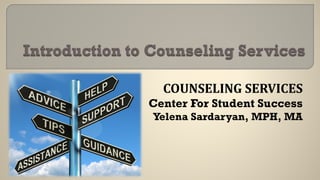
COUNSELING SERVICES
Center For Student Success
Yelena Sardaryan, MPH, MA
 What is Counseling?
 What is the demand for Counseling: General
population/Students
 What is Counseling Relationships about?
 What is Confidentiality
 Scope of Counseling Services
 Working Hours/Making appointments
 Small exercises
 When someone invites and allows another person to enter
into a particular kind of relationship with them.
 Permission to speak
 Respect for difference
 Confidentiality
 Affirmation
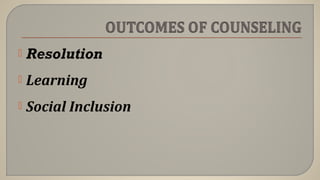
 Resolution
 Learning
 Social Inclusion
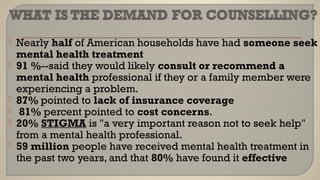
 Nearly half of American households have had someone seek
mental health treatment 
 91 %--said they would likely consult or recommend a
mental health professional if they or a family member were
experiencing a problem.
 87% pointed to lack of insurance coverage
  81% percent pointed to cost concerns.
 20% STIGMA is "a very important reason not to seek help"
from a mental health professional.
 59 million people have received mental health treatment in
the past two years, and that 80% have found it effective
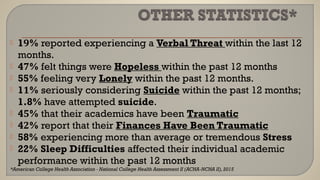
 19% reported experiencing a Verbal Threat within the last 12
months.
 47% felt things were Hopeless within the past 12 months
 55% feeling very Lonely within the past 12 months.
 11% seriously considering Suicide within the past 12 months;
1.8% have attempted suicide.
 45% that their academics have been Traumatic
 42% report that their Finances Have Been Traumatic
 58% experiencing more than average or tremendous Stress
 22% Sleep Difficulties affected their individual academic
performance within the past 12 months
*American College Health Association - National College Health Assessment II (ACHA-NCHA II),2015
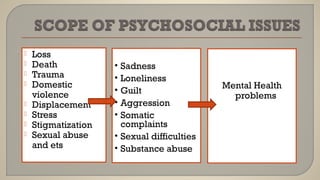
 Loss
 Death
 Trauma
 Domestic
violence
 Displacement
 Stress
 Stigmatization
 Sexual abuse
and ets
Mental Health
problems
• Fear
• Sadness
• Loneliness
• Guilt
• Aggression
• Somatic
complaints
• Sexual difficulties
• Substance abuse
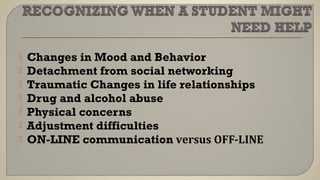
 Changes in Mood and Behavior
 Detachment from social networking
 Traumatic Changes in life relationships
 Drug and alcohol abuse
 Physical concerns
 Adjustment difficulties
 ON-LINE communication versus OFF-LINE
 Negative thought and feeling will rise/may feel
worse in some way
 Discussion of your concerns
 Identify ways of finding your own solutions to
problems
 Counselor acknowledges your feelings and
thoughts
 Develop counseling plan
 Resolve-Learn-Social Inclusion
 Good Counselor listens without judging or
criticizing
 Good Counselor listens with empathy
 Counselor should never tell you what to do
- Ordering, commanding, and pressuring
-Warning and threatening
- Giving advice or providing solutions (when this is not
necessary)
- Moralizing and labeling
- Disagreeing, judging, and criticizing
- Instruction and evaluation
- Arguing
- Openly showing disbelief
- Lack of interest or not responding
- Educating (when not appropriate)
 INDIVIDUAL COUSELING
 GROUP COUSELING
 WORKSHOPS
 WELLNESS SESSIONS
 CRISIS INTERVENTION
 REFFERALS
 Personal information
 History of the sessions
 Content of the sessions, including concerns
 NO ONE, including Center for Student Success, parents,
AUA staff and faculty, NO ONE,
• Unless
 Danger to himself/herself
 Suicidal thoughts
 Child abuse
 Abuse of a vulnerable adult
 Monday through Friday,
 04:15pm-06:15pm
 Contact
• in person (Main Building, room 418M),
• by e-mail (Counselingservices@aua.am)
• by phone (SOON )
 Counseling is often an effective way of dealing with
psychosocial and emotional problems.
 Behavior is often an open expression of feelings. In
order to change problematic behavior, counseling
requires dealing with feelings.
 Psychological health is an important part of survival,
protection, and general development.
 Counseling encourages and assists to find a solution for
his/her problem/situation.
Intorduction to Counceling Services

Intorduction to Counceling Services

  • 1.
    COUNSELING SERVICES Center ForStudent Success Yelena Sardaryan, MPH, MA
  • 2.
     What isCounseling?  What is the demand for Counseling: General population/Students  What is Counseling Relationships about?  What is Confidentiality  Scope of Counseling Services  Working Hours/Making appointments  Small exercises
  • 3.
     When someoneinvites and allows another person to enter into a particular kind of relationship with them.  Permission to speak  Respect for difference  Confidentiality  Affirmation
  • 5.
  • 6.
     Nearly halfof American households have had someone seek mental health treatment   91 %--said they would likely consult or recommend a mental health professional if they or a family member were experiencing a problem.  87% pointed to lack of insurance coverage   81% percent pointed to cost concerns.  20% STIGMA is "a very important reason not to seek help" from a mental health professional.  59 million people have received mental health treatment in the past two years, and that 80% have found it effective
  • 9.
     19% reportedexperiencing a Verbal Threat within the last 12 months.  47% felt things were Hopeless within the past 12 months  55% feeling very Lonely within the past 12 months.  11% seriously considering Suicide within the past 12 months; 1.8% have attempted suicide.  45% that their academics have been Traumatic  42% report that their Finances Have Been Traumatic  58% experiencing more than average or tremendous Stress  22% Sleep Difficulties affected their individual academic performance within the past 12 months *American College Health Association - National College Health Assessment II (ACHA-NCHA II),2015
  • 11.
     Loss  Death Trauma  Domestic violence  Displacement  Stress  Stigmatization  Sexual abuse and ets Mental Health problems • Fear • Sadness • Loneliness • Guilt • Aggression • Somatic complaints • Sexual difficulties • Substance abuse
  • 12.
     Changes inMood and Behavior  Detachment from social networking  Traumatic Changes in life relationships  Drug and alcohol abuse  Physical concerns  Adjustment difficulties  ON-LINE communication versus OFF-LINE
  • 13.
     Negative thoughtand feeling will rise/may feel worse in some way  Discussion of your concerns  Identify ways of finding your own solutions to problems  Counselor acknowledges your feelings and thoughts  Develop counseling plan  Resolve-Learn-Social Inclusion
  • 14.
     Good Counselorlistens without judging or criticizing  Good Counselor listens with empathy  Counselor should never tell you what to do
  • 15.
    - Ordering, commanding,and pressuring -Warning and threatening - Giving advice or providing solutions (when this is not necessary) - Moralizing and labeling - Disagreeing, judging, and criticizing - Instruction and evaluation - Arguing - Openly showing disbelief - Lack of interest or not responding - Educating (when not appropriate)
  • 16.
     INDIVIDUAL COUSELING GROUP COUSELING  WORKSHOPS  WELLNESS SESSIONS  CRISIS INTERVENTION  REFFERALS
  • 17.
     Personal information History of the sessions  Content of the sessions, including concerns  NO ONE, including Center for Student Success, parents, AUA staff and faculty, NO ONE, • Unless  Danger to himself/herself  Suicidal thoughts  Child abuse  Abuse of a vulnerable adult
  • 18.
     Monday throughFriday,  04:15pm-06:15pm  Contact • in person (Main Building, room 418M), • by e-mail (Counselingservices@aua.am) • by phone (SOON )
  • 19.
     Counseling isoften an effective way of dealing with psychosocial and emotional problems.  Behavior is often an open expression of feelings. In order to change problematic behavior, counseling requires dealing with feelings.  Psychological health is an important part of survival, protection, and general development.  Counseling encourages and assists to find a solution for his/her problem/situation.