History of Computer Graphics
History of Computer Graphics (pre-
WIMP age)
• First Generation (1951 - 1959)
– UNIVAC (1951)
– Crude hardcopy devices (line printer pictures)
• Data was displayed on printers or hardcopy plotters
• Computers were “number crunchers”; hardware was
expensive!
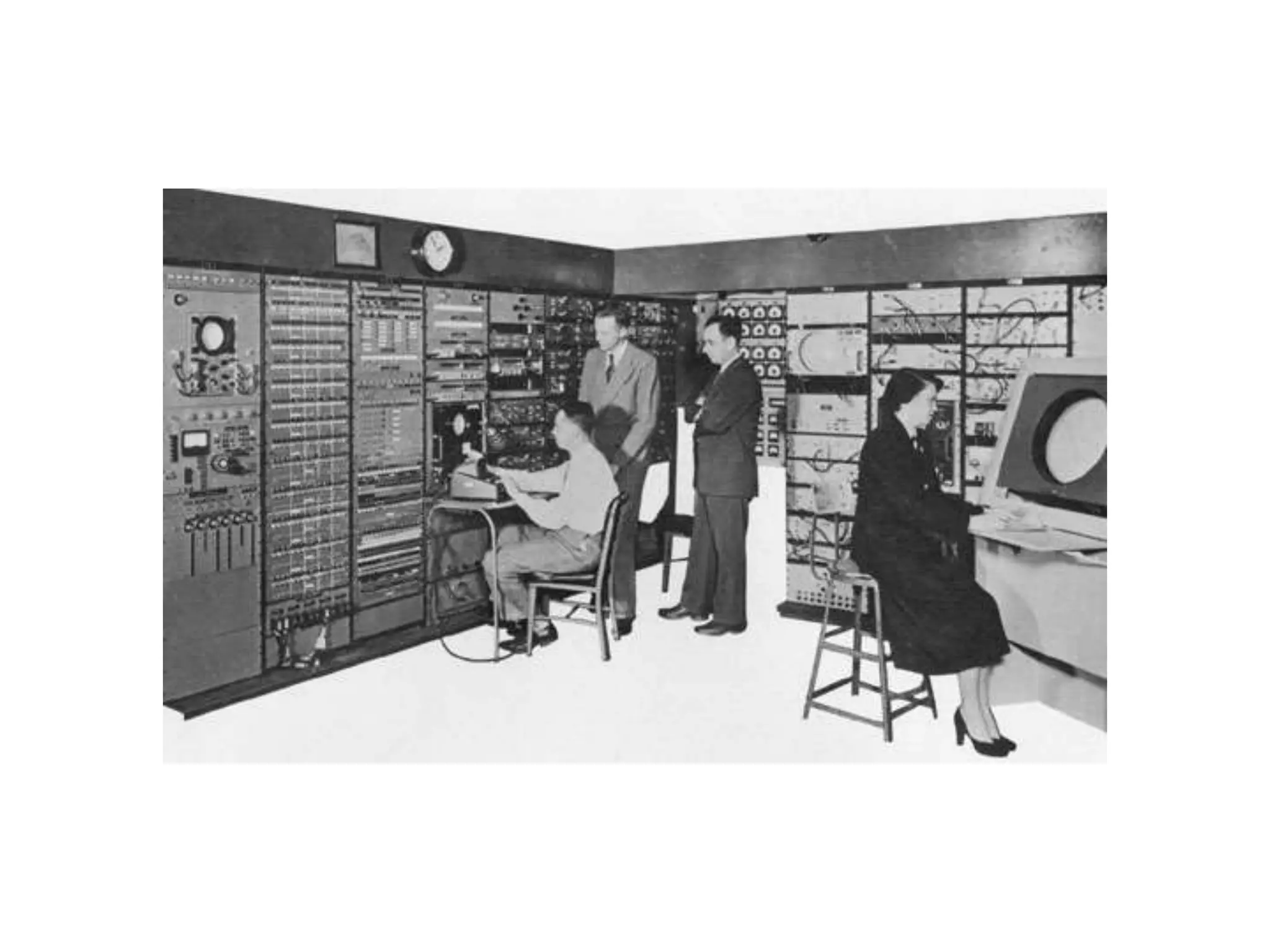
• First computer-driven display (Late 50s and early 60s)
– attached to MIT’s Whirlwind I computer
– display was CRT similar to one used in TV sets
Computer Graphics History continued
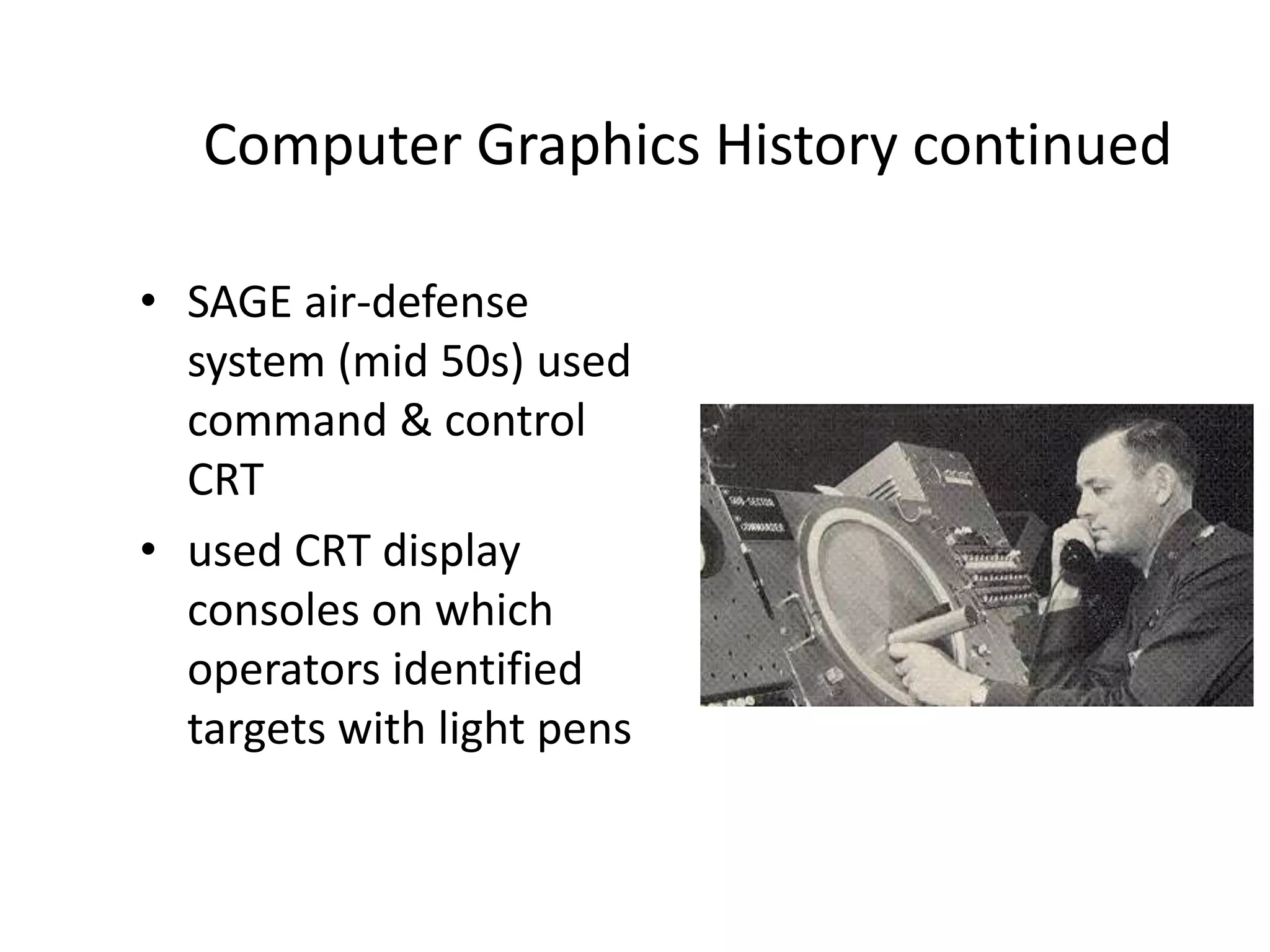
• SAGE air-defense
system (mid 50s) used
command & control
CRT
• used CRT display
consoles on which
operators identified
targets with light pens
Computer Graphics History continued
• Beginnings of modern interactive graphics
attributed to Ivan Sutherland’s doctoral work
– presented work at Spring Joint Computer
Conference in 1963 in the form of a movie.
– He developed the Sketchpad drawing system
Sutherland’s work continued
– the system included interactive techniques that used
the keyboard and light pen for making choices,
pointing, and drawing
– the film showed Sutherland sketching a bolt on the
screen.
• He formulated the ideas of
– display primitives (lines, polygons, arcs, characters)
– constraints on primitives
– developed algorithms for dragging, rubberbanding, transforming
(rotating, scaling, translating)
– introduced data structures for storing hierarchies built up via easy
replication of standard components
More Sutherland
• Subsequently, Sutherland became director of DARPA, then
professor at Harvard and later founder of Evans & Sutherland,
a leading edge graphics firm
• He is considered to be the founder of the computer graphics
field
• Because of his work, CAD & CAM became attractive
• By the mid-sixties, much research was being done
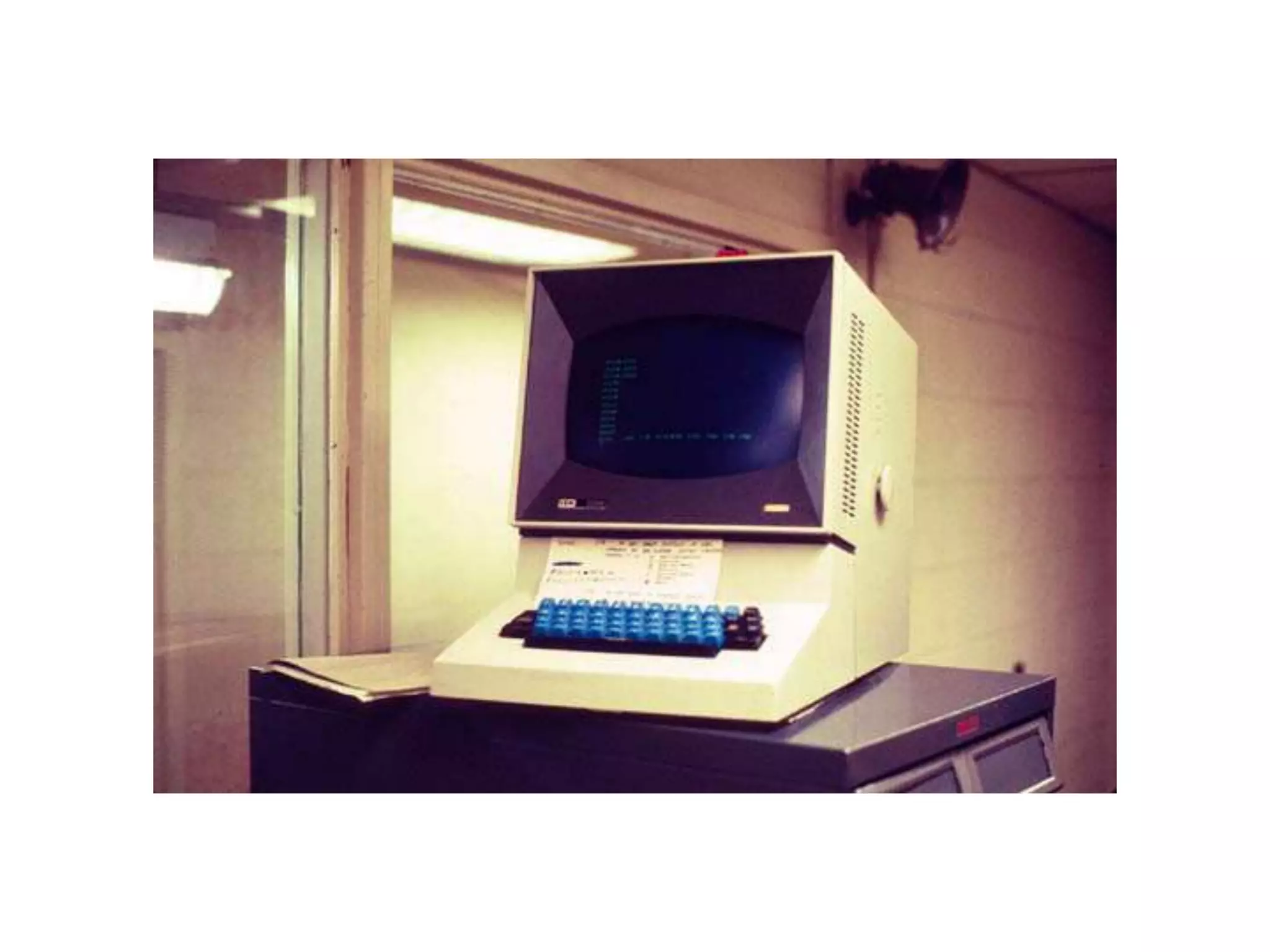
Computer Graphics of the 60’s
• Hardware expensive
• large scale, expensive computing resources needed
• About 1965, IBM brought out the first widely
available interactive computer graphics terminal
– vector graphics display
– sold for more than $100,000
– only elite designers could use the display system
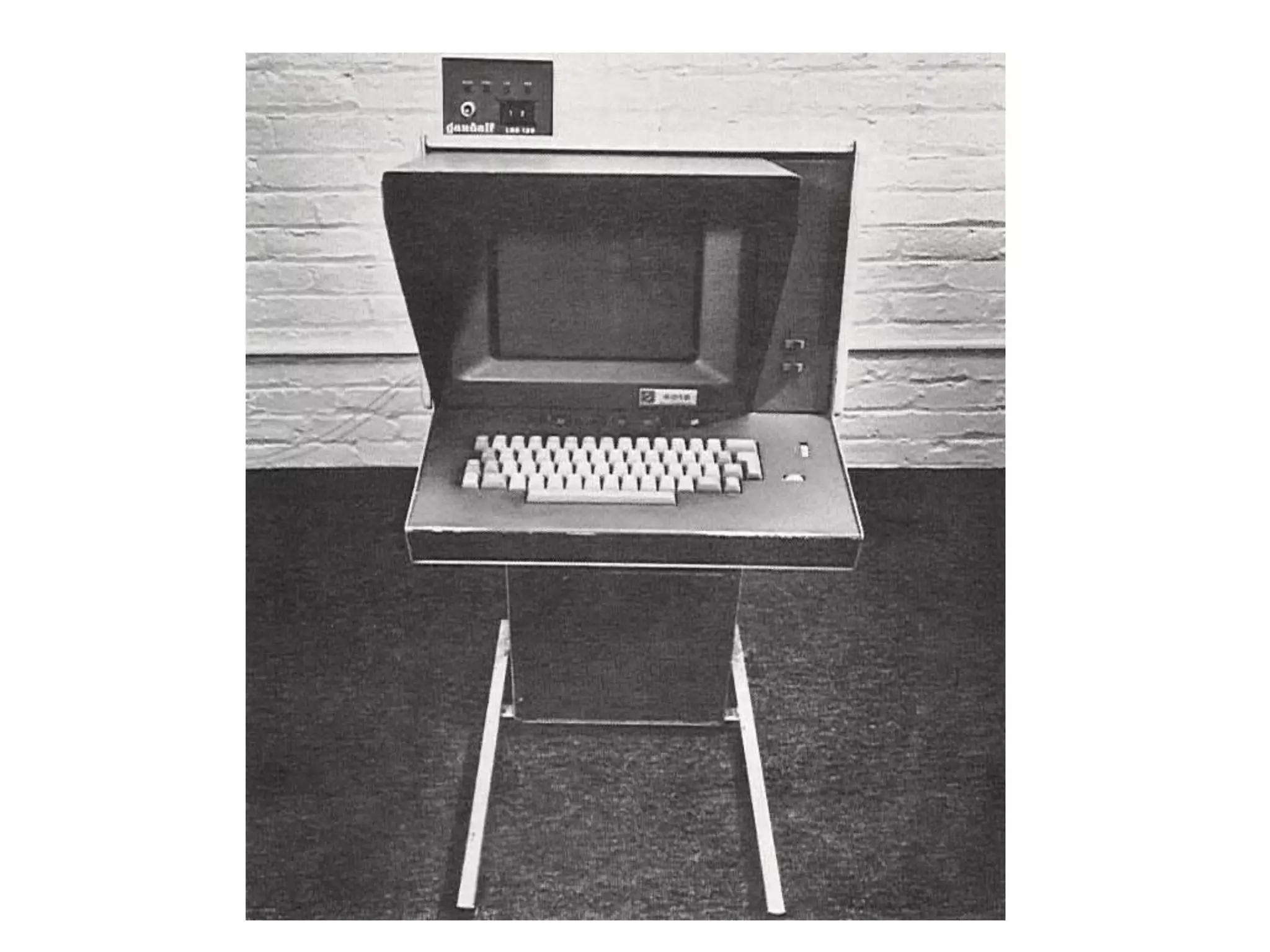
More Developments
• The next landmark was a special type of CRT
produced by Tektronix - the direct-view
storage tube (DVST)
• Introduced in 1968
– complete with keyboard, mouse, simple computer
interface for $15,000
– made interactive computer graphics affordable
Where did graphics go next?
• By late 60’s many researchers were concerned with
dynamic graphics.
• Realistic flight simulation applications were needed
• To make them realistic, solid colored surfaces were
needed (not wireframe)
• TV raster displays were used to create such images
• Systems built by GE for NASA were probably the
earliest examples of such displays
Raster Graphics continued
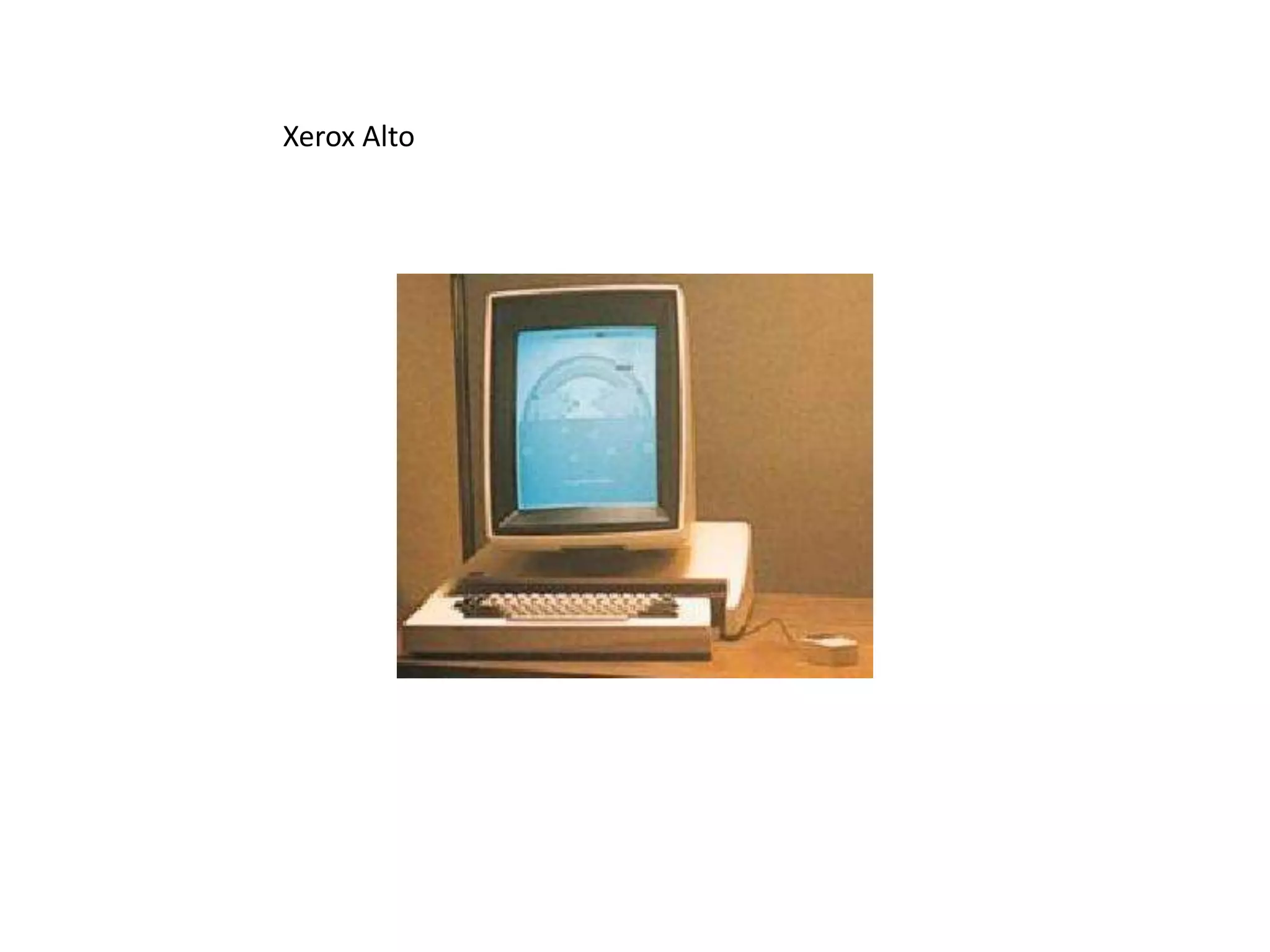
• Xerox Palo Alto Research Center designed a new graphics-
based personal minicomputer called the Alto
• Design was based on:
– cost of computing falling - every “knowledge worker” should have a
personal computer
– Alto computers should be connected for communication & resource-
sharing
– interface between user & computer should be graphical
– graphics display should be based on raster-graphics technology -- a
very bold idea
Xerox Alto
More hardware development’s
• PC’s in the 80’s
– costs decrease drastically
– built-in raster displays
– bitmap graphics used
Software Developments
• Sketchpad graphics
• Early days software was nontransportable at the assembly
language level
• Push in 70’s for high-level, machine- and device-independent
graphics subroutine packages
• Like FORTRAN virtualized I/O, these packages defined virtual
screens and virtual input devices
– locater to drive cursor & pass (x,y) back
– pick to select objects on screen
Software continued
• The awareness of the need for standards culminated in
– specification of the 3D Core Graphics System
– produced by an ACM SIGGRAPH Committee in late 70’s
– used as input to official standards projects within both ANSI and ISO
• First graphics standard was GKS (1985)
– like Core but 2D
• PHIGS (Programmer’s Hierarchical Interactive Graphics
System) was a 3D extension of GKS became an ANSI standard
in 1988
Software continued
• Also in the 80’s X Windows was developed
– goals of X are totally different
– X is a windowing management system
• allows for creation & manipulation of overlapping, resizable windows
• provides features of GUIs - pop-up, pull-down menus, dialog boxes, etc.
– Also includes functions for input devices such as a mouse as well as
simple 2D graphics operations
– Designed to operate transparently on a network with many dissimilar
computers & workstations
– development began at MIT in 1984
More Software
• OpenGL was introduced by SGI in 1992
– OpenGL is the “Assembler Language” of Computer
Graphics
– has portable, interactive 2D and 3D graphics applications
– low-level, vendor-neutral software interface
– broad platform accessibility in the industry
Software
• Sun formally announced Java in 1995
– Developed by James Gosling (originally called Oak)
– Considered to be a software development platform--
includes graphics & windowing capabilities
• Java AWT (Abstract Windowing Toolkit)
• Java 2D
• Java 3D
For a Complete History
• http://www.accad.ohio-
state.edu/~waynec/history/timeline.html

History of Computer Graphics

  • 1.
  • 2.
    History of ComputerGraphics (pre- WIMP age) • First Generation (1951 - 1959) – UNIVAC (1951) – Crude hardcopy devices (line printer pictures) • Data was displayed on printers or hardcopy plotters • Computers were “number crunchers”; hardware was expensive! • First computer-driven display (Late 50s and early 60s) – attached to MIT’s Whirlwind I computer – display was CRT similar to one used in TV sets
  • 4.
    Computer Graphics Historycontinued • SAGE air-defense system (mid 50s) used command & control CRT • used CRT display consoles on which operators identified targets with light pens
  • 5.
    Computer Graphics Historycontinued • Beginnings of modern interactive graphics attributed to Ivan Sutherland’s doctoral work – presented work at Spring Joint Computer Conference in 1963 in the form of a movie. – He developed the Sketchpad drawing system
  • 7.
    Sutherland’s work continued –the system included interactive techniques that used the keyboard and light pen for making choices, pointing, and drawing – the film showed Sutherland sketching a bolt on the screen. • He formulated the ideas of – display primitives (lines, polygons, arcs, characters) – constraints on primitives – developed algorithms for dragging, rubberbanding, transforming (rotating, scaling, translating) – introduced data structures for storing hierarchies built up via easy replication of standard components
  • 8.
    More Sutherland • Subsequently,Sutherland became director of DARPA, then professor at Harvard and later founder of Evans & Sutherland, a leading edge graphics firm • He is considered to be the founder of the computer graphics field • Because of his work, CAD & CAM became attractive • By the mid-sixties, much research was being done
  • 9.
    Computer Graphics ofthe 60’s • Hardware expensive • large scale, expensive computing resources needed • About 1965, IBM brought out the first widely available interactive computer graphics terminal – vector graphics display – sold for more than $100,000 – only elite designers could use the display system
  • 11.
    More Developments • Thenext landmark was a special type of CRT produced by Tektronix - the direct-view storage tube (DVST) • Introduced in 1968 – complete with keyboard, mouse, simple computer interface for $15,000 – made interactive computer graphics affordable
  • 13.
    Where did graphicsgo next? • By late 60’s many researchers were concerned with dynamic graphics. • Realistic flight simulation applications were needed • To make them realistic, solid colored surfaces were needed (not wireframe) • TV raster displays were used to create such images • Systems built by GE for NASA were probably the earliest examples of such displays
  • 14.
    Raster Graphics continued •Xerox Palo Alto Research Center designed a new graphics- based personal minicomputer called the Alto • Design was based on: – cost of computing falling - every “knowledge worker” should have a personal computer – Alto computers should be connected for communication & resource- sharing – interface between user & computer should be graphical – graphics display should be based on raster-graphics technology -- a very bold idea
  • 15.
  • 16.
    More hardware development’s •PC’s in the 80’s – costs decrease drastically – built-in raster displays – bitmap graphics used
  • 17.
    Software Developments • Sketchpadgraphics • Early days software was nontransportable at the assembly language level • Push in 70’s for high-level, machine- and device-independent graphics subroutine packages • Like FORTRAN virtualized I/O, these packages defined virtual screens and virtual input devices – locater to drive cursor & pass (x,y) back – pick to select objects on screen
  • 18.
    Software continued • Theawareness of the need for standards culminated in – specification of the 3D Core Graphics System – produced by an ACM SIGGRAPH Committee in late 70’s – used as input to official standards projects within both ANSI and ISO • First graphics standard was GKS (1985) – like Core but 2D • PHIGS (Programmer’s Hierarchical Interactive Graphics System) was a 3D extension of GKS became an ANSI standard in 1988
  • 19.
    Software continued • Alsoin the 80’s X Windows was developed – goals of X are totally different – X is a windowing management system • allows for creation & manipulation of overlapping, resizable windows • provides features of GUIs - pop-up, pull-down menus, dialog boxes, etc. – Also includes functions for input devices such as a mouse as well as simple 2D graphics operations – Designed to operate transparently on a network with many dissimilar computers & workstations – development began at MIT in 1984
  • 20.
    More Software • OpenGLwas introduced by SGI in 1992 – OpenGL is the “Assembler Language” of Computer Graphics – has portable, interactive 2D and 3D graphics applications – low-level, vendor-neutral software interface – broad platform accessibility in the industry
  • 21.
    Software • Sun formallyannounced Java in 1995 – Developed by James Gosling (originally called Oak) – Considered to be a software development platform-- includes graphics & windowing capabilities • Java AWT (Abstract Windowing Toolkit) • Java 2D • Java 3D
  • 22.
    For a CompleteHistory • http://www.accad.ohio- state.edu/~waynec/history/timeline.html