Creating Animation like in the movies and TV
series requires extensive collaborations that
involve a long process and a lot of work.
In creating an animation, animators must
use a collection of equipment that helps
process and create the graphics and
content.
TWO TYPES OF
ANIMATION
TWO TYPES OF ANIMATION
TRADITIONAL ANIMATION
An animation technique where each frame is
drawn by hand. This is also called classical
animation or cel animation. This type of
animation uses specialized materials and
equipment for artists and animators.COMPUTER-GENERATED ANIMATION
An animation technique that is purely digital
and created primarily with computers. CG
animators use high-powered computers to
create 3D animations.
In computer-generated animation, most
tools needed are software-based.
However, the drawing stage that uses
paper is still preferred by most
animators. So the drawing paper and
pen, special pencils, and other
traditional tools can still be useful in
your goal of developing your own
animation film.
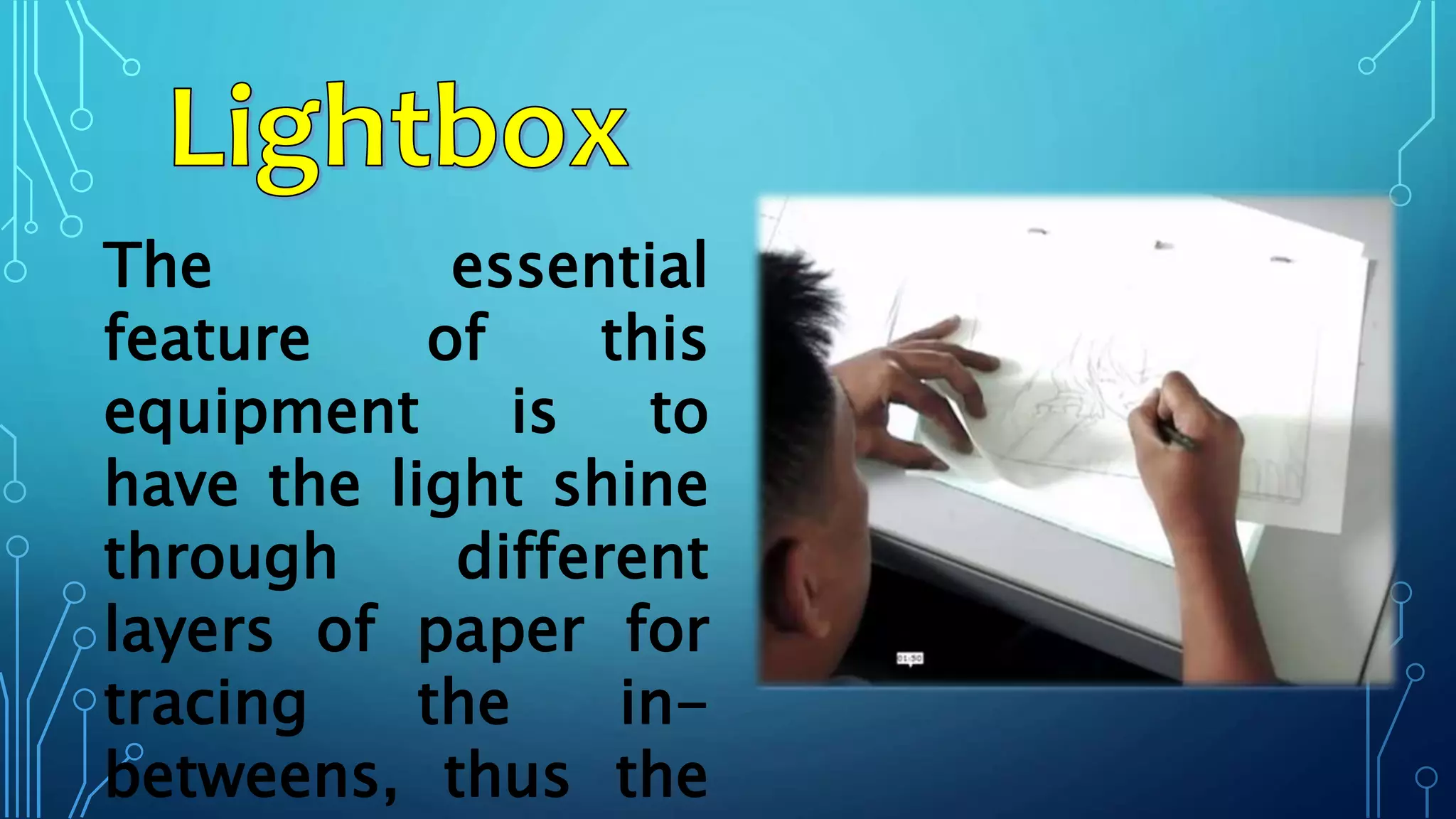
The essential
feature of this
equipment is to
have the light shine
through different
layers of paper for
tracing the in-
betweens, thus the
Some light box has a peg bar where
paper is attached to the device so that
the paper will not move as the animator
is doing the artwork.
A peg bar is made of plastic and can
actually be improvised using a three-
hole office punched paper
There is no specific paper on which
animation should be drawn as long as it is
big enough to flip.
• The paper should also be translucent
(Acetate)
A grid system used to
accurately create field
guides in the layout. These
guides are what the camera
will see in the scene.
The area chosen for the
camera to cover in any
piece of art is known as the
field size.
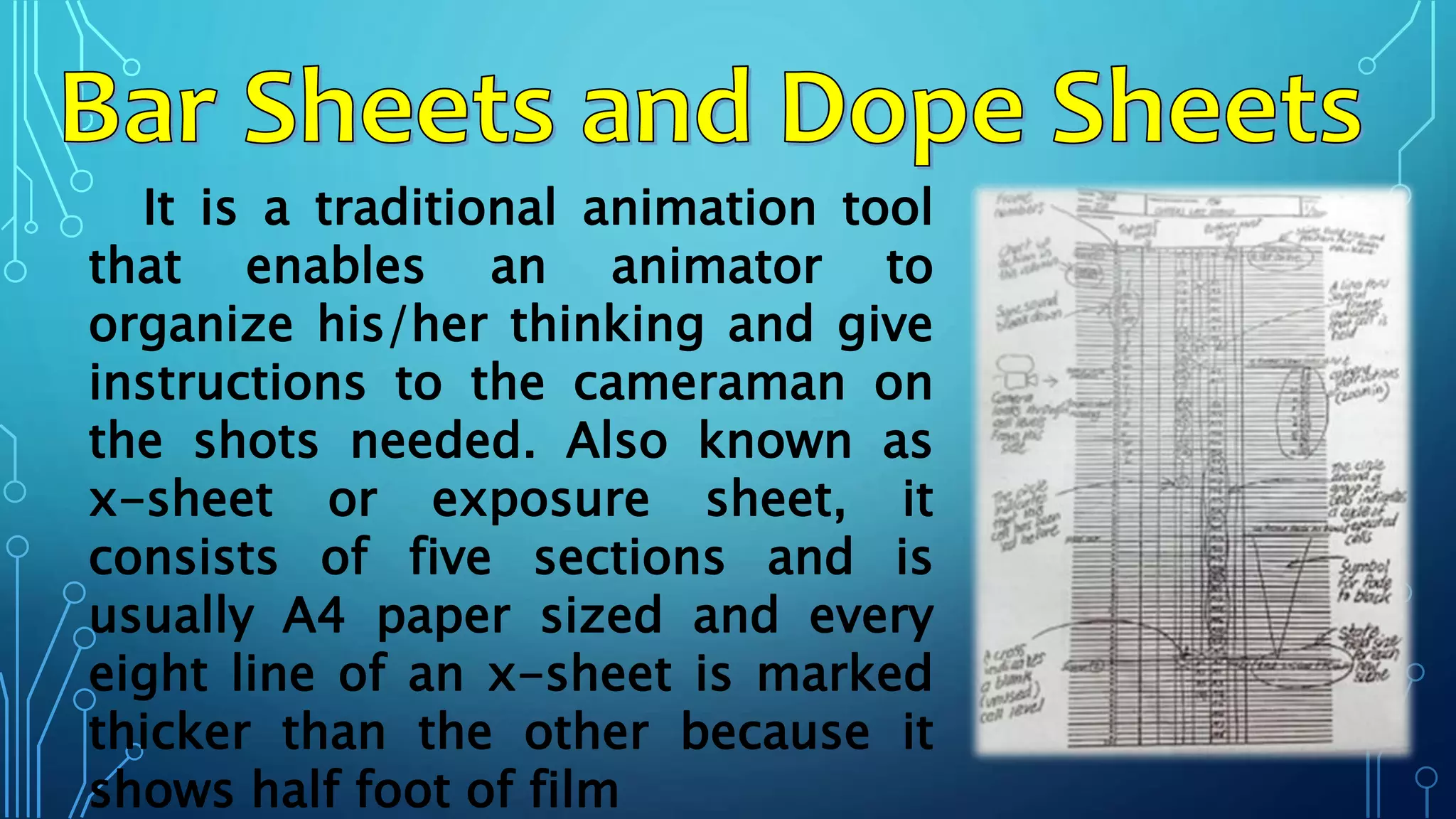
It is a traditional animation tool
that enables an animator to
organize his/her thinking and give
instructions to the cameraman on
the shots needed. Also known as
x-sheet or exposure sheet, it
consists of five sections and is
usually A4 paper sized and every
eight line of an x-sheet is marked
thicker than the other because it
shows half foot of film
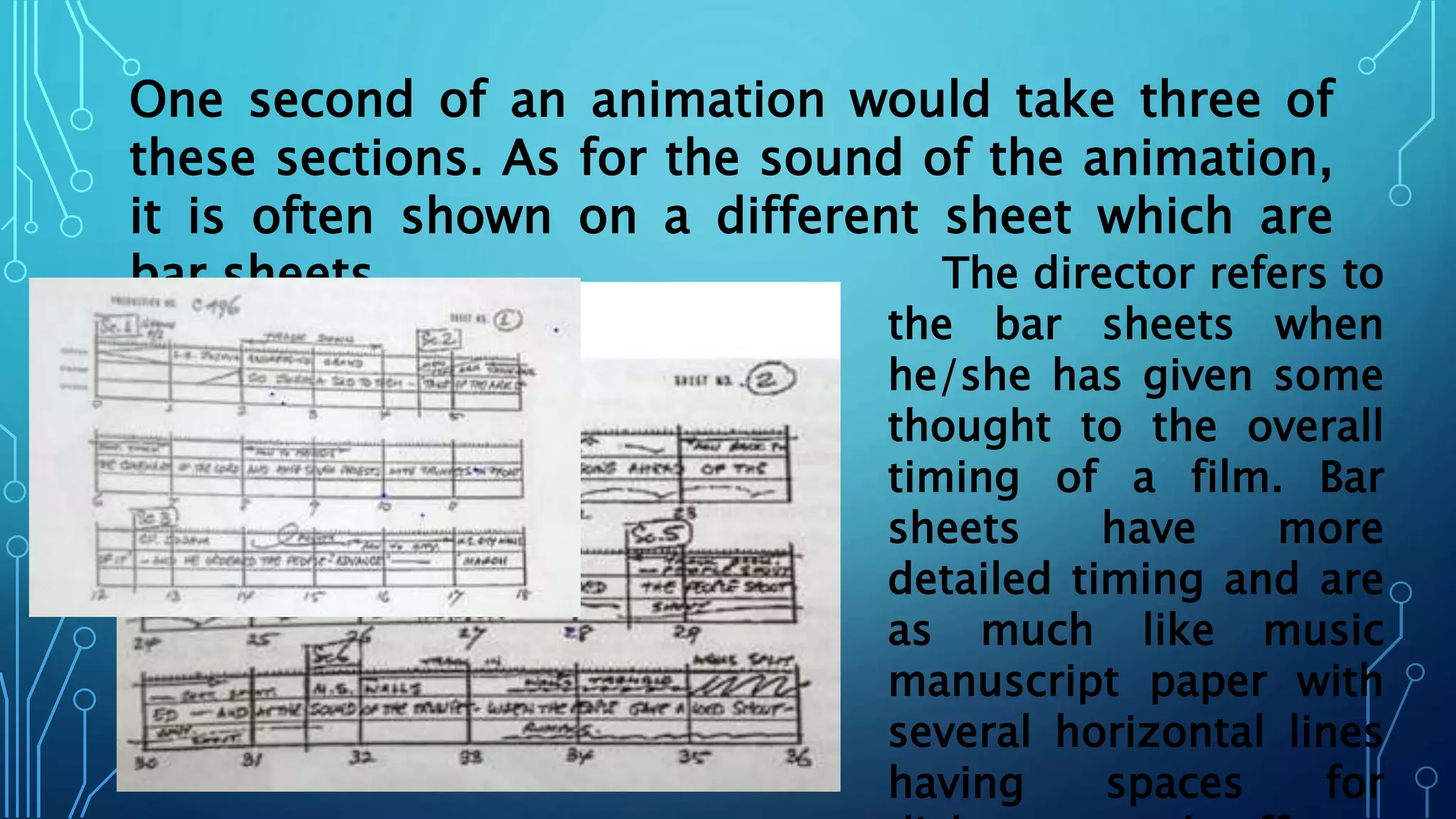
One second of an animation would take three of
these sections. As for the sound of the animation,
it is often shown on a different sheet which are
bar sheets The director refers to
the bar sheets when
he/she has given some
thought to the overall
timing of a film. Bar
sheets have more
detailed timing and are
as much like music
manuscript paper with
several horizontal lines
having spaces for
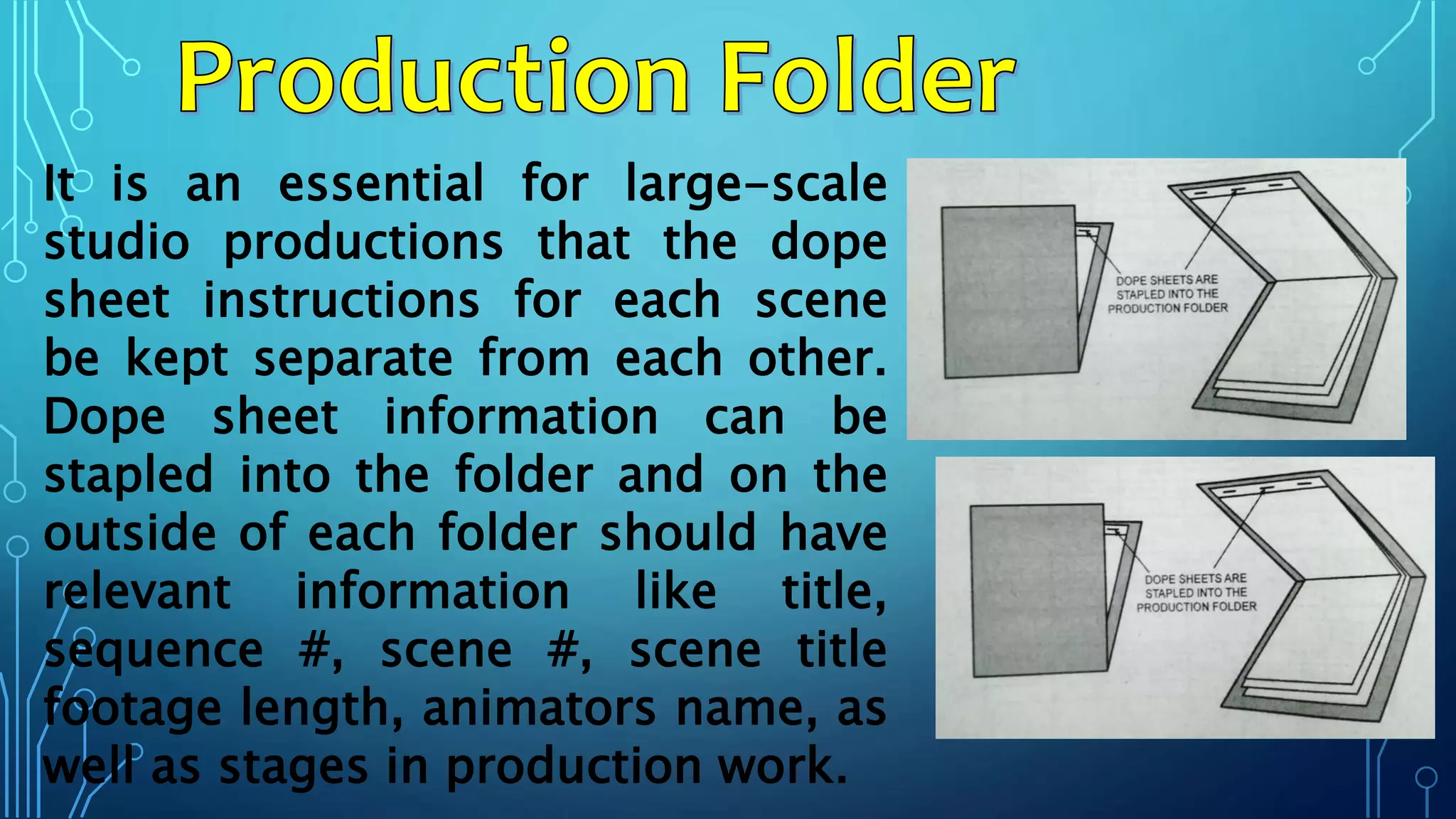
It is an essential for large-scale
studio productions that the dope
sheet instructions for each scene
be kept separate from each other.
Dope sheet information can be
stapled into the folder and on the
outside of each folder should have
relevant information like title,
sequence #, scene #, scene title
footage length, animators name, as
well as stages in production work.
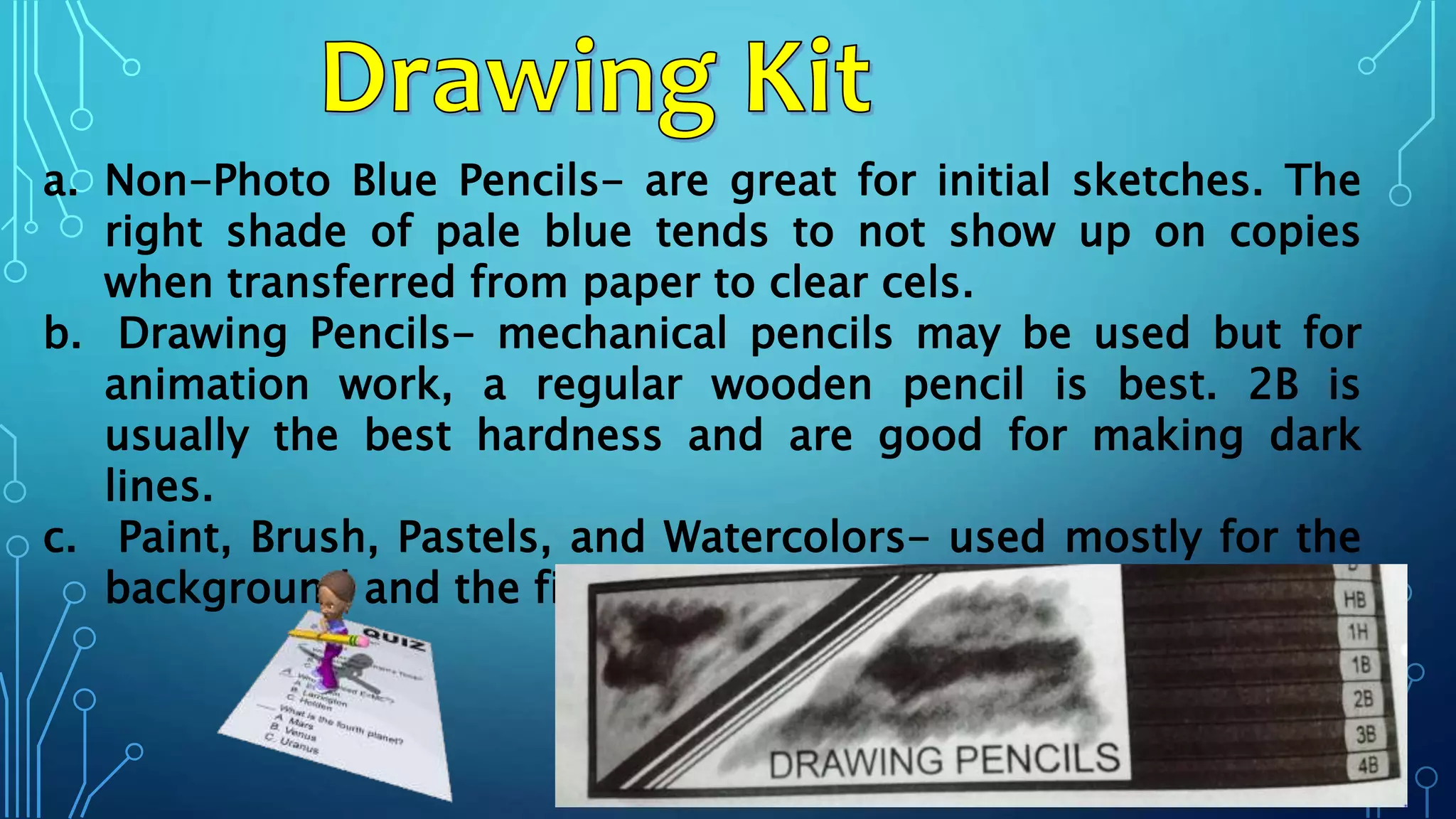
a. Non-Photo Blue Pencils- are great for initial sketches. The
right shade of pale blue tends to not show up on copies
when transferred from paper to clear cels.
b. Drawing Pencils- mechanical pencils may be used but for
animation work, a regular wooden pencil is best. 2B is
usually the best hardness and are good for making dark
lines.
c. Paint, Brush, Pastels, and Watercolors- used mostly for the
background and the final stages of the process.
These eraser are far
superior to standard
erasers because they
rub out lead cleanly
without smudging away
actual paper surface.
After all the pencil
drawing are done, it is
essential to test the full
animation to check its
movement.
Question for Discussion
Animation tools and equipment

Animation tools and equipment

  • 1.
    Creating Animation likein the movies and TV series requires extensive collaborations that involve a long process and a lot of work. In creating an animation, animators must use a collection of equipment that helps process and create the graphics and content.
  • 2.
  • 3.
    TWO TYPES OFANIMATION TRADITIONAL ANIMATION An animation technique where each frame is drawn by hand. This is also called classical animation or cel animation. This type of animation uses specialized materials and equipment for artists and animators.COMPUTER-GENERATED ANIMATION An animation technique that is purely digital and created primarily with computers. CG animators use high-powered computers to create 3D animations.
  • 5.
    In computer-generated animation,most tools needed are software-based. However, the drawing stage that uses paper is still preferred by most animators. So the drawing paper and pen, special pencils, and other traditional tools can still be useful in your goal of developing your own animation film.
  • 6.
    The essential feature ofthis equipment is to have the light shine through different layers of paper for tracing the in- betweens, thus the
  • 7.
    Some light boxhas a peg bar where paper is attached to the device so that the paper will not move as the animator is doing the artwork. A peg bar is made of plastic and can actually be improvised using a three- hole office punched paper
  • 8.
    There is nospecific paper on which animation should be drawn as long as it is big enough to flip. • The paper should also be translucent (Acetate)
  • 9.
    A grid systemused to accurately create field guides in the layout. These guides are what the camera will see in the scene. The area chosen for the camera to cover in any piece of art is known as the field size.
  • 10.
    It is atraditional animation tool that enables an animator to organize his/her thinking and give instructions to the cameraman on the shots needed. Also known as x-sheet or exposure sheet, it consists of five sections and is usually A4 paper sized and every eight line of an x-sheet is marked thicker than the other because it shows half foot of film
  • 11.
    One second ofan animation would take three of these sections. As for the sound of the animation, it is often shown on a different sheet which are bar sheets The director refers to the bar sheets when he/she has given some thought to the overall timing of a film. Bar sheets have more detailed timing and are as much like music manuscript paper with several horizontal lines having spaces for
  • 12.
    It is anessential for large-scale studio productions that the dope sheet instructions for each scene be kept separate from each other. Dope sheet information can be stapled into the folder and on the outside of each folder should have relevant information like title, sequence #, scene #, scene title footage length, animators name, as well as stages in production work.
  • 13.
    a. Non-Photo BluePencils- are great for initial sketches. The right shade of pale blue tends to not show up on copies when transferred from paper to clear cels. b. Drawing Pencils- mechanical pencils may be used but for animation work, a regular wooden pencil is best. 2B is usually the best hardness and are good for making dark lines. c. Paint, Brush, Pastels, and Watercolors- used mostly for the background and the final stages of the process.
  • 14.
    These eraser arefar superior to standard erasers because they rub out lead cleanly without smudging away actual paper surface.
  • 15.
    After all thepencil drawing are done, it is essential to test the full animation to check its movement.
  • 16.