Environmental Principles 
Environmental Law 121 
UC College of Law
Sustainable Development 
 emerged in the 1980s 
 gained worldwide momentum with the 
publication of Our Common Future by the 
World Commission on Environment and 
Development (also known as the Brundtland 
Commission) in 1987
Definition 
“Development that meets the needs 
of the present without compromising 
the ability of future generations 
to meet their own needs.”
Another Definition of Sustainable 
Development 
“improving the quality of human life 
while living within the carrying 
capacity of supporting 
ecosystems. ” 
 Caring for the Earth: A Strategy for Sustainable Living by the 
World Conservation Union (IUCN), the United Nations 
Environment Programme and the World Wide Fund For Nature 
(WWF) in 1991
1992 Rio Declaration on Environment 
and Development 
 Principle 1: Human beings are at the centre 
of concerns for sustainable development. 
They are entitled to a healthy and productive 
life in harmony with nature. 
 Principle 4: In order to achieve sustainable 
development, environmental protection shall 
constitute an integral part of the development 
process and cannot be considered in 
isolation from it.
1992 Philippine Strategy for 
Sustainable Development - Philippines 
Agenda 21 
 Sustainable development as defined in the 
PA 21 (1996) is “harmonious integration of a 
sound and viable economy, responsible 
governance, social cohesion and ecological 
integrity, to ensure that development is a life-sustaining 
process.”
Three key areas of sustainable 
development 
- Society: an understanding of social institutions and their role in 
change and development, as well as the democratic and 
participatory systems which give opportunity for the expression of 
opinion, the selection of governments, the forging of consensus 
and the resolution of differences. 
- Environment: an awareness of the resources and fragility of 
the physical environment and the affects on it of human activity 
and decisions, with a commitment to factoring environmental 
concerns into social and economic policy development. 
- Economy: a sensitivity to the limits and potential of economic 
growth and their impact on society and on the environment, with 
a commitment to assess personal and societal levels of 
consumption out of concern for the environment and for social 
justice.
3 key actors in sustainable development – PA 21 
- Business, the key actor in economy, which 
is mainly concerned with producing goods 
and services for people. 
- Government, the key actor in polity, which 
is concerned with democratic governance 
and security of human rights. 
- Civil society, the key actor in culture, which 
is concerned with the development of the 
social and spiritual capacities of human 
beings.
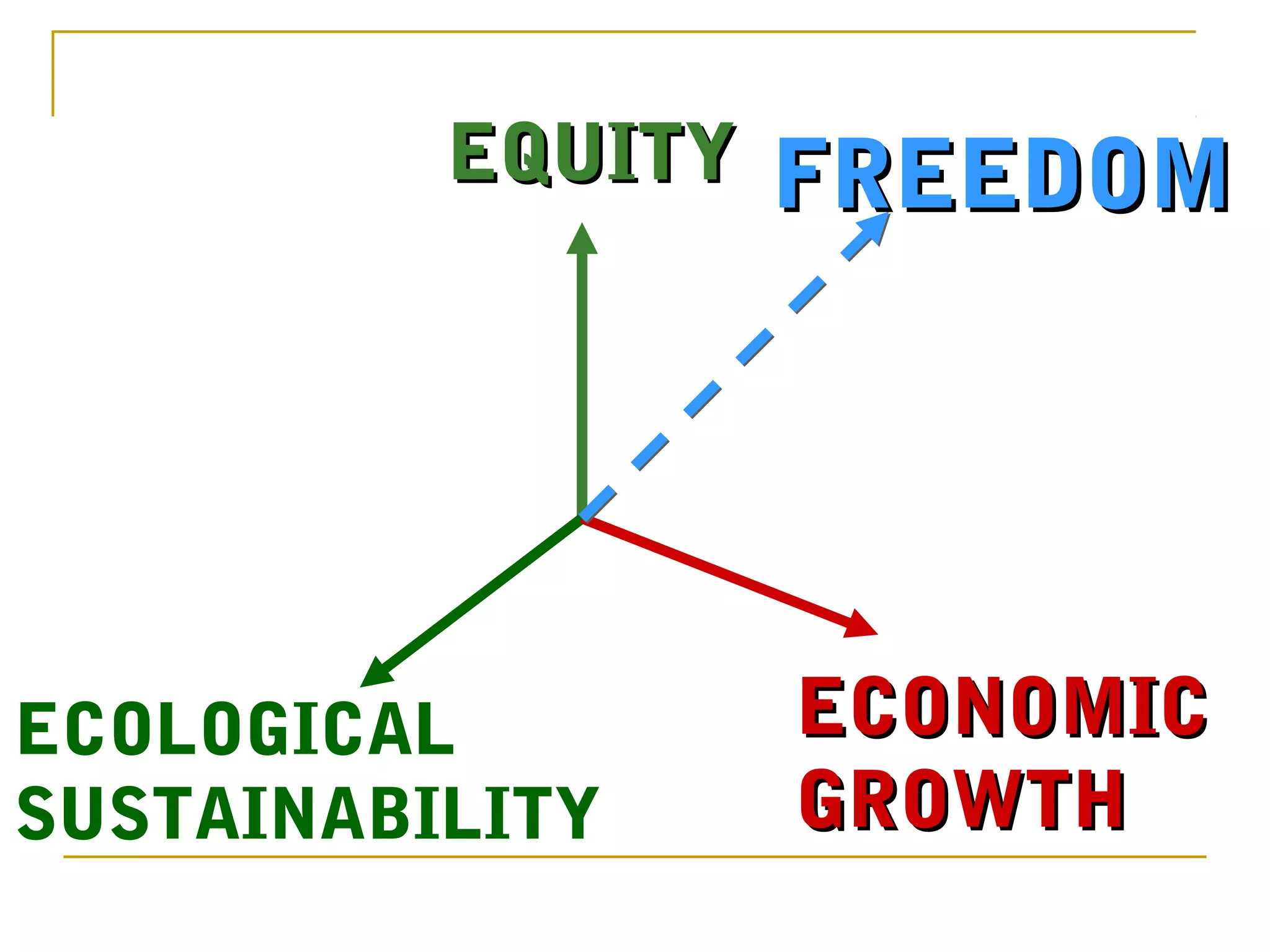
““SSUUSSTTAAIINNAABBLLEE 
TTOOTTAALL,, 
IINNTTEEGGRRAATTEEDD 
DDEEVVEELLOOPPMMEENNTT””
EEQQUUIITTYY 
ECOLOGICAL 
SUSTAINABILITY 
FFRREEEEDDOOMM 
EECCOONNOOMMIICC 
GGRROOWWTTHH
MODEL SSTTRREESSSSEESS DDIIFFFFEERREENNCCEE BBEETTWWEEEENN 
GGRROOWWTTHH && DDEEVVEELLOOPPMMEENNTT 
DDEEVVEELLOOPPMMEENNTT :: 
AABBOOUUTT IINNCCRREEAASSEESS 
IINN MMAATTEERRIIAALL WWEEAALLTTHH 
AABBOOUUTT IINNCCRREEAASSIINNGG 
FFRREEEEDDOOMM
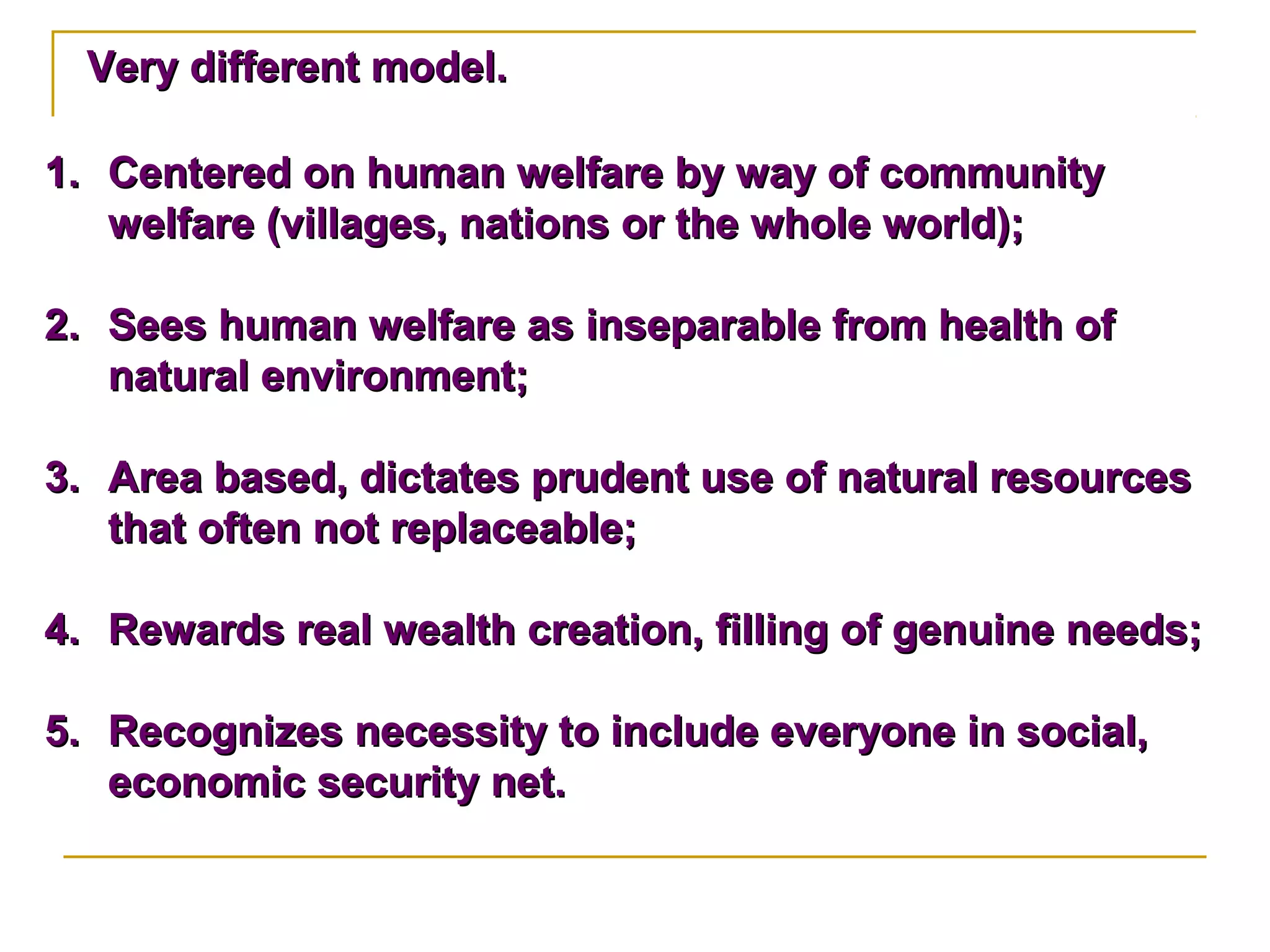
VVeerryy ddiiffffeerreenntt mmooddeell.. 
11.. CCeenntteerreedd oonn hhuummaann wweellffaarree bbyy wwaayy ooff ccoommmmuunniittyy 
wweellffaarree ((vviillllaaggeess,, nnaattiioonnss oorr tthhee wwhhoollee wwoorrlldd));; 
22.. SSeeeess hhuummaann wweellffaarree aass iinnsseeppaarraabbllee ffrroomm hheeaalltthh ooff 
nnaattuurraall eennvviirroonnmmeenntt;; 
33.. AArreeaa bbaasseedd,, ddiiccttaatteess pprruuddeenntt uussee ooff nnaattuurraall rreessoouurrcceess 
tthhaatt oofftteenn nnoott rreeppllaacceeaabbllee;; 
44.. RReewwaarrddss rreeaall wweeaalltthh ccrreeaattiioonn,, ffiilllliinngg ooff ggeennuuiinnee nneeeeddss;; 
55.. RReeccooggnniizzeess nneecceessssiittyy ttoo iinncclluuddee eevveerryyoonnee iinn ssoocciiaall,, 
eeccoonnoommiicc sseeccuurriittyy nneett..
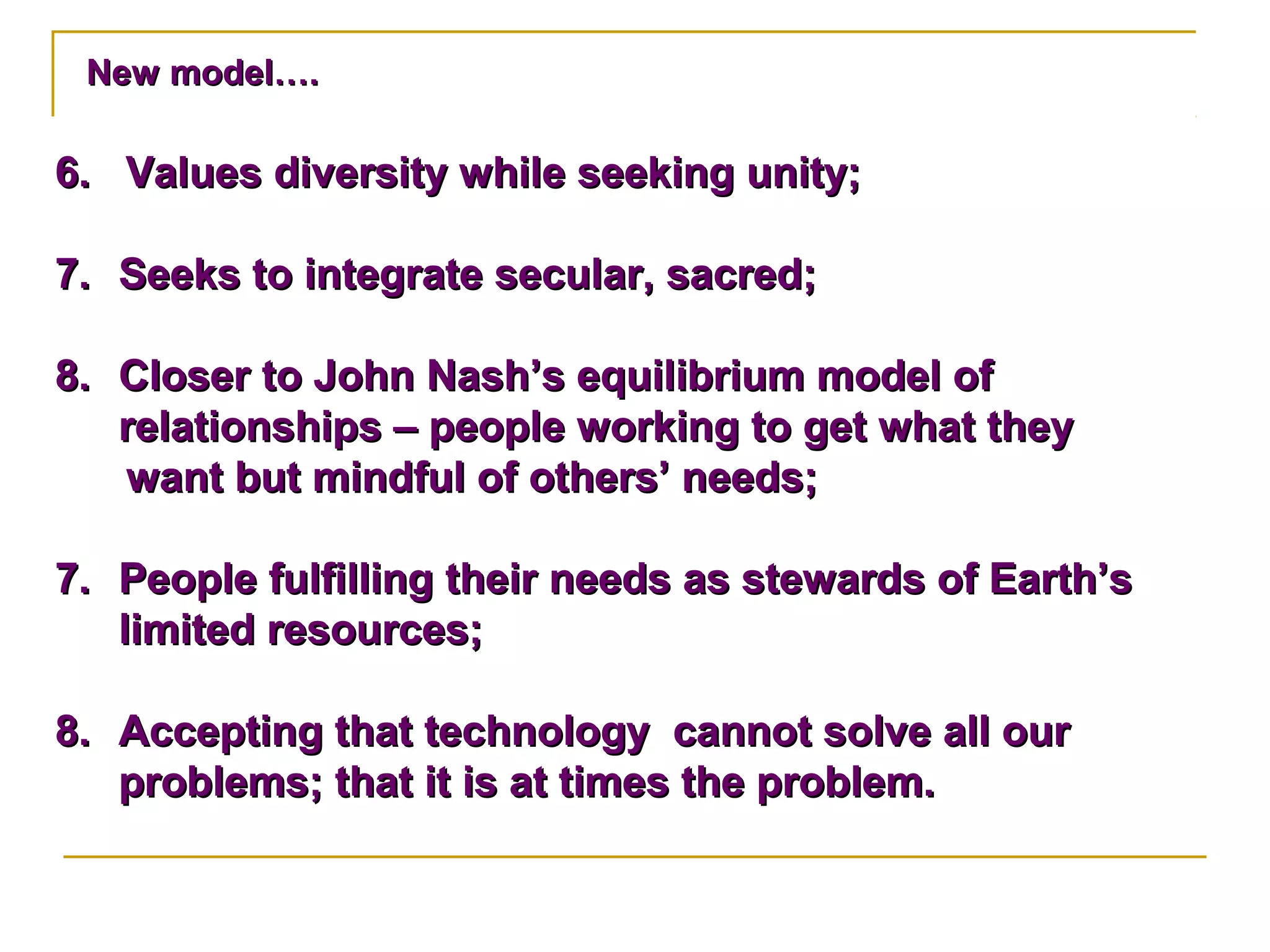
NNeeww mmooddeell…….. 
66.. VVaalluueess ddiivveerrssiittyy wwhhiillee sseeeekkiinngg uunniittyy;; 
77.. SSeeeekkss ttoo iinntteeggrraattee sseeccuullaarr,, ssaaccrreedd;; 
88.. CClloosseerr ttoo JJoohhnn NNaasshh’’ss eeqquuiilliibbrriiuumm mmooddeell ooff 
rreellaattiioonnsshhiippss –– ppeeooppllee wwoorrkkiinngg ttoo ggeett wwhhaatt tthheeyy 
wwaanntt bbuutt mmiinnddffuull ooff ootthheerrss’’ nneeeeddss;; 
77.. PPeeooppllee ffuullffiilllliinngg tthheeiirr nneeeeddss aass sstteewwaarrddss ooff EEaarrtthh’’ss 
lliimmiitteedd rreessoouurrcceess;; 
88.. AAcccceeppttiinngg tthhaatt tteecchhnnoollooggyy ccaannnnoott ssoollvvee aallll oouurr 
pprroobblleemmss;; tthhaatt iitt iiss aatt ttiimmeess tthhee pprroobblleemm..
Concept of 
Intergenerational Equity 
 Rio Declaration on Environment and 
Development (1992) - Principle 3: “the right 
to development must be fulfilled so as to 
equitably meet developmental and 
environmental needs of present and future 
generations.” 
 Oposa v. Factoran, et al. (224 SCRA 792, 
G.R. No. 101083 July 30, 1993)
Oposa vs. Factoran 
 “….petition bears upon the right of Filipinos to 
a balanced and healthful ecology which the 
petitioners dramatically associate with the 
twin concepts of "inter-generational 
responsibility" and "inter-generational 
justice."
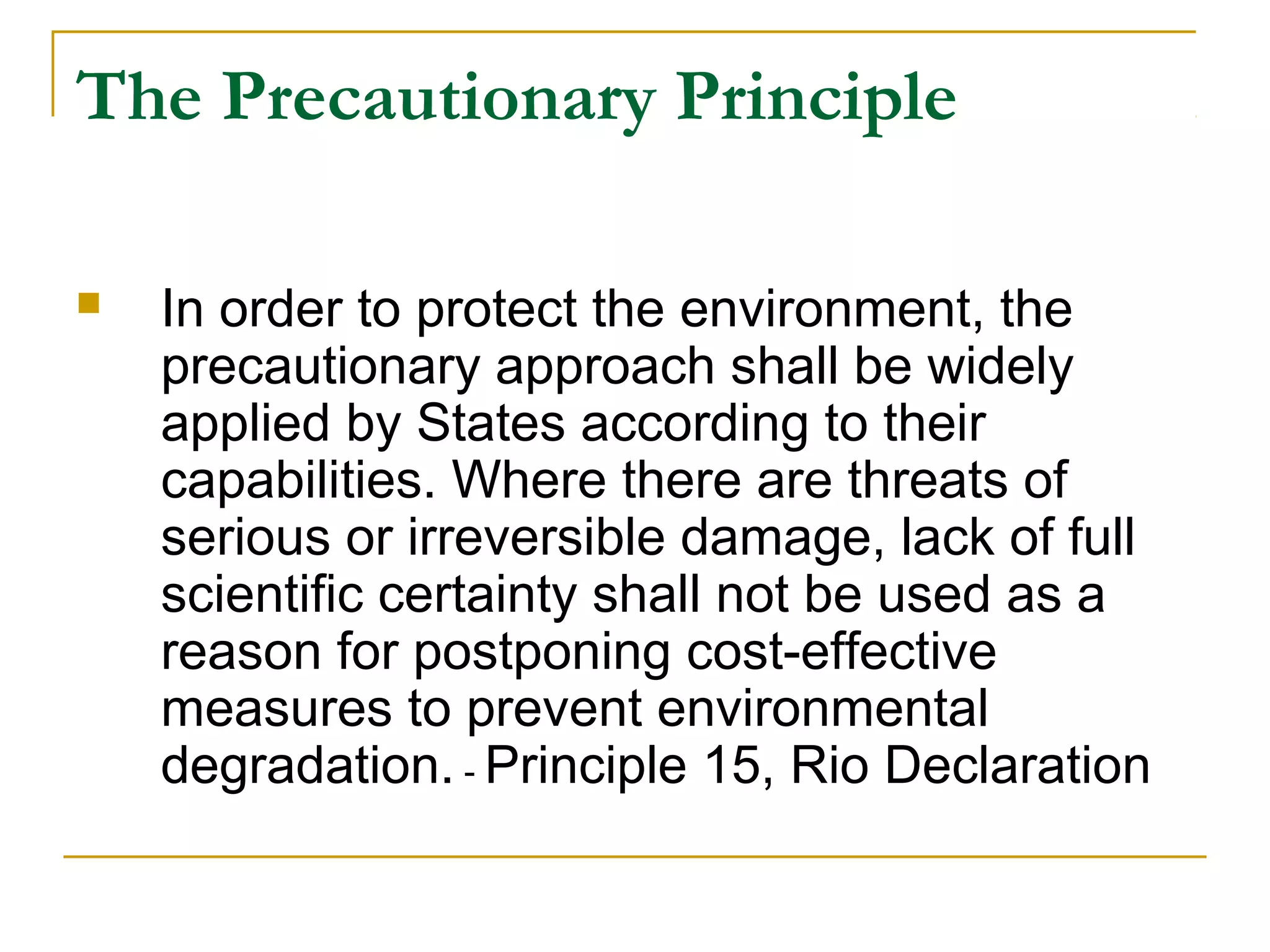
The Precautionary Principle 
 In order to protect the environment, the 
precautionary approach shall be widely 
applied by States according to their 
capabilities. Where there are threats of 
serious or irreversible damage, lack of full 
scientific certainty shall not be used as a 
reason for postponing cost-effective 
measures to prevent environmental 
degradation. - Principle 15, Rio Declaration
Concept of Environmental Impact 
Assessment 
 Environmental impact assessment, as a 
national instrument, shall be undertaken for 
proposed activities that are likely to have a 
significant adverse impact on the 
environment and are subject to a decision 
of a competent national authority. - Principle 
17, Rio Declaration
Polluter Pays Principle 
 National authorities should endeavour to 
promote the internalization of environmental 
costs and the use of economic instruments, 
taking into account the approach that the 
polluter should, in principle, bear the cost of 
pollution, with due regard to the public 
interest and without distorting international 
trade and investment. - Principle 16, Rio 
Declaration

1 2 3_environmental principles

  • 1.
    Environmental Principles EnvironmentalLaw 121 UC College of Law
  • 2.
    Sustainable Development emerged in the 1980s  gained worldwide momentum with the publication of Our Common Future by the World Commission on Environment and Development (also known as the Brundtland Commission) in 1987
  • 3.
    Definition “Development thatmeets the needs of the present without compromising the ability of future generations to meet their own needs.”
  • 4.
    Another Definition ofSustainable Development “improving the quality of human life while living within the carrying capacity of supporting ecosystems. ”  Caring for the Earth: A Strategy for Sustainable Living by the World Conservation Union (IUCN), the United Nations Environment Programme and the World Wide Fund For Nature (WWF) in 1991
  • 5.
    1992 Rio Declarationon Environment and Development  Principle 1: Human beings are at the centre of concerns for sustainable development. They are entitled to a healthy and productive life in harmony with nature.  Principle 4: In order to achieve sustainable development, environmental protection shall constitute an integral part of the development process and cannot be considered in isolation from it.
  • 6.
    1992 Philippine Strategyfor Sustainable Development - Philippines Agenda 21  Sustainable development as defined in the PA 21 (1996) is “harmonious integration of a sound and viable economy, responsible governance, social cohesion and ecological integrity, to ensure that development is a life-sustaining process.”
  • 7.
    Three key areasof sustainable development - Society: an understanding of social institutions and their role in change and development, as well as the democratic and participatory systems which give opportunity for the expression of opinion, the selection of governments, the forging of consensus and the resolution of differences. - Environment: an awareness of the resources and fragility of the physical environment and the affects on it of human activity and decisions, with a commitment to factoring environmental concerns into social and economic policy development. - Economy: a sensitivity to the limits and potential of economic growth and their impact on society and on the environment, with a commitment to assess personal and societal levels of consumption out of concern for the environment and for social justice.
  • 8.
    3 key actorsin sustainable development – PA 21 - Business, the key actor in economy, which is mainly concerned with producing goods and services for people. - Government, the key actor in polity, which is concerned with democratic governance and security of human rights. - Civil society, the key actor in culture, which is concerned with the development of the social and spiritual capacities of human beings.
  • 9.
  • 10.
    EEQQUUIITTYY ECOLOGICAL SUSTAINABILITY FFRREEEEDDOOMM EECCOONNOOMMIICC GGRROOWWTTHH
  • 11.
    MODEL SSTTRREESSSSEESS DDIIFFFFEERREENNCCEEBBEETTWWEEEENN GGRROOWWTTHH && DDEEVVEELLOOPPMMEENNTT DDEEVVEELLOOPPMMEENNTT :: AABBOOUUTT IINNCCRREEAASSEESS IINN MMAATTEERRIIAALL WWEEAALLTTHH AABBOOUUTT IINNCCRREEAASSIINNGG FFRREEEEDDOOMM
  • 12.
    VVeerryy ddiiffffeerreenntt mmooddeell.. 11.. CCeenntteerreedd oonn hhuummaann wweellffaarree bbyy wwaayy ooff ccoommmmuunniittyy wweellffaarree ((vviillllaaggeess,, nnaattiioonnss oorr tthhee wwhhoollee wwoorrlldd));; 22.. SSeeeess hhuummaann wweellffaarree aass iinnsseeppaarraabbllee ffrroomm hheeaalltthh ooff nnaattuurraall eennvviirroonnmmeenntt;; 33.. AArreeaa bbaasseedd,, ddiiccttaatteess pprruuddeenntt uussee ooff nnaattuurraall rreessoouurrcceess tthhaatt oofftteenn nnoott rreeppllaacceeaabbllee;; 44.. RReewwaarrddss rreeaall wweeaalltthh ccrreeaattiioonn,, ffiilllliinngg ooff ggeennuuiinnee nneeeeddss;; 55.. RReeccooggnniizzeess nneecceessssiittyy ttoo iinncclluuddee eevveerryyoonnee iinn ssoocciiaall,, eeccoonnoommiicc sseeccuurriittyy nneett..
  • 13.
    NNeeww mmooddeell…….. 66..VVaalluueess ddiivveerrssiittyy wwhhiillee sseeeekkiinngg uunniittyy;; 77.. SSeeeekkss ttoo iinntteeggrraattee sseeccuullaarr,, ssaaccrreedd;; 88.. CClloosseerr ttoo JJoohhnn NNaasshh’’ss eeqquuiilliibbrriiuumm mmooddeell ooff rreellaattiioonnsshhiippss –– ppeeooppllee wwoorrkkiinngg ttoo ggeett wwhhaatt tthheeyy wwaanntt bbuutt mmiinnddffuull ooff ootthheerrss’’ nneeeeddss;; 77.. PPeeooppllee ffuullffiilllliinngg tthheeiirr nneeeeddss aass sstteewwaarrddss ooff EEaarrtthh’’ss lliimmiitteedd rreessoouurrcceess;; 88.. AAcccceeppttiinngg tthhaatt tteecchhnnoollooggyy ccaannnnoott ssoollvvee aallll oouurr pprroobblleemmss;; tthhaatt iitt iiss aatt ttiimmeess tthhee pprroobblleemm..
  • 14.
    Concept of IntergenerationalEquity  Rio Declaration on Environment and Development (1992) - Principle 3: “the right to development must be fulfilled so as to equitably meet developmental and environmental needs of present and future generations.”  Oposa v. Factoran, et al. (224 SCRA 792, G.R. No. 101083 July 30, 1993)
  • 15.
    Oposa vs. Factoran  “….petition bears upon the right of Filipinos to a balanced and healthful ecology which the petitioners dramatically associate with the twin concepts of "inter-generational responsibility" and "inter-generational justice."
  • 16.
    The Precautionary Principle  In order to protect the environment, the precautionary approach shall be widely applied by States according to their capabilities. Where there are threats of serious or irreversible damage, lack of full scientific certainty shall not be used as a reason for postponing cost-effective measures to prevent environmental degradation. - Principle 15, Rio Declaration
  • 17.
    Concept of EnvironmentalImpact Assessment  Environmental impact assessment, as a national instrument, shall be undertaken for proposed activities that are likely to have a significant adverse impact on the environment and are subject to a decision of a competent national authority. - Principle 17, Rio Declaration
  • 18.
    Polluter Pays Principle  National authorities should endeavour to promote the internalization of environmental costs and the use of economic instruments, taking into account the approach that the polluter should, in principle, bear the cost of pollution, with due regard to the public interest and without distorting international trade and investment. - Principle 16, Rio Declaration