8. Empirical Formulae and Water of Crystallisation

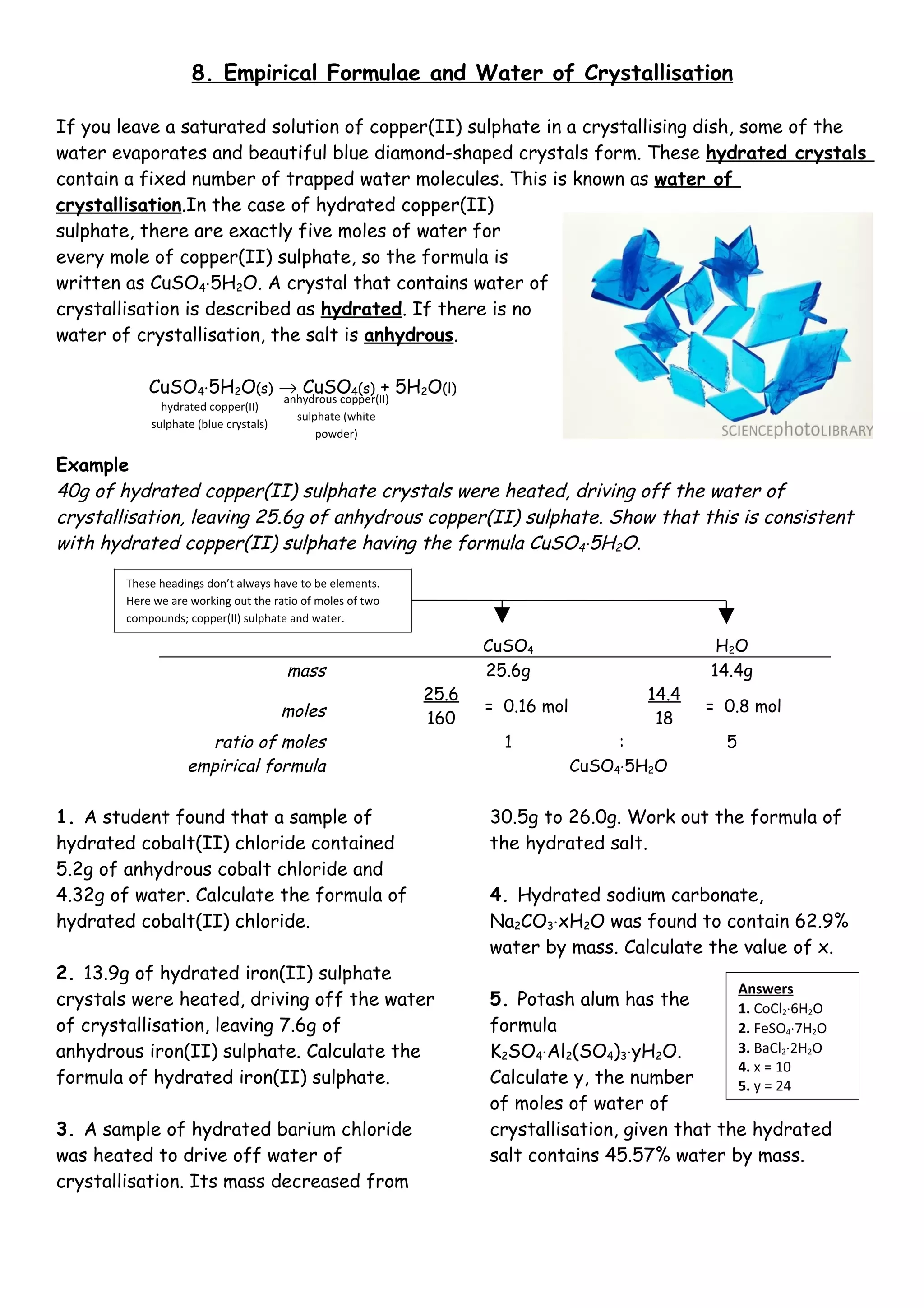
If you leave a saturated solution of copper(II) sulphate in a crystallising dish, some of the
water evaporates and beautiful blue diamond-shaped crystals form. These hydrated crystals
contain a fixed number of trapped water molecules. This is known as water of
crystallisation.In the case of hydrated copper(II)
sulphate, there are exactly five moles of water for
every mole of copper(II) sulphate, so the formula is
written as CuSO4⋅5H2O. A crystal that contains water of
crystallisation is described as hydrated. If there is no
water of crystallisation, the salt is anhydrous.

            CuSO4⋅5H2O(s) → CuSO4(s) + 5H2O(l)
                                       anhydrous copper(II)
              hydrated copper(II)
                                         sulphate (white
            sulphate (blue crystals)
                                             powder)

Example
40g of hydrated copper(II) sulphate crystals were heated, driving off the water of
crystallisation, leaving 25.6g of anhydrous copper(II) sulphate. Show that this is consistent
with hydrated copper(II) sulphate having the formula CuSO4⋅5H2O.
        These headings don’t always have to be elements.
        Here we are working out the ratio of moles of two
        compounds; copper(II) sulphate and water.

                                                                     CuSO4                       H2O
                                       mass                          25.6g                      14.4g
                                                              25.6                       14.4
                                       moles                         = 0.16 mol                 = 0.8 mol
                                                              160                         18
                     ratio of moles                                    1               :          5
                   empirical formula                                              CuSO4⋅5H2O


1. A student found that a sample of                                  30.5g to 26.0g. Work out the formula of
hydrated cobalt(II) chloride contained                               the hydrated salt.
5.2g of anhydrous cobalt chloride and
4.32g of water. Calculate the formula of                             4. Hydrated sodium carbonate,
hydrated cobalt(II) chloride.                                        Na2CO3⋅xH2O was found to contain 62.9%
                                                                     water by mass. Calculate the value of x.
2. 13.9g of hydrated iron(II) sulphate
                                                                                                      Answers
crystals were heated, driving off the water                          5. Potash alum has the        1. CoCl2⋅6H2O
of crystallisation, leaving 7.6g of                                  formula                       2. FeSO4⋅7H2O
anhydrous iron(II) sulphate. Calculate the                           K2SO4⋅Al2(SO4)3⋅yH2O.         3. BaCl2⋅2H2O
                                                                                                   4. x = 10
formula of hydrated iron(II) sulphate.                               Calculate y, the number       5. y = 24
                                                                     of moles of water of
3. A sample of hydrated barium chloride                              crystallisation, given that the hydrated
was heated to drive off water of                                     salt contains 45.57% water by mass.
crystallisation. Its mass decreased from

08 Empirical Crystallisation

  • 1.
    8. Empirical Formulaeand Water of Crystallisation If you leave a saturated solution of copper(II) sulphate in a crystallising dish, some of the water evaporates and beautiful blue diamond-shaped crystals form. These hydrated crystals contain a fixed number of trapped water molecules. This is known as water of crystallisation.In the case of hydrated copper(II) sulphate, there are exactly five moles of water for every mole of copper(II) sulphate, so the formula is written as CuSO4⋅5H2O. A crystal that contains water of crystallisation is described as hydrated. If there is no water of crystallisation, the salt is anhydrous. CuSO4⋅5H2O(s) → CuSO4(s) + 5H2O(l) anhydrous copper(II) hydrated copper(II) sulphate (white sulphate (blue crystals) powder) Example 40g of hydrated copper(II) sulphate crystals were heated, driving off the water of crystallisation, leaving 25.6g of anhydrous copper(II) sulphate. Show that this is consistent with hydrated copper(II) sulphate having the formula CuSO4⋅5H2O. These headings don’t always have to be elements. Here we are working out the ratio of moles of two compounds; copper(II) sulphate and water. CuSO4 H2O mass 25.6g 14.4g 25.6 14.4 moles = 0.16 mol = 0.8 mol 160 18 ratio of moles 1 : 5 empirical formula CuSO4⋅5H2O 1. A student found that a sample of 30.5g to 26.0g. Work out the formula of hydrated cobalt(II) chloride contained the hydrated salt. 5.2g of anhydrous cobalt chloride and 4.32g of water. Calculate the formula of 4. Hydrated sodium carbonate, hydrated cobalt(II) chloride. Na2CO3⋅xH2O was found to contain 62.9% water by mass. Calculate the value of x. 2. 13.9g of hydrated iron(II) sulphate Answers crystals were heated, driving off the water 5. Potash alum has the 1. CoCl2⋅6H2O of crystallisation, leaving 7.6g of formula 2. FeSO4⋅7H2O anhydrous iron(II) sulphate. Calculate the K2SO4⋅Al2(SO4)3⋅yH2O. 3. BaCl2⋅2H2O 4. x = 10 formula of hydrated iron(II) sulphate. Calculate y, the number 5. y = 24 of moles of water of 3. A sample of hydrated barium chloride crystallisation, given that the hydrated was heated to drive off water of salt contains 45.57% water by mass. crystallisation. Its mass decreased from