Research Methods
   CHAPTER TWO
Scientific Method

Systematic, organized series
 of steps that ensures
 maximum objectivity and
 consistency in researching a
 problem
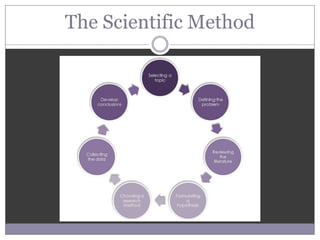
The Scientific Method
Scientific Method

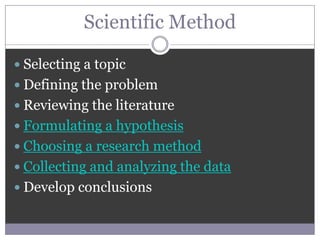
 Selecting a topic
 Defining the problem
 Reviewing the literature
 Formulating a hypothesis
 Choosing a research method
 Collecting and analyzing the data
 Develop conclusions
Formulating a Hypothesis

 Hypothesis
 Variable
 IndependentVariable
 Dependent Variable

 Example
 Correlation
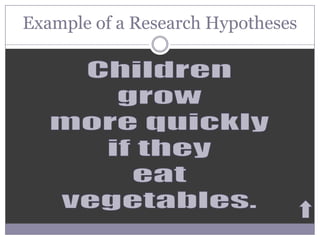
Example of a Research Hypotheses
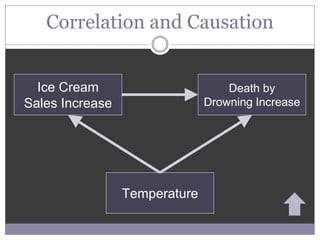
Correlation and Causation


  Ice Cream                        Death by
Sales Increase                 Drowning Increase


                 Temperature
Choosing a Research Method

 Qualitative
 Experiments

 Surveys

 Quantitative
 Ethnography

 Existing Sources
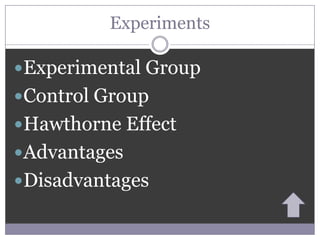
Experiments

Experimental Group
Control Group
Hawthorne Effect
Advantages
Disadvantages
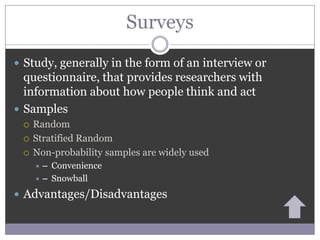
Surveys
 Study, generally in the form of an interview or
  questionnaire, that provides researchers with
  information about how people think and act
 Samples
    Random
    Stratified Random
    Non-probability samples are widely used
      – Convenience
      – Snowball

 Advantages/Disadvantages
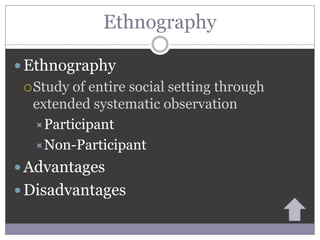
Ethnography

 Ethnography
  Studyof entire social setting through
  extended systematic observation
  Participant
  Non-Participant

 Advantages
 Disadvantages
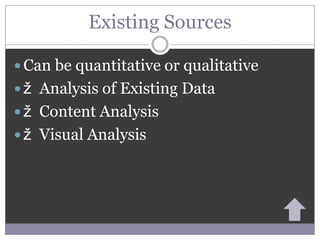
Existing Sources

 Can be quantitative or qualitative
 ž Analysis of Existing Data
 ž Content Analysis
 ž Visual Analysis
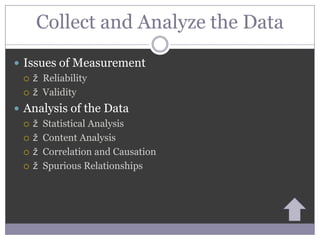
Collect and Analyze the Data
 Issues of Measurement
   ž Reliability

   ž Validity

 Analysis of the Data
   ž Statistical Analysis

   ž Content Analysis

   ž Correlation and Causation

   ž Spurious Relationships
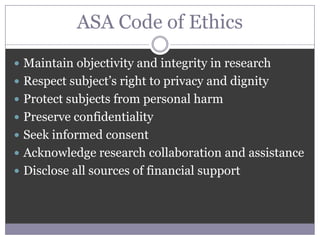
ASA Code of Ethics
 Maintain objectivity and integrity in research
 Respect subject’s right to privacy and dignity
 Protect subjects from personal harm
 Preserve confidentiality
 Seek informed consent
 Acknowledge research collaboration and assistance
 Disclose all sources of financial support
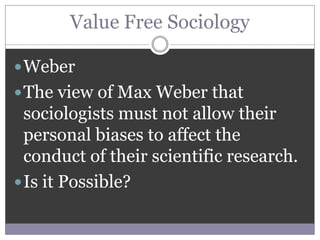
Value Free Sociology

 Weber
 The view of Max Weber that
  sociologists must not allow their
  personal biases to affect the
  conduct of their scientific research.
 Is it Possible?

02 Chapter 2 Research Methods

  • 1.
    Research Methods CHAPTER TWO
  • 2.
    Scientific Method Systematic, organizedseries of steps that ensures maximum objectivity and consistency in researching a problem
  • 3.
  • 4.
    Scientific Method  Selectinga topic  Defining the problem  Reviewing the literature  Formulating a hypothesis  Choosing a research method  Collecting and analyzing the data  Develop conclusions
  • 5.
    Formulating a Hypothesis Hypothesis  Variable IndependentVariable Dependent Variable  Example  Correlation
  • 6.
    Example of aResearch Hypotheses
  • 7.
    Correlation and Causation Ice Cream Death by Sales Increase Drowning Increase Temperature
  • 8.
    Choosing a ResearchMethod  Qualitative Experiments Surveys  Quantitative Ethnography  Existing Sources
  • 9.
  • 10.
    Surveys  Study, generallyin the form of an interview or questionnaire, that provides researchers with information about how people think and act  Samples  Random  Stratified Random  Non-probability samples are widely used  – Convenience  – Snowball  Advantages/Disadvantages
  • 11.
    Ethnography  Ethnography Studyof entire social setting through extended systematic observation Participant Non-Participant  Advantages  Disadvantages
  • 12.
    Existing Sources  Canbe quantitative or qualitative  ž Analysis of Existing Data  ž Content Analysis  ž Visual Analysis
  • 13.
    Collect and Analyzethe Data  Issues of Measurement  ž Reliability  ž Validity  Analysis of the Data  ž Statistical Analysis  ž Content Analysis  ž Correlation and Causation  ž Spurious Relationships
  • 14.
    ASA Code ofEthics  Maintain objectivity and integrity in research  Respect subject’s right to privacy and dignity  Protect subjects from personal harm  Preserve confidentiality  Seek informed consent  Acknowledge research collaboration and assistance  Disclose all sources of financial support
  • 15.
    Value Free Sociology Weber  The view of Max Weber that sociologists must not allow their personal biases to affect the conduct of their scientific research.  Is it Possible?