Sustainable Architecture without
            Architects
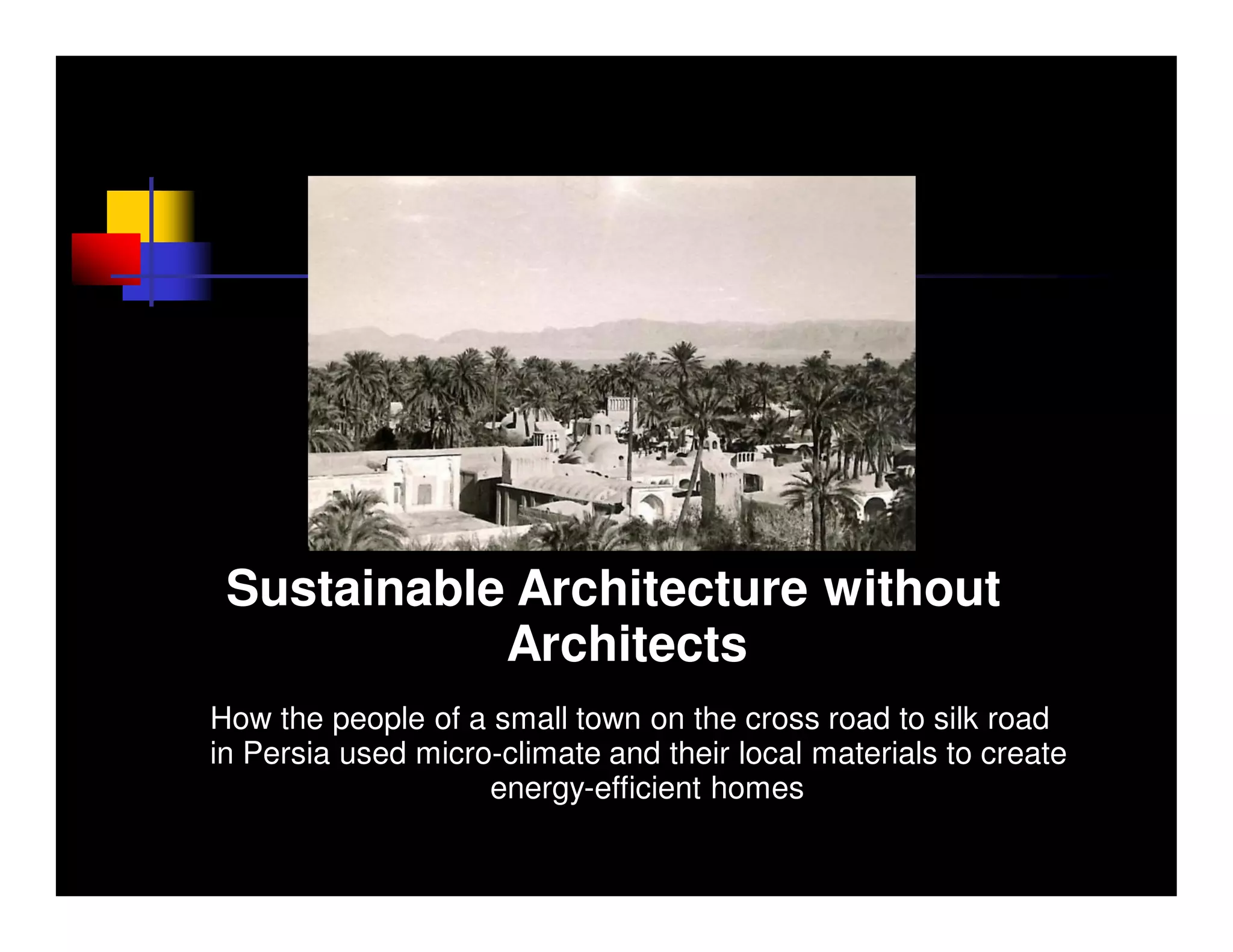
How the people of a small town on the cross road to silk road
in Persia used micro-climate and their local materials to create
                    energy-efficient homes
Sustainable Architecture without
             Architects

This presentation is protected by US and
International Copyright laws. Reproduction,
distribution, display and use of the presentation
without written permission of the speaker is
prohibited.
Learning Objectives
 Passive solar design
 Assess how they have used sun, wind, water,
 and thermal mass to transform a harsh natural
 environment into a comfortable residential space
 Evaluate innovative uses of local material in
 building
 Weigh the benefits and drawbacks of using only
 local materials to create buildings
 Observe the use of these techniques in modern
 architecture
What is a Green Building?
Based on USGBC
 Location, location
 Building design
 Indoors-environmental quality
 Windows and doors
 Water efficiency
 Energy efficiency
 Green building materials
 Insulations
 Renewable energy
 Landscaping
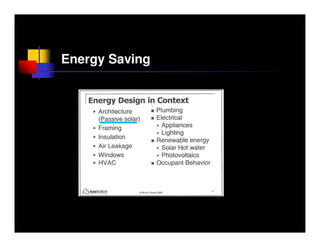
Energy Saving
Passive Solar Design Principles
Heating and cooling without mechanical system
  Orientation (south facing windows)
  Glazing
  Shading
  Thermal mass
  Insulation
  Ventilation
  Landscaping (Planting for wind diversion, shade, natural air
  conditioner, water feature)
San Diego Micro Climate
 Coastal
 Inland
 Mountain
 Desert
Orientation
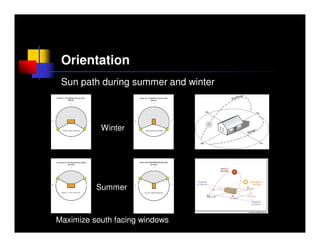
 Sun path during summer and winter


           Winter


          Summer


Maximize south facing windows
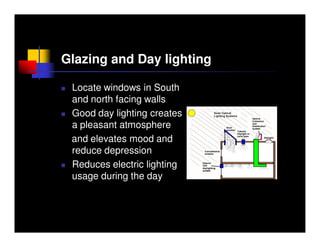
Glazing and Day lighting

 Locate windows in South
 and north facing walls
 Good day lighting creates
 a pleasant atmosphere
 and elevates mood and
 reduce depression
 Reduces electric lighting
 usage during the day
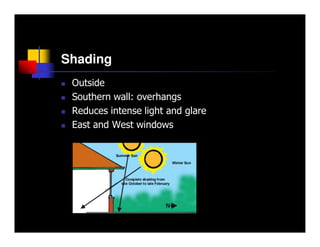
Shading
 Outside
 Southern wall: overhangs
 Reduces intense light and glare
 East and West windows
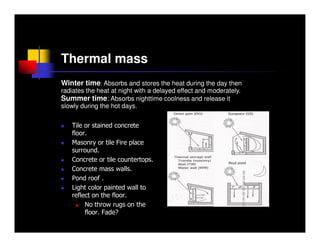
Thermal mass
Winter time: Absorbs and stores the heat during the day then
radiates the heat at night with a delayed effect and moderately.
Summer time: Absorbs nighttime coolness and release it
slowly during the hot days.

   Tile or stained concrete
   floor.
   Masonry or tile Fire place
   surround.
   Concrete or tile countertops.
   Concrete mass walls.
   Pond roof .
   Light color painted wall to
   reflect on the floor.
        No throw rugs on the
        floor. Fade?
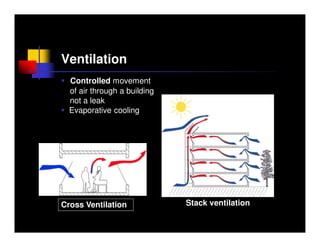
Ventilation
  Controlled movement
  of air through a building
  not a leak
  Evaporative cooling


Cross Ventilation             Stack ventilation
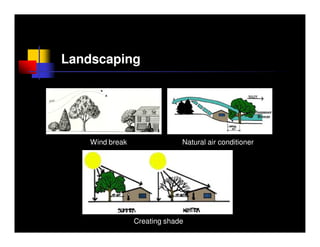
Landscaping


    Wind break                Natural air conditioner


                 Creating shade
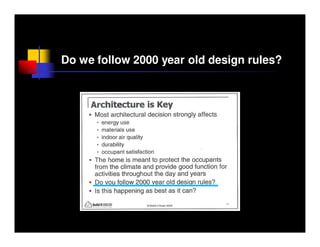
Do we follow 2000 year old design rules?
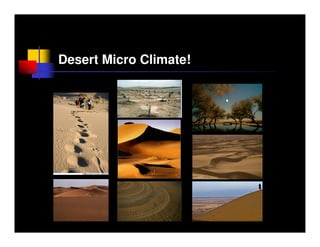
Desert Micro Climate!
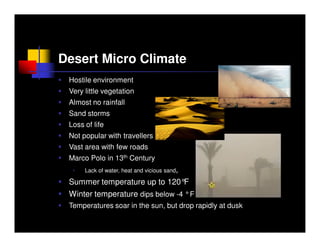
Desert Micro Climate
 Hostile environment
 Very little vegetation
 Almost no rainfall
 Sand storms
 Loss of life
 Not popular with travellers
 Vast area with few roads
 Marco Polo in 13th Century
  •   Lack of water, heat and vicious sand,

 Summer temperature up to 120°F
 Winter temperature dips below -4 °F
 Temperatures soar in the sun, but drop rapidly at dusk
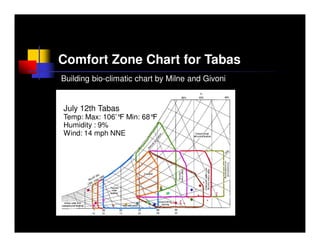
Comfort Zone Chart for Tabas
Building bio-climatic chart by Milne and Givoni


July 12th Tabas
Temp: Max: 106’° Min: 68°
                F        F
Humidity : 9%
Wind: 14 mph NNE
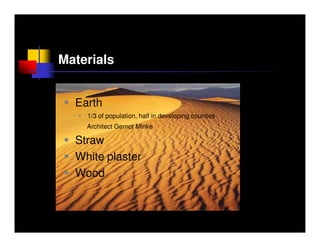
Materials


  Earth
    1/3 of population, half in developing counties
    Architect Gernot Minke

  Straw
  White plaster
  Wood
Other problems


 Cultural: Privacy, attack, protection

 Economic Status: Animals, distance, food storage

 Structural System:         Only adobe
ELEMENTS OF DESTINY
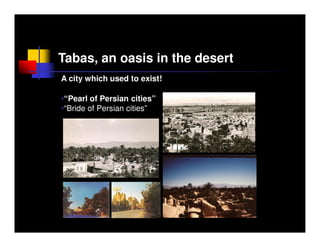
Tabas, an oasis in the desert
A city which used to exist!

•“Pearl of Persian cities”
•“Bride of Persian cities”
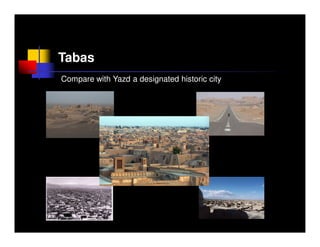
Tabas
Compare with Yazd a designated historic city
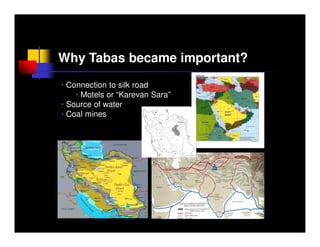
Why Tabas became important?
• Connection to silk road
    • Motels or “Karevan Sara”
• Source of water
• Coal mines
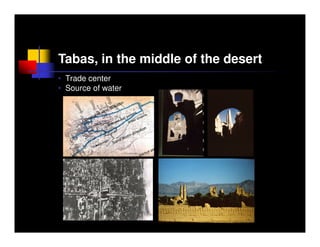
Tabas, in the middle of the desert
• Trade center
• Source of water
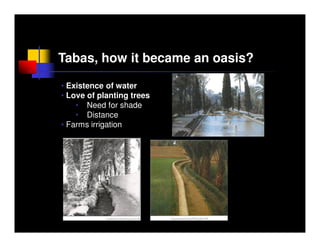
Tabas, how it became an oasis?

• Existence of water
• Love of planting trees
    • Need for shade
    • Distance
• Farms irrigation
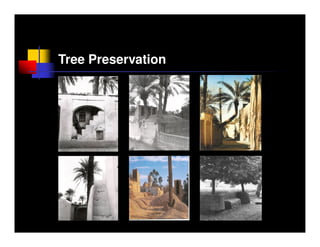
Tree Preservation
These are the spaces they formed!
•   Summer living area
•   E`ivan (covered patio or veranda)
•   Courtyards (with water feature and planters)
•   Baudgeers (wind scoops or wind catchers)
•   Kitchen and storage
•   Hoaz-khane (living room)
•   Winter living area
•   Sardab (basement)
•   Hashti (eight sided vestibule)
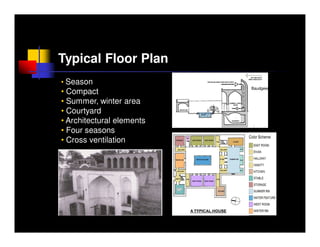
Typical Floor Plan
• Season
                           Baudgeer
• Compact
• Summer, winter area
• Courtyard
• Architectural elements
• Four seasons
• Cross ventilation
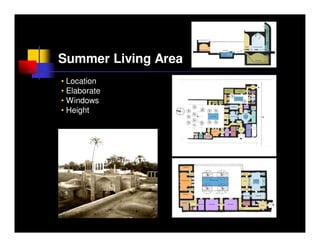
Summer Living Area
• Location
• Elaborate
• Windows
• Height


              Low


               High
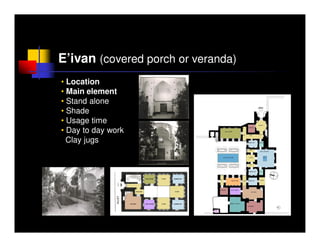
E’ivan (covered porch or veranda)
• Location
• Main element
• Stand alone
• Shade
• Usage time
• Day to day work
  Clay jugs
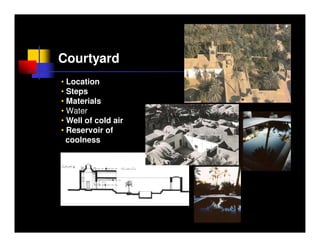
Courtyard
• Location
• Steps
• Materials
• Water
• Well of cold air
• Reservoir of
  coolness
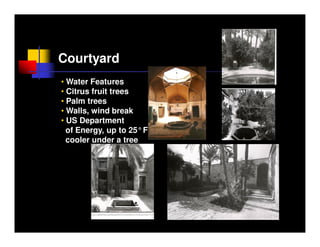
Courtyard
• Water Features
• Citrus fruit trees
• Palm trees
• Walls, wind break
• US Department
  of Energy, up to 25°F
  cooler under a tree
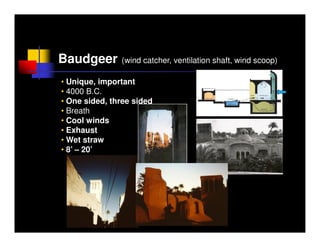
Baudgeer       (wind catcher, ventilation shaft, wind scoop)

• Unique, important
• 4000 B.C.
• One sided, three sided
• Breath
• Cool winds
• Exhaust
• Wet straw
• 8’ – 20’
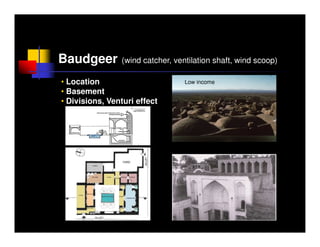
Baudgeer        (wind catcher, ventilation shaft, wind scoop)

• Location                        Low income
• Basement
• Divisions, Venturi effect
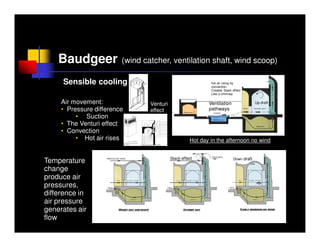
Baudgeer             (wind catcher, ventilation shaft, wind scoop)
                                                                          Temperature change
                                                                          produce air pressures
     Sensible cooling                                        hot air rising by
                                                             convection
                                                             Creates Stack effect
                                                             Like a chimney

     Air movement:               Venturi                    Ventilation                      Up draft
     • Pressure difference       effect                     pathways
          • Suction
     • The Venturi effect
     • Convection
          • Hot air rises                            Hot day in the afternoon no wind


                                           Stack effect                     Down draft
Temperature                                                                            Low

change
produce air
pressures,                                                                                   High


difference in
air pressure
generates air
flow
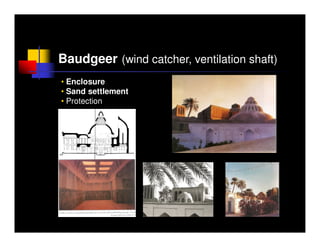
Baudgeer (wind catcher, ventilation shaft)
• Enclosure
• Sand settlement
• Protection
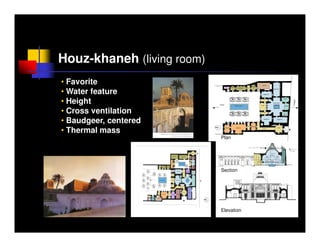
Houz-khaneh (living room)
• Favorite
• Water feature
• Height
• Cross ventilation
• Baudgeer, centered
• Thermal mass
                            Plan


                            Section


                            Elevation
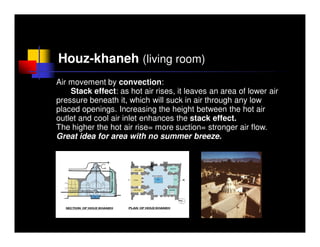
Houz-khaneh (living room)
Air movement by convection:
    Stack effect: as hot air rises, it leaves an area of lower air
pressure beneath it, which will suck in air through any low
placed openings. Increasing the height between the hot air
outlet and cool air inlet enhances the stack effect.
The higher the hot air rise= more suction= stronger air flow.
Great idea for area with no summer breeze.


                   Low pressure
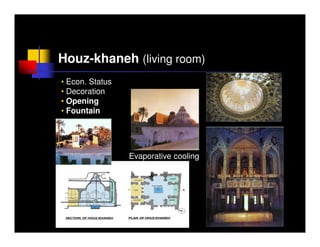
Houz-khaneh (living room)
• Econ. Status
• Decoration
• Opening
• Fountain

•


                       Evaporative cooling
                 Low pressure
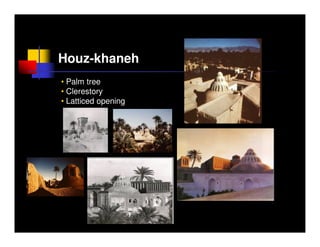
Houz-khaneh
• Palm tree
• Clerestory
• Latticed opening
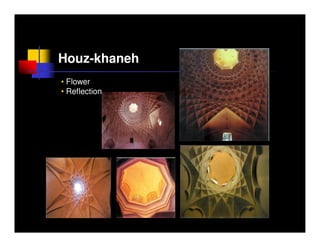
Houz-khaneh
• Flower
• Reflection
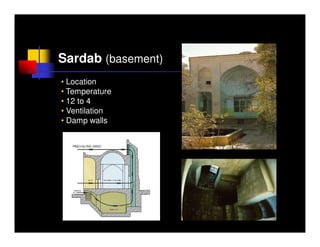
Sardab (basement)
• Location
• Temperature
• 12 to 4
• Ventilation
• Damp walls
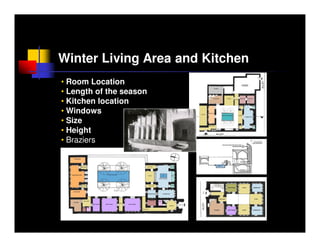
Winter Living Area and Kitchen
• Room Location
• Length of the season
• Kitchen location
• Windows
• Size
• Height
• Braziers
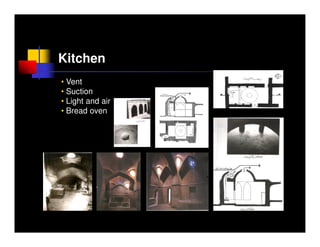
Kitchen
• Vent
• Suction
• Light and air
• Bread oven


                  Prevailing wind
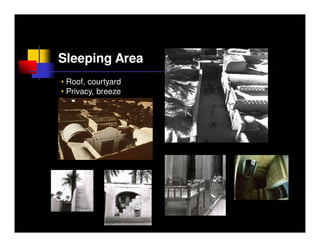
Sleeping Area
• Roof, courtyard
• Privacy, breeze
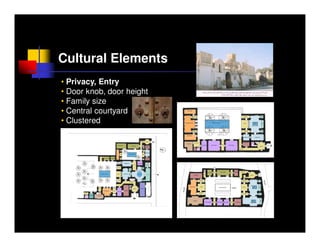
Cultural Elements
• Privacy, Entry
• Door knob, door height
• Family size
• Central courtyard
• Clustered
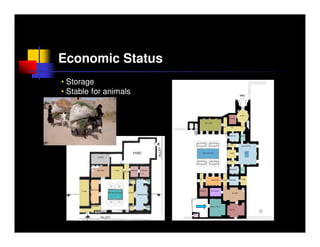
Economic Status
• Storage
• Stable for animals
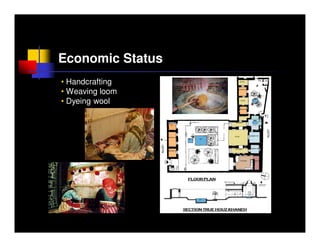
Economic Status
• Handcrafting
• Weaving loom
• Dyeing wool
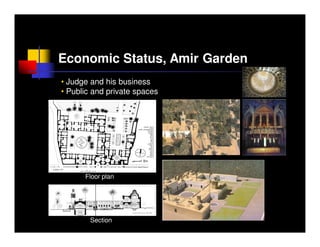
Economic Status, Amir Garden
• Judge and his business
• Public and private spaces


      Floor plan


        Section
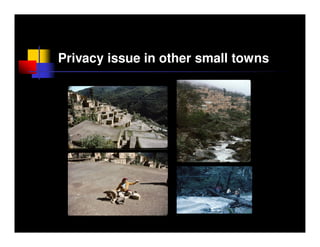
Privacy issue in other small towns
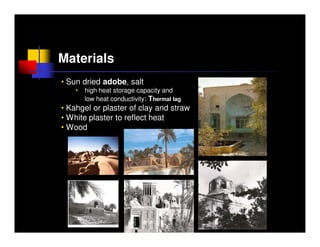
Materials
• Sun dried adobe, salt
    •   high heat storage capacity and
        low heat conductivity: Thermal lag
• Kahgel or plaster of clay and straw
• White plaster to reflect heat
• Wood
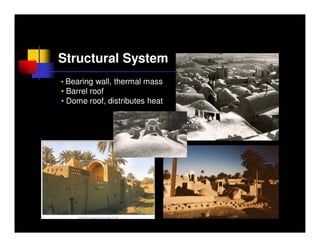
Structural System
• Bearing wall, thermal mass
• Barrel roof
• Dome roof, distributes heat
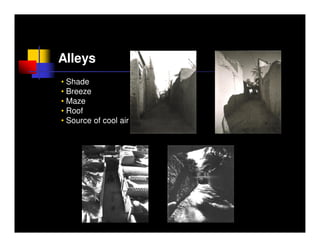
Alleys
• Shade
• Breeze
• Maze
• Roof
• Source of cool air
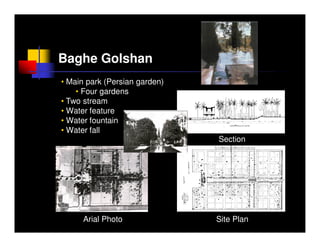
Baghe Golshan
• Main park (Persian garden)
    • Four gardens
• Two stream
• Water feature
• Water fountain
• Water fall
                               Section


      Arial Photo              Site Plan
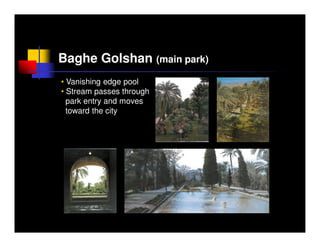
Baghe Golshan (main park)
• Vanishing edge pool
• Stream passes through
  park entry and moves
  toward the city
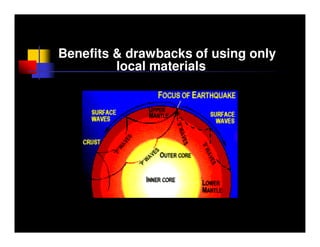
Benefits & drawbacks of using only
         local materials
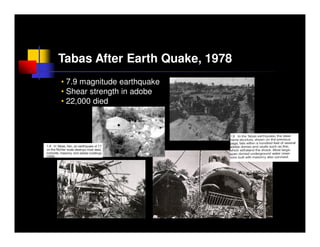
Tabas After Earth Quake, 1978
• 7.9 magnitude earthquake
• Shear strength in adobe
• 22,000 died
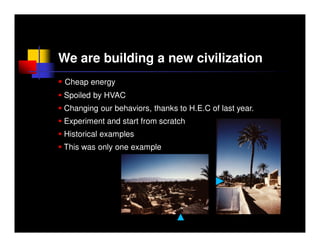
We are building a new civilization
 Cheap energy
Spoiled by HVAC
Changing our behaviors, thanks to H.E.C of last year.
Experiment and start from scratch
Historical examples
This was only one example
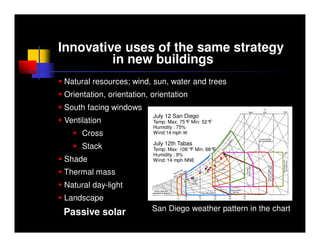
Innovative uses of the same strategy
         in new buildings
Natural resources; wind, sun, water and trees
Orientation, orientation, orientation
South facing windows
                          July 12 San Diego
Ventilation               Temp: Max: 75° Min: 52°
                                         F       F
                          Humidity : 75%
     Cross                Wind:14 mph W

                          July 12th Tabas
     Stack                Temp: Max: 106’° Min: 68°
                                          F        F
                          Humidity : 9%
Shade                     Wind: 14 mph NNE

Thermal mass
Natural day-light
Landscape
Passive solar             San Diego weather pattern in the chart
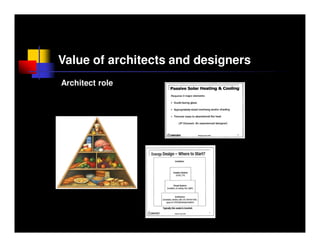
Value of architects and designers
Architect role
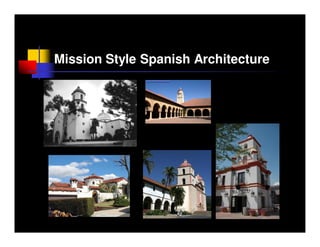
Mission Style Spanish Architecture
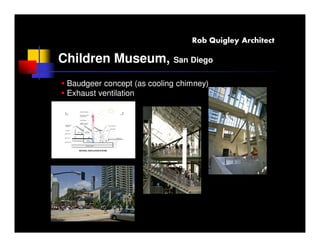
Rob Quigley Architect

Children Museum, San Diego
 Baudgeer concept (as cooling chimney)
 Exhaust ventilation
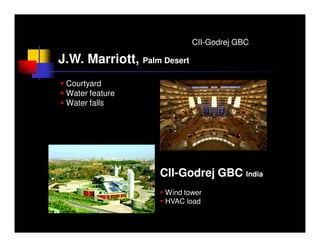
CII-Godrej GBC

J.W. Marriott, Palm Desert
 Courtyard
 Water feature
 Water falls


                    CII-Godrej GBC India
                     Wind tower
                     HVAC load
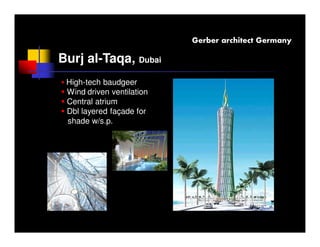
Gerber architect Germany

Burj al-Taqa, Dubai
 High-tech baudgeer
 Wind driven ventilation
 Central atrium
 Dbl layered façade for
 shade w/s.p.
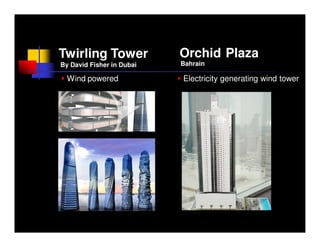
Twirling Tower             Orchid Plaza
By David Fisher in Dubai   Bahrain

  Wind powered             Electricity generating wind tower
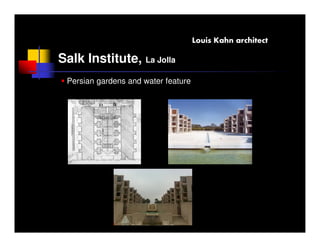
Louis Kahn architect

Salk Institute, La Jolla
 Persian gardens and water feature
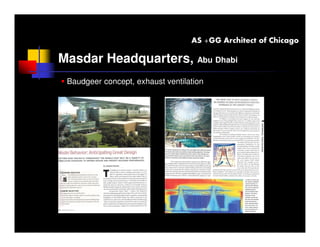
AS +GG Architect of Chicago

Masdar Headquarters, Abu Dhabi
 Baudgeer concept, exhaust ventilation
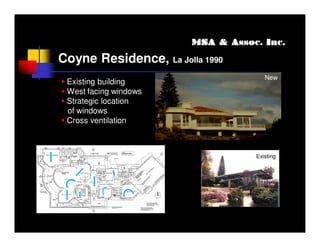
MSA & Assoc. Inc.

Coyne Residence, La Jolla 1990
                                      New
 Existing building
 West facing windows
 Strategic location
 of windows
 Cross ventilation


                                   Existing
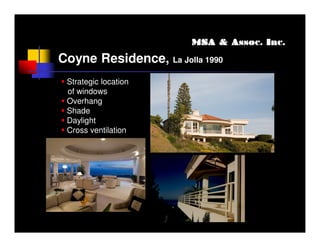
MSA & Assoc. Inc.

Coyne Residence, La Jolla 1990
 Strategic location
 of windows
 Overhang
 Shade
 Daylight
 Cross ventilation
MSA & Assoc. Inc.

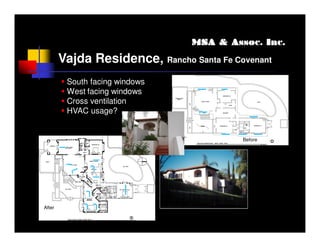
        Vajda Residence, Rancho Santa Fe Covenant
         South facing windows
         West facing windows
         Cross ventilation
         HVAC usage?


                                           Before


After
MSA & Assoc. Inc.

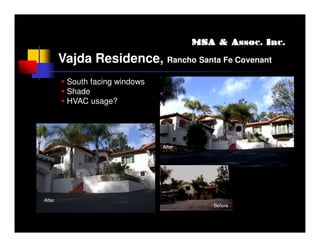
        Vajda Residence, Rancho Santa Fe Covenant
         South facing windows
         Shade
         HVAC usage?


                                After


After
                                            Before
Assoc.
                         MSA & Assoc. Inc.

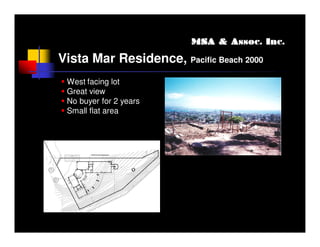
Vista Mar Residence, Pacific Beach 2000
 West facing lot
 Great view
 No buyer for 2 years
 Small flat area
MSA & Assoc. Inc.
                               Assoc.

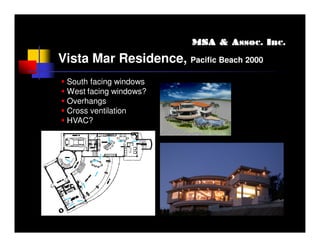
Vista Mar Residence, Pacific Beach 2000
 South facing windows
 West facing windows?
 Overhangs
 Cross ventilation
 HVAC?
MSA & Assoc. Inc.

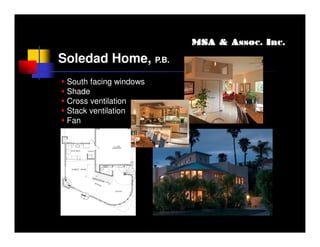
Soledad Home, P.B.
 South facing windows
 Shade
 Cross ventilation
 Stack ventilation
 Fan
MSA & Assoc. Inc.

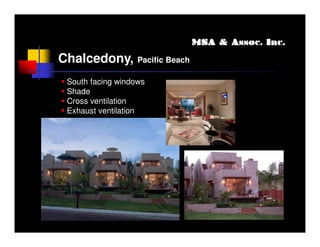
Chalcedony,        Pacific Beach

 South facing windows
 Shade
 Cross ventilation
 Exhaust ventilation
MSA & Assoc. Inc.

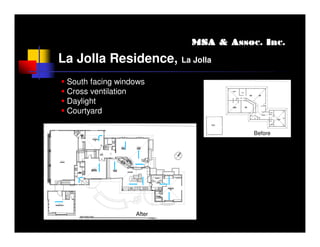
La Jolla Residence, La Jolla
 South facing windows
 Cross ventilation
 Daylight
 Courtyard

                                     Before


                  After
MSA & Assoc. Inc.

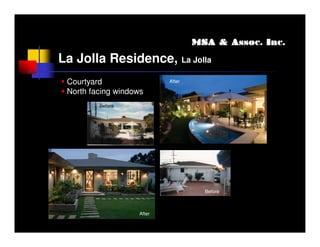
La Jolla Residence, La Jolla
 Courtyard                 After

 North facing windows
         Before


                                     Before


                   After
MSA & Assoc. Inc.

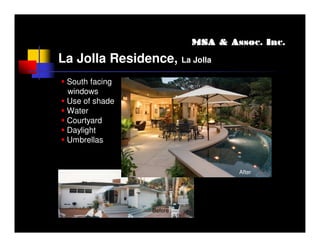
La Jolla Residence, La Jolla
 South facing
 windows
 Use of shade
 Water
 Courtyard
 Daylight
 Umbrellas


                                  After


                 Before
MSA & Assoc. Inc.

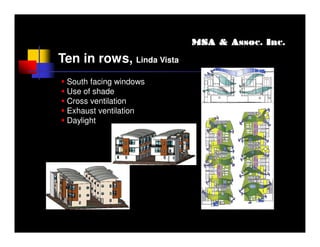
Ten in rows, Linda Vista
 South facing windows
 Use of shade
 Cross ventilation
 Exhaust ventilation
 Daylight
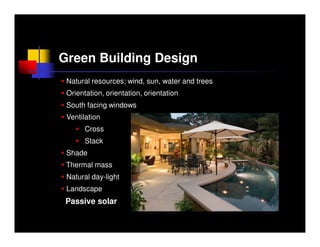
Green Building Design
 Natural resources; wind, sun, water and trees
 Orientation, orientation, orientation
 South facing windows
 Ventilation
       Cross
       Stack
 Shade
 Thermal mass
 Natural day-light
 Landscape
 Passive solar
Resources
•   Master Theses research by Simi Razavian, Lila Khalvati and Fereshteh Asefi.
• Gardens of Tabas by Yaghoob Danesh-doost
• Monuments of Tabas by Yaghoob Danesh-doost
• Urban structure and architecture in the hot arid zone of Iran by Mahmoud
Tavassoli
• http://www.technovelgy.com/ct/Science-Fiction-News.asp?NewsNum=1040
• http://www.gulfweeklyworldwide.com/article.asp?Sn=5536&Article=19304
• http://www.inhabitat.com/2007/05/16/david-fishers-twirling-wind-power-tower/
• http://www.lightningcanyon.com/pages/passive-solar/introduction_passive_solar.html
•Viability of wind towers in achieving summer comfort in the hot arid regeions of the
middle east By Mehdi N. Bahadori Professor of Mechanical Engineering Sharif
University of Technology Tehran, Iran
• Three dimensional numerical investigation of air flow over domed roofs by
 Ahmadreza K.Faghih and,MehdiN.Bahadori School
ofMechanicalEngineering,SharifUniversityofTechnology,Tehran,Iran
Speaker
  Simi Razavian Architect, LEED AP, CGBP
  Master of Science in Architecture and Urban Design with Emphasis on
  Passive Solar Design and Vernacular Architecture of Tabas, Iran
  Co- founder of MSA & Assoc. Inc. in 1987
  Licensed Architect in the State of California
  Certified Green Building Professional
  Speaker at :
        AIA Convention 2009
        Notre Dame University Apr 2010
        UCSD July 2010

Contact Information
Simi Razavian
simi@msahome.com
www.msahome.com

Sustainable architecture without architects presentation

  • 1.
    Sustainable Architecture without Architects How the people of a small town on the cross road to silk road in Persia used micro-climate and their local materials to create energy-efficient homes
  • 2.
    Sustainable Architecture without Architects This presentation is protected by US and International Copyright laws. Reproduction, distribution, display and use of the presentation without written permission of the speaker is prohibited.
  • 3.
    Learning Objectives Passivesolar design Assess how they have used sun, wind, water, and thermal mass to transform a harsh natural environment into a comfortable residential space Evaluate innovative uses of local material in building Weigh the benefits and drawbacks of using only local materials to create buildings Observe the use of these techniques in modern architecture
  • 4.
    What is aGreen Building? Based on USGBC Location, location Building design Indoors-environmental quality Windows and doors Water efficiency Energy efficiency Green building materials Insulations Renewable energy Landscaping
  • 5.
  • 6.
    Passive Solar DesignPrinciples Heating and cooling without mechanical system Orientation (south facing windows) Glazing Shading Thermal mass Insulation Ventilation Landscaping (Planting for wind diversion, shade, natural air conditioner, water feature)
  • 7.
    San Diego MicroClimate Coastal Inland Mountain Desert
  • 8.
    Orientation Sun pathduring summer and winter Winter Summer Maximize south facing windows
  • 9.
    Glazing and Daylighting Locate windows in South and north facing walls Good day lighting creates a pleasant atmosphere and elevates mood and reduce depression Reduces electric lighting usage during the day
  • 10.
    Shading Outside Southernwall: overhangs Reduces intense light and glare East and West windows
  • 11.
    Thermal mass Winter time:Absorbs and stores the heat during the day then radiates the heat at night with a delayed effect and moderately. Summer time: Absorbs nighttime coolness and release it slowly during the hot days. Tile or stained concrete floor. Masonry or tile Fire place surround. Concrete or tile countertops. Concrete mass walls. Pond roof . Light color painted wall to reflect on the floor. No throw rugs on the floor. Fade?
  • 12.
    Ventilation Controlledmovement of air through a building not a leak Evaporative cooling Cross Ventilation Stack ventilation
  • 13.
    Landscaping Wind break Natural air conditioner Creating shade
  • 14.
    Do we follow2000 year old design rules?
  • 15.
  • 16.
    Desert Micro Climate Hostile environment Very little vegetation Almost no rainfall Sand storms Loss of life Not popular with travellers Vast area with few roads Marco Polo in 13th Century • Lack of water, heat and vicious sand, Summer temperature up to 120°F Winter temperature dips below -4 °F Temperatures soar in the sun, but drop rapidly at dusk
  • 17.
    Comfort Zone Chartfor Tabas Building bio-climatic chart by Milne and Givoni July 12th Tabas Temp: Max: 106’° Min: 68° F F Humidity : 9% Wind: 14 mph NNE
  • 18.
    Materials Earth 1/3 of population, half in developing counties Architect Gernot Minke Straw White plaster Wood
  • 19.
    Other problems Cultural:Privacy, attack, protection Economic Status: Animals, distance, food storage Structural System: Only adobe
  • 20.
  • 21.
    Tabas, an oasisin the desert A city which used to exist! •“Pearl of Persian cities” •“Bride of Persian cities”
  • 22.
    Tabas Compare with Yazda designated historic city
  • 23.
    Why Tabas becameimportant? • Connection to silk road • Motels or “Karevan Sara” • Source of water • Coal mines
  • 24.
    Tabas, in themiddle of the desert • Trade center • Source of water
  • 25.
    Tabas, how itbecame an oasis? • Existence of water • Love of planting trees • Need for shade • Distance • Farms irrigation
  • 26.
  • 27.
    These are thespaces they formed! • Summer living area • E`ivan (covered patio or veranda) • Courtyards (with water feature and planters) • Baudgeers (wind scoops or wind catchers) • Kitchen and storage • Hoaz-khane (living room) • Winter living area • Sardab (basement) • Hashti (eight sided vestibule)
  • 28.
    Typical Floor Plan •Season Baudgeer • Compact • Summer, winter area • Courtyard • Architectural elements • Four seasons • Cross ventilation
  • 29.
    Summer Living Area •Location • Elaborate • Windows • Height Low High
  • 30.
    E’ivan (covered porchor veranda) • Location • Main element • Stand alone • Shade • Usage time • Day to day work Clay jugs
  • 31.
    Courtyard • Location • Steps •Materials • Water • Well of cold air • Reservoir of coolness
  • 32.
    Courtyard • Water Features •Citrus fruit trees • Palm trees • Walls, wind break • US Department of Energy, up to 25°F cooler under a tree
  • 33.
    Baudgeer (wind catcher, ventilation shaft, wind scoop) • Unique, important • 4000 B.C. • One sided, three sided • Breath • Cool winds • Exhaust • Wet straw • 8’ – 20’
  • 34.
    Baudgeer (wind catcher, ventilation shaft, wind scoop) • Location Low income • Basement • Divisions, Venturi effect
  • 35.
    Baudgeer (wind catcher, ventilation shaft, wind scoop) Temperature change produce air pressures Sensible cooling hot air rising by convection Creates Stack effect Like a chimney Air movement: Venturi Ventilation Up draft • Pressure difference effect pathways • Suction • The Venturi effect • Convection • Hot air rises Hot day in the afternoon no wind Stack effect Down draft Temperature Low change produce air pressures, High difference in air pressure generates air flow
  • 36.
    Baudgeer (wind catcher,ventilation shaft) • Enclosure • Sand settlement • Protection
  • 37.
    Houz-khaneh (living room) •Favorite • Water feature • Height • Cross ventilation • Baudgeer, centered • Thermal mass Plan Section Elevation
  • 38.
    Houz-khaneh (living room) Airmovement by convection: Stack effect: as hot air rises, it leaves an area of lower air pressure beneath it, which will suck in air through any low placed openings. Increasing the height between the hot air outlet and cool air inlet enhances the stack effect. The higher the hot air rise= more suction= stronger air flow. Great idea for area with no summer breeze. Low pressure
  • 39.
    Houz-khaneh (living room) •Econ. Status • Decoration • Opening • Fountain • Evaporative cooling Low pressure
  • 40.
    Houz-khaneh • Palm tree •Clerestory • Latticed opening
  • 41.
  • 42.
    Sardab (basement) • Location •Temperature • 12 to 4 • Ventilation • Damp walls
  • 43.
    Winter Living Areaand Kitchen • Room Location • Length of the season • Kitchen location • Windows • Size • Height • Braziers
  • 44.
    Kitchen • Vent • Suction •Light and air • Bread oven Prevailing wind
  • 45.
    Sleeping Area • Roof,courtyard • Privacy, breeze
  • 46.
    Cultural Elements • Privacy,Entry • Door knob, door height • Family size • Central courtyard • Clustered
  • 47.
  • 48.
    Economic Status • Handcrafting •Weaving loom • Dyeing wool
  • 49.
    Economic Status, AmirGarden • Judge and his business • Public and private spaces Floor plan Section
  • 50.
    Privacy issue inother small towns
  • 51.
    Materials • Sun driedadobe, salt • high heat storage capacity and low heat conductivity: Thermal lag • Kahgel or plaster of clay and straw • White plaster to reflect heat • Wood
  • 52.
    Structural System • Bearingwall, thermal mass • Barrel roof • Dome roof, distributes heat
  • 53.
    Alleys • Shade • Breeze •Maze • Roof • Source of cool air
  • 54.
    Baghe Golshan • Mainpark (Persian garden) • Four gardens • Two stream • Water feature • Water fountain • Water fall Section Arial Photo Site Plan
  • 55.
    Baghe Golshan (mainpark) • Vanishing edge pool • Stream passes through park entry and moves toward the city
  • 56.
    Benefits & drawbacksof using only local materials
  • 57.
    Tabas After EarthQuake, 1978 • 7.9 magnitude earthquake • Shear strength in adobe • 22,000 died
  • 58.
    We are buildinga new civilization Cheap energy Spoiled by HVAC Changing our behaviors, thanks to H.E.C of last year. Experiment and start from scratch Historical examples This was only one example
  • 59.
    Innovative uses ofthe same strategy in new buildings Natural resources; wind, sun, water and trees Orientation, orientation, orientation South facing windows July 12 San Diego Ventilation Temp: Max: 75° Min: 52° F F Humidity : 75% Cross Wind:14 mph W July 12th Tabas Stack Temp: Max: 106’° Min: 68° F F Humidity : 9% Shade Wind: 14 mph NNE Thermal mass Natural day-light Landscape Passive solar San Diego weather pattern in the chart
  • 60.
    Value of architectsand designers Architect role
  • 61.
  • 62.
    Rob Quigley Architect ChildrenMuseum, San Diego Baudgeer concept (as cooling chimney) Exhaust ventilation
  • 63.
    CII-Godrej GBC J.W. Marriott,Palm Desert Courtyard Water feature Water falls CII-Godrej GBC India Wind tower HVAC load
  • 64.
    Gerber architect Germany Burjal-Taqa, Dubai High-tech baudgeer Wind driven ventilation Central atrium Dbl layered façade for shade w/s.p.
  • 65.
    Twirling Tower Orchid Plaza By David Fisher in Dubai Bahrain Wind powered Electricity generating wind tower
  • 66.
    Louis Kahn architect SalkInstitute, La Jolla Persian gardens and water feature
  • 67.
    AS +GG Architectof Chicago Masdar Headquarters, Abu Dhabi Baudgeer concept, exhaust ventilation
  • 68.
    MSA & Assoc.Inc. Coyne Residence, La Jolla 1990 New Existing building West facing windows Strategic location of windows Cross ventilation Existing
  • 69.
    MSA & Assoc.Inc. Coyne Residence, La Jolla 1990 Strategic location of windows Overhang Shade Daylight Cross ventilation
  • 70.
    MSA & Assoc.Inc. Vajda Residence, Rancho Santa Fe Covenant South facing windows West facing windows Cross ventilation HVAC usage? Before After
  • 71.
    MSA & Assoc.Inc. Vajda Residence, Rancho Santa Fe Covenant South facing windows Shade HVAC usage? After After Before
  • 72.
    Assoc. MSA & Assoc. Inc. Vista Mar Residence, Pacific Beach 2000 West facing lot Great view No buyer for 2 years Small flat area
  • 73.
    MSA & Assoc.Inc. Assoc. Vista Mar Residence, Pacific Beach 2000 South facing windows West facing windows? Overhangs Cross ventilation HVAC?
  • 74.
    MSA & Assoc.Inc. Soledad Home, P.B. South facing windows Shade Cross ventilation Stack ventilation Fan
  • 75.
    MSA & Assoc.Inc. Chalcedony, Pacific Beach South facing windows Shade Cross ventilation Exhaust ventilation
  • 76.
    MSA & Assoc.Inc. La Jolla Residence, La Jolla South facing windows Cross ventilation Daylight Courtyard Before After
  • 77.
    MSA & Assoc.Inc. La Jolla Residence, La Jolla Courtyard After North facing windows Before Before After
  • 78.
    MSA & Assoc.Inc. La Jolla Residence, La Jolla South facing windows Use of shade Water Courtyard Daylight Umbrellas After Before
  • 79.
    MSA & Assoc.Inc. Ten in rows, Linda Vista South facing windows Use of shade Cross ventilation Exhaust ventilation Daylight
  • 80.
    Green Building Design Natural resources; wind, sun, water and trees Orientation, orientation, orientation South facing windows Ventilation Cross Stack Shade Thermal mass Natural day-light Landscape Passive solar
  • 81.
    Resources • Master Theses research by Simi Razavian, Lila Khalvati and Fereshteh Asefi. • Gardens of Tabas by Yaghoob Danesh-doost • Monuments of Tabas by Yaghoob Danesh-doost • Urban structure and architecture in the hot arid zone of Iran by Mahmoud Tavassoli • http://www.technovelgy.com/ct/Science-Fiction-News.asp?NewsNum=1040 • http://www.gulfweeklyworldwide.com/article.asp?Sn=5536&Article=19304 • http://www.inhabitat.com/2007/05/16/david-fishers-twirling-wind-power-tower/ • http://www.lightningcanyon.com/pages/passive-solar/introduction_passive_solar.html •Viability of wind towers in achieving summer comfort in the hot arid regeions of the middle east By Mehdi N. Bahadori Professor of Mechanical Engineering Sharif University of Technology Tehran, Iran • Three dimensional numerical investigation of air flow over domed roofs by Ahmadreza K.Faghih and,MehdiN.Bahadori School ofMechanicalEngineering,SharifUniversityofTechnology,Tehran,Iran
  • 82.
    Speaker SimiRazavian Architect, LEED AP, CGBP Master of Science in Architecture and Urban Design with Emphasis on Passive Solar Design and Vernacular Architecture of Tabas, Iran Co- founder of MSA & Assoc. Inc. in 1987 Licensed Architect in the State of California Certified Green Building Professional Speaker at : AIA Convention 2009 Notre Dame University Apr 2010 UCSD July 2010 Contact Information Simi Razavian simi@msahome.com www.msahome.com