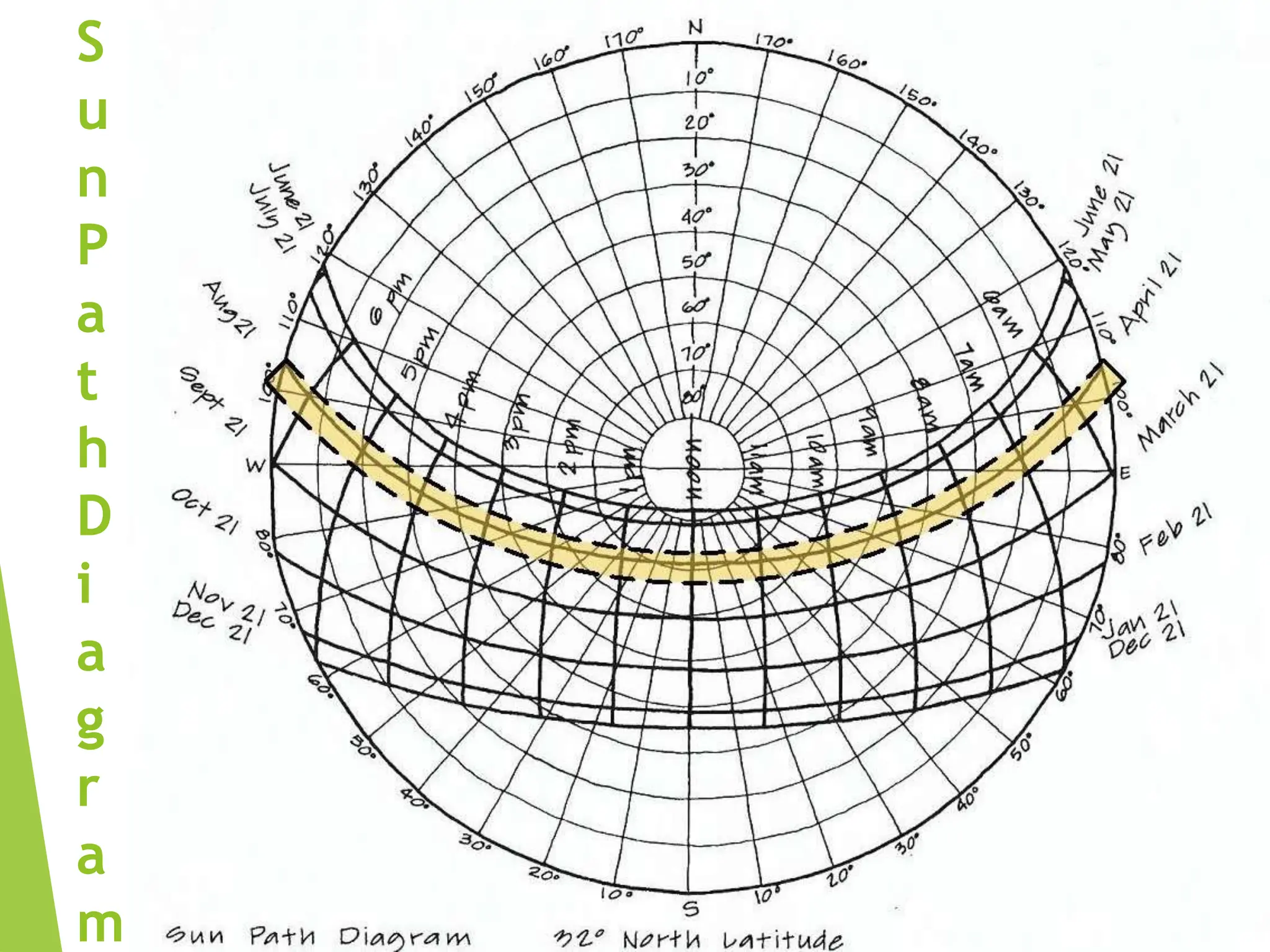
S
u
n
P
a
t
h
D
i
a
g
r
a
m
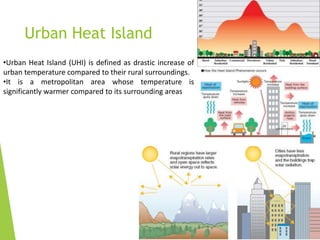
Urban Heat Island
•Urban Heat Island (UHI) is defined as drastic increase of
urban temperature compared to their rural surroundings.
•It is a metropolitan area whose temperature is
significantly warmer compared to its surrounding areas
Why Urban Heat Island Effect Occurs
 Increased and uncontrolled industrialization
 Anthropogenic heat sources
 Decreased Evo transpiration
 High population
 Urban cityscape
 Energy consumption and lifestyle
 Enormous production of energy from sources like
industry, vehicles and houses
 Built environment and concrete buildings as building
materials are good insulators and can hold more heat
Impacts/effects of Urban Heat Island
Health Effects:
 Emergence of infectious diseases
 Extensive heat causing dehydration, heat exhaustion and heat syncope
 Respiratory difficulties, heat cramps and heat related mortality
 Circulatory and cerebrovascular effects like heat exhaustion, heat collapse and heat stroke
 Increase in morbidity and fatality, especially for those working in outdoor conditions
Strategies to decrease Urban Heat Island
 Use of light colored roofs and walls
 Afforestation and plantation in city areas
 Rooftop farming and agriculture
 Green parking lots
 Implementation of heat reduction strategies
 Lesser use of vehicles
 Car pooling
 Promotion of greener lands and parks in urban areas
 Grassy lands promotion
Wind
 The horizontal movement of the atmosphere is called wind.
 Wind can be felt only when it is in motion.
 Wind is the result of the horizontal differences in the air pressure.
 Wind is simply the movement of air from high pressure to low
pressure.
 The speed of the wind is determined by the difference between the
high and low pressure.
 The greater the difference the faster the wind speed.
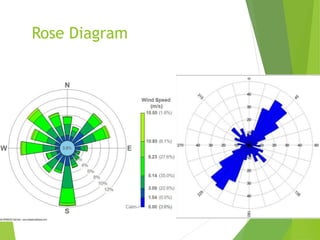
Rose Diagram
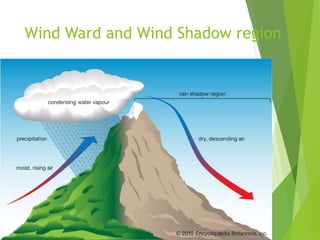
Wind Ward and Wind Shadow region
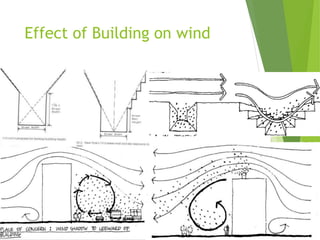
Effect of Building on wind
Design for Maximum Ventilation
 Install operable windows.
 Use landscaping elements to channel breezes.
 Properly locate and size windows for cross ventilation.
 Reduce internal barriers to ventilation (i.e. walls).
 Use wing walls if cross ventilation is not possible.
 Use stack ventilation to create a chimney effect.
Things to be kept in mind While Designing:
Cross Ventilation
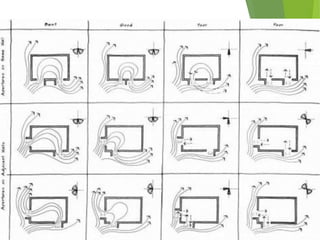
Orientation of openings
Position of openings
Size of openings
Wing Walls
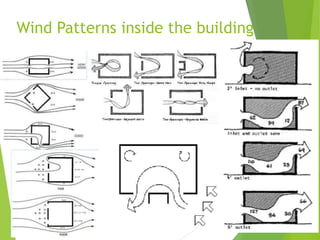
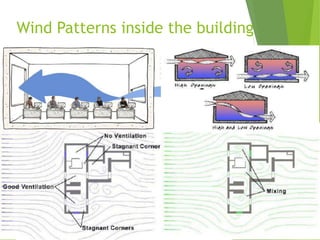
Wind Patterns inside the building
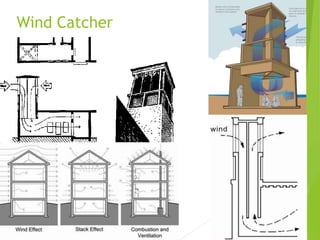
Stack effect
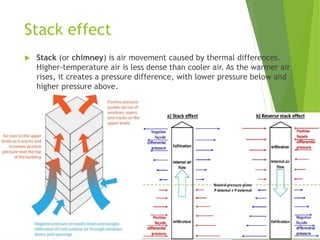
 Stack (or chimney) is air movement caused by thermal differences.
Higher-temperature air is less dense than cooler air. As the warmer air
rises, it creates a pressure difference, with lower pressure below and
higher pressure above.
Wind Catcher
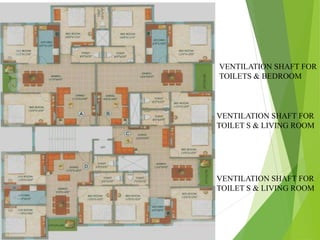
VENTILATION SHAFT FOR
TOILETS & BEDROOM
VENTILATION SHAFT FOR
TOILET S & LIVING ROOM
VENTILATION SHAFT FOR
TOILET S & LIVING ROOM
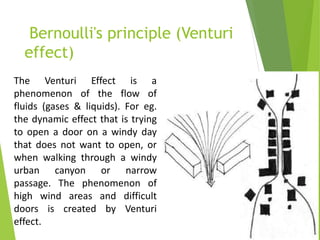
Bernoulli's principle (Venturi
effect)
The Venturi Effect is a
phenomenon of the flow of
fluids (gases & liquids). For eg.
the dynamic effect that is trying
to open a door on a windy day
that does not want to open, or
when walking through a windy
urban canyon or narrow
passage. The phenomenon of
high wind areas and difficult
doors is created by Venturi
effect.
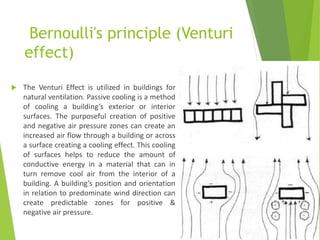
Bernoulli's principle (Venturi
effect)
 The Venturi Effect is utilized in buildings for
natural ventilation. Passive cooling is a method
of cooling a building’s exterior or interior
surfaces. The purposeful creation of positive
and negative air pressure zones can create an
increased air flow through a building or across
a surface creating a cooling effect. This cooling
of surfaces helps to reduce the amount of
conductive energy in a material that can in
turn remove cool air from the interior of a
building. A building’s position and orientation
in relation to predominate wind direction can
create predictable zones for positive &
negative air pressure.
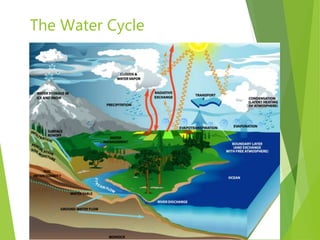
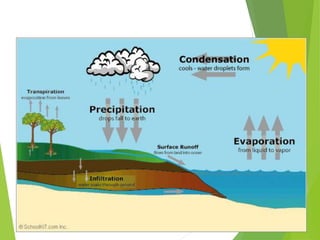
The Water Cycle
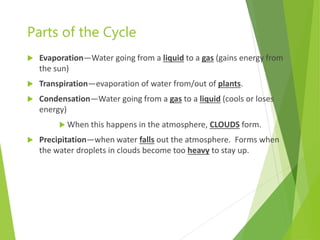
Parts of the Cycle
 Evaporation—Water going from a liquid to a gas (gains energy from
the sun)
 Transpiration—evaporation of water from/out of plants.
 Condensation—Water going from a gas to a liquid (cools or loses
energy)
 When this happens in the atmosphere, CLOUDS form.
 Precipitation—when water falls out the atmosphere. Forms when
the water droplets in clouds become too heavy to stay up.
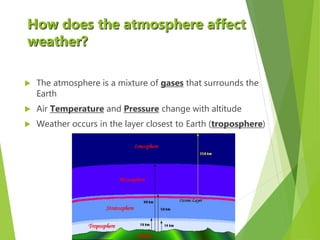
How does the atmosphere affect
weather?
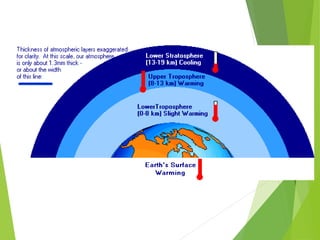
 The atmosphere is a mixture of gases that surrounds the
Earth
 Air Temperature and Pressure change with altitude
 Weather occurs in the layer closest to Earth (troposphere)
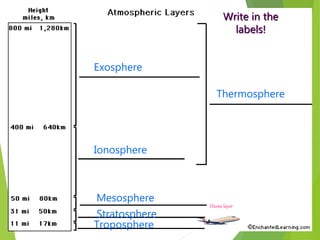
Troposphere
Stratosphere
Mesosphere
Ionosphere
Exosphere
Thermosphere
Write in the
labels!
Ozone layer
Exosphere - the outermost layer of the Earth's atmosphere,
where atmospheric pressure and temperature are low.
Ionosphere - the atmospheric layer between the mesosphere and
the exosphere; it is part of the thermosphere.
Mesosphere - the atmospheric layer between the stratosphere
and the ionosphere.
Stratosphere - the atmospheric layer between the troposphere
and the mesosphere. The stratosphere is characterized by a slight
temperature increase with altitude and by the absence of clouds.
Thermosphere - the layer of the atmosphere located above part
of the ionosphere (starting at the coldest part of the atmosphere)
and below outer space; it consists of the exosphere and part of
the ionosphere.
Troposphere - the lowest layer of the Earth's atmosphere. The
weather and clouds occur in the troposphere.
Relative Humidity
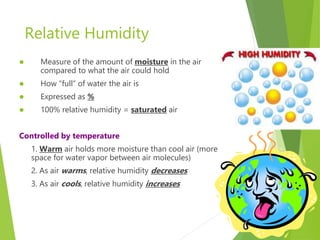
 Measure of the amount of moisture in the air
compared to what the air could hold
 How “full” of water the air is
 Expressed as %
 100% relative humidity = saturated air
Controlled by temperature
1. Warm air holds more moisture than cool air (more
space for water vapor between air molecules)
2. As air warms, relative humidity decreases
3. As air cools, relative humidity increases
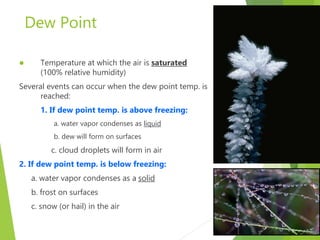
Dew Point
 Temperature at which the air is saturated
(100% relative humidity)
Several events can occur when the dew point temp. is
reached:
1. If dew point temp. is above freezing:
a. water vapor condenses as liquid
b. dew will form on surfaces
c. cloud droplets will form in air
2. If dew point temp. is below freezing:
a. water vapor condenses as a solid
b. frost on surfaces
c. snow (or hail) in the air

For Climatology Summer Program understanding the climate

  • 1.
  • 5.
    Urban Heat Island •UrbanHeat Island (UHI) is defined as drastic increase of urban temperature compared to their rural surroundings. •It is a metropolitan area whose temperature is significantly warmer compared to its surrounding areas
  • 6.
    Why Urban HeatIsland Effect Occurs  Increased and uncontrolled industrialization  Anthropogenic heat sources  Decreased Evo transpiration  High population  Urban cityscape  Energy consumption and lifestyle  Enormous production of energy from sources like industry, vehicles and houses  Built environment and concrete buildings as building materials are good insulators and can hold more heat
  • 7.
    Impacts/effects of UrbanHeat Island Health Effects:  Emergence of infectious diseases  Extensive heat causing dehydration, heat exhaustion and heat syncope  Respiratory difficulties, heat cramps and heat related mortality  Circulatory and cerebrovascular effects like heat exhaustion, heat collapse and heat stroke  Increase in morbidity and fatality, especially for those working in outdoor conditions Strategies to decrease Urban Heat Island  Use of light colored roofs and walls  Afforestation and plantation in city areas  Rooftop farming and agriculture  Green parking lots  Implementation of heat reduction strategies  Lesser use of vehicles  Car pooling  Promotion of greener lands and parks in urban areas  Grassy lands promotion
  • 8.
    Wind  The horizontalmovement of the atmosphere is called wind.  Wind can be felt only when it is in motion.  Wind is the result of the horizontal differences in the air pressure.  Wind is simply the movement of air from high pressure to low pressure.  The speed of the wind is determined by the difference between the high and low pressure.  The greater the difference the faster the wind speed.
  • 9.
  • 10.
    Wind Ward andWind Shadow region
  • 11.
  • 12.
    Design for MaximumVentilation  Install operable windows.  Use landscaping elements to channel breezes.  Properly locate and size windows for cross ventilation.  Reduce internal barriers to ventilation (i.e. walls).  Use wing walls if cross ventilation is not possible.  Use stack ventilation to create a chimney effect. Things to be kept in mind While Designing: Cross Ventilation Orientation of openings Position of openings Size of openings Wing Walls
  • 13.
  • 15.
  • 16.
    Stack effect  Stack(or chimney) is air movement caused by thermal differences. Higher-temperature air is less dense than cooler air. As the warmer air rises, it creates a pressure difference, with lower pressure below and higher pressure above.
  • 17.
  • 18.
    VENTILATION SHAFT FOR TOILETS& BEDROOM VENTILATION SHAFT FOR TOILET S & LIVING ROOM VENTILATION SHAFT FOR TOILET S & LIVING ROOM
  • 19.
    Bernoulli's principle (Venturi effect) TheVenturi Effect is a phenomenon of the flow of fluids (gases & liquids). For eg. the dynamic effect that is trying to open a door on a windy day that does not want to open, or when walking through a windy urban canyon or narrow passage. The phenomenon of high wind areas and difficult doors is created by Venturi effect.
  • 20.
    Bernoulli's principle (Venturi effect) The Venturi Effect is utilized in buildings for natural ventilation. Passive cooling is a method of cooling a building’s exterior or interior surfaces. The purposeful creation of positive and negative air pressure zones can create an increased air flow through a building or across a surface creating a cooling effect. This cooling of surfaces helps to reduce the amount of conductive energy in a material that can in turn remove cool air from the interior of a building. A building’s position and orientation in relation to predominate wind direction can create predictable zones for positive & negative air pressure.
  • 21.
  • 23.
    Parts of theCycle  Evaporation—Water going from a liquid to a gas (gains energy from the sun)  Transpiration—evaporation of water from/out of plants.  Condensation—Water going from a gas to a liquid (cools or loses energy)  When this happens in the atmosphere, CLOUDS form.  Precipitation—when water falls out the atmosphere. Forms when the water droplets in clouds become too heavy to stay up.
  • 24.
    How does theatmosphere affect weather?  The atmosphere is a mixture of gases that surrounds the Earth  Air Temperature and Pressure change with altitude  Weather occurs in the layer closest to Earth (troposphere)
  • 25.
  • 27.
    Exosphere - theoutermost layer of the Earth's atmosphere, where atmospheric pressure and temperature are low. Ionosphere - the atmospheric layer between the mesosphere and the exosphere; it is part of the thermosphere. Mesosphere - the atmospheric layer between the stratosphere and the ionosphere. Stratosphere - the atmospheric layer between the troposphere and the mesosphere. The stratosphere is characterized by a slight temperature increase with altitude and by the absence of clouds. Thermosphere - the layer of the atmosphere located above part of the ionosphere (starting at the coldest part of the atmosphere) and below outer space; it consists of the exosphere and part of the ionosphere. Troposphere - the lowest layer of the Earth's atmosphere. The weather and clouds occur in the troposphere.
  • 28.
    Relative Humidity  Measureof the amount of moisture in the air compared to what the air could hold  How “full” of water the air is  Expressed as %  100% relative humidity = saturated air Controlled by temperature 1. Warm air holds more moisture than cool air (more space for water vapor between air molecules) 2. As air warms, relative humidity decreases 3. As air cools, relative humidity increases
  • 29.
    Dew Point  Temperatureat which the air is saturated (100% relative humidity) Several events can occur when the dew point temp. is reached: 1. If dew point temp. is above freezing: a. water vapor condenses as liquid b. dew will form on surfaces c. cloud droplets will form in air 2. If dew point temp. is below freezing: a. water vapor condenses as a solid b. frost on surfaces c. snow (or hail) in the air