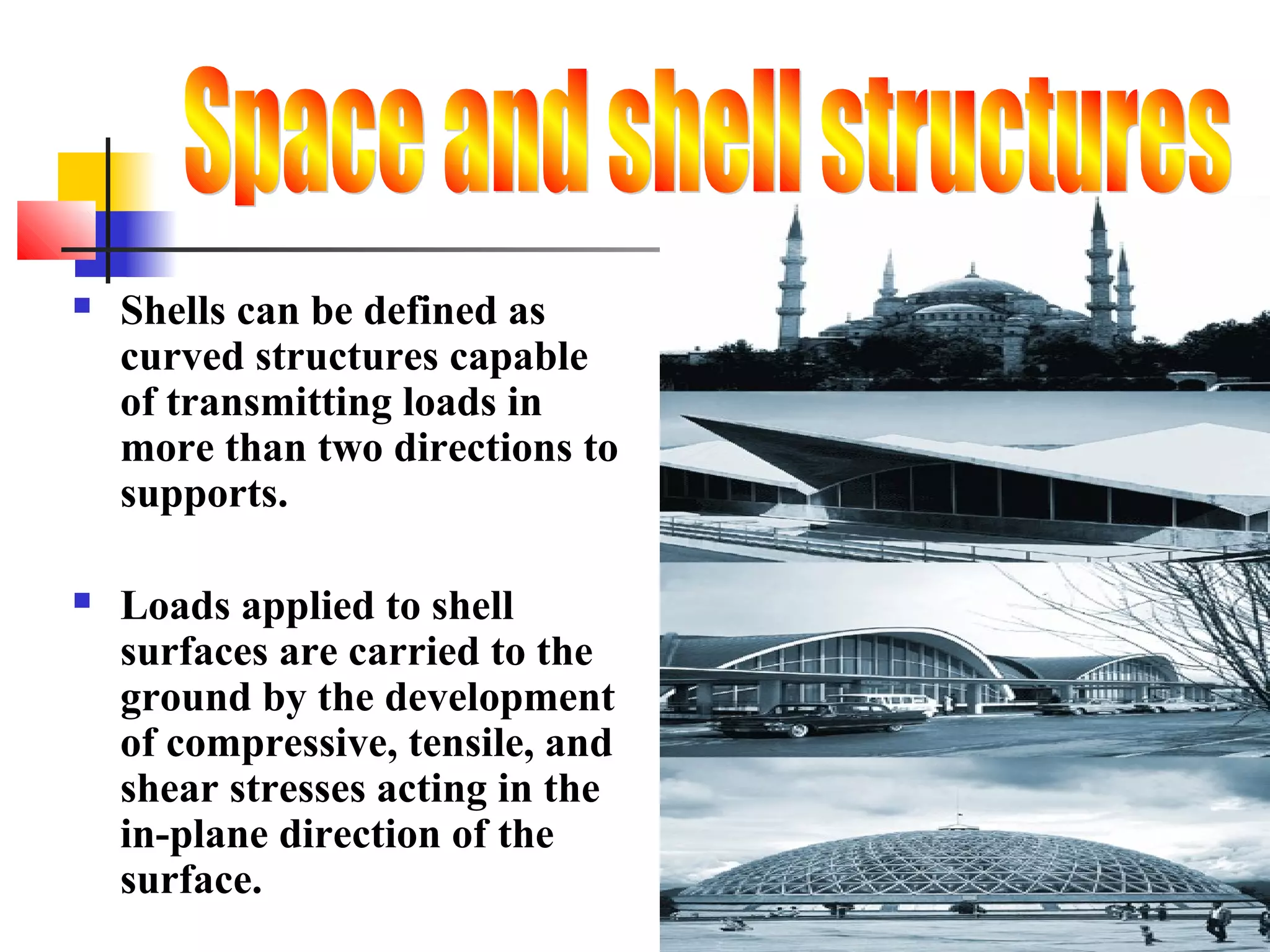
 Shells can be defined as
curved structures capable
of transmitting loads in
more than two directions to
supports.
 Loads applied to shell
surfaces are carried to the
ground by the development
of compressive, tensile, and
shear stresses acting in the
in-plane direction of the
surface.
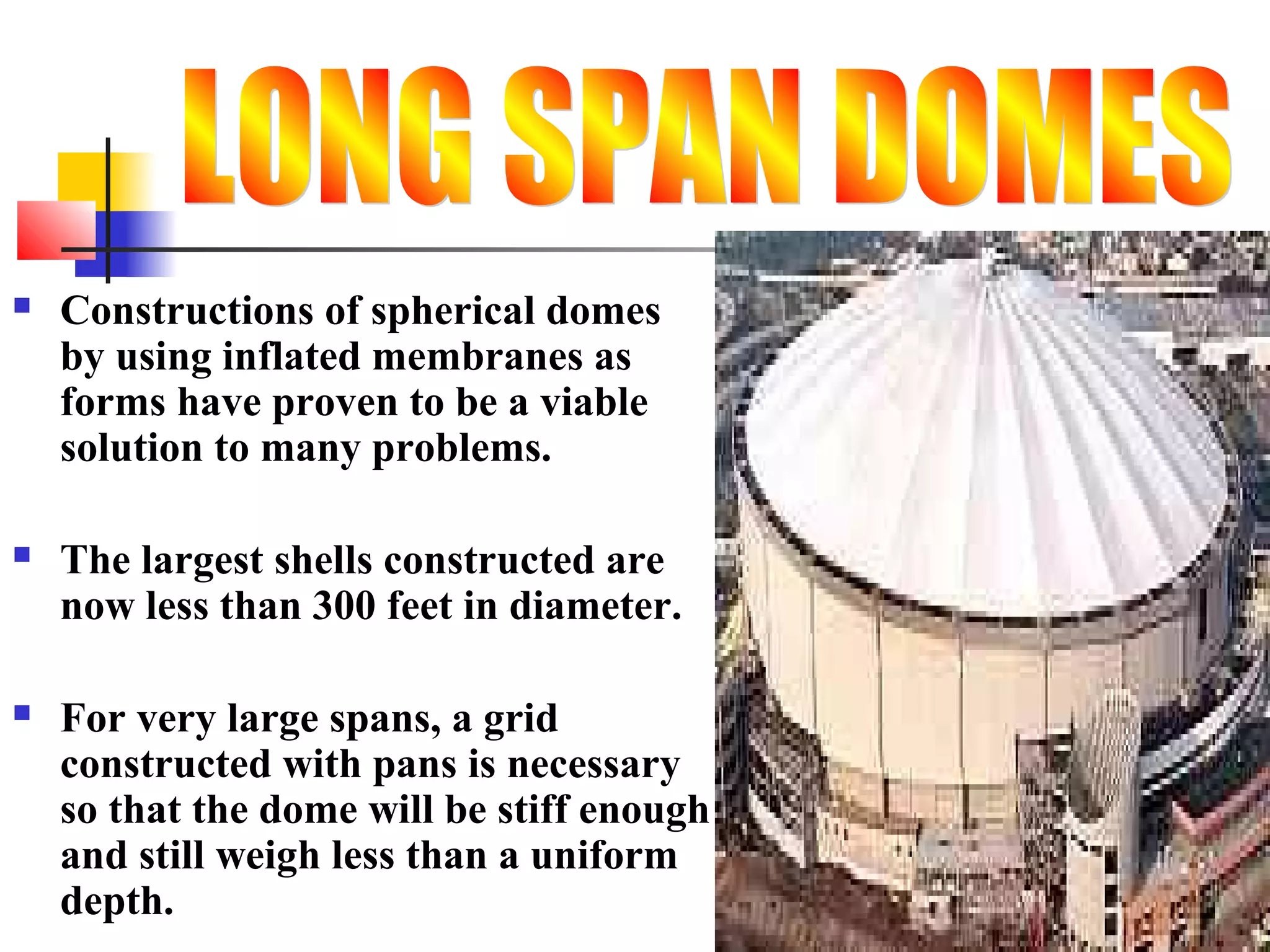
 Constructions of spherical domes
by using inflated membranes as
forms have proven to be a viable
solution to many problems.
 The largest shells constructed are
now less than 300 feet in diameter.
 For very large spans, a grid
constructed with pans is necessary
so that the dome will be stiff enough
and still weigh less than a uniform
depth.
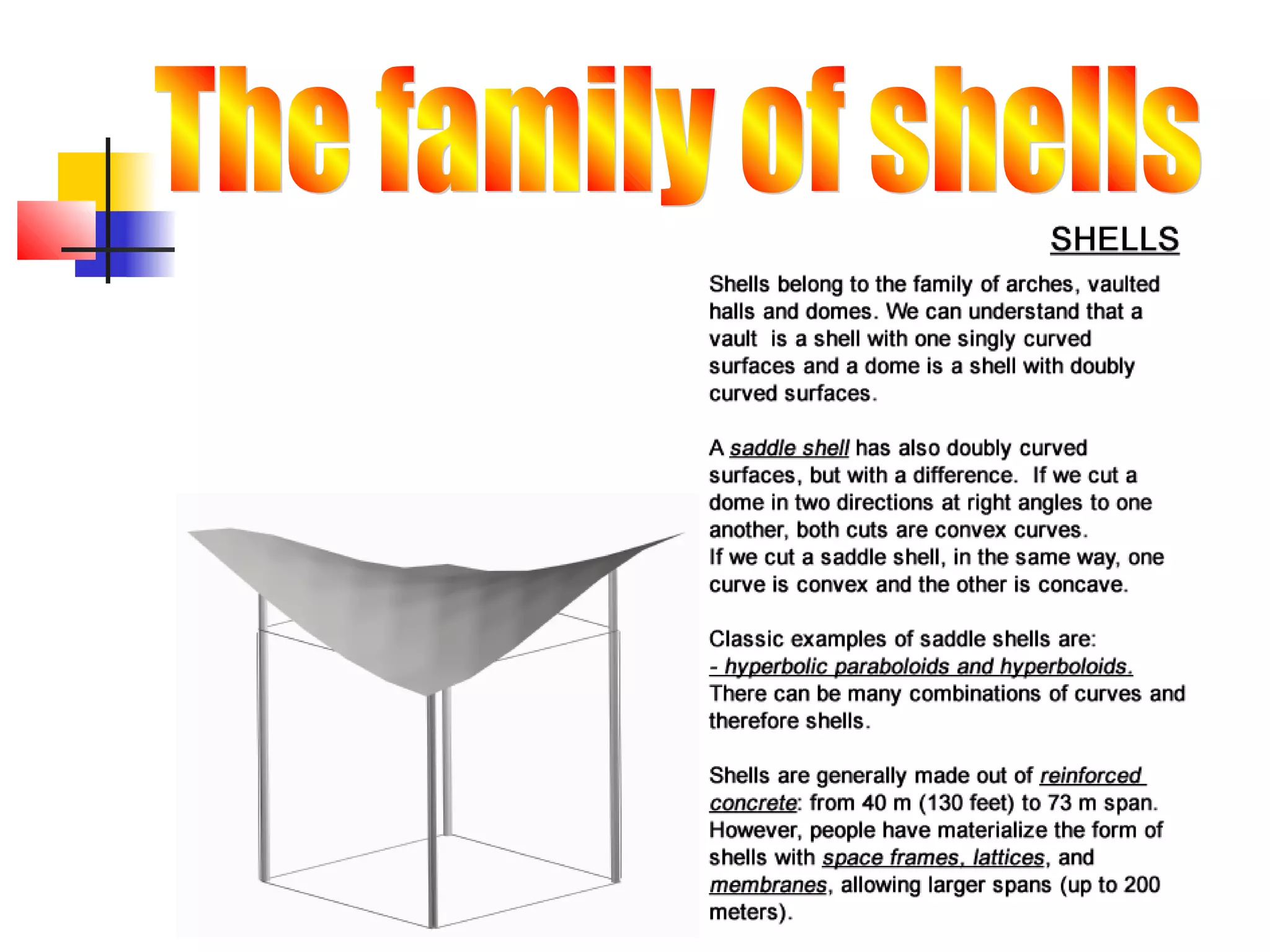
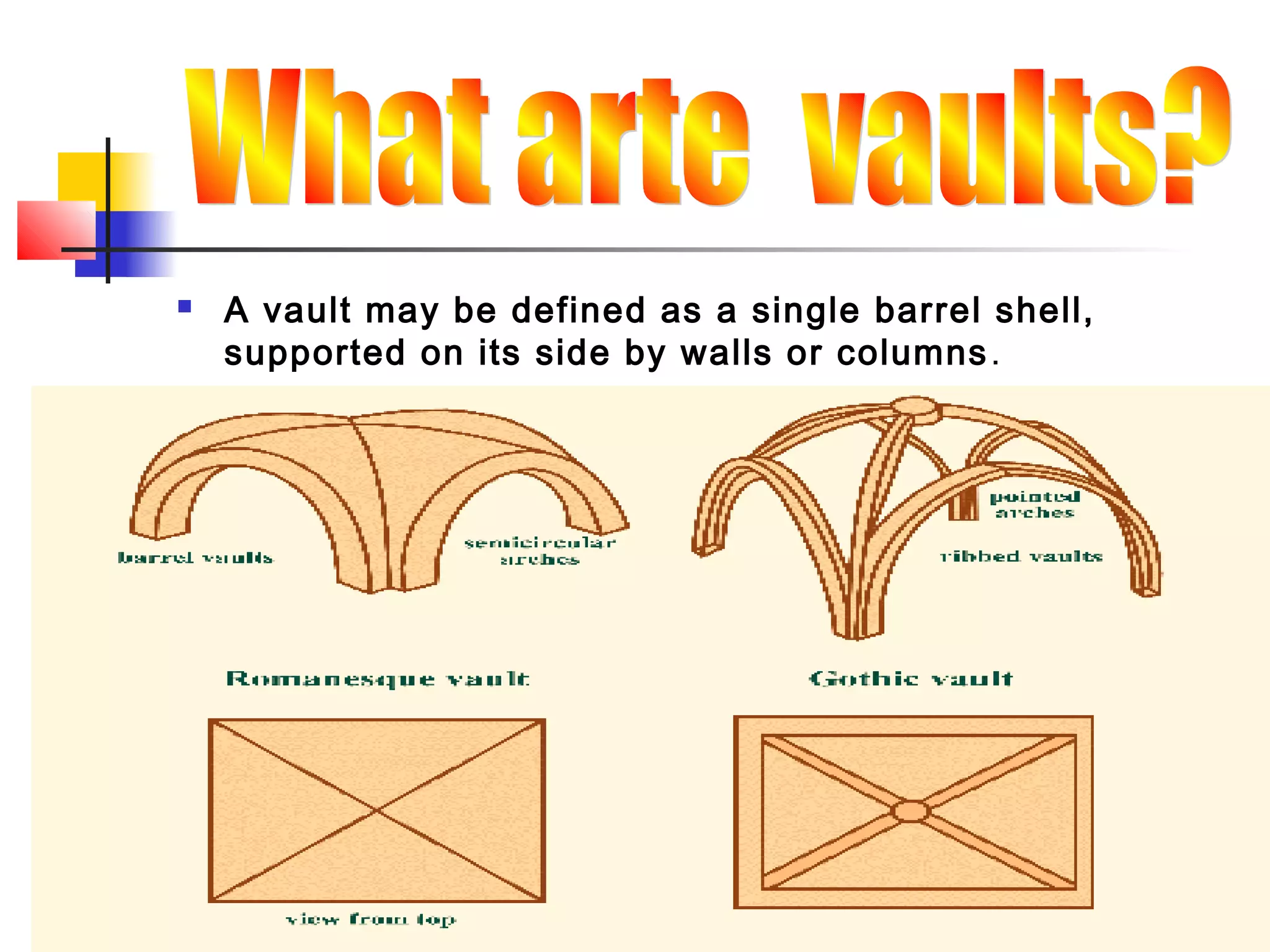
 A vault may be defined as a single barrel shell,
supported on its side by walls or columns.
 Shells and folded plates are different than
stacked units and frames.
 The thin diaphragm forming the shell is
created uniformly rather than being
assembled in discrete pieces.
 Most shell and plate building enclosures are
constructed from reinforced concrete
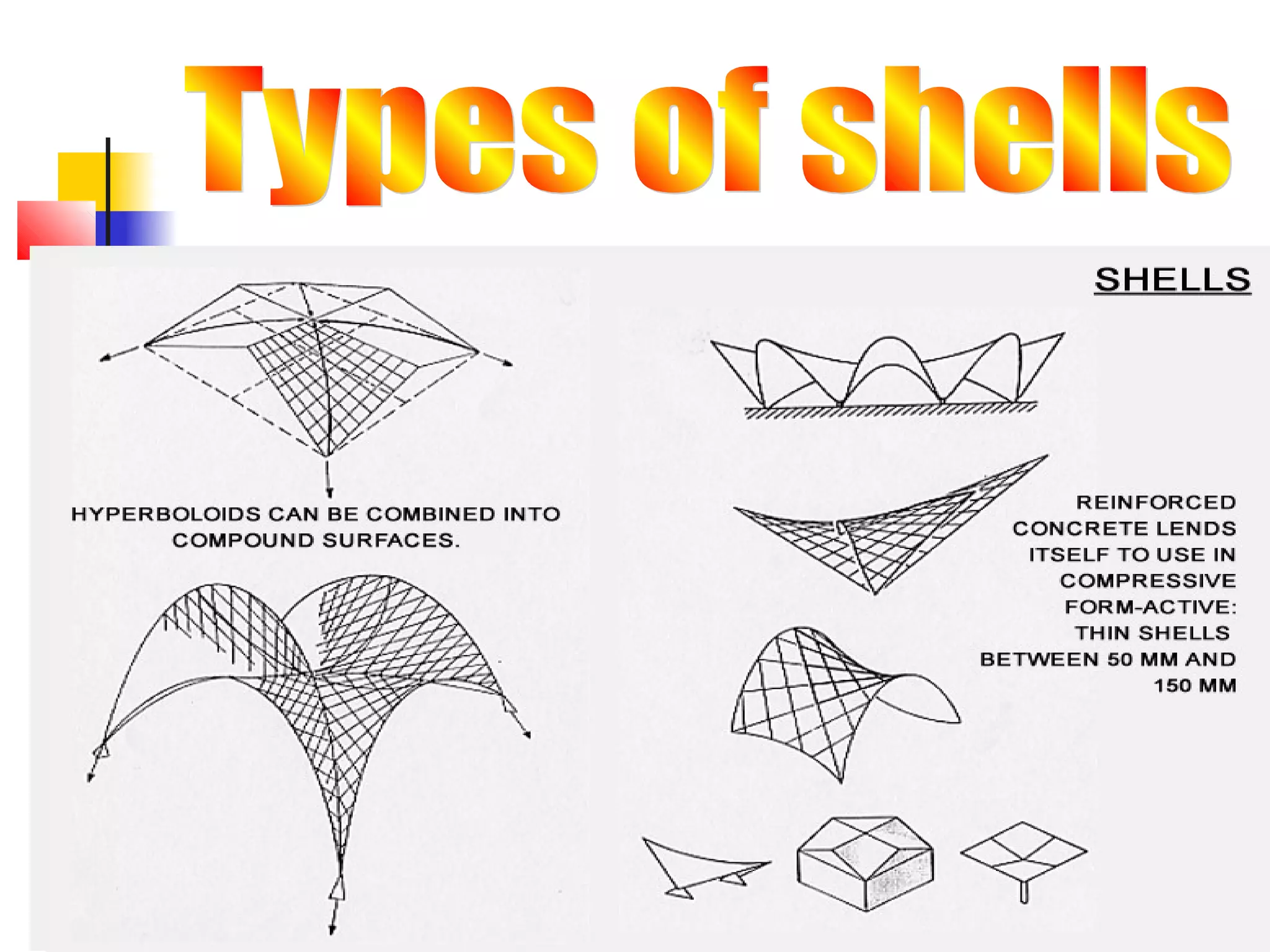
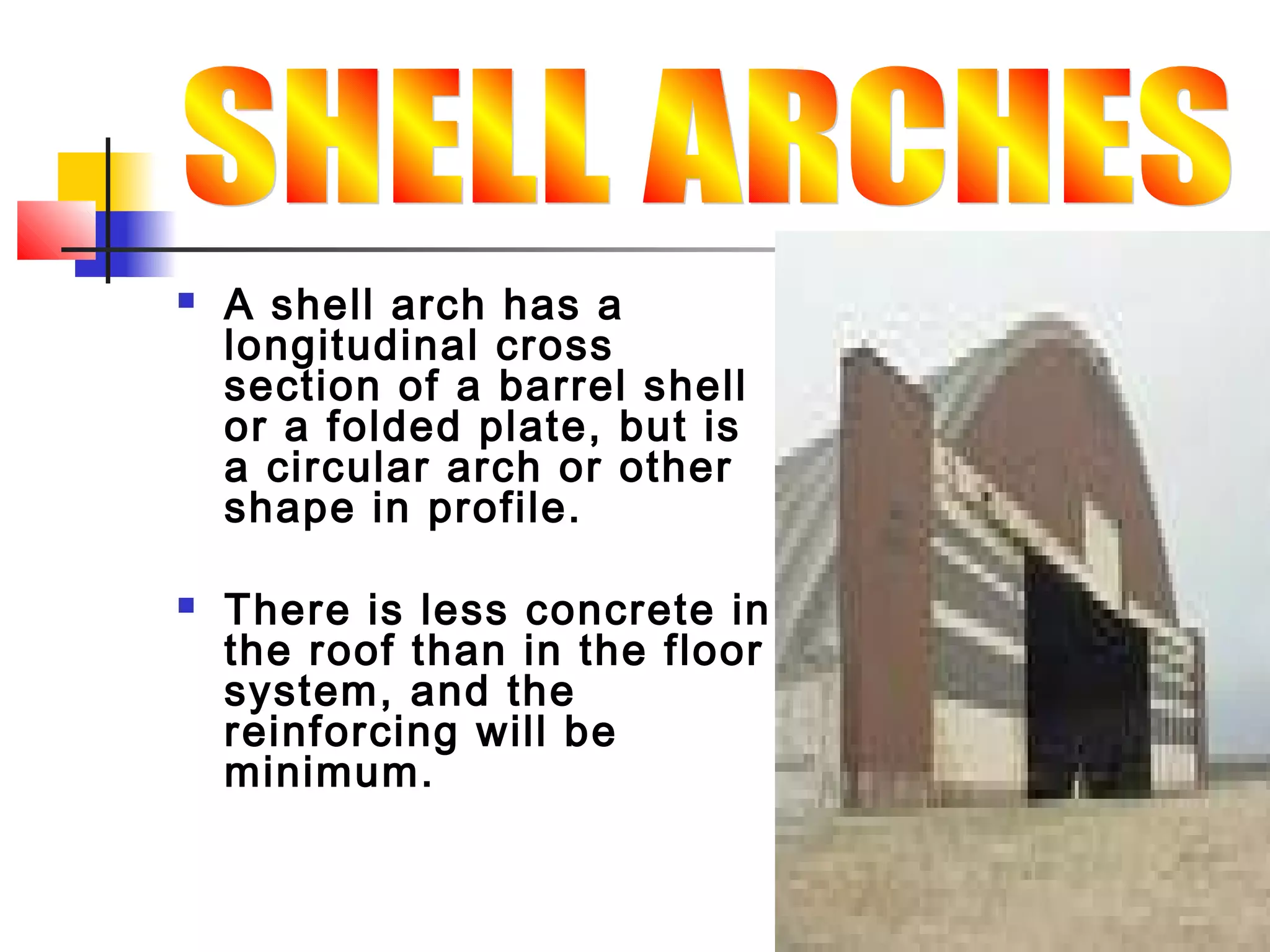
 A shell arch has a
longitudinal cross
section of a barrel shell
or a folded plate, but is
a circular arch or other
shape in profile.
 There is less concrete in
the roof than in the floor
system, and the
reinforcing will be
minimum.
 Dome shells have emerged due
to a new concept in building
design.
 These structures have the
potential for significant markets
in commercial and many other
small residential and industrial
applications.
 The structures utilize superior
material technology
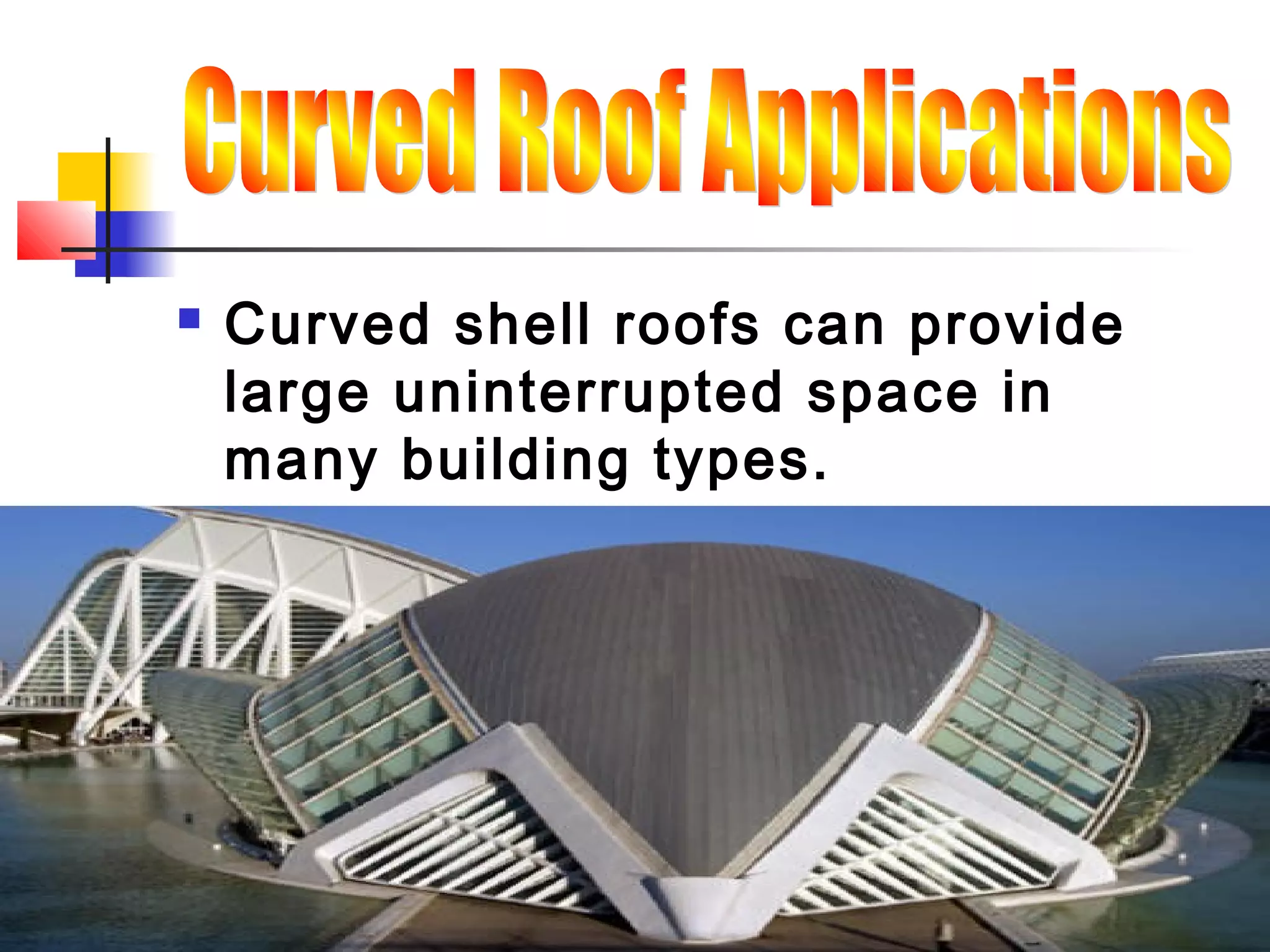
 Curved shell roofs can provide
large uninterrupted space in
many building types.
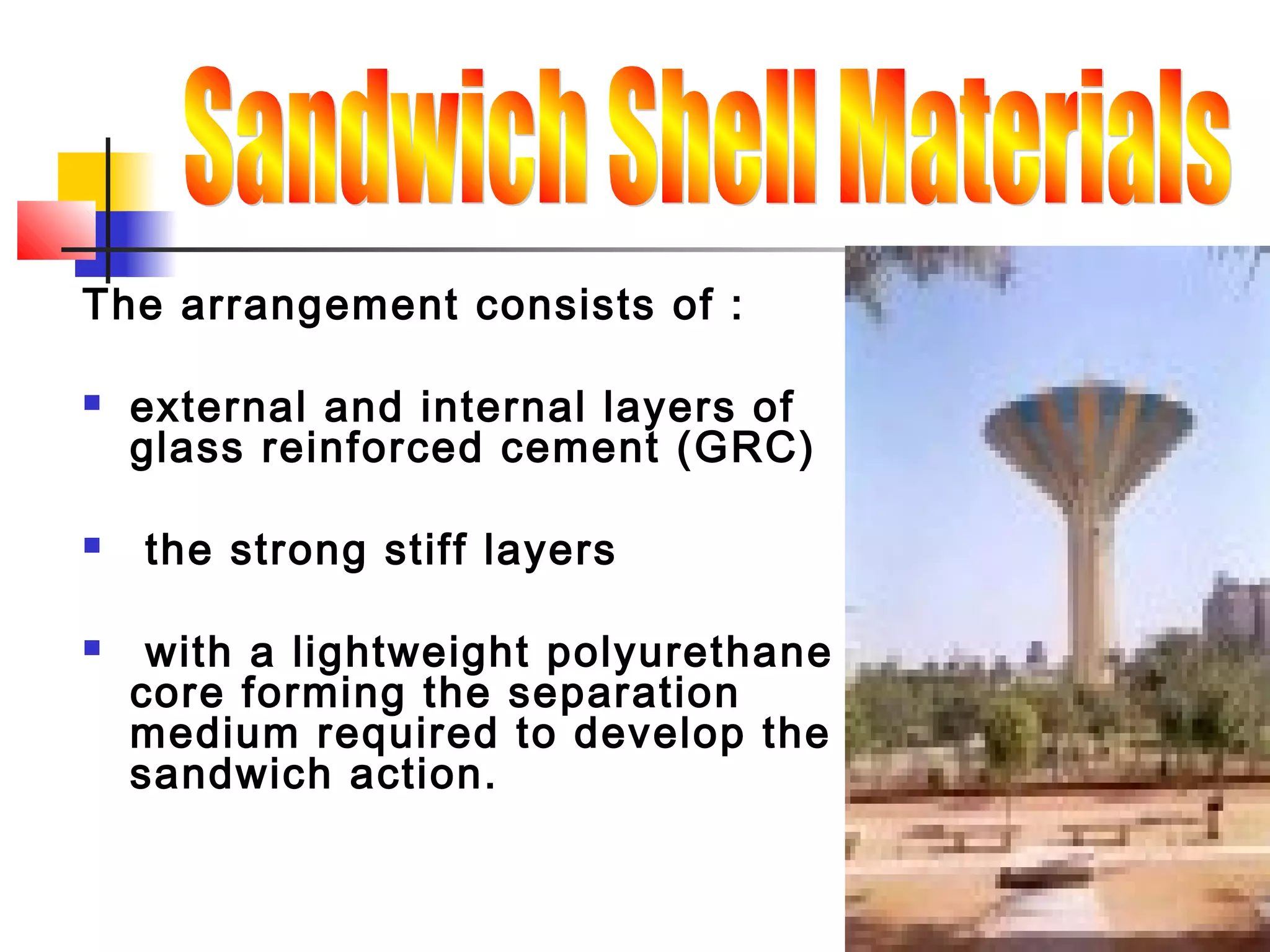
The arrangement consists of :
 external and internal layers of
glass reinforced cement (GRC)
 the strong stiff layers
 with a lightweight polyurethane
core forming the separation
medium required to develop the
sandwich action.
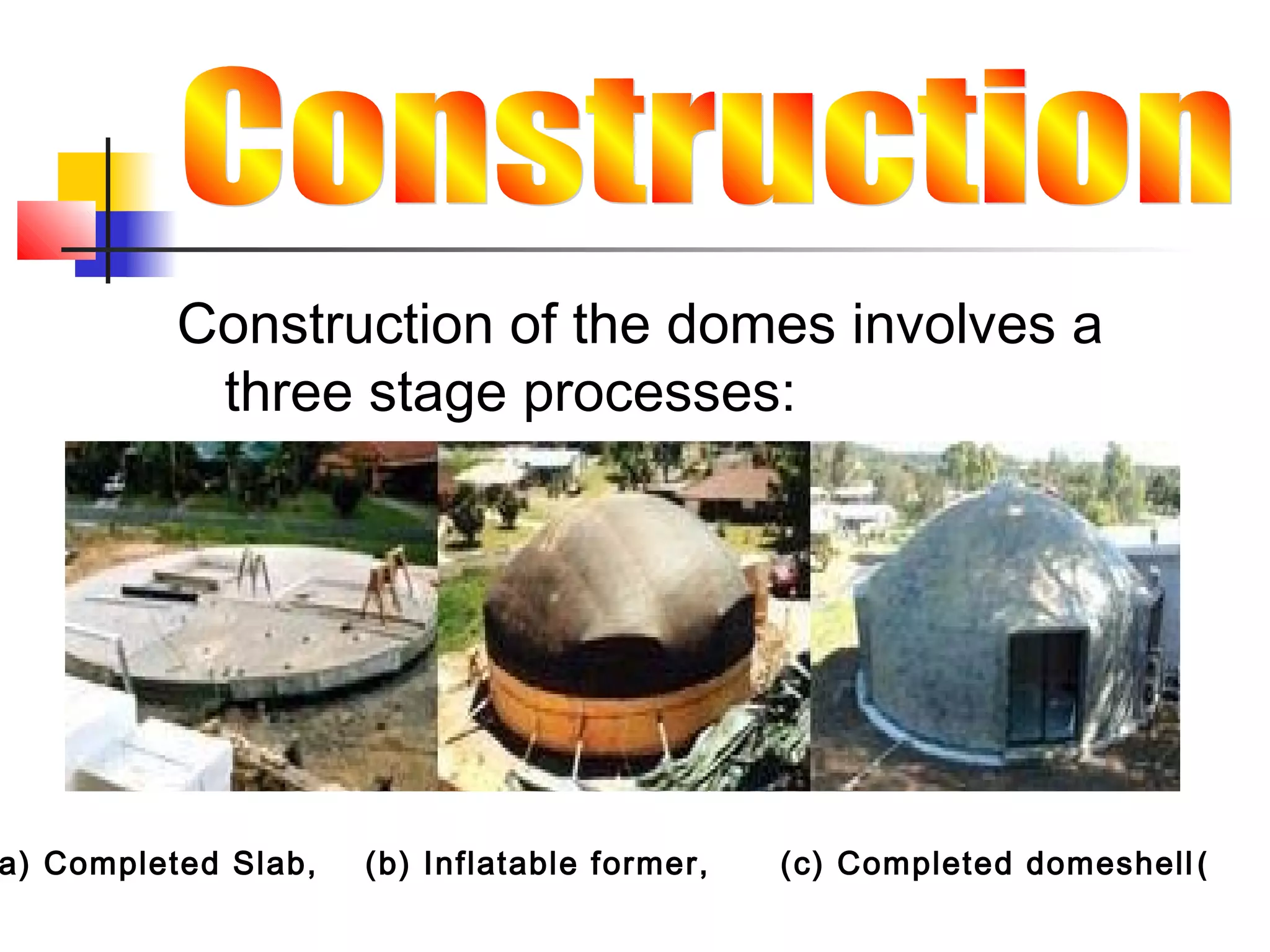
Construction of the domes involves a
three stage processes:
)a) Completed Slab, (b) Inflatable former, (c) Completed domeshell
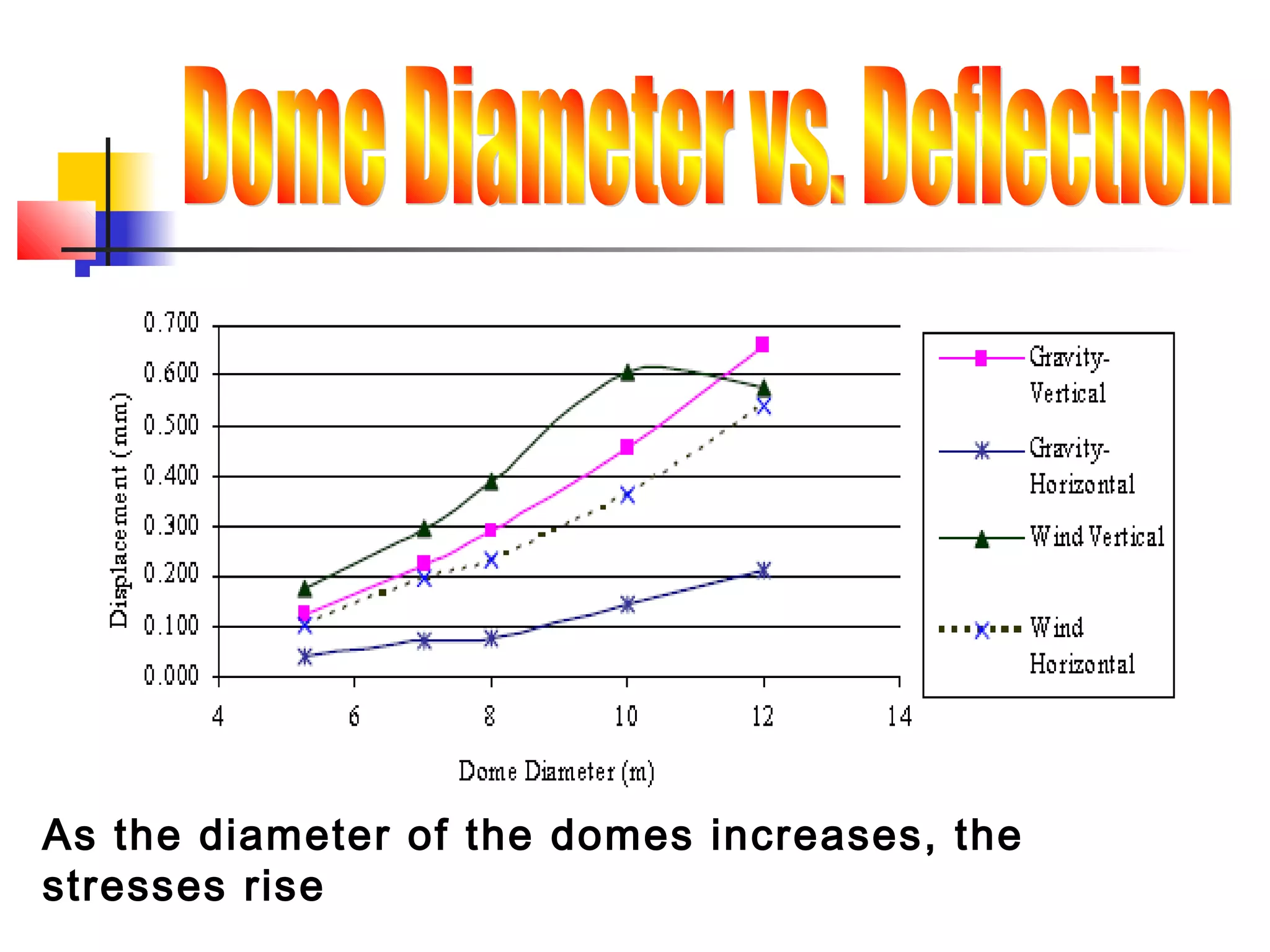
As the diameter of the domes increases, the
stresses rise
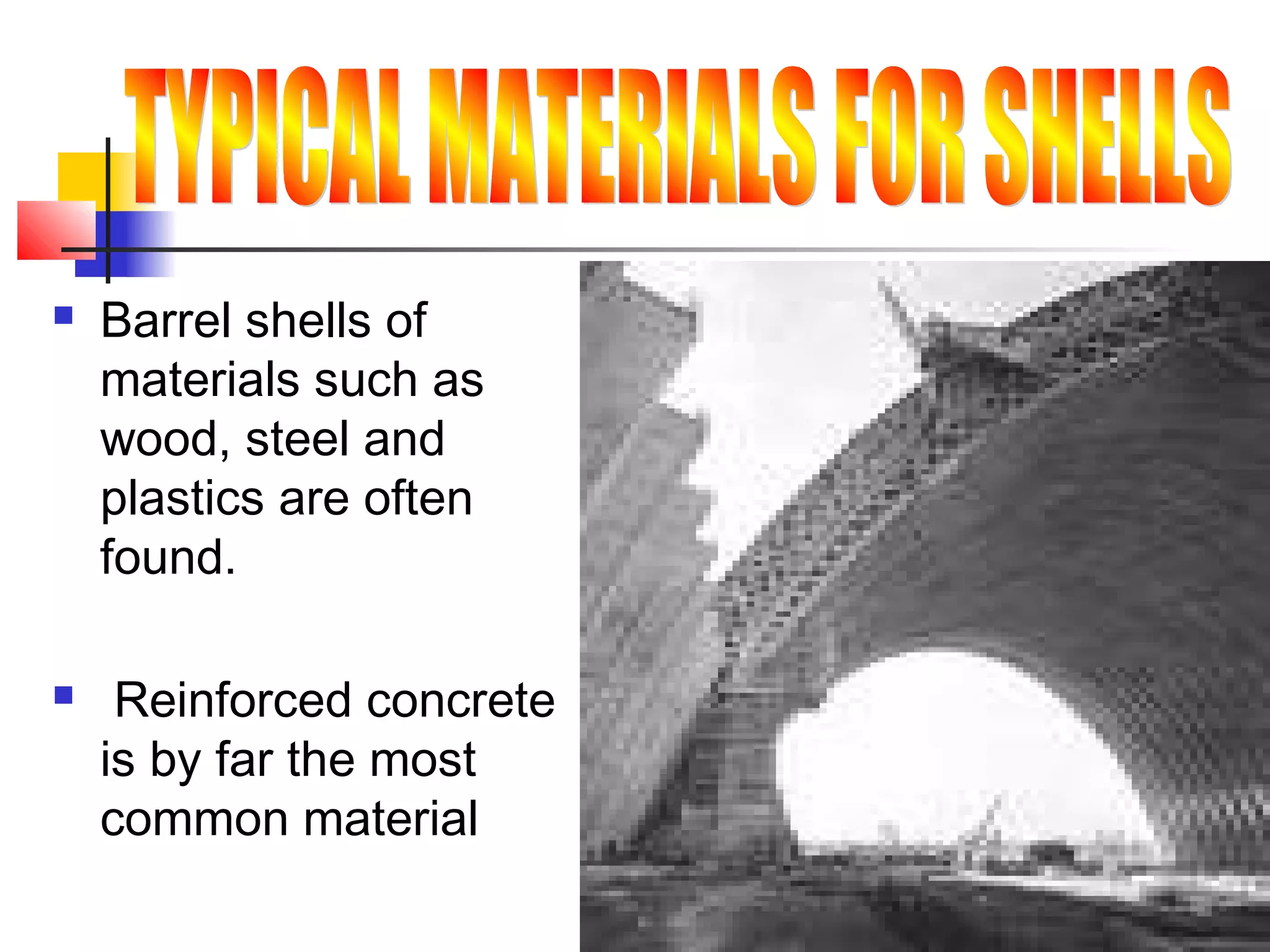
 Barrel shells of
materials such as
wood, steel and
plastics are often
found.
 Reinforced concrete
is by far the most
common material
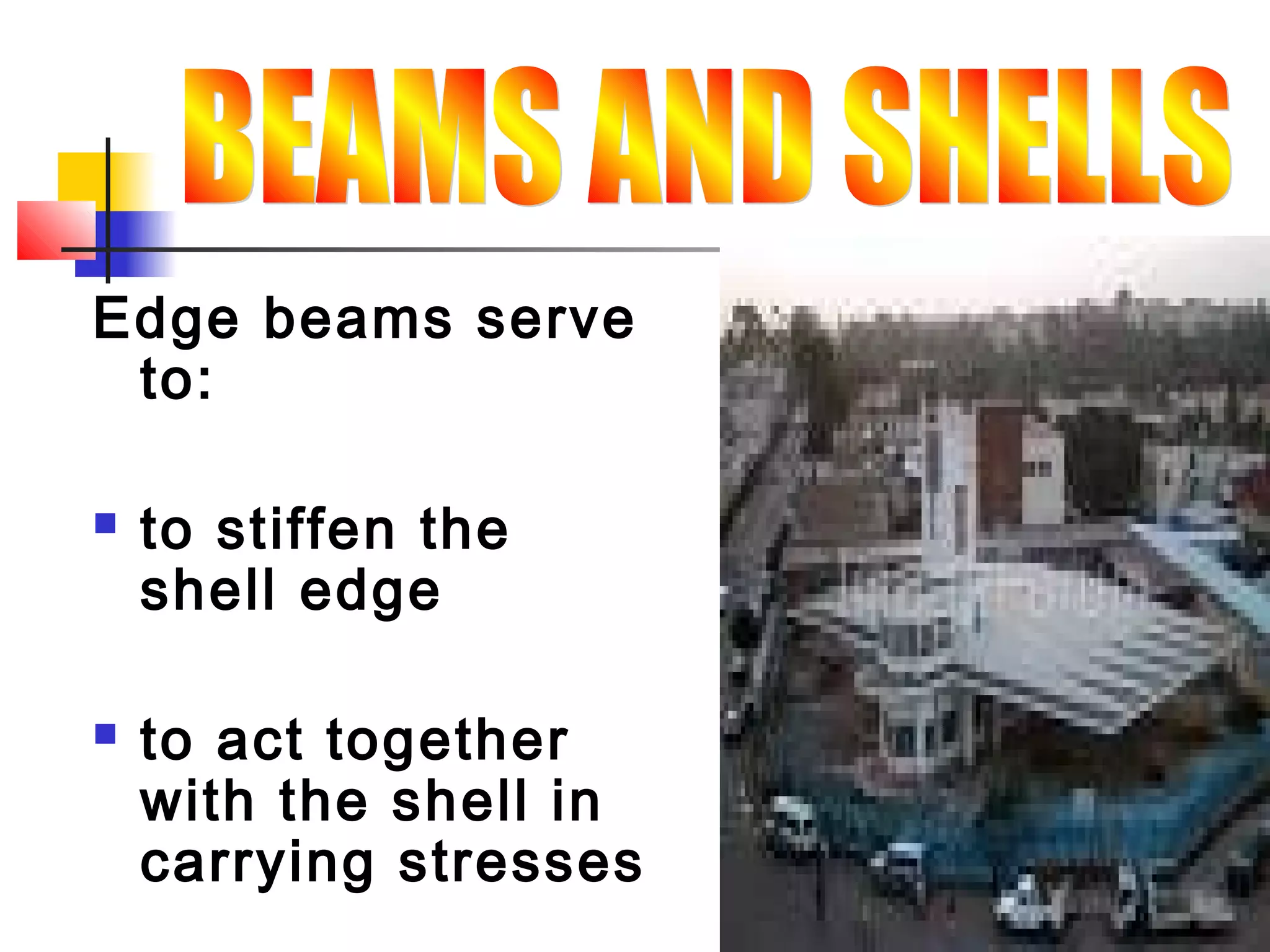
Edge beams serve
to:
 to stiffen the
shell edge
 to act together
with the shell in
carrying stresses
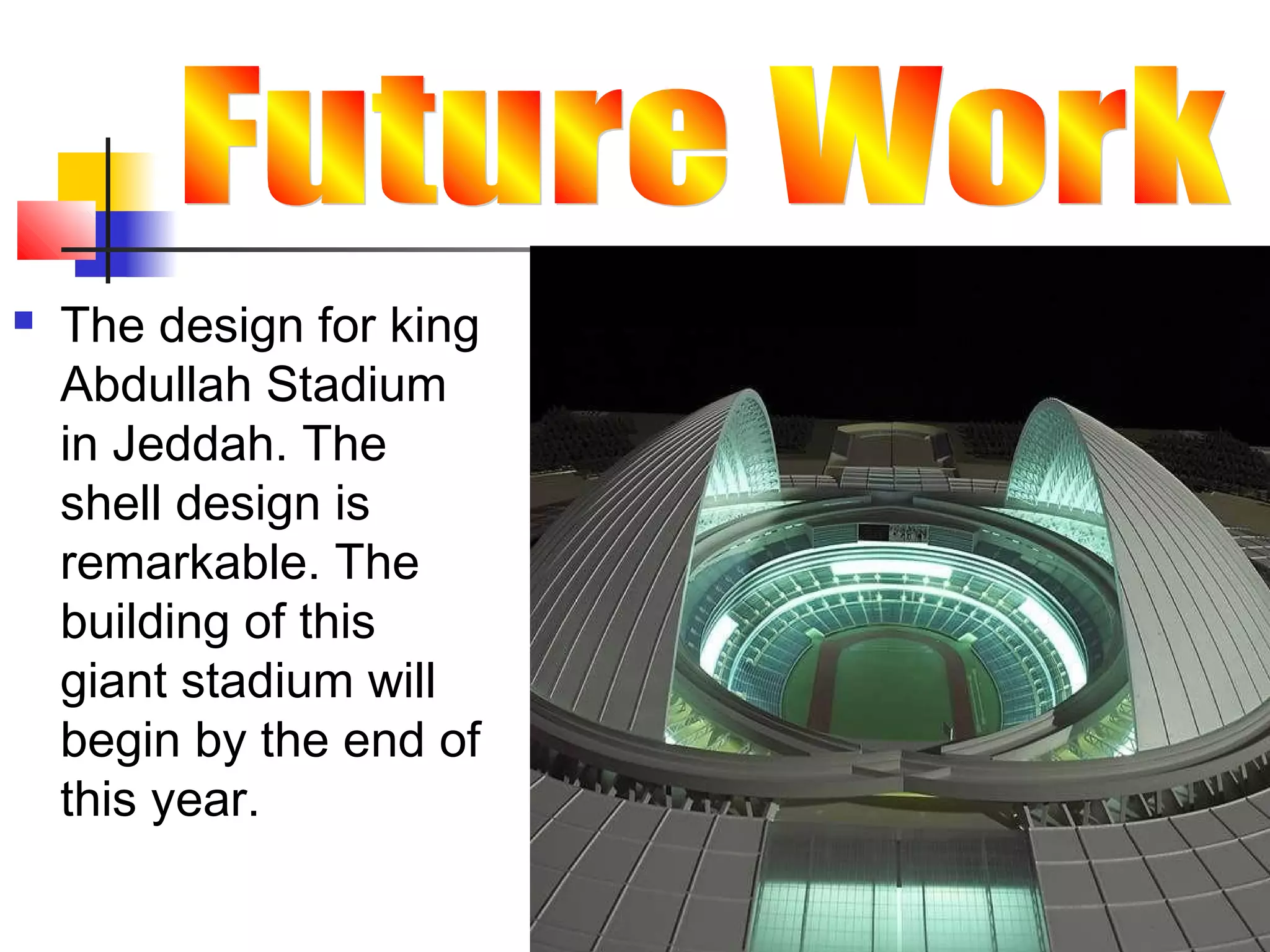
 The design for king
Abdullah Stadium
in Jeddah. The
shell design is
remarkable. The
building of this
giant stadium will
begin by the end of
this year.

Space and shell structures

  • 1.
     Shells canbe defined as curved structures capable of transmitting loads in more than two directions to supports.  Loads applied to shell surfaces are carried to the ground by the development of compressive, tensile, and shear stresses acting in the in-plane direction of the surface.
  • 4.
     Constructions ofspherical domes by using inflated membranes as forms have proven to be a viable solution to many problems.  The largest shells constructed are now less than 300 feet in diameter.  For very large spans, a grid constructed with pans is necessary so that the dome will be stiff enough and still weigh less than a uniform depth.
  • 5.
     A vaultmay be defined as a single barrel shell, supported on its side by walls or columns.
  • 6.
     Shells andfolded plates are different than stacked units and frames.  The thin diaphragm forming the shell is created uniformly rather than being assembled in discrete pieces.  Most shell and plate building enclosures are constructed from reinforced concrete
  • 7.
     A shellarch has a longitudinal cross section of a barrel shell or a folded plate, but is a circular arch or other shape in profile.  There is less concrete in the roof than in the floor system, and the reinforcing will be minimum.
  • 8.
     Dome shellshave emerged due to a new concept in building design.  These structures have the potential for significant markets in commercial and many other small residential and industrial applications.  The structures utilize superior material technology
  • 9.
     Curved shellroofs can provide large uninterrupted space in many building types.
  • 10.
    The arrangement consistsof :  external and internal layers of glass reinforced cement (GRC)  the strong stiff layers  with a lightweight polyurethane core forming the separation medium required to develop the sandwich action.
  • 11.
    Construction of thedomes involves a three stage processes: )a) Completed Slab, (b) Inflatable former, (c) Completed domeshell
  • 12.
    As the diameterof the domes increases, the stresses rise
  • 13.
     Barrel shellsof materials such as wood, steel and plastics are often found.  Reinforced concrete is by far the most common material
  • 14.
    Edge beams serve to: to stiffen the shell edge  to act together with the shell in carrying stresses
  • 15.
     The designfor king Abdullah Stadium in Jeddah. The shell design is remarkable. The building of this giant stadium will begin by the end of this year.