Health & Physical Education
Kristin Letendre Cerce
Franklin High School
Health & Physical Education At A Glance
Mission
▪ Provide students with a standards‐based, comprehensive Health & 
Physical Education Program that teaches students the skills necessary 
to make healthy life choices and become life‐long physically active 
people
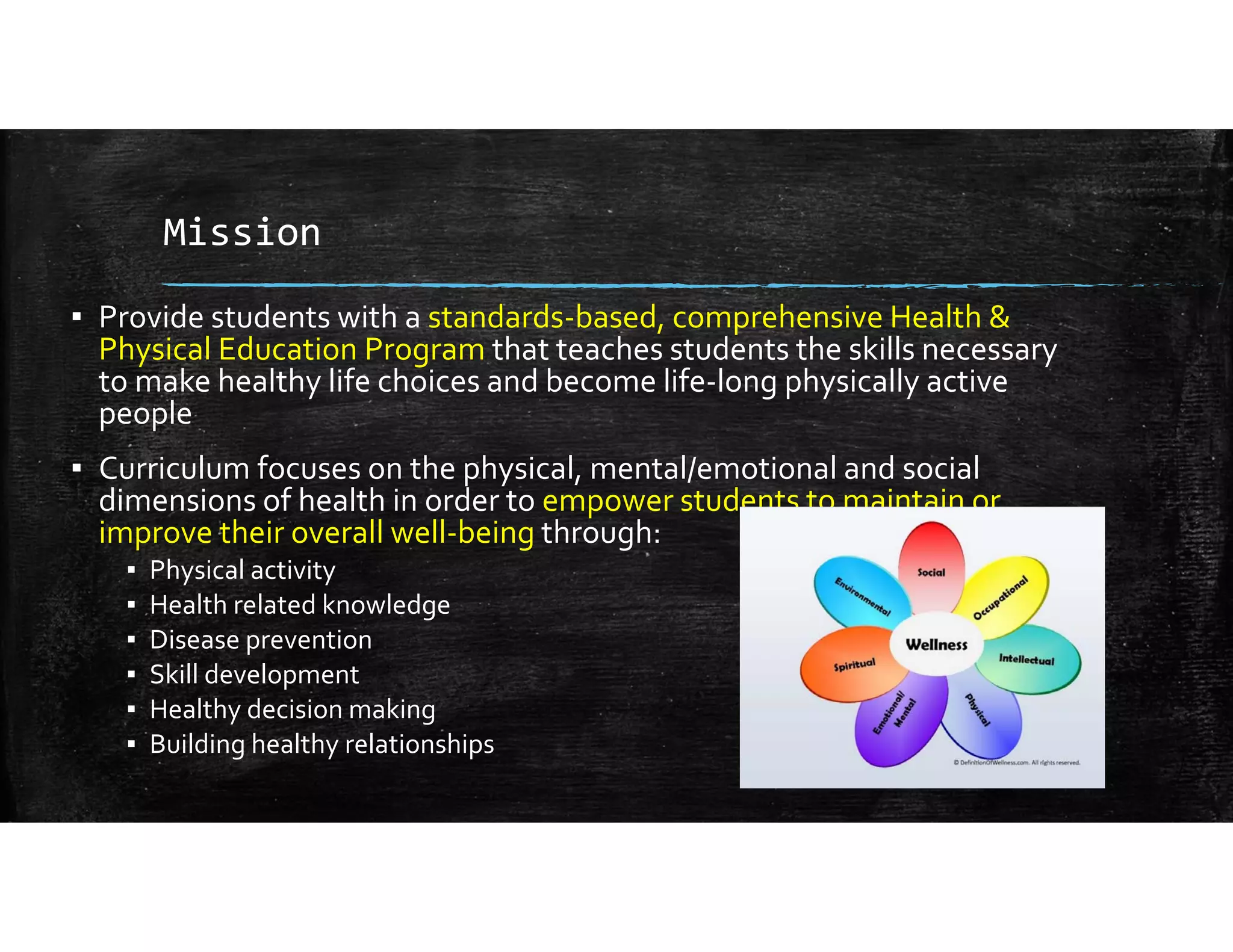
▪ Curriculum focuses on the physical, mental/emotional and social 
dimensions of health in order to empower students to maintain or 
improve their overall well‐being through:
▪ Physical activity
▪ Health related knowledge
▪ Disease prevention
▪ Skill development
▪ Healthy decision making
▪ Building healthy relationships
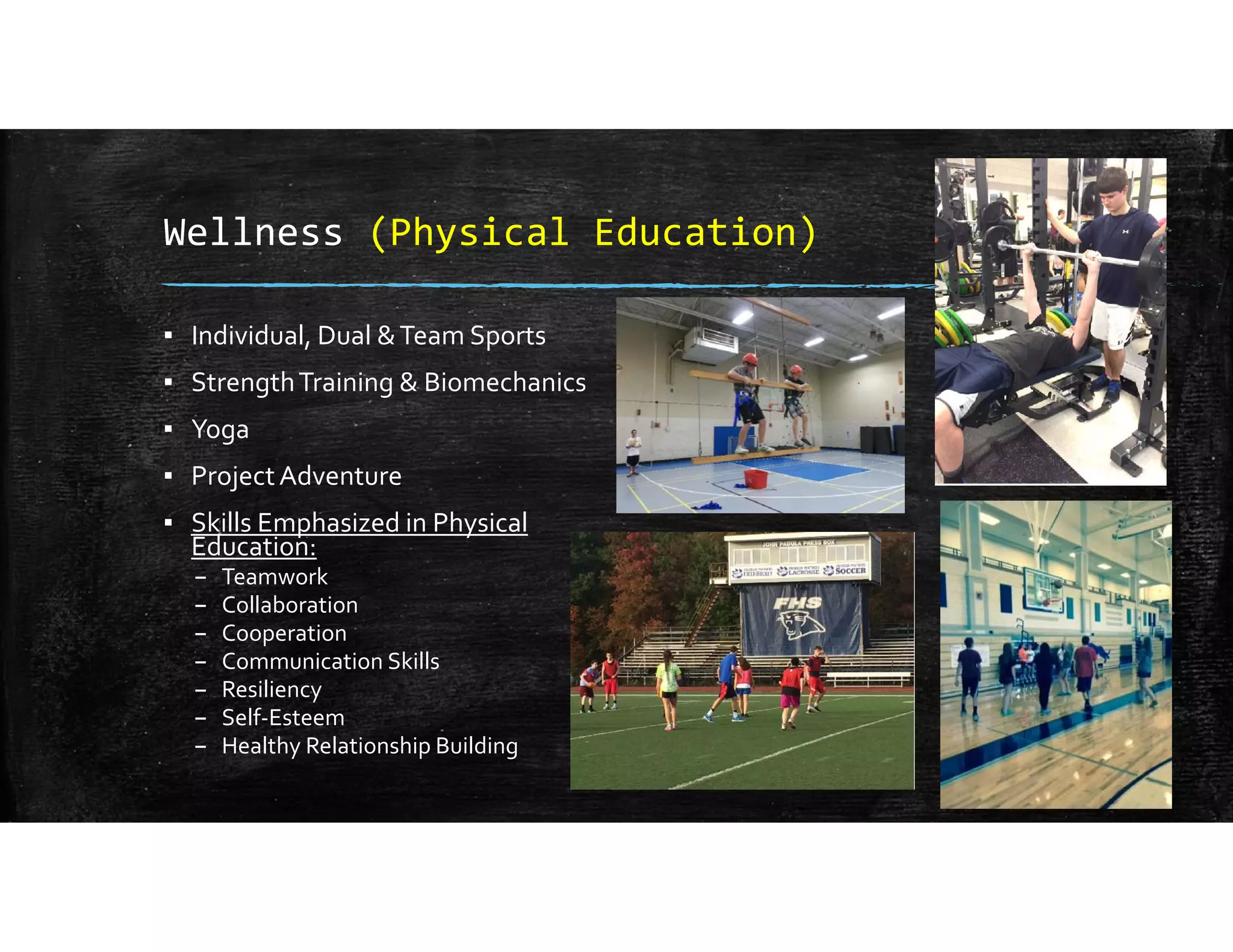
Wellness (Physical Education)
▪ Individual, Dual & Team Sports
▪ Strength Training & Biomechanics
▪ Yoga
▪ Project Adventure
▪ Skills Emphasized in Physical 
Education:
– Teamwork
– Collaboration
– Cooperation
– Communication Skills
– Resiliency
– Self‐Esteem
– Healthy Relationship Building
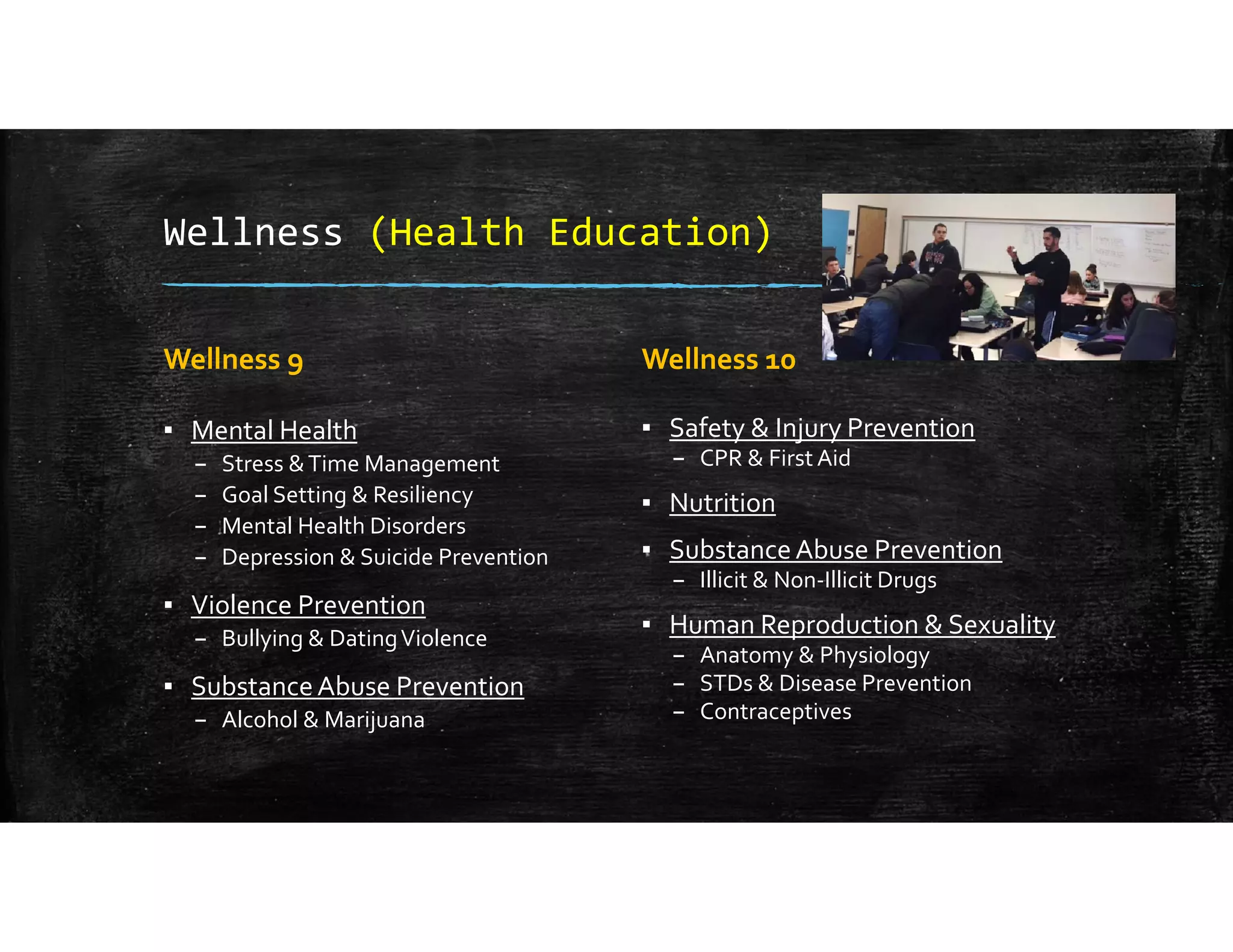
Wellness (Health Education)
Wellness 9
▪ Mental Health
– Stress & Time Management
– Goal Setting & Resiliency
– Mental Health Disorders
– Depression & Suicide Prevention
▪ Violence Prevention
– Bullying & Dating Violence
▪ Substance Abuse Prevention
– Alcohol & Marijuana
Wellness 10
▪ Safety & Injury Prevention
– CPR & First Aid
▪ Nutrition
▪ Substance Abuse Prevention
– Illicit & Non‐Illicit Drugs
▪ Human Reproduction & Sexuality
– Anatomy & Physiology
– STDs & Disease Prevention
– Contraceptives
Program Changes
New Classes Since 2010
▪ Yoga & Fitness
▪ Everyday Nutrition
▪ Kinesiology
▪ Athletic Training
▪ Team Sports
▪ Lifetime Activities
▪ Creative Dance (additional staffing 
necessary)
▪ Leadership for Wellness (additional 
staffing necessary)
▪ Independent Living (additional staffing 
necessary)
Future Course Offering Vision
(additional staffing necessary)
▪ Adaptive Wellness
▪ Yoga & Fitness II
▪ Everyday Nutrition II
▪ Exercise Physiology
▪ Ethics, Violence, & Aggression in Sports
▪ Project Adventure
▪ Group Exercise
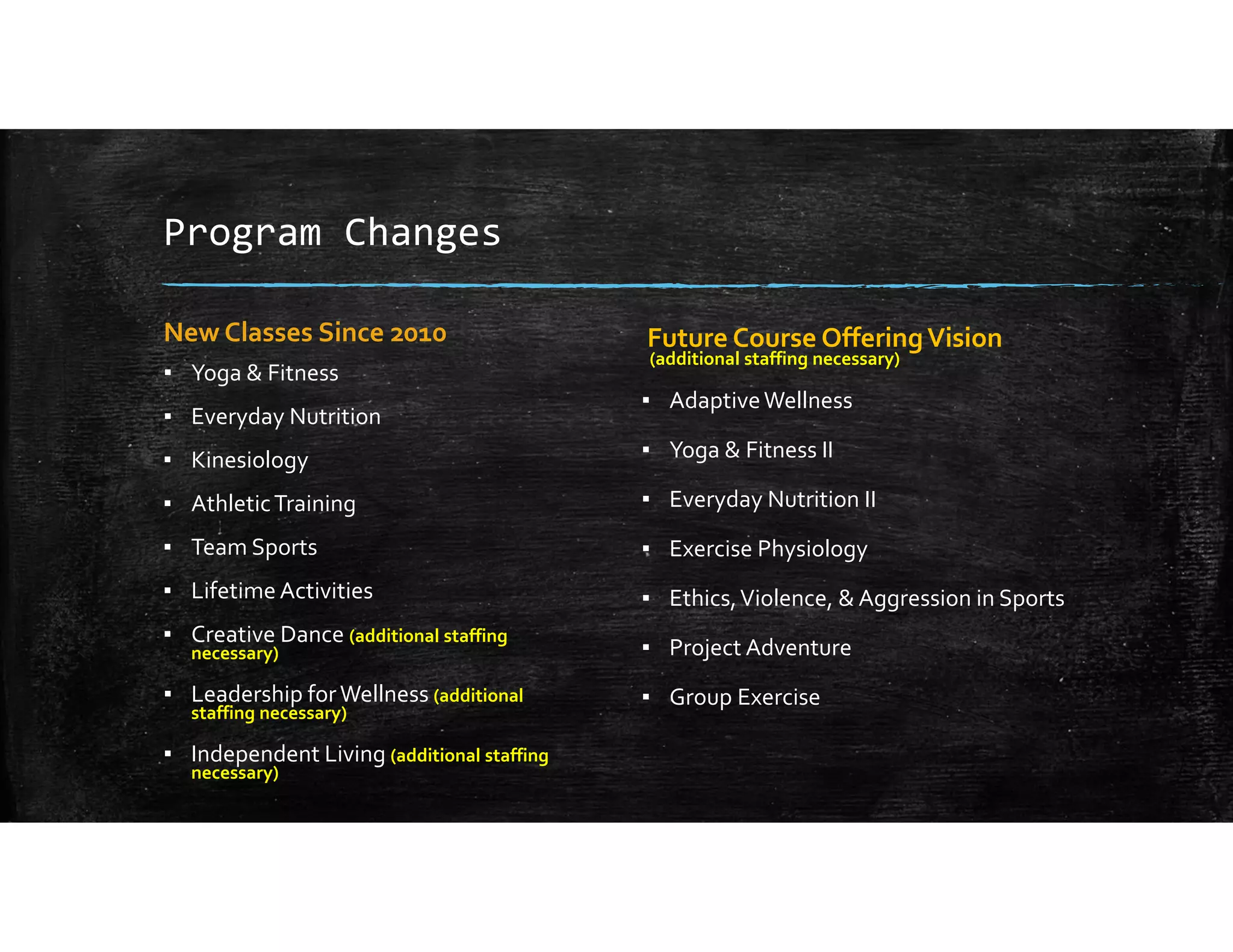
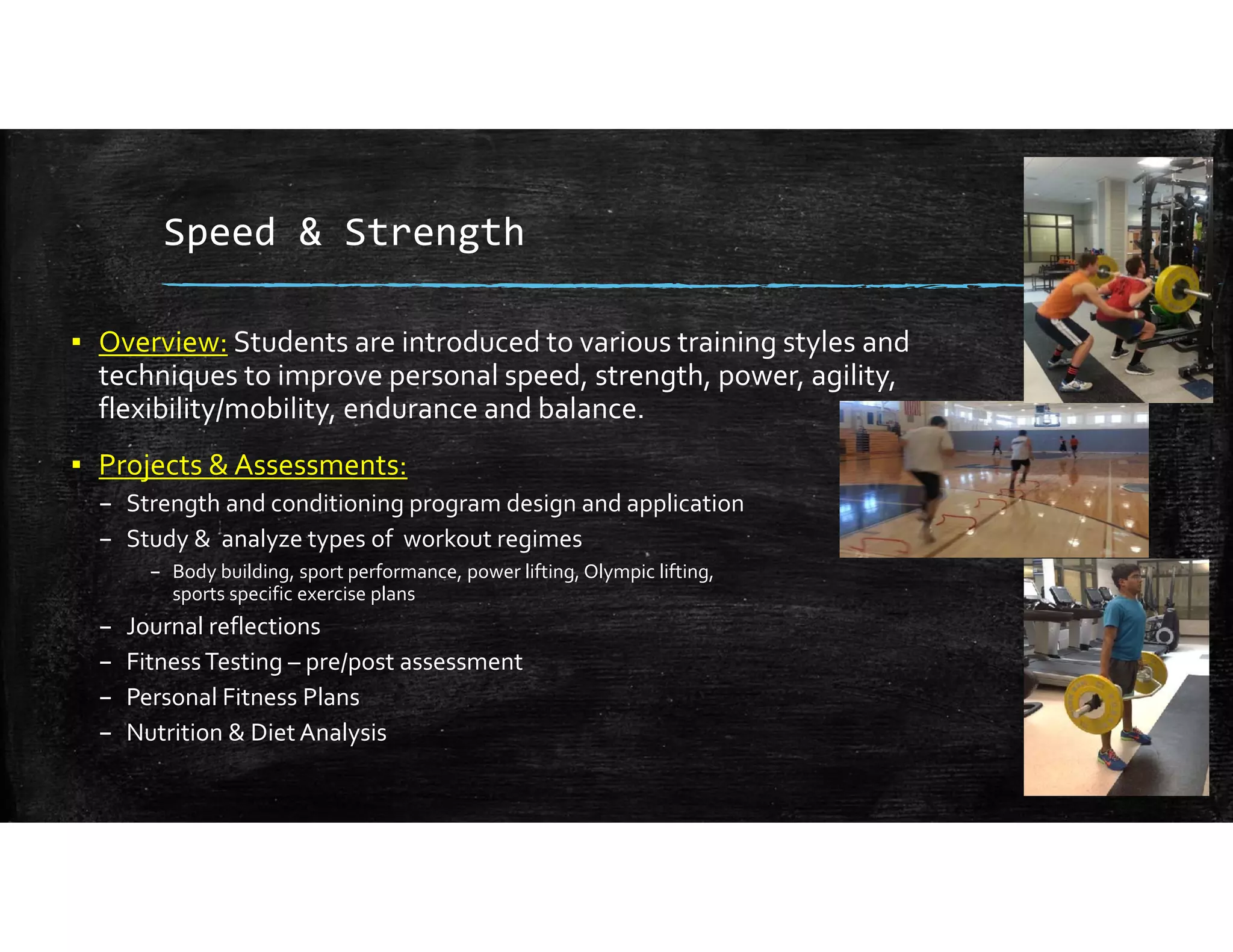
Speed & Strength
▪ Overview: Students are introduced to various training styles and 
techniques to improve personal speed, strength, power, agility, 
flexibility/mobility, endurance and balance.
▪ Projects & Assessments:
– Strength and conditioning program design and application
– Study &  analyze types of  workout regimes 
– Body building, sport performance, power lifting, Olympic lifting,                                                            
sports specific exercise plans
– Journal reflections 
– Fitness Testing – pre/post assessment
– Personal Fitness Plans
– Nutrition & Diet Analysis
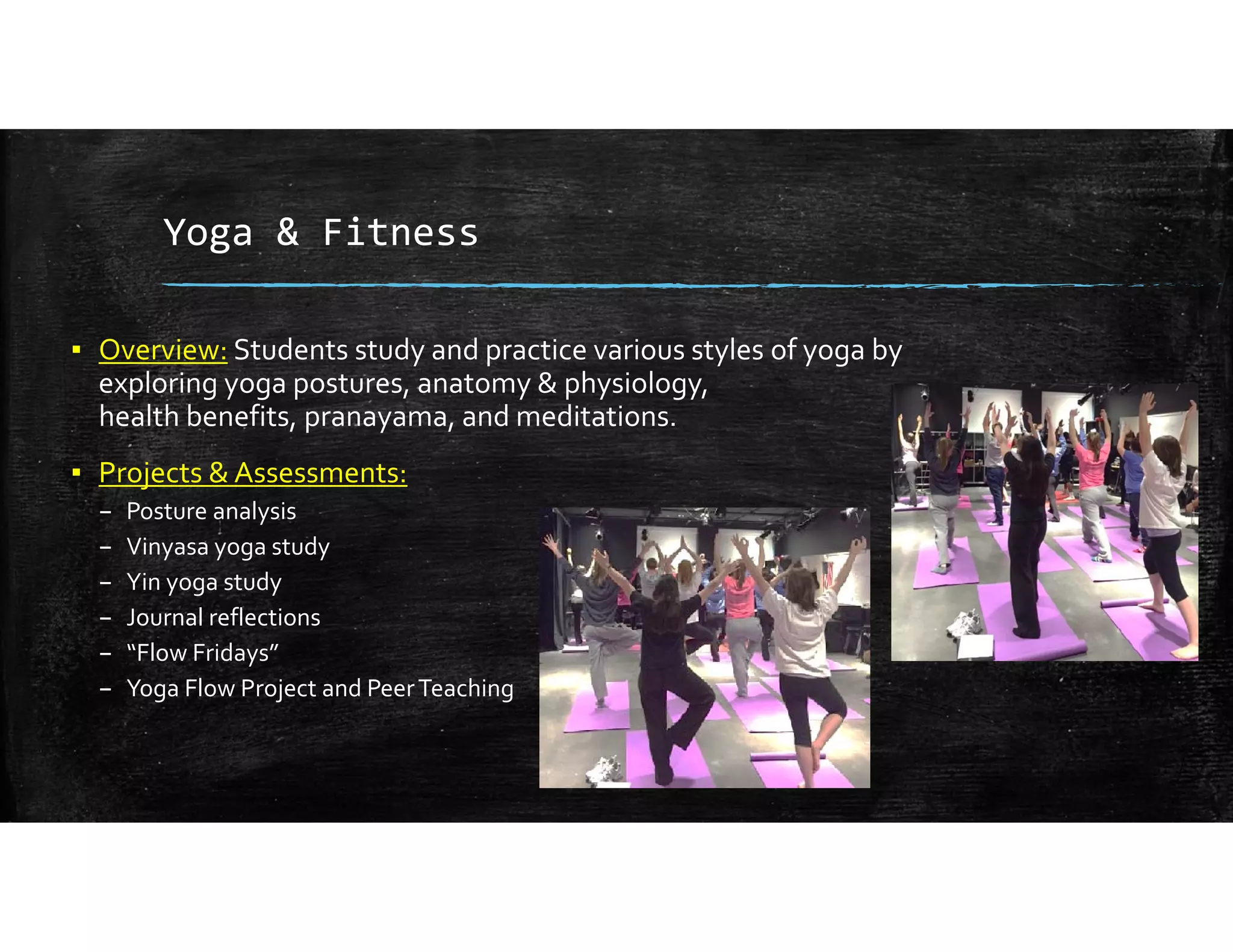
Yoga & Fitness
▪ Overview: Students study and practice various styles of yoga by 
exploring yoga postures, anatomy & physiology,                                                
health benefits, pranayama, and meditations.
▪ Projects & Assessments:
– Posture analysis
– Vinyasa yoga study
– Yin yoga study 
– Journal reflections
– “Flow Fridays”
– Yoga Flow Project and Peer Teaching
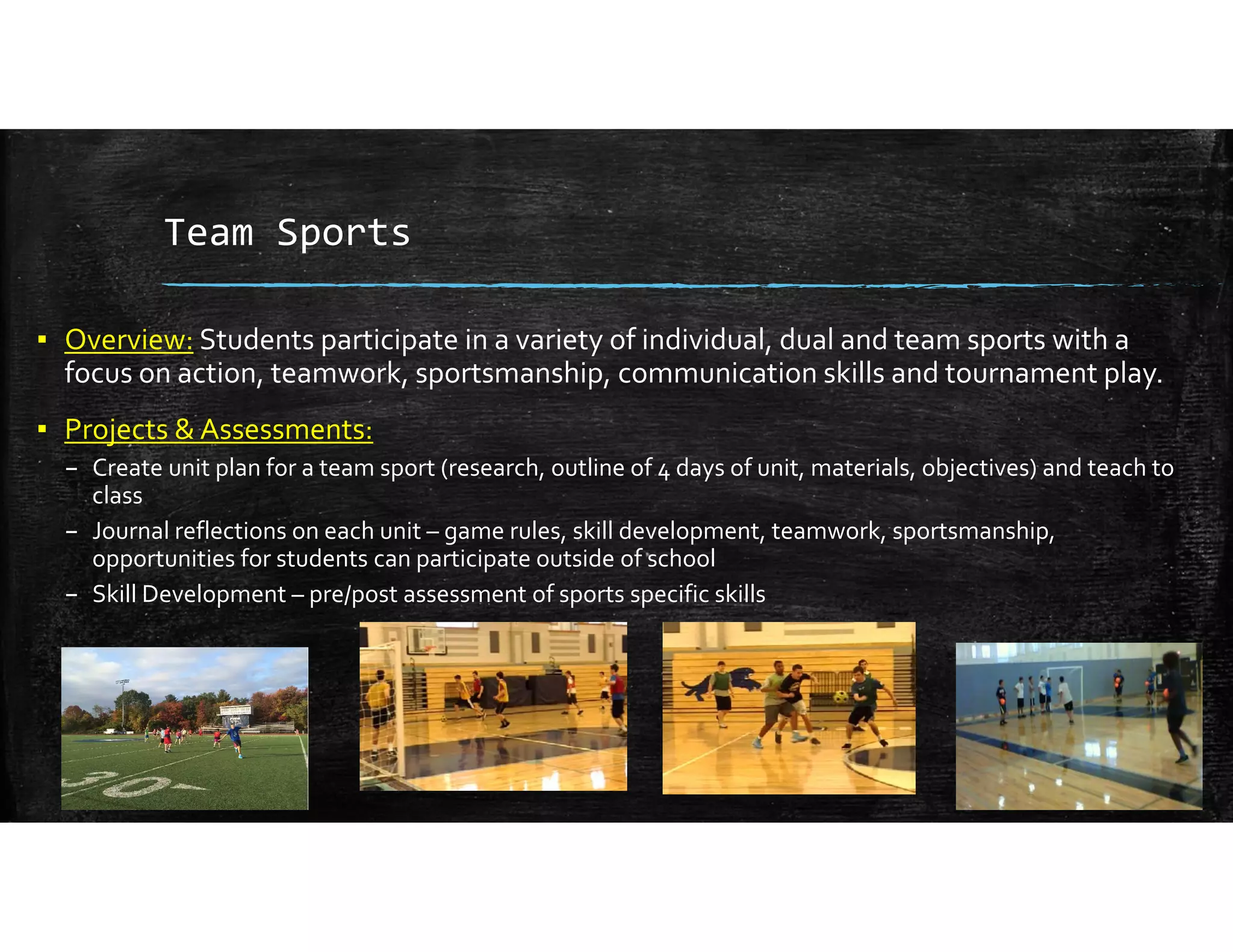
Team Sports
▪ Overview: Students participate in a variety of individual, dual and team sports with a 
focus on action, teamwork, sportsmanship, communication skills and tournament play.
▪ Projects & Assessments:
– Create unit plan for a team sport (research, outline of 4 days of unit, materials, objectives) and teach to 
class
– Journal reflections on each unit – game rules, skill development, teamwork, sportsmanship, 
opportunities for students can participate outside of school
– Skill Development – pre/post assessment of sports specific skills
Lifetime Activities
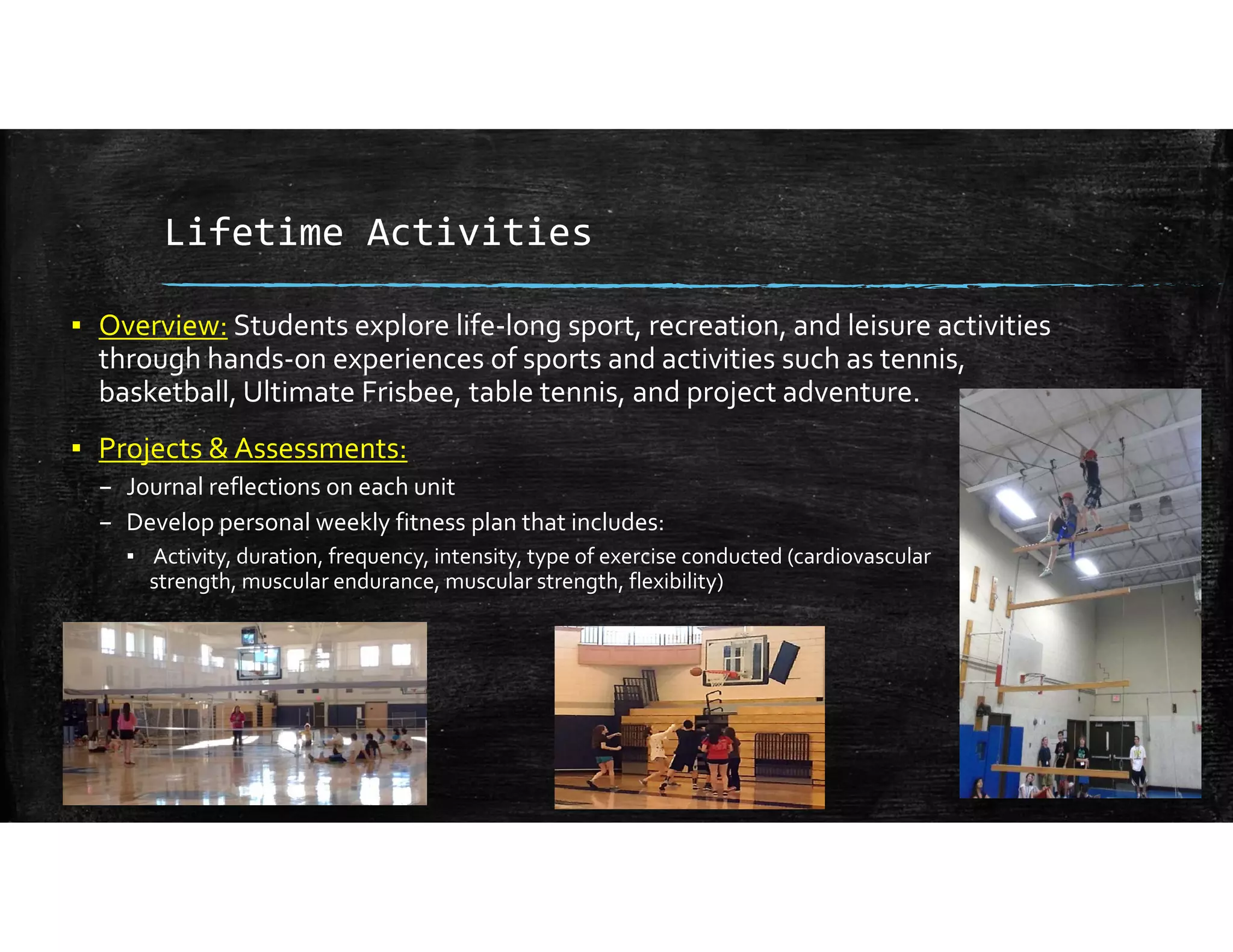
▪ Overview: Students explore life‐long sport, recreation, and leisure activities 
through hands‐on experiences of sports and activities such as tennis, 
basketball, Ultimate Frisbee, table tennis, and project adventure.
▪ Projects & Assessments:
– Journal reflections on each unit 
– Develop personal weekly fitness plan that includes:
▪ Activity, duration, frequency, intensity, type of exercise conducted (cardiovascular                                         
strength, muscular endurance, muscular strength, flexibility) 
Kinesiology
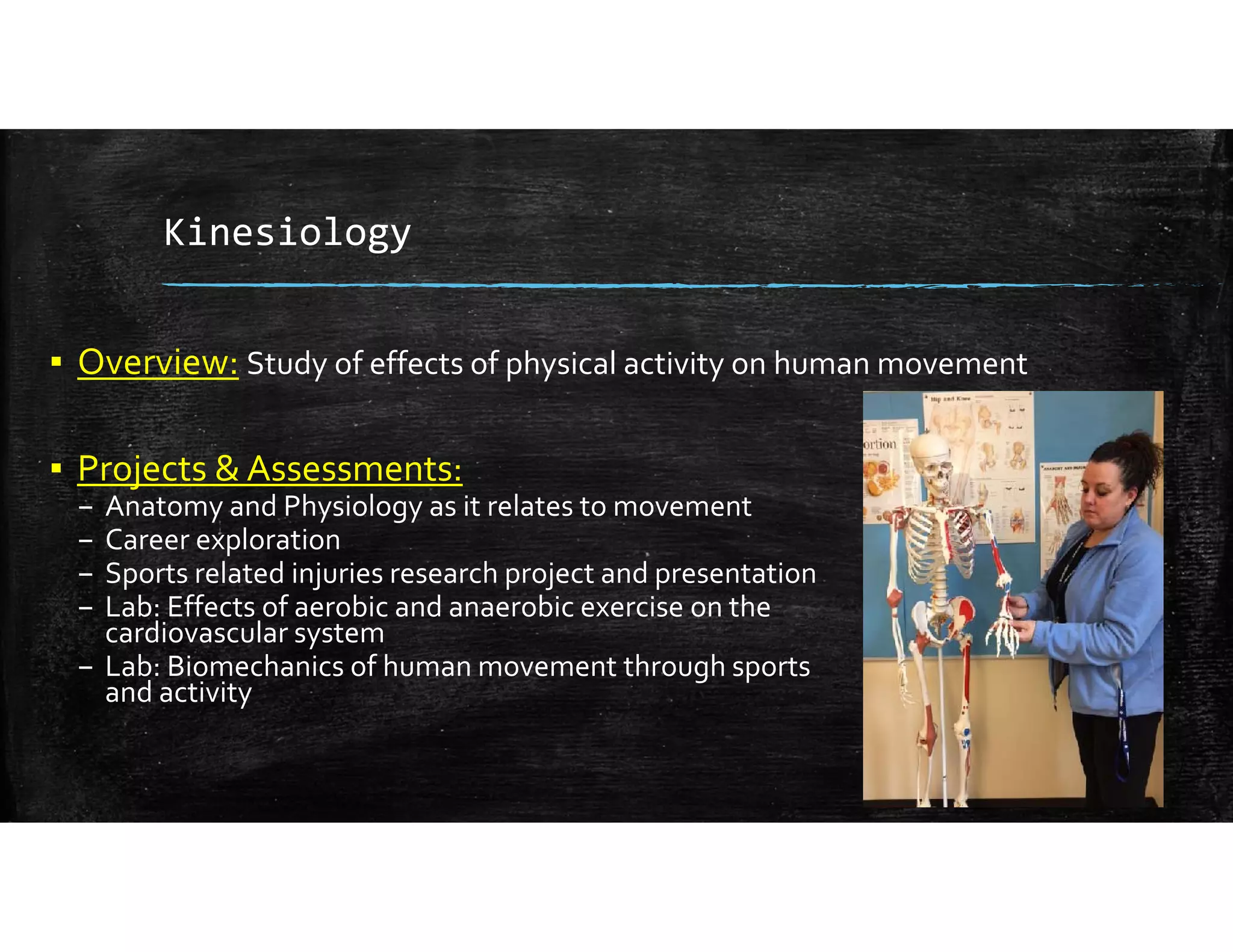
▪ Overview: Study of effects of physical activity on human movement
▪ Projects & Assessments:
– Anatomy and Physiology as it relates to movement
– Career exploration
– Sports related injuries research project and presentation
– Lab: Effects of aerobic and anaerobic exercise on the                                 
cardiovascular system
– Lab: Biomechanics of human movement through sports                                              
and activity
Athletic Training
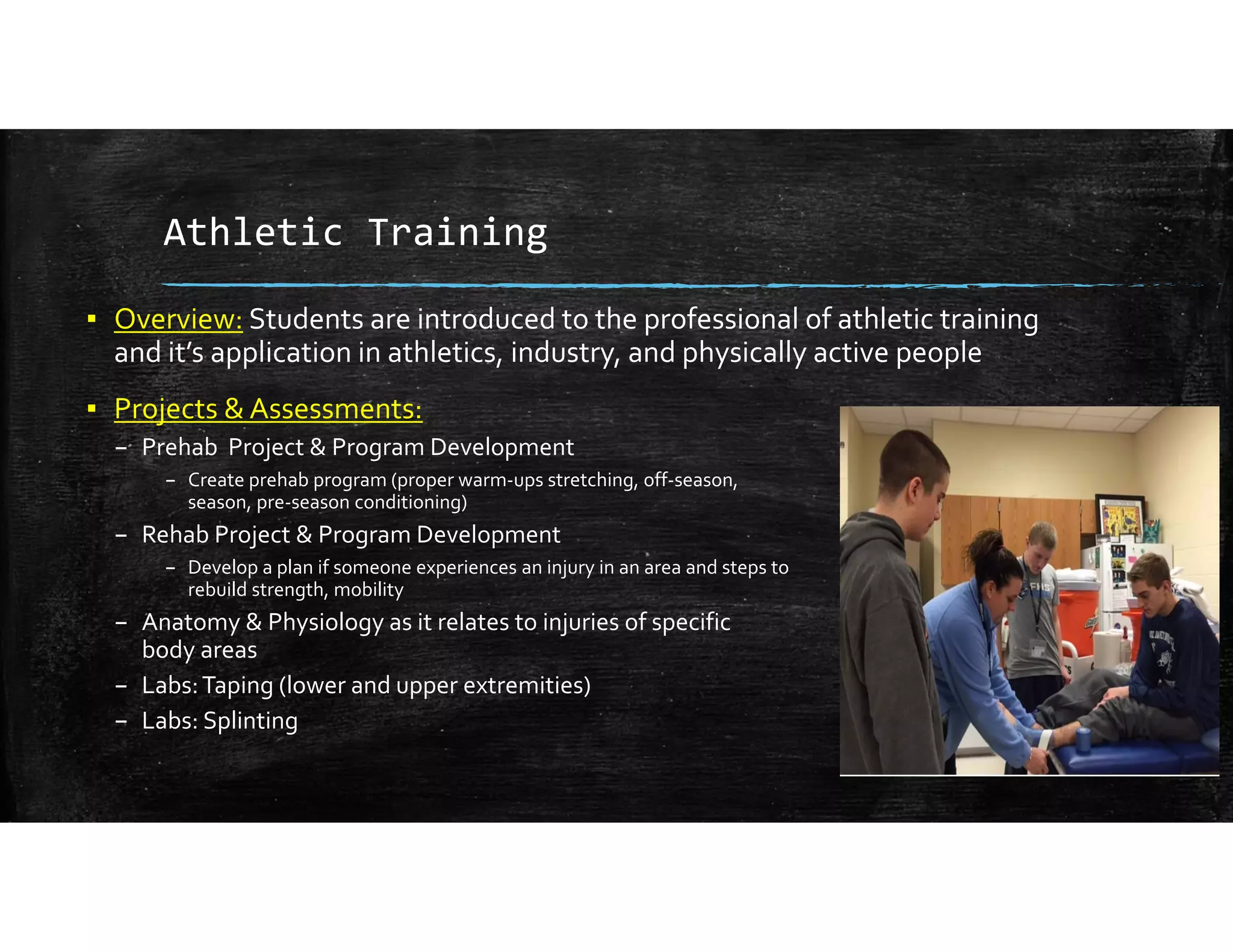
▪ Overview: Students are introduced to the professional of athletic training 
and it’s application in athletics, industry, and physically active people
▪ Projects & Assessments:
– Prehab Project & Program Development
– Create prehab program (proper warm‐ups stretching, off‐season,                                                                        in‐
season, pre‐season conditioning) 
– Rehab Project & Program Development
– Develop a plan if someone experiences an injury in an area and steps to                                                       
rebuild strength, mobility
– Anatomy & Physiology as it relates to injuries of specific                                                           
body areas
– Labs: Taping (lower and upper extremities)
– Labs: Splinting
Everyday Nutrition
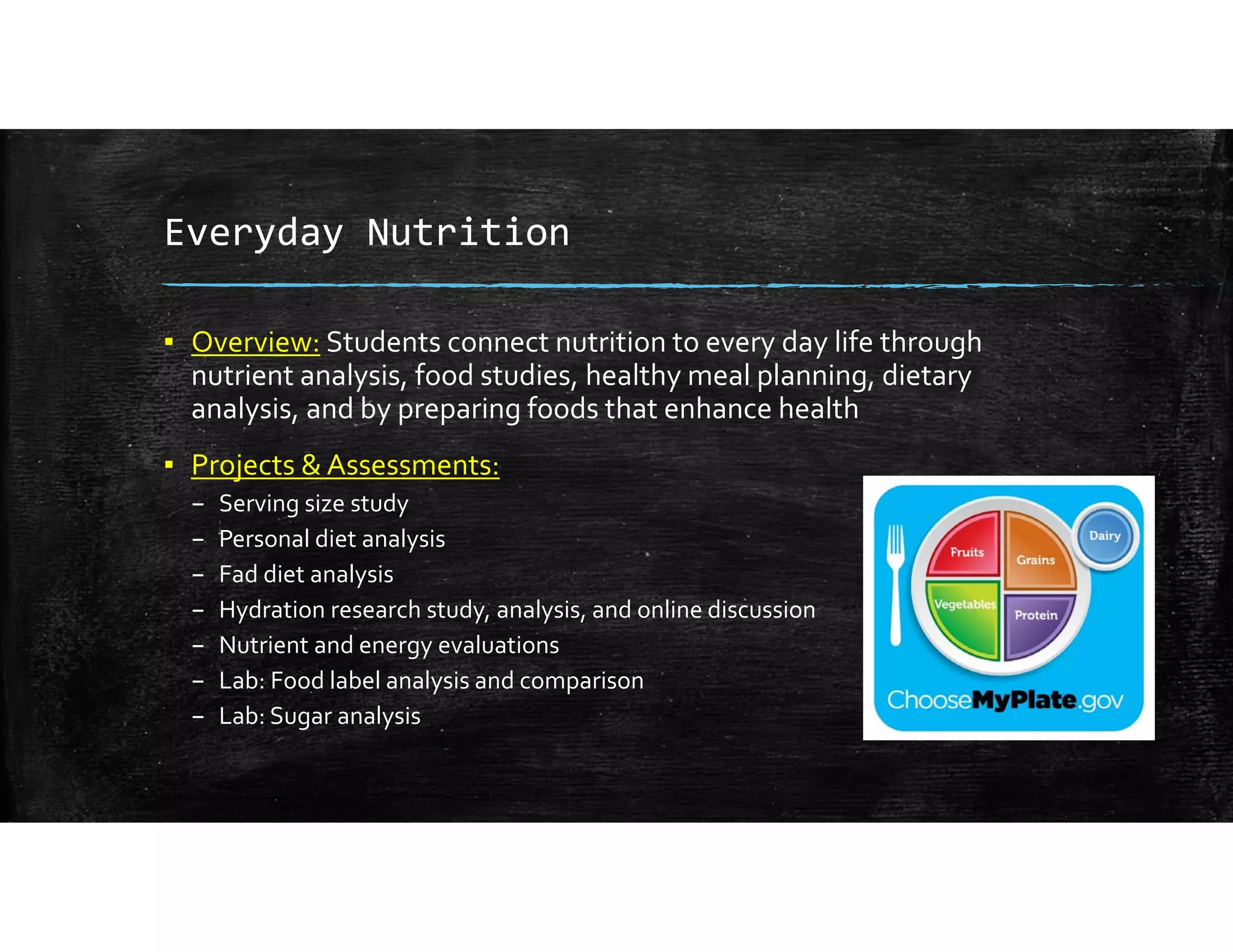
▪ Overview: Students connect nutrition to every day life through 
nutrient analysis, food studies, healthy meal planning, dietary 
analysis, and by preparing foods that enhance health 
▪ Projects & Assessments:
– Serving size study
– Personal diet analysis
– Fad diet analysis
– Hydration research study, analysis, and online discussion
– Nutrient and energy evaluations
– Lab: Food label analysis and comparison
– Lab: Sugar analysis
Program Highlights
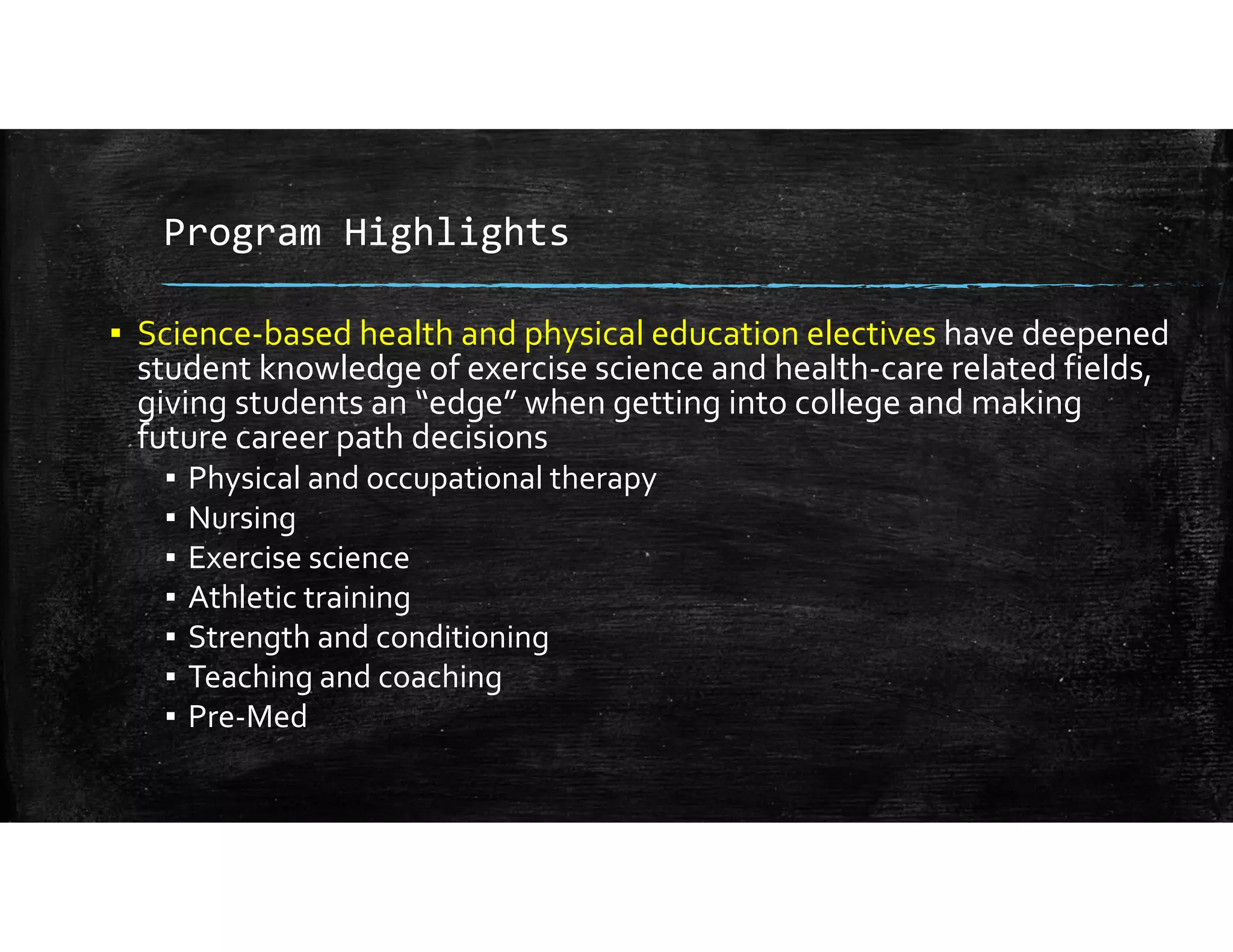
▪ Science‐based health and physical education electives have deepened 
student knowledge of exercise science and health‐care related fields, 
giving students an “edge” when getting into college and making 
future career path decisions
▪ Physical and occupational therapy
▪ Nursing
▪ Exercise science
▪ Athletic training
▪ Strength and conditioning
▪ Teaching and coaching
▪ Pre‐Med
Program Highlights
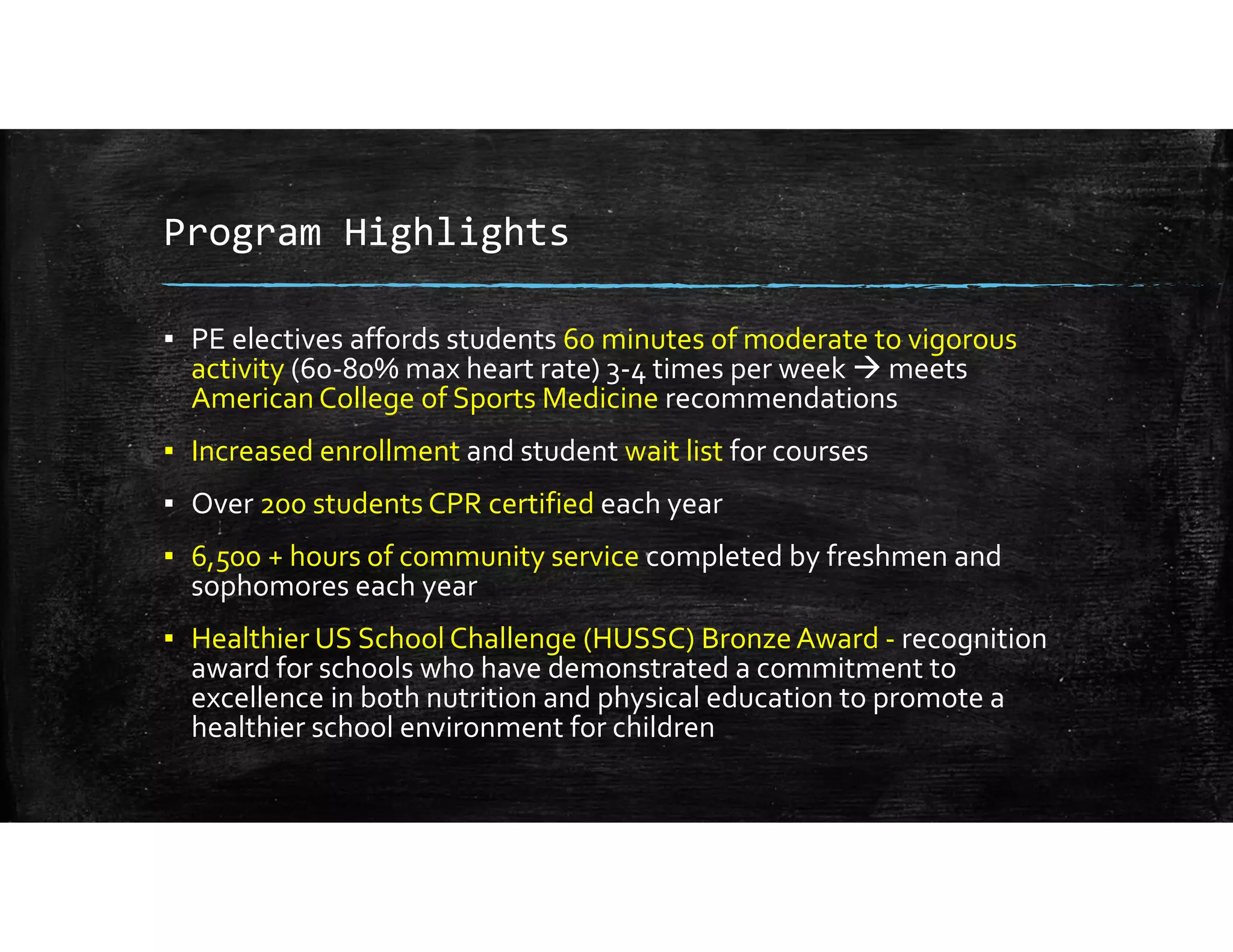
▪ PE electives affords students 60 minutes of moderate to vigorous 
activity (60‐80% max heart rate) 3‐4 times per week  meets 
American College of Sports Medicine recommendations
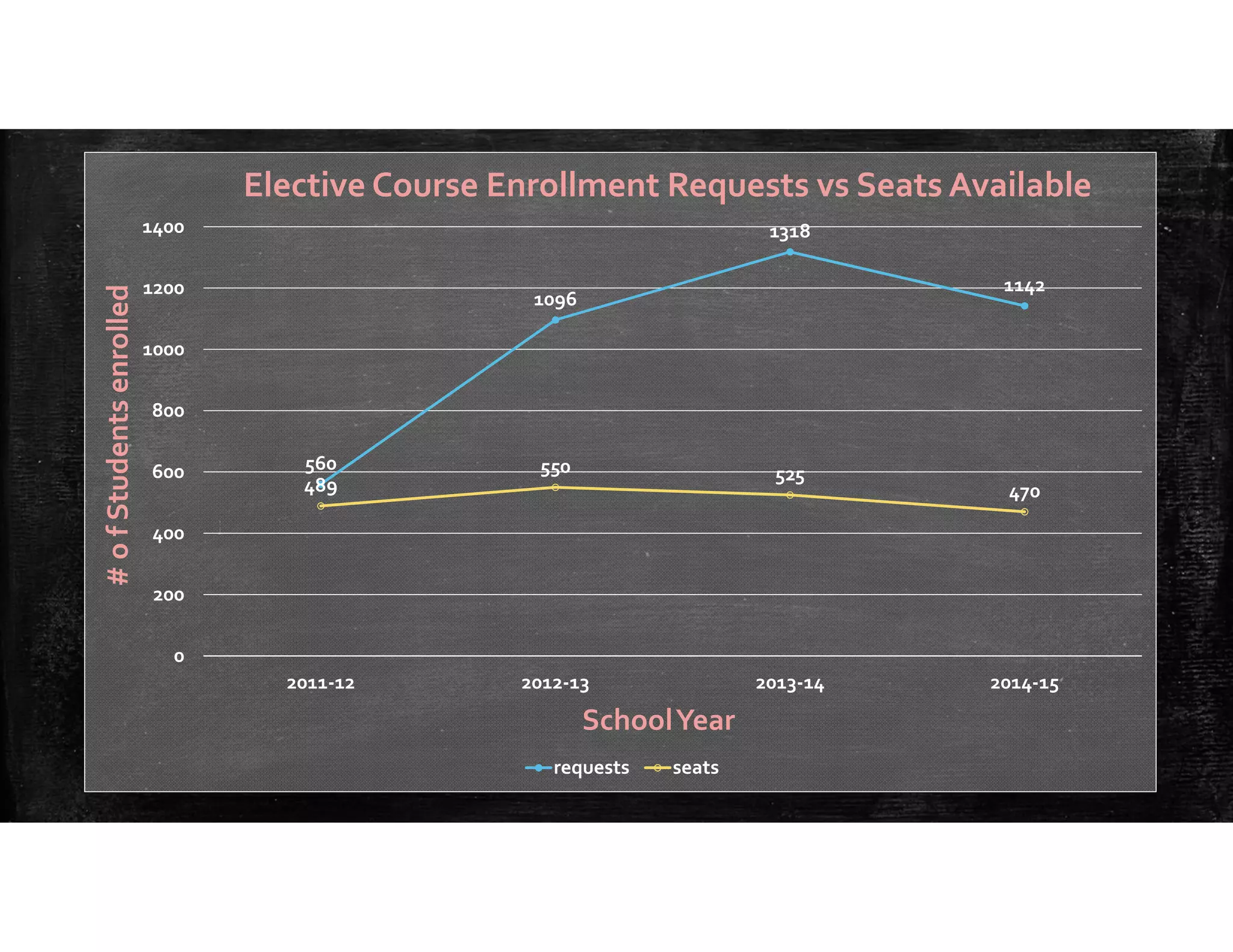
▪ Increased enrollment and student wait list for courses
▪ Over 200 students CPR certified each year
▪ 6,500 + hours of community service completed by freshmen and 
sophomores each year
▪ Healthier US School Challenge (HUSSC) Bronze Award ‐ recognition 
award for schools who have demonstrated a commitment to 
excellence in both nutrition and physical education to promote a 
healthier school environment for children
High Quality Instructors
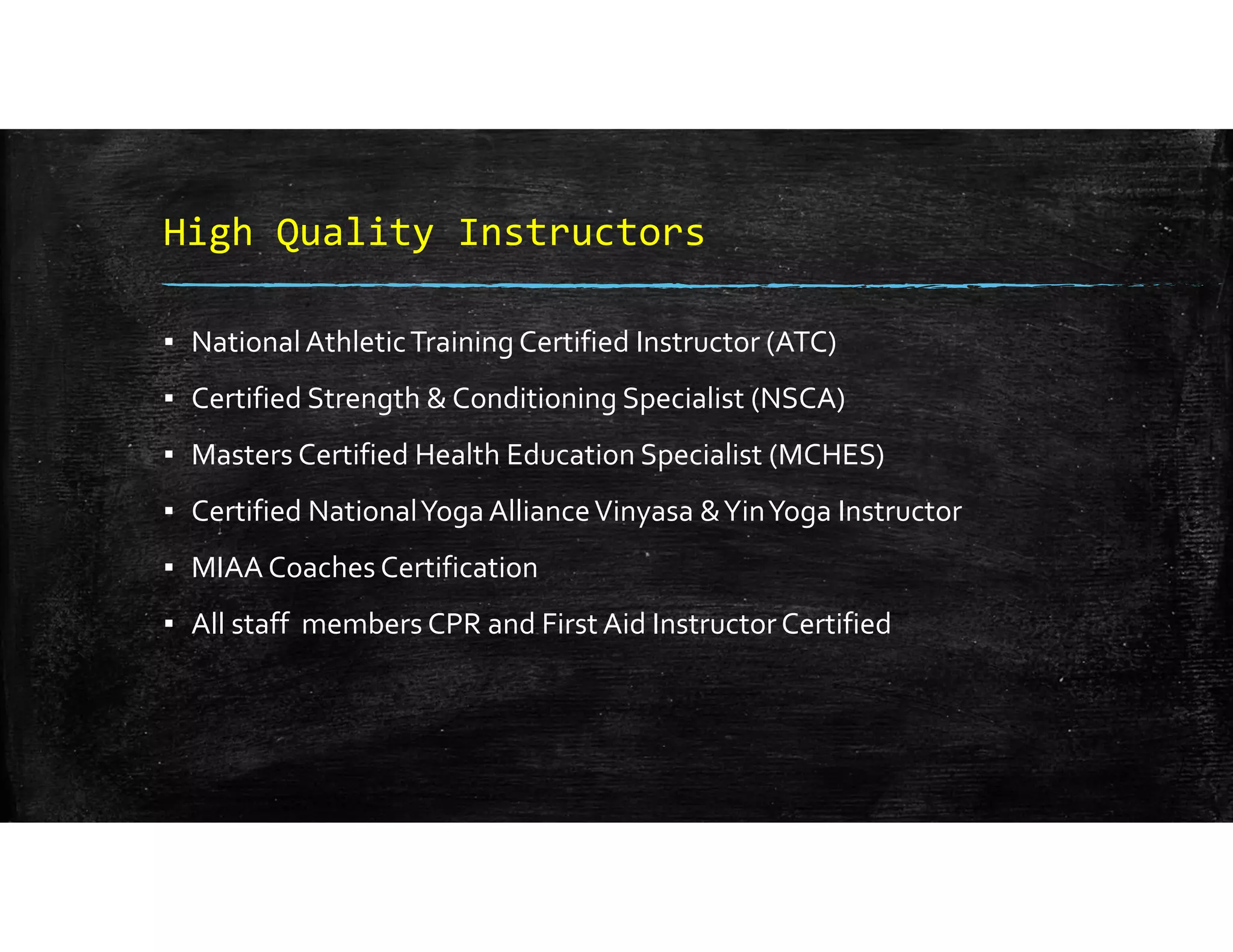
▪ National Athletic Training Certified Instructor (ATC)
▪ Certified Strength & Conditioning Specialist (NSCA)
▪ Masters Certified Health Education Specialist (MCHES)
▪ Certified National Yoga Alliance Vinyasa & Yin Yoga Instructor
▪ MIAA Coaches Certification 
▪ All staff  members CPR and First Aid Instructor Certified
560
1096
1318
1142
489
550 525
470
0
200
400
600
800
1000
1200
1400
2011‐12 2012‐13 2013‐14 2014‐15
# o f Students enrolled
School Year
Elective Course Enrollment Requests vs Seats Available
requests seats

Franklin Public Schools: Health Program