Rocking Your Inner Giraffe: 
Cultivating Loving-Kindness for Yourself & Others through Nonviolent Communication 
Seth D. Webb, MAEd 
Dean of Students 
Free Horizon Montessori 
Staff Development Workshop 
October 10, 2014
“This is education, understood as a help to life; an education from birth, which feeds a peaceful revolution and unites all in a common aim, attracting them as to a single center… This is the bright new hope for mankind.” 
- Maria Montessori, in The Absorbent Mind
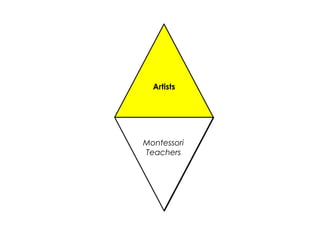
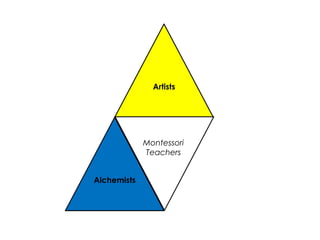
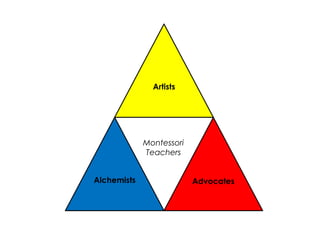
Artists 
Montessori 
Teachers
As artists… 
We express our love for life and living through the content that we teach - in both the method and materials we share. 
In an ever increasing search to meet the needs of each child, we transform the classroom environment and the content we study so that everyone might have a personal and meaningful relationship with learning.
Artists 
Alchemists 
Montessori 
Teachers
As alchemists… 
We constantly balance the needs of one child with the needs of another; we cater to each individual, in service of all. 
Throughout the day, opportunities are made available, and prescriptions are given. In each action resides the scaffolding for more and more complex educational options. 
Our compass is the warmth and growing light of excitement which we all feel when working with passion and delight.
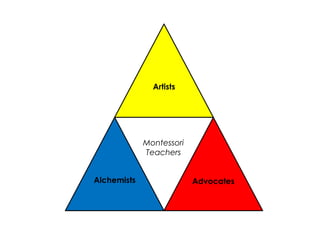
Artists 
Alchemists 
Advocates 
Montessori 
Teachers
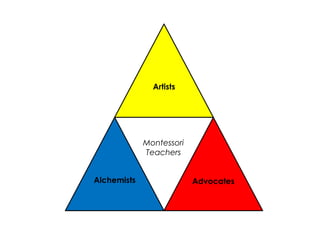
As advocates… 
We greet the children with our hearts before we do so with our minds. 
To move too quickly, to rush head-long into the delivery of content, is to create a space where the teacher is merely performing - dispensing information, regardless of its relevance to or resonance with the children. We work to know both the head and heart of each child. 
This connection allows for the deep and purposeful exploration of our universe, powered by a trust and faith in each other.
Artists 
Alchemists 
Advocates 
Montessori 
Teachers
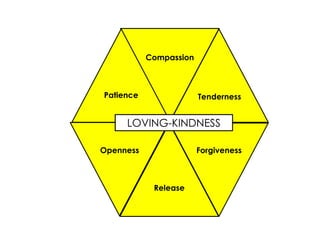
LOVING-KINDNESS
LOVING-KINDNESS
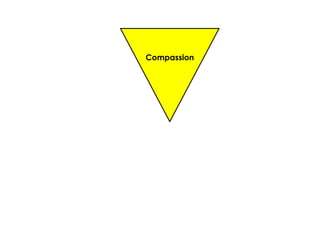
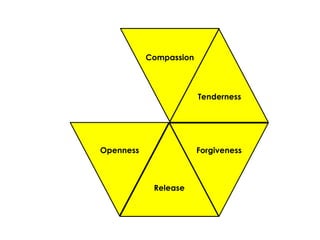
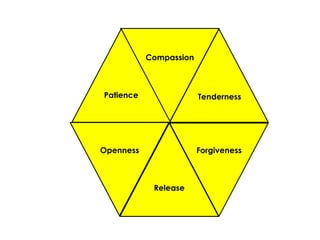
Compassion
Compassion 
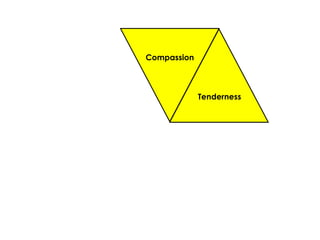
Tenderness
Compassion 
Tenderness 
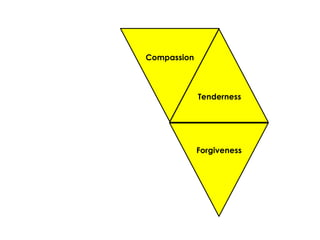
Forgiveness
Compassion 
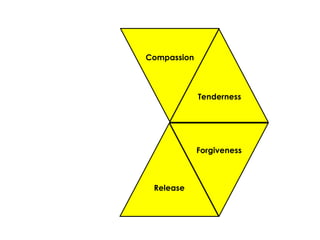
Release 
Tenderness 
Forgiveness
Compassion 
Release 
Tenderness 
Forgiveness 
Openness
Compassion 
Release 
Tenderness 
Patience 
Forgiveness 
Openness
Compassion 
Release 
Tenderness 
Patience 
Forgiveness 
Openness 
LOVING-KINDNESS
LOVING-KINDNESS
Compassion
Compassion
What does it mean to have compassion ?
Compassion means that you actually take the time - 
to imagine or remember 
- what could it be like/what it is like, when you suffer, 
so that you may better connect with another.
These connections with other people is what life is all about.
What sometimes gets in the way 
of these compassionate connections 
are the judgments that we make about what we see. 
"She's so bossy!" 
"He's such yes-man." 
"She's a real control freak!" 
"He's spineless.“
When we say those kinds of things - 
when we make judgments 
based on our opinions, 
rather than observations 
- we lose an opportunity to connect. 
In fact, we do the opposite: we push each other farther apart.
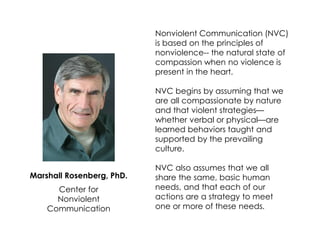
Marshall Rosenberg, PhD. 
Center for 
Nonviolent Communication 
Nonviolent Communication (NVC) is based on the principles of nonviolence-- the natural state of compassion when no violence is present in the heart. 
NVC begins by assuming that we are all compassionate by nature and that violent strategies— whether verbal or physical—are learned behaviors taught and supported by the prevailing culture. 
NVC also assumes that we all share the same, basic human needs, and that each of our actions are a strategy to meet one or more of these needs.
“I would like us to create peace at three levels and have each of us to know how to do it. 
First, within ourselves. That is to know how we can be peaceful with ourselves when we're less than perfect, for example. How we can learn from our limitations without blaming and punishing our self. If we can't do that, I'm not too optimistic how we're going to relate peacefully out in the world. 
Second, between people. Nonviolent Communication training shows people how to create peace within themselves and at the same time how to create connections with other people that allows compassionate giving to take place naturally. 
And third, in our social systems. To look out at the structures that we've created, the governmental structures and other structures, and to look at whether they support peaceful connections between us and if not, to transform those structures.” 
- M. Rosenberg, PhD.
“Public education for some time has been heavily focused on what curricula we believe will be helpful to students. 
Life-Enriching Education is based on the premise that the relationship between teachers and students, the relationships of students with one another, and the relationships of students to what they are learning are equally important in preparing students for the future.” 
- M. Rosenberg, PhD.
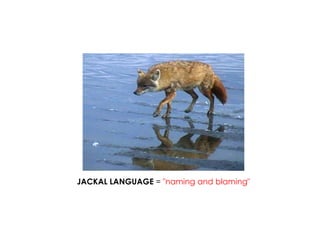
JACKAL LANGUAGE = "naming and blaming"
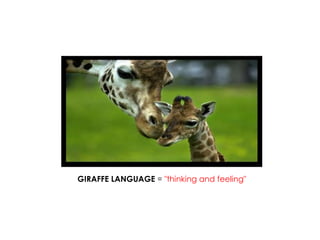
GIRAFFE LANGUAGE = "thinking and feeling"
If we don't judge, and instead observe with compassion, 
we open up pathways for connection and communication.
If we use giraffe language 
to try and understand what is going on, 
look what happens: 
"She's so bossy!" = She has been directing that activity a lot. 
"He's such a yes-man." = He appears to agree. 
"She's a real control freak." = Does she have a way she wants this done? 
"He's spineless." = He avoids confrontation. 
Listen to the difference in the energy of the revised sentences…
Try to listen to what you say and how you say it. 
Do you speak "jackal" or "giraffe”? 
Are you thinking and speaking with compassion? 
Are you looking for compassionate connections, 
or are you more interested in being "right"?
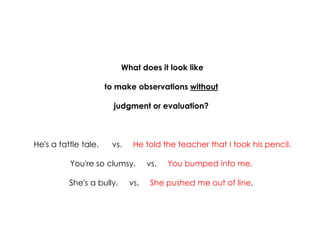
What does it look like 
to make observations without 
judgment or evaluation? 
He's a tattle tale. vs. He told the teacher that I took his pencil. 
You're so clumsy. vs. You bumped into me. 
She's a bully. vs. She pushed me out of line.
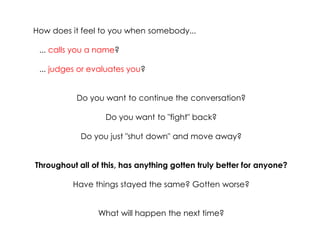
How does it feel to you when somebody... 
... calls you a name? 
... judges or evaluates you? 
Do you want to continue the conversation? 
Do you want to "fight" back? 
Do you just "shut down" and move away? 
Throughout all of this, has anything gotten truly better for anyone? 
Have things stayed the same? Gotten worse? 
What will happen the next time?
If nothing changes, nothing changes.
Nonviolent communication 
looks to continue conversations, not end them, 
so that everyone's feelings are recognized 
and needs are acknowledged. 
It is the language of GIVING and RECEIVING.
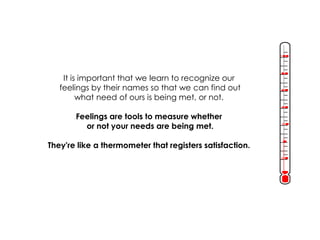
It is important that we learn to recognize our 
feelings by their names so that we can find out 
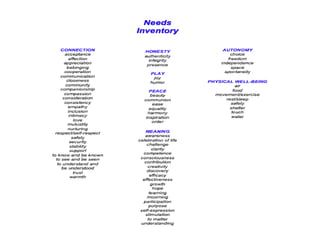
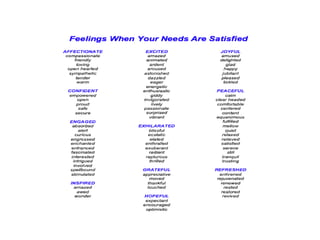
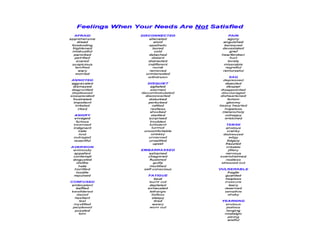
what need of ours is being met, or not. 
Feelings are tools to measure whether 
or not your needs are being met. 
They're like a thermometer that registers satisfaction.
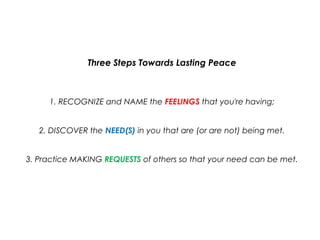
Three Steps Towards Lasting Peace 
1. RECOGNIZE and NAME the FEELINGS that you're having; 
2. DISCOVER the NEED(S) in you that are (or are not) being met. 
3. Practice MAKING REQUESTS of others so that your need can be met.
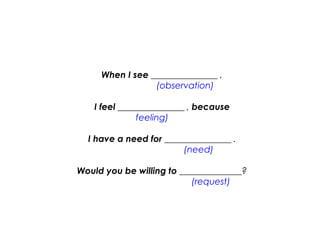
When I see _______________ , 
(observation) 
I feel _______________ , because 
feeling) 
I have a need for _______________ . 
(need) 
Would you be willing to ______________? 
(request)
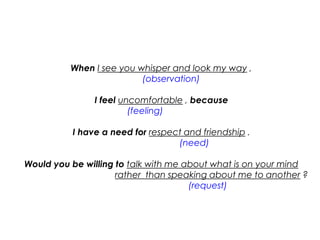
When I see you whisper and look my way , 
(observation) 
I feel uncomfortable , because 
(feeling) 
I have a need for respect and friendship . 
(need) 
Would you be willing to talk with me about what is on your mind 
rather than speaking about me to another ? 
(request)
Artists 
Alchemists 
Advocates 
Montessori 
Teachers
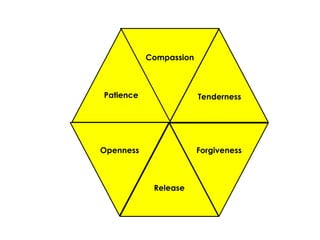
Compassion 
Release 
Tenderness 
Patience 
Forgiveness 
Openness
LOVING-KINDNESS
Live Your Inner Giraffe!

Rocking Your Inner Giraffe: Cultivating Loving Kindness for Yourself & Others through Nonviolent Communication

  • 1.
    Rocking Your InnerGiraffe: Cultivating Loving-Kindness for Yourself & Others through Nonviolent Communication Seth D. Webb, MAEd Dean of Students Free Horizon Montessori Staff Development Workshop October 10, 2014
  • 2.
    “This is education,understood as a help to life; an education from birth, which feeds a peaceful revolution and unites all in a common aim, attracting them as to a single center… This is the bright new hope for mankind.” - Maria Montessori, in The Absorbent Mind
  • 3.
  • 4.
    As artists… Weexpress our love for life and living through the content that we teach - in both the method and materials we share. In an ever increasing search to meet the needs of each child, we transform the classroom environment and the content we study so that everyone might have a personal and meaningful relationship with learning.
  • 5.
  • 6.
    As alchemists… Weconstantly balance the needs of one child with the needs of another; we cater to each individual, in service of all. Throughout the day, opportunities are made available, and prescriptions are given. In each action resides the scaffolding for more and more complex educational options. Our compass is the warmth and growing light of excitement which we all feel when working with passion and delight.
  • 7.
    Artists Alchemists Advocates Montessori Teachers
  • 8.
    As advocates… Wegreet the children with our hearts before we do so with our minds. To move too quickly, to rush head-long into the delivery of content, is to create a space where the teacher is merely performing - dispensing information, regardless of its relevance to or resonance with the children. We work to know both the head and heart of each child. This connection allows for the deep and purposeful exploration of our universe, powered by a trust and faith in each other.
  • 9.
    Artists Alchemists Advocates Montessori Teachers
  • 10.
  • 11.
  • 12.
  • 13.
  • 14.
  • 15.
  • 16.
    Compassion Release Tenderness Forgiveness Openness
  • 17.
    Compassion Release Tenderness Patience Forgiveness Openness
  • 18.
    Compassion Release Tenderness Patience Forgiveness Openness LOVING-KINDNESS
  • 19.
  • 20.
  • 21.
  • 22.
    What does itmean to have compassion ?
  • 23.
    Compassion means thatyou actually take the time - to imagine or remember - what could it be like/what it is like, when you suffer, so that you may better connect with another.
  • 24.
    These connections withother people is what life is all about.
  • 25.
    What sometimes getsin the way of these compassionate connections are the judgments that we make about what we see. "She's so bossy!" "He's such yes-man." "She's a real control freak!" "He's spineless.“
  • 26.
    When we saythose kinds of things - when we make judgments based on our opinions, rather than observations - we lose an opportunity to connect. In fact, we do the opposite: we push each other farther apart.
  • 27.
    Marshall Rosenberg, PhD. Center for Nonviolent Communication Nonviolent Communication (NVC) is based on the principles of nonviolence-- the natural state of compassion when no violence is present in the heart. NVC begins by assuming that we are all compassionate by nature and that violent strategies— whether verbal or physical—are learned behaviors taught and supported by the prevailing culture. NVC also assumes that we all share the same, basic human needs, and that each of our actions are a strategy to meet one or more of these needs.
  • 28.
    “I would likeus to create peace at three levels and have each of us to know how to do it. First, within ourselves. That is to know how we can be peaceful with ourselves when we're less than perfect, for example. How we can learn from our limitations without blaming and punishing our self. If we can't do that, I'm not too optimistic how we're going to relate peacefully out in the world. Second, between people. Nonviolent Communication training shows people how to create peace within themselves and at the same time how to create connections with other people that allows compassionate giving to take place naturally. And third, in our social systems. To look out at the structures that we've created, the governmental structures and other structures, and to look at whether they support peaceful connections between us and if not, to transform those structures.” - M. Rosenberg, PhD.
  • 29.
    “Public education forsome time has been heavily focused on what curricula we believe will be helpful to students. Life-Enriching Education is based on the premise that the relationship between teachers and students, the relationships of students with one another, and the relationships of students to what they are learning are equally important in preparing students for the future.” - M. Rosenberg, PhD.
  • 32.
    JACKAL LANGUAGE ="naming and blaming"
  • 33.
    GIRAFFE LANGUAGE ="thinking and feeling"
  • 34.
    If we don'tjudge, and instead observe with compassion, we open up pathways for connection and communication.
  • 35.
    If we usegiraffe language to try and understand what is going on, look what happens: "She's so bossy!" = She has been directing that activity a lot. "He's such a yes-man." = He appears to agree. "She's a real control freak." = Does she have a way she wants this done? "He's spineless." = He avoids confrontation. Listen to the difference in the energy of the revised sentences…
  • 36.
    Try to listento what you say and how you say it. Do you speak "jackal" or "giraffe”? Are you thinking and speaking with compassion? Are you looking for compassionate connections, or are you more interested in being "right"?
  • 37.
    What does itlook like to make observations without judgment or evaluation? He's a tattle tale. vs. He told the teacher that I took his pencil. You're so clumsy. vs. You bumped into me. She's a bully. vs. She pushed me out of line.
  • 38.
    How does itfeel to you when somebody... ... calls you a name? ... judges or evaluates you? Do you want to continue the conversation? Do you want to "fight" back? Do you just "shut down" and move away? Throughout all of this, has anything gotten truly better for anyone? Have things stayed the same? Gotten worse? What will happen the next time?
  • 39.
    If nothing changes,nothing changes.
  • 40.
    Nonviolent communication looksto continue conversations, not end them, so that everyone's feelings are recognized and needs are acknowledged. It is the language of GIVING and RECEIVING.
  • 41.
    It is importantthat we learn to recognize our feelings by their names so that we can find out what need of ours is being met, or not. Feelings are tools to measure whether or not your needs are being met. They're like a thermometer that registers satisfaction.
  • 45.
    Three Steps TowardsLasting Peace 1. RECOGNIZE and NAME the FEELINGS that you're having; 2. DISCOVER the NEED(S) in you that are (or are not) being met. 3. Practice MAKING REQUESTS of others so that your need can be met.
  • 46.
    When I see_______________ , (observation) I feel _______________ , because feeling) I have a need for _______________ . (need) Would you be willing to ______________? (request)
  • 47.
    When I seeyou whisper and look my way , (observation) I feel uncomfortable , because (feeling) I have a need for respect and friendship . (need) Would you be willing to talk with me about what is on your mind rather than speaking about me to another ? (request)
  • 48.
    Artists Alchemists Advocates Montessori Teachers
  • 49.
    Compassion Release Tenderness Patience Forgiveness Openness
  • 50.
  • 51.