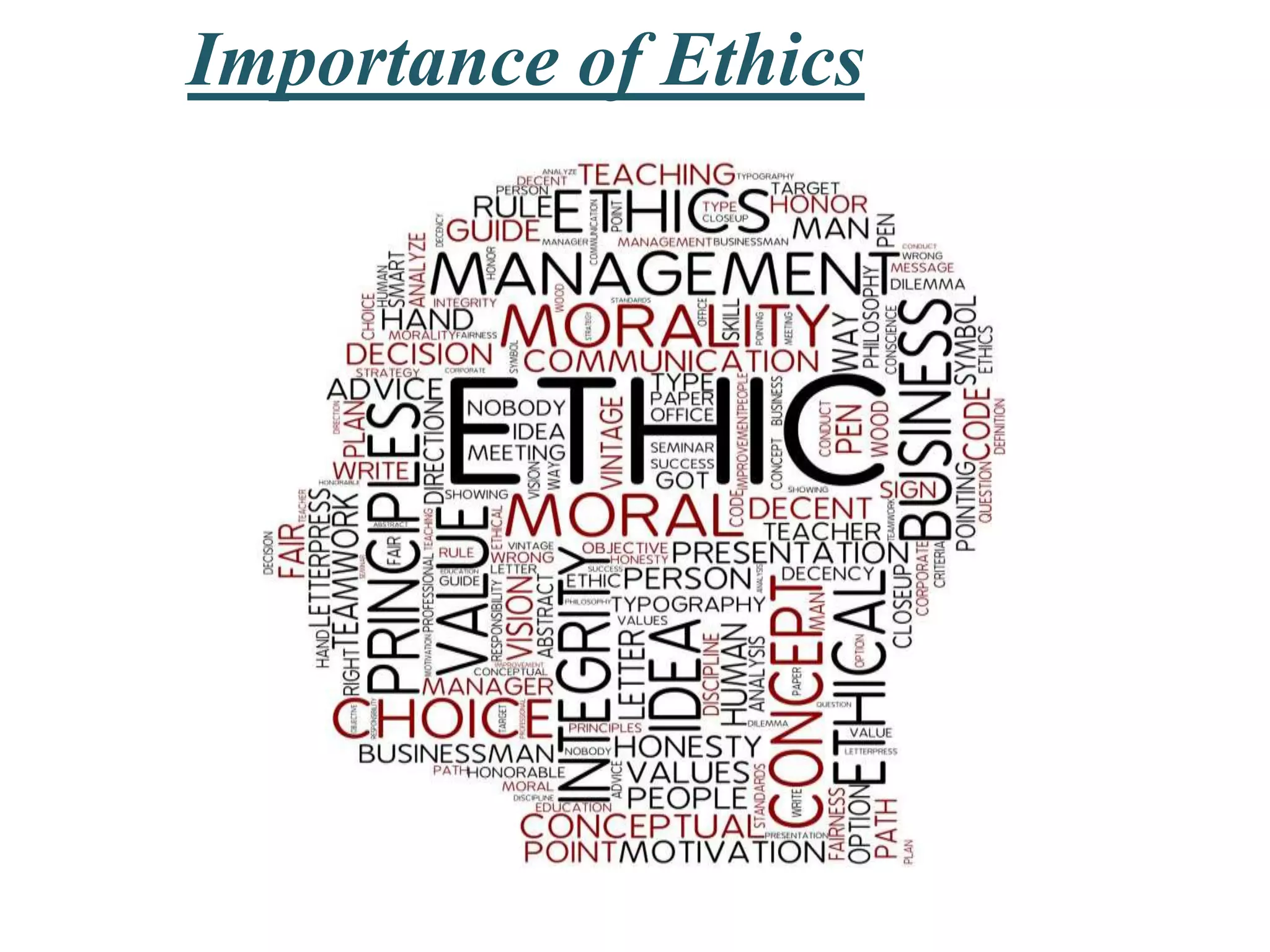
Importance of Ethics
Introduction
•Ethics is the branch of philosophy that
involves systematizing, defending, and
recommending concepts of right and wrong
conduct.
•The term ethics derives from the ancient
Greek word 'ethos’ which means custom or
habit.
•In practice, ethics seeks to resolve
questions of human morality, by defining
concepts such as good and evil, right and
wrong, virtue and vice, justice and crime.
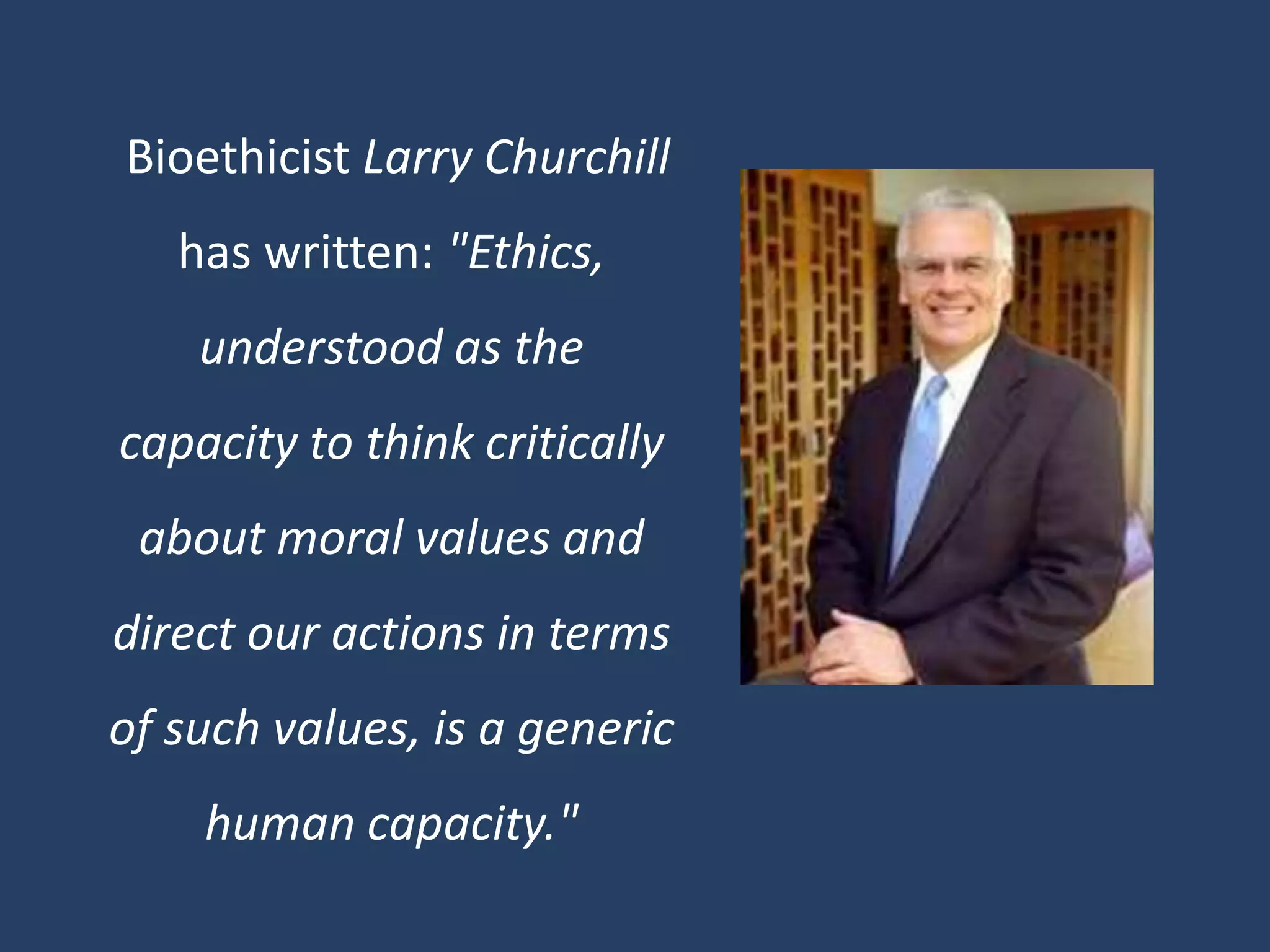
Bioethicist Larry Churchill
has written: "Ethics,
understood as the
capacity to think critically
about moral values and
direct our actions in terms
of such values, is a generic
human capacity."
Types of Ethics
Philosophers nowadays divide ethical theories mainly into
three areas: meta-ethics, normative ethics and applied
ethics.
• Meta-ethics deals with the nature of moral judgment. It
looks at the origins and meaning of ethical principles.
• Normative ethics is concerned with the content of moral
judgments and the criteria for what is right and what is
wrong course of action.
• Applied ethics looks at what a person is obligated (or
permitted) to do in a specific situation or a particular
domain of action.
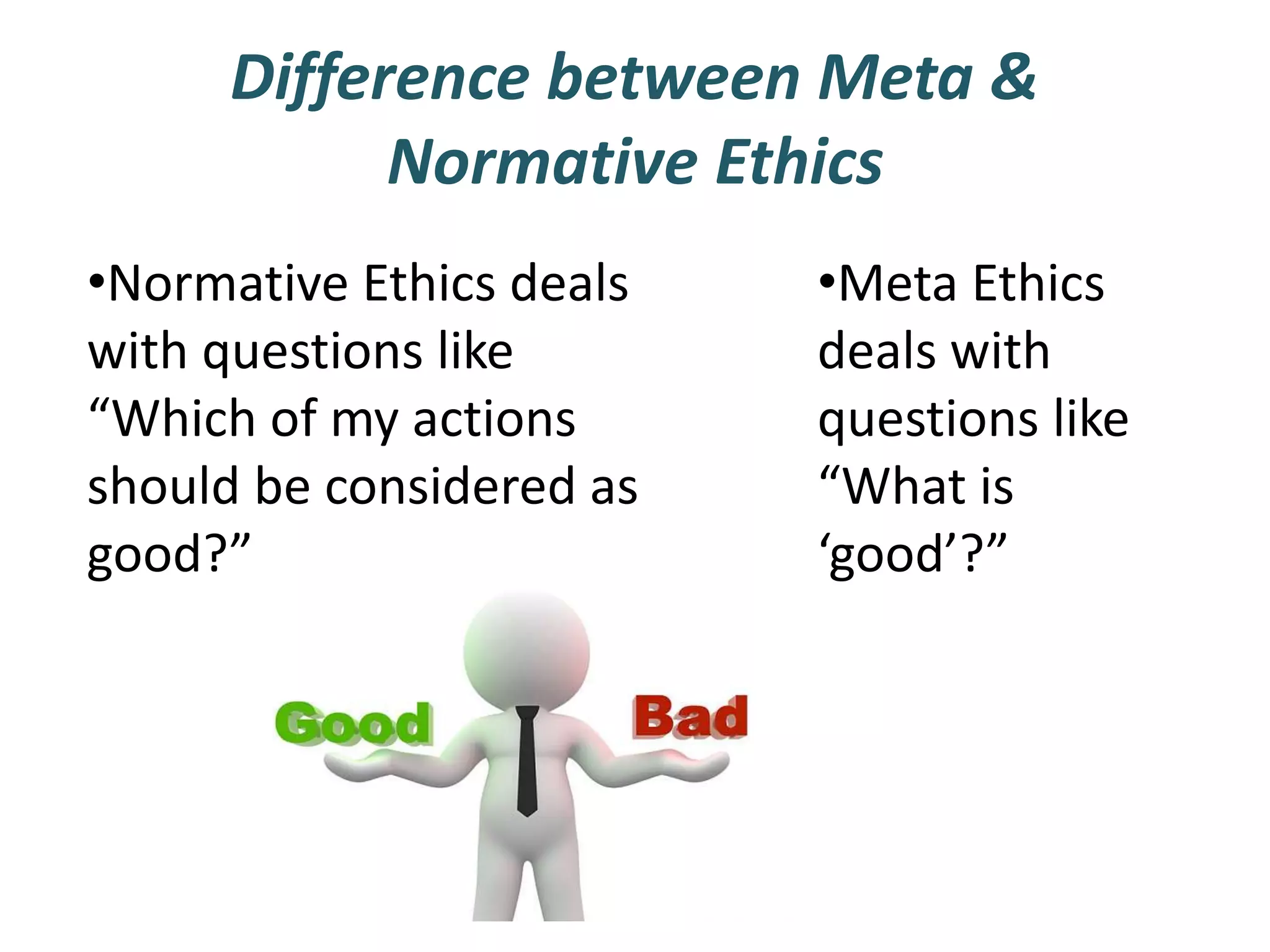
Difference between Meta &
Normative Ethics
•Normative Ethics deals
with questions like
“Which of my actions
should be considered as
good?”
•Meta Ethics
deals with
questions like
“What is
‘good’?”
Applied Ethics
•It is the philosophical examination, from a moral standpoint,
of particular issues in private and public life which are matters
of moral judgment. It is thus the attempts to use
philosophical methods to identify the morally correct course
of action in various fields of everyday life.
oBusiness Ethics
oEngineering Ethics
oBio-medical Ethics
oEnvironmental Ethics
oMilitary Ethics
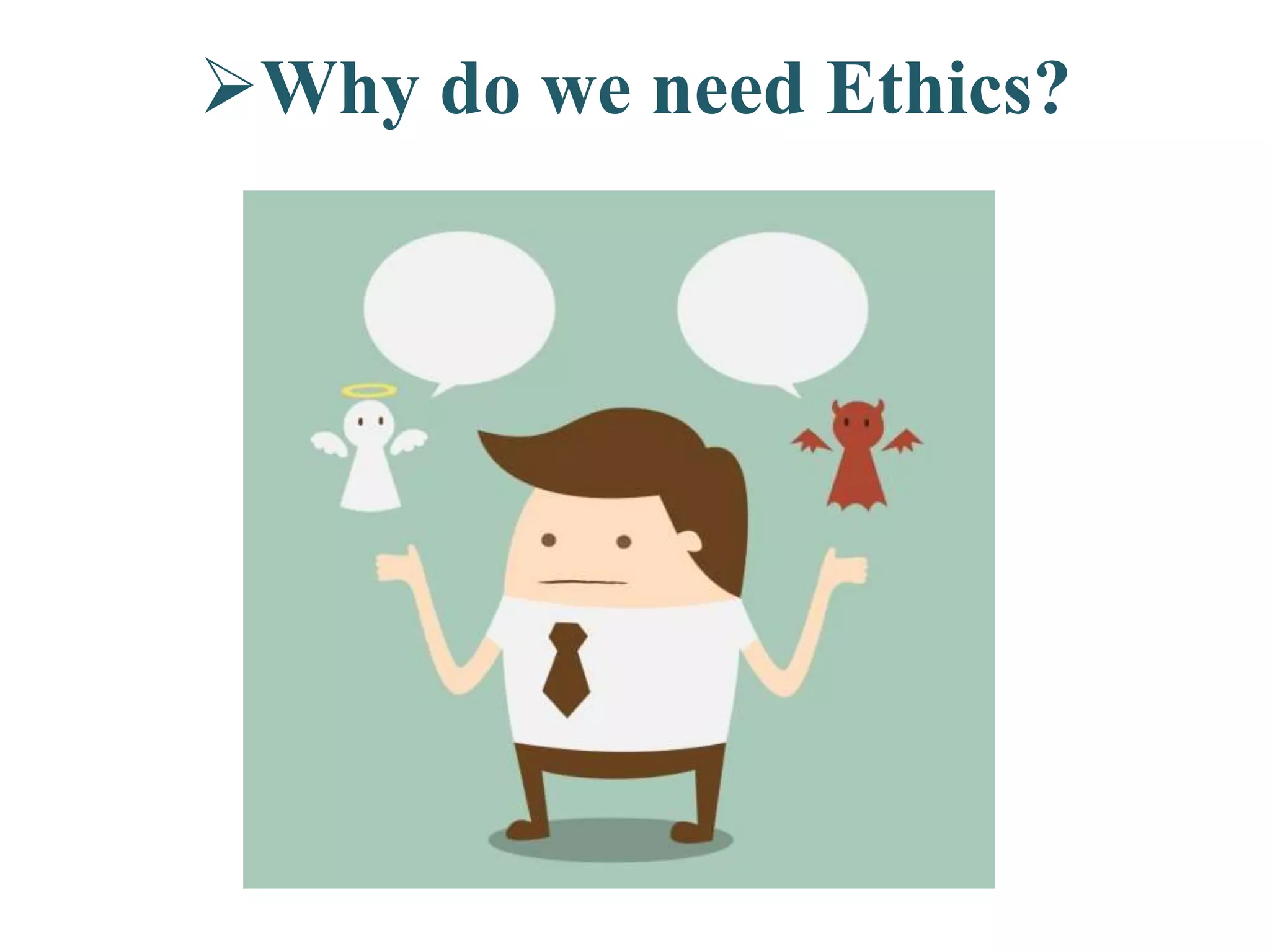
Why do we need Ethics?
Ethics guides us
like a map
•Most moral issues get us pretty worked up because these
are such emotional issues we often let our hearts do the
arguing while our brains just go with the flow.
But there's another way of tackling these issues, and that's
where philosophers can come in - they offer us ethical rules
and principles that enable us to take a cooler view of moral
problems.
Ethics is about feeling for others
• At the heart of ethics is a concern about
something or someone other than us and
our own desires and self-interest.
• Ethics is concerned with other people's
interests, with the interests of society.
• So when a person 'thinks ethically' they
are giving at least some thought to
something beyond themselves.
Ethical values creates integrity
• High sense of ethics and values makes a man
trustworthy and representable.
• If a professional individual follows every legal
and moral codes, abides by the rules and
regulations of the company and tries to create
the maximum profit for the client and for the
company then the said individual catalyses the
increment of integrity of the company as well
as himself/herself.
Advantages of Ethical Behavior in the workplace
• Builds Customer Loyalty
• Retains Good Employees
• Creates a Positive Work Environment
• Gets easier to Avoid Legal Problems
• Makes profit in the Long run
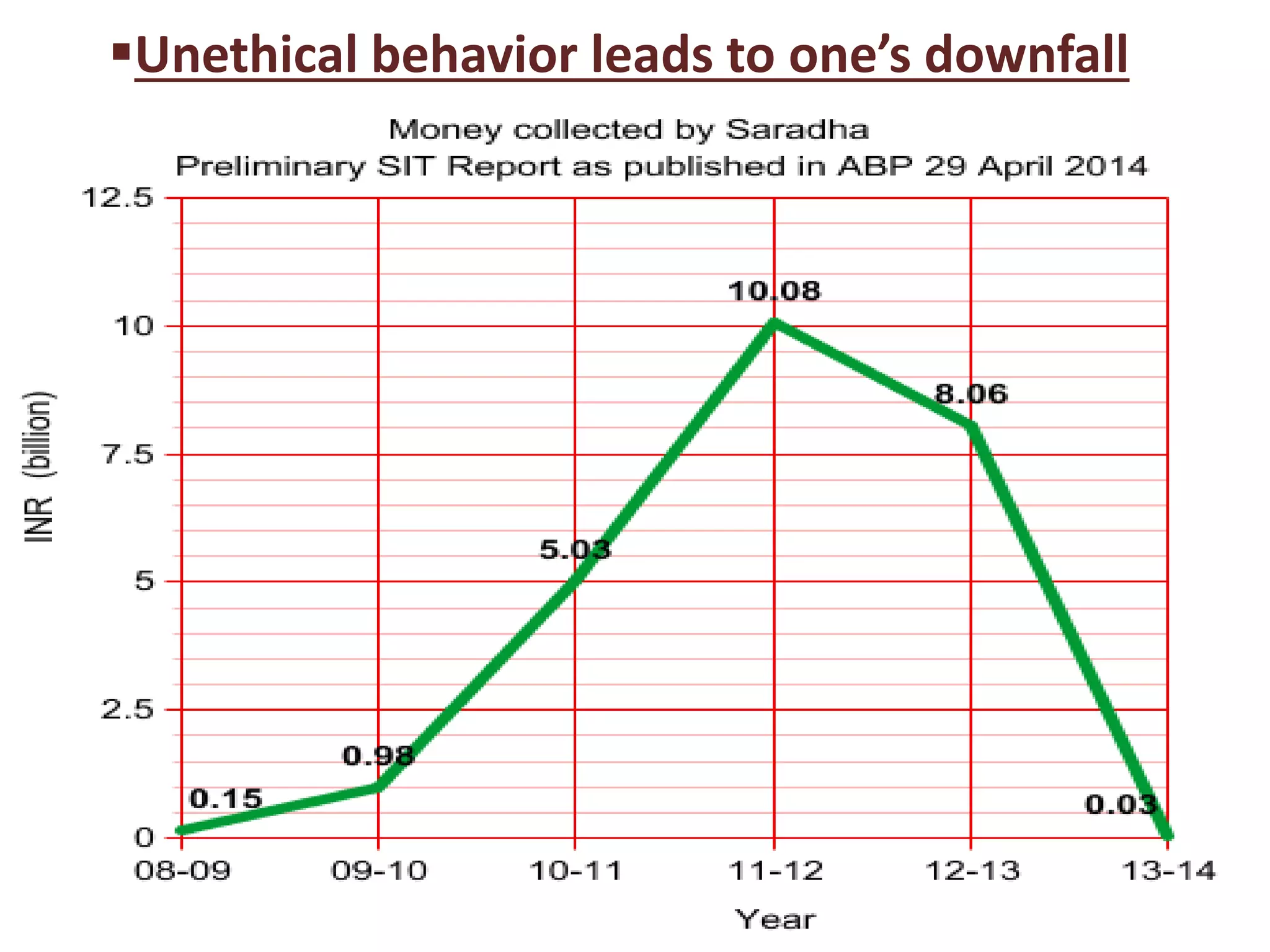
Unethical behavior leads to one’s downfall
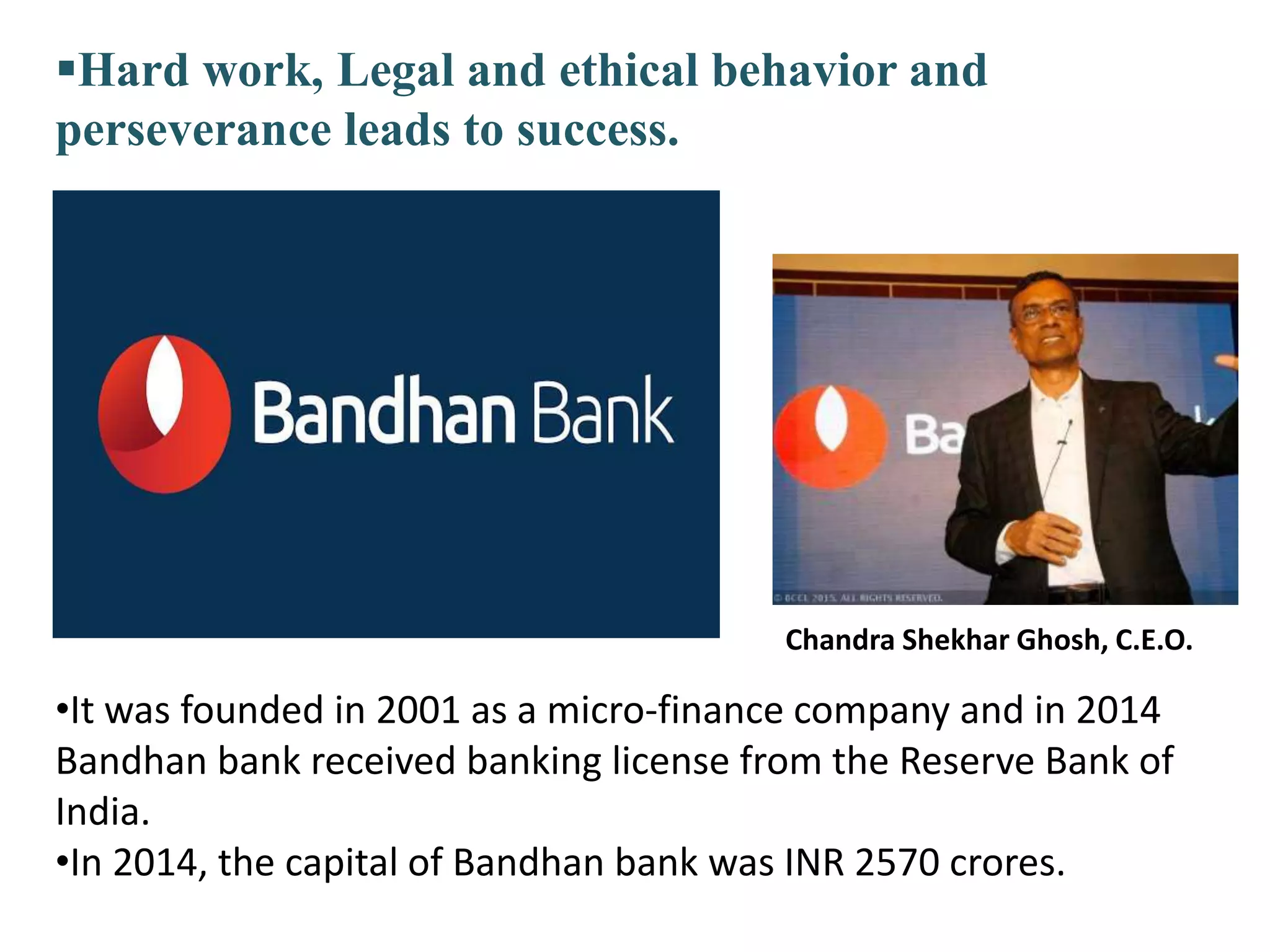
Chandra Shekhar Ghosh, C.E.O.
•It was founded in 2001 as a micro-finance company and in 2014
Bandhan bank received banking license from the Reserve Bank of
India.
•In 2014, the capital of Bandhan bank was INR 2570 crores.
Hard work, Legal and ethical behavior and
perseverance leads to success.
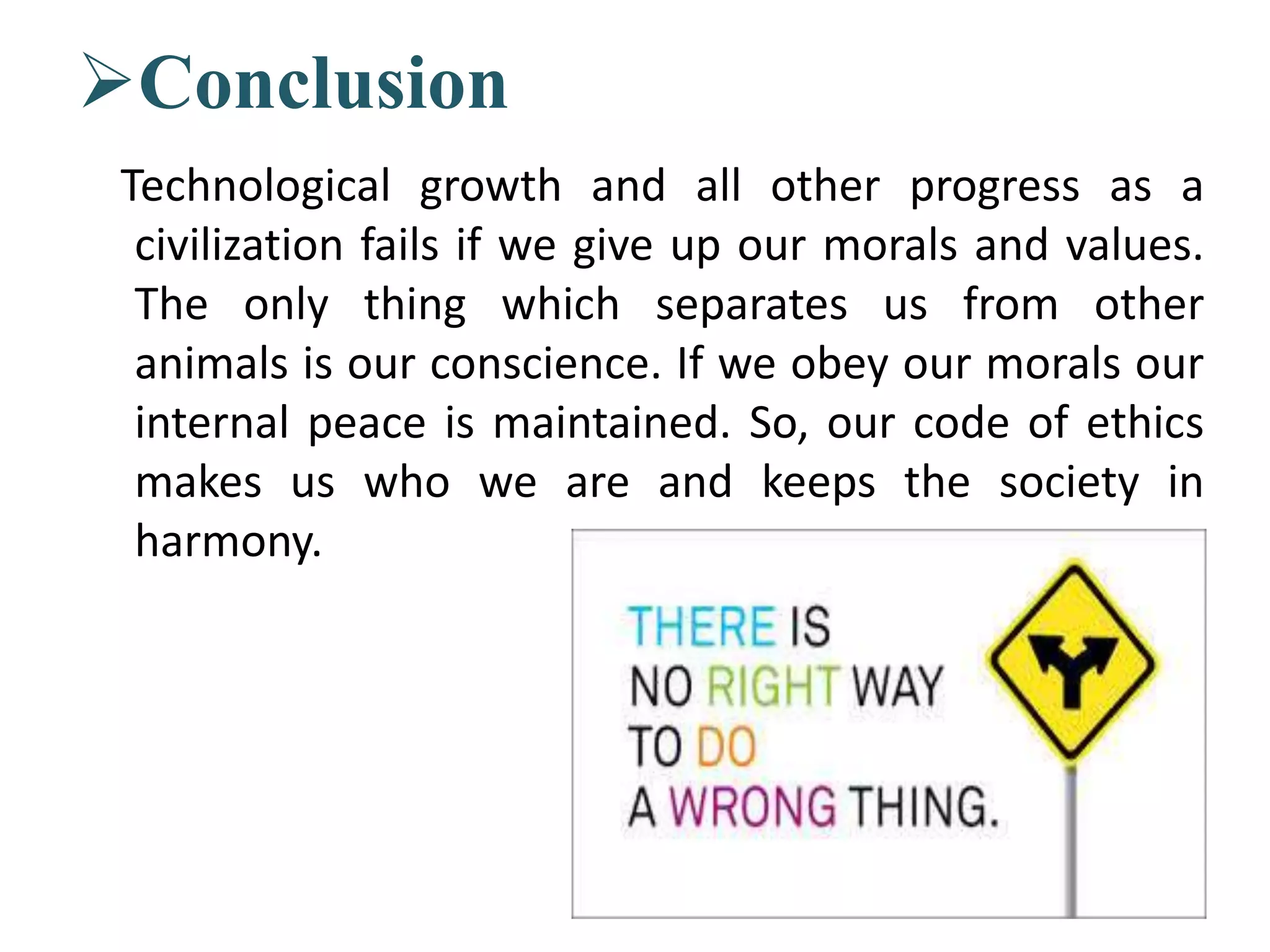
Conclusion
Technological growth and all other progress as a
civilization fails if we give up our morals and values.
The only thing which separates us from other
animals is our conscience. If we obey our morals our
internal peace is maintained. So, our code of ethics
makes us who we are and keeps the society in
harmony.
~ Sayak Sarkar

Importance of Ethics

  • 1.
  • 2.
    Introduction •Ethics is thebranch of philosophy that involves systematizing, defending, and recommending concepts of right and wrong conduct. •The term ethics derives from the ancient Greek word 'ethos’ which means custom or habit. •In practice, ethics seeks to resolve questions of human morality, by defining concepts such as good and evil, right and wrong, virtue and vice, justice and crime.
  • 3.
    Bioethicist Larry Churchill haswritten: "Ethics, understood as the capacity to think critically about moral values and direct our actions in terms of such values, is a generic human capacity."
  • 4.
  • 5.
    Philosophers nowadays divideethical theories mainly into three areas: meta-ethics, normative ethics and applied ethics. • Meta-ethics deals with the nature of moral judgment. It looks at the origins and meaning of ethical principles. • Normative ethics is concerned with the content of moral judgments and the criteria for what is right and what is wrong course of action. • Applied ethics looks at what a person is obligated (or permitted) to do in a specific situation or a particular domain of action.
  • 6.
    Difference between Meta& Normative Ethics •Normative Ethics deals with questions like “Which of my actions should be considered as good?” •Meta Ethics deals with questions like “What is ‘good’?”
  • 7.
    Applied Ethics •It isthe philosophical examination, from a moral standpoint, of particular issues in private and public life which are matters of moral judgment. It is thus the attempts to use philosophical methods to identify the morally correct course of action in various fields of everyday life. oBusiness Ethics oEngineering Ethics oBio-medical Ethics oEnvironmental Ethics oMilitary Ethics
  • 8.
    Why do weneed Ethics?
  • 9.
    Ethics guides us likea map •Most moral issues get us pretty worked up because these are such emotional issues we often let our hearts do the arguing while our brains just go with the flow. But there's another way of tackling these issues, and that's where philosophers can come in - they offer us ethical rules and principles that enable us to take a cooler view of moral problems.
  • 10.
    Ethics is aboutfeeling for others • At the heart of ethics is a concern about something or someone other than us and our own desires and self-interest. • Ethics is concerned with other people's interests, with the interests of society. • So when a person 'thinks ethically' they are giving at least some thought to something beyond themselves.
  • 11.
    Ethical values createsintegrity • High sense of ethics and values makes a man trustworthy and representable. • If a professional individual follows every legal and moral codes, abides by the rules and regulations of the company and tries to create the maximum profit for the client and for the company then the said individual catalyses the increment of integrity of the company as well as himself/herself.
  • 12.
    Advantages of EthicalBehavior in the workplace • Builds Customer Loyalty • Retains Good Employees • Creates a Positive Work Environment • Gets easier to Avoid Legal Problems • Makes profit in the Long run
  • 13.
    Unethical behavior leadsto one’s downfall
  • 14.
    Chandra Shekhar Ghosh,C.E.O. •It was founded in 2001 as a micro-finance company and in 2014 Bandhan bank received banking license from the Reserve Bank of India. •In 2014, the capital of Bandhan bank was INR 2570 crores. Hard work, Legal and ethical behavior and perseverance leads to success.
  • 15.
    Conclusion Technological growth andall other progress as a civilization fails if we give up our morals and values. The only thing which separates us from other animals is our conscience. If we obey our morals our internal peace is maintained. So, our code of ethics makes us who we are and keeps the society in harmony.
  • 16.