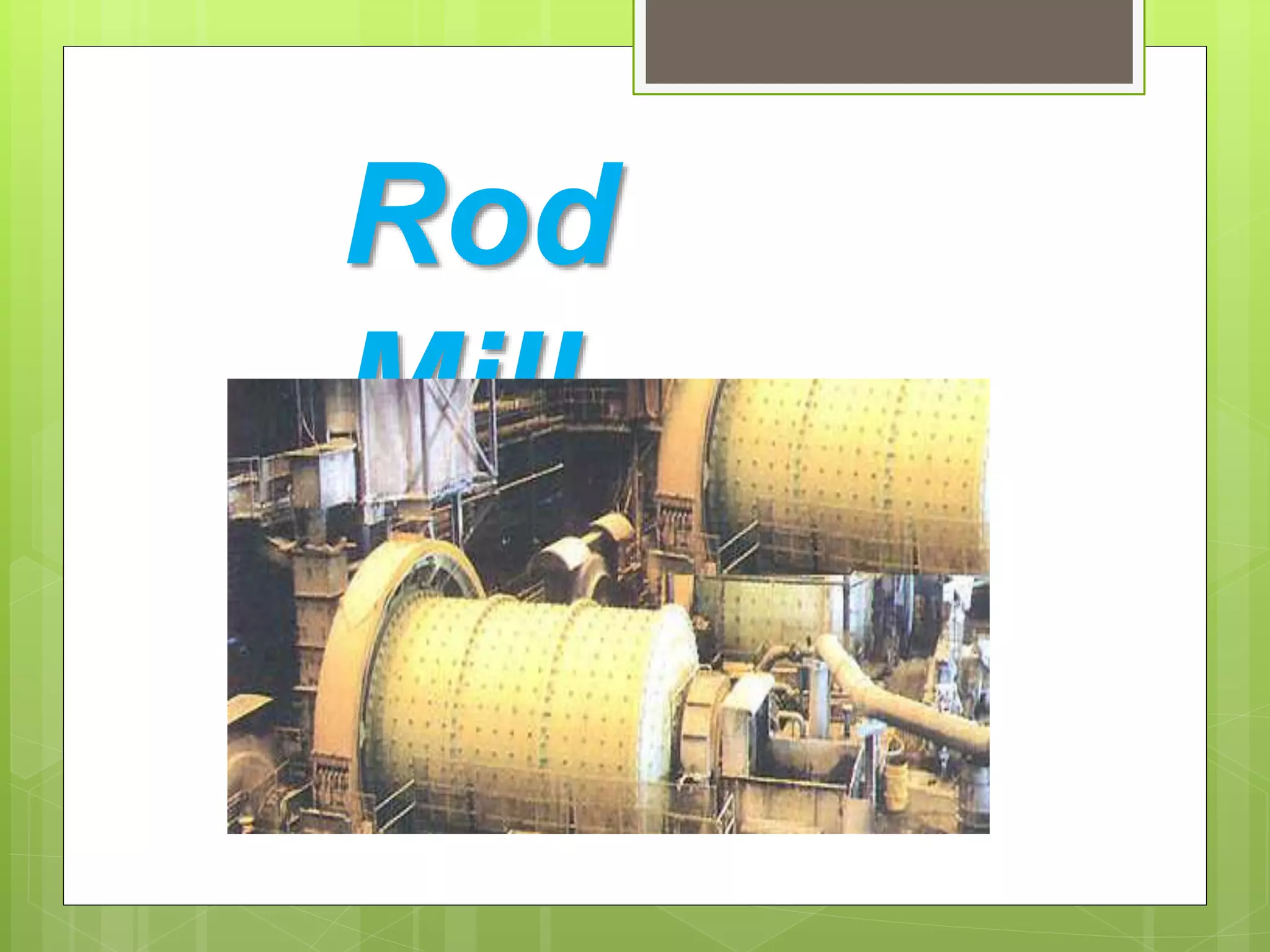
Rod
Mill
# Size Reduction Equipment
A :- Crushers (coarse & fine)
B :- Grinders (Intermediate & fine)
1.Hammer mills
2.Rolling-compression mill
3.Attrition mill
4.Tumbling mill
a. Rod mill
b. Ball mill
c. Tube mill
# Rod mill
• Description
The rod mill is a tumbling mill but
having a large percentage of its
volume (30 - 40%) loaded with steel
rods. The rods are placed axially in
the mill and are loose and free to
move within the mill.
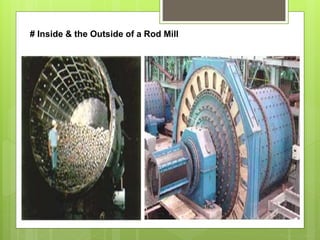
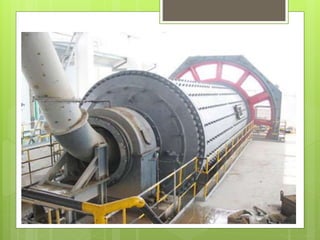
# Inside & the Outside of a Rod Mill
The internal lining of the drum has a
series of lifters which raise the rods and
drop them at a predetermined point.
The mineral is fed in at one end with a
maximum size of about 25mm. The
rods crush the rock and as the charge
passes through the mill it is reduced in
size to approximately 2mm to 0.1mm.
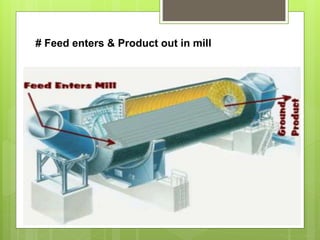
# Feed enters & Product out in mill
The mill can be fed from one end with
the product removed from the other end
or, alternatively, the mill can be fed from
both ends with the discharge at the
centre.
The process can be wet or dry but is
more commonly carried out wet.
Maximum rod length is about 6 to 7
metres, otherwise there is a risk of the
rods bowing. The drum diameter is
limited to 0.6 or 0.7 times the length of
the mill.
# Working Principle of Rod Mill:-
The rod mill is a horizontal rotating
device transmitted by the outer gear. The
materials are transferred to the grinding
chamber through the quill shaft uniformly.
There are ladder liner and ripple liner and
different specifications of ceramic ball in
the chamber. The centrifugal force caused
by rotation of barrel brings the ceramic
ball to a certain height and impact and
grind the materials. The ground materials
are discharged through the discharging
board thus the grinding process is
finished.
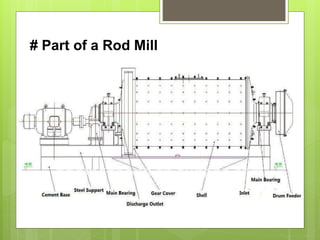
# Part of a Rod Mill
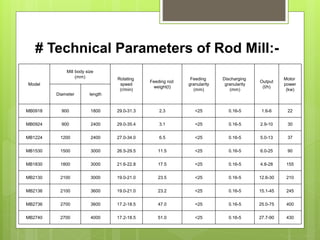
# Technical Parameters of Rod Mill:-
Model
Mill body size
(mm) Rotating
speed
(r/min)
Feeding rod
weight(t)
Feeding
granularity
(mm)
Discharging
granularity
(mm)
Output
(t/h)
Motor
power
(kw)
Diameter length
MB0918 900 1800 29.0-31.3 2.3 <25 0.16-5 1.6-6 22
MB0924 900 2400 29.0-35.4 3.1 <25 0.16-5 2.9-10 30
MB1224 1200 2400 27.0-34.0 6.5 <25 0.16-5 5.0-13 37
MB1530 1500 3000 26.5-29.5 11.5 <25 0.16-5 6.0-25 90
MB1830 1800 3000 21.6-22.8 17.5 <25 0.16-5 4.8-28 155
MB2130 2100 3000 19.0-21.0 23.5 <25 0.16-5 12.6-30 210
MB2136 2100 3600 19.0-21.0 23.2 <25 0.16-5 15.1-45 245
MB2736 2700 3600 17.2-18.5 47.0 <25 0.16-5 25.0-75 400
MB2740 2700 4000 17.2-18.5 51.0 <25 0.16-5 27.7-90 430
# Characteristics:-
Rod mills are used for grinding hard
minerals. This type of mill is usually
used as the first stage of a milling
process to provide a reduced size
feedstock for a further milling process.
# APPLICATIONS:-
• Coal
• Pigments
• Felspar For Pottery
• Ores
• Chemicals
• Ceramic Raw Materials
• Paints
# ADVANTAGES:-
• Cost of installation
• Power
• Grinding medium is low
• Suitable for both batch and
continuous operation
• Materials of all degrees of hardness
By:-
Sandeep.(45)
(MSNT) 2nd Year,
4th Sem

Rod mill

  • 1.
  • 2.
    # Size ReductionEquipment A :- Crushers (coarse & fine) B :- Grinders (Intermediate & fine) 1.Hammer mills 2.Rolling-compression mill 3.Attrition mill 4.Tumbling mill a. Rod mill b. Ball mill c. Tube mill
  • 3.
    # Rod mill •Description The rod mill is a tumbling mill but having a large percentage of its volume (30 - 40%) loaded with steel rods. The rods are placed axially in the mill and are loose and free to move within the mill.
  • 4.
    # Inside &the Outside of a Rod Mill
  • 5.
    The internal liningof the drum has a series of lifters which raise the rods and drop them at a predetermined point. The mineral is fed in at one end with a maximum size of about 25mm. The rods crush the rock and as the charge passes through the mill it is reduced in size to approximately 2mm to 0.1mm.
  • 6.
    # Feed enters& Product out in mill
  • 7.
    The mill canbe fed from one end with the product removed from the other end or, alternatively, the mill can be fed from both ends with the discharge at the centre. The process can be wet or dry but is more commonly carried out wet.
  • 8.
    Maximum rod lengthis about 6 to 7 metres, otherwise there is a risk of the rods bowing. The drum diameter is limited to 0.6 or 0.7 times the length of the mill. # Working Principle of Rod Mill:- The rod mill is a horizontal rotating device transmitted by the outer gear. The materials are transferred to the grinding chamber through the quill shaft uniformly.
  • 9.
    There are ladderliner and ripple liner and different specifications of ceramic ball in the chamber. The centrifugal force caused by rotation of barrel brings the ceramic ball to a certain height and impact and grind the materials. The ground materials are discharged through the discharging board thus the grinding process is finished.
  • 10.
    # Part ofa Rod Mill
  • 11.
    # Technical Parametersof Rod Mill:- Model Mill body size (mm) Rotating speed (r/min) Feeding rod weight(t) Feeding granularity (mm) Discharging granularity (mm) Output (t/h) Motor power (kw) Diameter length MB0918 900 1800 29.0-31.3 2.3 <25 0.16-5 1.6-6 22 MB0924 900 2400 29.0-35.4 3.1 <25 0.16-5 2.9-10 30 MB1224 1200 2400 27.0-34.0 6.5 <25 0.16-5 5.0-13 37 MB1530 1500 3000 26.5-29.5 11.5 <25 0.16-5 6.0-25 90 MB1830 1800 3000 21.6-22.8 17.5 <25 0.16-5 4.8-28 155 MB2130 2100 3000 19.0-21.0 23.5 <25 0.16-5 12.6-30 210 MB2136 2100 3600 19.0-21.0 23.2 <25 0.16-5 15.1-45 245 MB2736 2700 3600 17.2-18.5 47.0 <25 0.16-5 25.0-75 400 MB2740 2700 4000 17.2-18.5 51.0 <25 0.16-5 27.7-90 430
  • 12.
    # Characteristics:- Rod millsare used for grinding hard minerals. This type of mill is usually used as the first stage of a milling process to provide a reduced size feedstock for a further milling process.
  • 14.
    # APPLICATIONS:- • Coal •Pigments • Felspar For Pottery • Ores • Chemicals • Ceramic Raw Materials • Paints
  • 15.
    # ADVANTAGES:- • Costof installation • Power • Grinding medium is low • Suitable for both batch and continuous operation • Materials of all degrees of hardness
  • 16.