Downloaded 457 times



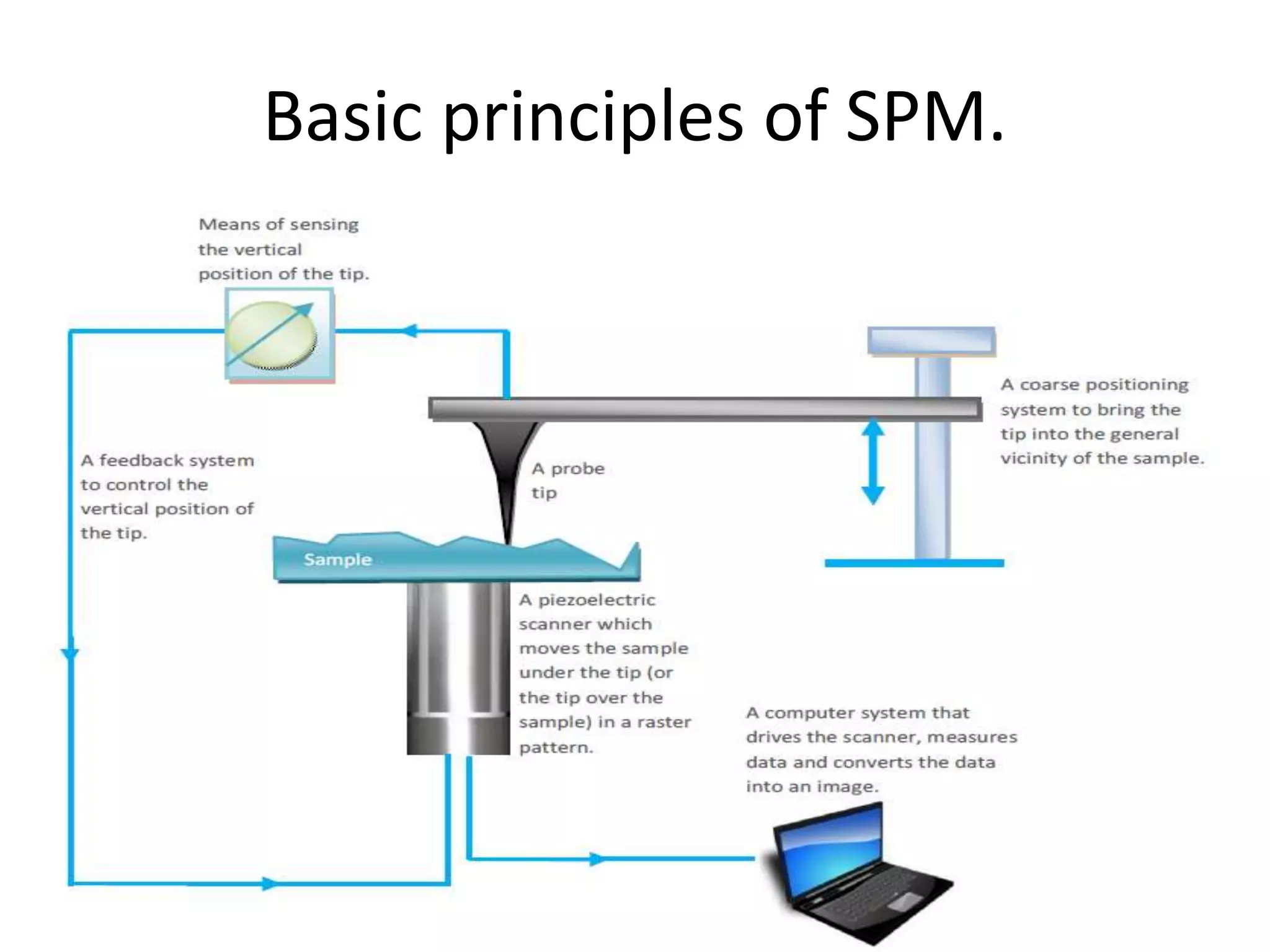
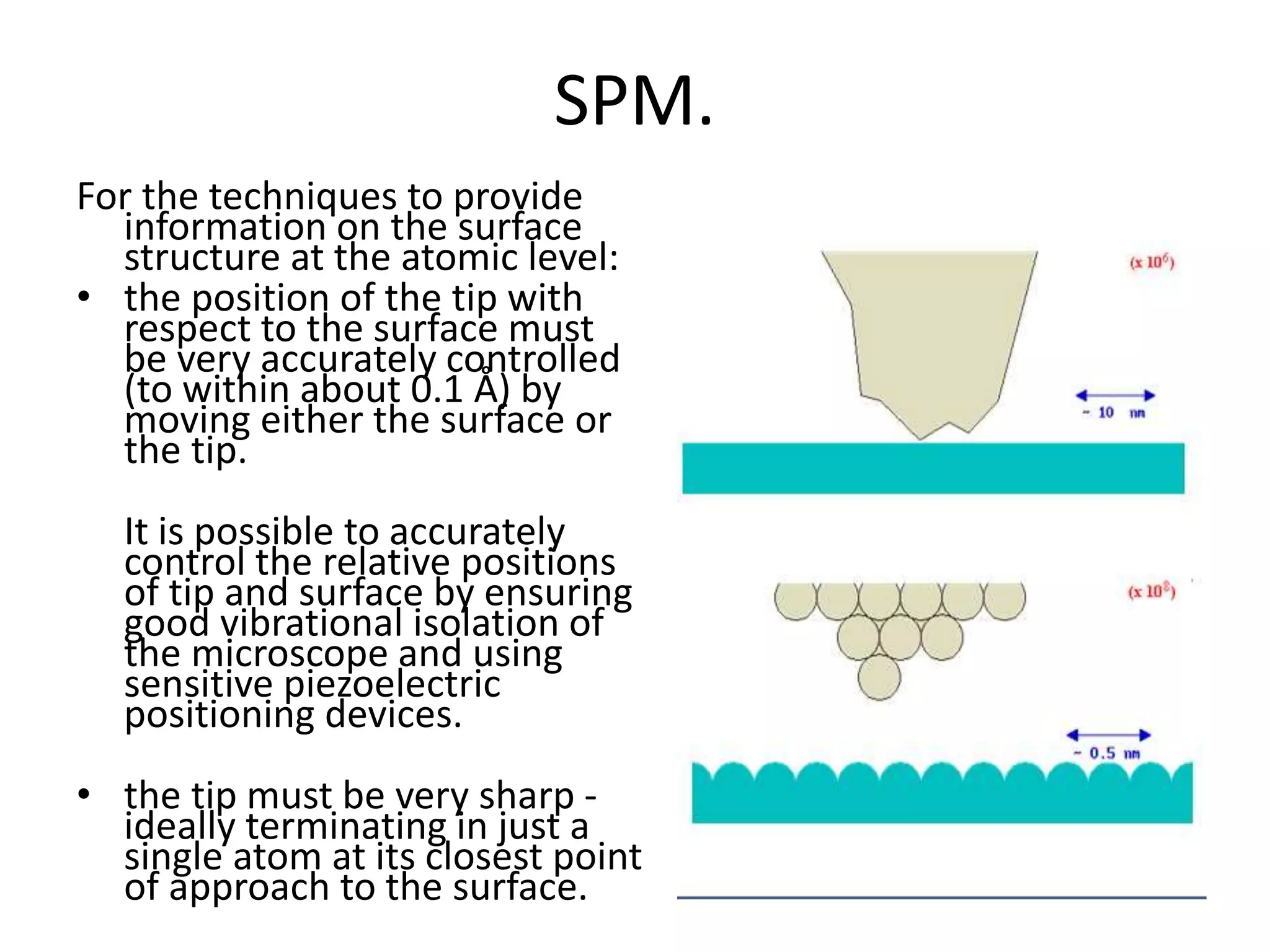
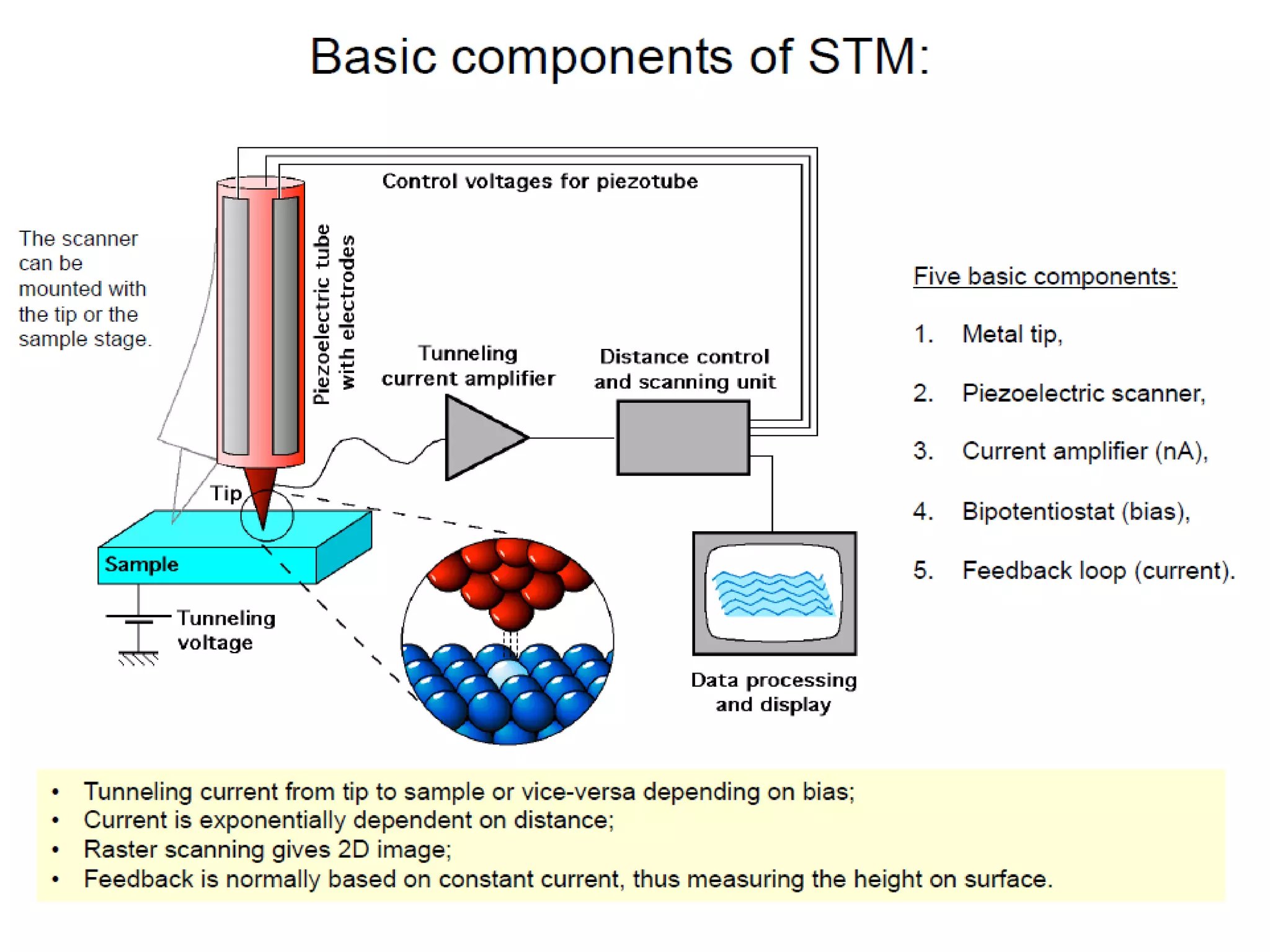

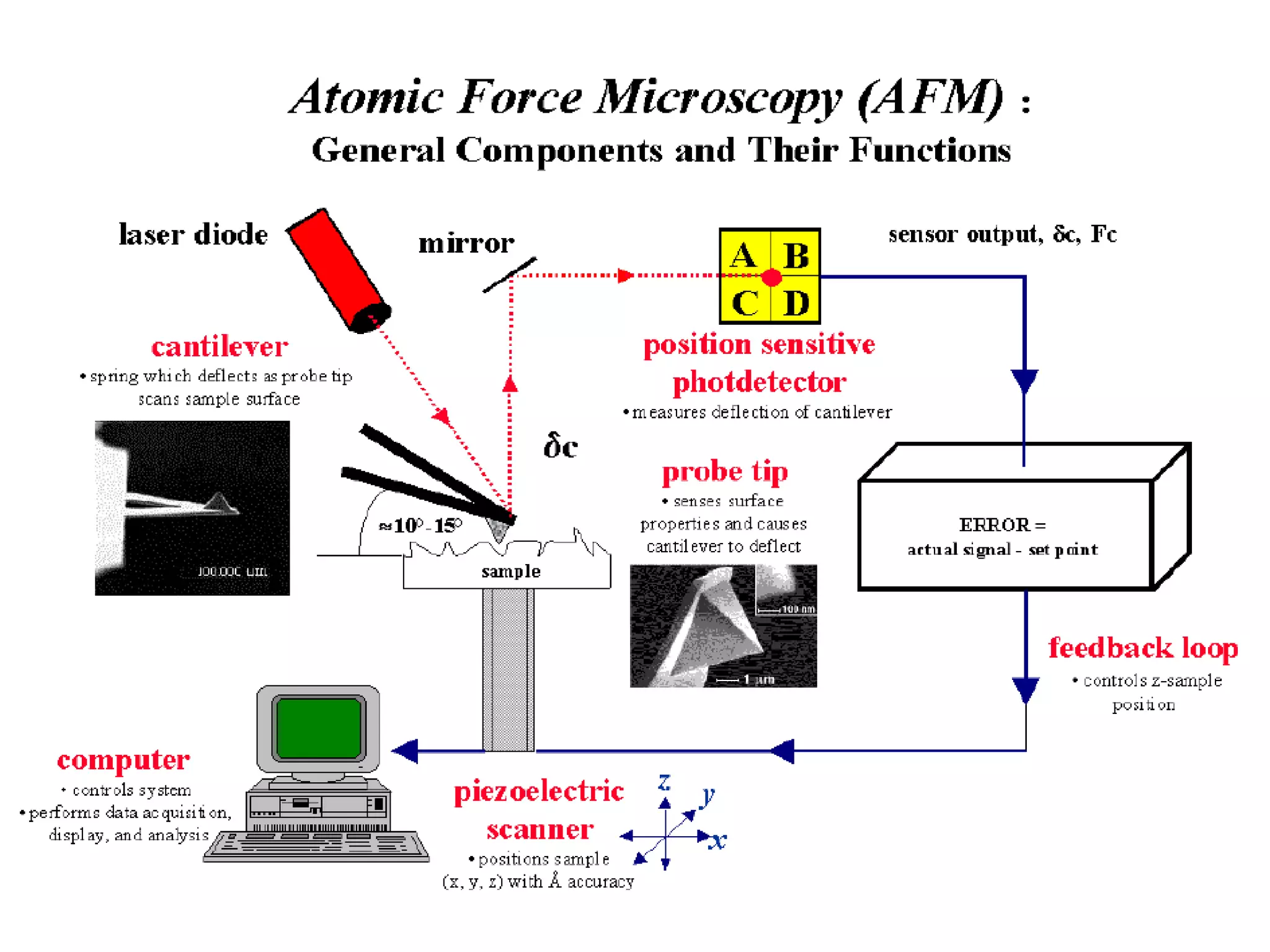
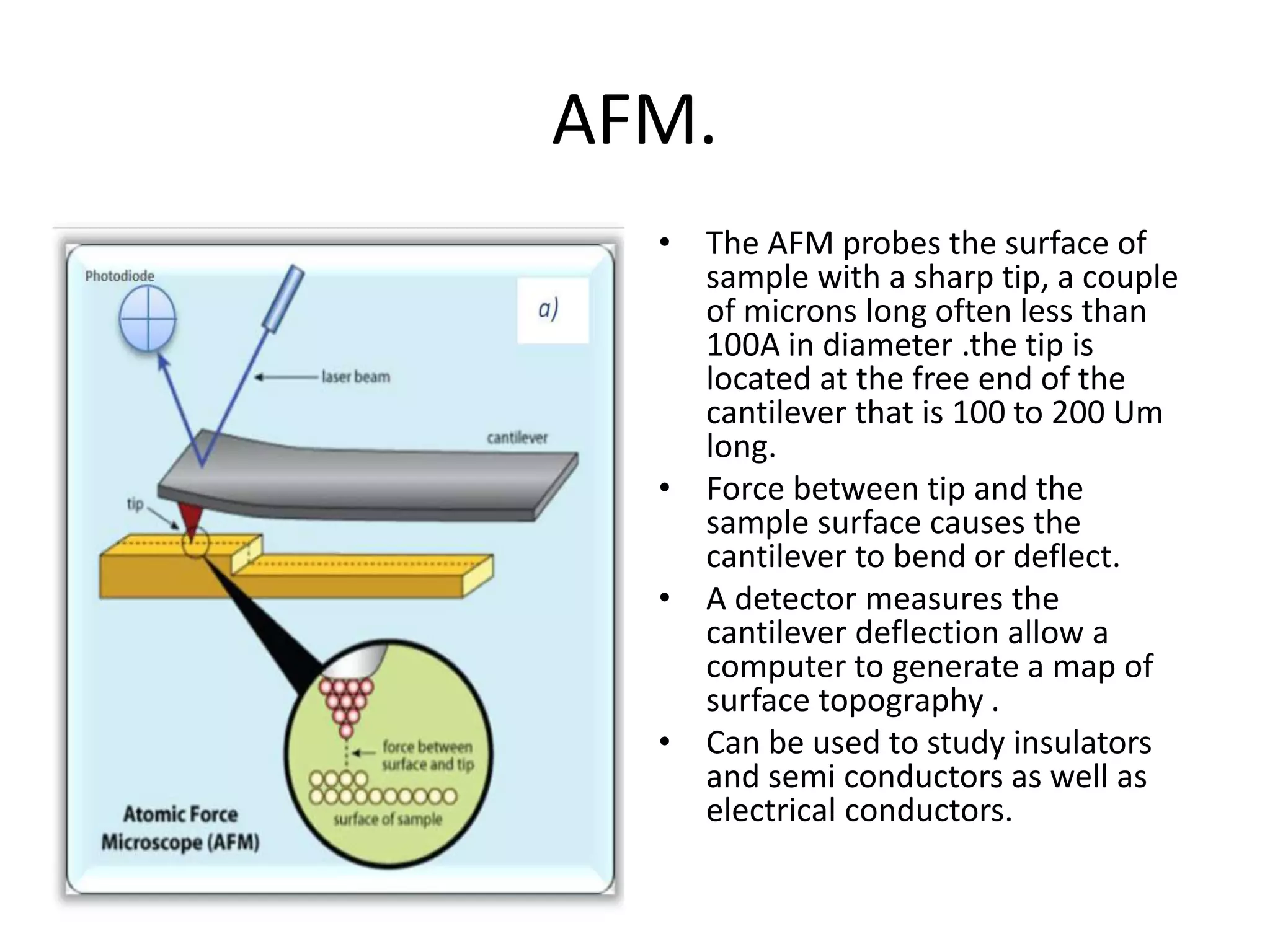
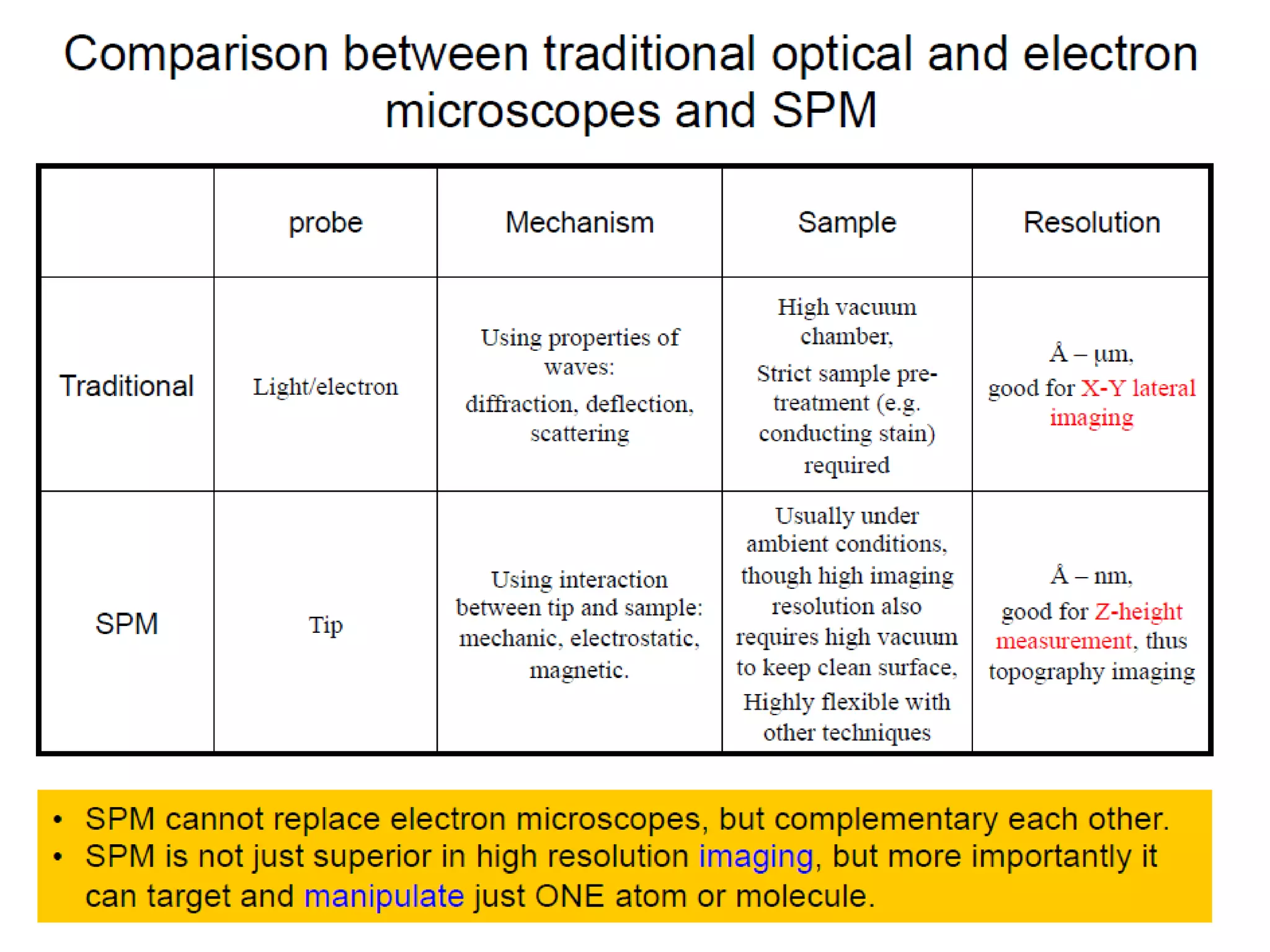
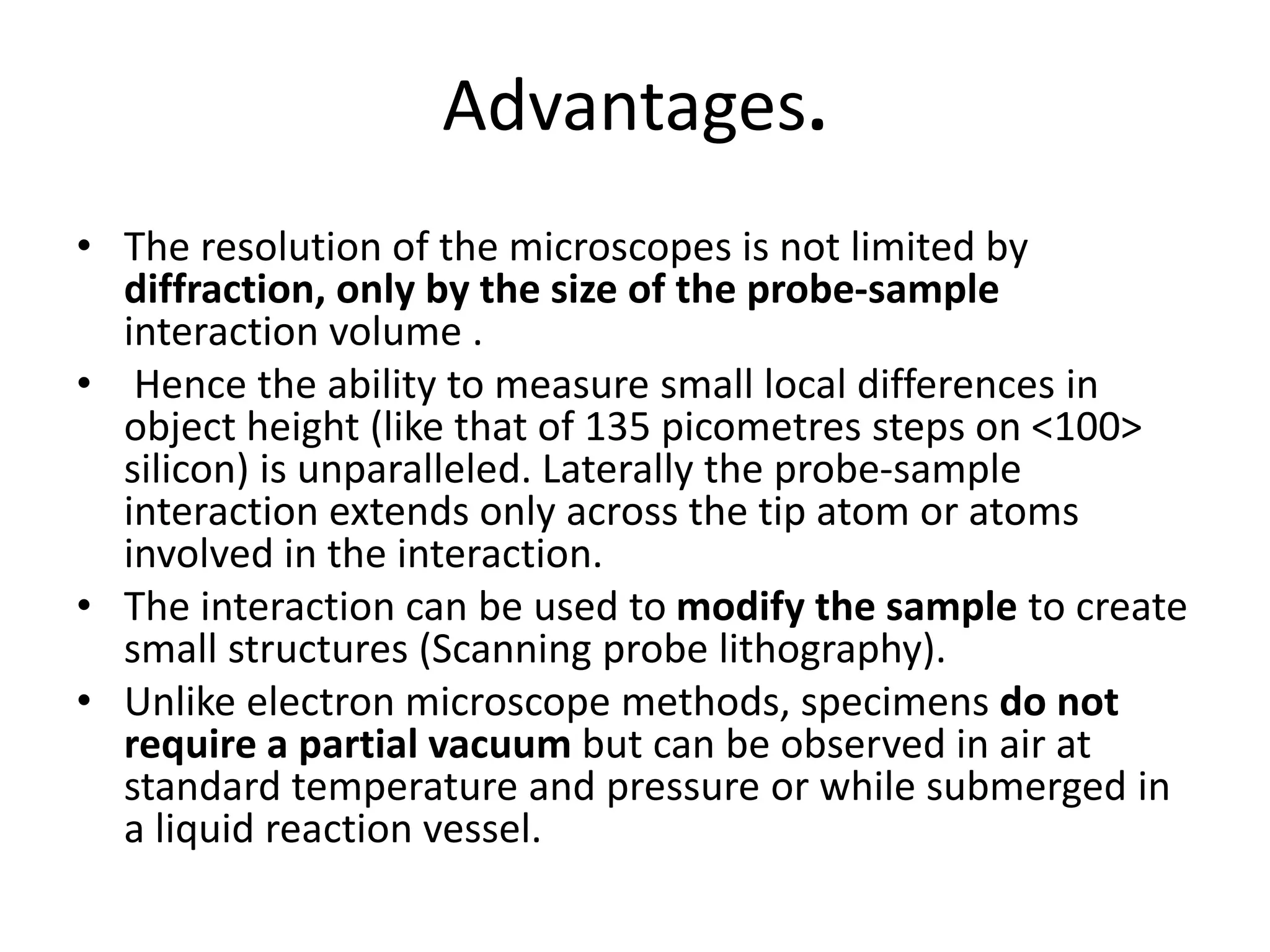


Scanning probe microscopy (SPM) uses a probe that interacts with the sample surface without lenses to resolve images. The first SPM was invented in 1981 by Binning and Roher, winning them the Nobel Prize. For SPM techniques like STM and AFM to provide atomic-level surface structure information, the tip-sample position must be controlled within 0.1 Angstroms and the tip must be very sharp. STM uses tunneling current between a biased tip and conducting sample, while AFM measures cantilever deflection from tip-surface interactions to map topography. SPM provides higher resolution than diffraction-limited techniques and can image insulators and conductors.


