CONDENSATE & FLASH
RECOVERY SYSTEMS
Presented by
Salman Jailani
Overview :
Flash steam is formed when high pressure/temperature
condensate is suddenly decreased in pressure.
A facility may have two steam
operating pressures, such as a
high pressure for process
loads, and a low pressure for
heating water and space
heating equipment.
Flash steam :
is a name given to the steam formed
from hot condensate when the
pressure is reduced. Flash steam is no
different from normal steam, it is just
a convenient name used to explain
how the steam is formed. The result is
that the excess energy causes a
percentage of the condensate to flash.
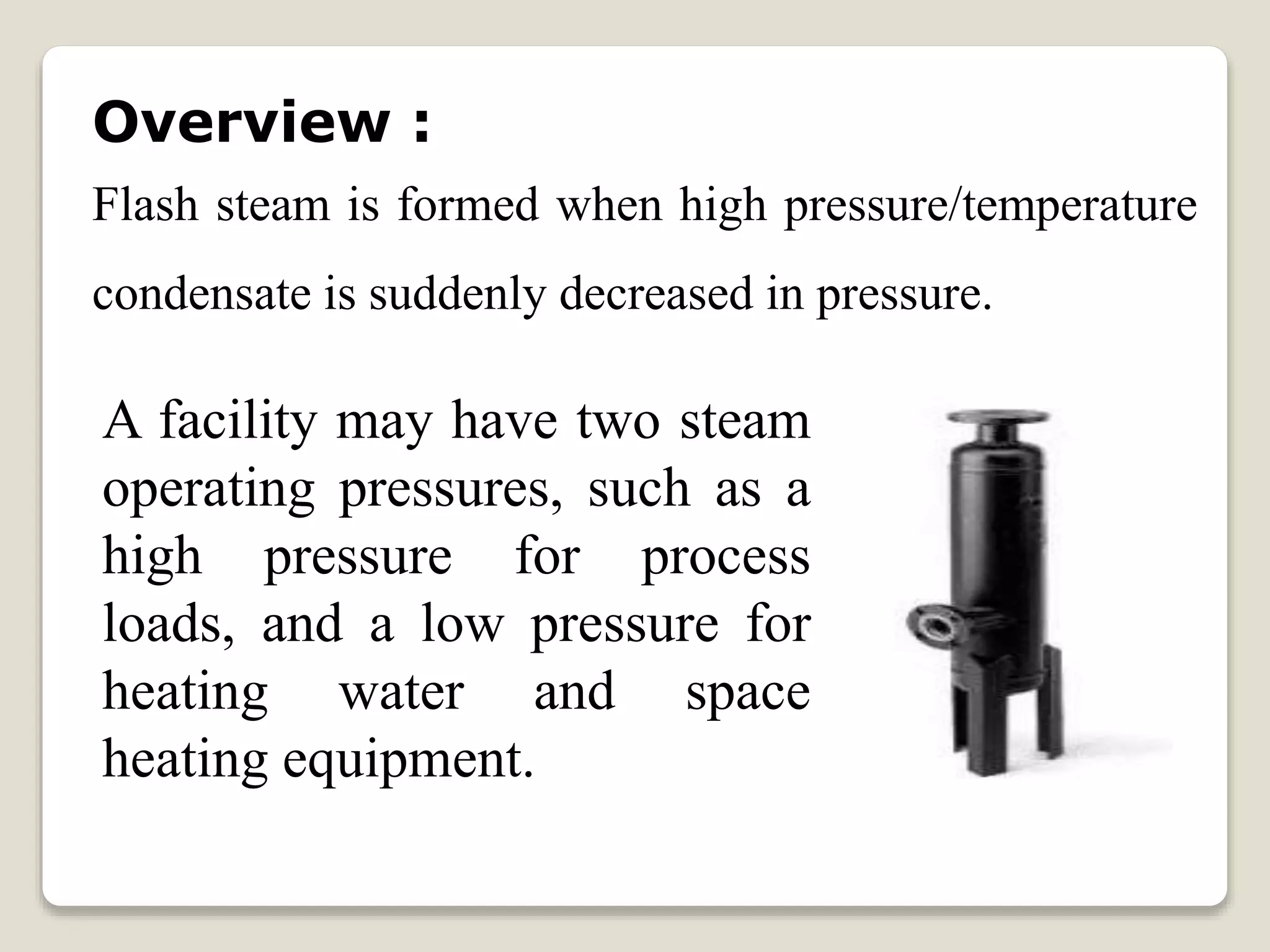
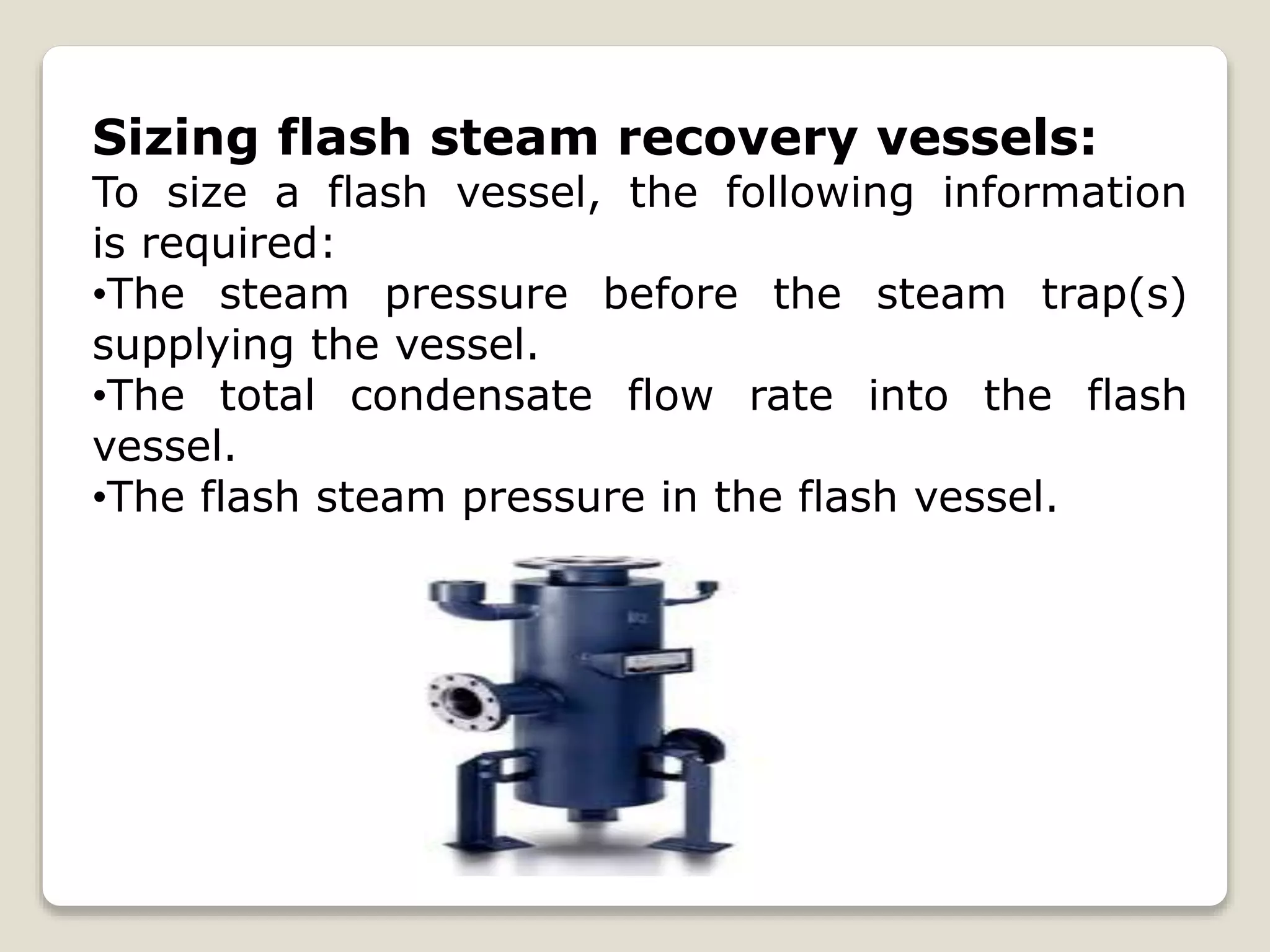
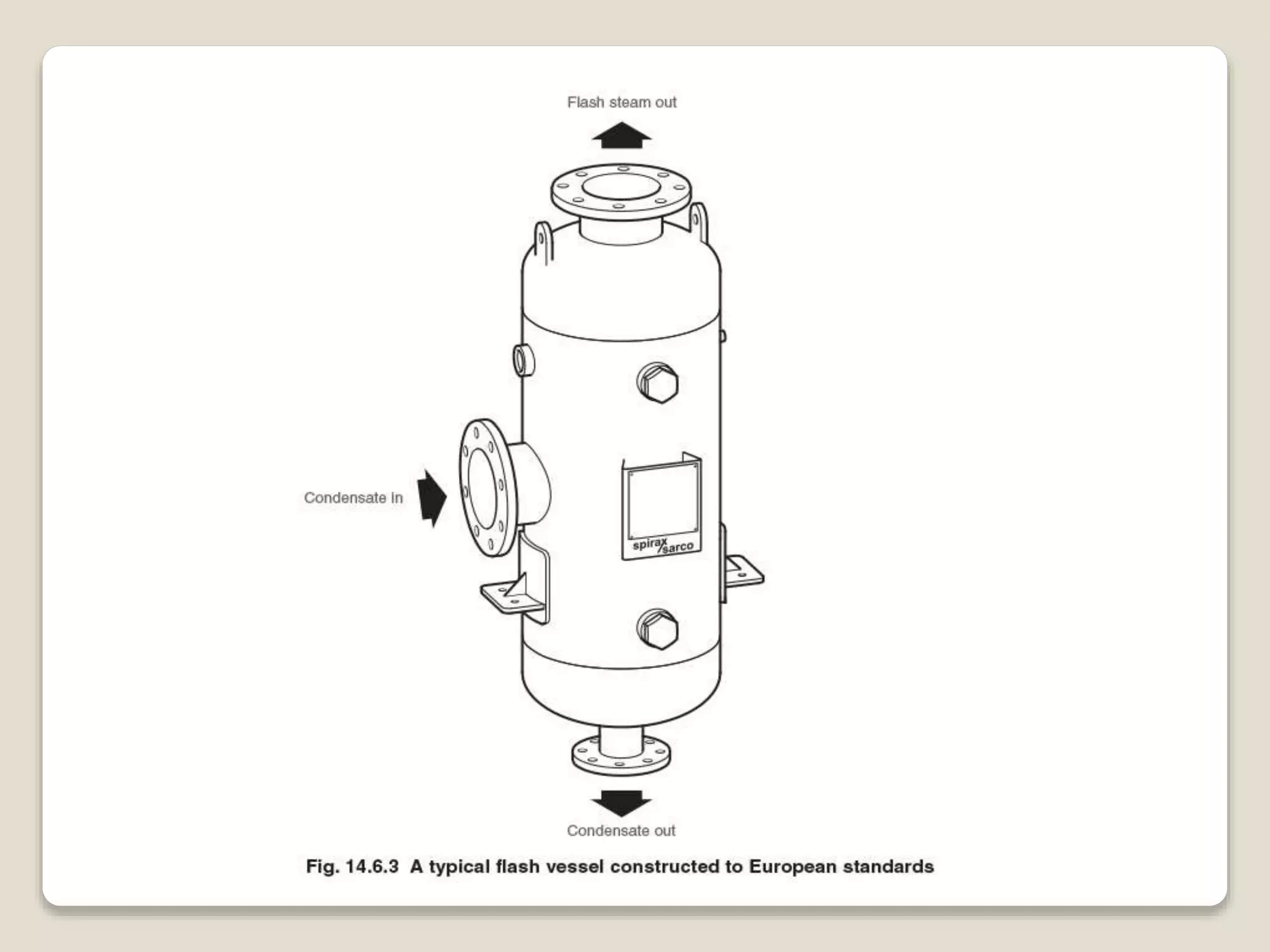
The flash steam recovery vessel (flash
vessel) :
Flash vessels are used to separate flash steam
with the European Pressure Equipment
Directive 97/23/EC.
After condensate and flash steam enter the flash
vessel, the condensate falls by gravity to the
base of the vessel, from where it is drained, via
a float trap, usually to a vented receiver from
where it can be pumped. The flash steam in the
vessel is piped from the top of the vessel to any
appropriate low pressure steam equipment.
Sizing flash steam recovery vessels:
To size a flash vessel, the following information
is required:
•The steam pressure before the steam trap(s)
supplying the vessel.
•The total condensate flow rate into the flash
vessel.
•The flash steam pressure in the flash vessel.
Flash steam why should it be
used?
when steam is taken from a boiler and the boiler
pressure drops, some of the water content of the
boiler will flash off to supplement the ‘live’ steam
produced by the heat from the boiler fuel.
Because both types of steam are produced in the
boiler, it is impossible to differentiate between
them. Only when flashing takes place at
relatively low pressure, such as at the discharge
side of steam traps, is the term flash steam
widely used. Unfortunately, this usage has led to
the erroneous conclusion that flash steam is in
some way less valuable than so-called live
steam.
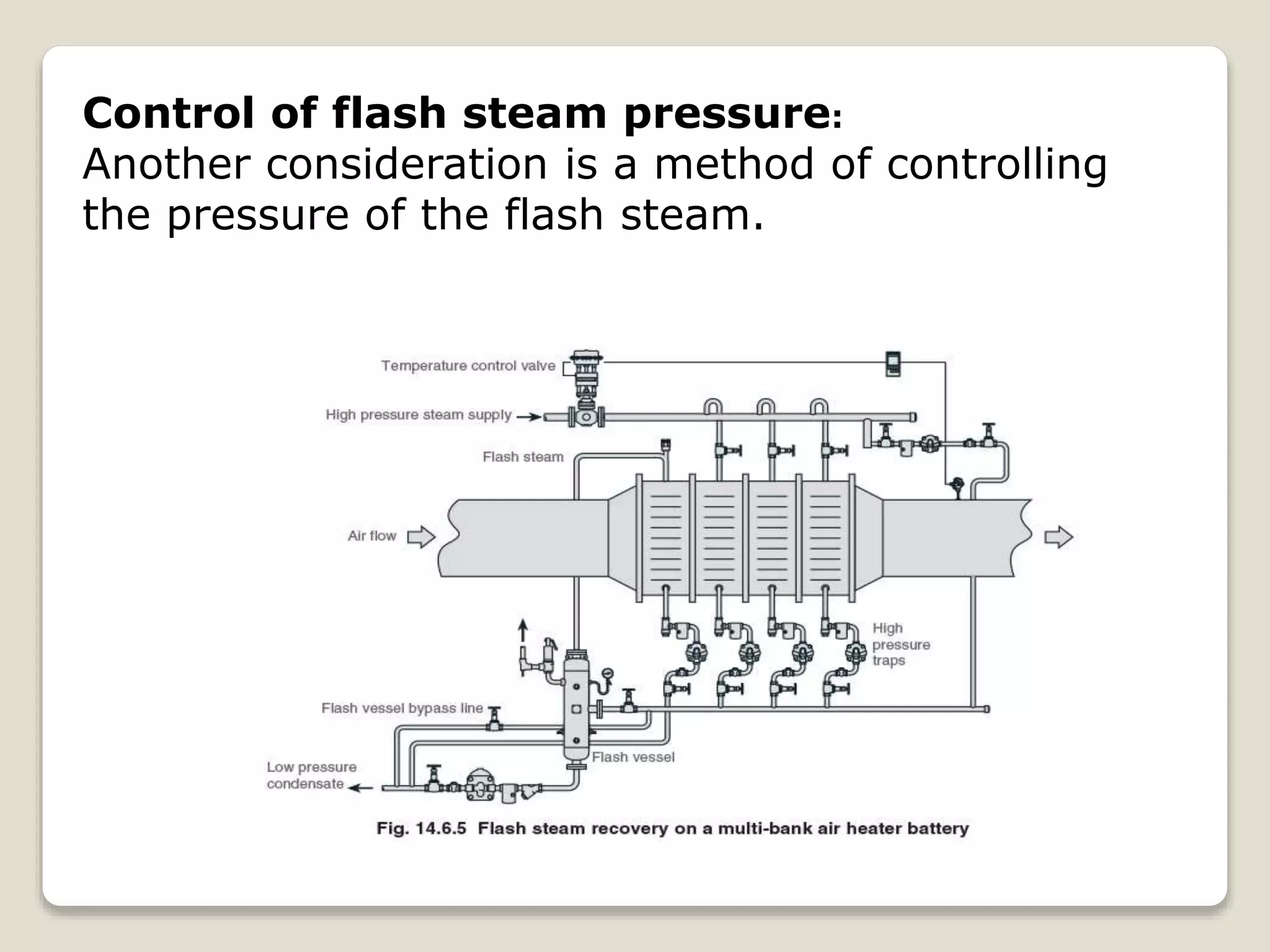
Control of flash steam pressure:
Another consideration is a method of controlling
the pressure of the flash steam.
Uses Of Flash Steam:
Heating of feed water with the help of flash
steam generated from boiler blow down. In
continuous blow down system, especially
where blow down rates are high as a result
of poor feed water quality, Flash Separators
can be used to recover energy from blow
down. This can improve boiler efficiency
substantially, and increase the steam
generation of the boiler.
For Example -
1) Paper machines
2) Solvent extraction plants.
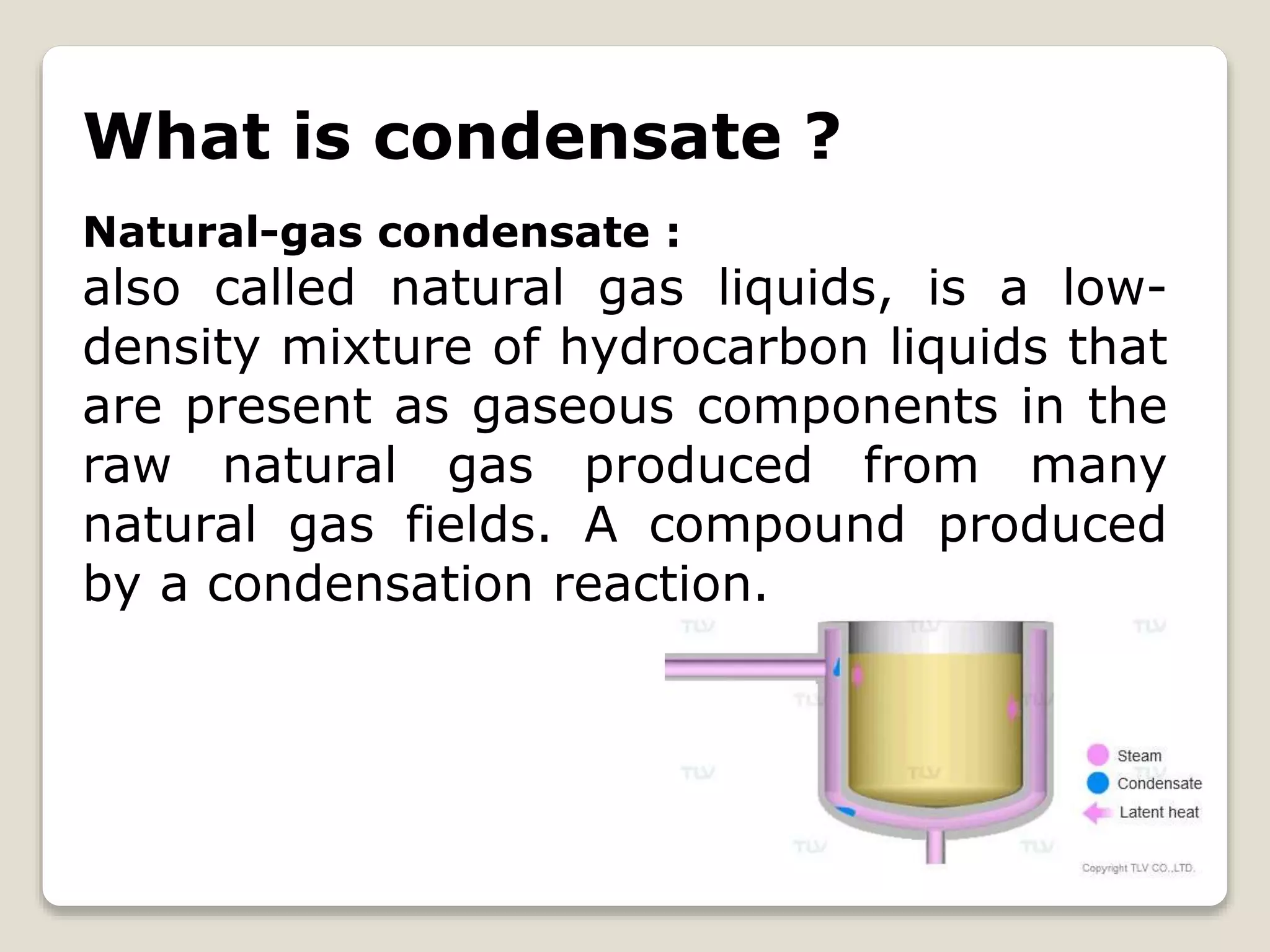
What is condensate ?
Natural-gas condensate :
also called natural gas liquids, is a low-
density mixture of hydrocarbon liquids that
are present as gaseous components in the
raw natural gas produced from many
natural gas fields. A compound produced
by a condensation reaction.
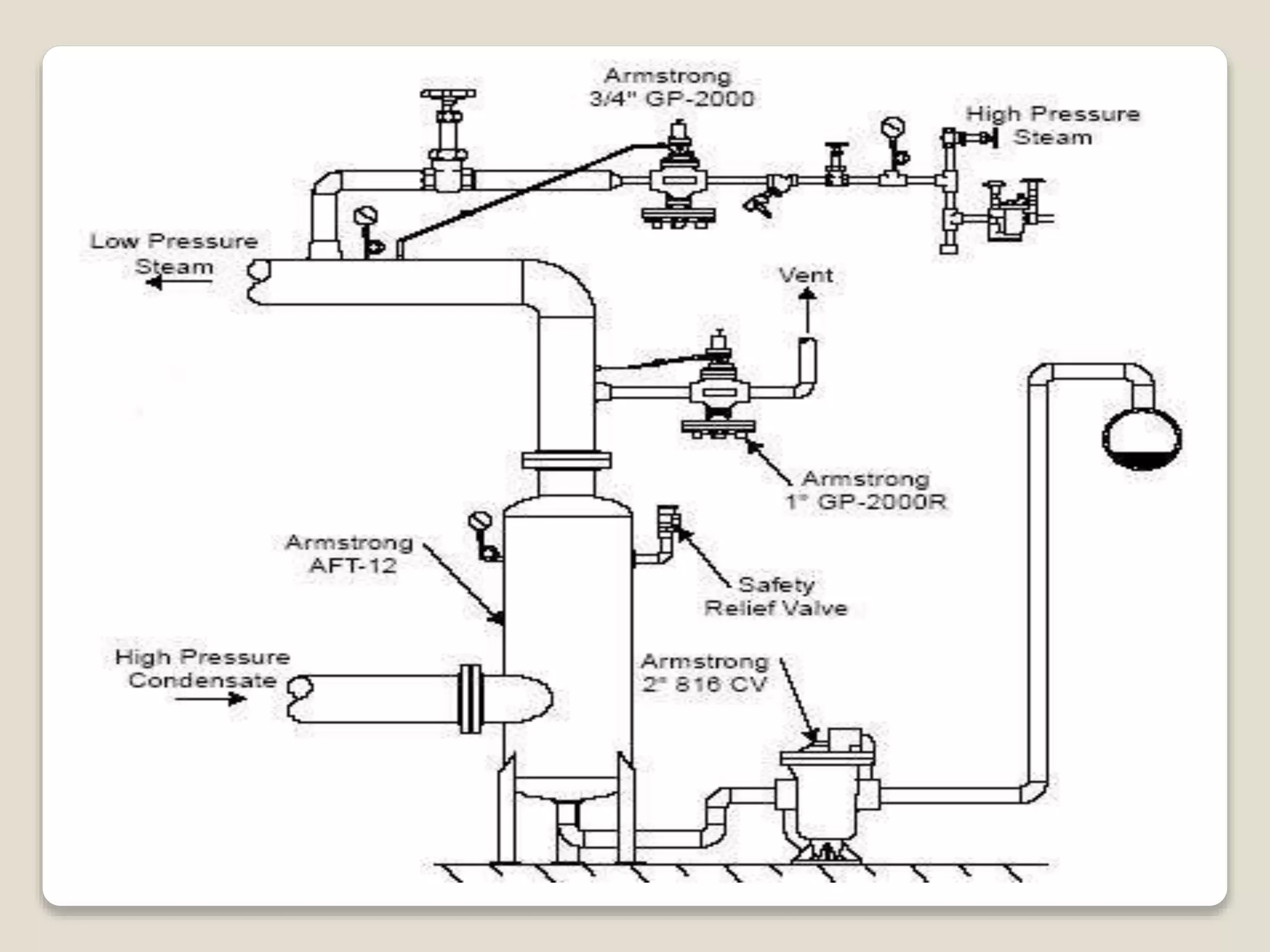
Operation:
In the schematic to the right, the high pressure steam is
passed through a PRV (Pressure Reducing Valve) at the top
to form low pressure steam. (Example: 100 psi high
pressure to 25 psi low pressure.)
High pressure condensate enters the flash steam generator
from the left. A rapid drop in pressure flashes some of the
condensate to steam that goes up into the low pressure
steam header, and the rest becomes low pressure
condensate that flows into a pumping steam trap that
returns it to the low pressure condensate return line.
A PRV to vent is a safety device to keep the low pressure
header from gaining more low pressure steam than it can
distribute.
Economics
Recovery of the Energy in Flash Steam:
Condensate pipe carries approximately
90% (by volume) of flash steam, and 10%
of condensate. This bi-phase condition
occurs immediate downstream of the trap
or discharge orifice. To recover the flash
steam, the bi-phase fluid has to be
separated into condensate and flash steam.
As the pressure is low, the separation
method cannot allow much pressure drop,
but must separate the two phases
efficiently, so that the flash steam is dry
enough to use.
Reduced Fuel Costs
Lower Water-related Expenses
Positive Impact on Safety and the
Environment
The Benefits of Condensate Recovery
:Reference websites:
www.wikipedia.com/Flash steam
www.proengir.vtu.ac.in

Flash steam and condensate recovery system

  • 2.
    CONDENSATE & FLASH RECOVERYSYSTEMS Presented by Salman Jailani
  • 3.
    Overview : Flash steamis formed when high pressure/temperature condensate is suddenly decreased in pressure. A facility may have two steam operating pressures, such as a high pressure for process loads, and a low pressure for heating water and space heating equipment.
  • 4.
    Flash steam : isa name given to the steam formed from hot condensate when the pressure is reduced. Flash steam is no different from normal steam, it is just a convenient name used to explain how the steam is formed. The result is that the excess energy causes a percentage of the condensate to flash.
  • 6.
    The flash steamrecovery vessel (flash vessel) : Flash vessels are used to separate flash steam with the European Pressure Equipment Directive 97/23/EC. After condensate and flash steam enter the flash vessel, the condensate falls by gravity to the base of the vessel, from where it is drained, via a float trap, usually to a vented receiver from where it can be pumped. The flash steam in the vessel is piped from the top of the vessel to any appropriate low pressure steam equipment.
  • 7.
    Sizing flash steamrecovery vessels: To size a flash vessel, the following information is required: •The steam pressure before the steam trap(s) supplying the vessel. •The total condensate flow rate into the flash vessel. •The flash steam pressure in the flash vessel.
  • 9.
    Flash steam whyshould it be used? when steam is taken from a boiler and the boiler pressure drops, some of the water content of the boiler will flash off to supplement the ‘live’ steam produced by the heat from the boiler fuel. Because both types of steam are produced in the boiler, it is impossible to differentiate between them. Only when flashing takes place at relatively low pressure, such as at the discharge side of steam traps, is the term flash steam widely used. Unfortunately, this usage has led to the erroneous conclusion that flash steam is in some way less valuable than so-called live steam.
  • 10.
    Control of flashsteam pressure: Another consideration is a method of controlling the pressure of the flash steam.
  • 11.
    Uses Of FlashSteam: Heating of feed water with the help of flash steam generated from boiler blow down. In continuous blow down system, especially where blow down rates are high as a result of poor feed water quality, Flash Separators can be used to recover energy from blow down. This can improve boiler efficiency substantially, and increase the steam generation of the boiler. For Example - 1) Paper machines 2) Solvent extraction plants.
  • 12.
    What is condensate? Natural-gas condensate : also called natural gas liquids, is a low- density mixture of hydrocarbon liquids that are present as gaseous components in the raw natural gas produced from many natural gas fields. A compound produced by a condensation reaction.
  • 14.
    Operation: In the schematicto the right, the high pressure steam is passed through a PRV (Pressure Reducing Valve) at the top to form low pressure steam. (Example: 100 psi high pressure to 25 psi low pressure.) High pressure condensate enters the flash steam generator from the left. A rapid drop in pressure flashes some of the condensate to steam that goes up into the low pressure steam header, and the rest becomes low pressure condensate that flows into a pumping steam trap that returns it to the low pressure condensate return line. A PRV to vent is a safety device to keep the low pressure header from gaining more low pressure steam than it can distribute.
  • 15.
  • 16.
    Recovery of theEnergy in Flash Steam: Condensate pipe carries approximately 90% (by volume) of flash steam, and 10% of condensate. This bi-phase condition occurs immediate downstream of the trap or discharge orifice. To recover the flash steam, the bi-phase fluid has to be separated into condensate and flash steam. As the pressure is low, the separation method cannot allow much pressure drop, but must separate the two phases efficiently, so that the flash steam is dry enough to use.
  • 17.
    Reduced Fuel Costs LowerWater-related Expenses Positive Impact on Safety and the Environment The Benefits of Condensate Recovery
  • 18.