IMPLEMENTATION OF
METRO RAIL USING PLC
AND SCADA
Under the Guidance of Presented by:
G. Sujatha Y.Divya
Dept of EEE (17251D5415)
Contents
• Introduction
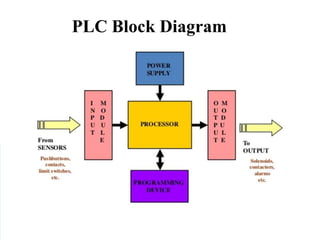
• PLC Block Diagram
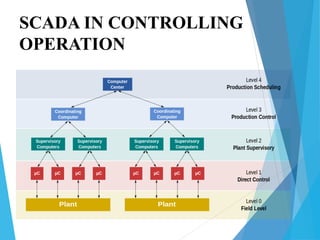
• SCADA Controlling Operation
• SCADA System Components
• Operation of Metro Rail using PLC and
SCADAAutomation
• Advantages, Disadvantages and Future
Scope of Metro Rail using PLC and
SCADA
Introduction
• Metro Rail system implemented in
underground as well as flyover system.
• The two components used for the
automation of the Metro Rail systems
are
1) Programmable Logic Controllers
(PLC). &
2) Supervisory Control and Data
Acquisition (SCADA) .
Programmable Logic Controllers
(PLC)
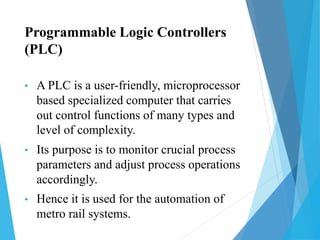
• A PLC is a user-friendly, microprocessor
based specialized computer that carries
out control functions of many types and
level of complexity.
• Its purpose is to monitor crucial process
parameters and adjust process operations
accordingly.
• Hence it is used for the automation of
metro rail systems.
PLC Block Diagram
SCADA
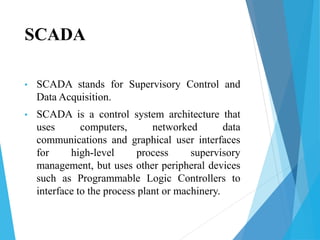
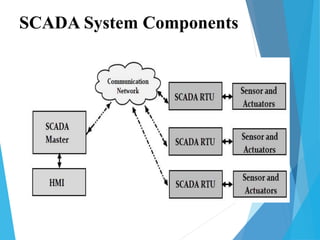
• SCADA stands for Supervisory Control and
Data Acquisition.
• SCADA is a control system architecture that
uses computers, networked data
communications and graphical user interfaces
for high-level process supervisory
management, but uses other peripheral devices
such as Programmable Logic Controllers to
interface to the process plant or machinery.
SCADA IN CONTROLLING
OPERATION
SCADA System Components
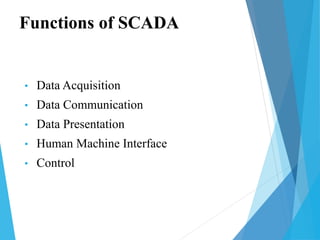
Functions of SCADA
• Data Acquisition
• Data Communication
• Data Presentation
• Human Machine Interface
• Control
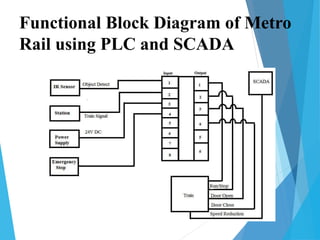
Functional Block Diagram of Metro
Rail using PLC and SCADA
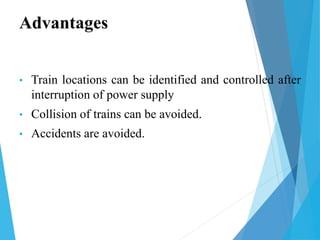
Advantages
• Train locations can be identified and controlled after
interruption of power supply
• Collision of trains can be avoided.
• Accidents are avoided.
Disadvantages
• IR Sensors senses only particular direction.
• Wiring Connectivity is more from one sensor to other
sensor.
• This system gives information to station not the
engine operator.
Conclusion
• By employing PLC automation can be achieved.
• SCADA is used to track the location of Train to avoid
the accidents.
• Speed can be reduced by the sensors and Inter
Passage Door opening is provided for safety of
passengers.
Future scope
• By implementing PLC and SCADA in
metro rail automation the train accidents
can be prevented and many lives would
be saved.
Implementation of METRO rail using PLC and SCADA

Implementation of METRO rail using PLC and SCADA

  • 1.
    IMPLEMENTATION OF METRO RAILUSING PLC AND SCADA Under the Guidance of Presented by: G. Sujatha Y.Divya Dept of EEE (17251D5415)
  • 2.
    Contents • Introduction • PLCBlock Diagram • SCADA Controlling Operation • SCADA System Components • Operation of Metro Rail using PLC and SCADAAutomation • Advantages, Disadvantages and Future Scope of Metro Rail using PLC and SCADA
  • 3.
    Introduction • Metro Railsystem implemented in underground as well as flyover system. • The two components used for the automation of the Metro Rail systems are 1) Programmable Logic Controllers (PLC). & 2) Supervisory Control and Data Acquisition (SCADA) .
  • 4.
    Programmable Logic Controllers (PLC) •A PLC is a user-friendly, microprocessor based specialized computer that carries out control functions of many types and level of complexity. • Its purpose is to monitor crucial process parameters and adjust process operations accordingly. • Hence it is used for the automation of metro rail systems.
  • 5.
  • 6.
    SCADA • SCADA standsfor Supervisory Control and Data Acquisition. • SCADA is a control system architecture that uses computers, networked data communications and graphical user interfaces for high-level process supervisory management, but uses other peripheral devices such as Programmable Logic Controllers to interface to the process plant or machinery.
  • 7.
  • 8.
  • 9.
    Functions of SCADA •Data Acquisition • Data Communication • Data Presentation • Human Machine Interface • Control
  • 10.
    Functional Block Diagramof Metro Rail using PLC and SCADA
  • 11.
    Advantages • Train locationscan be identified and controlled after interruption of power supply • Collision of trains can be avoided. • Accidents are avoided.
  • 12.
    Disadvantages • IR Sensorssenses only particular direction. • Wiring Connectivity is more from one sensor to other sensor. • This system gives information to station not the engine operator.
  • 13.
    Conclusion • By employingPLC automation can be achieved. • SCADA is used to track the location of Train to avoid the accidents. • Speed can be reduced by the sensors and Inter Passage Door opening is provided for safety of passengers.
  • 14.
    Future scope • Byimplementing PLC and SCADA in metro rail automation the train accidents can be prevented and many lives would be saved.