ABG Interpretation
Julie Perkins RRT-NPS
LPCH Respiratory Care
pH
 Normal pH is 7.35-7.45
 Value <7.35 is acidotic
 Value >7.45 is alkalotic
 Acidosis & Alkalosis can be caused
by a problem with the respiratory
system or a metabolic cause
 Can also have combined
respiratory/metabolic states
Is it Respiratory or Metabolic?
1. Respiratory Acidosis
2. Respiratory Alkalosis
3. Metabolic Acidosis
4. Metabolic Alkalosis
 Increased pCO2 >50
 Decreased pCO2<30
 Decreased HCO3
<18
 Increased HCO3 >30
Compensated or Uncompensated—what
does this mean?
1. Evaluate pH—is it normal? Yes
2. Next evaluate pCO2 & HCO3
• pH normal + increased pCO2 + increased
HCO3 = compensated respiratory acidosis
• pH normal + decreased HCO3 + decreased
pCO2 = compensated metabolic acidosis
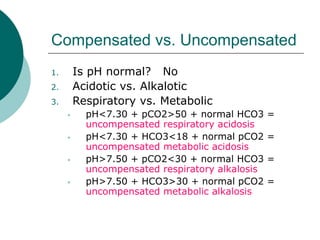
Compensated vs. Uncompensated
1. Is pH normal? No
2. Acidotic vs. Alkalotic
3. Respiratory vs. Metabolic
• pH<7.30 + pCO2>50 + normal HCO3 =
uncompensated respiratory acidosis
• pH<7.30 + HCO3<18 + normal pCO2 =
uncompensated metabolic acidosis
• pH>7.50 + pCO2<30 + normal HCO3 =
uncompensated respiratory alkalosis
• pH>7.50 + HCO3>30 + normal pCO2 =
uncompensated metabolic alkalosis
Causes of Acidosis
 Respiratory
 Hypoventilation
 Impaired gas
exchange
 Metabolic
 Ketoacidosis
 Diabetes
 Renal Tubular
Acidosis
 Renal Failure
 Lactic Acidosis
 Decreased
perfusion
 Severe
hypoxemia
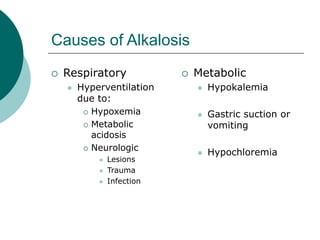
Causes of Alkalosis
 Respiratory
 Hyperventilation
due to:
 Hypoxemia
 Metabolic
acidosis
 Neurologic
 Lesions
 Trauma
 Infection
 Metabolic
 Hypokalemia
 Gastric suction or
vomiting
 Hypochloremia
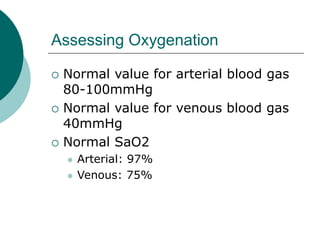
Assessing Oxygenation
 Normal value for arterial blood gas
80-100mmHg
 Normal value for venous blood gas
40mmHg
 Normal SaO2
 Arterial: 97%
 Venous: 75%
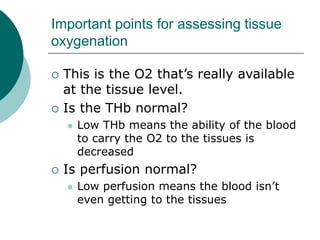
Important points for assessing tissue
oxygenation
 This is the O2 that’s really available
at the tissue level.
 Is the THb normal?
 Low THb means the ability of the blood
to carry the O2 to the tissues is
decreased
 Is perfusion normal?
 Low perfusion means the blood isn’t
even getting to the tissues
Let’s Practice
12 year old diabetic presents with Kussmaul
breathing
 pH : 7.05
 pCO2: 12 mmHg
 pO2: 108 mmHg
 HCO3: 5 mEq/L
 BE: -30 mEq/L
 Severe partly compensated metabolic
acidosis without hypoxemia due to
ketoacidosis
17 year old w/severe kyphoscoliosis, admitted for
pneumonia
 pH: 7.37
 pCO2: 25 mmHg
 pO2: 60 mmHg
 HCO3: 14 mEq/L
 BE : -7 mEq/L
 Compensated respiratory alkalosis due
to chronic hyperventilation secondary
to hypoxia
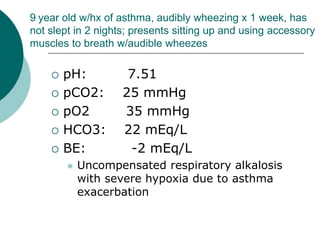
9 year old w/hx of asthma, audibly wheezing x 1 week, has
not slept in 2 nights; presents sitting up and using accessory
muscles to breath w/audible wheezes
 pH: 7.51
 pCO2: 25 mmHg
 pO2 35 mmHg
 HCO3: 22 mEq/L
 BE: -2 mEq/L
 Uncompensated respiratory alkalosis
with severe hypoxia due to asthma
exacerbation
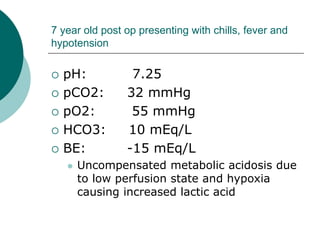
7 year old post op presenting with chills, fever and
hypotension
 pH: 7.25
 pCO2: 32 mmHg
 pO2: 55 mmHg
 HCO3: 10 mEq/L
 BE: -15 mEq/L
 Uncompensated metabolic acidosis due
to low perfusion state and hypoxia
causing increased lactic acid

abg_interpretation.ppt

  • 1.
    ABG Interpretation Julie PerkinsRRT-NPS LPCH Respiratory Care
  • 2.
    pH  Normal pHis 7.35-7.45  Value <7.35 is acidotic  Value >7.45 is alkalotic  Acidosis & Alkalosis can be caused by a problem with the respiratory system or a metabolic cause  Can also have combined respiratory/metabolic states
  • 3.
    Is it Respiratoryor Metabolic? 1. Respiratory Acidosis 2. Respiratory Alkalosis 3. Metabolic Acidosis 4. Metabolic Alkalosis  Increased pCO2 >50  Decreased pCO2<30  Decreased HCO3 <18  Increased HCO3 >30
  • 4.
    Compensated or Uncompensated—what doesthis mean? 1. Evaluate pH—is it normal? Yes 2. Next evaluate pCO2 & HCO3 • pH normal + increased pCO2 + increased HCO3 = compensated respiratory acidosis • pH normal + decreased HCO3 + decreased pCO2 = compensated metabolic acidosis
  • 5.
    Compensated vs. Uncompensated 1.Is pH normal? No 2. Acidotic vs. Alkalotic 3. Respiratory vs. Metabolic • pH<7.30 + pCO2>50 + normal HCO3 = uncompensated respiratory acidosis • pH<7.30 + HCO3<18 + normal pCO2 = uncompensated metabolic acidosis • pH>7.50 + pCO2<30 + normal HCO3 = uncompensated respiratory alkalosis • pH>7.50 + HCO3>30 + normal pCO2 = uncompensated metabolic alkalosis
  • 6.
    Causes of Acidosis Respiratory  Hypoventilation  Impaired gas exchange  Metabolic  Ketoacidosis  Diabetes  Renal Tubular Acidosis  Renal Failure  Lactic Acidosis  Decreased perfusion  Severe hypoxemia
  • 7.
    Causes of Alkalosis Respiratory  Hyperventilation due to:  Hypoxemia  Metabolic acidosis  Neurologic  Lesions  Trauma  Infection  Metabolic  Hypokalemia  Gastric suction or vomiting  Hypochloremia
  • 8.
    Assessing Oxygenation  Normalvalue for arterial blood gas 80-100mmHg  Normal value for venous blood gas 40mmHg  Normal SaO2  Arterial: 97%  Venous: 75%
  • 9.
    Important points forassessing tissue oxygenation  This is the O2 that’s really available at the tissue level.  Is the THb normal?  Low THb means the ability of the blood to carry the O2 to the tissues is decreased  Is perfusion normal?  Low perfusion means the blood isn’t even getting to the tissues
  • 10.
  • 11.
    12 year olddiabetic presents with Kussmaul breathing  pH : 7.05  pCO2: 12 mmHg  pO2: 108 mmHg  HCO3: 5 mEq/L  BE: -30 mEq/L  Severe partly compensated metabolic acidosis without hypoxemia due to ketoacidosis
  • 12.
    17 year oldw/severe kyphoscoliosis, admitted for pneumonia  pH: 7.37  pCO2: 25 mmHg  pO2: 60 mmHg  HCO3: 14 mEq/L  BE : -7 mEq/L  Compensated respiratory alkalosis due to chronic hyperventilation secondary to hypoxia
  • 13.
    9 year oldw/hx of asthma, audibly wheezing x 1 week, has not slept in 2 nights; presents sitting up and using accessory muscles to breath w/audible wheezes  pH: 7.51  pCO2: 25 mmHg  pO2 35 mmHg  HCO3: 22 mEq/L  BE: -2 mEq/L  Uncompensated respiratory alkalosis with severe hypoxia due to asthma exacerbation
  • 14.
    7 year oldpost op presenting with chills, fever and hypotension  pH: 7.25  pCO2: 32 mmHg  pO2: 55 mmHg  HCO3: 10 mEq/L  BE: -15 mEq/L  Uncompensated metabolic acidosis due to low perfusion state and hypoxia causing increased lactic acid