Presented By
Md.Ariful Islam(ASH1819033M)
Meherun Nesa(MUH1819026F)
Tasniha Tabassum(BKH1819022F)
Rubina Aktar(MUH1819028F
 What is Mycology?
 General characteristics of Fungi
 Classification of Fungi
 Chytridiomycota
 Zygomycota
 Ascomycota(sac fungi)
 Basidiomycota(club fungi)
 Phylum Glomeromycota
 Lifecycle and reproduction of Agaricus
 Importance of Fungi
Content

 The term “mycology” is derived from
Greek word “mykes” meaning mushroom.
 Therefore mycology is the study of
fungi,including there genetic and biological
properties,their taxonomy, uses as well as
dangers.
What is Mycology?

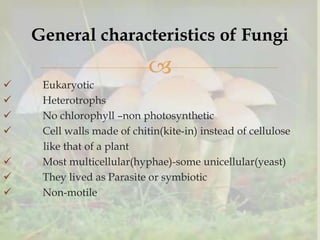
 Eukaryotic
 Heterotrophs
 No chlorophyll –non photosynthetic
 Cell walls made of chitin(kite-in) instead of cellulose
like that of a plant
 Most multicellular(hyphae)-some unicellular(yeast)
 They lived as Parasite or symbiotic
 Non-motile
General characteristics of Fungi

1. Chytridiomycota(chytrids)
2. Zygomycota(conjugated fungi)
3. Ascomycota(sac fungi)
4. Basidiomycota(club fungi)
5. Phylum Glomeromycota(recently described)
Classification of Fungi

 Most chytrids are unicellular, a few from
Multicellular organism and hypae.
 Usually live in aquatic environments,
although some species live on land.
 Generally they have chitin in their cell walls.
Example : Chytrid
Chytridiomycota

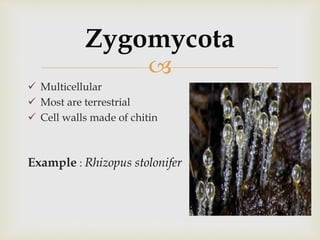
 Multicellular
 Most are terrestrial
 Cell walls made of chitin
Example : Rhizopus stolonifer
Zygomycota

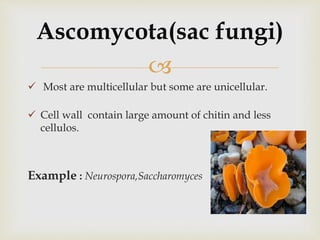
 Most are multicellular but some are unicellular.
 Cell wall contain large amount of chitin and less
cellulos.
Example : Neurospora,Saccharomyces
Ascomycota(sac fungi)

 Multicellular
 Most are terrestrial
 Saprophytic,parasite or mutiealestic
 Rarely produce asextually
Example : Agaricus,puccinia
Basidiomycota(club fungi)

 Arbuscular Endomycorrhizae.
 200 species so far.
 Occur in about 80% of vascular plants.
 Aseptate, Coenoeytic
 Asexual
Example : Glomus
Phylum Glomeromycota

Lifecycle and reproduction of
Agaricus

 Beneficial role –
 Important agents for bio-degradation and bio-deterioration
 Use in Industrial fermatation Process
Example : Penicillium notatum ,Saccharomyces cerevisiae
 Harmful role –
 Destruction of food,lumber,paper and cloth.
 Animal and human diseases,including allergies,ringworm
 Toxins produced by poisonles mushrooms and within food.
 Plant diseases(Late Blight Diseas of Potato)
Importance of Fungi

 https://en.wikipedia.org/wiki/Mycology
 https://mycology.adelaide.edu.au/
 https://www.highveld.com/microbiology/what-
are-fungi.html
 www.ucmp.berkeley.edu/fungi/fungi.html
 https://fungi.com/
Reference


Mycology powerpoint presentation

  • 1.
    Presented By Md.Ariful Islam(ASH1819033M) MeherunNesa(MUH1819026F) Tasniha Tabassum(BKH1819022F) Rubina Aktar(MUH1819028F
  • 2.
     What isMycology?  General characteristics of Fungi  Classification of Fungi  Chytridiomycota  Zygomycota  Ascomycota(sac fungi)  Basidiomycota(club fungi)  Phylum Glomeromycota  Lifecycle and reproduction of Agaricus  Importance of Fungi Content
  • 3.
      The term“mycology” is derived from Greek word “mykes” meaning mushroom.  Therefore mycology is the study of fungi,including there genetic and biological properties,their taxonomy, uses as well as dangers. What is Mycology?
  • 4.
      Eukaryotic  Heterotrophs No chlorophyll –non photosynthetic  Cell walls made of chitin(kite-in) instead of cellulose like that of a plant  Most multicellular(hyphae)-some unicellular(yeast)  They lived as Parasite or symbiotic  Non-motile General characteristics of Fungi
  • 5.
     1. Chytridiomycota(chytrids) 2. Zygomycota(conjugatedfungi) 3. Ascomycota(sac fungi) 4. Basidiomycota(club fungi) 5. Phylum Glomeromycota(recently described) Classification of Fungi
  • 6.
      Most chytridsare unicellular, a few from Multicellular organism and hypae.  Usually live in aquatic environments, although some species live on land.  Generally they have chitin in their cell walls. Example : Chytrid Chytridiomycota
  • 7.
      Multicellular  Mostare terrestrial  Cell walls made of chitin Example : Rhizopus stolonifer Zygomycota
  • 8.
      Most aremulticellular but some are unicellular.  Cell wall contain large amount of chitin and less cellulos. Example : Neurospora,Saccharomyces Ascomycota(sac fungi)
  • 9.
      Multicellular  Mostare terrestrial  Saprophytic,parasite or mutiealestic  Rarely produce asextually Example : Agaricus,puccinia Basidiomycota(club fungi)
  • 10.
      Arbuscular Endomycorrhizae. 200 species so far.  Occur in about 80% of vascular plants.  Aseptate, Coenoeytic  Asexual Example : Glomus Phylum Glomeromycota
  • 11.
  • 12.
      Beneficial role–  Important agents for bio-degradation and bio-deterioration  Use in Industrial fermatation Process Example : Penicillium notatum ,Saccharomyces cerevisiae  Harmful role –  Destruction of food,lumber,paper and cloth.  Animal and human diseases,including allergies,ringworm  Toxins produced by poisonles mushrooms and within food.  Plant diseases(Late Blight Diseas of Potato) Importance of Fungi
  • 13.
      https://en.wikipedia.org/wiki/Mycology  https://mycology.adelaide.edu.au/ https://www.highveld.com/microbiology/what- are-fungi.html  www.ucmp.berkeley.edu/fungi/fungi.html  https://fungi.com/ Reference
  • 14.