Presented by:
NUR HIDAYAH BINTI ABDUL RAZAK (D20121057613)
    NOOR ATIRAH BINTI HASHIM ( D20121057687)
              Lecturer’s name:
     PROF DR. SHAMS UR REHMAN KHAN
Definition of Gender and
          Stereotypes
•   Gender :
    attitudes, feelings, and behaviors that a
    given culture associates with a person’s
    biological sex
•   Stereotypes :
    Belief about social group in terms of the
    traits or characteristics that they are
    believed to share, stereotype are cognitive
    framework that influence the processing of
    social information.

.
What is Gender Stereotypes?
 Gender stereotype is beliefs about the personal
  attributes of females and males.
 Personal attributes?
Personal attributes basically means traits that
  make up your personality, which define who you
  are as a person.
 For example these could be personal attributes
  to describe someone: outgoing, extrovert, open.
  They are important because they are what
  makes you who you are, what other people find
  in you that they may like or dislike.
Type of Gender Stereotypes
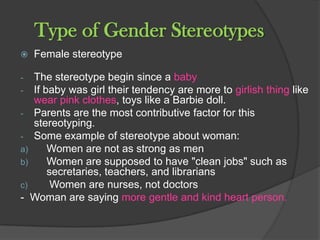
   Female stereotype

-  The stereotype begin since a baby
-  If baby was girl their tendency are more to girlish thing like
   wear pink clothes, toys like a Barbie doll.
- Parents are the most contributive factor for this
   stereotyping.
- Some example of stereotype about woman:
a)     Women are not as strong as men
b)     Women are supposed to have "clean jobs" such as
       secretaries, teachers, and librarians
c)      Women are nurses, not doctors
- Woman are saying more gentle and kind heart person.
Type of Gender Stereotypes
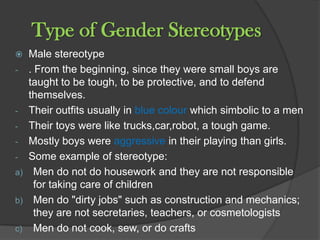
  Male stereotype
- . From the beginning, since they were small boys are
   taught to be tough, to be protective, and to defend
   themselves.
- Their outfits usually in blue colour which simbolic to a men
- Their toys were like trucks,car,robot, a tough game.
- Mostly boys were aggressive in their playing than girls.
- Some example of stereotype:
a) Men do not do housework and they are not responsible
    for taking care of children
b) Men do "dirty jobs" such as construction and mechanics;
    they are not secretaries, teachers, or cosmetologists
c) Men do not cook, sew, or do crafts
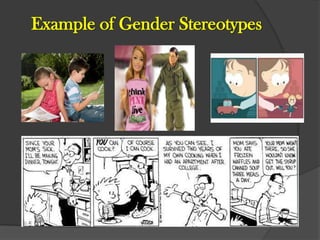
Example of Gender Stereotypes
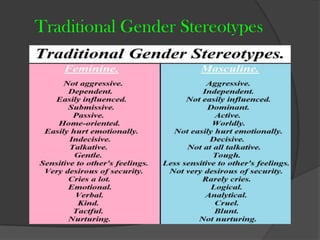
Traditional Gender Stereotypes
The Effect Of Gender Stereotypes
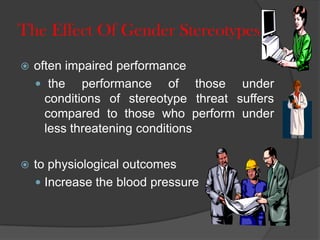
   often impaired performance
     the performance of those under
      conditions of stereotype threat suffers
      compared to those who perform under
      less threatening conditions

   to physiological outcomes
     Increase the blood pressure
 men’sstereotypic leadership -historically led by
 men is on downhill trend
  women has been a huge disadvantage for the
   advancement of women socially, through
   education and in the workforce.
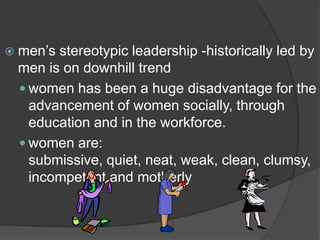
  women are:
   submissive, quiet, neat, weak, clean, clumsy,
   incompetent and motherly
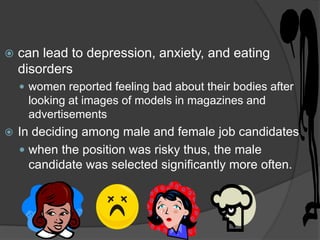
   can lead to depression, anxiety, and eating
    disorders
     women reported feeling bad about their bodies after
     looking at images of models in magazines and
     advertisements
   In deciding among male and female job candidates.
     when the position was risky thus, the male
      candidate was selected significantly more often.
Conclusion
 Stereotype is the reflection on how we
 see members of different groups
 actually behaving, stereotypes change
 should occur when the relation between
 the groups is changing and altered.


Gender stereotype

  • 1.
    Presented by: NUR HIDAYAHBINTI ABDUL RAZAK (D20121057613) NOOR ATIRAH BINTI HASHIM ( D20121057687) Lecturer’s name: PROF DR. SHAMS UR REHMAN KHAN
  • 2.
    Definition of Genderand Stereotypes • Gender : attitudes, feelings, and behaviors that a given culture associates with a person’s biological sex • Stereotypes : Belief about social group in terms of the traits or characteristics that they are believed to share, stereotype are cognitive framework that influence the processing of social information. .
  • 3.
    What is GenderStereotypes?  Gender stereotype is beliefs about the personal attributes of females and males.  Personal attributes? Personal attributes basically means traits that make up your personality, which define who you are as a person.  For example these could be personal attributes to describe someone: outgoing, extrovert, open. They are important because they are what makes you who you are, what other people find in you that they may like or dislike.
  • 4.
    Type of GenderStereotypes  Female stereotype - The stereotype begin since a baby - If baby was girl their tendency are more to girlish thing like wear pink clothes, toys like a Barbie doll. - Parents are the most contributive factor for this stereotyping. - Some example of stereotype about woman: a) Women are not as strong as men b) Women are supposed to have "clean jobs" such as secretaries, teachers, and librarians c) Women are nurses, not doctors - Woman are saying more gentle and kind heart person.
  • 5.
    Type of GenderStereotypes  Male stereotype - . From the beginning, since they were small boys are taught to be tough, to be protective, and to defend themselves. - Their outfits usually in blue colour which simbolic to a men - Their toys were like trucks,car,robot, a tough game. - Mostly boys were aggressive in their playing than girls. - Some example of stereotype: a) Men do not do housework and they are not responsible for taking care of children b) Men do "dirty jobs" such as construction and mechanics; they are not secretaries, teachers, or cosmetologists c) Men do not cook, sew, or do crafts
  • 6.
    Example of GenderStereotypes
  • 7.
  • 8.
    The Effect OfGender Stereotypes  often impaired performance  the performance of those under conditions of stereotype threat suffers compared to those who perform under less threatening conditions  to physiological outcomes  Increase the blood pressure
  • 9.
     men’sstereotypic leadership-historically led by men is on downhill trend  women has been a huge disadvantage for the advancement of women socially, through education and in the workforce.  women are: submissive, quiet, neat, weak, clean, clumsy, incompetent and motherly
  • 10.
    can lead to depression, anxiety, and eating disorders  women reported feeling bad about their bodies after looking at images of models in magazines and advertisements  In deciding among male and female job candidates.  when the position was risky thus, the male candidate was selected significantly more often.
  • 11.
    Conclusion  Stereotype isthe reflection on how we see members of different groups actually behaving, stereotypes change should occur when the relation between the groups is changing and altered.
  • 12.