PERSONAL EFFECTIVENESS
FRESH CORPORATE PROFESSIONALS
OBJECTIVE OF THE WORKSHOP
• Communication skills for effectiveness.
• Art of introduction and greeting.
• Body language to enhance effectiveness.
• Prioritize tasks according to their importance.
• Building rapport & trust in work relationship.
• Being proactive and assertive behaviour.
• Stress Management.
INTRODUCE YOURSELF
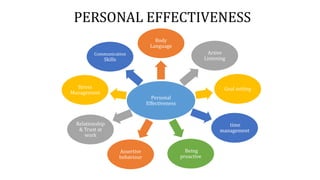
WHAT IS PERSONAL EFFECTIVENESS?
Personal
Effectiveness
Body
Language
Active
Listening
Goal setting
time
management
Being
proactive
Assertive
behaviour
Relationship
& Trust at
work
Stress
Management
Communication
Skills
PERSONAL EFFECTIVENESS
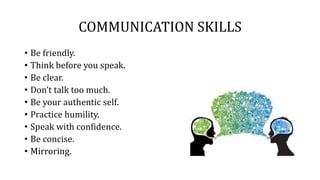
COMMUNICATION SKILLS
• Be friendly.
• Think before you speak.
• Be clear.
• Don’t talk too much.
• Be your authentic self.
• Practice humility.
• Speak with confidence.
• Be concise.
• Mirroring.
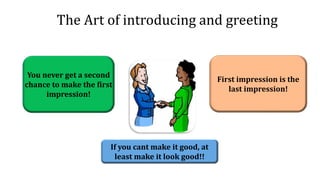
You never get a second
chance to make the first
impression!
First impression is the
last impression!
If you cant make it good, at
least make it look good!!
The Art of introducing and greeting
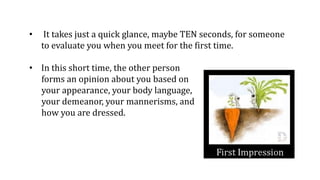
• It takes just a quick glance, maybe TEN seconds, for someone
to evaluate you when you meet for the first time.
• In this short time, the other person
forms an opinion about you based on
your appearance, your body language,
your demeanor, your mannerisms, and
how you are dressed.
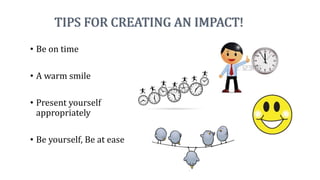
TIPS FOR CREATING AN IMPACT!
• Be on time
• A warm smile
• Present yourself
appropriately
• Be yourself, Be at ease
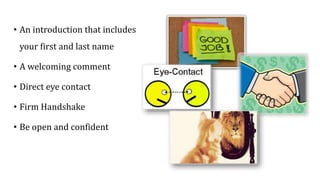
• An introduction that includes
your first and last name
• A welcoming comment
• Direct eye contact
• Firm Handshake
• Be open and confident
An effective Self Introduction
Role Play-
Interviews and client meetings
AN EFFECTIVE SELF INTRODUCTION
• Short and sweet is the key!
• Stay aware of the setting
• Embrace understatement
• Focus on the other person
• Have a call-to-action.
• Finish strong.
• Use the persons name
• Be well prepared (Do your home work well)
• Compliment and thank the listener
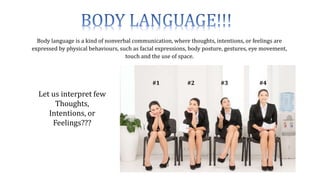
Body language is a kind of nonverbal communication, where thoughts, intentions, or feelings are
expressed by physical behaviours, such as facial expressions, body posture, gestures, eye movement,
touch and the use of space.
#1 #2 #3 #4
Let us interpret few
Thoughts,
Intentions, or
Feelings???
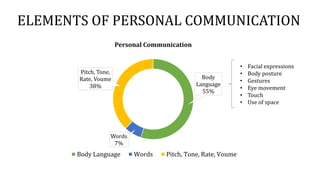
ELEMENTS OF PERSONAL COMMUNICATION
Body
Language
55%
Words
7%
Pitch, Tone,
Rate, Voume
38%
Personal Communication
Body Language Words Pitch, Tone, Rate, Voume
• Facial expressions
• Body posture
• Gestures
• Eye movement
• Touch
• Use of space
BODY LANGUAGE
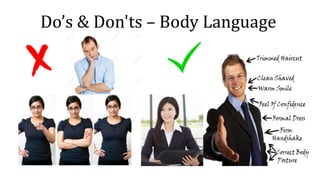
Do’s & Don'ts – Body Language
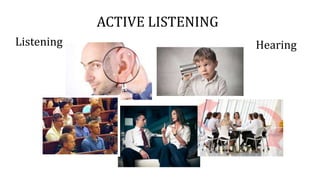
ACTIVE LISTENING
Listening Hearing
ACTIVITY
BECOME AN ACTIVE LISTENER!
• Pay Attention
• Acknowledge the speaker
• Provide feedback
• Defer Judgement
• Respond appropriately
GOAL SETTING
ESTABLISH AND PRIORITIZE GOALS
• Set clear goals
• Set your time limit
• Set day goals
• Write your goal on paper
TIME MANAGEMENT
“Time management” refers to the way that you organize and plan how long you spend on
specific activities.
Benefits of Time Management:
• Greater productivity and efficiency.
• A better professional reputation.
• Less stress.
• Increased opportunities for advancement.
• Greater opportunities to achieve important life and career goals.
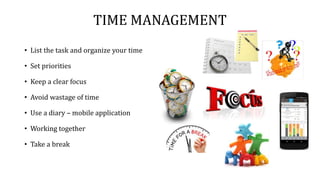
TIME MANAGEMENT
• List the task and organize your time
• Set priorities
• Keep a clear focus
• Avoid wastage of time
• Use a diary – mobile application
• Working together
• Take a break
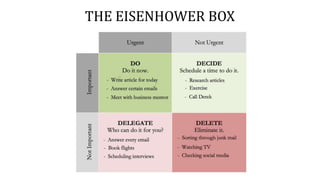
THE EISENHOWER BOX
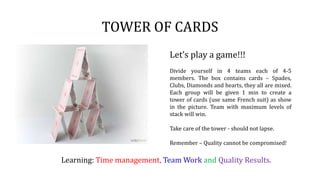
TOWER OF CARDS
Learning: Time management, Team Work and Quality Results.
Let’s play a game!!!
Divide yourself in 4 teams each of 4-5
members. The box contains cards – Spades,
Clubs, Diamonds and hearts, they all are mixed.
Each group will be given 1 min to create a
tower of cards (use same French suit) as show
in the picture. Team with maximum levels of
stack will win.
Take care of the tower - should not lapse.
Remember – Quality cannot be compromised!
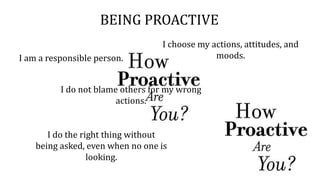
BEING PROACTIVE
I do not blame others for my wrong
actions.
I am a responsible person.
I choose my actions, attitudes, and
moods.
I do the right thing without
being asked, even when no one is
looking.
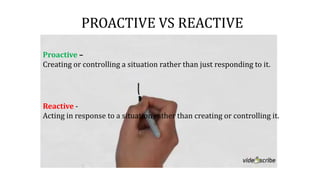
PROACTIVE VS REACTIVE
Proactive –
Creating or controlling a situation rather than just responding to it.
Reactive -
Acting in response to a situation rather than creating or controlling it.
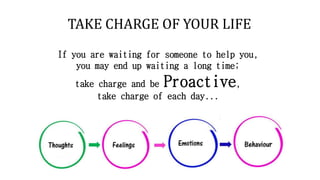
If you are waiting for someone to help you,
you may end up waiting a long time;
take charge and be Proactive,
take charge of each day...
TAKE CHARGE OF YOUR LIFE
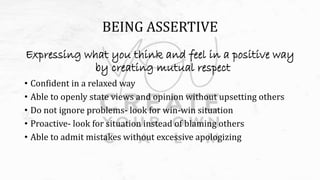
BEING ASSERTIVE
Expressing what you think and feel in a positive way
by creating mutual respect
• Confident in a relaxed way
• Able to openly state views and opinion without upsetting others
• Do not ignore problems- look for win-win situation
• Proactive- look for situation instead of blaming others
• Able to admit mistakes without excessive apologizing
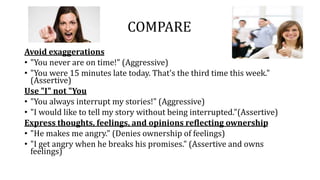
COMPARE
Avoid exaggerations
• "You never are on time!" (Aggressive)
• "You were 15 minutes late today. That's the third time this week."
(Assertive)
Use "I" not "You
• "You always interrupt my stories!" (Aggressive)
• "I would like to tell my story without being interrupted."(Assertive)
Express thoughts, feelings, and opinions reflecting ownership
• "He makes me angry." (Denies ownership of feelings)
• "I get angry when he breaks his promises." (Assertive and owns
feelings)
Building rapport and effective
interpersonal relationships
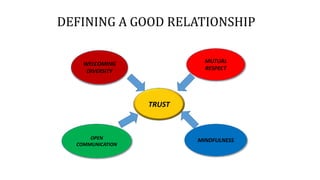
DEFINING A GOOD RELATIONSHIP
WELCOMING
DIVERSITY
TRUST
MUTUAL
RESPECT
OPEN
COMMUNICATION
MINDFULNESS
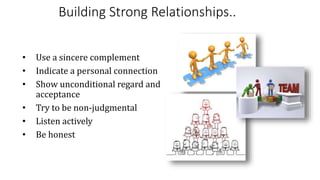
Building Strong Relationships..
• Use a sincere complement
• Indicate a personal connection
• Show unconditional regard and
acceptance
• Try to be non-judgmental
• Listen actively
• Be honest
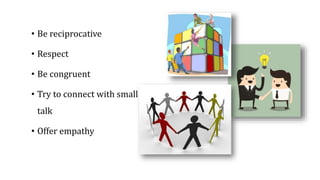
• Be reciprocative
• Respect
• Be congruent
• Try to connect with small
talk
• Offer empathy
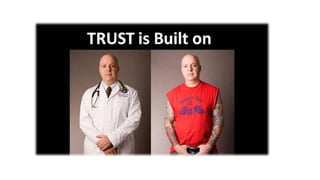
Video – The 5 waves of trust
STRESS MANAGEMENT
• Manage time.
• Get enough sleep.
• Ease up on stress buster.
• Practice yoga, running, sport etc.
• Involve in a hobby.
• Spend time with your loved ones.
• Eat healthy.
• IF YOU CAN MANAGE YOURSELF EFFECTIVELY THEN THERE WONT
BE ANY NEED TO MANAGE STRESS.

Personal effectiveness workshop

  • 1.
  • 2.
    OBJECTIVE OF THEWORKSHOP • Communication skills for effectiveness. • Art of introduction and greeting. • Body language to enhance effectiveness. • Prioritize tasks according to their importance. • Building rapport & trust in work relationship. • Being proactive and assertive behaviour. • Stress Management.
  • 3.
  • 4.
    WHAT IS PERSONALEFFECTIVENESS?
  • 5.
  • 6.
    COMMUNICATION SKILLS • Befriendly. • Think before you speak. • Be clear. • Don’t talk too much. • Be your authentic self. • Practice humility. • Speak with confidence. • Be concise. • Mirroring.
  • 7.
    You never geta second chance to make the first impression! First impression is the last impression! If you cant make it good, at least make it look good!! The Art of introducing and greeting
  • 8.
    • It takesjust a quick glance, maybe TEN seconds, for someone to evaluate you when you meet for the first time. • In this short time, the other person forms an opinion about you based on your appearance, your body language, your demeanor, your mannerisms, and how you are dressed.
  • 9.
    TIPS FOR CREATINGAN IMPACT! • Be on time • A warm smile • Present yourself appropriately • Be yourself, Be at ease
  • 10.
    • An introductionthat includes your first and last name • A welcoming comment • Direct eye contact • Firm Handshake • Be open and confident
  • 12.
    An effective SelfIntroduction Role Play- Interviews and client meetings
  • 13.
    AN EFFECTIVE SELFINTRODUCTION • Short and sweet is the key! • Stay aware of the setting • Embrace understatement • Focus on the other person • Have a call-to-action. • Finish strong. • Use the persons name • Be well prepared (Do your home work well) • Compliment and thank the listener
  • 14.
    Body language isa kind of nonverbal communication, where thoughts, intentions, or feelings are expressed by physical behaviours, such as facial expressions, body posture, gestures, eye movement, touch and the use of space. #1 #2 #3 #4 Let us interpret few Thoughts, Intentions, or Feelings???
  • 15.
    ELEMENTS OF PERSONALCOMMUNICATION Body Language 55% Words 7% Pitch, Tone, Rate, Voume 38% Personal Communication Body Language Words Pitch, Tone, Rate, Voume • Facial expressions • Body posture • Gestures • Eye movement • Touch • Use of space
  • 16.
  • 17.
    Do’s & Don'ts– Body Language
  • 18.
  • 19.
  • 22.
    BECOME AN ACTIVELISTENER! • Pay Attention • Acknowledge the speaker • Provide feedback • Defer Judgement • Respond appropriately
  • 23.
  • 24.
    ESTABLISH AND PRIORITIZEGOALS • Set clear goals • Set your time limit • Set day goals • Write your goal on paper
  • 25.
    TIME MANAGEMENT “Time management”refers to the way that you organize and plan how long you spend on specific activities. Benefits of Time Management: • Greater productivity and efficiency. • A better professional reputation. • Less stress. • Increased opportunities for advancement. • Greater opportunities to achieve important life and career goals.
  • 26.
    TIME MANAGEMENT • Listthe task and organize your time • Set priorities • Keep a clear focus • Avoid wastage of time • Use a diary – mobile application • Working together • Take a break
  • 27.
  • 28.
    TOWER OF CARDS Learning:Time management, Team Work and Quality Results. Let’s play a game!!! Divide yourself in 4 teams each of 4-5 members. The box contains cards – Spades, Clubs, Diamonds and hearts, they all are mixed. Each group will be given 1 min to create a tower of cards (use same French suit) as show in the picture. Team with maximum levels of stack will win. Take care of the tower - should not lapse. Remember – Quality cannot be compromised!
  • 29.
    BEING PROACTIVE I donot blame others for my wrong actions. I am a responsible person. I choose my actions, attitudes, and moods. I do the right thing without being asked, even when no one is looking.
  • 30.
    PROACTIVE VS REACTIVE Proactive– Creating or controlling a situation rather than just responding to it. Reactive - Acting in response to a situation rather than creating or controlling it.
  • 31.
    If you arewaiting for someone to help you, you may end up waiting a long time; take charge and be Proactive, take charge of each day... TAKE CHARGE OF YOUR LIFE
  • 32.
    BEING ASSERTIVE Expressing whatyou think and feel in a positive way by creating mutual respect • Confident in a relaxed way • Able to openly state views and opinion without upsetting others • Do not ignore problems- look for win-win situation • Proactive- look for situation instead of blaming others • Able to admit mistakes without excessive apologizing
  • 33.
    COMPARE Avoid exaggerations • "Younever are on time!" (Aggressive) • "You were 15 minutes late today. That's the third time this week." (Assertive) Use "I" not "You • "You always interrupt my stories!" (Aggressive) • "I would like to tell my story without being interrupted."(Assertive) Express thoughts, feelings, and opinions reflecting ownership • "He makes me angry." (Denies ownership of feelings) • "I get angry when he breaks his promises." (Assertive and owns feelings)
  • 34.
    Building rapport andeffective interpersonal relationships
  • 35.
    DEFINING A GOODRELATIONSHIP WELCOMING DIVERSITY TRUST MUTUAL RESPECT OPEN COMMUNICATION MINDFULNESS
  • 37.
    Building Strong Relationships.. •Use a sincere complement • Indicate a personal connection • Show unconditional regard and acceptance • Try to be non-judgmental • Listen actively • Be honest
  • 38.
    • Be reciprocative •Respect • Be congruent • Try to connect with small talk • Offer empathy
  • 39.
    Video – The5 waves of trust
  • 40.
    STRESS MANAGEMENT • Managetime. • Get enough sleep. • Ease up on stress buster. • Practice yoga, running, sport etc. • Involve in a hobby. • Spend time with your loved ones. • Eat healthy. • IF YOU CAN MANAGE YOURSELF EFFECTIVELY THEN THERE WONT BE ANY NEED TO MANAGE STRESS.