Choroidal neovascular
membranes (CNVM)
Mohammad Riyaj Ali
MSc Optometry
Choroidal neovascularization (CNV) is the creation of new blood
vessels in the choroid layer of the eye. Choroidal neovascularization is
a common cause of neovascular degenerative maculopathy (i.e.
'wet' macular degeneration) commonly exacerbated by extreme
myopia, malignant myopic degeneration, or age-related developments.
Choroidal neovascularization (CNV) involves the growth of new blood
vessels that originate from the choroid through a break in the Bruch
membrane into the sub–retinal pigment epithelium (sub-RPE) or
subretinal space. CNV is a major cause of visual loss.
Choroidal neovascularization (CNV) is part of the spectrum of
exudative age-related macular degeneration (AMD) that consists of an
abnormal growth of vessels from the choroidal vasculature to the
neurosensory retina through the Bruch's membrane. Leakage of retinal
edema and hemorrhage from CNV in exudative AMD threatens visual
acuity.
Etiology
Etiology of CNV is multifactorial. Alterations in Bruch's membrane,
migration of macrophages and production of vascular endothelium
growth factor (VEGF), play an important role in the development of
this disease.
CNV can occur rapidly in individuals with defects in Bruch's
membrane, the innermost layer of the choroid. It is also associated
with excessive amounts of vascular endothelial growth factor (VEGF).
As well as in wet macular degeneration, CNV can also occur frequently
with the rare genetic disease pseudoxanthoma elasticum and rarely
with the more common optic disc drusen. CNV has also been
associated with extreme myopia or malignant myopic degeneration,
where in choroidal neovascularization occurs primarily in the presence
of cracks within the retinal (specifically) macular tissue known as
lacquer cracks.
Pathophysiology
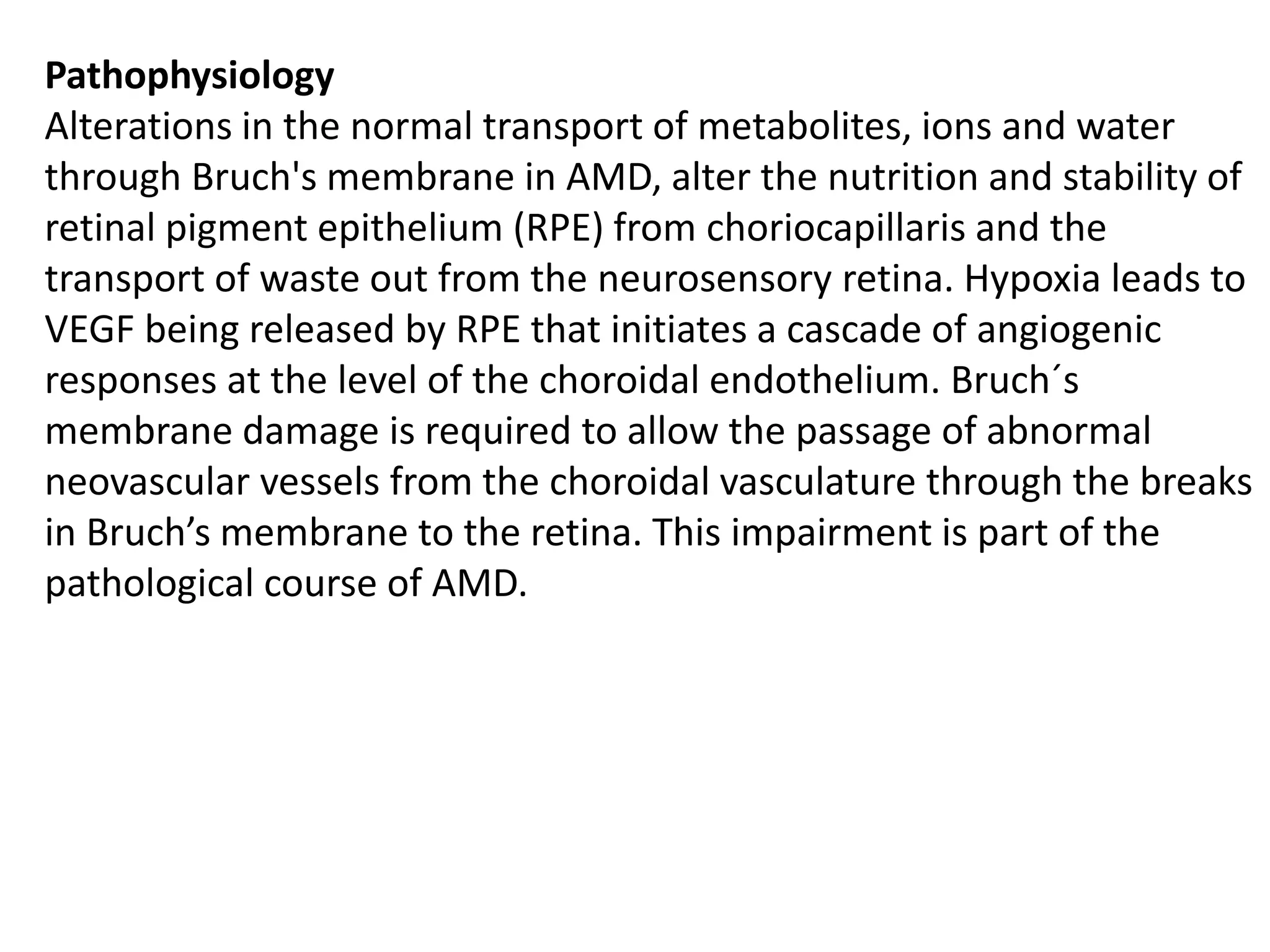
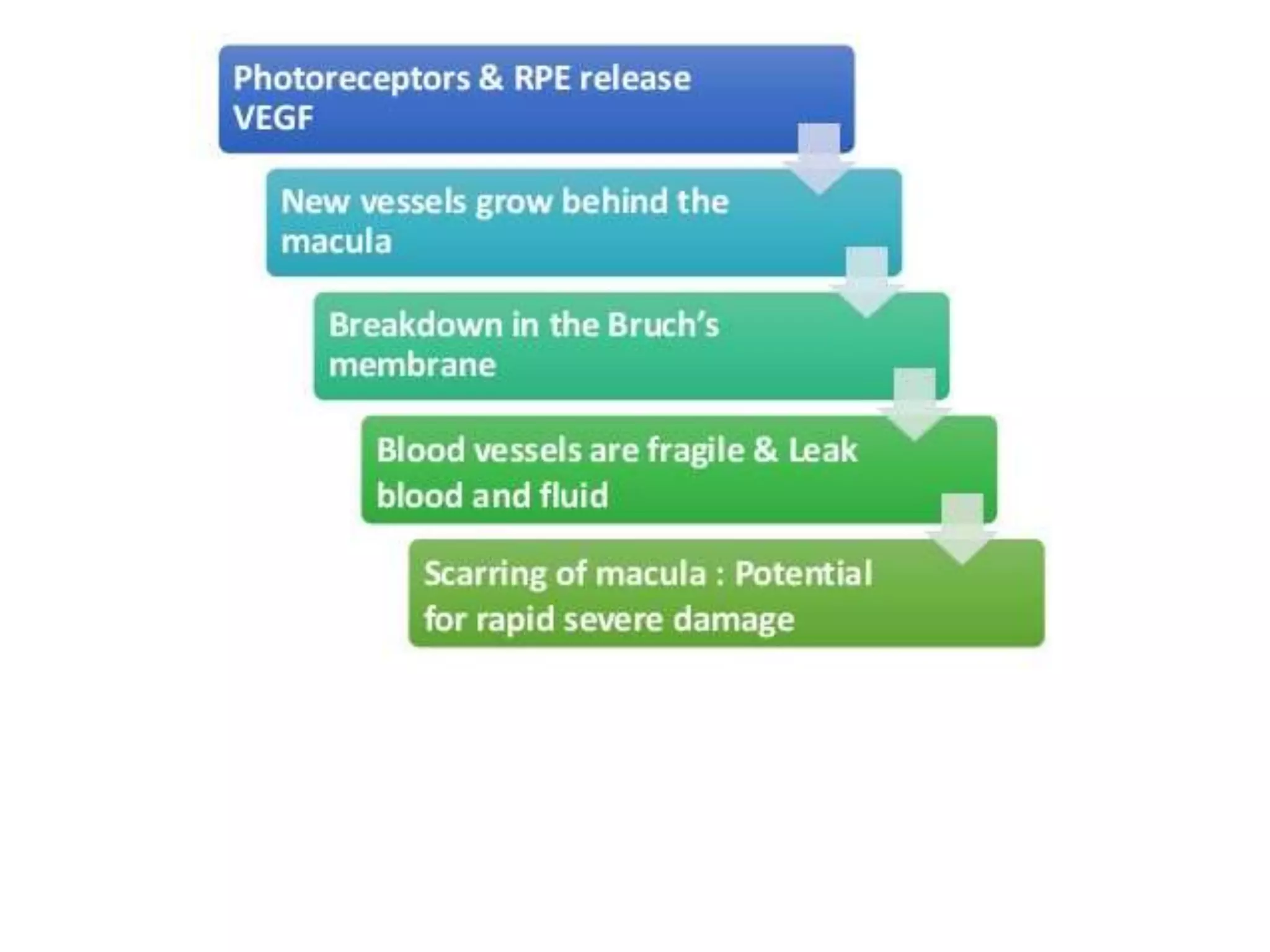
Alterations in the normal transport of metabolites, ions and water
through Bruch's membrane in AMD, alter the nutrition and stability of
retinal pigment epithelium (RPE) from choriocapillaris and the
transport of waste out from the neurosensory retina. Hypoxia leads to
VEGF being released by RPE that initiates a cascade of angiogenic
responses at the level of the choroidal endothelium. Bruch´s
membrane damage is required to allow the passage of abnormal
neovascular vessels from the choroidal vasculature through the breaks
in Bruch’s membrane to the retina. This impairment is part of the
pathological course of AMD.
Classification
Histologically, neovascular membranes are classified into:
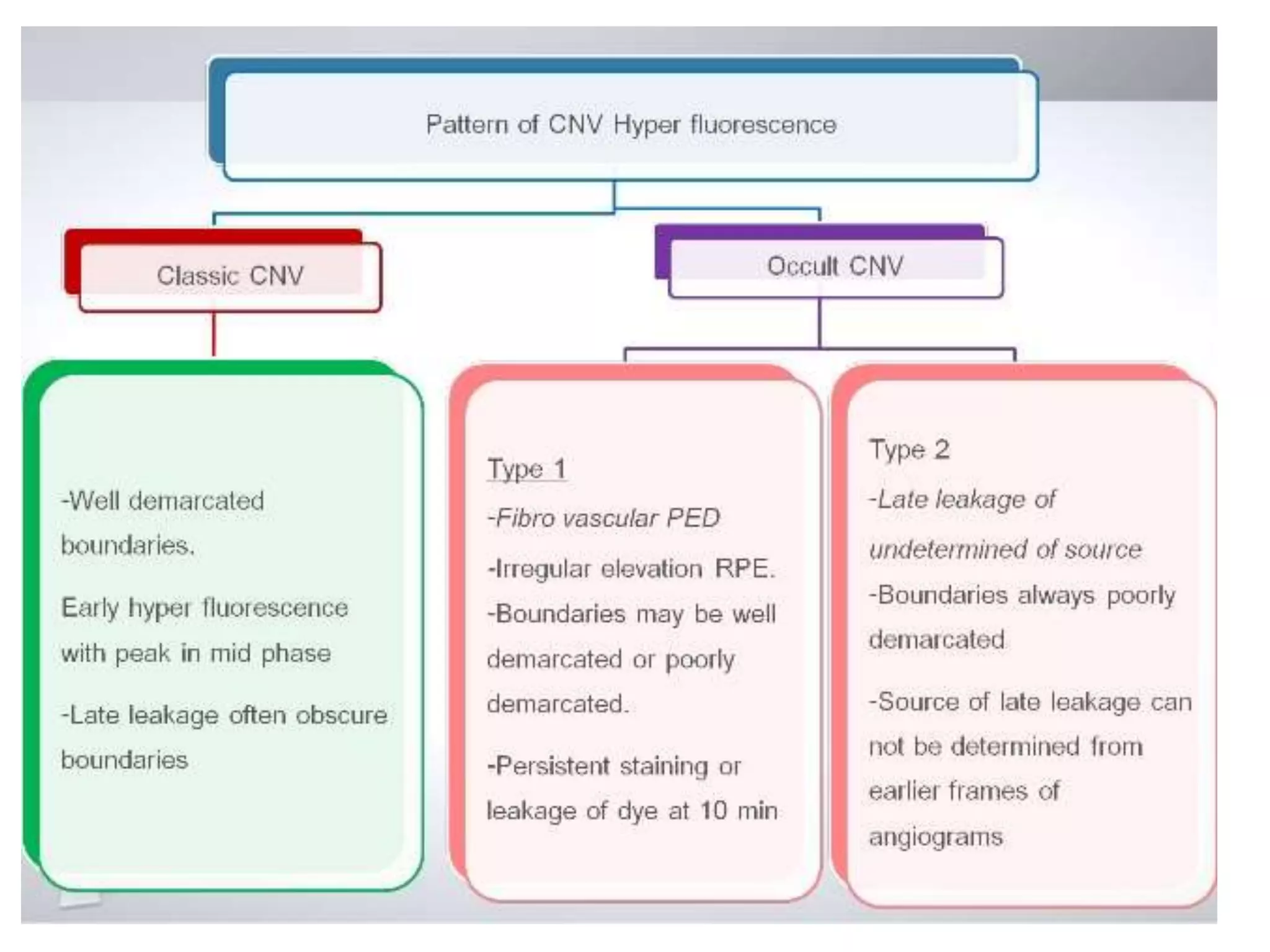
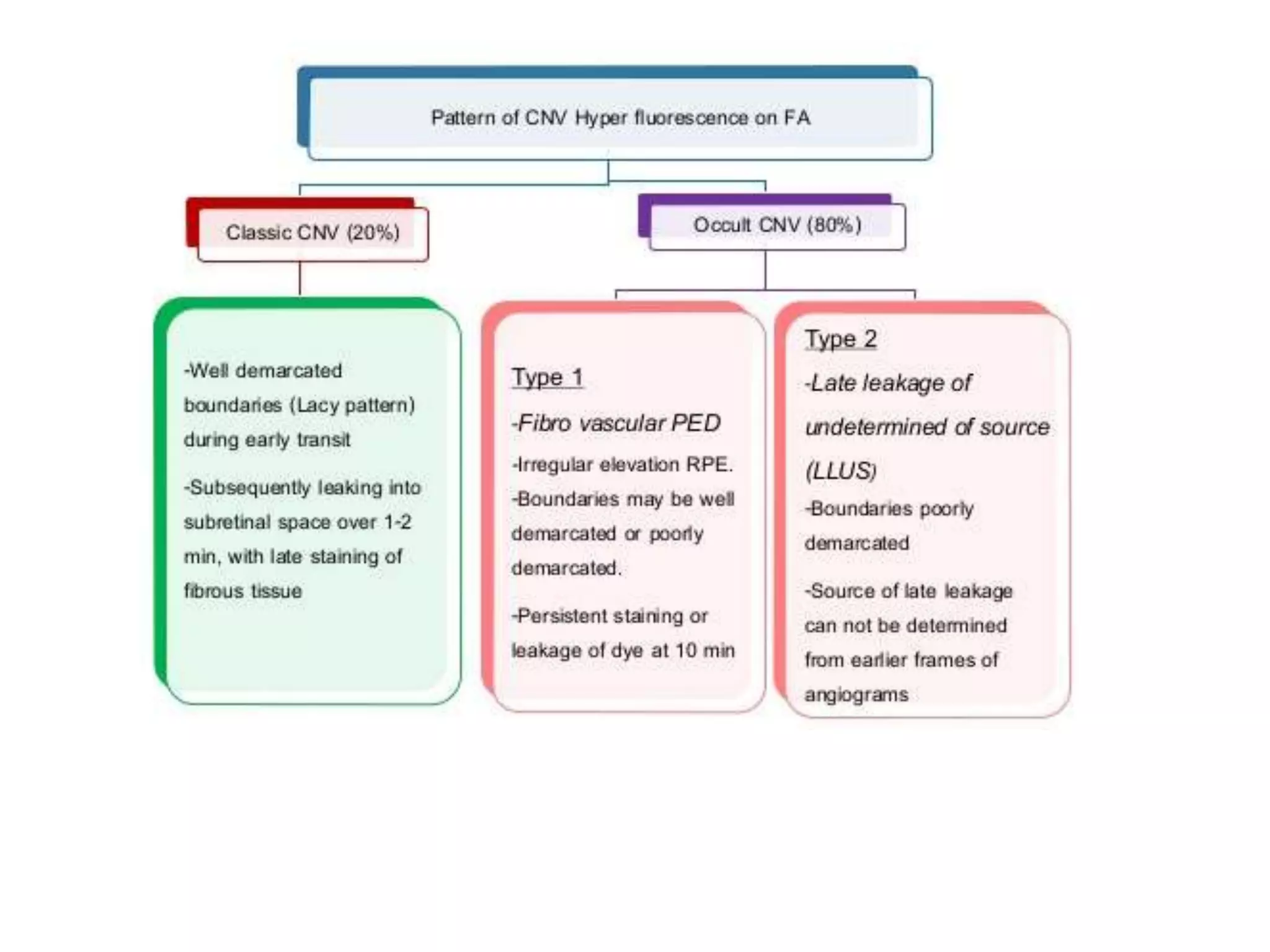
Type 1, when the neovascular membrane is located below the
RPE.
Type 2, passes through the RPE and is located above the RPE in
the subretinal space. This is related to angiographic classification:
type 1 corresponds to hidden CNV and type 2 corresponds to
classic CNV.
Type 3 is defined as Retinal Angiomatous Proliferation (RAP),
which corresponds to neovascularization that develops within the
neurosensory retina.
Choroidal Neovascular Membranes/Subretinal neovascular membranes
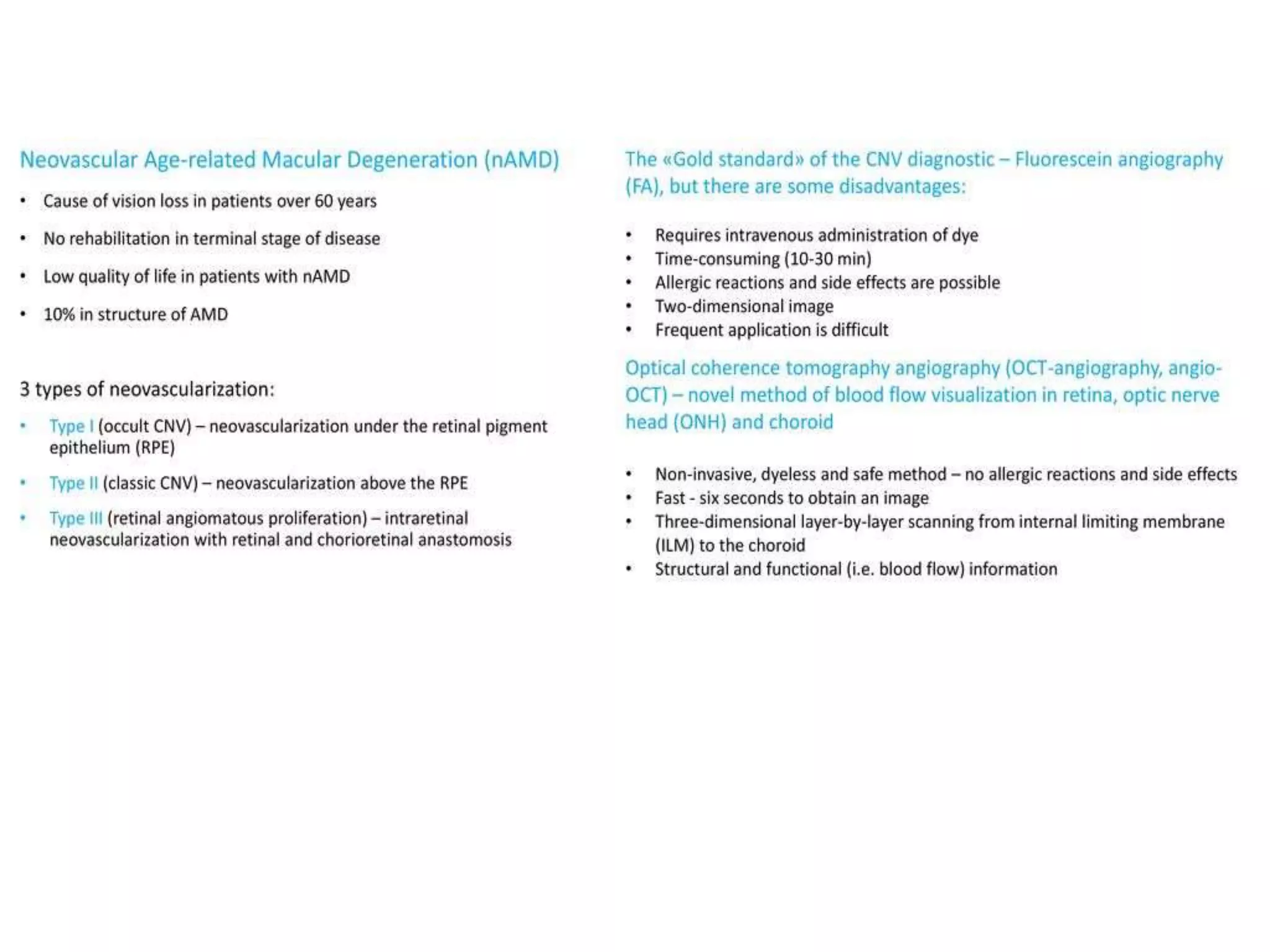
Choroidal neovascular membranes (CNVM) can be described based on its location
relative to the fovea, location relative to the retinal pigment epithelium, and
fluorescein angiography findings.
Location relative to the fovea:
Subfoveal (underneath the fovea)
Juxtafoveal (1-199 microns from the fovea)
Extrafoveal (behind 200 microns from the fovea)
Location relative to the retinal pigment epithelium:
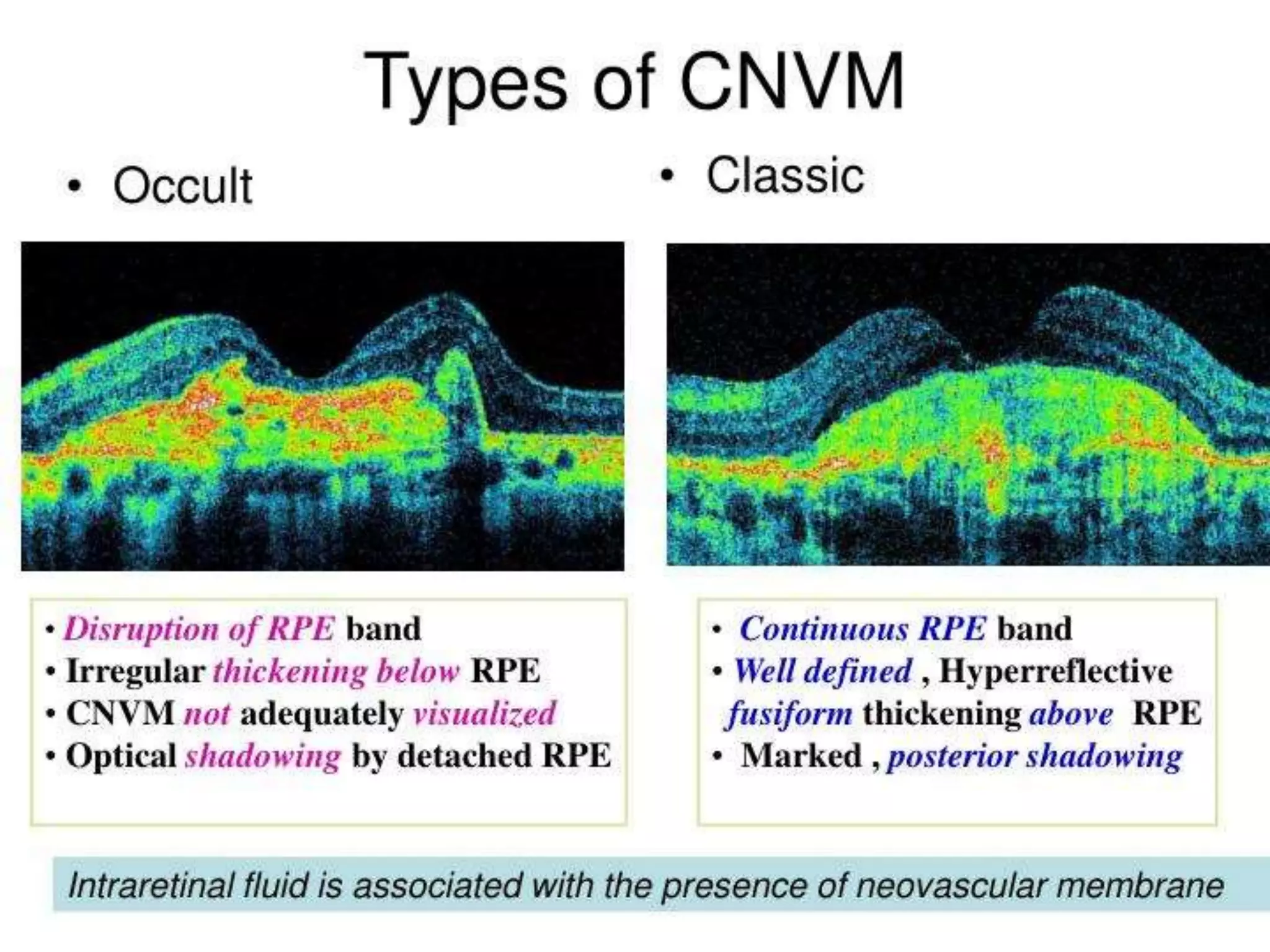
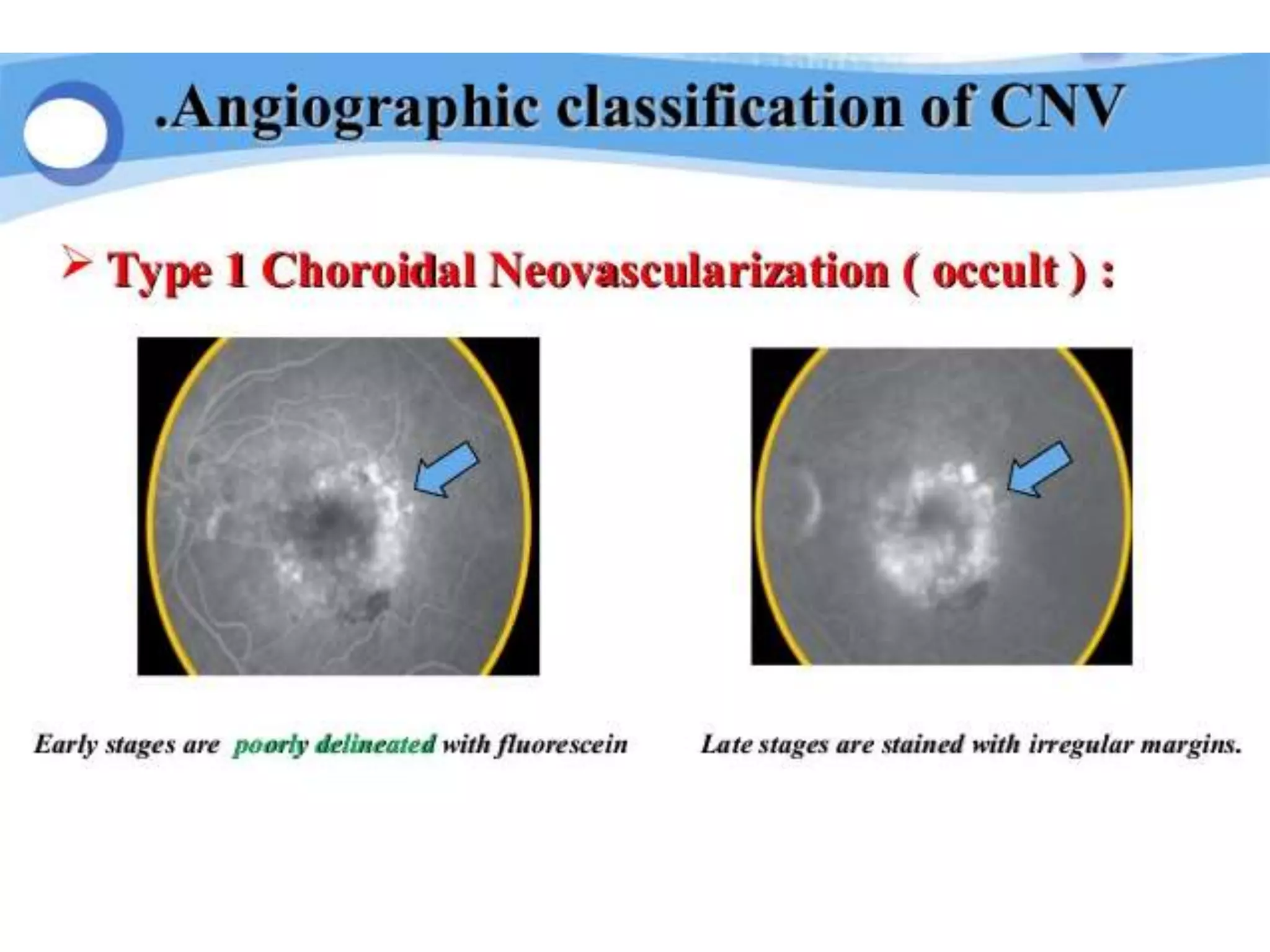
Type 1 CNVM appears beneath the RPE layer and appear as a fibrovascular or
hemorrhagic pigment epithelial detachment.
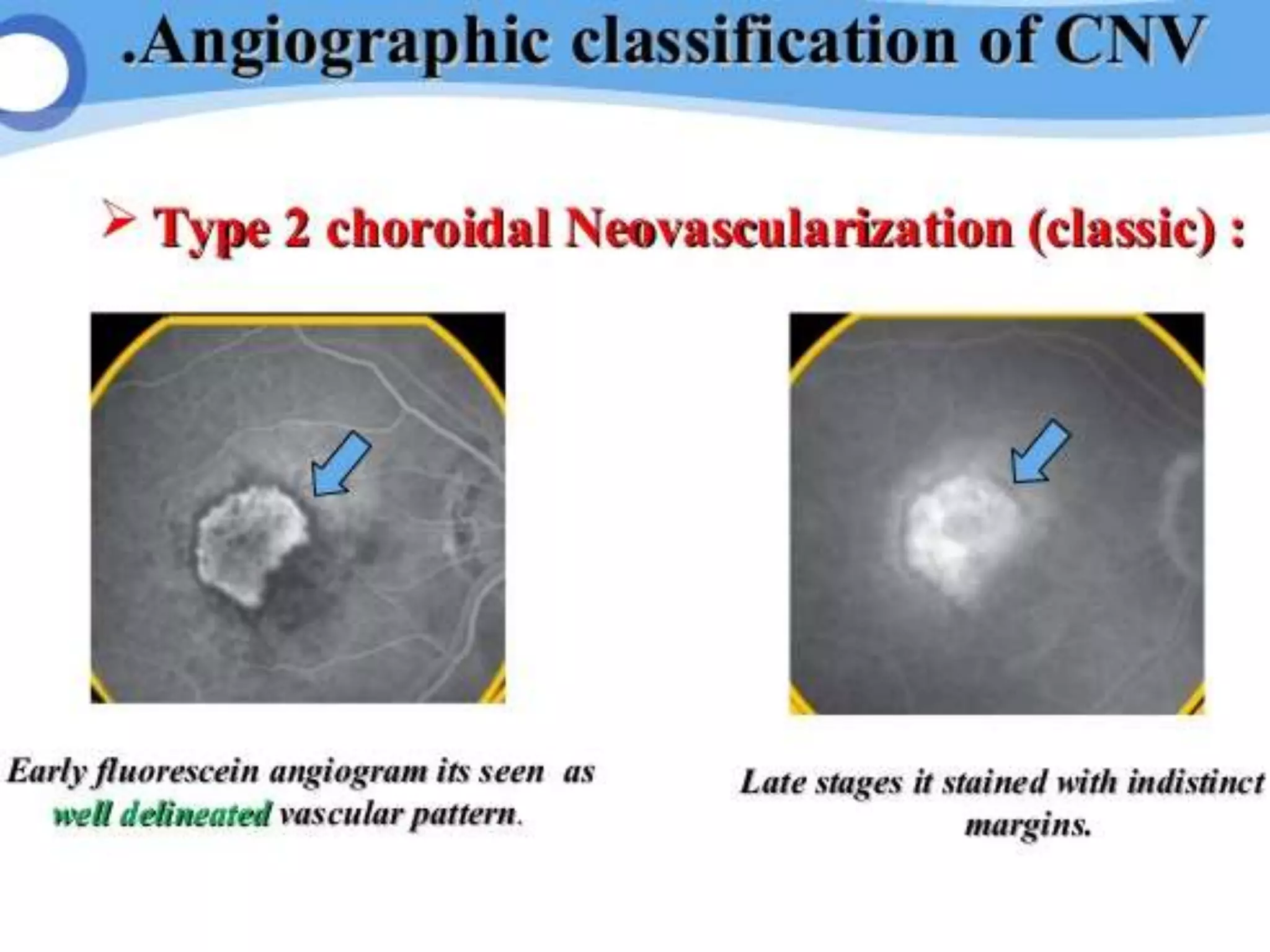
Type 2 CNVM appears above the RPE layer and adjacent SRF leakage.
Type 3 (RAP)
Fluorescein angiography findings:
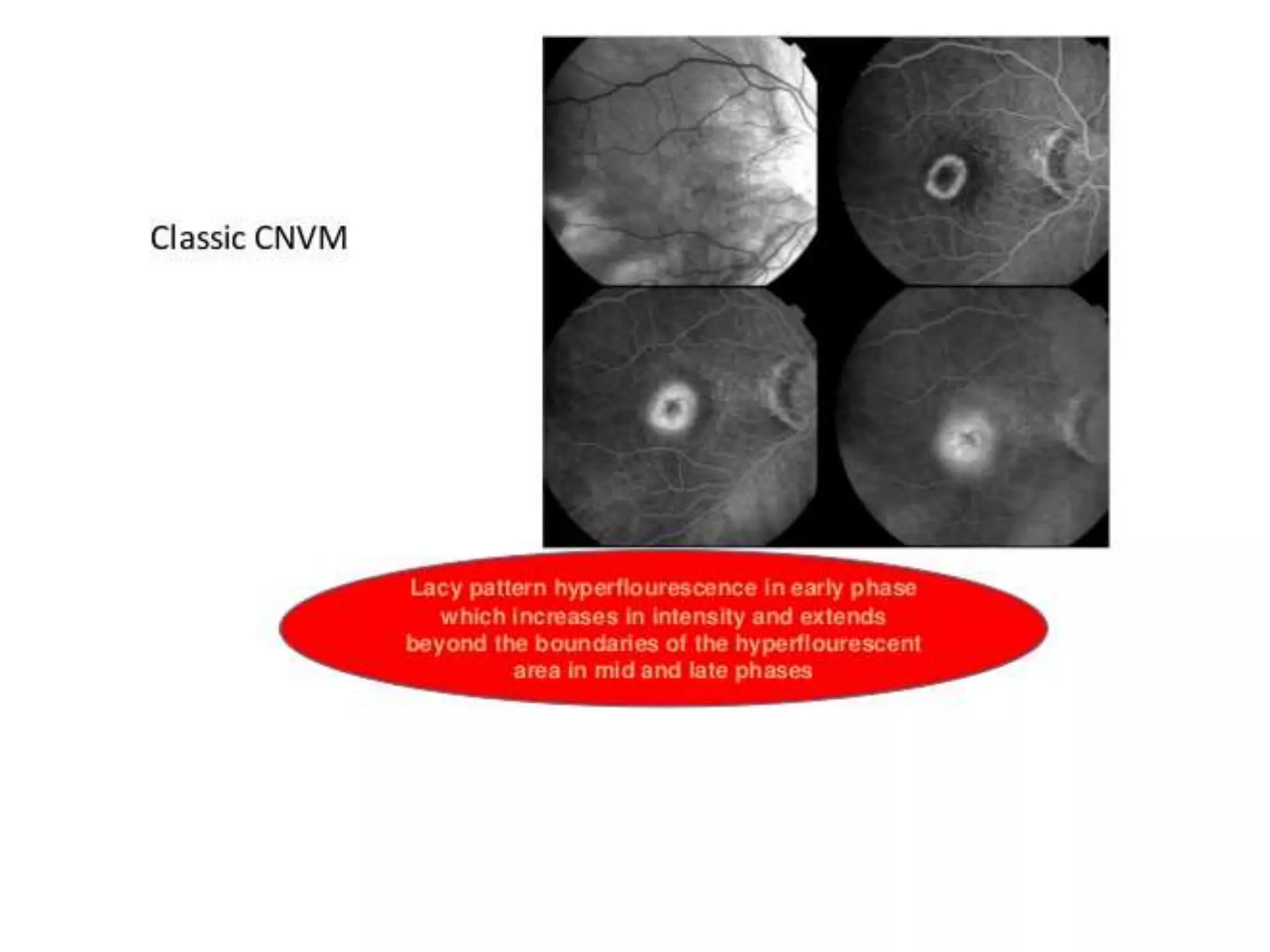
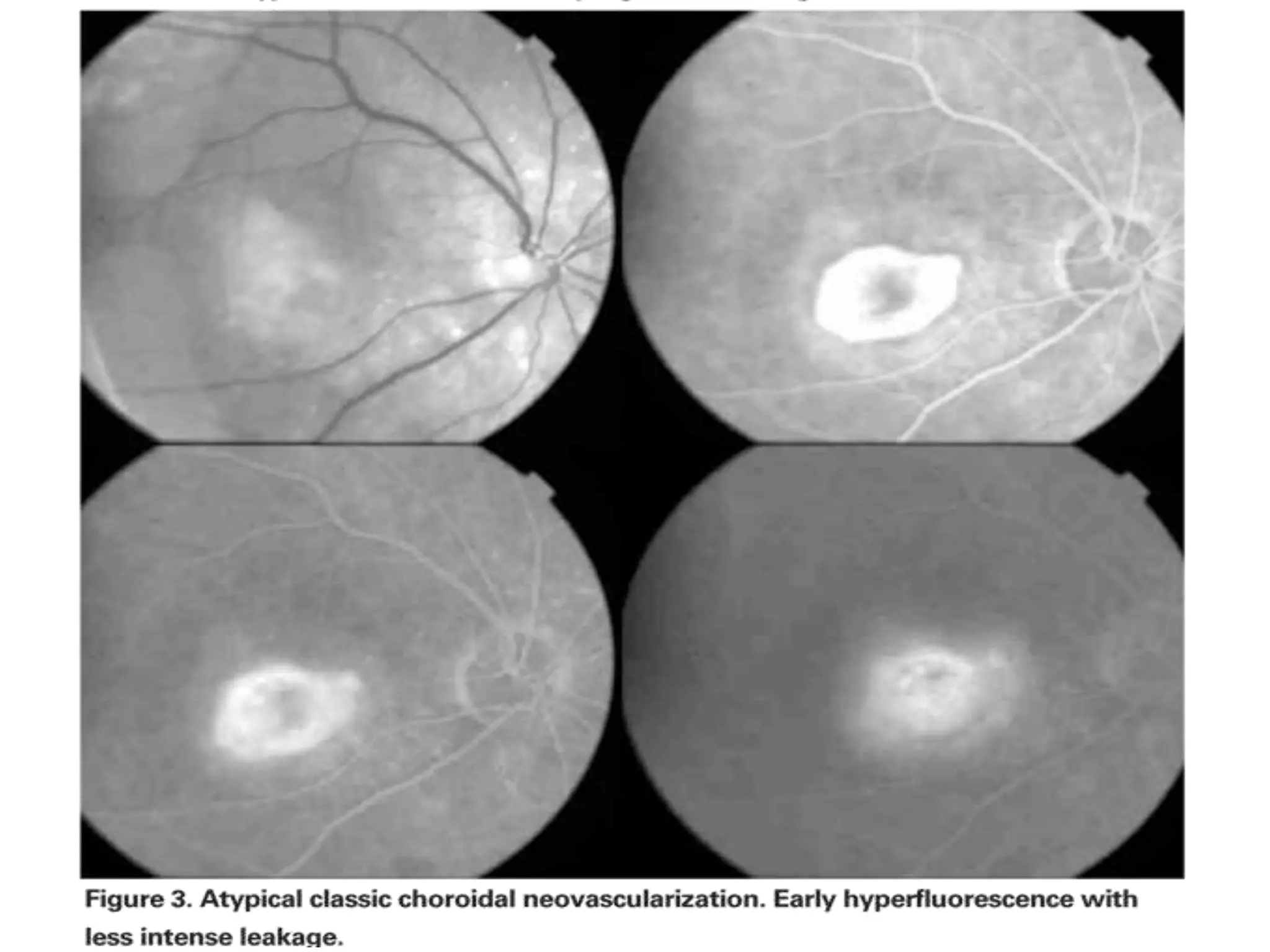
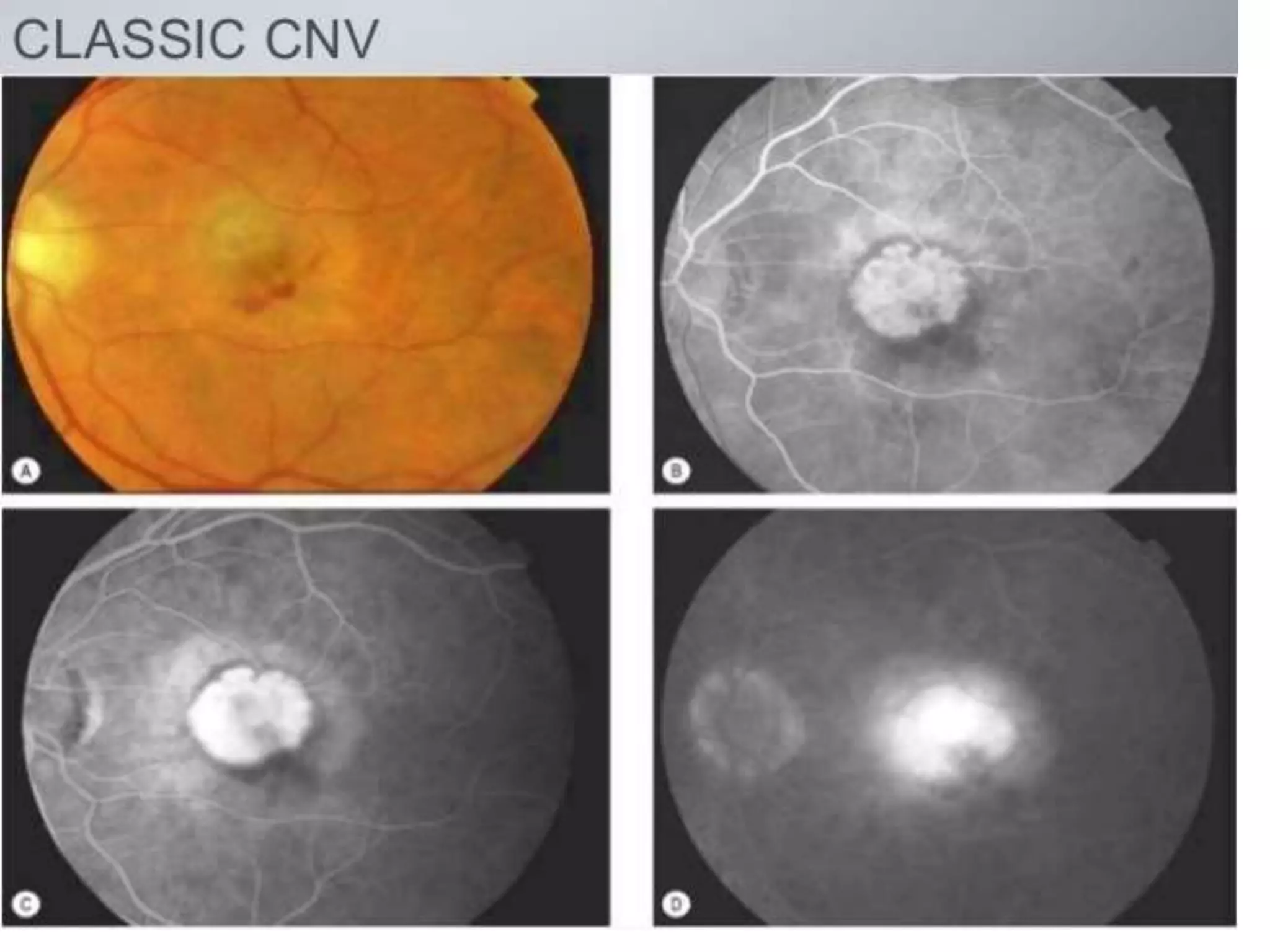
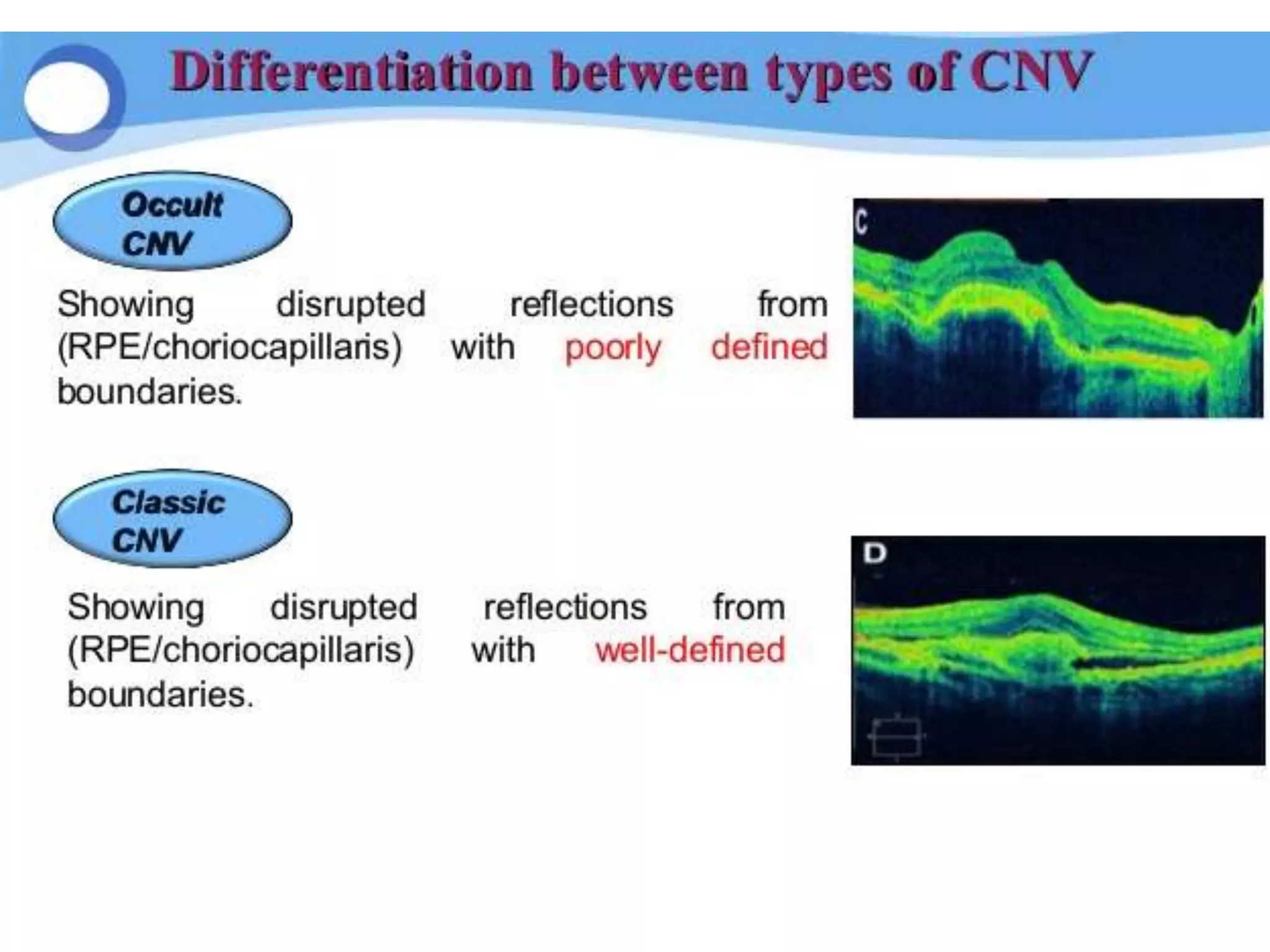
Classic appears above the RPE layer and adjacent SRF leakage.
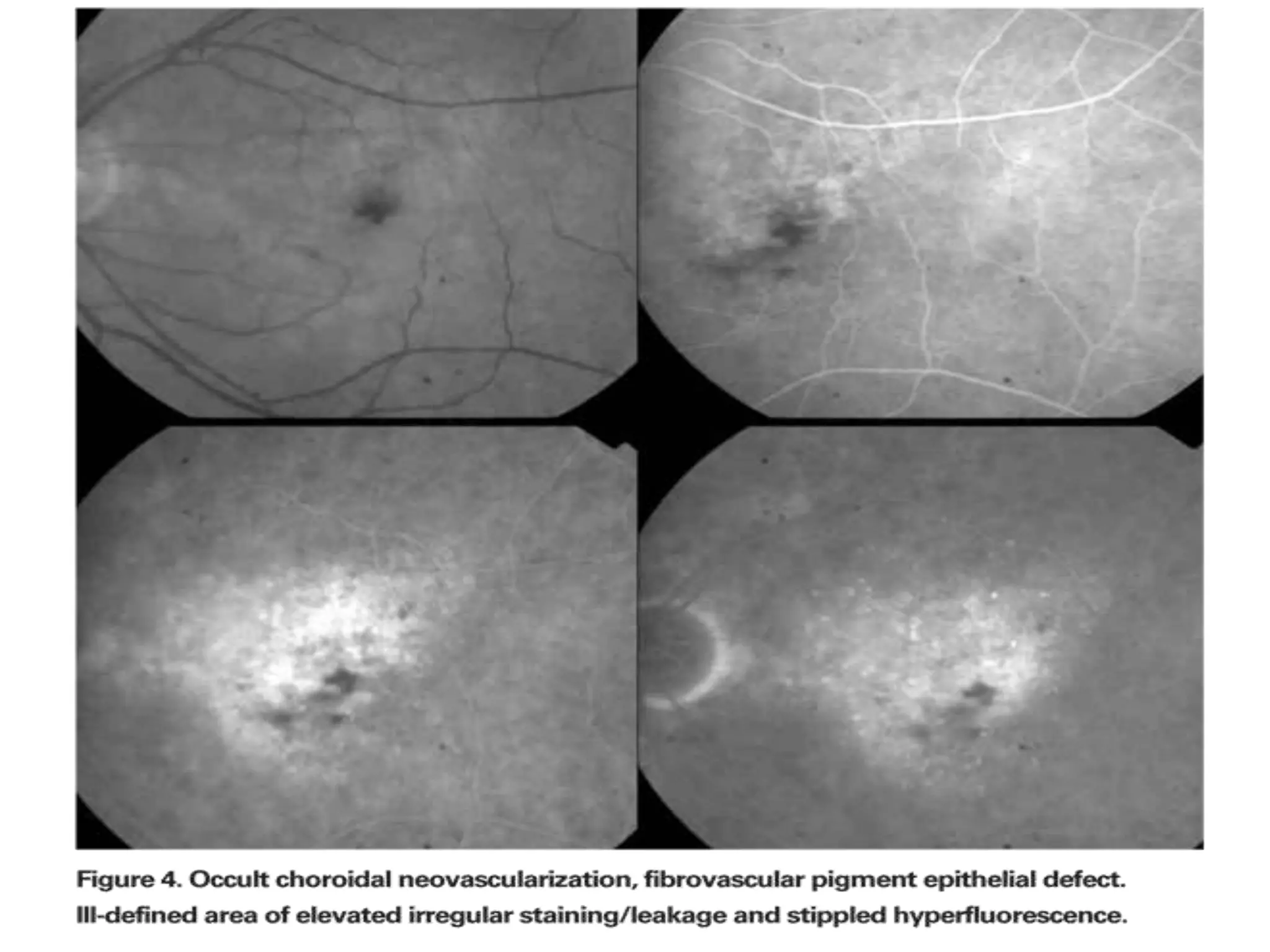
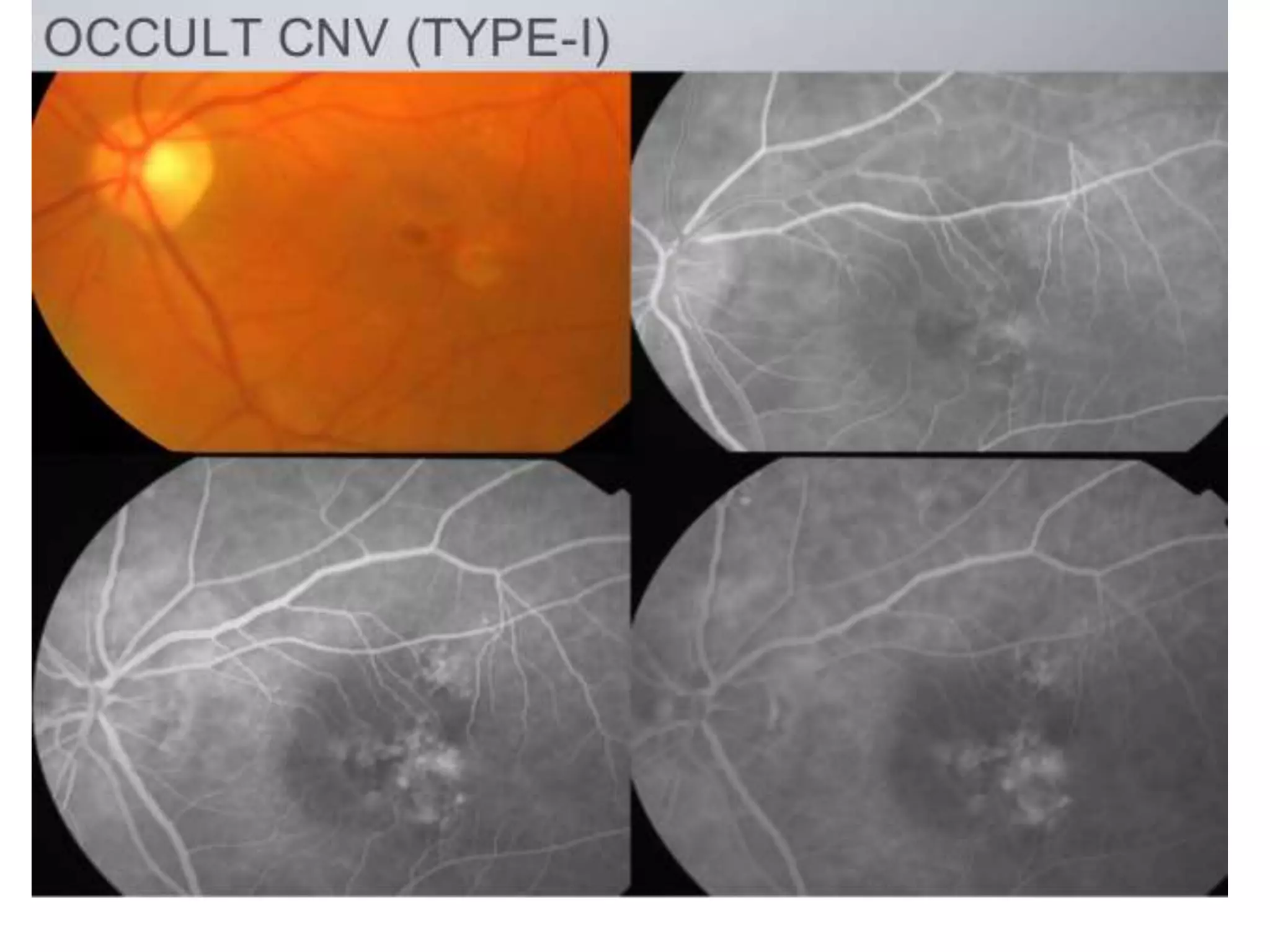
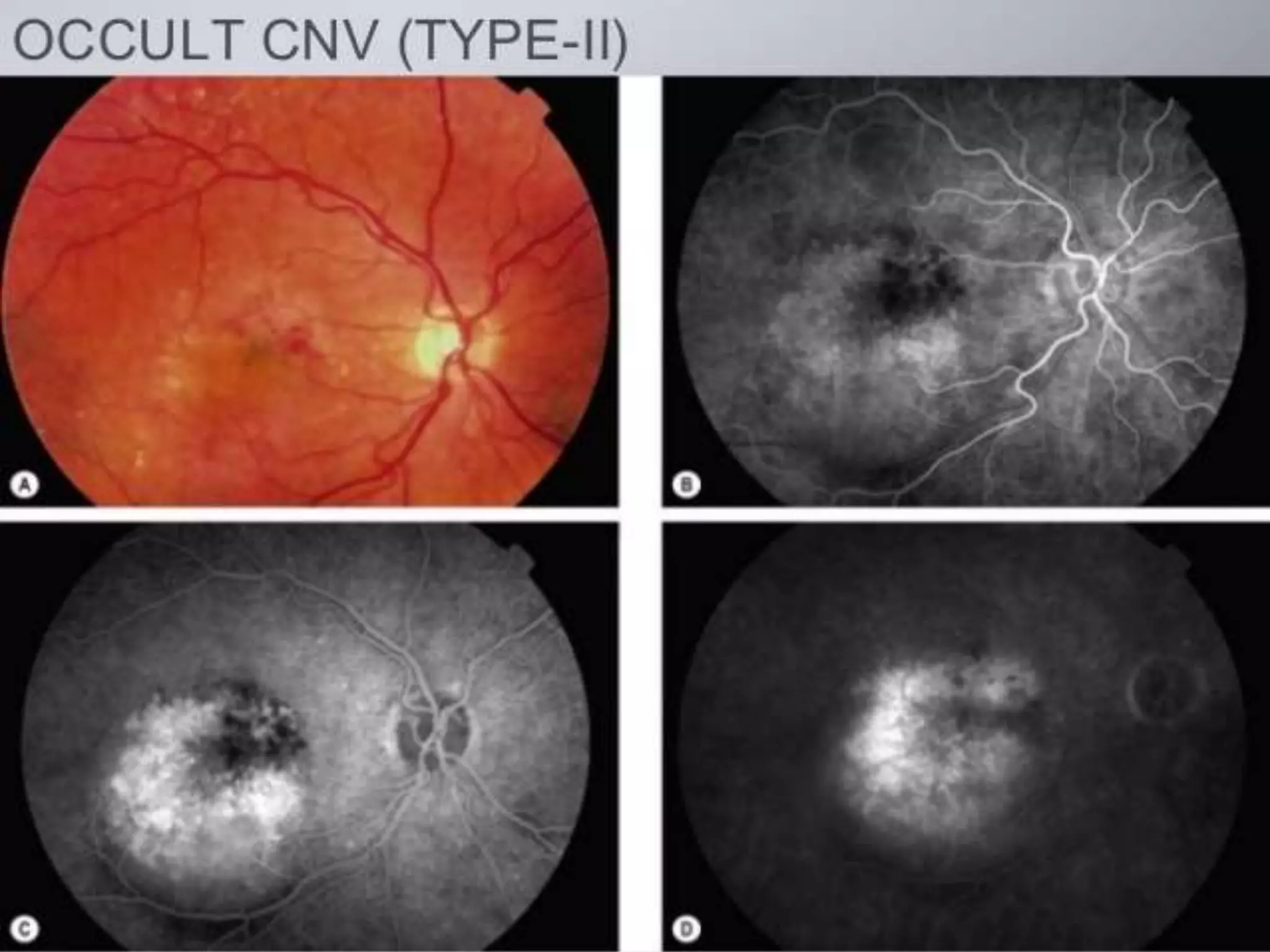
Occult appears beneath the RPE layer and appear as a fibrovascular or hemorrhagic
pigment epithelial detachment.
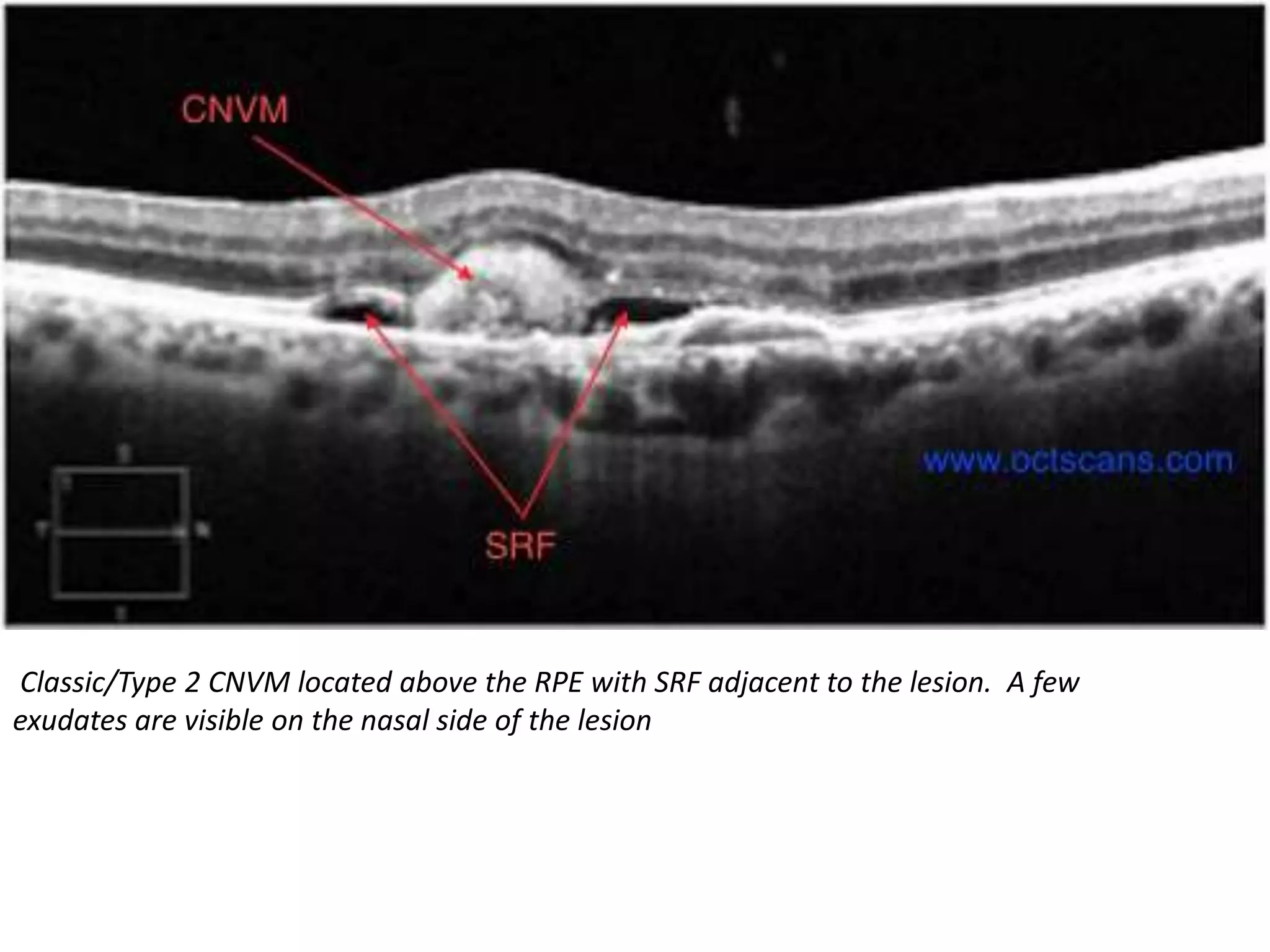
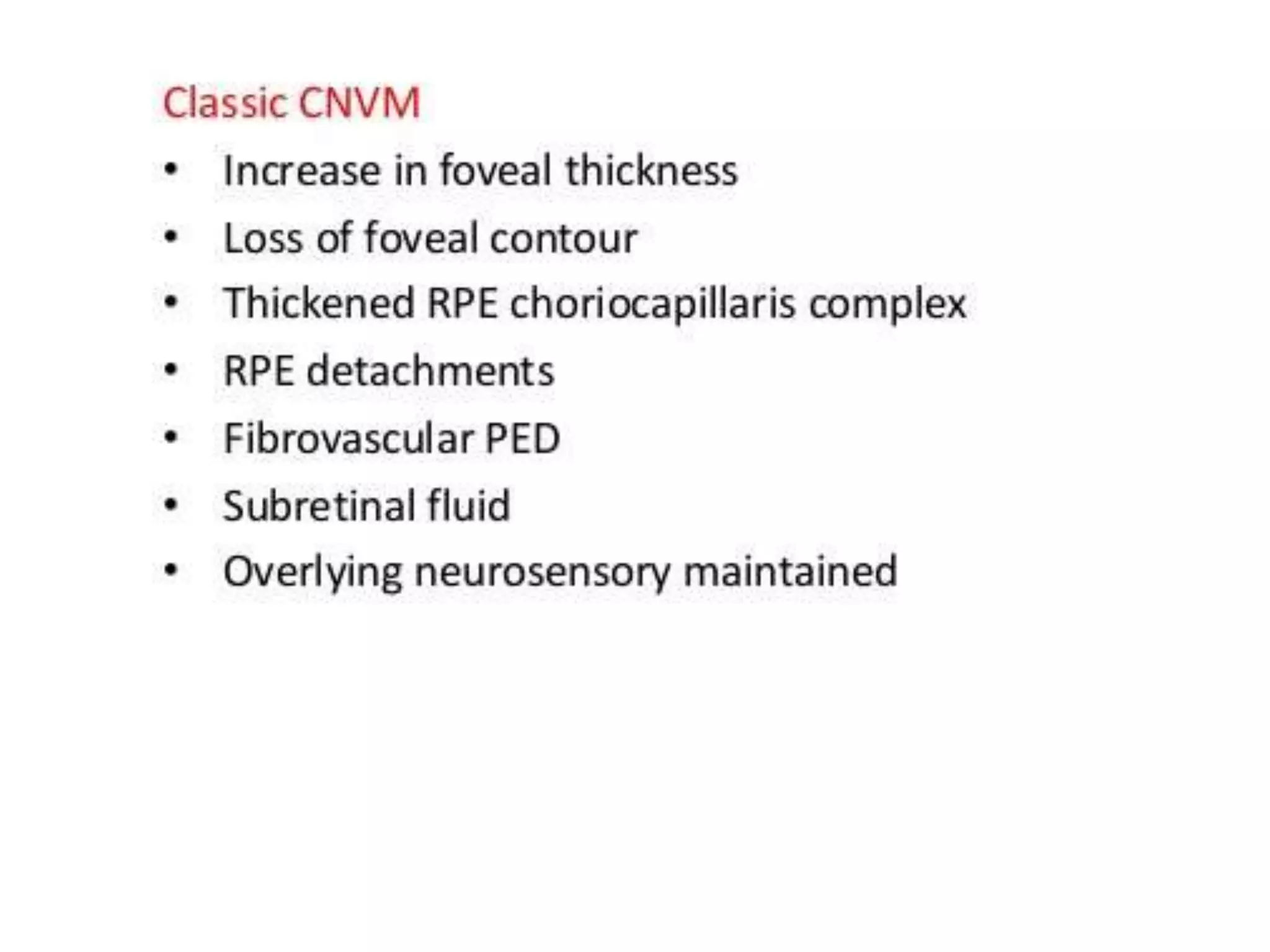
Classic/Type 2 CNVM located above the RPE with SRF adjacent to the lesion. A few
exudates are visible on the nasal side of the lesion
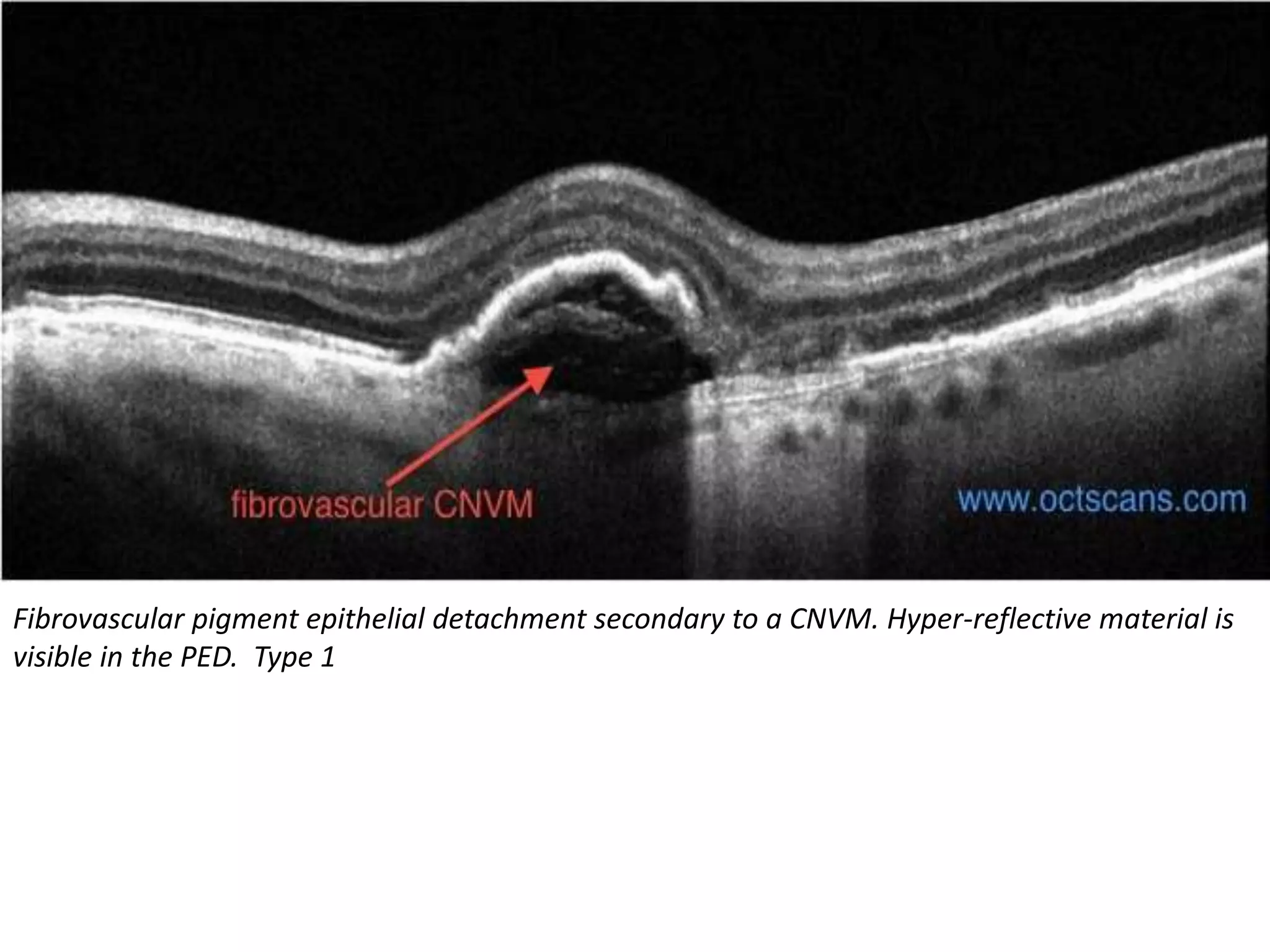
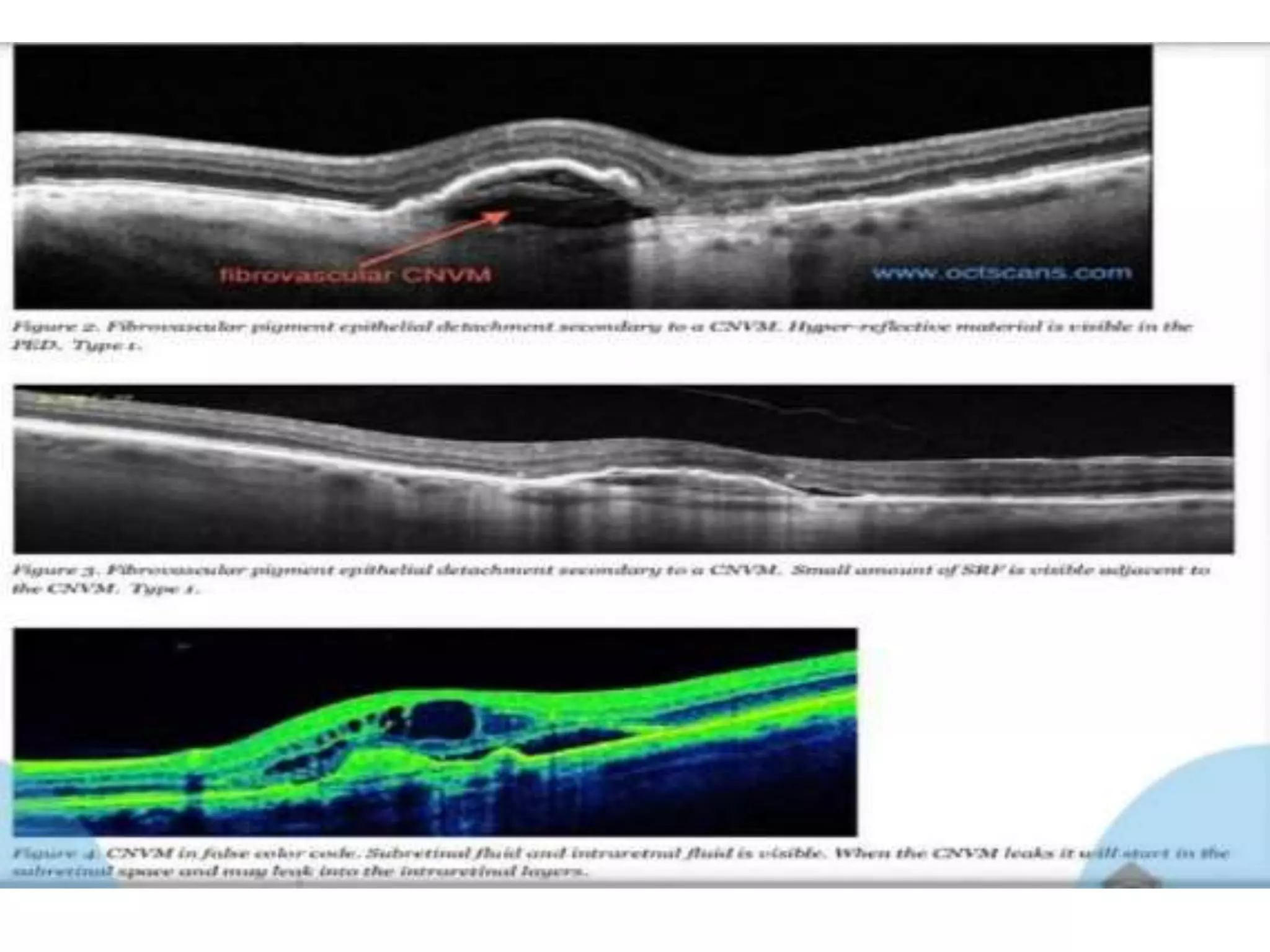
Fibrovascular pigment epithelial detachment secondary to a CNVM. Hyper-reflective material is
visible in the PED. Type 1
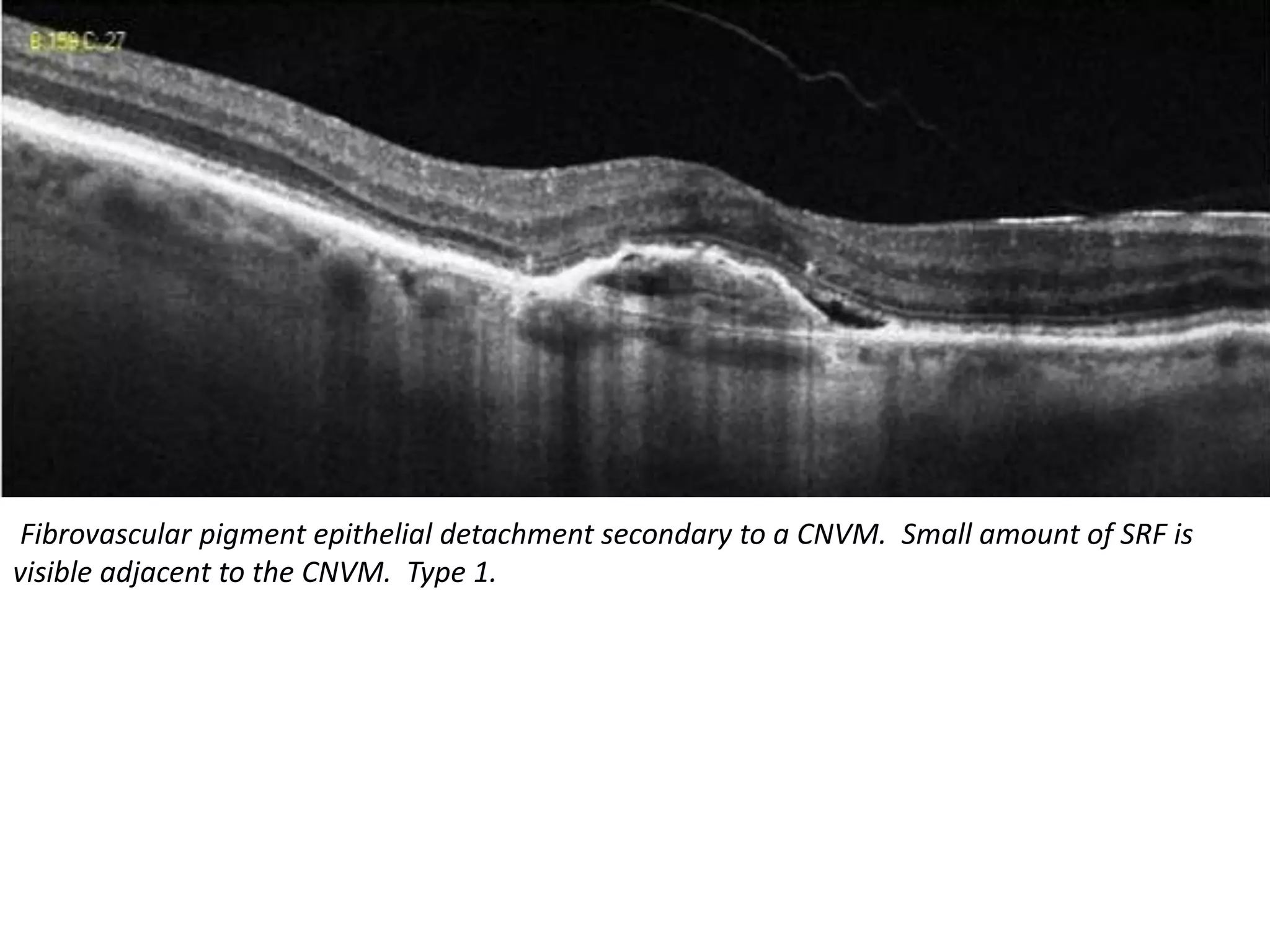
Fibrovascular pigment epithelial detachment secondary to a CNVM. Small amount of SRF is
visible adjacent to the CNVM. Type 1.
Other types of occult CNVM includes retinal angiomatous proliferation (RAP) and
polypoidal choroidal vasculopathy (PCV).
Retinal angiomatous proliferation (RAP)
RAP is described as type 3 CNVM. RAP involves 3 stages. Stage 1 consist of intraretinal
neovascularization and as the intraretinal neovascularization grows it extends
posteriorly forming stage II subretinal neovascularization. Finally, in stage III the
condition develops into a vascularized PED.
Polypoidal choroidal vasculopathy (PCV)
PCV is a the condition that generally affects darker pigmented individuals and has a
higher incidence involving Asians and African Americans. The condition is commonly
misdignosed as exudative age-related macular degeneration. The etiology is not well
understood but it has been proposed that there are abnormal choroidal vasculature
with dilation and aneurysmal formation. Patients will present with subretinal, vascular
lesions associated with serous and hemorrhagic PEDs around the peripapillary area.
ICGA is standard for diagnosis of polypoidal lesions. Treatment includes combination
therapy of photodynamic therapy (PDT) and anti-VEGF therapy.
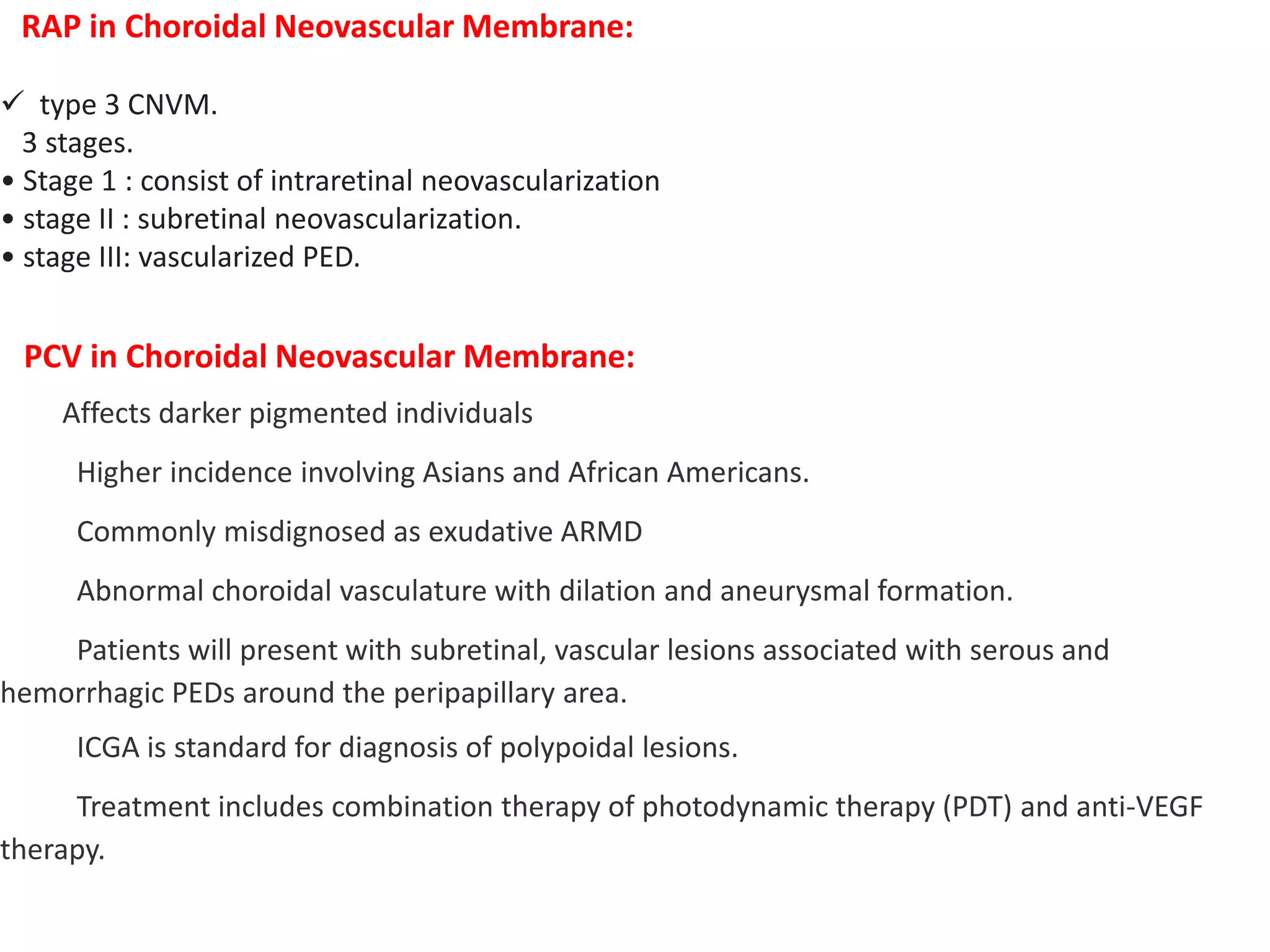
RAP in Choroidal Neovascular Membrane:
 type 3 CNVM.
3 stages.
• Stage 1 : consist of intraretinal neovascularization
• stage II : subretinal neovascularization.
• stage III: vascularized PED.
PCV in Choroidal Neovascular Membrane:
Affects darker pigmented individuals
Higher incidence involving Asians and African Americans.
Commonly misdignosed as exudative ARMD
Abnormal choroidal vasculature with dilation and aneurysmal formation.
Patients will present with subretinal, vascular lesions associated with serous and
hemorrhagic PEDs around the peripapillary area.
ICGA is standard for diagnosis of polypoidal lesions.
Treatment includes combination therapy of photodynamic therapy (PDT) and anti-VEGF
therapy.
Symptoms
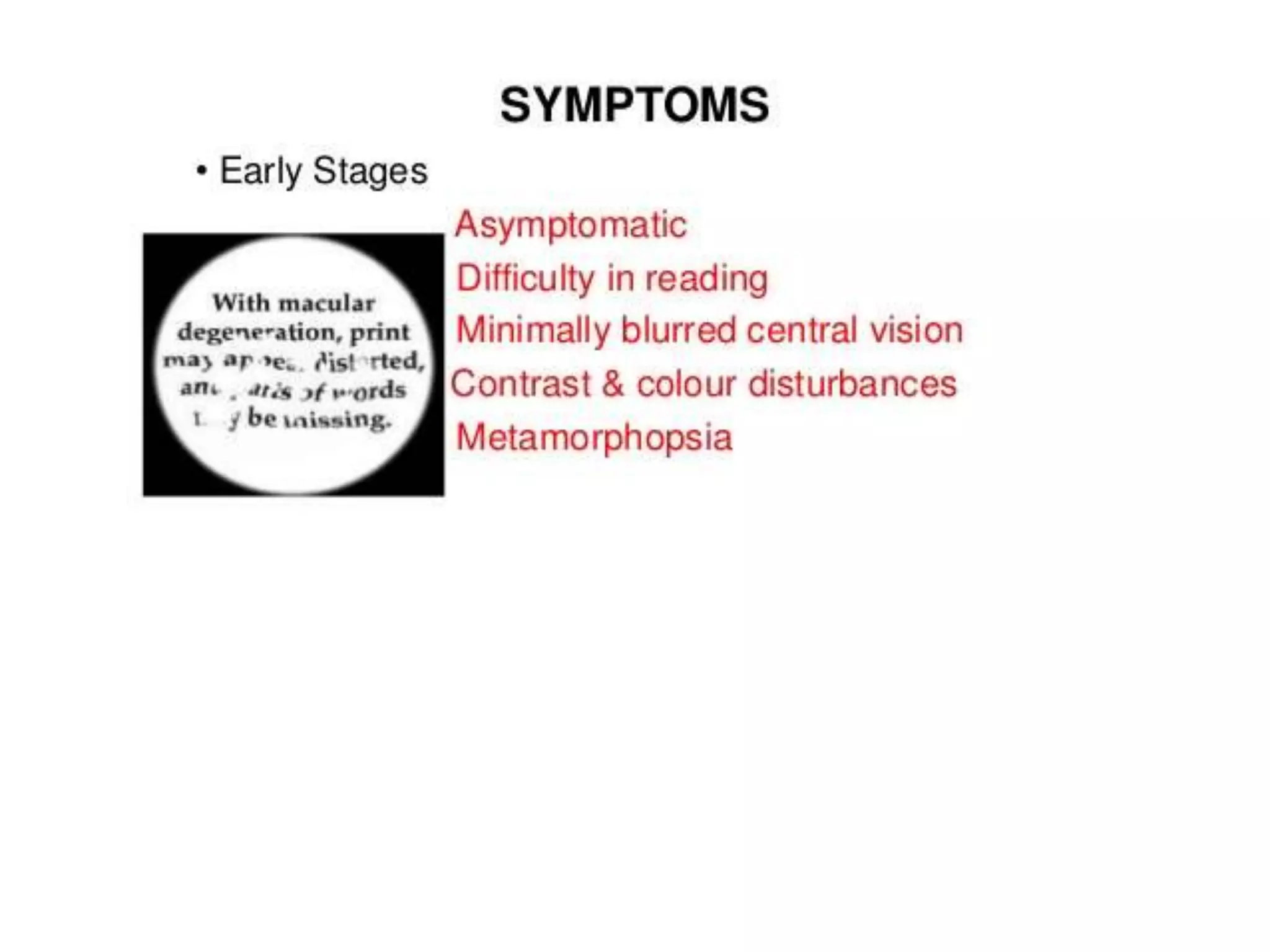
CNV can create a sudden deterioration of central vision, noticeable within a few
weeks. Other symptoms which can occur include colour disturbances,
and metamorphopsia (distortions in which straight lines appears wavy).
Hemorrhaging of the new blood vessels can accelerate the onset of symptoms of
CNV. CNV may also include the feeling of pressure behind your eye.
If you have CNVM, you may experience painless vision loss. You may notice blank
spots in your vision, especially your central vision. Your vision may be distorted, so
that straight lines appear bent, crooked or irregular.
Other symptoms may include the following:
objects appear to have different sizes for each eye;
colors lose their brightness or colors do not look the same for each eye; or
light flashes or flickering appear in central vision.
Diagnosis
Clinical findings
Type 3 CNV. An intraretinal neovascular lesion is observed. The color
photo identifies typical punctate hemorrhages. The OCT B-scan shows
retinal edema without disruption of Bruch's membrane or RPE. OCT-A
depicts an anastomosis originating in the neurosensory retina.
In the presence of CNV, the patient experiences an acute decrease in
visual acuity, relative scotoma and metamorphopsia. The retinal
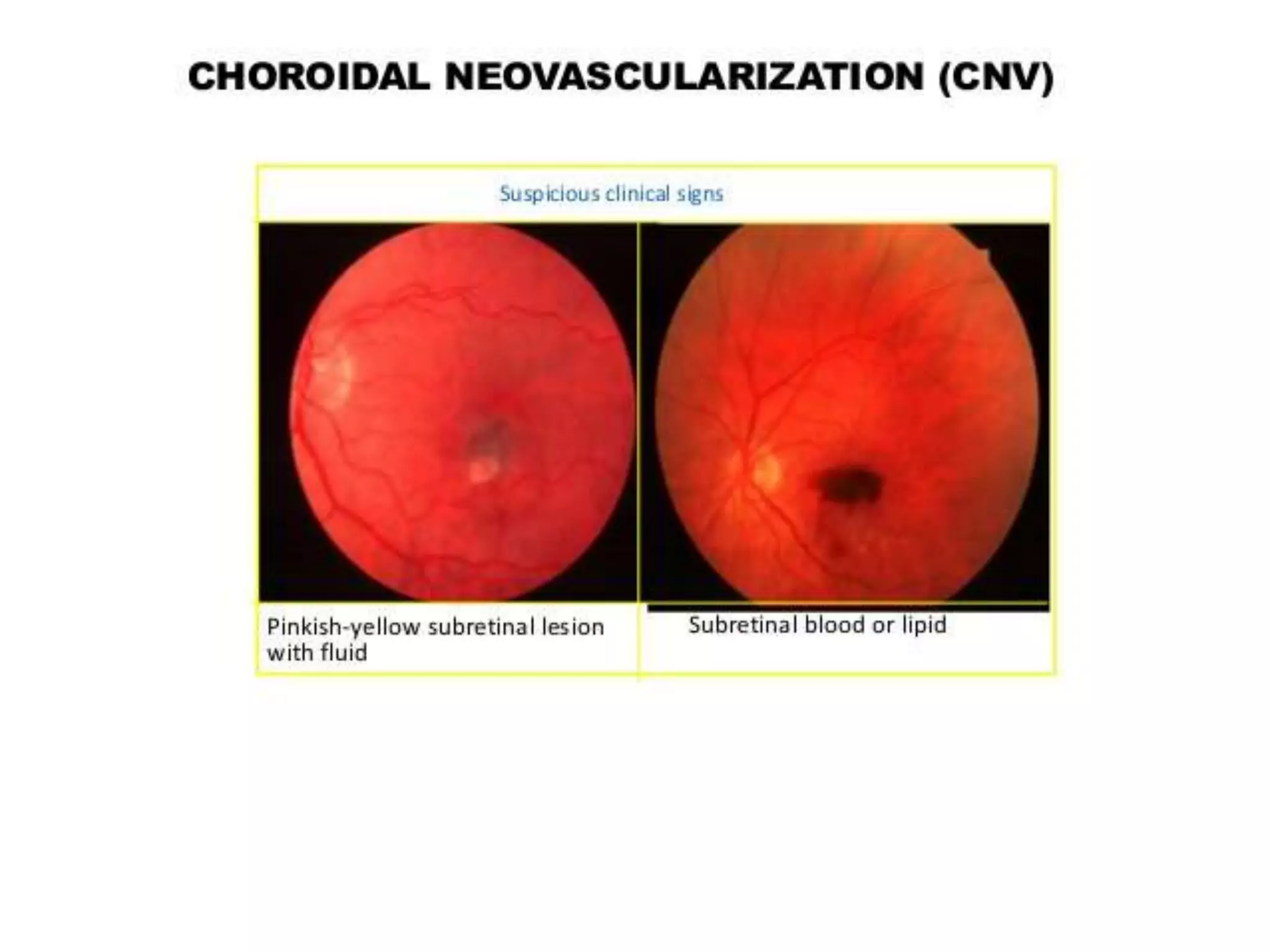
examination shows a grayish macular lesion associated with subretinal
fluid, cystoid macular edema, exudation and hemorrhage
Identification
CNV can be detected by using a type of perimetry called preferential
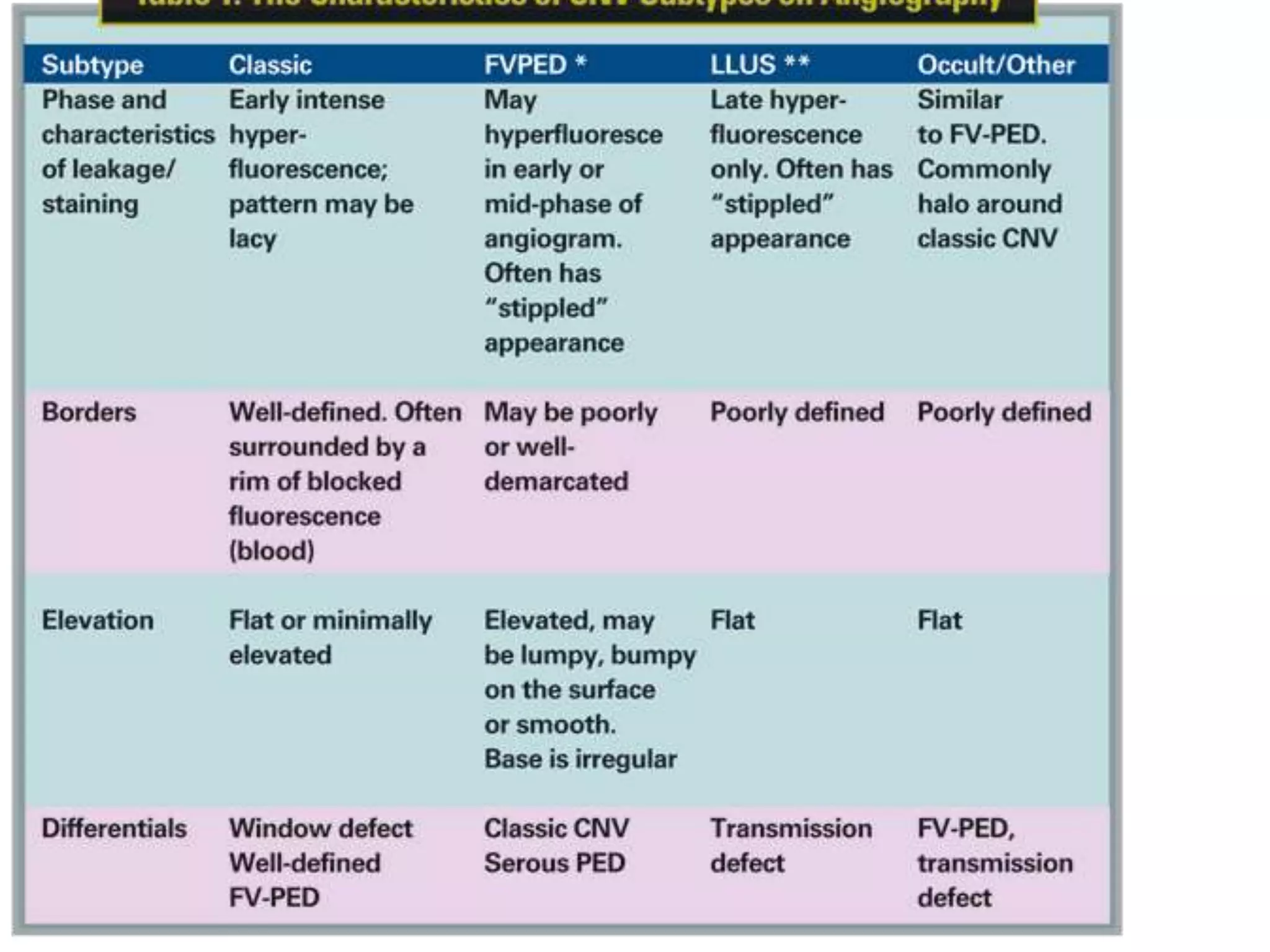
hyperacuity perimetryOn the basis of fluorescein angiography, CNV may be
described as classic or occult. Two other tests that help identify the condition
include indocyanine green angiography and optical coherence tomography
Treatment
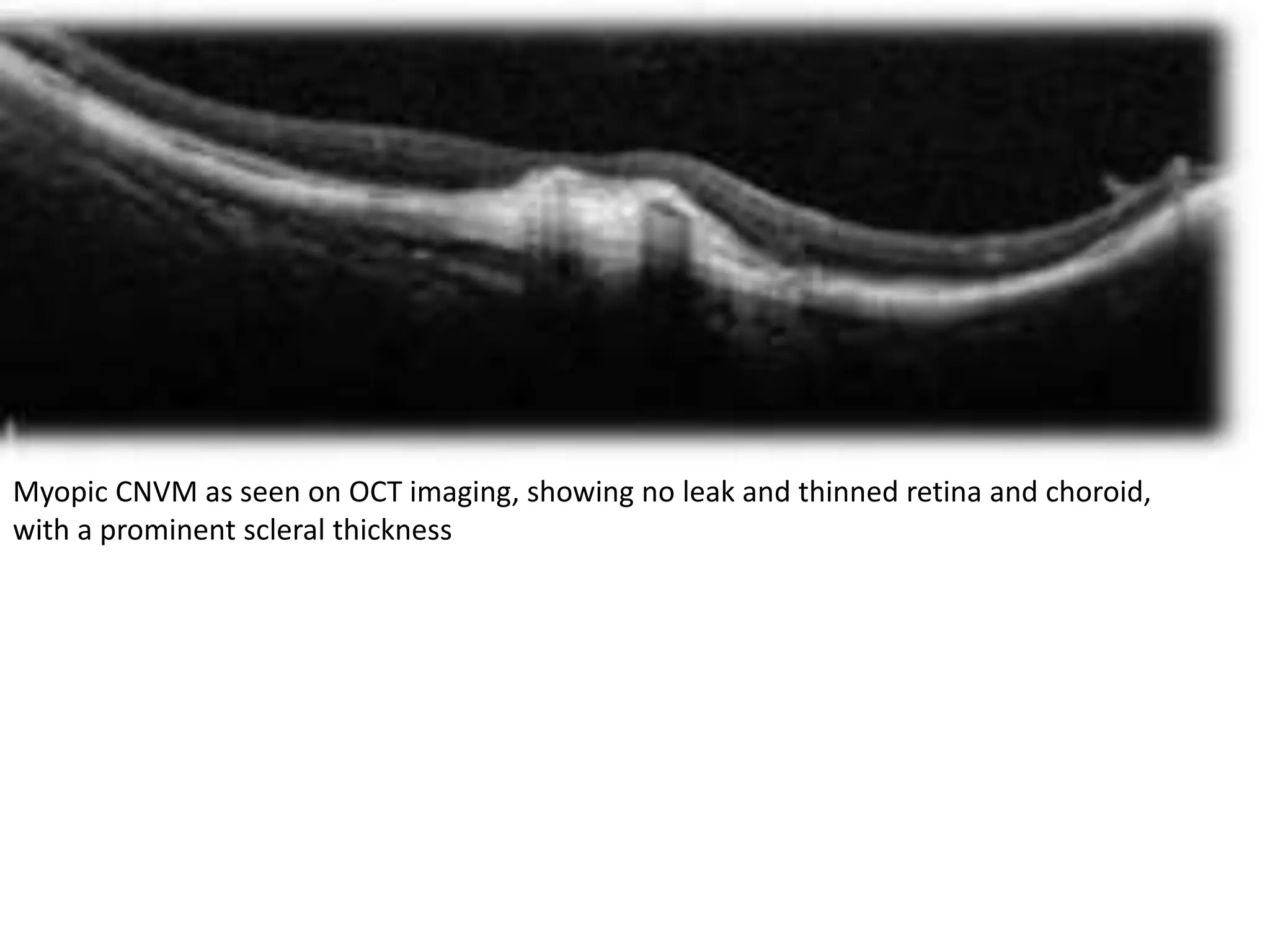
Myopic CNVM as seen on OCT imaging, showing no leak and thinned retina and choroid,
with a prominent scleral thickness
Diagnostic procedures
OCT Angiography
OCT angiography (OCTA) is a new technology that has a great ability to show
detailed retinal structures and chorioretinal microcirculation without contrast
medium or without invasive means. It uses an optimized long wavelength
(1,050nm), which can penetarte deeper layers of the eye and can traverse
opacities of media such as cataracts, hemorrhages, vitreous opacities,
pigment, among others. It can also configure three-dimensional analysis of the
chorioretinal and vascular lesions.
Type 1 CNV is observed by OCT-A as a neovascular coralliform complex with
afferent vessel, originating in the choroid.
The type 2 CNV is visualized as a neovascular network that grows from the
choroid vasculature, traverses the RPE-Bruch's membrane complex into the
subretinal space.
Type 3 CNV is clinically seen as tiny intra- and subretinal hemorrhages that
correlate on OCT-A to an intraretinal anastomosis originating in the deep
capillary plexus of the retina.
Management
Treatment
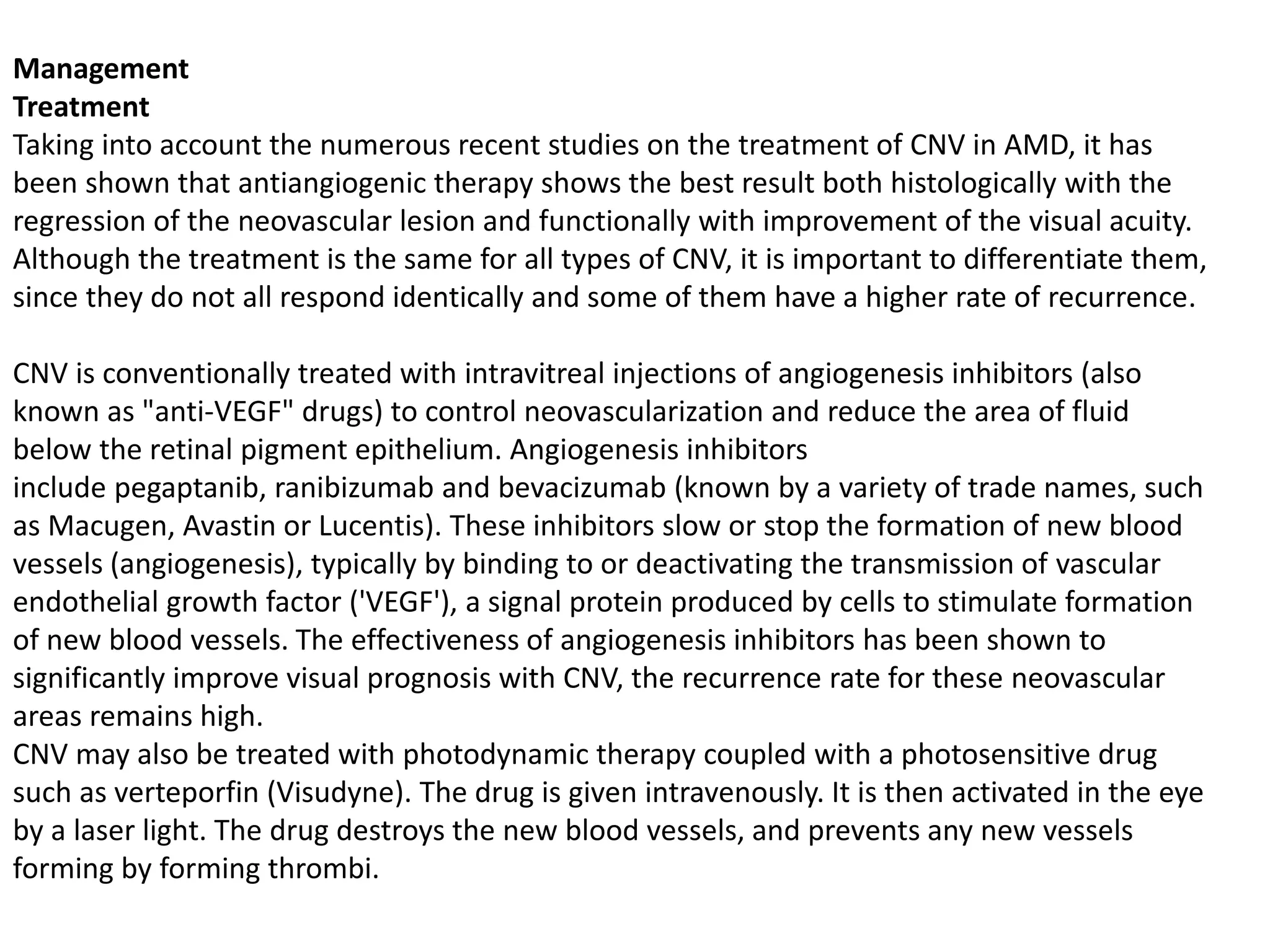
Taking into account the numerous recent studies on the treatment of CNV in AMD, it has
been shown that antiangiogenic therapy shows the best result both histologically with the
regression of the neovascular lesion and functionally with improvement of the visual acuity.
Although the treatment is the same for all types of CNV, it is important to differentiate them,
since they do not all respond identically and some of them have a higher rate of recurrence.
CNV is conventionally treated with intravitreal injections of angiogenesis inhibitors (also
known as "anti-VEGF" drugs) to control neovascularization and reduce the area of fluid
below the retinal pigment epithelium. Angiogenesis inhibitors
include pegaptanib, ranibizumab and bevacizumab (known by a variety of trade names, such
as Macugen, Avastin or Lucentis). These inhibitors slow or stop the formation of new blood
vessels (angiogenesis), typically by binding to or deactivating the transmission of vascular
endothelial growth factor ('VEGF'), a signal protein produced by cells to stimulate formation
of new blood vessels. The effectiveness of angiogenesis inhibitors has been shown to
significantly improve visual prognosis with CNV, the recurrence rate for these neovascular
areas remains high.
CNV may also be treated with photodynamic therapy coupled with a photosensitive drug
such as verteporfin (Visudyne). The drug is given intravenously. It is then activated in the eye
by a laser light. The drug destroys the new blood vessels, and prevents any new vessels
forming by forming thrombi.

Choroidal neovascular membranes (CNVM)

  • 1.
  • 2.
    Choroidal neovascularization (CNV)is the creation of new blood vessels in the choroid layer of the eye. Choroidal neovascularization is a common cause of neovascular degenerative maculopathy (i.e. 'wet' macular degeneration) commonly exacerbated by extreme myopia, malignant myopic degeneration, or age-related developments. Choroidal neovascularization (CNV) involves the growth of new blood vessels that originate from the choroid through a break in the Bruch membrane into the sub–retinal pigment epithelium (sub-RPE) or subretinal space. CNV is a major cause of visual loss. Choroidal neovascularization (CNV) is part of the spectrum of exudative age-related macular degeneration (AMD) that consists of an abnormal growth of vessels from the choroidal vasculature to the neurosensory retina through the Bruch's membrane. Leakage of retinal edema and hemorrhage from CNV in exudative AMD threatens visual acuity.
  • 6.
    Etiology Etiology of CNVis multifactorial. Alterations in Bruch's membrane, migration of macrophages and production of vascular endothelium growth factor (VEGF), play an important role in the development of this disease. CNV can occur rapidly in individuals with defects in Bruch's membrane, the innermost layer of the choroid. It is also associated with excessive amounts of vascular endothelial growth factor (VEGF). As well as in wet macular degeneration, CNV can also occur frequently with the rare genetic disease pseudoxanthoma elasticum and rarely with the more common optic disc drusen. CNV has also been associated with extreme myopia or malignant myopic degeneration, where in choroidal neovascularization occurs primarily in the presence of cracks within the retinal (specifically) macular tissue known as lacquer cracks.
  • 12.
    Pathophysiology Alterations in thenormal transport of metabolites, ions and water through Bruch's membrane in AMD, alter the nutrition and stability of retinal pigment epithelium (RPE) from choriocapillaris and the transport of waste out from the neurosensory retina. Hypoxia leads to VEGF being released by RPE that initiates a cascade of angiogenic responses at the level of the choroidal endothelium. Bruch´s membrane damage is required to allow the passage of abnormal neovascular vessels from the choroidal vasculature through the breaks in Bruch’s membrane to the retina. This impairment is part of the pathological course of AMD.
  • 14.
    Classification Histologically, neovascular membranesare classified into: Type 1, when the neovascular membrane is located below the RPE. Type 2, passes through the RPE and is located above the RPE in the subretinal space. This is related to angiographic classification: type 1 corresponds to hidden CNV and type 2 corresponds to classic CNV. Type 3 is defined as Retinal Angiomatous Proliferation (RAP), which corresponds to neovascularization that develops within the neurosensory retina.
  • 16.
    Choroidal Neovascular Membranes/Subretinalneovascular membranes Choroidal neovascular membranes (CNVM) can be described based on its location relative to the fovea, location relative to the retinal pigment epithelium, and fluorescein angiography findings. Location relative to the fovea: Subfoveal (underneath the fovea) Juxtafoveal (1-199 microns from the fovea) Extrafoveal (behind 200 microns from the fovea) Location relative to the retinal pigment epithelium: Type 1 CNVM appears beneath the RPE layer and appear as a fibrovascular or hemorrhagic pigment epithelial detachment. Type 2 CNVM appears above the RPE layer and adjacent SRF leakage. Type 3 (RAP) Fluorescein angiography findings: Classic appears above the RPE layer and adjacent SRF leakage. Occult appears beneath the RPE layer and appear as a fibrovascular or hemorrhagic pigment epithelial detachment.
  • 17.
    Classic/Type 2 CNVMlocated above the RPE with SRF adjacent to the lesion. A few exudates are visible on the nasal side of the lesion
  • 18.
    Fibrovascular pigment epithelialdetachment secondary to a CNVM. Hyper-reflective material is visible in the PED. Type 1
  • 19.
    Fibrovascular pigment epithelialdetachment secondary to a CNVM. Small amount of SRF is visible adjacent to the CNVM. Type 1.
  • 21.
    Other types ofoccult CNVM includes retinal angiomatous proliferation (RAP) and polypoidal choroidal vasculopathy (PCV). Retinal angiomatous proliferation (RAP) RAP is described as type 3 CNVM. RAP involves 3 stages. Stage 1 consist of intraretinal neovascularization and as the intraretinal neovascularization grows it extends posteriorly forming stage II subretinal neovascularization. Finally, in stage III the condition develops into a vascularized PED. Polypoidal choroidal vasculopathy (PCV) PCV is a the condition that generally affects darker pigmented individuals and has a higher incidence involving Asians and African Americans. The condition is commonly misdignosed as exudative age-related macular degeneration. The etiology is not well understood but it has been proposed that there are abnormal choroidal vasculature with dilation and aneurysmal formation. Patients will present with subretinal, vascular lesions associated with serous and hemorrhagic PEDs around the peripapillary area. ICGA is standard for diagnosis of polypoidal lesions. Treatment includes combination therapy of photodynamic therapy (PDT) and anti-VEGF therapy.
  • 22.
    RAP in ChoroidalNeovascular Membrane:  type 3 CNVM. 3 stages. • Stage 1 : consist of intraretinal neovascularization • stage II : subretinal neovascularization. • stage III: vascularized PED. PCV in Choroidal Neovascular Membrane: Affects darker pigmented individuals Higher incidence involving Asians and African Americans. Commonly misdignosed as exudative ARMD Abnormal choroidal vasculature with dilation and aneurysmal formation. Patients will present with subretinal, vascular lesions associated with serous and hemorrhagic PEDs around the peripapillary area. ICGA is standard for diagnosis of polypoidal lesions. Treatment includes combination therapy of photodynamic therapy (PDT) and anti-VEGF therapy.
  • 23.
    Symptoms CNV can createa sudden deterioration of central vision, noticeable within a few weeks. Other symptoms which can occur include colour disturbances, and metamorphopsia (distortions in which straight lines appears wavy). Hemorrhaging of the new blood vessels can accelerate the onset of symptoms of CNV. CNV may also include the feeling of pressure behind your eye. If you have CNVM, you may experience painless vision loss. You may notice blank spots in your vision, especially your central vision. Your vision may be distorted, so that straight lines appear bent, crooked or irregular. Other symptoms may include the following: objects appear to have different sizes for each eye; colors lose their brightness or colors do not look the same for each eye; or light flashes or flickering appear in central vision.
  • 26.
    Diagnosis Clinical findings Type 3CNV. An intraretinal neovascular lesion is observed. The color photo identifies typical punctate hemorrhages. The OCT B-scan shows retinal edema without disruption of Bruch's membrane or RPE. OCT-A depicts an anastomosis originating in the neurosensory retina. In the presence of CNV, the patient experiences an acute decrease in visual acuity, relative scotoma and metamorphopsia. The retinal examination shows a grayish macular lesion associated with subretinal fluid, cystoid macular edema, exudation and hemorrhage Identification CNV can be detected by using a type of perimetry called preferential hyperacuity perimetryOn the basis of fluorescein angiography, CNV may be described as classic or occult. Two other tests that help identify the condition include indocyanine green angiography and optical coherence tomography Treatment
  • 28.
    Myopic CNVM asseen on OCT imaging, showing no leak and thinned retina and choroid, with a prominent scleral thickness
  • 29.
    Diagnostic procedures OCT Angiography OCTangiography (OCTA) is a new technology that has a great ability to show detailed retinal structures and chorioretinal microcirculation without contrast medium or without invasive means. It uses an optimized long wavelength (1,050nm), which can penetarte deeper layers of the eye and can traverse opacities of media such as cataracts, hemorrhages, vitreous opacities, pigment, among others. It can also configure three-dimensional analysis of the chorioretinal and vascular lesions. Type 1 CNV is observed by OCT-A as a neovascular coralliform complex with afferent vessel, originating in the choroid. The type 2 CNV is visualized as a neovascular network that grows from the choroid vasculature, traverses the RPE-Bruch's membrane complex into the subretinal space. Type 3 CNV is clinically seen as tiny intra- and subretinal hemorrhages that correlate on OCT-A to an intraretinal anastomosis originating in the deep capillary plexus of the retina.
  • 46.
    Management Treatment Taking into accountthe numerous recent studies on the treatment of CNV in AMD, it has been shown that antiangiogenic therapy shows the best result both histologically with the regression of the neovascular lesion and functionally with improvement of the visual acuity. Although the treatment is the same for all types of CNV, it is important to differentiate them, since they do not all respond identically and some of them have a higher rate of recurrence. CNV is conventionally treated with intravitreal injections of angiogenesis inhibitors (also known as "anti-VEGF" drugs) to control neovascularization and reduce the area of fluid below the retinal pigment epithelium. Angiogenesis inhibitors include pegaptanib, ranibizumab and bevacizumab (known by a variety of trade names, such as Macugen, Avastin or Lucentis). These inhibitors slow or stop the formation of new blood vessels (angiogenesis), typically by binding to or deactivating the transmission of vascular endothelial growth factor ('VEGF'), a signal protein produced by cells to stimulate formation of new blood vessels. The effectiveness of angiogenesis inhibitors has been shown to significantly improve visual prognosis with CNV, the recurrence rate for these neovascular areas remains high. CNV may also be treated with photodynamic therapy coupled with a photosensitive drug such as verteporfin (Visudyne). The drug is given intravenously. It is then activated in the eye by a laser light. The drug destroys the new blood vessels, and prevents any new vessels forming by forming thrombi.