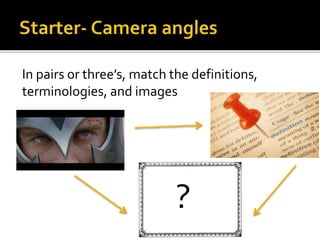
In pairs or three’s, match the definitions, 
terminologies, and images 
?
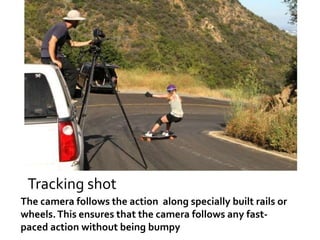
Tracking shot 
The camera follows the action along specially built rails or 
wheels. This ensures that the camera follows any fast-paced 
action without being bumpy
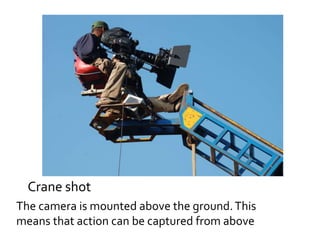
Crane shot 
The camera is mounted above the ground. This 
means that action can be captured from above
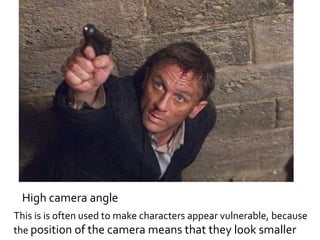
High camera angle 
This is is often used to make characters appear vulnerable, because 
the position of the camera means that they look smaller
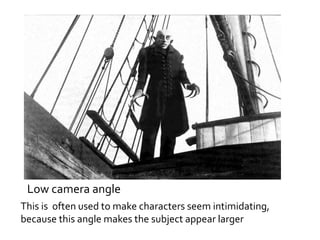
Low camera angle 
This is often used to make characters seem intimidating, 
because this angle makes the subject appear larger
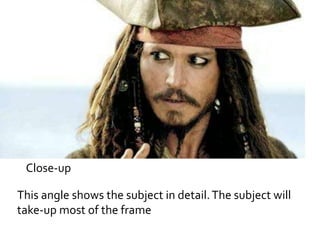
Close-up 
This angle shows the subject in detail. The subject will 
take-up most of the frame
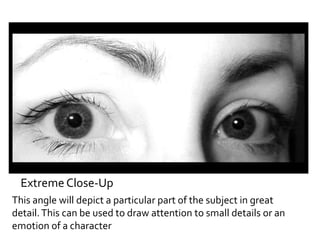
Extreme Close-Up 
This angle will depict a particular part of the subject in great 
detail. This can be used to draw attention to small details or an 
emotion of a character
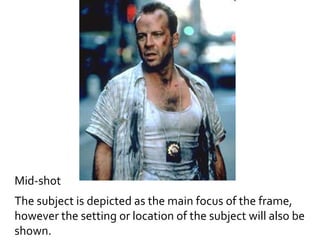
Mid-shot 
The subject is depicted as the main focus of the frame, 
however the setting or location of the subject will also be 
shown.
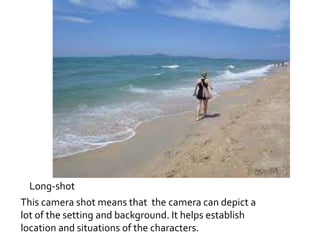
Long-shot 
This camera shot means that the camera can depict a 
lot of the setting and background. It helps establish 
location and situations of the characters.
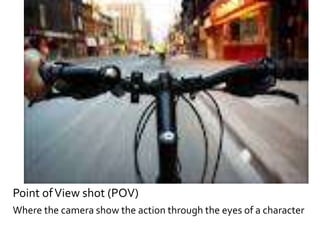
Point of View shot (POV) 
Where the camera show the action through the eyes of a character
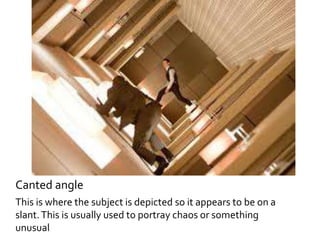
Canted angle 
This is where the subject is depicted so it appears to be on a 
slant. This is usually used to portray chaos or something 
unusual
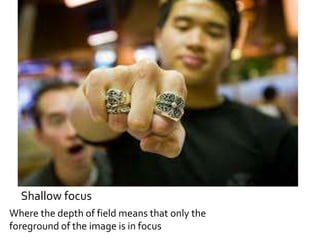
Shallow focus 
Where the depth of field means that only the 
foreground of the image is in focus
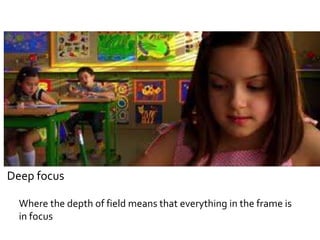
Deep focus 
Where the depth of field means that everything in the frame is 
in focus
http://youtu.be/laU2MI6X48I
• Understand terms and definitions for different camera angles 
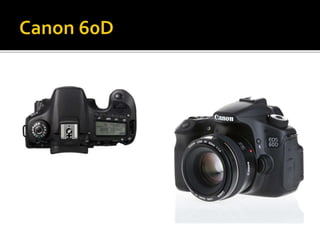
• Familiarise yourself with the Canon 60D cameras 
All: Create an animated storyboard by taking photos using the 
appropriate camera settings and using basic editing software. 
Some: define all camera shots/ angles 
Challenge: select appropriate camera angles and use creatively in 
order to enhance the story
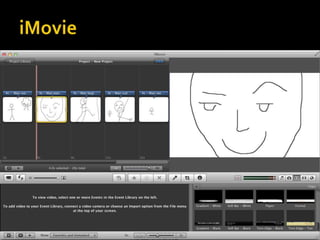
 Create a synopsis for a short scene. In this 
scene you must use camera angles to portray 
either emotions, relationships or danger. It is 
up to you. 
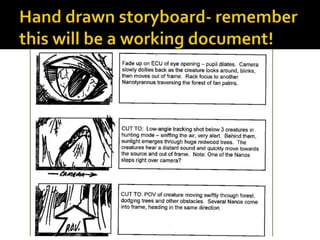
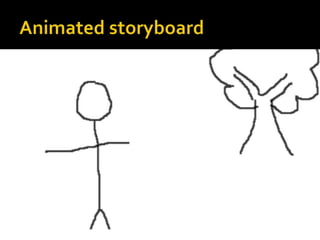
 You will create a hand drawn and an 
animated storyboard to show how you would 
film the scene
 Upload your storyboard to your Key Concepts 
blog, under the heading ‘Media Language- 
Camera angles’
 Find a scene from a film which you think 
shows excellent use of different camera 
angles. If you can, take a few screen shots, or 
find still images and write a blog post about 
how the camera is used and the effect it has. 
Challenge: experiment with different blogging 
tools to make your post creative

AS Media camera angles pp

  • 1.
    In pairs orthree’s, match the definitions, terminologies, and images ?
  • 2.
    Tracking shot Thecamera follows the action along specially built rails or wheels. This ensures that the camera follows any fast-paced action without being bumpy
  • 3.
    Crane shot Thecamera is mounted above the ground. This means that action can be captured from above
  • 4.
    High camera angle This is is often used to make characters appear vulnerable, because the position of the camera means that they look smaller
  • 5.
    Low camera angle This is often used to make characters seem intimidating, because this angle makes the subject appear larger
  • 6.
    Close-up This angleshows the subject in detail. The subject will take-up most of the frame
  • 7.
    Extreme Close-Up Thisangle will depict a particular part of the subject in great detail. This can be used to draw attention to small details or an emotion of a character
  • 8.
    Mid-shot The subjectis depicted as the main focus of the frame, however the setting or location of the subject will also be shown.
  • 9.
    Long-shot This camerashot means that the camera can depict a lot of the setting and background. It helps establish location and situations of the characters.
  • 10.
    Point of Viewshot (POV) Where the camera show the action through the eyes of a character
  • 11.
    Canted angle Thisis where the subject is depicted so it appears to be on a slant. This is usually used to portray chaos or something unusual
  • 12.
    Shallow focus Wherethe depth of field means that only the foreground of the image is in focus
  • 13.
    Deep focus Wherethe depth of field means that everything in the frame is in focus
  • 14.
  • 15.
    • Understand termsand definitions for different camera angles • Familiarise yourself with the Canon 60D cameras All: Create an animated storyboard by taking photos using the appropriate camera settings and using basic editing software. Some: define all camera shots/ angles Challenge: select appropriate camera angles and use creatively in order to enhance the story
  • 18.
     Create asynopsis for a short scene. In this scene you must use camera angles to portray either emotions, relationships or danger. It is up to you.  You will create a hand drawn and an animated storyboard to show how you would film the scene
  • 22.
     Upload yourstoryboard to your Key Concepts blog, under the heading ‘Media Language- Camera angles’
  • 23.
     Find ascene from a film which you think shows excellent use of different camera angles. If you can, take a few screen shots, or find still images and write a blog post about how the camera is used and the effect it has. Challenge: experiment with different blogging tools to make your post creative