Cartoon
             Since the 1840s the term has
come to also mean any humorous,
satirical, or opinionated drawing, typically
one printed in a newspaper or magazine,
with or without a short text. Rather than
the drawing, the text—cast within the
cartoon as speech or set as a caption—
may be the bearer of the joke or the
witticism.
Cartooning is an art form that, like any other,
stems from creative inspiration as well as
context. Cartoonists work in a different way from
their sources, and each tries to develop a unique
style. Editorial cartoonists pay close attention to
current events, significant issues, and influential
politicians in order to create their cartoons.
Illustrative cartoonists work from editorial
materials, educational texts, and advertising
materials, illustrating their important or most
interesting points. Most cartoonists sketch out
their ideas in pencil, erasing and reworking the
images and wording, if appropriate, until they feel
ready to draw a finished product.
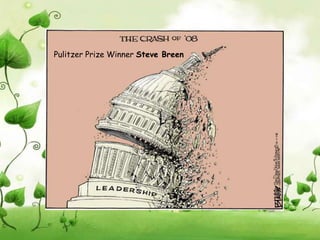
Pulitzer Prize Winner Steve Breen
Depending on their purpose, most
  cartoons fall into one of several
  different categories:
• Gag cartoons
• Illustrative Cartoons
• Comic Strip
• Animated Cartoons
• Editorial Cartoons
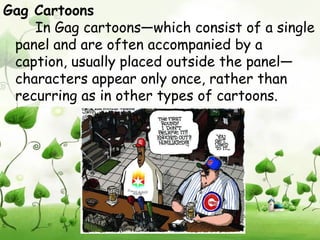
Gag Cartoons
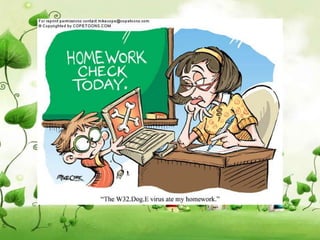
    In Gag cartoons—which consist of a single
 panel and are often accompanied by a
 caption, usually placed outside the panel—
 characters appear only once, rather than
 recurring as in other types of cartoons.
Illustrative Cartoons
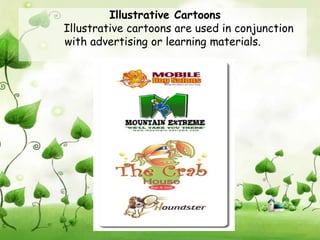
Illustrative cartoons are used in conjunction
with advertising or learning materials.
Comic Strips
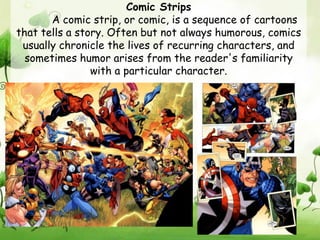
       A comic strip, or comic, is a sequence of cartoons
that tells a story. Often but not always humorous, comics
 usually chronicle the lives of recurring characters, and
  sometimes humor arises from the reader's familiarity
                with a particular character.
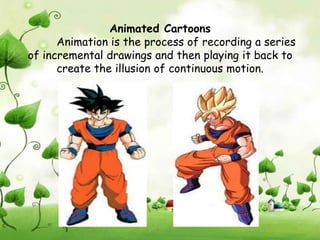
Animated Cartoons
      Animation is the process of recording a series
of incremental drawings and then playing it back to
      create the illusion of continuous motion.
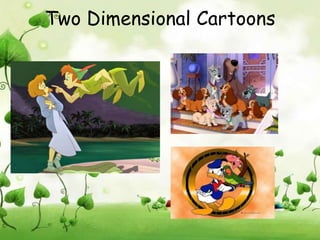
Two Dimensional Cartoons
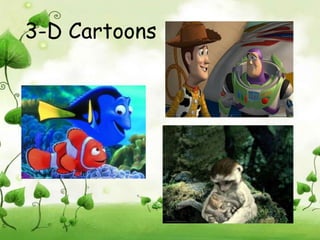
3-D Cartoons
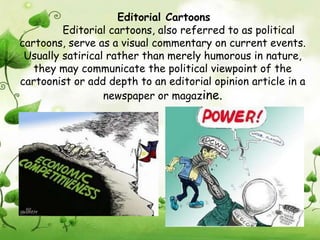
Editorial Cartoons
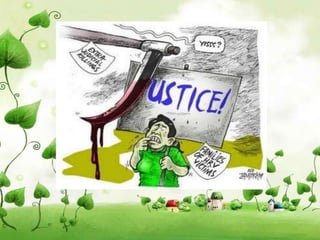
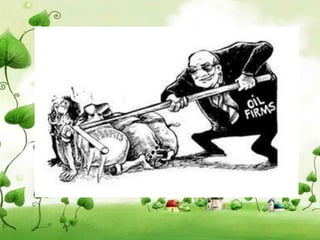
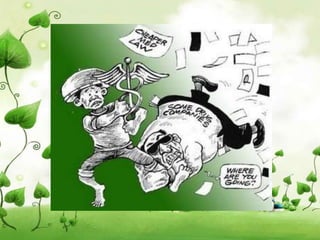
         Editorial cartoons, also referred to as political
cartoons, serve as a visual commentary on current events.
 Usually satirical rather than merely humorous in nature,
   they may communicate the political viewpoint of the
cartoonist or add depth to an editorial opinion article in a
                  newspaper or magazine.
Problems encountered in Editorial
              Cartooning
• Choosing the artist
  –P E P S I
  Potential
  Engagement and interest
  Positive perception
  Sense of humor
  Intellect
• Trainers capability
• Time
• Resources
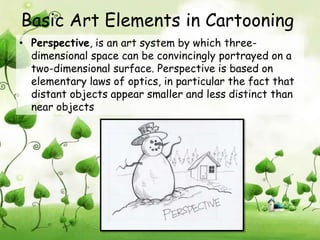
Basic Art Elements in Cartooning
• Perspective, is an art system by which three-
  dimensional space can be convincingly portrayed on a
  two-dimensional surface. Perspective is based on
  elementary laws of optics, in particular the fact that
  distant objects appear smaller and less distinct than
  near objects
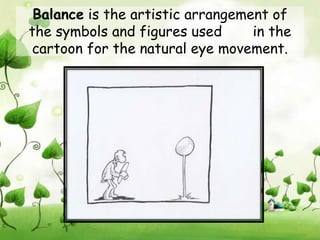
Balance is the artistic arrangement of
the symbols and figures used      in the
cartoon for the natural eye movement.
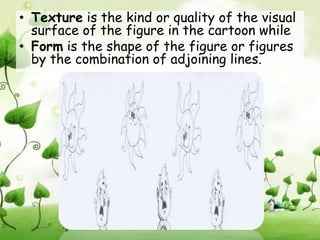
• Texture is the kind or quality of the visual
  surface of the figure in the cartoon while
• Form is the shape of the figure or figures
  by the combination of adjoining lines.
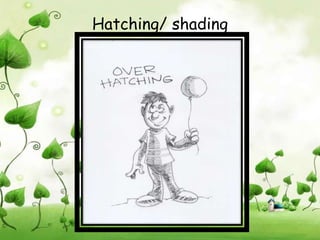
Hatching/ shading
Message
It is the overall idea, concept or
opinion the artist is trying to
convey through the cartoon.
Key Techniques in Cartooning

      • Basic Symbols
             – Sun
             – Dove
             – Flag
          – Pen & Ink
           – Justice
          – Freedom
             – War
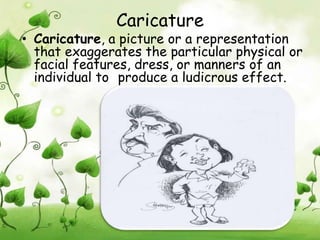
Caricature
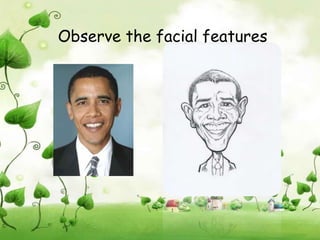
• Caricature, a picture or a representation
  that exaggerates the particular physical or
  facial features, dress, or manners of an
  individual to produce a ludicrous effect.
Observe the facial features
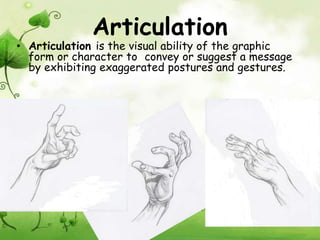
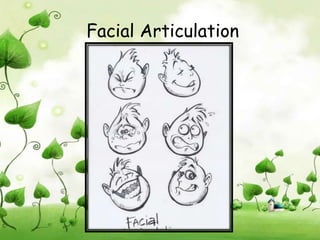
Articulation
• Articulation is the visual ability of the graphic
  form or character to convey or suggest a message
  by exhibiting exaggerated postures and gestures.
Facial Articulation
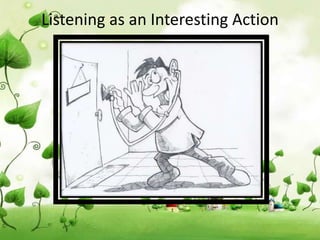
Listening as an Interesting Action
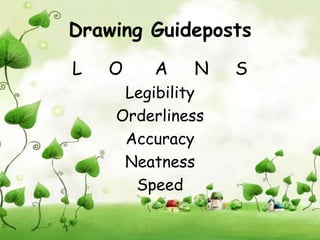
Drawing Guideposts
L   O   A    N    S
     Legibility
    Orderliness
     Accuracy
     Neatness
      Speed
Activity
• Each participant will use an oslo paper to
  work on.
• Choose a partner as your subject. Observe
  his/her interesting features, body built and
  mannerisms and gestures.
• Make a caricature of your partner on your
  sheet of paper. Be as accurate as possible.
• Write his/her nickname at the bottom of
  your drawing.
• Give your sketch to your partner and tell
  him/her …”you’re special!”
All children are artists. The
problem is how to remain an artist
once he grows up.

                      - Pablo Picasso

Editorial Cartooning

  • 13.
    Cartoon Since the 1840s the term has come to also mean any humorous, satirical, or opinionated drawing, typically one printed in a newspaper or magazine, with or without a short text. Rather than the drawing, the text—cast within the cartoon as speech or set as a caption— may be the bearer of the joke or the witticism.
  • 14.
    Cartooning is anart form that, like any other, stems from creative inspiration as well as context. Cartoonists work in a different way from their sources, and each tries to develop a unique style. Editorial cartoonists pay close attention to current events, significant issues, and influential politicians in order to create their cartoons. Illustrative cartoonists work from editorial materials, educational texts, and advertising materials, illustrating their important or most interesting points. Most cartoonists sketch out their ideas in pencil, erasing and reworking the images and wording, if appropriate, until they feel ready to draw a finished product.
  • 19.
  • 21.
    Depending on theirpurpose, most cartoons fall into one of several different categories: • Gag cartoons • Illustrative Cartoons • Comic Strip • Animated Cartoons • Editorial Cartoons
  • 22.
    Gag Cartoons In Gag cartoons—which consist of a single panel and are often accompanied by a caption, usually placed outside the panel— characters appear only once, rather than recurring as in other types of cartoons.
  • 24.
    Illustrative Cartoons Illustrative cartoonsare used in conjunction with advertising or learning materials.
  • 26.
    Comic Strips A comic strip, or comic, is a sequence of cartoons that tells a story. Often but not always humorous, comics usually chronicle the lives of recurring characters, and sometimes humor arises from the reader's familiarity with a particular character.
  • 27.
    Animated Cartoons Animation is the process of recording a series of incremental drawings and then playing it back to create the illusion of continuous motion.
  • 29.
  • 30.
  • 31.
    Editorial Cartoons Editorial cartoons, also referred to as political cartoons, serve as a visual commentary on current events. Usually satirical rather than merely humorous in nature, they may communicate the political viewpoint of the cartoonist or add depth to an editorial opinion article in a newspaper or magazine.
  • 32.
    Problems encountered inEditorial Cartooning • Choosing the artist –P E P S I Potential Engagement and interest Positive perception Sense of humor Intellect
  • 33.
    • Trainers capability •Time • Resources
  • 34.
    Basic Art Elementsin Cartooning • Perspective, is an art system by which three- dimensional space can be convincingly portrayed on a two-dimensional surface. Perspective is based on elementary laws of optics, in particular the fact that distant objects appear smaller and less distinct than near objects
  • 35.
    Balance is theartistic arrangement of the symbols and figures used in the cartoon for the natural eye movement.
  • 36.
    • Texture isthe kind or quality of the visual surface of the figure in the cartoon while • Form is the shape of the figure or figures by the combination of adjoining lines.
  • 37.
  • 38.
    Message It is theoverall idea, concept or opinion the artist is trying to convey through the cartoon.
  • 39.
    Key Techniques inCartooning • Basic Symbols – Sun – Dove – Flag – Pen & Ink – Justice – Freedom – War
  • 40.
    Caricature • Caricature, apicture or a representation that exaggerates the particular physical or facial features, dress, or manners of an individual to produce a ludicrous effect.
  • 41.
  • 42.
    Articulation • Articulation isthe visual ability of the graphic form or character to convey or suggest a message by exhibiting exaggerated postures and gestures.
  • 43.
  • 44.
    Listening as anInteresting Action
  • 45.
    Drawing Guideposts L O A N S Legibility Orderliness Accuracy Neatness Speed
  • 46.
    Activity • Each participantwill use an oslo paper to work on. • Choose a partner as your subject. Observe his/her interesting features, body built and mannerisms and gestures. • Make a caricature of your partner on your sheet of paper. Be as accurate as possible. • Write his/her nickname at the bottom of your drawing. • Give your sketch to your partner and tell him/her …”you’re special!”
  • 47.
    All children areartists. The problem is how to remain an artist once he grows up. - Pablo Picasso