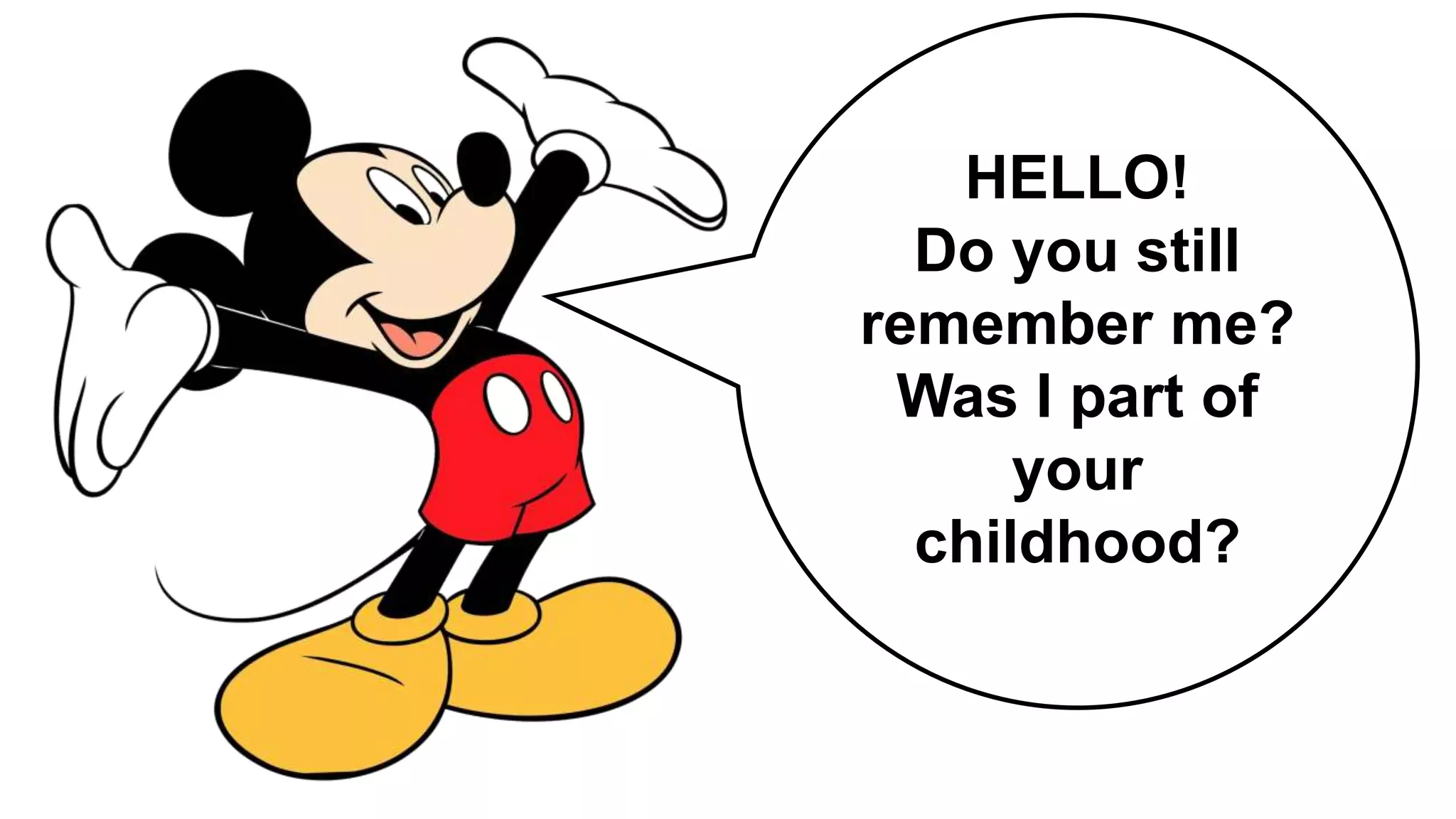
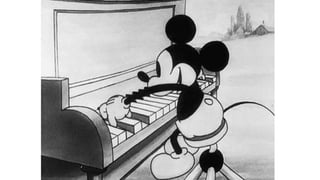
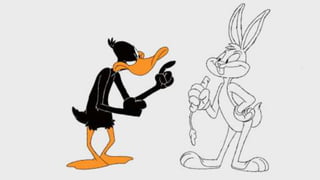
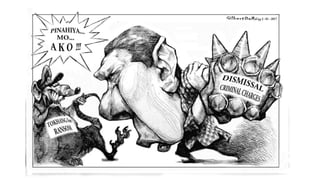
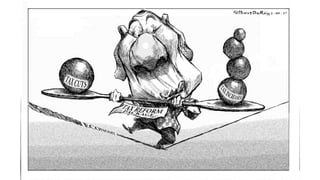
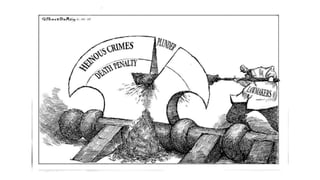
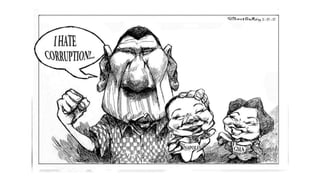
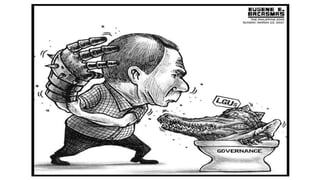
HELLO!
Do you still
remember me?
Was I part of
your
childhood?
EDITORIAL CARTOONING
An animated cartoon is a film for
the cinema, television or computer
screen, which is made using
sequential drawings, as opposed to
animations in general, which
include films made using clay,
puppet and other means.
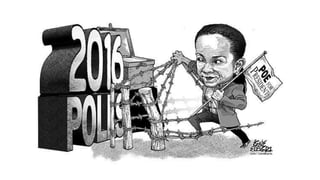
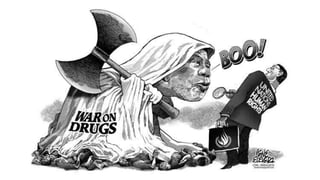
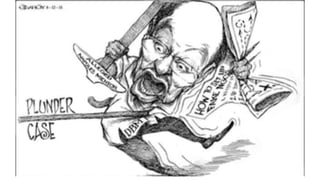
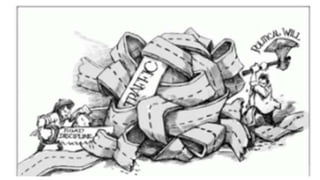
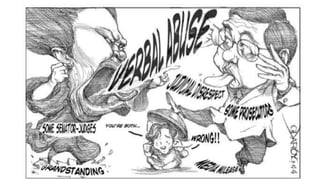
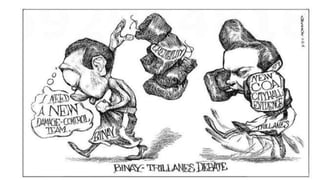
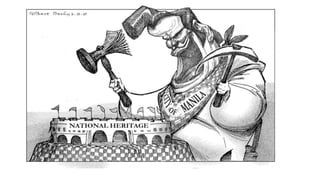
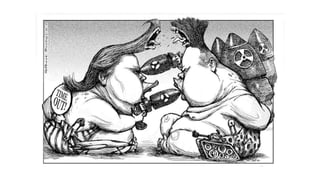
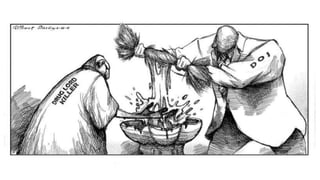
An editorial cartoon
is an editorial page
illustration expressing
opinion and
interpretation.
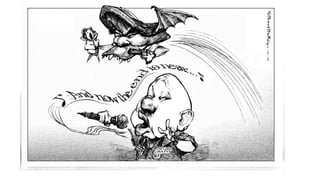
An editorial cartoon
expresses a STORY of
someone’s OPINION
about something.
An editorial cartoon
expresses a STORY of
someone’s OPINION
about something.
An editorial cartoon is
a ONE – SHOT picture
of the whole editorial
write up.
An editorial cartoon is
different from a
COMIC STRIP.
3 MAIN OBJECTIVES of
EDITORIAL CARTOON
1. Entertain the reader.
2. Give information.
3. Form opinion from
among the readers.
A good editorial cartoon
appeals to the reader’s
sense of humor in order to
persuade him to accept an
opinion. It is an effective
social force.
Also, a cartoon like the top
editorial, should deal with only a
single idea. While the subject
matter covers a wide range of
topics and purposes, the typical
cartoon is about political and
social conditions and problems.
BASIC TERMS
and
TECHNICAL ASPECTS
1. PICTURE AREA
- simply refers to the
space where the
editorial cartoon will
be drawn.
The size of the picture area
doesn’t matter in publications;
while it depends on the
judge/speaker when it comes
to contests. The width of the
margin ranges from 0.5 to 2
inches.
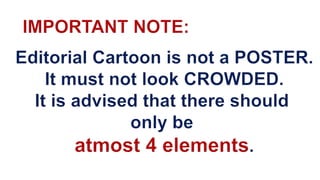
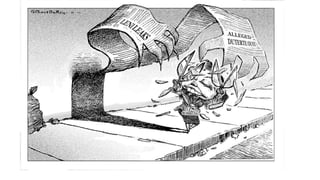
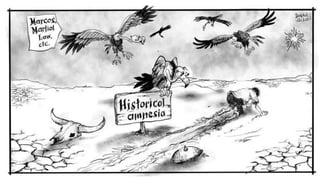
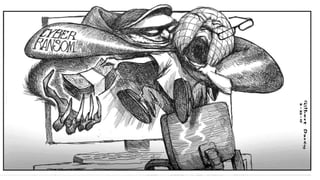
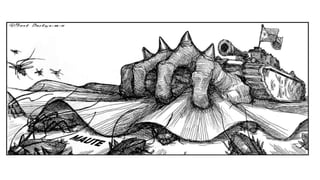
2. ELEMENTS
- refer to the
CHARACTERS of the
editorial cartoon
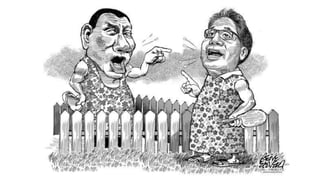
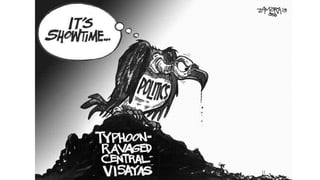
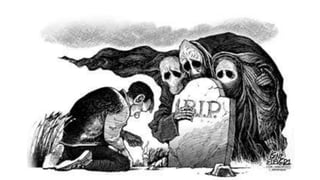
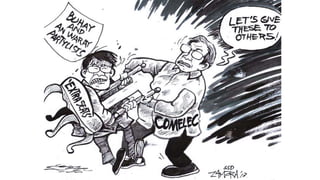
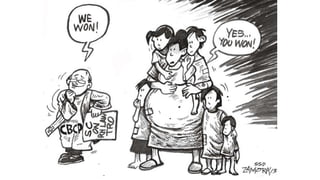
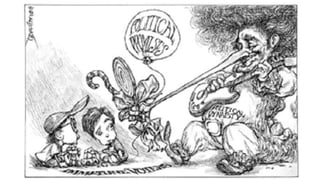
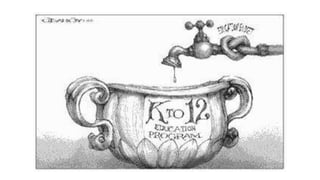
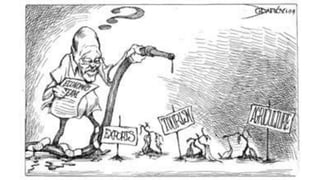
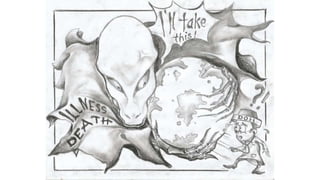
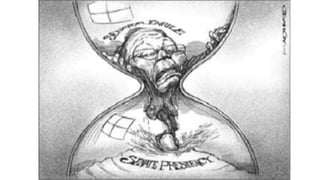
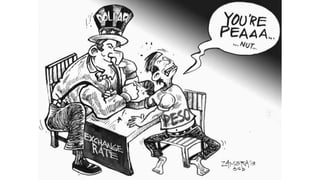
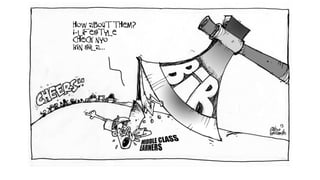
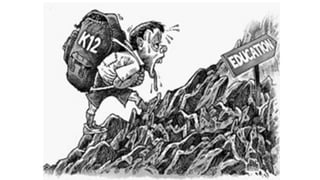
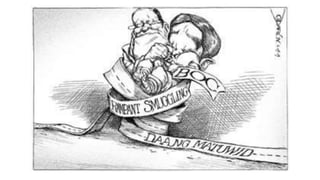
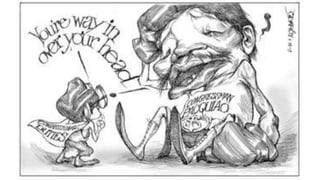
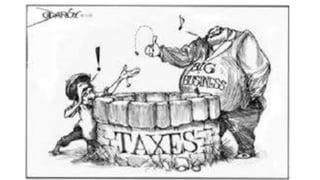
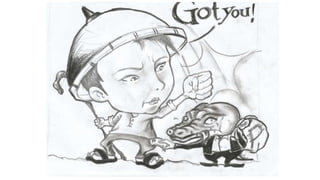
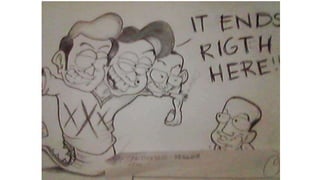
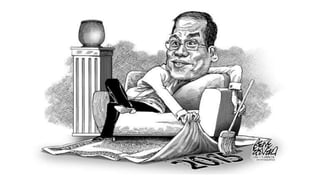
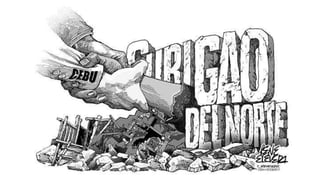
How many ELEMENTS
do these editorial
cartoons have?
It is not necessary that
your ELEMENTS must
be a PERSON or
GROUP OF PEOPLE
(or any living things).
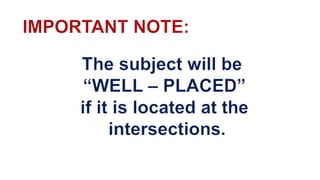
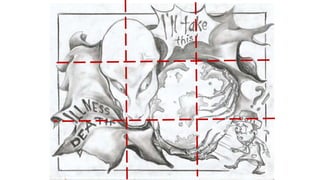
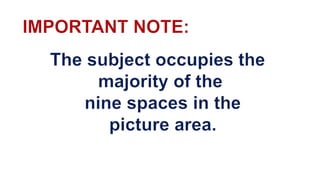
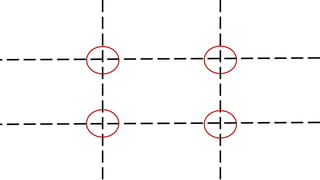
3. RULE OF THIRDS
- One of the main
“rules” in ART and
photographic
composition
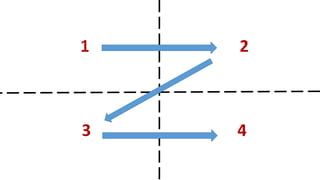
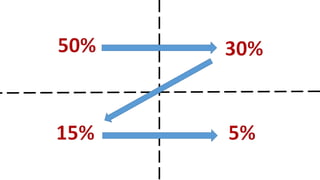
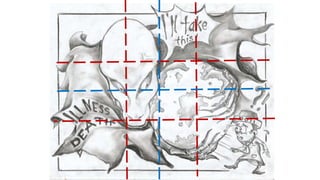
4. RULE OF QUADRANTS
- A rule rooted from
the theory of visual
memory.
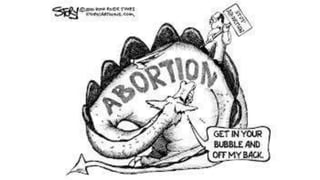
5. SYMBOLISM
- The use of symbolic
representation in
place of something
Common Symbols
- The use of symbolic
representation in
place of something
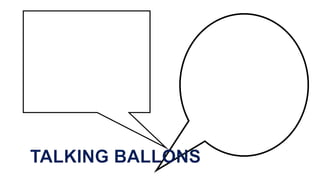
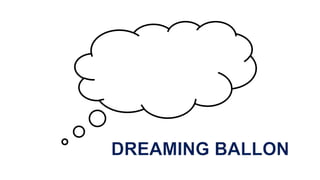
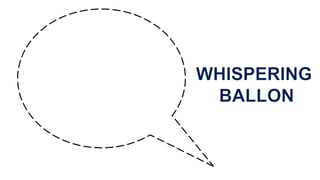
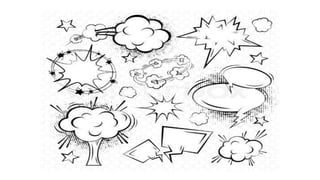
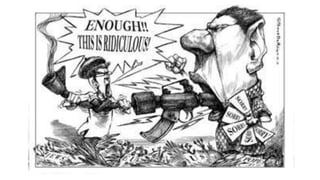
6. DIALOG BOXES
- aid to every editorial
cartoon to signify that
the character(s) is
talking.
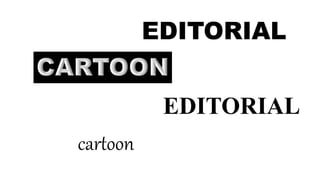
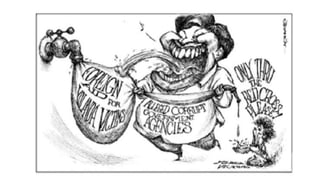
6. LETTERING/LABELS
Select the appropriate
lettering style in your
editorial cartoon.
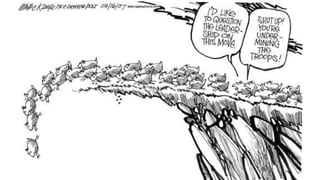
7. SPECIAL LINES
- used to emphasize
that there is a
“movement” among
the characters in the
editorial cartoon.
Editorial cartooning

Editorial cartooning

  • 1.
    HELLO! Do you still rememberme? Was I part of your childhood?
  • 2.
  • 3.
    An animated cartoonis a film for the cinema, television or computer screen, which is made using sequential drawings, as opposed to animations in general, which include films made using clay, puppet and other means.
  • 10.
    An editorial cartoon isan editorial page illustration expressing opinion and interpretation.
  • 11.
    An editorial cartoon expressesa STORY of someone’s OPINION about something. An editorial cartoon expresses a STORY of someone’s OPINION about something.
  • 12.
    An editorial cartoonis a ONE – SHOT picture of the whole editorial write up.
  • 13.
    An editorial cartoonis different from a COMIC STRIP.
  • 14.
    3 MAIN OBJECTIVESof EDITORIAL CARTOON 1. Entertain the reader. 2. Give information. 3. Form opinion from among the readers.
  • 15.
    A good editorialcartoon appeals to the reader’s sense of humor in order to persuade him to accept an opinion. It is an effective social force.
  • 19.
    Also, a cartoonlike the top editorial, should deal with only a single idea. While the subject matter covers a wide range of topics and purposes, the typical cartoon is about political and social conditions and problems.
  • 20.
  • 21.
    1. PICTURE AREA -simply refers to the space where the editorial cartoon will be drawn.
  • 22.
    The size ofthe picture area doesn’t matter in publications; while it depends on the judge/speaker when it comes to contests. The width of the margin ranges from 0.5 to 2 inches.
  • 24.
    2. ELEMENTS - referto the CHARACTERS of the editorial cartoon
  • 27.
    How many ELEMENTS dothese editorial cartoons have?
  • 34.
    It is notnecessary that your ELEMENTS must be a PERSON or GROUP OF PEOPLE (or any living things).
  • 37.
    3. RULE OFTHIRDS - One of the main “rules” in ART and photographic composition
  • 42.
    4. RULE OFQUADRANTS - A rule rooted from the theory of visual memory.
  • 48.
    5. SYMBOLISM - Theuse of symbolic representation in place of something
  • 49.
    Common Symbols - Theuse of symbolic representation in place of something
  • 59.
    6. DIALOG BOXES -aid to every editorial cartoon to signify that the character(s) is talking.
  • 64.
    6. LETTERING/LABELS Select theappropriate lettering style in your editorial cartoon.
  • 67.
    7. SPECIAL LINES -used to emphasize that there is a “movement” among the characters in the editorial cartoon.