Integrated Logistics
Management
Lecturer: Max Galarza
Students: Claudia Buendía, Diana Villavicencio, Tito Heredia, John Borja,
Shirley Enriquez, Andrea Vera.
Class: “A”
Date: August 18th 2015
Grade: 9
+1 Exam
Integrated Logistics
• Process of anticipating customer needs and wants.
• Acquiring the capital, materials, people, technologies and
information necessary to meet those needs and wants.
• Optimizing the goods-or-service-producing a network to fulfill
customer requests
• Utilizing the network to fulfill customer request in a timely way
Integrated Logistics
Management
• Cross functional teamwork inside
the company
• Building channel partnerships
• Third party logistics
Objectives of Integrated
Logistics Management
• Rapid response
• Minimum variance
• Minimum inventory
• Movement consolidation
• Life cycle support
Variables affecting the Evaluation and
Growth of Integrated Logistics:
• Growth of the consumer awareness and the marketing
concept
• Introduction of the computer
• Globalization of business and the development of world trade
blocks
• Growth of JIT manufacturing, supply management,
transportation and electronic data interchange (EDI) in the
1980s and 1990s
Operations involve in
Integrated Logistics
• Inbound Logistics: The activities of
receiving, storing, and disseminating
incoming goods or material for use.
• Outbound Logistics: The movement of
material associated with storing,
transporting, and distributing goods to
its customers.
Key factors in effective
Logistics System:
• Shippers
• Suppliers
• Carriers (railroad, air, water)
• Warehouse providers
• Freight Forwarders
• Terminal Operators (ports)
• Government (regulator of logistics)
Activities related to
Integrated Logistics
• Physical Distribution
• Materials Management
• Logistics Engineering
• Business Logistics
• Logistics Management
• Integrated Logistics Management
• Distribution Management
• Supply Chain Management
Why Logistics?
• Effective logistics is becoming a key to winning and
keeping customers
• Logistics is a major cost element for most
companies
• The explosion in product variety has created a
need for improved logistics management
• Information technology has created opportunities
for major gains in distribution efficiency
Integrated Logistics Development
Companies dedicated to offer this
service base their integrated logistics
solutions varying levels of complexity
and service profiles to fit their needs.
Advantages and Benefits
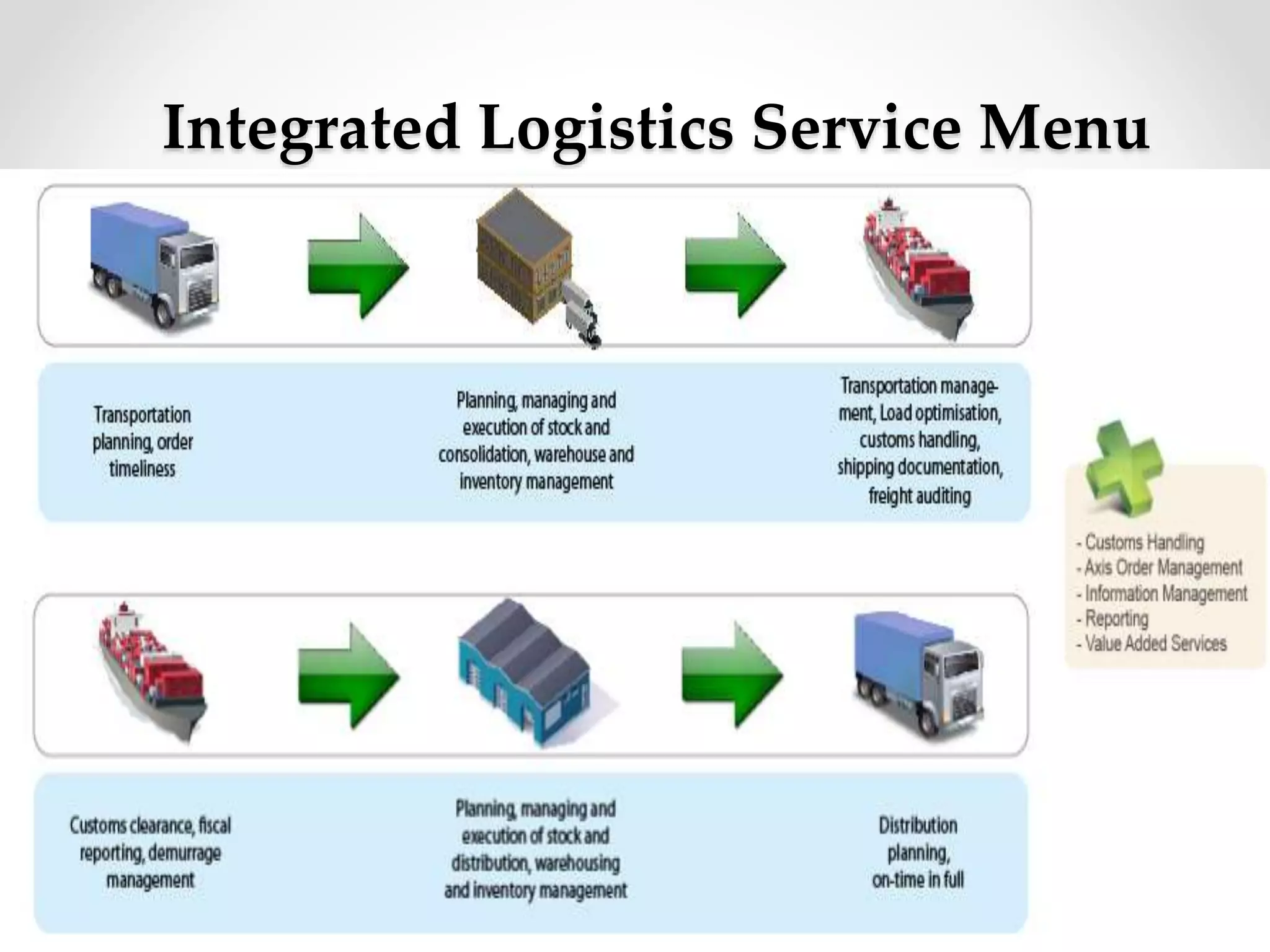
Integrated Logistics Service Menu
NetGraphy
• https://www.jfhillebrand.com/LogisticsSolutions/Documents/Integrat
ed%20Logistics%20Presentation.pdf
• http://integrated-logistics.com/
• http://elogistics.lhu.edu.tw/may/course/92_1/logistics/midterm/3a/
%E5%B7%B2%E7%B9%B3%E4%BA%A4%E8%80%85--
%E5%AD%B8%E8%99%9F%E3%80%81%E5%A7%93%E5%90%8D/E90423
141%E4%BD%99%E9%87%91%E5%86%A0.pdf

INTEGRATED LOGISTICS

  • 1.
    Integrated Logistics Management Lecturer: MaxGalarza Students: Claudia Buendía, Diana Villavicencio, Tito Heredia, John Borja, Shirley Enriquez, Andrea Vera. Class: “A” Date: August 18th 2015 Grade: 9 +1 Exam
  • 2.
    Integrated Logistics • Processof anticipating customer needs and wants. • Acquiring the capital, materials, people, technologies and information necessary to meet those needs and wants. • Optimizing the goods-or-service-producing a network to fulfill customer requests • Utilizing the network to fulfill customer request in a timely way
  • 3.
    Integrated Logistics Management • Crossfunctional teamwork inside the company • Building channel partnerships • Third party logistics
  • 4.
    Objectives of Integrated LogisticsManagement • Rapid response • Minimum variance • Minimum inventory • Movement consolidation • Life cycle support
  • 5.
    Variables affecting theEvaluation and Growth of Integrated Logistics: • Growth of the consumer awareness and the marketing concept • Introduction of the computer • Globalization of business and the development of world trade blocks • Growth of JIT manufacturing, supply management, transportation and electronic data interchange (EDI) in the 1980s and 1990s
  • 6.
    Operations involve in IntegratedLogistics • Inbound Logistics: The activities of receiving, storing, and disseminating incoming goods or material for use. • Outbound Logistics: The movement of material associated with storing, transporting, and distributing goods to its customers.
  • 7.
    Key factors ineffective Logistics System: • Shippers • Suppliers • Carriers (railroad, air, water) • Warehouse providers • Freight Forwarders • Terminal Operators (ports) • Government (regulator of logistics)
  • 8.
    Activities related to IntegratedLogistics • Physical Distribution • Materials Management • Logistics Engineering • Business Logistics • Logistics Management • Integrated Logistics Management • Distribution Management • Supply Chain Management
  • 9.
    Why Logistics? • Effectivelogistics is becoming a key to winning and keeping customers • Logistics is a major cost element for most companies • The explosion in product variety has created a need for improved logistics management • Information technology has created opportunities for major gains in distribution efficiency
  • 10.
    Integrated Logistics Development Companiesdedicated to offer this service base their integrated logistics solutions varying levels of complexity and service profiles to fit their needs.
  • 11.
  • 12.
  • 13.
  • 15.
    NetGraphy • https://www.jfhillebrand.com/LogisticsSolutions/Documents/Integrat ed%20Logistics%20Presentation.pdf • http://integrated-logistics.com/ •http://elogistics.lhu.edu.tw/may/course/92_1/logistics/midterm/3a/ %E5%B7%B2%E7%B9%B3%E4%BA%A4%E8%80%85-- %E5%AD%B8%E8%99%9F%E3%80%81%E5%A7%93%E5%90%8D/E90423 141%E4%BD%99%E9%87%91%E5%86%A0.pdf