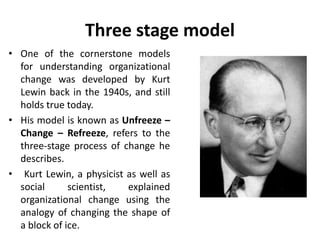
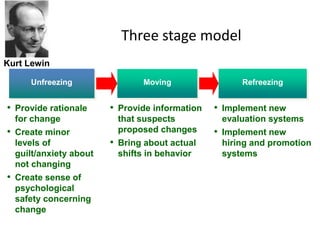
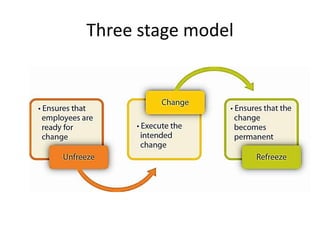
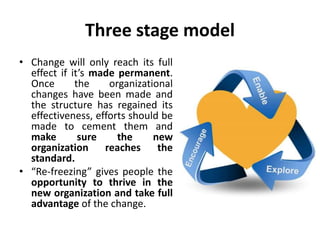
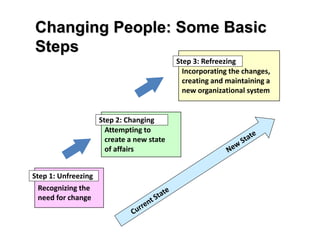
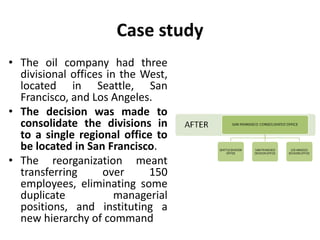
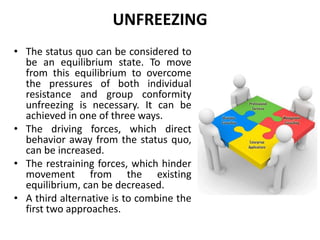
Kurt Lewin's three-stage model for managing organizational change, developed in the 1940s, consists of unfreeze, change, and refreeze stages. Unfreezing involves overcoming resistance to change, while the movement stage entails implementing new behaviors and responsibilities, and finally, refreezing cements these changes to ensure long-term stability. A case study of an oil company highlights the practical application of this model during a divisional consolidation, illustrating employee management and resistance strategies during the change process.