By Junaid Ashraf
Definition:
 The use of Internet technologies to work and empower
business processes, electronic commerce, and
enterprise collaboration within a company and with its
customers, suppliers, and other business stakeholders.
 An online exchange of value.
 E-business refers to the use of digital technology and
the internet to execute the major business processes in
the enterprise. E-business includes activities for internal
management of the firm and for coordination with
suppliers and other business partners.
Definition of e-commerce:
 E-commerce is the part of e-business that deal with the
buying, selling, marketing, and servicing of products and
services , and information over a variety of computer
networks
 This includes advertising, sales, customer support on
WWW, Internet security, payment mechanisms
 Example:
◦ e-commerce system include Internet for online transactions,
◦ Extranet for access of inventory DB by large customers
◦ Corporate intranets by sales rep. to access customer records for
CRM
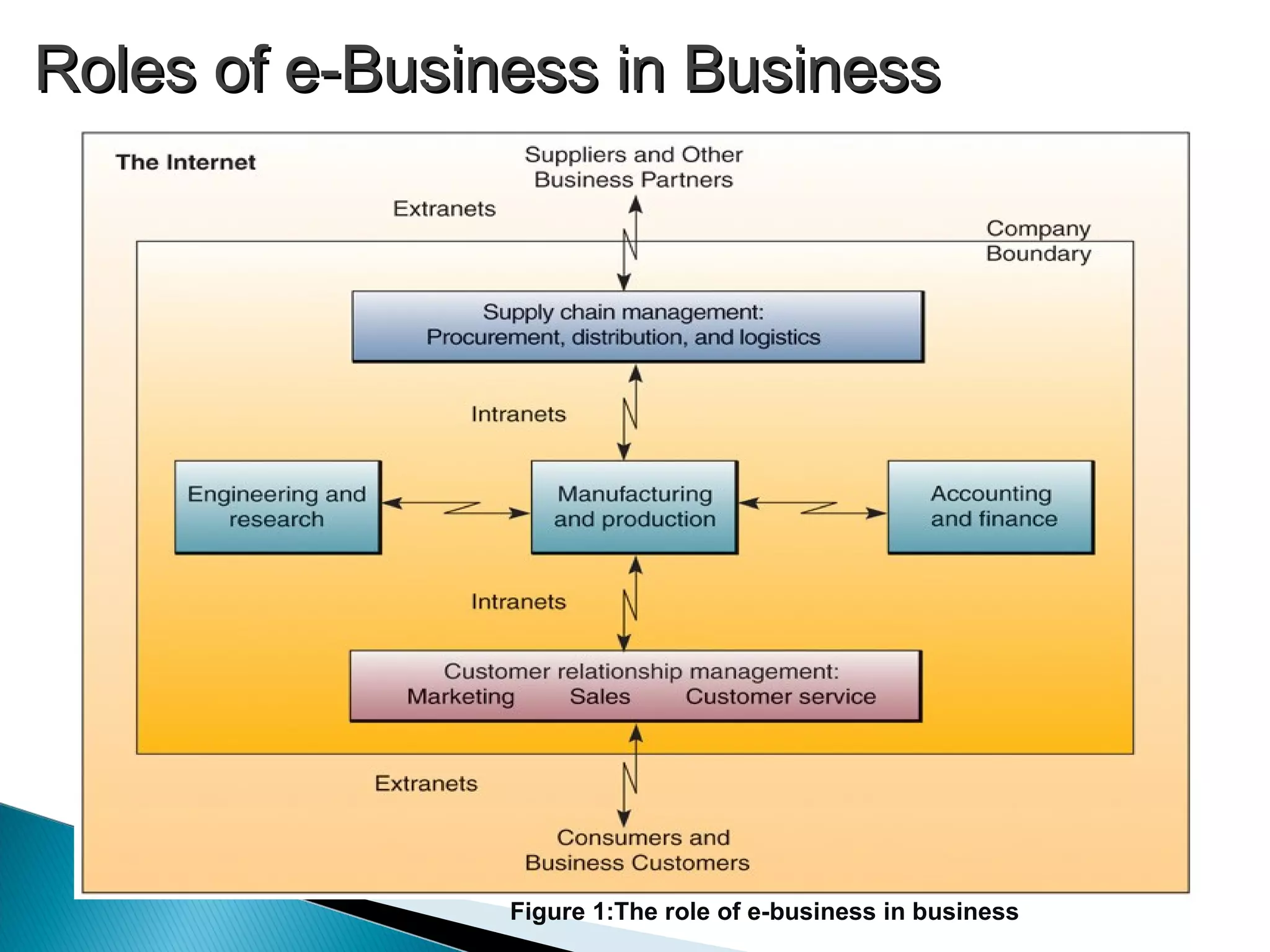
Roles of e-Business in BusinessRoles of e-Business in Business
Figure 1:The role of e-business in business
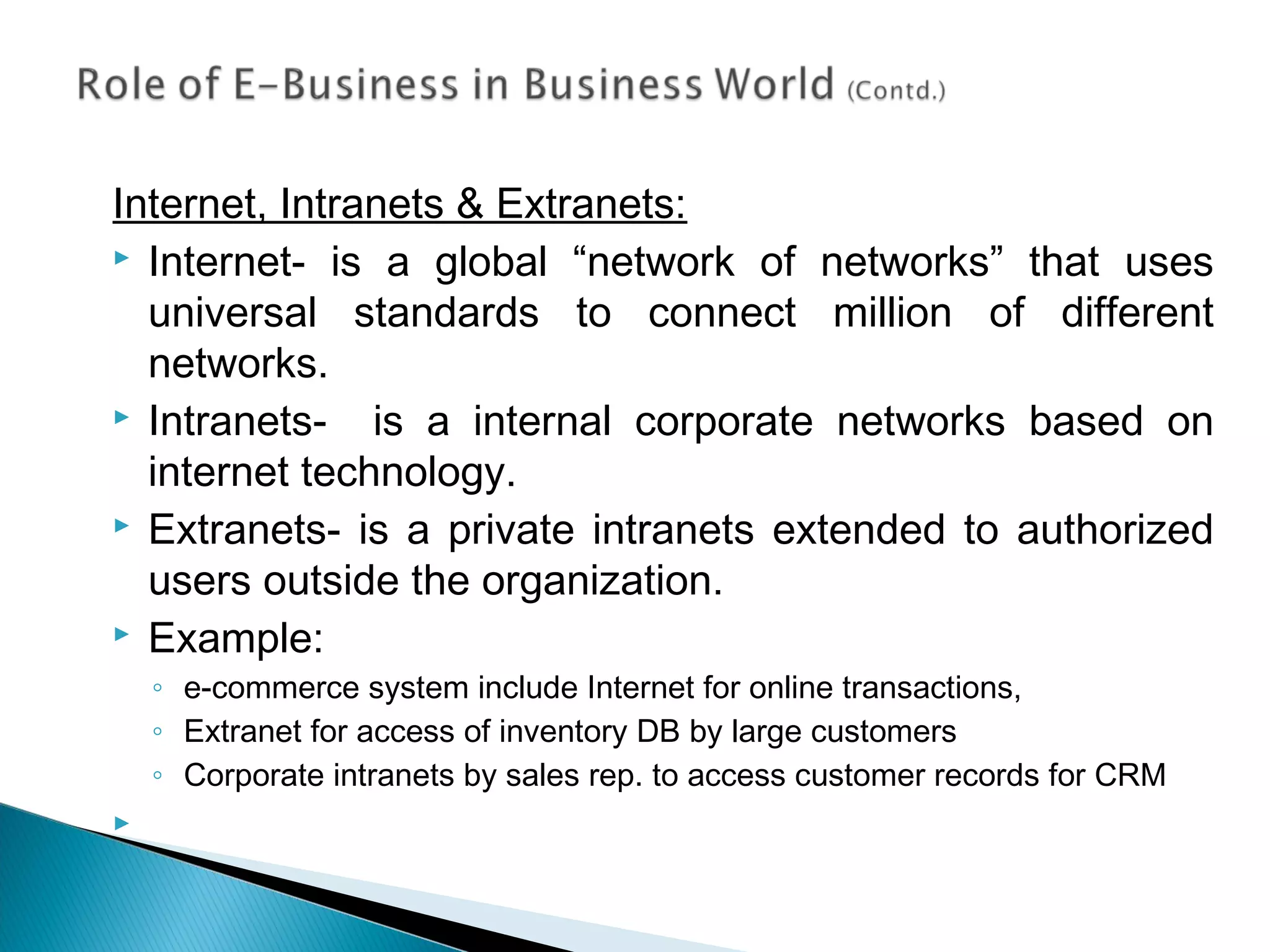
Internet, Intranets & Extranets:
 Internet- is a global “network of networks” that uses
universal standards to connect million of different
networks.
 Intranets- is a internal corporate networks based on
internet technology.
 Extranets- is a private intranets extended to authorized
users outside the organization.
 Example:
◦ e-commerce system include Internet for online transactions,
◦ Extranet for access of inventory DB by large customers
◦ Corporate intranets by sales rep. to access customer records for CRM

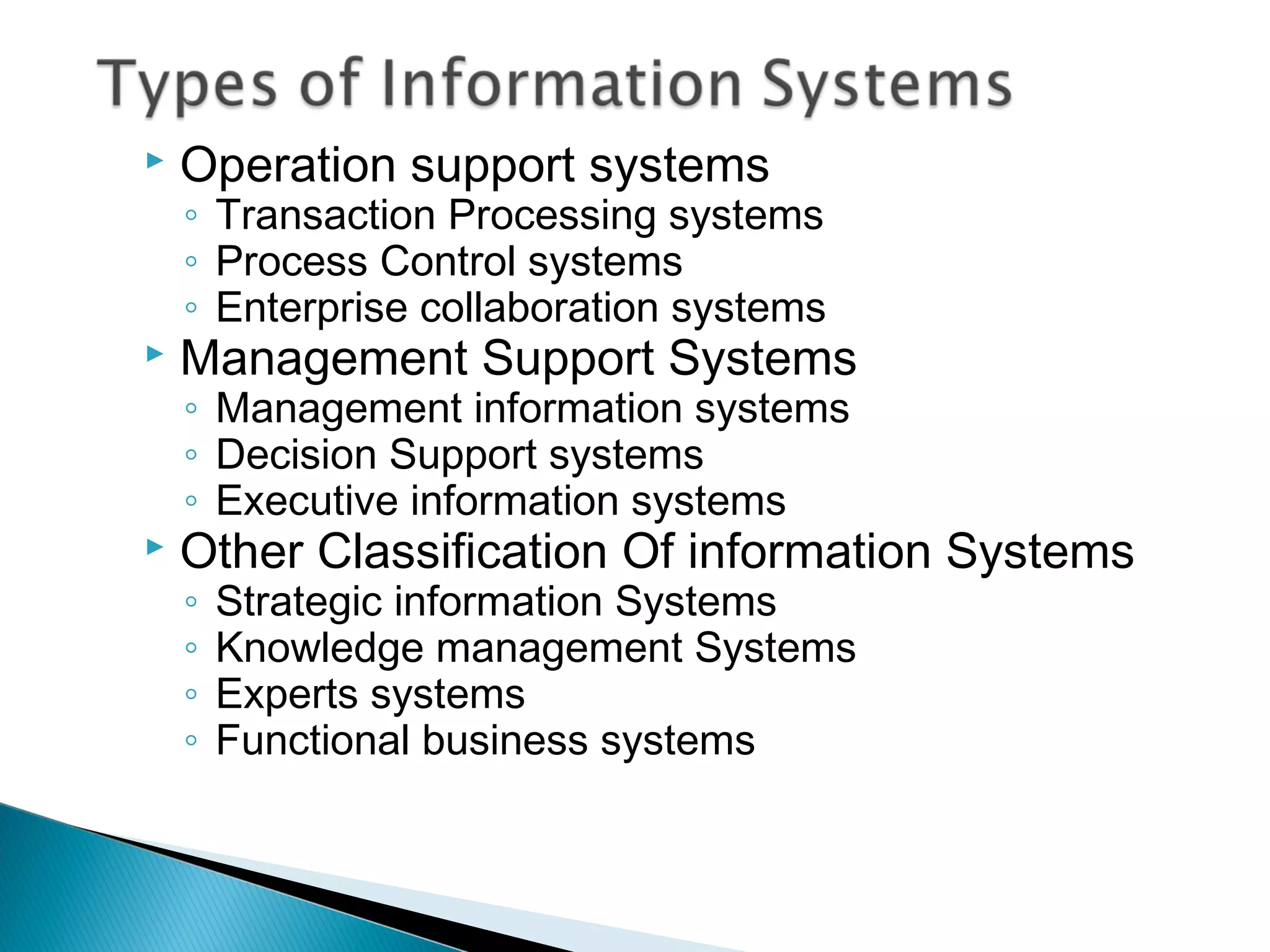
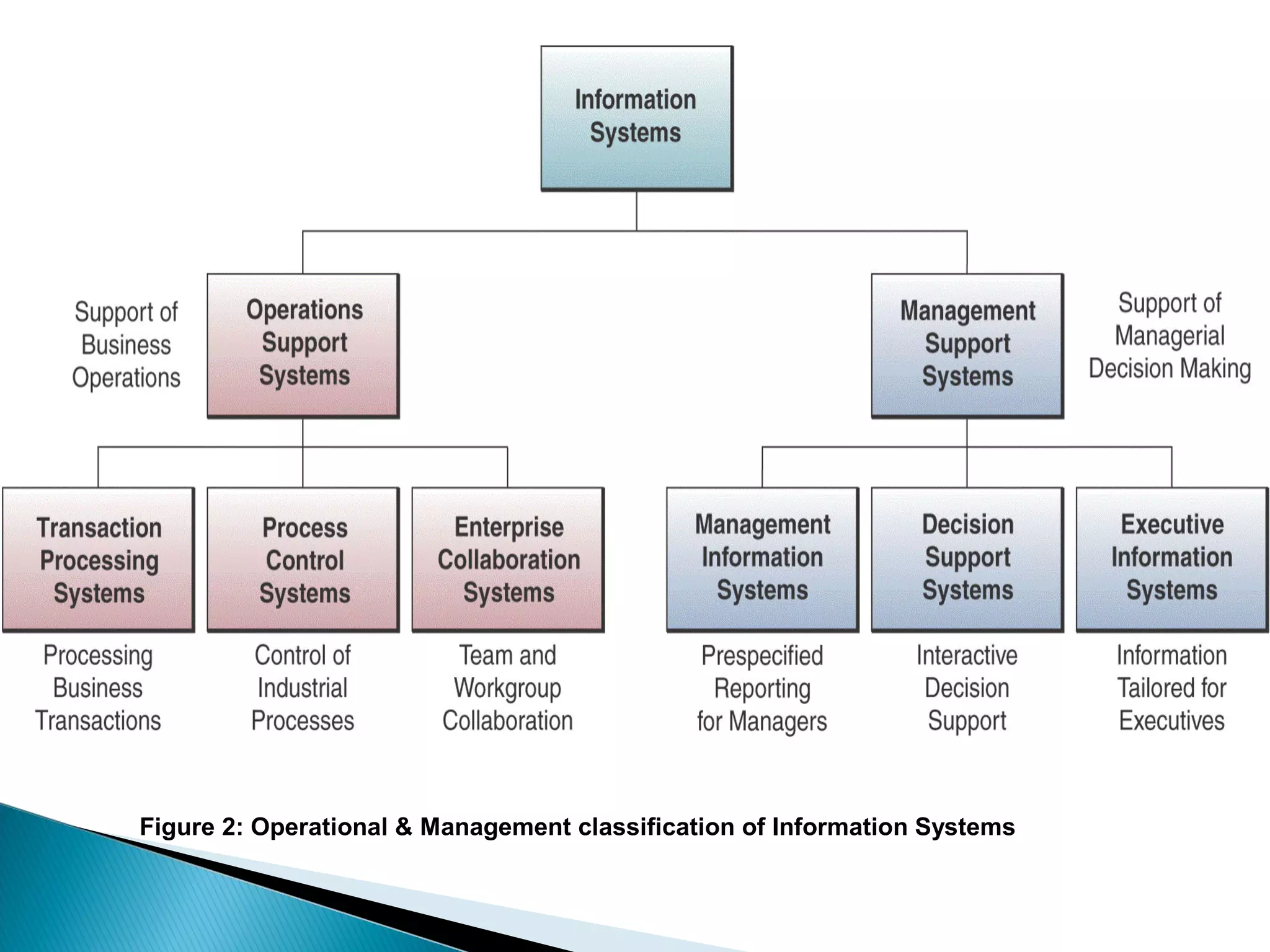
 Operation support systems
◦ Transaction Processing systems
◦ Process Control systems
◦ Enterprise collaboration systems
 Management Support Systems
◦ Management information systems
◦ Decision Support systems
◦ Executive information systems
 Other Classification Of information Systems
◦ Strategic information Systems
◦ Knowledge management Systems
◦ Experts systems
◦ Functional business systems
Figure 2: Operational & Management classification of Information Systems
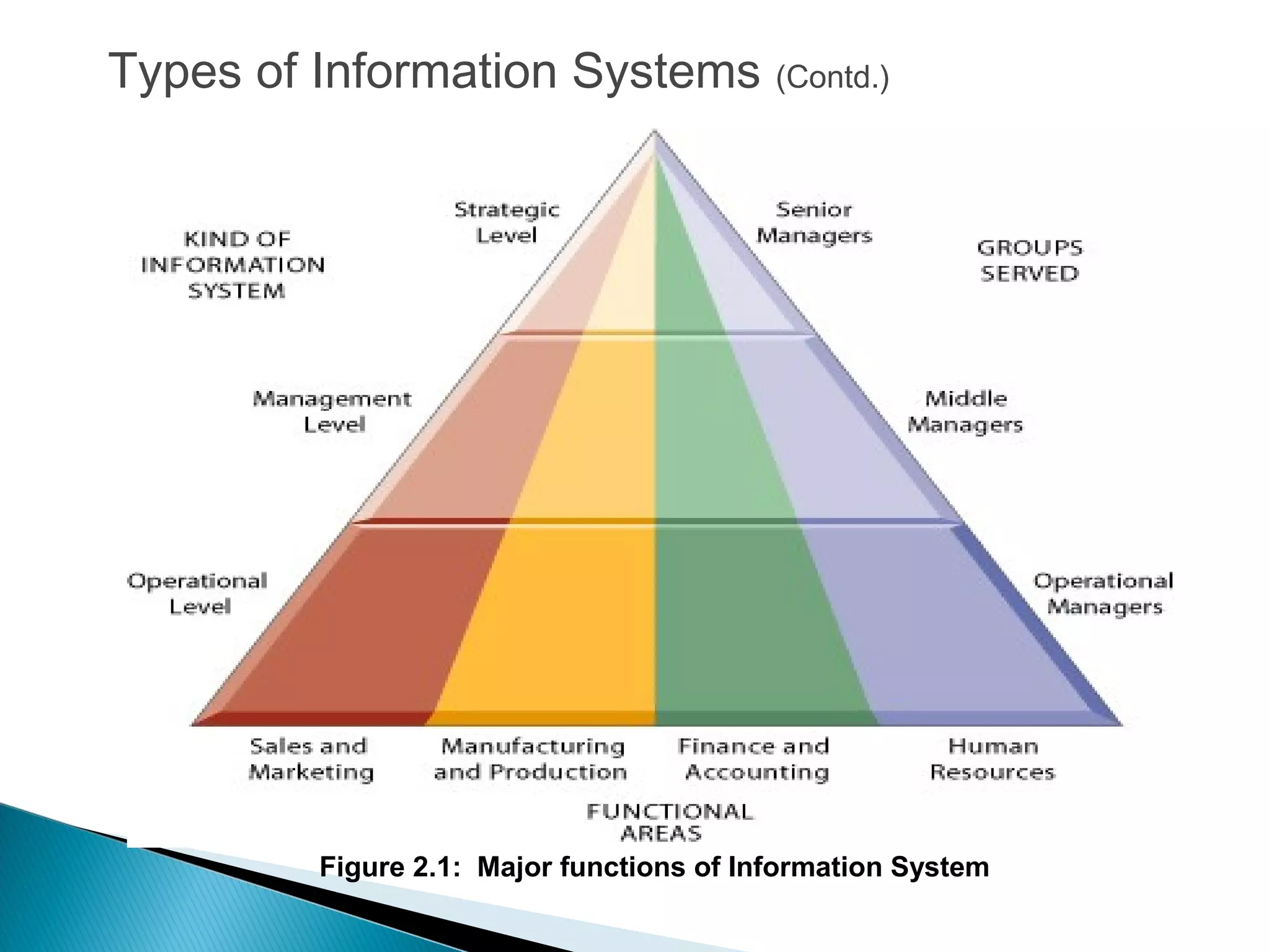
Figure 2.1: Major functions of Information System
Types of Information Systems (Contd.)
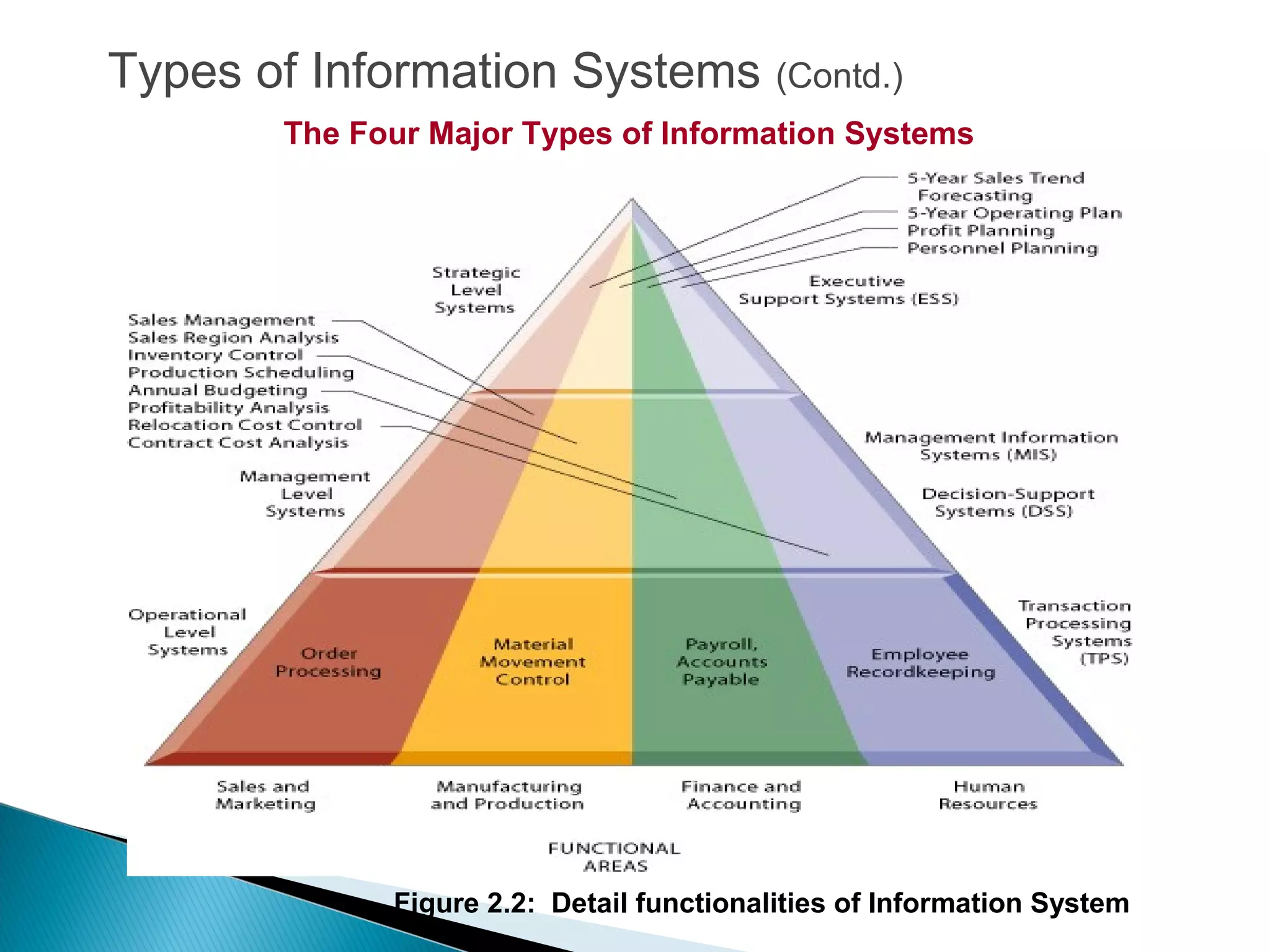
The Four Major Types of Information Systems
Types of Information Systems (Contd.)
Figure 2.2: Detail functionalities of Information System
Types of Information Systems (Contd.)
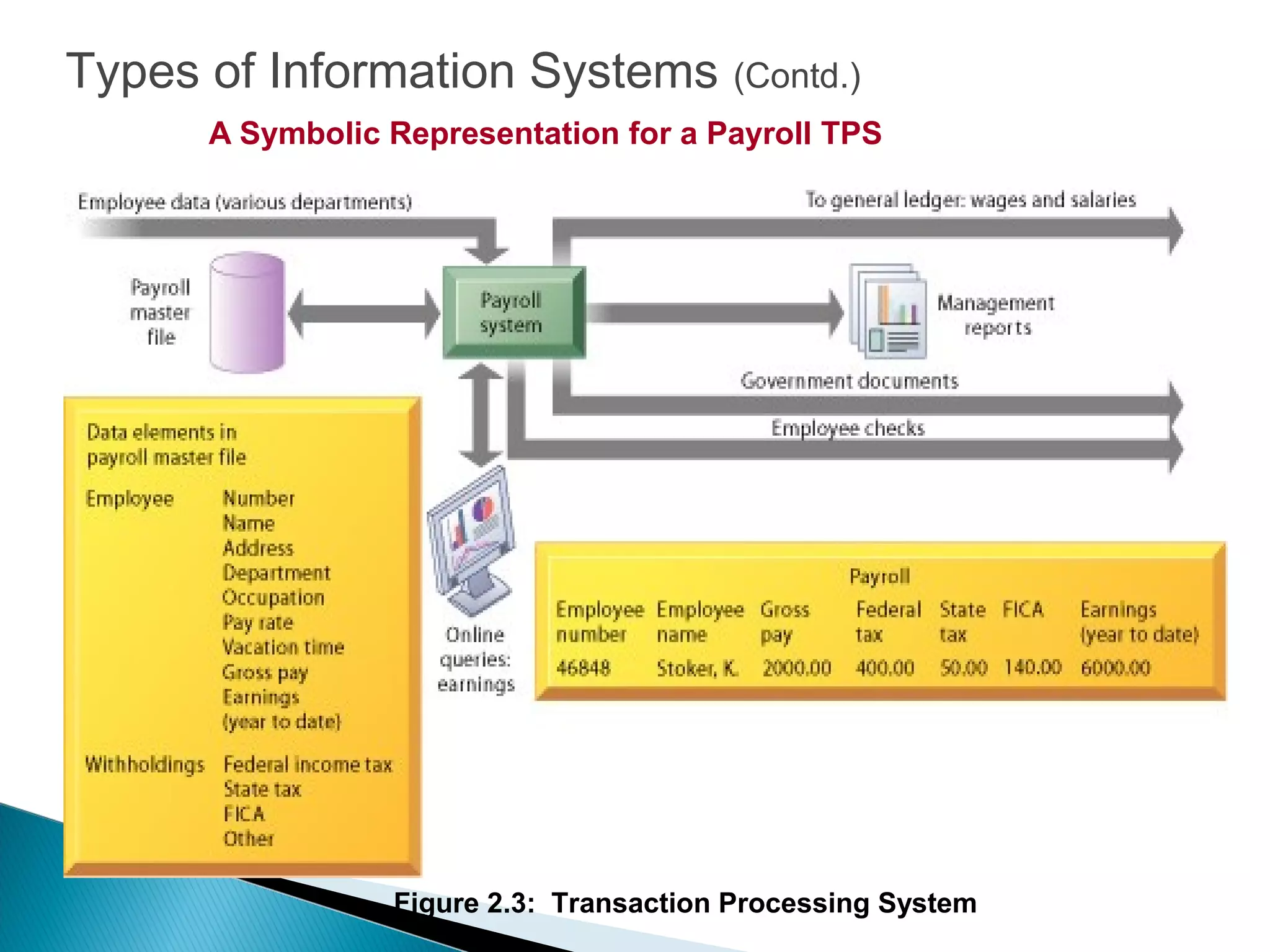
A Symbolic Representation for a Payroll TPS
Figure 2.3: Transaction Processing System
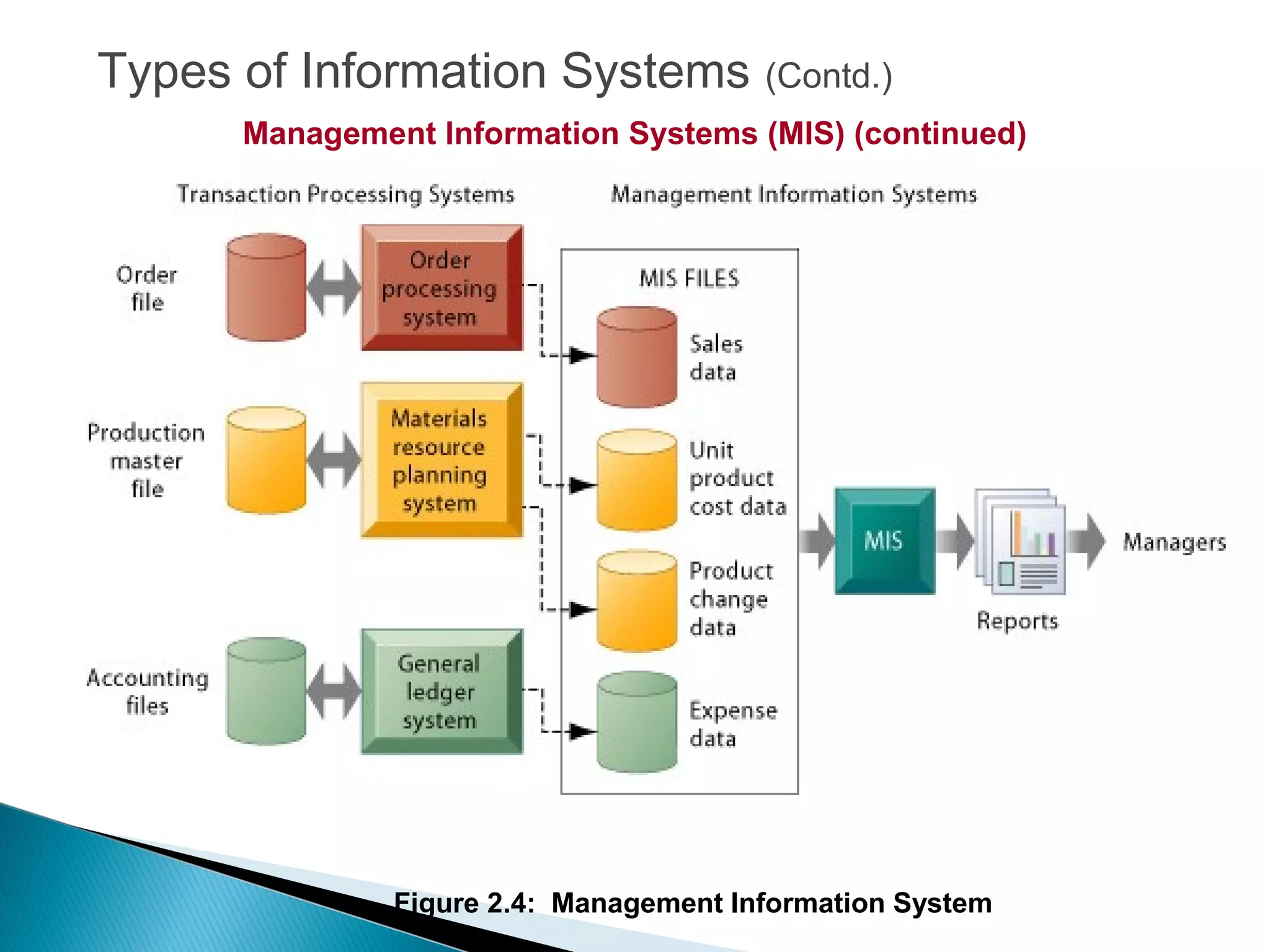
Management Information Systems (MIS) (continued)
Types of Information Systems (Contd.)
Figure 2.4: Management Information System
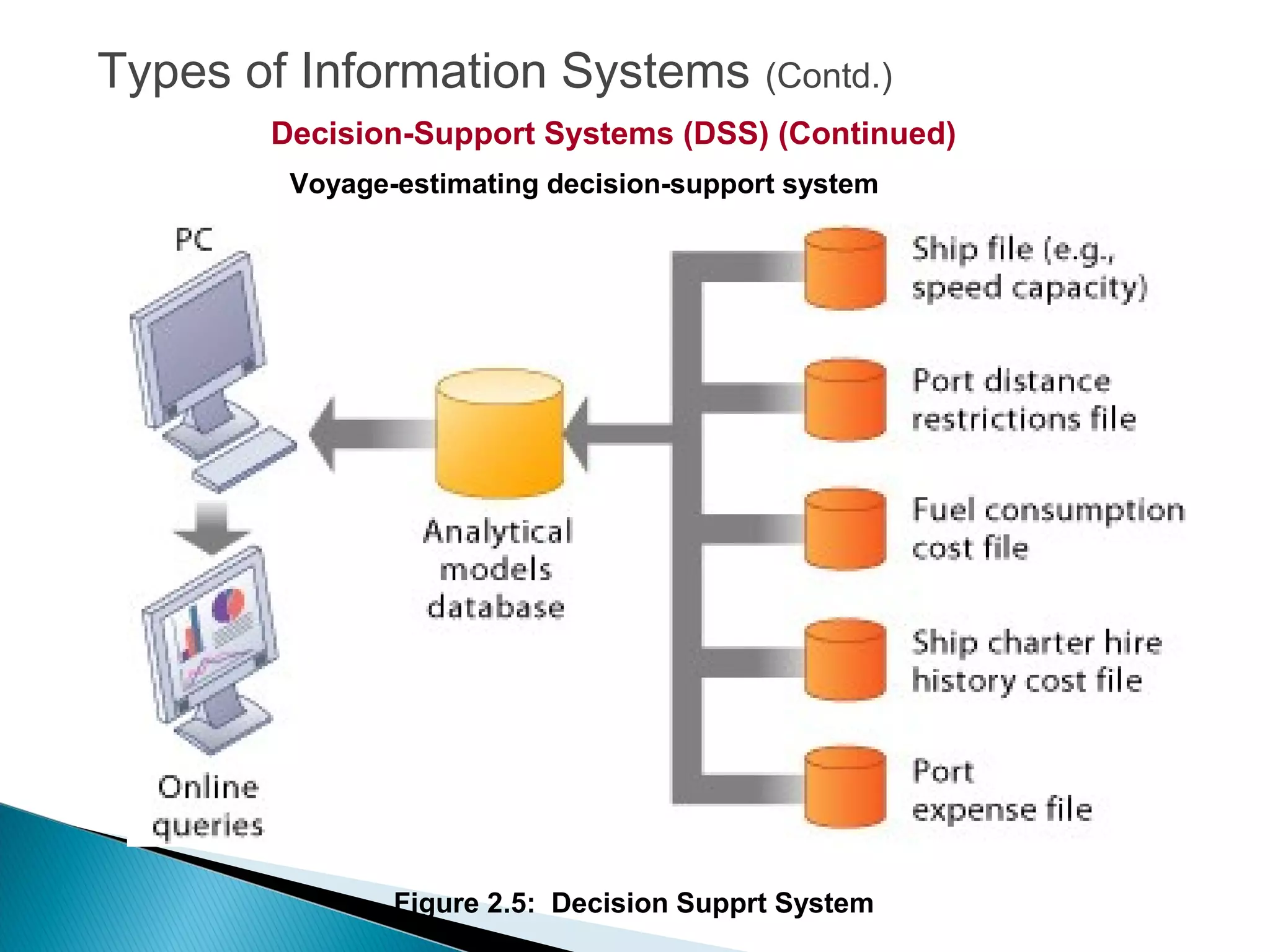
Decision-Support Systems (DSS) (Continued)
Voyage-estimating decision-support system
Types of Information Systems (Contd.)
Figure 2.5: Decision Supprt System
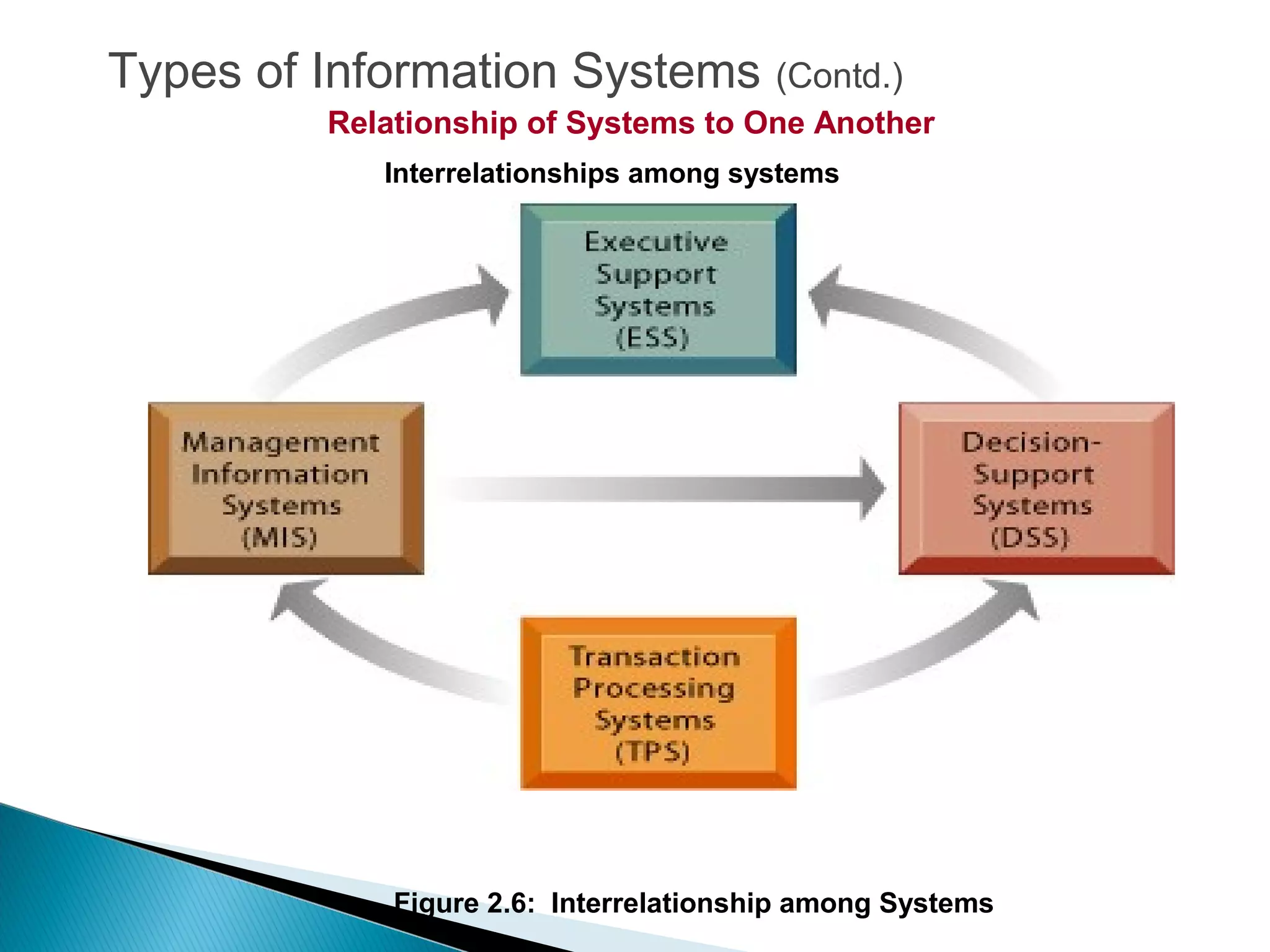
Relationship of Systems to One Another
Interrelationships among systems
Types of Information Systems (Contd.)
Figure 2.6: Interrelationship among Systems
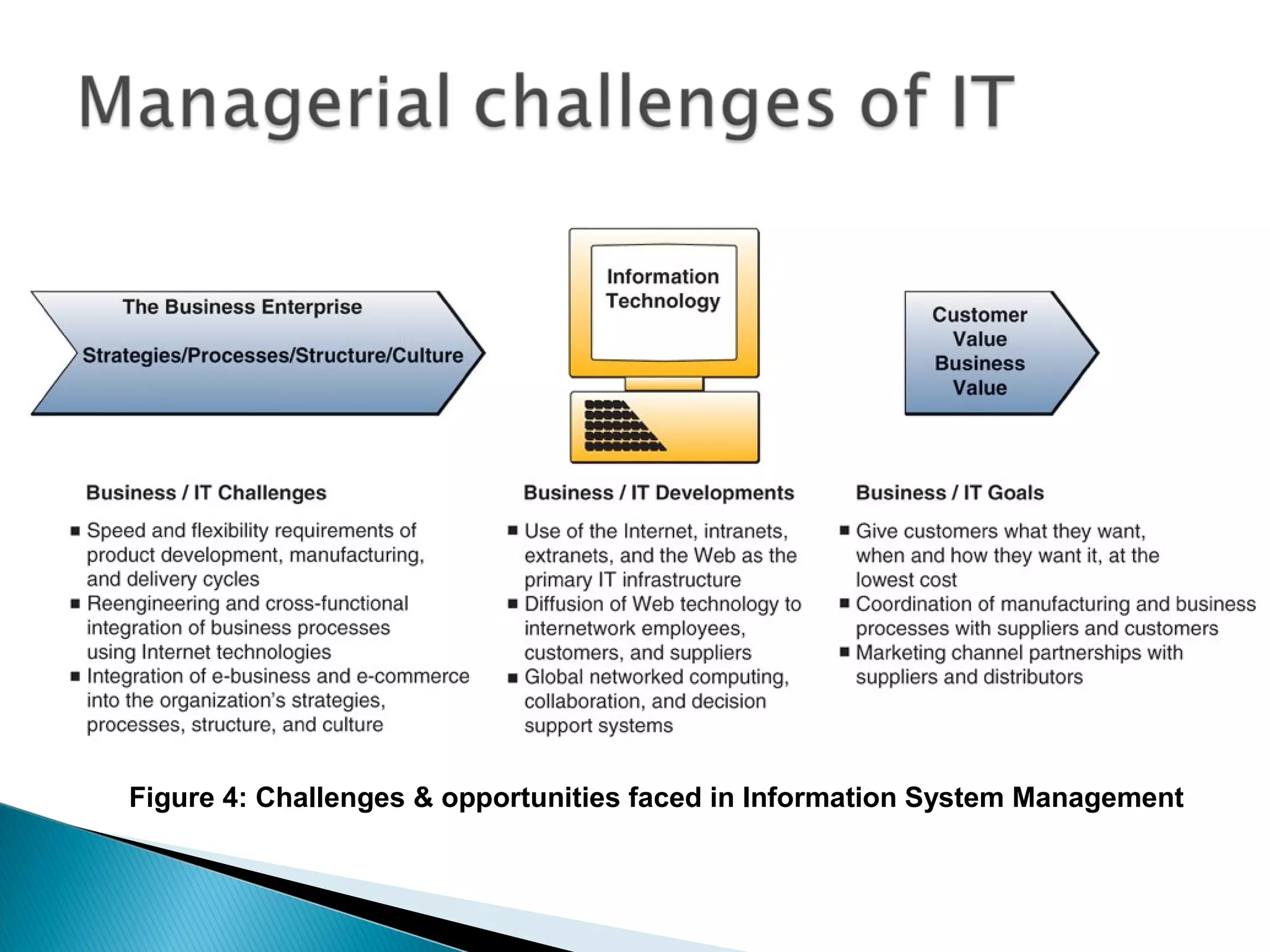
Figure 4: Challenges & opportunities faced in Information System Management
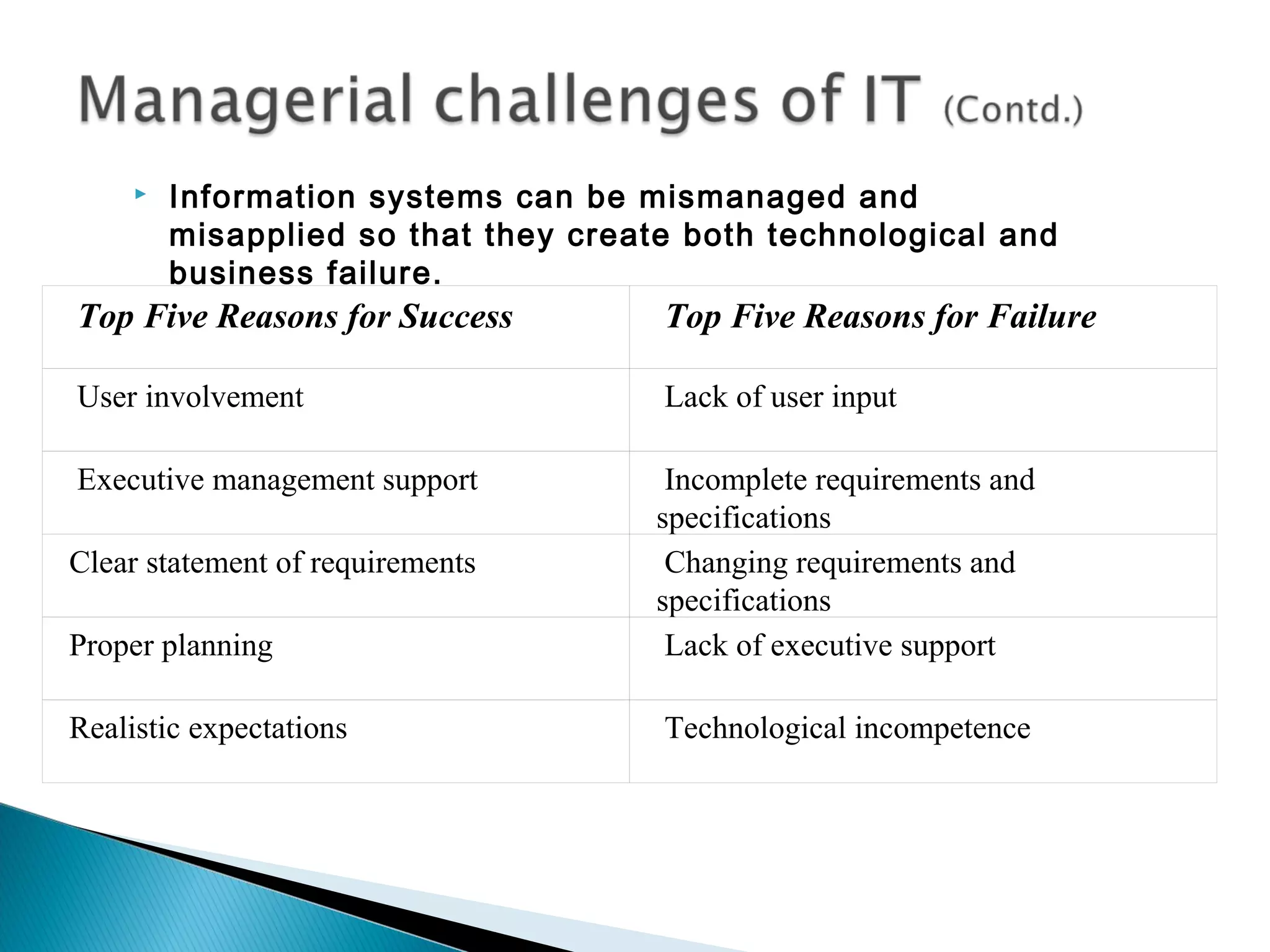
 Information systems can be mismanaged and
misapplied so that they create both technological and
business failure.
 Top Five Reasons for Success  Top Five Reasons for Failure
 User involvement  Lack of user input
 Executive management support  Incomplete requirements and 
specifications
Clear statement of requirements  Changing requirements and 
specifications
Proper planning  Lack of executive support
Realistic expectations  Technological incompetence
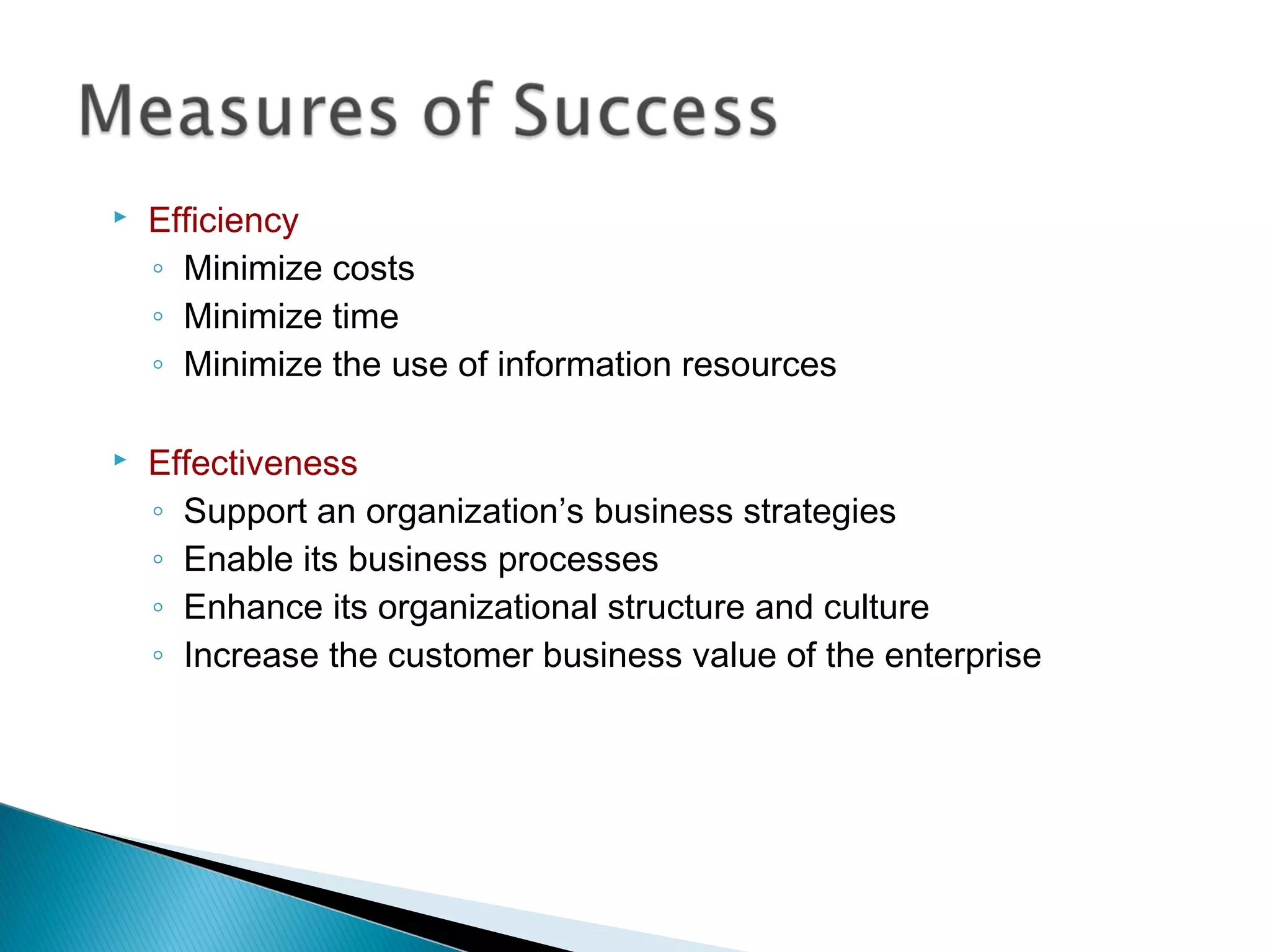
 Efficiency
◦ Minimize costs
◦ Minimize time
◦ Minimize the use of information resources
 Effectiveness
◦ Support an organization’s business strategies
◦ Enable its business processes
◦ Enhance its organizational structure and culture
◦ Increase the customer business value of the enterprise
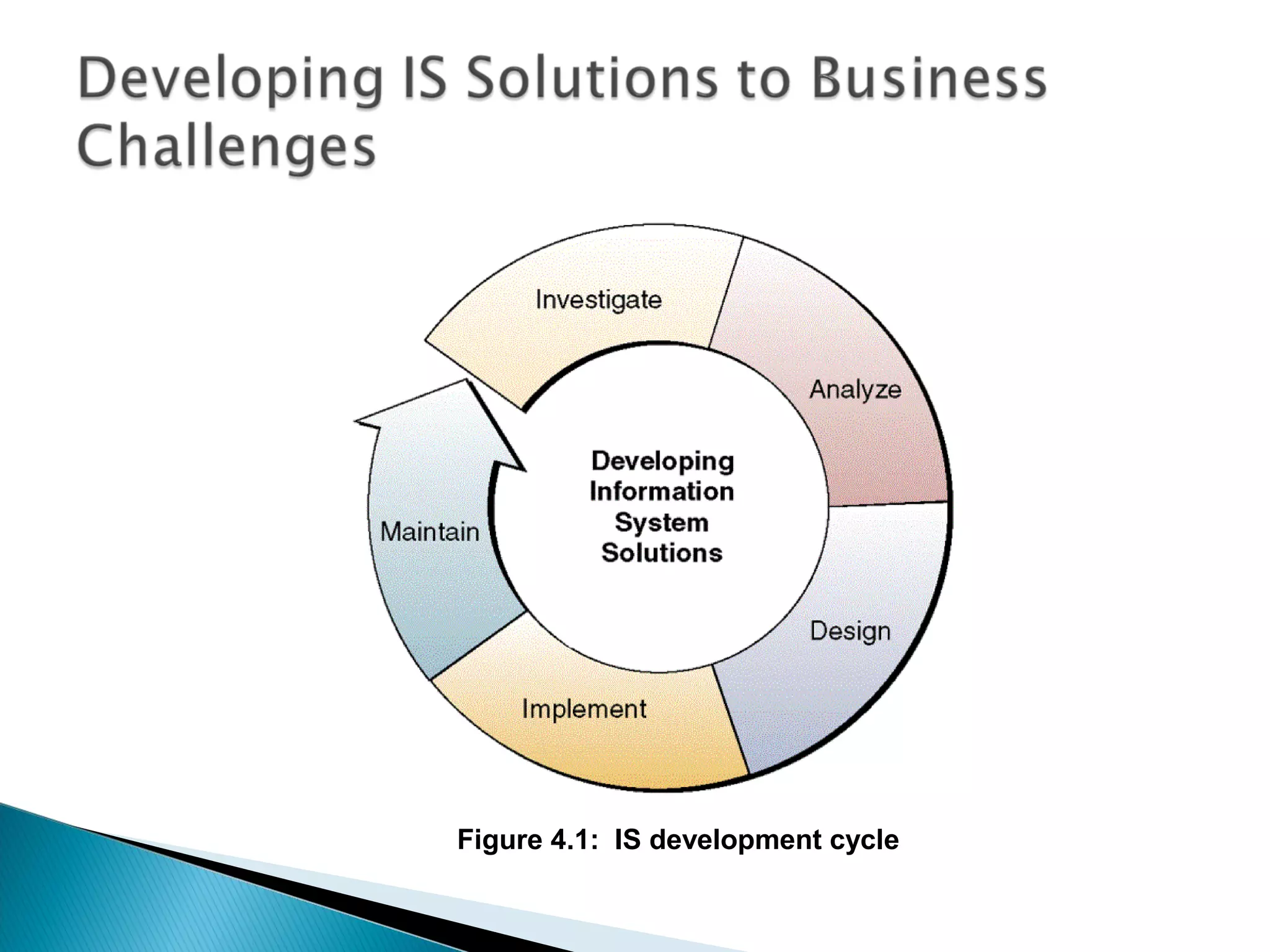
Figure 4.1: IS development cycle
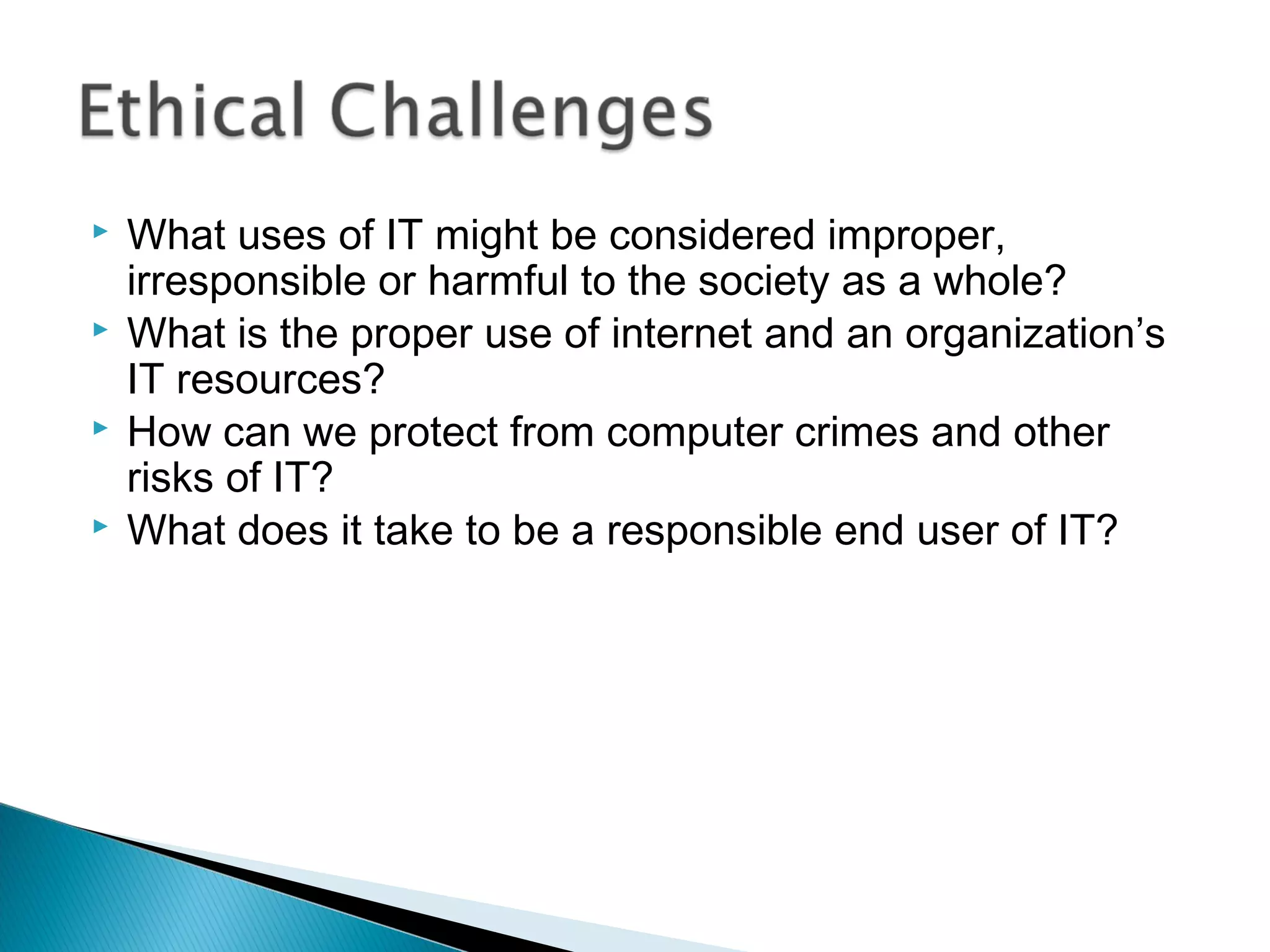
 What uses of IT might be considered improper,
irresponsible or harmful to the society as a whole?
 What is the proper use of internet and an organization’s
IT resources?
 How can we protect from computer crimes and other
risks of IT?
 What does it take to be a responsible end user of IT?
Applications
of IT
Potential
Harms
Potential
Risks
Possible
Responses
CustomerCustomer
RelationshipRelationship
ManagementManagement
HumanHuman
ResourcesResources
ManagementManagement
BusinessBusiness
IntelligenceIntelligence
SystemsSystems
Infringe-Infringe-
ments onments on
PrivacyPrivacy
InaccurateInaccurate
InformationInformation
CollusionCollusion
CustomerCustomer
BoycottsBoycotts
WorkWork
StoppagesStoppages
GovernmentGovernment
InterventionIntervention
Codes ofCodes of
EthicsEthics
IncentivesIncentives
CertificationCertification
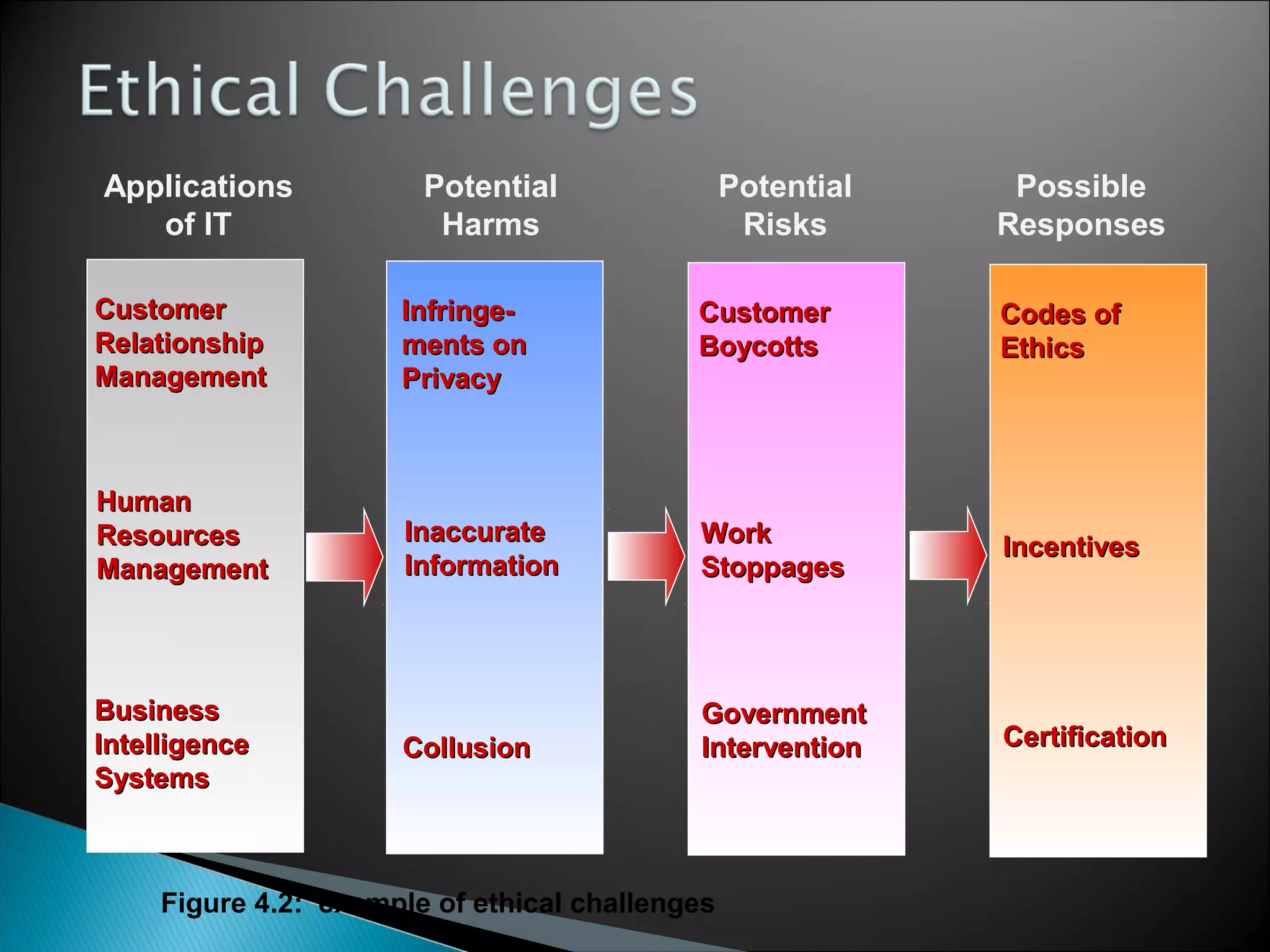
Figure 4.2: example of ethical challenges
 Citibank problems with e-Mail Scams

Management Information System Types

  • 1.
  • 2.
    Definition:  The useof Internet technologies to work and empower business processes, electronic commerce, and enterprise collaboration within a company and with its customers, suppliers, and other business stakeholders.  An online exchange of value.  E-business refers to the use of digital technology and the internet to execute the major business processes in the enterprise. E-business includes activities for internal management of the firm and for coordination with suppliers and other business partners.
  • 3.
    Definition of e-commerce: E-commerce is the part of e-business that deal with the buying, selling, marketing, and servicing of products and services , and information over a variety of computer networks  This includes advertising, sales, customer support on WWW, Internet security, payment mechanisms  Example: ◦ e-commerce system include Internet for online transactions, ◦ Extranet for access of inventory DB by large customers ◦ Corporate intranets by sales rep. to access customer records for CRM
  • 4.
    Roles of e-Businessin BusinessRoles of e-Business in Business Figure 1:The role of e-business in business
  • 5.
    Internet, Intranets &Extranets:  Internet- is a global “network of networks” that uses universal standards to connect million of different networks.  Intranets- is a internal corporate networks based on internet technology.  Extranets- is a private intranets extended to authorized users outside the organization.  Example: ◦ e-commerce system include Internet for online transactions, ◦ Extranet for access of inventory DB by large customers ◦ Corporate intranets by sales rep. to access customer records for CRM 
  • 6.
     Operation supportsystems ◦ Transaction Processing systems ◦ Process Control systems ◦ Enterprise collaboration systems  Management Support Systems ◦ Management information systems ◦ Decision Support systems ◦ Executive information systems  Other Classification Of information Systems ◦ Strategic information Systems ◦ Knowledge management Systems ◦ Experts systems ◦ Functional business systems
  • 7.
    Figure 2: Operational& Management classification of Information Systems
  • 8.
    Figure 2.1: Majorfunctions of Information System Types of Information Systems (Contd.)
  • 9.
    The Four MajorTypes of Information Systems Types of Information Systems (Contd.) Figure 2.2: Detail functionalities of Information System
  • 10.
    Types of InformationSystems (Contd.) A Symbolic Representation for a Payroll TPS Figure 2.3: Transaction Processing System
  • 11.
    Management Information Systems(MIS) (continued) Types of Information Systems (Contd.) Figure 2.4: Management Information System
  • 12.
    Decision-Support Systems (DSS)(Continued) Voyage-estimating decision-support system Types of Information Systems (Contd.) Figure 2.5: Decision Supprt System
  • 13.
    Relationship of Systemsto One Another Interrelationships among systems Types of Information Systems (Contd.) Figure 2.6: Interrelationship among Systems
  • 14.
    Figure 4: Challenges& opportunities faced in Information System Management
  • 15.
     Information systemscan be mismanaged and misapplied so that they create both technological and business failure.  Top Five Reasons for Success  Top Five Reasons for Failure  User involvement  Lack of user input  Executive management support  Incomplete requirements and  specifications Clear statement of requirements  Changing requirements and  specifications Proper planning  Lack of executive support Realistic expectations  Technological incompetence
  • 16.
     Efficiency ◦ Minimizecosts ◦ Minimize time ◦ Minimize the use of information resources  Effectiveness ◦ Support an organization’s business strategies ◦ Enable its business processes ◦ Enhance its organizational structure and culture ◦ Increase the customer business value of the enterprise
  • 17.
    Figure 4.1: ISdevelopment cycle
  • 18.
     What usesof IT might be considered improper, irresponsible or harmful to the society as a whole?  What is the proper use of internet and an organization’s IT resources?  How can we protect from computer crimes and other risks of IT?  What does it take to be a responsible end user of IT?
  • 19.
    Applications of IT Potential Harms Potential Risks Possible Responses CustomerCustomer RelationshipRelationship ManagementManagement HumanHuman ResourcesResources ManagementManagement BusinessBusiness IntelligenceIntelligence SystemsSystems Infringe-Infringe- ments onmentson PrivacyPrivacy InaccurateInaccurate InformationInformation CollusionCollusion CustomerCustomer BoycottsBoycotts WorkWork StoppagesStoppages GovernmentGovernment InterventionIntervention Codes ofCodes of EthicsEthics IncentivesIncentives CertificationCertification Figure 4.2: example of ethical challenges
  • 20.
     Citibank problemswith e-Mail Scams