MANAGEMENT
INFORMATION
SYSTEM
Lesson#1
Introduction
Management Information System is concept and combination of three
words:
1. Management
• Is the ultimate user, manager,CEO and the decision makers.
2. Information
• Stands for Processed Data.
3. System
• A system means co-related components which works together for a same goal.
Management
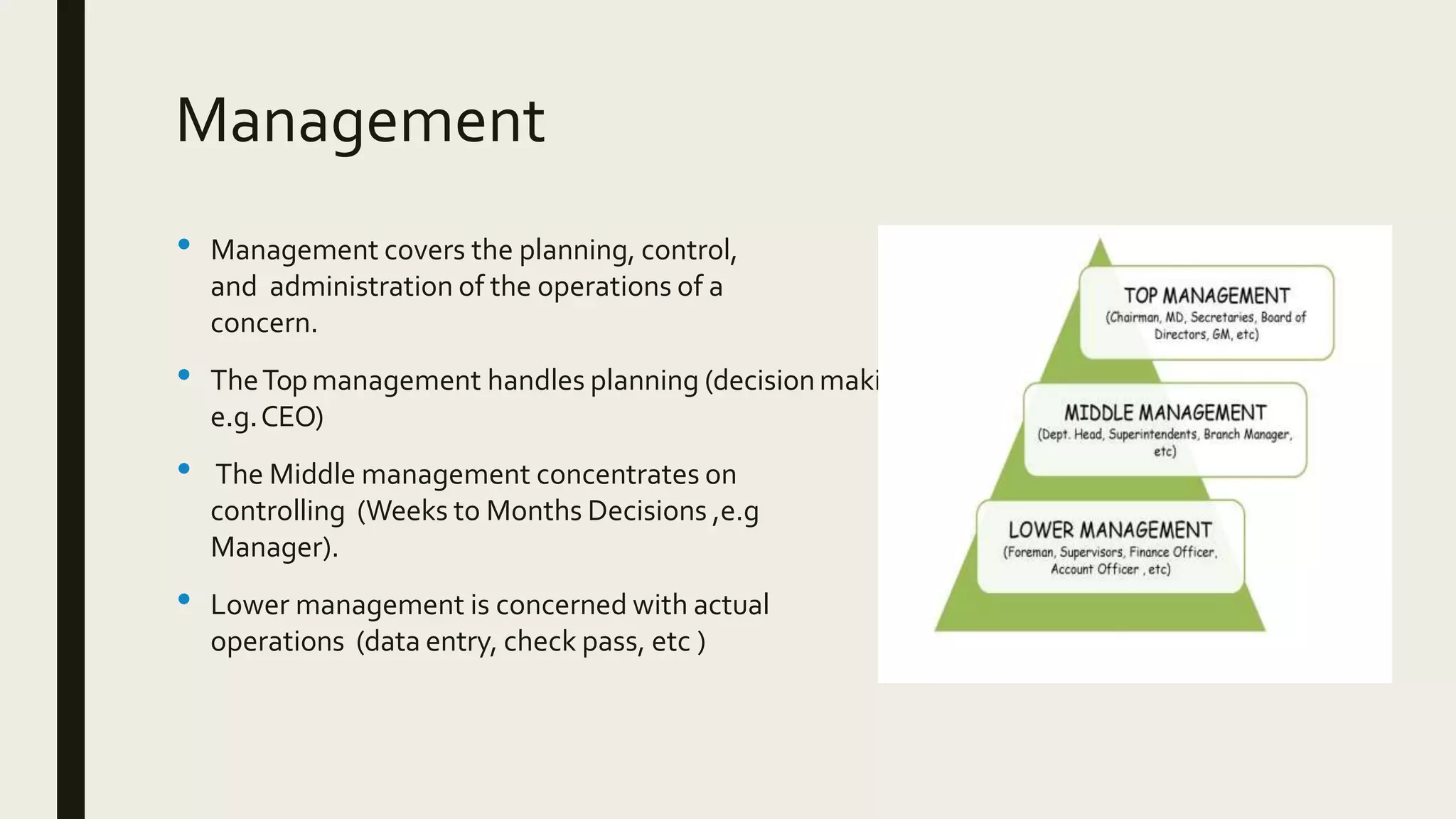
• Management covers the planning, control,
and administration of the operations of a
concern.
• TheTopmanagement handles planning (decisionmaking,
e.g.CEO)
• The Middle management concentrates on
controlling (Weeks to Months Decisions ,e.g
Manager).
• Lower management is concerned with actual
operations (data entry, check pass, etc )
Information
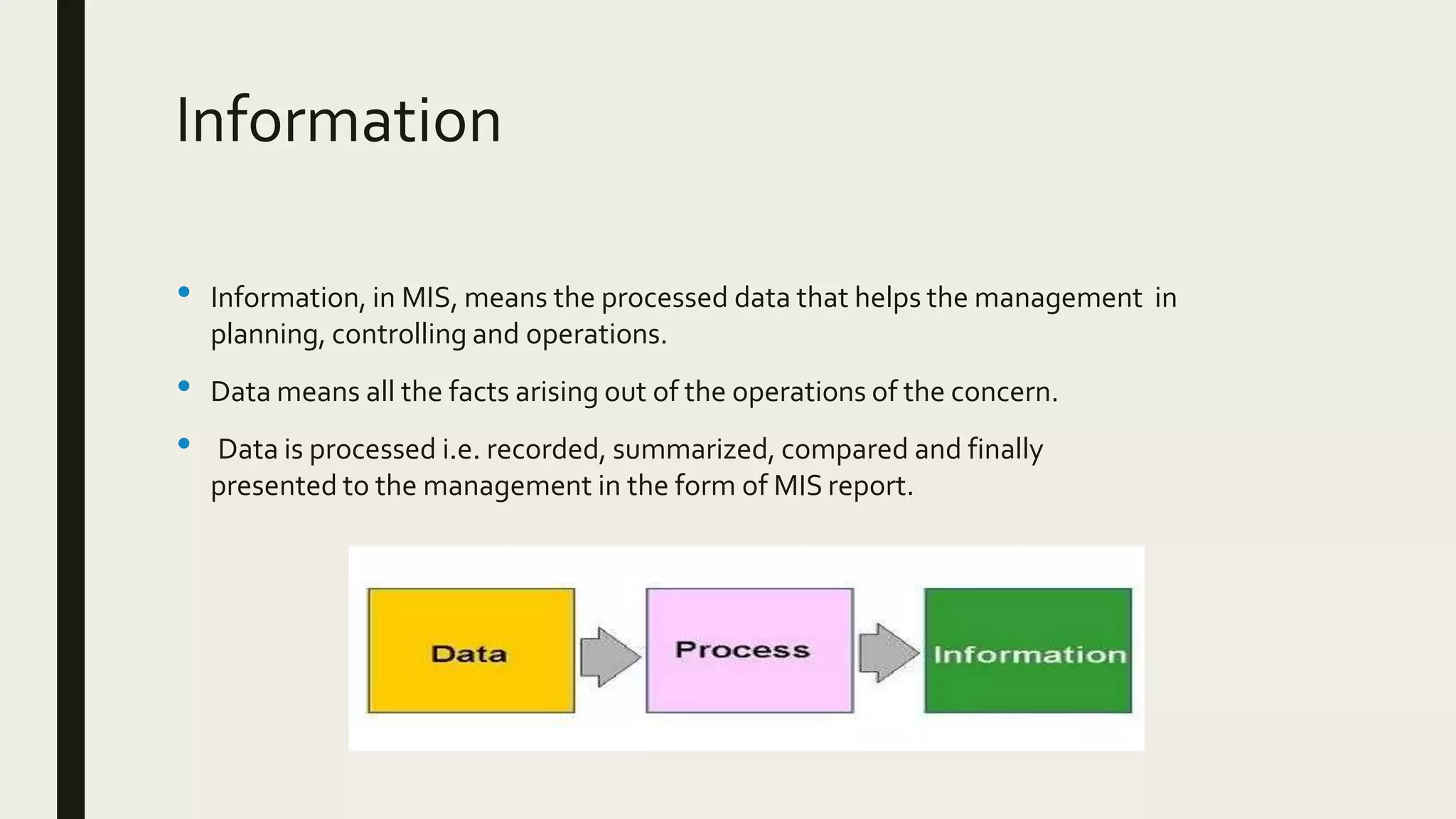
• Information, in MIS, means the processed data that helps the management in
planning, controlling and operations.
• Data means all the facts arising out of the operations of the concern.
• Data is processed i.e. recorded, summarized, compared and finally
presented to the management in the form of MIS report.
System
• Data is processed into information with the
help of a system.
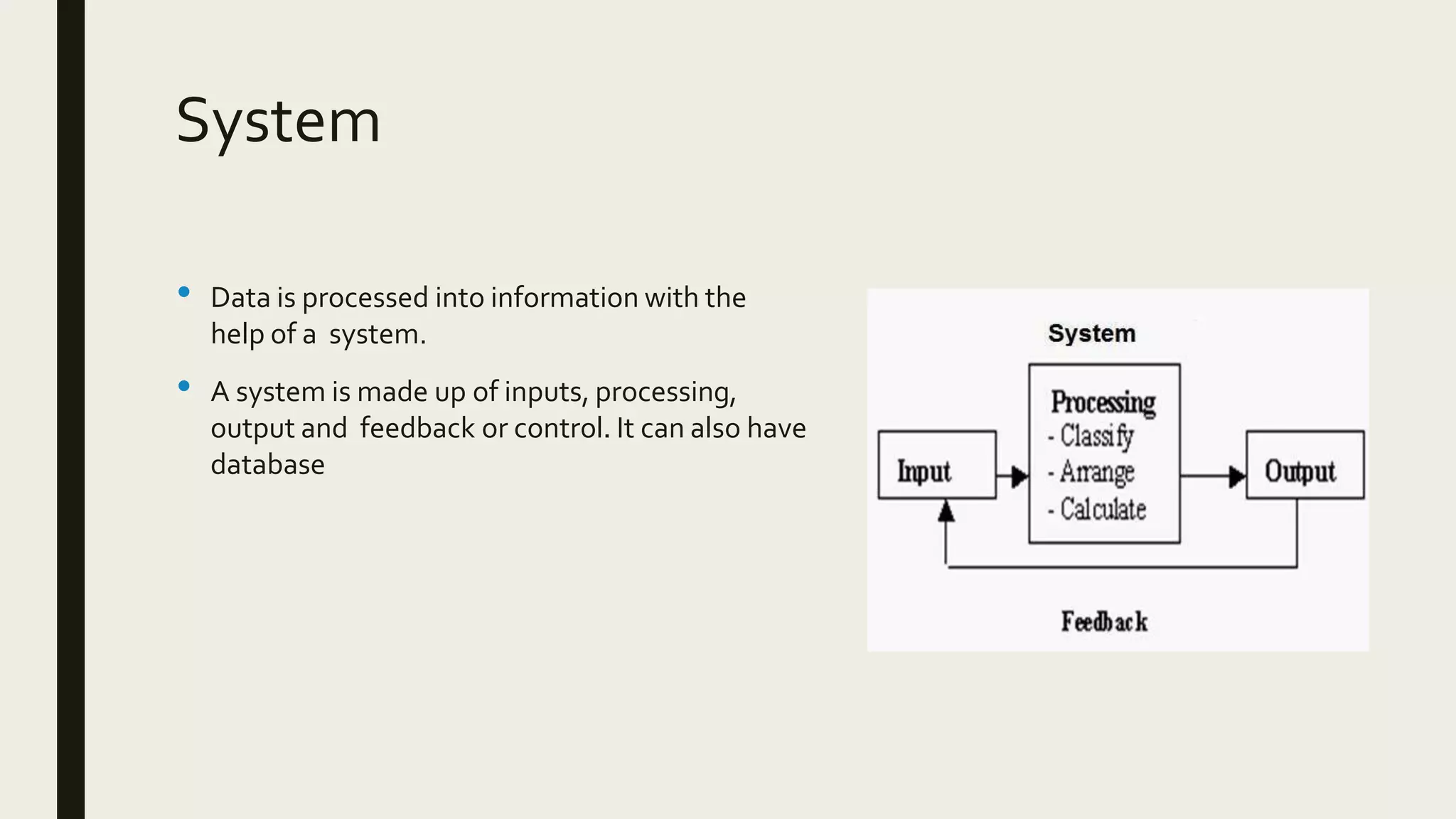
• A system is made up of inputs, processing,
output and feedback or control. It can also have
database
Definition
• Thus MIS means a system for processing data in order to give proper information to
the management for performing its functions properly and decision making.
• In simple words, MIS provides information in forms of reports and displays to
managers and other professionals which helps in decision making.
FOUNDATIONS OF INFORMATION
SYSTEMS IN BUSINESS
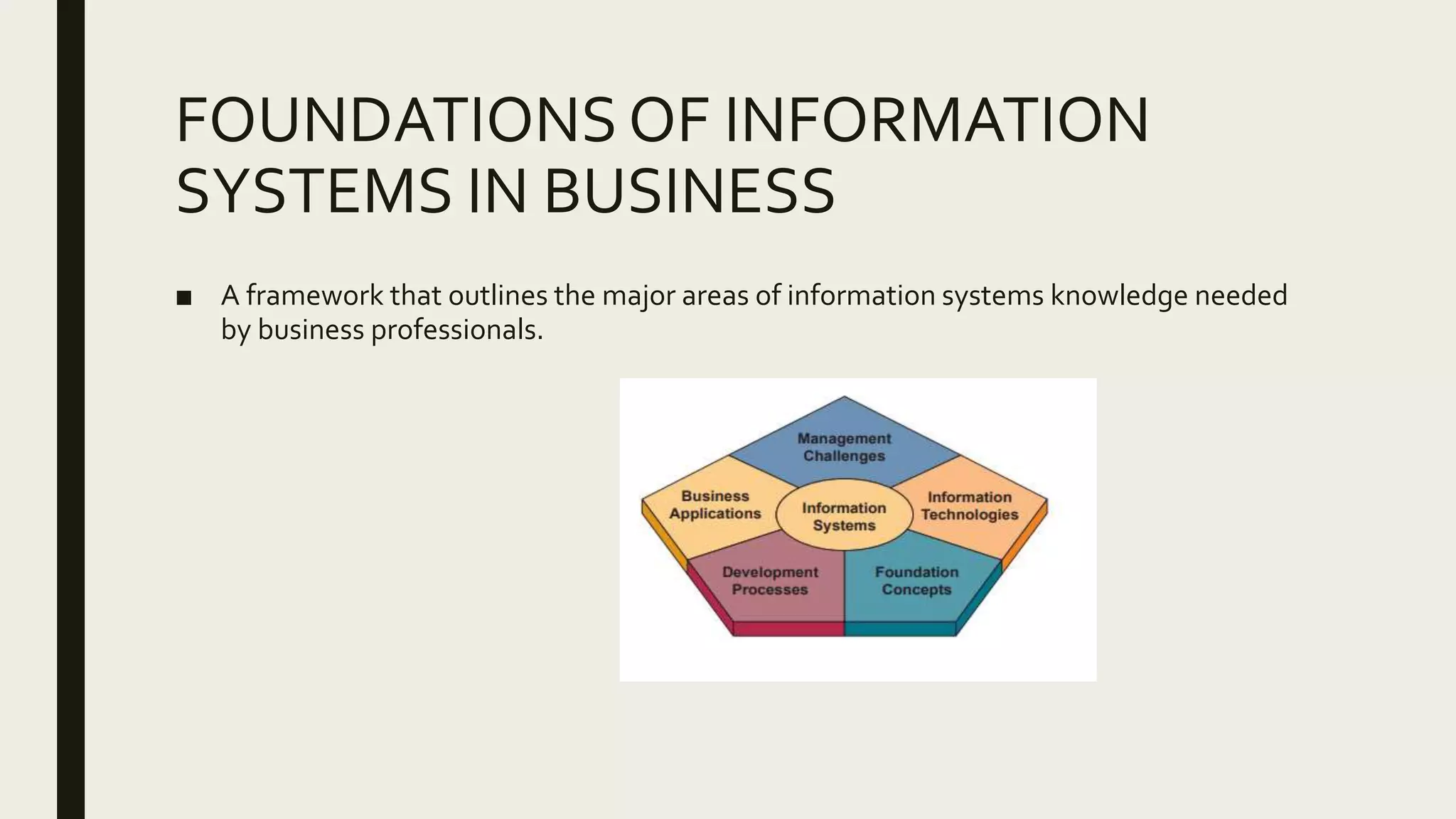
■ A framework that outlines the major areas of information systems knowledge needed
by business professionals.
Foundation Concepts:
Fundamental behavioral, technical, business, and managerial concepts
about the components and roles of information systems. Examples include
basic information system concepts derived from general systems theory or
competitive strategy concepts used to develop business applications of
information technology for competitive advantage.
InformationTechnologies:
Major concepts, developments, and management issues in
information technology—that is, hardware, software, networks,
data management, and many Internet-based technologies.
Business Applications:
The major uses of information systems for the
operations, management, and competitive advantage
of a business.
Development Processes:
How business professionals and
information specialists plan, develop, and
implement information systems to meet
business opportunities.
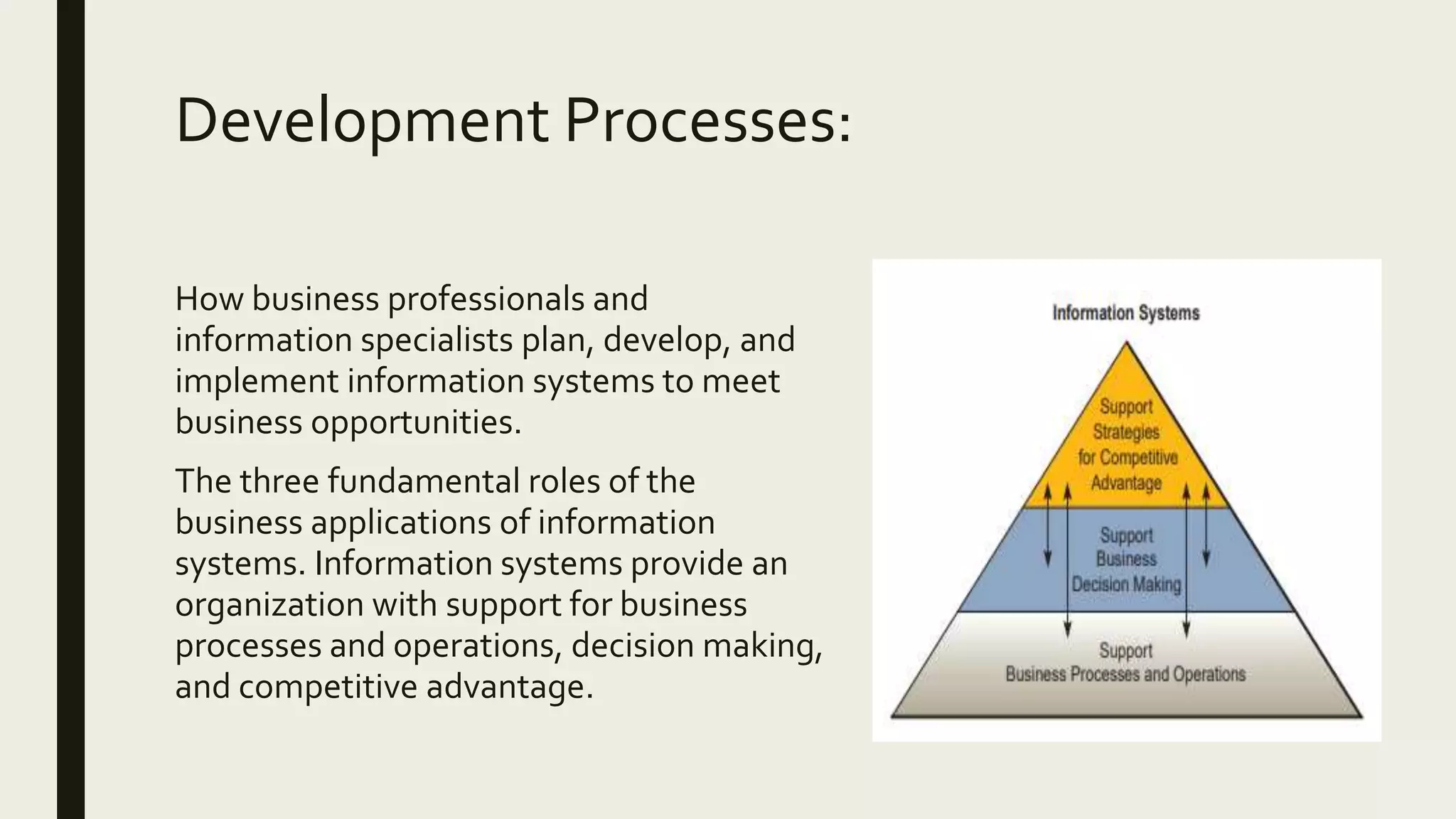
The three fundamental roles of the
business applications of information
systems. Information systems provide an
organization with support for business
processes and operations, decision making,
and competitive advantage.
Management Challenges:
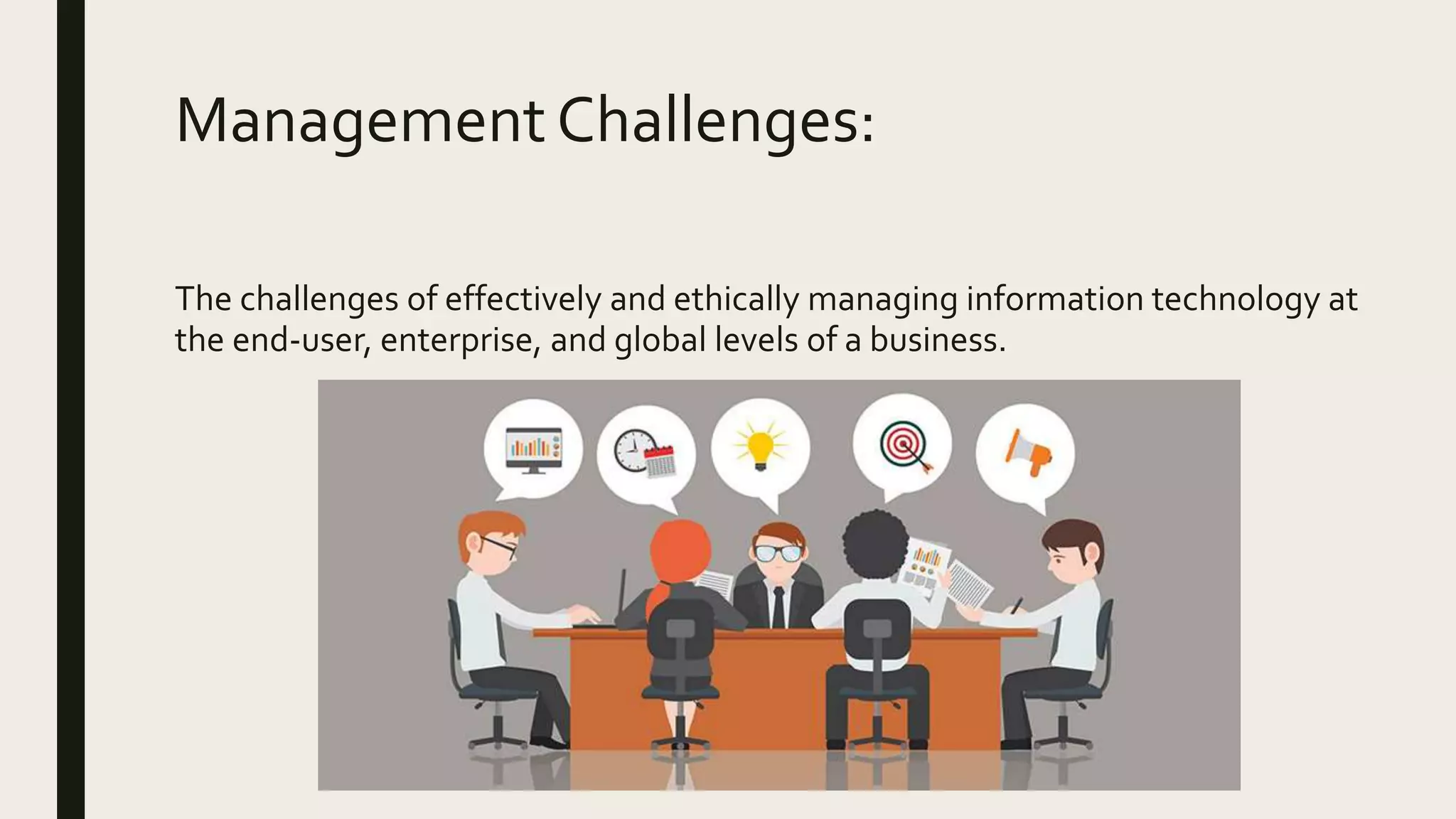
The challenges of effectively and ethically managing information technology at
the end-user, enterprise, and global levels of a business.
The Fundamental Roles of IS in Business
Although there are a seemingly endless number of software applications, there are three
fundamental reasons for all business applications of information technology.They are
found in the three vital roles that information systems can perform for a business
enterprise:
• Support of business processes and operations.
• Support of decision making by employees and managers.
• Support of strategies for competitive advantage.
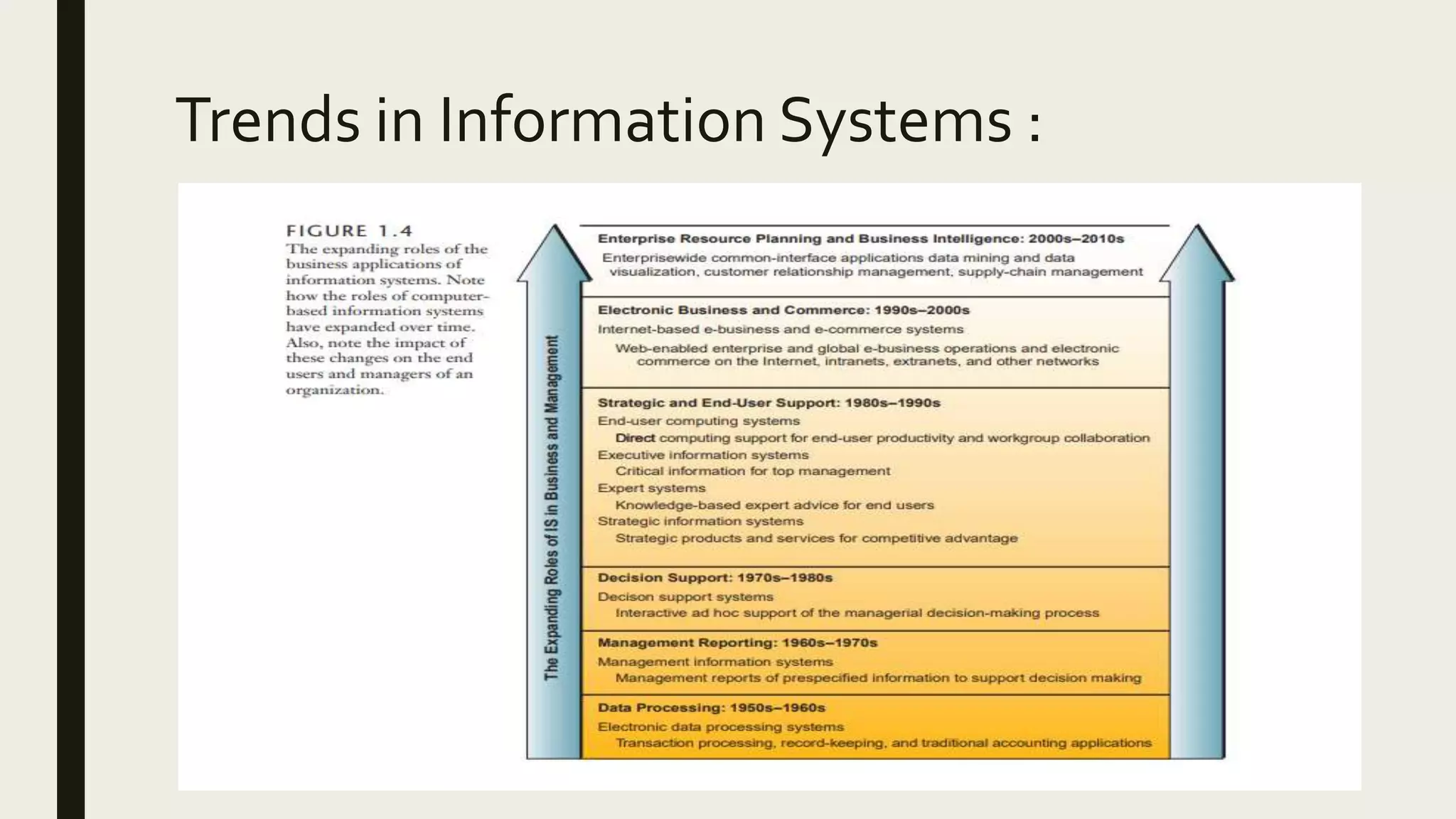
Trends in Information Systems :
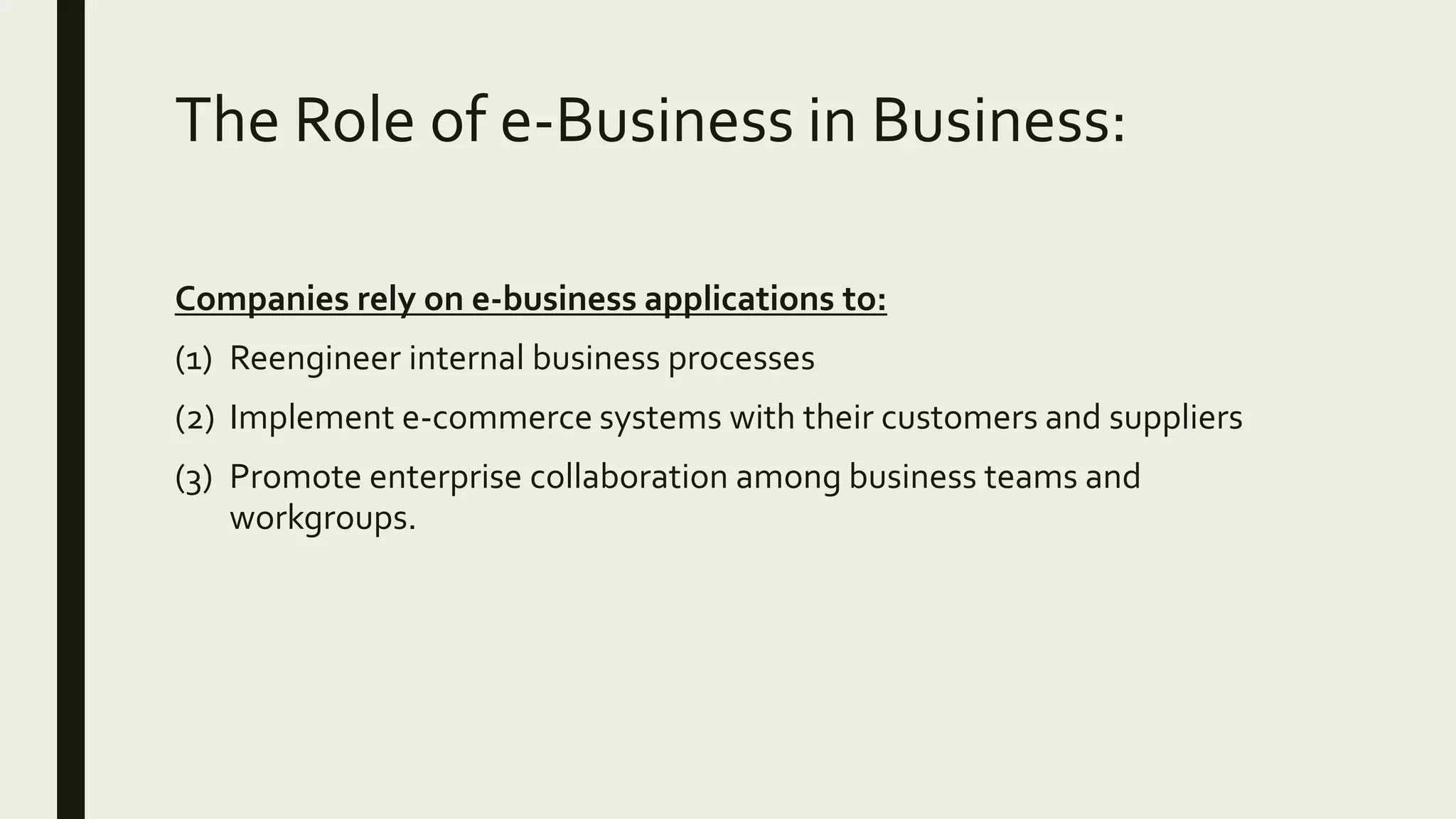
The Role of e-Business in Business:
Companies rely on e-business applications to:
(1) Reengineer internal business processes
(2) Implement e-commerce systems with their customers and suppliers
(3) Promote enterprise collaboration among business teams and
workgroups.
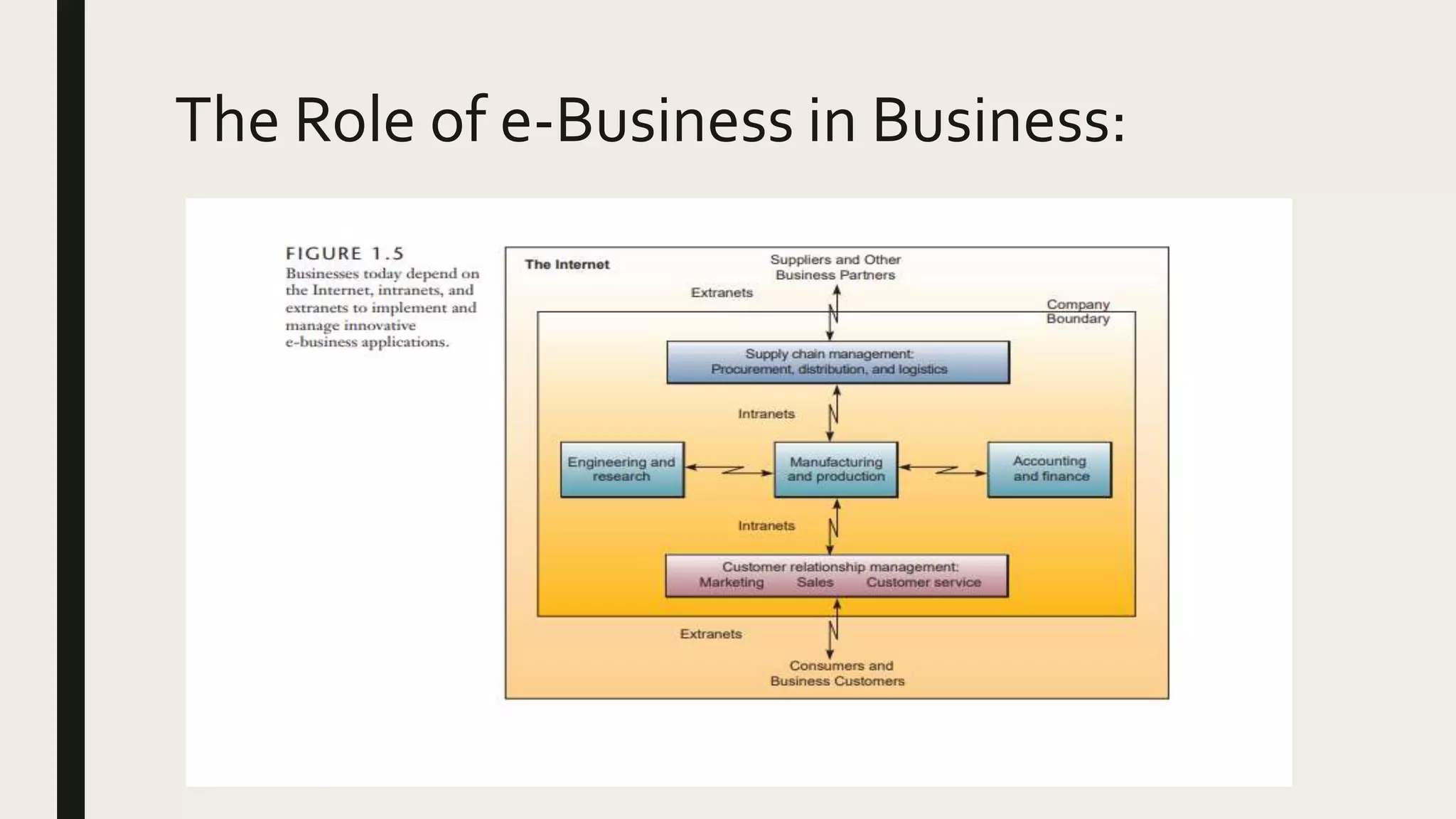
The Role of e-Business in Business:
Enterprise collaboration systems:
Enterprise collaboration systems involve the use of software tools to
support communication, coordination, and collaboration among the
members of networked teams and workgroups.A business may use
intranets, the Internet, extranets, and other networks to implement such
systems. For example, employees and external consultants may form a
virtual team that uses a corporate intranet and the Internet for e-mail,
videoconferencing, e-discussion groups, andWeb pages of work-in-
progress information to collaborate on business projects.
E-commerce:
E-commerce is the buying, selling, marketing, and servicing of products,
services, and information over a variety of computer networks. Many
businesses now use the Internet, intranets, extranets, and other networks
to support every step of the commercial process, including everything from
advertising, sales, and customer support on theWorldWide Web to
Internet security and payment mechanisms that ensure completion of
delivery and payment processes.
For example, e-commerce systems include InternetWeb sites for online
sales, extranet access to inventory databases by large customers, and the
use of corporate intranets by sales reps to access customer records for
customer relationship management.
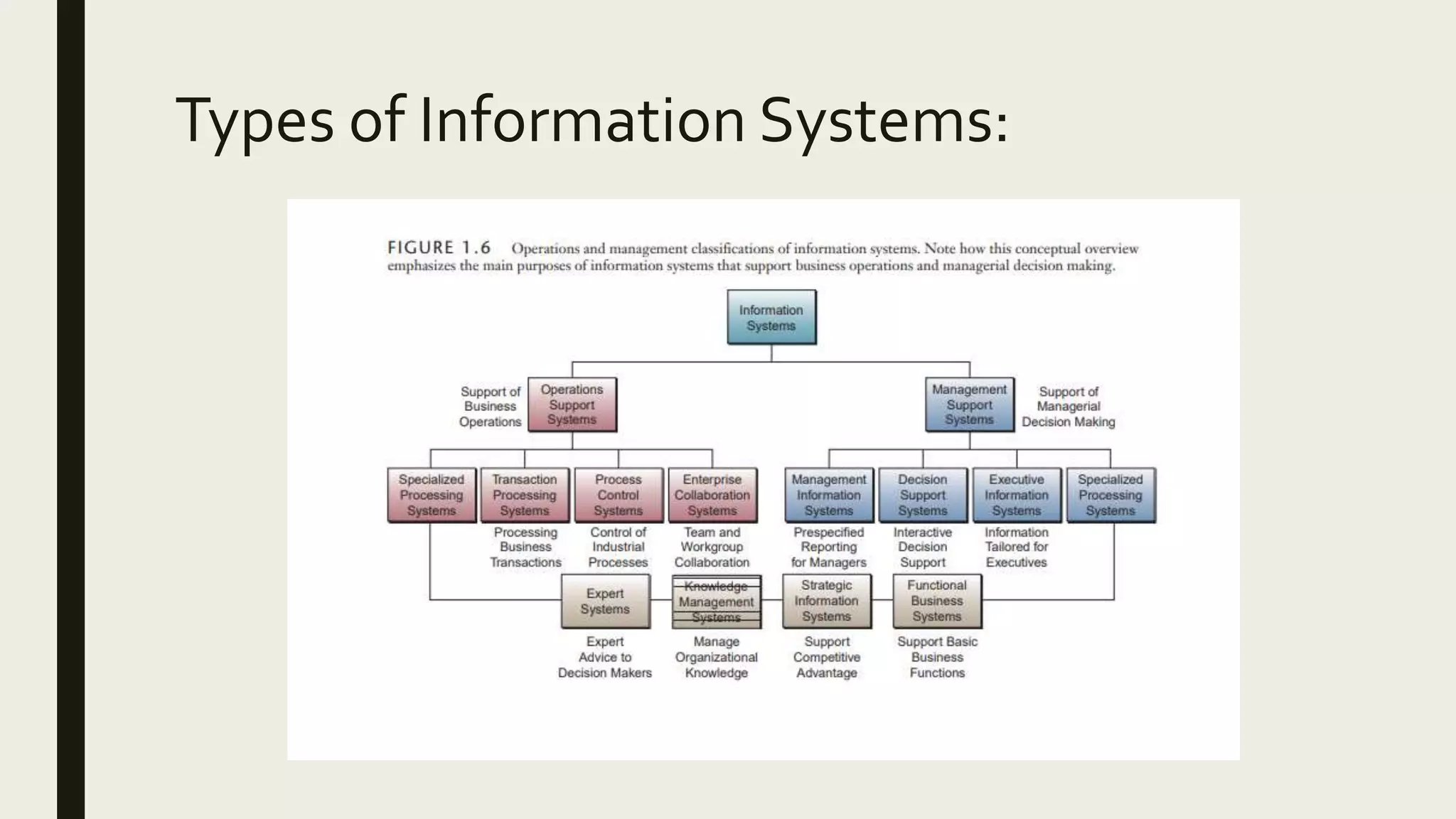
Types of Information Systems:
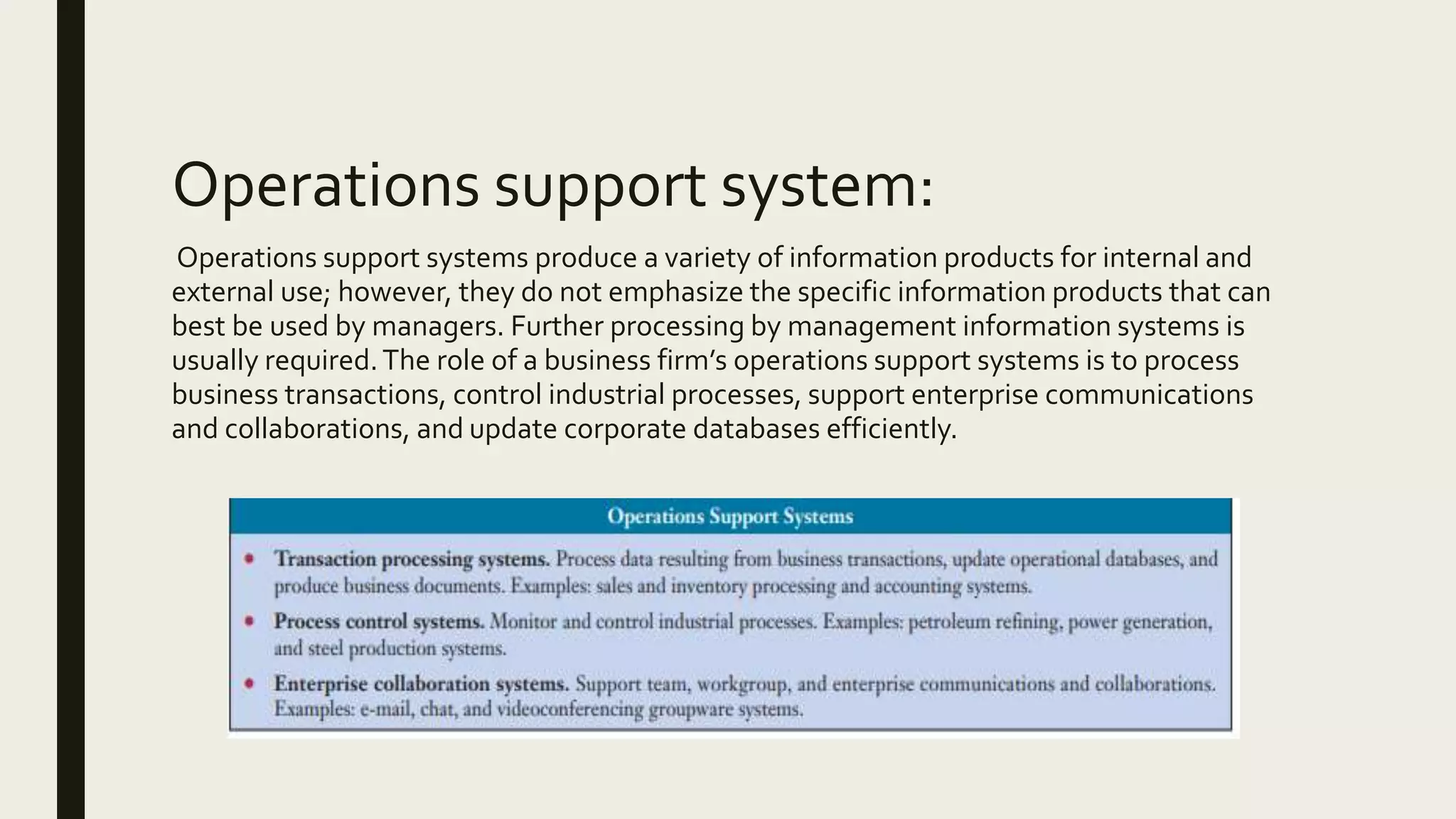
Operations support system:
Operations support systems produce a variety of information products for internal and
external use; however, they do not emphasize the specific information products that can
best be used by managers. Further processing by management information systems is
usually required.The role of a business firm’s operations support systems is to process
business transactions, control industrial processes, support enterprise communications
and collaborations, and update corporate databases efficiently.
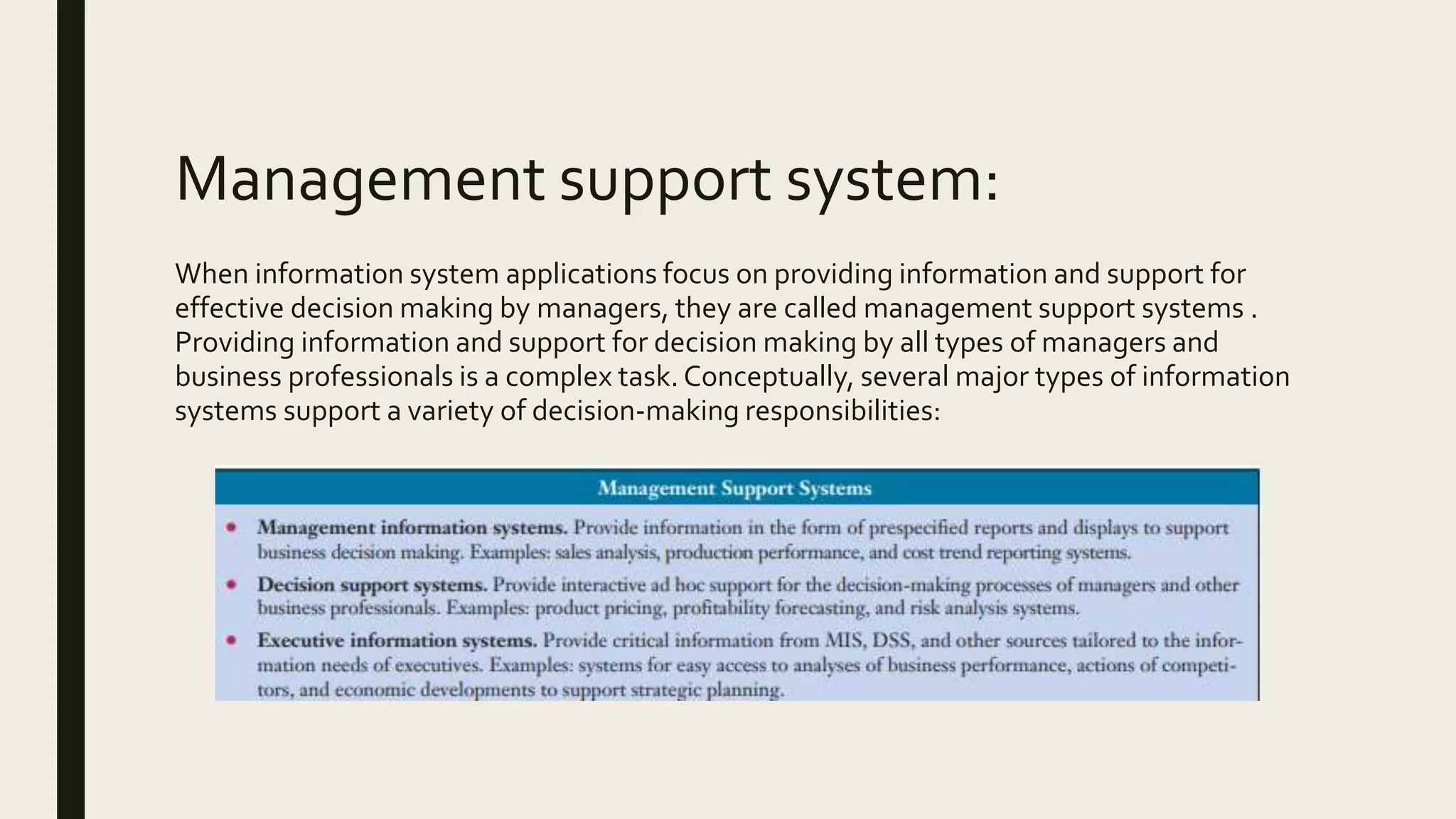
Management support system:
When information system applications focus on providing information and support for
effective decision making by managers, they are called management support systems .
Providing information and support for decision making by all types of managers and
business professionals is a complex task. Conceptually, several major types of information
systems support a variety of decision-making responsibilities:
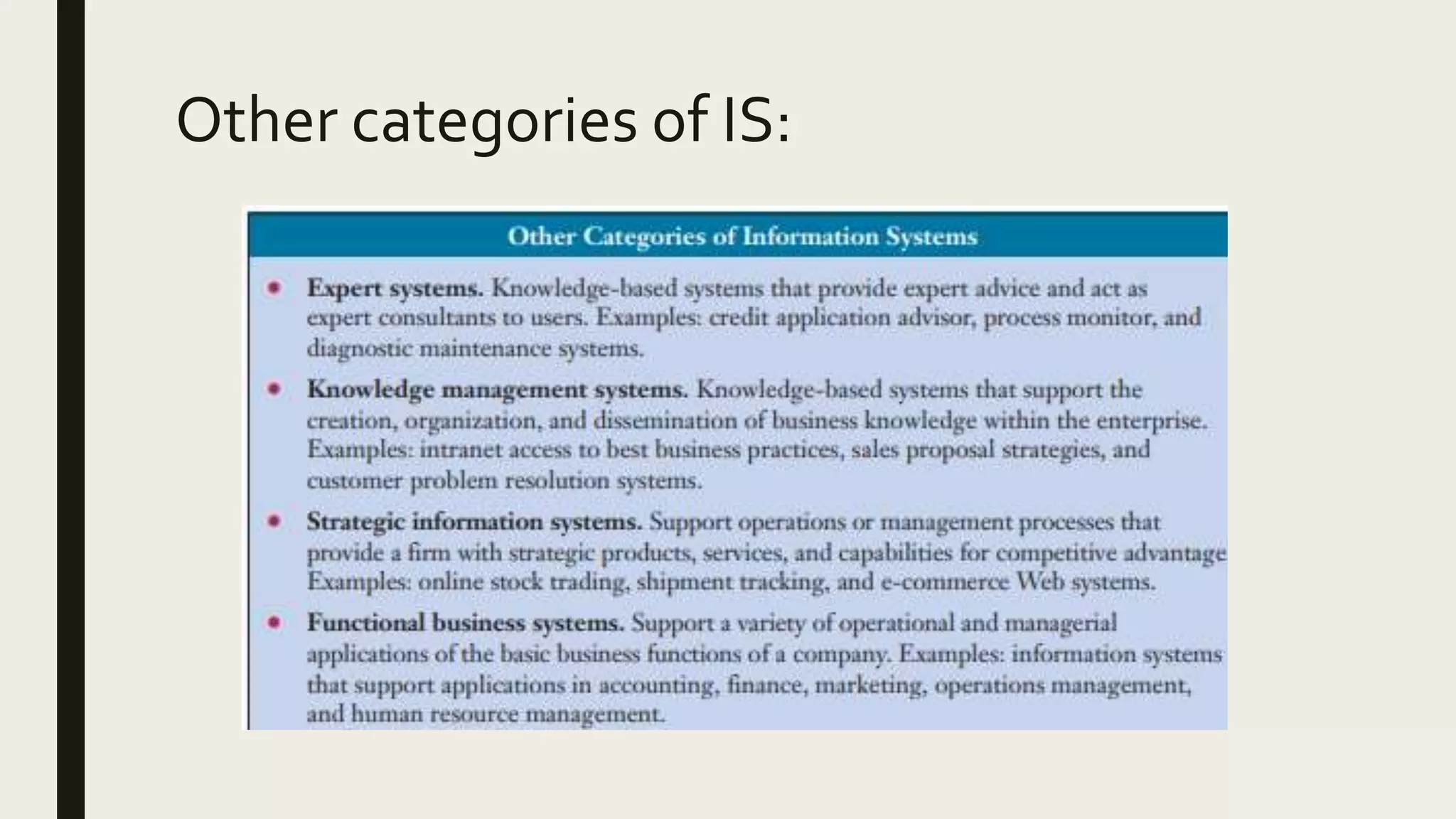
Other categories of IS:
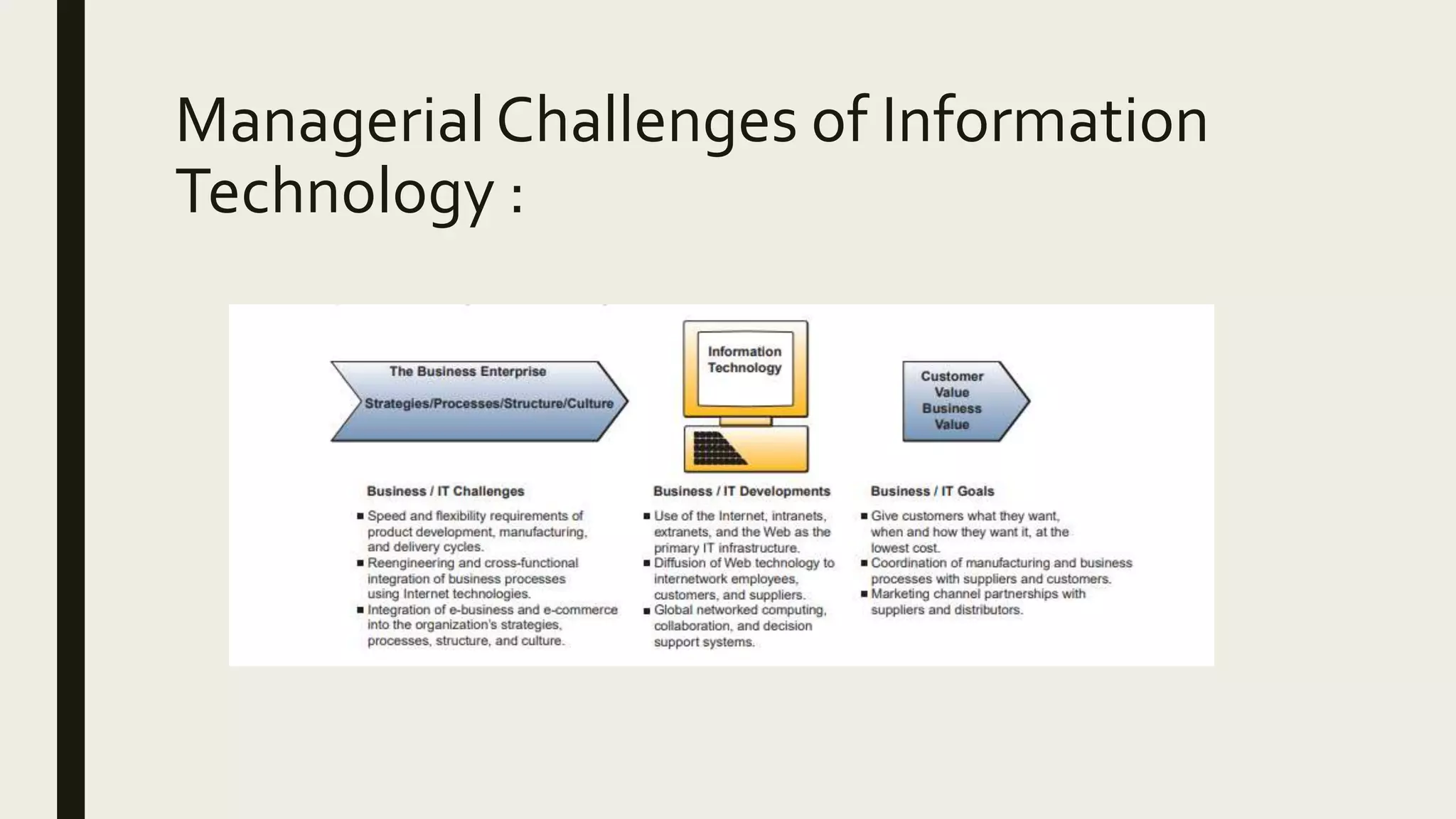
Managerial Challenges of Information
Technology :
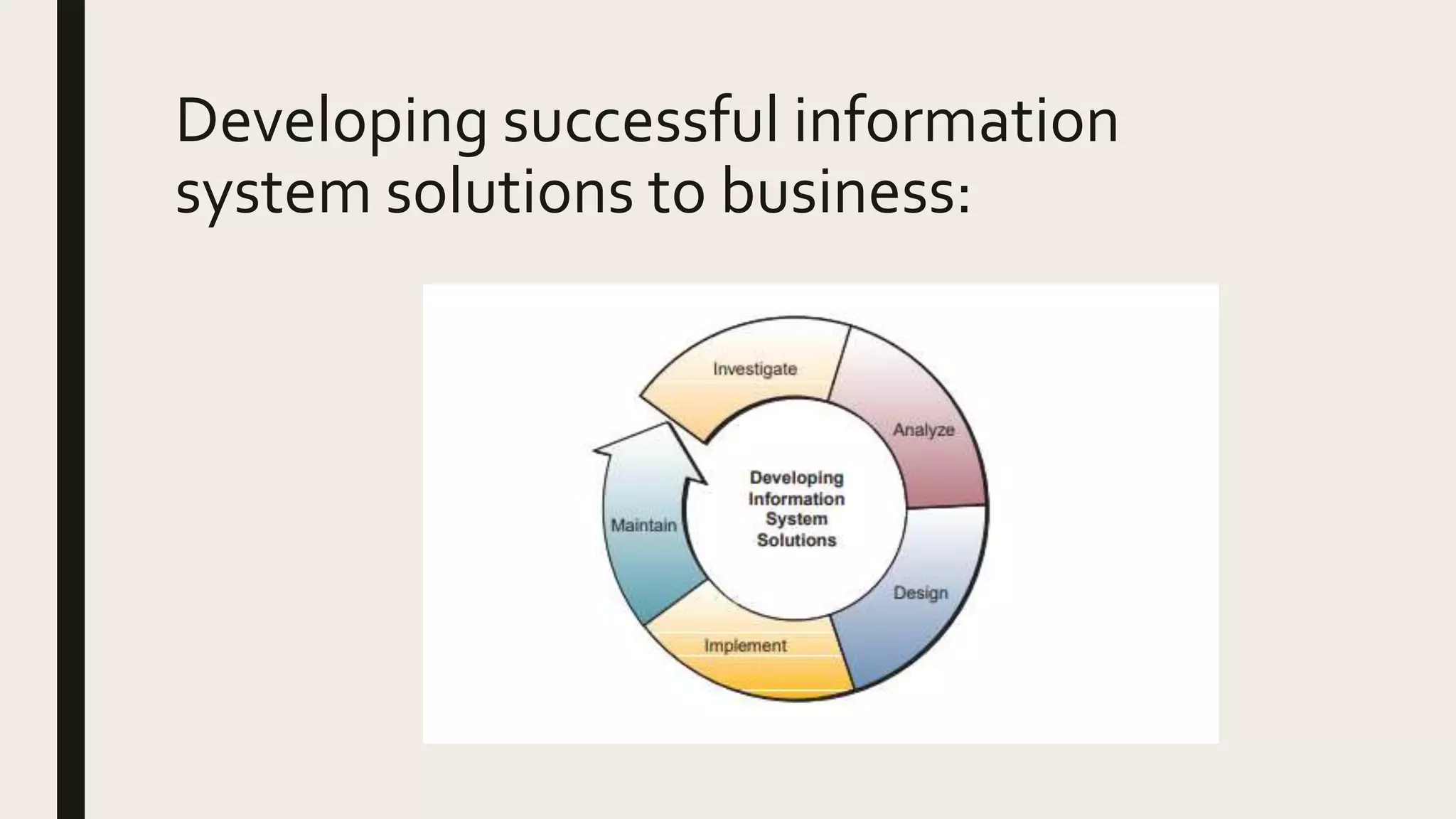
Developing successful information
system solutions to business:
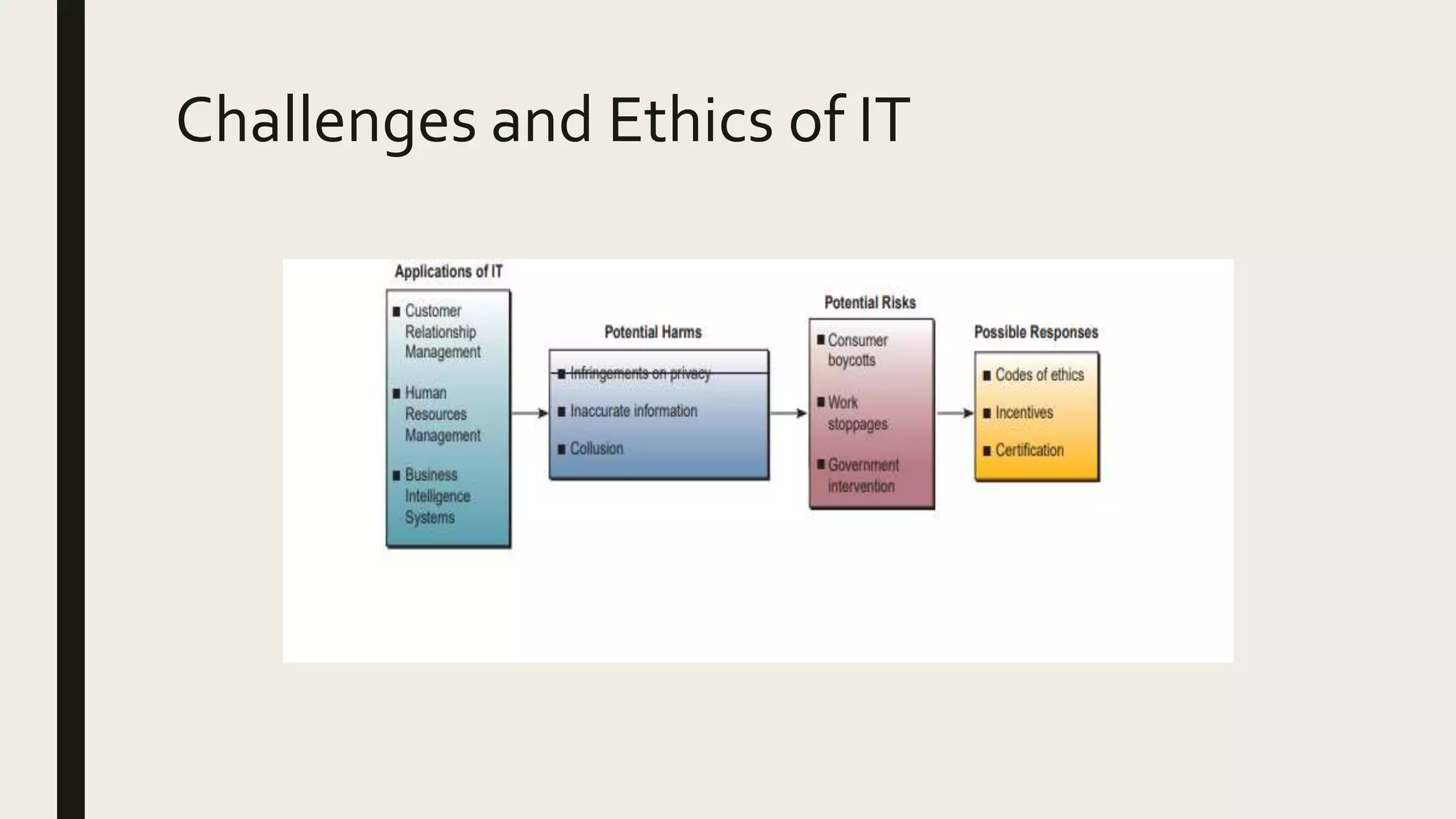
Challenges and Ethics of IT

Introduction to Management Information System

  • 1.
  • 2.
    Introduction Management Information Systemis concept and combination of three words: 1. Management • Is the ultimate user, manager,CEO and the decision makers. 2. Information • Stands for Processed Data. 3. System • A system means co-related components which works together for a same goal.
  • 3.
    Management • Management coversthe planning, control, and administration of the operations of a concern. • TheTopmanagement handles planning (decisionmaking, e.g.CEO) • The Middle management concentrates on controlling (Weeks to Months Decisions ,e.g Manager). • Lower management is concerned with actual operations (data entry, check pass, etc )
  • 4.
    Information • Information, inMIS, means the processed data that helps the management in planning, controlling and operations. • Data means all the facts arising out of the operations of the concern. • Data is processed i.e. recorded, summarized, compared and finally presented to the management in the form of MIS report.
  • 5.
    System • Data isprocessed into information with the help of a system. • A system is made up of inputs, processing, output and feedback or control. It can also have database
  • 6.
    Definition • Thus MISmeans a system for processing data in order to give proper information to the management for performing its functions properly and decision making. • In simple words, MIS provides information in forms of reports and displays to managers and other professionals which helps in decision making.
  • 7.
    FOUNDATIONS OF INFORMATION SYSTEMSIN BUSINESS ■ A framework that outlines the major areas of information systems knowledge needed by business professionals.
  • 8.
    Foundation Concepts: Fundamental behavioral,technical, business, and managerial concepts about the components and roles of information systems. Examples include basic information system concepts derived from general systems theory or competitive strategy concepts used to develop business applications of information technology for competitive advantage.
  • 9.
    InformationTechnologies: Major concepts, developments,and management issues in information technology—that is, hardware, software, networks, data management, and many Internet-based technologies.
  • 10.
    Business Applications: The majoruses of information systems for the operations, management, and competitive advantage of a business.
  • 11.
    Development Processes: How businessprofessionals and information specialists plan, develop, and implement information systems to meet business opportunities. The three fundamental roles of the business applications of information systems. Information systems provide an organization with support for business processes and operations, decision making, and competitive advantage.
  • 12.
    Management Challenges: The challengesof effectively and ethically managing information technology at the end-user, enterprise, and global levels of a business.
  • 13.
    The Fundamental Rolesof IS in Business Although there are a seemingly endless number of software applications, there are three fundamental reasons for all business applications of information technology.They are found in the three vital roles that information systems can perform for a business enterprise: • Support of business processes and operations. • Support of decision making by employees and managers. • Support of strategies for competitive advantage.
  • 14.
  • 15.
    The Role ofe-Business in Business: Companies rely on e-business applications to: (1) Reengineer internal business processes (2) Implement e-commerce systems with their customers and suppliers (3) Promote enterprise collaboration among business teams and workgroups.
  • 16.
    The Role ofe-Business in Business:
  • 17.
    Enterprise collaboration systems: Enterprisecollaboration systems involve the use of software tools to support communication, coordination, and collaboration among the members of networked teams and workgroups.A business may use intranets, the Internet, extranets, and other networks to implement such systems. For example, employees and external consultants may form a virtual team that uses a corporate intranet and the Internet for e-mail, videoconferencing, e-discussion groups, andWeb pages of work-in- progress information to collaborate on business projects.
  • 18.
    E-commerce: E-commerce is thebuying, selling, marketing, and servicing of products, services, and information over a variety of computer networks. Many businesses now use the Internet, intranets, extranets, and other networks to support every step of the commercial process, including everything from advertising, sales, and customer support on theWorldWide Web to Internet security and payment mechanisms that ensure completion of delivery and payment processes. For example, e-commerce systems include InternetWeb sites for online sales, extranet access to inventory databases by large customers, and the use of corporate intranets by sales reps to access customer records for customer relationship management.
  • 19.
  • 20.
    Operations support system: Operationssupport systems produce a variety of information products for internal and external use; however, they do not emphasize the specific information products that can best be used by managers. Further processing by management information systems is usually required.The role of a business firm’s operations support systems is to process business transactions, control industrial processes, support enterprise communications and collaborations, and update corporate databases efficiently.
  • 21.
    Management support system: Wheninformation system applications focus on providing information and support for effective decision making by managers, they are called management support systems . Providing information and support for decision making by all types of managers and business professionals is a complex task. Conceptually, several major types of information systems support a variety of decision-making responsibilities:
  • 22.
  • 23.
    Managerial Challenges ofInformation Technology :
  • 24.
  • 25.