Download to read offline

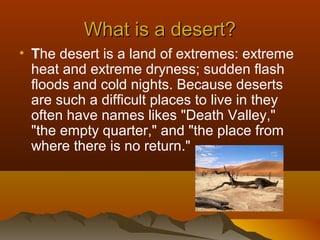
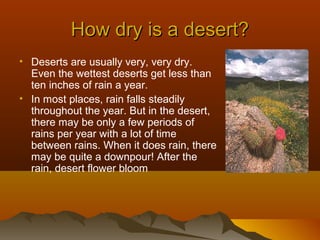
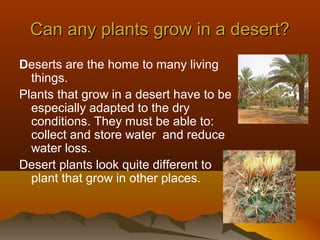
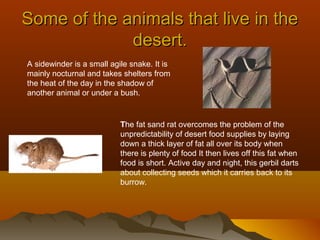

Deserts are defined as extremely hot and dry lands that receive less than 10 inches of rain per year. They experience flash floods as well as cold nights, and have extreme temperature fluctuations between day and night. Despite the harsh conditions, many plants and animals have adapted to survive in deserts. Desert plants collect and store water, reducing water loss through specialized structures and appearances. Many desert animals are nocturnal, only active at night to avoid the heat, and obtain water from seeds and metabolic processes rather than drinking. Examples given are the sidewinder snake that shelters during the day and the fat sand rat that stores body fat for times of food scarcity.


