What is a Biome?
A biome is a geographic area characterized by
specific kinds of plants and animals. Deserts,
tropical rainforests, and tundra are all types of
biomes. In the desert biome many organisms
have learned to adapt to the hot climate and lack
of supplements.
A Desert’s
Characteristics
Climate
Animals
Plants
Seasons
Adaptations
Significance to
humans
Climate
The desert is the hottest biome on Earth. It also has its extremes.
It can be over 100 degrees during the day and below 32 degrees at night.
Less than 25 cm or rainfall every year.
The amount of rainfall varies, but when it rains…it POURS!!!!
After a storm, the desert may not see any rain for weeks or months.
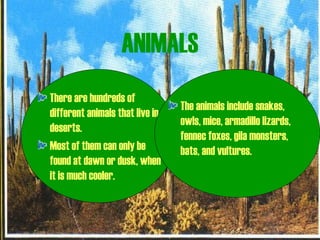
ANIMALS
There are hundreds of
different animals that live in
deserts.
Most of them can only be
found at dawn or dusk, when
it is much cooler.
The animals include snakes,
owls, mice, armadillo lizards,
fennec foxes, gila monsters,
bats, and vultures.
Animal-Desert Jack Rabbit
• The desert jack rabbit eats
plants, such as the cactus. It is
very careful to avoid the
prickly spines! Its ears pick up
any sound of danger. They also
help keep the rabbit cool
because heat can escape
through the tiny blood vessels
that are found there.
Endangered Animals
Black Rhino
Grevy’s Zebra
King Cheetah
The major causes of
endangered animals in
the desert are mainly
poachers and
unexpected drought.
Plant Life of Deserts
A Variety of cactuses
Prickly Pear
Dragon Tree
Octillo Plant
Desert Spoon
Boojum
The vegetation of the Desert Biome is characterized
by dominance of annual plants (often annual grasses)
This means that after a season with rarely abundant
rains, the desert plains can be covered with a sea of
short annual grass. Whereas in more normal years,
the plains can appear bare with the annual plants
persisting in the form of seed.
There are several plants that are able to survive in the desert.
Most plants survive by their long roots to reach underground water sources.
Seasons
• The seasons are generally warm throughout the
year and very hot in the summer. The winters
usually bring little rainfall. Temperatures exhibit
daily extremes because the atmosphere contains
little humidity to block the Sun’s rays.
Adaptations
• Many of the animals in the desert have become
nocturnal because of the extreme heat.
• Both plants and animals have learned to store
water, avoid heat by staying underground, and
taking water from nearby plants.
Human Effects
• Poachers are a main cause of dying animals. Poachers catch animals
of all kinds to make money for usually just one part, like the elephant
tusk.
• With the growing popularity of transportation, many roads are being
built in not only the desert, but all the other biomes.
• The main problem with these roads are the fact that they destroy
habitats and endanger animals. Road kill is also a main factor in these
dying animals.
• These problems can be easily taken care of if other means of
transportation were encouraged.
Locations around the World
Weird Facts
• The Gobi Desert is cold almost all year round.
• Deserts spread through desertification. This
happens when grasslands surrounding deserts
become dry.
• Some deserts have gotten nicknames such as
Death Valley because of the lack of water.
Oasis
• Oases are parts of the desert where plants grow
and water is almost always available.
• An oasis is formed by a pool of water trapped
between layers of rock and the desert floor.
• The water can allow people to settle and even
grow crops in the desert.
THE END
Note: this is not a dirt road.
facultyfp.salisbury.edu/
rdroyer/jaroyer/cmasign/
desert.ppt

desert Ecosystem ppt in environmental studies

  • 2.
    What is aBiome? A biome is a geographic area characterized by specific kinds of plants and animals. Deserts, tropical rainforests, and tundra are all types of biomes. In the desert biome many organisms have learned to adapt to the hot climate and lack of supplements.
  • 3.
  • 4.
    Climate The desert isthe hottest biome on Earth. It also has its extremes. It can be over 100 degrees during the day and below 32 degrees at night. Less than 25 cm or rainfall every year. The amount of rainfall varies, but when it rains…it POURS!!!! After a storm, the desert may not see any rain for weeks or months.
  • 5.
    ANIMALS There are hundredsof different animals that live in deserts. Most of them can only be found at dawn or dusk, when it is much cooler. The animals include snakes, owls, mice, armadillo lizards, fennec foxes, gila monsters, bats, and vultures.
  • 6.
    Animal-Desert Jack Rabbit •The desert jack rabbit eats plants, such as the cactus. It is very careful to avoid the prickly spines! Its ears pick up any sound of danger. They also help keep the rabbit cool because heat can escape through the tiny blood vessels that are found there.
  • 7.
    Endangered Animals Black Rhino Grevy’sZebra King Cheetah The major causes of endangered animals in the desert are mainly poachers and unexpected drought.
  • 8.
    Plant Life ofDeserts A Variety of cactuses Prickly Pear Dragon Tree Octillo Plant Desert Spoon Boojum The vegetation of the Desert Biome is characterized by dominance of annual plants (often annual grasses) This means that after a season with rarely abundant rains, the desert plains can be covered with a sea of short annual grass. Whereas in more normal years, the plains can appear bare with the annual plants persisting in the form of seed. There are several plants that are able to survive in the desert. Most plants survive by their long roots to reach underground water sources.
  • 9.
    Seasons • The seasonsare generally warm throughout the year and very hot in the summer. The winters usually bring little rainfall. Temperatures exhibit daily extremes because the atmosphere contains little humidity to block the Sun’s rays.
  • 10.
    Adaptations • Many ofthe animals in the desert have become nocturnal because of the extreme heat. • Both plants and animals have learned to store water, avoid heat by staying underground, and taking water from nearby plants.
  • 11.
    Human Effects • Poachersare a main cause of dying animals. Poachers catch animals of all kinds to make money for usually just one part, like the elephant tusk. • With the growing popularity of transportation, many roads are being built in not only the desert, but all the other biomes. • The main problem with these roads are the fact that they destroy habitats and endanger animals. Road kill is also a main factor in these dying animals. • These problems can be easily taken care of if other means of transportation were encouraged.
  • 12.
  • 13.
    Weird Facts • TheGobi Desert is cold almost all year round. • Deserts spread through desertification. This happens when grasslands surrounding deserts become dry. • Some deserts have gotten nicknames such as Death Valley because of the lack of water.
  • 14.
    Oasis • Oases areparts of the desert where plants grow and water is almost always available. • An oasis is formed by a pool of water trapped between layers of rock and the desert floor. • The water can allow people to settle and even grow crops in the desert.
  • 15.
    THE END Note: thisis not a dirt road.
  • 16.