HEMOLYSIS OR HAEMOLYSIS rupturing (lysis) of red blood cells
(erythrocytes) and the release of their contents (cytoplasm) into
into surrounding fluid (e.g. blood plasma).
https://en.wikipedia.org/wiki/Hemolysis
Hemolysis may occur in VIVOor in VITRO
(inside or outside the body).
Hemolysins damage host cytoplasmic membrane, causing
cell lysis and death by attacking the phospholipid of the
host cytoplasmic membrane.
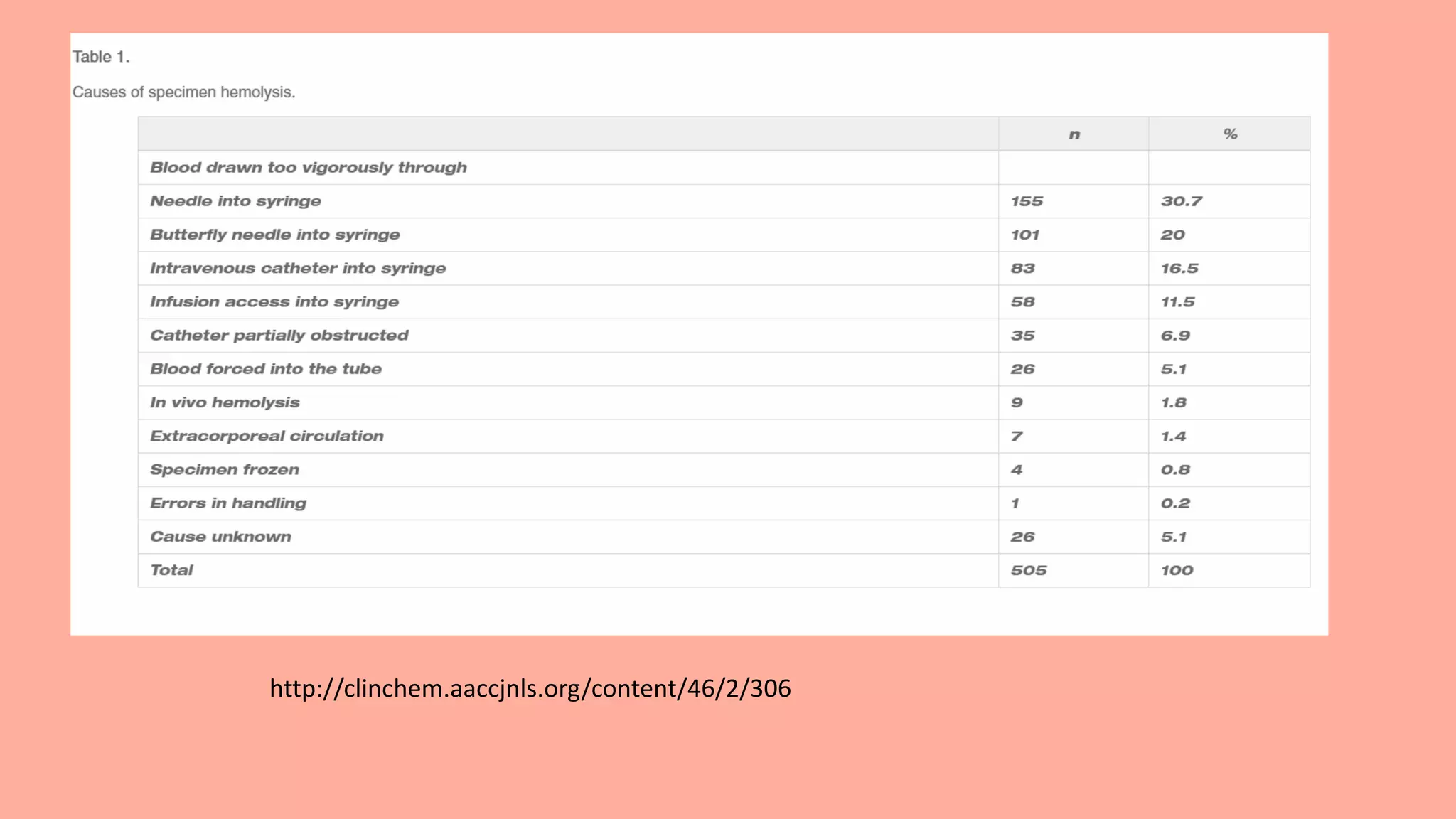
Account for ∼60% of rejected specimens
http://clinchem.aaccjnls.org/content/46/2/306
CAUSES
1. Mixing tubes too vigorously
2. Exposure to heat
3. Using a needle with too small of a bore necessary for the venipuncture
4. Using too large a tube when using a butterfly needle
5. Not allowing sufficient time for alcohol to dry on puncture site
6. Leaving the tourniquet on for longer than one minute
7. “Milking” of the puncture site
1. After cleansing the venipuncture site, allow to air dry before collecting blood
2. NEVER draw blood through a hematoma. If a hematoma forms during the venipuncture,
promptly remove the tourniquet, tube and needle (in that order). A new specimen might
need to be collected to prevent a hemolyzed sample.
3. If using a syringe, avoid drawing the plunger back too forcibly.
4. Avoid forcibly transferring the syringe’s contents into the tube.
5. Discontinue “sluggish” draws that can be caused by collapsed veins and/or improper
needle placement.
6. Gently invert the blood collection tube to mix additive and specimens as recommended by
the manufacturer of the tube
7. If using a serum or plasma tube, once the blood has clotted for the appropriate time
specified by the tube manufacturer, centrifuge at the recommended speed and time.
Centrifuge the blood specimen, if necessary, within 2 hours of collecting
PREVENTION
https://slph.ncpublichealth.com/doc/TechBulletins/SLPH-TechnicalBulletin-Vol14-Issue1.pdf
PROBLEM IN THE LAB
CHEMISTRY: Increased K+, Mg2+, AST/ALT
HEMATOLOGY: Decreased RBC count
BLOOD BANK: Inaccurate testing
SPECTROPHOTOMETRY due to interference
https://beaumontlaboratory.com/Global/Labs/PDFs/Prevent_Hemolysis.pdf
http://clinchem.aaccjnls.org/content/46/2/306
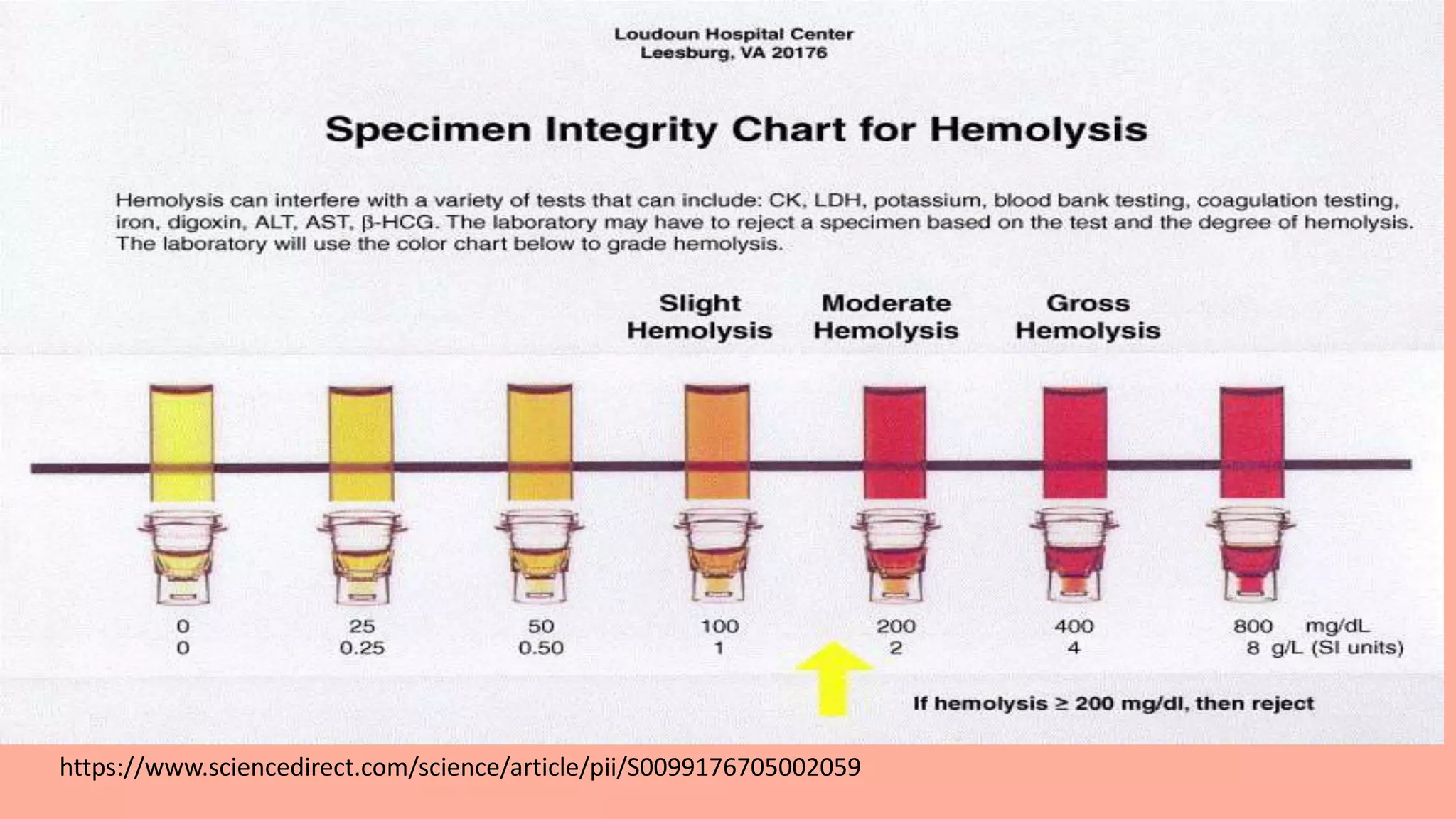
https://www.sciencedirect.com/science/article/pii/S0099176705002059
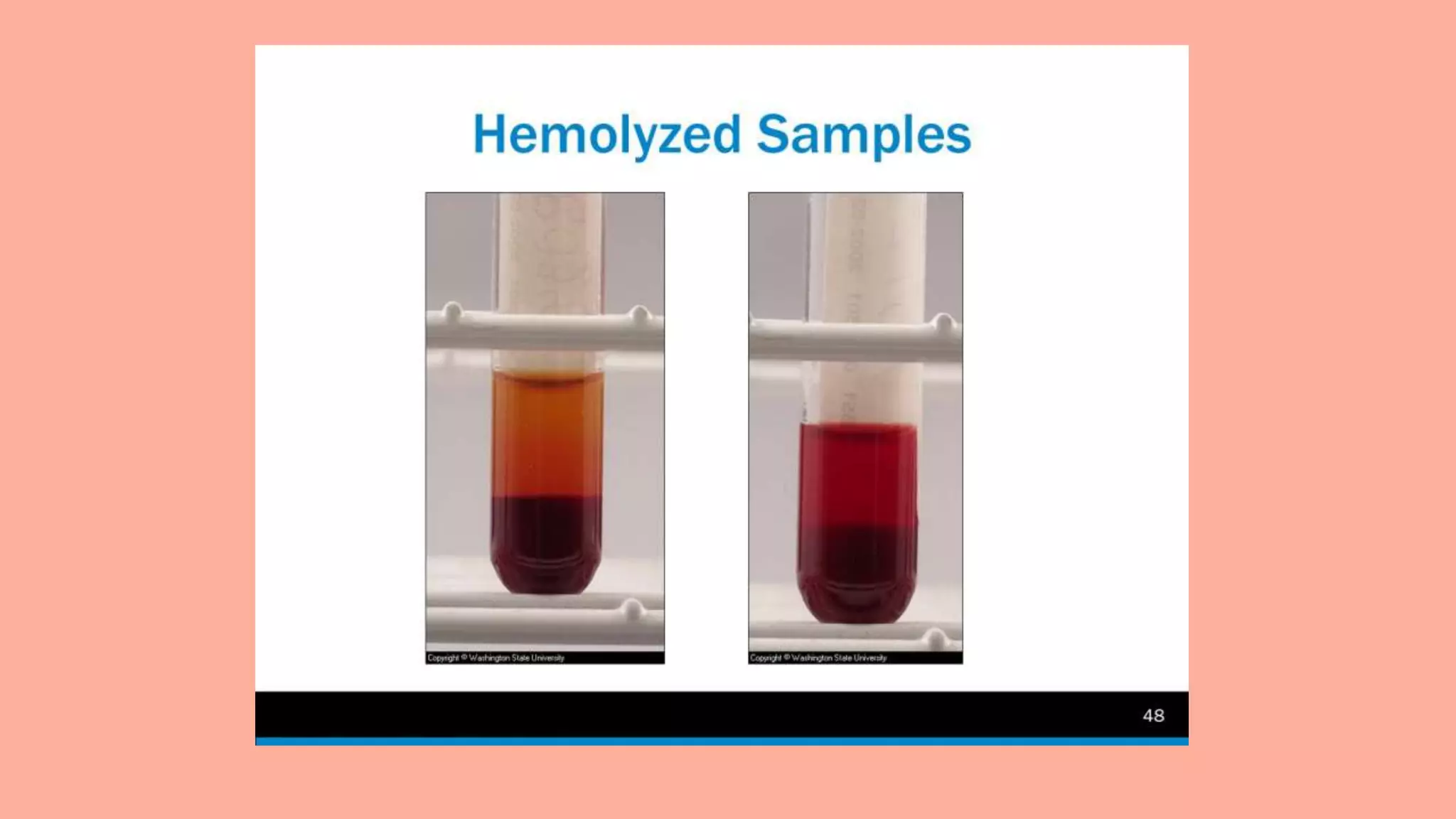
Hemolysis of blood
samples. Red blood cells
without (left and middle)
and with (right) hemolysis.
If as little as 0.5% of the red
blood cells are hemolyzed,
the released hemoglobin
will cause the serum or
plasma to appear pale red
or cherry red in color.[5]
Note that the hemolyzed
sample appears clearer,
because there are
significantly fewer cells to
scatter light.
https://slideplayer.com/slide/11359660/

Hemolysis

  • 2.
    HEMOLYSIS OR HAEMOLYSISrupturing (lysis) of red blood cells (erythrocytes) and the release of their contents (cytoplasm) into into surrounding fluid (e.g. blood plasma). https://en.wikipedia.org/wiki/Hemolysis
  • 3.
    Hemolysis may occurin VIVOor in VITRO (inside or outside the body).
  • 4.
    Hemolysins damage hostcytoplasmic membrane, causing cell lysis and death by attacking the phospholipid of the host cytoplasmic membrane.
  • 5.
    Account for ∼60%of rejected specimens http://clinchem.aaccjnls.org/content/46/2/306
  • 6.
    CAUSES 1. Mixing tubestoo vigorously 2. Exposure to heat 3. Using a needle with too small of a bore necessary for the venipuncture 4. Using too large a tube when using a butterfly needle 5. Not allowing sufficient time for alcohol to dry on puncture site 6. Leaving the tourniquet on for longer than one minute 7. “Milking” of the puncture site
  • 7.
    1. After cleansingthe venipuncture site, allow to air dry before collecting blood 2. NEVER draw blood through a hematoma. If a hematoma forms during the venipuncture, promptly remove the tourniquet, tube and needle (in that order). A new specimen might need to be collected to prevent a hemolyzed sample. 3. If using a syringe, avoid drawing the plunger back too forcibly. 4. Avoid forcibly transferring the syringe’s contents into the tube. 5. Discontinue “sluggish” draws that can be caused by collapsed veins and/or improper needle placement. 6. Gently invert the blood collection tube to mix additive and specimens as recommended by the manufacturer of the tube 7. If using a serum or plasma tube, once the blood has clotted for the appropriate time specified by the tube manufacturer, centrifuge at the recommended speed and time. Centrifuge the blood specimen, if necessary, within 2 hours of collecting PREVENTION https://slph.ncpublichealth.com/doc/TechBulletins/SLPH-TechnicalBulletin-Vol14-Issue1.pdf
  • 8.
    PROBLEM IN THELAB CHEMISTRY: Increased K+, Mg2+, AST/ALT HEMATOLOGY: Decreased RBC count BLOOD BANK: Inaccurate testing SPECTROPHOTOMETRY due to interference https://beaumontlaboratory.com/Global/Labs/PDFs/Prevent_Hemolysis.pdf
  • 9.
  • 11.
  • 12.
    Hemolysis of blood samples.Red blood cells without (left and middle) and with (right) hemolysis. If as little as 0.5% of the red blood cells are hemolyzed, the released hemoglobin will cause the serum or plasma to appear pale red or cherry red in color.[5] Note that the hemolyzed sample appears clearer, because there are significantly fewer cells to scatter light.
  • 14.