Laboratory Medicine
Pre-analytical phase
Procedure of blood collection –
•A blood sample is taken by a
phlebotomy in a laboratory
•Blood samples are taken in the arm,
hand and finger(in some cases)
•Collection takes place from the
median cubital vein
The first step to the collection is to:
• Ask the patient to state and spell his/her
name
• Give you his/her birth date
• Check these against the requisition
• Put the gloves
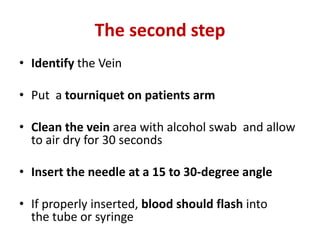
The second step
• Identify the Vein
• Put a tourniquet on patients arm
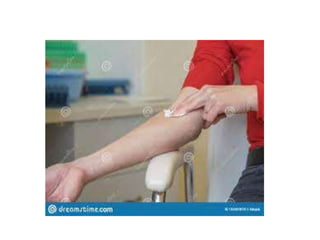
• Clean the vein area with alcohol swab and allow
to air dry for 30 seconds
• Insert the needle at a 15 to 30-degree angle
• If properly inserted, blood should flash into
the tube or syringe
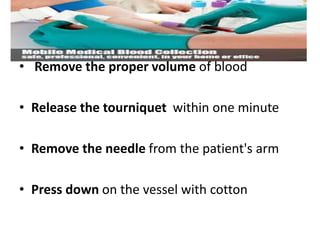
• Remove the proper volume of blood
• Release the tourniquet within one minute
• Remove the needle from the patient's arm
• Press down on the vessel with cotton
The third step
• Dispose of contaminated materials and needles in the
hospital approved containers
• Shake the tubes 3-4 times
• Wright the name of patient on the tubes
• Stand the tubes 5 minutes before centrifuging
• Put the tubes in the centrifuge
• Deliver blood specimens to the laboratory
Effects of pre-analytical phase
• Age
• Sex
• Diet
• Drugs
• Exercise
• Diagnostic procedures(endoscopy)
• Pregnancy
• Timing of collection
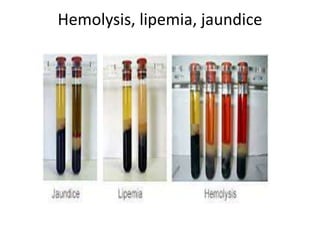
• Hemolysis, lipemia, jaundice
• anti-coagulants
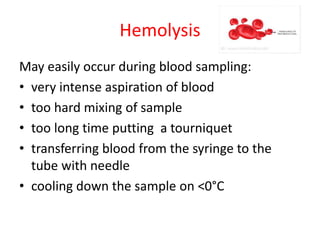
Hemolysis
May easily occur during blood sampling:
• very intense aspiration of blood
• too hard mixing of sample
• too long time putting a tourniquet
• transferring blood from the syringe to the
tube with needle
• cooling down the sample on <0°C
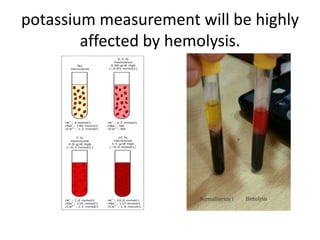
potassium measurement will be highly
affected by hemolysis.
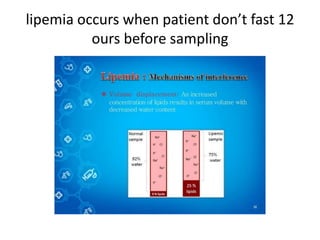
lipemia occurs when patient don’t fast 12
ours before sampling
Hemolysis, lipemia, jaundice
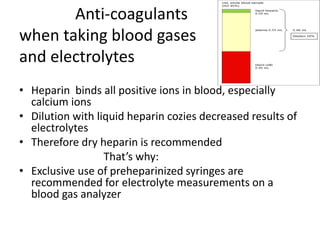
Anti-coagulants
when taking blood gases
and electrolytes
• Heparin binds all positive ions in blood, especially
calcium ions
• Dilution with liquid heparin cozies decreased results of
electrolytes
• Therefore dry heparin is recommended
That’s why:
• Exclusive use of preheparinized syringes are
recommended for electrolyte measurements on a
blood gas analyzer
Sampling from catheters
should avoid
• dilution or contamination by flush solution(0.9
% NaCl)
• it is important to remove an adequate amount
of fluid (also called the discard volume,
consisting of flush solution and blood) before
sampling to avoid interference and dilution
from/by the flush solution on the electrolyte,
pH, and blood gas parameters.
pre-analytical phase (1).pptx

pre-analytical phase (1).pptx

  • 1.
  • 2.
    Pre-analytical phase Procedure ofblood collection – •A blood sample is taken by a phlebotomy in a laboratory •Blood samples are taken in the arm, hand and finger(in some cases) •Collection takes place from the median cubital vein
  • 3.
    The first stepto the collection is to: • Ask the patient to state and spell his/her name • Give you his/her birth date • Check these against the requisition • Put the gloves
  • 4.
    The second step •Identify the Vein • Put a tourniquet on patients arm • Clean the vein area with alcohol swab and allow to air dry for 30 seconds • Insert the needle at a 15 to 30-degree angle • If properly inserted, blood should flash into the tube or syringe
  • 5.
    • Remove theproper volume of blood • Release the tourniquet within one minute • Remove the needle from the patient's arm • Press down on the vessel with cotton
  • 6.
    The third step •Dispose of contaminated materials and needles in the hospital approved containers • Shake the tubes 3-4 times • Wright the name of patient on the tubes • Stand the tubes 5 minutes before centrifuging • Put the tubes in the centrifuge • Deliver blood specimens to the laboratory
  • 8.
    Effects of pre-analyticalphase • Age • Sex • Diet • Drugs • Exercise • Diagnostic procedures(endoscopy) • Pregnancy • Timing of collection • Hemolysis, lipemia, jaundice • anti-coagulants
  • 9.
    Hemolysis May easily occurduring blood sampling: • very intense aspiration of blood • too hard mixing of sample • too long time putting a tourniquet • transferring blood from the syringe to the tube with needle • cooling down the sample on <0°C
  • 10.
    potassium measurement willbe highly affected by hemolysis.
  • 11.
    lipemia occurs whenpatient don’t fast 12 ours before sampling
  • 12.
  • 13.
    Anti-coagulants when taking bloodgases and electrolytes • Heparin binds all positive ions in blood, especially calcium ions • Dilution with liquid heparin cozies decreased results of electrolytes • Therefore dry heparin is recommended That’s why: • Exclusive use of preheparinized syringes are recommended for electrolyte measurements on a blood gas analyzer
  • 14.
    Sampling from catheters shouldavoid • dilution or contamination by flush solution(0.9 % NaCl) • it is important to remove an adequate amount of fluid (also called the discard volume, consisting of flush solution and blood) before sampling to avoid interference and dilution from/by the flush solution on the electrolyte, pH, and blood gas parameters.