Physics
The study of motion,
matter, energy, and
force.
Forces and Motion
OBJECTIVE
Describe the horizontal
and vertical motions of a
projectile
Uniformly Accelerated
Motion
Uniform Acceleration
A body maintains a constant
change in its velocity in each
time interval along a straight
line
Horizontal (rectilinear) Motion
Example:
track and field runner
If the runner’s positions are taken at equal time
intervals and the change in position for each time
interval is increasing, then, the runner is moving faster
and faster
Vertical (free fall) Motion
Example:
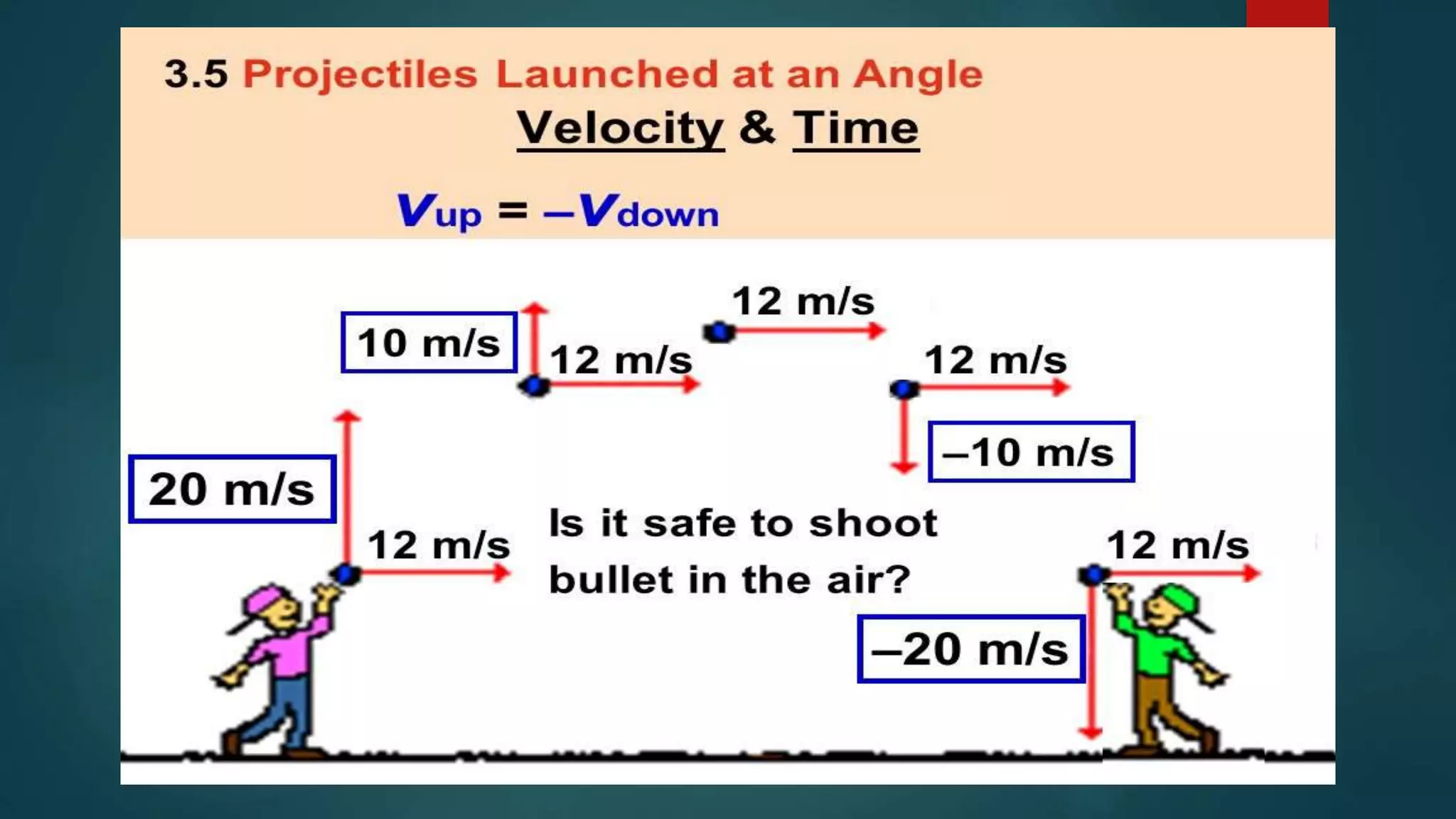
ball thrown upward
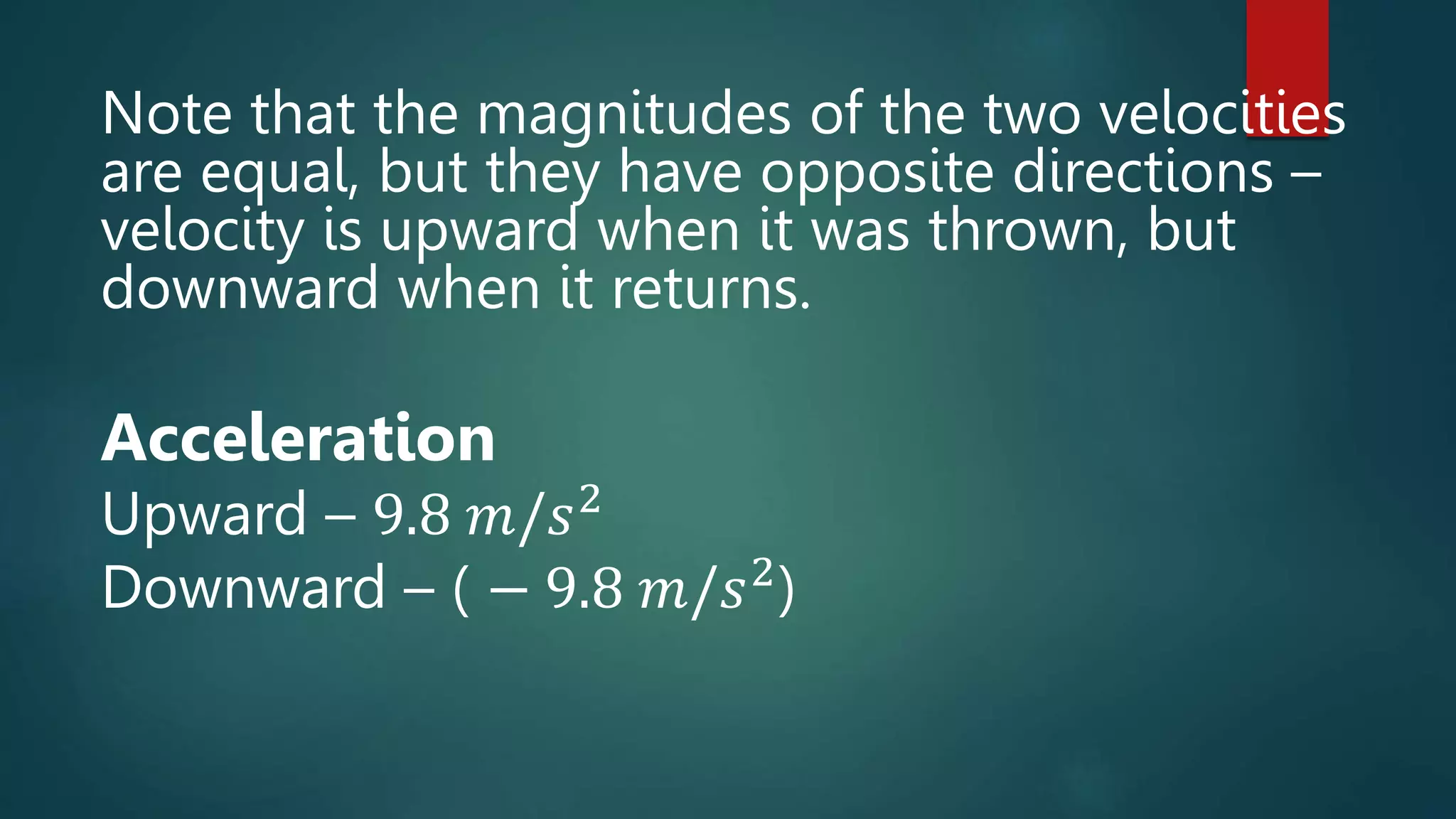
As the ball goes up, it decelerates until it stops
momentarily and changes direction. That means, it
reaches its maximum height before it starts to fall back
to the point where it was thrown, and its speed will be
equal to the speed at which it was thrown.
Note that the magnitudes of the two velocities
are equal, but they have opposite directions –
velocity is upward when it was thrown, but
downward when it returns.
Acceleration
Upward – 9.8 𝑚/𝑠2
Downward – ( − 9.8 𝑚/𝑠2
)
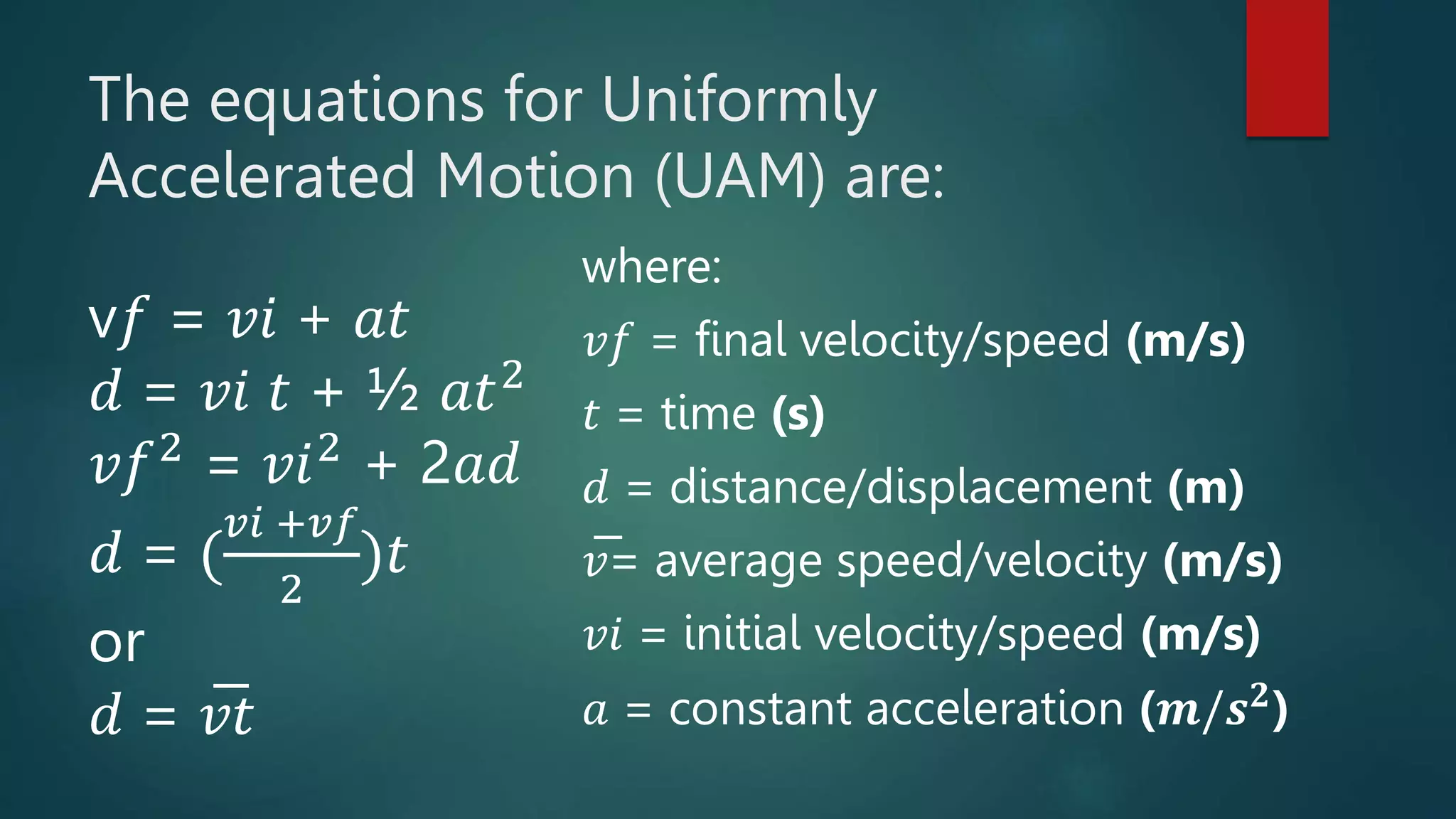
The equations for Uniformly
Accelerated Motion (UAM) are:
where:
𝑣𝑓 = final velocity/speed (m/s)
𝑡 = time (s)
𝑑 = distance/displacement (m)
𝑣̅= average speed/velocity (m/s)
𝑣𝑖 = initial velocity/speed (m/s)
𝑎 = constant acceleration (𝒎/𝒔𝟐
)
v𝑓 = 𝑣𝑖 + 𝑎𝑡
𝑑 = 𝑣𝑖 𝑡 + ½ 𝑎𝑡2
𝑣𝑓2
= 𝑣𝑖2
+ 2𝑎𝑑
𝑑 = (
𝑣𝑖 +𝑣𝑓
2
)𝑡
or
𝑑 = 𝑣̅𝑡
2. A car starts from rest and
accelerates uniformly over a
time of 5.21 seconds for a
distance of 110 m.
Determine the acceleration
of the car.
4. A race car accelerates
uniformly from 18.5 m/s to
46.1 m/s in 2.47 seconds.
Determine the acceleration
of the car and the distance
traveled.
7. A bike accelerates
uniformly from rest to a
speed of 7.10 m/s over a
distance of 35.4 m.
Determine the acceleration
of the bike.
9. A car traveling at 22.4
m/s skids to a stop in
2.55 s. Determine the
skidding distance of the
car (assume uniform
acceleration).
It was once recorded that a jaguar
left a skid marks that were 290 m in
length. Assuming that the Jaguar
skidded to a stop with a constant
acceleration of -3.90 𝒎/𝒔𝟐
.
Determine the speed of the Jaguar
before it began to skid.
Motion in Two
Dimensions
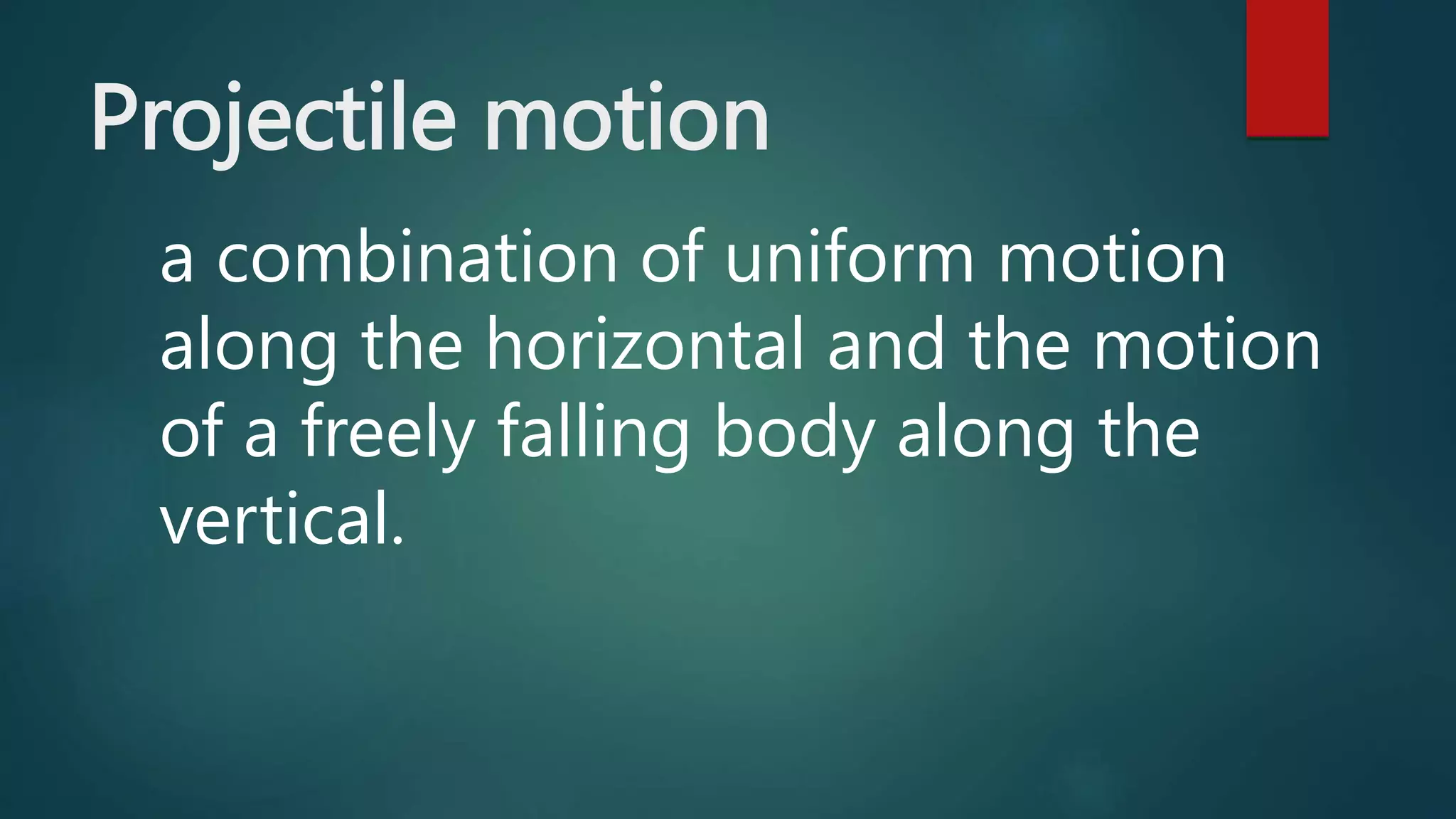
Projectile motion
a combination of uniform motion
along the horizontal and the motion
of a freely falling body along the
vertical.
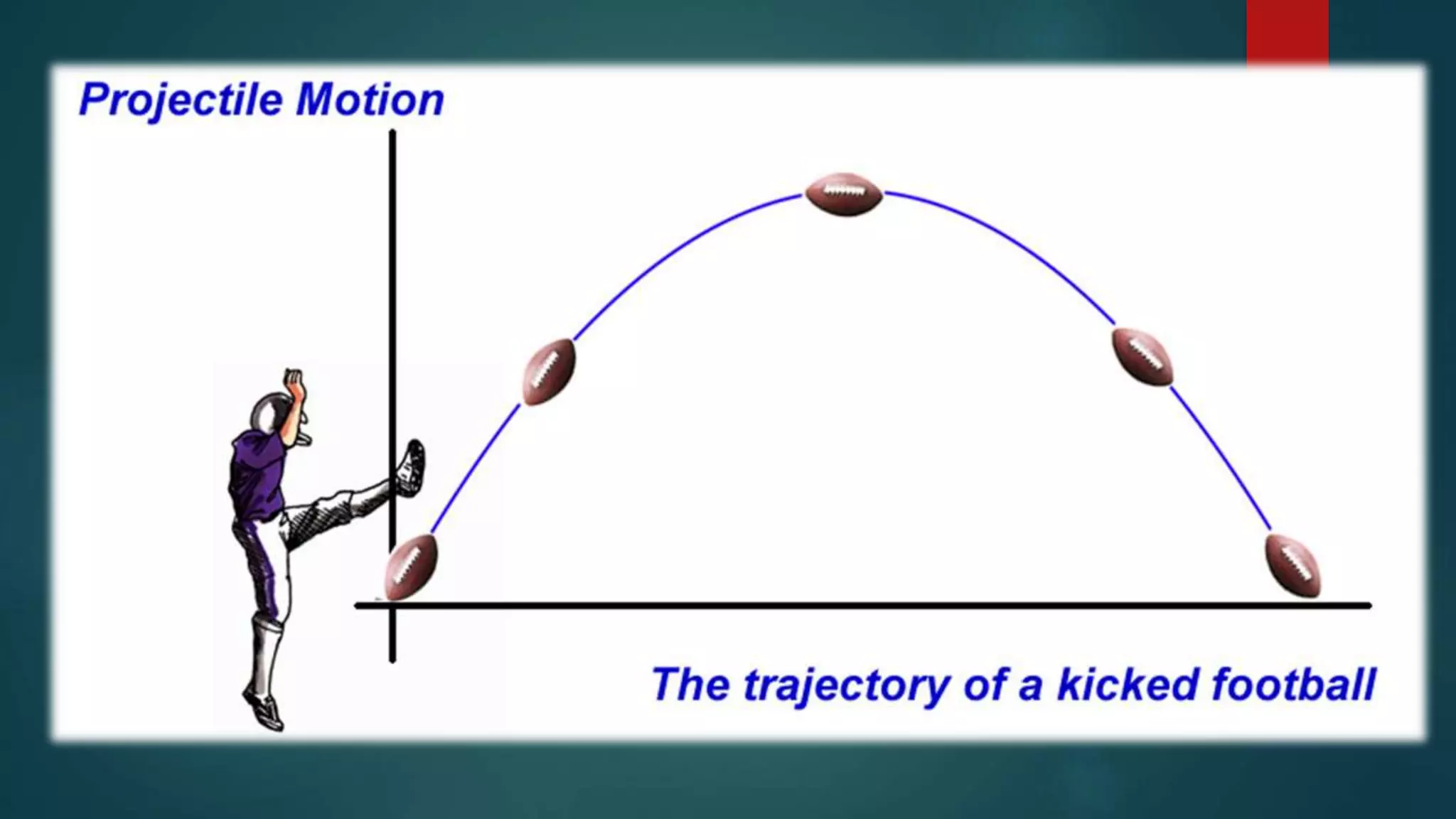
Projectile motion is a form of
motion where an object given an
initial velocity is thrown or
projected and is allowed to be
acted on by gravity in a curved-
like path.
Projectile
the moving body
Trajectory
the curved path it travels
Range
horizontal distance it
covers
Type 1: Horizontally Launched
Projectiles
Type 2: Angle-Launched
Projectiles
Activity1.1: Sketch Me Quick
Situation1: Free Kick!
Sam was given a free kick. Illustrate the
trajectory of the ball in order for Sam to
get a goal. On your answer sheet, explain
how you came up with that trajectory.
Situation 2: Throwing of Garbage
Mat wants to shoot a crumpled paper
inside the trash bin. Help him shoot
his garbage right at the trash can by
illustrating the trajectory. Explain
below how you ended up with that
trajectory.
Below is a list of sports/games.
Classify the sports/games
whether they exhibit projectile
motion or not. Complete the table
on your answer sheet.
A VOLLEYBALL BEING SERVED A MOTORBIKE TAKING OFF ON
RAMP
A FLIGHT OF A SOCCER BALL SMASHING OF A SHUTTLE COCK
CAR RACING 100m DASH
A BASEBALL HIT BY A BAT DRAGONBOAT PADDLING RACE
SLICE SERVING OF THE PINGPONG SHORT COURSE SWIMMING
Projectile Motion Non-projectile Motion
The Horizontal and Vertical
Motion of a
Projectile
𝑣𝑥 horizontal velocity responsible for
the projectile to travel at a horizontal
distance
𝑣𝑦 vertical velocity responsible for the
projectile to travel at a verticle
distance
Height – vertical
distance from the
projectile to the
earth’s surface
Range – horizontal distance covered
by the projectile
𝑣𝑥
𝑣𝑥
𝑣𝑥
𝑣𝑥
𝑣𝑦
𝑣𝑦
𝑣𝑦
D
Range (x)
height (y)
B
𝑣𝑦
A
C
Type I: Horizontally Launched Projectiles
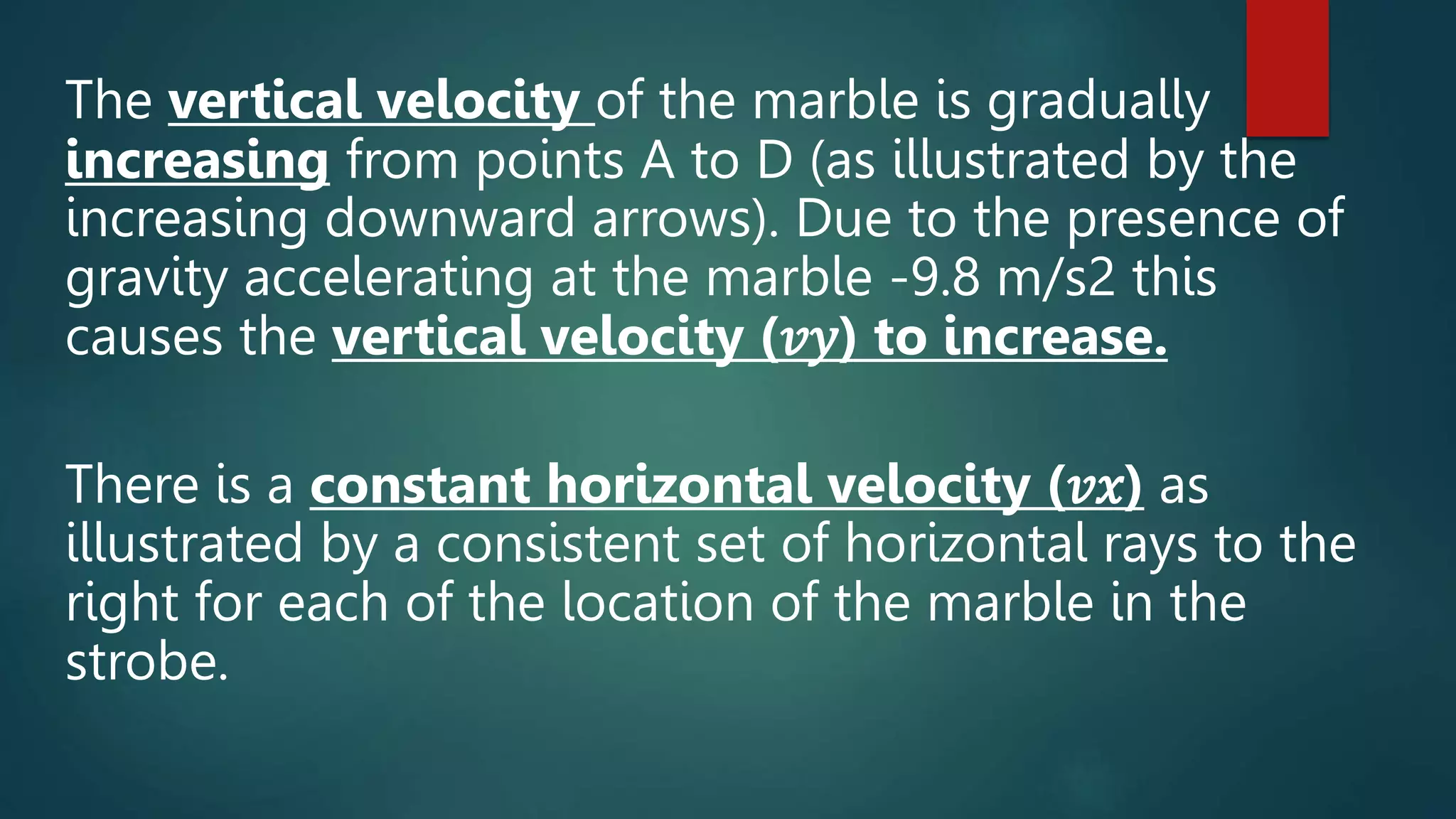
The vertical velocity of the marble is gradually
increasing from points A to D (as illustrated by the
increasing downward arrows). Due to the presence of
gravity accelerating at the marble -9.8 m/s2 this
causes the vertical velocity (𝑣𝑦) to increase.
There is a constant horizontal velocity (𝑣𝑥) as
illustrated by a consistent set of horizontal rays to the
right for each of the location of the marble in the
strobe.
Type II: Angle-Launched Projectiles
Angle ɵ - a
numerical value in
degrees ֯ expressing
the orientation of a
projectile to be
projected
𝒗𝒚 vertical velocity
responsible for the projectile
to travel at a verticle distance
𝒗𝒙 horizontal velocity
responsible for the
projectile to travel at a
horizontal distance
Maximum height 𝒚𝒎𝒂𝒙 the
maximum vertical distance
a projectile can reach the
ground
Range – horizontal distance covered by the
projectile
𝒚𝒎𝒂𝒙
𝒗𝒚
𝒗𝒚
𝒗𝒚
𝒗𝒚
𝒗𝒚
𝒗𝒚
𝒗𝒙
𝒗𝒙 𝒗𝒙
𝒗𝒙 𝒗𝒙
𝒗𝒙
𝒗𝒙
ɵ
+ x axis
+ y
axis
Type II: Angle-Launched Projectiles
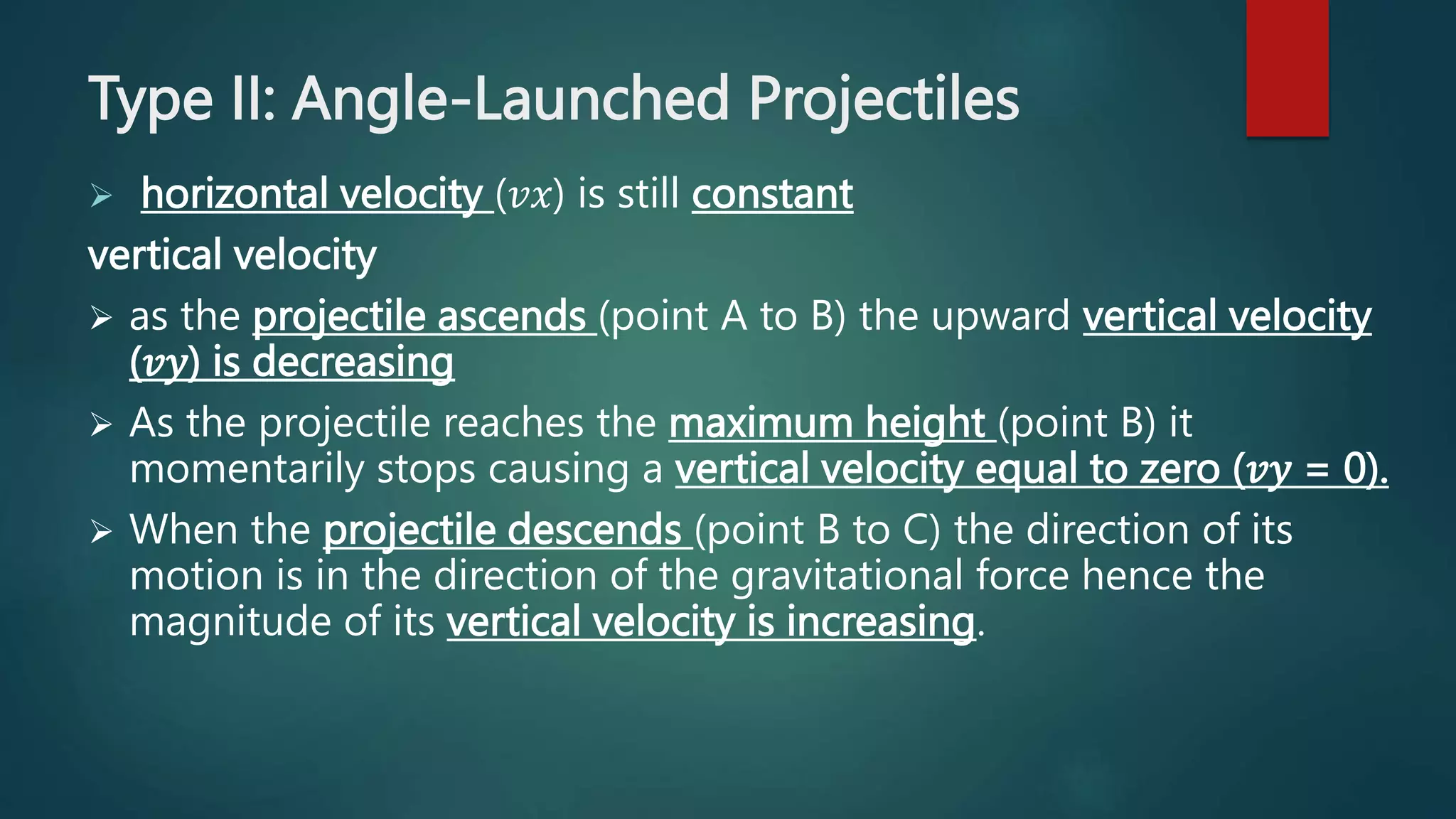
 horizontal velocity (𝑣𝑥) is still constant
vertical velocity
 as the projectile ascends (point A to B) the upward vertical velocity
(𝑣𝑦) is decreasing
 As the projectile reaches the maximum height (point B) it
momentarily stops causing a vertical velocity equal to zero (𝑣𝑦 = 0).
 When the projectile descends (point B to C) the direction of its
motion is in the direction of the gravitational force hence the
magnitude of its vertical velocity is increasing.
Conceptual Characteristics
of Free Fall Motion
An object in free-fall experiences an acceleration of -9.8m/s2.
(The negative sign indicates a downward acceleration)
Whether explicitly stated or not, the value of the acceleration
in the kinematic equations is -9.8 m/s2 for any freely falling
object.
If an object is merely dropped (as opposed to being thrown)
from an elevated height, then the initial velocity of the object
is 0 m/s
 If an object is projected upwards in a perfectly
vertical direction, then it will slow down as it
rises upward. The instant at which it reaches the
peak of its trajectory, its velocity is 0 m/s. This
value can be used as one of the motion
parameters in the kinematic equations;
 If an object is projected upwards in a perfectly
vertical direction, then the velocity at which it is
projected is equal in magnitude and opposite in sign
to the velocity that it has when it returns to the
same height
Modified true or false! Write TRUE in the space provided
if the following statements are correct and if false,
change the underlined word or phrase to make the
statement/s correct
1. As the projectile reaches its highest peak, the
vertical velocity continuously increases.
2. When an object is horizontally launched its
motion gradually increases.
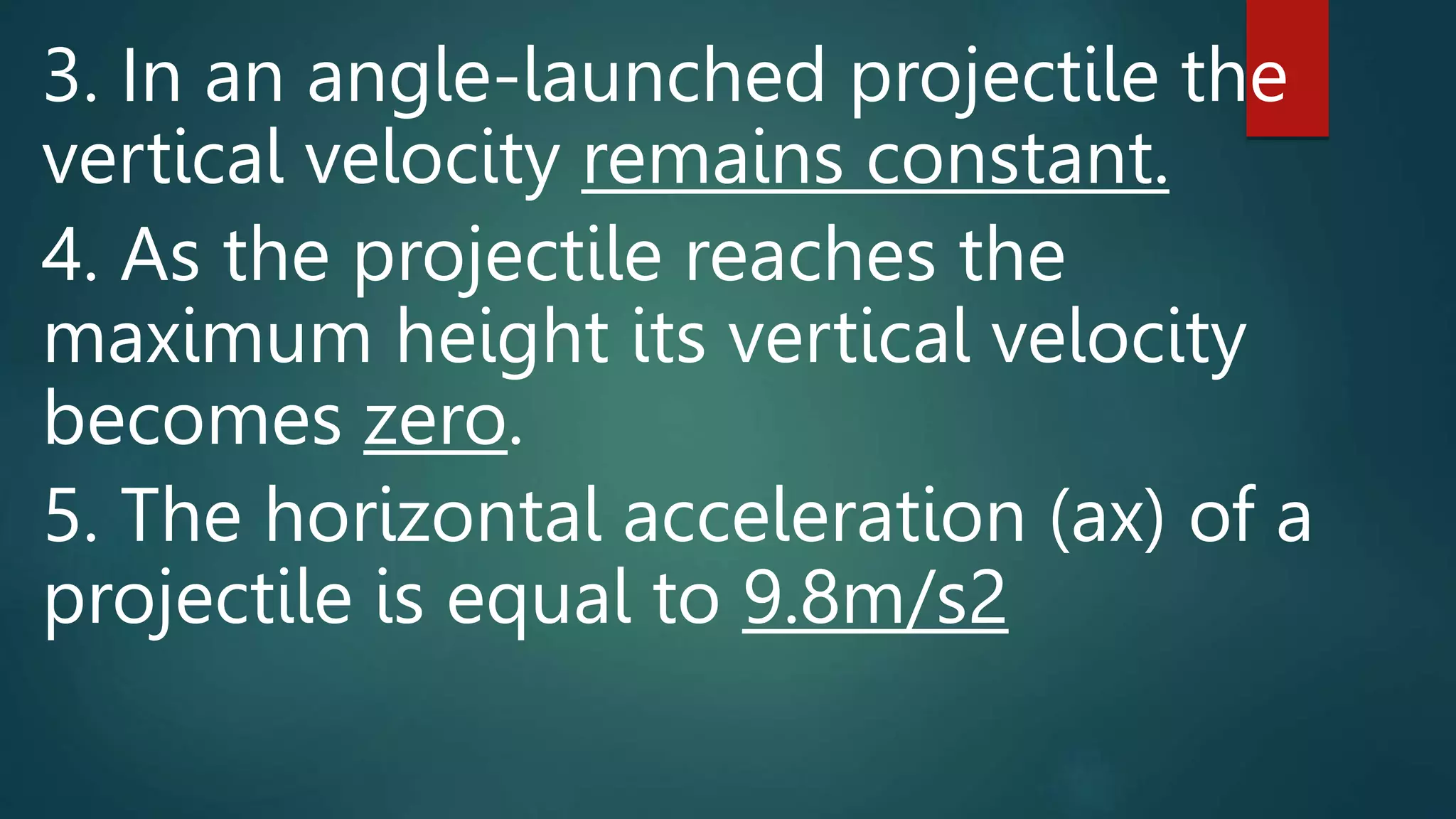
3. In an angle-launched projectile the
vertical velocity remains constant.
4. As the projectile reaches the
maximum height its vertical velocity
becomes zero.
5. The horizontal acceleration (ax) of a
projectile is equal to 9.8m/s2
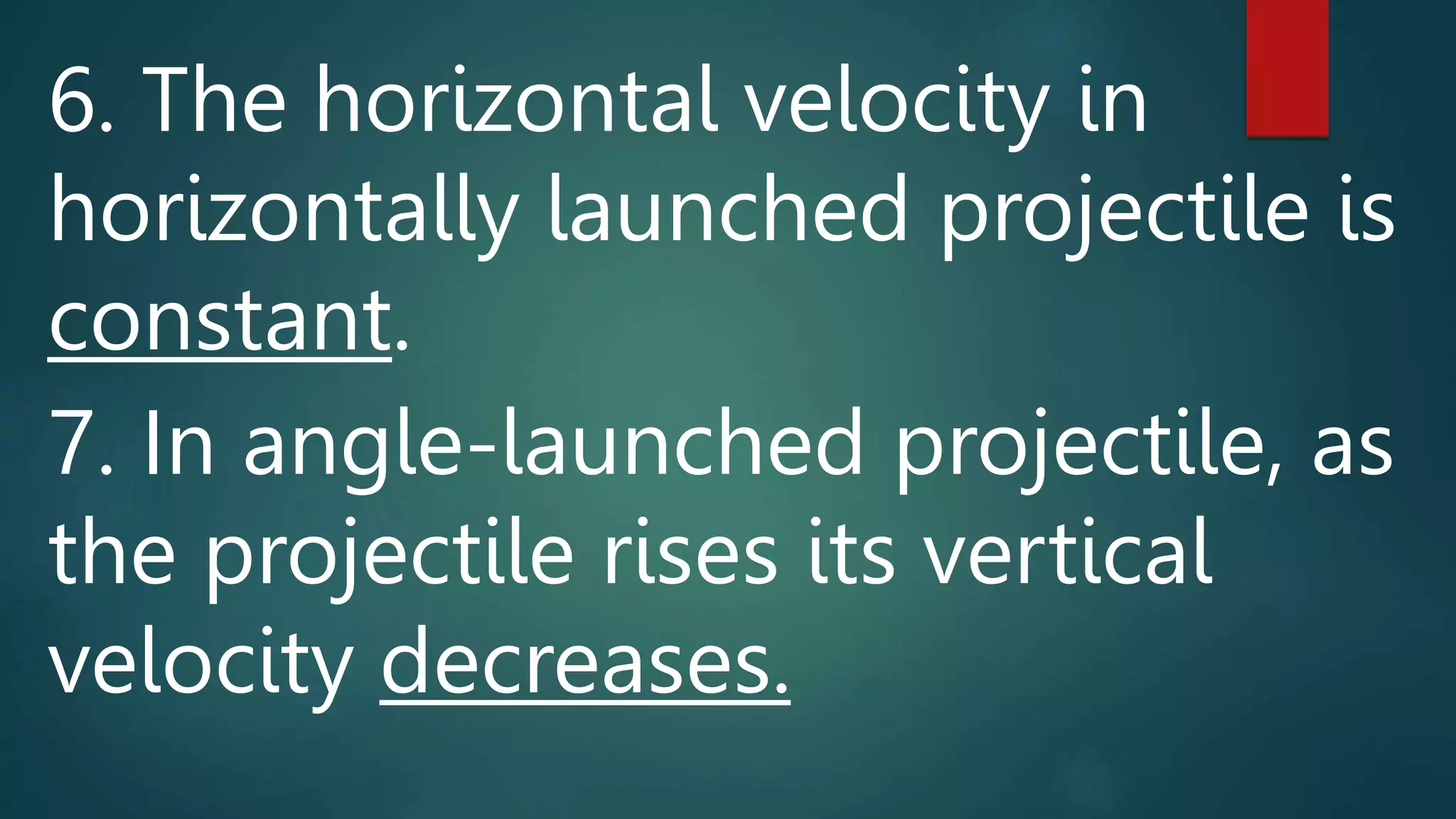
6. The horizontal velocity in
horizontally launched projectile is
constant.
7. In angle-launched projectile, as
the projectile rises its vertical
velocity decreases.
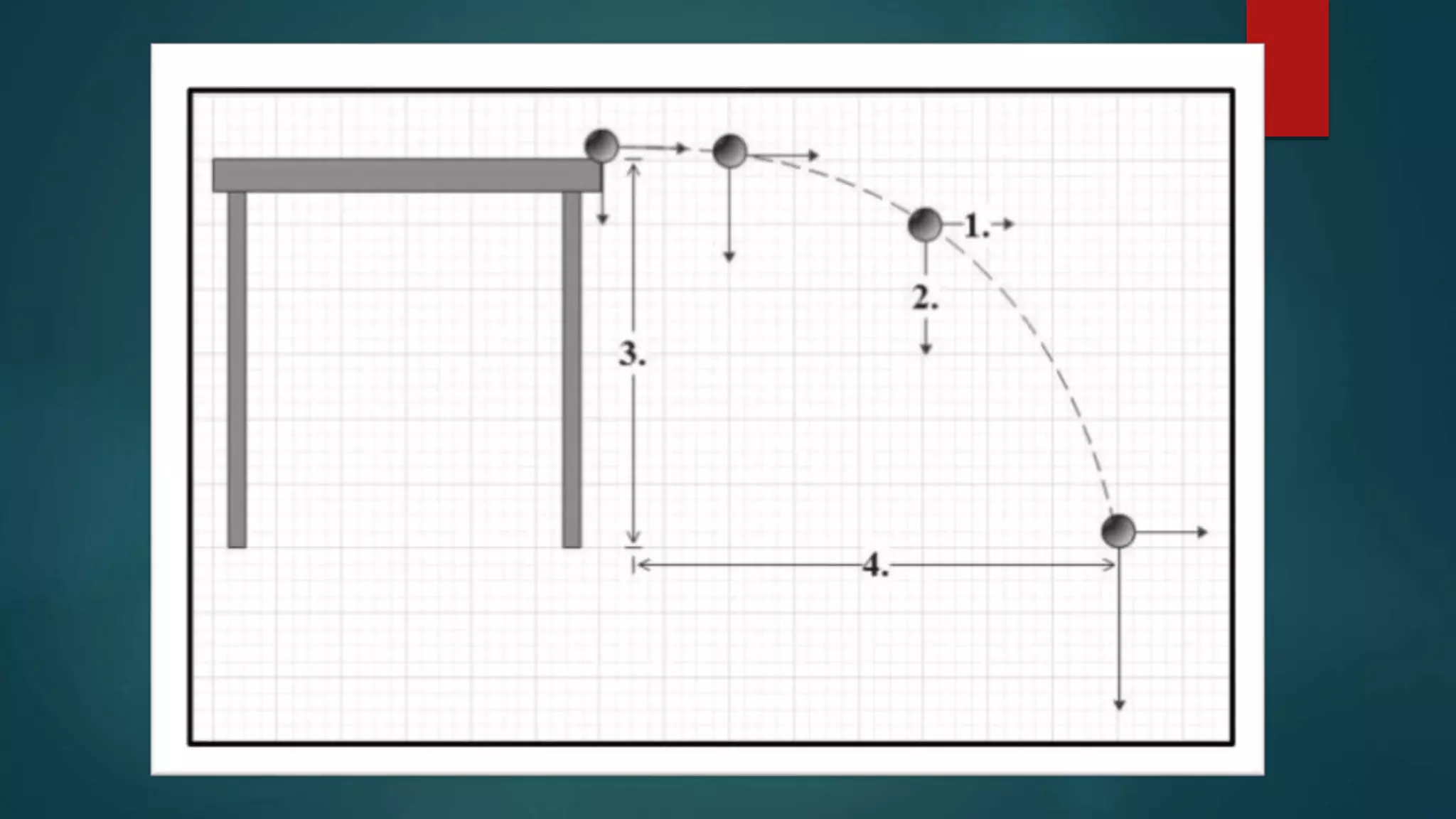
8. The acceleration due to gravity is
equal to zero.
9. As a projectile approach to the
ground its vertical velocity decreases.
10. There is external force acting on
the horizontal motion of a projectile
Complete the Diagram From the set of
quantities involved in projectile motion
(height, range, vertical velocity,
horizontal velocity, angle), complete the
diagram showing the two types of projectile
launched by writing on the numbers the
correct quantity.
True or False: Write TRUE in the
space provided if the statement
is correct and write FALSE if the
statement is incorrect.
1.The horizontal velocity (𝑣𝑥) in
horizontally launched projectiles is
always constant.
2.In angle-launched projectile, the
vertical velocity (𝑣𝑦) decreases as
the projectile rises.
3. In angle-launched projectile, the
projectile’s vertical velocity becomes
zero at its maximum height.
4. The vertical velocity (𝑣𝑦) of a
projectile that descends, decreases in
angle-launched projectiles.

UNIFORMLY ACCELERATED MOTION 1.pptx

  • 1.
    Physics The study ofmotion, matter, energy, and force.
  • 2.
  • 3.
    OBJECTIVE Describe the horizontal andvertical motions of a projectile
  • 4.
  • 5.
    Uniform Acceleration A bodymaintains a constant change in its velocity in each time interval along a straight line
  • 6.
    Horizontal (rectilinear) Motion Example: trackand field runner If the runner’s positions are taken at equal time intervals and the change in position for each time interval is increasing, then, the runner is moving faster and faster
  • 7.
    Vertical (free fall)Motion Example: ball thrown upward As the ball goes up, it decelerates until it stops momentarily and changes direction. That means, it reaches its maximum height before it starts to fall back to the point where it was thrown, and its speed will be equal to the speed at which it was thrown.
  • 8.
    Note that themagnitudes of the two velocities are equal, but they have opposite directions – velocity is upward when it was thrown, but downward when it returns. Acceleration Upward – 9.8 𝑚/𝑠2 Downward – ( − 9.8 𝑚/𝑠2 )
  • 9.
    The equations forUniformly Accelerated Motion (UAM) are: where: 𝑣𝑓 = final velocity/speed (m/s) 𝑡 = time (s) 𝑑 = distance/displacement (m) 𝑣̅= average speed/velocity (m/s) 𝑣𝑖 = initial velocity/speed (m/s) 𝑎 = constant acceleration (𝒎/𝒔𝟐 ) v𝑓 = 𝑣𝑖 + 𝑎𝑡 𝑑 = 𝑣𝑖 𝑡 + ½ 𝑎𝑡2 𝑣𝑓2 = 𝑣𝑖2 + 2𝑎𝑑 𝑑 = ( 𝑣𝑖 +𝑣𝑓 2 )𝑡 or 𝑑 = 𝑣̅𝑡
  • 10.
    2. A carstarts from rest and accelerates uniformly over a time of 5.21 seconds for a distance of 110 m. Determine the acceleration of the car.
  • 11.
    4. A racecar accelerates uniformly from 18.5 m/s to 46.1 m/s in 2.47 seconds. Determine the acceleration of the car and the distance traveled.
  • 12.
    7. A bikeaccelerates uniformly from rest to a speed of 7.10 m/s over a distance of 35.4 m. Determine the acceleration of the bike.
  • 13.
    9. A cartraveling at 22.4 m/s skids to a stop in 2.55 s. Determine the skidding distance of the car (assume uniform acceleration).
  • 14.
    It was oncerecorded that a jaguar left a skid marks that were 290 m in length. Assuming that the Jaguar skidded to a stop with a constant acceleration of -3.90 𝒎/𝒔𝟐 . Determine the speed of the Jaguar before it began to skid.
  • 16.
  • 17.
    Projectile motion a combinationof uniform motion along the horizontal and the motion of a freely falling body along the vertical.
  • 18.
    Projectile motion isa form of motion where an object given an initial velocity is thrown or projected and is allowed to be acted on by gravity in a curved- like path.
  • 19.
    Projectile the moving body Trajectory thecurved path it travels Range horizontal distance it covers
  • 20.
    Type 1: HorizontallyLaunched Projectiles
  • 22.
  • 23.
    Activity1.1: Sketch MeQuick Situation1: Free Kick! Sam was given a free kick. Illustrate the trajectory of the ball in order for Sam to get a goal. On your answer sheet, explain how you came up with that trajectory.
  • 25.
    Situation 2: Throwingof Garbage Mat wants to shoot a crumpled paper inside the trash bin. Help him shoot his garbage right at the trash can by illustrating the trajectory. Explain below how you ended up with that trajectory.
  • 27.
    Below is alist of sports/games. Classify the sports/games whether they exhibit projectile motion or not. Complete the table on your answer sheet.
  • 28.
    A VOLLEYBALL BEINGSERVED A MOTORBIKE TAKING OFF ON RAMP A FLIGHT OF A SOCCER BALL SMASHING OF A SHUTTLE COCK CAR RACING 100m DASH A BASEBALL HIT BY A BAT DRAGONBOAT PADDLING RACE SLICE SERVING OF THE PINGPONG SHORT COURSE SWIMMING
  • 29.
  • 30.
    The Horizontal andVertical Motion of a Projectile
  • 31.
    𝑣𝑥 horizontal velocityresponsible for the projectile to travel at a horizontal distance 𝑣𝑦 vertical velocity responsible for the projectile to travel at a verticle distance Height – vertical distance from the projectile to the earth’s surface Range – horizontal distance covered by the projectile 𝑣𝑥 𝑣𝑥 𝑣𝑥 𝑣𝑥 𝑣𝑦 𝑣𝑦 𝑣𝑦 D Range (x) height (y) B 𝑣𝑦 A C Type I: Horizontally Launched Projectiles
  • 33.
    The vertical velocityof the marble is gradually increasing from points A to D (as illustrated by the increasing downward arrows). Due to the presence of gravity accelerating at the marble -9.8 m/s2 this causes the vertical velocity (𝑣𝑦) to increase. There is a constant horizontal velocity (𝑣𝑥) as illustrated by a consistent set of horizontal rays to the right for each of the location of the marble in the strobe.
  • 34.
    Type II: Angle-LaunchedProjectiles Angle ɵ - a numerical value in degrees ֯ expressing the orientation of a projectile to be projected 𝒗𝒚 vertical velocity responsible for the projectile to travel at a verticle distance 𝒗𝒙 horizontal velocity responsible for the projectile to travel at a horizontal distance Maximum height 𝒚𝒎𝒂𝒙 the maximum vertical distance a projectile can reach the ground Range – horizontal distance covered by the projectile 𝒚𝒎𝒂𝒙 𝒗𝒚 𝒗𝒚 𝒗𝒚 𝒗𝒚 𝒗𝒚 𝒗𝒚 𝒗𝒙 𝒗𝒙 𝒗𝒙 𝒗𝒙 𝒗𝒙 𝒗𝒙 𝒗𝒙 ɵ + x axis + y axis
  • 36.
    Type II: Angle-LaunchedProjectiles  horizontal velocity (𝑣𝑥) is still constant vertical velocity  as the projectile ascends (point A to B) the upward vertical velocity (𝑣𝑦) is decreasing  As the projectile reaches the maximum height (point B) it momentarily stops causing a vertical velocity equal to zero (𝑣𝑦 = 0).  When the projectile descends (point B to C) the direction of its motion is in the direction of the gravitational force hence the magnitude of its vertical velocity is increasing.
  • 37.
    Conceptual Characteristics of FreeFall Motion An object in free-fall experiences an acceleration of -9.8m/s2. (The negative sign indicates a downward acceleration) Whether explicitly stated or not, the value of the acceleration in the kinematic equations is -9.8 m/s2 for any freely falling object. If an object is merely dropped (as opposed to being thrown) from an elevated height, then the initial velocity of the object is 0 m/s
  • 38.
     If anobject is projected upwards in a perfectly vertical direction, then it will slow down as it rises upward. The instant at which it reaches the peak of its trajectory, its velocity is 0 m/s. This value can be used as one of the motion parameters in the kinematic equations;  If an object is projected upwards in a perfectly vertical direction, then the velocity at which it is projected is equal in magnitude and opposite in sign to the velocity that it has when it returns to the same height
  • 39.
    Modified true orfalse! Write TRUE in the space provided if the following statements are correct and if false, change the underlined word or phrase to make the statement/s correct 1. As the projectile reaches its highest peak, the vertical velocity continuously increases. 2. When an object is horizontally launched its motion gradually increases.
  • 40.
    3. In anangle-launched projectile the vertical velocity remains constant. 4. As the projectile reaches the maximum height its vertical velocity becomes zero. 5. The horizontal acceleration (ax) of a projectile is equal to 9.8m/s2
  • 41.
    6. The horizontalvelocity in horizontally launched projectile is constant. 7. In angle-launched projectile, as the projectile rises its vertical velocity decreases.
  • 42.
    8. The accelerationdue to gravity is equal to zero. 9. As a projectile approach to the ground its vertical velocity decreases. 10. There is external force acting on the horizontal motion of a projectile
  • 43.
    Complete the DiagramFrom the set of quantities involved in projectile motion (height, range, vertical velocity, horizontal velocity, angle), complete the diagram showing the two types of projectile launched by writing on the numbers the correct quantity.
  • 46.
    True or False:Write TRUE in the space provided if the statement is correct and write FALSE if the statement is incorrect.
  • 47.
    1.The horizontal velocity(𝑣𝑥) in horizontally launched projectiles is always constant. 2.In angle-launched projectile, the vertical velocity (𝑣𝑦) decreases as the projectile rises.
  • 48.
    3. In angle-launchedprojectile, the projectile’s vertical velocity becomes zero at its maximum height. 4. The vertical velocity (𝑣𝑦) of a projectile that descends, decreases in angle-launched projectiles.