Modal Verbs HAVE TO/  MUST SHOULD/ OUGHT TO
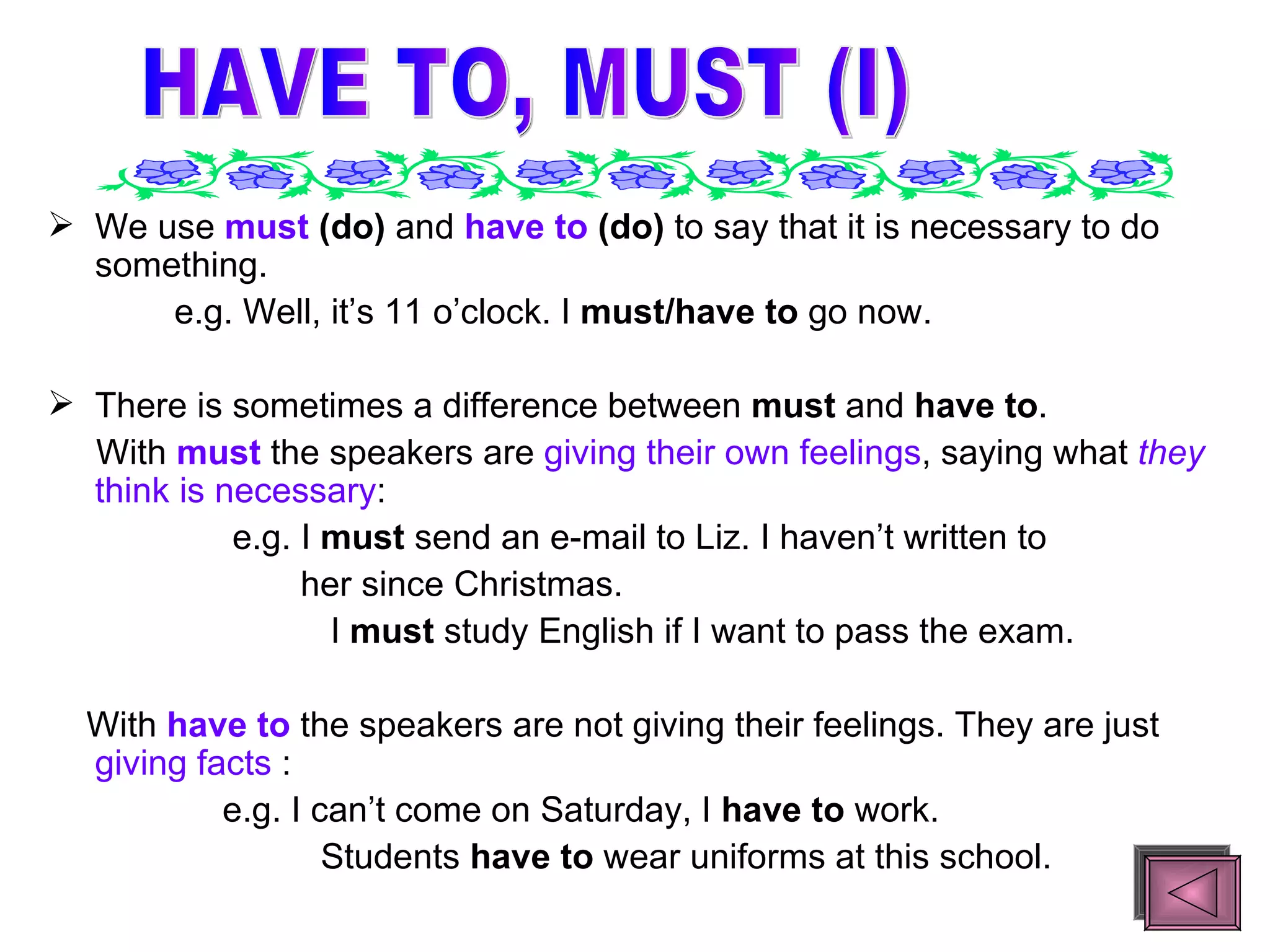
We use  must  (do)  and  have to  (do)  to say that it is necessary to do something.  e.g. Well, it’s 11 o’clock. I  must/have to  go now. There is sometimes a difference between  must  and  have to . With  must   the speakers are  giving their own feelings , saying what  they  think is necessary : e.g. I  must  send an e-mail to Liz. I haven’t written to  her since Christmas.   I  must  study English if I want to pass the exam. With  have to  the speakers are not giving their feelings. They are just  giving facts  : e.g. I can’t come on Saturday, I  have to  work.   Students  have to  wear uniforms at this school.   HAVE TO, MUST (I)
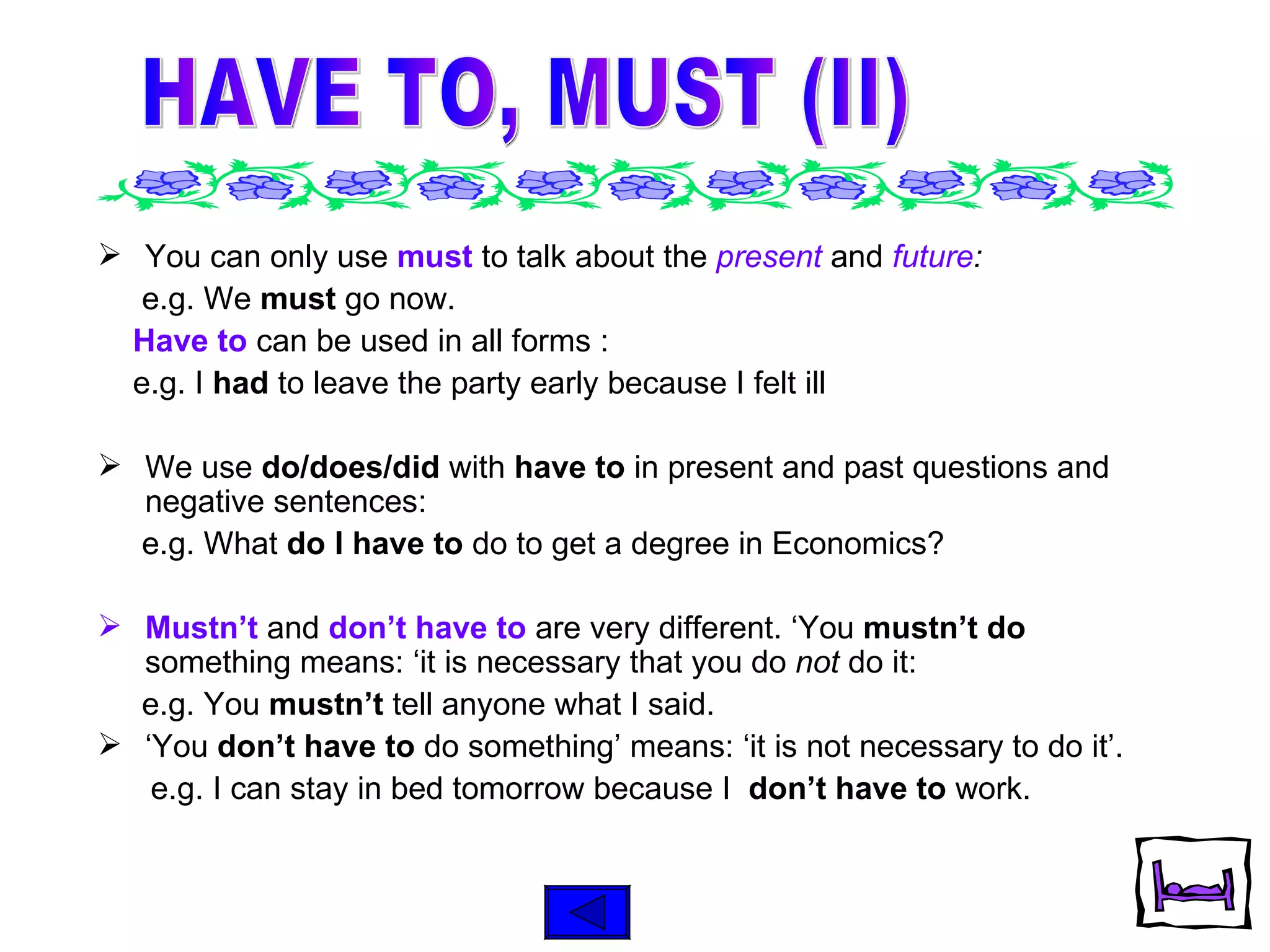
You can only use  must  to talk about the  present  and  future :  e.g. We   must  go now. Have to  can be used in all forms : e.g. I  had  to leave the party early because I felt ill We use  do/does/did  with  have to  in present and past questions and negative sentences: e.g. What  do I have to  do to get a degree in Economics? Mustn’t   and  don’t have to   are very different. ‘You  mustn’t do  something means: ‘it is necessary that you do  not  do it: e.g. You  mustn’t  tell anyone what I said. ‘ You  don’t have to  do something’ means: ‘it is not necessary to do it’. e.g. I can stay in bed tomorrow because I  don’t have to  work.  HAVE TO, MUST (II)
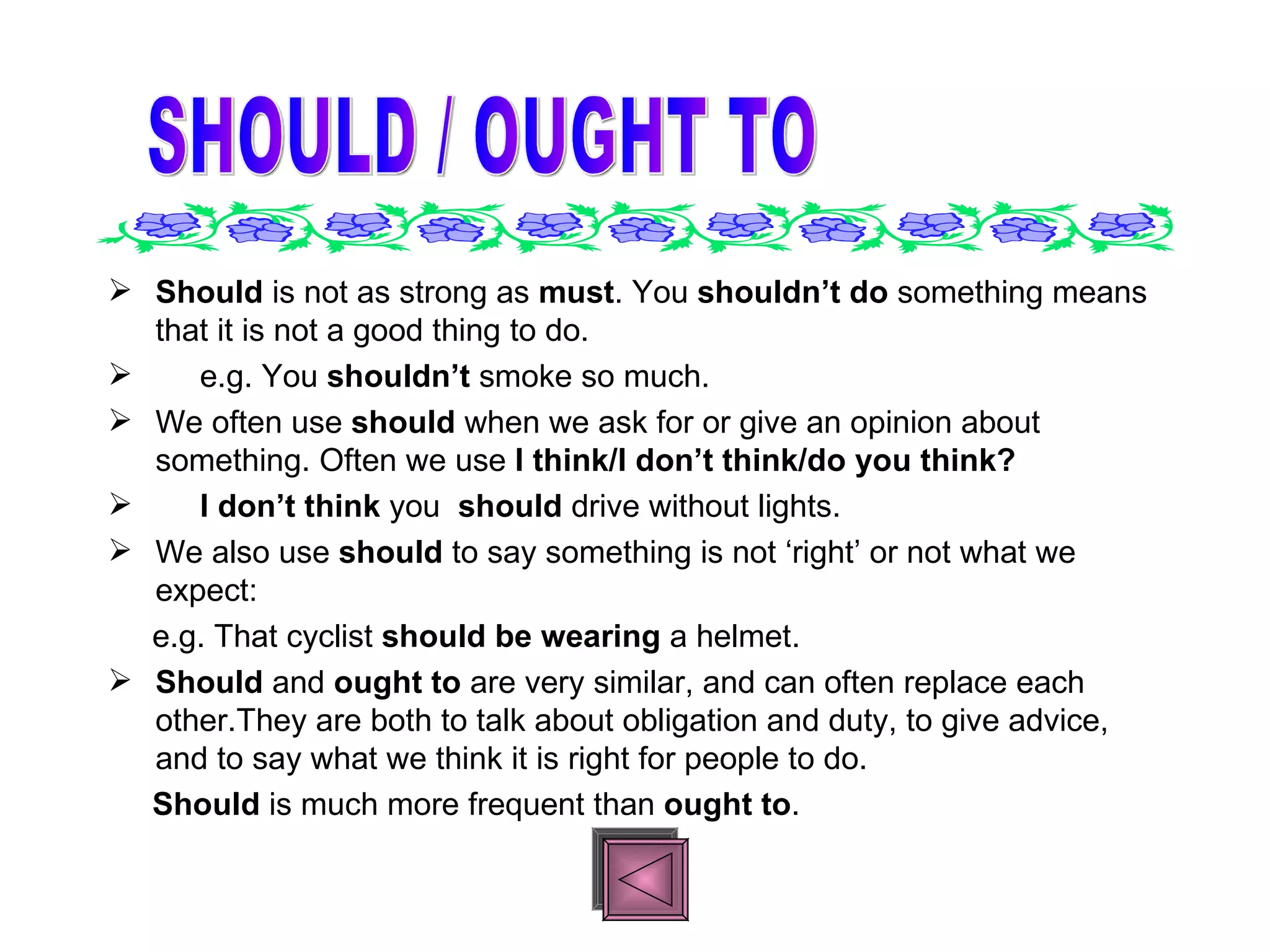
Should  is not as strong as  must . You  shouldn’t do  something means that it is not a good thing to do. e.g. You  shouldn’t  smoke so much. We often use  should  when we ask for or give an opinion about something. Often we use  I think/I don’t think/do you think? I don’t think  you  should  drive without lights.  We also use  should  to say something is not ‘right’ or not what we expect: e.g. That cyclist  should be wearing  a helmet. Should  and  ought to  are very similar, and can often replace each other.They are both to talk about obligation and duty, to give advice, and to say what we think it is right for people to do. Should  is much more frequent than  ought to . SHOULD / OUGHT TO
Modal Verbs EXERCISES
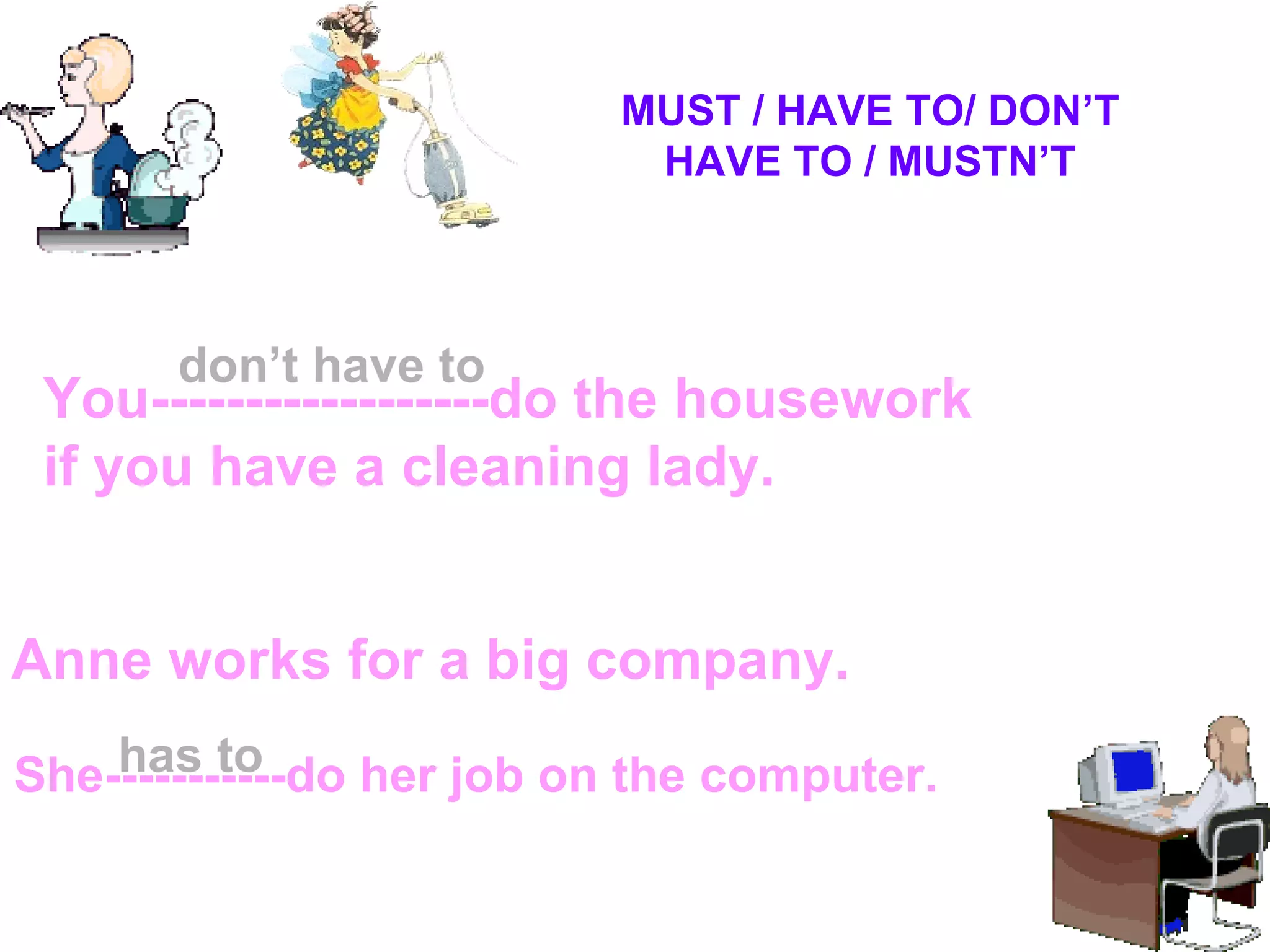
You------------------do the housework if you have a  cleaning lady . Anne works for a big company. She-----------do her job on the computer. don’t have to has to MUST   /   HAVE TO/ DON’T HAVE TO / MUSTN’T
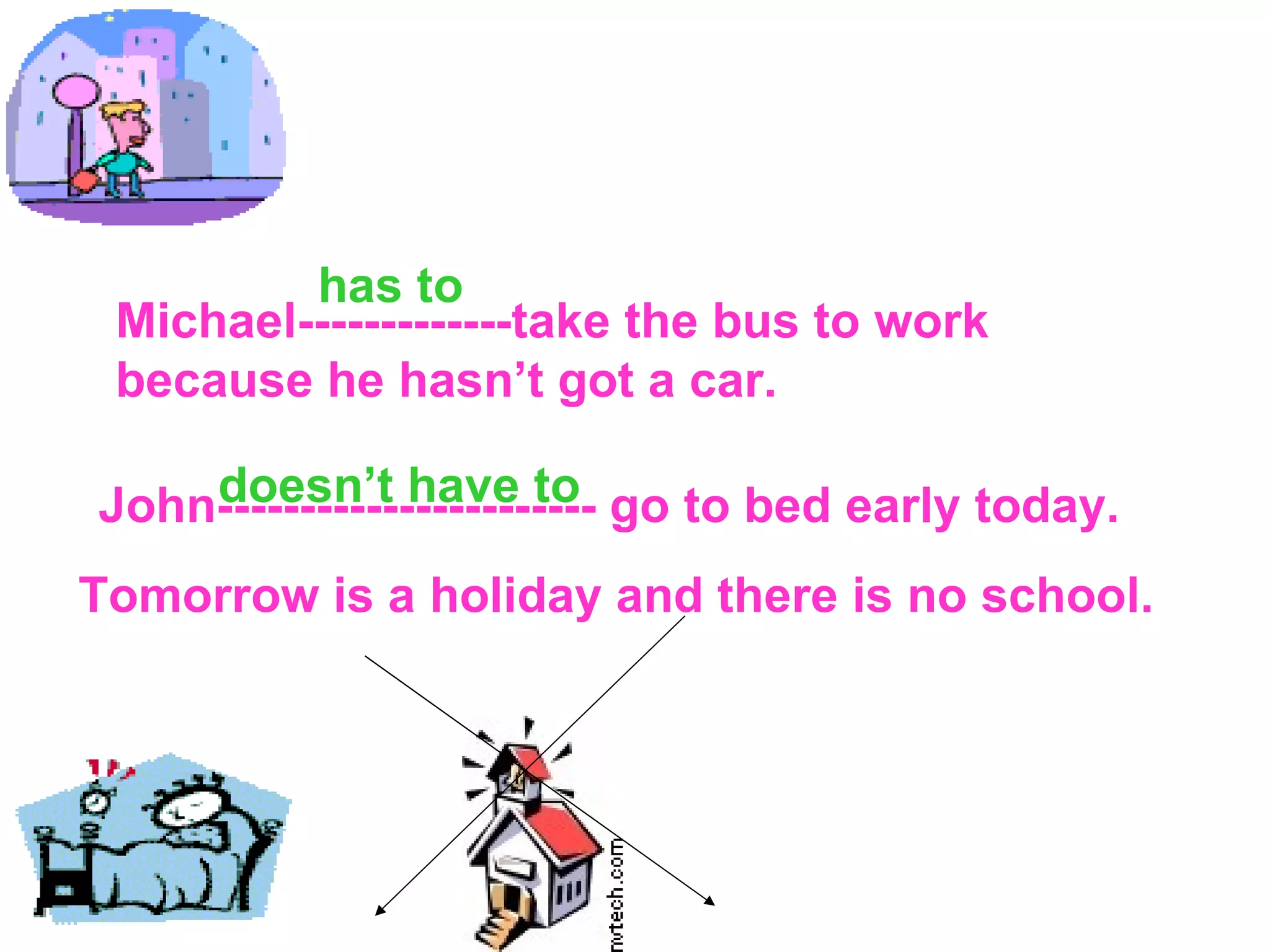
Michael-------------take the bus to work  because he hasn’t got a car. John-----------------------  go to bed  early today. Tomorrow is a holiday and there is no school. has to doesn’t have to
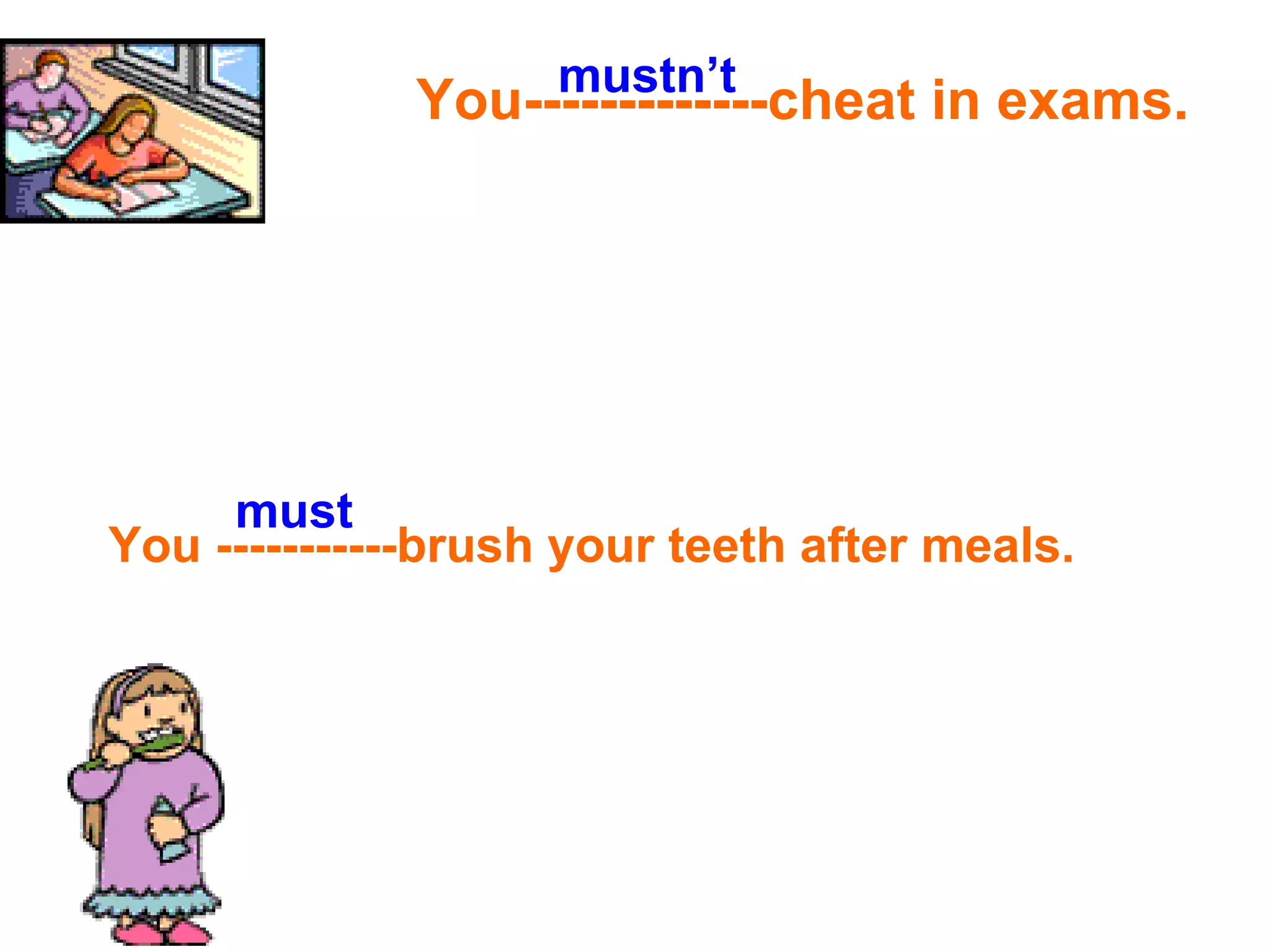
You-------------cheat in exams. You -----------brush your teeth after meals. mustn’t must
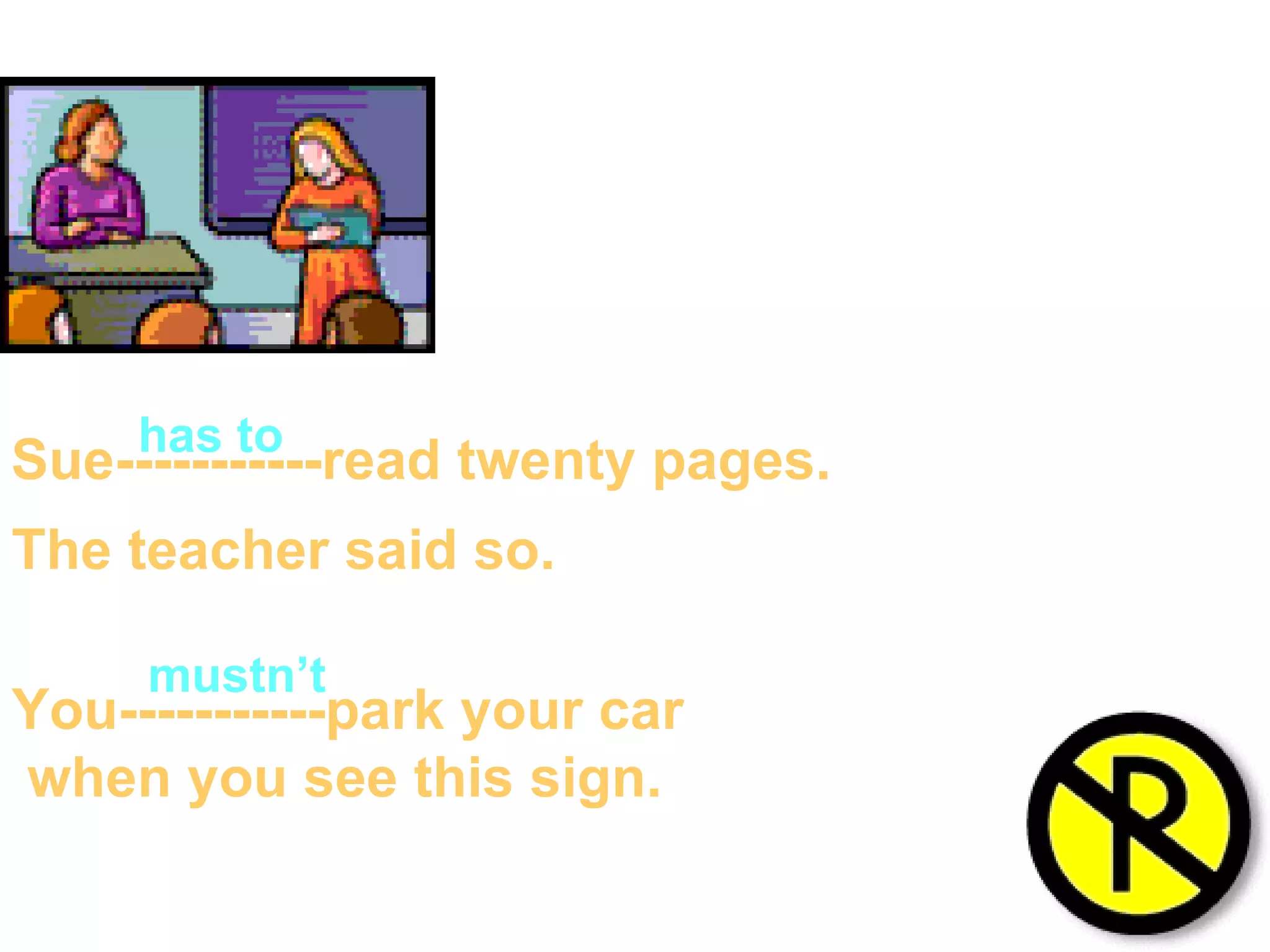
Sue-----------read twenty pages. The teacher said so. You-----------park your car when you see this sign. has to mustn’t
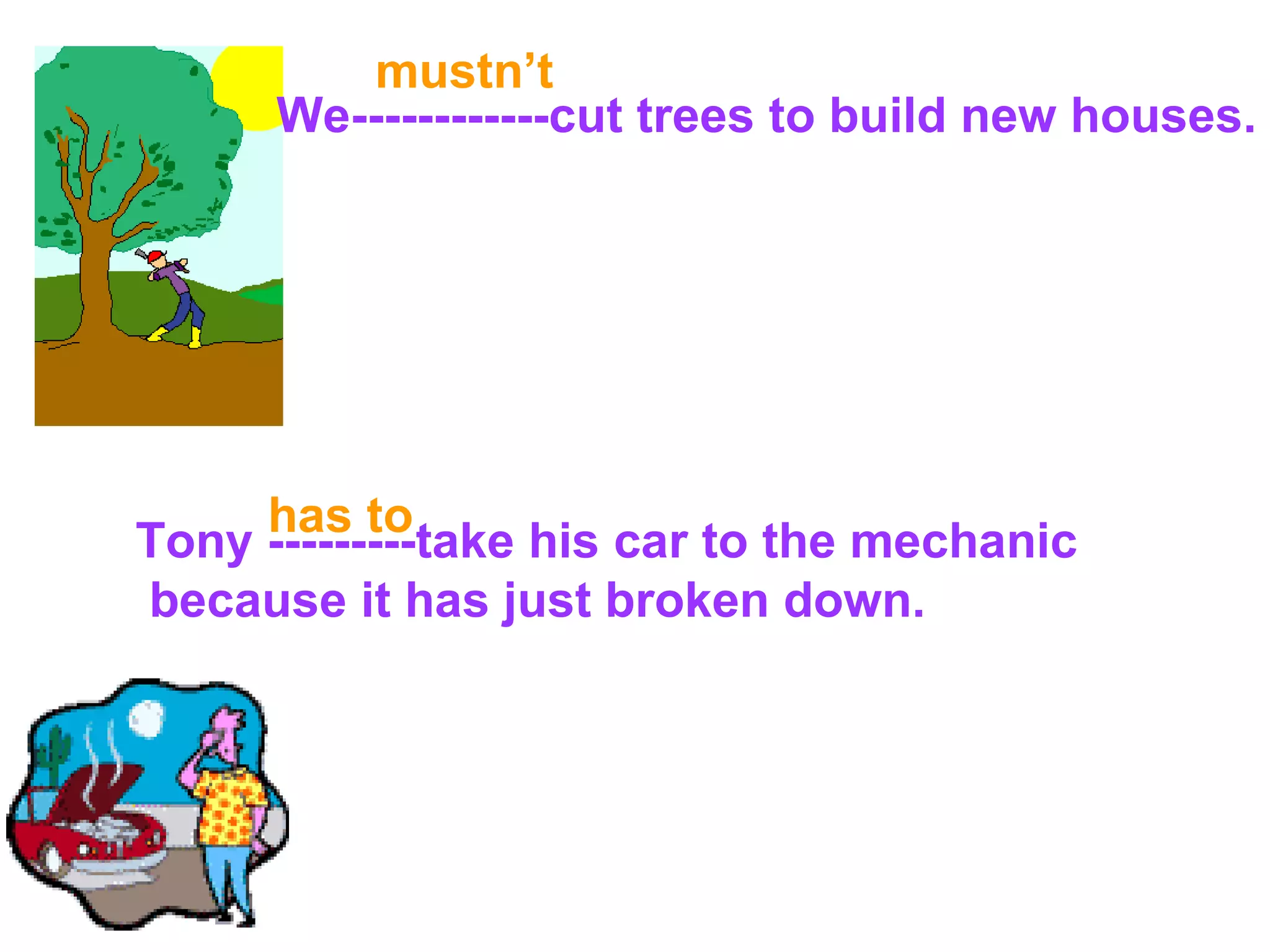
We------------cut trees to build new houses. Tony ---------take his car to the mechanic because it  has just  broke n  down. mustn’t has to
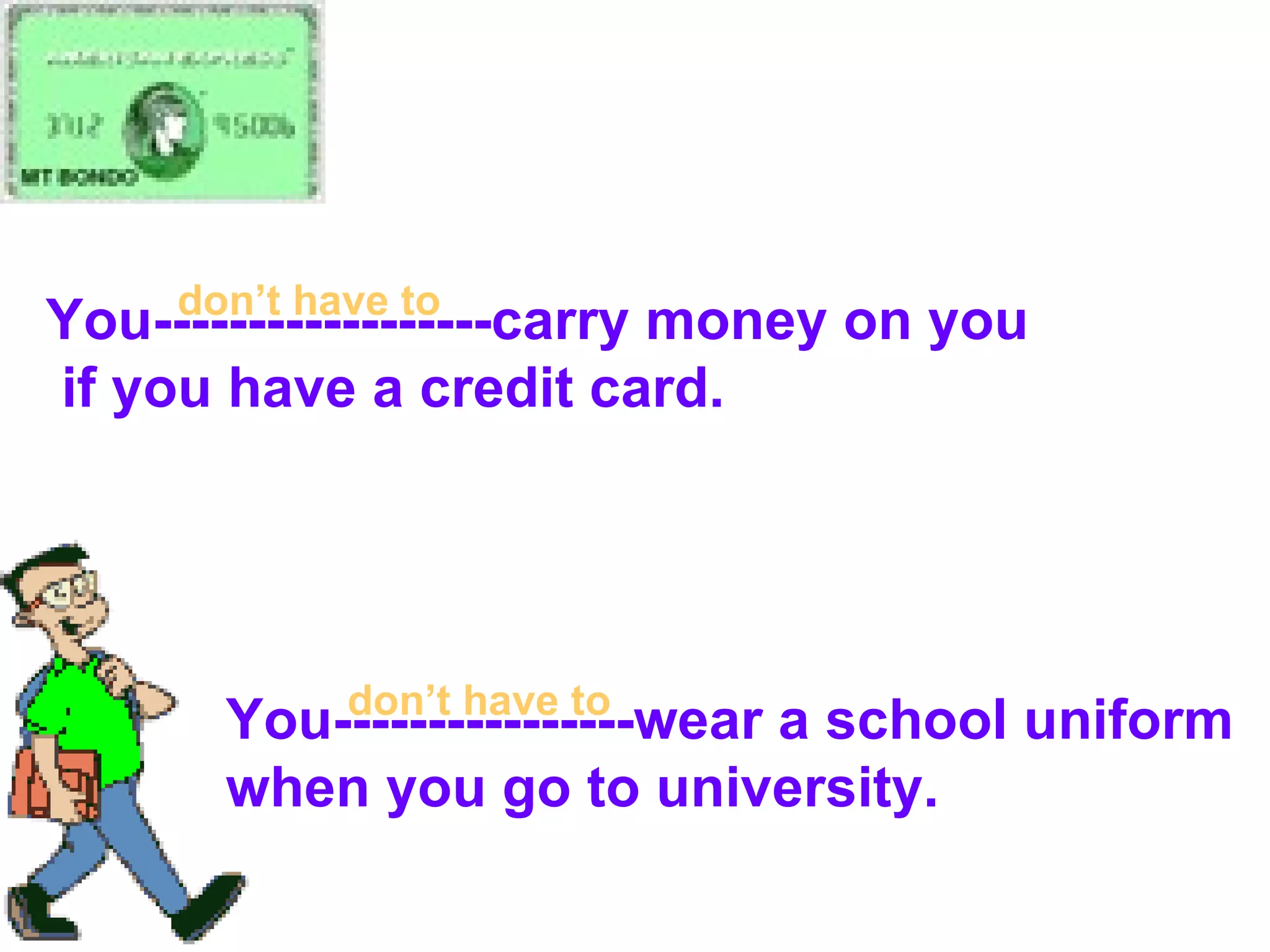
You------------------carry money on you if you have a credit card. You----------------wear a school uniform  when you go to university. don’t have to don’t have to
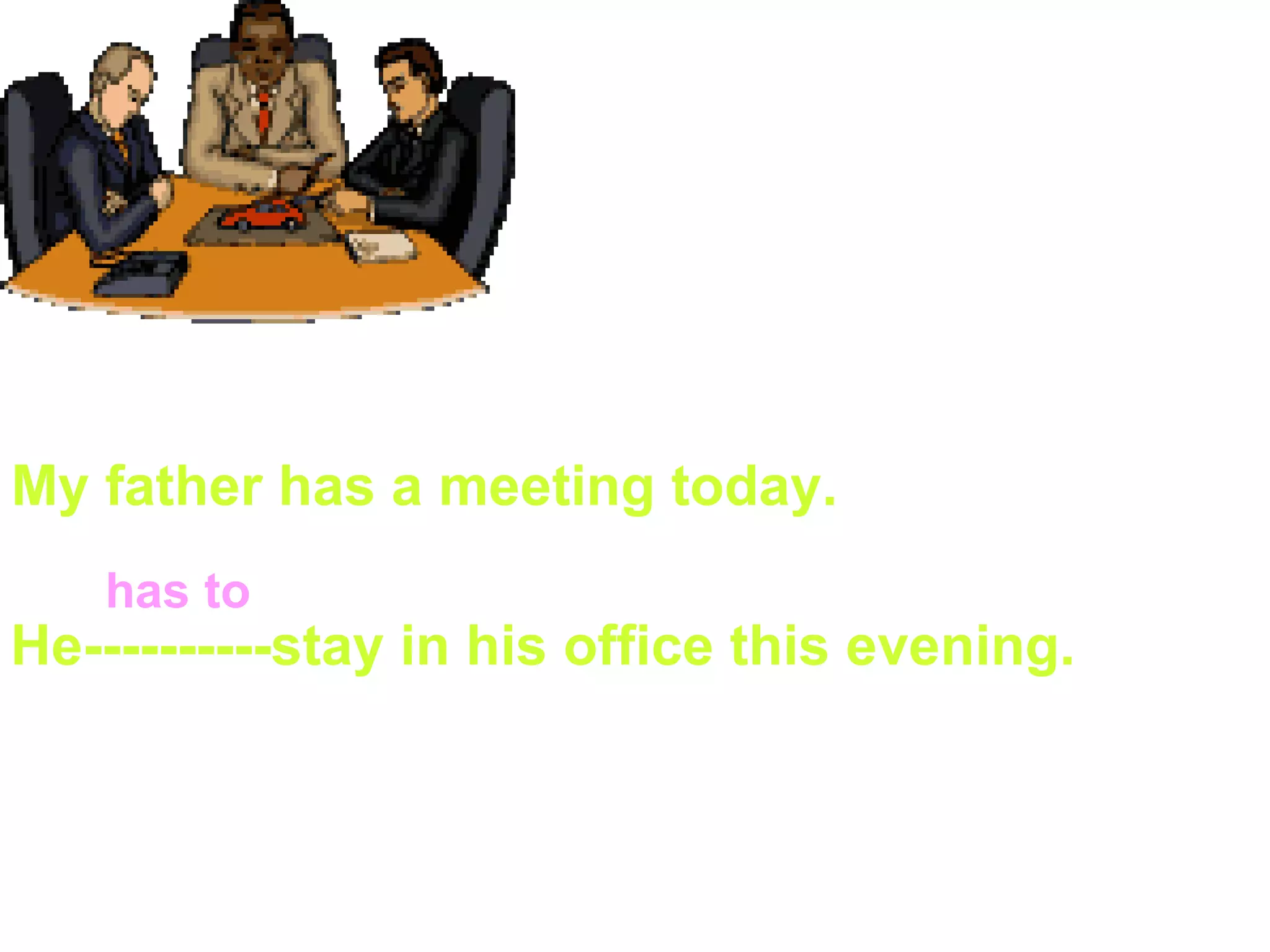
My father has a meeting today. He----------stay in his office this evening. has to
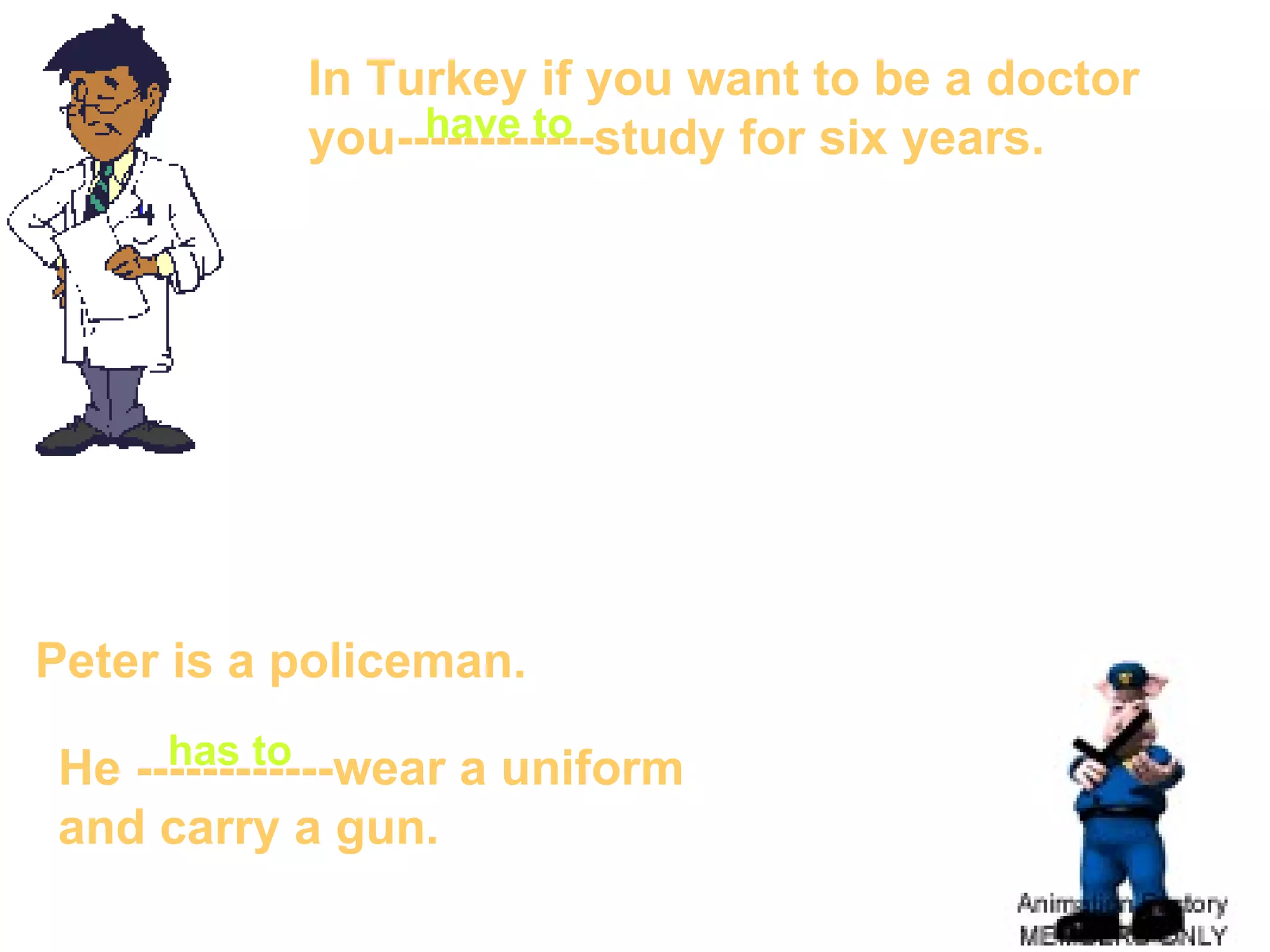
In Turkey if you want to be a doctor  you------------study for six years. Peter  is a policeman. He ------------wear a uniform  and carry a gun. have to has to
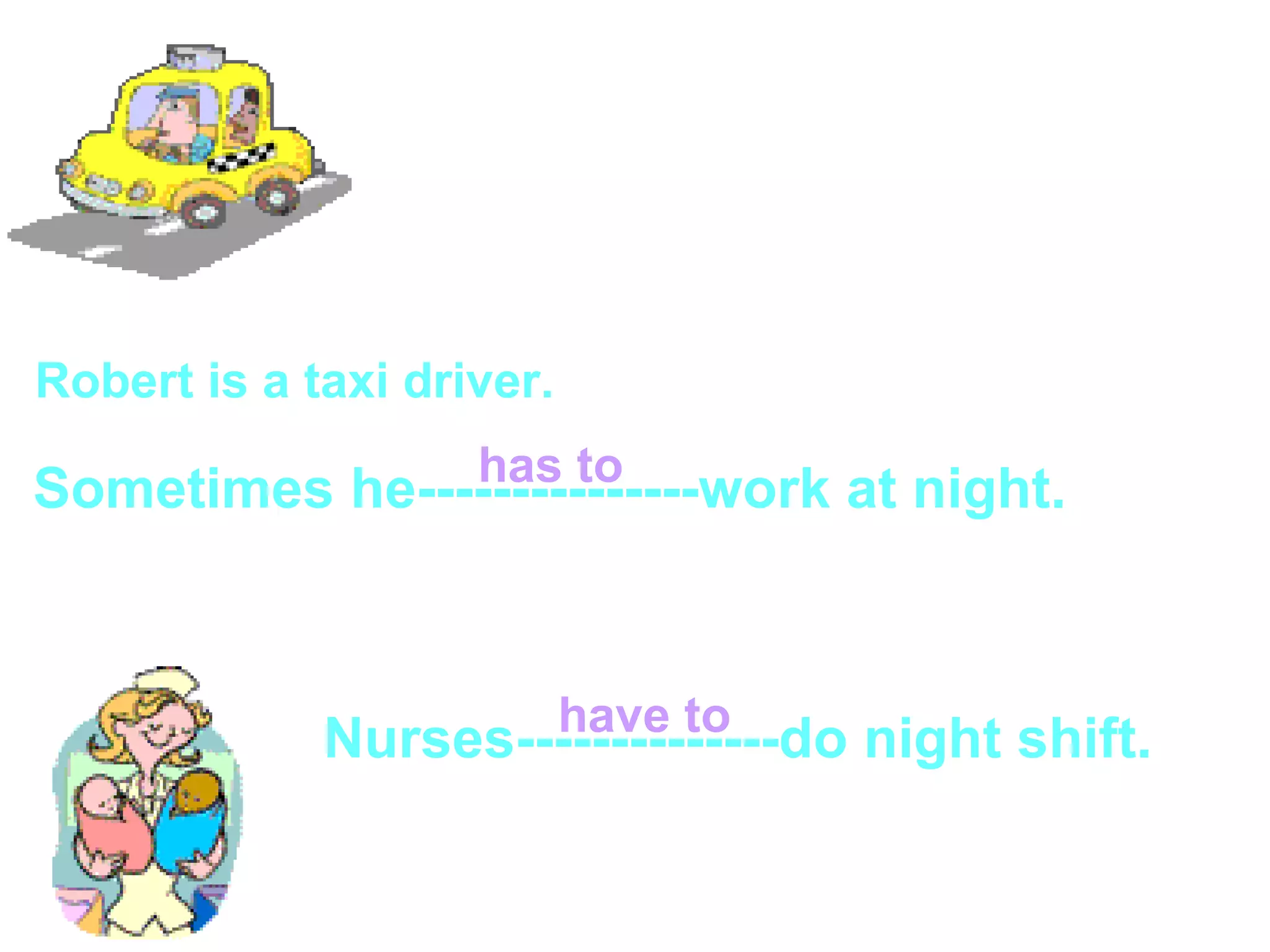
Robert is a taxi driver. Sometimes he---------------work at night. Nurses--------------do night shift. has to have to

Modal Vbs To Express Obligation Blog

  • 1.
    Modal Verbs HAVETO/ MUST SHOULD/ OUGHT TO
  • 2.
    We use must (do) and have to (do) to say that it is necessary to do something. e.g. Well, it’s 11 o’clock. I must/have to go now. There is sometimes a difference between must and have to . With must the speakers are giving their own feelings , saying what they think is necessary : e.g. I must send an e-mail to Liz. I haven’t written to her since Christmas. I must study English if I want to pass the exam. With have to the speakers are not giving their feelings. They are just giving facts : e.g. I can’t come on Saturday, I have to work. Students have to wear uniforms at this school. HAVE TO, MUST (I)
  • 3.
    You can onlyuse must to talk about the present and future : e.g. We must go now. Have to can be used in all forms : e.g. I had to leave the party early because I felt ill We use do/does/did with have to in present and past questions and negative sentences: e.g. What do I have to do to get a degree in Economics? Mustn’t and don’t have to are very different. ‘You mustn’t do something means: ‘it is necessary that you do not do it: e.g. You mustn’t tell anyone what I said. ‘ You don’t have to do something’ means: ‘it is not necessary to do it’. e.g. I can stay in bed tomorrow because I don’t have to work. HAVE TO, MUST (II)
  • 4.
    Should isnot as strong as must . You shouldn’t do something means that it is not a good thing to do. e.g. You shouldn’t smoke so much. We often use should when we ask for or give an opinion about something. Often we use I think/I don’t think/do you think? I don’t think you should drive without lights. We also use should to say something is not ‘right’ or not what we expect: e.g. That cyclist should be wearing a helmet. Should and ought to are very similar, and can often replace each other.They are both to talk about obligation and duty, to give advice, and to say what we think it is right for people to do. Should is much more frequent than ought to . SHOULD / OUGHT TO
  • 5.
  • 6.
    You------------------do the houseworkif you have a cleaning lady . Anne works for a big company. She-----------do her job on the computer. don’t have to has to MUST / HAVE TO/ DON’T HAVE TO / MUSTN’T
  • 7.
    Michael-------------take the busto work because he hasn’t got a car. John----------------------- go to bed early today. Tomorrow is a holiday and there is no school. has to doesn’t have to
  • 8.
    You-------------cheat in exams.You -----------brush your teeth after meals. mustn’t must
  • 9.
    Sue-----------read twenty pages.The teacher said so. You-----------park your car when you see this sign. has to mustn’t
  • 10.
    We------------cut trees tobuild new houses. Tony ---------take his car to the mechanic because it has just broke n down. mustn’t has to
  • 11.
    You------------------carry money onyou if you have a credit card. You----------------wear a school uniform when you go to university. don’t have to don’t have to
  • 12.
    My father hasa meeting today. He----------stay in his office this evening. has to
  • 13.
    In Turkey ifyou want to be a doctor you------------study for six years. Peter is a policeman. He ------------wear a uniform and carry a gun. have to has to
  • 14.
    Robert is ataxi driver. Sometimes he---------------work at night. Nurses--------------do night shift. has to have to