FUNCTIONALIST 
PERSPECTIVE 
-is primarily concern with why a society assumes 
a particular form. 
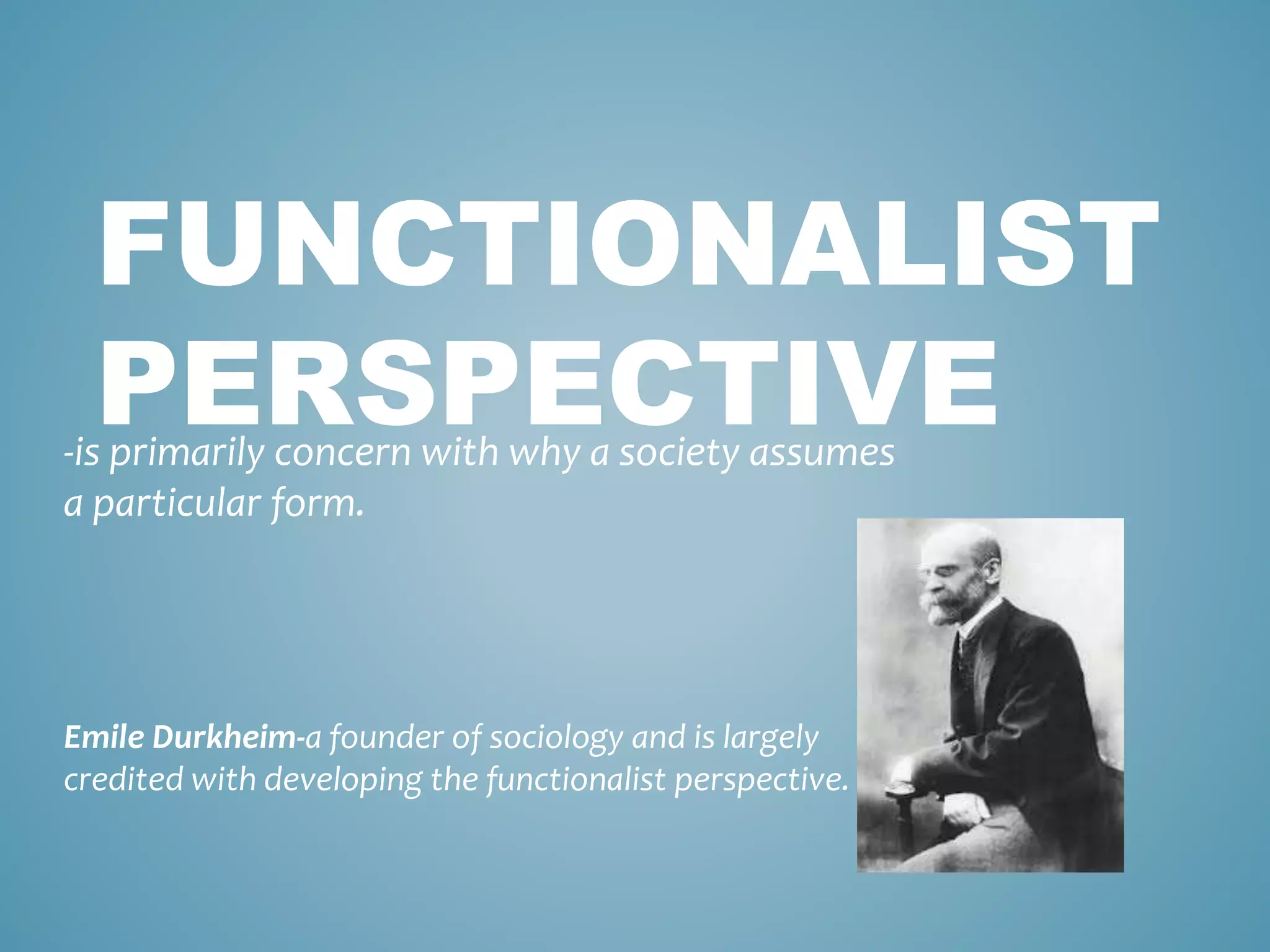
Emile Durkheim-a founder of sociology and is largely 
credited with developing the functionalist perspective.
Key Principles of the functionalist 
perspective(Farley,1990) 
 1. Interdependency-is that society is made up of 
interdependent parts. This means that every part of society is 
dependent to some extent on other parts of society, so that 
what happens at one place in society has important effects 
elsewhere.
2. Functions of Social Structure and Culture-this principles is 
applied both social structure and culture. 
• Social structure refers to the organization of society, 
including its institutions, its social positions, and its 
distribution of resources. 
• Culture refers to a set of beliefs, language, rules, values, 
and knowledge held in common by members of a society.
3. Consensus and Cooperation- is that societies have a tendency toward 
consensus; that is to have certain basic values that nearly everyone in 
the society agrees upon. For example, our society agreed upon the 
principles of freedom and democracy in order to achieve cooperation. 
4. Equilibrium-this view holds that, once a society has achieved the 
form that is best adapted to its situation, it has reached a state of 
balance or equilibrium, and it will remain in that condition until it is 
forced to change by some new.
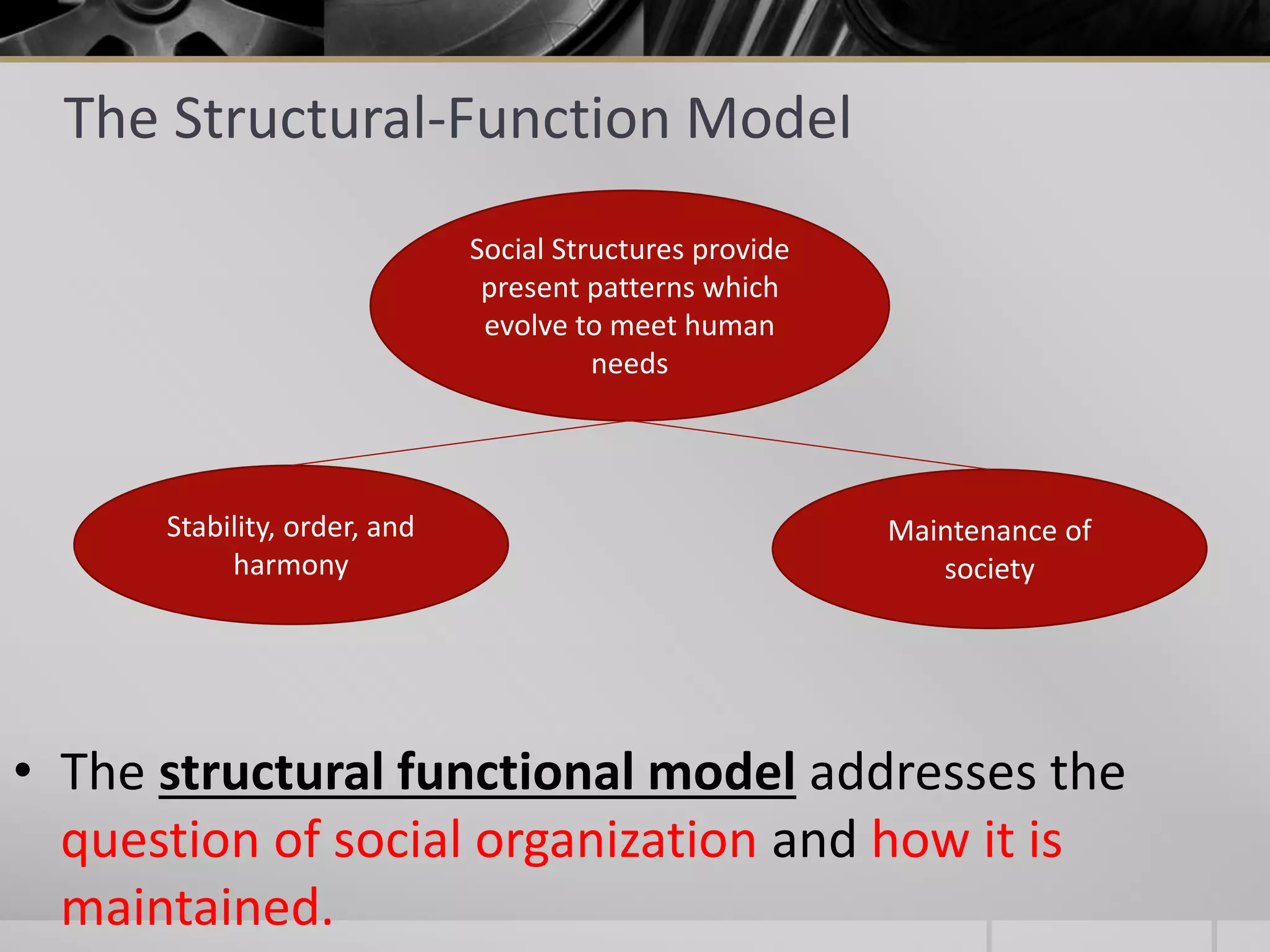
Social Structures provide 
present patterns which 
evolve to meet human 
needs 
Stability, order, and 
harmony 
Maintenance of 
society 
The Structural-Function Model 
• The structural functional model addresses the 
question of social organization and how it is 
maintained.
• In the study of society, a sociologist with this perspective tries to 
identify the structures of society and how they function, hence the 
name structural functio-nalism. 
• Functionalist maintain the social structures exist in society for the 
functions they have to carry out. 
• Structural functionalism puts emphasis on social order and social 
stability. 
• Modern functionalist theories of education. From this 
perspective, schooling performs an important function in the 
development and maintenance of modern, democratic 
society, especially with regard to equality of opportunity for all 
citizens.

Functionalist perspective

  • 1.
    FUNCTIONALIST PERSPECTIVE -isprimarily concern with why a society assumes a particular form. Emile Durkheim-a founder of sociology and is largely credited with developing the functionalist perspective.
  • 2.
    Key Principles ofthe functionalist perspective(Farley,1990)  1. Interdependency-is that society is made up of interdependent parts. This means that every part of society is dependent to some extent on other parts of society, so that what happens at one place in society has important effects elsewhere.
  • 3.
    2. Functions ofSocial Structure and Culture-this principles is applied both social structure and culture. • Social structure refers to the organization of society, including its institutions, its social positions, and its distribution of resources. • Culture refers to a set of beliefs, language, rules, values, and knowledge held in common by members of a society.
  • 4.
    3. Consensus andCooperation- is that societies have a tendency toward consensus; that is to have certain basic values that nearly everyone in the society agrees upon. For example, our society agreed upon the principles of freedom and democracy in order to achieve cooperation. 4. Equilibrium-this view holds that, once a society has achieved the form that is best adapted to its situation, it has reached a state of balance or equilibrium, and it will remain in that condition until it is forced to change by some new.
  • 5.
    Social Structures provide present patterns which evolve to meet human needs Stability, order, and harmony Maintenance of society The Structural-Function Model • The structural functional model addresses the question of social organization and how it is maintained.
  • 6.
    • In thestudy of society, a sociologist with this perspective tries to identify the structures of society and how they function, hence the name structural functio-nalism. • Functionalist maintain the social structures exist in society for the functions they have to carry out. • Structural functionalism puts emphasis on social order and social stability. • Modern functionalist theories of education. From this perspective, schooling performs an important function in the development and maintenance of modern, democratic society, especially with regard to equality of opportunity for all citizens.