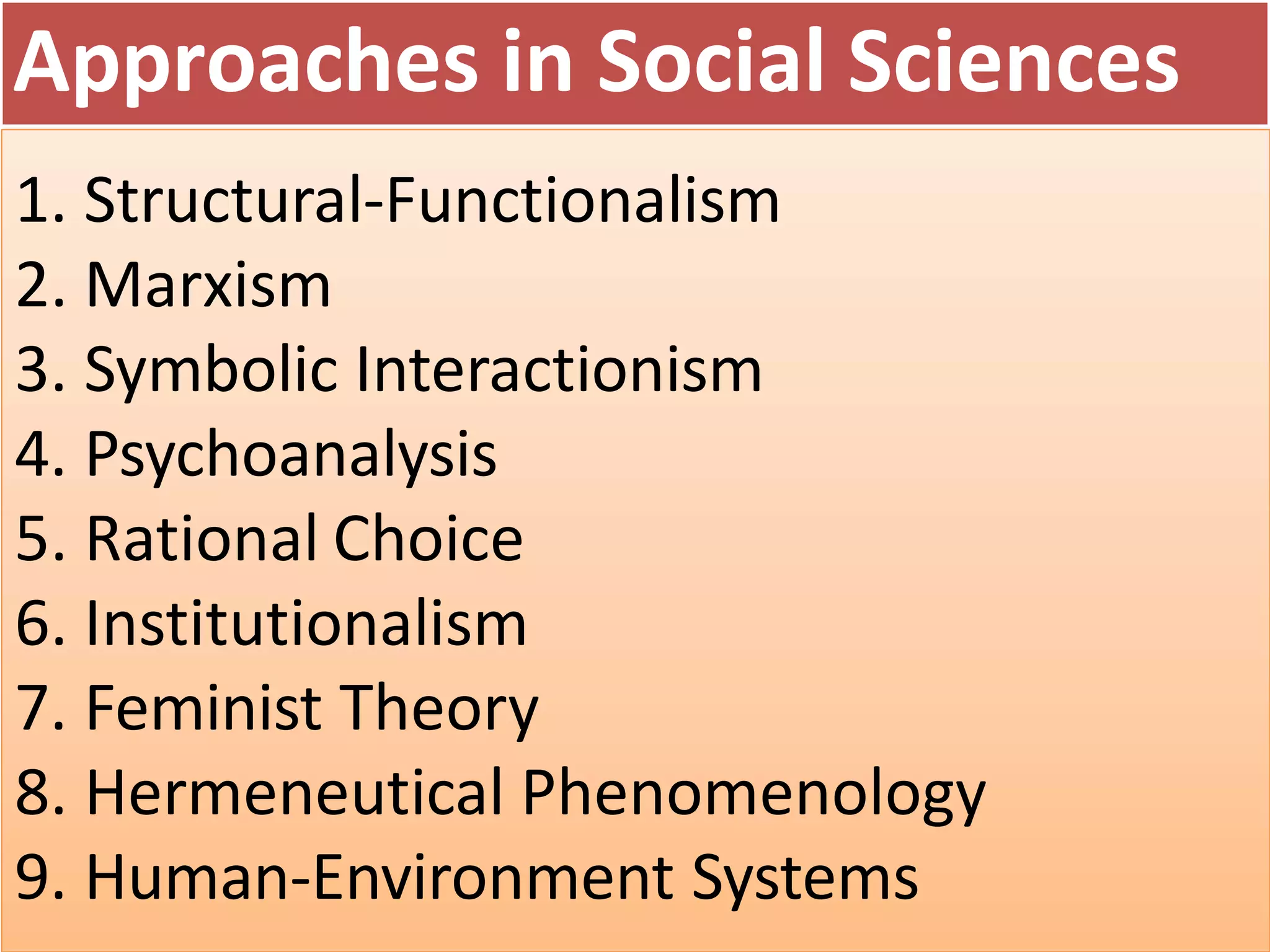
Structural Functionalism views society as a structure of interconnected institutions that work together to ensure stability and meet the needs of individuals. Theorists like Comte, Spencer, and Parsons proposed that societies function like organisms where all parts depend on each other, and any imbalance or conflict in one area is resolved for the benefit of the whole system. Critics argue that Structural Functionalism ignores social tensions, contradictions, and inequalities that can lead to change rather than stability.