ALVEOLAR BONE
By Muhammad Awadine
 Defining alveolar bone
 Classification of alveolar bone
 Composition of alveolar bone
 Function
 Gross histology of bone
 Bone Cells
 Alveolar Process
 Development of bone
 Bone remodeling and resorption
 Age changes in alveolar bone
OBJECTIVES
DEFINITION
 Bone is specialized C.T with calcified intercellular substance
 Alveolar bone is specialized part of maxillary and mandibular
bone that forms the primary support structure for teeth
CLASSIFICATION OF BONE
 Shape :
 Long
 Short
 Flat
 Irregular bone
 Development:
 endochondral
 intramembranous
 Microscopic structure:
 Embryonic or woven bone
 lamellar bone
 Macroscopic structure:
+ Compact bone
+ Sponge (cancellous ) bone
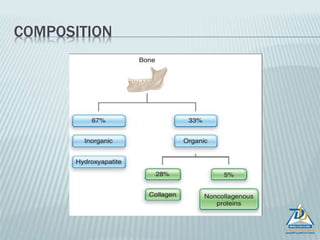
COMPOSITION
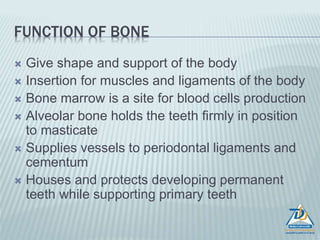
FUNCTION OF BONE
 Give shape and support of the body
 Insertion for muscles and ligaments of the body
 Bone marrow is a site for blood cells production
 Alveolar bone holds the teeth firmly in position
to masticate
 Supplies vessels to periodontal ligaments and
cementum
 Houses and protects developing permanent
teeth while supporting primary teeth
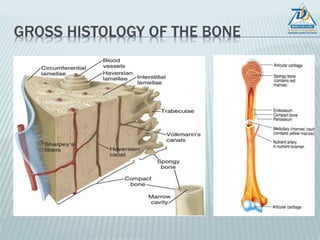
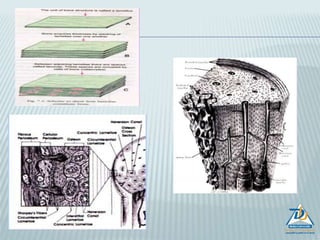
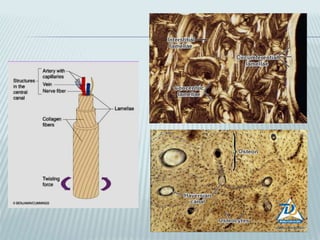
GROSS HISTOLOGY OF THE BONE
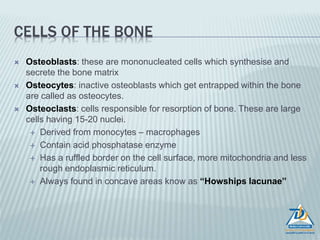
CELLS OF THE BONE
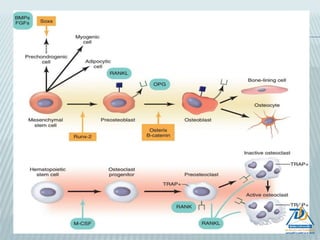
 Osteoblasts: these are mononucleated cells which synthesise and
secrete the bone matrix
 Osteocytes: inactive osteoblasts which get entrapped within the bone
are called as osteocytes.
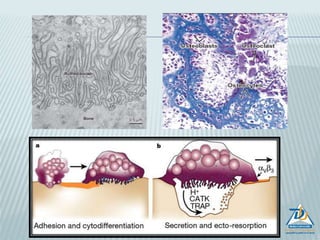
 Osteoclasts: cells responsible for resorption of bone. These are large
cells having 15-20 nuclei.
 Derived from monocytes – macrophages
 Contain acid phosphatase enzyme
 Has a ruffled border on the cell surface, more mitochondria and less
rough endoplasmic reticulum.
 Always found in concave areas know as “Howships lacunae”
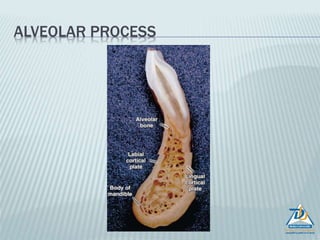
ALVEOLAR PROCESS
ALVEOLAR BONE (PROCESS)
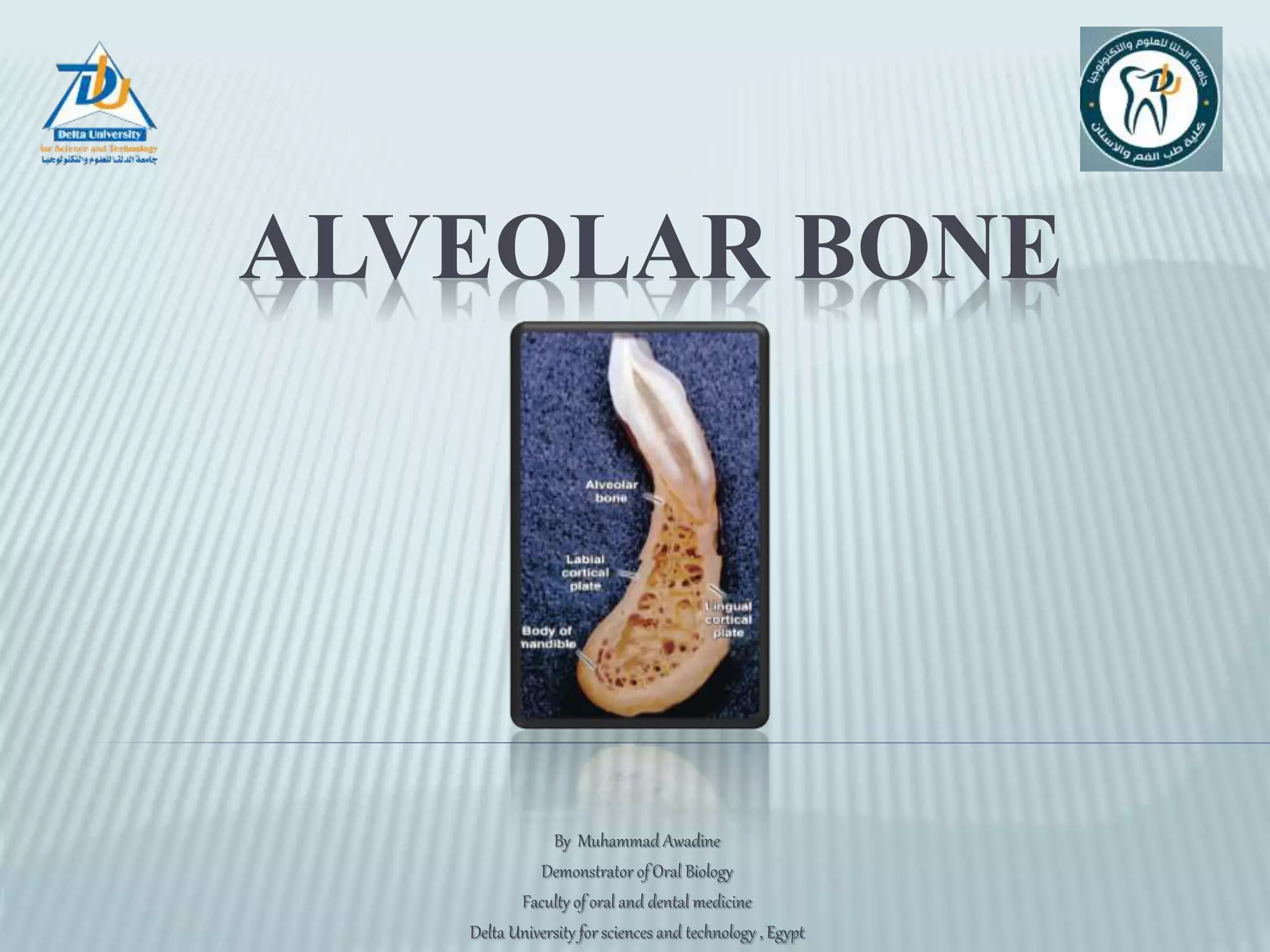
 Definition: alveolar process is that
part of maxilla and mandible that
forms and supports the sockets of
teeth.
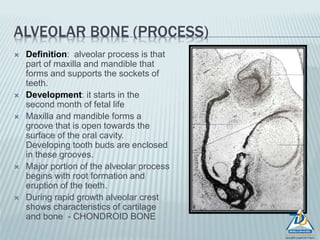
 Development: it starts in the
second month of fetal life
 Maxilla and mandible forms a
groove that is open towards the
surface of the oral cavity.
Developing tooth buds are enclosed
in these grooves.
 Major portion of the alveolar process
begins with root formation and
eruption of the teeth.
 During rapid growth alveolar crest
shows characteristics of cartilage
and bone - CHONDROID BONE
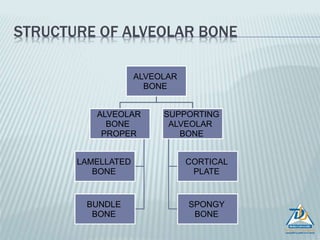
STRUCTURE OF ALVEOLAR BONE
ALVEOLAR
BONE
ALVEOLAR
BONE
PROPER
LAMELLATED
BONE
BUNDLE
BONE
SUPPORTING
ALVEOLAR
BONE
CORTICAL
PLATE
SPONGY
BONE
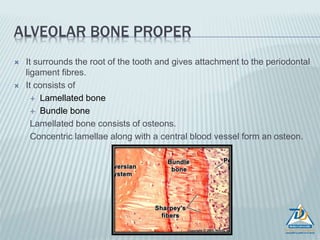
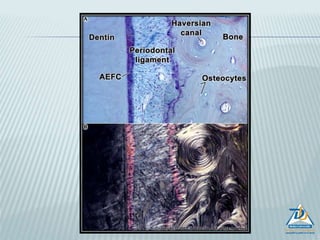
ALVEOLAR BONE PROPER
 It surrounds the root of the tooth and gives attachment to the periodontal
ligament fibres.
 It consists of
 Lamellated bone
 Bundle bone
Lamellated bone consists of osteons.
Concentric lamellae along with a central blood vessel form an osteon.
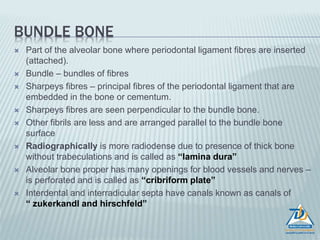
BUNDLE BONE
 Part of the alveolar bone where periodontal ligament fibres are inserted
(attached).
 Bundle – bundles of fibres
 Sharpeys fibres – principal fibres of the periodontal ligament that are
embedded in the bone or cementum.
 Sharpeys fibres are seen perpendicular to the bundle bone.
 Other fibrils are less and are arranged parallel to the bundle bone
surface
 Radiographically is more radiodense due to presence of thick bone
without trabeculations and is called as “lamina dura”
 Alveolar bone proper has many openings for blood vessels and nerves –
is perforated and is called as “cribriform plate”
 Interdental and interradicular septa have canals known as canals of
“ zukerkandl and hirschfeld”
CRIBRIFORM PLATE VS LAMINA DURA
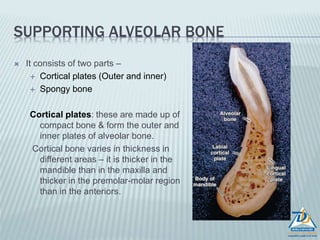
SUPPORTING ALVEOLAR BONE
 It consists of two parts –
 Cortical plates (Outer and inner)
 Spongy bone
Cortical plates: these are made up of
compact bone & form the outer and
inner plates of alveolar bone.
Cortical bone varies in thickness in
different areas – it is thicker in the
mandible than in the maxilla and
thicker in the premolar-molar region
than in the anteriors.
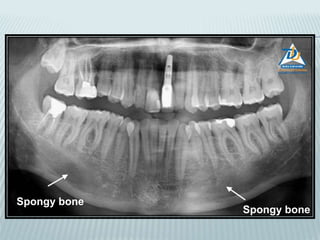
 Spongy bone: it fills the area between the cortical plates and the
alveolar bone proper.
 It contains trabaculae of bone and marrow spaces.
 Types of spongy bone (spongiosa) :-
 Type I: the trabaculae are regular and horizontal like a ladder. This
is seen most commonly in the mandible.
 Type II: irregularly arranged delicate and numerous trabaculae.
This is seen most commonly in the maxilla.
The spongy bone is very thin or absent in the anterior regions of both
the jaws.
Spongy bone
Spongy bone
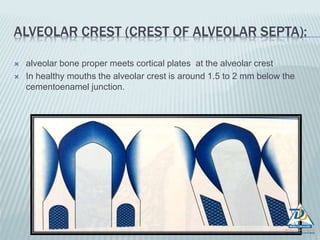
ALVEOLAR CREST (CREST OF ALVEOLAR SEPTA):
 alveolar bone proper meets cortical plates at the alveolar crest
 In healthy mouths the alveolar crest is around 1.5 to 2 mm below the
cementoenamel junction.
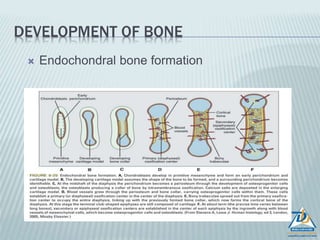
DEVELOPMENT OF BONE
 Endochondral bone formation
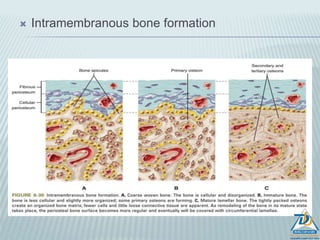
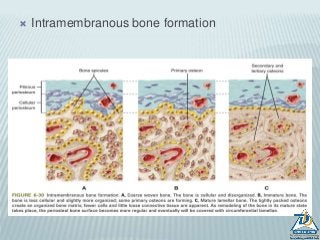
 Intramembranous bone formation
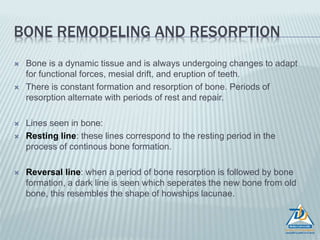
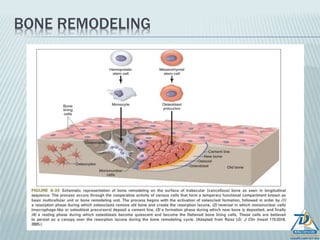
BONE REMODELING AND RESORPTION
 Bone is a dynamic tissue and is always undergoing changes to adapt
for functional forces, mesial drift, and eruption of teeth.
 There is constant formation and resorption of bone. Periods of
resorption alternate with periods of rest and repair.
 Lines seen in bone:
 Resting line: these lines correspond to the resting period in the
process of continous bone formation.
 Reversal line: when a period of bone resorption is followed by bone
formation, a dark line is seen which seperates the new bone from old
bone, this resembles the shape of howships lacunae.
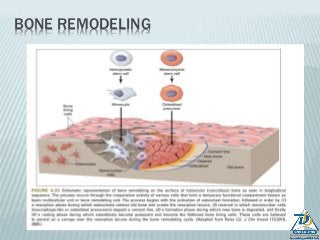
BONE REMODELING
AGE CHANGES IN ALVEOLAR BONE
 Brittleness due to decreased water content
 Sponge bone become thin trabecula , wide marrow spaces
 Red bone marrow become fatty
 Osteoporosis
 Alveolar crest slope distally due to mesial tilting of teeth
 With loss of teeth and resorption of alveolar ridge mental foramen
become very close also maxillary sinus in upper jaw
Thank you!!

Alveolar bone

  • 1.
  • 2.
     Defining alveolarbone  Classification of alveolar bone  Composition of alveolar bone  Function  Gross histology of bone  Bone Cells  Alveolar Process  Development of bone  Bone remodeling and resorption  Age changes in alveolar bone OBJECTIVES
  • 3.
    DEFINITION  Bone isspecialized C.T with calcified intercellular substance  Alveolar bone is specialized part of maxillary and mandibular bone that forms the primary support structure for teeth
  • 4.
    CLASSIFICATION OF BONE Shape :  Long  Short  Flat  Irregular bone  Development:  endochondral  intramembranous  Microscopic structure:  Embryonic or woven bone  lamellar bone  Macroscopic structure: + Compact bone + Sponge (cancellous ) bone
  • 5.
  • 6.
    FUNCTION OF BONE Give shape and support of the body  Insertion for muscles and ligaments of the body  Bone marrow is a site for blood cells production  Alveolar bone holds the teeth firmly in position to masticate  Supplies vessels to periodontal ligaments and cementum  Houses and protects developing permanent teeth while supporting primary teeth
  • 8.
  • 13.
    CELLS OF THEBONE  Osteoblasts: these are mononucleated cells which synthesise and secrete the bone matrix  Osteocytes: inactive osteoblasts which get entrapped within the bone are called as osteocytes.  Osteoclasts: cells responsible for resorption of bone. These are large cells having 15-20 nuclei.  Derived from monocytes – macrophages  Contain acid phosphatase enzyme  Has a ruffled border on the cell surface, more mitochondria and less rough endoplasmic reticulum.  Always found in concave areas know as “Howships lacunae”
  • 16.
  • 17.
    ALVEOLAR BONE (PROCESS) Definition: alveolar process is that part of maxilla and mandible that forms and supports the sockets of teeth.  Development: it starts in the second month of fetal life  Maxilla and mandible forms a groove that is open towards the surface of the oral cavity. Developing tooth buds are enclosed in these grooves.  Major portion of the alveolar process begins with root formation and eruption of the teeth.  During rapid growth alveolar crest shows characteristics of cartilage and bone - CHONDROID BONE
  • 18.
    STRUCTURE OF ALVEOLARBONE ALVEOLAR BONE ALVEOLAR BONE PROPER LAMELLATED BONE BUNDLE BONE SUPPORTING ALVEOLAR BONE CORTICAL PLATE SPONGY BONE
  • 19.
    ALVEOLAR BONE PROPER It surrounds the root of the tooth and gives attachment to the periodontal ligament fibres.  It consists of  Lamellated bone  Bundle bone Lamellated bone consists of osteons. Concentric lamellae along with a central blood vessel form an osteon.
  • 21.
    BUNDLE BONE  Partof the alveolar bone where periodontal ligament fibres are inserted (attached).  Bundle – bundles of fibres  Sharpeys fibres – principal fibres of the periodontal ligament that are embedded in the bone or cementum.  Sharpeys fibres are seen perpendicular to the bundle bone.  Other fibrils are less and are arranged parallel to the bundle bone surface  Radiographically is more radiodense due to presence of thick bone without trabeculations and is called as “lamina dura”  Alveolar bone proper has many openings for blood vessels and nerves – is perforated and is called as “cribriform plate”  Interdental and interradicular septa have canals known as canals of “ zukerkandl and hirschfeld”
  • 22.
  • 23.
    SUPPORTING ALVEOLAR BONE It consists of two parts –  Cortical plates (Outer and inner)  Spongy bone Cortical plates: these are made up of compact bone & form the outer and inner plates of alveolar bone. Cortical bone varies in thickness in different areas – it is thicker in the mandible than in the maxilla and thicker in the premolar-molar region than in the anteriors.
  • 24.
     Spongy bone:it fills the area between the cortical plates and the alveolar bone proper.  It contains trabaculae of bone and marrow spaces.  Types of spongy bone (spongiosa) :-  Type I: the trabaculae are regular and horizontal like a ladder. This is seen most commonly in the mandible.  Type II: irregularly arranged delicate and numerous trabaculae. This is seen most commonly in the maxilla. The spongy bone is very thin or absent in the anterior regions of both the jaws.
  • 25.
  • 26.
    ALVEOLAR CREST (CRESTOF ALVEOLAR SEPTA):  alveolar bone proper meets cortical plates at the alveolar crest  In healthy mouths the alveolar crest is around 1.5 to 2 mm below the cementoenamel junction.
  • 27.
    DEVELOPMENT OF BONE Endochondral bone formation
  • 28.
  • 29.
    BONE REMODELING ANDRESORPTION  Bone is a dynamic tissue and is always undergoing changes to adapt for functional forces, mesial drift, and eruption of teeth.  There is constant formation and resorption of bone. Periods of resorption alternate with periods of rest and repair.  Lines seen in bone:  Resting line: these lines correspond to the resting period in the process of continous bone formation.  Reversal line: when a period of bone resorption is followed by bone formation, a dark line is seen which seperates the new bone from old bone, this resembles the shape of howships lacunae.
  • 30.
  • 31.
    AGE CHANGES INALVEOLAR BONE  Brittleness due to decreased water content  Sponge bone become thin trabecula , wide marrow spaces  Red bone marrow become fatty  Osteoporosis  Alveolar crest slope distally due to mesial tilting of teeth  With loss of teeth and resorption of alveolar ridge mental foramen become very close also maxillary sinus in upper jaw Thank you!!