Roles and Practices of Educators
in Technology-Supported
Learning
Dilip Barad
M K Bhavnagar University
Gujarat, India
Luddites
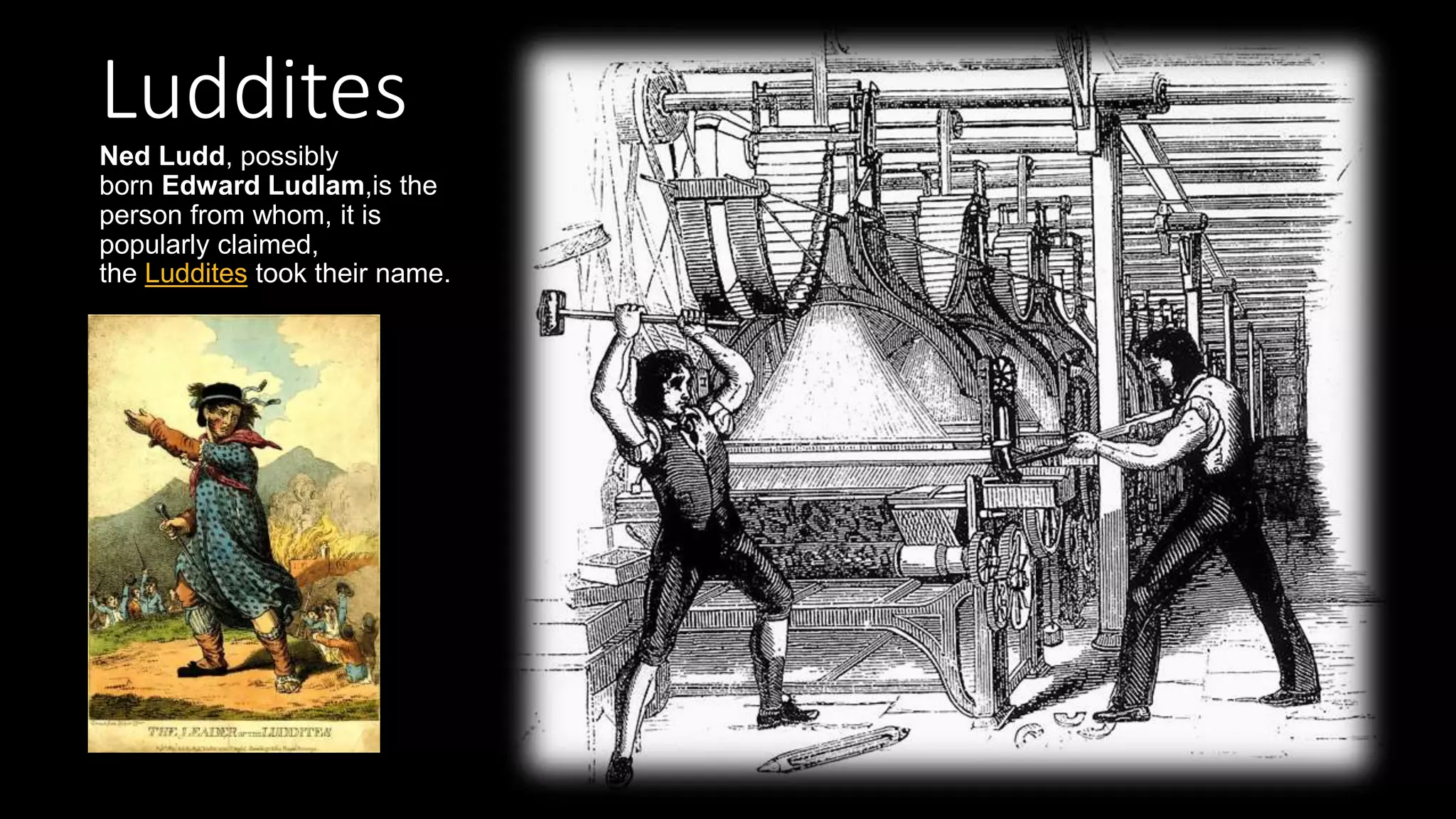
Ned Ludd, possibly
born Edward Ludlam,is the
person from whom, it is
popularly claimed,
the Luddites took their name.
Luddite as religion
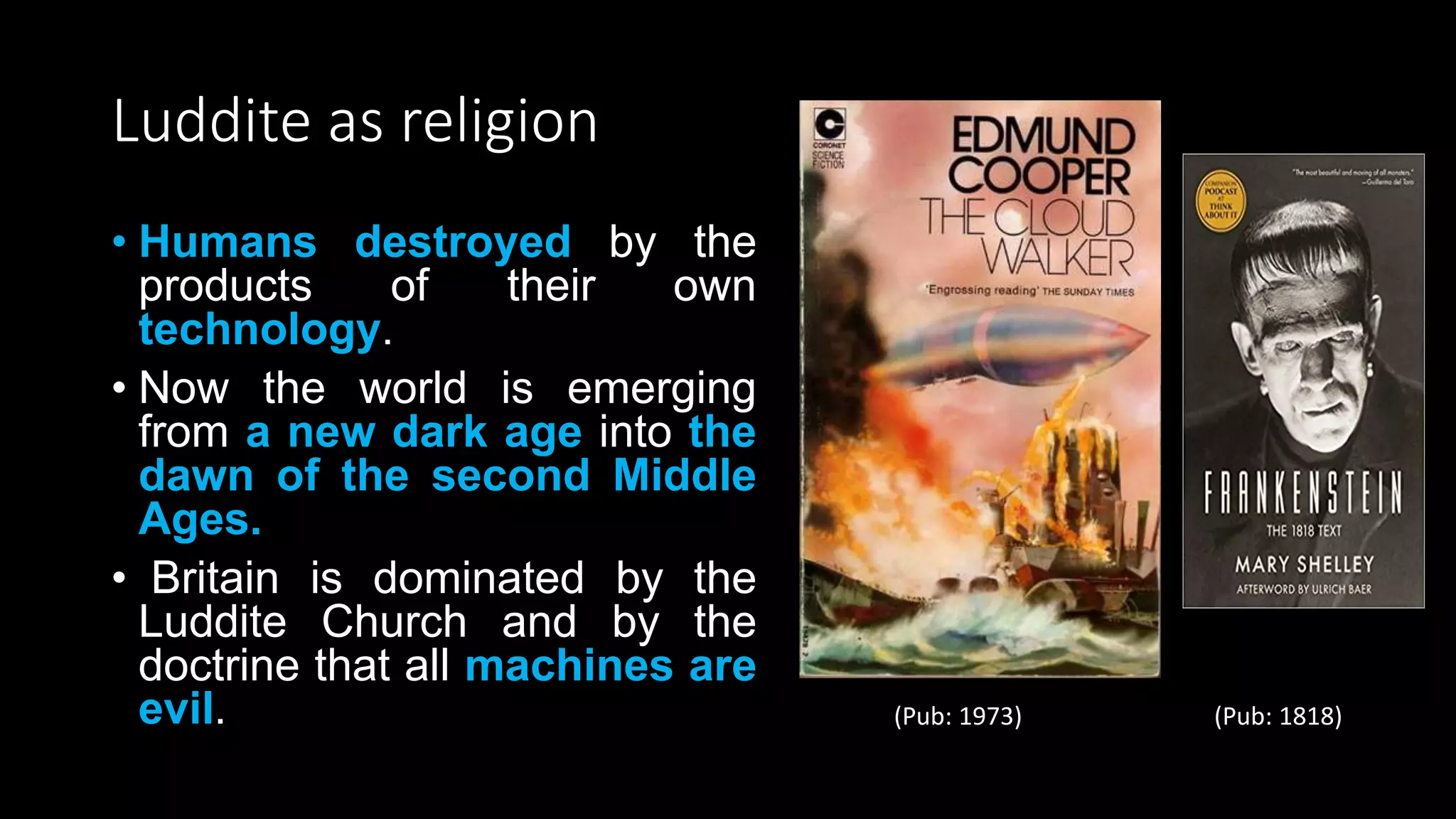
• Humans destroyed by the
products of their own
technology.
• Now the world is emerging
from a new dark age into the
dawn of the second Middle
Ages.
• Britain is dominated by the
Luddite Church and by the
doctrine that all machines are
evil. (Pub: 1973) (Pub: 1818)
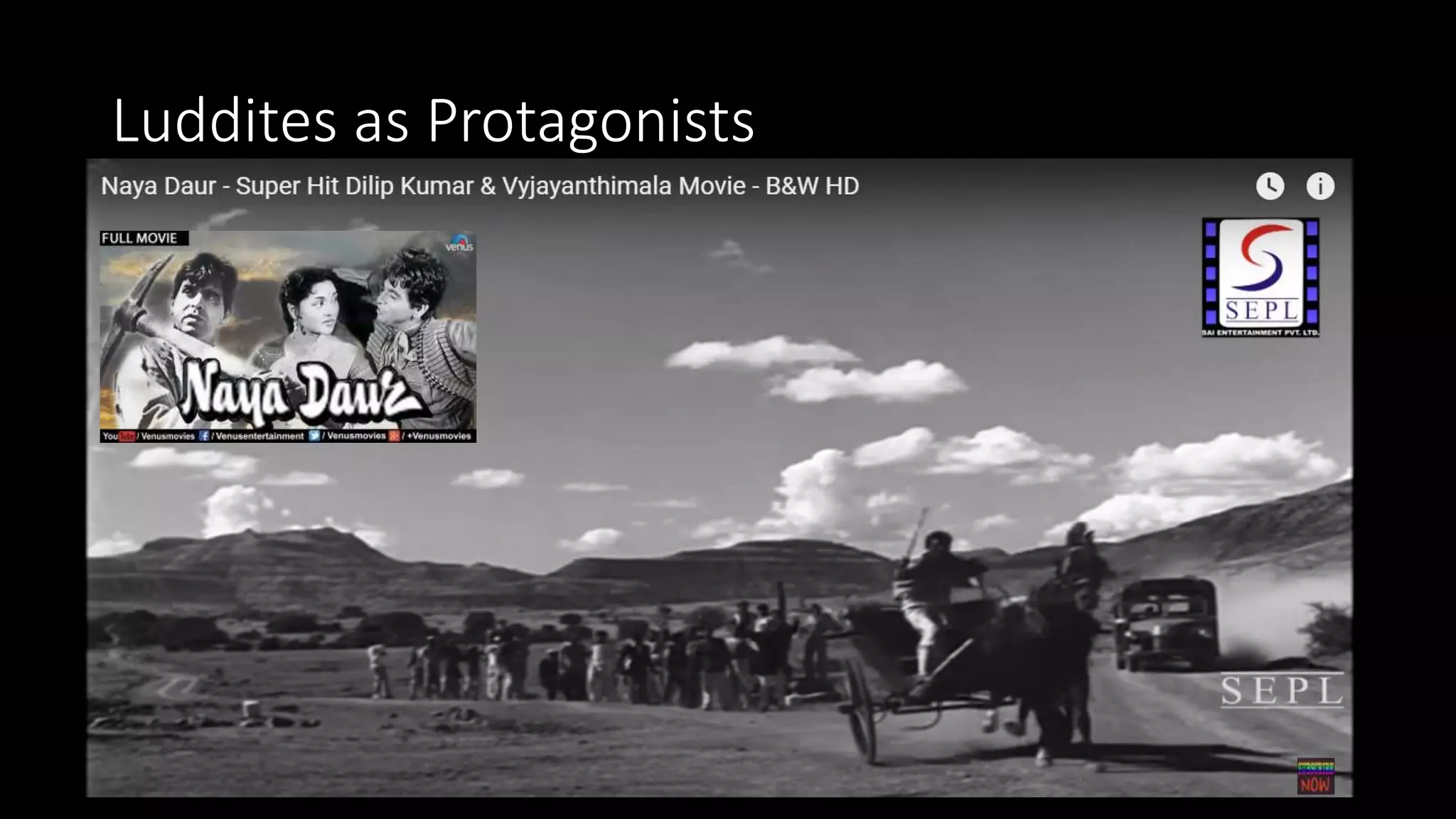
Luddites as Protagonists
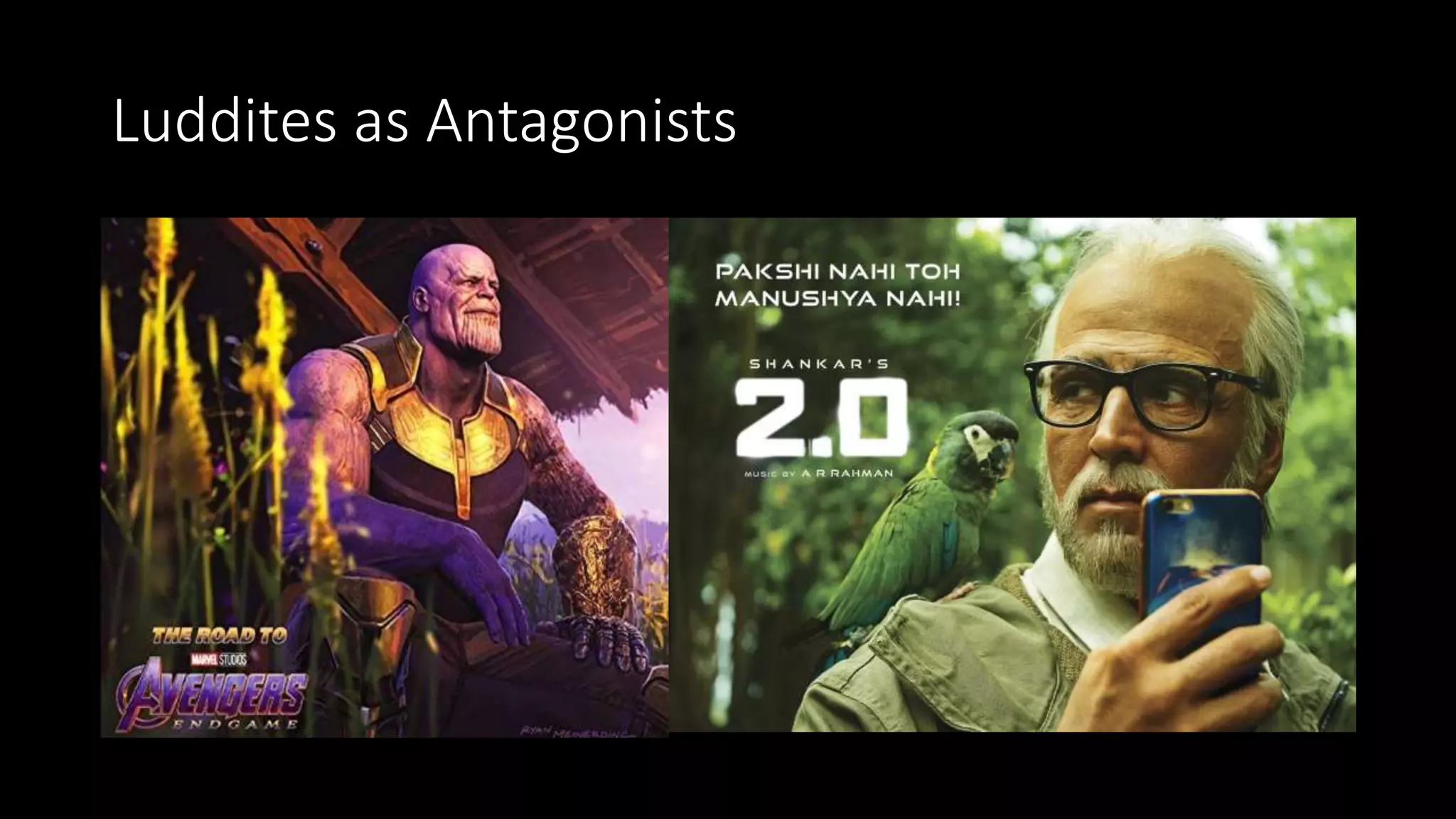
Luddites as Antagonists
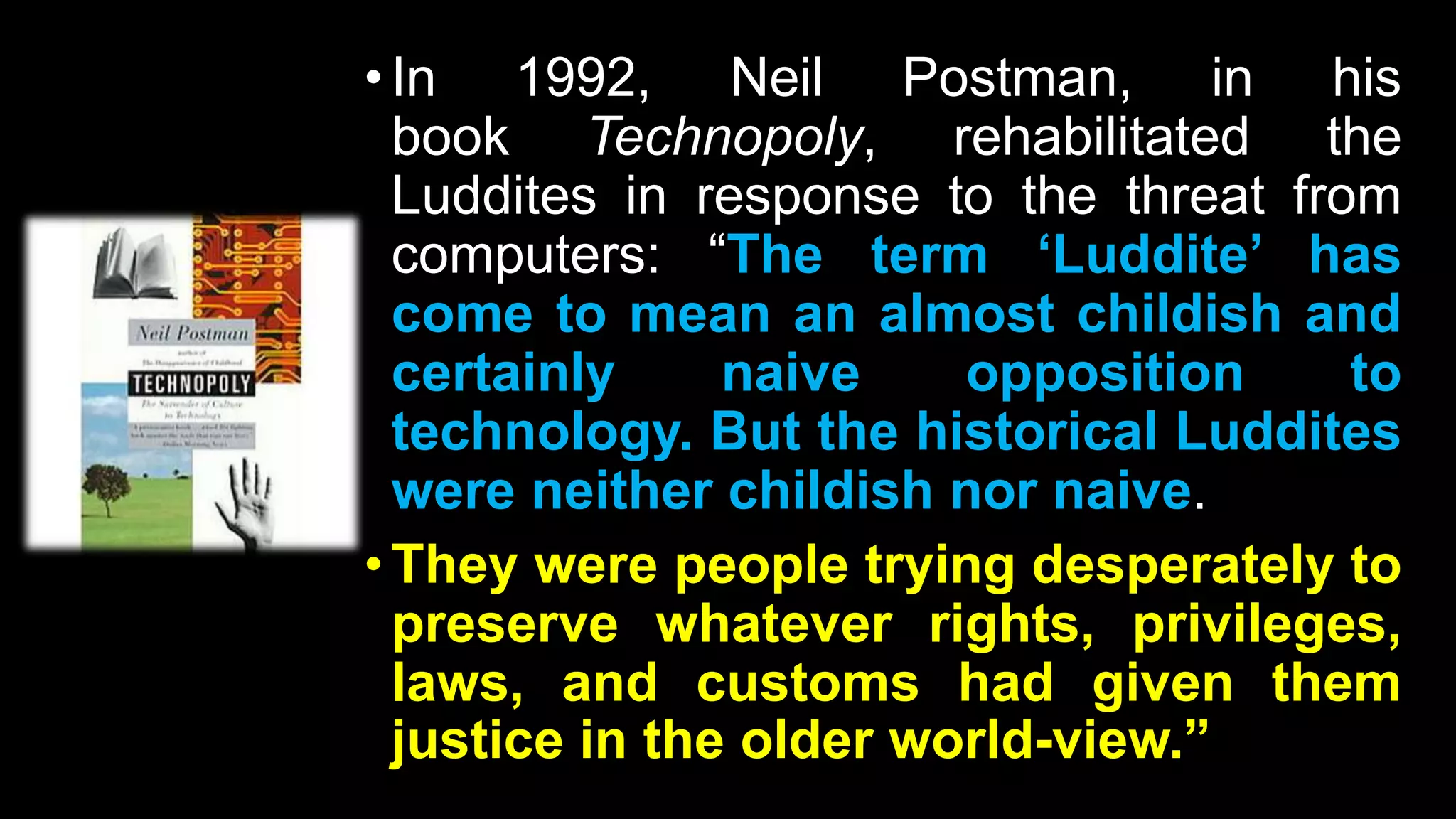
•In 1992, Neil Postman, in his
book Technopoly, rehabilitated the
Luddites in response to the threat from
computers: “The term ‘Luddite’ has
come to mean an almost childish and
certainly naive opposition to
technology. But the historical Luddites
were neither childish nor naive.
•They were people trying desperately to
preserve whatever rights, privileges,
laws, and customs had given them
justice in the older world-view.”
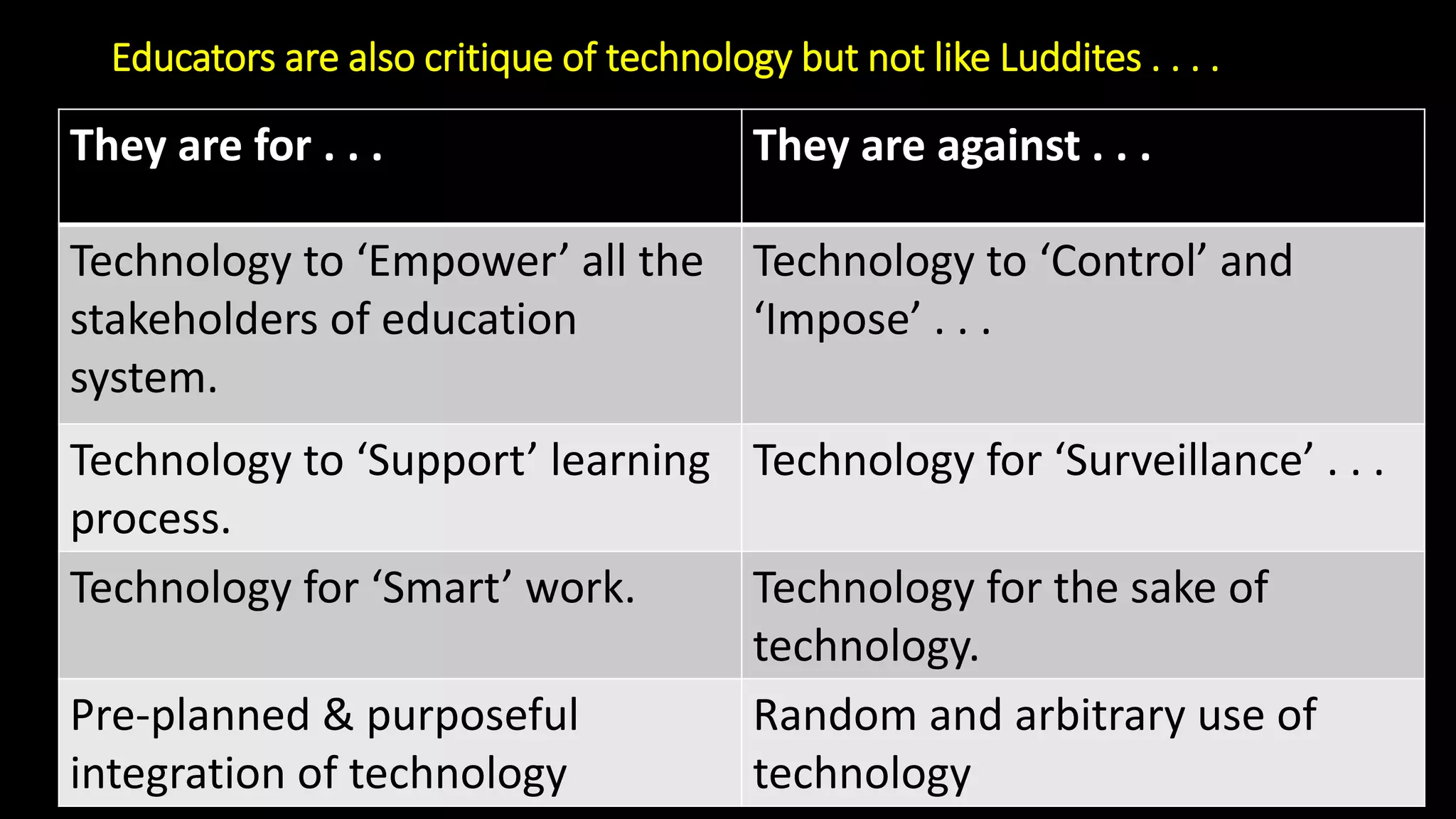
Educators are also critique of technology but not like Luddites . . . .
They are for . . . They are against . . .
Technology to ‘Empower’ all the
stakeholders of education
system.
Technology to ‘Control’ and
‘Impose’ . . .
Technology to ‘Support’ learning
process.
Technology for ‘Surveillance’ . . .
Technology for ‘Smart’ work. Technology for the sake of
technology.
Pre-planned & purposeful
integration of technology
Random and arbitrary use of
technology
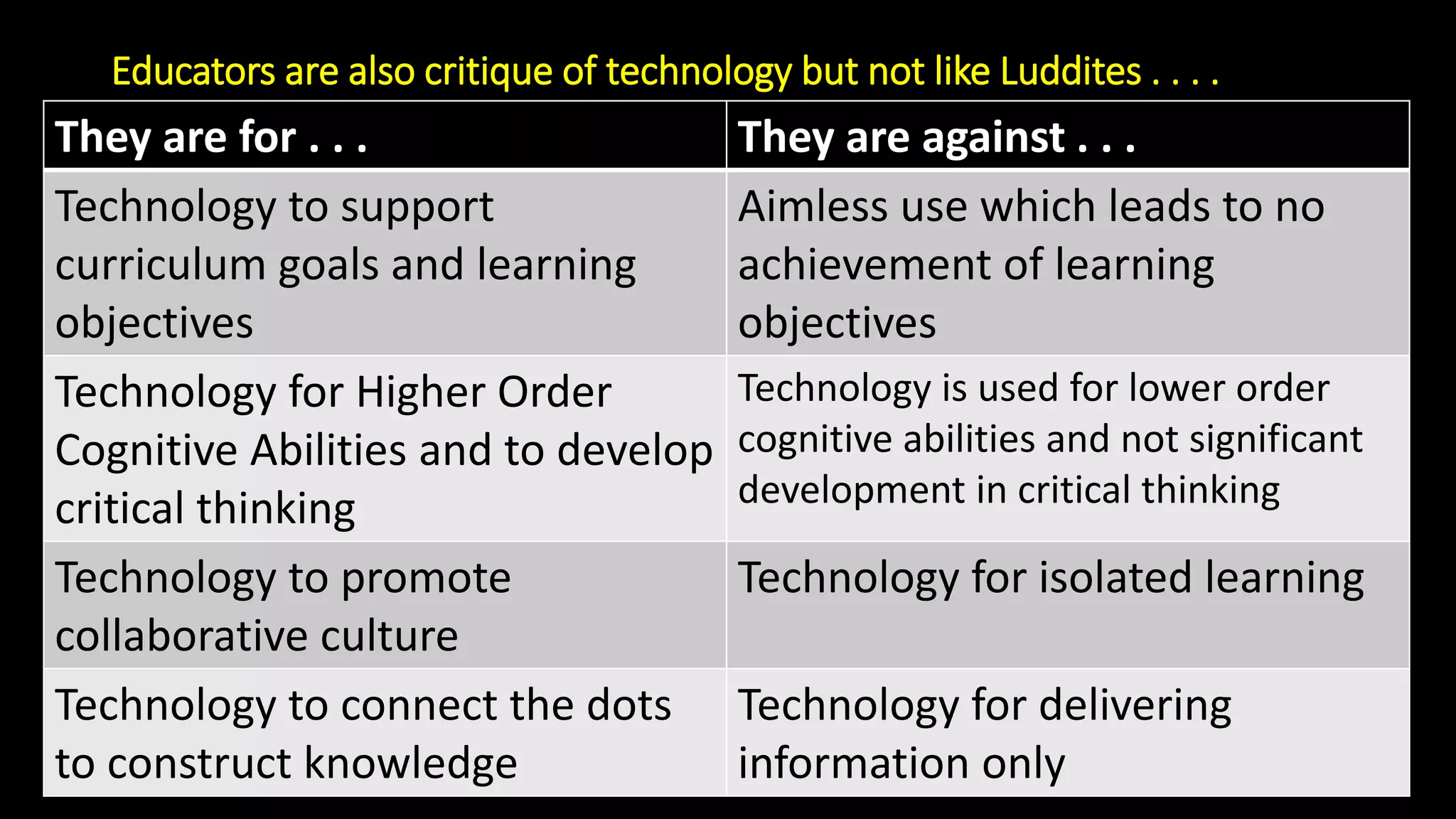
Educators are also critique of technology but not like Luddites . . . .
They are for . . . They are against . . .
Technology to support
curriculum goals and learning
objectives
Aimless use which leads to no
achievement of learning
objectives
Technology for Higher Order
Cognitive Abilities and to develop
critical thinking
Technology is used for lower order
cognitive abilities and not significant
development in critical thinking
Technology to promote
collaborative culture
Technology for isolated learning
Technology to connect the dots
to construct knowledge
Technology for delivering
information only
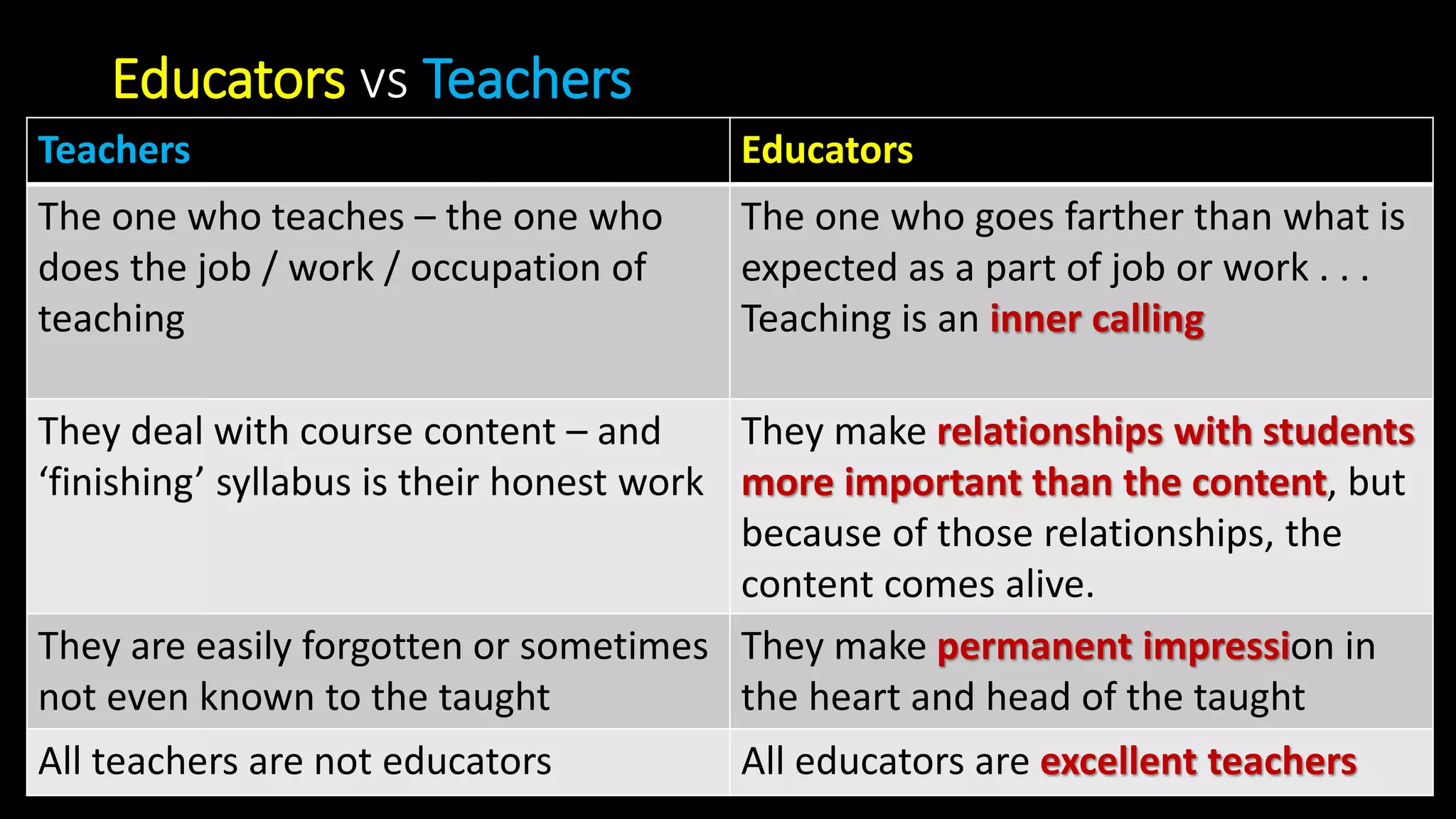
Educators vs Teachers
Teachers Educators
The one who teaches – the one who
does the job / work / occupation of
teaching
The one who goes farther than what is
expected as a part of job or work . . .
Teaching is an inner calling
They deal with course content – and
‘finishing’ syllabus is their honest work
They make relationships with students
more important than the content, but
because of those relationships, the
content comes alive.
They are easily forgotten or sometimes
not even known to the taught
They make permanent impression in
the heart and head of the taught
All teachers are not educators All educators are excellent teachers
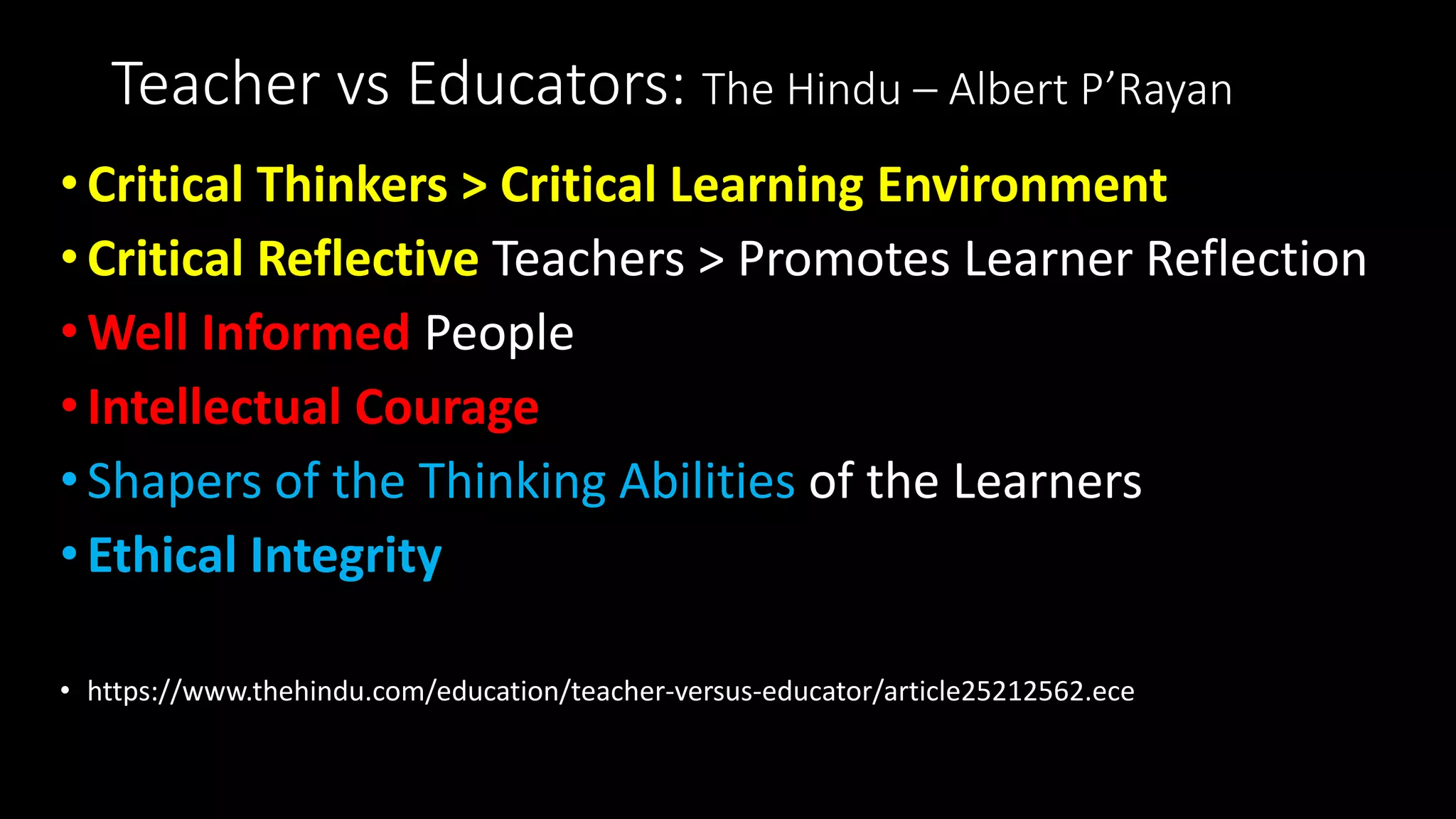
Teacher vs Educators: The Hindu – Albert P’Rayan
•Critical Thinkers > Critical Learning Environment
•Critical Reflective Teachers > Promotes Learner Reflection
•Well Informed People
•Intellectual Courage
•Shapers of the Thinking Abilities of the Learners
•Ethical Integrity
• https://www.thehindu.com/education/teacher-versus-educator/article25212562.ece
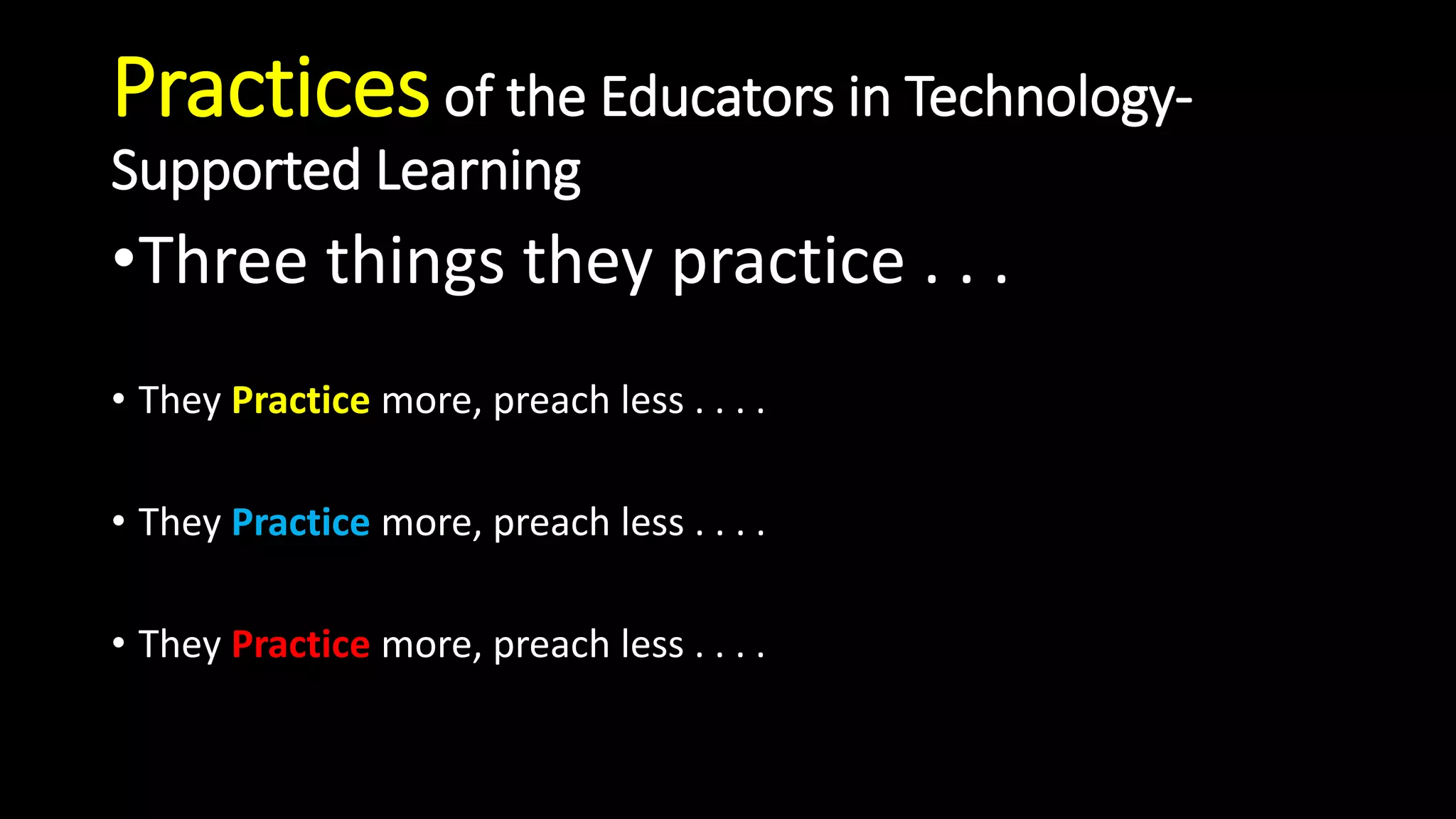
Practicesof the Educators in Technology-
Supported Learning
•Three things they practice . . .
• They Practice more, preach less . . . .
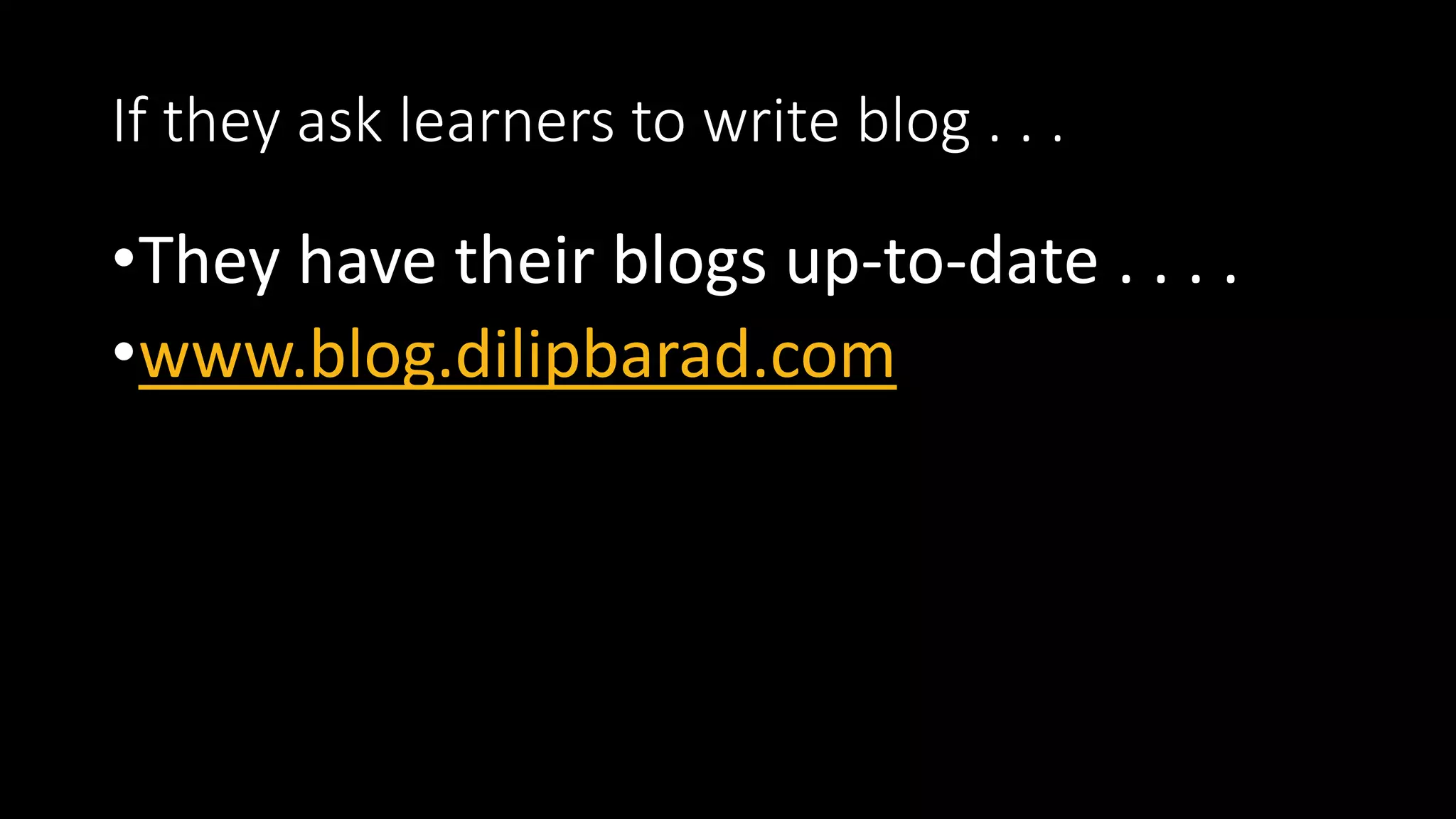
If they ask learners to write blog . . .
•They have their blogs up-to-date . . . .
•www.blog.dilipbarad.com
If they ask learners to have website . . .
• They have their website/s
• www.dilipbarad.com
• www.dilipbarad.com/nmeictproject
• www.dilipbarad.com/webinar
• https://sites.google.com/site/flippedlearninggtu/
• https://sites.google.com/site/dpgaes2016/
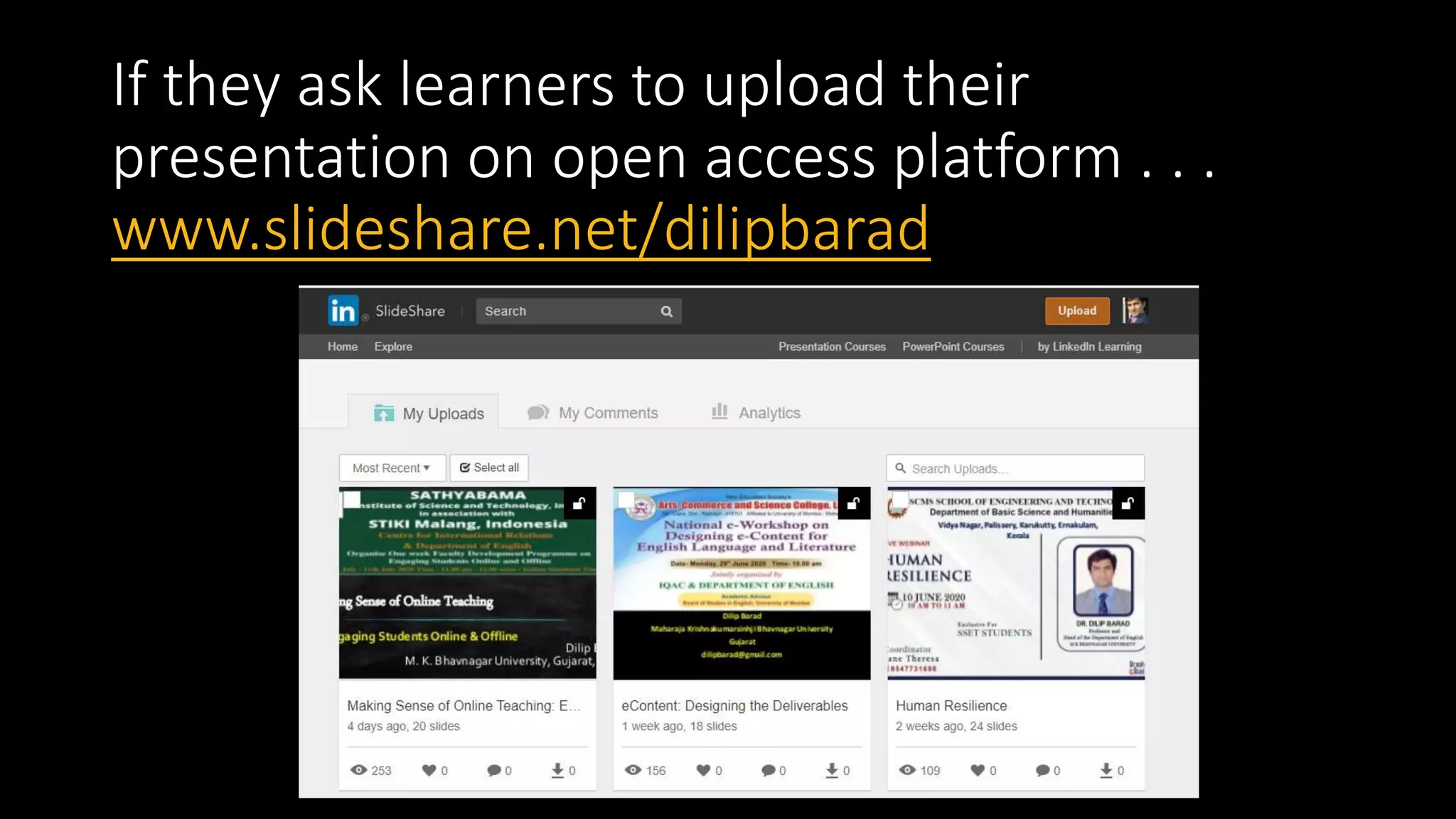
If they ask learners to upload their
presentation on open access platform . . .
www.slideshare.net/dilipbarad
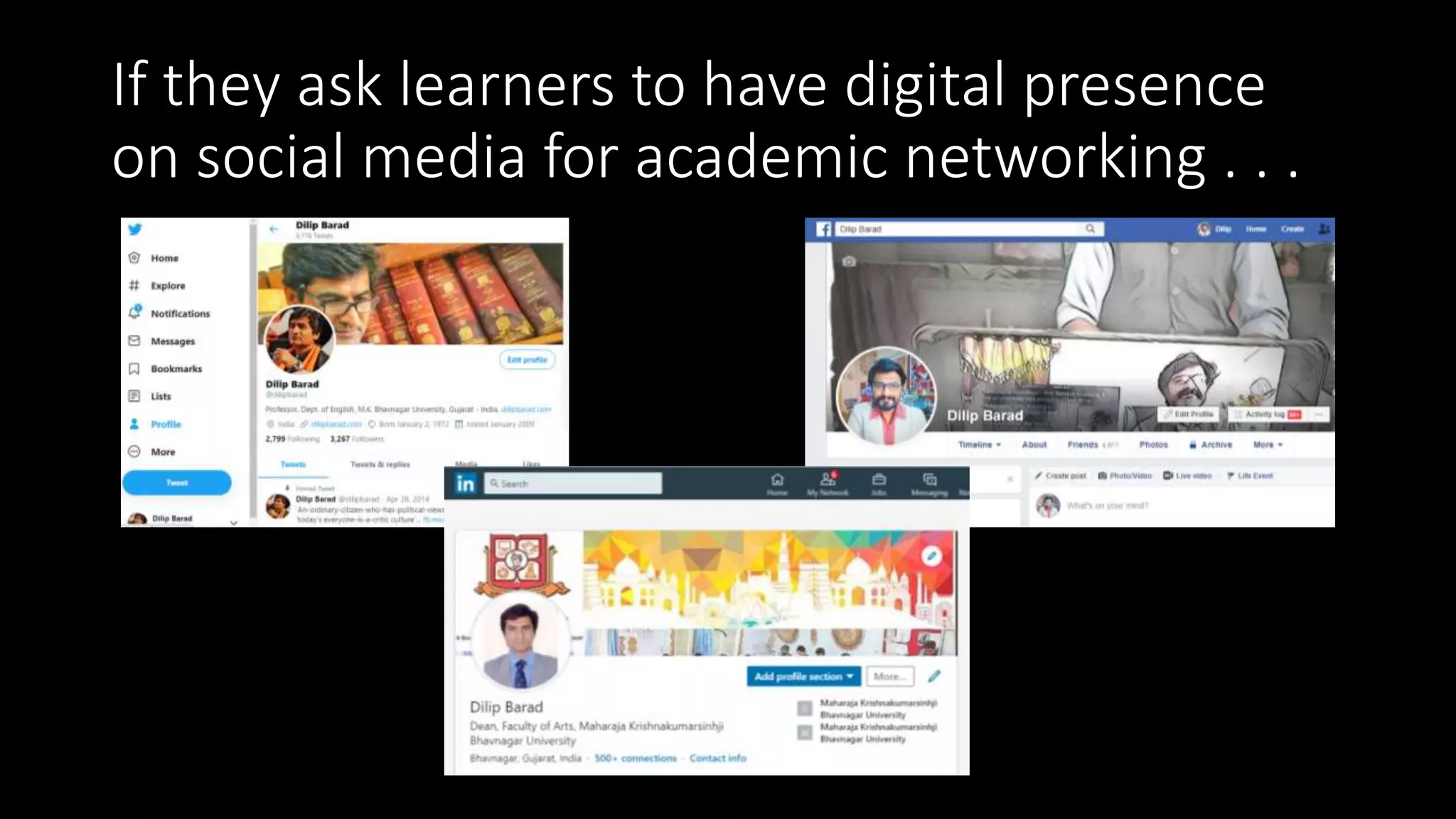
If they ask learners to have digital presence
on social media for academic networking . . .
When they share their views, they give
examples of their practices . . .
Watch video here: https://youtu.be/hWDCS38kxFc
They keep on trying out new ways of
teaching
Watch video here: https://youtu.be/ByPWQSEc-RI
Finally - Search, implement & Share
•Constantly searching for innovative practices shall
be the routine practice . . . .
•Being in the network of practitioners helps a lot . . .
•Put into practice in their teaching environment . . .
•Share their experience . . .
• Thank you
• dpb@mkbhavuni.edu.in

Roles and Practices of Educators in Technology-Supported Learning

  • 1.
    Roles and Practicesof Educators in Technology-Supported Learning Dilip Barad M K Bhavnagar University Gujarat, India
  • 2.
    Luddites Ned Ludd, possibly bornEdward Ludlam,is the person from whom, it is popularly claimed, the Luddites took their name.
  • 3.
    Luddite as religion •Humans destroyed by the products of their own technology. • Now the world is emerging from a new dark age into the dawn of the second Middle Ages. • Britain is dominated by the Luddite Church and by the doctrine that all machines are evil. (Pub: 1973) (Pub: 1818)
  • 4.
  • 5.
  • 6.
    •In 1992, NeilPostman, in his book Technopoly, rehabilitated the Luddites in response to the threat from computers: “The term ‘Luddite’ has come to mean an almost childish and certainly naive opposition to technology. But the historical Luddites were neither childish nor naive. •They were people trying desperately to preserve whatever rights, privileges, laws, and customs had given them justice in the older world-view.”
  • 7.
    Educators are alsocritique of technology but not like Luddites . . . . They are for . . . They are against . . . Technology to ‘Empower’ all the stakeholders of education system. Technology to ‘Control’ and ‘Impose’ . . . Technology to ‘Support’ learning process. Technology for ‘Surveillance’ . . . Technology for ‘Smart’ work. Technology for the sake of technology. Pre-planned & purposeful integration of technology Random and arbitrary use of technology
  • 8.
    Educators are alsocritique of technology but not like Luddites . . . . They are for . . . They are against . . . Technology to support curriculum goals and learning objectives Aimless use which leads to no achievement of learning objectives Technology for Higher Order Cognitive Abilities and to develop critical thinking Technology is used for lower order cognitive abilities and not significant development in critical thinking Technology to promote collaborative culture Technology for isolated learning Technology to connect the dots to construct knowledge Technology for delivering information only
  • 9.
    Educators vs Teachers TeachersEducators The one who teaches – the one who does the job / work / occupation of teaching The one who goes farther than what is expected as a part of job or work . . . Teaching is an inner calling They deal with course content – and ‘finishing’ syllabus is their honest work They make relationships with students more important than the content, but because of those relationships, the content comes alive. They are easily forgotten or sometimes not even known to the taught They make permanent impression in the heart and head of the taught All teachers are not educators All educators are excellent teachers
  • 10.
    Teacher vs Educators:The Hindu – Albert P’Rayan •Critical Thinkers > Critical Learning Environment •Critical Reflective Teachers > Promotes Learner Reflection •Well Informed People •Intellectual Courage •Shapers of the Thinking Abilities of the Learners •Ethical Integrity • https://www.thehindu.com/education/teacher-versus-educator/article25212562.ece
  • 11.
    Practicesof the Educatorsin Technology- Supported Learning •Three things they practice . . . • They Practice more, preach less . . . . • They Practice more, preach less . . . . • They Practice more, preach less . . . .
  • 12.
    If they asklearners to write blog . . . •They have their blogs up-to-date . . . . •www.blog.dilipbarad.com
  • 13.
    If they asklearners to have website . . . • They have their website/s • www.dilipbarad.com • www.dilipbarad.com/nmeictproject • www.dilipbarad.com/webinar • https://sites.google.com/site/flippedlearninggtu/ • https://sites.google.com/site/dpgaes2016/
  • 14.
    If they asklearners to upload their presentation on open access platform . . . www.slideshare.net/dilipbarad
  • 15.
    If they asklearners to have digital presence on social media for academic networking . . .
  • 16.
    When they sharetheir views, they give examples of their practices . . . Watch video here: https://youtu.be/hWDCS38kxFc
  • 17.
    They keep ontrying out new ways of teaching Watch video here: https://youtu.be/ByPWQSEc-RI
  • 18.
    Finally - Search,implement & Share •Constantly searching for innovative practices shall be the routine practice . . . . •Being in the network of practitioners helps a lot . . . •Put into practice in their teaching environment . . . •Share their experience . . . • Thank you • dpb@mkbhavuni.edu.in

Editor's Notes

  • #3 By Chris Sunde; original uploader was Christopher Sunde at en.wikipedia. - Original unknown, this version from http://www.learnhistory.org.uk/cpp/luddites.htm (archive), Public Domain, https://commons.wikimedia.org/w/index.php?curid=4150391