THE MIDDLE AGES. THE ISLAMIC EMPIRE
María Jesús Campos
learningfromhistory.wikispaces.com
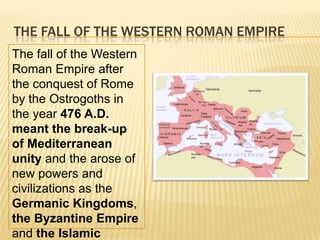
THE FALL OF THE WESTERN ROMAN EMPIRE
The fall of the Western
Roman Empire after
the conquest of Rome
by the Ostrogoths in
the year 476 A.D.
meant the break-up
of Mediterranean
unity and the arose of
new powers and
civilizations as the
Germanic Kingdoms,
the Byzantine Empire
and the Islamic
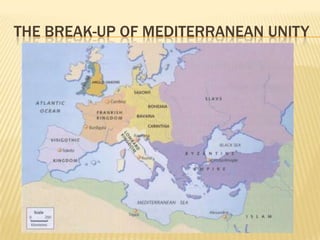
THE BREAK-UP OF MEDITERRANEAN UNITY
THE ORIGINS OF ISLAM
 For centuries,
nomadic Arabs had
lived on the Arabian
peninsula. They lived
in tribes that were
often in conflict with
each other.
 They considered the
city of Mecca as their
holy city although
they had different
religions
(christianism,
judaism, animism…)
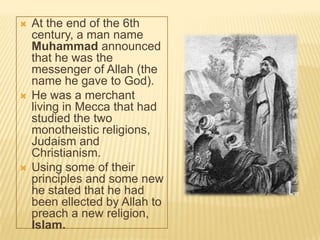
 At the end of the 6th
century, a man name
Muhammad announced
that he was the
messenger of Allah (the
name he gave to God).
 He was a merchant
living in Mecca that had
studied the two
monotheistic religions,
Judaism and
Christianism.
 Using some of their
principles and some new
he stated that he had
been ellected by Allah to
preach a new religion,
Islam.
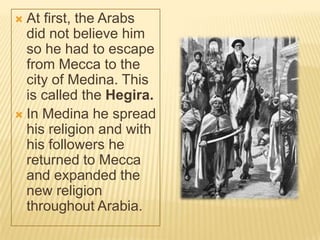
 At first, the Arabs
did not believe him
so he had to escape
from Mecca to the
city of Medina. This
is called the Hegira.
 In Medina he spread
his religion and with
his followers he
returned to Mecca
and expanded the
new religion
throughout Arabia.
ISLAM
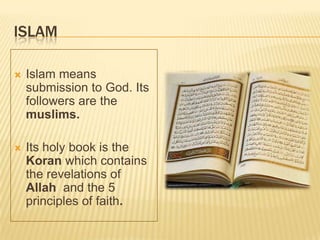
 Islam means
submission to God. Its
followers are the
muslims.
 Its holy book is the
Koran which contains
the revelations of
Allah and the 5
principles of faith.
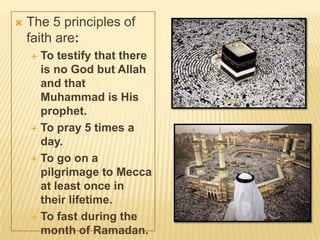
 The 5 principles of
faith are:
 To testify that there
is no God but Allah
and that
Muhammad is His
prophet.
 To pray 5 times a
day.
 To go on a
pilgrimage to Mecca
at least once in
their lifetime.
 To fast during the
month of Ramadan.
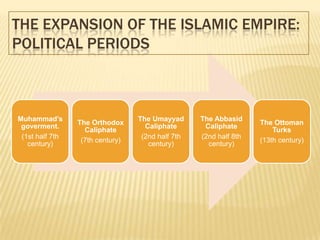
Muhammad’s
goverment.
(1st half 7th
century)
The Orthodox
Caliphate
(7th century)
The Umayyad
Caliphate
(2nd half 7th
century)
The Abbasid
Caliphate
(2nd half 8th
century)
The Ottoman
Turks
(13th century)
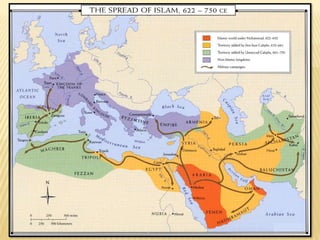
THE EXPANSION OF THE ISLAMIC EMPIRE:
POLITICAL PERIODS
MUHAMMAD’S GOVERNMENT (1ST HALF 7TH CENTURY)
 Muhammad became the religious and political leader of
the muslims.
 Following the idea of holy war, the muslims began to
conquer territories.
ORTHODOX CALIPHATE
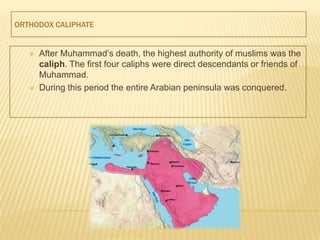
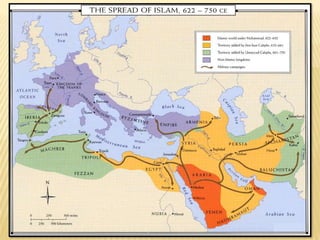
 After Muhammad’s death, the highest authority of muslims was the
caliph. The first four caliphs were direct descendants or friends of
Muhammad.
 During this period the entire Arabian peninsula was conquered.
UMAYYAD CALIPHATE
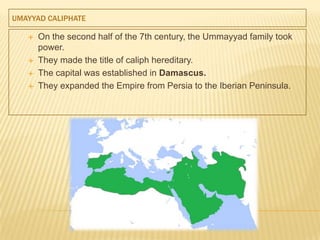
 On the second half of the 7th century, the Ummayyad family took
power.
 They made the title of caliph hereditary.
 The capital was established in Damascus.
 They expanded the Empire from Persia to the Iberian Peninsula.
ABBASID CALIPHATE
 On the second half of the 8th century, the Abbasid family took
power.
 The capital was established in Baghdad.
 Some territories, like the ones in the Iberian Peninsula, became
independent.
OTTOMAN TURKS
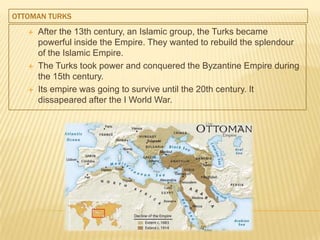
 After the 13th century, an Islamic group, the Turks became
powerful inside the Empire. They wanted to rebuild the splendour
of the Islamic Empire.
 The Turks took power and conquered the Byzantine Empire during
the 15th century.
 Its empire was going to survive until the 20th century. It
dissapeared after the I World War.
ISLAMIC ECONOMY AND CULTURE
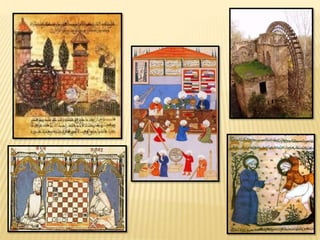
 The islamic civilization
was based on urban
life. Cities such as
Damascus, Baghdad or
Cordoba were very
important.
 This was possible
thanks to a developed
trade, a rich agriculture
and an impressive
craftsmanship.
 Muslims travelled by land
and sea buying spices in
Asia and gold, ivory and
slaves in Africa and
selling them in Europe.
 Those travels allowed
them to know and spread
inventions such as
gunpowder, the compass,
the zero number and
medical knowledge.
ISLAMIC ART
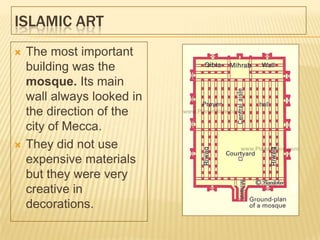
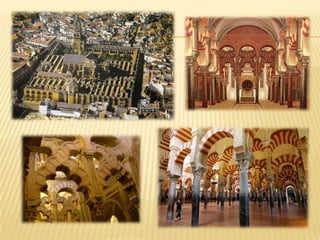
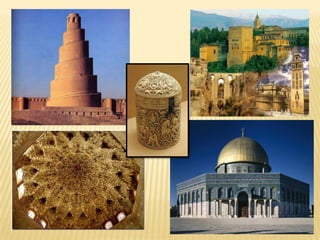
 The most important
building was the
mosque. Its main
wall always looked in
the direction of the
city of Mecca.
 They did not use
expensive materials
but they were very
creative in
decorations.
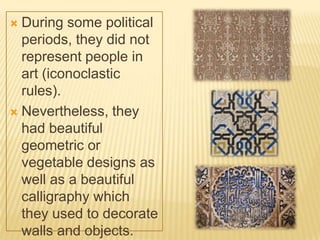
 During some political
periods, they did not
represent people in
art (iconoclastic
rules).
 Nevertheless, they
had beautiful
geometric or
vegetable designs as
well as a beautiful
calligraphy which
they used to decorate
walls and objects.
Developed by María Jesús Campos
Chusteacher
wikiteacher

The Middle Ages. The Islamic Empire

  • 1.
    THE MIDDLE AGES.THE ISLAMIC EMPIRE María Jesús Campos learningfromhistory.wikispaces.com
  • 2.
    THE FALL OFTHE WESTERN ROMAN EMPIRE The fall of the Western Roman Empire after the conquest of Rome by the Ostrogoths in the year 476 A.D. meant the break-up of Mediterranean unity and the arose of new powers and civilizations as the Germanic Kingdoms, the Byzantine Empire and the Islamic
  • 3.
    THE BREAK-UP OFMEDITERRANEAN UNITY
  • 4.
    THE ORIGINS OFISLAM  For centuries, nomadic Arabs had lived on the Arabian peninsula. They lived in tribes that were often in conflict with each other.  They considered the city of Mecca as their holy city although they had different religions (christianism, judaism, animism…)
  • 5.
     At theend of the 6th century, a man name Muhammad announced that he was the messenger of Allah (the name he gave to God).  He was a merchant living in Mecca that had studied the two monotheistic religions, Judaism and Christianism.  Using some of their principles and some new he stated that he had been ellected by Allah to preach a new religion, Islam.
  • 6.
     At first,the Arabs did not believe him so he had to escape from Mecca to the city of Medina. This is called the Hegira.  In Medina he spread his religion and with his followers he returned to Mecca and expanded the new religion throughout Arabia.
  • 7.
    ISLAM  Islam means submissionto God. Its followers are the muslims.  Its holy book is the Koran which contains the revelations of Allah and the 5 principles of faith.
  • 8.
     The 5principles of faith are:  To testify that there is no God but Allah and that Muhammad is His prophet.  To pray 5 times a day.  To go on a pilgrimage to Mecca at least once in their lifetime.  To fast during the month of Ramadan.
  • 9.
    Muhammad’s goverment. (1st half 7th century) TheOrthodox Caliphate (7th century) The Umayyad Caliphate (2nd half 7th century) The Abbasid Caliphate (2nd half 8th century) The Ottoman Turks (13th century) THE EXPANSION OF THE ISLAMIC EMPIRE: POLITICAL PERIODS
  • 11.
    MUHAMMAD’S GOVERNMENT (1STHALF 7TH CENTURY)  Muhammad became the religious and political leader of the muslims.  Following the idea of holy war, the muslims began to conquer territories.
  • 12.
    ORTHODOX CALIPHATE  AfterMuhammad’s death, the highest authority of muslims was the caliph. The first four caliphs were direct descendants or friends of Muhammad.  During this period the entire Arabian peninsula was conquered.
  • 13.
    UMAYYAD CALIPHATE  Onthe second half of the 7th century, the Ummayyad family took power.  They made the title of caliph hereditary.  The capital was established in Damascus.  They expanded the Empire from Persia to the Iberian Peninsula.
  • 14.
    ABBASID CALIPHATE  Onthe second half of the 8th century, the Abbasid family took power.  The capital was established in Baghdad.  Some territories, like the ones in the Iberian Peninsula, became independent.
  • 15.
    OTTOMAN TURKS  Afterthe 13th century, an Islamic group, the Turks became powerful inside the Empire. They wanted to rebuild the splendour of the Islamic Empire.  The Turks took power and conquered the Byzantine Empire during the 15th century.  Its empire was going to survive until the 20th century. It dissapeared after the I World War.
  • 17.
    ISLAMIC ECONOMY ANDCULTURE  The islamic civilization was based on urban life. Cities such as Damascus, Baghdad or Cordoba were very important.  This was possible thanks to a developed trade, a rich agriculture and an impressive craftsmanship.  Muslims travelled by land and sea buying spices in Asia and gold, ivory and slaves in Africa and selling them in Europe.  Those travels allowed them to know and spread inventions such as gunpowder, the compass, the zero number and medical knowledge.
  • 19.
    ISLAMIC ART  Themost important building was the mosque. Its main wall always looked in the direction of the city of Mecca.  They did not use expensive materials but they were very creative in decorations.
  • 21.
     During somepolitical periods, they did not represent people in art (iconoclastic rules).  Nevertheless, they had beautiful geometric or vegetable designs as well as a beautiful calligraphy which they used to decorate walls and objects.
  • 23.
    Developed by MaríaJesús Campos Chusteacher wikiteacher