
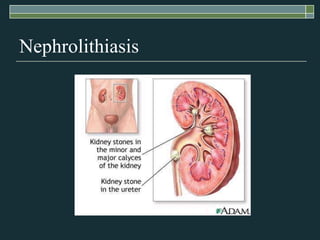
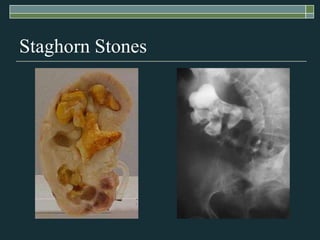
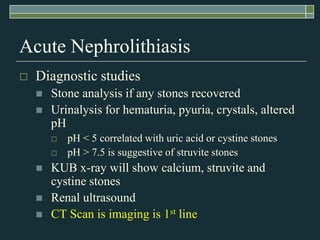
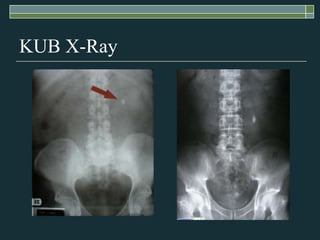
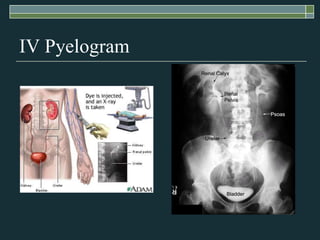
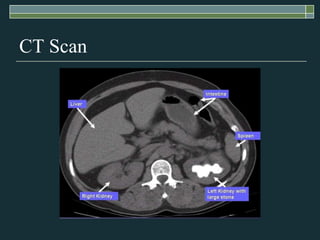
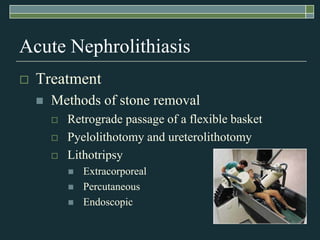
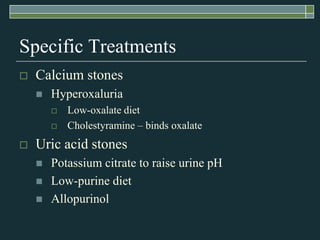
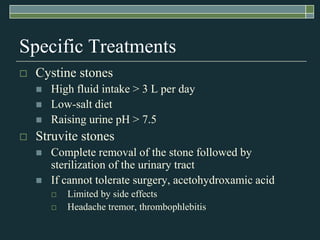

Nephrolithiasis, or kidney stones, are common in the United States, affecting around 13% of men and 7% of women. They are formed from substances like calcium, uric acid, cystine, and struvite. Risk factors include gout, UTIs, family history, certain medications, and diet. Symptoms include flank pain, hematuria, and urinary symptoms. Diagnosis involves urinalysis, imaging like ultrasound or CT. Treatment depends on the stone composition but may include increased fluid intake, diet changes, medications, or surgical removal procedures like lithotripsy. Without treatment, stones less than 5mm often pass spontaneously but larger stones usually require removal to prevent reoccurrence or complications


