The document discusses several key aspects of leadership during times of crisis:
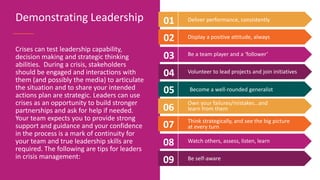
- The roles and responsibilities of business leaders change dramatically during a crisis, as they must make rapid decisions around cost control and liquidity rather than innovation and growth.
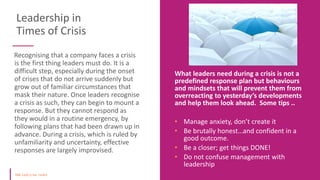
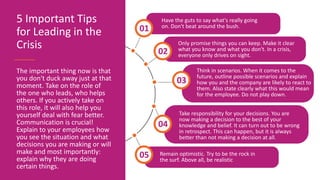
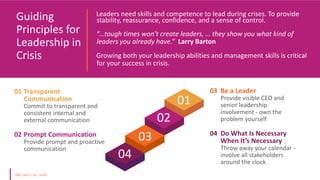
- Effective crisis leadership requires behaviors like managing anxiety instead of creating it, being brutally honest while maintaining confidence in a good outcome, and prioritizing getting things done.
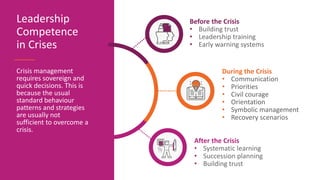
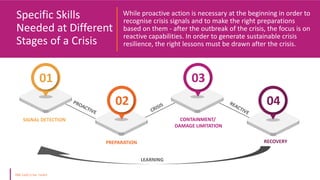
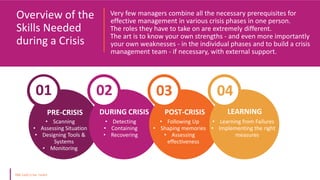
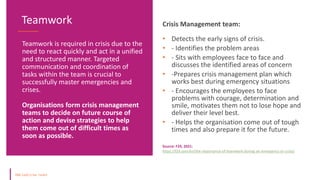
- Leaders need a variety of skills that change depending on the crisis stage, from signal detection and preparation beforehand, to containment and recovery during/after. Building a crisis management team with diverse strengths is important.
- Communication, taking responsibility, thinking through scenarios, and maintaining optimism while being realistic are some