Monday, September 02, 2013

JTBD

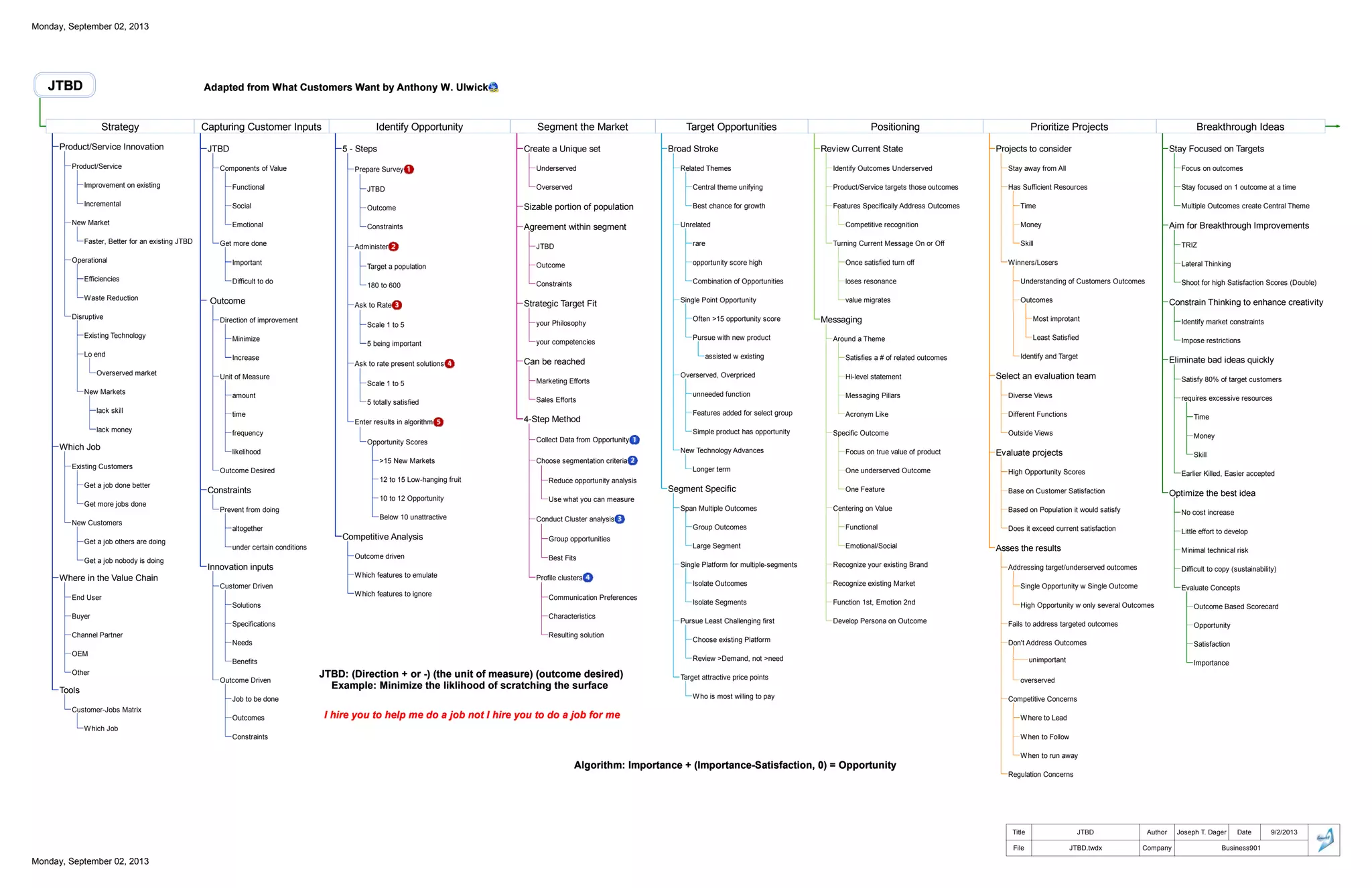
Adapted from What Customers Want by Anthony W. Ulwick

Strategy
Product/Service Innovation
Product/Service

Capturing Customer Inputs
JTBD

Identify Opportunity
5 - Steps

Components of Value

Segment the Market
Create a Unique set

Prepare Survey

Underserved

Functional

JTBD

Incremental

Social

Outcome

Sizable portion of population

Emotional

Constraints

Agreement within segment

Faster, Better for an existing JTBD
Operational
Efficiencies
Waste Reduction
Disruptive
Existing Technology
Lo end
Overserved market

Get more done
Important
Difficult to do

Outcome
Direction of improvement
Minimize
Increase

Which Job
Existing Customers
Get a job done better
Get more jobs done
New Customers
Get a job others are doing
Get a job nobody is doing

Focus on outcomes

Product/Service targets those outcomes

Has Sufficient Resources

Stay focused on 1 outcome at a time

Best chance for growth

Features Specifically Address Outcomes

Unrelated

Competitive recognition

Money

loses resonance

Understanding of Customers Outcomes

value migrates

Outcomes

Scale 1 to 5
5 being important
Ask to rate present solutions

Strategic Target Fit
your Philosophy
your competencies

Can be reached
Marketing Efforts
Sales Efforts

4-Step Method

Single Point Opportunity
Often >15 opportunity score
Pursue with new product
assisted w existing
Overserved, Overpriced

Select an evaluation team

Different Functions

Time

Outside Views

Money

Specific Outcome
Focus on true value of product

Evaluate projects

One underserved Outcome

High Opportunity Scores

One Feature

Base on Customer Satisfaction

Centering on Value

Group Outcomes

Functional

Large Segment

Earlier Killed, Easier accepted

Optimize the best idea

Emotional/Social

Based on Population it would satisfy

No cost increase

Does it exceed current satisfaction

Little effort to develop

Asses the results

Minimal technical risk

Best Fits
Single Platform for multiple-segments
Profile clusters

Customer Driven
Communication Preferences

Solutions
Characteristics
Specifications
Resulting solution

Recognize your existing Brand

Addressing target/underserved outcomes

Recognize existing Market

Single Opportunity w Single Outcome

Isolate Segments

Function 1st, Emotion 2nd

High Opportunity w only several Outcomes

Pursue Least Challenging first

Benefits

Develop Persona on Outcome

Choose existing Platform

Target attractive price points
W ho is most willing to pay

Job to be done

I hire you to help me do a job not I hire you to do a job for me

Evaluate Concepts
Outcome Based Scorecard

Fails to address targeted outcomes

Opportunity

Don't Address Outcomes

Satisfaction

unimportant

Importance

Review >Demand, not >need

JTBD: (Direction + or -) (the unit of measure) (outcome desired)
Example: Minimize the liklihood of scratching the surface

Difficult to copy (sustainability)

Isolate Outcomes

Needs
OEM

Outcomes

Skill

Group opportunities

Innovation inputs

Customer-Jobs Matrix

requires excessive resources

Conduct Cluster analysis

under certain conditions

Outcome Driven

Satisfy 80% of target customers

Use what you can measure

altogether

W hich features to ignore

Eliminate bad ideas quickly

Reduce opportunity analysis

Prevent from doing

W hich features to emulate

Identify and Target

Acronym Like

Span Multiple Outcomes

Outcome driven

Impose restrictions

Features added for select group

Segment Specific

Competitive Analysis

Identify market constraints

Least Satisfied

Choose segmentation criteria

Constraints
Below 10 unattractive

Constrain Thinking to enhance creativity

Diverse Views

Longer term

10 to 12 Opportunity

Shoot for high Satisfaction Scores (Double)

Most improtant

Around a Theme

Hi-level statement

Lateral Thinking

Collect Data from Opportunity

Outcome Desired
12 to 15 Low-hanging fruit

W inners/Losers

Messaging

Satisfies a # of related outcomes

TRIZ

Messaging Pillars

New Technology Advances
>15 New Markets

Skill

unneeded function

Simple product has opportunity

likelihood

Tools

Aim for Breakthrough Improvements

Combination of Opportunities

Opportunity Scores

Other

Multiple Outcomes create Central Theme

Constraints

Ask to Rate

Turning Current Message On or Off

Time

180 to 600

frequency

Channel Partner

Stay away from All

Once satisfied turn off

time

Buyer

Identify Outcomes Underserved

opportunity score high

amount

End User

Stay Focused on Targets

Outcome

Unit of Measure

Where in the Value Chain

Projects to consider

Target a population

Enter results in algorithm
lack money

Breakthrough Ideas

rare

5 totally satisfied
lack skill

Overserved

Related Themes

Review Current State

Prioritize Projects

JTBD

Administer

Scale 1 to 5
New Markets

Broad Stroke

Positioning

Central theme unifying

Improvement on existing

New Market

Target Opportunities

overserved
Competitive Concerns
W here to Lead

W hich Job
W hen to Follow

Constraints

W hen to run away

Algorithm: Importance + (Importance-Satisfaction, 0) = Opportunity
Regulation Concerns

Title

Monday, September 02, 2013

JTBD

Author

File

JTBD.twdx

Company

Joseph T. Dager

Date

Business901

9/2/2013

Jobs to Be Done Mind Map

  • 1.
    Monday, September 02,2013 JTBD Adapted from What Customers Want by Anthony W. Ulwick Strategy Product/Service Innovation Product/Service Capturing Customer Inputs JTBD Identify Opportunity 5 - Steps Components of Value Segment the Market Create a Unique set Prepare Survey Underserved Functional JTBD Incremental Social Outcome Sizable portion of population Emotional Constraints Agreement within segment Faster, Better for an existing JTBD Operational Efficiencies Waste Reduction Disruptive Existing Technology Lo end Overserved market Get more done Important Difficult to do Outcome Direction of improvement Minimize Increase Which Job Existing Customers Get a job done better Get more jobs done New Customers Get a job others are doing Get a job nobody is doing Focus on outcomes Product/Service targets those outcomes Has Sufficient Resources Stay focused on 1 outcome at a time Best chance for growth Features Specifically Address Outcomes Unrelated Competitive recognition Money loses resonance Understanding of Customers Outcomes value migrates Outcomes Scale 1 to 5 5 being important Ask to rate present solutions Strategic Target Fit your Philosophy your competencies Can be reached Marketing Efforts Sales Efforts 4-Step Method Single Point Opportunity Often >15 opportunity score Pursue with new product assisted w existing Overserved, Overpriced Select an evaluation team Different Functions Time Outside Views Money Specific Outcome Focus on true value of product Evaluate projects One underserved Outcome High Opportunity Scores One Feature Base on Customer Satisfaction Centering on Value Group Outcomes Functional Large Segment Earlier Killed, Easier accepted Optimize the best idea Emotional/Social Based on Population it would satisfy No cost increase Does it exceed current satisfaction Little effort to develop Asses the results Minimal technical risk Best Fits Single Platform for multiple-segments Profile clusters Customer Driven Communication Preferences Solutions Characteristics Specifications Resulting solution Recognize your existing Brand Addressing target/underserved outcomes Recognize existing Market Single Opportunity w Single Outcome Isolate Segments Function 1st, Emotion 2nd High Opportunity w only several Outcomes Pursue Least Challenging first Benefits Develop Persona on Outcome Choose existing Platform Target attractive price points W ho is most willing to pay Job to be done I hire you to help me do a job not I hire you to do a job for me Evaluate Concepts Outcome Based Scorecard Fails to address targeted outcomes Opportunity Don't Address Outcomes Satisfaction unimportant Importance Review >Demand, not >need JTBD: (Direction + or -) (the unit of measure) (outcome desired) Example: Minimize the liklihood of scratching the surface Difficult to copy (sustainability) Isolate Outcomes Needs OEM Outcomes Skill Group opportunities Innovation inputs Customer-Jobs Matrix requires excessive resources Conduct Cluster analysis under certain conditions Outcome Driven Satisfy 80% of target customers Use what you can measure altogether W hich features to ignore Eliminate bad ideas quickly Reduce opportunity analysis Prevent from doing W hich features to emulate Identify and Target Acronym Like Span Multiple Outcomes Outcome driven Impose restrictions Features added for select group Segment Specific Competitive Analysis Identify market constraints Least Satisfied Choose segmentation criteria Constraints Below 10 unattractive Constrain Thinking to enhance creativity Diverse Views Longer term 10 to 12 Opportunity Shoot for high Satisfaction Scores (Double) Most improtant Around a Theme Hi-level statement Lateral Thinking Collect Data from Opportunity Outcome Desired 12 to 15 Low-hanging fruit W inners/Losers Messaging Satisfies a # of related outcomes TRIZ Messaging Pillars New Technology Advances >15 New Markets Skill unneeded function Simple product has opportunity likelihood Tools Aim for Breakthrough Improvements Combination of Opportunities Opportunity Scores Other Multiple Outcomes create Central Theme Constraints Ask to Rate Turning Current Message On or Off Time 180 to 600 frequency Channel Partner Stay away from All Once satisfied turn off time Buyer Identify Outcomes Underserved opportunity score high amount End User Stay Focused on Targets Outcome Unit of Measure Where in the Value Chain Projects to consider Target a population Enter results in algorithm lack money Breakthrough Ideas rare 5 totally satisfied lack skill Overserved Related Themes Review Current State Prioritize Projects JTBD Administer Scale 1 to 5 New Markets Broad Stroke Positioning Central theme unifying Improvement on existing New Market Target Opportunities overserved Competitive Concerns W here to Lead W hich Job W hen to Follow Constraints W hen to run away Algorithm: Importance + (Importance-Satisfaction, 0) = Opportunity Regulation Concerns Title Monday, September 02, 2013 JTBD Author File JTBD.twdx Company Joseph T. Dager Date Business901 9/2/2013