Introduction to Innovation
2

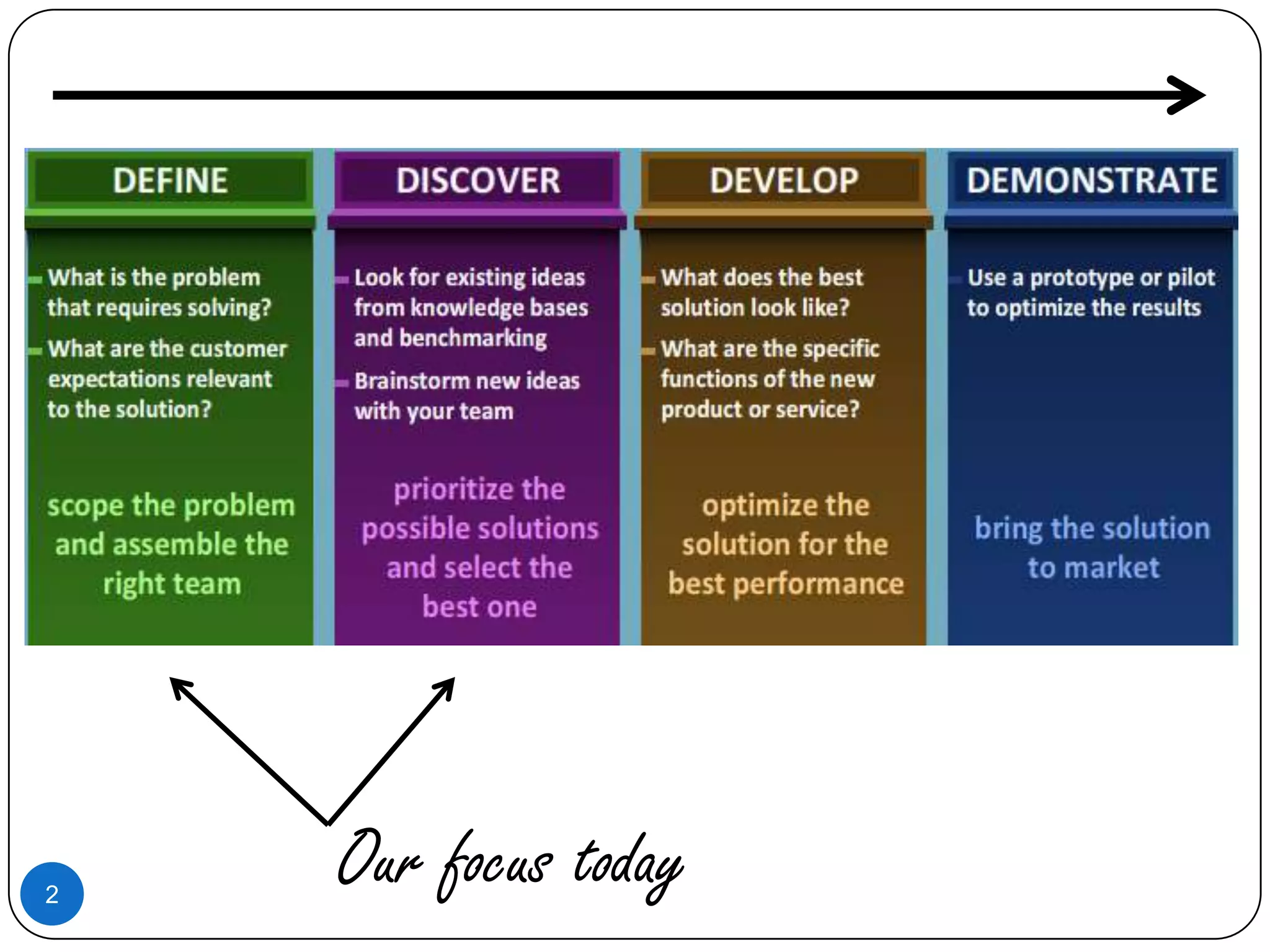
Our focus today
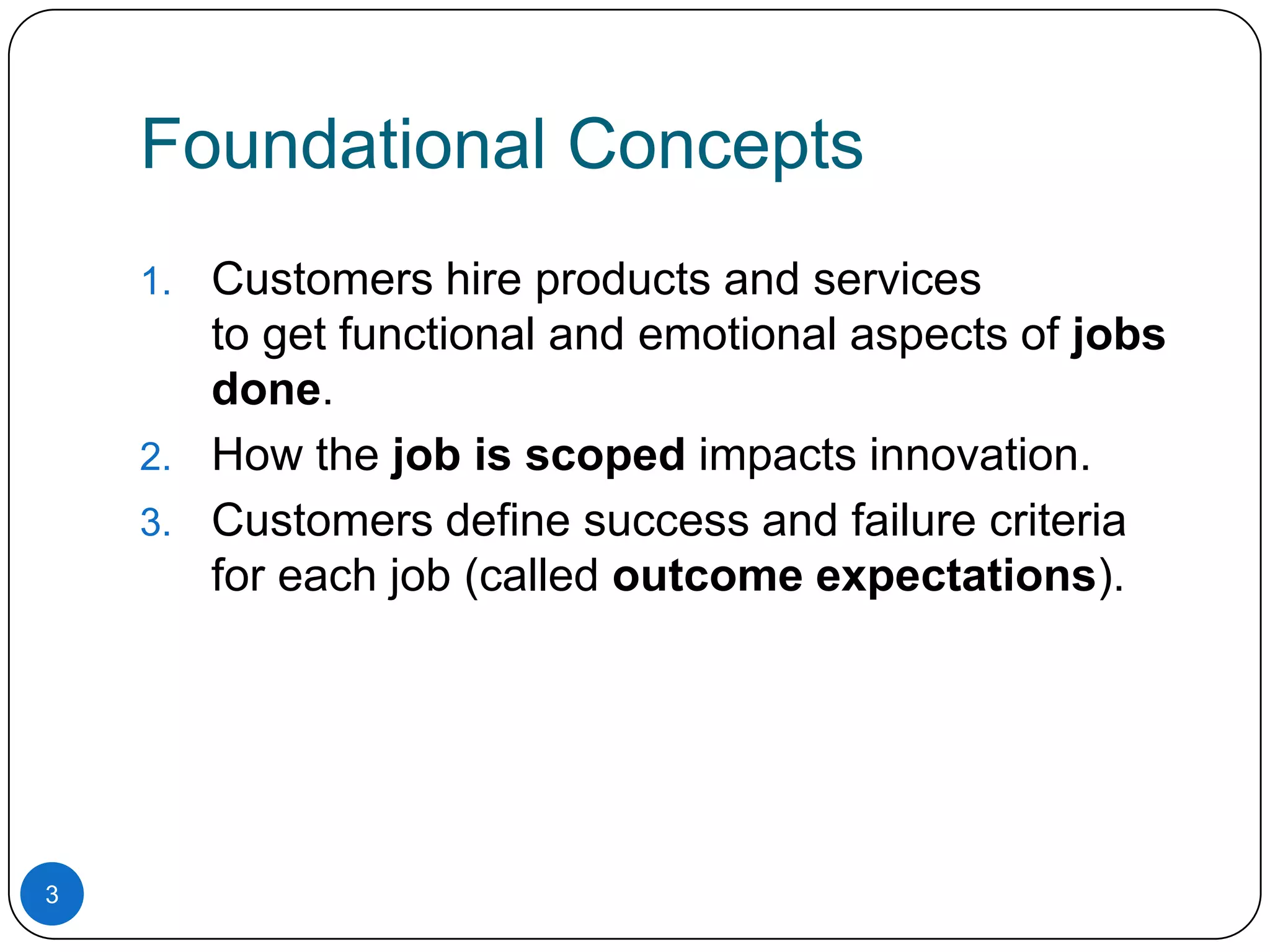
Foundational Concepts
Customers hire products and services
to get functional and emotional aspects of jobs
done.
2. How the job is scoped impacts innovation.
3. Customers define success and failure criteria
for each job (called outcome expectations).
1.

3
4
1. Job To Be Done
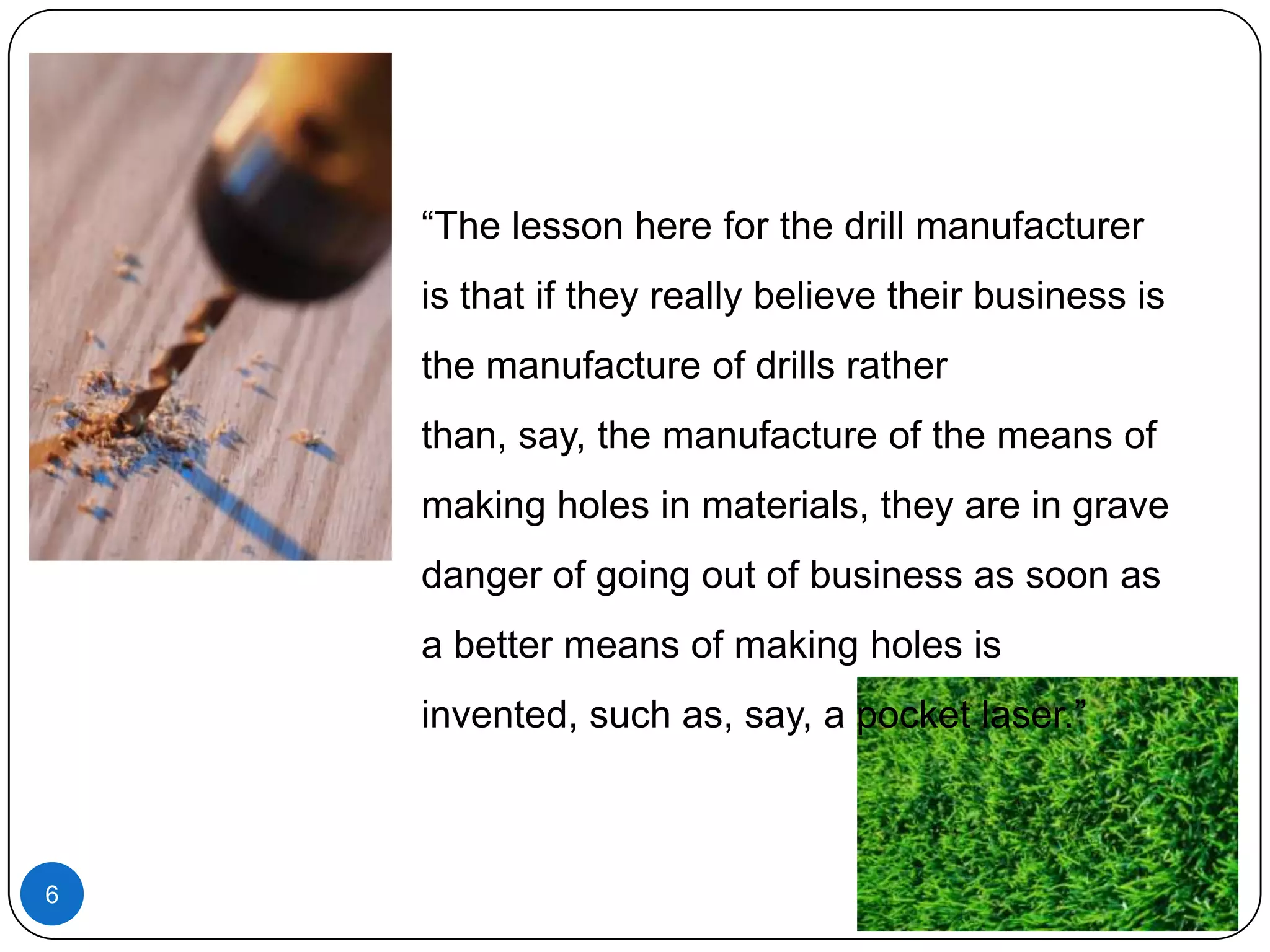
“The lesson here for the drill manufacturer
is that if they really believe their business is
the manufacture of drills rather
than, say, the manufacture of the means of
making holes in materials, they are in grave
danger of going out of business as soon as
a better means of making holes is
invented, such as, say, a pocket laser.”

6
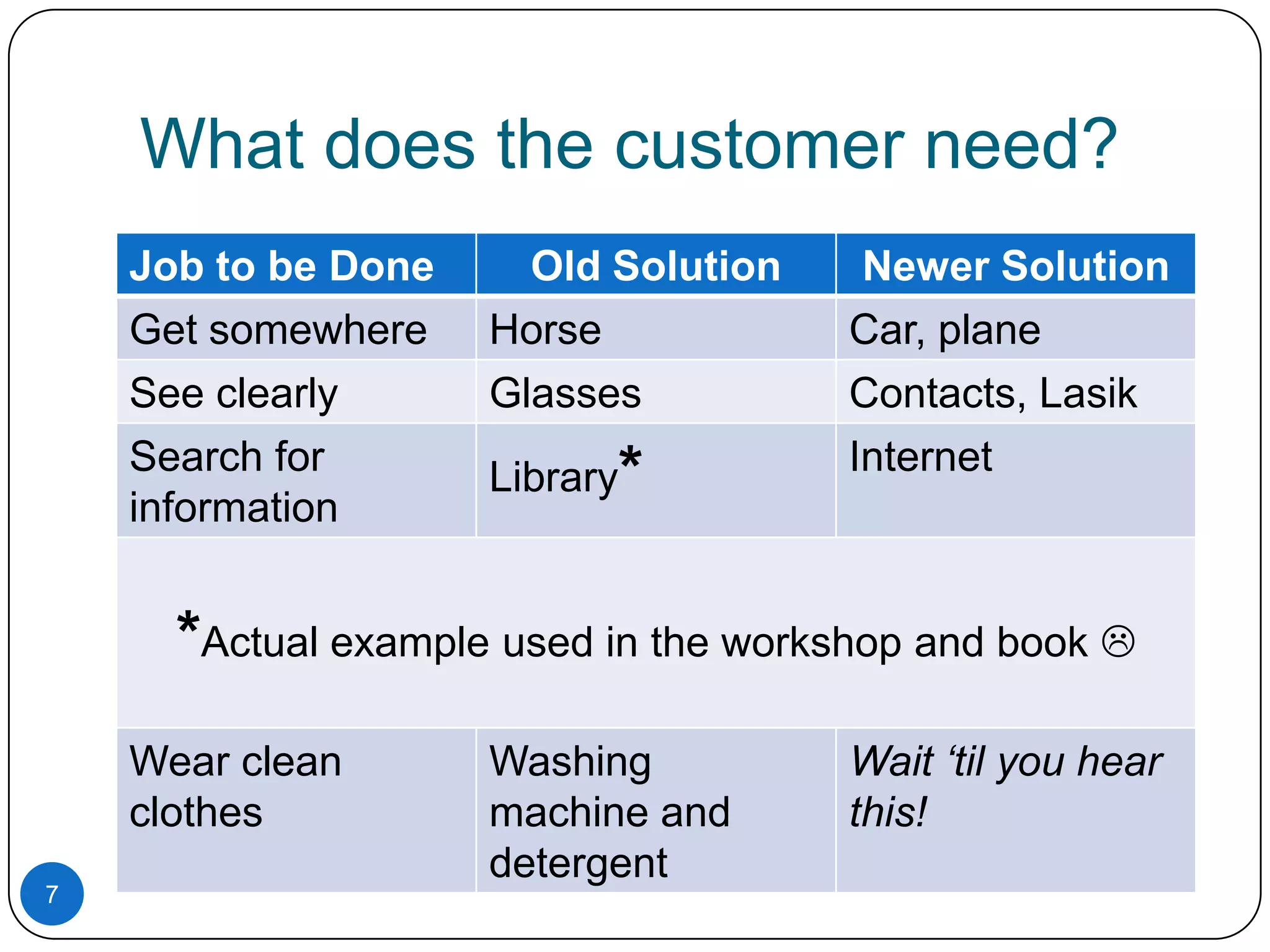
What does the customer need?
Job to be Done

Get somewhere
See clearly
Search for
information

Old Solution

Horse
Glasses
Library*

Newer Solution

Car, plane
Contacts, Lasik
Internet

*Actual example used in the workshop and book 
Wear clean
clothes
7

Washing
machine and
detergent

Wait ‘til you hear
this!
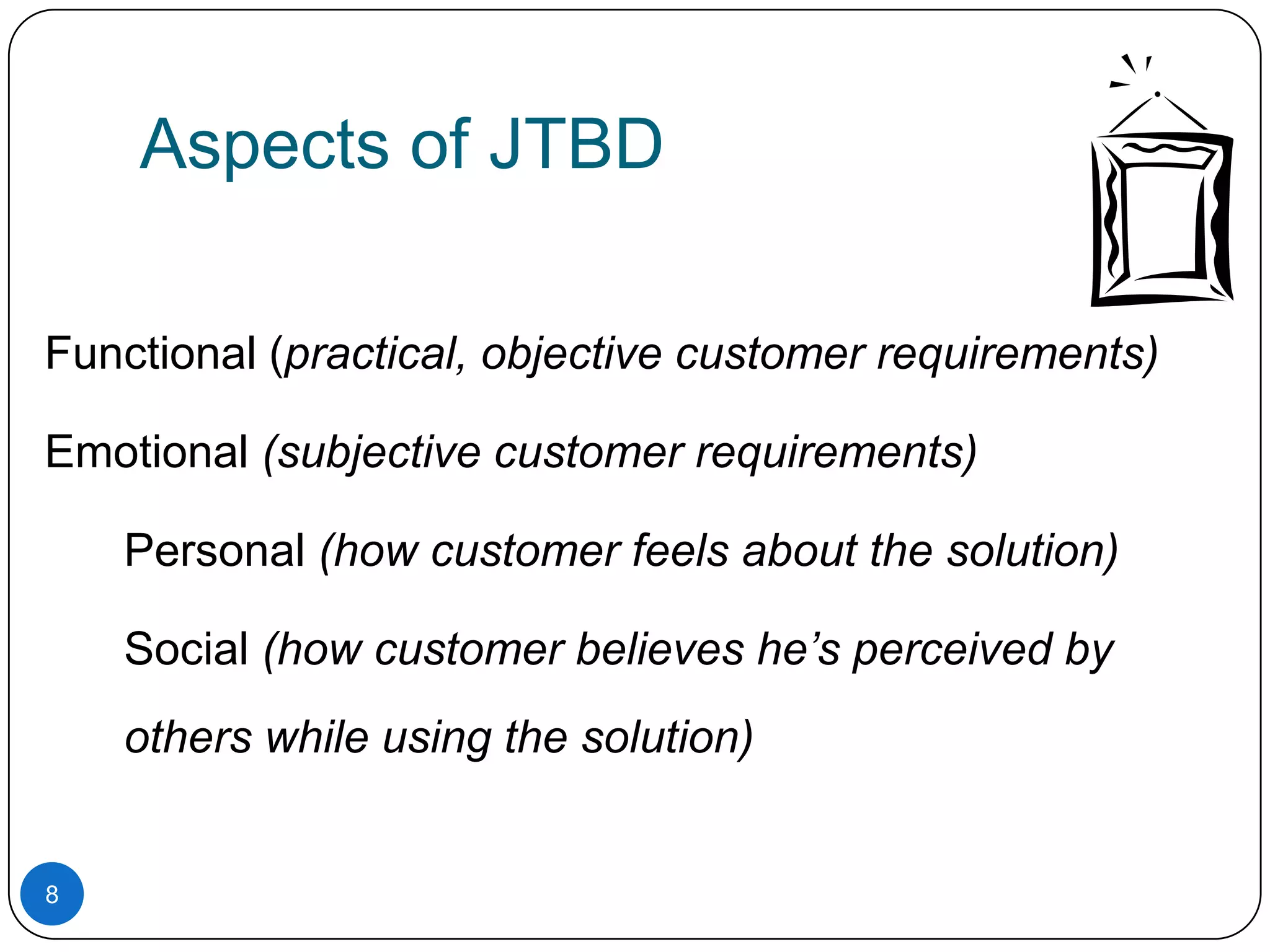
Aspects of JTBD
Functional (practical, objective customer requirements)
Emotional (subjective customer requirements)
Personal (how customer feels about the solution)
Social (how customer believes he’s perceived by
others while using the solution)

8
 Shoot for specificity
 Solution-neutral
 action verb + object of action + (optionally) contextual

clarifier. For example:
 Hang a framed print on the wall in my office

 Share accurate procedural information with work colleagues
 Listen to music while working out
 Entertain my young children on long weekends
 Get away from work during my lunch hour

9
Write a job statement
Think of a topic from your own work where you might
benefit from creative thinking.
Use the formula, action verb + object of action +
contextual clarifier.

1

10
Paradigm Shift
1.

What functional or emotional job to be
done is satisfied by a book? What else
(“out there”/our competitors) also
satisfies that same need?

2.

Segment customers by
JTBD/outcomes, not by demographics
or products. What would this mean?

11
2. Job Scoping

12
 Ensure that the innovation opportunity is

effectively targeted at an actionable level
 Solve the right problem

13
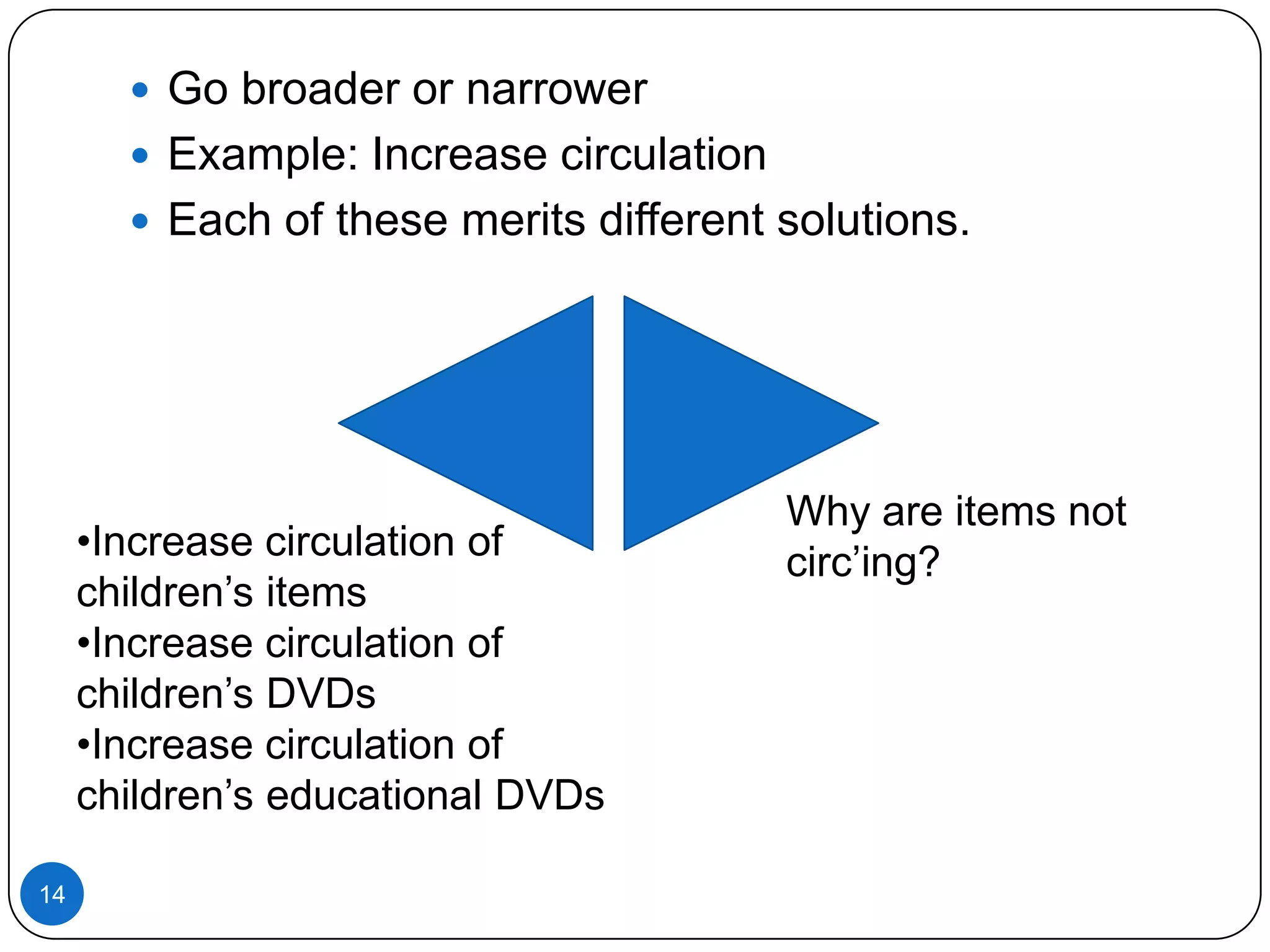
 Go broader or narrower
 Example: Increase circulation
 Each of these merits different solutions.

•Increase circulation of
children’s items
•Increase circulation of
children’s DVDs
•Increase circulation of
children’s educational DVDs
14

Why are items not
circ’ing?
15
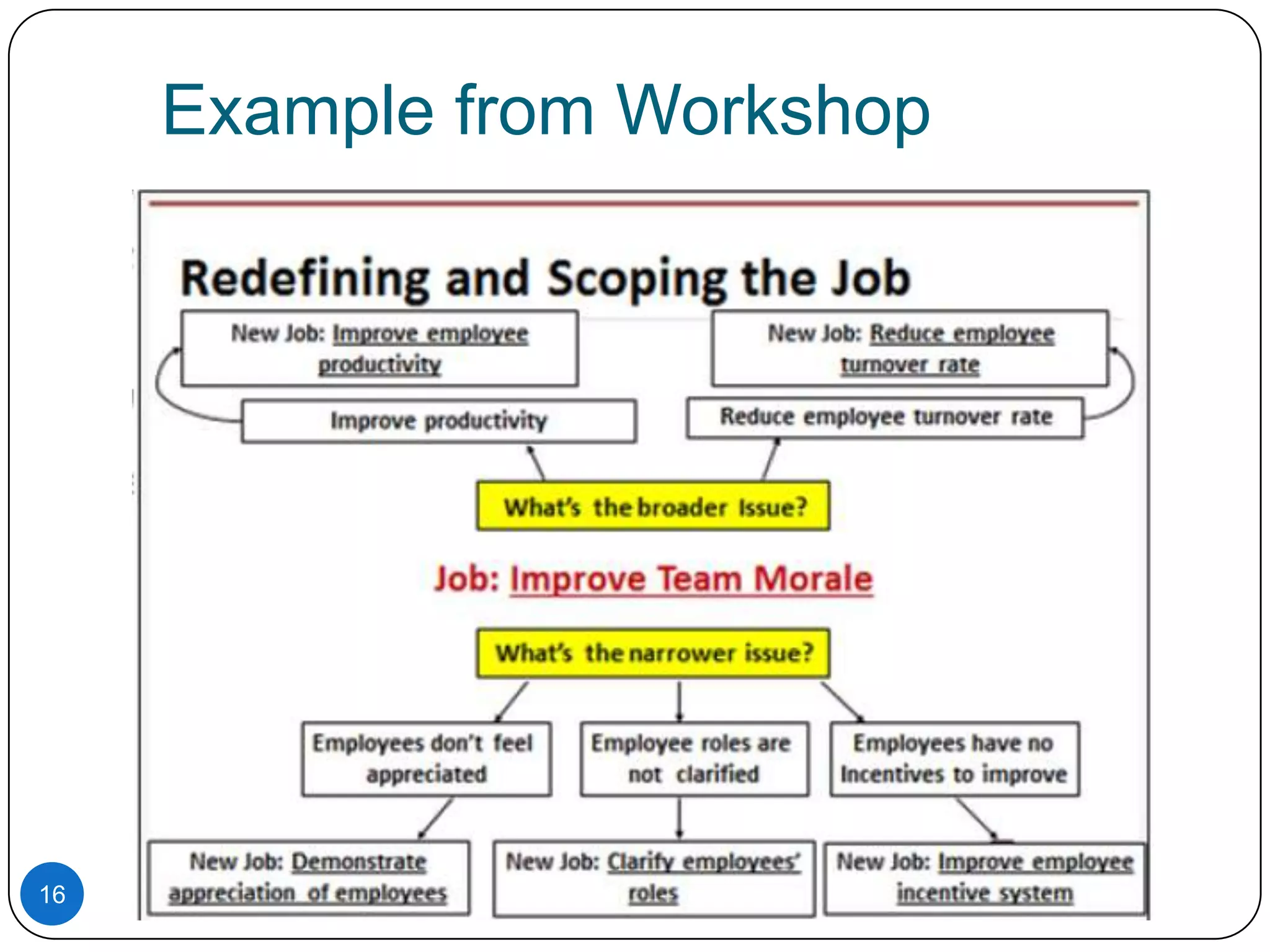
Example from Workshop

16
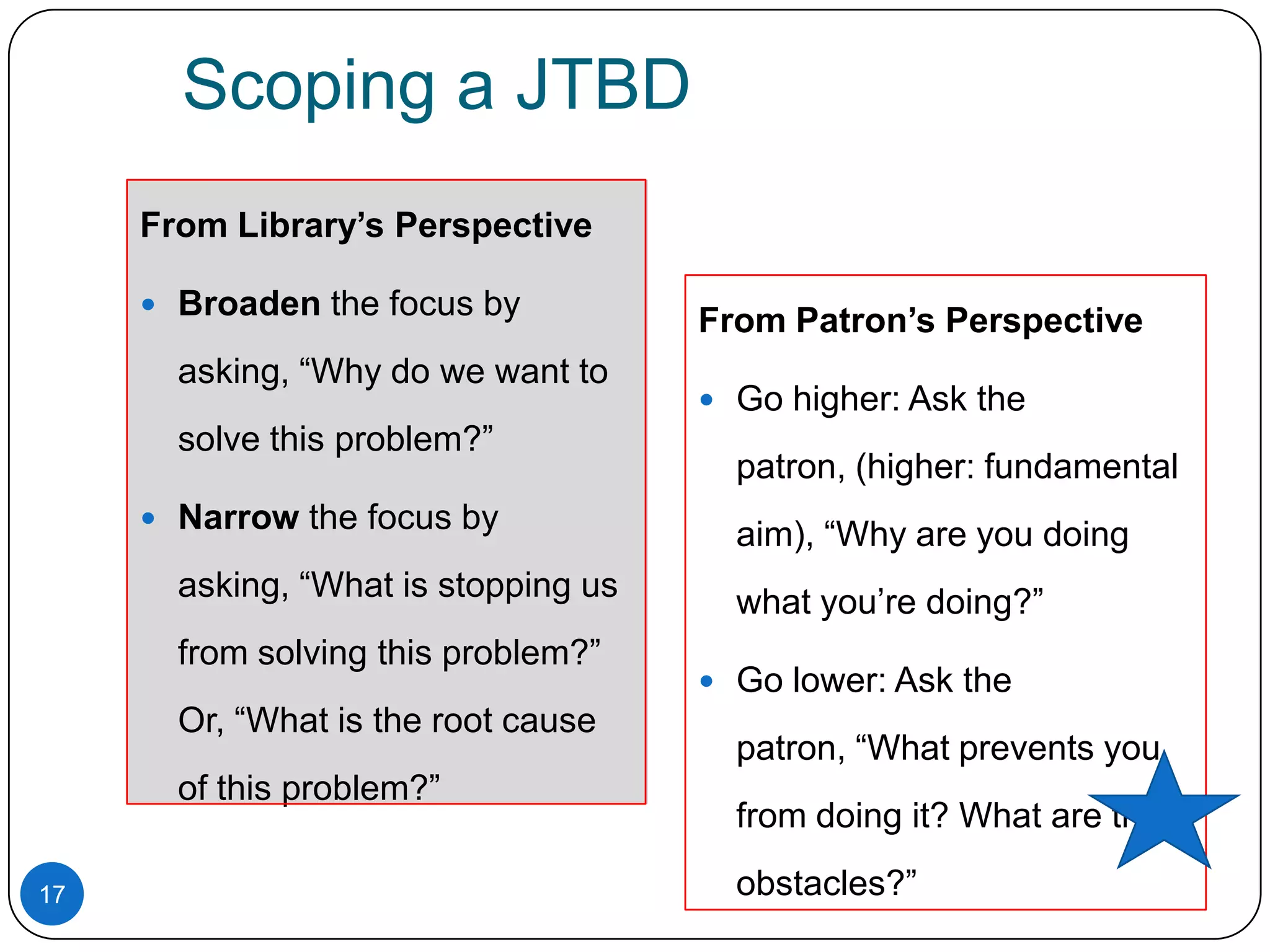
Scoping a JTBD
From Library’s Perspective
 Broaden the focus by

asking, “Why do we want to
solve this problem?”
 Narrow the focus by

asking, “What is stopping us
from solving this problem?”
Or, “What is the root cause
of this problem?”
17

From Patron’s Perspective
 Go higher: Ask the

patron, (higher: fundamental
aim), “Why are you doing
what you’re doing?”
 Go lower: Ask the

patron, “What prevents you
from doing it? What are the
obstacles?”
Scope It!

2

18
3. Outcome Expectations

19
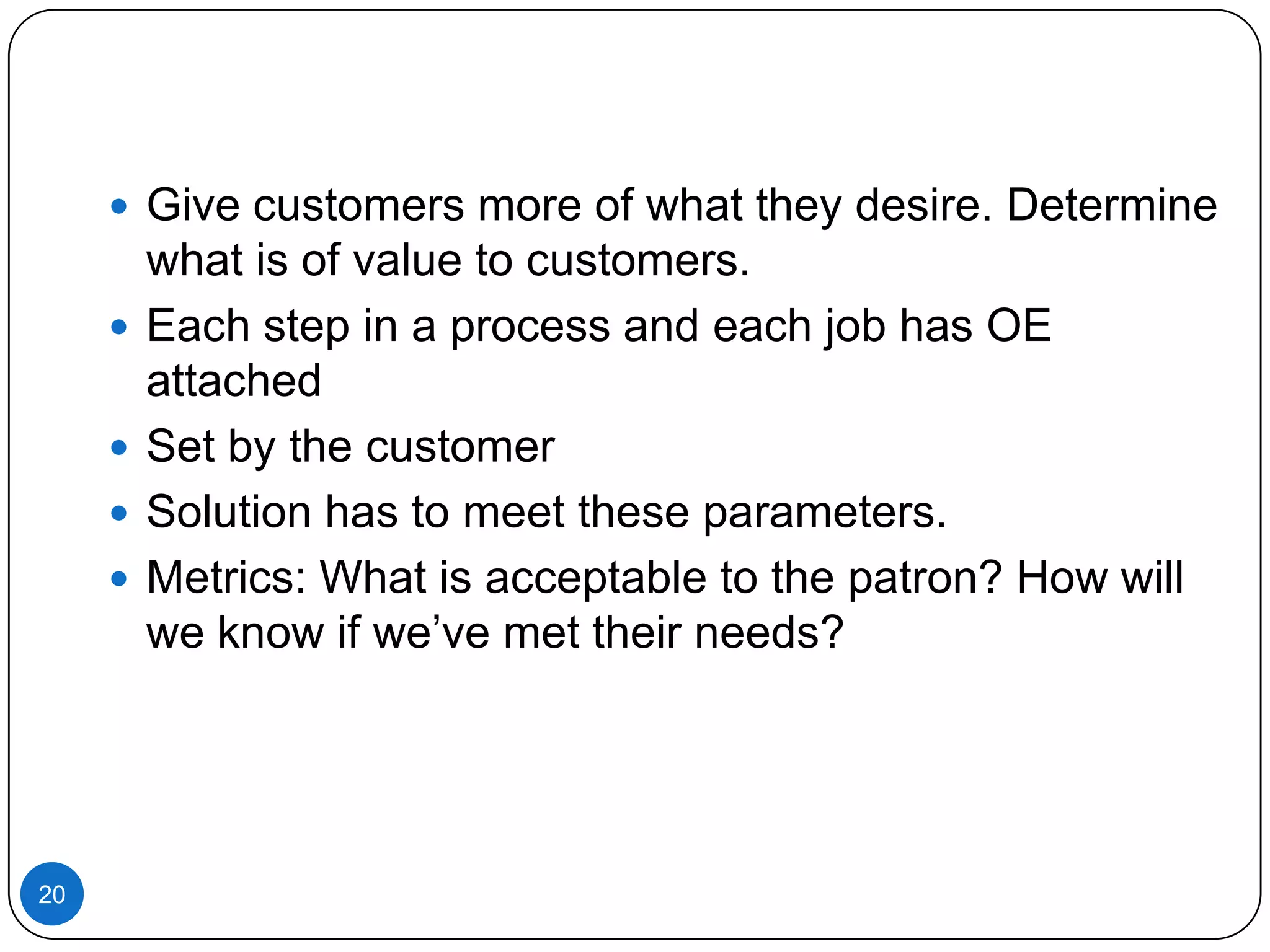
 Give customers more of what they desire. Determine





20

what is of value to customers.
Each step in a process and each job has OE
attached
Set by the customer
Solution has to meet these parameters.
Metrics: What is acceptable to the patron? How will
we know if we’ve met their needs?
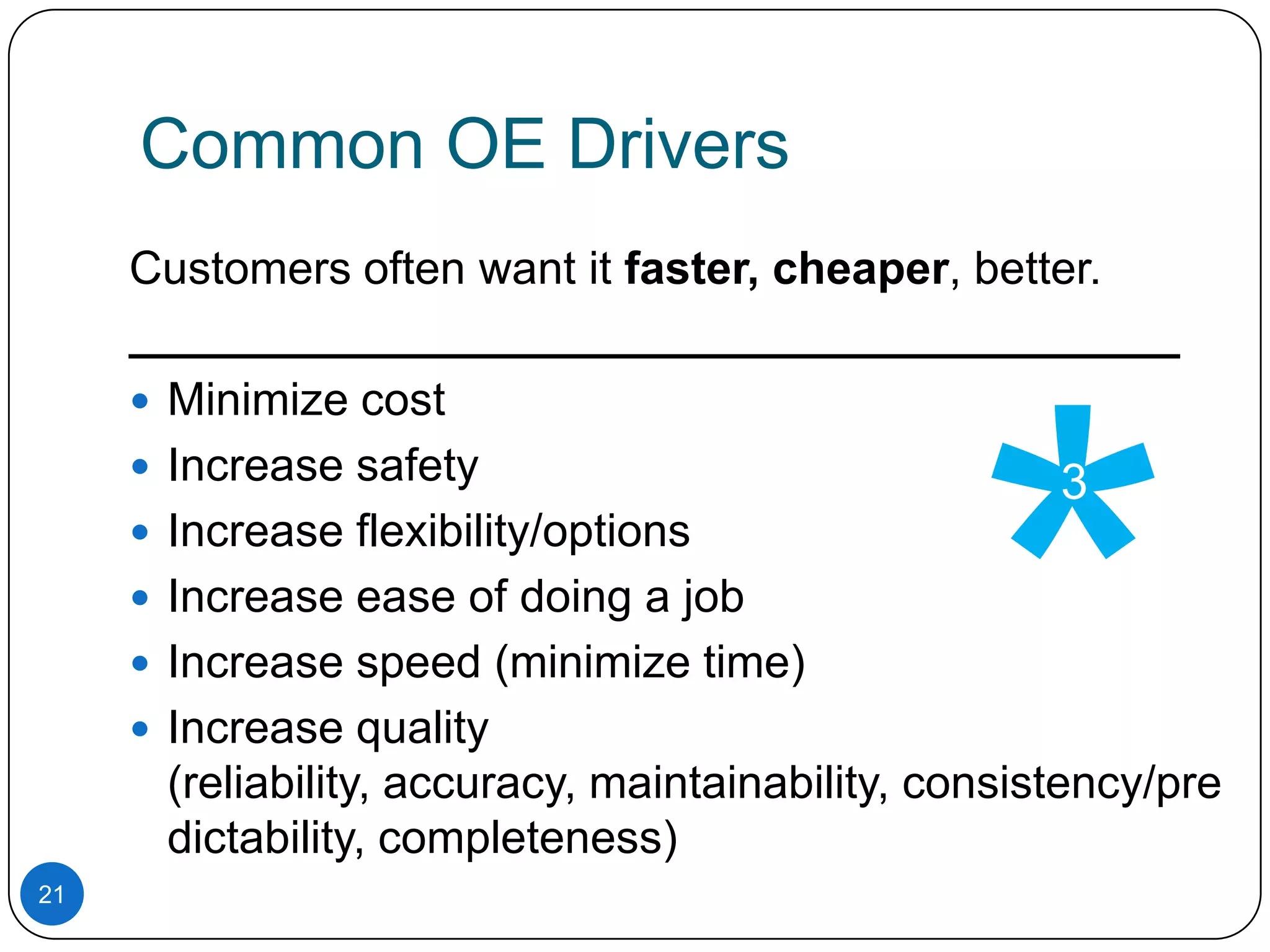
Common OE Drivers
Customers often want it faster, cheaper, better.
_________________________________________
 Minimize cost
 Increase safety
3
 Increase flexibility/options
 Increase ease of doing a job
 Increase speed (minimize time)
 Increase quality
(reliability, accuracy, maintainability, consistency/pre
dictability, completeness)
21
Two Questions
What to tackle first? For each step in a process
or each outcome expectation, ask the patron:
1. How satisfied are you?

2. How important is this to you?

?
22

?
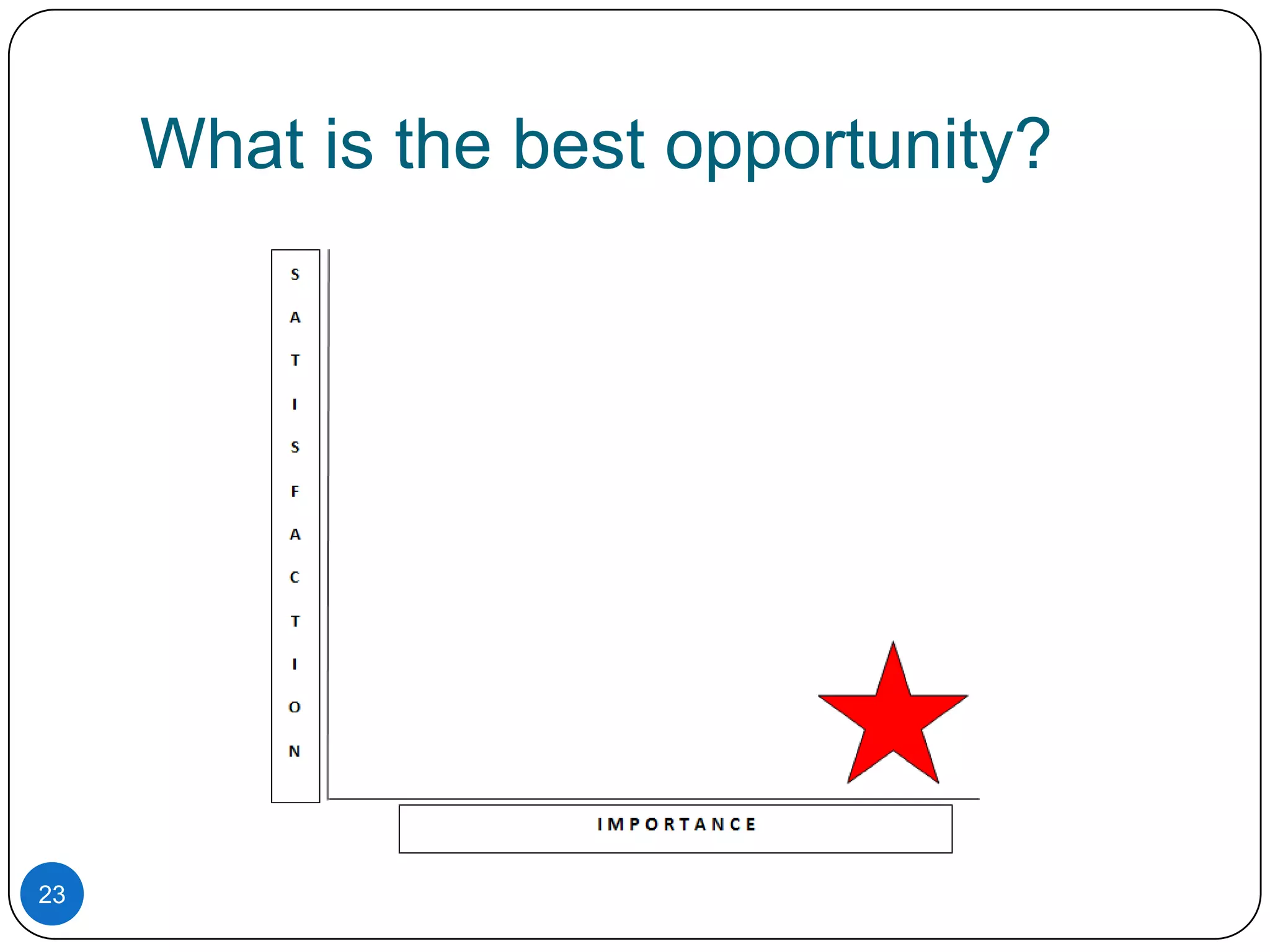
What is the best opportunity?

23
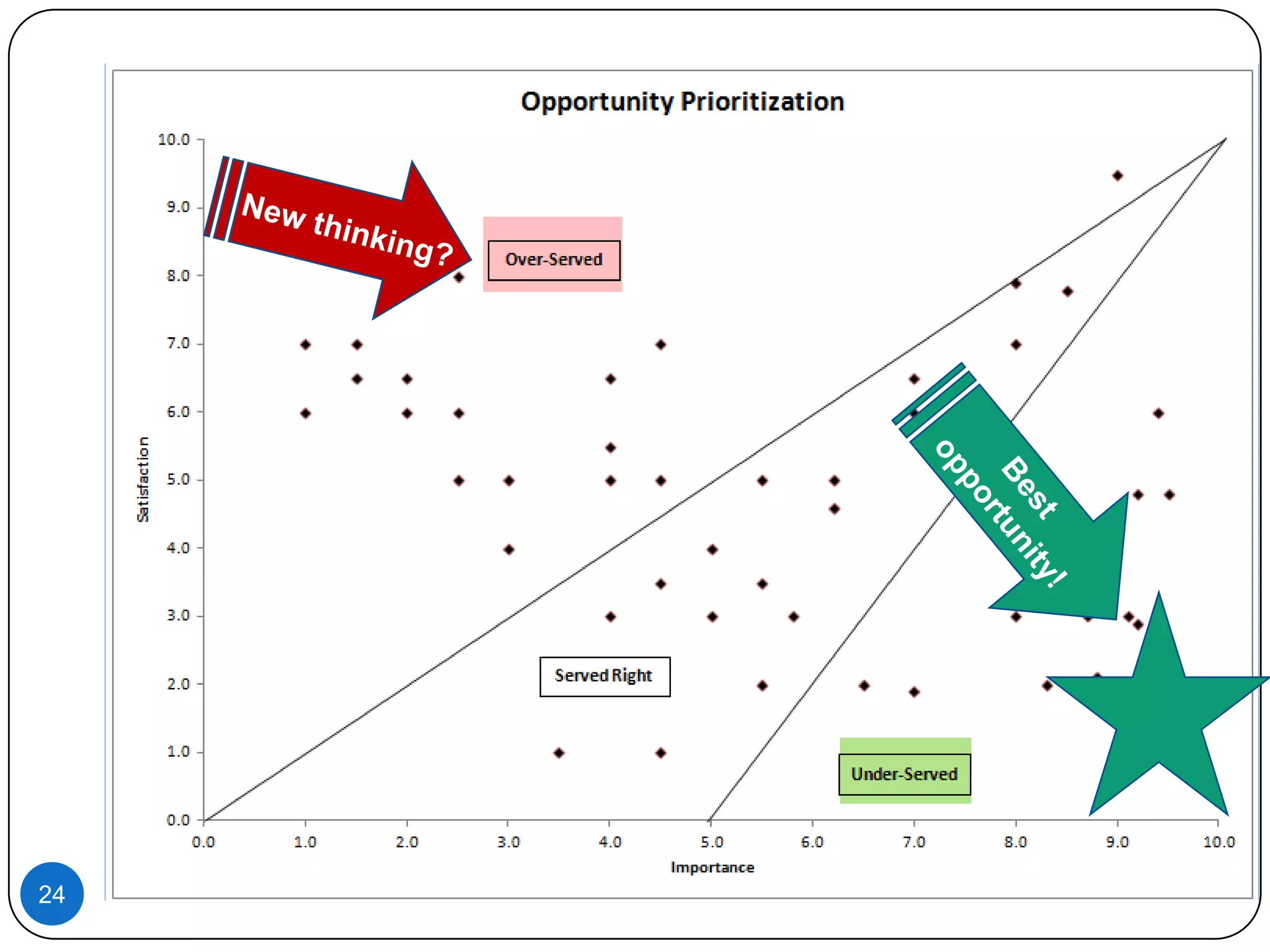
24
Random Stimulus
“Humans naturally establish logic
patterns as they process information
over time, so creative thinking

actually becomes unnatural.
The only way to spark it is to move
away from these patterns, and using

random stimulus is one way to do
that.”

4
26
1. Random Stimulus: mayonnaise
2. What comes to mind
when you think of mayonnaise?
3. What does any of the above
have to do with our
JTBD, Increase foot traffic in our libraries?

27
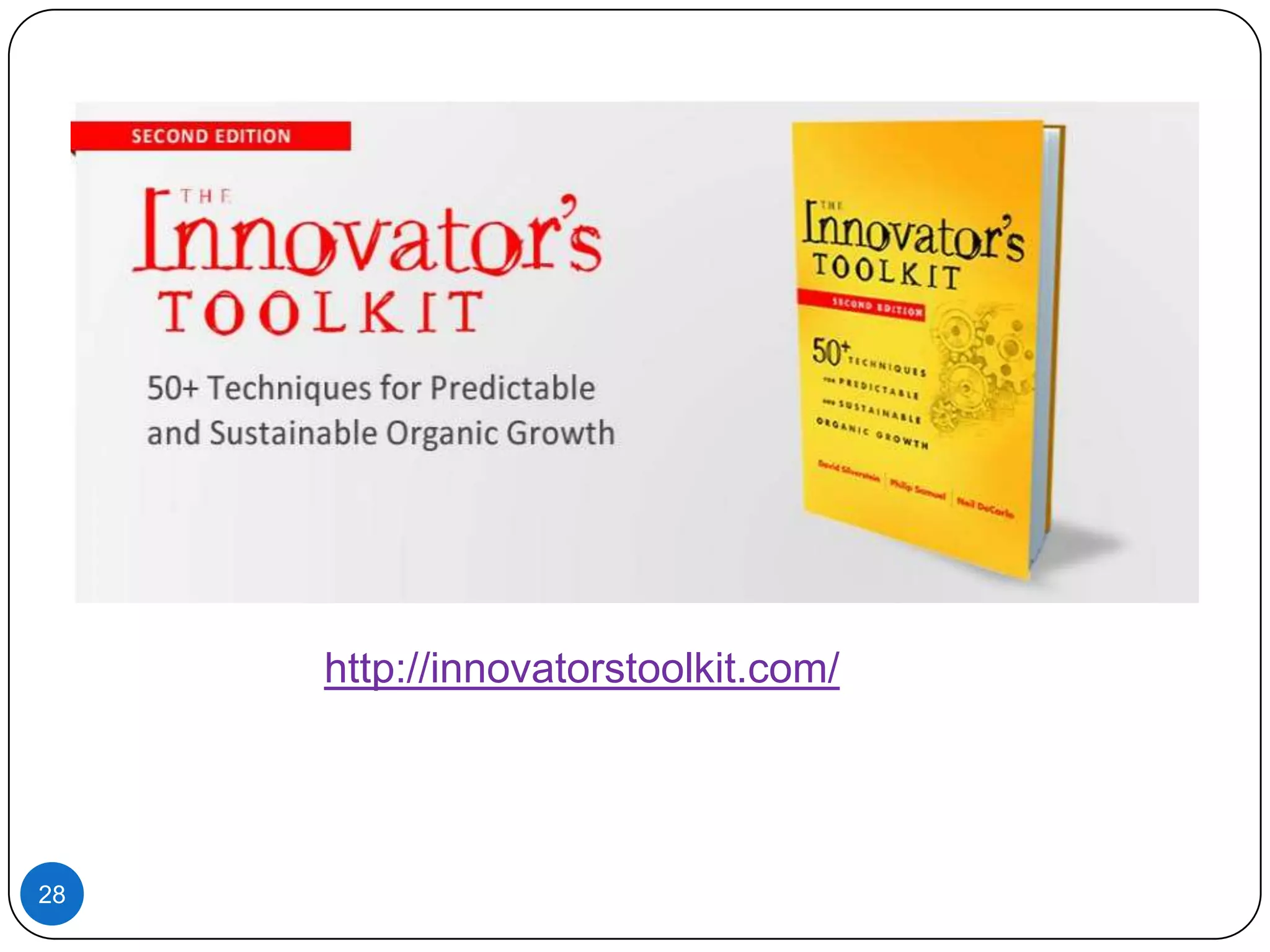
http://innovatorstoolkit.com/

28
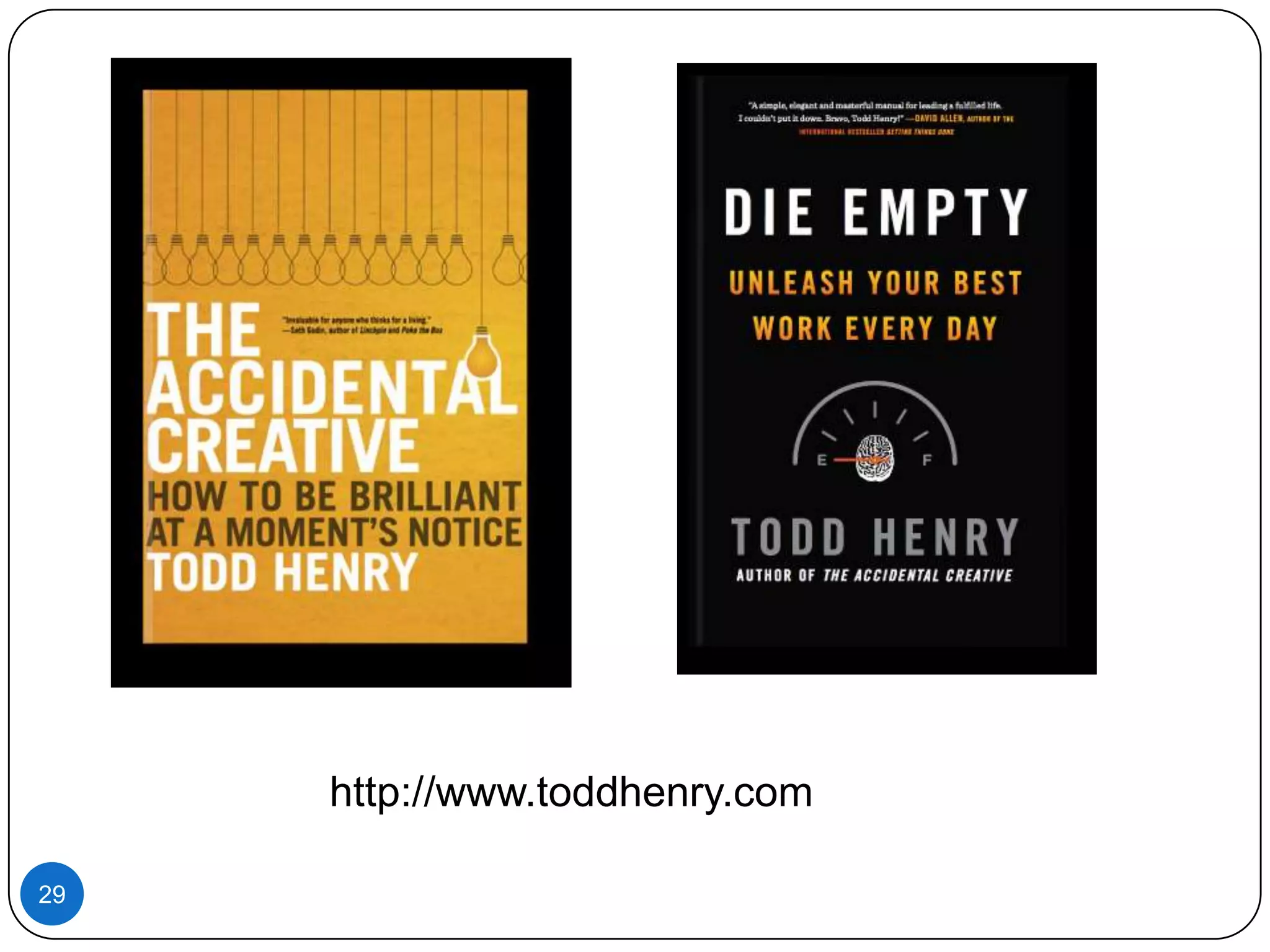
http://www.toddhenry.com
29
Now that
you’re
completed
exhausted
from new
information…

30
31

Ilead 1022 intro2_innovation

  • 1.
  • 2.
  • 3.
    Foundational Concepts Customers hireproducts and services to get functional and emotional aspects of jobs done. 2. How the job is scoped impacts innovation. 3. Customers define success and failure criteria for each job (called outcome expectations). 1. 3
  • 4.
  • 5.
    1. Job ToBe Done
  • 6.
    “The lesson herefor the drill manufacturer is that if they really believe their business is the manufacture of drills rather than, say, the manufacture of the means of making holes in materials, they are in grave danger of going out of business as soon as a better means of making holes is invented, such as, say, a pocket laser.” 6
  • 7.
    What does thecustomer need? Job to be Done Get somewhere See clearly Search for information Old Solution Horse Glasses Library* Newer Solution Car, plane Contacts, Lasik Internet *Actual example used in the workshop and book  Wear clean clothes 7 Washing machine and detergent Wait ‘til you hear this!
  • 8.
    Aspects of JTBD Functional(practical, objective customer requirements) Emotional (subjective customer requirements) Personal (how customer feels about the solution) Social (how customer believes he’s perceived by others while using the solution) 8
  • 9.
     Shoot forspecificity  Solution-neutral  action verb + object of action + (optionally) contextual clarifier. For example:  Hang a framed print on the wall in my office  Share accurate procedural information with work colleagues  Listen to music while working out  Entertain my young children on long weekends  Get away from work during my lunch hour 9
  • 10.
    Write a jobstatement Think of a topic from your own work where you might benefit from creative thinking. Use the formula, action verb + object of action + contextual clarifier. 1 10
  • 11.
    Paradigm Shift 1. What functionalor emotional job to be done is satisfied by a book? What else (“out there”/our competitors) also satisfies that same need? 2. Segment customers by JTBD/outcomes, not by demographics or products. What would this mean? 11
  • 12.
  • 13.
     Ensure thatthe innovation opportunity is effectively targeted at an actionable level  Solve the right problem 13
  • 14.
     Go broaderor narrower  Example: Increase circulation  Each of these merits different solutions. •Increase circulation of children’s items •Increase circulation of children’s DVDs •Increase circulation of children’s educational DVDs 14 Why are items not circ’ing?
  • 15.
  • 16.
  • 17.
    Scoping a JTBD FromLibrary’s Perspective  Broaden the focus by asking, “Why do we want to solve this problem?”  Narrow the focus by asking, “What is stopping us from solving this problem?” Or, “What is the root cause of this problem?” 17 From Patron’s Perspective  Go higher: Ask the patron, (higher: fundamental aim), “Why are you doing what you’re doing?”  Go lower: Ask the patron, “What prevents you from doing it? What are the obstacles?”
  • 18.
  • 19.
  • 20.
     Give customersmore of what they desire. Determine     20 what is of value to customers. Each step in a process and each job has OE attached Set by the customer Solution has to meet these parameters. Metrics: What is acceptable to the patron? How will we know if we’ve met their needs?
  • 21.
    Common OE Drivers Customersoften want it faster, cheaper, better. _________________________________________  Minimize cost  Increase safety 3  Increase flexibility/options  Increase ease of doing a job  Increase speed (minimize time)  Increase quality (reliability, accuracy, maintainability, consistency/pre dictability, completeness) 21
  • 22.
    Two Questions What totackle first? For each step in a process or each outcome expectation, ask the patron: 1. How satisfied are you? 2. How important is this to you? ? 22 ?
  • 23.
    What is thebest opportunity? 23
  • 24.
  • 25.
  • 26.
    “Humans naturally establishlogic patterns as they process information over time, so creative thinking actually becomes unnatural. The only way to spark it is to move away from these patterns, and using random stimulus is one way to do that.” 4 26
  • 27.
    1. Random Stimulus:mayonnaise 2. What comes to mind when you think of mayonnaise? 3. What does any of the above have to do with our JTBD, Increase foot traffic in our libraries? 27
  • 28.
  • 29.
  • 30.
  • 31.

Editor's Notes

  • #2 In May I went to a 4.5 day innovation tools and techniques workshop in Denver put on by BMGI. Use handout
  • #3 Innovation is a 4-phase process, each with its own tools.
  • #4 Part of Define phase
  • #5 4 activities today in 90 minutes.Every time you see the *, we’re doing something…except this time!
  • #7 People don’t want a lawnmower, they want an attractive lawn. Hence, innovative solutions could include slow-growing grass or grass that only grows 2” high. That’s better than a better lawnmower!In his classic article on marketing, Marketing Myopia (1960) Theodore Levitt pointed out that when customers buy 1/4 inch drills what they really want are 1/4 inch holes. As de Chernatony and McDonald point out, “the lesson here…(Creating Powerful Brands p. 4). http://advertisingmodule.wordpress.com/module-notes/week-1/what-do-customers-want/Link to libraries?
  • #8 Clothes washing (want clean clothes; solution right now is washing machine. In China, spray and hang outside; sunlight causes reaction to clean clothes; Sanyo washer uses sonic vibrations to clean clothes). If clothes physically repelled dirt, could not get dirty then we wouldn’t have to wash them. Special glasses that make others THINK you’re wearing clean clothes.
  • #9 A main JTBD and related JTBDIf three parts of brain in conflict (reptilian, emotional, intellectual), reptilian wins.If emotional-intellectual conflict, emotional wins. Find intellectual alibi to justify themselves.Goal: meet all layers and jobsFunctional: I need to hang a picture (nail). Emotional: personal: I feel soothed when I look at this picture of the Bahamas. Emotional-social: I feel sophisticated when others remark on my art selection
  • #10 Can find new JTBD that our existing solution meets. We have open rooms; who needs them? Whose problem would that solve? List a JTBD from patron perspective
  • #12 DiscussionWhat are our patrons’ jobs to be done? What do they come to us for REALLY? Think beyond our items. Why do they want them? Share what I think patrons come for (entertainment, information). Then who are our competitors (movies, television, crafts)not by adults, teens, children; not by audiobook readers versus DVD patrons versus storytime attendees)
  • #13 How narrowly or broadly you define the challenge will impact your solutions
  • #14 Back to our ¼’ drill. Not about making a better drill. What about going broader? Why does the customer want a hole? To insert a screw. Why a screw? Trying to fasten two pieces (say, hinge and wood). What if there was a better way to fasten items together?
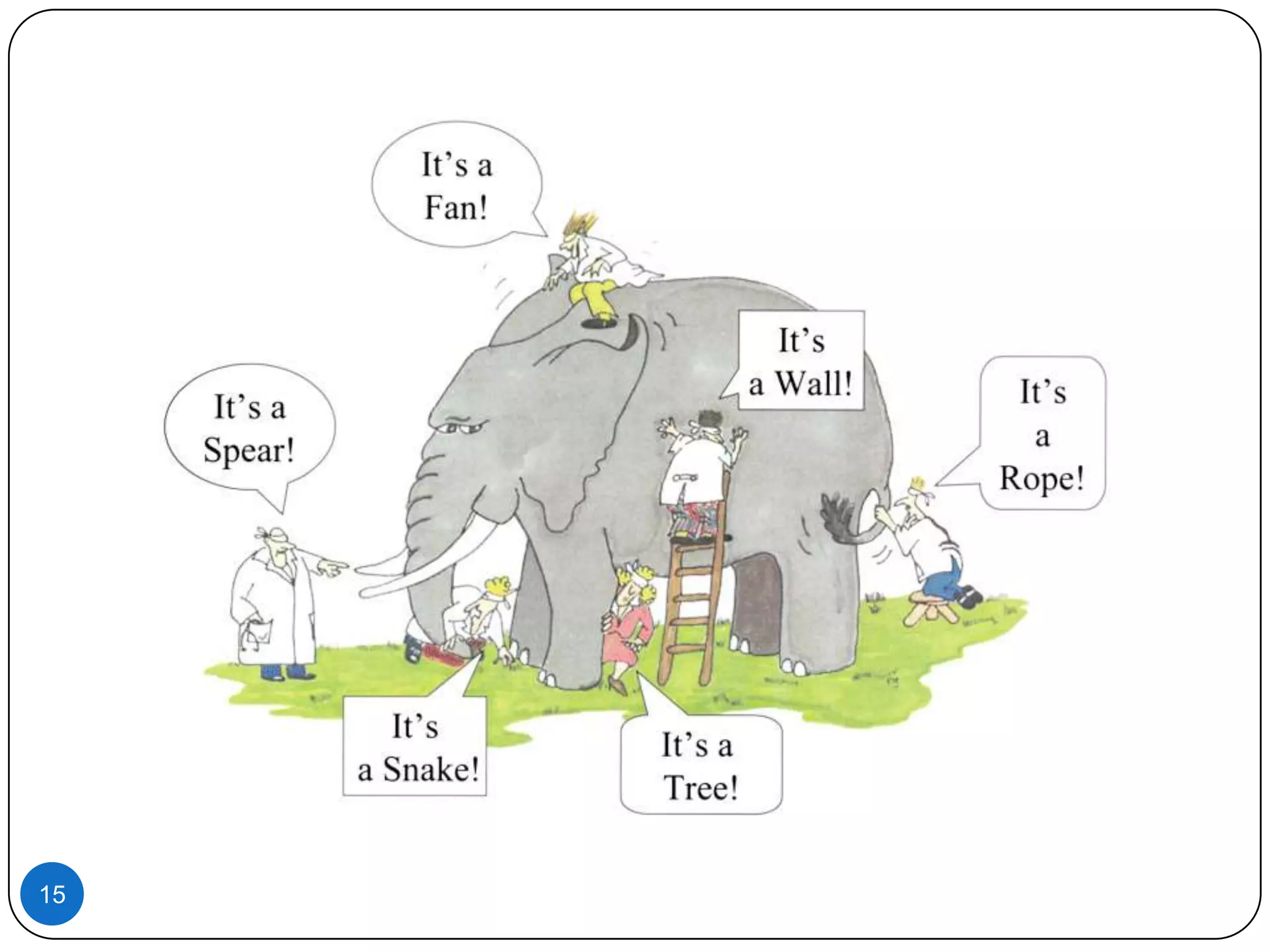
  • #16 What is your perspective? It matters.
  • #17 Narrower: What’s the root cause of the problem? What’s stopping us from solving this?Broader: Why do we want to solve this problem?
  • #18 Use the handout. Better to work from the patron’s perspective
  • #21 Can also be extracted from comments.OE. Nail: Sturdy, not rust, certain length, cheap, not show, must be removable without damageJewelry: silver, under $50, look expensive, match my taste, be unique
  • #22 In bold are the more common wantsWhy do people go to McDonald’s? Fast and cheap. Not the best food. If want the best food, go elsewhere.
  • #24 You’ll graph them and this is what you’re looking for: very important to patron and very unsatisfied
  • #25 Move resources away from over-served? Market view but could it be organizational view?Another tool: Ethnography to watch patrons and askOpportunity score/value quotient
  • #26 Discovery tool for spawning fresh ideasFree association with a random word or image
  • #27 Bring dictionary or have a magazine. Open and point.15 minutes to list associations15 minutes for ideas15 minutes to report out
  • #29 Best resource!
  • #30 Spoke at CAL, 10/17/2013& deadly sins that keep us from doing our best:Fear of perceived consequence of failureGuardedness: Innovation is a team sport, we need others to keep us focused, mobilized, and engaged.Comfort: you can’t pursue comfort and brilliant work simultaneously
  • #32 Thank you!