Community Driven Development:
does it deliver on poverty,
inclusion, accountability ?

Arthi Patel
Social Development Specialist, DFAT
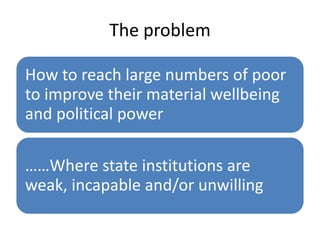
The problem
How to reach large numbers of poor
to improve their material wellbeing
and political power
……Where state institutions are
weak, incapable and/or unwilling
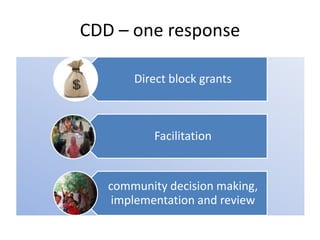
CDD – one response
Direct block grants

Facilitation

community decision making,
implementation and review
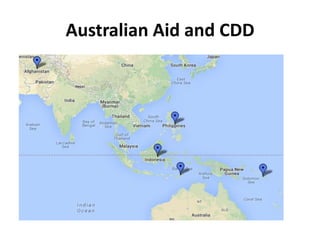
Australian Aid and CDD
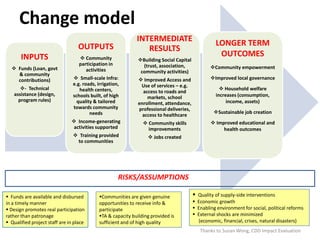
Change model
OUTPUTS

- Technical
assistance (design,
program rules)

Building Social Capital
(trust, association,
community activities)

 Small-scale Infra:
e.g. roads, irrigation,
health centers,
schools built, of high
quality & tailored
towards community
needs

 Improved Access and
Use of services – e.g.
access to roads and
markets, school
enrollment, attendance,
professional deliveries,
access to healthcare

Improved local governance

 Community skills
improvements

 Improved educational and
health outcomes

 Training provided
to communities

 Funds (Loan, govt
& community
contributions)

 Community
participation in
activities

 Income-generating
activities supported

INPUTS

INTERMEDIATE
RESULTS

 Jobs created

LONGER TERM
OUTCOMES
Community empowerment

 Household welfare
increases (consumption,
income, assets)
Sustainable job creation

RISKS/ASSUMPTIONS
 Funds are available and disbursed
in a timely manner
 Design promotes real participation
rather than patronage
 Qualified project staff are in place

Communities are given genuine
opportunities to receive info &
participate
TA & capacity building provided is
sufficient and of high quality

 Quality of supply-side interventions
 Economic growth
 Enabling environment for social, political reforms
 External shocks are minimized
(economic, financial, crises, natural disasters)
Thanks to Susan Wong, CDD Impact Evaluation
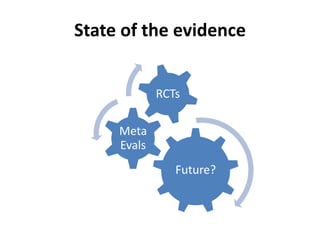
State of the evidence
RCTs
Meta
Evals

Future?

Arthi Patel Community Driven Development

  • 1.
    Community Driven Development: doesit deliver on poverty, inclusion, accountability ? Arthi Patel Social Development Specialist, DFAT
  • 2.
    The problem How toreach large numbers of poor to improve their material wellbeing and political power ……Where state institutions are weak, incapable and/or unwilling
  • 3.
    CDD – oneresponse Direct block grants Facilitation community decision making, implementation and review
  • 4.
  • 5.
    Change model OUTPUTS - Technical assistance(design, program rules) Building Social Capital (trust, association, community activities)  Small-scale Infra: e.g. roads, irrigation, health centers, schools built, of high quality & tailored towards community needs  Improved Access and Use of services – e.g. access to roads and markets, school enrollment, attendance, professional deliveries, access to healthcare Improved local governance  Community skills improvements  Improved educational and health outcomes  Training provided to communities  Funds (Loan, govt & community contributions)  Community participation in activities  Income-generating activities supported INPUTS INTERMEDIATE RESULTS  Jobs created LONGER TERM OUTCOMES Community empowerment  Household welfare increases (consumption, income, assets) Sustainable job creation RISKS/ASSUMPTIONS  Funds are available and disbursed in a timely manner  Design promotes real participation rather than patronage  Qualified project staff are in place Communities are given genuine opportunities to receive info & participate TA & capacity building provided is sufficient and of high quality  Quality of supply-side interventions  Economic growth  Enabling environment for social, political reforms  External shocks are minimized (economic, financial, crises, natural disasters) Thanks to Susan Wong, CDD Impact Evaluation
  • 6.
    State of theevidence RCTs Meta Evals Future?